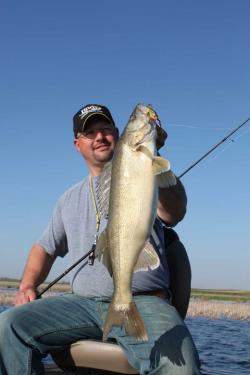
How To Catch Summer Walleye On Crankbaits

Catch walleye like this on crankbaits

Catch walleye like this on crankbaits

from The Fishing Wire
by Daniel Quade

Trolling, rigging and jigging are great ways to put walleyes in the boat, but when conditions are right, casting shad-bodied crankbaits to shallow structure knows no equal for racking up big numbers of early summer ‘eyes.

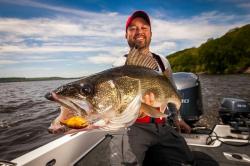
North Dakota guide Jason Feldner likes shallow running crankbaits for walleyes from early spring through the month of June.
Just ask Jason Feldner, proprietor of Perch-Eyes Guide Service. A veteran guide who earns his keep connecting clients with walleyes on North Dakota’s 160,000-acre Devils Lake, he casts cranks to fish-rich banks from the first warm fronts of spring throughout the month of June.

“When the bite’s on, 100-fish days are possible,” he says.

And the good news is, even though the sprawling High Plains paradise Feldner calls home is a bit unique, the tactics he employs here work wonders on a variety of other walleye waters as well.

As water temperatures inch upward into the mid-50s, Feldner targets sheltered, fast-warming shallows, where hungry ‘eyes find a feast of baitfish, freshwater shrimp and other food items.

On Devils Lake, rising water levels have in recent years created an almost endless supply of such environments. While few fisheries offer exactly the same opportunities, you can in most systems find concentrations of shallow fish feeding somewhere. Potential hotspots include necked-down current areas, emerging weedbeds and shoreline riprap.

As the water continues warming, Feldner factors the wind into his fishing locations.

“Once the water temp hits the 60s, I look for windswept areas where wave action stirs up the shallows, concentrating forage and reducing light penetration,” he says. Opportunistic ‘eyes quickly move in to scarf up shrimp and minnows, but a sustained wind lasting several days or more can really fire up a shoreline.

When planning his daily structural hit list, he always keeps yesterday’s weather in mind. A lot of times he gets a strong wind one day, then dead calm the next. The downwind bank is good when the wind is blowing, but even after it dies down, the shoreline that got pounded the day before stills hold fish.

Certain structure is central to both temperature-related and wind-driven scenarios.

“I prefer slow-tapering shorelines over banks with steep breaks,” he says. “Not necessarily because they hold more fish, but because my bait stays in the strike zone longer on a gradual slope.”

In the early season, soft muck bottoms absorb sunlight and help boost the water temperature. But later, shorelines exposed to the prevailing winds are typically dominated by gravel and rocks. Flooded woody cover-in the form of trees and brush-is also a common occurrence on Devils Lake, as it is on manmade reservoirs and flowages across the Walleye Belt. Feldner frequently plays the timber card, too, targeting walleyes in and around the shallow treeline.

“During the early season, I cruise the bank, targeting fallen trees,” he says, explaining that walleyes often tuck tight to such timber, lurking in the shade as they await passing prey. “You won’t catch a bunch of fish in one area, but you’ll get one here and one there, so it’s important to cover water and keep moving.”

Shad-bodied crankbaits are another pillar of the program. Like walleyes in most waters, Devils Lake fish eat a variety of forage, from shrimp to juvenile yellow perch and white bass. A crankbait’s deep, stout profile mimics a range of prey, and is easy for walleyes to home in on in low-visibility conditions, such as when wind and waves roil near-shore waters.

The Lindy Shadling and Bomber Flat A are two of Feldner’s go-to baits. Both the Shadling and Flat A are tight-wiggling, rattling baits capable of drawing the ire of nearby ‘eyes, even when visibility is reduced. Another key attribute-their near-buoyancy allows them to be fished with a variety of moves, without rocketing to the surface on the pause. Such versatility is critical, because Feldner’s presentations run the gamut-from a steady pull to ultra-animated retrieve-depending on the mood of the fish.

With his boat hovering in eight feet of water, Feldner makes a long cast close to shore, then works the bait along bottom back to the boat.

“Start with the rodtip high, then lower it during the retrieve, so the bait dives deeper and stays close to bottom,” he notes.

Given walleyes’ notoriously fickle nature, experimentation is key to finding the best retrieve for the situation at hand. Every day is a little different. Sometimes they want it slow and steady, other times you have to get aggressive and really pound bottom or burn it along to trigger reaction strikes.

The shallow crank-casting pattern shines through early summer, until water temperatures reach the 70-degree mark. After that, Feldner typically focuses his efforts a bit deeper, often pulling deep-diving cranks or spinner rigs along outside weed edges and deep treelines. But even then, the shallow pattern is always an option, should the right wind come up along a slow-tapering shore.

Global Warming and Fishing

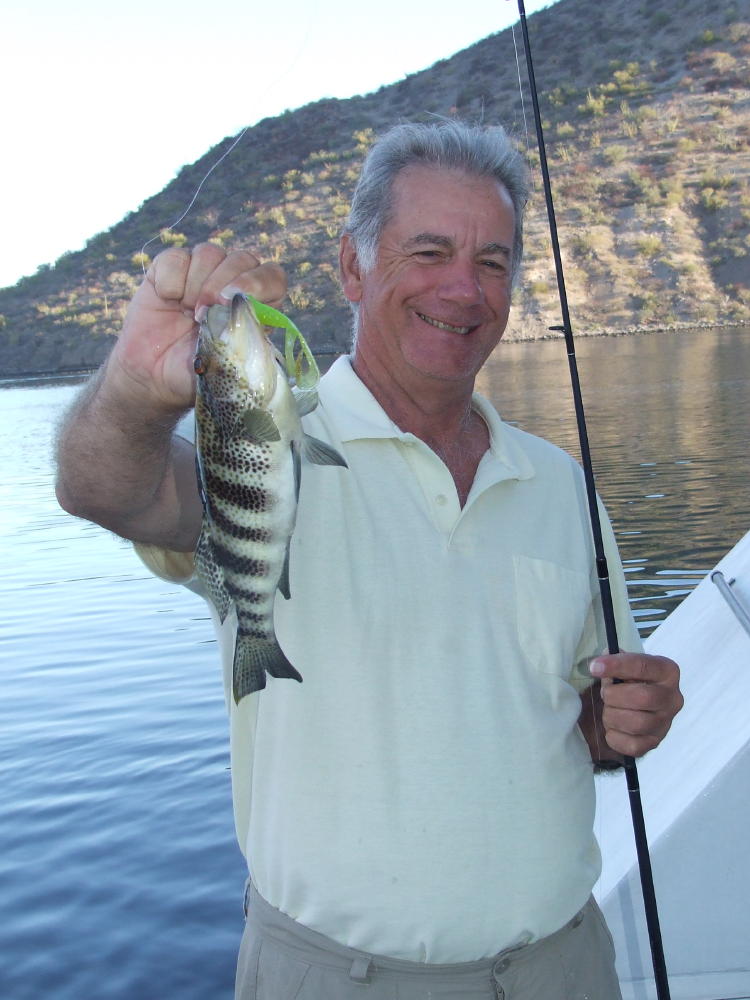
I caught this sea bass after a week of no fishing - big smile that I got to fish again!

I caught this sea bass after a week of no fishing – big smile that I got to fish again!

Whats going on with the weather this year? Every spring it seems we have cold then hot then cold weather again without much in between. Bass and bream don’t know when to bed. Water temperatures go up then back down, then jump up again. Tornadoes ravage the country. Is this a new pattern, global climate change?

Here’s what Newsweek magazine has to say: “There are ominous signs that the Earth’s weather patterns have begun to change dramatically and that these changes may portend a drastic decline in food production…The evidence in support of these predictions has now begun to accumulate so massively that meteorologists are hard-pressed to keep up with it…. Last April, in the most devastating outbreak of tornadoes ever recorded, 148 twisters killed more than 300 people and caused half a billion dollars’ worth of damage in 13 U.S. states.”

Will we ever have “normal” weather again? Or is global climate change, which used to be called “global warming,” our fate. According to Newsweek it is, or was. Those quotes are from an article in the April 28, 1975 issue. Over 38 years ago. Then the great fear was global cooling. What goes around comes around.

When that issue came out I was working on a masters degree at West Georgia College and took a course titled “Environmental Science.” We studied how all the scientists were predicting a new ice age based on their data and models. Didn’t happen. Now, from their data and models, scientists are predicting danger from the earth getting too hot. Here we go again.

Weather and climates change. Excuse me if I don’t go along with those scientists and politicians spending billions of dollars of other peoples’ money, your money and my money, on a problem they predict.

I think I will just go fishing, no matter what the weather.

Family Fishing Fun In Georgia All Summer Long

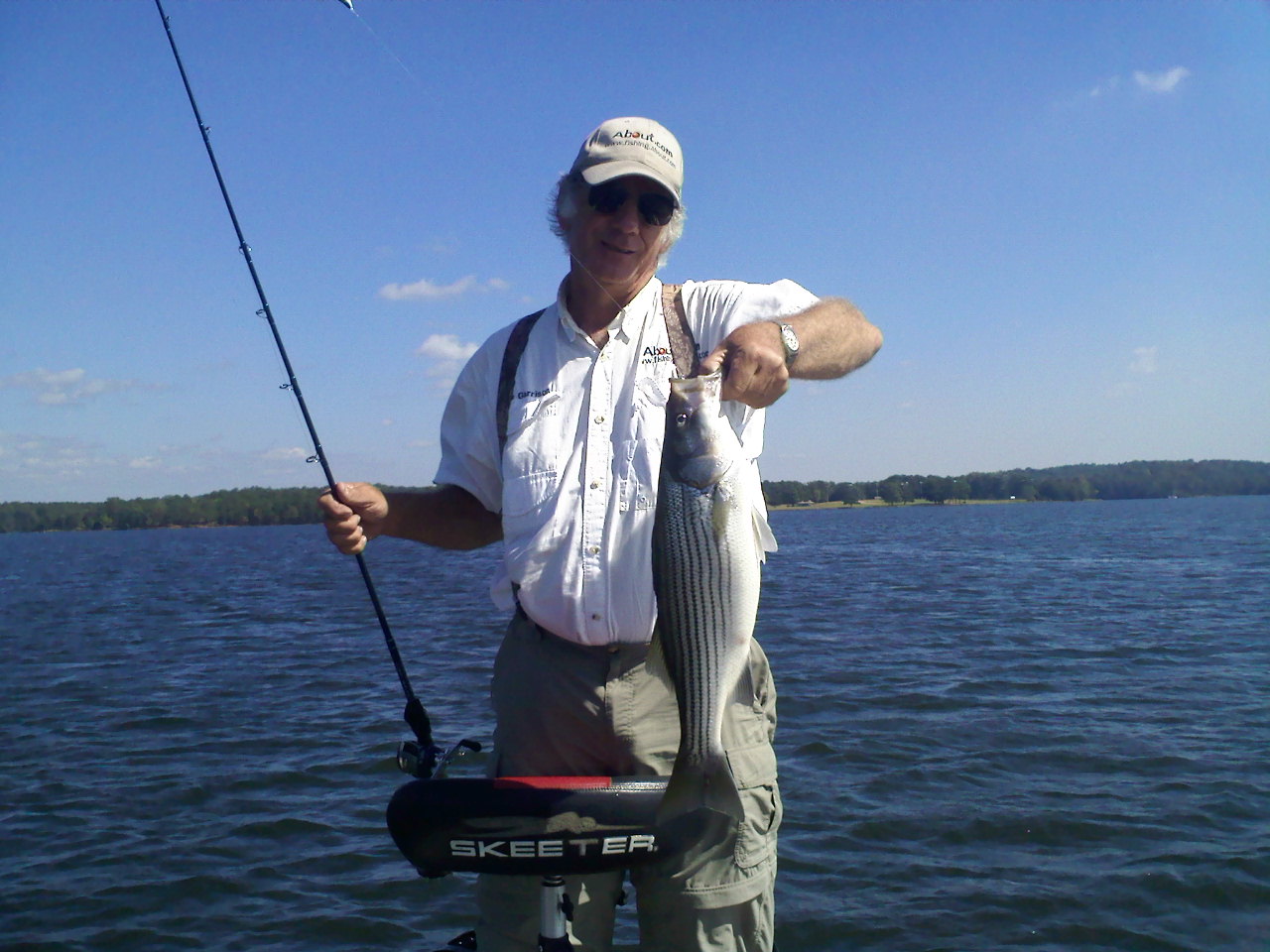
Georgia Summer Striper

Georgia Summer Striper

Summer vacation is a wonderful treat that all families look forward to for most of the year. But there is often a conflict if some family members like to fish and others don’t. Fortunately, Georgia offers many places you can go and satisfy all family members desire for fun and fishing.

From our coast to the mountains fishing is good in the summer months and some of the best fishing this time of year is also near activities sure to please any family desires. Check out these possibilities this summer.

June

Augusta may not seem like a place with a lot of activities but what is available in the area might surprise you. No matter what the fishermen in your family likes to catch, you can find a wide variety of possibilities. And the history of the area has been highlighted by preservation efforts. If you want more active experiences you can find them, too.

Lake Thurmond is only a few miles away and it is the biggest lake in the southeast. From bass and crappie to catfish and stripers, the lake is full of fun to catch fish. Several guides in the area will take you out and show you what to do, and they provide all the equipment you need so you don’t have to pack it. Or you can bring along your tackle and explore on your own.

In June bass hit topwater baits early around shoreline cover like stumps, rocks and hydrilla. Soap Creek, Fishing Creek, Germany Creek and Lloyd Creek are all good. For crappie fish standing timber near creek and river channels with jigs and minnows. Sight fishing for schooling hybrids and stripers is good during the day. Look for them on offshore humps and ridges.

If you want to catch a smallmouth bass you probably don’t think of the Augusta area but the Savannah River downstream of the Thurmond dam has cool enough water to allow the illegally stocked smallmouth to thrive. You can wade the rocky shoals and catch them on fly or casting tackle. You have to be careful due to the release of water at the dam since it can rise fast, but if you pay attention it is a lot of fun to wade and fish.

For a more relaxed outing the McDuffie Public Fishing Area about 30 miles away has stocked ponds where you can catch bass, bream and catfish. Fishing from the bank is good and some of the ponds have handicapped access, to anyone can catch fish there. Kids will love the ease of catching bluegill there and you can fish from the bank to make it more fun if they want to explore.

This month the fishing is good at any of those three options.

For the historian in the family August has a rich past. You can tour old mills that have been renovated into shopping areas so the shopper in your family can have fun. Boat tours of the canal gives you a good view of the mills and the remains of the Confederate Powder Works, where most of the gunpowder for the Confederacy was produced.

The Lock and Dam Park on the Savannah River has interesting history and good hiking trails, as well as the chance to see how nature can be restored at Phinizy Swamp. Wildlife viewing is good there and you can fish there, too. Another park on the canal has history, trails and offers access to the river for smallmouth fishing.

For baseball fans, the minor league Augusta Greenjackets play 12 home games this month. Eating out is always a highlight of summer vacation and you can find local restaurants that serve anything you want. There are lots of Southern favorites and other places offer everything from fast food to find dining.

The Morris Museum of Art is the first one dedicated to highlighting Southern Art, and other cultural activates range from ballet to theater. Augusta is the home of James Brown and you can find clubs with everything from jazz and blues to country and rock.

Golfers won’t be able to play around at famed Augusta National, home of the Masters, but there are about a dozen courses open to the public in the area. There are also several tennis courts open to the public in Augusta. Wildwood Park on Thurmond offers something a little different, with three championship disk golf courses, where you play with Frisbees. It also offers camping, boat ramps and bank fishing as well as picnic areas

July

Everybody likes the beach and Jekyll Island is a family vacation destination that is sure to please. Its long beaches are not crowded in many areas and you will be sharing them with other families, not rowdy partiers. You can fish for saltwater and freshwater fish in the area and there are many tours and adventures available.

You can catch anything from sharks to redfish in saltwater near Jekyll Island and the rivers give you a chance for freshwater species, too. Some big sharks are caught from the Jekyll Island Pier each year and you can join locals in trying to hook one. The pier in St. Simons Island, just across the bay, also offers good fishing the there is lots of shopping and dining near it.

Charters will take you into the bays and river mouths for tarpon, flounder, weakfish and redfish. Or you can go off shore for mackerel, tripletail, tarpon and Jack Crevalle. The charters provide all the equipment you need or you can bring your own. Surf fishing for whiting and other species can be good, too.

For freshwater fish like bass and bluegill, you can bring your boat and put in at Two Way Fish Camp and go up the Altamaha or choose a public ramp. There are also freshwater guides that will provide anything you need for those species. For fun with the kids you can find bank access at several bridges and catch saltwater cat and other species that bite readily.

For lots of action, go to area boat ramps and parks and bait up with bits of shrimp. Any kind of fish in the water will eat it and you can catch a wide variety. Usually the best fishing is when the tide first starts going out or coming in. Use fairly small hooks and enough weight to keep your bait on the bottom.

If you want to play tennis or golf several public courts and courses are available, and kids and adults have a lot of fun at the putt putt courses. There are miles of bicycle paths on the island and you can rent one at several hotels for a ride. Or you can hike the trails. Just bring good bug spray!

Wildlife viewing is great. Ever seen an alligator? If you hike the trails you are likely to find a pond with one sunning on the bank. Birding is great with many species here in July. And you can hike the beaches early in the morning and see tracks sea turtles make coming in to lay their eggs overnight. Just don’t disturbed the nests.

As you would expect, seafood is fresh and tasty here. Shrimp are cooked right off the boat and other kinds of fish and shellfish are common in the local restaurants. Some of them offer the best chowders you can find. Or you can find southern cooking to find dining in Brunswick and on St. Simons and Sea Island.

Tours of the old homes built by some of the richest families in the US back in the early 1900s have been restored and offer a fascinating glimpse of how they lived. You can even stay at some that have been restored as hotels and others have meals available. The hotels are fairly expensive but there is a campground on the island it you prefer that option.

Dolphin and marsh tours by boat are a family favorite and readily available from local marinas. Eco tours of Raccoon Key give you an idea of the importance of marshes to the environment and you will see a lot of different kinds of wildlife.

More active opportunities are kayak tours and horseback riding by local companies. The kids are sure to love the local water park and can spend a full day there having fun. Shopping can be very active from some and there is plenty to keep even the most avid shopper happy in the area.

August

Need to cool off from the summer heat? The mountains around Helen and Unicoi State Park offer good places to catch fish and beat the heat. And the family can go rafting on rivers, try a zip line, hike, shop and find many other things to do if they don’t want to fish.

Most folks think of trout fishing when they head to the hills in North Georgia and it is good, but there are other species to catch, too. For trout you can choose to hike up smaller streams and try for native bookies, a real challenge, or catch stocked fish in bigger waters like the Chatooga River.

Lake Blue Ridge is not far away and offers your best chance to catch a smallmouth bass in a Georgia lake. You will need a boat to fish it. Cast small topwater plugs on main lake points early in the morning and late in the day then back off and fish a jig head worm 20 to 30 feet deep. You will also catch a lot of spotted bass doing this.

For the kids, a trip to the Burton Fish Hatchery on Moccasin Creek feeding Lake Burton is in order. Kids and seniors over 65 years old can fish in the creek and there are special ponds with trout available there, too. You can also put a boat in Lake Burton and have fun catching spotted and largemouth bass and hybrids. Bluegill fishing is also very good on the lake.

The State Park at the hatchery also has canoe rentals, picnic areas, swimming and hiking. A tour of the hatchery is also interesting to most family members. For something a little different, you can download GPS coordinates and go on a Park or History Geo tour.

Unicoi State Park is a great destination. You can rent a cabin, stay in a lodge room or camp. Picnic shelters are in the park and good food is available in the dining room and there are a lot of activities in the park. Fish the local lake or streams, hike trails and visit Anna Ruby Falls. The park lake also has a swimming beach. You can rent canoes and kayaks for a day on the water or just sun and swim.

Want to play tennis or golf? Several courts are in the park or nearby, and there are a lot of choices for public golf courses. If you want to be even more active, bring your mountain bike and get a permit for the trails that will test your endurance. Birding is good in the area and you can also see plant species specific to the mountains.

Kids will love a tour of the Cabbage Patch Kids Baby Land General in nearby Cleveland. Shoppers will enjoy all the stores in Helen and it has been designed to resemble an Alpine village in Europe, so expect to find many types of beer and food there.

If you have never tried a zip line, you should visit Chattooga Ridge Canopy Tours about an hour’s drive from Unicoi. You will get safety training then zip through the tree tops and over a small lake while hanging from a cable and harness. Exciting and fun for all over the age of ten. The guides will tell you about the flora and fauna of the area and you get to examine the trees from a close-up view seldom seen.

The same company and many others in the area offer rafting on the Chattooga River. What better way to cool off in the summer heat than getting splashed by cold water as you shoot the rapids. Kids love it and adults find it exciting.

If you ever wanted to go prospecting for gold and gems, head over to Dukes Creek Mining Company between Helen and Cleveland. The folks that own the company will give you instructions on panning for gold and gems and help you identify what you find. It is great fun for all ages.

There are wild bears in the North Georgia mountains but you don’t wan tot get too close to them. If you want to see bears up close and safely, try the Black Forest Bear Park and Reptile Exhibit in Helen. Warning, some people are disappointed and some hate it because wild animals are penned up.

But many love seeing bears and there are usually some cubs that will make you want to take them home. Kids and adults can enjoy this experience and it is not very expensive. Just be prepared for the smell of animals and the fact they are penned up.

No matter where you want to go in Georgia, or want you want to do this summer, you can have a great vacation.
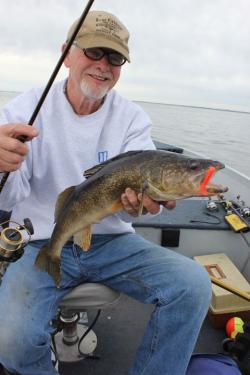
What Is Lyme Disease and How Does It Affect Me?

Prespawn largemouth

Prespawn largemouth

A few years ago I got Lyme Disease and learned what it isIf you spend much time outdoors you are familiar with many dangers that you might face. Snakes are scary, wasps and other stinging insects can hurt you, and falling out of a boat or a deer stand can be life-threatening. But most of us don’t think much about ticks and Lyme Disease, something that can make you deathly sick and even kill you.

Back in the early 1980s I was in a deer club where we had a terrible problem with “seed ticks” every fall. One day after hunting I saw my pants legs were covered with tiny moving dots. I had some Scotch Tape in the truck and stuck a bunch of them under a strip and took them to an entomologists at the University of Georgia Agricultural Experiment Station in Griffin.

He identified the ticks and gave me some background on the tick life cycle. I reviewed information on the internet to check my memory of this information. One good site on tick life cycle is: http://animals.howstuffworks.com/arachnids/tick2.htm
And on Lyme Disease at: http://en.wikipedia.org/wiki/Lyme_disease

Lyme Disease is a bacterial infection transferred to people by tick bites. The bacterium that causes the infection is Borrelia burgdorferi. When a tick bites you, it actually attaches with its mouth parts and feeds on blood. To keep your blood from clotting and ending its meal, the tick injects anti-clotting agents into its host. That is when the bacteria are injected into your body, where they grow and multiply.

Ticks are related to spiders and adult ticks have eight legs, making them arthropods, not insects. We have four kinds of ticks in this area that you are likely to encounter. American Dog Ticks, Black Legged Ticks, Lone Star Ticks and Brown Dog Ticks are all common in Alabama.

Their life cycle is complex. An adult female tick feeds on a host and fills with blood. After breeding, she drops to the ground and digs in. She will lay hundreds to thousands of eggs and, when they hatch, the tiny ticks climb onto grass stalks or bushes and wait on a warm-blooded host to come by. They get onto the host and get a meal of blood then drop off.

At the first stage of their life, the ticks are tiny, about the size of a pin head. Often called “Seed Ticks,” these young ticks can actually be any of the kinds of ticks that live around here. You aren’t likely to see them attached to you at this stage since they don’t feed long, but they leave an itching sore where they bite that shows up a day or two after they are gone. Since hundreds hatch in the same small area, you can get dozens on you at the same time.

The tiny ticks go back into the ground, molt and grow, then climb back up onto something to wait on a host again. At this stage the ticks are bigger and easier to see, but are usually still called seed ticks. They bite and attach a little longer before filling with blood and dropping off again. You sometimes start to itch while they are still attached at this stage.

After dropping off, the ticks will go through another molt then try to find a host a third time. They are mature at this point and will be bigger. You often feel them crawling on you and can spot them easier, and can even identify the type of tick. And they will stay attached much longer while feeding. This is the stage where the tick will be a big gray ball after filling with blood. At some point during this stage the tick will breed. The females then drop off, lay their eggs and start the cycle all over again.

Different kinds of ticks carry different diseases. The Brown Dog Tick mainly carries infections that affect dogs but Lone Star Ticks carry Tularemia and Lyme disease, the American Dog Tick carries Rocky Mountain Spotted Fever and Tularemia, and the Black Legged Ticks are the primary carriers of Lyme Disease and also carry human granulocytic ehrlichiosis. Since the different kinds of ticks are very hard to identify at different stages, all ticks should be considered dangers.

Growing up back in the 1950s, we seldom saw ticks except on our dogs, and almost never got them on us. They were just not that common. But something happened to make ticks much more widespread. Whitetail deer are favorite hosts of ticks and, as the deer population boomed, so did the tick population. By the late 1970s, it was hard to walk in the woods in warm weather without getting a tick on you.

I spend a lot of time outdoors and get bit by ticks way too often now. From April to October, if I go out to my ponds and walk around them, I will get ticks on me if I don’t spray carefully with repellant. Just playing with my dog can transfer ticks from him to me. Sitting on the ground turkey hunting is a very good way to get ticks too.

One of the most unusual ways I got ticks on me happened in April a few years ago. While practicing for a tournament at West Point Lake I answered a call of nature. When I got out of the boat, I commented to my partner about all the deer tracks on the bank in that area. That night I found three ticks on me, two crawling and one attached, when I took a shower.

In July I started to feel run down and tired all the time. Sometimes at night I felt like I was having a slight chill and running a low fever. By late August I did not want to do anything. I had to force myself to go fishing, and a club tournament was an ordeal I suffered through. Walking out to the mail box exhausted me.

In early September I made my annual fishing trip to northern Wisconsin. Even though the fish bit great, I could not fish longer than five or six hours each day, and felt miserable after that short a time. When I got home, I went to the doctor and told them to find out what was wrong with me.

A wide ranging variety of blood tests for all kinds of things came back positive for only one thing – Lyme Disease. The doctor said I could have been infected for months or even a year and the symptoms were just showing up. I never saw a rash or “bulls-eye” swelling around a tick bite that is supposed to be seen in 90 percent of the cases of an infection. I never found a tick on me that had been attached for more than a few hours, although it is claimed they need to be attached for 24 hours to transfer the infection.

The doctor put me on 200 milligrams of Tetracycline daily for 20 days and I started feeling better near the end of that treatment. Unfortunately, within a week after ending the antibiotic, I felt terrible again and was given ten more day of Tetracycline. It had no effect and another 20 days of it was prescribed.

I did a lot of reading and found out 20 days of Tetracycline was the accepted course of treatment, and was supposed to cure you. It was scary reading how Lyme Disease left untreated could affect your nervous system, heart and other organs and even cause death. I found articles saying there was a chronic form that was much harder to get rid of, often taking years of antibiotic treatments.

I also found out the Centers for Disease Control (CDC) had a map on their web site showing a low risk of Lyme Disease for most of Alabama and no or minimal risk in some far north areas. That really surprised me since everyone I talked with seemed to know someone who had tested positive for Lyme Disease.

At this point I had taken antibiotics for 50 days and still had the same symptoms. I was worried and went back to my doctor. He ran every test he could think of, taking eight vials of blood for them. All came back normal and he said there was really nothing he could do since the test said everything was ok.

One point was a little scary. He told me my Lyme Disease test was still positive, but it would always be positive. Once you get Lyme Disease your blood will always have the antigen that shows up positive in a blood test, so it really does not tell the doctor anything. You can still be infected or the infection can be gone, there is no way to tell.

For several weeks I managed to get by, feeling run down and tired all the time. It felt like someone had unplugged me and all my energy was gone. I could be sitting at my desk or lying in bed and just felt drained and did not want to do anything.

While talking to a local forester, I told him my experiences, and he said his son and gotten very sick with Lyme Disease and had gone through the same things without being cured. Then he found a doctor in Mobile that specialized in Lyme Disease and went to him. After a long struggle and months of antibiotics, he started getting better.

I contacted the doctor and got an appointment. He told me my experiences were common. He had been treating Lyme Disease for over 20 years, studying it and had come up with a course of treatment that helped about 95 percent of his patients. He ran several tests on me and said I was lucky that so far I didn’t have any neurological effects. He also said the approved course of antibiotics I had taken were not nearly strong or long enough.

He started me on 30 days of 500 milligrams of azithromycin a day plus a daily dose of Flagyl, a kind of antibiotic that will kill bacteria in the cyst stage. After three weeks of the dual antibiotics I started feeling better and actually wanted to get out and do things like cut wood and work around the house, something I had not felt like doing for almost six months.

That was the first stage of his four month treatment. The second stage is 250 milligrams of azithromycin daily for sixty days, then a fourth month of biaxin twice daily.

I still do not feel as good as I did last spring, but I no longer have the feeling of being exhausted all the time. I can actually enjoy fishing a club tournament for eight hours and the idea of turkey hunting doesn’t wear me out just thinking about it.

There are several things you can do to avoid ticks, but if you love hunting and fishing, it is much more difficult. Avoid grass and bushes where ticks may be waiting on you. Stay away from deer and dog trails in fields and woods. Wear light colored clothing so you can see ticks. Tuck your pant legs into boots or socks. And apply strong repellants. Some are made without smell so they won’t interfere with hunting, but use something anytime you are outside.

Watch out for pets that may bring ticks to you. If you have a dog, make sure you treat it for ticks and check yourself after playing with them. And remember, ticks can be anywhere, so always be careful when outside.

Avoid getting bit by ticks! If you do find a tick bite, be aware of any symptoms like fever, being tired all the time, weakness, confusion, headache or rashes. Watch for the bullseye swelling or rash. If you find a tick on you, stick it to some tape or put it in a small bottle of alcohol and show it to the doctor if you develop symptoms.

The blood test for Lyme Disease will not work for several weeks after the infection starts but let you doctor know if you have symptoms and have been bitten by a tick. And the test sometimes has false negatives, meaning you may have Lyme Disease and the test still show you do not have it.

It is best to seek a specialists in infectious diseases or, if you can find one, a doctor specializing in Lyme Disease treatment. I have heard stories of doctors that are skeptical of Lyme Disease infections or don’t know much about it and don’t even run the tests until it is too late.

Don’t let your symptoms go untreated – the sooner you get treatment the better your chances of getting over it. Left untreated, you could have serious health problems.

Abu-Garcia Orra SXHS Reel Review

At an outdoor writers meeting over a year ago I bought a Abu-Garcia Orra SXHS reel and teemed it with a Abu-Garcia Veritas medium action rod I got at the same time. The reel lists for about $100 but I got it way below list price. This is a great reel and it still works well even though I have not cleaned it. I spooled it with 12 pound P-Line monofilament since that is strong enough for fishing topwater in open water and the lighter line gives me more casting distance.

I can cast a Lucky Craft Sammy a very long way with this outfit, and the high speed reel helps a lot when taking up slack when a fish hits. Bass often run toward you when they hit and it is hard to set the hook effectively if you can’t catch up with them, especially with a lot of line out after a long cast.

The reel is very smooth but my only complaint with it is very minor. The antiblacklash system is hard to access, you have to loosen the thumb screw located on the top right of the reel then turn the cover on the left side to get to the adjustment. You may have to use a screwdriver to get the screw loose enough to turn with your thumb. And the antibacklash is not magnetic, it is centrifugal. There are tabs you move to increase amount of spin on the reel. They are labled to help you adjust to how you are using the reel. The Pflueger Purist reel is much easier to access and adjust.

In all honesty, I had to figure this out when I started this review since I have never adjusted the reel. With nothing set, all tabs off, I have never had a problem with blacklash on this reel or the Revos I use. They have the same kind of antibacklash. So this is a very minor problem.

Even at list price this reel is a great one, about as good as the Revo. And you could buy three Orras for the price of two Revos!

How To Beat the Summer Doldrums While Fishing

I caught this crappie in my pond

I caught this crappie in my pond

Beating The Summer Fishing Doldrums In Georgia

September can be our meanest month for fishing. Early in the month water temperatures are as high as they get all year. Oxygen content is as low as it gets, with a thermocline just a few feet down in many lakes and ponds. Water levels are usually dropping. And fish have been hit hard all summer, to the point it seems they can quote the price of popular lures.

The good thing about September fishing in Georgia is things will get much better toward its end, but there is no need to stay home and wait. Many places around out state offer good fishing even now, and you can catch a wide variety of kinds of fish in many different kinds of waters.

If you are ready to give up and stay home until things cool down, consider these places for a trip right now.

Lake Andrews Catfish

Like big catfish? Or just want a good mess of eating size fish? Lake Andrews offers both, and you can do well there now. You can catch blues, channels and flatheads from the lake.

Andrews is a small 801 acre lake on the Chattahoochee River that backs up to the Walter F. George dam. There is a lot of current in the lake due to discharges at the George dam, and current keeps the oxygen content higher and makes fish feed. Six boat ramps give good access to the lake, and a boat is the best way to fish for catfish.

How big are the cats in Andrews? The current state record 80 pound, 4 ounce blue cat was caught there in February, 2010. In 2006 it produced a state record at that time of 67 pounds, 8 ounces. If a big blue is what you want Andrews is a good place to find it.

The waters just below the Walter F. George dam as well as below the Andrew dam are good places for big cats. Anchor so you can fish the seams of current from normal discharge or power generation from the dam.

For the big blue cats fish cut gizzard or threadfin shad. Big baits catch big cats, so don’t hesitate to use a whole gizzard shad eight to ten inches long. Big flatheads like live bait so try a live bream, sucker or shad for them.

For eating size blues in the one to four pound range, which are common in the lake, try smaller pieces of cut gizzard shad or whole threadfin shad. Also try earthworms and bloodbaits for them and channel cats. Night fishing is best this time of year. Anchor your boat at deep holes near shallow water and fish the hole as well as the lip of the more shallow water around it.

For smaller flatheads try small live bream or shad and crayfish. The same deep holes will harbor flatheads. You can also catch smaller cats near the dams is areas with less current, so let your baits drift into eddies and other current breaks.

Flint River Shoal Bass

The Flint River offers fun fishing for shoal bass in September and much of it will be wading, so you can stay cool and comfortable while catching fish. The river from the Lake Blackshear dam to the Highway 32 Bridge offers a solid day’s fishing trip. You can launch a boat below the dam and take out at the bridge.

This section of the river is beautiful, with cypress trees and wildlife on both banks. It is very wild, with only a few houses and fields on the river. There are multiple shoals along this section of the river and in September the water is low so expect to get out and push your boat often.

A jon boat with a small gas motor is best since there are some fairly long flat water sections of the river. If you don’t motor through most of these sections you won’t make the trip in one day, and paddling a canoe or kayak is fun but you will do a lot more paddling and less fishing from them. You can camp on sand bars along the river if you want to make this a multiple day trip.

Shoal bass are the main target here although the river has everything from catfish to chain pickerel to warmouth. Shoal bass are first cousins of the smallmouth and are mostly brown with vertical bars. And they fight like a smallmouth, pulling hard, making exciting jumps and not giving up till they are out of the water.

Artificials work well and you can use topwater, crankbaits and plastics. Live bait like spring lizards, crawfish, hellgrammites and minnows will catch the bass, too. Ten pound test line on a spinning rod and reel will help give you the best fight and make throwing smaller baits easier. You will be wading and fishing a good bit so a lighter outfit is easier to handle, too.

In flat water sections of the river cast a small topwater popper or prop bait around blowdowns. Also work a small bream or crawfish colored crankbait like a #5 Shadrap through the limbs of the trees. Follow up with a green pumpkin curly tail worm behind a one-eighth to one-quarter ounce sinker. Go as light as you can based on current.

Let a spring lizard drift into a blowdown on a weedless hook and no sinker and you are almost guaranteed to hook a fish. It is hard to carry enough bait with you, though. You can catch small minnows and crawfish along the way and do the same with them. Also, rock worms or hellgrammites are common along the river and bass love them. Fish them and crayfish suspended under a cork since they will latch onto rocks.

Artificals work better when wading the shoals since you don’t have to carry a lot of bait with you and you can work them more effectively. Anchor your boat at the head of the shoals and fish down one area and back up the other side to the boat. Or, if there are two fishermen, one can start at the head of bigger shoals while the other drifts half way down, leaves the boat and fishes to the end. Just be sure to pick up your partner if you are the first one out, even if he is catching more fish than you!

When wading the shoals target deeper pools and runs between rocks. Hit any eddy behind a rock or log in the shoal. Let a green pumpkin worm drift into the holes and eddies. A light sinker works best. Also run your crankbait with the current through the riffs and into deeper holes.

Alatamaha River Tarpon

The Georgia Coast may seem like a strange place to head when it is so hot, but the fishing will make up for being too warm. There are a variety of good choices on the lower Altamaha River and sound but the most exciting has to be tarpon.

Tarpon migrate north during the summer and hit the Georgia coast in late June most years. There are still large numbers of them around in September. They move into the rivers and feed and you can sight fish for them in the river and the sounds. Hooking a tarpon gives you one of the most thrilling fights in fishing, with water throwing jumps and sizzling runs from fish that can weigh over 100 pounds.

You don’t need really heavy tackle for this kind of fishing. A stout bass flipping stick or heavy freshwater spinning rod to light saltwater outfits you can cast work well. You need a reel that will hold a good amount of twenty to thirty pound test line. That is strong enough but you need a much heavier leader to keep the fish from cutting the line.

Net live menhaden, also called “pogies,” or catch some cigar mullet about 12 inches long for bait and cast them ahead of surfacing tarpon for thrilling sight fishing. Fish them weighless for the best action. You can also get hits on artificials like bucktail jigs and big crankbaits.

Some days the tarpon are very spooky and you can’t approach them very closely, and they will take off when your lure or bait hits near them. On those days or when you don’t see them surfacing and feeding much try drifting live bait anywhere you see signs of tarpon. Put out a pogie on one weightless flat line and a mullet on another and drop one of each baits down on weighed rigs. Offer them a choice but be ready to grab a rod fast when you get a hit.

Lake Thurmond Largemouths

Lake Thurmond, better known as Clarks Hill to Georgia fishermen, is well known for its great bass fishing. It is full of keeper size bass with a good chance of landing a mounting size largemouth. Tournament catches of five fish weighing 15 pounds are common and 20 pound stringers are weighed in often.

September is as tough as it gets on Clarks Hill. During the day you can get on some topwater action as bass smash herring and shad on top but night fishing really shines. You can be comfortable while fishing and catch a lot of bass, too.

Many bass will feed in shallow water right at dark and again at daylight, and some will be active there all night long. Small flats near channel bends in the creeks are best. Deeper structure like rocky points near channels and riprap on bridges is good all night long, too.

Start about an hour before the sun sets with a big buzzbait fished on shady banks. Throw it right on the bank and work it fairly fast back to the boat. Make as long a cast as you can to cover more water. Hydrilla growing in the shallows makes for much better fishing but in some places it can be to thick for a buzzbait. If so, try a popping frog over the hydrilla. Also slow down and fish a big plastic worm.

Fish the same shallows from first light until the sun gets on the water, too. Again stay on the shady side of the bank. Both morning and night try to find some stumps or bushes in the water to fish as well as the hydrilla. The lake has been so low for so long bushes are hard to find now, though.

After full dark Texas rig a black plastic bait behind a three sixteenths ounce lead or use a one eighth ounce jig head with the same worm. Something with curly tails or legs moves more water making it easier for the bass to hone in on them in the dark.

Get on a bridge riprap or rocky point and fish both from the bank to the end and back. On the points keep your boat out in deep water and cast up on top of the point, working the shallow part then down the slope. If you put a bead or two between the lead and worm on your Texas rig you can shake your rod tip and make them click, further attracting the bass.

On riprap keep your boat out in about 20 feet of water and make angle casts, throwing your bait right against the rocks and fishing it slowly all the way back under the boat. Try to hit every rock and twitch your bait in one place. If you are getting hung too much go to a one eighth or even one sixteenth ounce sinker. You will have to work the lighter leads more slowly, but that is a good thing.

Toccoa River Trout

The Toccoa River below Lake Blue Ridge Dam has been a good place to catch rainbows in the past but the drawdown of the lake for dam repair hurt the fishing. The good news is cold water is flowing from the dam again and fishing is good again. In the past two years the DNR and volunteers have released 40,000 brown, rainbow, and brook trout ranging from 3 inches to over 4 pounds in the river.

You will catch a lot of trout in the river between 10 and 14 inches long this fall but you also have a good chance of a big rainbow or brown. Fish from the Blue Ridge dam downstream to Horseshoe Bend Park. Four public access points, at Blue Ridge Dam, Curtis Switch, Tammen and Horseshoe Bend Parks often get crowded but you can float between them in a canoe, kayak or tube and catch fish.

Trout in this section of the river can be anywhere from one side to the other but you will have your best luck near some kind of cover. Fish fast runs, undercut banks, deeper holes and any kind of break in the current like big rocks or wood.

You can use live bait (except live minnows), flies or artificials on this section of the river and all will catch fish. Nightcrawlers are one of the most popular and best baits. Drift a worm weightless through deeper holes for big fish. Also try canned kernel corn. Put it on a bare hook or stick a piece on one of the hooks of a small inline spinner. The corn must look like hatchery food since they like it so much.

You can’t use live minnows but artificials like small crankbaits, inline spinners and spoons will fool trout. Brown trout especially like minnows and these fake minnows are good baits to fool them. Fish them on four to six pound fluorocarbon line on a light spinning outfit.

For fly fishing the Toccoa offers good caddis, mayfly and midge hatches. Carry flies to match the hatch from any of these and you will catch trout. You can also catch good trout on streamers and wet flies. Streamers work well when fished deep in slower water in big pools.

Carters Lake Spotted Bass

Carters Lake has one of the best populations of big spotted bass in the state. Four and five pound spots are common and six to seven pounders are caught every year. The lake is very deep and has shad as well as alewives baitfish that the bass focus on this time of year.

During the day drop live bait, drop shot rigs or spoons down to suspended bass. They will hold under schools of baitfish, often in the tops of standing timber in very deep water. Focus on the main lake and use your deptfinder to locate them.

At night fish a small jig and pig on steep rocky banks near the dam. Also try a big black spinnerbait slow rolled on points and parallel to bluff banks. A little red in the skirt will help. A deep running crankbait will also catch spots in the same places.

These six places around out state give you some good options to beat the September funk and catch fish. Give one or all a try this month and you might not dislike September fishing so much in the future.

How To Follow Moving Bass

From The Fishing Wire

Greg Vionson with Smallmouth Bass

Greg Vionson with Smallmouth Bass


Even the Pros Struggle to Follow Moving Bass

Of all the problems bass tournament pros face, being forced to re-locate fish that have suddenly moved ranks among the hardest to solve, and it happens often this time of year during the transition from spring into summer. It happened recently to Yamaha Pro Greg Vinson, who after leading a Bassmaster® Elite event for two days, lost his fish the next day and fell to 23rd in the standings.

“I did not have a good practice at Bull Shoals, but on the first day of competition the bass had moved to an area I thought they might go to,” explains Vinson, considered one of the best at re-locating lost bass, “and I caught nearly 17 pounds, enough to lead the tournament. The next day, they weren’t there, but I managed to find them again nearly 400 yards away, and caught more than 13 pounds and kept the lead.

“On the third day, they disappeared again and I never re-located them. I really don’t know where they went, or why they left.”

Over the years, Vinson has studied bass habits closely in order to better figure out why bass do change locations so suddenly and where they might move to under certain situations. What continually surprises him is how fast bass do re-locate, and how far they may travel.

Vinson says finding the baitfish can sometimes be key to relocating a school of quality fish.
“Generally, if the weather has been cooler than normal in the spring and it starts warming quickly, bass will move shallow,” notes the Yamaha Pro, “while if it has been warm in the autumn and turns suddenly cold, any fish in shallow water move back out toward deeper water. In either case, a school of fish can make a mass movement overnight and travel several hundred yards.

“At Bull Shoals, when the bass moved shallow, I re-located them by finding baitfish first, and sometimes forage like this will actually trigger bass to move, because the forage is even more sensitive to temperature changes and moves first. When I’m trying to re-locate bass that have moved, I always start looking for baitfish at the same time because bass do follow them.”

Changes in water conditions, such as becoming extremely muddy due to rain and runoff, may also cause bass to move. When that happens, Vinson looks for the nearest clear water.

“Changing water conditions can be tricky because the bass may simply become inactive and just stop biting,” warns the Yamaha Pro. “Whenever I’ve been catching bass steadily and then stop getting bites, I first change lures and retrieves, just to make certain the fish really have left.

Rapid changes in temperature are the biggest mover or schools of bass, says Vinson–and sometimes, relocating them can be a real challenge.

If I’ve been using a fast-moving jerkbait, for example, I’ll change to a much slower soft plastic bait, or if I’ve been catching bass on a slow retrieve, I’ll speed up and try for a reaction strike.

“After I’m sure the fish have moved, I’ll usually use a spinnerbait to try to find them again because it’s such a good reaction strike lure.”

When he realizes his bass have definitely left the area, Vinson also looks for the nearest available cover when he thinks the fish have moved shallow, or the first substantial depth change when he believes they have moved deeper.

“And sometimes, if you just can’t find your bass again anywhere, the best thing may be to leave the area entirely and just start over again,” laughs the Yamaha Pro. “If I’ve been catching bass in a tributary creek, for instance, I may try to find another creek with similar cover or structure and I can establish a similar pattern.

“The trouble is that when you have been catching bass consistently in a certain area, it’s really, really hard to make yourself leave that spot. That’s what happened to me at Bull Shoals. After catching more than 30 pounds of bass in two days and leading the tournament both of those days, I was convinced I could re-locate those fish and start catching them again, but I never did.

“I honestly do not know where they went.”

Abu-Garcia Veritas Medium Action Rod Review

Veritas Rods Picture

Veritas Rods Picture

I purchased a Abu-Garcia Veritos medium action rod at an outdoor writers auction and teamed it with an Abu-Garcia Orra SXHS reel that I got at the same auction. Both were bought for well below the list price. I have had this rod for over a year and I like it so much and it has held up so well I bought another one this year. The reel was spooled with 12 pound P-Line monofilament line. The outfit is my favorite for casting big topwater plugs like a Lucky Craft Sammy. The Orra is a good match for this rod.

The rod lists for about $100 and has micro guides. I had not tried these guides until I got this reel fearing they would not hold up and might be bad when using older line that had curled. But I have had no problems and those guides may help with casting distance. I can cast a Sammy a very long way, a big help when trying to reach schooling fish or fishing clear water when you want to stay well back from the area you are fishing.

At a recent tournament a school of fish came up about 150 yards from the boat. I put the trolling motor on high and headed toward them as I picked up this outfit. I could reach them long before my partner could. I caught a two pound striper from the school before they went down, and it hit before my partner could reach them.

The medium action on this rod is just right for casting a topwater plug and fighting a fish. It has good backbone but a light tip. The six foot, six inch length works well but you could get more distance with a longer rod.

After over a year of heavy use and many fish caught I have not had any problems with the rod or guides. I did put a piece of pipe insulation in front of the reel and taped it since I hold a rod there when fishing, and it is much more comfortable with a cushioned grip. The open rod blank where the reel seats helps with feel and by gripping the rod in front of the reel, rather than palming it, I can easily pinch the line between my thumb and finger to have even better feel.

This rod is a great addition to any fisherman’s arsenal and the price is low enough that it won’t break the bank, even if you buy several.

How To Punch Mats for Bass with Jimmy Mason

Jimmy Mason and bass caught in mats of grass

Jimmy Mason and bass caught in mats of grass

The Finer Points of Punching Mats With Terry Scroggins and Jimmy Mason

By Steven Johnson
From The Fishing Wire

Alabama guide Jimmy Mason is an expert at punch-bait fishing on the vast grass mats of the TVA lakes.

Two bass fishing tactics are commonly used to pull big bass from massive grass mats: Throwing a hollow body frog for those fish willing to smash through the “roof,” and punching through the grass for those holding below. If bass aren’t hitting the top, the choice is already made. Put up your dukes and start punchin’.

Endless grass mats make it seem like B.A.S.S. Elite pro Terry Scroggins is searching for a needle in haystack. With each pitch, Scroggins’ big weight hits the dense mat, punches a hole and pulls his Big Show Craw down beneath the grass. He lifts the bait a time or two to see if anyone is home, pulls the bait back out of the same hole and then pitches to another spot. The approach appears random, but Scroggins is highly intentional about his lure choice, the spots where he flips it and each presentation.

A Florida-groomed pro with five B.A.S.S. wins and more than $1.5 million in career earnings, Terry “Big Show” Scroggins understands the idiosyncrasies of matted grass. He knows that bass live under those mats and that the best way to get them out often is to flip a heavily weighted bait so that it punches through the cover.

Tennessee River guide and Bassmaster pro Jimmy Mason also relies heavily on grass-punching strategies. Mason guides mostly on lakes Pickwick and Guntersville, both of which support extensive stands of matted vegetation.

Punching is a prime technique anywhere vegetation stays matted on top, and is normally most effective on sunny days when bass seek the shade of a roof overhead. During the cool season, Mason thinks punching first on post-front, bluebird-sky days because the sun heats the mat, and the water beneath the vegetation tends to be just a bit warmer.

Elite pro Terry Scroggins learned punchin’ in his home Florida waters but now uses it where ever he finds thick floating weeds.
Grass mats often are thick on top but more open under the roof, and that influences lure selection. For the easiest descent through the mats, lures should be slender without big appendages that can grab the grass and stop its descent.

Likely forage under a mat is a critical factor for Scoggins when he’s trying to decide which bait to punch. In Florida, crawfish abound beneath many mats, so his bait of choice often is his namesake Big Show Craw. Where bluegills are the main forage he’s more likely to use a YUM 2ube or Vibra King Tube. A compact creature-type soft plastic like the Wooly Bug is a blend of the two styles, and he often tries it first when he’s not certain of the preferred forage.

The size of the bass present also influences lure choice. When Mason is targeting heavyweight bass he prefers the Vibra King Tube.

“I don’t know exactly what it is about that Vibra King Tube,” he said, “but it attracts big fish.”

Both professional anglers select dark colors for punching. The grass roof cuts light penetration so bass can’t see baits well, and dark colored baits provide a better silhouette. His two go-to colors are green pumpkin and black-and-blue.

Other requirements for punching bass in the face include a heavy sinker (1 ½-ounce, often pegged), strong straight-shank or offset worm hooks, heavy action flippin’ rods and 60- to 80-pound braided line.

Finding bass in grass mats is a lot like locating them in other cover, look for something different.

The Big Show Craw, designed by Terry Scroggins, is one of the favorites for punch-bait fishing when heavily weighted.
“Look at the grass mat just like you’d look at a shoreline,” Scroggins said. “Look for the little points and pockets, greener spots, mixes of grass types and other cover poking through. Anything that’s different can hold fish.”

Not all distinctions are visible from above the surface, but topo maps or GPS mapping and graphs reveal bottom breaklines, ditches, points and other features that may hold fish. Mason typically approaches mats of grass methodically, beginning along outside edges and then moving to scattered mats and eventually into the thickest stuff. He watches and listens continually for movement beneath the mats that suggests feeding fish and pays careful attention to every detail every time a fish strikes.

Because mats commonly cover extensive areas, it’s critical to refine the pattern as a day progresses. Move quickly and make a lot of punches at a variety of locations until a fish hits, then slow down. Bass commonly congregate under mats, so an area that yields one bass often holds more. When one strikes, make your next pitch to that exact spot.

Mason says that a lot of his clients who are unfamiliar with punching mats miss fish all day long the first time. Detecting strikes can be tough.

“First, make sure your bait goes all the way through the mat,” he said. “When it does, let it fall to the bottom. Pay attention because aggressive fish might grab it before gets to the bottom.”

Once the bait finds bottom, both anglers advise experimenting to determine where the fish are holding in the water column. Mason hops the lure a time or two, then lifts it almost to the surface and smacks it against the top of the mat a few times before dropping it again.

“They might be on the bottom,” he said, “but they also might be barely under that mat. When that’s the case, smacking the mat with the bait triggers strikes.”

Fishing Lures Are Made To Catch Fishermen

Niles Murray and Flint River Shoal Bass

Niles Murray and Flint River Shoal Bass

In last Sunday’s comic strip “The Lockhorns,” the wife and husband are getting out of a boat with fishing equipment in their hands. He has a very disgusted look on his face and his wife says “The fish weren’t dumb enough to go for that lure … but you were.” I know how he feels!

I have said many times that fishing lures are made to catch fishermen, not fish. Walk into Berrys Sporting Goods and there is a bewildering array of plugs, spinnerbaits and worms in any color you can imagine, in many shapes and sizes. And I have a couple of most of them in my boat.

Any lure will catch a fish. But does a fisherman really need all those different combinations? And why is a lime green plug better on any given day than a chartreuse one? It probably isn’t. But us fishermen keep hoping for some magic lure that will make us catch fish, no matter how or where we use it.

Professional fishermen hype their favorite lures and colors constantly, and many have plug series and colors named for them. They have a vested interest in those lures selling. After all, the companies making them pay the pros a good salary or stipend. And every lure company is competing with others for the fisherman’s dollar.

Don’t get me wrong. I have my favorites. And I keep trying new stuff that seems to come out every week. Some day that magic lure or worm color may be invented, but I doubt it. The place you use a lure and how you fish it is much more important than other factors.

Other members of the bass clubs make fun of me since I normally have about 20 rods and reels on the deck of my boat, all rigged with different lures. It is much easier to pick up a different rod to try a different lure than to cut the one you are using off and tie on another one. That is, it is easier and quicker if you don’t have to untangle six rods to get to the one you want.

I could probably have four rods and reels out to use in a tournament since I seldom fish more than four or five baits during a tournament. But I want to be ready just in case. In the last tournament I fished I used a spinner bait most of the day. I also fished a buzz bait, topwater popper, jig head worm and crankbait. But I had at least 15 more outfits ready just in case I wanted to try something else.

A jig head worm, or shaky head, is pretty much my “goto” bait when fishing is tough. And I use one color of worm 90 percent of the time, switching to a different color only in real clear water. But I have over 100 bags of worms in different colors in my boat. Some day I may find one of those weird colors, like Tequila Sunrise, is just what the fish want.

Bass eat a lot of kinds of food, but most are basic, subdued colors. I have never seen a bright red shad but I have bright red shad plugs. No orange worms exist in our lakes but I have bags of worms ranging from a dull, drab orange to bright, fluorescent orange. Sometimes when fishing a floating worm it helps me to see the bait if it is a bright color, and the bass will eat it, but why do they eat it? They don’t seem to care about the color at all.

I often hear after a tournament that the bass would hit only a purple worm with a pink tail and gold flakes, or some such combination. But then you can talk with other fishermen that caught just as many, or even more, fish on a completely different color. And as often as not I have been fishing the purple pink gold worm all day without a bite on it!

In any big tournament the pros do well with a wide variety of baits fished in a lot of different ways. I fished at Hartwell on Wednesday with a fisherman that had won a tournament on Clark’s Hill the previous Sunday. He and his partner had five bass weighing 22.99 pounds and had big fish with a 7.8 pounder. He told me they caught them on a small crankbait and a white jerk bait.

On Thursday I was at my boat club on Clark’s Hill and talked to a bass fishermen while we took our boats out. He said he was having a tough time catching bass but he heard about a tournament won on Sunday. The two guys were using a big crankbait and a chartreuse jerk bait and had 28 pounds, with a 7.8 pounder for big fish. After a little discussion we realized we were talking about the same tournament, but the weight had gotten heavier with the retelling.

Funny thing, he had been using a big crankbait and chartreuse jerk bait all day without a bite. But he was fishing way up Little River where the water was stained while the tournament was won further down the lake in much clearer water. But he thought the winning fishermen had discovered what the bass wanted so he fished it all day. It was a little funny that he had heard almost the right info about the baits but was convinced enough to use those baits, even if they were the wrong ones.

Us fishermen are crazy. So when you go to the store, be sure to pick up some of the newest, hottest lures and colors. The manufacturers and retailers will appreciate it. And the fish may even hit it!