What Are Some Secrets To Catch Summertime Bass?

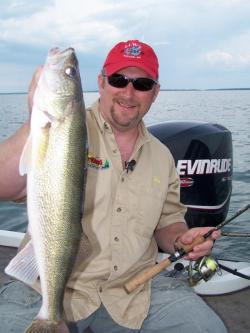
David Dudley likes the Craw for summertime fishing

David Dudley likes the Craw for summertime fishing

Two Secrets To More Summertime Bass

By Lawrence Taylor
from The Fishing Wire

FLW pro David Dudley has 33 Top 10 finishes and 6 wins under his belt. He won the FLW Championship in 2003, and was named the FLW Tour Angler of the Year in 2008, 2011 and 2012. In short, the guy knows how to catch bass.

In the summertime, if he’s not deep-cranking a Fat Free Shad BD8, he’s thinking soft plastics. Here are two of his favorite ways to fish soft plastics for hot weather bass, and two secrets he uses with those rigs to catch more, bigger bass than his competition.

If he knows bluegill and other panfish are spawning, Dudley first reaches for a 6-inch YUM Dinger and rigs it wacky, a common and effective rig for bass keyed in on the panfish activity. What’s not common is the way he retrieves the bait.

Dudley says that many anglers work a wacky-rigged worm completely wrong. They go far too slowly, giving it a couple of twitches and letting it free fall down in a more vertical-fishing style. Dudley keeps the bait moving with quick twitches of the rod so the bait moves more horizontal than vertical.

“You’ve got to keep it moving,” he said.

Dudley twitches the rod every second or less and continually collects the slack. The result is a worm that claps its two ends together and says “you…come…eat…me” to any nearby bass. He often throws the bait on spinning gear and prefers to skip it into pockets of flooded buckbrush or other cover. Preferred color patterns are the usual, with Bream and Watermelon/Red Flake getting most of the reps.

Another soft plastic he’s been throwing since it was introduced late last year is the YUM Mighty Craw. This elongated craw-imitator features a segmented body and two pairs of thin legs along the sides, and two long, maximum-action claws on the front. These long front claws are designed with extra plastic at the ends, which prompts them to “swim” with the slightest twitch of the rod or smallest breath of current.

Common Mighty Craw rigging includes the Carolina rig, Texas rig and as a trailer for jigs and bladed jigs. Dudley notched an 8-pound-plus largemouth this spring using the Mighty Craw as a trailer on a Booyah Swim’N Jig.

“I throw this rig anytime I’m around cover,” he said. “Cover can be rocks, wood, grass, docks – any type of cover.”

One key to success with the swimming jig and Mighty Craw is to select the color of the Craw depending on water clarity. If the water is clear, he suggests using greens or browns. In muddy conditions he goes with black.

If the cover he’s fishing is sparse, Dudley fishes the jig and craw quickly through the area and picks up active fish. The thicker the cover, though, the slower he works the bait.

Dudley doesn’t make many alterations or tweaks to his lures, but does make sure that the jig skirt doesn’t hang down too far and touch the arms of the Mighty Craw because it restricts the swimming action.

“Whatever gives you confidence makes you fish better,” he said, “but all I do to the jig is make sure the skirt isn’t impeding the action of the claws.”

Why Should I Use Confidence Lures To Find Bass?

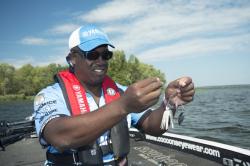
A spinnerbait is one of Is Monroe's confidence baits

A spinnerbait is one of Is Monroe’s confidence baits

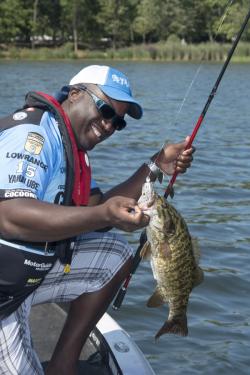
Ish Monroe caught this smallmouith on a confidence bait

Ish Monroe caught this smallmouith on a confidence bait

from The Fishing Wire

Confidence lures’ help Monroe find bass anywhere.

Yamaha pro Ish Monroe chases bass all over the nation, and has evolved a fish-finding strategy that earns him tournament money nearly every where he goes.

Few anglers anywhere face the problem of locating bass on new lakes more often than Yamaha Pro Ish Monroe, who competes on both the Bassmaster® Elite and FLW® tours, as well as in any other events he can fit into his schedule. He doesn’t often have time for pre-tournament practice nor does he research each lake, but rather, he relies on his four ‘confidence lures.’

“At every lake I fish, I tie on a topwater frog, a square-bill crankbait, a spinnerbait, and a plastic creature bait on a flippin’ rod,” he explains, “and then I look for the places where I can use them. These are my favorite lures, and I would rather fish them than anything else.

“I have enough confidence in them so that when I find the conditions where I can use these lures I know the bass will be there. I also know through experience that somewhere on any body of water I will find the right cover and water depth where at least one of these lures will work.”

Monroe likes a spinnerbait best of all, but also relies on creature baits, frogs and square-bill crankbaits.
Of the four lures, Monroe’s favorite is the spinnerbait, either a 3/8- or 1/2-ounce model with Colorado and willow leaf blades and a white skirt. It’s a combination he’s been using nearly 30 years.

“This technique of locating bass is known as ‘fishing to your strengths’, and I certainly am not the first to use it,” continues the Yamaha Pro, “but it really does help solve the problem every fisherman has in locating bass. You always fish better and more confidently with your favorite lure or technique, and most of the time you can visually identify the water where that lure will be the most efficient.”

That’s how Monroe fished the opening event of this year’s Bassmaster® Elite Series on the Sabine River in southeast Texas. He’d never seen the water previously so he did spend three pre-tournament days looking at it. During that time he never made a single cast. He did locate the spinnerbait water he was searching for, however, some 70 miles from the launch, and he later fished it all four days of the tournament where he finished fourth.

“I really can’t stress enough how important confidence is in bass fishing,” Monroe emphasizes, “so I always tell fishermen to start every day fishing with their favorite lure. If they don’t have that confidence, they aren’t going to catch anything. What I have done personally is add three other lures I have just as much confidence in that let me expand my water selection.

Monroe says scouting until you find water where your favorite lures will be effective is key.

“The spinnerbait is the most versatile, but the square bill crankbait gives me another option for shallow brush, the frog works over thick vegetation, and with the creature bait I can penetrate any thick cover. I am essentially a shallow water fisherman, and with these lures I know I can fish any type of shallow water.”

The Yamaha Pro also points out that for him, all four of his ‘confidence lures’ are fun to fish. He is versatile and has mastered all of the various lures and presentations tournament pros use, but he doesn’t necessarily always enjoy using them.

“A bass is a bass anywhere in the world you find them,” laughs Monroe, who has not only fished for them throughout the United States but also in Spain, Japan, and several other foreign countries, “and I think we often give the fish credit for being much smarter than it really is.

“That’s why the ‘confidence lure’ system works so well. We know bass are going to be located in shallow water with cover, and we know spinnerbaits, for example, are extremely effective around shallow water cover.

“When you can look at bass fishing that way, I think the whole problem of finding bass on any lake you go to becomes a lot easier to solve.”

How Can I Catch Bass In the Altamaha River Basin In Georgia

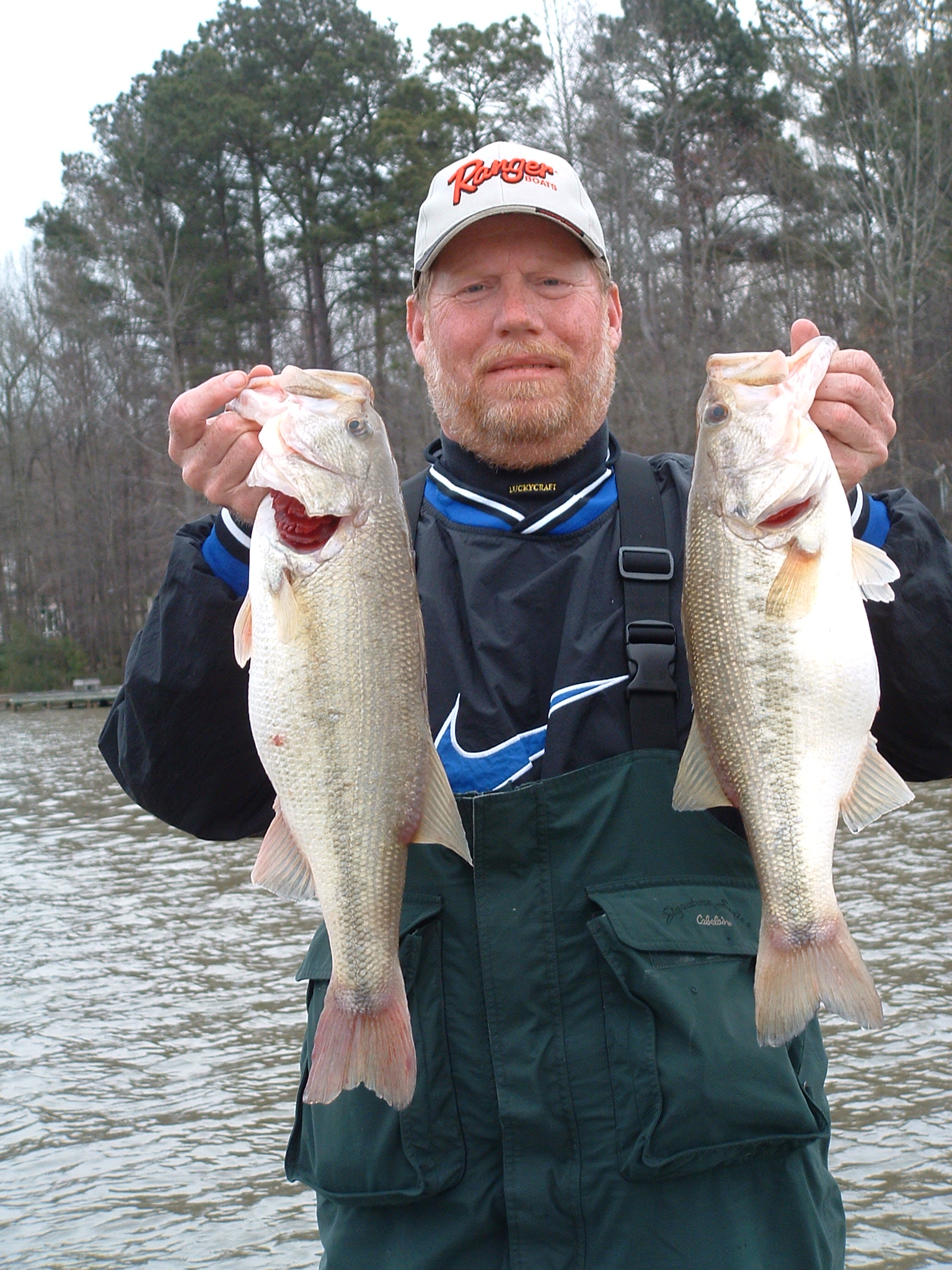
Roger caught these bass in Lake Oconee

Roger caught these bass in Lake Oconee

Catching bass in the Altamaha River basin in Georgia offers a lot of different kinds of fishing.

Some waters just seem to produce better bass fishing. The Ocmulgee River, whose waters produced the world record bass, and the Oconee River join to form the Altamaha River. The lakes on the two rivers upstream are varied but excellent bass fishing waters, and the big river downstream of the junction is full of hungry bass.

On the upper end of the basin, Lake Jackson on the very upper end of the Ocmulgee and Lakes Sinclair and Oconee on the Oconee River are popular destinations for bass fishing. Although there are some similarities, all three lakes have their own types of cover and structure.

The Altamaha River itself can be intimidating if you don’t fish big rivers much but it can be excellent if you take the time to learn to fish it. It is very different from the lakes but all four places are definitely worth fishing right now.

Lake Jackson

Jackson, dammed in 1911, is one of our oldest lakes and it covers 4750 acres. The dam is on the Ocmulgee River downstream of where it forms at the junction of the South, Yellow and Alcovy Rivers. Its rocky shorelines are covered with docks and the lake has a reputation for big largemouth, but it is also full of spotted bass.

Kip Carter is a well known professional bass fisherman and Jackson is his home lake since grew up on it and lives nearby now. He knows it well and this time of year is one of his favorites to fish it.

Bass fishing on Jackson in the spring centers on both the bass and shad spawn. Bass will move into spawning areas in waves, starting in March and continuing through April. Since the bass don’t all spawn at one time you can catch pre spawn, post spawn and spawning bass right now. Kip says you can find bass on the bed almost any day in April.

The shad spawn in April provides some of the best fishing of the year. When the shad move to seawalls and riprap to spawn the bass concentrate on them, eating their fill every day. They are so voracious they will often eat until you can see the tails of the last shad they swallowed sticking out of their throat.

A wide variety of baits will catch bass now on Jackson. While the shad are spawning a white buzz bait or white spinnerbait with silver blades is definitely a go-to bait. Use a one quarter ounce bait for most fishing, but go to a half ounce spinnerbait if you want to concentrate on bigger bass.

Early in the morning you will see the shad schools running the seawalls and riprap. Points on the main lake are best, especially if the channel swings in by them, but secondary points back in the coves are also good. You should move fast until you find the shad spawning then slow down.

Throw your bait right on the bank and work it out at a 45 degree or less angle. The bass will be right on the bank early. After the sun gets on the water back off and slow roll your spinnerbait, covering deeper water where the bass are holding after the shad back off the bank.

Also try a jerk bait after the sun comes up. Cast near the bank and work it back in a jerk – jerk – pause action, making it look like an injured shad trying to get back to the school. Shad colors work best.

During the day Kip targets shallow cover lake brush piles, blowdowns and docks in the coves. A brown jig with a brown or pumpkinseed trailer is one of the best baits to fish around this cover and a three eights to one quarter ounce jig will fall slowly and not get hung as much. It will also draw strikes from any bass on the bed you spot.

A weightless worm will get bit better than just about any other bait, day to day, this time of year. Kip sticks with natural colors rather than the bright worms some favor and watches his line for the bites rather than just watching the bait. He says the natural colors will draw more strikes than the brighter colors.

If you like worm fishing both a Carolina or jig head worm will catch fish. And they are better for fishing a little deeper. Try a Baby Brush Hog on the Carolina rig and a straight worm like a Trick worm on the jig head. Stick with natural colors like green pumpkin and fish rocky points and creek channel drops with them.

Lake Oconee

Lake Oconee is on the upper Oconee River just south of I-20 and is one of our newest lakes. It has it everything bass like with defined channels, deep points, riprap, docks, roadbeds, grass beds and standing timber. With a slot limit protecting 11 to 14 inch long bass it produces a lot of them that size that are fun to catch. It also means there are a lot of bass longer than 14 inches in the lake.

Roger McKee guides on Oconee and does well in a lot of tournaments there. He says the bite centers around the bass spawning movement and the shad spawn on Oconee like it does on Jackson.

A spinnerbait and crankbait are good baits to locate the bass on Oconee and also catch the bigger bass needed in tournaments. Roger will fish both baits fast, looking for active fish. He says he would choose a crankbait if he could use only one bait on Oconee right now.

Use white spinnerbaits with a gold and silver blade in clear water but go to more chartreuse in the bait as it gets more stained. Shad colored crankbaits are better in clear water but also use more chartreuse baits in stained to muddy water.

Many big bass spawn on Oconee in March so they are on an active feeding spree now, and there will also be pre spawn bass moving in as well as bass on the beds. Secondary points in the coves and smaller creeks are the key to both pre and post spawn bass and Roger will hit as many as he can. By fishing his crankbait or spinnerbait fast he can cover a lot of water, and fast moving baits make it harder for a bass to see it is a fake and will draw reaction strikes.

The very back of the cuts and pockets behind these secondary points are where the bass spawn, so look to them for big females on the bed. Roger says some of the biggest bass of the year can be caught off the beds if you have the patients to soak a jig and pig or worm in them.

A weightless worm will also catch fish back in the pockets now. Fish it around any cover like stumps, brush, blowdowns and grass. Try working it fast just under the surface first but it you don’t get hit slow it down. Jerk it and make it dart, then let it sink. Watch your line and if you see any tick or movement set the hook.

Roger also fishes a jig and pig and Carolina rig on Oconee. The Carolina rig is good on the secondary points, especially if you get a couple of bites on fast moving spinnerbaits or crankbaits on one. Slow down and work it with a worm on a Carolina rig.

Fish the jig and pig on the same points, but also throw it around brush, blowdowns and stumps. Fish a brown jig and trailer in clear water but go to a black and blue jig and trailer in stained water. Work the bait slowly with hops on the points and jiggle it on wood cover.

During the shad spawn all the bass on the lake, unless they are locked in on the bed, will feed on them. Shad prefer hard cover like riprap and seawalls to lay their eggs seawalls with riprap are all over the lake. Fish your spinnerbait fast on them early in the morning close to the rocks then slow it down some as the sun comes up.

Lake Sinclair

Lake Sinclair backs up to the Oconee Dam but varies a good bit from it since it is an older lake. Many coves have grass like water willow in them and the docks tend to be older and have more brush piles around them. There is no slot limit on bass and Sinclair bass tend to run smaller, with lots of 11 to 13 inch bass being caught every day.

Both my bass clubs fish Sinclair this time of year since we catch so many bass there and there are so many different patterns you can fish. The bass spawn is in full swing and the shad spawn will take place during the month.

When the shad are not spawning, start early in the mornings with a white and chartreuse buzzbait or spinnerbait back in the coves around the grass. These grass beds are full of bluegill and bass love to eat them. If the grass is not too thick throw to the back side of it and work your bait out. If it is thick cast into it as far as you can without getting your bait clogged up.

Keep the buzzbait moving steadily but drop the spinnerbait at the edge of the grass in any holes or cuts. Let it flutter down a few inches then pull it forward. Bass will often eat it as it stops and flutters.

Floating worms are also good in the grass. Fish them in the grass, letting the bait fall into any holes and at the edge. A white Trick worm is good since you can see it and keep track of where it is and when it disappears, set the hook.

After the sun gets up back off to secondary points and fish a three sixteenths ounce jig head with a green pumpkin worm on it. Drag it along the bottom, with a hop a few inches high every foot or so. Some JJ’s Magic chartreuse dye on the tail mimics the fins of a bluegill and helps you get more hits.

During the shad spawn fish a three sixteenths ounce white spinnerbait with two silver willowleaf blades on riprap, seawalls and around the grass, too. Shad will spawn on the grass as well as the wood and rocks. Watch for flickers of shad as the school moves down the bank.

Cast as shallow as you can, even to the point of landing your bait on the bank and pulling it off. It often seems a bass will sit with his nose right on the rocks, waiting on a shad to come by. You don’t want to cast behind them.

After the sun gets on the water and the shad quit moving, back off the cover and reel the same spinnerbait slowly, keeping it right over the bottom. Fish it out to at least eight feet of water since bass will back off to that depth after feeding.

Docks are also hold a lot of bass this time of year and you can catch them by running a shad colored crankbait or your spinnerbait beside the posts and over brush piles around them. Also pitch a black and blue jig and pig to the docks, getting back under them as far as you can when the sun is bright.

Try to bring your jig and pig right beside every post. When you hit brush stop your bait and jiggle it in one place to get a reluctant bass to eat it. Make it look like an easy meal for a lazy bass.

Altamaha River

The Altamaha River starts south of Vidalia where the Omulgee and Oconee Rivers join. It is a big river with lots of current but also has many pockets and backwaters with overhanging trees and bushes. These pockets are where the bass move in the spring to spawn, so that is where you want to fish.

This is pretty simple fishing since you will be casting to visible cover in shallow water. One of the best tactics is to skip a weightless worm under overhanging limbs of willow trees. Let it sink to the bottom and settle for a few seconds. Watch for your line to start moving off when a bass picks it up. Use natural colored worms like green pumpkin or black.

Also study the backout. If it is a small creek entering the river it will often have a channel the bass will follow. Target stumps and other wood cover along the channel with a chartreuse and white spinnerbait with one gold and one silver willowleaf blade. Run the bait over the wood then let it fall as it passes.

If the backout is an old oxbow, usually one side will be deeper. Bass often hold on this deeper side on wood and grass. A spinnerbait fish beside the cover is good but also try a black and blue jig and pig flipped into the heaviest cover on this deeper bank.

The Altamaha River drainage offers lots of different fishing opportunities. Give them all a try.
Why Should I Use Vibrating Jigs for Bass?

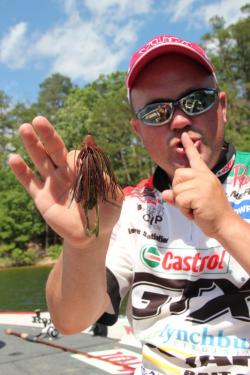
Jeremy with smallmouth bass that hit a vibrating jig

Jeremy with smallmouth bass that hit a vibrating jig

From The Fishing Wire

Heavy pre-spawn bass like vibrating jigs

Big smallmouth like this one readily grab a vibrating jig almost year around says Yamaha Pro Jeremy Starks.

Of all the lures Yamaha Pro Jeremy Starks normally stocks in his boat and truck, his supply of vibrating jigs always gets packed within easy reach. They’re not just his “go-to” lures if fishing gets tough, they’re his “anytime, all the time” choice.

“Honestly, I don’t think there’s a wrong time to fish a vibrating jig,” explains Starks, winner of the Bassmaster® Elite Series event on Tennessee’s Douglas Lake last season. “My favorite time to fish them is right now where water temperature is still in the 40’s on many lakes, but these lures are so versatile you can really use them anytime.”

Vibrating jigs look like normal jigs, except they have a small, rectangular shaped vibrating blade attached to the front of the jighead. As the lure moves through the water, the blade swings from side to side, often ticking the head – thereby adding sound – and also causing the jig to vibrate and wobble from side to side.

Rip-rap, docks and other cover are ideal cover for the wobbling lures, which are nearly snag-proof.

“Vibrating jigs are a relatively new design in lures,” continues Starks, who first began fishing them in competition in 2006, “and even today they’re not that widely used simply because a lot of bass fishermen don’t really understand them. Vibrating jigs are most often compared to spinnerbaits, but they have more vibration than a spinnerbait although not as much flash. They’re far easier to fish through submerged vegetation than spinnerbaits and have a smaller profile, but they’re not weedless.”

The Yamaha Pro’s favorite fishing technique with vibrating jigs is working them in clear water over and through submerged vegetation like hydrilla or milfoil in depths of 10 feet or less, places bass will not only be staging now in preparation for spawning, but also the same areas they usually return to for much of the remainder of the year. He retrieves slowly so the jig swims just over the top of the vegetation, then stops reeling to let the lure sink into the greenery. Then he rips it free and starts slowly reeling again.

“A vibrating jig comes out of the vegetation much easier than a spinnerbait,” Starks explains, “which is why it’s so effective for this type of fishing. Even lipless crankbaits get snagged in the grass, but the jigs come through without any trouble.

Starks sometimes changes the size of the blade or switches to heavier jig bodies, depending on conditions.

“At the final Elite tournament at Lake Oneida last summer, I fished a vibrating jig over hydrilla that had grown to within about three feet below the surface and caught smallmouth bass all day long. I ended up giving lures to some of my competitors who were fishing beside me because they couldn’t catch anything with their spinnerbaits.”

Starks adds a soft plastic fluke-style trailer to his vibrating jigs to enhance the lure’s visual appeal, as well as to add more action. He also occasionally changes blade colors to add or reduce flash, depending on water conditions.

“Vibrating jigs are not weedless,” he cautions, “but that doesn’t mean you can’t fish them around or through wood cover. I like to twitch my rod or change retrieve speeds around wood so the jig has a more erratic action. I think it helps compensate since I can’t really fish through thick limbs and brush. If I see flooded brush along a shoreline or off the end of a point, I’m definitely going to cast to it, just a little more carefully.”

Other places Starks regularly fishes vibrating jigs are over and around rocks, along riprap walls, and underneath boat docks and piers. For these types of places, he normally fishes 1/2 or 5/8 oz. vibrating jigs, rigging with 15 or 20 pound fluorocarbon line and a medium action rod, using a slow, steady retrieve. When he specifically targets thicker vegetation, he changes to 30 pound braided line and a stiffer rod for his ripping presentation.

“Vibrating jigs are excellent big fish lures, too,” the Yamaha Pro concludes. “Although I haven’t caught any real monsters, I have caught a lot of fish in the five to six pound class. There’s just something about the lure’s different type of vibration and its light ticking sound that seems to trigger big bites.”

Fathers’ Day Fishing Memories

I can see daddy sitting in the big soft green recliner, feet propped up and newspaper across his lap, watching “Jeopardy” and checking the sports at the same time. The recliner sits in the living room of what is now my place at the lake, since the chair has been empty for 12 years.

We joined the Raysville Boat Club in 1966 when I was 16 years old. I am not sure why daddy decided to join the club. Mama and I both loved to fish, and our best friends, the McGahees, joined at about the same time. Our families already camped together at Clarks Hill often and Mr. Hugh had taught me to water ski when I was 11, something I was fanatical about as a teenager.

Daddy didn’t ski and didn’t really like to fish but he bought a nice ski boat to keep at our dock and put a pop-up camper at the boat club. We stayed there almost every weekend, even though he had to dive the 22 miles back to the farm to take care of the chickens, hogs and cows each day. Those were wonderful days filled with skiing, fishing and eating fantastic food cooked by mama and Miss Mary for me.

Daddy loved to fry fish and he was good at it. We would have big fish frys at the lake on a cooker he and Mr. Hugh made from an old tire hub, tubing and rebar. I can still see him standing over the big black pot, fork in hand, carefully watching the fish until they were cooked perfectly or until the hushpuppies turned over and browned just right.

When the crappie were in the bushes bedding in the spring daddy would fish with us. We would take the big ski boat to a cove and tie it up and drown minnows in the surrounding bushes, catching dozens of fine eating fish. We also had a 12 foot jon boat would sometimes pull to the cove to be able to more around better.

I can still see daddy in the back of that boat one day, fishing near mamma and me in the big ski boat. Daddy moved wrong and tipped out of the boat head first. The water was only a couple of feet deep and he stood up, water dripping from him and a half broken soaked cigarette dangling from his mouth. All of us laughed so hard we probably scared every crappie for miles.

Daddy figured out how to make a platform on the front of that ski boat to mount a foot controlled trolling motor and pedestal seat. He would drive to where we wanted to fish and crawl over the windshield, then perch up there and move us around to the perfect fishing spots. And he never fell off!

It was difficult for daddy to relax. He was a hard worker, running a farm and Dearing Elementary School as its principal. He could not fish just for fun, he had to be catching something to eat. That he could enjoy.

We often ran trotlines, jugs and bank hooks at night and caught a good many cats. We also put out baskets baited with meal cake and caught an amazing number of fish in them, often more than I wanted to clean.

We had a great cleaning system. Daddy and mama would scale the crappie and I gutted them. I could keep up with the two of them once I realized I could cut at an angle from the top of the head to just past the vent. Almost all the guts came out with one slice and there was no waste of meat since there was nothing but rib cage there.

The mobile home I now call mine has a screen porch running its length on the front. Daddy, Uncle Slaton and a couple of other friends built it. I helped some since by then I was doing construction work during the summers between college years. That porch is well built, it is now on the third mobile home on the lot. When the mobile home got too old we would detach the porch, move the trailer out, move a better one in and reattach the porch.

One event really stands out in my mind that shows how much daddy wanted me to be happy. We were camping on Clark’s Hill when I was about 12 years old. The campsite was on a point about 300 yards from a bridge and I wanted to fish under it at night so bad I couldn’t stand still. Daddy agreed to take me.

Our only boat was an old wooden skiff that was very hard to paddle and uncomfortable to sit in. Right at dark we loaded lanterns, rods and reels and I think daddy probably told me to put the minnow bucket in the boat. He rowed us to the bridge and tied up and we realized the minnows were still on the bank. He did not complain, just untied the boat, rowed back to get them, rowed back to the bridge and we fished. I have no idea if we caught anything or not but I cherish that night.

When I go back to the boat club now there are ghosts there. Daddy and mama are always around. It is very bittersweet, but I would not give up those memories for anything. If you have kids, or if your parents are still alive, make some memories this summer. They will last a lifetime.

Fishing Snakes and Floating Bass

Largemouth from Bartletts Ferry

Largemouth from Bartletts Ferry

Last Sunday there were a couple of unusual things that happened to Al and me at and after the Flint River Bass Club tournament at Bartlett’s Ferry. As we left the ramp headed home a rattlesnake was in the middle of the road. And a bass did something I have never seen happen before.

The snake was about three feet long and was right in the middle of the road. I didn’t try to run over it because I see no reason to kill a snake that is not threatening anyone. The guys in the vehicle behind us saw it too and didn’t run over it, but confirmed it was a rattlesnake.

One reason I don’t want to run over a poisonous snake is something, probably what we now call an “Urban Legend,” that I grew up hearing. The story goes that a guy had a flat and got out to check it. He ran his hand around the tire and got scratched by what flattened the tire.

Supposedly it was a rattlesnake’s fangs that stuck in the tire, and when they scratched him he got enough venom to kill him. I guess that could happen. Either way, I don’t take chances!

Rattlesnakes are pretty uncommon around here. I grew up near Augusta and the sandy terrain over there, rather than the clay around here, is more to their liking. We killed rattlesnakes on the farm several times while I was growing up. I still have the rattles from one, and many of us boys carried rattles in our pockets, bragging about how many rattles and buttons they had.

Snakes normally won’t hurt you. They will try to get away from you. After all, you are too big for them to eat. Leave them alone and they will leave you alone.

The other strange thing happened while we were fishing. Al and I were fishing a deep brush pile and Al had caught a couple of nice bass, and I broke off two and missed a couple. Then Al set the hook on a bass that wrapped him up in the brush. After trying to get it loose he had to break his line.

About ten minutes later a bass floated to the top and we picked it up. The 2.5 pound largemouth had Al’s hook in its throat! Apparently it swallowed the hook deeply before or while getting hung up and it killed it. I have broken off a lot of fish like that but have never had one float up like that one did.

At the tournament 13 members and guests landed 41 keeper bas weighing about 52 pounds. There were three five-fish limits and one member didn’t have a keeper. It was a surprise only ten of the bass were spots – usually we catch a lot more spots than largemouth there.

Al Rosser won with four weighing 6.37 pounds. We were real worried the one that broke off would make the difference but he still won without it. Niles Murray was second with a limit weighing 6.26 pounds and Chuck Croft placed third with five at 5.96 pounds. Roger Morrow’s four weighing 5.69 pounds was fourth and his 2.91 pound largemouth was big fish.

Fish were caught on a little of everything, from fish head spins to jigs and worms. There was a lot of muddy water coming down the river but the main lake and lower creeks were clear, and that is where most of the fish were caught.

Al and I started up the river a little ways and I missed two on spinner baits around grass. Niles had run about a mile above us and where he stopped was real muddy at 6:00 AM. Where Al and I fished the water was still ok at that time, but by 2:00 PM when we ran in the mud had come down the river past the ramp, several more miles downstream. Bass seem to hate fresh muddy water and stop biting when it first gets muddy.

Al and I fished a lot of different places and I got my first keeper at about 8:00 on a jig and pig off a seawall. Then Al got two on a jig head worm. Around 10:00 we went over a deep brush pile and Al got a nice 2.3 pound bass from it. I could see a lot of fish around the brush on my depth finder, but they would not hit.

After several hours of running around the lake trying to catch bass without any luck we went back to the brush pile for the last hour. Often bass will hold off brush then, for some unknown reason, move in to feed. And they had. Al got two more good keepers from it and I got one the last hour, and that is when we missed several bites and broke off three fish.

Deep brush is worth checking out several times during a day, especially if you see fish around it on a good depth finder!

How To Catch Spring Bass In Small Ponds

Bass Caught at High Falls

Bass Caught at High Falls

Big lakes often get all the publicity in the spring, but to get a jump on them and catch more fish, try a smaller pond. Bass start feeding in ponds early in the spring and you can often catch more bass in them than on a big lake. And your chances for a wall-hanger are much better.

Ponds warm faster in the early spring than bigger bodies of water for several reasons. Their size protects them from wind stirring them up like it does the bigger lakes, and shoreline trees often give even more protection. Less mixing of the water from wind allows the surface of the pond to warm and stay warm faster.

Shallows in ponds often have dark bottoms from sediment and this absorbs sunlight and warms the shallows faster. On big lakes waves usually washed away the darker sediment leaving sand and gravel that does not absorb heat as well.

Most ponds have more shallow water relative to size than the bigger lakes, so they have more area to warm more quickly. And vegetation growing in the shallows help absorb heat, adding to the warming. All these factors mean ponds warm more quickly than bigger lakes.

Bass respond to warming water in ways to make any fisherman smile. As soon as the water starts a warming trend and gets above about 50 degrees the bass will go to shallow water and feed. This movement makes them much easier to catch on a variety of baits and they are feeding heavily.

To catch these early spring active bass target water less then six feet deep. Don’t hesitate to cast right to the bank in less than a foot of water. Bass will get in water that barely covers their backs this time of year. That is where the water is most warm and they are most likely to find food.

Fish all shallow water in a pond. On the first warm days in early spring the bass might move into contact with the bank near deeper water at the dam. After two or three days of warm sun they will be in shallows far from the deeper water, often in the very far upper end of the pond.

Any kind of shallow cover will hold bass. Target early growing vegetation, old weeds that have not rotted away, brush, trees in the water, overhanging bushes and rocks. Bass tend to hold tight against cover but are willing to ambush any bait fairly close to them. Your cast should be past the cover, bring your bait back by it, when possible.

A spinnerbait is hard to beat in the early spring. Use a fairly small bait like a three-sixteenths ounce bait with a willowleaf blade and a smaller Colorado blade. Colors depend on water clarity but a standard that works well is a chartreuse skirt with one gold blade and one silver blade. Adding a curly tail trailer gives it more action and allows you to fish the bait more slowly, too.

The reason a spinnerbait is so good is you can fish it at any speed and fish water from the surface to the bottom. On warmer days buzz the bait just under the surface, reeling it fast over any cover you see. For a change-up stop the bait and let it fall by a stump or other wood cover, then start reeling it fast again, if a bass has not already inhaled it.

Slow down and reel the bait a foot or so under the surface, with pauses and twitches to make the skirt flare and the blades flutter. Fish from right on the bank all the way out to six feet deep. If fishing from the bank, make parallel casts to the bank, fan casting from right against the edge to angles that put the bait in deeper water.

Very early in the spring, when the water first starts to warm, try slow rolling the spinnerbait, crawling it along the bottom. You want to fish the bait as slowly as you can to keep the blades turning. Let the bait bump anything on the bottom but keep it moving slowly and steadily.

A soft jerk bait like the Zoom Fluke will get bit when other baits are passed up in small ponds in the early spring. Rig the bait weightless and cast it to the edge of the water. Work it back with soft twitches, making it look like an injured minnow that is struggling to swim. Bass find such an easy meal hard to pass up.

A light colored bait like albino or natural blue is easier to see in the water and you can tell when a bass takes it. Watch your bait and line and set the hook when anything unusual happens, like a line twitch or if your bait suddenly disappears.

A jig and pig is an excellent bait early in the spring, too. As soon as the water starts to warm crayfish come out of their tunnels where they spent the winter and bass love them. Clay and rock banks are best for imitating crayfish, but a jig and pig will work anywhere.

In clear water use browns and greens, like a brown jig with a green pumpkin trailer. For stained water tie on a black and blue jig with a blue trailer. Use a realistic crawfish looking trailer or a simple twin tail curly tail trailer. The curly tail trailer has more action and makes the bait fall slower, too.

Use a fairly light jig, three-sixteenths to one quarter ounce, and stick to smaller size trailers and skirts, too. Cast the bait right to the bank and crawl it along the bottom with small hops. If you have ever watched a crawfish feeding it will crawl along then suddenly jump several inches, especially when startled. Make your bait look like a crawfish feeding.

Cover clay and rock areas with many casts, but also cast to any wood cover you find. Try to skip the bait under overhanging bushes right to the bank, let it sit a few seconds then slowly work it out. Keep your line tight and be ready to set the hook at any mushy feeling or thump on your line.

Small crankbaits are good in ponds in early spring, too. Use a shallow running bait that will dig down to six feet deep, like the two inch Spro Little John, and try colors that imitate a bluegill, like the Sunny Bream. Bass feed heavily on bluegill in ponds and they are common in almost all ponds.

Make fairly long cast in clear water and fish the bait so it bumps the bottom from right on the bank out to six feet deep. Try different speeds, from a fast retrieve for active fish to a slow crawl that looks like a meal too easy to pass up. When you hit bottom pause and let the bait float up a little, then dig it down again.

Its hard to beat a small pond for bass this time of year. Give them a try to catch more and bigger bass.

How Can I Catch Fall Bass On Plastic Baits?

Nice spot and largemouth from Wedowee

Nice spot and largemouth from Wedowee

Use plastic baits for fall bass!

Hunting in October? Hunting for bass, maybe. October is one of the best months to catch a lot of bass, and an excellent time to land one worth bragging about. Cool waters and pleasant weather make bass feed and makes it an enjoyable time to be on the water.

Bass move to the shallows to feed in October and offer you a good chance to find them in easy to locate cover. It is more fun to cast to shallow cover and, if you use the right baits, you can have some amazing catches. Water is usually clear this time of year, making it easy for bass to find your baits but also making it more important to offer them something natural that looks like food since they can get a better look at your bait.

Bass will seek rocks, brush piles, docks and blowdowns in October where they can hide and find the food they like. They feed on baitfish and crawfish, storing up fat for the cold weather to come. Baits that imitate their favorite food improve your odds of catching them.

Soft plastics are a perfect choice for those conditions. You can choose a color that works best in the water you are fishing and a size that the bass will eat. But walk into any bait and tackle store and the choices you have can be overwhelming.

A soft plastic jerk bait like a Zoom Fluke is hard to beat right now. They come in colors that look like the baitfish in your lake and you can fish them in a wide variety of ways. And, like other soft plastics, they are fairly weedless, making it easy to fish them around cover without constantly getting hung up.

The most common way to fish a soft jerk bait is weightless, with a hook Texas rigged in them. Since the baits are fairly bulky a wide gap 4/0 hook is best. You can leave the hook exposed on the tip if fishing rocks or bury it lightly in the back of the bait to come through wood. Tie the hook directly to the line or use a swivel a foot or so ahead of it to add a little weight and reduce line twist.

Cast the bait out and let it sink a foot or so deep, then work it over cover with twitches of your rod tip. Since you can see the bait you can find out how to make it dart from side to side, walking the dog with it, and letting it sink slowly between twitches, imitating a injured or dying baitfish. And it is exciting to see the bass come up and eat it.

Also try the bait on a jig head or with a bullet weight ahead of it. This makes the bait sink to the bottom where you can hop it slowly or crawl it along. Many kinds of baitfish feed on the bottom with their tail up so a jig head makes the bait show this action to the bass. A bullet weight will make the bait lay flatter on the bottom so hopping it will look like a baitfish struggling to swim up and bass love an easy meal.

Fish weighless soft jerkbaits over brush piles and around dock posts where bass hide waiting on a meal. Start with a very slow action, jerking the bait then letting it sink a foot or so. If the bass don’t like this, speed up your retrieve until you find the speed the bass want. Under some conditions you want to fish the bait as fast as you can reel and jerk it, especially on windblown rocky banks.

Work the jig head or bullet weigh rig on rocks and hard bottom banks and points. Bass often eat crayfish on this kind of cover but will not pass up and easy baitfish meal. Go with as light a jig head or weigh as you can fish under the conditions.

A Texas rigged four or five inch finesse type worm is also a good soft plastic to use now. Texas rig a French Fry or straight worm with a 2/0 hook behind a 3/16s ounce sinker and cast it to wood or rock cover. The small bait looks like young baitfish or crayfish that feed on the bottom so choose a dark color like Junebug or green pumpkin.

For some reason there are days, especially in clear water, when the bass want a small bait. And don’t think only small bass will eat a small worm. Big bass will inhale a finesse type worm if they think it is an easy meal.

Try sliding the worm along gravel or other hard bottoms like a crayfish crawling along, then hop it to make it look like the crawfish was startled and tried to get away. The straight worm may not look like much to you, but bass sometimes find them irresistible. Square ends or pointed ends seem not to matter but try both kinds to let the bass choose.

These baits also work well around brush and blowdowns. Very weedless, you can work them through the thickest cover without getting hung up. Crawl them over limbs and branches then let them fall back into the thickest cover. Jiggle the bait on the bottom then pull it over the next limb. It takes some practice to know when a bass is holding the bait rather than a limb, but if you feel mushy resistance set the hook and reel hard to get the fish out of the cover.

Carolina rig a small worm behind a heavy sinker for fishing in the wind or when you want to move the bait faster. For fishing wood cover a short leader a foot or so long is best but you can use longer leaders when fishing more open bottoms. The lead will stir up the bottom and make noise, attracting the bass, and the following soft plastic worm looks like an easy meal.

Putting the small worm on a jig head and fishing it on light line is a great choice in clear water. This type of finesse fishing often results in bites when all else fails, and you can leave the hook exposed for easier hookups or bury it in the worm for fishing cover. Throw the jig head worm around any kind of cover that holds bass and you will get bit.

On the opposite end of the size spectrum, try a big worm like a Zoom Old Monster. A 10 or 11 inch worm will look like a filling meal to a bass, and many baitfish have grown big during the summer so there is a lot of food that is fairly big this time of year. Texas rig the big worm on a light bullet sinker for fishing brush and blowdowns or go heavier to get down into them on windy days.

Many big worms had ribbon tails that swim with movement, looking like fins of baitfish. As you bring the worm over a limb and let it fall it looks like food trying to get into thick cover. Swimming it along rocks and other hard bottoms looks like a cruising baitfish. Try a steady swimming action right on the bottom or hop it and let it fall back.

For faster fishing try a Carolina rigged monster worm. Shorter leaders up to 18 inches long make it easier to cast. You can fish the bait faster, covering more water to find feeding fish. And separating the worm and the lead sometimes makes the bass more willing to hit it.

Some colors that work well look nothing like a baitfish to us, but bass seem to like them. Reds and purples with green or blue flakes to give flash can be the best colors to use this time of year. The clear water lets the flakes flash and attract bass. Adding a little chartreuse to the tail will also look like the tips of baitfish tails and fins as they reflect sunlight.

A jig is just a jig until you add a soft plastic trailer, making a jig and pig that is a great big bass bait. And few baits look as much like a crawfish as a jig and pig, and big bass love crayfish. You can fish a jig and pig around any kind of cover and catch all sizes of bass, but you improve your odds of hooking the biggest bass in the area.

Trailers for jigs come in a huge variety of shapes and sizes. From straight tail chunks to those with swimming tails, all work well. You can even get trailers that look exactly like a crawfish. And baits like the Big Bite Flying Squirrel have tails that float up from the jig, imitating the pinchers of a crawfish waving in the water in the defensive posture bass often see from a crawfish just before they eat it.

Rig the trailer on either a plain jig head or one dressed with a skirt and hop it along the bottom. Let the bait sit between hops. Crawfish often move in spurts then pause before moving again. When you hit any kind of cover, from wood to rocks, let the bait sit and temp any bass hiding there.

Put the Flying Squirrel on a straight jig head and hop it along the bottom. When you pause it between hops the tails will float up and wave in the water, and action bass love. Pick a dark color with lighter patches on the tails or dye the tips of the tails with a bright color that will attract attention.

You can use any color trailer on a jig but browns in clear water and either black or blue in stained water are the usual choices. Match the plastic trailer to the color of the jig or contrast with it, putting a brown or blue trailer on a black jig or black trailer on a brown jig. The colors seem to be more important to the fisherman than the bass.

Choose a soft plastic bait in the fall and you will be fishing a bait that the bass will love. Rig one kind and fish it all day, or have a variety of different shapes and sizes of baits on several rods to find out which one the bass prefer on the day you are fishing. Without soft plastics in the fall you are limiting your options and lowering your chances of catching bass.

A Zoom Fluke is very versatile bait that is hard to beat in the fall. They come in just about any color you want to fish and in several sizes to match the size of the baitfish bass are eating. And they are fun to fish since you can work them just under the surface and see bass come up and inhale them.

When a bass takes a Fluke don’t set the hook immediately. It is hard not to jerk back when you see the fish hit, but pause and drop your rod tip, then set the hook. The pause makes sure the bait is in the fishes mouth deep enough so you will get a good hookset.

Fish the Fluke on 10 to 12 pound test fluorocarbon line. The invisible line improves your chances of getting bit and the lack of stretch helps setting the hook.

How To Catch Shallow Water Walleye In the Spring

This walleye came from shallow water in the spring

This walleye came from shallow water in the spring

What Are Shallow Water Walleyes and How Can I Catch Them?

By Bob Jensen
from The Fishing Wire

Big walleyes like this one prowl the shallows for some time after the spawn–a live minnow on a jig often fools them.

The standup jig has special appeal when tipped with a live minnow.

Plastic tails can also be effective, particularly in late spring as water warms a bit.

Walleyes sometimes prowl water as shallow as a foot deep, particularly in low light periods.

Walleyes are often thought of as a fish that inhabits the depths, and there are times when most of them will be found in deep water. However, there are other times, more than you may think, when you can catch walleyes shallow, often eight feet or less. Here are some ideas for taking walleyes in shallow water.

Walleyes spawn so shallow sometimes their dorsal fin will be above the surface of the water. After the spawn they move into the mid-depths to recover from the rigors of spawning, or maybe they stay in the shallows and just don’t eat much. But a few days after spawning has ended, walleyes will get active in the shallows. This is when they get easy to catch.

Look for shallow walleyes wherever the shiners or other baitfish are spawning. Shorelines with small rocks, areas with vegetation starting to come up, points related to shorelines, these areas will all hold shallow walleyes early in the summer, and there are lots of ways to catch ’em when they’re in these locations.

Crankbaits, slip-bobber rigs and live bait rigs will all catch shallow walleyes. But the folks who catch walleyes most regularly are probably throwing a jig tipped with either a minnow or plastic.

When the walleyes have just recovered from the spawn, they’ll be most susceptible to a jig and minnow combination. In some bodies of water the walleyes will eat a jig tipped with a fathead minnow: Elsewhere a shiner on the back of a jig will be far more productive. I almost always have both shiners and fatheads in the boat. Shiners can be tough to keep lively, so I put them in a Frabill 1404 aerated container. This unit keeps shiners in a fish-catching attitude.

I’m hooking the minnow to an eighth ounce stand-up Fire-Ball jig almost all of the time. The stand-up design of this jig enables me to pause my retrieve, but the jig stands up, remaining in full view of the fish. A round head jig lies flat on the bottom at rest, making it harder for the fish to see.

As the water warms, the walleyes become more susceptible to a jig/plastic presentation. Where a couple of days earlier we were crawling the jig/minnow along the bottom, with the plastic we’ll be snapping it pretty aggressively. Walleyes in warmer water will eagerly whack a jig/plastic combo that is moving quickly along the bottom. Many of the strikes will come as the jig is gliding back to the bottom after it has been snapped. A Rock-It jig tipped with something like an Impulse Paddle Minnow is tough to beat. Fish the jig/plastic with eight or ten pound test Bionic Walleye Braid. The braid works better with the snapping retrieve. Fish the jig/minnow on six, seven, or eight pound test Bionic Walleye monofilament.

Walleyes can be found in shallow water year ’round in most lakes, rivers, and reservoirs wherever walleyes swim, particularly after dark, but look for them in the shallows especially in late spring and early summer. Make long casts, keep a low profile, and be quiet. If you do these things, you’ll find yourself catching walleyes shallower than you might have imagined.

To see all the newest episodes of Fishing the Midwest television, visit fishingthemidwest.com Join us at Facebook.com/fishingthemidwest

How To Catch Spring Transiton Weather Largemouth Bass

I caught this bass after a bad cold front

I caught this bass after a bad cold front

What are transition weather largemouth?

You just knew it. All week at work you have enjoyed calm, sunny, warm days and could not wait till the weekend to hit the water and catch some bass. But Saturday morning dawns lion-like, with high winds, dropping temperatures and rain. By noon the ragged clouds fly across the sky and you need a snowmobile suit to stay warm. Welcome to March fishing in the south!

Longer days make bass start moving toward spawning areas from their deep winter holes in March. They move to main lake structure and cover near the mouths of spawning pockets and hold there until conditions are right to move in. They like cover near deep water so they can drop back when the temperature drops but move back up quickly when it starts to warm again.

Weather like cold fronts, wind and rain affect them, but longer days and the overall warming trend controls where the bass will be. They will move and be harder to catch under bad conditions but they won’t be far away, and when conditions get good they can be found and caught much easier.

When searching for transition largemouth, look north. Small creeks, coves and pockets on the north bank of the lake get sun all day long and tend to warm faster. Those are the areas bass will move to first in March. The more protected the cove the faster the water will warm, and shallow water warms faster. Watching your temperature gauge for a slight increase in water temperature can point out a good area to check carefully.

Hard bottoms attract bass. If you can find a clay, shell or rock point near the mouth of a spawning area that drops off into deep water, bass should be on it. If it runs out to the channel it is even better. Bass will move up and down on this point, taking advantage of any food they find, while waiting to move into the shallows.

Cover will sweeten any good area. Stumps, brush, big rocks and blowdowns all hold bass this time of year, and they will hit a bait presented to them. Under some conditions bass will hold tight to cover but they will roam and feed, moving from one piece of cover to the next, under favorable conditions.

If you are lucky enough to hit the water when the weather is good, tie on a bait you can cover a lot of water with, put your trolling motor on high and make lots of casts. That would include the end of a warming trend and also early in the next front, when wind moves water and bass feed.

Under good conditions many baits will work well. One of the best is a lipless vibrating bait like a Rat-L-Trap or Strike King Red Eye Shad. They can be fished fast, they make a lot of noise and flash in the water and can be run at different depths and speeds. Crankbaits and spinnerbaits are also good under these conditions.

Under less favorable conditions, like the bright, high pressure day after a cold front comes through, tie on a bait you can use to pick apart the cover and fish slowly and carefully. The bass will be less likely to chase your bait.

A jig and pig is one of the best baits for tough conditions, especially for bigger bass. You can fish it slowly in thick cover like blowdowns and bass have a hard time resisting it. A jig head worm and a Carolina rigged worm also work well under tough conditions and downsizing to finesse size worms will draw bites from bass that ignore bigger baits. Both can rake points to find deeper cover where bass hold.

Wind can be your friend. As long as you can control your boat and fish, you can catch bass on wind-blown points and banks. Wave action stirs up the water and confuses baitfish, making them easier targets. It also moves schools of baitfish if strong enough to create a current, and moves food like algae that baitfish follow if just a gentle breeze. Either way, windblown points and banks attract bass.

Find a hard bottom point at the mouth of a cove and make long cast across it with a lipless crankbait. Try to keep your bait near the bottom, ticking it every few feet. If there is a lot of wood cover you need to switch to a spinnerbait or crankbait with a lip that will bounce off it better. Work either bait with the wind in a natural way.

Watch for a mud line made by the waves hitting the bank then washing across the mouth of the cove. Bass will hold in the mud line and use it for cover, then jump on any food that comes by. Run your bait parallel to the mud line a foot from it or cast into it and bring your bait from muddy water to clear water.

Work fast and hit as many similar places as you can. Slow down when you catch a bass, chances are there is a school using the area. When you move, try to duplicate conditions where you caught bass earlier, fishing similar points and cover.

After the cold front bright blue-bird skies make fishing tough for a day or two. Bass will move deeper and hold tighter to cover. The lack of wind on the water surface means they can see your bait better and are less likely to hit. So, go with natural looking, smaller baits, fish them deeper around heavy cover and fish slowly.

If you caught fish shallow on a point a few days ago, the bass will still be there. Look for them in water several feet deeper. This is when a Carolina rig or jig head worm shines. Put a natural colored four inch worm on either bait and fish it slowly. Probe for cover and slow down even more when you hit brush, rocks or stumps.

This is also an excellent time to find a blowdown where deep water hits the bank near the point and fish it out with a jig and pig. Use a natural colored bait in clear water and a bright color in stained water and try to work it along every limb. Work the trunk of the tree harder. The heaviest cover is where a big limb comes off the trunk and that is where the biggest bass will take up residence. Don’t overlook the very end of the tip of the tree, in the deepest water, too.

Under these conditions pay very careful attention to your bait. Strikes will usually be very light whether you are fishing a jig and pig or worm. Often a bass will suck the bait in and not move, so set the hook if you feel any mushy resistance. Don’t wait for the tap that tells you the bass has spit your bait out.

Muddy water offers a whole new twist to catching bass. If the water is clear enough to see your bait a foot or so down bass can see it even better. But early spring conditions often present you with water so muddy a chanteuse crankbait disappears as soon as it goes below the surface.

Extremely muddy water may affect fishermen more than the fish. After all, they have to eat. So adapt. Fish a very bright, loud bait. A chartreuse Red Eye Shad slow rolled along the bottom can be found by a hungry bass. Bigger baits are usually better, too. Go with a half to three quarters ounce bait under muddy conditions.

When the weather turns, don’t give up. Adapt to the weather and changes in it and you will catch bass. You may be uncomfortable, but landing bass after bass will warm you up better than any coat!