Category Archives: Saltwater Fishing

Everything saltwater fishing

Stable Snapper Season

Amendment 50 Gives Gulf States Stable Snapper Season

By DAVID RAINER
Alabama Department of Conservation and Natural Resources
from The Fishing Wire
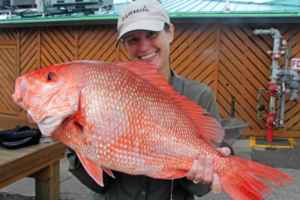

Big Red Snapper


After a three-year struggle, saltwater anglers are on the cusp of a stable red snapper season with the approval of Amendment 50 by the Gulf of Mexico Fishery Management Council.

Amendment 50, which goes into effect in 2020 with the approval of the Secretary of Commerce, gives the five Gulf states control over each state’s snapper season, and it allows leeway in size and bag limits within certain federal guidelines.

“All of the Gulf states are excited to finally have this solidified and move forward with the management plans for the individual states,” said Scott Bannon, Alabama’s Marine Resources Director. “It’s a win for the red snapper stock and a win for the states.”

Bannon said state control of the snapper fishery was brought before the Council in 2016 to manage the recreational sector, which would have included the private recreational sector and the federal for-hire (charter) sector.

The 2016 and 2017 snapper seasons were painfully short under federal control. As a way to alleviate the impact on anglers and the Gulf Coast economies, the Gulf states were issued an exempted fishing permit (EFP) for the 2018 and 2019 seasons, and states were able to set their seasons under a total allowable catch for each state.

Alabama originally set its 2018 season at 47 days, but near-perfect weather and an increased enthusiasm for catching the state’s signature saltwater species forced Marine Resources to reduce the season to 28 days, which ended in an almost perfect catch-to-allocation result.

The way Alabama was able to ensure there was no significant overrun on the quota was through the Red Snapper Reporting System, more commonly known as Snapper Check. The mandatory reporting system allowed Marine Resources to monitor the catch and close the season in response to the larger-than-expected harvest numbers.

The success of the Snapper Check monitoring paved the way for the Council to approve Amendment 50.

“I think the fishery benefits from Amendment 50 because we have the ability, as individual states, of not exceeding our allocation of the quota,” Bannon said. “If you look at it from a stock perspective for the Gulf of Mexico and you were managing it as a whole and you had a perfect season, like last year, you had no way to put the season in check. Alabama alone would have consumed nearly half of the entire Gulf allocation if we had fished the whole 47 days. We would have fished it really, really hard, and the amount of fish we would have caught would have been tremendous. As it was, we closed it when we met the number of pounds and showed that we were responsible. I think this is much better for the anglers and the snapper stock. I think the EFP showed the states could come to some decisions about allocations, and that the states could manage seasons within pretty close tolerances.”

Bannon said the Gulf Council faced two challenges with state management of red snapper. First, where do the federal for-hire boats fit into the program? The Council decided to not include the federal for-hire in Amendment 50 and consider other options in the future if conditions change for the federal for-hire boats. Second, what allocations could the five Gulf states live with?

“These allocations were based on different factors like biomass and historical landings,” Bannon said. “So, the state directors used the EFP allocations as a starting point for Amendment 50.

“The EFP only allowed us to set the season within our allocation. Under Amendment 50, we received an increase in allocation from 25% to 26.298%, and that increase will be permanent. We also have in Amendment 50 the ability to set size and bag limits within certain parameters. Those are management tools to maximize the benefit for Alabama.”

When the initial EFP allocations were proposed, the totals did not equal 100% of the total allowable catch. Bannon said Florida was given the extra 3.78% because they were the final state to apply.

“They amended their EFP to get that extra allocation,” Bannon said. “We felt like that extra allocation should be negotiated. In the end, Alabama and Florida split that 3.78% under Amendment 50 because we’re the two largest consumers of red snapper. The other states were comfortable with that. It seems to be fair and equitable.”

Under the new amendment, each state creates their own plan. Alabama’s plan includes a 10% buffer as opposed to the 20% buffer under the federal system. The federal for-hire sector has not exceeded its quota for several years, and its buffer was reduced to 9%.

Alabama’s allocation of red snapper for the 2019 private recreational season under the EFP is 1,079,765 pounds. Alabama’s allocation for the 2020 season increases to 1,122,661 pounds if the private recreational sector doesn’t exceed its quota this year.

Bannon said most red snapper anglers are happy with the upcoming season, and he anticipates there could be some season adjustments when Amendment 50 goes into effect.

“Most of the responses I’ve received for the 2019 season is they were happy to get the June and July seasons and that the season was spread out enough that if the weather was bad they could go another weekend,” he said. “We know we still have concerns from the public that they would like more fishing time during the week. As we move forward in state management, that is always a possibility because we now have the flexibility to set the seasons.”

The 2019 season length is tentatively set for 27 days, starting June 1 with three-day weekends (Friday-Sunday) except opening weekend (two days) and July 4 week, which will be four days (Thursday-Sunday). The size limit and bag limit remain the same at two fish per person with a minimum size of 16 inches total length.

Bannon is planning to ask snapper anglers for assistance to keep Alabama’s unparalleled artificial reef program at the top. The loss of funding for research in those reef zones will prompt him to ask the Conservation Advisory Board to implement a reef fish endorsement beginning in 2020.

“The reef fish endorsement is set up to help fund some of the research conducted in the reef zones, because we’re losing some of the funding used for that research,” he said. “The research needs to continue, and we also need funds to support programs like Snapper Check, which we hope to expand into a better program.

“It’s designed as a user-based system that applies to the people who are participating in that fishery, including private recreational, charter for-hire and commercial fishermen. Another aspect of it is it defines the user group. It gives us a better idea, especially among private anglers, of how many people are fishing for reef fish off Alabama. That way we can have better directed surveys, which are targeted at people who participate in the fishery instead of just people who have saltwater fishing licenses.”

The endorsement fees would be $10 for private recreational anglers and $250 for commercial fishermen. The charter for-hire fees would depend on the size of the boat and number of passengers the vessel can carry.

Amendment 50 gives the five Gulf states much more control of their red snapper seasons. Photo by David Rainer
As for Amendment 50, Bannon said Alabama has already shown state management will work. The public is supportive, and he thinks that Secretary Wilbur Ross will quickly approve.

“As I said on the radio the other day, Alabama has 3% of the Gulf coastline and will receive 26.298% of the total allowable catch for the 2020 season and beyond,” Bannon said. “I think Amendment 50 is a success for the fishery, and I think it’s a success for the states because the states can now manage the seasons, size limits and bag limits that best suit their anglers.

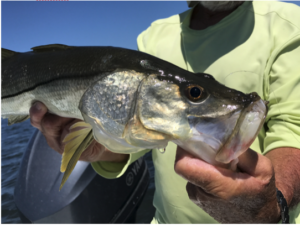
South Florida’s Bonefish Nurseries

Conservation of South Florida’s Bonefish Nurseries

From Bonefish & Tarpon Trust
from The Fishing Wire

Bonefish fry need protecting


When we think about promoting a healthy bonefish fishery we often turn our attention to protecting large schools of adult fish patrolling the flats. Often forgotten are the more vulnerable juvenile fish, those less than three inches long, that must survive a constant barrage from predators and a chaotic, rapidly changing environment. Nowhere are the challenges faced by juvenile bonefish more evident than in the Florida Keys.

Over the years we have seen a decline in the Florida Keys bonefish population, and an unusual absence of juveniles. The cause of this decline is still unknown, but it has coincided with changes to freshwater discharge in South Florida, increases in coastal development, and higher frequency of extreme weather events. These disturbances may be responsible for negatively impacting important nursery habitats and at least partially explain the bonefish population decline.

Nurseries are potentially the most important and complex habitats that a fish will occupy during its life. They provide protection from predators, abundant sources of food, and environmental conditions that allow for fast growth and an increased chance of survival. And since juvenile bonefish are too small to move to better habitats, taking the nursery habitat away is like pulling a table cloth out from under a castle of cards; the castle will fall.

BTT collaborating scientists have identified nursery habitats in the Bahamas, where thousands of juvenile bonefish are found in shallow, seagrass-free areas that are sheltered from strong waves. In the Keys, we have checked these types of habitats and have found only a handful of juveniles. Healthy juveniles are the future of the fishery, and we are teaming up with researchers at Florida Atlantic University’s Harbor Branch Oceanographic Institute to figure out where juvenile bonefish are settling in the Florida Keys. Here is what we know so far about juvenile bonefish in the Keys:

1) Juvenile bonefish should be most prevalent in the early summer, following the winter through spring spawning season.

2) We recently learned that Bahamian juvenile bonefish use sandy or muddy bottoms with little wave action. Similar habitat in the Florida Keys is rare, and so far our sampling of these types of habitats has captured very few juvenile bonefish.

Identifying and protecting essential fish habitat is the first and most important step towards recovering the bonefish population in the Florida Keys. Once we identify bonefish nursery habitats, we can work with county, state, and federal managers to designate these habitats for protection. With a better understanding of the environmental characteristics that make for quality bonefish nurseries, we can work to restore degraded habitats, so they can become functional nurseries again. The future of the bonefish fishery may depend on the success of our habitat conservation efforts.

What you can do to help:

The search for juvenile bonefish in a region as expansive as the Florida Keys requires substantial time and effort. As a community we can work together to find juvenile bonefish and protect them when they’re most vulnerable. If you have encountered juvenile bonefish while fishing or cast-netting in the Florida Keys, Florida Bay, or Biscayne Bay, please contact our project lead:

Steven Lombardo, Florida Atlantic University Harbor Branch Oceanographic Institute

Email: slombardo2018@fau.edu

Office: 772-242-2305

Photo: Juvenile bonefish. Photo credit: Louis Penrod, FIT

To learn more about Bonefish & Tarpon Trust, visit www.bonefishtarpontrust.org.

Florida Shuts Down the Big Three of Inshore Fishing

Florida Shuts Down the Big Three of Inshore Fishing on SW Coast

Florida snook fishing shut down


Snook are no longer on the menu starting May 11 and continuing for more than a year in Southwest Florida due to a shutdown by FWC. (Frank Sargeant Photo)
By Frank Sargeant, Editor
from The Fishing Wire

Florida’s Fish and Wildlife Conservation Commission (FWC) made a pre-emptive strike on restoration of inshore fish on the state’s southwest coast devastated by red tide–and shocked many anglers–by moving to shut down all harvest of the Big Three of Florida fishing, snook, redfish and spotted sea trout. The closure, which begins May 11 this year and continues until May 31 of 2020 as it now stands, will likely have a significant financial impact on guides, bait shops, fishing-oriented resorts and tackle and kayak and boat sales to say nothing of individual recreational anglers–but will be very good for the fish.

It won’t be the first time one of the state’s premiere fisheries has been shut down to allow recovery–in 2010 after a massive winter kill of snook, the commission shut down all take for almost three years.

Millions of adult fish were killed in the most recent red tide, which extended from November 2017 to early 2019, 15 horrendous months. Countless tens of millions more fry-size fish as well as the bait all gamefish feed on were also wiped out.

While some estuarine areas where the tide did not reach remain very good–or even better than before in a few places because the noxious water pushed fish off the coast and well up the bays to escape–others like Sarasota Bay, a narrow bay with three inlets direct to the beach, had a devastating complete kill. Beaches and residential canals were littered with tons of rotting fish, and spending a day on the beach became impossible–many beachfront hotels all but shuttered their doors as thousands canceled vacations.

Rotting fish not only wiped out anglers’ hopes but also decimated the beachfront resort business during the extended red tide. (Photo credit FWC)

The red tide finally dissipated as mysteriously as it came, in February this year. The state still has no cure and perhaps never will, though the new conservation-oriented Republican governor Ron DeSantis has appointed a commission and created a department to attack the problem along with blue green algae, a separate issue mostly affecting fresh water but also a major issue in the Indian River Lagoon near Jensen Beach in recent years. (Why there are not more Republican’s tapping into the conservationist/boater/angler/outdoorsman vote these days is a mystery well worth exploring.)

The closure will extend from the Pasco-Hernando county line near Tarpon Springs south (including all waters of Tampa Bay) through Gordon Pass in Collier County, just south of Naples.

The area traditionally has been the heart of snook country in Florida. Redfish and trout were already down when the red tide struck, some think from overharvest as a result of Florida’s booming population of inshore anglers, guides and kayak fishers. There have also been some water quality issues, particularly on Tampa Bay, where the city of St. Petersburg has had several massive sewage spills in recent years. (In general, though, 40 years of conservation efforts on the bay have brought steady improvement in clarity and consequently in the amount of sea grass, a mark of a healthy estuary–until the disastrous red tide struck.)

There’s no question that a complete shutdown will go a long way towards rapidly restoring these important fisheries–the extended snook closure of 2010 to 2013 produced the best snook fishing seen in decades immediately after, and the effect is still obvious, with anglers outside the red tide zones routinely catching and releasing 40 to 50 linesiders in a day when fishing with live sardines.

FWC has been working with partners including Coastal Conservation Association Florida, Duke Energy and Mote Marine Laboratory & Aquarium to raise and release red drum and snook into southwest Florida waters to help address red tide impacts–a popular move with anglers.

Restocking of juvenile fish may help kick start some areas, but research indicates the best solution for recovery is a healthy stock of natural spawners. (Photo credit FWC)

However, past efforts with limited stockings have shown very small returns relative to the cost–most released fingerlings wind up as chum for larger fish. Nature functioning the way it should is the best cure, by far, and shutting down the harvest to allow spawners to survive is the quickest way to recovery.

For those who enjoy eating fresh fish they’ve caught themselves, there are still plenty of targets; flounder and pompano from spring through fall, sheepshead and mangrove snapper–two of the best tasting fish in the sea–in cooler months. Off the beaches, there are Spanish and kings, and on the reefs adult mangrove snapper, yellowtail snapper, red and black grouper and of course red snapper, which seem to be doing exceptionally well these days as a result of very tight management for several years.

It’s going to be a trying year for many who depend on the inshore fishery for their livelihood. Though many guides have already gone to very limited harvest just to protect their own turf, a complete shutdown will surely cause some customers who would have chartered them to choose something else to do during their Florida visit, or perhaps to head to northwest Florida for a charter, where the fisheries remain open.

The good news is that barring another visit from Karenia brevis and related nasties, anglers are likely to see some exciting fishing when the closure comes to an end next year, and hopefully a strong year class of spawning fish may mean even better fishing ahead.

The Surprising Story of Swordfish

The Surprising Story of Swordfish You May Not Know
From NOAA Fisheries
from The Fishing Wire

Today’s North Atlantic swordfish stock is fully rebuilt and maintaining above-target population levels. But there’s work to be done to ensure management measures better support the fishing industry.

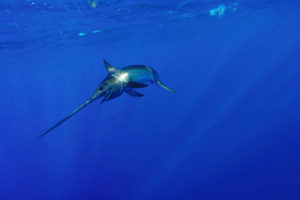
Swordfish in the depths


Swordfish. Credit: Shutterstock/Joe Flynn.
Today’s North Atlantic swordfish population is a great fishery rebuilding story.

Twenty years ago, this predatory fish was in trouble. Their population had dropped to 65 percent of the target level. This means there weren’t enough North Atlantic swordfish in the water to maintain their population in the face of fishing by the many countries who share the resource.

Fast forward to 2009 and the international commission that manages species like swordfish declared the Northern Atlantic stock fully rebuilt. That announcement came a year ahead of the 2010 target date set in the International Commission for the Conservation of Atlantic Tuna’s (ICCAT) 10-year rebuilding plan.

“If it’s U.S.-harvested swordfish, consumers can feel confident it’s a smart seafood choice,” said Rick Pearson, NOAA Fisheries fishery management specialist. “We should reward our sustainable stewardship practices at the seafood counter.”


Rebuilding an Important Population

Efforts to restore a dwindling population of North Atlantic swordfish date back to 1985 when NOAA Fisheries implemented the first U.S. Atlantic Swordfish Fishery Management Plan. This plan reduced the harvest of small swordfish, set permitting and monitoring requirements, and launched scientific research on the swordfish stock. Minimum size limits and enforcement processes came shortly after when ICCAT issued its first recommendation on swordfish in 1990.

Despite these and other management strategies implemented over the next eight years, the stock continued to suffer. By the late 1990s, the average weight of swordfish caught in U.S. waters had fallen to 90 pounds, a drop from the 250-pound average fishermen enjoyed in the 1960s. This was in part because the population decline meant fishermen were catching younger fish.

What ultimately reversed their downward course was the broad suite of actions built up by the beginning of the 21st century.

“There is no one measure that could have brought this population back from the decline,” said Pearson. “Sustainable fishery management requires a comprehensive science-based approach that considers the biological needs of the fish population, the health of fisheries, the fishing industry, and coastal communities.”

In the United States today:

A limited number of vessels can target swordfish commercially with longline gear.

All fishermen must abide by minimum size limits, and many must also abide by retention limits.

Closures prevent pelagic longline fishing in waters with historically high levels of bycatch species, including undersized swordfish.

Satellite tracking systems are mandatory on some vessels that target swordfish.

The use of circle hooks is required in commercial fisheries to increase the survival of sea turtles and other animals caught accidentally.

Commercial fishermen must attend workshops where they learn to properly handle and release bycatch, including undersized swordfish.

Observer programs provide fishery scientists and managers with needed data.

Leading the International Community
Some of these measures can be traced back to the ICCAT rebuilding plan, but many are the result of U.S.-led efforts to protect swordfish, reduce bycatch of other species, and sustainably manage fisheries that interact with swordfish.

Pearson and others also point to the key role the U.S. commercial fishing industry played in helping to establish these domestic efforts and supporting greater international collaboration.

“The United States led the charge internationally to adopt measures to recover North Atlantic swordfish,” said Christopher Rogers, director of International Fisheries. “We pressed our international partners to adopt measures U.S. fishermen were already practicing, such as catch limits, minimum sizes, recording and reducing dead discards, and appropriate observer coverage. Strong U.S. leadership helped ensure the international community shared the burden for rebuilding this iconic species.”

Support for a Valuable U.S. Fishery
In the decade since ICCAT first declared that North Atlantic swordfish are not being overfished, the United States has seen a fall in its total annual catch. In 2017, U.S. fishermen caught just 14 percent of the total swordfish catch reported to ICCAT.

There are several reasons for this decline, says Pearson, including rising fuel prices, an aging commercial fleet, and competition from often lower-quality imported frozen products.

To help more U.S. fishermen take advantage of our national ICCAT-allotted quota, NOAA Fisheries has made several changes in the last decade to commercial and recreational restrictions, such as:

Removing vessel size and horsepower restrictions on pelagic longline permits.

Increasing retention limits on some permits.

Launching a hand gear permit, allowing fishermen to participate in the fishery without spending more to buy a longline permit from another vessel.

Making it easier for fishermen to get and renew permits.

But there is more work to be done to ensure our regulatory program is effective in both maintaining swordfish populations and supporting the fishing industry. We are currently examiningwhether some area-based and gear management measures that affect swordfish fisheries could be modified in light of the success of a program that has reduced bluefin tuna bycatch.

“The U.S. fishery management process is a dynamic process,” said Pearson. “Protecting the North Atlantic swordfish population from overfishing while ensuring fishing opportunities for our recreational and commercial fishermen requires the best available science and responsive management.”

Florida’s Saltwater Fisheries Boundaries

How Florida’s Saltwater Fisheries Boundaries Came to Be
from The Fishing Wire

Florida’s Saltwater Fisheries Boundaries


When you are on a boat, it’s hard to imagine boundaries. The sea is the sea. Wave after wave, it all looks the same. Above-water landmarks are few and far between. There are no signs that say, “now entering federal waters.”

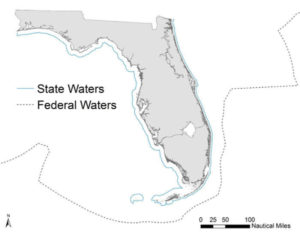
Regulatory boundaries are sometimes hard to fathom. In Florida, one of the biggest fishery management boundaries is that between state waters, where the Florida Fish and Wildlife Conservation Commission (FWC) makes the regulations, and federal waters, which are mostly managed by federal fishery councils and NOAA Fisheries with input from FWC. Sometimes regulations are the same in both state and federal waters, but not always, which is why it is important to know there is a line, and where that line is.

Florida is the only state where that boundary shifts depending on which coast you are on. State waters in the Atlantic extend out to 3 nautical miles, while in the Gulf they extend out to 9 nautical miles. But why, as many people ask? How did this come to be?

State boundaries in open waters of the United States first began to be defined in the 1940s, mainly due to concerns about rights for oil beneath submerged lands.

In a 1947 case, the U.S. Supreme Court ruled against California saying the federal government possessed rights in all submerged lands of the Pacific seaward of the low-water mark. The U.S. Supreme Court ruled similarly against Louisiana and Texas.

Congress reacted by creating the Submerged Lands Act of 1953.

This act declared that states owned the submerged lands, and the natural resources within, out to three geographic miles. The act included a provision that a state’s boundary could be extended if it was beyond three geographic miles from the coast prior to when statehood was achieved.

Florida immediately asserted their boundary went beyond 3 geographic miles before it achieved statehood in 1845 and that Congress approved its boundary when Florida was readmitted into the Union after the Civil War. The claim did not make it to the Supreme Court until 1960, where it was proven that Article I of Florida’s Constitution (1868), which was approved by Congress, described the boundary off Florida’s Gulf Coast as “three leagues from mainland.”

Florida’s Atlantic coast boundary was settled at 3 geographic miles from shore.

One nautical league is equal to 3 nautical miles, therefore the “three leagues from mainland” is equal to the 9 nautical miles we manage in the Gulf today. For fishery management purposes, federal waters extend from where state waters end out to about 200 nautical miles (less so in areas where our waters butt up against other country’s waters such as in the Caribbean). Federal waters are also known as the Exclusive Economic Zone or EEZ. For more on the history of this nation’s boundaries, visit NauticalCharts.NOAA.gov/data/us-maritime-limits-and-boundaries.html.

For those interested in measurements, while we use nautical miles today, you may have noted that the original language used geographic miles. There’s really not much of a difference between the two. A geographic mile ( 1 minute of arc along the Earth’s equator) is slightly longer than a nautical mile (a geographic mile is 6,087.08 feet and a nautical mile is 6.076.11549 feet), but the difference between 9 geographic miles and 9 nautical miles is less than 100 feet. (Note a geographic mile is also different than a standard English mile, 5,280 feet.)

Another interesting tidbit comes from the creation of the 3-mile limit itself, which sources say stems from how far a cannon ball could reach when fired from land. It is also said that, due to the earth’s curvature, 3 nautical miles is how far it is to the horizon.(Of course, this depends on how high your eyes are above the water.)

For fisheries management, we’ve created many additional boundaries throughout the years. We have species-specific management zones for fish such as red drum, and FWC manages some species in both state and federal waters. We take into account many different aspects when creating these boundaries, including differences in fish populations, fishing practices and stakeholder needs.

There may not be signage, but it’s always important to know where you are. State/federal boundary lines are marked as the natural resource line on NOAA nautical charts and these lines are also preloaded on most marine GPS units.

Need a map? Check out our maps page at MyFWC.com/Marine by clicking on “Recreational Regulations” and “Fisheries Maps.”

Have a question about marine fisheries regulations? Want to know more about catch and release? Send your questions, photos and fishing tales to Saltwater@MyFWC.com. Make sure your photo meets our photo requirements by visiting MyFWC.com/Fishing and clicking on “Saltwater” and “Submit a Photograph” under “Get Involved.” Don’t forget to record all of your catches on the iAngler phone app or at www.snookfoundation.org/data.html. And learn how to submit your catches and get rewarded through our Saltwater Angler Recognition Programs at CatchaFloridaMemory.com.

The quarterly Gone Coastal column is one of many ways that the Florida Fish and Wildlife Conservation Commission (FWC) Division of Marine Fisheries Management is helping recreational anglers understand complex saltwater regulations and learn more about saltwater fishing opportunities and issues in Florida. We are also available to answer questions by phone or email anytime, and we would love the opportunity to share information through in-person presentations with recreational or commercial fishing organizations. To contact the FWC’s Regulatory Outreach subsection, call 850-487-0554 or email Saltwater@MyFWC.com.

Protect Sawfish

Sawfish Need a Hand from Anglers, Boaters and Waterfront Homeowners
by Tonya Wiley, Havenworth Coastal Conservation
from The Fishing Wire

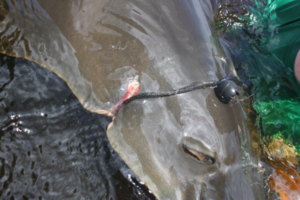
Tangled Sawtooth needs help


Entanglement of marine species in lines, fishing gear, and other debris is a problem seen with unfortunate regularity in the southeastern United States. This includes Endangered Species Act-listed species such as North Atlantic right whales, giant manta rays, sturgeon, turtles, and smalltooth sawfish. Each species is susceptible to entanglement based on their physical attributes but none more so than sawfish.

The toothed rostrum of the smalltooth sawfish could be considered one of the most unique morphological traits in any species. Yet this feature has also directly led to the species’ decline. Sawfish are rays that generally swim along the sediment surface where marine debris can accumulate. The toothy rostrum is easily entangled in any debris the sawfish encounters, which can lead to injury, deformation, or death by suffocation or starvation. Sawfish entangled in a variety of man-made items including dock lines, trap lines, nets (gill nets, cast nets, trawls, etc.), fishing lines, pvc pipes, coffee cans, dog toys, and elastic bands have been reported. While strides have been made in recent years to raise awareness about sawfish entanglement, this threat continues to affect the species.

Historically, a number of commercial fisheries incidentally captured smalltooth sawfish in the southeastern United States, though none more prominent than inshore gillnet fisheries. Because juvenile sawfish rely on shallow inshore waters as nursery habitat, gillnet fisheries for mullet in these same areas resulted in extensive incidental capture of sawfish. Once entangled, the toothed rostrum was difficult to remove from nets so often these fish were simply killed as bycatch. The 1995 gillnet ban in the state waters of Florida has been instrumental in reducing the number of sawfish killed by this gear. However, illegal use of gillnets still results in mortality of sawfish.

Recently two sawfish entanglements have been highlighted on social media. In late 2018, the National Park Service reported a sawfish entanglement in Biscayne Bay National Park (see https://www.fisheries.noaa.gov/feature-story/saving-endangered-sawfish). In this instance a sawfish was trailing lines from a lobster pot. Excessive entanglement can affect mobility, feeding, and thus overall fitness. If unattended, these entangled animals are likely to perish. Fortunately, park rangers were able to secure the lines, and remove them from the sawfish.

In a separate event, the National Park Service responded to a tip that an illegal gillnet was found in the waters of Everglades National Park near Chokoloskee, Florida. Upon retrieval of the net, law enforcement discovered a dead sawfish. This example illustrates just how deadly these nets can be to this endangered species. Law enforcement is still investigating this case and has requested that anyone with information to please contact 305-242-7741.

It is a shared responsibility of all outdoor enthusiasts to keep our waters free of trash and debris, which could result in entanglement. Next time you’re out on the water, do your part to pick up any trash or debris and if you ever encounter a sawfish please let us know by calling 1-844-4SAWFISH.

Tonya Wiley, President
Tonya@havenworth.org
941-201-2685
www.havenworth.org

Tax-deductible donations to help us continue our mission to promote the sustainable use and conservation of marine resources through research, outreach, and education can be made at https://www.oceanfdn.org/donate/havenworth-coastal-conservation

Juvenile Tarpon Habitat

Juvenile Tarpon Habitat Connectivity

By JoEllen Wilson
BTT Juvenile Tarpon Habitat Program Manager
from The Fishing Wire

Checking Juvenile Tarpon Habitat

photo:_JoEllen Wilson
Tarpon can undertake migrations that seasonally connect large geographic areas. But there’s another way that tarpon throughout the southeastern US, Gulf of Mexico, and Caribbean Sea are connected: larval mixing. In the spring or summer (depending on location), adult tarpon form large aggregations before they move offshore to spawn. Tarpon spawn by releasing the sperm and eggs into open water. The eggs fertilize outside the body—that’s where the mixing comes in. The larvae are transported by the currents and dispersed down the coastlines. Some larvae are able to find available habitat, but due to the massive amounts of coastal development, some are not.

When larvae survive and find viable habitat, they transform into juveniles. Juvenile tarpon inhabit coastal back bays and estuarine creeks that typically have calm waters, low dissolved oxygen, vegetative structure, and a mixture of deep and shallow water. Through BTT’s Juvenile Tarpon Habitat Mapping Project, we’ve found that 86% of reported nursery habitats have been degraded through coastal development, altered freshwater flows, or excess nutrients and contaminants entering the system. BTT studies show that juveniles in these types of habitats exhibit slow growth and move into the estuary at small sizes, which means their chance for survival is low. Tarpon are a long-lived species and reach maturity at about 10 years old. This means that by the time we see a decline in the number of adults resulting from too few juveniles surviving degraded habitats, it will be far too late to save the species.

Think of it this way: a Texas-born female and a male form South Carolina meet up in Boca Grande to spawn. Their larvae get carried inshore and end up in an estuarine creek in Tampa Bay, FL. Likewise, when that Tampa Bay juvenile becomes an adult, it can spawn in the Florida Keys and a tropical storm could transport its larvae to a Louisiana bayou. All of these habitats are connected and if we want to conserve our tarpon fishery, we must conserve nursery habitat. Anglers need to be concerned not only about what’s going on in their backyards, but also across the region.

Habitat loss is crippling nursery habitats throughout the geographic range of tarpon and our only options now are to protect what is left and restore what we can. Unfortunately, fisheries resource managers currently do not incorporate habitat into management plans. For a species like tarpon that is predominately catch and release, changing slot limits and seasonal closures won’t fix the problem of population decline. Anglers must be the voice for habitat. It is our duty to advocate for habitat protection by contacting our fisheries managers and legislators. We must also conserve habitat ourselves by being conscious of the pollutants that we put into our watersheds (fertilizers and litter), and not destroying shallow areas (seagrass beds and sand flats) when running our boats. These habitats and our fisheries are all connected and by banning together to conserve these critical habitats, we can conserve the fishery for generations to come.

Search of Old Sawfish

SawSearch search of old sawfish goes to the United Kingdom
from The Fishing Wire

Old sawfish saw


Not only the most distinctive feature of a sawfish, the rostrum (saw) also contains vital information.

“SawSearch” has taken researchers Kelcee Smith, from Louisiana State University, and Annmarie Fearing and Dr. Nicole Phillips, from The University of Southern Mississippi, to all corners of the U.S. in the search of old sawfish saws over the past five years. Last June, with support from the Shark Conservation Fund and The Curtis and Edith Munson Foundation, this research led them all the way to the United Kingdom. SawSearch is a global initiative to find, photograph, measure, and collect tissue samples from old sawfish saws. Phillips, Fearing, and Smith are extracting DNA from the tissue samples they collect, using the data to assess the relative health of remaining sawfish populations. The DNA from the old saws provides the researchers with baseline information of what sawfish populations were like before they were heavily exploited, which can then be compared to DNA from the sawfish populations of today.

SawSearch UK might sound like a leisurely holiday, but most of their time in the UK was spent working in the basements of museums, entering data, riding trains, hauling equipment from city to city, and conducting outreach events. After a year of intense planning, the team spent a total of 30 days in the UK, travelled ~12,000 miles, visited 31 collections, collected data and samples from 528 sawfish specimens, and held 11 outreach events. The rewards of the long days of sampling and travelling came with each collection visited, every specimen pulled from a drawer, and every museum curator they met along the way.

Museums play a critical role in all SawSearch expeditions by preserving natural history specimens and revealing the unique stories behind them in their data archives. The people behind these collections, the curators, conservators, and collections managers, dedicate their time to the maintenance of these collections for decades. “We were enthusiastically welcomed into every collection we visited during SawSearch UK and everyone was so excited about our project. After long days sampling, traveling, and conducting outreach, these interactions with the museum staff really kept our energy up,” says Fearing. “During our visits, they went above and beyond by helping us take photographs, record data, searching for extra information, and even connecting us with other curators to help us find more saws. I don’t think there was a museum curator that didn’t offer us tea as soon as we arrived, even though it was 80 degrees outside. They put kindness first and I’ll never forget that,” says Smith. The team also used each visit to a museum as an opportunity to connect with the public, teaching them about sawfish and the importance of natural history collections. They often set up a table right in the middle of museum galleries, answering questions about sawfish while collecting tissue samples from the saws. “Making that connection between museums, the public, and research is one of the greatest things about SawSearch. It’s my favorite part and I know Nicole and Annmarie love it too,” says Smith.

In addition to the museums and universities the research team visited, they were also able to find a few saws at some not-so-traditional venues. During their stay in Edinburgh, Scotland, Fearing and Smith discovered a saw in an unexpected place, at a fish and chips shop across the road from their hotel. “As we walked passed a fish and chip shop, I heard Kelcee gasp and then felt her yank me backwards.” says Fearing. “She told me to look inside the fish and chip shop and there, hanging on the wall, was a green sawfish saw.” The next day, they went into the restaurant to talk to the owner, explaining how they had traveled all the way from the U.S. to sample saws just like the one he had on his restaurant wall. The owner was perplexed, but kind, and allowed them to collect a sample; excited to tell the story of how he got the saw and intrigued that it could be used in scientific research. “I mean really, what are the chances that we would find a saw across the street from the hotel? Sawfish aren’t native to the U.K.,” exclaims Smith.

One pervasive idea that the researchers came across was that if specimens do not have location data, they are not useful in research. “These saws are valuable to us and there is a longer-term vision for this initiative. The goal looking forward is to be able to take a tissue sample from a sawfish from an unknown location and be able to determine where that animal came from. Such a tool could be used for enforcement purposes, to improve our knowledge of historic sawfish populations and understand how they have changed over time, ultimately translating this data into more effective conservation strategies to promote recovery” says Phillips. “Not only are sawfish saws without location information still valuable, I hope to go back to these curators one day and tell them where these specimens most likely came from”. “One curator was so happy when we told her specimens without location data are still valuable. She had been keeping these saws in hopes that one day someone could potentially use them and was relieved that she had been keeping them in the collection for a reason. Moments like these are one of my favorite parts of using collections for this project,” says Fearing.

You can help! If you own a sawfish rostrum and are willing to donate a small sample for this important research or have seen one somewhere, please call 1-844-4-SAWFISH or email n.phillips@usm.edu.

(Samples are collected under Endangered Species Act permits # 20590 and 17787)

Robinson Preserve

Florida Preserve Transformed to Host Juvenile Snook

From Bay Soundings
from The Fishing Wire

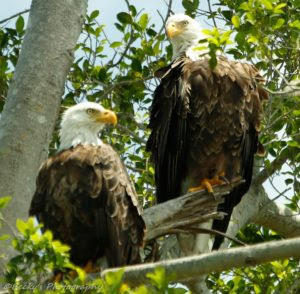
Bald Eagles


Robinson Preserve, located on Tampa Bay, is designed for both humans and wildlife. Photo by Becky Young

Most restoration projects in the Tampa Bay region are designed to do just that – restore natural systems that had been damaged by humans over the decades.

Manatee County is taking a different tack at the second phase of enhancements at Robinson Preserve, one of the county’s most popular parks. Instead of trying to rebuild the native pine flatwoods that once dominated western portions of Manatee County, they’re creating a rich mosaic of habitats specifically to meet the needs of juvenile snook while evolving into future habitats.

“We could probably build the most beautiful pine flatwoods in the world – which is a very difficult job – but they wouldn’t be particularly useful,” says Damon Moore, manager of the county park system’s ecological and marine resources division. Due to development and habitat fragmentation there aren’t viable migratory pathways from other pine flatwoods for many species to naturally repopulate. Sea level rise would also threaten pine flatwoods in the future.

On the other hand, the expansion at Robinson Preserve is the perfect location to build juvenile snook habitat, a highly charismatic species that has very specific needs to survive its first – and most critical – year after spawning.

Starting from scratch on land that is currently uplands allowed the county and its multiple partners to resculpt the property to meet those specific needs. At the same time, creating wetlands also provided fill material to build higher land that will stay above water as sea level inches higher, Moore said.

“We’re creating upland habitats now that we expect to evolve as sea levels rise while still providing maximum ‘edges’ and gentle slopes that will become habitat for juvenile fish as well as birds now,” Moore said.

It’s not the first time habitat hasn’t been replaced by “like with like” because scientists are focusing on the oligohaline – or low-salinity – habitat that is most at risk with sea level rise, notes Stephanie Powers, staff environmental scientist with the Southwest Florida Water Management District’s SWIM (Surface Water Improvement and Management program). “Those low-salinity habitats are critical to juvenile fish,” she notes.

Another advantage to starting from scratch was the ability to build two acres of oyster reef habitat using trucks rather than volunteers carrying bags of oyster shell, Moore adds. “We got weeks or months of work done in a half-day because we were working on dry land before we opened the channel and let the water in the new wetlands area.”

Trees growing in the uplands being transformed to wetlands were very carefully placed in the project area to provide the detritus that fuels the growth of fish at the bottom of the food chain as well as hiding places for snook and other juvenile fish that will grow up to become recreationally valuable resources.

Working with Tim McDonald, a research scientist at the Florida Fish and Wildlife Conservation Commission as well as fisheries experts from Mote Marine Laboratory, Manatee County hopes to quantify the benefits of improving habitat specifically for fisheries.

“If we can add to the quantity of snook available for fishermen later on, it will be a boon to the economy of the entire county,” Moore said. “Charlie (Hunsicker, the county’s director of parks and natural resources) has a very clear view that our work should also improve the region’s economy.”

Along with benefits to wildlife through carefully planned habitats, multiple human enhancements aimed at the 300,000 yearly park goers are planned. Multiple trails, including separate areas for bicyclers and walkers or runners, are planned along with kayak launches conveniently located near the parking lot. A giant treehouse – called the NEST or Nature, Exploration, Science and Technology Center – is open for educational programs and private events.

Birders already abound at the park, which features nesting eagles and multiple species of herons, storks, ducks and pelicans – along with occasional rarities including bald eagles and roseate spoonbills.

The $17 million expansion is underway with funding and support from multiple regional and national agencies. The land was purchased by the Conservation Foundation of the Gulf Coast, restoration funded through the SWFWMD, the National Oceanic and Atmospheric Administration and the Environmental Protection Agency (in part through RESTORE Act dollars awarded to the Tampa Bay Estuary Program) and the Tampa Bay Environmental Restoration Fund, as well as several county agencies including the tree trust fund, general revenues and phosphate severance fund.

Volunteers also play a major role in the reconstruction and maintenance of native plants. It’s been the site for multiple events hosted by the Tampa Bay and Sarasota Bay Estuary Programs. When a “champion” gumbo limbo tree at De Soto National Memorial Park blew down in Hurricane Irma, volunteers rooted pieces of the 80-year-old tree and transplanted them to higher ground at Robinson.

The goal is to replace coastal wetlands that once existed but can’t be rebuilt now because they’re housing developments,” Powers said. “This project shows how we can all work together as a team to create ecosystems that will last for generations.”

Quick Snook Facts

While adult snook are considered major predators, juvenile snook are less likely to survive their first year without very specific habitat:

Proximity to open waters. Adult snook spawn in the Gulf, and the juveniles instinctively search for nearby low-salinity backwaters.
Food sources. Shoreline vegetation and woody debris boost the abundance of fish like minnows, small shrimp, mosquito fish and small crustaceans that feed on detritus – which then become food for snook.
Energy conservation. Because juvenile snook can grow as quickly as 0.15 millimeters per day, they need to turn food into body weight. Their ideal habitat is protected from wave and wind energy.
Thermal refuge. Snook of all ages are very temperature sensitive and will die if temperatures drop to below about 50 degrees. To keep them warm, the preserve will include holes where water temperatures are less likely to fluctuate and variable bottom colors that reflect or absorb heat.
Protection from predators. Snook are dominant predators once they’re adults, but as juveniles, they’re easily eaten by other fish. The waterfront entrance to the preserve is designed to provide physical barriers for large fish as well as places for the smallest fish to hide because they can be cannibalized by larger juveniles.
Eye protection. Juvenile snook have sensitive eyes and need vegetation to shade themselves. The preserve’s vegetation is being planted to meet this need, with artificial shade provided as necessary.

Learn more about Tampa Bay at Bay Soundings here:

Scholarship Assists in Pinfish Research

Angler Action Foundation Scholarship Assists in Pinfish Research
Katie Ribble has always grown up around the water.
from The Fishing Wire

“We had a sailboat when I was growing up, and I remember visiting family along the coast in Maine. My first job was at a local aquarium up there,” Katie recalled. “I was always elbow-deep in the touch tank. The positive reaction from people there was always very rewarding to me when I shared my knowledge.”

That experience provided the foundation for a future career in marine and environmental sciences.

While working on her Master’s degree under Dr. Michael Parsons (director of Florida Gulf Coast University’s Coastal Watershed Institute and Vester Field Station), Katie’s efforts have landed her the first-ever John Cassani Fishery Research Scholarship from the Angler Action Foundation (AAF), a not-for-profit conservation group based in Florida.

“To kick off this memorial scholarship, we were looking for a student who demonstrates all of the characteristics Katie exhibits,” said Mike Readling, AAF Chairman. “Initiative, leadership, and an intrinsic understanding that the ‘in-the-mud’, down and dirty basic research can be extremely important and rewarding, even though it might not be as glamorous as something like tracking a famous white shark.”

Katie’s work certainly fits that bill. Among other things, she is delving deep into how pinfish feeding behaviors change in relation to factors such as water temperature.

Throughout their lifecycle, pinfish eat a good variety of things, from tiny zooplankton to other fish to shrimp. (Maybe you’ve encountered one or a thousand pinfish as you sought out seatrout, red drum or snook in the grass flats during your fishing career in Florida.) Pinfish are also grazers of grass and algae – and during certain periods of their lifecycle those can make up the bulk of their diet.

Serving as a primary forage species in Florida, pinfish are a critical part of the food web. Understanding more about their diet, and whether environmental factors such as water temperature trigger an increase in feeding activity, will help us better understand how pinfish fit into Florida’s complex marine systems. But Katie’s research goes even further.

Unknown to many, there is a lot more going on with the grass and algae that pinfish are eating.

Ever notice that fuzzy, sometimes sort of slimy, coating that adorns the seagrass or algae you are constantly plucking from your jig or lure that is weighted too heavy? Turns out, that slimy stuff has a very interesting and important story.

One of the dinoflagellates (in this case, a marine plankton) that is included in that community of microscopic plants and critters that make up the fuzzy slime is Gambierdiscus spp, which is the only known source of the toxin that causes Ciguatera fish poisoning.

If you’ve never heard of Ciguatera before, you aren’t alone. It is the most frequent seafood poisoning, yet we know relatively little about it. Katie explained that may be because people are unfamiliar with the symptoms and likely source/cause, they may just think they had ordinary food poisoning. Symptoms can include diarrhea, vomiting, numbness, itching, sensitivity to hot and cold, dizziness, and weakness – a list that certainly could be mistaken for any number of maladies.

“It is probably misdiagnosed a lot,” she said. “We’ve associated Gambierdiscus with reef fish in the past, now we are seeing it in other places.”

Which leads us back to pinfish, turtle grass, and the shallow blissful waters of the Florida Keys.

Katie noted that the presence of Gambierdiscus in our waters is nothing new, and this research is not intended to stir up a new scare. In fact, it is a global phenomenon and there are records from the Chinese T’ang Dynasty (618-920 AD). Just last month there was an international conference dedicated to the toxin in France.

If you have heard of Ciguatera, it is probably because you know someone who was diagnosed or maybe visited an area with a tropical reef associated with high concentrations. The point is Ciguatera was only a factor for those who risked eating fish from specific areas.

Barracuda is one of the fish associated with the toxin, as are some groupers, moray eels, and other reef fish.

Barracuda? Remember that time, in between picking fuzzy seagrass blades from your jig, a flash of silver streaked past and just like that your lure or bait was gone – line sliced so cleanly you never even felt a tug? Yep – that was probably a barracuda. Who eat pinfish. Who eat grass coated with yummy brown slime.

Already, Katie’s research has uncovered some interesting tidbits.

While establishing a baseline for her new pet pinfish feeding behaviors, Katie took some turtle grass and a species of Halimeda, a native calcarious green macroalgae from an area in the Keys known to have a particularly strong strain of Gambierdiscus. Part of the first step was to strip the grass and algae clean of all of the fuzzies to see how the pinfish grazed on the clean plants. What Katie found there surprised her.

“It seemed that the fish in my tank would rather starve themselves than eat the clean grass,” she said.

In other words, without the brown slimy stuff as dressing, turtle grass salad is not on the pinfish menu. Katie isn’t sure why that is.

“Maybe they can’t digest the plant without them,” she offered.

As she moves forward, she hopes to uncover other aspects that lead to increased pinfish feeding in the wild. Combined with simultaneous work in Dr. Parson’s lab at FGCU, where he is guiding other students to answer questions such as whether there are normal fluctuations of the Gambierdiscus blooms, and/or whether there are factors that might trigger an unnaturally large bloom. The information might help us understand how the toxin moves up the food chain and across a variety of habitats.

As Katie talked about her early findings, it became easy to see that she settled into the right career path. Her enthusiasm is contagious (Ciguatera is not, by the way), and it is very promising for all of us who are optimistic that we’ll become better stewards of our marine and fresh water habitats. Research like Katie’s points to just how completely all these habitats depend on each other, and that there is a lot of communication between them.

Katie hopes to use her AAF Don Cassani award of $1000 to help pay her way to conferences where she can share her findings.

“Helping these students share their findings is critical,” Readling said. “Putting Katie’s work in front of other scientists is one of the best ways to develop more research ideas. For us fishermen and women, it gives us hope that as a group, we can figure out how to best protect all facets of our environment, from one end of the system to the other.”

AAF encourages you to support the Cassani Scholarship Fund. Any donations made HERE will go directly to the fund and be excluded from all other AAF projects. If you have questions about the program or wish to nominate yourself or another graduate student for the 2019 award, please email Brett Fitzgerald (brett@angleraction.org).

In 2010 a memorial fund was created to commemorate the life and passion of Daniel J. Cassani, with the mission to support and promote marine fish research and conservation. All donations made to AAF in this link will go directly to this fund.

The Angler Action Foundation, based in Florida, is dedicated to conserving our fish, their habitats, and sensible recreational angler access. Angler Action is a 501c3, founded by William Mote. Our primary service project, iAngler, is the first and only database owned by fishermen that contributes directly to state-level stock assessments. Our mission is to continue to help improve fishery research, educate ourselves, other anglers and fishery managers, and continue with best conservation practices.

A COPY OF THE OFFICIAL REGISTRATION AND FINANCIAL INFORMATION MAY BE OBTAINED FROM THE DIVISION OF CONSUMER SERVICES BY CALLING TOLL-FREE 1-800-HELP-FLA OR ONLINE ATwww.FloridaConsumerHelp.com, REGISTRATION DOES NOT IMPLY ENDORSEMENT, APPROVAL, OR RECOMMENDATION BY THE STATE.” REGISTRATION #: CH11670