Category Archives: How To

How To Fish Lake Walter F. George – Eufaula – and West Point Lake

“OUT of the hills of Habersham, Down the valleys of Hall, I hurry amain to reach the plain, Run the rapid and leap the fall.”

When poet Sidney Lanier wrote those words in “The Song of the Chattahoochee” little did he know the future of his river and the fantastic bass fishing lakes that would be built on it. Four of the most famous bass fishing lakes in the US are on the Chattahoochee River, and the middle two offer you some incredible opportunities this month.

Lakes West Point and Walter F. George, usually called Lake Eufaula, have some bass fishing characteristics in common but differ in many ways. Knowing those similarities and differences, and how to take advantage of them, can help you catch bass on both in May.

Although the upper end of Walter F. George is only a few miles from the West Point dam, the terrain changes dramatically from one to the other. West Point dam is near the fall line in Georgia. Above the fall line are rolling clay hills and valleys. Below it the land flattens out in sandy plains. This change makes the lakes very different.

West Point has more coves, pockets and cuts on it. The hills mean the water drops off quickly near the bank in most areas and the contour lines are usually close together. At Walter F. George huge flats line the banks and there are few coves and pockets on the main lake. Channels tend to wind through flats with shallow water on both sides. A contour map shows wide separation in the lines reflecting these big flats.

Both lakes are fairly fertile with West Point receiving a lot of rich effluent from Atlanta. What fertility is soaked up from the upper reaches of West Point to the upper end of Walter F. George is added back by discharges from Columbus and runoff from farms, so Walter F. George remains well fertilized. This means bass grow fast and fat from eating the large numbers of forage fish in both lakes.

West Point tends to have water that is a little more clear than Walter F. George, and the shoreline has more natural rocks. Although both lakes have populations of spotted bass, they have not taken off at Walter F. George like they have at West Point. Spots like to spawn on rocks in deeper water, so West Point is more suited for them.

The changing population of spots is reflected in the Georgia Bass Chapter Federation Creel Census Report compiled by Dr. Carl Quertermus at the University of West Georgia. In 1994 93.04 percent of the bass weighed in during club tournaments at Walter F. George were largemouth. Ten years later in 2004 88.7 percent were largemouth, less than a five percent change.

At West Point in 1994, 90.17 percent of the bass weighed in were largemouth. That dropped to 39.1 percent in 2004, more than 50 percent less. That is a huge change in the population of bass in the lake in only 10 years.

The size limits on both lakes has changed over the years but both lakes have had similar rules. For several years on both lakes largemouth had to be 16 inches to be kept, now the size limit on both lakes is 14 inches for largemouth. Spotted bass have no size limit in either lake, but most clubs require spots to be at least 12 inches long to be weighed in during tournaments.

Georgia and Alabama share both lakes, and rules have been adopted to make size limits and other laws similar. Both states have the same size limits and you can fish anywhere on both lakes with a Georgia license. You can fish all of Walter F. George with an Alabama license but are restricted to areas below the Highway 109 bridge over the Chattahoochee River at West Point.

Current plays a part in bass fishing on both lakes but is more important on Walter F. George. Since Walter F. George is a flatter, more shallow lake power generation at the dam produces a strong current and bass react to it by feeding on river and creek ledges. On West Point there is a good current at times and bass will feed better on main lake points when the water is moving.

You are not likely to see alligators on West Point but you can’t avoid them at Walter F. George. They really don’t affect the bass fishing but they can mess with your mind until you get used to them. Leave them alone and they will not bother you, in fact they will usually try to get under water and away from you as soon as you get in their area.

By the beginning of May most bass have finished spawning at both Walter F. George and West Point. They have started their movements toward main lake summer structures on both lakes. The ways to find and catch bass are similar in some ways but differ in others.

Ronnie Gregory fishes both West Point and Walter F. George, but spends more time on Walter F. George. He and partner George McWaters operate Eufaula Guide Services and take fishermen out on that lake. They also fish the Valley Tournament Trail as well as some of the R&R Tournaments and both those trails fish West Point and Walter F. George. Ronnie also fishes with the Spalding County Sportsman Club. (Ronnie and George took me out on Walter F. George before the 2004 Top Six the last week of April that year and put me on the fish that gave me 7th place in that tournament.)

Ronnie agreed to share some of his tactics for fishing both Walter F. George and West Point. He usually approaches both lakes with a tournament perspective, hoping to catch a limit of quality fish rather than catching a lot of smaller bass, but he has some tips for catching numbers as well as big bass, too.

Walter F. George

Most of the bass at Walter F. George have finished spawning by early May and are feeding up recovering from the spawn. They are starting to move toward their summer holes out on the deep main lake ledges, but some changes over the past few years has slowed that migration, making May fishing even better and more exciting.

Hydrilla got started in Walter F. George a few years ago and now covers enough of the lake to be a significant bass pattern. Couple the newer hydrilla with the water plants that have always been at Walter F. George and you have perfect ingredients for a great shallow water bite in May. Ronnie has been taking advantage of this shallow bite for the past two years.

Ronnie usually fishes the middle section of Walter F. George in May, working from Cowikee Creek down to the Barbour Creek area. He looks for hydrilla or “river grass” growing in two to four feet of water, and works it with a variety of baits. Buzzbaits and spinnerbaits are good, especially if you can find some shad still spawning. Both baits can be worked over the grass drawing strikes.

Most days Ronnie’s main lure is the Paca Craw, a hollow bodied soft plastic crawfish made by NetBait. This versatile bait can be fished on top like a buzz bait, you can swim it over the grass or you can drop it and fish it like a Texas rigged worm. Ronnie Texas rigs the Paca Craw in 15 pound Big Game Trilene line, a 1/8 to 1/4 ounce sinker depending on wind and depth, and a 3/0 hook.

Find a grassbed and start by fishing the Paca Craw over the top. The craws on the bait will flap and buzz, churning the water when you keep it on top. When the bait gets to the edge of the grass, let if drop and keep your line tight. Strikes usually come on the fall. If nothing hits, hop it a couple of times then swim it back to the boat for another cast.

An excellent area to try this technique is the Alabama shoreline from the mouth of Cowikee Creek down to Old Town Creek Park. This huge flat is covered in grass beds and is a good spawning area, so the bass are still here from the spawn. They will move to the grass to feed before moving deeper later.

Some bass will move on out on the ledges early in May and you can fish them all month, being ready when the majority of bass move out during May. This is classic ledge fishing at Walter F. George and you can catch bass on crankbaits and Carolina rigs all month long.

Ronnie likes a crankbait that will run about 10 feet deep and uses Trick and Finesse worms on his Carolina rigs. He looks for ledges toward the shoreline that are eight feet deep or so on top. Fish both crankbaits and Carolina rigs on these spots, and if stumps or brush is there it is even better.

There are some good ledges right where Cowikee Creek hits the main river as well as in the creek up to Lake Point State Park. There are even more good spots below the two causeways and the ones down to the mouth of Barbour Creek are some of Ronnie’s favorites. Ronnie likes to fish the first drop on these ledges.

A good lake map will help you find places to fish. Look for a bend in the creek or river channel toward the bank where the top of the ledge is less than 10 feet deep. Start in deep water casting up onto the ledge and fishing your bait back. Fish with the current if it is moving.

You will catch some spotted bass on Walter F. George on the ledges but they are usually not the bass you want in tournaments. To have some fun, find some rocks or brush on the ledges and throw your Carolina rig. When you catch one spot you are likely to catch several since they tend to school up and stay deeper in May.

The first point between Cowikee Creek and the river, on your right as you go out of the creek, is a good spot for spots. The creek channel swings in close on one side and the river channel is close on the others side of it. Fish it from both sides casting across it. When current is moving across this point and ledge fish your bait with the current and you should catch a bunch of spots.

West Point

On West Point Ronnie usually stays back in the smaller feeder creeks off the main lake from just above Highland Marina down to Wehadkee Creek. These creeks are excellent spawning areas and have deep enough water to hold bass all during May. He looks for cover along the outside bends of the creek channel and any points in the creek.

After spawning bass will move to cover in the 10 foot range and feed, holding there until the water gets too warm for them to stay. They take advantage of shad and other baitfish in the creeks as well as crawfish they find there. The key is to find some kind of cover on structure that will give the bass a good ambush point.

Bass at West Point seem to love a buzz bait and Ronnie will fish one over creek cover. He usually finds bass holding about half way back in the creeks and runs in part way before starting to fish. You can move fast and cover a lot of water with a buzz bait as you work into the creek.

The Paca Craw is also a favorite bait at West Point. Ronnie will fish it like a buzz bait all the way back to the boat if the fish are active. If they don’t hit it on top, he will cast it to the bank, buzz it a few feet to draw attention, then let if fall to the bottom. He can then fish it back to the boat along the bottom, hitting any stumps, rocks or brush there.

Every move of the Paca Craw will cause its craws to wave and move. You can either hop it and let if fall back or swim it along right on the bottom. Either way the bass seem to like it. If there is cover, hop it. If the bottom is fairly smooth, swim it along just over the bottom.

A jig and pig is also a good bait if the bass are holding tight in brush. It comes through thick cover better than the craw and Ronnie had real good luck with a jig and pig last May in the creeks off the river just upstream of the mouth of Yellowjacket Creek. He would pitch the jig and pig to the brush or blowdowns and work it slowly through them.

Toward the end of May largemouth start moving out to the main lake. Look for points with a drop on them in 10 feet of water and fish a crankbait or Carolina rig across it. Any drop on the point will hold fish. Some of the best are not real obvious, a one foot drop can be over looked by fishermen but the bass will use it. Fish with the current if it is moving.

This is a good time for big baits at West Point. Use big crankbaits like a DD22N, Fat Free Shad or Mann’s 20 Plus. Make them dig the bottom, stirring up silt as they bump along. Try big worms like a Zoom Ol Monster on a Carolina rig for bigger largemouth, too.

Spots on West Point tend to bed in deeper water where there is rock and gravel and don’t usually move as far back into the creeks. Find a gravel or rock point near the mouth of a feeder creek and drag a Carolina rigged Finesse or Trick worm along it.

A brush pile concentrates the bass. Rake the point from all angles and you should catch some spots up to about three pounds. You are likely to catch several spots in one place. Many tournament anglers try for a limit of spots first and then go after a kicker largemouth.

Try the points at the mouths of creeks below the Highway 109 bridge as well as marked shoals in that area for spots. Current really turns the spots on so head to them if water is moving. Fish with the current for best results.

Ronnie fishes lighter line at West Point since the water is more clear and there is less cover to hang up on. He throws his Paca Craw on eight to 12 pound test Big Game line and but goes to heavier line when pitching a jig and pig to thick cover.

Both West Point and Walter F. George are excellent lakes to fish this month. You can catch bass fairly shallow on both and the bass are hungry right after the spawn. Pick the lake you want to fish, try Ronnie’s favorite baits in the mid lake areas on both, and you should have a good catch.

Why Should I Use Planers To Get My Bait Down Deep?

Use a planer board to get a small bait down deep

Use a planer board to get a small bait down deep

Get Down With Planers

Trolling Deep Made Easy
From The Fishing Wire

On a recent trip to North Carolina, Yamaha caught up with the charter captain brothers Brant and Barrett McMullan, highly-ranked professional kingfish tournament anglers and Yamaha Pro Team members. The McMullan family owns and operates the Ocean Isle Fishing Center in Ocean Isle Beach, home to the Jolly Mon King Mackerel Tournament. The initial plan was to run offshore to fish for tuna and wahoo, but Mother Nature was not cooperating so the brothers took the heavy tackle off their Yamaha-powered 32′ Yellowfin center console and replaced it with some light gear to fish for Spanish mackerel, bonito and gray trout inshore.

During the switch, we noticed the McMullan’s had heavy outfits with large planers coming off the boat and light outfits equipped with little tiny planers going on. So we asked them, “Why do you guys always seem to have planers on the boat?”

“It doesn’t matter what kind of fishing we are doing, or whether it’s inshore or offshore,” said Capt. Brant. “You can be sure that there are a lot more fish holding down in the water column than there are feeding on the surface. Trolling planers are the easiest way I know to get a lure or rigged bait down there to catch those fish.”

For those unfamiliar with trolling planers, they are basically weighted, stainless steel wings with a ring and wire trip mechanism. When armed, the forward motion of the boat forces the planer to dive to a predetermined depth pulling whatever lure or bait is attached along with it. As demonstrated by the McMullan’s, trolling planers come in a wide variety of sizes for covering almost any trolling situation.

“We use the smallest planers (#1 and #2) for fish like Spanish mackerel and bonito inshore, and the larger sizes (#16 and above) offshore for fish like tuna and wahoo,” Capt. Brant explained. “In recent years, the hot setup for catching big bluefin tuna around here in the winter has been using the large planers to troll rigged ballyhoo 50-to-60 feet down and about a hundred yards behind the boat. With all the different sizes available, you can find a planer that will work in almost any fishing situation.”

Planers can be used a couple of different ways depending on the size and application. The small ones are attached directly to the end of the running line on a light trolling outfit. Then a long leader is run between the planer and the lure. That day, the McMullan’s used #1 planers on light trolling outfits with a 12-foot leader running back to a tiny Clark spoon that matched the size of the baitfish the Spanish mackerel were chasing. It would be impossible to get those nearly weightless spoons down at trolling speed any other way.

The planers pulled them along at 15-to-20 feet below the surface. When a fish strikes and gets hooked, the pressure trips the ring mechanism, which allows the wing to change from a diving angle to a flat position (see figure 2) This allows the angler to play the fish back to the boat.
Once the planer is reeled to the rod tip, simply pull the fish in by hand using the leader.

“Larger planers are rigged differently,” McMullan told us. “At speed, they create so much resistance that you would have to attach them to an extremely heavy outfit just to handle the pressure. When you hooked a fish, the outfit would be so heavy you would have to fight the fish with the rod still in the rod holder, and that’s not much fun. So we attach the big planers to the line from a downrigger, and the lures or baits are fished from a separate outfit using a simple release system made up of a double snap swivel and a rubber band to link it to the planer line.”

The downrigger is loaded with 250-lb. test braided line to handle the pressure the planer generates as it digs to run deep. It is attached to the downrigger line with a 400-lb. test snap swivel replacing the downrigger ball that would normally be there. When it’s time to deploy the planer, the boat should be in gear and at trolling speed. Drop the planer in the water armed so it will dive, and lower it under pressure from the drag on the downrigger to its maximum depth, then lock it up. Next grab the outfit you’re going to fish with and release the lure or rigged bait as far back behind the boat as you want it. For some gamefish like wahoo, running it 20 or 30 feet behind the planer is fine. The planer is shiny stainless steel and can actually help attract some fish to the hook bait. For others species that tend to shy away from boats, like bluefin tuna, you will want to get the bait way back behind the boat, 50-to-100 yards or more.

To link the bait line to the downrigger line so the planer can pull it down, wrap a #64 rubber band around the line (see figure 3) and attach it to one side of a double snap swivel. The other snap is closed around the braided line between the downrigger and the planer. With your thumb on the spool of the reel, slowly let line out. The pressure of the water at trolling speed will push the swivel release down the line to the top of the planer along with the line running to the bait behind the boat. Once it reaches the planer, tighten up the line a little to take as much belly out of the length between the rod tip and the rubber band release as possible. When a fish hits, the rubber band breaks releasing the line from its connection to the planer, and you can fight the fish free and clear.

If you don’t have downriggers, you can make a simple planer line that will accomplish the same goal. Use a 75-foot length of 200-lb. test monofilament line and crimp on a 400-lb. test swivel to the end you will use to attach to the planer. Tie a large loop that will fit over the stern clean of the boat to the other end. Clip it to the planer and let it out by hand. (see figure 4)
Figure 4. These skilled North Carolina captains never leave the docks without planers in a number of sizes on board.
Once the planer is at running depth, use the same rubber band release procedure as Capt. Brant described for the downrigger and you’ll be fishing deep for cheap! When you want to retrieve the planer, slow the boat to a stop and pull it up or pull the line hard and release it quickly to trip the mechanism.

If you’re going to be in the coastal area of North Carolina be sure to check out the McMullan’s new cable television show – OIFC No Limits Fishing, which will be broadcast daily on ATNC Cable’s local access channel with support from Yamaha Marine, Yellowfin® Boats and Pelagic® clothing. It will feature Captains Brant and Barrett providing fishing reports and forecasts, phone interviews with local captains, and an action segment with on-the-water tips and techniques to help you catch more fish. You can also access the show by going to www.oifc.com and clicking the link.

What Is Figuring Out A Bass Pattern?

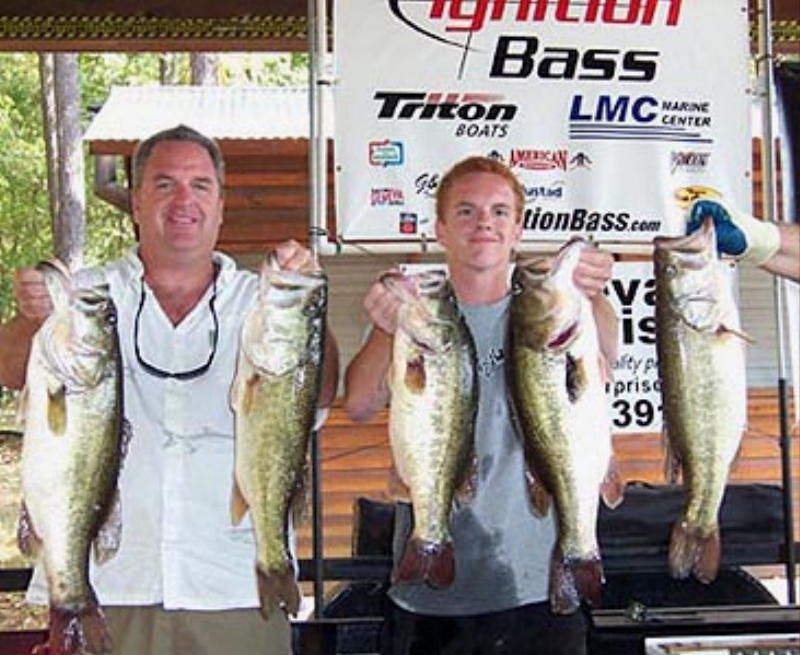
You need to pattern bass to have a catch like this in a tournament

You need to pattern bass to have a catch like this in a tournament

Good bass fishermen can pattern bass. That means they can catch a few bass and figure out what the bass are doing at that time on a lake. They can then go catch other bass in similar places with similar baits. For example, if a good bass fisherman catches three bass off blowdown trees on three different points, he will start running from point to point casting only to blowdown trees, using the same bait the first three hit.

Several years ago Fritz, a friend from Des Moines, visited the last week of February for some fishing. We hit Sinclair twice, Jackson once and spent our last day on West Point. A pattern gradually emerged that worked on all four lakes and helped us put bass in the boat.

Fritz goes by the name “Learning To Fish At 40” on my internet site since he took up fishing when he turned 40. I call it his mid life crisis. He is very smart and has read a lot on fishing, and has taught me some things! He looks at fishing in a different way than I do, with a fresh perspective.

We started fishing “places” at Sinclair that February, places I remember catching bass at that time of year. We tried lots of places with a variety of baits including crankbaits, spinner baits, jig and pig and worms.

After about half the first day was gone Fritz said “Do you realize every bass we have caught hit a jig and pig on rocks near deep water. So we started concentrating on those types of places using a jig and pig and caught a good many bass the rest of that day and the next day on Sinclair. We tried some other stuff, like fishing into the coves behind the points, but the bass just were not there.

It had been unusually warm and by Monday it was almost like spring. We went to Jackson and started on the same pattern from the day before, and caught fish. Buy that afternoon we saw the water had warmed so we started fishing into the pockets behind the points, too, and catching a few bass off wood cover. That had not worked the day before or that morning.

We had a good day at Jackson and decided to go to West Point the next day. A hard cold front came through and temperatures were dropping fast. But the pattern held, and we hooked some nice bass on rocky points and the wood cover behind them. We ended the day with me catching a 7.5 pound largemouth on a jig and pig out of a blowdown and Fritz catching a four pound bass, his best to that point, out of another blowdown.

Last Saturday night at Jackson Niles Murray and I fished the Sportsman Club tournament. We started on my favorite point near the dam but all we got was a spot that was too short to keep. At about 6:45 we ran up to the mouth of Tussahaw Creek where Niles has caught some fish the weekend before and started working the area.

At 7:20 I landed a good two pound keeper spot on a main lake point with some rocks on it. It his a jig head worm. Niles caught a short bass and some bluegill on his crankbait. About an hour later we had worked up the bank to another point with some rocks on it and I got another keeper spot, then Niles got one on his crankbait.

It was almost dark so we kept fishing up the bank, fishing around the coves and working all the cover we came to. At about 9:10 we had worked out onto another main lake point with rocks and, guess what. I got another keeper spot! At that point we decided to concentrate on that pattern but did not catch any more fish.

I wish I had caught on to that pattern quicker. We wasted a lot of time fishing in coves and other places where there were no bass. If we had started jumping from point to point earlier I think we could have caught more fish. By full dark the fish had stopped hitting on points, it seems.

The bass may have started hitting on that pattern again later in the night but we stopped at 12:30 AM. I have seen this type pattern in the past, where bass hit pretty good from 6:00 PM until about 9:00 PM then a lull with no bites until after midnight. It seems to me the fish need to adjust to full dark before they start hitting again.

In the tournament 15 members and guests fished for seven hours to land 17 bass weighing about 24 pounds. It was a very tough night and no limits were caught. Six people did not have a keeper bass.

Tom Tanner won it all with two bass weighing 4.66 pounds and his 3.14 pound spot was big fish in the tournament. My three weighed 4.36 and gave me second place, third went to David Fryer with three keepers weighing 3.70 pounds and Brent Terry got one keeper weighing 2.64 pounds for fourth place.

A word or warning. If you go to Jackson late in the afternoon, use some good sense and stop skiing and tubing when the sun sets. And turn on your running lights. It is dangerous and illegal to be out there after sunset without your lights on. Last Saturday official sunset was at 8:14 PM and it gets earlier each day, and the game wardens know the exact minute each day. We saw several boats get tickets and they even warned us because we had covered the back running light with a cap to keep it from blinding us while fishing. You could still see it but it was not bright enough and the game wardens stopped and “talked” to us.

Follow the law or take a chance of getting a ticket.

How Can I Keep Cool While Fishing In the Summer?

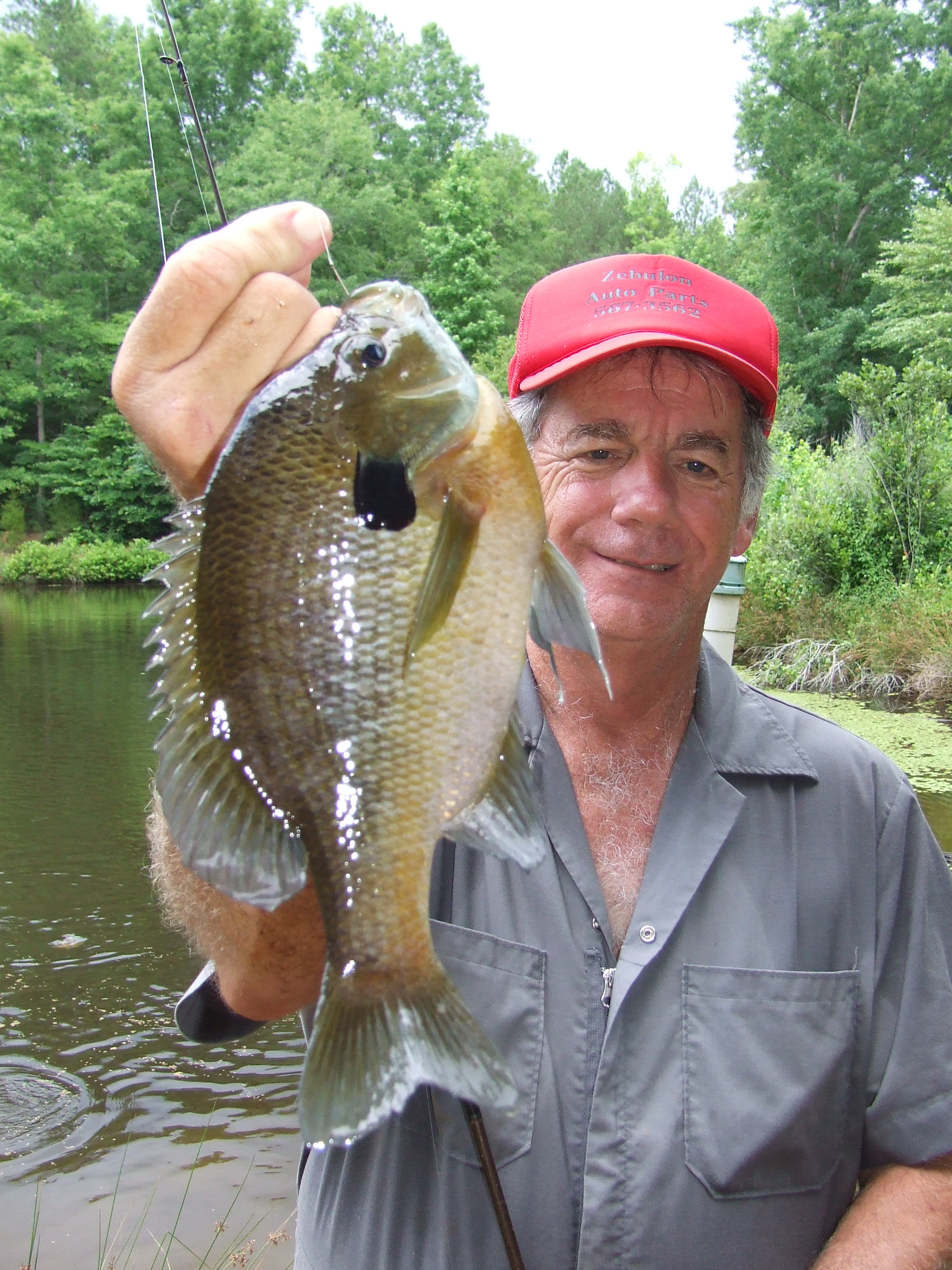
Its hot, yes I am wet with sweat, but this bluegill put a smile on my face

Its hot, yes I am wet with sweat, but this bluegill put a smile on my face

Its so hot I saw a dog chasing a cat and both were walking. Its so hot I dug a potato from my garden and it was already baked. Its so hot my chickens are laying boiled eggs. Its so hot robins are using pot holders to pull worms out of the ground. Its so hot I saw two trees fighting over a dog.

Its so hot the global warming true believers are having field day claiming our record setting temperatures prove they are right. But when I ask them what caused the previous records we are breaking, those only one degree cooler set back in the 1930s, they can only reply with a blank stare. Must have been all those depression era SUVs everyone was driving.

Its so hot I almost don’t want to go fishing!

Last Sunday I spent the morning on Millers Ferry Lake in Alabama getting information and pictures for an Alabama Outdoor News article. It was miserable by 9:00 AM and unbearable by noon when we quit. I thought about jumping in to cool off but realized I could not get any wetter. I sweated so much the money in my wallet was wet.

There are many ways to keep fishing and beat the heat. Fishing at night is my favorite. Not only is it cooler, you avoid sun problems and the fish bite better. The Flint River Bass Club scheduled our July tournament this Sunday at Sinclair from 4:00 AM to Noon. And the Spalding County Sportsman Club always fishes night tournaments in July and August because of the heat.

Jumping in the water does usually help since the water is normally cooler than the air. Dipping your cap in the water helps keep your head and the rest of you cool, too. I carry a change of clothes in my boat since I don’t want to drive home in wet clothes, but wet clothes sure do feel good while fishing.

Riding around in the boat creates a breeze that helps so I usually don’t stay in one place a long time. That can help you catch fish, too. Last Sunday we fished over a dozen different places in five hours and caught fish on only one of them. Finding some feeding fish is easier if you keep moving. At least that is my excuse.

Finding any place on the water with breeze helps a lot and bass seem to feed better with some wind, too. So fish anywhere you can stay where the air is moving, like out on a point on the main lake, if you can fight the boat traffic and waves.

Drinking lots of cold drinks helps cool you off a little but more importantly keeps you hydrated. That is very important when you are sweating a lot. Water is probably best but I like Diet Rite Cola. It quenches my thirst better and has no sodium, sugar or caffeine. You do need salt when sweating a lot but I would get too much if I drank colas with salt in them. But I do crave salt and vinegar potato chips driving home after every fishing trip this time of year.

If you fish during the day sunscreen is critical. I put on 100 SPF before leaving the house and carry a spray on sunscreen in the boat to refresh it during the day. I like a baby sunscreen since it doesn’t burn my eyes, and it is going to get in your eyes during the day from sweating, no matter what you do.

Fishing in the shade helps, too. I often try to find a shady bank or get under a bridge to avoid the sun. And the bass like shad as much as I do.

The right clothes can help. Light colored shirts and pants are not as hot as darker colors. I have several kinds of shoes that are well ventilated. And a cap or hat with a big brim can shade your eyes and ears. I don’t like to wear shorts or sandals. Keeping the sun off my skin seems to keep me cooler.

Even as hot as it is, I still prefer fishing to sitting at home with the AC at full blast. So go fishing but try to beat the heat any way you can.

How To Punch Mats for Bass with Jimmy Mason

Jimmy Mason and bass caught in mats of grass

Jimmy Mason and bass caught in mats of grass

The Finer Points of Punching Mats With Terry Scroggins and Jimmy Mason

By Steven Johnson
From The Fishing Wire

Alabama guide Jimmy Mason is an expert at punch-bait fishing on the vast grass mats of the TVA lakes.

Two bass fishing tactics are commonly used to pull big bass from massive grass mats: Throwing a hollow body frog for those fish willing to smash through the “roof,” and punching through the grass for those holding below. If bass aren’t hitting the top, the choice is already made. Put up your dukes and start punchin’.

Endless grass mats make it seem like B.A.S.S. Elite pro Terry Scroggins is searching for a needle in haystack. With each pitch, Scroggins’ big weight hits the dense mat, punches a hole and pulls his Big Show Craw down beneath the grass. He lifts the bait a time or two to see if anyone is home, pulls the bait back out of the same hole and then pitches to another spot. The approach appears random, but Scroggins is highly intentional about his lure choice, the spots where he flips it and each presentation.

A Florida-groomed pro with five B.A.S.S. wins and more than $1.5 million in career earnings, Terry “Big Show” Scroggins understands the idiosyncrasies of matted grass. He knows that bass live under those mats and that the best way to get them out often is to flip a heavily weighted bait so that it punches through the cover.

Tennessee River guide and Bassmaster pro Jimmy Mason also relies heavily on grass-punching strategies. Mason guides mostly on lakes Pickwick and Guntersville, both of which support extensive stands of matted vegetation.

Punching is a prime technique anywhere vegetation stays matted on top, and is normally most effective on sunny days when bass seek the shade of a roof overhead. During the cool season, Mason thinks punching first on post-front, bluebird-sky days because the sun heats the mat, and the water beneath the vegetation tends to be just a bit warmer.

Elite pro Terry Scroggins learned punchin’ in his home Florida waters but now uses it where ever he finds thick floating weeds.
Grass mats often are thick on top but more open under the roof, and that influences lure selection. For the easiest descent through the mats, lures should be slender without big appendages that can grab the grass and stop its descent.

Likely forage under a mat is a critical factor for Scoggins when he’s trying to decide which bait to punch. In Florida, crawfish abound beneath many mats, so his bait of choice often is his namesake Big Show Craw. Where bluegills are the main forage he’s more likely to use a YUM 2ube or Vibra King Tube. A compact creature-type soft plastic like the Wooly Bug is a blend of the two styles, and he often tries it first when he’s not certain of the preferred forage.

The size of the bass present also influences lure choice. When Mason is targeting heavyweight bass he prefers the Vibra King Tube.

“I don’t know exactly what it is about that Vibra King Tube,” he said, “but it attracts big fish.”

Both professional anglers select dark colors for punching. The grass roof cuts light penetration so bass can’t see baits well, and dark colored baits provide a better silhouette. His two go-to colors are green pumpkin and black-and-blue.

Other requirements for punching bass in the face include a heavy sinker (1 ½-ounce, often pegged), strong straight-shank or offset worm hooks, heavy action flippin’ rods and 60- to 80-pound braided line.

Finding bass in grass mats is a lot like locating them in other cover, look for something different.

The Big Show Craw, designed by Terry Scroggins, is one of the favorites for punch-bait fishing when heavily weighted.
“Look at the grass mat just like you’d look at a shoreline,” Scroggins said. “Look for the little points and pockets, greener spots, mixes of grass types and other cover poking through. Anything that’s different can hold fish.”

Not all distinctions are visible from above the surface, but topo maps or GPS mapping and graphs reveal bottom breaklines, ditches, points and other features that may hold fish. Mason typically approaches mats of grass methodically, beginning along outside edges and then moving to scattered mats and eventually into the thickest stuff. He watches and listens continually for movement beneath the mats that suggests feeding fish and pays careful attention to every detail every time a fish strikes.

Because mats commonly cover extensive areas, it’s critical to refine the pattern as a day progresses. Move quickly and make a lot of punches at a variety of locations until a fish hits, then slow down. Bass commonly congregate under mats, so an area that yields one bass often holds more. When one strikes, make your next pitch to that exact spot.

Mason says that a lot of his clients who are unfamiliar with punching mats miss fish all day long the first time. Detecting strikes can be tough.

“First, make sure your bait goes all the way through the mat,” he said. “When it does, let it fall to the bottom. Pay attention because aggressive fish might grab it before gets to the bottom.”

Once the bait finds bottom, both anglers advise experimenting to determine where the fish are holding in the water column. Mason hops the lure a time or two, then lifts it almost to the surface and smacks it against the top of the mat a few times before dropping it again.

“They might be on the bottom,” he said, “but they also might be barely under that mat. When that’s the case, smacking the mat with the bait triggers strikes.”

How To Catch Suspended Bass

Lake Sinclair bass caught on a jig head worm

Lake Sinclair bass caught on a jig head worm

If you ask most bass fishermen how to catch suspended bass, don’t be surprised if the response is: “you can’t.” Suspended bass present fishermen with one of the most difficult problems to solve and many just give up and go look for easier fish to catch. But there are ways to get them to bite and tactics that will help you land fish that others give up on.

Bass suspend away from structure and cover for a variety of reasons. One of the most common is when lakes stratify, forming a thermocline between hot upper oxygenated layers of water and cooler, deeper layers with little oxygen. Bass can’t live in the cooler waters so they get as close to it as they can, suspending over deep water at the level where they can still find enough oxygen.

Suspended bass will often be found holding off points and humps at the most comfortable depth to them. They will be over a deeper channel but not far from the rise in the bottom where it meets the depth they are holding. That allows them to run in and feed, then move back out over deeper water.

Some lakes present a special situation where standing timber under the water rises many feet off the bottom. Bass will often use these trees as cover, relating to the trunks and limbs while holding well off the bottom of the lake.

The best way to find suspended bass where you fish is to ride the lake and watch a depth finder carefully. Follow channels and ditches while watching for fish holding between the bottom and the surface. Riding back and forth over a point or hump, not turning your boat until well past the drop of the bottom contour, will show you schools of bass suspended near them. And moving slowly over standing timber will reveal bass suspended in it if your depth finder is a good one.

Depth control of your bait is critical to catching suspended bass. They are holding at a set depth and will not move far up or down to take a bait. So finding the bass and knowing what level they are holding is just the first step. You must then find a way to put your bait at the level where they will see it.

A crankbait is a good way to catch suspended bass but you must make it work at the dept the bass are holding. There is an old tried and true method of doing this that has fallen out of favor. Trolling it a great way to get your crankbait down to a set depth and keep it there while covering a lot of water, but it is against the rules in bass tournaments so many bass fishermen have abandoned it, but it still works.

Most lure companies have designed a variety of crankbaits that run down to a set depth. For example, a Bandit Series 400 will run 12 to 16 feet deep and a Series 700 will run 14 to 18 feet deep. A Bomber Fat Free Shad will run 14 to 18 feet deep while a Fat Free Fingerling will run eight to 10 feet deep.

The depth varies depending on factors like trolling speed, line size and amount of line out, so you need to experiment to find out the exact combination to produce the exact depth you want. Mark a set depth on a point then troll over it varying line size, length of line out and trolling speed until your bait just ticks the bottom at the depth you want it to run, then troll through schools of bass at that depth.

You can do the same thing if you are limiting yourself to casting, but line size and the distance you cast are even more important. And boat position becomes critical. When you cast a crankbait like the Bomber or Bandit it will dive to its maximum depth as you start your retrieve then rise when it gets near the boat.

Since your crankbait will stay a the desired depth for only a short distance when casting, you must locate the schools of bass then position your boat near them so you can cast past them and work the bait back, keeping it at the critical depth as long a as possible.

Some newer baits on the market make casting and controlling your depth easier. Both the Swarming Hornet and the Fish Head Spin are lead-head baits with a small spinner under the head. When you attach a Roboworm E-Z Shad or other shad looking plastic bait, it imitates a baitfish.

Tie on one of these baits and vary the weight of the lure and the line size to match the conditions like wind, water clarity and depth you want to fish. Smaller diameter line helps keep the bait at the depth you want to fish and you can get by with lighter line since the bass are away from cover.

Position your boat near the school of suspended bass and make a long cast past it. Feed line to the bait as it falls so it drops straight down and count it down. Figure one second per foot of drop, but to be more exact cast to a known depth and count it down to make sure your are accurate.

When the Fish Head Spin or Swarming Hornet reaches the correct depth, slowly reel the lure along. A slow, steady retrieve keeps the spinner turning and keeps the bait at the optimum depth. You can cover much more water at the best depth with one of these lures than with a crankbait since the lure drops straight down to the correct depth then stays at that depth all the way back to the boat.

One of the easiest and most effective ways to control the exact depth you want to fish is by using a drop shot rig. A drop shot rig is one where the lead is tied to the very end of your line and a hook tied on up the line. Special hooks and sinkers are designed for drop shotting and make it a more efficient way to fish, but you can use any sinker and hook as long as the hook is very sharp.

Gamakatsu hooks are known to be super sharp and they make a Drop Shot/Split Shot hook that comes in a variety of sizes and you can choose red or black hooks. These hooks are relatively small and are perfect for nose hooking small plastic bait like a Slider Worm, Roboworm or Gulp Minnow Grub.

A soft, straight worm like the Slider or Roboworm is the usual choice for drop shotting, but experiment with other shapes of baits, too. Some days the bass might like a fat Gulp Grub with a quivering curly tail over a thin straight worm.

Choose one of the plastic baits that match the size of the baitfish the bass are eating, and use a color based on water color. Clear water is usually best for drop shotting so line choice is critical, too. Fluorocarbon line is the standard for drop shotting and Sunline is invisible in the water and holds up well. The lack of stretch of fluorocarbons like Sunline also help with hooking fish on light line.

You can drop shot at any depth you find the fish holding. If they are three feet off the bottom, tie your hook three feet up the line. If they are 15 feet off the bottom, tie your hook 15 feet up the line.

This may sound strange but, since the sinker is at the end of the line, when you hook a bass and reel it in, there is nothing to get in the way of landing it. You may have a lot of line trailing the bass but you can land the fish without reeling it all in.

Get your boat right on top of the school of bass and hold over them watching your depthfinder. Let the sinker on your drop shot rig hit the bottom and you know your bait will be at the exact depth you tied it above the sinker. Twitch your rod tip, making the worm or grub dance right in front of the bass’s mouth.

Drop shotting is the best way to catch bass suspended in timber, too. For these bass, tie a hook a few inches to a foot above a sinker and get right on top of the fish. A good depth finder will allow you to watch your bait as it falls and you can stop it right in front of the bass and shake it. You are usually targeting a single bass in timber rather than a school. A drop shot rig moves the sinker away from the bait while still giving ou exact depth control.

Don’t let suspended bass ruin your day. Try these techniques to land them when others are just shaking their heads.

What Do I Do To Get Tackle Ready for the New Season?

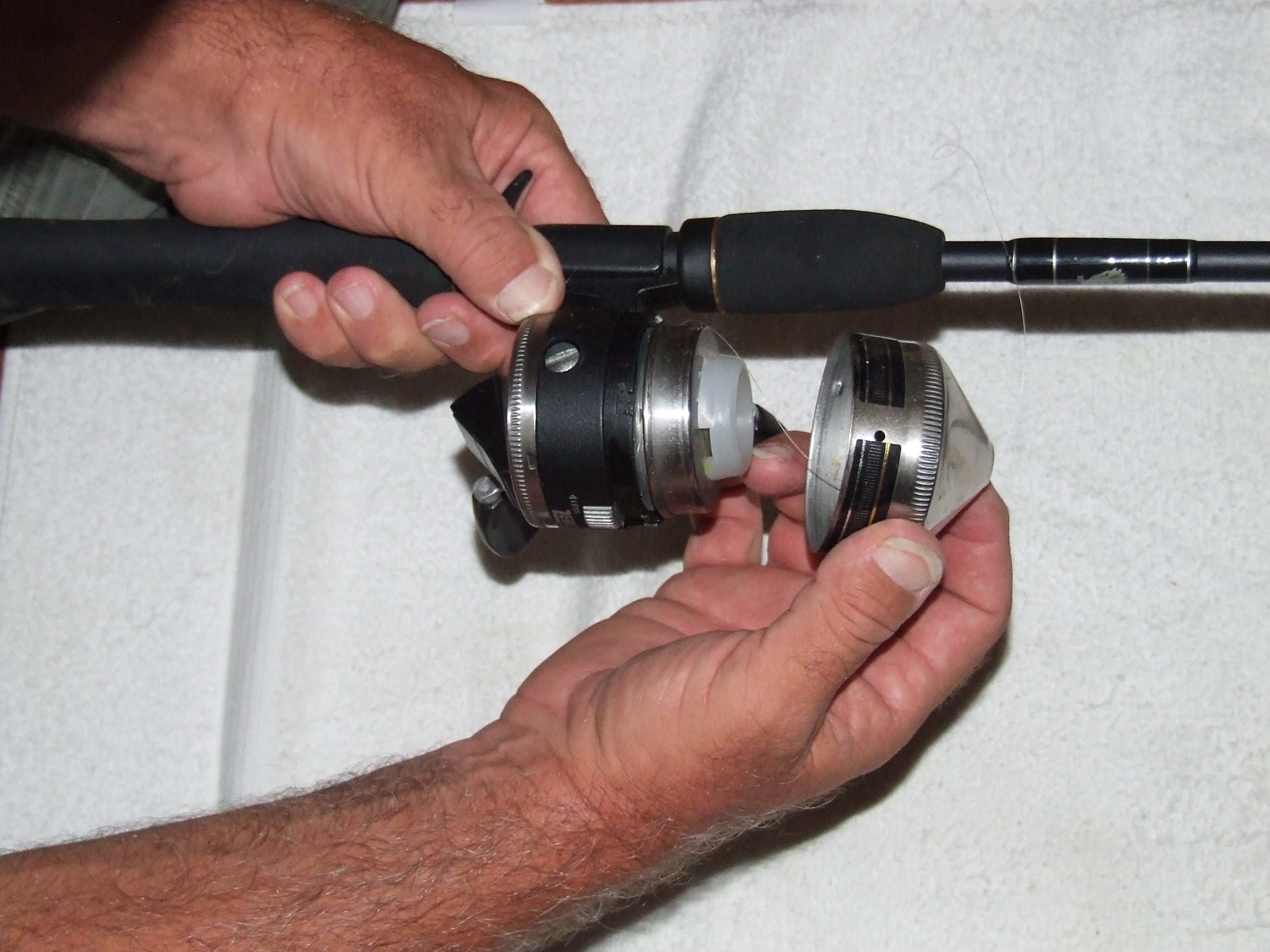
Getting your reel ready for the new season

Getting your reel ready for the new season

by: Glenn Walker

Its time for getting your tackle ready for the new season

With spring right around the corner for many anglers, the cabin fever has set in for many of us. Some anglers have had the opportunity to already wet a line if their lakes don’t freeze over, but for many anglers like me, our favorite bodies of water turn into ice shanty towns and we are still a month or so before we can make that first cast of 2013.

All winter anglers spend their time tinkering with tackle and looking at all the hot new baits for the year. There are a few key items that all anglers can do to not only prepare their tackle

Tip #1: Evaluate Your Tackle Storage System

Keeping your tackle organized allows you to quickly find that fish catching lure, but it also helps keep your lures from getting wrecked throughout the year. By properly keeping your tackle in a Plano Waterproof Stowaway, you won’t have any worries about your favorite topwater plug getting wet and rusty. When organizing your tackle, this is also a great time to see what all you have and if there are some lures you haven’t used in years, then put together a grab bag and give it to a young inspiring angler.

Tip #2: Spool Your Reels with Fresh Line

An anglers fishing line is the key connection between landing that trophy and just having a fish story for your buddies at the dock. Putting new fishing line on your reels is very important and isn’t something that should be put off until you have your line break. Any time I’m spooling my reels up with fresh line, I’ll always spray the spool of the line and run the line through a rag as it goes on the reel that has the KVD Line & Lure Conditioner on it. Doing this will help you get the maximum performance out of your line.

Tip #3: Put New Treble Hooks on Your Crankbaits

Whether you got a batch of new crankbaits underneath the Christmas tree or a bunch of your favorite cranks need some TLC, putting new treble hooks on these baits can help increase your hooking percentage tremendously! The stock hooks that come on crankbaits out of the box aren’t very good and after a year of fishing your favorite crankbait could let you down when you hook up with that big bass. Using a good split ring plier, I spend a good chunk of my winter making sure I have sharp treble hooks on all my baits, and if I don’t, I’ll put on a pair of the new Trokar Treble Hooks. These treble hooks are super sharp and will help you get more crankbait fish in the boat!

Tip #4: Protect Your Investment

Keeping your expensive fishing gear safe happens on two levels, the first is the immediate impact it has, such as keeping your rods and reels protected from damage and from collecting dust when not in use. Using products such as The Rod Glove to cover your rod will keep your rod blank and guides from getting damaged. The second and larger scale way to protect your investment is to do an in-depth inventory of all your tackle, rods and reels, this list, along with photographs will help you recoup your loses should you need to make an insurance claim, due to an unforeseen incident.

Tip #5: If It Don’t Fit, It Sits

Staying warm, dry and safe on the water is the number one goal every angler should have and this doesn’t start when you arrive at the boat ramp, or even the night before a big fishing trip, it starts now. Take the time to make sure your life jackets fit you and your fishing guests properly and that there are no holes or rips in them. A good rain suit is the key piece of the puzzle to staying dry and warm, especially when fishing in the early spring. All winter I keep my Onyx Pro Tech Jacket and Bibs hanging up so they will be ready for my first trip of the year.

Who knows, maybe by the time you are done reading with this it is time to go make a cast and take advantage of every fishing opportunity you have this year!

To read more fishing tips and see informative videos, check out fishglenn.com