July Night Tournament At Lake Sinclair

On Sunday eight members of the Flint River Bass Club showed up at Lake Sinclair at 4:00 AM for our July tournament. We fished until noon, trying to get off the lake before it got too hot and the crowds arrived. After weigh-in we spent some time cleaning up the ramp area.

After eight hours of fishing, some in the dark and some in the light, we weighed in 22 keeper bass weighing about 39 pounds. Some were caught on lighted boat docks before sunrise and others hit around docks after the sun got up. It rained on use a little just before daylight and the clouds helped keep us from getting too hot.

Donnie Schafer had five bass weighing 8.99 pounda for first. He said he got one on a top water bait and the others hit a jig head worm around docks. Bobby Ferris had a limit of five bass weighing 7.45 pounds for second and said he caught a lot of bass around docks on crank baits before daylight. I managed to catch two bass weighing 7.44 pounds for third, and my 5.13 pound bass was good for big fish. Tom Tanner placed fourth with four bass weighing 6.04 pounds.

Jordan McDonald fished with me and we started around the steam plant. I was throwing a spinner bait and he was casting a worm as we worked around the lighted bank, fishing grass and rocks. He missed a strike on the worm then I felt one hit my spinner bait and missed it. A few seconds later Jordan landed a keeper near where I had missed the bite.

We then ran up to some lighted docks a local fisherman had told me were good and started fishing them. The first one we worked neither of us got a bite on worms or a jig and pig. Then I cast a crank bait under the light and hook, and then lost, a small bass.

We fished that area for a short time and started to leave but it started raining. I did not want to run around in the dark and the rain so we kept fishing, and I am very glad we did. After working back to the first dock we fished I threw a jig and pig under the light and got a hit. When I set the hook I started yelling for the net – I could tell it was a good fish. When it jumped I knew it was a big one.

Jordan almost fell out of the boat getting the net in the dark. We could see a little from the dock light but when the fish got near the boat we could not see it. I turned on my cap light and it gave us enough light to see the fish and Jordan netted it for me.

A few minutes later, just as it started getting light, Jordan got keepers on back to back casts under the same light. Then we fished places where I thought bass should be holding for four hours without catching another fish.

At about 10:00 AM I threw a jig head worm to a seawall and caught my second bass. Although we tried hard until quitting time neither of us managed to catch another keeper bass.

After weigh-in we were pleasantly surprised to find the ramp had little trash around it. We expected there to be lots of litter since it was a holiday weekend but we quickly picked up all the trash in the parking lot, ramp area and grass around it.

How Can I Catch Post Spawn Smallmouth?

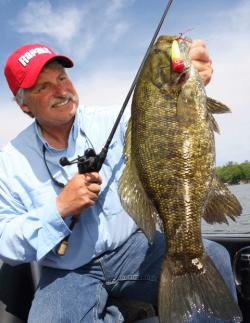
Y ou can catch big post spawn smallmouh on top

Y ou can catch big post spawn smallmouh on top

Pop post-spawn bronzebacks on top

By Dan Johnson
from The Fishing Wire

Bedfishing smallmouths is a blast, but for the adrenaline junky in all of us, nothing beats the rush of busting beefy bronzebacks on topwater poppers. This big-fish, post-spawn pattern is guaranteed to make your heart skip a few beats, and it’s happening now on lakes, rivers and reservoirs across the Bronze Belt.

Minnesota bassin’ ace Scott Bonnema knows the drill. Decades of chasing smallies across the continent have taught him the finer points of the popping program, including key locations, killer baits and winning presentations.

“It’s a classic situation,” says Bonnema, whose tournament travels crisscross the northern half of smallmouth territory each season. “After smallmouths leave the beds, you can catch numbers of smaller fish near the bank, in depths of 3 to 8 feet, on a variety of presentations.”

Windmilling 2-pounders is fun, but bigger bites await a bit deeper. “Groups of larger fish stage in the 10- to 14-foot zone,” he explains. “They feed aggressively, and when the surface is calm, topwater poppers are a fun and effective way to target them.”

To tap the bite, Bonnema looks for structural complexes rich in rock and gravel, lying just outside the spawning grounds. “I look for humps, points and islands connected to shore, up to ¼ mile out,” he says.

A good sonar and GPS combo is key to finding prime post-spawn structure, and for pinpointing sweet spots such as fish-holding irregularities. While traditional down-looking sonar aids the search, Bonnema believes new side-scanning options really lift the curtain on what lies beneath the waves.

“I use Humminbird’s Side Imaging, and have found it a priceless tool for surveying structure and mapping out plans of attack,” he says. “I can scrutinize rock formations in incredible detail, and create tracks following the outline of the structure. One of my favorite features, though, is the ability to locate and create waypoints for boulders that stand out from the rocks around them.”

He explains that rocks ranging from football-size up to Volkswagen proportions all attract bass, but individual rocks that are larger than the prevailing rubble can be dynamite. “Picture a suitcase-size boulder surrounded by footballs,” he says. “Even though smallmouths may be roaming an entire reef, they’re instinctively drawn to the larger object, and often use it as an ambush point.”

When his side-scanning sonar reveals one of these super-sized treasures, Bonnema simply slides the display’s cursor over it and marks a waypoint for future exploitation.

While it’s a time-consuming process, thorough recon can pay big dividends for years to come. “The rocks aren’t going anywhere, which means prime areas can produce smallmouths season after season,” he says.

To keep structure straight for the long haul, he recommends marking it with appropriate icons. “Use a fish, skull and crossbones, whatever helps you remember something about the spot. I mark really good areas with the first-aid icon, because I know I can go there and get healthy in a hurry.”

GPS breadcrumbs guide his final approach and boat positioning. “Using the directional arrow on my GPS, I can idle within casting range of a key boulder or group of rocks, without ever running over the fish,” he says.

Taking the process a step further, he notes that Minn Kota’s new i-Pilot Link system-available on the Terrova or PowerDrive V2-makes the trolling motor, Humminbird sonar and LakeMaster digital GPS map collaborate to steer whatever course you desire. “Being able to focus on fishing while your electronics handle the boat is amazing,” he says.

No matter how you chart your course, stealth is important to avoid spooking skittish smallies. “Keep your distance and fire long casts,” he cautions.

Gear-wise, Bonnema wields a 7-foot, medium-power Lew’s Tournament Speed Stick, paired with a matching Speed Spool low-profile casting reel. Monofilament line gets the nod, thanks to its buoyancy. “Fluorocarbon sinks, dragging the popper down and ruining the action,” he explains. “I like 12-pound Sufix ProMix, but Siege and Elite are top options, too.”

On the business end of the line, a loop knot tethers his topwater. “With a loop, the lure moves freely, and spins a little when you pop it, creating just the right splash,” he says. “You lose that with a tightly cinched connection.”

There are poppers aplenty, but Bonnema favors baits that produce an enticing combination of gurgle and spray, like the 2¾-inch Rapala X-Rap Pop or 3½-inch Skitter Pop, in shades of silver, gold and chrome. “Natural finishes work wonders, but sometimes the bass want something a little different,” he says. “When that happens, the X-Rap clown pattern is a good bet.”

The presentation is straightforward-though not without its tricks. For example, pops and pauses beat continuous popping. To pop like a pro, make a long cast over the target area. Let the bait sit until the ripples fade away, then give it a couple quick 6-inch pops, imparted by sharp, sideways twitches of the rodtip. Pause again for five to 10 seconds, add another pop or two, and repeat.

Ultimately, the ideal number of pops and duration of pauses depends on the whims of the bass at the moment. “Experiment to find the right cadence,” Bonnema advises. “Keep in mind that when it comes to pauses, patience equals bigger fish.”

When you get it right, explosive strikes are the reward. Which brings up another pivotal point in the process-setting the hook.

“Strikes are startling, and your first reaction is to rear back and set the hook,” he begins. “But that’s a good way to lose the fish. Instead, when a bass blows up on your popper, lower your rodtip toward the fish, reel as quickly as you can to take up slack, and don’t set the hook until you feel the weight of the fish.”

If a bass misses the popper, it’s likely trying to tell you something’s not quite right with your presentation. “There was something it didn’t like,” Bonnema explains. “Make slight adjustments with lure color and size until the bass get your bait in their mouths.”

If you can’t seal the deal despite such tweaks, it’s possible the bass just aren’t in the mood for dinner on the ceiling. “Think positive-at least you know they’re down there,” Bonnema offers. “Throwing something different, like an X-Rap XR10 jerkbait, can light them on fire.” The twitch-pause of a slender, suspending slashbait is also deadly on post-spawn smallies, but that’s a story for another summer day.”

Are Micro Guides On Fishing Rods Better Than Regular Guides?

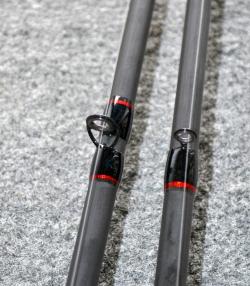
Picture showing both micro guide and regular guide

Picture showing both micro guide and regular guide

Guide To Regular Guides vs Micro Guides

By Frank Sargeant, Editor
from: The Fishing Wire

So, do you “need” a new micro-guide rod? Or not?

If you’re like me, you find yourself “needing” practically everything that’s new related to fishing, whether you need it or not.

Micro-guide rods have been around for several years now, and have been a popular seller in many well-known lines. Here’s the basic pitch that has made them take off:

Micro-guides are much smaller and lighter than conventional guides and are usually “single foot”, thus do not impede the natural action of a quality rod blank.

Micro-guides keep the line closer to the rod blank than conventional guides, which results in better performance on casts as well as when fighting fish.

Micro-guides fit into rod tubes aboard a boat more readily than standard guides, thus are less subject to damage.

And here’s the biggy: Micro-guides look cool. You have to look closely to see them at all. They give the rod a sleek, modern appearance-and that’s probably the primary reason they have taken off so well.

But could it be that there’s a real performance difference?

The Falcon BuCoo Micro is a good-looking mid-range rod with the fit and finish of high-dollar sticks.
We asked Chris Beckwith at Falcon Rods to help us out on this one. Falcon makes an amazing array of rods for every purpose, and in fact in their mid-priced BuCoo Line they have a pair of baitcasters that are identical in length, action and power-except the BMC-7MH has micro-guides, the BMC-5-17 has conventional.

Both are 7 foot rods rated for 12- to 20-pound test line and lures of ¼ to ¾ ounce, in medium heavy action with medium-fast tips-like most top quality rod makers, Falcon distinguishes between the “action” or power of the rod and the tip stiffness.

Both BuCoo’s are constructed on Falcon’s FXB American-made graphite blanks with all Fuji guides. Both have exposed-blank reel seats for sensitivity, and EVA grips, with 14 ½ inch handle length which makes power casting and big hook sets easy. Weight is a near match at around 4 ounces. Both feature Falcon’s five-year warranty.

The Falcon BMC-7MH is built on an identical blank to the standard BMC-5-17, but the micro version has three more guides, a total of 10 plus the tip.
The micro model has three more guides, a total of 10 plus the tip, and that adds $20 to the price: it’s about $129.99 at on-line retailers, versus $109.99 for the standard version. (An editor’s note here-these rods fish like rods priced much higher and fit and finish is excellent-they appear to be a great value for the money. I like the clever naming, too-“Bucoo” being Cajun for beaucoup, or a bunch of value.)

In my tests with Shimano Chronarch 200-E7 reels, the casting range was the same for both micro and standard versions throwing a 3/4 ounce weight on 12-pound mono, about 150 feet. The feel in the hand was also the same. Either is an easy stick for all-day casting.

I fished them interchangeably on several trips to Lake Guntersville in North Alabama, and had to look to tell which was which-I could feel no difference in their handling while throwing everything from topwaters to lipless crankbaits to big swimbaits and football-head jigs. Ditto on hook-setting, very similar.

I’d say the micro makes better use of the power in the rod in handling heavy fish, perhaps because of the additional guides which keep the line more closely following the spline of the graphite.

The lower height of the guides also makes them somewhat less likely to grab a loop of loose line and create a tangle, though I had no problems with this on either version of the BuCoo rods.

It is significantly harder to string up a micro-guide rod, but of course that’s a chore you don’t have to do often and shouldn’t be much of a factor in your buying decision.

However, if you are among those anglers who frequently make use of a leader, which requires a knot that slides through the first several guides, micro-guide rods may not be for you. Anglers who throw topwaters on braid, for example, frequently add 12 to 18 inches of monofilament because the slightly stiffer mono is less prone to loop back on itself and tangle the hooks as you walk the dog. And some feel a foot or two of fluorocarbon, much less visible than braid, increases the number of bites in some situations. But getting a line-to-leader knot to fit through a microguide can be a challenge, to say the least.

Other than that, there’s not much to distinguish one from the other.

Bottom line is, if you “need” a micro-guide rod, go ahead and buy one. They do look cool, and the slight bump up in price is worth it when you go strolling down the dock in front of your envious buddies. But it probably won’t make a great deal of difference on your casting or fish-fighting ability.

For more details on the whole Falcon line, visit www.falconrods.com.

March Bass Fishing On Alabama’s Lay and Aliceville Lakes

Lay Lake Spotted Bass

Lay Lake Spotted Bass

I love writing magazine articles about fishing – at least the research part of it. I always learn new things about lakes I have fished for years when I get a chance to go with other fishermen on Georgia lakes for articles for Georgia Outdoor News and Georgia Sportsman Magazine. Even more fun the past two years has been fishing Alabama lakes I have never seen for Alabama Outdoor News.

Alabama has an amazing variety and number of lakes. Last year on a Saturday I drove to Tuscaloosa and met Steven Fikes to fish Aliceville, a fairly small lake on the Tombigbee River right on the Mississippi line. It is mostly river with a lock and dam that flooded huge areas of swamp sloughs and flats.

I was surprised the water temperature was 58 and the bass were already moving in to spawning areas. Although the river was as high as Steven had ever seen it, from the torrential rains on Friday, we still found clear water in some of the backouts. We managed to catch 14 or 15 bass on spinner baits and rattle baits around grass beds. The biggest two were right at three pounds each.

The next week in March last year, I went over on Thursday and drove back to Lay Lake just south of Birmingham and met Brandon Ligon for another article. Lay is more similar to lakes here, with points, coves and big water. But unlike lakes here grassbeds are everywhere in the shallows. And the spotted bass that abound in the lake get big. Lay Lake is on the Coosa River and Coosa River Spots are known for being big and strong.

The second place Brandon and I stopped he quickly caught a three pound plus spot. I had been sitting in the bottom of the boat taking notes but that fish made me get up and start casting. I immediately hooked a strong fish that took off toward deep water. It pulled so hard I was sure it was a striper or hybrid but I never found out, it pulled off.

The next cast I made I hooked another fish that almost ripped the rod out of my hand. It made a run that made my line sing in the water. After a long hard fight I landed a spot just over three pounds. Brandon caught another spot close to four pounds and a largemouth before they stopped feeding. Those four bass weighed over 12 pounds total.

We fished the rest of the day and I landed one more big spot and Brandon got three more. The smallest bass we caught all day was the 2.5 pound largemouth. All the others weighted between three and four pounds. Brandon said it was not unusual to see a five bass limit of spots in a tournament weighing 20 pounds. Those are quality bass.

The water temperature at Lay was more like here, with most areas around 50 degrees. Of course there was still snow and ice in shady areas around the lake and one creek we went in had 44 degree water near the back. I am sure if the snow had not hit and the water had been warmer we would have caught more fish.

Georgia lakes are great but there is something special about the river lakes in Alabama.

Cooking Roots

Talk about cooking roots and most southerners think turnips, potatoes and carrots. But it makes me think of other roots, going back to learning to cook from my mother and the cooking traditions passed on from parents to children generation after generation.

My mother was a fantastic cook and baked cakes for sale for many years. Since we had chickens and cows milk and eggs were easy to get. She taught me a lot about baking and always rewarded me with beaters and bowls to lick. There was no worry about eating raw eggs in those days.

I learned the basics from seasoning all vegetables with fatback and cooking them forever to pouring the salt in all kinds of sauces. Mamma could take a package of cheap hotdogs, add chopped onion, bell pepper and BBQ sauce and make a dinner as good as anything I ever ate. Another of my favorites was egg casserole, made by layering stale crumbled up biscuits and bread with sliced boiled eggs and covering it all with milk and baking it. The real butter dotted on each layer helped! We never wasted anything. Leftovers were eaten as is or mixed with other ingredients to make a completely new meal.

I leaned to fry fish from my dad. He loved to fry up a big mess of crappie, bass and bream for family and friends. He and a family friend made fish cookers with wheel hubs, pipe and rebar. I used mine for many years and it seemed to do a better job than any of the commercial cookers I have tried. Dad knew exactly when to take the fish out so they were golden brown but still moist and delicious.

One thing I never got right were the hushpuppies. Mamma mixed them up and dad dropped them one at a time into the hot grease, using two spoons and dipping one in water between each hushpuppy. I can cook them but have never been able to get the ingredients exactly right.

I asked my mom to write down the recipes for me and she tried, but many have instructions like “add some pepper till it tastes right.” I can usually make a good stab at things she wrote for me but, unfortunately, soon after she started recording them for me on index cards she developed Alzheimer’s and many of my favorites were never recorded.

I also learned from aunts and uncles. My uncle Adron could kill game like the best of the pioneers and his wife Nancy could cook anything. I often thought if he brought in an old boot she would make a great meal out of it. I especially loved their catfish stew. They both worked grinding the catfish and adding the ingredients until just right, then Uncle Adron would cook it in a big pot outside over an open fire.

I am afraid a lot of the southern cooking traditions are being lost. It seems we don’t have time to cook a meal and kids would rather be playing video games than learning cooking roots. And fast food has replaced so much of our cooking that little will ever be the same. Some of it is good but nothing will ever taste as good as something you picked or killed, cleaned and cooked yourself.

Don’t let your cooking roots die. Learn them now before it is too late.

Have You Ever Lost Anything Outdoors?

I am wearing the sunglasses I lost!

I am wearing the sunglasses I lost!

Have you ever lost anything outdoors? It happens to all of us and I seem to lose a lot of things from glasses to rods and reels. Fortunately, I have never gotten myself very lost and have always been able to find my way back home, but sometimes I make it back without everything I had when I left.

A few weeks ago I decided to pull the two black plastic pipes I use for siphons from my upper pond to the lower pond. Once I got the 75 foot pipes moving it wasn’t too bad, but a limb brushed my head and knocked off my cap and prescription sun glasses. I picked them up and put them in my shirt pocket.

A little later I tripped and they fell out. I picked them up again, got the pipes to the lower pond and got one working. I had to put a concrete block in the edge of the water and run the pipe through it to fill it with water. The purpose of all this exercise was to drop the water level a little to try to find the holes the otters are living in. From the scat piles it looks like an otter has eaten every bass in that pond, but that is a different story.

A few days later I could not find my sunglasses and figured I dropped them in the woods. I walked back over the path I drug the pipes but found nothing. I even moved the concrete block in the edge of the pond since I had bent over it a good bit but still nothing.

Two days later it was bright and sunny and I looked again, thinking the glasses might shine in the sun. I walked over the trail but nothing. When I got to the block in the water I looked and saw a little glint of light. Sure enough, the glasses were there, buried in the muck in about a foot of water. I was real lucky to get them.

Another experience with sunglasses did not turn out as good. I was fishing by myself at Lake Martin and stopped to fish a spot up the river in about 15 feet of water. I bent down and picked up a rod and reel and when I did the handle of another rod caught on the line and flipped out of the boat. I grabbed for it and was suddenly under the water.

The first thing I did when I came up was look around and see if anyone was laughing at me. Then I started hoping they were, I could not get back in the boat and needed help. I got a little scared but finally got to the motor and used it to climb back in the boat. Lying on the back deck, panting and recovering, I realized if I had just thrown out a marker I could have snagged my rod.

About the same time I remembered the prescription bifocal sunglasses I had been wearing. Had being the operative word. So that day I left a $300 pair of sunglasses and a $200 rod and reel on the bottom of the lake and I guess they are still there.

I used to keep my cell phone on a clip on my belt but now keep it in a pocket. A couple of years ago I was using my backhoe to fill in some rough patches on the road going down to my pond. After moving several scoops of dirt I parked the tractor then realized I did not have my phone. A search of the truck did not turn it up.

I got a phone from the barn and called the number, hoping to hear it ring. I walked over the area where I had been working but found and heard nothing. At that point I got a hoe and started scratching dirt. After about five pulls of the hoe I turned it up. It still worked so I guess I did not run over it, but as long as I had it there was a slash on the cover where I hit it with the hoe.

Another time a tractor almost cost me my sunglasses. I was cutting grass beside the pond and a bug flew in my face. When I hit at it I knocked off my sunglasses. I stopped the tractor immediately and searched all over and under it without finding anything. I knew they had to be there but could not find them. I decided to move the tractor back so I could look better. As soon as I moved it I found them – they had been under the left rear tire. Amazingly, they were not broken.

I guess things are not really lost until you don’t find them. Be more careful than I am so you won’t have those kinds of problems!

What Is A Jig Head or Shaky Head Worm?

Jig Head Worms: The Appetizer Bass Can’t Pass Up

Jig head worms have been around for many years but have gotten very popular the past few years, for a very good reason. They catch bass, especially in the fall.

If you asked a bass fisherman about “shaky head worms” a few years ago, your only response was likely to be a shake of the head saying no. Today you would have a hard time finding a bass boat on the water without a shaky head rig in it. It is one of the most popular ways to catch bass right now.

Shaky head worm rigs have many different names but the most descriptive is “jig head worm” since that is the basic rig. Fishermen have used worms and other trailers on jigs almost as long as there have been fishermen. But this system got real popular a few years ago with the introduction of jigs with big hooks, made especially for bass. It seems to catch bass when nothing else will work.

A jig head worm is simply a ball jig head with a plastic trailer on it. Most tackle companies make them now under a wide variety of names. They come in all kinds of shapes and colors and some have special ways of attaching the worm. Light wire hooks from 1/0 to 4/0 are common.

On a basic jig you thread a worm on the hook Texas style, with a quarter inch of the head of the worm against the jig and the hook inserted back into the worm to make it weedless. Some jigs come with a spike or small spring behind the eye of the hook. On them you put the head of the worm on the spike or spring then stick the hook into the worm body. This setup keeps the worm from balling up on the hook when you set the hook.

The reason a jig head worm is so good is it makes the worm stand up. Unlike a standard Texas rig, the tail of the worm sticks straight up from the bottom, looking like a baitfish or other bass meal feeding along with its head down.

Watch a jig head in clear water and you will see the trailer stand up when the head hits the bottom. It will fall over but falls much slower than a Texas rig. Some jig heads have a flat surface to make them stand up better, and some are a mushroom or football shape that is supposed to make them stand up when pulled.

A finesse type straight-tail four inch worm is the most common trailer to use and fishermen have their favorite colors. But other trailers work great, too. A bigger worm like a six inch straight tail worm sometimes draws more strikes. And don’t hesitate to put a big worm, up to 10 or 12 inches long, on a jig head that has a hook big enough to handle it.

Creature baits like the Reaction Innovations Sweet Beaver or the Berkley Little Chigger Craw that imitate crawfish are especially good in the fall. Bass are feeding up for the winter and crawfish are one of their favorite foods. The jig head makes the crawfish imitation stand up and be more visible to the fish.

When jig head worms first became popular most fishermen cast them on a spinning rod and light line. They were a finesse way of fishing with one-eight ounce heads, a four inch worm and eight pound test line the standard. And that still works. But don’t hesitate to tie a jig head worm on a bait casting outfit spooled with 12 to 15 pound line. And use bigger three-sixteenths to one quarter ounce heads with bigger, heavier hooks.

Fluorocarbon line is the standard for jig head worms since bass usually have a long time to inspect the bait. And this bait works best in clear water, so the invisible line helps you get more strikes. Some fishermen use braid line but tie a two to three foot fluorocarbon leader to it. If you go that route it is best to use a swivel to attach the two lines since braid will cut fluorocarbon.

Trailer colors are your choice. It is hard to beat a standard black worm in any color water but darker colors tend to be better in stained water. Try clear colors like watermelon in clear water. And dipping the tail of the worm in a chartreuse dye like JJs Magic will add a flicker of color bass like.

For craw trailers dark colors work well in stained water but try to match the color of local crawfish. You can find them at night in the shallows. Their eyes look ruby red when hit by a flashlight beam. Some lakes have very dark, almost black crawfish. Other lakes have populations with brown to almost red coloration. Match your bait to the color of the food the bass are eating when possible.

Jig heads shine on hard bottoms from clay and gravel to hard mud, so these kinds of points and banks are some of the best places to fish them. Since crayfish live in clay and hard mud bottoms and around rocks where they make their burrows, working a jig head with a crawfish imitation where they live is deadly in the fall.

Let your bait hit bottom and sit for a few seconds, then slide it along like a crayfish crawling along. Suddenly hop it like a startled crayfish swimming off. When it falls back it will stand up with claws raised and waving, just like the real thing. Bass will eat it up.

Also try a worm trailer on these hard bottoms but fish it a little differently. The name “shaky head” comes from one of the most popular ways to fish a jig head worm. Let it hit the bottom and sit for several seconds. Then tighten up your line and shake the rod tip, making the bait dance in place.

You don’t want the bait to move across the bottom, you want it to stay put and vibrate and shake. This is especially effective in clear water where a bass might sit and look at a bait a long time before hitting it. Give the fish a reason to eat the bait by shaking it in one place.

Jig heads don’t come through chunk rocks very well but are great around them. When fishing rocks like riprap use a very light head, as light as you can throw on your outfit and fish effectively in any wind that is blowing. Crawl and hop it over the rocks. The light head is less likely to get hung but expect to lose jigs when fishing rocks.

Round jig heads come through wood better than some other shapes. When working blowdowns or brush piles use a light head and fish slowly. If the jig gets hung up try popping your line. Put some slack in your line, pull it to the side with your hand while tightening up with your rod tip, then let the line pop free of your hand. For some reason this often frees a jig head that is hung up in brush.

Bass hang out in brush and other wood cover so you need to fish it. Fish very slowly with your jig head. Let it fall to the bottom by the brush and sit, making it work most effectively by keeping the trailer up and off the bottom. Fish the outside edges first with your jig head; you are less likely to get hung up.

When a bass takes a jig head worm you will sometimes feel a “thump” as it sucks the bait in, but often you won’t feel a hit. Watch your line for any slight twitch of sideways movement. Raise your rod tip carefully and tighten your line before hopping the bait. If you feel any weight, set the hook. Or, if you don’t feel anything, if your line is slack, reel up some of the slack and set the hook. A bass is probably swimming toward you with the bait. It doesn’t cost anything to set the hook so if in doubt set it.

Driving a nail into a board is much easier if you tap it with a hammer rather than trying to push it in. Sticking a hook in a bass’s mouth is the same way. Try to pop the hook rather than making a sweeping hook set. Most jig heads come with light wire hooks so they penetrate the bass’s mouth better and you don’t need to rock the boat when setting the hook.

When using heavier line don’t set the hook too hard and be careful fighting the fish. The light wire hooks can straighten out. Set your drag a little lighter than normal so it slips a little on the hookset. That will lessen the likelihood of a bent hook and also keep you from breaking the lighter line when you set the hook hard.

Give a jig head worm a try. Call it anything you like but keep one in the water and you will catch bass when other baits fail.

How Can I Catch Giant Arizona Catfish?

Phillip Smith caught this big Arizona catfish

Ed caught this big Arizona catfish

The Reel Whiskery Deal
from The Fishing Wire

Today’s feature on giant catfish comes to us from Nick Walters of the Arizona Game & Fish Department, offering tips that will work not only in Arizona but where ever big cats are found nationwide.

The whiskered lake monsters are emerging more and more. A sudden, summer catfish craze.

Said local catfish enthusiast Bobby Wright: “I haven’t seen so many people fishing for catfish since Ed caught his.”

Who’s Ed?

He’s Arizona’s latest fishing legend, the definition of doing your name proud. “Flathead” Ed, he is called. Eddie Wilcoxson carved out a new standard in April with a 76.54-pound flathead catfish from Bartlett Lake, which became the heaviest recorded fish of any species in state history. Forums have been buzzing about the record. Challenges are being tossed like dripping laundry. The record must go, some say.

Some anglers are close to the record, as the following stories from the past week will show.

This weekend is a good as a time as any to escape some of the predicted 118 degree days and hide in the night. Or plan a nighttime catfishing trip for the fourth of July weekend. Because Arizona is showing that some deeply etched memories can be made at any time, with just one chomp from a hungry catfish.

Wright, a Phoenix-based member of the U.S. Catfish Association, said he witnessed a potential state record flathead catfish taken from Lake Pleasant around 9:30 p.m. on June 13. The beast, which he guessed was 60 or 70 pounds and is pictured above, was released, he said.

“Pleasant has been producing some very large catfish the last couple weeks,” Wright said.

Wright said Phillip Smith caught the catfish that measured 50 inches in total length (Flathead Ed’s was 53.5 inches), but Smith could not find a capable scale, and so released the fish in good condition. Smith caught the flathead between 15 and 25 feet of water on 30-pound monofilament line and a 10/0 Big River sickle hook with a live bluegill at 1:30 a.m.

Big Arizona Catfish

Big Arizona Catfish

Kenny Walker, also of Phoenix, caught the largest fish in his 30 years of fishing state waters under a super full moon on June 21 at Bartlett Lake. He said the catfish weighed 41.82 pounds.

Walker’s toad was caught with an 808 Zebco reel on an 8-foot Berkley Big Game fishing rod, 20-pound monofilament line and a 5/0 circle hook.

Like many nighttime catfishers during the summer, Wright targeted the cats near the bank, in 7 feet of water. “I had the rod laying on the edge of the boat,” Wright said. “My wife saw it bend and I actually had to catch the pole.”

Get ready. Big catfish will steal your rod.

And there are kitties out there bigger than any of these.

In 2008, through an electrofishing survey on the lower Colorado River, we weighed one (pictured to the right) at 89.4 pounds. He’s still out there, as far as we know …

Every catfish angler has their own technique. Here are more that have been successful recently.

Like Walker, Wright also uses circle hooks, which allow a fish to be hooked without the angler having to set the hook. The hooks are designed to naturally hook a fish in the corner of its mouth – even if the fish swallows the bait – allowing the angler to easily pull out the hook and increase the odds of releasing the fish in good condition.

“Especially if I’m fishing under a float I’ll use a circle hook, because under a float the catfish have to pull real hard to get the float to go down,” Walker said. “Right now most of the fish are being caught off large bobbers. Suspend bait a couple feet from the bottom and hold on.”

Walker said he likes catfishing because, “it’s not like any other fish. You have to work.”

Walker gets his bait, usually bluegill (carp also are effective), dropshotting a ½-inch piece of nightcrawler. At Pleasant, that’s in 15-20 feet of water against cliff walls. The bluegill can be hooked just under its spine (a bit behind its eye) on an 8/0 or 10/0 hook. Match the size of the fish to the hook so that the hook doesn’t overpower the fish.

(But live bluegill are not allowed as bait in all state waters. Refer to pages 12-13 of the 2012-13 AZGFD Fishing Regulations guidebook for details of legal use of certain species of live baitfish in certain areas. Sunfishes (including bluegill, redear sunfish, green sunfish and hybrid sunfish) are permitted on all waters in La Paz and Yuma counties; the Colorado River south of the Nevada-California boundary downstream to the Southern International Boundary with Mexico, including impounded reservoirs; the Gila Salt and Verde rivers, including impounded rivers; urban waters in Maricopa County; and Lake Pleasant, Alamo Lake and Patagonia Lake.

And fish cannot be transported from one fishery to another.)

Back to the fun stuff. Walker said he has a 16-foot center console boat with a kayak on his kayak rack. Because it’s not easy casting the 100-pound PowerPro main line with 200-pound Dacron leader he likes to use for catfish, Walker will use the kayak to drop the bait in his preferred spot. He likes a 24-inch leader on a 6-foot-6 inch tuna rod with Diawa Sealine 40 reels.

“You’d think we were fishing for tuna out there,” he said.

Catfish also are good eating.

If the thought of tasting blackened catfish street tacos with jalapeno slaw sets your mouth watering, you’ll want to get the next issue of Arizona Wildlife Views magazine. Johnathan O’Dell’s “Dining After Dark” article describes the delights of pursuing those creatures of the shadowy deep known as catfish — and gives a great-tasting recipe to use when you succeed in catching them. Subscribe online or by calling (623) 236-7224.

If you have any luck out there, be sure to send your story and photos to BFishing@AZGFD.gov.

Hot Summer Fishing On Lake Sinclair

Lake Sinclair bass caught on a jig head worm

Lake Sinclair bass caught on a jig head worm

When does it get too hot to go fishing? For me, last Thursday at noon! I had met Mike Reid at Lake Sinclair to get information for a Georgia Outdoor News article and it was pretty comfortable when we started at 5:30 AM. But by 9:00 the sun was getting hot and the bass were smarter than us – they had quit biting. We gave up and put his boat on the trailer just after noon.

It was still dark when we started so we hit some lighted boat docks. Mike quickly caught a nice two pound bass on a top water plug. As the sky started to lighten up we moved to some grass beds and caught several fish on top. Mike had seven or eight to my two but one of mine was by far the biggest, at 2.5 pounds. Most were just keeper size.

We fished some more grass beds and caught several more fish. I had another 2.5 pounder on a jig head worm and Mike caught a couple in that range on top. We both got several smaller keeper bass. Sinclair seems to be full of 12 and 13 inch bass.

At about 9:00 we moved out to the riprap on a bridge and both got two more keepers. Then we started running spots, marking them on a map for the GON article. On one Mike got the big fish of the day, a skinny 3.5 pound largemouth.

Mike is in the Air Force and is a very accomplished fisherman for his youth. He is just 24 but he won the Bassmasters Weekend Series tournament on Sincair this year and won one of those tournaments on Clark’s Hill last year. His job working on severely damaged aircraft keeps him on the move and he is out of the US a lot, so he does not get to fish as many tournaments as he would like.

Although the hot sun ran us off the lake early our best five bass weighed just under 12 pounds. If there had been any breeze to cool us we might have stayed longer, but with no air moving it was miserable.

Bass will hit in the heat and fishing early and late in the day is a good tactic for bass right now. Night fishing will get better over the next few weeks as it gets hotter, too. It will be much more comfortable fishing in the dark.

How Can Research and Planning Help Me Catch Bass?

Chris Zaldain likes a swimbait

Chris Zaldain likes a swimbait

Research, Pre-Planning Help This Pro Find Bass

For second-year Bassmaster® Elite tournament angler Chris Zaldain, finding bass on lakes he’s never fished before involves a lot more than casting his favorite lure and hoping it lands in front of a hungry fish. The Yamaha Pro actually starts “fishing” a new tournament lake with hours of Internet research and map study weeks before he ever arrives at the water’s edge.

In the process, Zaldain, 28, formulates not only a Plan A on how he intends to fish during the competition, but also a backup Plan B, and sometimes even a Plan C. It’s a system that works, too; the California native has notched two top 10 finishes and collected a check in five of the first six Elite events of the 2013 season.

“The prior planning is definitely a major part of my preparation, and it’s been part of my bass fishing for years, but I’ll be the first to admit I still sometimes feel intimidated when I first look at some of the lakes we fish and see how big they are,” laughs Zaldain. “In California, most of our lakes are much, much smaller than what we fish in the Elite Series, so I make myself do more research than I’ve ever done before.”

Among the types of information the Yamaha Pro looks for are the results from past tournaments. The weight and size of the fish from those tournaments helps him determine seasonal patterns, as well as learn what to expect during his own tournament. Low weights, for instance, often indicate potentially tough fishing conditions, which in turn help him make certain lure choices.

“From the basic seasonal pattern, I study a lake map and try to pick one particular area of the lake where I’ll concentrate,” continues Zaldain. “I choose an area that embraces maybe 25 miles of the lake, and I want it to have as many different structure and cover options for the bass as possible. I want it to have rocks, wood, weeds, boat docks, points, coves, channels, and dropoffs, for example.

“The more options this area has, the more likely I will find them in that area and not have to run up and down the lake looking for them. I will spend my three official tournament practice days learning as much about that single area as possible.”

Zaldain’s Plan A evolves out of this practice; his Plan B is usually totally different and often based on a possible weather change that may occur during the tournament. This is exactly what happened to the Yamaha Pro during the May Elite tournament on Georgia’s West Point Lake.

“I’d never been on West Point before, but from my research as well as from my practice, I thought a swim bait would work well there, and it did the first day,” explains Zaldain, “but heavy rain and high wind the next day killed that bite.

Several times during practice, however, I had seen a lot of fish following my swim bait, and I thought I could also catch them with an extremely slow presentation with a plastic worm and light line.

“That became my Plan B, and while it was completely different from my original fishing plan, it worked and I was able to finish sixth. I always try to anticipate a change in bass behavior during a tournament week, and changing lures, often to a worm or jig, is usually part of that alternate plan.”

Zaldain likes to begin his practice fishing with a soft plastic swim bait, which he prefers over a spinnerbait as a search bait. The lure has its strongest action with a fast retrieve that allows him to cover a lot of water quickly. He believes it also offers another advantage in that few tournament pros use swim baits to help them locate bass so the fish don’t see many of them.

“Swim baits are part of my confidence package,” smiles the Yamaha Pro, “so they’re also part of Plan A whenever I can make them fit.”