How Can I Catch Lunker Lake Trout On Lake Superior?

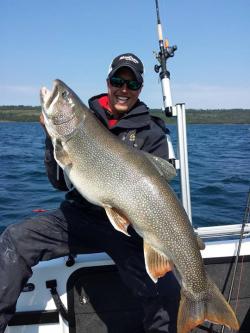
Huge Lake Trout caught on Lake Superior

Huge Lake Trout caught on Lake Superior

For Lunker Lake Trout, You Don’t Need a Bigger Boat, you Need a Better Line
from The Fishing Wire

When you see the giant lake trout that Grant Sorensen and James Holst have been catching on Lake Superior, that line from Jaws might enter your mind – “We need a bigger boat.” But you don’t. Rather, you need a better line.

You need Sufix 832 Advanced Lead Core line.

“That stuff has truly changed the way we fish lake trout,” says Sorensen, a young-gun Rapala pro-staffer and personality on In-Depth Outdoors TV on Fox Sports North. “It’s just incredible how productive it is. It’s outfished downriggers for me, almost 15 to one.”

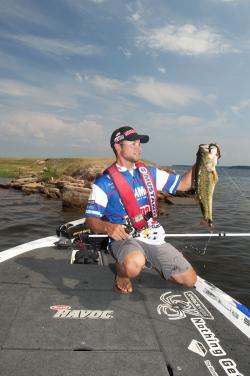
Sorensen began experimenting with Sufix 832 Advanced Lead Core two years ago with Holst, a fellow Rapala pro-staffer and In-Depth Outdoors TV’s host. Last fall, they caught several 30-plus-pound lake trout on Lake Superior while filming this In-Depth Outdoors TV show. In mid-August this year, Sorensen reeled in (and Holst netted) a fat, 44-inch Lake Superior laker. Holst documented that catch in this cell phone video.

“We’re doing things that nobody else that we’ve talked to is doing with any kind of regularity,” Holst says. “We’re fishing completely differently thanks to this 832 Advanced Leadcore. And we’re catching more fish because of it, including a ton of 20-plus pounders and a handful of 30-plus pounders.”

In addition to the lead core line, Holst and Sorensen’s lake trout set-up comprises multiple long rods, big spoons, planer boards and snap sinkers. It does not require cost-prohibitive equipment.

“You certainly don’t need a big, 30-foot boat with a cabin and downriggers everywhere and outriggers and this and that,” Sorensen says. “The past two years, the biggest fish we caught out of Lake Superior, we haven’t even had downriggers on the boat.”

Superior trends are “evolving away from the giant charter boats, monster ocean rods and reels and super heavy tackle,” Holst says. “People who don’t have – or don’t enjoy using – super-heavy equipment can use Sufix 832 Advanced Lead Core to catch trophy-size lake trout out of their walleye boats, on their walleye gear.

“Catching giants is now less intimidating, more affordable, more enjoyable,” Holst says.

Sorensen caught his 44-inch laker out of Holst’s 20-foot, 4-inch Skeeter MX 2025. But you don’t need a 20-plus-foot boat to get on this bite.

“I’ve been fishing the North Shore since I was five years old,” Sorensen says. “I used to fish out of my grandpa’s 17-foot Lund. … My friends have 17-, 18-foot boats. I fish out of those a lot. A 17- 18-foot boat is plenty for out there, as long as you’ve got a couple of rod holders and keep an eye on the weather before and during your trip.”

In the summer and fall, avoid east or south winds, Sorensen advises. In the spring, watch out for west winds. He relies on web-published weather information from The National Oceanic and Atmospheric Administration (NOAA) and the Coast Guard.

“They all put out good, reliable weather reports, so you can take a look at the winds and map your plan for the day,” Sorensen says.

Many good lake trout spots on Lake Superior are close to shore.

“You don’t need to run out 15, 20 miles,” Sorensen says. “You’ll be fine along the North Shore where we fish. It’s somewhat protected and safe – you can get back to land quick if need be.”

Anglers can enjoy much stable water and many calm days most of the summer and into early September. Late September and much of October is pretty stable too, but chillier. “You’ll definitely be able to fish in those conditions,” Sorensen says.

How (and how deep) to catch the giants

Sorensen and Holst’s giant lake trout program will look familiar to many anglers across the Upper Midwest.

“If you troll for suspended walleyes on big water, you already have the rods, reels, planer boards and rod holders,” Sorensen says. “You can just take that same approach on these huge Lake Superior lakers. A guy pretty good at catching walleyes can easily come up here and catch plenty of fish too.”

Sorensen and Holst troll in a gradual zig zag pattern, covering 10 to 80 feet of water. “That’s really hard to do with downriggers,” Sorensen notes. “That’s what makes Sufix 832 Advanced Lead Core so productive.” Lake Superior’s biggest lake trout seem to prefer the top 40 feet of the water column.

“With the 832 Advanced, we’re able to fish shallow lines, which is where we’re finding the biggest fish,” Holst explains.

In the last three years, of all Sorensen and Holsts’ catches heavier than 18 pounds have come shallower than 40 feet. And several of those weighed 25 to 35 pounds.

“And not just in one spot either,” Holst says. “We’ve fished Duluth, we’ve fished Two Harbors, we’ve fished Grand Portage, we’ve been all over the place. And every place we go using this technique, we’re just pounding big lake trout. And other people out there – fishing in more traditional ways – just don’t seem to catch the really big ones.”

Both Holst and Sorensen are convinced that traditional lake trout tactics scare away the bigger fish, which often suspend less than 60 feet deep.

“Downriggers, which run right below the boat, are spooking fish,” Holst says. “They’re moving fish out to the sides of the boat. And before those fish ever filter back in behind the boat, the lures are long gone.”

Baits presented on fluorocarbon leaders tied to Sufix 832 Advanced Lead Core, however, pull right through the strike zone without the need for a bulky downrigger.

“It gives you the depth to present your baits to suspending fish,” Holst explains. “It’s a lot thinner, more sensitive and it dives a lot deeper with the same amount of line out. You get 30 percent more dive depth than traditional lead core. And, its 70 percent stronger!”

44-inch behemoth

Although both Sorensen and Holst have caught numerous 20-plus-pound lake trout and several heftier than 30 pounds, the 44-incher Holst netted for Sorensen this August impressed even these two seasoned anglers.

“When we first saw the initial glimpse of the fish, we both just freaked out,” Sorensen recalls, noting that he fought it for 40 minutes, drifting about 1 ½ miles in the process. “Like, ‘Is it a surfboard coming up? Or a piano? Or a lake sturgeon? What is that thing?”

And although Sorensen works out with weights four times a week and is in great shape at 23 years old, he struggled to hold up the beast for this snapshot.

“It was just a truly amazing fish, one that most people probably wouldn’t even believe exists in Lake Superior,” Holst says.

Although the fish appeared big enough to challenge Minnesota’s lake trout state record of 43 pounds, 8 ounces, neither Sorensen nor Holst wanted to undergo a weighing and certification process that would certainly lead to the fish’s demise.

“It didn’t really cross our minds to keep her,” Sorensen says. “A fish of that size and caliber on Lake Superior is something pretty special. That water is so cold and the fish grow so slow, that fish could easily be 35, 40 years old. She was a beautiful, healthy fish, in her prime. So it didn’t take me very long to know that I wanted to let her go.”

After measuring the fish (but not weighing her; they did not have a scale onboard), Sorensen and Holst teamed to revive it boatside, one supporting it head, the other its tail.

“After two or three minutes, she darted down to the bottom and from that point on, she was just a memory,” Sorensen recalls. “It was just incredible.”
Catching Bass At NIght At Jackson Lake

Last summer on a Saturday night 12 members of the Spalding County Sportsman Club fished our August tournament at Jackson Lake. It was miserably hot when we started at 7:00 PM and still hot at 3:00 AM when we weighed in. A little breeze started at about 1:00 AM and finally dried all the sweat, but it was too little, too late.

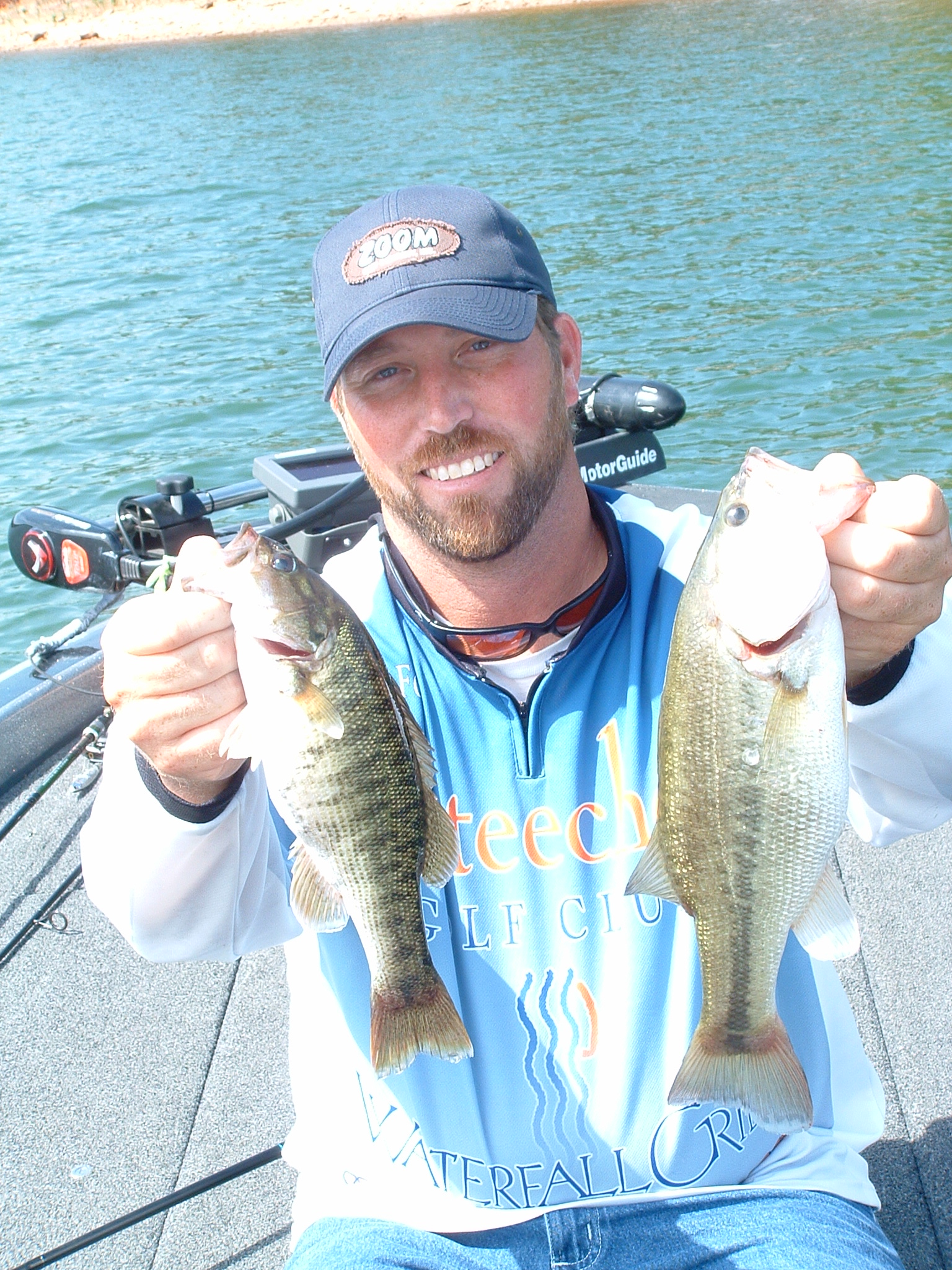
After the eight hours of fishing we brought in 16 bass weighing about 24 pounds. There was one five bass limit and five people didn’t have a keeper. Only two of the bass weighed in were largemouth, all the rest were spotted bass.

Javin English won with a limit weighing 6.20 pounds. My one bass weighing 4.44 pounds was good for second and big fish. Third went to Chris Davies with two bass weighing 4.32 pounds and Niles Murray was fourth with two keepers at 2.52 pounds.

Lightning and pure luck helped me catch my one bass. I started fishing near the boat ramp and as it got dark started to run up the lake to fish some other spots. But lightning flashing off in the west made me stay near the ramp and the van. A phone call home to Linda confirmed it was storming here, so I stayed where I was. I wanted to be able to get off the lake fast since storms usually move west to east, from Griffin right to Jackson.

At about 10:30 the storms had not gotten any closer and I moved across the cove to fish another point. At 11:00 I went back to where I usually fish and another club member was fishing there, so I worked on around the point. That is where I caught the one fish I hooked all night, at 11:55 PM. I surely am glad it was the right one to hook!

That followed a pattern I have settled on the past few years. For years I would get upset and let it bother me, and affect my fishing, if a boat was fishing where I wanted to fish. But about three years ago I headed to a point on Lake Eufaula where I had caught several keepers the day before. I wanted to start there on day two of our tournament but a boat ahead of me stopped on it.

I went across the creek and started down the bank, and landed three good keepers on a spinnerbait. The boat on the point never got a bite. Then and there I decided to just go to another place and now worry about it, and that has worked well for me several times.

It was strange, the storms never moved toward us, and it never rained on us at all.

How Can I Find Fat Redfish?

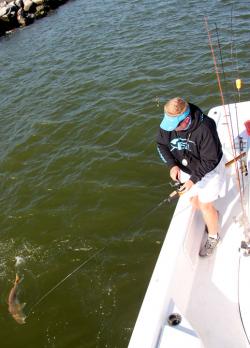
Redfish can be tough to land

Redfish can be tough to land

Finding Fat Redfish: White, Dufrene Pop To IFA Win
from The Fishing Wire

Barnie White and his partner Chad Dufrene were named champions of the 2013 IFA Grand Isle Redfish Event on Sunday, Aug. 25. For the win, the team takes home a fully rigged Ranger Banshee Extreme powered by a Yamaha Outboard, valued at $30,000, and qualified to fish the Series Championship Oct. 25-26.

When sight fishing is tough, breaking out the noise-makers can be the trick to luring fat Louisiana redfish.

To win the tournament, each team weighed in two fish under the Louisiana maximum length of 27 inches, so beyond just catching fish, teams must catch fish as close to the maximum length as possible while releasing any overs. White and Dufrene weighed in two fish for 16.47 pounds.

The morning began with rain and wind, which continued throughout the day. Not only did the conditions make fishing more difficult, but it also slowed travel and prompted the team to fish a back-up area closer to weigh-in.

“The spot we actually started fishing was our backup spot in Venice,” White said. “Conditions just went from bad to worse. We had torrential rain and heavy wind and decided to stay closer. It saved us about 2 hours of fishing time.”

The team started out throwing jigs with soft-plastics suspended under a Paradise Popper Xtreme popping cork. Sight-fishing these redfish was impossible because of the heavy cloud cover, rain and waves. Those same conditions also make it more difficult for the fish to feed, so the anglers needed extra noise and surface disturbance for attraction.

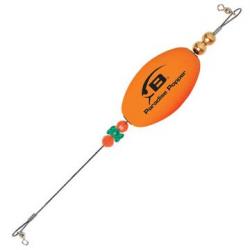
The Extreme Popper makes a lot of noise

The Extreme Popper makes a lot of noise

The Paradise Popper X-Treme from Bomber imparts unique action to jigs and adds lots of noise to get the fish’s attention.

The Paradise Popper Xtreme features a deep concave face that produces a big splash when twitched, plus two brass beads on top and three specialized plastic beads on bottom. The beads click together to simulate the sound of shrimp popping. The wire that runs through the unit is high-grade titanium, which resists bending or kinking and is up to the task of catching multiple big bull reds without failure.

“Cheap popping corks don’t hold up as well,” White said. “The Popper Xtreme makes a lot of noise, a lot of ripples on the water, produces the right sound, and can handle big redfish all day long.”

One key to that popping cork’s longevity and consistence is two metal grommets, one at the top and the other at the bottom of the foam cork. These grommets prevent the wire from cutting into the cork and diminishing the sound.

Another important factor for fishing a popping cork in low-light conditions is leader length. While many anglers use leaders 2-feet long or longer, White keeps his leaders at around a foot.

“Shorter leaders work for two reasons,” White said. “If you’re fishing a long leader, fish can swallow the jig easier without you knowing it, and we have to keep these fish alive. If a fish hits on a short leader you know it immediately. The other reason is that fish are drawn to the sound of the cork, so you want the jig where they immediately see it when they come in to investigate. You don’t want to make them hunt for it, especially in low-light conditions.”

Barnie White and Chad Dufrene found a pair of “toads”, super fat reds that earned them some $30,000 in prizes.

Another factor to the team’s success was matching the size and colors of the baitfish the reds were feeding on. Using a glow-color, 4-inch plastic and glow jighead created the appearance of a small pogy. White says that anglers need to take into consideration the light level and water clarity when selecting colors. If the light level is low and the water stained, the fish need all the help they can get seeing the bait, making black or glow-colors more important than matching the exact colors on the prevalent baitfish.

“If you cut the lights out at night in my shed where I’ve got glow-colored plastics and jigheads hanging up, you can see them,” he said. “I know in darker conditions when the water’s a little murky, I know that bait is putting off some light.”

White said the team started catching fish immediately that morning, and had 14 1/2-pounds in the livewell within 45 minutes. Considering the weather and knowing they had enough weight to be in the race, the team headed back to weigh-in with several hours of fishing time remaining.

Why Am I A Loyal Yamaha Outboard Motor Owner?

My Yamaha Outboard

My Yamaha Outboard

Yamaha Outboard Motors Got A Customer For Life!

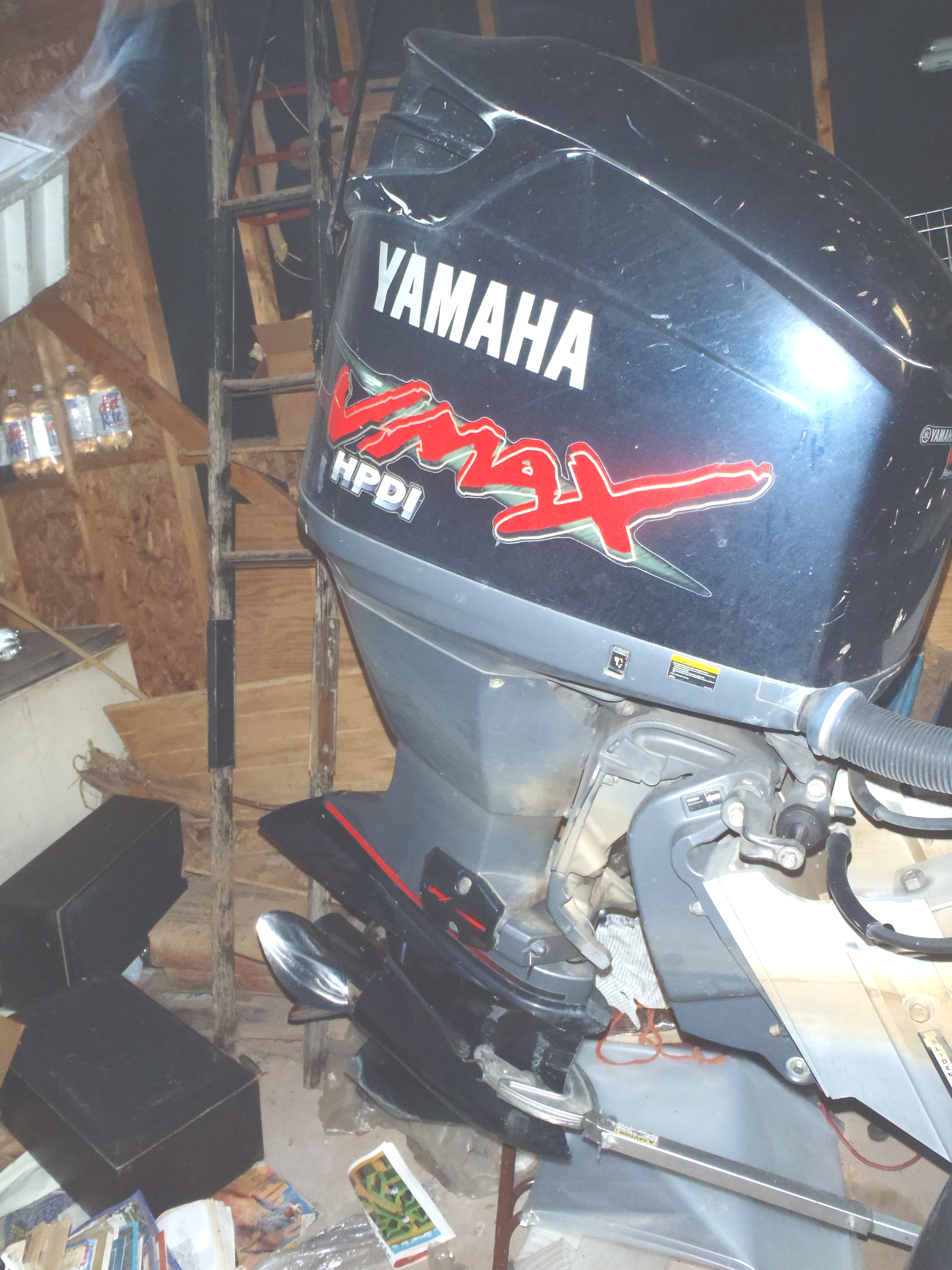
In 2004 I bought a Skeeter 225 bass boat with a Yamaha 225 HPDI outboard motor. The boat was a “demo” boat owned by a salesman at a dealer in Atlanta and I got an excellent deal on it. The outfit was six months old when I got it, looked brand new and came with a full warranty on the boat and motor.

I really liked the Yamaha outboard. I had seven OMC motors and all gave me good service, but the HPDI got much better gas and oil usage, and it cranked very easily, even in cold weather. The motor ran good and I had no problems with it other than changing water filters often. I really liked the Skeeter boat, too, but had some serious problems with it, but that is another tale for later.

In 2010 I was at Sinclair working on a GON article and the motor made a strange noise and died just as we stopped on the last spot for the day, right at dark. It would not crank so we fished for a while, then the motor cranked right up. We ran in and I started and stopped and ran around some while waiting on the trailer. The motor never missed a beat and ran good.

I took the boat to Oconee Marine, a Yamaha dealer not too far from me, and they checked it out. They put it on the computer and could find nothing wrong with it.

A few days later in a club tournament at West Point the motor made a terrible sound and stopped. When I tried to crank it the sound was like shaking a sack of metal pieces. I fished back to the ramp and go the boat loaded and took it back to Oconee Marine the next day.

Two days later I got a call with bad news. The motor had come apart and I needed a new $8000 power head. The motor was over six years old at this point and a new one was very expensive so I told them to put one on. After all, I had a new lower unit from hitting a rock pile in Wisconsin, another tale for later, so I basically would have a new motor from top to bottom.

The next day I got a call from Oconee Marine with incredible news. They had contacted Yamaha and told them about checking the motor and finding no reason it should have blown. Yamaha comped me a new power head and the labor to install it! That was on a six year old motor, out of warranty and well used.

Yamaha really stands behind their motors. I have heard they have done the same for other Yamaha motor owners. I think the problem was the change to E10 gas with Ethanol in it, something the motor was not designed for. Now I am really worried with the coming planned change to E15 with even more alcohol. If I understand it right, no outboards and few cars are under warranty using that mix.

I have run the motor with the new power head for three more years not and it has not had a single problem.

If I buy another outboard motor it will definitely be a Yamaha!

How Are Determination and Confidence Keys To Winning Tournaments?

Determination, Confidence Keys to Palaniuk’s Elite Tournament Win
from The Fishing Wire

Brandon Palaniuk with largemouth

Brandon Palaniuk with largemouth

Brandon Palaniuk won big at the Bassmaster Elite on the St. Lawrence River by making round-trip runs of over 200 miles daily to connect with Lake Ontario’s big smallmouths. He’s also pretty good at catching largemouths, as shown here.

Palaniuk caught most of his fish at Chaumont Bay, which he located by map and internet study before the tournament.

Palaniuk said confidence and determination were as important in the win as his choice of lures and tackle.

The St. Lawrence win put Palaniuk in the Bassmaster Classic, where he’ll be chasing fat Guntersville largemouths.

Finding the right area

Finding the right area

Yamaha Pro Brandon Palaniuk knows that in professional bass tournament fishing, confidence and determination can often be as important as lure choice and technique when the final weights are tabulated. He demonstrated just how important by winning the recent Bassmaster Elite tournament on New York’s St. Lawrence River.

“It’s hard to define how important personal determination can be in achieving a certain goal,” explained Palaniuk, “but I know that in this win it was absolutely crucial to me. I don’t want to say that being determined means you have to gamble and take chances, but rather, the stronger your determination, the stronger you focus on achieving that goal, and sometimes that actually makes achieving it a little easier.

“One of my goals is never to miss the Bassmaster Classic,® but heading into the St. Lawrence River event I knew the only way I had to make the Classic was to win one of the two remaining tournaments. Because I’d made some bad decisions and poor execution during this season, I was so far behind I could never qualify on points.

“In my mind, I had no options, except to win, so that became my immediate goal. I was determined to achieve it. Once I put myself into that mindset, preparing for the tournament was actually a little easier. I began to study the St. Lawrence and Lake Ontario very carefully, and perhaps a little differently than the other competitors.”

Fish like this one helped him win

Fish like this one helped him win

The Yamaha Pro had never been to Lake Ontario before, so he studied past tournament results on the Internet and poured over maps of the 193-mile long lake, where one location continually stood out to him, historically as well as geographically. That area was Chaumont Bay, some 40 miles out into Lake Ontario, or just over 105 miles from the tournament launch area in Waddington, New York. Numerous previous events had been won there.

“I felt I had nothing to lose by going that far,” continued Palaniuk. “A lot of the anglers did not think it would be possible to run that far, more than 200 miles round trip, for four consecutive days because of the weather, so all of them stayed in the St. Lawrence.”

On the first practice day, Palaniuk trailered to Chaumont Bay and caught between 23 and 25 pounds of bass in shallow water, fishing a topwater lure and a jerkbait. He was so excited he spent the night in his truck right there at the boat ramp and used his second practice day fishing deeper water, 20 to 35 feet deep. He wanted a backup plan, and again he boated nearly 25 pounds of fish.

“I can’t tell you how good I felt after those two days and after I successfully made the long run the next day from the tournament launch ramp to map my route,” he added. “Even though I’d had eight-foot waves on the lake that day, I had made it safely down and back, and I really didn’t think I’d be facing anything worse. I think my determination made facing those waves easier, because in my mind I did not have any other options.

“I also knew I had found the quality of bass I needed to win, and that they were willing to bite.”

The Yamaha Pro brought 23 pounds, 9 ounces to the scales the first day of competition and took the lead. He’d caught the fish in just 90 minutes, and that’s when he realized the full potential of the area he’d chosen. The second day, with calm conditions, he added 21-15 and increased his lead; again, his confidence soared. The final two days he brought in catches of 20-9 and 23-5, giving him a four-day total of 88 pounds, 12 ounces. His winning margin was more than seven pounds.

“I think, if I could pass on any lessons from this experience to other anglers, it would be that prior preparation can be critical, especially when you’re choosing your fishing areas. Studying maps and previous tournament results can be invaluable and give you a solid starting point as well as help your confidence.

“At the same time, you can’t really be afraid of failure. In my case, in making the 200-mile round trip each day, I knew I had the equipment that could make that run, and after I completed the run that last practice day, I was absolutely sure I could make it every day.”

Go Fish Georgia Fishing Education Center

Regan Green with bass

Regan Green with bass

On October 8, 2010 the Go Fish Georgia Education Center opened in Perry, Georgia. This center promotes better water stewardship and increased fishing participation around the Georgia.

“The Go Fish Georgia Initiative will allow us to improve our fishing resources and boat access, drawing not only more tourists but also major fishing tournaments that will have a positive economic impact in communities across Georgia,” said Governor Perdue. “It also promotes conservation and encourages families to spend time together outdoors, making memories that will last a lifetime.”

The Go Fish Education Center features an interactive and educational journey through Georgia’s diverse watersheds. It also serves as a resource of fishing information for any level of angler, with tips on where to go, what gear to use and when to fish.

With 76 species of fish on display in tanks and ponds, the Center offers an unparalleled opportunity to learn about Georgia’s aquatic wildlife and habitats. Boating and fishing simulators let visitors test their skills on the water. And a state-of-the-art fish hatchery offers a look at the science of fisheries management. The hatchery will expand research and increase fish production to improve the quality of fishing in Georgia.

The Center also offers educational programs to school systems and to the public, including kids fishing events, on-site classroom programs and teacher development sessions. Classroom and educational programs are aligned with the Georgia Performance Standards.

“Whether you are new to fishing, mentoring a young angler or are a seasoned professional, you will find exhibits here that educate, excite and encourage you to get outdoors and go fish,” said Chris Clark, Commissioner of the Department of Natural Resources.

The Center is part of the Go Fish Georgia Initiative, a $30 million initiative that leverages $19 million in state bond financing with private donations and financial support from local communities. It includes development and improvements of mega-ramps and other access areas that improve the quality of fishing throughout Georgia and increases participation in fishing through active promotion and marketing of Georgia’s exceptional fishing resources.

Construction of the Center began in 2008 and was completed in September 2010. The Go Fish Education Center is part of the Georgia Department of Natural Resources’ Wildlife Resources Division (Fisheries Management Section). The Center is located next to the Georgia National Fairgrounds in Perry. The Center will maintain special hours Oct. 8-17, 2010, during the Fair: Monday-Saturday (10 a.m.-9 p.m.) and Sunday (12-9 p.m.). Standard hours post-fair will be Friday-Saturday (9 a.m.-5 p.m.); Sundays (1 p.m.-5 p.m.). Fees are as follows: Adults – $5, Seniors 65 and up – $4, Children 3-12 – $3; Children 2 and under – free.

Perry is on I-75 south of Macon, Georgia and would be a great trip for Georgians or a interesting stop for travelers headed south. Check it out.

How Can I Catch Bluefin Tuna From A Small Boat?

Bluefin Tuna are great to eat

Bluefin Tuna are great to eat

Catching Tuna From A Small Boat
from The Fishing Wire

You don’t need a big sportfisherman to chase summer bluefin

Jigging up a bluefin tuna is super summertime sport, and fish this size can be handled without resorting to big game tackle.

Summertime presents an interesting fishing opportunity for outboard boat owners in the Mid-Atlantic region as schools of small-to-midsize bluefin tuna take up residence on the middle grounds. That means that boats incapable of making the run to the edge of the Continental Shelf and the many submarine canyons that attract yellowfin and bigeye tuna, have a shot at catching those species’ very substantial inshore cousins.

Bluefin are hard-fighting gamefish that can grow to four times the size of their next largest relative. These summer fish tend to weigh between 30 and 100 pounds with some as large as 250 pounds. They are truly big game, so be prepared for a fight if you’ve never caught one before.

Bluefin are highly regulated and therefore U.S. restrictions on seasons, sizes and bag limits must conform to the plan developed by the International Commission for the Conservation of Atlantic Tunas (ICCAT).

To fish for bluefin, you must have an Atlantic Highly Migratory Species Angling Permit, which is issued by the National Marine Fisheries Service (NMFS). You can purchase a permit online by going to https://hmspermits.noaa.gov/PermitList.asp, paying the $20 fee with a credit card, and then printing it out on your computer printer. The permit is for the boat, covers all anglers aboard and is good for the calendar year in which you purchase it. There are no individual angler permits required.

Lots of delicious steaks in hand–but only one per boat per day is permitted.

Since conservation of bluefin tuna is paramount at this time, commercial and recreational fishing is tightly controlled. On the recreational side, retention is strictly limited. Currently regulations stand at one fish per vessel per day, larger than 27 inches and smaller than 73 inches. The season is open until NMFS estimates that the quota has been reached, although that is not expected to occur until later in the year. With these restrictions in place, the fishery is overwhelmingly catch and release. The good news is that bluefin have an extremely low estimated release mortality rate, but care should always be taken when handling them.

The Yamaha crew joined Captain Jim Freda of Shore Catch Guide Service recently for a day of bluefin tuna fishing aboard his twin Yamaha-powered 28-foot Parker® Sportcabin. We left from Manasquan Inlet, N.J. in the dark for a slow ride to an area of lumps about 50 miles offshore, carefully watching the radar until the sky started to lighten with the rising sun. We arrived in an area where the water changed from a dull green to a clear, green/blue color, and the water temperature bumped up a few degrees. There were slicks throughout the area, oily calm spots amid the waves and chop, created by tuna and bluefish feeding on the schools of baitfish below. You could actually smell the fish, a pleasant watermelon type of aroma, when we got into the area. Tuna chicks, small dark colored sea birds that flit across the surface picking up pieces of baitfish that float to the surface, were present by the hundreds. These are things offshore fishermen call “signs of life” and when we stopped, the depthfinder lit up with massive schools of baitfish near the bottom in 180 feet of water.

The initial plan was to troll spreader bars, small plastic lures and cedar plugs, a very effective method of catching bluefin, and when we stopped Freda began prepping the boat by dropping the outriggers. While he was doing that, he instructed us to grab the jigging outfits and drop a variety of jigs to the bottom. As soon as the first one hit and was lifted and dropped a couple of times, the line came tight and we were into our first bluefin of the morning. It wasn’t a big one, but it fought hard, running line off the jigging outfit at will. Then a second one was hooked, and Jim put the outriggers back up and grabbed a jigging stick. The tuna’s response to the jigs was good enough that we never switched to trolling. The tally by morning’s end was nine tuna at 50 pounds, one 40-pounder on ice in the boat, and the rest released. Four of the bluefins released were tagged with ICCAT research tags, something Capt. Jim does on a voluntary basis.

Use a jig to catch bluefin tuna

Use a jig to catch bluefin tuna

Heavy jigs that look like slender sand eels are among the most effective jigging lures.

Jigging is an extremely effective method for summer bluefins, especially when the bait is low in the water column. We were over schools of sand eels, small thin-bodied fish that swarm by the millions and tend to hug the bottom, diving into the sand to escape predators. When the tuna are feeding deep, trolling near the surface is not very effective. However, dropping jigs to the basement puts you right in the middle of the action. It is loads of fun because the specialized rods and reels used for this fishing are small, light and make fighting tuna both fun and challenging. The reels are all packed with thin 50- or 65-pound test braided line so you can get the jigs deep and feel them easily. The jigs vary in weight so you can get to the bottom and stay there regardless of the current or drift speed. We were using 200-to-260 grain jigs made by a variety of manufacturers, letting them hit the bottom and then bouncing them up and down rhythmically.

When a tuna grabs one, the drill is to reel like crazy until the line comes tight and then set the hook hard. After that, you have to hold on because you are likely in for quite a ride.

Before you go offshore for bluefin, you should have your boat prepared. Your engines should be in top condition, fuel tank topped off, all your safety gear checked and easily accessible, and you should have more than just the basic emergency equipment. An EPIRB (emergency position indicating radio beacon) and a life raft are musts. There are valise-type rafts available for smaller boats that are easy to stow and deploy should an emergency arise. Take the use of PFDs very seriously, especially if the water is rough. Remember, you’re likely to be be a half hour away from rescue help by Coast Guard helicopter and two hours away by Coast Guard boat at the minimum.

When packing your gear, you should be prepared for three possible techniques: trolling, jigging and chunking. Trolling is usually the top producer earlier in the bluefin season when bait and tuna tend to be closer to the surface. Jigging comes on strong as the surface water warms and tuna do more feeding below the thermocline on baitfish like sand eels. Chunking can work from midseason through the fall. This technique usually requires anchoring the boat and using sardines cut into small pieces as chum and whole ones on your lines as hook baits.

You should also have a large enough supply of ice on board to cover a tuna that could run to well over 100 pounds in your fish box. Bluefin can spoil quickly if not properly cared for, and it would be a shame to ruin a delicacy because you didn’t plan ahead. When you get a retainable fish on board, it should be bled while alive. The next step is to collar the fish (remove the gills and organs inside the body cavity) and finally get it on ice, completely covered, until you get back to the dock to cut it into loins and steaks.

Of critical concern is picking a weather window for your trip. While many modern small outboard boats with twin engines are quite seaworthy and can easily handle moderate sea conditions, you have to take safety and passenger comfort into consideration. It’s not much fun getting thrown around a small boat in four-to-six foot seas. Make sure you hook up with the best marine forecasting services, and check them religiously before you make the call to head offshore.

What size boat can make the run to the bluefin grounds? You’d be surprised. During the day we had outboard powered boats fishing around us that varied from 23-to-38 feet with single, twin and triple engine applications. So if you’ve always wanted to catch a tuna and you’re up for running your boat a couple hours from shore, this is your chance.

Fishing A West Point Tournament and Blowing Up My Motor

Bass like these helped me place third

Bass like these helped me place third

The Flint River Bass Club held its September tournament at West Point on a Sunday a few years ago. After fishing from 7:00 AM to 3:00 PM the nine members of the club brought in 24 keeper bass weighing about 34 pounds. There were two limits and one person didn’t have a keeper. There were 14 spotted bass and ten largemouth brought to the scales.

Bobby Ferris won with a five fish limit weighing 9.16 pounds. He also had big fish with a 2.91 pound largemouth. Lee Hancock came in second with the other limit weighing 7.46 pounds. My four weighing 5.90 pounds was third and Kwong Yu had three weighing 4.06 pounds for fourth.

My day started out pretty good. I left the Glass Bridge ramp and wanted to stop on a nearby shoal but there was a boat sitting there, so I ran on up to the Highway 109 Bridge. On my second cast to the riprap I hooked and landed a two pound largemouth. Putting one in the live well that quickly made me feel good.

After about an hour fishing around the bridge and catching a few short spotted bass I cranked up and ran to a point about half way to the railroad bridge. As I came off plane my 225 Yamaha made a strange rattling noise and shut off. When I tried to crank it there was a bad noise.

There I was, several miles from the ramp with about seven hours left to fish. I decided to fish my way back, working banks and points on the way. Since I was fishing by myself I didn’t mess up anybody else’s day.

I caught a few small spots then, near the highway bridge I got a keeper spot in the back of a pocket on a jig head worm. I would not have fished there if my motor had not died. At the bridge I caught a third keeper, another small spot, off a bridge piling on a small jig and pig.

By now it was noon and I had a long way to go, so I put the trolling motor on high and headed across the shallow flats in front of Pyne park. As I cruised along a school of fish came up and I grabbed my topwater popper and landed a two pound spotted bass. Another place I would not have been if my motor was running.

After catching a few more short spotted bass I got back to the ramp before the deadline.

How Can A Gamble Pay Off In A Tournament?

Rapala Pros Gamble and Win in New York Bassmaster Tournament

Taking chances paid off last week for three Rapala bass pros who finished in the top 10 in a Bassmaster tournament on New York’s St. Lawrence River.

They weren’t taking chances, however, on what to fish with, but rather where and how to fish. And their gambles paid off – Brandon Palaniuk won the tournament, Ott DeFoe placed third and Bernie Schultz placed sixth.

Palaniuk’s big run pays off

Palaniuk won the tournament

Palaniuk won the tournament

Rapala pro Brandon Palaniuk won the Bassmaster Elite Series event and $100,000 with a 220-mile daily roundtrip to Lake Ontario via the St. Lawrence River.

Because Palaniuk needed a tournament win to qualify for next February’s Bassmaster Classic – the so-called “Super Bowl of bass fishing” – he took a chance on a 220-mile round-trip run through waves as big as six feet to Lake Ontario. Depending on weather and waves, the gambit would afford him only 30 minutes to two hours of fishing time, and would not guarantee that he’d be able to get back to weigh-ins in time to score his catch.

“I was making such a huge gamble,” Palaniuk told Bassmaster tournament emcee Dave Mercer on the weigh-in stage Sunday. “I had all the confidence in the world that I was going to win that gamble, but it’s still a gamble – there’s so many things that can go wrong.”

But the gamble paid off. Palaniuk sacked consecutive bags of 23.9 pounds, 21.5, 20.9 and 23.5 to win the tournament and the $100,000 prize.

“I literally had nothing to lose,” Palaniuk told Bassmaster TV’s Mark Zona and Tommy Sanders in an interview webcast after the tournament on bassmaster.com. That’s because decent – or even good – finishes in the season’s last two tournaments would not earn him enough Angler of the Year (AOY) points to qualify for the Classic. Only a tournament win would qualify him. Bassmaster’s “win and you’re-in” provision awards a Classic berth to any angler that wins a Bassmaster Elite Series event.

Of the 99 other pros fishing the tournament, few others ran to Lake Ontario. And none ran as far as Palaniuk. One top contender proclaimed such a run not worth the risk.

“A lot of these guys were afraid to make that gamble out on the lake because of [AOY] points,” Palaniuk explained.

For those competitors, a conservative game plan would likely result in a good enough finish and enough points to maintain their places above the cutline for Classic qualification. Palaniuk, however, was below the cut.

“I literally had to win,” he said. “It made it a lot easier to gamble, I guess.”

After finding big fish in the Monday-Wednesday practice period before the Thursday-Sunday tournament, Palaniuk believed he had the winning strategy – provided weather and water conditions would allow a long, risky run four days in a row.

“I had such a good practice day on Tuesday that I knew I was going, no matter what,” Palaniuk said on the weigh-in stage after being crowned champion. “I felt like that was my only shot to win.”

You can follow Brandon Palaniuk on Facebook and Twitter.

Schultz gambles on shallow bite, when most others are fishing deep

Bernie Schultz took a gamble and it paid off

Bernie Schultz took a gamble and it paid off

Bernie Schultz used a Rapala Skitter Walk to earn 6th place in the St. Lawrence River event

Florida pro Bernie Schultz took a chance on a shallow bite, when most other top contenders were fishing deep with drop-shot rigs. The gamble paid off with a sixth-place finish, his best since Bassmaster launched the Elite Series tournament format in 2006.

“A lot of big fish were caught deep on drop shotting,” Schultz acknowledged last week in an exclusive interview. “I don’t mind drop shotting, but if they’re going to eat a reaction lure, you can bet that’s what I’m going to be doing… I guarantee I had more fun than [the drop shotters] did, because topwater is a blast.”

Schultz’s main pattern was fan-casting a Rapala Skitter Walk topwater bait over the tops of shoals and humps within a mile-long stretch of the St. Lawrence near the mouth of Lake Ontario.

“And that was fun!” Schultz gushed. “I had some big fish blow up on it… They weren’t really in a feeding mode – a lot of them would strike the bait in aggravation. But I did get a lot of those bites.”

And although he knew other anglers were mining the depth for leading limits, Schultz liked what he saw up shallow. “It was just ideal habitat,” he recalled. “And you could see the fish swimming around, on a calm day. There were ‘sweet spots’ in that mile-long stretch that I focused on.”

Some of his spots were as shallow as three feet, but he spent most of his time targeting shoals that topped out at six to 10 feet.

“Then they would drop off right into almost infinity,” Schultz said, only half kidding. “That river is deep. There was 50 feet of water right next to ten foot of water. There were breaklines related to really healthy… shallow habitat, so the fish had a chance to move up and feed or suspend off the drop in a matter of just 10 yards.”

When bass weren’t up and active on top of a shoal, “where the wind would let me work a topwater,” Schultz explained, he would throw a Rapala X-Rap along the shoal edge.

“It seemed like whatever the prevailing wind was at the time, the fish would act accordingly,” he said. “And generally, the windier [it was], they moved off to the deeper water.”

You can follow Bernie Schultz on Facebook and read his columns at Bassmaster.com.

Ott DeFoe changed his fishing place the last day

Ott DeFoe changed his fishing place the last day

DeFoe scuttles safe game plan, takes risk on long ride

Ott DeFoe used VMC Dropshot hooks in his finesse rig during the St. Lawrence event.

After a conservative game plan in the main river channel qualified Ott DeFoe for championship Sunday, he gambled on the tournament’s final day, making a long run to fish the Duck Island area in Lake Ontario. Not only had he not fished there in any of the first three tournament days, he had not practiced there either.

“I did something today that’s not really my style,” DeFoe said on the weigh-in stage. “Today I went for a boat ride… I said I’m in ninth place, I want to go up, I’m going to go for a ride.’ That’s generally not my style. I’m not that kind of a risk taker… Apparently it was a good decision today.”

DeFoe caught all the fished he weighed in the tournament on a VMC drop-shot hook.

The “neat thing” about the St. Lawrence River/Lake Ontario fishery, DeFoe said, is that “you can go out there and catch 18 pounds in five feet of water or you could do it 30 feet of water.”

Although good populations of smallmouth swim in the waters in and around DeFoe’s Knoxville, TN, home, he acknowledged that Yankee smallies and Southern smallies are practically a different breed.

“They are a different animal, there’s no question,” he said in an interview with the podcast Fantasy Fishing Insider. “The smallmouth where I live, you want a cloudy, rainy, nasty kind of day and that’s when they really bite. But up there – and it seems backwards – if you get a flat, slick, calm day, bright sunny skies… the fishing is just phenomenal.”

Northern smallmouth “really used to confuse me a lot,” DeFoe said Sunday on the Bassmaster weigh-in stage. “I don’t know if I’ve really got them figured out, but I sure am having a lot of fun with them.”

You can follow Ott DeFoe on Facebook and Twitter.

Fishing Lake Hartwell and Lake Wedowee

Josh Fowler with Hartwell largemouth and redeye bass

Josh Fowler with Hartwell largemouth and redeye bass

A few years ago on a Thursday I went to Hartwell to fish with Josh Fowler to get information for a Georgia Outdoor News article. This big lake on the Georgia/South Carolina line is at the headwaters of the Savannah River and is a deep upland lake. The water is clear on the lower lake and it has largemouth, spotted bass and red eye bass.

Topwater is usually the way to go in the clear water at Hartwell and blueback herring in the lake, the preferred food of bass there, will make them come up from deep water to hit on top. Josh and I fished many points and humps with brush on them and we caught a few small bass but saw other, bigger bass following our lures in the clear water but not hitting them.

There was no wind Thursday and the clear water allows the bass to see your lure too well. Bigger bass are wise to the “catch” in some of their food when they spot dangling hooks! Wind breaking up the surface really helps.

Josh tried a drop shot rig, saying it was a sure fire way to catch a spotted bass. We had landed largemouth and redeye and wanted a spot for comparison pictures. As fishing luck goes, he caught several largemouth but no spots. We never landed a spot.

The Georgia Bass Federation Nation held its Top Six at Hartwell in November then next April the Georgia Bass Chapter Federation was be there for its Top Six. A new mega ramp was put in near the dam in Gum Branch to attract tournaments so both groups are going to Hartwell. Griffin club fishermen fished both tournamnets. I did ok in both, placing 7th in the Federation Nation tournament in November and 17th in the other federation in April.

The Friday after the trip to Hartwell I went to Lake Wedowee for an Alabama Outdoor News article. It is about 30 miles west of the Georgia/Alabama state line. This pretty lake on the Little Tallapoosa and Tallapoosa Rivers is similar to Hartwell in the steep banks and clear water of an upland type lake. It too has spotted and largemouth bass, but no red eye bass or blueback herring.

Bass there were hitting on top, chasing shad most of the day. I was fishing with Bryan Morris and his family owns a marina on the lake. He caught the biggest bass of the day, a solid 2 pound largemouth, on top at 11:00 in the bright sun. We also landed several other smaller bass on top.

Fishing was tough there just like Hartwell. And we didn’t land a single spotted bass, all were largemouth. That is very unusual on that lake. We agreed the bright sun and lack of wind caused the spots and bigger largemouth to stay deeper than we were fishing.

Several people from Griffin bought lots and built houses on Wedowee when it was first dammed. It is not a long trip but you do need an Alabama fishing license there since it is totally in Alabama. A Georgia license is good on Hartwell since it is on the line.

Either of these lakes would be a good choice for a fall trip for bass – if you can stay out of the deer stand long enough to go fishing!