What Are College Bass Fishing Tournaments?

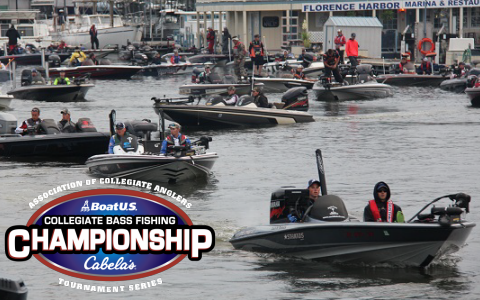
Blast off at a college bass fishing tounament

Blast off at a college bass fishing tounament

Today’s Collegiate BASS Fishing Angler, Tomorrow’s Leader

By Danny Blandford
from The Fishing Wire

As an angler that has been involved in college bass fishing since before there was truly organized college bass fishing, I find myself in awe of how far the sport and the participants have come. Likewise, I often find myself in awe at the public perception of college bass fishing among folks that don’t truly understand competitive bass fishing, let alone the value of it at the collegiate level. Only by being close to it since I was eighteen years old (closing in on half my life) have I really come to understand the role it is playing in shaping the future of our great sport.

Over the past year we’ve highlighted what it has meant to current and future professional anglers. Guys like Brandon Card, Justin Rackley, Miles Burghoff, and several other young aspiring professional anglers have recognized and capitalized on the opportunities to develop their competitive skills while fishing at the collegiate level. Fortunately for our sport, competing at the collegiate level is also producing an influx of a different kind of talent to the “other” side of competitive fishing, the industry itself. Many anglers are figuring out how to meld their talents and education, both on and off the water, into successful careers in the fishing industry.

We caught up with a couple of entrepreneurs who fully credit college bass fishing for where they are today and their path towards tomorrow. Brooks Woodward, the founding member of the Florida State Bass Fishing Club is a great example. Brooks rolled into Tallahassee, Florida in January of 2010. He had a passion for bass fishing and a desire to grow that passion into something more. Brooks channeled his energy into creation of the Florida State University Bass Fishing Club, a collection of anglers from across the country that shared his love of bass fishing, along with his competitive drive. Over the past three and a half years, the club has grown to approximately 25 members, competes in national events all across the country, and continues to grow in both membership and experience.

During that time, Brooks’ ideas and passion grew as well. According to Brooks, “It didn’t take me long to see that there was a huge community of like-minded anglers out there; which really opened my eyes to the potential in the fishing business and the size of the market. Once I started thinking about it, I knew it (the fishing industry) was for me and I felt like I had a few options. I looked at trying to land a job with an established company, I looked at starting a company from scratch, and I looked at what existing companies may be out there available to purchase. When it was all said and done, a purchase opportunity presented itself with Nichols Lures and I jumped on it.”

In regards to Nichols, Brooks went on to add, “The company was an established brand that had been producing good products since 1989 so I felt like it was a great place to start. At the time, my opinion was that things were just a bit stagnant and a lot of what was needed was creative work and fresh perspective, both of which I felt I could add. I’m a Graphic Design Major, so things like an updated website, updated packaging, and marketing collateral where all right up my alley.”

He started his journey as a fulltime student and part-time “tackle tinkerer”, and has transitioned into a part-time student and fulltime tackle company owner. When asked about the influence of college fishing and founding a club, Brooks went on to add, “I think college fishing is in large part the reason that I’ve chosen the path that I have. The relationships and camaraderie that I developed through the club made me want to stay in the industry and the contacts I’ve made along the way are helping me to succeed. As I look to grow the ranks here at Nichols, I’ll definitely be looking to likeminded collegiate or former collegiate anglers. I feel like college fishing teaches a unique set of skills and develops traits that I want to see in my own employees. I believe the more a person has been exposed to competitive fishing at this level, the more they can bring to future employers.”

After talking with Brooks I was left with the impression he was a traditional student that took a non-traditional route to pursue his passion, which I found to be a path I completely understood. With that said, it was the common thread of college, competition, and an entrepreneurial spirit that connected us and so many others.

For more content and a different perspective, I reached out to Berkley Product Manager, Stephen Britt. Stephen is what academia defines as a “non-traditional” student, and within minutes of being on the phone, it was clear “non-traditional” was a great adjective to describe Stephen and his passion for bass fishing. Academia uses the term because after high school Stephen spent four years in the United States Marine Corps; followed by two years at the University of South Carolina Salkehatchie, before enrolling in the Moore School of Business at the University of South Carolina’s main campus in Columbia, South Carolina.

Stephen’s story at South Carolina began with aspirations for a business degree with emphasis on management, insurance, and real estate. The “trifecta” for a young entrepreneurial businessman, but definitely “non-traditional” for a guy who had been thinking about life as a professional angler. Aspiration became inspiration when Britt learned that USC didn’t have a fishing team like the ones he had been hearing about at other schools. On January 26, 2009 Stephen hosted a callout meeting for a new bass club on campus and generated a total of five attendees, including him. Although small in size, that little meeting turned out to be a big step in the formation of the Anglers @ USC. The full story of their journey is an interesting one, and you can read it on their website here.

That meeting was important for the club, but it was also important for Stephen himself. It planted a seed that perhaps there are more ways to succeed in fishing other than casting for cash. The seed grew into something more when Stephen received a call from a friend. Apparently there was a guy from Pure Fishing standing in the lobby of the business school looking for people interested in angling and a potential internship. That call was all that it took for Stephen to head to the “B School” to see what was going on. That chance meeting led to an unpaid internship at Pure Fishing; the first internship at the new Columbia, South Carolina Pure Fishing headquarters to be exact. Although it was unpaid, Stephen found it very rewarding.

According to Stephen, “That internship really changed my path. I knew right away I wanted to work in the fishing industry and when it was over I changed up my courses to make me a better candidate for such work. I dropped my insurance courses, added marketing, and began looking for more ways to develop talents that could come in handy in the fishing industry. My time leading the Anglers @ USC was certainly a big part of everything.”

He went on to add, “As I wrapped up my courses and time at USC I started really pursuing Pure Fishing. I went to three different job fairs to keep getting in front of the Pure Fishing recruiter and doing my part to convince him I was the guy for the job. Ultimately, my persistence paid off. I landed the job as a Product Manager for Berkley and I oversee the fishing rods and rod and reel combo segments of our offerings, as well as some of our ice fishing products. I’ve been fortunate to spend the last two years working on something I really enjoy.”

“In summary, I’m excited to have landed where I belong. The subject of my work, the pace at which we do it here at Pure Fishing and my chance to remain involved in competitive fishing is absolutely awesome. I’ve got a career ahead of me…not just a job.”

Stephen and Brooks both spent a lot of time in the interview crediting their college bass club experience and being in the right place at the right time for where they are today. No doubt good timing was a pivotal part of their journey, but I’m convinced it was more than that which led to their early success. These young men “pushed” everything into place rather than waiting for everything to “fall” into place; which is a testament to who they are. With that said, it seems college bass fishing helped motivate them and provide a source of strength to keep moving ahead.

As someone that went through a long journey in academia, as well as the fishing industry, I can say with a fair degree of certainty that very few courses do what college bass fishing can do for a young impressionable man or woman. When coupled together, a passion for fishing and a sound education make a great recipe for success both on and off the water.

I think I can speak on behalf of everyone at the Association of Collegiate Anglers when I say we’re proud to be doing our part in making a difference in the lives of these anglers and the future of our industry.

Are Federal Fish Hatcheries Closing?

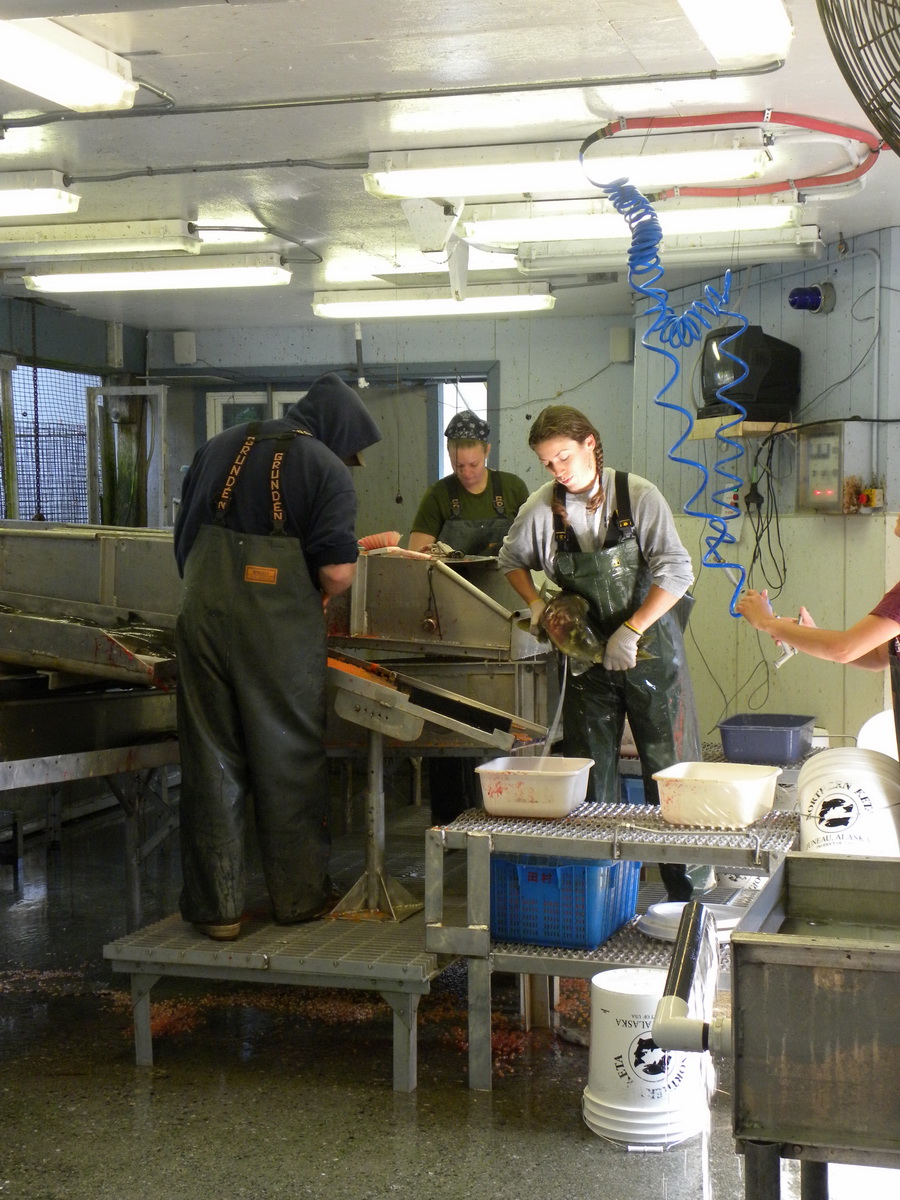
Are fish hatcheries like this salmon hatchery in Alaska going to be closed?

Are fish hatcheries like this salmon hatchery in Alaska going to be closed?

Federal Hatcheries Headed to the Chopping Block?
from The Fishing Wire

EDITOR’S NOTE: As we first reported last week, the rumblings of the Fish and Wildlife Service shuttering the nation’s mitigation fish hatcheries have persisted, despite the FWS’s constant avoidance of direct questions regarding that decision. Today, Etta Pettijohn has more on the story- and what may happen in the coming days ahead.

When multiple news sources last week began reporting that the historic D.C. Booth National Fish Hatchery (NFH) in South Dakota was slated for imminent closure later this year, spokespersons for the U.S. Fish and Wildlife Service (FWS) dodged any direct response to the planned shutdown.

On Aug. 26, Gavin Shire, speaking on behalf of the FWS from its headquarters in Washington, said: “We haven’t made any decisions yet (on hatchery closings) but the outcome may be that at some point some fish hatcheries in the system could be impacted.”

In the interim, multiple FWS spokespersons have echoed that no decisions have been made and that “hatchery reviews” are ongoing.

Amid the questions and without confirmation from the federal agency, last week The Booth Society, Inc., a nonprofit friends group of D.C. Booth NFH, released a statement claiming a source in Washington D.C. confirmed off the record that the hatchery will be shuttered Oct. 1.

“The U.S. Fish and Wildlife Service Directorate in Washington D.C. have emphasized and prioritized other programs over those of the National Fisheries Program. As a result, the agency has made the decision to permanently shut down multiple fish hatcheries nationwide, including the D.C. Booth Historic National Fish Hatchery. This closure is expected to be effective October 1, 2013,” read the news release issued by the group.

The announcement is not surprising considering the FWS’s 15- year history of repeated moves toward shuttering mitigation hatcheries. The agency’s mission has evolved from one that oversees wildlife and fish restoration to one that protects the growing number of endangered species and now oversees the expansion of the nation’s “clean energy” revolution.

CONGRESSIONAL MANDATE

Congress established the National Fish Hatchery System in 1871 to replace fish lost from dam construction and to expand recreational fishing opportunities. The agency operates 70 hatcheries nationwide, including D.C. Booth, which houses the agency’s archives, including scientific research spanning 140 years. While the FWS receives federal excise tax monies on fishing equipment to apportion to state fishery programs, the federal hatchery system is funded through Congressional appropriations.

These hatcheries support at least 3,500 jobs and have an annual economic impact of more than $325 million. In the early 1990s FWS upper management began planning for the use of its hatcheries to propagate endangered species like freshwater mussels, conveniently handing off the mitigation responsibilities to other federal agencies like the Corps of Engineers (COE) and Tennessee Valley Authority (TVA).

In 2008 Congress directed the FWS to work with other federal partners to obtain full reimbursement for the mitigation projects.

While the COE has committed funding, negotiations continue with TVA, and no funding has been appropriated.

The TVA operates dams for hydropower and flood control along 47 reservoirs in Alabama, Georgia, Tennessee and Kentucky. The Corps operates dams nationwide for the same purpose.

In 2012 and again in 2013, the agency targeted nine mitigation hatcheries for closure, which led Tennessee’s Sen. Lamar Alexander, who sits on the Senate Appropriations Committee, to broker an agreement between the TVA and the FWS to continue stocking for another three years on waters impacted by TVA dams, or until an agreement could be reached on stakeholder funding, his office confirmed last week.

An Alexander aide said his office is also trying to obtain definitive answers from FWS about the planned National Fish Hatchery closings, several of which are located in Tennessee.

“I helped to work out an agreement with TVA and the FWS Service to keep the hatcheries producing trout for the next three years,” Alexander said in a statement to The Outdoor Wire. “As part of its national review, the Fish and Wildlife Service should take this agreement into account, and I will continue to work to keep the hatcheries open.”

In June, Arkansas Rep. Rick Crawford introduced HR 2261, the “National Mitigation Fisheries Coordination Act of 2013,” a measure simplified from last year’s version, which requires the power companies to reimburse and to work with FWS to keep the two hatcheries in that state open. And the office of U.S. Sen. John Thune of South Dakota confirmed it is working to prevent the closure of D.C. Booth.

Even while FWS officials denied knowledge of any forthcoming closures, current FWS Director, Dan Ashe, during an interview with Jim Shepherd and J.R. Absher of Outdoor Wire in January 2013, echoed what many anglers fear when he answered a specific question about the agency’s plans for the hatcheries:

“Looking at the federal budgets, just like everyone else, we’re having to shift priorities, The FWS at this point is skin, muscle and bone, there’s nothing else left to cut. If I have to made a decision to support a hatchery that can produce a species that may go extinct as opposed to growing a species that is abundant and other people have the technological capacity to produce, that’s not that tough a call. We’ve had this discussion in the Service for the past 15 years, but now it’s being driven by physical realities.”

In short, the revenue-generating federal mitigation hatchery system, long a beacon of government efficiency, appears to be a casualty of the new FWS ideology that has persisted when a Democratic president and Democratic-controlled Senate are seated in Washington.

Rick Nehrling, a 38-year veteran of the FWS, with 19 years overseeing southeastern U.S. hatcheries, said in 2013: “Budget documents clearly show that Fisheries is the only resource program in the Service that the Directorate has proposed for budget reductions and closures in FY 2012 and FY 2013. The other five resource programs (National Wildlife Refuge System, Endangered Species, etc) have all had substantial budget increases during the same time period.”

Despite the protests from hatchery proponents, upper management of the agency appears determined to make the closures occur, or to shift the mitigation responsibility for these hatcheries over to other federal agencies. One thing is for certain: the sudden closure of these facilities could have an immediate impact on selected recreational fisheries in the U.S. and an economic one on the communities in which they currently operate.

Lake Wedowee and West Point Lake Club Tournaments

Lake Wedowee Club Tournament

Lake Wedowee can be a frustrating lake for a bass tournament, as members of the Potato Creek Bassmasters found out in mid-September. You can keep any size spotted bass there but the club has a 12 inch minimum size limit. And largemouth between 13 and 16 inches long must be released, so in club tournament a 12.5 inch largemouth counts but a 14 inch largemouth has to be released.

Niles Murray told me he landed several nice largemouth in the slot that had to be let go and he could not weigh them in. It can drive you crazy to have a 12 inch spot in the live well then have to release 14 and 15 inch long largemouth!

In their September tournament 12 club members fished eight hours to land 38 bass weighing 39.20 pounds. You can see not many fish over the slot were landed! There were three limits of five bass and everyone caught at least one keeper.

Michael Cox had a limit weighing 5.84 pounds for first place. James Beasley landed five weighing 4.98 pounds for second, Ryan Edge came in third with five at 4.82 pounds for third and Mike Gatlin rounded out the top four with four keepers weighing 3.97 pounds. Wesley Gunnels came in fifth with three fish weighing 3.87 pounds and his 1.76 pound bass gave him big fish in the tournament.

You can catch a lot of small bass to eat at Wedowee, and have fun catching some bigger largemouth, just be prepared to let them go!

West Point Lake Club Tournament

The last Sunday in September 13 members and guests of the Spalding County Sportsman Club fished our September tournament in the monsoon that afternoon. At West Point we can weigh in spotted bass over 12 inches long and largemouth over 14 inches long.

After eight hours of fishing we brought in 31 bass weighing about 48 pounds. There were four limits and four people didn’t have a keeper. Eight of the bass were largemouth and 24 were spotted bass.

Kwong Yu won with a limit weighing 11.68 pounds. I came in second with five weighing 8.36 pounds and my 3.41 pound spot was big fish. Third went to Niles Murray with five weighing 6.78 pounds and Sam Smith was fourth with four at 6.64 pounds.

My boat was still in the shop so Kwong let me fish with him. We ran to his favorite spot to start and cast for about 15 minutes without a bite. Then, for the next 20 minutes or so it seemed something hit our topwater baits on almost every cast. He landed four keepers and I got three in that time, and I missed over twice as many as I hooked. I guess my timing was off.

After about 30 minutes without a bite we left. I suggested a point I like to fish and Kwong got a nice keeper there on his first cast, but we got no more bites. From then till almost noon we caught some small fish including some little hybrids that came up schooling.

I landed my fourth keeper by a stump on a jig and pig that passed up Kwong’s Fluke. Then Kwong got two good largemouth of about three pounds each and I got my fifth keeper, a small spot, then the big spot hit.

It got real slow after the heavy rain started and we didn’t do much until Kwong got another three pound largemouth just before we had to head in. Kwong had four of the largemouth weighed in – half of them!

How Can I Catch Lunker Lake Trout On Lake Superior?

Huge Lake Trout caught on Lake Superior

Huge Lake Trout caught on Lake Superior

For Lunker Lake Trout, You Don’t Need a Bigger Boat, you Need a Better Line
from The Fishing Wire

When you see the giant lake trout that Grant Sorensen and James Holst have been catching on Lake Superior, that line from Jaws might enter your mind – “We need a bigger boat.” But you don’t. Rather, you need a better line.

You need Sufix 832 Advanced Lead Core line.

“That stuff has truly changed the way we fish lake trout,” says Sorensen, a young-gun Rapala pro-staffer and personality on In-Depth Outdoors TV on Fox Sports North. “It’s just incredible how productive it is. It’s outfished downriggers for me, almost 15 to one.”

Sorensen began experimenting with Sufix 832 Advanced Lead Core two years ago with Holst, a fellow Rapala pro-staffer and In-Depth Outdoors TV’s host. Last fall, they caught several 30-plus-pound lake trout on Lake Superior while filming this In-Depth Outdoors TV show. In mid-August this year, Sorensen reeled in (and Holst netted) a fat, 44-inch Lake Superior laker. Holst documented that catch in this cell phone video.

“We’re doing things that nobody else that we’ve talked to is doing with any kind of regularity,” Holst says. “We’re fishing completely differently thanks to this 832 Advanced Leadcore. And we’re catching more fish because of it, including a ton of 20-plus pounders and a handful of 30-plus pounders.”

In addition to the lead core line, Holst and Sorensen’s lake trout set-up comprises multiple long rods, big spoons, planer boards and snap sinkers. It does not require cost-prohibitive equipment.

“You certainly don’t need a big, 30-foot boat with a cabin and downriggers everywhere and outriggers and this and that,” Sorensen says. “The past two years, the biggest fish we caught out of Lake Superior, we haven’t even had downriggers on the boat.”

Superior trends are “evolving away from the giant charter boats, monster ocean rods and reels and super heavy tackle,” Holst says. “People who don’t have – or don’t enjoy using – super-heavy equipment can use Sufix 832 Advanced Lead Core to catch trophy-size lake trout out of their walleye boats, on their walleye gear.

“Catching giants is now less intimidating, more affordable, more enjoyable,” Holst says.

Sorensen caught his 44-inch laker out of Holst’s 20-foot, 4-inch Skeeter MX 2025. But you don’t need a 20-plus-foot boat to get on this bite.

“I’ve been fishing the North Shore since I was five years old,” Sorensen says. “I used to fish out of my grandpa’s 17-foot Lund. … My friends have 17-, 18-foot boats. I fish out of those a lot. A 17- 18-foot boat is plenty for out there, as long as you’ve got a couple of rod holders and keep an eye on the weather before and during your trip.”

In the summer and fall, avoid east or south winds, Sorensen advises. In the spring, watch out for west winds. He relies on web-published weather information from The National Oceanic and Atmospheric Administration (NOAA) and the Coast Guard.

“They all put out good, reliable weather reports, so you can take a look at the winds and map your plan for the day,” Sorensen says.

Many good lake trout spots on Lake Superior are close to shore.

“You don’t need to run out 15, 20 miles,” Sorensen says. “You’ll be fine along the North Shore where we fish. It’s somewhat protected and safe – you can get back to land quick if need be.”

Anglers can enjoy much stable water and many calm days most of the summer and into early September. Late September and much of October is pretty stable too, but chillier. “You’ll definitely be able to fish in those conditions,” Sorensen says.

How (and how deep) to catch the giants

Sorensen and Holst’s giant lake trout program will look familiar to many anglers across the Upper Midwest.

“If you troll for suspended walleyes on big water, you already have the rods, reels, planer boards and rod holders,” Sorensen says. “You can just take that same approach on these huge Lake Superior lakers. A guy pretty good at catching walleyes can easily come up here and catch plenty of fish too.”

Sorensen and Holst troll in a gradual zig zag pattern, covering 10 to 80 feet of water. “That’s really hard to do with downriggers,” Sorensen notes. “That’s what makes Sufix 832 Advanced Lead Core so productive.” Lake Superior’s biggest lake trout seem to prefer the top 40 feet of the water column.

“With the 832 Advanced, we’re able to fish shallow lines, which is where we’re finding the biggest fish,” Holst explains.

In the last three years, of all Sorensen and Holsts’ catches heavier than 18 pounds have come shallower than 40 feet. And several of those weighed 25 to 35 pounds.

“And not just in one spot either,” Holst says. “We’ve fished Duluth, we’ve fished Two Harbors, we’ve fished Grand Portage, we’ve been all over the place. And every place we go using this technique, we’re just pounding big lake trout. And other people out there – fishing in more traditional ways – just don’t seem to catch the really big ones.”

Both Holst and Sorensen are convinced that traditional lake trout tactics scare away the bigger fish, which often suspend less than 60 feet deep.

“Downriggers, which run right below the boat, are spooking fish,” Holst says. “They’re moving fish out to the sides of the boat. And before those fish ever filter back in behind the boat, the lures are long gone.”

Baits presented on fluorocarbon leaders tied to Sufix 832 Advanced Lead Core, however, pull right through the strike zone without the need for a bulky downrigger.

“It gives you the depth to present your baits to suspending fish,” Holst explains. “It’s a lot thinner, more sensitive and it dives a lot deeper with the same amount of line out. You get 30 percent more dive depth than traditional lead core. And, its 70 percent stronger!”

44-inch behemoth

Although both Sorensen and Holst have caught numerous 20-plus-pound lake trout and several heftier than 30 pounds, the 44-incher Holst netted for Sorensen this August impressed even these two seasoned anglers.

“When we first saw the initial glimpse of the fish, we both just freaked out,” Sorensen recalls, noting that he fought it for 40 minutes, drifting about 1 ½ miles in the process. “Like, ‘Is it a surfboard coming up? Or a piano? Or a lake sturgeon? What is that thing?”

And although Sorensen works out with weights four times a week and is in great shape at 23 years old, he struggled to hold up the beast for this snapshot.

“It was just a truly amazing fish, one that most people probably wouldn’t even believe exists in Lake Superior,” Holst says.

Although the fish appeared big enough to challenge Minnesota’s lake trout state record of 43 pounds, 8 ounces, neither Sorensen nor Holst wanted to undergo a weighing and certification process that would certainly lead to the fish’s demise.

“It didn’t really cross our minds to keep her,” Sorensen says. “A fish of that size and caliber on Lake Superior is something pretty special. That water is so cold and the fish grow so slow, that fish could easily be 35, 40 years old. She was a beautiful, healthy fish, in her prime. So it didn’t take me very long to know that I wanted to let her go.”

After measuring the fish (but not weighing her; they did not have a scale onboard), Sorensen and Holst teamed to revive it boatside, one supporting it head, the other its tail.

“After two or three minutes, she darted down to the bottom and from that point on, she was just a memory,” Sorensen recalls. “It was just incredible.”

Catching Bass At NIght At Jackson Lake

Last summer on a Saturday night 12 members of the Spalding County Sportsman Club fished our August tournament at Jackson Lake. It was miserably hot when we started at 7:00 PM and still hot at 3:00 AM when we weighed in. A little breeze started at about 1:00 AM and finally dried all the sweat, but it was too little, too late.

After the eight hours of fishing we brought in 16 bass weighing about 24 pounds. There was one five bass limit and five people didn’t have a keeper. Only two of the bass weighed in were largemouth, all the rest were spotted bass.

Javin English won with a limit weighing 6.20 pounds. My one bass weighing 4.44 pounds was good for second and big fish. Third went to Chris Davies with two bass weighing 4.32 pounds and Niles Murray was fourth with two keepers at 2.52 pounds.

Lightning and pure luck helped me catch my one bass. I started fishing near the boat ramp and as it got dark started to run up the lake to fish some other spots. But lightning flashing off in the west made me stay near the ramp and the van. A phone call home to Linda confirmed it was storming here, so I stayed where I was. I wanted to be able to get off the lake fast since storms usually move west to east, from Griffin right to Jackson.

At about 10:30 the storms had not gotten any closer and I moved across the cove to fish another point. At 11:00 I went back to where I usually fish and another club member was fishing there, so I worked on around the point. That is where I caught the one fish I hooked all night, at 11:55 PM. I surely am glad it was the right one to hook!

That followed a pattern I have settled on the past few years. For years I would get upset and let it bother me, and affect my fishing, if a boat was fishing where I wanted to fish. But about three years ago I headed to a point on Lake Eufaula where I had caught several keepers the day before. I wanted to start there on day two of our tournament but a boat ahead of me stopped on it.

I went across the creek and started down the bank, and landed three good keepers on a spinnerbait. The boat on the point never got a bite. Then and there I decided to just go to another place and now worry about it, and that has worked well for me several times.

It was strange, the storms never moved toward us, and it never rained on us at all.

How Can I Find Fat Redfish?

Redfish can be tough to land

Redfish can be tough to land

Finding Fat Redfish: White, Dufrene Pop To IFA Win
from The Fishing Wire

Barnie White and his partner Chad Dufrene were named champions of the 2013 IFA Grand Isle Redfish Event on Sunday, Aug. 25. For the win, the team takes home a fully rigged Ranger Banshee Extreme powered by a Yamaha Outboard, valued at $30,000, and qualified to fish the Series Championship Oct. 25-26.

When sight fishing is tough, breaking out the noise-makers can be the trick to luring fat Louisiana redfish.

To win the tournament, each team weighed in two fish under the Louisiana maximum length of 27 inches, so beyond just catching fish, teams must catch fish as close to the maximum length as possible while releasing any overs. White and Dufrene weighed in two fish for 16.47 pounds.

The morning began with rain and wind, which continued throughout the day. Not only did the conditions make fishing more difficult, but it also slowed travel and prompted the team to fish a back-up area closer to weigh-in.

“The spot we actually started fishing was our backup spot in Venice,” White said. “Conditions just went from bad to worse. We had torrential rain and heavy wind and decided to stay closer. It saved us about 2 hours of fishing time.”

The team started out throwing jigs with soft-plastics suspended under a Paradise Popper Xtreme popping cork. Sight-fishing these redfish was impossible because of the heavy cloud cover, rain and waves. Those same conditions also make it more difficult for the fish to feed, so the anglers needed extra noise and surface disturbance for attraction.

The Extreme Popper makes a lot of noise

The Extreme Popper makes a lot of noise

The Paradise Popper X-Treme from Bomber imparts unique action to jigs and adds lots of noise to get the fish’s attention.

The Paradise Popper Xtreme features a deep concave face that produces a big splash when twitched, plus two brass beads on top and three specialized plastic beads on bottom. The beads click together to simulate the sound of shrimp popping. The wire that runs through the unit is high-grade titanium, which resists bending or kinking and is up to the task of catching multiple big bull reds without failure.

“Cheap popping corks don’t hold up as well,” White said. “The Popper Xtreme makes a lot of noise, a lot of ripples on the water, produces the right sound, and can handle big redfish all day long.”

One key to that popping cork’s longevity and consistence is two metal grommets, one at the top and the other at the bottom of the foam cork. These grommets prevent the wire from cutting into the cork and diminishing the sound.

Another important factor for fishing a popping cork in low-light conditions is leader length. While many anglers use leaders 2-feet long or longer, White keeps his leaders at around a foot.

“Shorter leaders work for two reasons,” White said. “If you’re fishing a long leader, fish can swallow the jig easier without you knowing it, and we have to keep these fish alive. If a fish hits on a short leader you know it immediately. The other reason is that fish are drawn to the sound of the cork, so you want the jig where they immediately see it when they come in to investigate. You don’t want to make them hunt for it, especially in low-light conditions.”

Barnie White and Chad Dufrene found a pair of “toads”, super fat reds that earned them some $30,000 in prizes.

Another factor to the team’s success was matching the size and colors of the baitfish the reds were feeding on. Using a glow-color, 4-inch plastic and glow jighead created the appearance of a small pogy. White says that anglers need to take into consideration the light level and water clarity when selecting colors. If the light level is low and the water stained, the fish need all the help they can get seeing the bait, making black or glow-colors more important than matching the exact colors on the prevalent baitfish.

“If you cut the lights out at night in my shed where I’ve got glow-colored plastics and jigheads hanging up, you can see them,” he said. “I know in darker conditions when the water’s a little murky, I know that bait is putting off some light.”

White said the team started catching fish immediately that morning, and had 14 1/2-pounds in the livewell within 45 minutes. Considering the weather and knowing they had enough weight to be in the race, the team headed back to weigh-in with several hours of fishing time remaining.

Why Am I A Loyal Yamaha Outboard Motor Owner?

My Yamaha Outboard

My Yamaha Outboard

Yamaha Outboard Motors Got A Customer For Life!

In 2004 I bought a Skeeter 225 bass boat with a Yamaha 225 HPDI outboard motor. The boat was a “demo” boat owned by a salesman at a dealer in Atlanta and I got an excellent deal on it. The outfit was six months old when I got it, looked brand new and came with a full warranty on the boat and motor.

I really liked the Yamaha outboard. I had seven OMC motors and all gave me good service, but the HPDI got much better gas and oil usage, and it cranked very easily, even in cold weather. The motor ran good and I had no problems with it other than changing water filters often. I really liked the Skeeter boat, too, but had some serious problems with it, but that is another tale for later.

In 2010 I was at Sinclair working on a GON article and the motor made a strange noise and died just as we stopped on the last spot for the day, right at dark. It would not crank so we fished for a while, then the motor cranked right up. We ran in and I started and stopped and ran around some while waiting on the trailer. The motor never missed a beat and ran good.

I took the boat to Oconee Marine, a Yamaha dealer not too far from me, and they checked it out. They put it on the computer and could find nothing wrong with it.

A few days later in a club tournament at West Point the motor made a terrible sound and stopped. When I tried to crank it the sound was like shaking a sack of metal pieces. I fished back to the ramp and go the boat loaded and took it back to Oconee Marine the next day.

Two days later I got a call with bad news. The motor had come apart and I needed a new $8000 power head. The motor was over six years old at this point and a new one was very expensive so I told them to put one on. After all, I had a new lower unit from hitting a rock pile in Wisconsin, another tale for later, so I basically would have a new motor from top to bottom.

The next day I got a call from Oconee Marine with incredible news. They had contacted Yamaha and told them about checking the motor and finding no reason it should have blown. Yamaha comped me a new power head and the labor to install it! That was on a six year old motor, out of warranty and well used.

Yamaha really stands behind their motors. I have heard they have done the same for other Yamaha motor owners. I think the problem was the change to E10 gas with Ethanol in it, something the motor was not designed for. Now I am really worried with the coming planned change to E15 with even more alcohol. If I understand it right, no outboards and few cars are under warranty using that mix.

I have run the motor with the new power head for three more years not and it has not had a single problem.

If I buy another outboard motor it will definitely be a Yamaha!

How Are Determination and Confidence Keys To Winning Tournaments?

Determination, Confidence Keys to Palaniuk’s Elite Tournament Win
from The Fishing Wire

Brandon Palaniuk with largemouth

Brandon Palaniuk with largemouth

Brandon Palaniuk won big at the Bassmaster Elite on the St. Lawrence River by making round-trip runs of over 200 miles daily to connect with Lake Ontario’s big smallmouths. He’s also pretty good at catching largemouths, as shown here.

Palaniuk caught most of his fish at Chaumont Bay, which he located by map and internet study before the tournament.

Palaniuk said confidence and determination were as important in the win as his choice of lures and tackle.

The St. Lawrence win put Palaniuk in the Bassmaster Classic, where he’ll be chasing fat Guntersville largemouths.

Finding the right area

Finding the right area

Yamaha Pro Brandon Palaniuk knows that in professional bass tournament fishing, confidence and determination can often be as important as lure choice and technique when the final weights are tabulated. He demonstrated just how important by winning the recent Bassmaster Elite tournament on New York’s St. Lawrence River.

“It’s hard to define how important personal determination can be in achieving a certain goal,” explained Palaniuk, “but I know that in this win it was absolutely crucial to me. I don’t want to say that being determined means you have to gamble and take chances, but rather, the stronger your determination, the stronger you focus on achieving that goal, and sometimes that actually makes achieving it a little easier.

“One of my goals is never to miss the Bassmaster Classic,® but heading into the St. Lawrence River event I knew the only way I had to make the Classic was to win one of the two remaining tournaments. Because I’d made some bad decisions and poor execution during this season, I was so far behind I could never qualify on points.

“In my mind, I had no options, except to win, so that became my immediate goal. I was determined to achieve it. Once I put myself into that mindset, preparing for the tournament was actually a little easier. I began to study the St. Lawrence and Lake Ontario very carefully, and perhaps a little differently than the other competitors.”

Fish like this one helped him win

Fish like this one helped him win

The Yamaha Pro had never been to Lake Ontario before, so he studied past tournament results on the Internet and poured over maps of the 193-mile long lake, where one location continually stood out to him, historically as well as geographically. That area was Chaumont Bay, some 40 miles out into Lake Ontario, or just over 105 miles from the tournament launch area in Waddington, New York. Numerous previous events had been won there.

“I felt I had nothing to lose by going that far,” continued Palaniuk. “A lot of the anglers did not think it would be possible to run that far, more than 200 miles round trip, for four consecutive days because of the weather, so all of them stayed in the St. Lawrence.”

On the first practice day, Palaniuk trailered to Chaumont Bay and caught between 23 and 25 pounds of bass in shallow water, fishing a topwater lure and a jerkbait. He was so excited he spent the night in his truck right there at the boat ramp and used his second practice day fishing deeper water, 20 to 35 feet deep. He wanted a backup plan, and again he boated nearly 25 pounds of fish.

“I can’t tell you how good I felt after those two days and after I successfully made the long run the next day from the tournament launch ramp to map my route,” he added. “Even though I’d had eight-foot waves on the lake that day, I had made it safely down and back, and I really didn’t think I’d be facing anything worse. I think my determination made facing those waves easier, because in my mind I did not have any other options.

“I also knew I had found the quality of bass I needed to win, and that they were willing to bite.”

The Yamaha Pro brought 23 pounds, 9 ounces to the scales the first day of competition and took the lead. He’d caught the fish in just 90 minutes, and that’s when he realized the full potential of the area he’d chosen. The second day, with calm conditions, he added 21-15 and increased his lead; again, his confidence soared. The final two days he brought in catches of 20-9 and 23-5, giving him a four-day total of 88 pounds, 12 ounces. His winning margin was more than seven pounds.

“I think, if I could pass on any lessons from this experience to other anglers, it would be that prior preparation can be critical, especially when you’re choosing your fishing areas. Studying maps and previous tournament results can be invaluable and give you a solid starting point as well as help your confidence.

“At the same time, you can’t really be afraid of failure. In my case, in making the 200-mile round trip each day, I knew I had the equipment that could make that run, and after I completed the run that last practice day, I was absolutely sure I could make it every day.”

Go Fish Georgia Fishing Education Center

Regan Green with bass

Regan Green with bass

On October 8, 2010 the Go Fish Georgia Education Center opened in Perry, Georgia. This center promotes better water stewardship and increased fishing participation around the Georgia.

“The Go Fish Georgia Initiative will allow us to improve our fishing resources and boat access, drawing not only more tourists but also major fishing tournaments that will have a positive economic impact in communities across Georgia,” said Governor Perdue. “It also promotes conservation and encourages families to spend time together outdoors, making memories that will last a lifetime.”

The Go Fish Education Center features an interactive and educational journey through Georgia’s diverse watersheds. It also serves as a resource of fishing information for any level of angler, with tips on where to go, what gear to use and when to fish.

With 76 species of fish on display in tanks and ponds, the Center offers an unparalleled opportunity to learn about Georgia’s aquatic wildlife and habitats. Boating and fishing simulators let visitors test their skills on the water. And a state-of-the-art fish hatchery offers a look at the science of fisheries management. The hatchery will expand research and increase fish production to improve the quality of fishing in Georgia.

The Center also offers educational programs to school systems and to the public, including kids fishing events, on-site classroom programs and teacher development sessions. Classroom and educational programs are aligned with the Georgia Performance Standards.

“Whether you are new to fishing, mentoring a young angler or are a seasoned professional, you will find exhibits here that educate, excite and encourage you to get outdoors and go fish,” said Chris Clark, Commissioner of the Department of Natural Resources.

The Center is part of the Go Fish Georgia Initiative, a $30 million initiative that leverages $19 million in state bond financing with private donations and financial support from local communities. It includes development and improvements of mega-ramps and other access areas that improve the quality of fishing throughout Georgia and increases participation in fishing through active promotion and marketing of Georgia’s exceptional fishing resources.

Construction of the Center began in 2008 and was completed in September 2010. The Go Fish Education Center is part of the Georgia Department of Natural Resources’ Wildlife Resources Division (Fisheries Management Section). The Center is located next to the Georgia National Fairgrounds in Perry. The Center will maintain special hours Oct. 8-17, 2010, during the Fair: Monday-Saturday (10 a.m.-9 p.m.) and Sunday (12-9 p.m.). Standard hours post-fair will be Friday-Saturday (9 a.m.-5 p.m.); Sundays (1 p.m.-5 p.m.). Fees are as follows: Adults – $5, Seniors 65 and up – $4, Children 3-12 – $3; Children 2 and under – free.

Perry is on I-75 south of Macon, Georgia and would be a great trip for Georgians or a interesting stop for travelers headed south. Check it out.

How Can I Catch Bluefin Tuna From A Small Boat?

Bluefin Tuna are great to eat

Bluefin Tuna are great to eat

Catching Tuna From A Small Boat
from The Fishing Wire

You don’t need a big sportfisherman to chase summer bluefin

Jigging up a bluefin tuna is super summertime sport, and fish this size can be handled without resorting to big game tackle.

Summertime presents an interesting fishing opportunity for outboard boat owners in the Mid-Atlantic region as schools of small-to-midsize bluefin tuna take up residence on the middle grounds. That means that boats incapable of making the run to the edge of the Continental Shelf and the many submarine canyons that attract yellowfin and bigeye tuna, have a shot at catching those species’ very substantial inshore cousins.

Bluefin are hard-fighting gamefish that can grow to four times the size of their next largest relative. These summer fish tend to weigh between 30 and 100 pounds with some as large as 250 pounds. They are truly big game, so be prepared for a fight if you’ve never caught one before.

Bluefin are highly regulated and therefore U.S. restrictions on seasons, sizes and bag limits must conform to the plan developed by the International Commission for the Conservation of Atlantic Tunas (ICCAT).

To fish for bluefin, you must have an Atlantic Highly Migratory Species Angling Permit, which is issued by the National Marine Fisheries Service (NMFS). You can purchase a permit online by going to https://hmspermits.noaa.gov/PermitList.asp, paying the $20 fee with a credit card, and then printing it out on your computer printer. The permit is for the boat, covers all anglers aboard and is good for the calendar year in which you purchase it. There are no individual angler permits required.

Lots of delicious steaks in hand–but only one per boat per day is permitted.

Since conservation of bluefin tuna is paramount at this time, commercial and recreational fishing is tightly controlled. On the recreational side, retention is strictly limited. Currently regulations stand at one fish per vessel per day, larger than 27 inches and smaller than 73 inches. The season is open until NMFS estimates that the quota has been reached, although that is not expected to occur until later in the year. With these restrictions in place, the fishery is overwhelmingly catch and release. The good news is that bluefin have an extremely low estimated release mortality rate, but care should always be taken when handling them.

The Yamaha crew joined Captain Jim Freda of Shore Catch Guide Service recently for a day of bluefin tuna fishing aboard his twin Yamaha-powered 28-foot Parker® Sportcabin. We left from Manasquan Inlet, N.J. in the dark for a slow ride to an area of lumps about 50 miles offshore, carefully watching the radar until the sky started to lighten with the rising sun. We arrived in an area where the water changed from a dull green to a clear, green/blue color, and the water temperature bumped up a few degrees. There were slicks throughout the area, oily calm spots amid the waves and chop, created by tuna and bluefish feeding on the schools of baitfish below. You could actually smell the fish, a pleasant watermelon type of aroma, when we got into the area. Tuna chicks, small dark colored sea birds that flit across the surface picking up pieces of baitfish that float to the surface, were present by the hundreds. These are things offshore fishermen call “signs of life” and when we stopped, the depthfinder lit up with massive schools of baitfish near the bottom in 180 feet of water.

The initial plan was to troll spreader bars, small plastic lures and cedar plugs, a very effective method of catching bluefin, and when we stopped Freda began prepping the boat by dropping the outriggers. While he was doing that, he instructed us to grab the jigging outfits and drop a variety of jigs to the bottom. As soon as the first one hit and was lifted and dropped a couple of times, the line came tight and we were into our first bluefin of the morning. It wasn’t a big one, but it fought hard, running line off the jigging outfit at will. Then a second one was hooked, and Jim put the outriggers back up and grabbed a jigging stick. The tuna’s response to the jigs was good enough that we never switched to trolling. The tally by morning’s end was nine tuna at 50 pounds, one 40-pounder on ice in the boat, and the rest released. Four of the bluefins released were tagged with ICCAT research tags, something Capt. Jim does on a voluntary basis.

Use a jig to catch bluefin tuna

Use a jig to catch bluefin tuna

Heavy jigs that look like slender sand eels are among the most effective jigging lures.

Jigging is an extremely effective method for summer bluefins, especially when the bait is low in the water column. We were over schools of sand eels, small thin-bodied fish that swarm by the millions and tend to hug the bottom, diving into the sand to escape predators. When the tuna are feeding deep, trolling near the surface is not very effective. However, dropping jigs to the basement puts you right in the middle of the action. It is loads of fun because the specialized rods and reels used for this fishing are small, light and make fighting tuna both fun and challenging. The reels are all packed with thin 50- or 65-pound test braided line so you can get the jigs deep and feel them easily. The jigs vary in weight so you can get to the bottom and stay there regardless of the current or drift speed. We were using 200-to-260 grain jigs made by a variety of manufacturers, letting them hit the bottom and then bouncing them up and down rhythmically.

When a tuna grabs one, the drill is to reel like crazy until the line comes tight and then set the hook hard. After that, you have to hold on because you are likely in for quite a ride.

Before you go offshore for bluefin, you should have your boat prepared. Your engines should be in top condition, fuel tank topped off, all your safety gear checked and easily accessible, and you should have more than just the basic emergency equipment. An EPIRB (emergency position indicating radio beacon) and a life raft are musts. There are valise-type rafts available for smaller boats that are easy to stow and deploy should an emergency arise. Take the use of PFDs very seriously, especially if the water is rough. Remember, you’re likely to be be a half hour away from rescue help by Coast Guard helicopter and two hours away by Coast Guard boat at the minimum.

When packing your gear, you should be prepared for three possible techniques: trolling, jigging and chunking. Trolling is usually the top producer earlier in the bluefin season when bait and tuna tend to be closer to the surface. Jigging comes on strong as the surface water warms and tuna do more feeding below the thermocline on baitfish like sand eels. Chunking can work from midseason through the fall. This technique usually requires anchoring the boat and using sardines cut into small pieces as chum and whole ones on your lines as hook baits.

You should also have a large enough supply of ice on board to cover a tuna that could run to well over 100 pounds in your fish box. Bluefin can spoil quickly if not properly cared for, and it would be a shame to ruin a delicacy because you didn’t plan ahead. When you get a retainable fish on board, it should be bled while alive. The next step is to collar the fish (remove the gills and organs inside the body cavity) and finally get it on ice, completely covered, until you get back to the dock to cut it into loins and steaks.

Of critical concern is picking a weather window for your trip. While many modern small outboard boats with twin engines are quite seaworthy and can easily handle moderate sea conditions, you have to take safety and passenger comfort into consideration. It’s not much fun getting thrown around a small boat in four-to-six foot seas. Make sure you hook up with the best marine forecasting services, and check them religiously before you make the call to head offshore.

What size boat can make the run to the bluefin grounds? You’d be surprised. During the day we had outboard powered boats fishing around us that varied from 23-to-38 feet with single, twin and triple engine applications. So if you’ve always wanted to catch a tuna and you’re up for running your boat a couple hours from shore, this is your chance.