How Can I Catch Fall Muskie?

Catch big fall muskie

Catch big fall muskie

Top Tactics For Fall Muskies

by Daniel Quade
from The Fishing Wire

Muskies are fabled as fish of 1,000 casts, but fall is a great time to cut that imposing figure down to size. In fact, anglers keying on high-percentage hotspots with the right tactics can enjoy the best muskie fishing of the year.

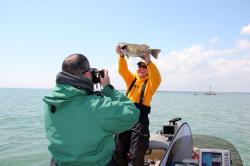
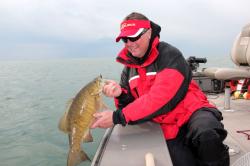
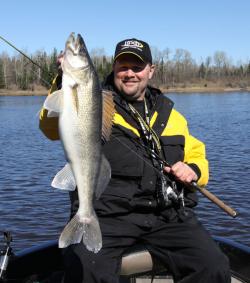
Whopper muskies like this one don’t necessarily take 1,000 casts to catch, but they do take the sort of expertise offered by top guides like Bill Rosner.

Veteran muskie guide Bill Rosner might not be a math whiz, but he’s an expert at subtracting sizeable sums from the mythical 1,000-cast mark. He follows environmental clues to craft a milk run of prime locations where he can consistently put clients on toothsome trophies, then deploys proven presentations to tempt these freshwater monsters into striking.

“In late summer, muskies are scattered all over the place,” begins the jovial yet hard-fishing guide, who cut his teeth in northern Wisconsin but now calls Minnesota’s legendary Lake Vermillion his home waters. “You find them on rock reefs, rocky points, deep weed edges-here, there and everywhere-wherever forage is available. Find food, and you find muskies.”

As the water temperature begins to drop in September, however, some of the more fragile varieties of aquatic vegetation start to wither away, pushing muskies to the last remaining stands of greens. On Vermillion, that’s cabbage beds.

Also known as broad-leafed pondweed, cabbage is hearty, often remaining healthy long after other plants have expired. Its leafy stalks offer shelter for a number of forage species, which also flock to the season’s last stands. The abundance of forage does not go unnoticed by a lake’s predatory population-including behemoth muskies.

On Vermillion, Rosner typically targets beds in 6 to 12 feet of water, though he notes that the depth of vegetation varies from lake to lake depending on water quality. In clear lakes it’s not uncommon for cabbage to take root in depths of 20 feet. Other top late-season greenery includes northern milfoil, but the important thing is finding the best remaining weedbeds after other stands have fallen.

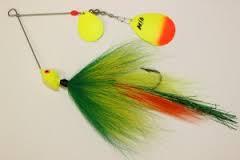
Lindy tandem spinnerbait

Lindy tandem spinnerbait

The Lindy Muskie Tandem is among the prime lures for giant muskies in September.

Rosner raids these fish-holding sunken gardens by slinging blades-specifically, a Lindy M/G Muskie Tandem. The 1-ounce, 9½-inch double-bladed spinnerbait sports size 5 and size 8 Colorado blades that churn and flash, attracting hungry muskies and triggering strikes the likes of which are hard to match in freshwater. Color selection is simple.

“Bright day, bright lure; dark day, dark lure,” Rosner said. “There’s nothing wrong with downsizing, either.”

He sometimes throws a ½-ounce spinnerbait like Booyah’s Pikee with a soft-plastic trailer, either the YUM Boogee Tail or Houdini Shad. His standard tackle for taking on giant muskies consists of an 8-foot, medium-heavy casting rod loaded with 80-pound-test superbraid and a 130-pound test, 12-inch fluorocarbon leader.

Casts are long, and retrieves varied.

“Cast and burn it along weedlines, then slow down and let the bait helicopter, then pull it back to break the surface-in other words, experiment with speed and cadence,” he says.

As good as green weeds can be, Rosner notes that a percentage of muskies also patrol rocky structure during early to mid-fall. Some top spots include bottlenecks between islands and channels connecting lakes or basins. The latter areas are often brushed with current and serve as underwater highways that muskies and baitfish follow as they jockey positions before winter’s arrival.

Trolling gets the nod in such areas, which may lie in 20 to 25 feet of water. Rosner relies on large, deep-diving crankbaits such as a CD25 from Bomber Saltwater Grade’s Certified Depth lineup. Tackle choices remain similar, though he may bump up leader length to 36 inches.

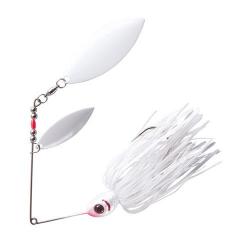
Booyah Pikee spinnerbait

Booyah Pikee spinnerbait

Also effective is the Booyah Pikee minnow fished around the last remaining weedbeds as winter approaches.

Trolling speeds run from 3 to 4 mph, which is fast enough to cover water and trigger strikes without zipping past predators too quickly. To speed the search for fish, Rosner often cruises likely areas before deploying his lines, watching his sonar for signs of baitfish and muskies.

“Sometimes you see schools of tullibees or other bait breaking the surface,” he says. “When you do, you can be sure there’s a muskie or two hanging around.”

Toward the end of October-around Oct. 20 on Lake Vermillion-another deadly pattern takes shape that is tied to baitfish spawning migrations.

“Tullibees and whitefish are fall spawners,” Rosner explains. “Muskies follow the spawning run, and when it all comes together over rocky points and along rocky islands, it’s absolute mayhem.”

To join the fray, Rosner trolls big crankbaits such as an 11-inch Creek Chub Jointed Wooden Pikie. His top color choices in tannin-stained Lake Vermillion include Pikie and Perch, but he notes that in clear lakes, a black-backed, purple pattern that mimics the iridescent flashes of rolling baitfish is also hot.

“I longline baits behind the boat, banging the rocks at speeds of about 3½ mph,” he says.

Since these shallow-running lures typically only reach 4 feet on the troll, he adds 1- to 4-ounces of ballast in the form of a bead-chain keel sinker to pull the plugs down to the strike zone. The key is to tailor the amount of weight to keep the bait close to bottom without constantly dragging.

Properly weighted, the same spinnerbaits that slayed ‘skis in salad back in September also work for tapping the late-October bite. In fact, blades have accounted some of Rosner’s best fall catches in a variety of situations, and are always worth a shot whenever you hope to trim the time between strikes from these incredible freshwater monsters.

What Are Some Georgia Rivers I Can Fish For Bass?

Georgia’s Best Bass Rivers

When Georgia bass anglers get together and talk fishing, it is almost always about lakes and reservoirs. That is a little strange since the world record largemouth bass came from an oxbow on a Georgia river. Georgia has many rivers that are full of bass.

If you have a big bass boat you can use it to fish most of the bigger rivers, but others are more suitable for jon
boats and canoes. No matter what your choice, new ramps on many of our rivers have opened them up to the fisherman. You can put in at one ramp and fish downstream to the next one or fish out of a specific ramp like you do on a lake.

No matter what river you chose to fish, bass are somewhat different critters in flowing water. Each river has specifics that work best on them so it is a good idea to get some tips in advance. Your lake and pond fishing methods will catch some bass, but it is best to adapt to what the fish want. The following three rivers will give you a variety of places to try, and the tips will work on them and on other rivers you fish.

Savannah River

The upper Savannah has been dammed and is flat water from the Clark’s Hill dam to its upper end in Lake Hartwell where the Seneca and Tugalo join to form it. There is also an old lock and dam in Augusta but downstream of it the river is free flowing. You can fish it for largemouth bass from Augusta all the way to the coast where it becomes brackish.

There are several good ramps along the river you can use. The Georgia Department of Natural Resources maintains five ramps on the river and there are also several commercial ramps. There are a few ramps on the South Carolina side maintained by that state as well as private ramps.

The DNR ramps are Tuckassee King in Effingham County, Yuchi WMA in Burke County, Tuckahoe WMA in Screven County, Burton’s Ferry in Screven County and Poor Robins Landing in Screven County. All these are good paved ramps and there is no fee to launch at them.

You can fish all the river and most of the oxbow lakes with a Georgia license, but some oxbows are totally in South Carolina and you need a license from that state to fish them. Get a USGS topo map to identify them. This map will also help you find some good spots to fish.

The release of water at Clark’s Hill affects the river for many miles below Augusta. When the river is running high from the release of water bass can get back in the woods and are almost impossible to get to. You can check the USGS river gauge at Clyo and Georgia DNR folks say the fishing is best when the gauge is at 5 to 6 feet.

Down the river near the coast the water will not change as much from the release of water, since the river is much bigger. On the far end of the river near the coast tides affect it, and you can time your bass fishing based on the rise and fall of water from it.

Bass fishing has been excellent during the past two years due to high river levels that gave bass access to a lot of new ground and food after our drought. Catch rates were up 14 percent in 2003 and the bass were larger.

The Georgia Bass Chapter Federation Tournament Results compiled by Dr. Carl Quertermus at the University of West Georgia can give you a good idea about the bass fishing on a body of water. Each bass club in Georgia sends in their creel census after a tournament and the results are studied and listed.

In 2003, the last year results are available right now, there were 28 club tournaments on the Savannah River that included 2623 hours of fishing by anglers in the clubs. An average of .195 bass per hour were weighed in, meaning it took just over 5 hours of fishing to land a legal bass. That compares to .214 bass per hour on all Georgia waters, so the Savannah River is about as good as any lake.

The bass weighed an average of 1.48 pounds and it took an average weight of 6.33 pounds to win a tournament. In club tournaments, 12 percent of fishermen weighed in a five fish limit and 35.5 percent did not catch a keeper. So fishing can be tough, but in all Georgia waters only 13.8 percent of club fishermen had a limit and 26.9 percent zeroed. Fishing the Savannah River compares favorably with most lakes.

Robert Ellis fishes with the Four River Bassmasters bass club in Vidalia and they fish the Savannah River in club tournaments. Robert made the state team last year by finishing 11th at Lake Eufaula in the Top Six and then was top man on the state team in the Southern Regional in Kentucky, which means he was the only Georgia club fishermen to qualify for the Nationals this year.

The Savannah River is a beautiful place to fish and Robert likes it from its upper reaches all the way to tidewater. He says the best fishing for him is upstream and the tide makes the fishing tough on the lower river, but his club catches bass all along it.

In the spring, bass move out of the main river into the old sloughs and oxbow lakes to spawn. This happens as soon as the water starts to warm, which usually coincides with the rising spring waters. This time of year Robert especially likes the oxbows above the Highway 301 bridge.

Go into these oxbows and you will find the outside bend a little deeper with the inside bend more shallow. Willow trees line the shallow bank and the deeper banks often have stumps and blowdowns on them to fish. You can often follow these oxbows and small creeks for a long way off the river.

Robert likes to start out with a buzzbait looking for active bass in these areas if the water is above 55 degrees. A Trick Worm in white or sweet potato colors fished under the willows or around the wood cover is his next choice, then a Suddeth Little Earl fished in the same places. Follow these up with a Texas rigged worm in black/red flake and you should find what the bass want.

The bass will stay in these areas until the water gets hot, then most will move back to the main river channel. Some bass can be found in the oxbows all year long, especially the deeper ones, but for more bass move out to the current during the summer.

If the river is muddy Robert will throw a chartreuse spinnerbait with big blades or a chartreuse crankbait around anything in the river that breaks the current. If it is stained to clear he will use the same baits as he used in the oxbows. The mouths of creeks and ditches are good as are trees and stumps in the water. Pilings should be fished just like stumps.

Also watch for riprap banks. Some stretches of the river have long sections of rocks placed there to stop erosion. Fish these rocks year round with crankbaits and spinnerbaits.

To fish the current, Robert heads his boat upstream and lets it drift slowly back down the river, keeping it in position and moving slowly with the current with his trolling motor. He likes to cast upstream and let his baits move back downstream naturally with the current. A strong trolling motor is needed for this kind of fishing.

Don’t hesitate to throw a buzzbait all day long on the shady side of the river. In one tournament Bob and his partner landed a 8.77 pound largemouth at 2:30 PM on a buzzbait by fishing the shade.

Ogeechee River

The Ogeechee River starts near I-20 about 40 miles east of Lake Oconee and flows south east to hit tidewater near I-95 south of Savannah. It is free flowing over almost all its length, with one small grist mill dam near its upper end. The rest of the river responds to natural rainfall, not release of water from dams.

There are shoals on the upper river making boat fishing difficult. Where highway 16 crosses the river at Jewell you can see some of the shoals and it looks more like a trout stream. Just south of there the river is suitable for fishing with a jon boat or canoe for several miles but is full of blowdown trees the often block the river completely.

When the river gets to Louisville it broadens to 35 to 50 feet wide and you can use bigger boats, but small bass boats and jon boats are still better then bigger boats. Below Millen the river widens and has big swamps and oxbow lakes on it.

There are four DNR ramps on the Ogeechee River and are kept in good condition and are free. The Morgan’s Bridge ramp is in Bryan County. The Highway 1 ramp is in Jefferson County as is the Highway 88 and the Highway 78 ramp.

The smaller river is not known for its bass fishing and there were no tournaments reported on it. Less then three percent of the creel of anglers fishing the river are largemouth, according to the DNR. But the largemouth population is good and the fish are healthy, they just don’t receive much pressure. The DNR reported over 23 largemouth per hour of electrofishing while doing their annual survey, an unusually high number.

Since there are no dams upstream to affect river flow, rains can change it fairly fast. When the river is high the bass move out into newly flooded ground to feed. Find a ditch or oxbow and go out in it, following the bass to the very shallow newly flooded water. Trick worms, spinnerbaits and topwater baits are all good.

When the water is lower and the river within its banks, fish anything in the current that provides and eddy for bass to wait in for food. The swirl of water behind a stump or the trunk of a blowdown is an excellent place to find a bass waiting on a meal.

Run a topwater plug or buzzbait over these eddies when the water is warm. Also let a Texas rigged worm float with the current into such hiding places. Use a light lead that will give you some control of the worm but that will not take it straight to the bottom.

Altamaha River

The Altamaha is one of our biggest rivers although it is fairly short. Formed by the joining of the Oconee and Ocmulgee Rivers just north of highway 221 north of Hazlehurst, it flows to the tidewater near Darien. Bass fishing is good along its whole length.

There are ten DNR ramps on the Altamaha and all are free. Most are kept in good condition. They are Williamsburg Landing in Wayne County, Morris Landing in Appling County, Carter Bight in Appling County, Town Bluff in Jeff Davis County, McNatt Falls in Toombs County, U.S. Highway 1 Ramp in Toombs County, Upper Wayne County Ramp in Wayne County, Pig Farm Landing in Wayne County and Highway 135 Landing in Montegomery County.

DNR sampling shows the largemouth population in the Altamaha has increased during the past couple of years, but the most noticeable change was the condition of the bass. They had fattened up a lot after the drought ended. High spring waters the past couple of years has made a lot more food available to them.

There are a lot of 12 to 14 inch bass in the river according to the DNR. Tournament results reflect this. There were 27 reported tournament there in 2003 that had a total of 2722 fisherman hours. The catch rate was .245 bass per hour, about one keeper every four hours, and the average weight was 1.57 pounds.

It took 7.01 pounds to win an average tournament and 23.8 percent of anglers had a five fish limit, a very high percentage. Even with that,, 36 percent of club fishermen did not weigh in a keeper bass, so it is tough if you don’t know the river.

Ray Odum, Jr. fishes with the Satilla Bass Anglers out of Douglas and that club fishes the Altamaha River a lot. He also fishes several buddy and pot trails on the river and it is one of his favorite places to fish. He does well in tournaments there in his club and in other tournaments.

The river level impacts the fishing a lot here, too. Ray likes to get back in the oxbows during the spring and also during high water levels. He will try to find the ditch or channel in the oxbow or creek entering the river and follow it. He says bass will move out into the very shallow flooded areas to feed but will hold on the lip of the ditch.

Fish a spinnerbait out on the flat shallow water and let if fall as it gets to the lip of the ditch. Also pitch a Texas rigged craw to the base of trees, especially those close to the channel. Ray likes a black craw with green flake. Fish all the cover carefully.

Out on the main river Ray likes to fish upstream against the current. He has a powerful trolling motor on his boat and he fishes upstream, allowing him more time to cast. Make cast upstream and work your bait back with the current, offering the bass a natural look.

A good spot to try when the river is at normal stage is the back sides of sandbars. Ray says there are usually steps of ledges on the back sides of them, and he will position his boat so he can cast up to the shallow water on top of the sandbar and work it back. A deep diving crankbait is his first choice followed by a Texas rigged worm.

On the lower end of the river where the tide affects it, Ray likes to follow the dropping water upstream. He will stop at each ditch where water is flowing out of the swamps and marshes and fish the downstream side of this current. He says he may make only 8 to 10 casts on a spot before heading upstream to the next one, keeping up with the dropping tide as it moves upstream.

These three rivers are similar in a lot of ways but each has its own characteristics. Plan a trip to one of them, or all three this year for some good bass fishing.

A river guide that contains a map, access sites and fishing tips is available for the Altamaha and Ogeechee Rivers from the Georgia DNR. You can call the Wildlife Resources Division, Fisheries Management Office at 770-918-6400 or contact your local fisheries management office.

How Can I Catch Fall Walleye By Flipping and Pitching

Big fall walleye caught pitching

Big fall walleye caught pitching

Flip and Pitch for Fall Walleyes
By Nathan Shore
from The Fishing Wire

All summer walleyes have been in deep water following baitfish around, but come September and the start of cooler weather many those baitfish head back to shallower water to spawn. Walleyes follow, and flipping and pitching a jig in shallow water becomes the No. 1 tactic for boating a big limit.

Walleyes readily attack a swimming jig over their heads when ciscoes are spawning in the shallows.

“Baitfish like ciscoes come back out of open water to spawn in fall,” said tournament pro Jon Thelen. “That’s why walleyes make that shallow movement when water temperatures start cooling off. I begin looking at the same spots I fished in spring, when other species were spawning. Prime locations are rockpiles and anywhere the bottom gets harder beyond a weed edge.”

Ciscoes (also called tulibees) spawn above gravel or rock, generally in depths of 10 to 15 feet. Actual spawning occurs as water temperatures dip to about 50°F, but ciscoes come in prior to that to stage. And, ciscoes aren’t the only baitfish busting shallow moves in fall.

“Other baitfish that come in during fall are spottail and emerald shiners,” Thelen said. “And you’re trying to match all the other shiner species that stay shallow all year, too.”

The arrival of ciscoes, spottails, and emeralds to shoreline areas can draw the majority of the walleye population out of deep water. Silvers are black-silver, goldens are black-gold, emeralds are green-pearl and ciscoes have blue or gray backs with pearl to gray bellies. Thelen matches those basic color patterns most of the time, but notes that at times the fish want bright colors or glow patterns, especially in dark water or during low-light periods.

For fall shallow jigging, Thelen goes to a Lindy Watsit or Fuzz-E Grub, but there’s no long-line trolling or long-distance casting in his bag of tricks for fall walleyes.

“When walleyes are on the chew this time of year, they don’t mind a jig passing by several feet over their head, so I often pitch and swim the jig back to the boat,” he said “You can get away with vertical jigging and moving the boat around when fish are staging out on deeper transitions between the basin and the structures these baitfish spawn on, but when you’re seeing ciscoes dimpling the surface over depths of 10 to 17 feet, I like to make little flips of about 30 feet. With a short cast, the retrieve stays close to vertical, but you add a little horizontal to the package as you bring it back.”

Tipping jigs with a 3-inch rainbow shiner or a 4-inch redtail chub is the way to go in fall.

“The boat is moving slowly and I’m flicking the jig out with soft casts to keep the bait secured on the hook,” Thelen said. “Sometimes I hop it aggressively, but I generally start slow.”

He may simply swim the jig slowly just off the bottom, making short flips and allowing the jig to sink. The short flips allow him to cover every depth more precisely than with a long cast. A short flip gives him better accuracy in knowing the depth a fish came from, allowing him to refine his pattern for the day, as well as more precisely re-target that depth.

During daytime hours, Thelen looks for spots on the deep side of rockpiles, reefs and gravel bars.

Big walleyes are easier to catch if you sweeten the jig with a live minnow.

“Ciscoes spawn around the end of September in most areas,” he said. “They begin to come in during the first full moon in September. By the full moon in October, action is phenomenal. Good fishing continues in shallow water right through November and you can begin sight fishing those same fish at first ice.”

Thelen prefers color combos of blue-white, black with gold flake, metallic gold, and green pumpkin, natural colors that represent the shiners and ciscoes walleyes expect to see in shallow water.

“Crayfish are always a backup option, so brown-orange works, too,” he said. “Fish can decipher colors really well in water less than 15-feet deep, however, a bright gold, bright orange or flashy metal-flake pattern can be natural, especially in the evening, under heavy cloud cover and on windy days.”

Thelen determines jig weight and size depending on the body of water he’s fishing, but most of the time he sticks to 1/8- to ¼-ounce jigs. A 3/16-ounce Watsit can be an important size this time of year, too.

“Drop speed is critical,” he said. “Aggressive walleyes will accept faster drop speeds, but wary, finicky fish won’t. Try to match the depth to jig weight so the jig swims just above a walleye’s head, right in his wheelhouse, You don’t want the jig to fall out of that zone very quickly.”

Thelen uses a medium-action, 6-foot, 6-inch spinning rod with 10-pound braid and a short, 2- to 3-foot leader of Silver Thread Fluorocarbon. He prefers a braid that’s easy to see and sensitive. Walleyes bite on the drop a lot during fall and it’s generally an aggressive ‘thunk,” and he sets the hook the moment he feels the second bite.

“Minnows are bigger in fall, and bulked-up jigs with plastic bodies like the Fuzz-E Grub and Watsit match those sizes better and slow the drop of the jig, but can interfere with hooksets unless you make sure the fish have a firm grip on the whole package.”

Fishing Neely Henry, Allatoona and Lanier

Three lakes I fished in two weeks a couple of years ago gave me three very different experiences, all of them good. Neely Henry in Alabama is a river lake with a good population of spotted bass and largemouth. Lanier has become well known as a trophy spotted bass lake. And Allatoona proved its nickname “the Dead Sea” is not true.

I fished Neely Henry a little over a week ago for an Alabama Outdoor News article. We fished the mid lake area near Gadsden and it is much like fishing a river with some backwaters off it. The water was stained and flowing a little but it was just natural current. When power is being generated at the dam it flows very strongly and makes the bass bite even better.

In about five hours of fishing we caught about 20 bass. Most hit a jig head worm or a Texas rigged tube fished slowly on the bottom in just a couple of feet of water. I was lucky enough to land the two biggest bass, a three pound spot and a 3.5 pound largemouth. Both fought hard.

It would take about three hours to get to Neely Henry pulling a boat but would be worth the time. The Alabama DNR says it is a “sleeper” lake because of its good population of good size bass but not much fishing pressure. And the places to catch them right now are easy to find. Any cut going off the river will have bass feeding on the points of it.

I fished Allatoona for a GON article and landed a keeper spot and largemouth, but the fisherman showing me the lake landed about eight spots and his best five weighed about ten pounds. His biggest was a pretty two pound, ten ounce torpedo shaped fish that had very pretty colors.

Allatoona is a very pretty lake just outside Atlanta. I-75 crosses it and it gets real crowded during warm weather, but there were few people on it last Tuesday when we were there. And with the water down six feet the rocky points and banks where the bass were feeding were easy to find.

I caught my two bass on a small jig and pig and my partner caught his on crankbaits and a jig and pig. We fished from daylight until about 2:00 PM and quit because of the biggest problem fishermen from this area have. To get to Allatoona you have to go right through downtown Atlanta and traffic is awful if you are there from about 4:00 PM to 6:00 PM. I hate pulling a boat in that traffic and it is bad even on weekends.

Last Sunday the Flint River Bass Club fished Lanier for our November tournament. We had only seven fishermen and we landed 19 bass weighing about 42 pounds. There were two five-fish limits and one fisherman didn’t have a keeper. Four of the spots weighed over three pounds each and were very fat and pretty.

John Smith had four spots weighing 11.37 pounds and won, and his 3.42 pound spot tied for big fish. Kwong Yu was second with a limit weighing 10.01 pounds and he had the other big fish spot at 3.42. Guest Chuck Croft came in third with five at 9.04 pounds and my three fish weighing 7.12 pounds was good for fourth. I had the only largemouth weighed in.

Lanier has been my down-fall the past few years and I have had a tough time catching a keeper there. Last Sunday I knew I would win the point standings for the year if I caught just one keeper since several people were not there. But I was not sure I could catch even one keeper bass.

I started out in the fog throwing a spinner bait on a rocky point near where we started and got a hit and missed the fish. I figured that might be the only strike I would get all day with the way my Lanier luck has been running. For the next hour I didn’t get a bite.

At about 8:00 I went to a hump with some brush on it and landed a 13.5 inch spot from 20 feet of water on a jig and pig. Unfortunately, the size limit on Lanier is 14 inches so I let it go. I started to leave but decided to fish some docks nearby.

Nothing hit around the dock but there was a tree lying in the water between it and the next dock. I made about six casts to the tree and started to move on but on the last cast my line started moving out of the tree when my jig and pig got out near the end. I set the hook and landed a 3.01 pound spot. When I put it in the live well I relaxed – I had the one bass I needed.

After fishing a line of docks and some points , fishing slowly and not really trying too hard, I ran out and fished some points and other brush piles. I got several bites but did not hook a fish.

At 1:30 I was back at the tree where I caught the fish that morning at 8:15 and hooked and landed a 1.5 pound largemouth from another tree right beside the big one. I fished several more places but at 2:30 had not had another bite. We were quitting at 3:00 PM so I decided to hit the tree one more time.

At 2:45 I decided I would make one more cast and leave. As I worked the jig and pig through the tree I got a hit and landed another spot weighing just under three pounds. I put it in the live well and ran to weigh-in, making it with five minutes to spare!

Is There Any Such Thing As A Lucky Hook?

Scott used his lucky hook to catch this bass

Scott used his lucky hook to catch this bass

Scott Martin’s Lucky Bass Hook
By Ron Presley
from The Fishing Wire

Bass pro Scott Martin, like a lot of top anglers, has a “thing” about his hooks–when money is on the line, he sticks with his favorites.

Stories of superstition and luck are not uncommon in the lore of the fishing community. One such story involves a lucky hook. Scott Martin is a bass fishing pro. He also hosts his own TV show, The Scott Martin Challenge. His tournament travels take him all over the place in search of big bags of bass. On one particular tournament trail he was heading toward Washington, D.C. to fish the 2012 FLW event on the Potomac River.

Like many conscientious tournament anglers he spent the evening before leaving for the Potomac in preparation. “As I was packing, getting ready to go to the tournament, getting my tackle in order, getting all my lures in order, getting all my hooks in order, I realized I was basically out of a particular size hook.” The missing hook was a Trokar TK130 4/0. A little bit of panic came over Scott as he realized he didn’t have a single one of his favorite worm hooks.

Scott immediately called Trokar with an urgent request. “Hey guys, overnight me some TK130’s immediately, I am leaving for the Potomac tomorrow and I am completely out.” The guys at Trokar responded, “no problem,” and Scott thought the dilemma was solved.

Morning came and in anticipation of the tournament he ended up taking off from his home in Clewiston, FL a little early. By the time the package of hooks showed up at Scott’s home he was on the highway travelling through north Florida. Decision making is a prominent part of tournament angling and in this case Scott had to make a decision to have his wife overnight the package again, at a personal cost of nearly $100, or pick up some hooks on the way. “The fact that I even considered overnight delivery tells you just how bad I wanted those hooks,” says Scott.

The Trokar TK130 in size 4/0 is Martin’s favorite for soft plastics in many situations.

With that decision made in favor of picking up some hooks on the way, Scott’s thoughts turned to prefishing. “Knowing that I had practice to complete I decided to stop at Bass Pro Shops. They carry Trokar and I planned to buy a couple packages to get me through the week.” Passing a few BPS along the way he waited until Washington D.C., where he walks into Bass Pro Shops the day before practice begins, looking for his hooks.

“I go to the Trokar Hook section,” says Scott, “and they have one pack of 4/0 hooks left.” There are five hooks in a pack, so Scott figures every thing is OK, at least for the next day of practice. “I was happy to find the one pack of TK130’s and I felt ready for practice the next day.”

Scott launched on the Potomac the next morning and wasted no time catching some nice fish. “I was flippin’ a worm rigged on a TK130 and the bass were tearing it up.” Scott likes the TK130 because it is a straight shank hook with a bait keeper on it. The offset hooks will sometimes grab pieces of slime or pieces of grass which fouls the presentation. The straight shank TK130 eliminates that. “It is a very weedless way of fishing a worm and contributed to my success on the Potomac.”

It is on the river that the suspense thickens. If there are two anglers in a boat and one is catching fish and the other isn’t, the one that’s not wants what the other one has, right? “So here we are,” says Scott, “catching some nice fish. My fishing buddy wanted a hook or two so I gave him a couple of hooks.” Scout thinks nothing about it, since he still has some spare hooks.

What he hadn’t planned on was what happened when he met up with his dad. When he did, he mentioned that he was catching a few fish on his worm rig and you guessed it, dad wanted a couple hooks too. Of course Scott obliged. “The next thing you know I am down to one hook. I’ve given all my hooks away except for the original one I tied on that morning. My idea was that I would run back to Bass Pro and hope they have some more in stock. I thought I would be OK.”

The first day of practice ends, but he doesn’t go to Bass Pro Shops to replenish his supply of hooks. The second day of practice ends and he still hasn’t been to Bass Pro. The third day of practice ends without Scott returning to Bass Pro Shops. “I kept checking that point on the only TK130 I had, and it felt super sharp, just like it did when I pulled it out of the package.”

Martin nearly ran short of hook-power in an FLW event on the Potomac River in 2012–and it could have cost him big money.

Day one of the tournament starts and Scott has one hook. It is the same “special” hook, on the same exact rod, that he fished all three days of practice with.

Scott goes out the first day of the Potomac River event and catches the biggest bag of the tournament at 22 pounds. He was leading by several pounds over his nearest competitor. “Now, I am getting a little panic stricken over this hook situation. I check the point again, realizing that Bass Pro Shops is an hour drive away; I am tired, the hook feels just like it did when I put it on. At this point it has become my lucky hook.”

So here he is, worried but tired. He caught a big giant bag of fish on his lucky hook. It is still sharp. He decides, “I am not going to change anything. It is kind of like not changing your underwear; I don’t think I changed that or my socks that day either. Call me superstitious.”

Now the one hook saga continues. The second day of the tournament comes around and Scott finished that day with the same TK130. Then the third and fourth day of the tournament come to an end. “At the end of the fourth day I am holding up a trophy with a $100,000 check in my hand, Potomac River champion, 2012. I caught every one of my bass on that TK130 4/0 hook.”

Scott Martin’s lucky hook now resides in a glass case at Eagle Claw headquarters in Denver, CO. Scott sums up the whole story by saying, “That’s why I love Trokar.”

Learn more about Scott Martin and The Scott Martin Challenge by visiting the website at http://www.scottmartinchallenge.com.

A Frustrating Tournament At Lake Lanier

Last Sunday 13 members and guests of the Flint River Bass Club fished our September tournament at Lake Lanier. It was a very frustrating tournament for all of us but one. There was only one limit weighed in and six people didn’t have a keeper. Three of those catching fish had only one keeper.

We weighed in 16 bass over the 14-inch minimum length after eight hours of casting. They weighed about 28 pounds. Five of the fish were largemouth, all the rest were spotted bass, as is expected at Lanier.

Kwong Yu wore us all out with a limit weighing 10.24 pounds and got the big fish award with a 2.35-pound largemouth. He also had another one weighing 2.33 pounds. JJ Polak was second with two keepers weighing 3.49 pounds, Gary Morrow had two at 3.23 pounds for second and Don Gober was fourth with two weighing 3.15 pound.

I was excited about this tournament. After doing a GON article with Rob Jordan on Lanier and seeing the size and numbers of fish that can be caught there I thought I could do well. Rob fished a tournament Saturday and I talked to him after it was over I was even more hopeful.

Rob and his partner had done well, catching a limit of spots weighing about 15 pounds and they got big fish with a spot weighing almost five pounds. They had caught most of their fish, including the big one, on a spot we put on the Map of the Month article.

Al and I fished a few places near the ramp since it was pretty dark. Then we ran down to Young Deer Creek. Rob said the spots were schooling on a point there and hitting topwater baits. They were getting a lot of hits on top but missing most of the fish. The big one was landed on a topwater bait but most of the fish were caught on Fish Head Spins.

We pulled up on one of the points and saw fish schooling but could not get them to hit anything. Then Al saw fishing breaking on the point across the creek so we went to them. We could see they were big bass but just did not seem to want our baits.

I did have two big fish blow up on my Zara Spook but didn’t hook them. After chasing them for an hour without any luck I tried a drop shot worm in the brush on the point and caught a keeper. But that was it. We fished there for another hour without a bite.

We left at about 11:00 to get closer to the ramp. The main lake gets terribly rough from all the big boats at Lanier so we wanted to get back across the big water before it got to be a miserable ride.

For the last three hours we tried docks without any bites but did catch some short fish on drop show worms in brush piles on points. But no more keepers.

The one keeper I caught and the small ones were in brush piles in about 30 feet of water. I am not used to fishing that deep but the spotted bass live in very deep water at Lanier, and you have to fish deep most of the year to catch them.

It was a good plan but as so often happens, the fish just were not on the same plan.

Can I Catch Northern Pike In Smallmouth Lakes?

Jeff Kriet with Northern Pike

Jeff Kriet with Northern Pike

Northern Pike Offer Extra Fun in Smallmouth Lakes
from The Fishing Wire

Pro angler Jeff Kriet earns his living catching largemouths and smallmouths, but can’t resist playing with northern pike when he’s on their turf up north.

When veteran bass angler Jeff Kriet has a tournament on lakes where smallmouth bass dominate, the Yamaha Pro always gears up for another species, as well. That fish is the northern pike, and Kriet looks forward to catching them, even though he can’t take them to the weigh-in scales.

“They’re really fun to catch because they produce such violent strikes, fight hard, and grow to huge sizes,” explains Kriet, whose largest northern pike to date weighed just under 20 pounds. “I often catch northerns when I’m looking for smallmouths, and it’s hard not to just spend the rest of the practice day going after them.”

Found primarily across much of the northern United States and Canada, northern pike are one of the most popular sportfish in freshwater because of their aggressive nature. Although fish in the five to 10 pound range are the most common, fish topping 20 pounds certainly are not uncommon. Interestingly, many anglers consider the fish’s length more important than its weight, with 40 inches or longer being the trophy standard.

Though pike of 5 to 10 pounds are most common, much larger fish are caught each year, with some topping 20 pounds.

Northern pike are probably even more popular in European waters where they tend to grow larger; the present world record, just over 55 pounds, was caught in Germany in 1986, but heavier fish have been reported. Outside of North America, their range includes not only Europe but also Russia and even North Africa, and historically, pike have been popular as far back as Roman times.

“When I’m looking for smallmouth and find weedbeds in fairly shallow water, I know I’m probably going to get hit by a northern,” laughs Kriet, “so I brace myself for the strike. Just running a big spinnerbait, or sometimes a buzz bait, along the edge of a weedbed or over the top of it will get their attention.

“They seem to be very visually oriented fish, and they usually feed by hovering motionless and ambushing their prey as it comes by. I’ve also caught them around rocks, stumps, windy points, and even boat docks, but vegetation was never far away.”

The Yamaha Pro’s favorite pike lure is a 3/4- or 1-ounce spinnerbait, usually with a chartreuse/white skirt and matched with 20-pound fluorocarbon line, a stout baitcasting rod, and a high-speed reel. This combination lets him cast further and then burn the spinnerbait back just under the surface as fast as he can reel it. He’s also caught pike on a variety of other lures, including spoons, crankbaits, and even topwater plugs, and frequently, he sees the pike following the lure and actually striking.

Kriet says a jumbo spinnerbait “burned” fast is one of the best offerings to attract a toothy pike, but they hit an assortment of lures.

“The strike is certainly one of the most exciting parts of northern pike fishing,” Kriet continues, “because it’s really hard and usually close to the surface. Sometimes when I see them following, I’ll stop reeling for a second, or just twitch my rod to change the lure’s vibration, but most of the time, I just keep reeling and the fish smash it. For me, one of the keys to catching them has always been reeling as fast as I could. I think they’re some of the most aggressive fish I’ve ever caught in freshwater.

“Sometimes, hooking and playing a struggling smallmouth or even a smaller northern will attract a larger pike to strike that fish. I know that when I’m in a really good area, I usually see a lot of fish and it’s actually hard to keep them from biting. A friend of mine told me about catching more than 20 pike one morning, including one 41-incher that weighed over 20 pounds.”

The only real problem Kriet has with catching northern pike is that their violent strikes frequently destroy his lures, even the heavy wire spinnerbaits. “Actually, that’s not such a bad problem to have,” smiles the Yamaha Pro. “Each year when the different tournament schedules are published, I immediately look to see if any of the premier northern smallmouth lakes are included and if they are, I just start packing extra spinnerbaits for the pike.

“That’s how much I enjoy fishing for them.”

Fishing A Tournament At Lake Martin In Alabama

Lake Martin in Alabama is my favorite lake in the world. I have been fishing it since the mid 1970s and the bass clubs I am in fish a tournament there every October. Fall is a great time to be on Martin. Spotted bass are active and you can catch a lot of bass this time of year.

Two years ago in October the Potato Creek Bassmasters had a two day tournament at Martin. The 18 members of the club landed 162 bass weighing 215.03 pounds and there were 25 limits of five bass weighed in over the two days. Twelve of the members had a limit both days.

Lee Hancock won with ten bass weighing 18.77 pounds. Bobby Ferris was second with ten at 17.22 pounds, Tommy Reeves was third with ten weighing 16.4 pounds and Ryan Edge came in fourth with ten at 14.92 pounds. Jamie Beasley had big fish with a 3.89 pound bass.

The next weekend the Flint River Bass Club and the Spalding County Sportsman Club had a two day two club tournament at Martin. In 17 hours of fishing the 16 members of the two clubs brought in 130 keeper bass weighing about 166 pounds. There were 19 limits of five bass weighed in during the tournament and 8 members had limits both days.

I managed to win with ten bass weighing 15.57 pounds. Tom Tanner was second with 10 at 13.80 pounds, Gary Hattaway was third with ten weighing 13.39 and Mark Hawkins was fourth with 7 bass at 13.39 pounds. He also had big fish with a 3.93 pound bass.

It was fun catching a lot of bass even though the bigger fish were hard to find. I landed 31 keepers in the two days but my biggest fish was about two pounds. I tried everything I knew to find a bigger bass after landing my limits each day but never hooked one.

On the way to the lake last Thursday I called two people I have done articles with on the lake. One, a guide and tournament fisherman there, told me a pattern he was catching bigger fish on, but it only worked the first two hours each morning. He was fishing a spinner bait in blowdowns going into coves and creeks.

Friday morning I got up late and spend half the day riding and marking such places on my GPS, planning on fishing them fast each morning. At about 11:00 I decided to fish some and stopped in a creek I used to fish a lot. It is full of docks and brush piles but it gets fished so heavily now I seldom go there.

I quickly caught a 1.5 pound spotted bass from under a dock on a jig and pig so I started fishing docks. On about the fifth one I fished I hooked another 1.5 pound spot and, as I fought it to the boat I could see four more bass following it in the clear water. One of them was a solid five pounder!

A little further in the creek I cast into a brush pile, hooked another 1.5 pound spot and saw nine more bass following it! Four of them were bigger. The next brush pile produced another keeper spot and I saw six or seven following it. I knew where I would start.

Saturday morning I ran to that creek and thought I had messed up. I fished the docks and brush where I had caught and seen fish the day before and did not get a bite. I went across the cove at 8:00, after an hour of casting without a bite and cast a spinner bait across a point.

A solid fish slammed it and when I set the hook a nice two pound spot jumped. Since it was cool I was wearing a jacket with a hood. I had noticed the cord from the hood was hang down but had not done anything about it. Sure enough, it wrapped up in my reel handle as I fought the fish. Somehow it loosened the drag and I could not reel in line!

I managed to pull that bass in hand over hand and land it, so I figured I would have a lucky day. By 9:00 I had landed four more bass, one on a spinner bait and three on topwater. Bu 10:00 I had ten in the boat and culled down to the best five. I kept fishing that area but didn’t catch any more big enough to cull.

At 11:00 AM I ran way up the river where I have caught some big largemouth in the past but didn’t catch anything big enough to cull even tough I got five keepers up there.

Sunday was a repeat. At 9:00 I had five and had ten at 10:00. I tried something different, running down the lake to a hump where I had been told it was common to catch a big spotted bass in deep water, and I landed seven keepers there, but none were big enough to cull any I had caught first thing.

Did I mention I love Lake Martin?

How Can I Catch Summer Trout On Topwater?

Catch saltwater trout like these on topwater

Catch saltwater trout like these on topwater

Summer Topwater Trout

By William Redmond
from The Fishing Wire

They could very well be one of the most underrated sport fish of the Gulf Coast. Lacking the sturdiness of a snook or redfish, speckled trout are known for their soft bodies and paper thin mouths, but once these fish reach about 24 inches, they earn the nickname “gator trout” for an undeniable ferocity most clearly displayed in their treatment of topwater plugs.

Monster trout like this one are tough adversaries, unlike their smaller cousins. They readily attack big topwaters like the Heddon Spook.

From a boat or on foot, casting surface plugs for speckled trout ranks as one of the most popular angling pursuits for shallow water anglers throughout the Sunshine State’s Gulf Coast region. Capt. Jason Stock, who guides from a flats skiff and a kayak in the Tampa Bay area, knows well the trout’s penchant for attacking topwaters. For him, the entertainment value is tough to beat.

“It’s so visually exciting,” Stock said. “When they pop it, there’s no question. He may blast it, miss it and come right back for it again.”

Stock’s a fan of Heddon topwaters – typically the Spook Junior in calm conditions and a One Knocker Spook when a summer breeze puts a little motion on the ocean and requires an audible trail to help the trout track their target. A 7- to 7 ½-foot medium- action spinning outfit with 25-pound braid and a 20- to 30-pound fluorocarbon leader will handle even the 7-pound-plus monsters. At any size, Stock said, trout are crafty fish, so seamless attention is a must.

“Be ready, because they might hit at the end of a long cast,” he said.

Trout are widely dispersed throughout Gulf of Mexico coastal environments, but Stock has three favorite scenarios:

Daybreak

Easing up to island edges or onto the top of a skinny grass flat just as the sun starts to “pink out” the sky, Stock expects to find big trout hunting finger mullet, sardines and anything else they can catch in a foot or so of water. Dimpling pods of bait are a sure sign, as the food source won’t go overlooked by hungry trout.

Stealth is a must in this shallow habitat, as big trout are keenly aware of their vulnerability to porpoises and ospreys. Here, especially, long rods and thin-diameter braid play essential roles in achieving the long casts needed to reach these fish from a distance they can tolerate.

Note: Minimize your movement in a boat, as pressure wakes will alert the perceptive trout. Likewise, wade with soft, sliding steps rather than a noisy, stomping pace that sounds like thunder beneath the surface.

Smaller trout are always part of the game–keep this size for the pan and let the big females go to spawn.
For either Spook model, Stock likes the bone, chrome and black/gold colors. It’s the same for the new 3 ½-inch Chug’n Spook Jr., which creates more surface commotion while still retaining the ability to do the classic walk-the-dog retrieve. Stock often employs a slow, steady retrieve with a 1-2-3, 1-2-3 cadence that produces the enticing walk-the-dog action. Resembling a wayward finger mullet, this Spook display will draw some of the most indescribably violent strikes you’ll ever see.

When it’s on, this shallow water trout bite will have you begging the sun to delay its ascent, but once the big orange ball rises high enough to start warming the meager depths, the daybreak madness quickly wanes and it’s time to move on to Scenario Number 2.

Midday

During the heat of midday, anglers often ditch their trout pursuits and turn their attention elsewhere. Stock, however, knows that trout don’t depart the area – they simply relocate. In most cases, the fish will move away from the shallow flats and slip off the outer edges of adjacent bars.

Settling into potholes and grassy trenches in the 4- to 6-foot range, the fish usually require a little more coaxing before they’ll venture topside. This is where the One Knocker and the Chug’n Spook really shine, as this low-pitch rattle speaks to the trout’s belly and the added surface disturbance makes the lure easier to locate and track.

Tidal movement always benefits predators with food delivery, but incoming cycles really stimulate summer fish with cooler, oxygenated water. Also, Stock said weather can profoundly influence the midday action.

“Approaching storms will often get the fish going,” he said. “They might chew really good right before the rain comes and then also after the storm because that rain cools the water.”

After Hours

Particularly at dawn and dusk, noisy floating plugs do the job on sea trout along the Gulf Coast.

Nighttime offers a twofold benefit for trout anglers. For one thing, lower light reduces visibility and thereby makes the fish more approachable. Moreover, the abundance of dock and bridge lights offer countless targets where Stock finds trout ambushing tide-born crustaceans and baitfish that flow past the illuminated areas.

A variety of baits work in this scenario and topwaters certainly have their place in the game. Walk a spook past the edge of a dock light and the result may look like someone dropped a coconut into the water.

Of course, the pinnacle of nighttime trout fishing is the full moon phase when the silvery beams bring the dock light affect to the entire coastal region. Anglers are still better concealed than they are pre-sundown, but trout enjoy the cooler feeding period with plenty of visibility for targeting those bait schools. Stock said he uses his ears as much as his eyes to locate the full-moon action.

“You can hear the smaller mullet getting blasted,” he said. “Look where there’s activity, ease in slowly and anchor off the mullet schools. Or, if you’re looking, just drift through the area and fan cast.”

In any of these scenarios, remember that those giant “gator” trout that love Spooks are typically females. Handle these fish with great care and consider releasing your bigger trout. Returning these breeders to their coastal habitat will help perpetuate the awesome topwater action.

West Point Night Bass Tournament

Night time did prove to be the right time for bass, at least for bigger fish, for a couple of us last Saturday night. Fishing was disappointingly tough at West Point though. Part of the problem was the wind. I have never fished at night with such a strong wind. The wind made it extremely hard to feel your bait and bites after dark.

Eleven members and guests fished the Spalding County Sportsman Club tournament from 5:00 PM to 1:00 AM. We brought 18 keeper bass to the scales weighing about 28 pounds after eight hours of casting. There were three limits but six people didn’t weigh in a fish. Three members left before weigh-in since they had one fish each and did not care about trying to get points.

I won with five at 8.36 pounds, Russell Prevatt had five at 6.51 pounds for second, Billy Roberts was third with five weighing 6.44 pounds and Niles Murray took fourth and big fish with one bass weighing 4.39 pounds.

Al Rosser fished with me and we started on a deep brush pile that I just knew was holding bass, but we never got a hit. After working it and some rock piles we started down a rocky bank at about 7:00 and Al got three small bass, too short to weigh, and I lost one small one.

Then at 7:30 Al got hung near the bank and as I moved the boat to try to get him loose I saw what looked like brush with fish in it about 20 feet off the bank. I turned and cast to it and landed a keeper spot, then threw right back and got my second one while Al was breaking off and retying his line. After 2.5 hours of fishing without a keeper I got two on back to back cast on a jig head worm. That is crazy.

About three hours later Al got hung up again and I cast a Texas rigged worm across a point the wind was blowing on and a two pound largemouth almost jerked the rod out of my hand. I landed it and kept fishing the point but the wind was too strong to really fish it effectively.

We went back to the rock piles to see if bass had moved into them in the dark but the wind was blowing right into them. I switched to a half ounce jig and pig trying to control my bait in the wind but even with it I could not really feel the rocks. We gave up and moved back to the deep brush we started on just as the small front blew through and the moon came up.

At 11:30 I felt a thump on my jig and pig and landed my biggest bass, a 3.32 pounder. After that the wind died some and we wore out the brush without another bite. By 12:15 we decided to try one last place and I got my fifth keeper, a spot bigger than the first two I caught, on the jig and pig.

I thought I might have big fish for the tournament but was shot down when Niles walked up with his bigger bass. Niles said he caught it on a spinner bait on the last cast he had time to make before heading to weigh-in.

So Niles caught the big fish after midnight and my three biggest all came between 10:00 and 1:00, so the bigger fish hit for the two of us late. Billy and Russell said they caught most of their bass before dark.