Remembering Christmas Gifts

We all have memories of some Christmas gifts that were very special to us. Most of mine were something for the outdoors, like the Mitchell 300 spinning outfit I got when I was about 15, the .22 Remington semiautomatic rifle I was given when I was 12 and still use to plink and shoot squirrels, and the camping mess kit and canteen I used for years in the wilds of my backyard.

When I was ten or so I wanted a new bicycle. That is how kids got around back then. We rode everywhere, from school to local ponds to go fishing. We even went hunting on our bicycles. My desire was a shiny new red bicycle as shown in the Sears catalog. I just knew I would be proud and happy with it.

About two weeks before Christmas holidays started at my elementary school I was out in the shop. My dad was principal and shop teacher. He worked hard at school but also ran a farm where we had 11,000 laying hens and sold eggs to local grocery stores. We also raised hogs and cows and most of our food came from those animals and the huge garden we had each year. We did not have a lot of money but lived well.

That day in the shop I saw two old rusty bicycles sitting by a work table. I didn’t think much of them, they looked terrible. Then, on Christmas morning, my brother and I found those bicycles, now shiny with new paint and repaired to new condition, by the Christmas tree.

My young heart sank. I really wanted a new bicycle. I never gave a thought to the hours may dad sanded and painted those bicycles, or the time it took to repair any small defect. I rode that bicycle for years.

Now I appreciate the work he put into it and the fact we just could not afford new bicycles for my brother and me. I still regret not telling dad what that gift meant to me when I was old enough to think about it.
When I was 11 or 12 I had learned my parents were Santa Claus by my younger brother, three years junior to me, still believed. But he was beginning to question the idea of Santa Claus.

We lived in a big old frame farm house and it had an apartment attached to the back. For years we rented the two rooms to military families stationed at Ft. Gordon, then my grandmother lived there for several years. It had a bedroom, kitchen with room for a small dining table, and a bathroom.

A few days before Christmas that year I went to that bathroom since the other one in the house was busy. I heard chirping and opened the shower curtain, and saw a cage with two parakeets in it. I immediately knew they were Christmas presents for me and my brother but did not want to spoil the secret. We had not asked for parakeets but always loved pets of all kinds.

Christmas Eve my brother and I were in bed, trying to stay awake. He started asking me about Santa Claus and I had an inspiration. I told him we should ask for something from Santa that nobody else knew about. Since it was just a few hours before we could get up and find our presents there would be no way we could get that present unless Santa heard us.

I suggested we ask for parakeets! And guess what. The next morning, there they were. My parents almost ruined it by saying they were a gift from them. I saw my brother’s face drop.

I quickly covered, getting my brother alone and explaining that since Santa knew our secret wish was being fulfilled by my parents he did not have to bring us the birds. His face lit up and he believed for a couple more years.

Our gifts back in the 1950s and early 60s were very simple. There was always something special, like the revolving ducks you shot at with a rubber tipped dart. Or the bicycles, .22 rifle or camping gear. The rest of our presents were clothes and other needed stuff.

Stockings were hung by the fireplace and they were always stuffed with fruit like apples and oranges, pecans and small items like a box of sparklers. Strangely enough, the oranges looked just like the ones in the sack we had brought back from a visit to my grandmother just before Christmas in Florida and the pecans where the same kinds we had gathered from our yard. But finding them in our stockings made the oranges sweeter and the pecans taste even better.

Christmas does not have to be so commercial. Small things may not mean a lot right now to kids, but what you do for them now will bring great memories for them later in life. Parents’ time is more valuable than any gift could ever be. Spend time with your kids this Christmas and make memories that will last long after the toys are broken and forgotten.

Why Do People Fish and Hunt?

Factors Related to the Recent Increases in Hunting and Fishing Participation

This study was administered by the American Sportfishing Association under Multi-State Conservation Grant F12AP00142 from the U.S. Fish and Wildlife Service.
from The Fishing Wire

After two decades of decline, hunting and fishing participation among Americans increased between 2006 and 2011, and a recent major research study pinpoints 10 major reasons for the increases. Hunting and fishing participation rates are up due to: 1) the economic recession, 2) higher incomes among some segments of the population, 3) hunting for meat and the locavore movement, 4) agency recruitment and retention programs, 5) agency access programs, 6) agency marketing and changes in licenses, 7) current hunters and anglers participating more often, 8) returning military personnel, 9) re-engagement of lapsed hunters and anglers, and 10) new hunters and anglers, including female, suburban, and young participants.

The Background

Throughout the latter half of the 2000s, numerous state-level trend surveys conducted by Responsive Management consistently showed increases in hunting and fishing participation. Given this clear pattern emerging across multiple states and regions, in 2011 Responsive Management initiated a project with the American Sportfishing Association, Southwick Associates, and the Oregon Department of Fish and Wildlife under a Multi-State Conservation Grant from the U.S. Fish and Wildlife Service to identify and better understand factors related to increases in hunting and fishing participation throughout the United States.

“The fact that a variety of factors was responsible for the increases should not take away from the importance of each individual factor. The research isolated each of these factors as having a notable impact on the increase in hunting and fishing participation between 2006 and 2011.”

–Mark Damian Duda, Executive Director of Responsive Management

The Indicators

Two major data sources are available for measuring hunting and fishing participation trends on a national level: license sales data collected by the individual states and compiled by the U.S. Fish and Wildlife Service, which are known as “Federal Aid” data, and the National Survey of Fishing, Hunting, and Wildlife-Associated Recreation, conducted every 5 years since 1955 by the U.S. Fish and Wildlife Service and the U.S. Bureau of the Census.

At the time the grant proposal was submitted in 2011, the only available measurement supporting the research team’s hypothesis of a nationwide increase in hunting and fishing were Federal Aid data measuring license sales for the two activities from recent years; the other critical indicator, the 2011 National Survey of Fishing, Hunting, and Wildlife-Associated Recreation, had not yet been released. However, shortly after the grant was secured, results from the 2011 National Survey determined that, between 2006 and 2011, hunting participation among Americans increased 9% and fishing participation increased 11% nationwide.

The Research Methodology

With the evidence in hand, Responsive Management and its partners began implementing the study, which entailed a combination of quantitative and qualitative research components. To examine factors responsible for the upswing in hunting and fishing participation, the researchers collected data from multiple stakeholder sources, accounting for perspectives ranging from agency professionals to hunters and anglers themselves. Overall, the study methodology included a comprehensive review of past research examining hunting and fishing participation; personal interviews with and a survey of fish and wildlife agency personnel representing hunting, freshwater fishing, and saltwater fishing divisions; a multivariate analysis of national hunting and fishing license sales data; and a scientific telephone survey of hunters and anglers in the states with the most notable increases in participation between 2006 and 2011.1 For the telephone survey component, a total of 1,400 interviews were completed with hunters in seven states that saw some of the most growth in hunting during the period of interest (Alabama, Alaska, Indiana, Idaho, Mississippi, New York, and South Dakota) and anglers in seven states that experienced some of the largest increases in fishing participation over the same period (Alaska, Idaho, New York, North Carolina, South Dakota, Vermont, and Washington). The survey of hunters and anglers explored various demographic and behavioral characteristics of new and returning participants in the two activities and also measured the relative importance of various factors that influenced participants to either take breaks from or return to the activities.

The data were collected and analyzed over an 18-month period, with the results from each study component examined independently and as a whole. The overall data eventually revealed that hunting and fishing participation increased between 2006 and 2011 not because of a single major reason, but because of a combination of factors, a perfect positive storm of reasons ranging from nationwide economic conditions to efforts on the part of individual state agencies to the confluence of key participant groups entering or re-entering the sports. Mark Damian Duda, executive director of Responsive Management, notes, “The fact that a variety of factors was responsible for the increases should not take away from the importance of each individual factor. The research isolated each of these factors as having a substantial impact on the increase in hunting and fishing participation between 2006 and 2011.”

Reason 1: The Economic Recession

The study found a negative statistical correlation between hunting license sales and increases in housing starts–as housing starts decline, hunting participation increases.2 The mortgage crisis and economic recession that took hold of the country at the end of 2008 resulted in fewer housing starts as fewer building permits were issued. Because some of the top occupations of hunters include building-related fields (e.g., construction, carpentry, plumbing, electrical, and craftsman), a disproportionate percentage of hunters were under- or unemployed during the period between 2006 and 2011, leaving them with more free time in which to hunt. This is in contrast to Responsive Management research conducted during the height of the housing boom, when many hunters were not hunting due to a lack of time because of work obligations.

Reason 2: Higher Incomes Among Some Segments of the Population

Interestingly, the research indicates that hunting and fishing increased because of both the lower end of the economic spectrum as well as the upper end: the multivariate analysis also identified a positive association between increasing per capita income and participation in one or both outdoor activities, suggesting a scenario where some hunters and anglers have more to spend and can thus afford to take more hunting and fishing trips.

Reason 3: Hunting for Meat and the Locavore Movement

Somewhat related to the country’s economic downturn was growth in the segment of sportsmen motivated to hunt or fish primarily for the food: the period between 2006 and 2011 saw an increase not only in the proportion of participants who hunted or fished as a means of putting meat on the family table, but also in the percentage of “locavore” hunters and anglers, that is, individuals who go afield for reasons of self-sufficiency and a desire for organic, local, chemical-free meat. When hunters in the survey were read a list of factors that may have influenced them to go hunting, the top factor that was a major or minor influence was interest in hunting as a source of natural or “green” food, with

Camp ASCCA, Creative Commons License

68% of hunters naming this as an influence. When a similar list was read to anglers, 51% said that fishing as a natural or “green” food source was an influence in their decision to go fishing. Finally, in an open-ended question (where no answer set was read and respondents could name anything that came to mind), 56% of hunters said that they hunted for food, and 32% of anglers fished for fresh fish to eat. The desire for food, whether for economic reasons, locavore motivations, or a hybrid of both, played an important role in the recent increases in hunting and fishing participation. (Click here for a summary of research examining the growing motivation of hunting for meat.)

Reasons 4 and 5: Agency Recruitment and Retention Programs and Access Programs

A few key efforts on the part of individual state fish and wildlife agencies also helped clear a path for more robust participation in hunting and fishing. Of particular importance was the implementation of hunting and fishing recruitment and retention programs, which provide instruction to participants of all age levels and, in many cases, offer program events year-round. After a decade of states’ implementation of recruitment and retention programs, the intended results are beginning to manifest. (Click here for more information about Responsive Management research on recruitment and retention programs.)

More hunters also made it into the field thanks to programs that opened up access to hunting lands: the analysis revealed that the percentage of hunters in the state rating the quality of overall access to hunting lands as excellent or good had a positive effect on participation. Access is one of the most important issues that acts as a constraint to hunters; when access is good, participation is unimpeded. With ample research on the potential value in these types of programs having been conducted in recent years, the study was able to show definitively that these efforts are now taking effect and producing results. (For more information, please visit Responsive Management’s summaries of research on hunting and fishing access.)

Reason 6: Agency Marketing and Changes in Licenses

Many agencies in the survey and personal interviews emphasized the importance of their marketing efforts in recent years, not only for programs designed to boost participation but in the advertising of new or repackaged hunting and fishing licenses. Additionally, hunters and anglers were also asked about factors that prompted them to hunt and fish. Among hunters, 22% said that marketing efforts collectively had been an influence in their decision to go hunting. Among anglers, 20% said that marketing had been an influence in their decision to go fishing.

The marketing aspect of efforts to increase sales of hunting and fishing licenses dovetails with previous Responsive Management research that has established a correlation between increases in license sales and changes in license structure (i.e., the availability of new or modified hunting and fishing licenses). Such changes, which can include repackaging of licenses or a recombination of various privileges, can have the effect of marketing because the hunter and/or angler may perceive that a better deal is available, that the license is “new and improved,” or he or she may simply be reminded of the opportunities to hunt and fish.

Reasons 7 to 10: Key Groups Driving the Increases

In pinpointing the specific markets that helped drive the increases in hunting and fishing participation, the survey was able to isolate several groups of particular importance: current and longtime hunters and anglers simply participating more often, returning military personnel resuming their participation in the activities, the reactivation of former and lapsed hunters and anglers, and new female participants.

The project examined the characteristics of these new and returning hunters and anglers. Crosstabulations of established hunters and new/returning hunters highlighted some differences that help reveal who the new/returning hunters are. Compared to established hunters, these new/returning hunters are slightly more often female, are somewhat younger, are more often in the military or college, are slightly more suburban, have not been living in the same state for as long, and are more often hunting to be with friends.

Michael J Zealot, Creative Commons License

Likewise, compared to established anglers, the group of new/returning anglers again are slightly more often female, are markedly more often retired with new free time, are slightly more often identifying themselves as homemakers, are slightly more suburban, have not been living in the same state for as long, and are more devoted to fishing in freshwater (i.e., did not fish in saltwater as much as established anglers–because anglers could fish in both types of waters, established anglers fished in freshwater about as much as new/returning anglers, but they fished in saltwater much more often than did new/returning anglers).

The full report for the study is available by clicking here or by visiting
www.responsivemanagement.com/download/reports/Hunt_Fish_Increase_Report.pdf.
Responsive Management is planning additional research to continue exploring the impacts of each of the factors and variables uncovered in this study.

Study Methodology

Personal interviews with state fish and wildlife agency personnel.
Surveys of fish and wildlife agency staff regarding hunting and fishing participation and license sales data for hunting, freshwater fishing, and saltwater fishing.
Multivariate analysis of license sales data.
Review of past research on hunting and fishing participation.
A survey of hunters and anglers in states with large hunting or fishing participation increases according to the 2011 National Survey of Fishing, Hunting, and Wildlife-Associated Recreation.
Final evaluation and analysis of all data together and completion of final report.
States surveyed with marked hunting participation increases: Alabama, Alaska, Indiana, Idaho, Mississippi, New York, and South Dakota.
States surveyed with marked fishing participation increases: Alaska, Idaho, New York, North Carolina, South Dakota, Vermont, and Washington.
Rip the Fishing Dog

Rip was my four footed fishing friend. He showed up at my farm one day and adopted me. There has never been a happier, more fun loving dog. His name fit him well. He never walked when he could run and his tail never stopped wagging. His smiling face welcomed everyone.

Rip loved to ride in my truck, but not the first time I put him in it. I tied his collar to a hook in the bed of the truck and he tried to jump out, almost hanging himself. I shortened the length of the rope and drove out to the farm and he never tried to jump out again. I quit tying him in after a few months an never had a problem again.

He would jump from side to side, putting his front paws up on the sides, going back and forth especially when getting near the farm or home. When I made a stop at the store there was almost always someone petting him when I came out. Despite his 90 pounds he just looked friendly and always welcomed a petting hand from anyone willing to give it. And everyone that saw him was willing.

Going to the pond was one of his favorite activities, but sometimes he got into trouble there. Rip would not swim but would wade out and sit down up to his neck in hot weather. Anytime I caught a fish he got excited and tried to sniff it. If I gave a bream to him he would eat it. I worried about the bones the first few times but he never seemed bothered by the fish he ate. I guess he liked sushi. And if I let the fish go he stared at the water then looked at me like he was asking why I let dinner go.

Tearing things up was also a favorite pastime. I had a bundle of yellow insulation at the barn and tried to use it to insulate a house for him before taking him to my house. The next day it looked like a yellow snow storm had hit the area. At home sticks of wood from the woodpile would be dragged into the yard and chewed to bits. Maybe he was part beaver. No rug had a chance on the back deck, it would be nothing but threads the next day. He even chewed the handle off an ax left in a stump in the woodshed.

When he was ten years old I got a friend for him. Ginger is a brindled pit bull but very gentle, and she and Rip played together. They got along great.

Rip loved it when I got out a gun. The first time I shot a squirrel in the back yard I wondered how he would react. The shot did not bother him, he just ran and got the squirrel and brought it to me. From then on if I walked out with a shotgun he started looking up in the trees. I even trained him to go around the tree so the squirrel would move where I could shoot it.

But both Rip and Ginger were terribly afraid of thunder. Last summer while I was at the lake they dug under the fence during a storm and got out of the yard. Two days later, on a Saturday, I got a call from a neighbor about a mile down the highway saying Rip had been hit by a car. He was alive but dazed. I took him to an emergency vet clinic and they sedated him. That night at about dark I called and they said he might recover. He was no worse but no better, either.

I went to bed at midnight planning on fishing a tournament the next day. About an hour later the vet called and told me Rip was going into convulsions. He probably had brain damage and had less than a 25 percent chance of recovery. More likely he would just suffer until he died. I choked out “Put him down.”

I could not catch a fish the next day – my broken heart kept me from thinking about fishing. I picked his body up from the vet and buried him under the pear tree with Merlin and Squirt, watering the ground with my tears as I dug.

Two days later Ginger came home, safe and sound.

Four Footed Fishing Friend

Rip Was My Four Footed Fishing Friend

Everybody needs a dog to make them realize what it is like to have boundless energy and the pure joy of being alive. My dog Rip constantly amazes me. He never slows down from daylight to dark and finds everything from cats to old pieces of wire and waterhose extremely interesting.

He lives up to his name daily. Nothing is safe from him that he can get his paws or teeth on. When the cold weather hit I bought a cheap indoor/outdoor thermometer to monitor the temperature in his insulated dog house. It sat on top of his house out of his reach, but the wire probe stuck an inch or so into his house.

One morning last week the probe reading was flashing. Sure enough, to no real surprise to me, he had grabbed the end of the wire in his house and pulled it out, chewing it up. So much for keeping up with the temperature in his house.

Exuberant is the best word to describe him. He doesn’t walk when he can run, and he doesn’t run when he can bounce like a kangaroo through the woods. He loves to chase a thrown ball, stick, plastic bottle or anything else, and will bring it back for more. I get tired of the game much faster than he does.

He loves to fish. That is one of the few times he will sit and stay still. Anytime I make a cast he watches the arch of the lure, never letting it out of his sight. When it hits the water he watches with great interest, waiting on a bass to jump. I think he wants to go chase them but so far I have been able to keep him on the bank.

Rip loves to wade in the shallows, lapping up water and cooling off. When it was hot he would wade out and sit down, submerging his body chest deep. He does not like to swim, though, and will not get his head wet – on purpose.

At my pond I had dug out some dirt near the bank with a back hoe, making a three foot deep hole right by the bank. The outer rim of the hole has a couple of inches of water covering it. Rip waded out around the rim then decided to come straight back. When he hit the deep water his head went out of sight. I will never forget the look on his face when he came up and immediately headed to the bank.

When he got out on the bank I was laughing so hard I could not stop. He did his usual trick when confused, he started running around me in circles. It is amazing how fast he can run in a 20 foot circle without spinning out. The harder I laughed, the faster he ran. I am surprised he did not turn himself into butter.

Rip can really make me feel old. While working on a siphon on my pond dam, I had to climb up and down the dam. I am just able to pull myself up it by hanging on to limbs and inching along. Rip runs in circles around me while I am doing this, running up the dam face like it is flat ground. I have to remember he has four wheel drive compared to my two, but he often will circle me 20 or 30 times while I make one transit.

Rip is a pretty good squirrel hunter, too. He surprised me the first time I fired a gun near him. I did not try to train him at all, but he is definitely not gun shy. The first time I fired a shotgun he just looked at me, then he heard the squirrel fall. He immediately went to it. Now if he sees me with a gun he starts looking up in the trees for my target.

Last week I shot a squirrel and it fell outside the fence around the back yard. Rip was watching and got real excited. When I went to get the squirrel it was not there. I let Rip out and he ran to where the squirrel fell the tracked it straight to a stump about 30 yards away. He stuck his head in the stump and pulled the squirrel out. Although the squirrel bit him on the nose and he yipped real loud, he hung on and shook it, killing it instantly.

I want to train him to tree squirrels but Rip does not bark. I have had him almost a year and he makes lots of different kinds of noises from a whine when I won’t take him with me to a strange combination growl/whine when confused to yipping when bit by a squirrel, but he just will not bark. That is a good thing most of the time.
Dogs can be a great joy and a real pain. The pain seems short and the joy much greater overall. Everyone needs a Rip to keep them laughing.

Bass Pros Getting Ready for Bassmasters Classic

Angling Pros Prep for Alabama Classic at Guntersville

By Frank Sargeant, Editor
from The Fishing Wire

GUNTERSVILLE, ALA. Let the speculation begin.

Among serious bass anglers, prognosticating who will win the Bassmaster Classic to be fished on Alabama’s Lake Guntersville in February is right up there with studying the odds on FSU/Auburn.

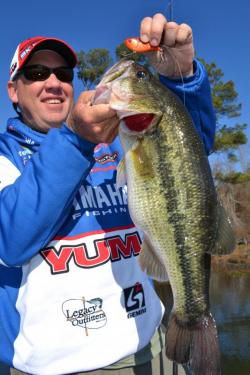
Alton Jones with nice bass

Alton Jones with nice bass

Pro basser Alton Jones, veteran of 14 Bassmaster Classics, says the Xcalibur Rattlebait may very well play big in this year’s late February championship on Alabama’s Lake Guntersville.

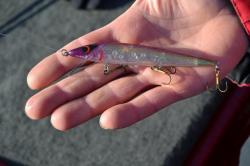
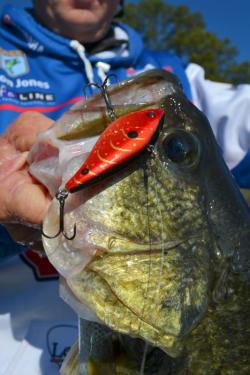
Rattlebaits catch bass

Rattlebaits catch bass

Lipless crankbaits like the Rattlebait are particularly effective in a red-rust or crawfish color in late winter and early spring at the big lake, locals say.

Jerkbaits will catch Gunersville bass

Jerkbaits will catch Gunersville bass

Suspending jerkbaits like the Smithwick Suspending Pro Rogue might be a good backup choice, especially if tournament days are cold.

Use maps, gps, everything you can to plan a tournament

Use maps, gps, everything you can to plan a tournament

Alton Jones uses years of recorded data on prime spots, plus Google Earth, to create a personal map of choice fishing spots for all his tournaments.

Current dock talk seems to be favoring former Classic champ Chris Lane, who has been living on Guntersville the past several years and preparing for just this challenge, and Randall Tharp, a former G’ville area resident who appears on a roll this year with his skills sharpened to the max in both B.A.S.S. and FLW competitions. KVD, of course, is always to be reckoned with, as is new young gun Brandon Palaniuk and Angler of the Year Aaron Martens.

One who can’t be ignored is Texas pro Alton Jones, who has been in 14 Classics, won one, and earned some $2 million on the pro circuits over a long career.

Jones joined a crew from PRADCO, the parent company of Arbogast, Bomber, BOOYAH, Heddon, Xcalibur, Smithwick, Yum and several other brands well-known to bassers at the lake this past week for a practice session and some fine tuning with the new-for-2014 lures.

“Any lure can win any tournament, but if I were betting on one for this event here in late February, I’d bet on the Xcalibur Rattlebait in royal red or royal shad,” said Jones. “If the winter warms up early, the fish will be hanging over the grass shoots where the new beds will grow up in 4 to 6 feet of water or so, and vibrating-type baits let you fish fast and find the concentrations so it’s a good strategy when the fish are in that situation.”

He said he also likes the Smithwick Suspending Pro Rogue jerkbait, both over new grass and around bluff banks where shad schools are visible in late winter.

“If it stays cold, the fish may be deeper and I might go to the new Perfect 10 Rogue, which runs down to 10 or 12 feet,” says Jones. “It’s a bigger lure, and it attracts big fish if they’re around.”

Last but not least, Jones said, if weather is warm he’d probably have a swimjig with a YUM trailer on it to fish shallow pads and primrose beds.

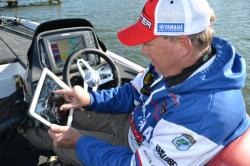
Jones has fished Guntersville many times over the years, and has kept a computerized record of all his spots. He records the locations on the water on his Humminbird GPS systems, then transfers it to computer for storage so that the memory in the GPS does not get overloaded. When he returns to a given lake, he can reload all the results from all his trips back into the machine and have a record readily at hand of the best spots-one that he can also call up on iPad or iPhone.

One of the areas that keep showing up, he notes, is Mud Creek-a spot forecast by several top local anglers to figure in the winning Classic catch.

“I like to use Google to see how the weed patterns change at various times of the year,” says Jones. “You can call up history on satellite views and get a look at the weed growth from every season of the year, and that tells you where there might be some spots that local anglers might overlook. Fishing on a lake like Guntersville where there are so many tournaments all the time, finding a spot that other anglers have not hit recently can give a huge advantage.”

The Classic will be fished Feb. 21-23 at Guntersville, with daily take-offs from the city basin across the street from the Chamber of Commerce. Weigh-ins will be trailered and take place at Birmingham Civic Center, which is also the site of the Bassmaster Classic Outdoors Expo. For details, visit www.bassmaster.com.

Fishing During Christmas

Christmas was a wondrous time when I was growing up. From the oranges and apples in the stockings hung from the mantle to the bullets and hooks I got every year, I was always thrilled to find what Santa had brought. It was amazing how he knew I loved to fish and hunt and always knew what caliber bullets and gauge shotgun shells I needed.

The best thing about Christmas was the two weeks out of school. That meant I could hunt all day, not just an hour in the morning and a couple of hours in the afternoon. And daddy was also off work since he was the local school principal. Although we still had the 11,000 laying hens to take care of each day since they don’t take holidays, he had more time to go quail hunting.

During quail season we hunted every Saturday, but that was just one day a week. During the holidays we usually managed to go at least three days a week. I loved following the dogs and watching them work the birds. Although I usually shot at the covey with my .410 on the covey rise, it took me a long time to figure out I had to aim at one bird. I am not sure I ever killed one with that little shotgun.

By the time I was a junior in high school daddy had gotten rid of the quail dogs. He said he just did not have the time to spend with them. But by them one of my best friends had a pack of beagles and I had a drivers license so we went rabbit hunting almost every day during the holidays. That was as much fun as bird hunting.

Every Christmas I got a brick of .22 bullets, ten boxes of 50 each in a carton. All those bullets looked like they would last forever. Back then when squirrel hunting it was important to kill a squirrel with every shot. We did not want to waste a single bullet. And my eyes were good enough and my arms steady enough that I made most shots count.

I never realized at the time how much freedom I had, and thinking back I am surprised. Although times were different and I was pretty safe from weird people, there were lots of things that could happen to a young boy out in the woods with a gun. But my mother never fussed, she just let me go. I am somewhat surprised she did not smother me since she had lost her first child. My sister died at 18 months old about a year before I was born.

We never went fishing in the winter back then because we had no idea the fish would bite. I have often wished I could go back to the early 1960s and fish Clark’s Hill in its youth (and mine!) in the winter. By the time I discovered bass fishing during Christmas in the mid-1970s it was still great, but within a few years hybrids were stocked and fishermen started showing up on the lake at Christmas. Until then I pretty much had it to myself.

I taught school and worked in education so for many years I would head to the lake the day school was out and stay until Christmas Day. We had a small travel trailer at a boat club and my dog and I would be the only ones there. I would eat when I was hungry, sleep when sleepy and fish the rest of the time.

On Christmas Day I would meet Linda at my parents’ house for the day. She usually had only one day off and if she had more she would often fly up to visit her folks in Maryland. Either way I would head back to the lake the day after Christmas and fish until time to go back to work after New Years Day.

I hope everyone is making memories with their kids this Christmas. Going hunting or fishing with them even for one or two days during this hectic time will give them memories that will last a lifetime. And it will reinforce the good things in life that are still available if you just look for them.

Give you kids and yourself a change from the busy stores and away from the TV. Get outside and create some memories.

Merry Christmas!

Can I Learn To Fly Fish?

Fly fishing

As a pre-teen, outdoor magazines exposed me to wonderful fishing experiences I could only dream about. Growing up on a small farm in rural McDuffie County, I was familiar with bream and bass, but catching trout and salmon was a thrilling idea. And my cane pole paled in comparison with fly rods and the whole mystic of fly fishing.

I tried to imitate what I read. I would take the smallest bream hook I could find, some of mom’s sewing thread, and a few chicken feathers and tie flies. In my mind they were masterful creations that sometimes fooled small bream and horny head creek minnows in Dearing Branch.

My “fly rod” was a short end of a broken cane pole and my fly line was any kind of fishing line I could find. I spent many wonderful hours dabbling those home-made flies in the branch, trying to catch anything that would hit.

When I was in high school I got a real fly rod for Christmas – a generic rod with a spring loaded reel. I loaded it with cheap fly line and had fun catching bluegill on little popping bugs and bass on bigger bugs. I also used it like a cane pole, with cork and jig, for catching crappie around button bushes at Clark’s Hill in the spring.

After we got married, Linda and I fished a lot. I told her a fly rod was too hard to learn to use but she insisted on trying it one day, and within minutes she was putting the little rubber spider near bushes and landing bluegill. She was hooked, and I had to buy her a fly outfit of her own the next week so I could get mine back!

Fishing with a fly rod is different because you cast the line, not the tiny, light-weight lures used in fly fishing. You can fish a fly the size of a gnat, if you can see well enough to get the line through the eye of the hook, and catch fish that won’t hit anything else. But for fishing around here you don’t need fancy gear and tiny flies.

You can get a cheap fly rod and reel like the first one I used for about $25 locally at Berrys Sporting Goods. For a decent line, the most important part of the outfit, you will spend about $15. That will get you started, or you can go with a good outfit that will serve you for many kinds of fishing for under $100. Add a few rubber spiders, popping flies for bluegill and big popping bugs for bass and you are ready to fish.

When you start using your fly rod, you will want a lot of room behind you for the back cast. For that reason, fishing from a boat or fishing a pond where you can wade out from the bank is best. As you learn to use your outfit better and learn to do roll cast you can fish tighter spots without catching a lot of limbs.

The Flint River is a great place to use a fly rod. You can fish from a canoe or jon boat or wade the shoals. Cast a hellgrammite (rock worm) imitation into pools and shoal bass will give you a fight with lots of jumping. They are the closest thing to smallmouth we have in this area. There are some grown bluegill, pumpkin seed, and shellcracker sunfish in the river that will eat your rubber crickets and popping bugs, too.

High Falls is another good place to fish with fly outfits, but you need a boat. The lake is full of bluegill that will readily eat just about any bug you cast to them, and you will hook a bass that will stretch your string when they hit.

Big lakes can be fun, too. Jackson Lake has lots of bluegill in the coves around logs and brush, and you can catch all you want on a rubber spider. You definitely need a boat to access the bigger lakes but you will catch fish. Most of the fish in bigger lakes have never seen a rubber spider or popping bug so they are easier to catch.

Don’t be frightened by fly fishing. Give it a try and you may be hooked for life.

What Is the Best Time and Place To Catch Alabama Largemouth?

One Time, One Place for Alabama Largemouth

By Millard Rooney
from The Fishing Wire

If you could be on the water in Alabama only one week out of the year and wanted the best largemouth fishing for numbers and quality, where would you go and what would you throw?

Jimmy Mason with Alabama largemouth

Jimmy Mason with Alabama largemouth

Captain Jimmy Mason puts the grip on a keeper from North Alabama’s TVA chain.

It’s a tough question, given the ample opportunities for great largemouth bass fishing on the Tennessee River in north Alabama. The state has four impoundments — Guntersville, Wheeler, Wilson and Pickwick — along the 652-mile long river that snakes through Alabama, Tennessee and Kentucky. You can’t overlook famed Lake Eufaula, either, for outstanding largemouth bass fishing.

Guntersville, Pickwick and Eufaula generally are considered among the best for numbers and size. At certain times of the year on any of these three, you can catch a 10-pounder or rack up a memorable day with numbers that leave your thumbs raw and mind racing. In each lake, the buffet of forage, deep and shallow water, aquatic vegetation, structure changes, cover and water current from hydroelectric dams combine for endless opportunities.

More than two decades of fishing and guiding on the Tennessee River give Jimmy Mason a unique perspective. As a guide or tournament competitor he’s plied all of the Tennessee River impoundments during all four seasons. He’s also fished Alabama’s other notable lakes, including Eufaula and the Coosa River chain, which has good largemouth but is known more for its spotted bass.

Mason and Largemouth

Mason and Largemouth

Mason says spring is prime time for numbers, but if you want a trophy, head to Pickwick the first week of February and fish an umbrella rig like the Flash Mob.

“It’s kind of hard to answer, honestly, because there are really good times for big fish and other times for catching a lot of fish,” Mason said. “As much as I’ve fished on all the lakes, though, I’d have to say Pickwick would be my top choice for the chance of catching a truly big bass, a 10-pounder, and also for catching a lot of bass.”

Pickwick Lake is located in the northwest corner of Alabama, a 53-mile long impoundment with more than 43,100 acres of surface area and 490 miles of shoreline. Thanks to the topography of the area, the river is replete with gravel bars, rocky bluffs, hard bottoms, shallow backwaters and numerous tributaries. It’s famous for its smallmouth bass, but in the last decade has seen a solid improvement in the quality of the largemouth bass population.

For landing a 10-pound largemouth, and possibly a 5- or 6-pound smallmouth, Mason says the first week of February is the prime time.

“If you were looking for a longer period I’d say from December through February, but for that one week out of the year when it can be really special, I’d say the first week of February,” he said. “One reason is the bait — the tremendous amount of shad in the lake. The other is the ability to throw the YUMbrella rig and target the big fish with it.

“The winter bite has been phenomenal the last few years for a legitimate chance at a 10-pounder. There probably have been 25 to 50 10-pounders caught that I know of, including several that are bigger than that, and likely a lot more that have been caught I don’t know about. When we get the winter rainfall that keeps the water color good and flowing through the dams to create a lot of good, consistent current, throwing the YUMbrella triggers that big cold-water bite and gives you the best chance to catch a 10-pounder.”

Prespawn Pickwick largemouth (and smallmouth) feast on shad, making the YUMbrella and other rigs that mimic a school of baitfish tremendously effective. Mason mixes up his offerings depending on water clarity.

“I’d fish several versions of rig at that time, including the Flash Mob Jr. and the full size version. For soft plastics I use a 5-inch YUM Money Minnow on the center arm and four 3 ½-inchers on the four surrounding arms. I like the Foxy Shad color for all of them,” Mason said.

It can be chilly in North Alabama in winter, especially at daybreak, but the fish keep right on biting all winter long.

Mason says that if the water is dirty he throws the full size Flash Mob, and is more likely to throw the Jr. size as the water clears. For really clear water, he removes the Money Minnows surrounding the center arm and replaces them with curly-tail grubs.

“I’ll throw these in current eddies or where the current hits the bank directly and causes an eddy, and will be looking for the eddy spots along the bank. It’s all related to current. If you catch one bass, you have a chance to catch several more big fish because they school in these eddies. You also have a chance to catch a 10-pound largemouth and 5- or 6-pound smallmouth in the same area. There are only a few lakes in the country where you can do that.”

For numbers of fish, Mason said the third week of May on Pickwick is the one to circle on the calendar.

“That’s when, generally, the big schools of post-spawn fish move out on the deeper structure — the first big structure off the spawning areas,” he said. “You can sit on a spot and hammer them. Sometimes the schools will look the size of a house on the sonar.

“My favorite bait to throw then is the Fat Free Shad in the Citrus Shad color. Chartreuse with a black back also is good, as is Foxy Shad. That’s also a good time to throw a 3/4-ounce Booyah football jig with a big craw or a 10-inch worm.”

Christmas Memories

Do you ever wish for a simpler time at Christmas? If you are old enough you know of more simple holidays that involved family and friends, church and great food. For me almost all my memories also included the outdoors. From kids getting BB guns and rushing out to shoot them to adults getting new shotguns and shells for an afternoon quail hunt, guns and Christmas always went together for me.

My Christmases growing up in the 1950s and 60s always ran a similar pattern. We went to Florida the week before Christmas to visit my Grandmother who live there. That was usually a four day trip but we always came home a couple of days before Christmas to enjoy everything we had been working on, from the door decorations to the tree.

Christmas Eve we always had a service at Dearing Baptist Church, singing wonderful songs and eating great food. Then it was home to make sure the stockings were hung, milk and cookies were out for Santa and off to bed, where we tried to stay awake and listen, but never could make it long.

Well before daylight we would wake up and rush into the living room where a wondrous spread of gifts awaited up. There was always on big item wished for all year, a bicycle, a .22 rifle, a set of briar proof hunting clothes. Then there were smaller gifts.

I always got a brick of .22 bullets, 500 rounds promising many happy hours of shooting. And I could count on a box or two of .410 shells for rabbit hunting. Guns, bullets and shells were always prized. I am sure I got regular clothes and other things but really don’t remember them.

The stocking was kept to pull down last because it would be stuffed with small things. There were always a couple of oranges and I never made the connection that they looked just like the ones in the sack we had brought back from the annual visit to my grandmother in Ocala Florida the week before Christmas. But there were also boxes of sparklers, often a pocket knife, maybe the knife, fork and spoon set to go with the mess kit under the tree.

After exploring the gifts over and over I usually wanted to go outside and shoot my new guns and bullets. But I couldn’t go far. Christmas Day was the day for just my parents and my brother and I to have a big lunch together. We didn’t visit other family members until the days after Christmas.

My dad often took me quail hunting after lunch, one of his loves. We would go get the dogs from a nearby pen and head to fields where we knew the coveys would be feeding. If we didn’t go quail hunting I would usually get with a friend and go squirrel hunting, or go by myself. I loved being in the woods all along.

I still have the .22 rifle I got for Christmas when I was 12 years old. It still works well and is very accurate even after killing untold numbers of squirrels, birds and paper targets. Guns are often passed down from generation to generation if they are taken care of and cleaned.

The week after Christmas was filled with visits to kin folks houses. Usually there were huge meals at lunch time and my aunts and uncles hosted the meal on different days. That was quite and undertaking with over a dozen adults and 20 or so kids running around. Five of my mothers brothers lived near us and she was the youngest, so even when I was very young some of my cousins had kids my age.

I don’t know how we stuffed so much into the two week holiday from school but we did. It seemed we never slowed down from heading to Florida the day after school was out until the church services on New Years Day and then back to school.

Later in life deer season became important. Back in the late 1960s season was open all November then closed until opening again from December 26 to January 1. I hunted as much as possible during that week. Then in the mid 1970s I found out bass and crappie would hit good during Christmas holidays and started spending most of them at my place at Clark’s Hill, fishing and hunting every day except Christmas Day when I joined my family for dinner.

We all have Christmas memories and that is one of the things so important about this time of year. I hope everyone makes so great new ones this year!

Fishing A Bass Tournament In Wisconsin

In 1997 when I started doing my Internet site on fishing I started visiting a bass fishing news group. After several years of posting messages and reading the posts of others I felt like I knew some of them pretty good. That group of fishermen started getting together for a bass tournament twice a year.

In the spring we had the “Mid Tennessee Classic” on either Dale Hollow or Center Hill Reservoirs. Each September the week after Labor Day we met in Rhinelander, Wisconsin for the “North Woods Classic.” When I retired in 2001 I started attending those tournaments and they have been a lot of fun.

We have people come from as far west as Texas and southern fishermen from Georgia and Florida. Some folks came from North East states like New York. Our love of bass fishing brought us together and it has been a lot of fun.

I left on Labor Day in 2009 for the 1200 mile trip north pulling my bass boat. I drove 919 miles the first day in 15 hours and spent part of the night in Madison, Wisconsin. That left a short 250 mile drive for Tuesday morning. I got checked into my motel and went to Boom Lake to practice.

Boom Lake is a 2500 acre lake right in town that connects to the Wisconsin River and several “flowages,” ponds that interconnect through small channels. The lake has been tough, in all my trips there I had never caught a limit of five bass and Tuesday afternoon started that way. I caught three small bass.

Wednesday, the day before the tournament started, I picked up Dan and we headed to the lake. It was scary. I caught bass everywhere I tried, ending up with nine nice keepers. That night at dinner everyone said they had caught fish.

Dan fished with me on Thursday and I started catching fish around lily pads on Senkos. At noon I had four largemouth in the boat and went to deeper water to try to catch a smallmouth. Less than 30 minutes later I landed one over 14 inches long and had my limit and was through fishing for the day.

Wisconsin has a no cull law. When you put a fish in your livewell you can’t let it go and keep a bigger fish. It is a hard decision when you catch one just barely 14 inches long like my third largemouth. If you keep it you can’t cull, but if you let it go immediately, hoping to catch a bigger fish, you may not get a limit. Since I had never limited before I put all keepers in the livewell.

At the end of day one I was in first with five weighing 11-14. One other fisherman, a local bass expert, also had a limit. Most people only had one or two fish, more typical of past trips.

The second day was predicted to be stormy and my partner met me at the ramp and said I was on my own, he was not willing to go out if it was lightning. I never heard thunder all day but it did rain. I started catching largemouth immediately and had a limit at 11:30. For the rest of the day I tried to catch a big pike or muskie but didn’t have any luck.

I ended up winning the tournament with ten bass weighing 20 pounds, 2 ounces. Second was 19-1, a bass guide from Florida had landed five smallmouth the second day weighing almost 15 pounds to go with his four pounds the first day. There were four limits the second day but I was the only one with limits both days.

A friend from Des Moines and I stayed for another week at a cabin north of Rhinelander and had some great fishing but weird weather. A week ago last Friday it sleeted and snowed on us. Saturday morning my pliers were frozen to the carpet in my boat and the lockers were frozen shut.

Our favorite lake was Crab lake, another 2000 acre lake. It is a glacier lake so there are rock piles everywhere. One day I found one about a foot under the water while running on plane. That cost me a new prop and lower unit in my boat. But in four days fishing Crab Lake I landed 101 smallmouth, the biggest weighing 3 pounds, 15 ounces, the biggest I have ever caught.

I am glad to be home and very glad it has cooled off here. I don’t think I could stand the hot weather I left on Labor Day after wearing a heavy coat for a week in Wisconsin!