Superstorm Sandy’s Long Term Effects on Coastal Fishing Communities

Social Scientists Dig Into Superstorm Sandy’s Long Term Effects on Coastal Fishing Communities
from The Fishing Wire

Sandy Aftermath

Sandy Aftermath

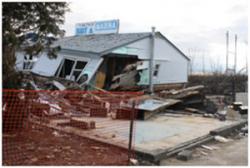
Superstorm Sandy damage at Vikings Bait & Marina, Laurence Harbor, N.J. Photo credit: Angela Silva, NEFSC/NOAA.

Within weeks of Superstorm Sandy’s devastating landfall in New York and New Jersey, NOAA Fisheries social scientists were on the scene to evaluate the damage to local economies that rely on fisheries. Overall, results showed that these communities in both New Jersey and New York incurred sizable losses and that the majority of these losses were uninsured, but researchers wanted to know more.

“We helped to conduct hundreds of interviews in dozens of communities in coastal areas most affected by the storm,” says Lisa Colburn, a social scientist at NOAA Fisheries Northeast Fisheries Science Center, who helped lead the effort. “We compared pre-storm conditions with those in the four weeks after the storm. It was pretty hectic, and we didn’t want to make life harder for these traumatized communities, but we could already see the value in extending this work to look at longer term effects.”

Since the rapid response assessment, Colburn and her colleagues at the NOAA Fisheries Northeast Fisheries Science Center — Patricia Clay, Tarsila Seara and Angela Silva – have continued the work they started in the rapid assessment. They have looked more broadly at the importance and distribution of commercial and recreational fishing communities in both New York and New Jersey, and at changes in species landed since the storm. In collaboration with Rutgers University and with funding from the National Science Foundation, they have looked at resilience to the storm’s effects among fishermen and their families.

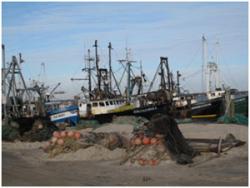
Superstorm Sandy damage at Shinnecock, N.Y. commercial dock . Photo credit: Angela Silva, NEFSC/NOAA.

Boats Damaged By Sandy

Boats Damaged By Sandy


A full report looking at recovery in the nine months after Sandy will be available by December. Preliminary results show clear differences in the volume and kinds of commercial landings after Sandy when compared with catches during the five years prior to Sandy. The number of recreational trips for shore, private/rental boat and for-hire vessels showed similar differences. Results from the collaborative study with Rutgers show a range of effects within all the categories of commercial fishermen, fish dealers, for-hire recreational fishing business owners, bait and tackle shop operators, and marina operators. These are strongest immediately after the storm for everyone, but rates and levels of recovery vary.

Beginning in 2014, the effort will ratchet up a notch as a large-scale survey is implemented to better quantify long- term effects and barriers to recovery. Commercial fishermen, fish dealers, for-hire recreational fishing business owners, bait and tackle shop operators, marina operators, and aquaculturists in the two states are among the survey targets. Researchers will be asking about the condition of businesses, communities, and personal well-being and use a variety of methods to measure and report on these aspects of the storm’s effects.

These data, and analyses of other ongoing work on social impacts, will form the basis of a detailed report expected in 2014 covering change after one year, post-Sandy. Patricia Clay, Colburn’s colleague and co-author, says looking at long-term recovery patterns after disasters that disrupt fishing communities is a relatively new research area. “By systematically talking with people who have been most affected we not only gather hard data about economic and social conditions, but also create a way to ground-truth and interpret the quantitative data such as those on landings and employment, ” says Clay. “If we can bring those two pieces together, it would be a big step forward in understanding the factors that influence resiliency in these communities in the face of change.”

Contact: Teri Frady, NOAA

Cold Weather Fishing Clothes and Fish Stew To Warm You

I caught this bass after a bad cold front

I caught this bass after a bad cold front

Sometimes when I say I am going fishing this time of year folks just shake their head. They think it is way too cold to go fishing and that you will be miserable out on the water. And you will be, if you don’t dress for it.

For a normal January day I will start with insulated underwear – what we used to call “long Johns.” New material is light-weight and very warm, and it will wick away any sweat so you don’t feel wet and clammy. Thin socks of similar material help keep feet warm and dry.

My next layer is a soft flannel or modern material long sleeve shirt and flannel lined jeans. Several brands make flannel lined jeans and you can order some from ads in magazines that are not expensive but are very warm. I top the thin sox with wool sox.

My fishing jacket is a baseball type lined jacket with a hood. It is water resistant and very warm, and the hood is great. I put on my baseball cap so I will have a bill to shade my eyes, pull a stocking cap on over it down over my ears, then pull up the hood. That keeps head, neck and ears warm.

If the day is real cold I wear insulated boots. If it is not too cold I go with walking shoes but try to make sure they are loose on my feet. If they are tight, especially with heavy sox, it cuts off circulation and actually makes your feet colder.

That is plenty if the temperatures range from the 30s to the 50s like it does most days. On really cold days I pull on a snowmobile suit over everything else and will put two to four chemical handwarmers in inside pockets. It is amazing how much heat those things put out.

If it is ridiculously cold, in the teens, I have Gortex insulated Cabelas Guidewear. These suits zip and snap up and with bibs and the coat you are covered from head to foot. The hood has a flap that snaps across your chin and mouth, covering it. For long runs I add a face shield and heavy gloves so no wind hits me anywhere.

I have fished in temperatures as low as 11 degrees and have been comfortable. My hands get cold, though. I have tried all kinds of gloves but none allow me to cast and feel the fish like I want so I always fish bare-handed. It helps to switch from a bait casting reel to a spinning reel. For some reason opposite hands get cold with the different reels so switching helps warm one. And one of the handwarmers in both side pockets allows me to stick one hand in there and warm it for a few seconds.

Dress right and you can be comfortable while catching fish, even on the coldest day.

When I get home on a cold day I love some kind of fish stew to warm me even more. One of my favorites is s spicy red Manhattan style stew I make with bass. It is fairly simple. Boil about five skinned and gutted bass in enough water to cover them with a bay leaf. Let it set to cool. Fry up three strips of bacon then brown a chopped up onion in the grease. Drain the fish broth through a strainer and put it back into the pot, then pull all the meat off the bones and add it back to the broth.

Crumble up the bacon and add it and the onion to the stew. Put in a can or two of chopped tomatoes. I like the ones with chili peppers in them. Add salt and pepper and let it simmer for 30 minutes. For a heartier stew add rice or diced potatoes. I also add a good bit of Crazy Jerry’s hot sauce – I like it and its motto is “A Lot Hot” but you can add any kind you prefer.

Serve a big bowl with saltines and this stew will warm you inside and out.

Another favorite stew is a white or New England style fish stew. For this one I just use bass filets – no bones to make a broth since it is much milder. Chop up an onion and sauté it in butter. Put a half-gallon of milk, more for more stew, and real milk makes a richer stew, on and simmer it. Add the onion, a stick of butter, salt and pepper to the milk. Cut up the filets into bite-size pieces, and simmer until done. You can add rice or diced potatoes to this one, too.

I really like this with saltines or oyster crackers. You can make it as rich as you want by adding more or less butter and using regular or skim milk. For me, the richer the better.

I’m hungry – gotta go cook some fish stew!

Getting To Know Your New Boat

Every new boat requires an owner break-in period.
Experiences from this new owner just may help you with yours.
from The Fishing Wire

Dan Keating has owned several boats over the years and is an avid fisherman. When he decided to replace his aging center console with a new Yamaha-powered Contender® 32ST, he realized it would take some time to acclimate himself to his new fishing partner. Anyone purchasing a new boat might benefit from his experiences with the dealer and what he did on his own in the weeks after taking delivery.

Taking Delivery of Your New Boat

Taking Delivery of Your New Boat

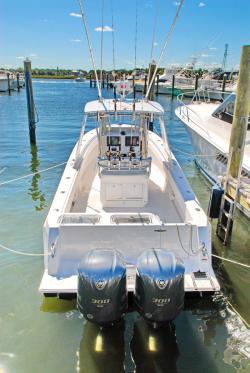
Taking delivery of a brand new offshore rig is a big day in any boaters life–but an experienced dealer can readily walk you through it.

Dan purchased the boat from Mike Bucskowski, the sales manager at Hoffman’s West, a Contender® dealer in Brielle, N.J. Mike went through the boat’s features and benefits during the sales process so Dan had an appreciation of its finer points before closing the deal. The process of really learning the boat starts at the time of delivery when the salesperson goes over the boat in detail. It’s not just a courtesy; it’s the first step toward safe boating for the new owner.

“Dan is an experienced boater, so I had no concerns about his ability to run the boat,” said Bucskowski. “If he was a newcomer to boating, there would be additional assistance offered as part of the delivery process. We work with a professional captain who would spend time with the buyer teaching the basics of running the boat. They would also spend some time on the water together. It’s more involved than taking delivery of a new car, and we try to match it to the experience level of the purchaser.”

Dan and Mike spent a considerable amount of time together at delivery starting in Mike’s office where they discussed the warranties for the boat and Yamaha F300 engines. Mike explained the manufacturer’s prescribed maintenance schedule and the break-in period for the engines-simple things the owner should do during the first few hours of operation. He encouraged Dan to take the time to familiarize himself with the engine owner’s manual, which contains helpful advice that can ensure the engines will provide years of trouble-free service.

The job of familiarizing the owner with his new boat is very hands-on for the dealer. Dan’s Contender® was accompanied by basic paperwork, lists of the optional equipment and aftermarket products – things like the optional live well pumps, custom outrigger bases and, in Dan’s case, the bow thruster. The paperwork also included a layout sheet detailing the size and locations of the gas tanks (yes, you can even order optional fuel tanks) and the general deck configuration. With all of this covered, it was time to move outside to the boat.

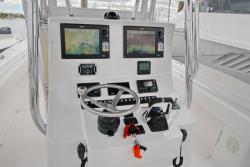
Mike walked Dan through the entire boat from bow to stern, covering everything from the anchor locker to the boat’s electrical system and the location of the batteries, battery switches and breaker panels. At the stern, he spent extra time going through the bait well and bilge pumps, the location of thru-hull fittings, the valve systems for the live wells and saltwater pickups for the washdown system. He reviewed the external fuel filters and suggested maintenance intervals, then moved to the console. Here, they went over the switch panel and the Yamaha Command Link® engine monitoring system, electronic engine controls and the bow thruster. The last thing was a brief introduction to the navigational electronics.

Electronics On Boat

Electronics On Boat

New electronics have an amazing array of capabilities, but the rapid change in technology requires skippers to steadily update their skills.

“Mike did a great job of introducing me to my new boat and making sure I understood the importance of proper break-in,” Keating told us. “Things have definitely changed since I bought my last boat, and there is certainly a lot to learn in the coming weeks.

“Becoming familiar with a new boat is a process that starts with learning the basic systems and then running it to get to know how the boat handles, which I call ‘due diligence’ so you can operate the vessel to its potential with confidence – and in a safe manner.”

Once the boat was berthed in its slip, Dan began a study period.

“I took the engine manuals down to the boat and started reading with everything right there in front of me,” he said. “There’s nothing like being able to look, touch and push the buttons while reviewing the manuals for the instructions to sink in quickly. Programming the Command Link was an interesting project because it is so versatile and offers so many customizable screen menus. I set it up the way I thought I would like it, but after running the boat a few times, I went back and reprogrammed the display a little differently.”

Another challenge was learning to use the new touch-screen sonar, radar and navigational system. The capabilities of modern marine electronics are expanding at the speed of light, and going from the equipment he had to the new system would require time with the manuals, practicing with the units and getting out on the water.

After a walk-through with the dealer and some study on your own, you’ll be ready to take the helm of your new rig.
The final challenge for Keating was getting an understanding of the handling characteristics of the new boat, which has a step hull as opposed to the traditional deep V of his previous boat. At slow speeds there is little difference in handling and during docking maneuvers, but it is critical to understand how any boat responds to the helm. How much power is enough when backing into a slip? How is the boat affected by cross currents at slow speed? How does it respond to steering input at various speeds? In the open ocean, how does it handle in different sea conditions?

“While I had the irresistible urge to take the boat fishing, I left the rods home a few times and took it out just to get better acquainted with how it handled,” Keating said. “It had similarities and differences from my old ride and I had to get in tune with them. For example, the step hull handles rough water better at faster speeds, which is almost counter intuitive. When the sea gets choppier, instead of slowing down, speeding up a thousand RPM improves the ride. Every hull and engine combination requires a period of adjustment to learn what to expect from it.”

Keating has had the Contender® for a bit over two months now and is comfortable with the boat and in his ability to interface with it. He’s still learning something every time he leaves the dock and that will continue for some time to come, but that’s just one of the great things about buying a boat.

Where Can I Catch Bass In the Winter in Georgia?

Peach State Winter Bass Hotspots

Baby its cold outside. But unlike the song, Georgia bass fishermen don’t want to sit by the fire. Instead, we want to get out on the water and catch some fish. We are lucky because there are some excellent places to catch winter bass here.

From the southern border with Florida where some bass often start fanning beds in January to the North Georgia mountains where spotted bass gorge themselves in the coldest water, good fishing is available. Some middle Georgia lakes have a mixture of spots and largemouth and others have special patterns that pay off now. Pick a lake close to you or drive a ways to find some good winter bass action.

Seminole

Pam Martin-Wells has won more money on the bass trails than any other woman and was recently inducted into the Legends of the Outdoors Hall of Fame. She grew up on the Flint River at Lake Seminole and guides there when not on the tour. She knows the lake well and keeps up with what the bass are doing.

For winter fishing on Seminole Pam heads to Spring Creek. The water there usually stays clear and that helps in cold water. It also warms quickly, pulling bass up toward the spawning flats early. With standing timber everywhere in the creek they have good places to hold and the hydrilla beds offer perfect cover for them.

To find winter bass Pam would start near where the Wingate cut-through hits the Spring Creek channel. She gets on the edge of the old creek channel and follows it as it winds its way across the timber filled flats. Remember that the channel does not follow the boat channels. It winds and loops through the timber.

As you ease along the channel watching your depthfinder you can usually see the hydrilla edges. The hydrilla grows on the flats along the channel but the channel itself is too deep for it. So you are fishing the channel drop, timber that is on the edge of the channel and hydrilla edges along the channel. All combine to make excellent bass “highways” that they follow and hold on.

Pam fishes the channel from the cut-through all the way out to the main lake. Outside bends are best and the ones that turn right where a ditch runs up on a spawning flat are excellent. If the outside bend is near the flat it is good but a ditch for the bass to follow makes it even better.

A big crankbait like a Fat Free Shad is the bait Pam uses to find fish in the cold water. She keeps her boat in the creek channel and makes casts that parallel the edge of the hydrilla. Crank the bait down then work it fairly fast along the edges where the bass are holding. Trilene Big Game line is tough enough to pull big bass out of the hydrilla so that is the line she chooses.

If the bass don’t want to chase a crankbait or if Pam hits a school of fish and they quit biting, she picks up a Wave Worm Tiki Stick. She rigs it both Carolina and Texas style and fishes it along the edge of the channel, too. She prefers a Tru-Tungsten sinker because it is denser than lead and she can use a smaller size weight. The smaller size comes through the grass better. That weight also gives her better feel because of its density.

A cold front really puts the bass at Seminole down. Try to plan your trip during a warming spell. If there have been two or three days of relative warm, stable weather the bass fishing should be excellent.

Lake Harding

Robert Medas and Kevin Phillips grew up together near LaGrange and have fished the area together for several years. They joined the West Georgia Bass Club and have done well in this competitive team trail club. Their tournaments often put 50 to 70 boats on the water. In 2007 there were 163 teams in the club.

In 2005, their first year in the club, Robert and Kevin placed 4th in point standings for the year then followed it up with a first place finish overall in 2006. In 2007 they started out the year with a win at West Point in January and were in 8th place overall after 9 of the 12 annual tournaments.

Lake Harding, also called Bartletts Ferry, is a good winter time lake for them. It has varied cover and structure that gives them a choice of kinds of places to fish based on the weather and other conditions. And the lake has a big population of spotted bass. Spots tend to feed better in cold water and are less affected by cold fronts than are there largemouth cousins.

Another reason Harding is a good winter choice is the stability of the water. Since it is just downstream of West Point the water level stays fairly constant. There are areas of the lake that seldom muddy up, another big plus in cold water.

In cold water the bass at largemouth at Harding are usually holding in deep brush waiting on passing schools of shad. Spots are more likely to be found around rocks on points. For both species Robert and Kevin team up by throwing different baits, with one fishing faster moving crankbaits and spinnerbaits while the other works a jig and pig or jig head worm.

Halawakee Creek is a good choice for winter fishing. Although it is on the Alabama side of the lake a Georgia fishing license is good there. This creek stays fairly clear all winter and you can find any kind of cover and structure you want to fish.

Work up the creek, hitting rocky points for spots. Run small crankbaits and spinnerbaits over the rocks and work a jig and pig or a jig head worm on them. Fish from 8 to 18 feet deep. You can hop from point to point as you fish up the creek, concentrating on the rocky ones.

For largemouth look for brush piles down 12 to 18 feet deep. Many docks have brush around them and some of the feeder creeks have good brush on the channel. Also pay attention to steep banks where blowdowns have fallen into the water. The creek above the second bridge is a very good area for this kind of cover.

There are also a good many humps and channel ledges in open water in Halawakee Creek. Most maps don’t show them so watch your depthfinder as you ride the middle of the creek. There are good humps and channel drops from the mouth of the creek to the first bridge. Long points also extend way out from the bank.

On the ends of these points and on humps and channel drops Robert and Kevin like to jig a spoon. Locate fish and bait near the bottom in 18 feet of water, position your boat right on top of them and drop a jigging spoon like a Hopkins down to them. Work it up and down in one place and be ready to set the hook on the fall.

Clarks Hill

I grew up in McDuffie County, went to high school in Thomson and started fishing Clark’s Hill in the 1950s. My family has had a place on the lake since the mid 1960s and for many years I spent the last two weeks of December fishing there. Winter has always been one of my favorite times to fish the lake and some of the patterns I have found pay off every year from late December all winter long.

When the water gets cold the bass stack up on the ends of long, shallow points on the Georgia Little River side of the lake. I especially like the area around Germany Creek since I have a place at Raysville Boat Club and fish there the most. There are many shallow points and ridges on the river and the creeks in that area that hold winter bass.

Ride the channels watching for a point, hump or ridge coming up to about 12 feet deep. A hard clay or sand bottom is best and rock or gravel makes it even better. Watch your depthfinder for schools of baitfish nearby and marks of fish near the bottom under them.

Starting at 12 feet deep jig a Little George or spoon like the Hopkins in the fish you see. Stay right on top of them and move it up and down in one place. Start with short hops, raising your rod tip about a foot and letting the bait fall on a tight line. Gradually make higher and higher hops until the fish show you what they want. At times you will need to raise your rod tip three to four feet, making the lure rise that far off the bottom before falling back.

Be ready for a tick as the bait falls and set the hook when you feel it, or if the bait does not fall all the way back to the bottom. When using the Little George you should be able to feel the tail spinner moving as you raise and lower the bait and if you feel it stop spinning set the hook.

Work deeper and deeper, especially if the water is clear. Most of the bass I have caught have been 12 to 15 feet deep in stained water and the Little George works better in stained to muddy water. The deepest I have ever caught a bass doing this was 57 feet deep in Grays Creek. I was jigging a Hopkins Shorty spoon straight under the trolling motor and the water was fairly clear, so keep working deeper until you find the fish.

Bass also stack up in ditches this time of year at Clarks Hill and a Zoom Fluke fished in them on a jig head is and excellent way to catch good fish. Put your boat in 30 feet of water anywhere a ditch enters the main lake and make long casts down the center of it. Swim the bait just off the bottom and set the hook if you feel any weight.

If the steady movement doesn’t work try hopping the jig and Fluke back. Hop it a foot off the bottom and let if fall back. Work all the way out to the boat, fishing water from a few feet deep to 30 feet deep down the center of ditches and depressions. You will often find a school of bass and catch several in one place doing this.

Lake Burton

Daniel Workman has worked on boats in the Burton area for several years and fishes the lake a lot. He enters pot tournaments there and has also fished with some area clubs. His best catch in a tournament on the lake was a five fish limit weighing 22 pounds and he has landed a six pound spot there.

Burton produces big spots and they feed good in cold water. Blueback herring in the lake have made it a great place for big spotted bass . The state record 8 pound, 2 ounce spot was caught at Burton in February. Winter is a good time to fish for spots on the lake and you might catch some good largemouth, too.

Daniel says the spots school up on deep points and humps and follow the herring during the winter on Burton. To find the bass you first find herring then go to nearby humps and points that top out 15 to 22 feet deep. Cover like brush or rock on the top will help hold the bass.

The lake is small enough you can fish most of it in one day but Daniel concentrates on the lower end, usually fishing from the area around Murray Cove down to the dam. The water stays clear here and cold water fishing is better in the deeper, clearer water.

A variety of baits work well for big Burton spots in cold weather. A jerkbait is excellent if the water is clear and it usually is. Make a long cast across a point or hump and crank the bait down, then work it back with a jerk then a long pause. The colder the water the longer the pause should be. A bait that suspends, like the Lucky Craft Pointer, is very good for this kind of fishing.

Spots will come up from deeper water to hit the jerkbait. Try different cadences with it. Sometimes a jerk-pause-jerk works but try a jerk-jerk-pause, too. Vary the action of the bait until the bass tell you what they want.
If a jerkbait is not working Daniel will throw a big crankbait like a big Fat Free Shad in shad color. He makes long casts across the structure with it and cranks it back with a steady speed, keeping it down as deep as possible.

Plastics are good, too. Texas, Carolina and jig head rigged worms will all catch Burton bass. A Zoom green pumpkin Finesse worm with the tail dyed chartreuse with JJ’s Magic to add scent and color is his choice for all of the rigs. Daniel fishes the Texas rig through brush but likes the jig head better on a clean bottom.

Work the plastic bait through cover on deep points and humps when the fish are not active. Try all three rigs since some days the fish seem to prefer one over the other. Fish the Texas and jig head worms on fairly light line and use a lighter leader on your Carolina rig in the clear water.

Some bass fishermen stay at home this time of year because of the cold. There is no reason for that with the kinds of clothing available to fishermen now. Dress warmly in layers and top it off with a snowmobile suit or other cold weather gear and you can stay relatively comfortable.

A few tricks really help you stay warm. Wear a hood over your head that covers your neck and keeps neck and head warm. That makes a lot of difference. The bass fisherman’s traditional baseball cap is not a good choice this time of year, unless you have a stocking cap pulled down over it and a hood over both.

Another good trick is to fill your pockets with handwarmers. The chemical type are cheap and easy to use, and most will last all day. Put two tiny ones in your boots, a couple in pants and shirt pockets and keep one in each jacket pocket to thaw your hands and you can keep on fishing.

Don’t sit at home and complain about the cold. Dress warmly and try one of these lakes for good winter action. You have a choice in the types of waters you want to fish and the kinds of bass you want to catch. But you can’t catch any of them sitting by a fire!
Fishing In Winter Can Be Special

There is something special about some winter days when out fishing. Every so often a day will be just perfect, cool in the upper 40s and low 50s with clouds but no wind. The lake is hushed with little activity and no noise to disturb the fishing. The whole world seems to be pausing in quiet to make my day more enjoyable.

On days like that I hate to crank my gas motor. It seems like I am suspended in the middle of nothing with the gray sky and water and subdued colors on shore. And fog just makes it even more surreal. Every plop of a lure in the water is magnified by the quiet. Any sound is intense.

The smell of wood smoke drifting over the lake is another favorite thing in the winter. Just a whiff of burning wood or pine straw seems to warm me like I was standing beside the fire. I want to inhale deeply and hold it in to keep that feeling.

A few years ago I was on Jackson Lake one January day like above, fishing back in a creek. From a cabin nearby the sounds of a mournful jazz song seemed to float across the lake. The female singer’s love song was perfect for the day and I wish I knew the singer and song so I could get a copy, but repeated playing of it might make it less special.

I like the feel of being bundled up against the cold and the comfort of a chemical hand warmer keeping me toasty even though the air touching my nose and hands makes me want to burrow down in my snowsuit. And I like the feeling running down the lake when I am warm all over except one small spot where the wind gets in to bare skin. That makes the rest of me feel even warmer.

Big bass can make a winter day exceptional, too. I have caught more bass weighing over eight pounds in January and February than the other ten months put together. It is not unusual to fish all day for one or two bites but those are more likely to be from wall hangers.

There is something about being out in cold weather that makes me feel like I can withstand bad things if prepared for them. But at the end of the day it really feels good to get in the truck and turn the heater on full blast!

What Is A Great Goliath Grouper?

The Great Goliath

Today’s feature on Goliath Grouper comes to us from the Gulf of Mexico Fishery Management Council. One of it’s most interesting findings is that Goliath’s, contrary to popular angler opinion, eat very few snappers and other grouper species.
from The Fishing Wire

Goliath Grouper

Goliath Grouper

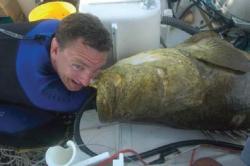
The goliath grouper population is showing signs of recovery in the Southeastern United States. This should be fantastic news, since goliath are considered critically endangered throughout most of the world, but many Gulf fishermen don’t see it that way.

That’s because goliath grouper have a bad habit of eating fish that are struggling at the end of fishing lines and spears.

Understandably, this opportunistic behavior has led many fishermen to believe that goliath are a nuisance – directly competing with them and decimating game fish populations.

However, scientific studies have concluded that goliath grouper are not the reef fish gobbling, top predators they appear to be, and they don’t seem to harm the snapper or grouper populations on reefs where they live and eat.

How do we know this?

A very straightforward way to figure out what something is eating is to check out what’s in it’s stomach. When scientists capture goliath their stomachs are emptied and the contents are classified.

What Does A Goliath Grouper Eat?

What Does A Goliath Grouper Eat?


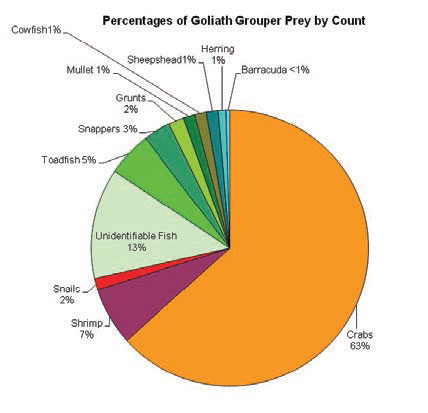
Using gut content analysis, scientists Chris Koenig and Felicia Coleman (2009) found that, rather than eating all the game fish in sight, 72% of a goliath groupers diet is invertebrates – 62% of which is crabs. The figure below shows how many of each prey type were present in the stomachs of the 226 adult and juvenile goliath grouper studied.

The only downside to gut content analysis is that it only shows a snapshot of what’s been eaten recently. Since we are what we eat, stable isotope analysis can determine what a marine organism has eaten over a long period of time.

Chemical signatures found in the muscles of fish can indicate what food source was used to build that tissue. The more nitrogen in the muscle, the higher up on the food chain an animal feeds. Koenig and Coleman (2009) found that goliath grouper holds a relatively low position on the food chain and actually about even with pin fish.

Finally, in reef fish surveys conducted in southwest Florida, Koenig and Coleman (2009) found that there was no significant relationship between the number of adult goliath and the number of other groupers on a site. Interestingly, the number of snapper actually increased along with the number of goliath grouper on a reef.

So what do we do when the science says something that seemingly contradicts what fishermen are experiencing?

Fishery managers do their best to balance the views and needs of fishermen with the requirements of the law and the science. In 2012 the Gulf and South Atlantic Councils joined up to consider how to move the goliath grouper fishery beyond moratorium. The Ad Hoc Goliath Grouper Steering Committee was formed as a direct result of public input suggesting we consider allowing for a limited fishery as the goliath population recovers.

At the initial meeting, the group recognized the importance of both scientific and public viewpoints for future management of goliath by initiating a science workshop to gather all the research that has been done on goliath since the last stock assessment, and asking for a stakeholder survey and workshop to be conducted.

In January, the Goliath Grouper Steering Committee will hear the results of the science workshop and stakeholder survey.

They are expected to consider how to move forward with potential management actions for the future. More information about this meeting can be found on page 4.

Koenig, C.C., and F.C. Coleman. 2009. Population density, demographics, and predation effects of adult goliath grouper (Epinephelus itajara). Final Report to NOAA MARFIN for Project NA05NMF4540045

New Years Resolutions for the Outdoors

What are your hopes for the new year? Do you make New Year’s Resolutions each year? Many of us do and have a very hard time keeping ones that we know will improve our health and wealth, so I make resolutions that are easy for me to keep because I want to keep them!

I resolve to go fishing every day I can. Year before last I filled one of my “bucket lists” items of fishing every single day during the year. I won’t be quite that fanatical again, but I won’t miss a day on my pond or on an area lake if I have a chance to go. And I will enjoy each of those days whether I catch bass, catfish, crappie, bream, carp or nothing at all!

I resolve to attend each and every meeting and tournament of the Flint River Bass club and the Spalding County Sportsman Club. Tournaments are a special kind of fun for me. I have never been competitive about anything in my life – didn’t play sports, don’t like games – but I am competitive about something that is not supposed to be competitive – fishing. But bass tournaments hold a fascination for me that no other competition can.

The tall tales and joking at club meetings are fun, and I really enjoy the food at Hong Kong 2 where we meet. I always go early so I can stuff myself with my favorites from the buffet and be ready to take notes by the time the meeting starts. The meetings are always short and we never have any fussing or arguing that seem to mar so many clubs, and I really appreciate that we keep it on a fun level.

When I fish the Federation Nation Southern Regional tournament at Barren River Lake, Kentucky next April I will fish as hard as I can for the practice days and the three tournament days. But I will also work as hard as possible when I take a young angler out in our youth club tournaments and try my best to make sure they catch fish and have fun.

I resolve to go to all Griffin Gun Club meetings to keep up with the shooting sports and to have a good meal with like-minded gun owners. The media likes to portray us gun owners as knuckle dragging murderous nutcases but rational people know that is no where near the case. Members of the gun club are a reflection of society in this area, with a diverse range of people. We all like shooting and hunting though.

This year I will make sure my food plots are planted early and kept up all spring, summer and fall until deer season. Food crops I plant for the deer help all the wildlife on my place and means the deer I shoot will be fat and flavorful. I love venison so I resolve to kill enough deer this year to keep my wife and I fed all year long. And I want enough meat to have summer sausage made. I could eat that every day!

Unlike the past year, I resolve to have a good supply of firewood cut, split and stacked by the time cold weather gets here. I refused to go into the woods this year until frost made ticks inactive and then I didn’t want to cut wood while deer season was open. I had enough wood to get by until deer season ended and plenty of dead trees to cut up that are ready to burn, but there is a special satisfaction in having a full woodshed of seasoned oak and hickory. And I enjoy cutting wood, it is one of the few ways I get exercise.

I resolve to cook all my favorite foods this year and to explore new recipes. And I will try everything and anything, from the most simple to the very complex. I love venison tenderloin sautéed in olive oil for one minute on each side to barely sear it, but I also love it in a sauce of mushrooms, peppers, cream and spices.

I resolve to keep up with outdoor politics and let elected officials know my thoughts on them. And I will try to hold them accountable when they try to take hunting and fishing license money and spend it on things totally unrelated to hunting and fishing.

Hiking trails and bike paths are great in wildlife management areas, but hunters and fishermen paid for those areas. When others that want to use them start buying licenses and paying a special excise tax on their equipment like hunters and fishermen do, I will feel better about the trails. But, after all, non hunters and non fishermen get to use those areas almost all year long while hunters are restricted to about three months a year on them at most.

Most of all I will try to enjoy every single day I have in 2014 and spend as many of them as possible in the outdoors I love so much.

Fishing Lake Burton in Georgia

I am often amazed at the hidden jewels of fishing lakes we have in Georgia. I fish many big lakes in this area and am familiar with them, but I often get a surprise when visiting lakes a little further from home.

A few years ago in late December I drove up to Lake Burton to get information about a February Georgia Outdoor News article. Burton is a small Georgia Power lake between Clayton and Hiawassee, north of Gainesville. The 157 mile trip took me just under three hours each way and I went by Tallulah Falls, a place that brought back many childhood memories of summer trips to the mountains.

Lake Burton hit the news when a new state record spotted bass was caught by Wayne Holland on February 23, 2004. His huge spot weighed an amazing 8 pounds, 2 ounces and looked like it had swallowed a softball it was so fat.

I fished with local angler Daniel Workman and we were on the lake for four cold hours, from 7:00 AM until 11:00 AM. I got only one bite during that time but managed to land a spot that weighed 4 pounds 1 ounce on Daniel’s scales. That just missed being my biggest spot ever, not quite matching the 4.24 pounder I caught at Lanier a few years ago.

Burton is an old lake ringed by docks. The houses are very nice and many of the docks are double decker houses that would make a fine lake cabin by themselves. It would look a lot like Jackson if it were not for the clear water and high hills surrounding. The scenery is very nice and just adds to the fishing.

There are lots of largemouth in the lake, too. Daniel said his best tournament catch ever came in a night tournament when he brought in five largemouth weighing 22 pounds – and came in third place. The best catch he has ever seen there was five largemouth weighing an amazing 27 pounds.

If you want something different, plan a fishing trip to Burton. The drive is worth it for the change in scenery and big spotted bass. During our trip we saw one other boat, a canoe being paddled around the edge of the lake.

Food Plots and Tracking Deer With Dogs

Each year I have the Georgia Forestry Service plow my food plot and fire breaks so I can plant winter browse for the wildlife. They provide this service at a reasonable hourly rate, using their bulldozer and a heavy harrow that really breaks up the ground.

I was a little late this year planting but it has been so dry I may have waited until the right time. Last Thursday Ken Parker harrowed for me and I got winter wheat, Austrian Winter Peas, Durana Clover and chicory planted. That night and the next morning I had an inch of rain on the newly planted seeds. They should sprout and provide good food in the cold months when other natural food sources are scarce.

Right now deer are eating acorns. It is amazing how many are falling in certain places this season. After the late freeze last spring wildlife biologists were worried about the acorn crop, and some trees aren’t producing, especially further north at higher elevations, but some oaks are producing bumper crops.

Deer fatten up on acorns to help survive the winter. They will eat them and ignore everything else. I put out corn in one corner of my field and deer have been feeding there all summer. But a week or so ago when acorns started falling they stopped eating it. They prefer acorns to corn.

The acorn crop can be a problem for deer hunters. With so many acorns falling from some trees deer won’t need to move much. Bucks may bed down in thickets near productive oak trees and not move far from bedding area to feeding area and back. Hunters might have a hard time finding them until the rut starts about the end of the first week in November and bucks lose their minds.

If you are lucky enough to get a shot at a deer but unlucky enough to make a bad shot, Ken Parker can help you out. Ken has tracking dogs and will help you find your deer for a small price. The day he plowed for me he had been out until 1:00 AM trying to find a deer shot by a bow hunter.

The call he got last Wednesday night was his ninth this year and he has been able to recover 4 of the deer he tracked. All too often a wounded deer will cross property lines and he can’t continue to track it without permission. That is the number one cause of not being able to find a deer.

The best thing you can do is make a good shot. No hunter wants to wound a deer but all of us can make a bad shot. If you do, call Ken at 770-468-5459. You can also see pictures of his dogs and read about tracking stories on his web site at http://www.hillockkennels.com/

When you shoot your deer field dress it quickly and get it to a good butcher. Venison is fantastic when the deer is processed right. Last weekend I got a deer roast out of the freezer, the last one from last season, and put it on my smoker. After four hours of hickory smoke flavoring the roast I put it in the crock pot for a few hours to make it tender. I don’t think anyone that eats meat would turn down a helping of it.

I love venison and cook it any way you cook beef. I like the ground meat fried in patties and put on a bun. I prefer frying them since grilling tends to dry them out too much, even though they have beef fat in them to help retain moisture.

Cubed steak floured and fried is hard to beat, too. Make some milk gravy to go with it and serve it with mashed potatoes and English peas and my eyes roll back it is so good. I just with I still had fresh tomatoes to go with that meal all winter long.

Another favorite of mine is to put cubed steak or chops, or both, in a crock pot with onions, peppers and tomatoes. Adding a can of tomato sauce makes a good thick sauce with it. Cook it until the meat is tender and serve it with rice, steamed cabbage and corn bread. My momma would be proud of my cooking when I fix it like that.

With a limit of 12 deer a year there is no need to ever run out of venison. Linda and I eat about three deer a year, depending on their size, so I try for that many each season. I don’t care about big bucks, preferring does since I think they have a better flavor. I also like younger deer since they are more tender.

No matter why you hunt treat the carcass right and you will enjoy great eating all year long.

Can I Catch Winter Smallmouth On Spoons?

Casting Metal for Late-Season Smallmouth
from The Fishing Wire

Rethink Spoons as a Deadly Bait for Cold-Water Smallies

As dissolved oxygen and water temperatures become more evenly distributed in water bodies in late fall, smallmouth bass can hold just about anywhere. Finding them is the key, which means presentations that cover water fast are best…and nothing covers water better than spoons.

Catch smallmouth on spoonsw

Catch smallmouth on spoonsw

Big smallmouths like these are an ideal target for “heavy metal” in winter when th efish feed mostly on shad.

The notion of casting metal to fall smallmouth may seem strange at first, even for those who vertically jig winter-chilled largemouth. But as late-season smallmouth move toward wintering areas where they feed heavily on baitfish, there’s nothing like a spoon to reach deep water quickly and mimic what they’re eating.

In terms of fall locations, key on isolated rock piles, gravel flats, points and secondary points, especially those that plunge into deep water.

Bait Selection

Not all spoons are created equal. Hall of fame angler Doug Stange divides them into three main categories: slab spoons, horizontal spoons and “big butt” spoons, which are heavily-cupped and bottom heavy, like Johnson’s popular Sprite.

Spoons work for smallmouth

Spoons work for smallmouth

Choose the right type of spoon for the job and this can be the result.

Slab spoons are typically short, thick, heavier spoons that drop quickly. Some offer little action on the fall, while others flutter significantly.

Horizontal spoons, like the Johnson Thinfish, are longer, with a narrow profile, and often built thin; “flutter” spoons fall relatively slowly with a pronounced side-to-side fluttering motion.

Stange’s so-called “big butt” spoons are typically fished on a straight retrieve, but can be counted down to deeper structure and fished with aggressive jig strokes.

These spoons fall with a pronounced, almost zigzag wobble.

The main thing to remember when selecting spoons for fall smallmouth is to select baits that effectively target fish at the depth they are holding, and still allow you to fish at speeds that both cover water and trigger strikes. In most cases during late season that means concentrating on slab spoons, but not always, which is why it makes sense to bring a selection of spoons and let the fish tell you what they like best.

Fishing spoons is about depth, fall rate and jig stroke; get these things right and everything else will follow. Sticking with a small selection of colors will shorten your search as these other considerations are more important.

Personally, I am a fan of the Johnson Splinter Spoon, a slab spoon that casts easily, falls fast, and offers an erratic darting action on the retrieve thanks to its asymmetric, flat profile. The slender Slimfish offers a tight, erratic action on a straight retrieve thanks to built-in fins. When jigged or allowed to fall on slack line, the lighter spoons flutter slowly and horizontally.

As a general rule of thumb, I fish the Slimfish in waters 3 to 10 feet deep, but anything deeper than that I turn to the Splinter spoon. Both the ¼- and ½-ounce models are deadly, with the ½-ounce getting the nod most often, especially when working water deeper than 15 feet.

For smallmouth, it’s tough to beat FireTiger or Gold, while Chrome or Perch get the nod in clear natural lakes. The most important factor of color selection is simple: Match it to what they’re eating.

The Retrieve

Spoons come in at least three varieties, plus many variations in weight, shape and color.
Fish a spoon in the same manner that you do a standard leadhead jig. After the cast, allow the spoon to sink to the bottom on a slack line before starting with a standard rip-drop retrieve. To avoid tangles with the spoon, add a short leader of fluorocarbon to your choice of superline. An Invisaswivel tied between the leader and main line will absorb line twist, an important consideration when fishing spoons.

Experiment with both the speed and length of the lift. There are times when smallmouth respond well to aggressive jig strokes. Most strikes come on the drop. You feel the typical “tick” or simply the weight on the jig stroke.

Last fall on the Great Lakes, we caught several smallmouth to over 6 pounds on Splinter spoons by working rocks in 15-30 feet. We also caught walleye, whitefish and lake suckers (yes, caught in the mouth). The experience reiterated the triggering power of spoons when fished this way.
Recommended Gear

I prefer throwing spoons on spinning gear for longer casts. A medium-heavy 7’3″ to 7’6″ Abu Garcia® Veritas fast-action rod with a soft tip is perfect. A larger spinning reel like an Abu Garcia® Revo SX 30, which takes in a full 33 inches of line per turn, is perfect for giant smallmouths.

It’s really tough to beat a superline like FireLine® for this technique. It casts well, and with its thin diameter it works well in deeper water. In situations where I’ve used a baitcaster to fish spoons, fluorocarbon has proven the best choice.

Final Word

Spoons are a class of baits that are hard to fish if you’ve never fished them before. My advice? Take a selection of them in different weights and colors out on the water and fish nothing else that day. Spend enough time with them and you’ll discover there’s really no mystery to these old-school baits. They are very much an overlooked producer of both quality and quantities of late-season smallmouth.