What Is the Outdoor Recreation Outlook for 2016?

Positive Outlook For Outdoor Recreation In 2016
from The Fishing Wire

Editor’s Note: According to this report from the American Recreation Coalition, 2016 looks like it will be a good year for the outdoor industry.

Washington – Outdoor recreation leaders report good sales and activities for 2015 and expectations of still stronger activity in 2016, according to a new report from the American Recreation Coalition, Outdoor Recreation Outlook 2016. Americans spend more than $650 billion annually on equipment ranging from skis and tents to RVs and boats and on services ranging from fishing licenses to zip lines, supporting millions of jobs in manufacturing, sales and service. And renewed interest in outreach and promotion by federal land and water management agencies – based around the National Park Service’s Centennial Celebration – is creating new opportunities for Americans everywhere to enjoy their great outdoors.

A core strength of outdoor recreation in America is the lure of America’s public lands and waters covering nearly one third of the nation’s surface. Best known is America’s National Park System with 408 units, ranging from world-renowned destinations to small historic sites. Visitation is on the rise, up to 3.66% from 2014 levels, with 8.7 million more visits for the year to date. Key to this rise is the National Park Service’s first major promotional campaign in 50 years – Find Your Park – as well as the Every Kid in a Parkinitiative, aimed at providing four million fourth graders and their guests an experience on public lands and waters throughout the school year.

Collectively, America’s State Parks hosted more than 740 million visitors in 2014, an increase of more than 12 million from the preceding year. State park visitation trends continue at record levels. State parks now report an inventory of more than 217,000 campsites, of which about one-third are seasonal. Of the nearly 60 million overnight visitors to state parks in the past year, over 50.3 million were campers.

Vehicle sales remain strong. According to the Recreation Vehicle Industry Association (RVIA), the market for RVs has maintained its strength and sales of new units in 2015 will rise to more than 370,000 units. This will mark a sixth consecutive yearly increase. Looking further out, forecasts for 2016 RV sales remain favorable with total shipments expected to surpass this year’s estimate to finish at more than 380,000 units.

Recreational use of on- and off-highway motorcycles, ATVs, and ROVs is also growing. The industry contributes nearly $109 billion in direct spending to the U.S. economy annually and over 1.5 million jobs. Nearly 30 million Americans ride motorcycles on and off roads, and ATV ridership is some 35 million annually.

KOA – the nation’s largest private campground system – reports a very strong year across the board, with both occupancy and registration revenue showing increases.

ACTIVE Network, the organization that manages recreation.gov – the unified means for making reservations on all federal lands – reports that reservations increased 19% – to 4.4 million in 2015, up from 3.7 million in 2014. Recreation.gov recorded more than 22 million visits, an increase of 31.25%, and a 28.15% increase in users, with nearly 12 million in 2015. Use fees also increased 12% over 2014 levels. Federal reservable facilities increased from 3,079 to 3,205 over the same period.

Fishing remains one of the most popular lures to the great outdoors. According to the 2015 Special Report on Fishing released by the Recreational Boating & Fishing Foundation (RBFF) and the Outdoor Foundation, the sport continues to grow, with 2.4 million newcomers who tried fishing in 2014 alone. Forty-six million Americans – 15.8% of the U.S. population ages six and older – participated in fishing last year and those numbers are expected to keep growing with RBFF’s new “60 in 60” initiative, which aims to achieve 60 million anglers ages 6 and older by 2021.

New boat sales continue to steadily recover but still remain below pre-recession highs. With an estimated 6% growth expected in 2015 and another potential 6% growth in 2016, the industry would be poised to return to near pre-recession levels of 250,000 new boats sold, including power, sail and personal watercraft. Ski boats, outboard boats, jet drive boats and personal watercraft are showing the strongest gains in 2015.

Marinas continue to build momentum post-recession. The push to improve comes from the call from boaters for marinas to be resort and destination locations instead of just places to store and repair boats. Boaters want pools, clubhouses, nearby restaurants and activities, as well as clean, comfortable accommodations for weekend visits. More marinas than ever are offering boat rentals, water toy rentals, event services and cabin, campground and RV park services.

The U.S. bike industry is enjoying another solid, steady year of sales. Total U.S. retail dollars generated by retail sales of bicycles, accessories, and related equipment are expected to exceed $7 billion this year – a figure that includes sales of used bikes. Unit sales are expected to total about 18 million. According to a study commissioned by PeopleForBikes, 103 million Americans rode a bike at least once in 2014. Bike riding in large U.S. cities has doubled in the last 15 years. Safer bike infrastructure and the onset of bike-sharing systems (in at least 70 U.S. cities) are key factors in this growth, a trend that is expected to continue.

According to the America Outdoors Association, revenues for whitewater rafting, kayaking and paddlesports are up significantly over 2014, with lower gas prices fueling family travel. Most outdoor recreation activities and cabin rentals saw higher demand. Revenues for aerial adventures (zip lines and aerial adventure parks) have flattened out as the number of parks have proliferated.

The International Snowmobile Manufacturers Association (ISMA) is very optimistic about the 2015-16 season. Snowmobile sales in the U.S. and Canada for 2015 increased 6% compared to 2014. And the sales of manufacturer-branded parts, clothing and accessories increased 5% from last year. The number of miles ridden increased 9% over last year.

U.S. ski areas tallied an estimated 53.6 million skier and snowboarder visits during the 2014-15 season – down 5% from the previous season’s 56.5 million total, and down 3.8% from the five-year industry average of 55.7 million skier visits according to the National Ski Areas Association (NSAA). Despite a stronger economy, weather challenges across all regions of the country contributed to this drop in skier visits. Nationally, snowfall was 28% below average this season.

NSAA’s survey results also contained some particularly positive news. For example, the results from the critical Rocky Mountain region were well above the region’s five-year average. NSAA’s survey results also showed strong growth in season pass sales, which were up 6.2% from the previous season – an important indicator in the public’s demand for skiing and snowboarding.

Snow sports market sales topped $4.5 billion for the 2014-15 season, up 2% compared to the 2013-14 season. Overall, categories including outerwear, snow boots, headwear and more sold very well this season, but equipment and many equipment accessories like goggles and helmet sales dropped compared to 2013-14.

Recreational activities continue to be a mainstay of the American lifestyle, and there is widespread optimism regarding 2016. ARC’s report is available for download as a PDF at http://www.funoutdoors.com/files/Outdoor%20Recreation%20Trends%202016.pdf.

Global Warming?

Just a few years ago (2008)I did an article for the January issue of Georgia Outdoor News on Lanier. For information I went with Ryan Coleman in early December and the lake was 20 feet low. There were only two boat ramps open on the whole lake and people were saying it would never fill back up.

This year the lake is above full pool and there was some concern about dam safety there is so much water in the lake. My back yard looks like a rice paddy, and I live on a hill! A water tower sits about 100 yards behind my property so this is the highest spot in this area.

December was unusually warm, much like one December in the 1980s when I fished at Clarks Hill during Christmas holidays barefooted and shirtless. I have also fished there during the holidays when it was sleeting and I needed my snowmobile suit to stay comfortable. Weather changes.

I saw a big article on the net about Glacier Bay in Alaska comparing how it looked 100 years ago and today. The glacier there has retreated 100 miles in 100 years. When I was there a few years ago we cruised up the bay to the glacier and the guide told us how it had retreated about a mile a year for 100 year. She also said the fastest retreat was in the ten year period from 1860 to 1870. I guess those Civil War SUVs were to blame.

The global warming evangelists say this retreat proves global climate change. It sure does. Climate has always changed and always will, no matter how much of your money the government confiscates and spends on its programs and no matter how high your electricity prices are driven by the government’s policies.

Its somewhat ironic that the global warming fanatics put out guidelines a month or so ago when we had unusually cold weather for the time of year. The guidelines preached on how to argue with folks saying the unusually cold weather proved there was no global warming. Unusual weather did not mean anything.

But now those same folks are saying the unusually warm weather in December is proof of global climate change. Rational people don’t try to have it both ways.

The change alarmists say if they don’t spend trillions of your money and make your gas and electricity too expensive to afford the average global temperature may rise as much as three degrees in the next 100 years. That is supposed to decimate animal and plant populations and change everything.

New Year’s Day this year it was 36 degrees at my house at daylight. By 5:00 that afternoon it was 54 degrees – a change of 18 degrees in ten hours. That is not unusual for any day of the year. Animals and plants seem to do just fine with temperatures changing more than 20 degrees in a few hours every day, but a three degree average change over a 100 year period will decimate them? Sure thing.

Hundreds of climate change true believers flew to Paris last month and spent a week dining on the finest foods and staying in nice hotels in rooms with temperature controls to make them comfortable. They came up with an agreement, that our government is part of, to spend biillions and reduce US use of coal and oil drastically.

The jets those folks used to get to Paris put more carbon in the air than a normal person like you or I will emit in more than a year. They convoys of SUVs moving around Paris used more gas than you or I will burn in many years. Yet they tell us how we are supposed to sacrifice to save the planet while they live it up at our expense.

I think bass and deer will do just fine even if the temperature goes up a little over the next 100 years. But I’m not sure you and I will do very good if we are made to follow their silly rules. We probably won’t be able to afford gas for our vehicles, even if any is available, to go hunting and fishing.

When I see the leaders of the movement to restrict my carbon output, like President Obama, reduce theirs lower than my current use, I will pay attention to them. Until then I will oppose everything they try to do.

What Is Burbot Fishing at Utah’s Flaming Gorge Reservoir?

Cold Weather Means Hot Burbot Fishing at Utah’s Flaming Gorge Reservoir
from The Fishing Wire

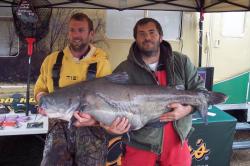
November and December are great months to fish for burbot at Flaming Gorge Reservoir. These anglers caught 130 burbot in a single night.

Lots of burbot

Lots of burbot


Photo by Ryan Mosley

Interested in catching 25 to 50 fish in just a couple of hours? Believe it or not, those who fish for burbot at Flaming Gorge Reservoir often catch more than that.

Their secret? They fish from boats before the reservoir ices over in the winter. Even though fishing can be fast and furious before the reservoir freezes, few anglers take advantage of this great opportunity.

To catch burbot in open water, take a lesson from ice anglers, and then duplicate what you learn from the deck of a boat or from a good spot along the shore.

While the techniques are simple, timing is critical. The best burbot fishing of the year is starting now. The best time of day to fish starts at sunset.

“Anglers are already catching burbot as water temps drop into the low 50s,” says Ryan Mosley, Utah Division of Wildlife Resources project leader for Flaming Gorge and the Green River. “Fishing will get even better when temperatures drop into the 40s.”

Where to go

Mosley says anglers are catching burbot in both Utah and Wyoming right now. However, research has shown burbot generally move north, towards the area where water enters the reservoir, before the spawn.

“In our trend studies,” Mosley says, “the number of burbot usually increases in abundance in the Inflow Region, including the Green and Black’s Fork Rivers, in early November. We believe the burbot caught in these areas are moving north, towards the inflows, to spawn during November and December.”

Using tracking studies, researchers with Utah State University have substantiated this assumption. Researchers have tagged several burbot in November and then released the fish in the lower part of the reservoir. The researchers later found the fish, in December and January, in the Green River and Black’s Fork arms of Flaming Gorge.

“As November progresses,” Mosley says, “I suggest moving north. Try fishing between Lost Dog and Firehole on the Green River arm, or above Lost Dog on the Black’s Fork arm. During last fall’s netting, good numbers of burbot were found in both of these areas.”

To intercept the burbot as they move uplake, Mosley suggests fishing off rocky main channel points, in 20 to 40 feet of water.

Gear

Mosley says using the same type of fishing gear you use during the ice fishing season is the key to catching burbot in open water.

“Fishing for burbot in open water is the same as fishing through the ice,” he says, “you’re just fishing from a boat instead of on a bucket. Make sure you have equipment that’s stout enough to provide good hook penetration and that can handle fish that could weigh as much as eight pounds or more.”

Mosley says a good presentation to start with is a three-inch curly-tailed, glow-in-the-dark grub fished on a glow-in-the-dark 1/4 to 3/8 ounce jighead. Tip the jig with a small chunk of sucker or chub meat (make sure to leave some space in the hook gap, though). Some anglers also use Smelly-Jelly, in crayfish or another flavor, to add extra attraction to their offering.

After the presentation is ready, drop it within just a few inches of the bottom, and then jig it. When a burbot investigates the bait, hold still until the fish takes it, and then set the hook.

Nice catch of big Burbot

Nice catch of big Burbot

Timing and safety

Mosley says burbot fishing usually gets good right around sunset and then picks up and holds strong for the first few hours after dark. Before fishing at night, it’s a good idea to visit the area you’re going to fish during the day. That way, you can get familiar with it before the sun sets.

Mosley encourages you to watch the weather and to not take any unnecessary risks. “Wind and storms can come up quickly at the Gorge,” he says. “Take safety gear for everyone. And be sure they know how to use it.”

He says lights, both navigational and personal, are also essential.

“The lights you use should be bright enough to light up your boat while fishing and to spotlight the bank and boat ramps when returning after dark.”

Mosley says it’s also critical to wear warm, waterproof clothing in layers and to take some extra layers with you. “Also,” he says, “let someone know exactly where you’re going and when you’re coming back.

“Finally, if you’re not comfortable venturing out on your own, consider hiring a seasoned guide who is familiar with the lake and the fishery.”

Burbot contests

Right now is not only a good time to catch burbot, it’s also a great time to fish before the 2016 burbot contests start. The annual Burbot Bash will be held Jan. 22–24. That event will be followed by the Buckboard Burbot Classic on Feb. 4–6.

Both weekends will be similar to what the Burbot Bash has been in the past — each weekend, prizes will be awarded for the most, the biggest and the smallest burbot caught.

Tagged fish contests will also be held. All of the tagged fish will be worth a cash prize. The top prize is a fish worth $10,000.

For more details and other information, visit www.burbotbash.com or www.buckboardmarina.com.

Striped Bass

The Scoop on Striped Bass

by Petty Officer 2nd Class Nate Littlejohn, U.S.C.G.
from the Fishing Wire

Fishing a bridge

Fishing a bridge

John Miller of Farmville, Va., tries his luck at striped bass fishing in the Lafayette River in Norfolk, Va., under the Hampton Boulevard Bridge. (U.S. Coast Guard photo by Petty Officer 2nd Class Nate Littlejohn)

A cluster of small boats gather toward the end of an ebb tide on a dreary November evening in Norfolk, Virginia. Fishermen, clad in rain slickers, cast their lines toward pilings and retrieve them in silence. There’s no chatter among them – an entire day spent on the water exhausted their conversations. They’re focused on one thing – their target species, the Atlantic striped bass, though nobody’s landed one today. Suddenly, the song of a reel zings out over the rushing water as a striper is hooked and begins what might be the fight for its life. “Hooked up!” exclaims an angler, finally breaking the silence with words they all yearn to shout. The fish peels just enough line to make a beeline for a piling, wrapping the monofilament against the barnacles plastered to it like living razor blades. The line snaps, leaving the fisherman to grieve in the gloomy dusk.

For anglers across the U.S., the challenge of locating and landing stripers is what keeps them coming back for more.

“Striped bass are an elusive fish,” said Dwight Ocheltree, a striper fishing enthusiast and employee at Greg’s Bait Shack in Portsmouth, Virginia. His statement applies in more ways than one.

Striper fishermen know finding these fish isn’t always easy. Sometimes it’s a patience game of waiting for them to show up or to start feeding. Then there’s the challenge of landing one after it’s been hooked.

“Stripers love structure,” said Ocheltree. “Bridges, pilings – places they can stay out of sight and ambush their prey. Fishing around structure takes skill that comes with experience. The first thing a hooked striper will do is try to retreat behind structure, and that means breaking the line if you aren’t prepared.”

Talking about fishing

Talking about fishing

According to Ocheltree, once a fisherman lands a striper for the first time, it’s then he or she who will be hooked.

“Once you land one, you’ll be back for more,” he said. “If you’ve been trying but aren’t catching any, keep at it. Keep plugging. You’re one cast away from the best day of your life!” Anglers hoping to catch “the big one” are drawn to waters off the Mid-Atlantic coast, where laws aimed at protecting the species are different that those close to shore.

Coast Guardsmen, charged with protecting living marine resources, enforce an important federal law designed to protect the Atlantic striped bass population.

“The Atlantic striped bass is managed through the Atlantic States Marine Fisheries Commission, an interstate organization designed to ensure states along the eastern seaboard manage their shared fishery resources through cooperative stewardship,” said Patricia Bennett, deputy enforcement chief for the 5th Coast Guard District in Portsmouth. “It is illegal to possess or target the Atlantic striped bass in federal waters, which begin three miles from shore. In state waters – waters less than three miles from the coast – each state has its own laws designed to protect stripers. Even though the Coast Guard does not enforce those state laws, if we find a violation at the state level, we may notify state authorities.”

“The three-mile line is clearly marked on nautical charts,” said Master Chief Petty Officer Stephen Atchley, captain aboard Coast Guard Cutter Cochito out of Portsmouth. “With all the modern navigation equipment, it is every mariners responsibility to know where they are when they are on the water. That means knowing if you’re fishing in state or federal waters.”

“I’m a fisherman myself,” said Atchley. “I’ve fished my entire life. I want there to be fish for my family and for future generations.”

While striped bass fishermen are responsible for understanding and following both state and federal regulations, the majority of these anglers will never venture near the three mile mark, fishing closer to shore in rivers and bays.

“Some people think you need a boat to catch stripers,” said Ocheltree. “You don’t. You can catch striped bass from shore. In fact, that’s how many people prefer to fish them.”

One particular characteristic of the species helps make it the preferred target for so many. Stripers are anadromous – they’re born in fresh water, migrate to the ocean, then return to fresh water to spawn. This means anglers can catch them in rivers that run through cities – they’re a popular urban game fish. Their ability to acclimate and survive in entirely freshwater ecosystems led humans to introduce the species to completely landlocked lakes and ponds. Striped bass can be found throughout the country and are among the most targeted of all game fish.

November usually means striper season arrived here in the Mid-Atlantic. As water temperatures begin to decline, the action should increase. “If you want to catch a striper, you just have to go out and do it,” said Ocheltree. “Put in your time. Talk to other fishermen. Listen to the people at bait shops and at the boat ramps. Every year I learn something new from someone different.”

Find the Birds, Find the Fish

For the Birds – Find the Birds, Find the Fish!

By Frank Sargeant, Editor
from The Fishing Wire

Searching for the birds may seem a roundabout way to go bass fishing, but from now through March, it’s a highly successful tactic on many lakes in the southern half of the nation.

Diving gulls

Diving gulls

Diving gulls and leaping baits mean one thing—gamefish below!

An assortment of sea gulls migrate into this region each winter as cold drives them south, and many settle on the larger freshwater impoundments due to the large shad populations. The birds know how to take advantage of the feeding behavior of largemouths, white bass and stripers–they watch for striking fish from aloft, then swoop in and grab injured baits from the surface.

During a major flurry, they may form what some anglers call a “white tornado” of birds whirling over the school. Find one of these events and throw any sort of shad-imitating lure into the midst and it’s instant fish.

But even when there are only a few birds diving–or when there’s a flock sitting on the water–the birds are well worth checking out. Often they rest right above the school of bait, just waiting for the bass and other species to go to work and drive them to the top where they can get at them.

Anglers with sonar can ease up to areas where birds are resting and graph the depths below to see if there’s a large school of bait under them. If so, these spots are well worth fishing, because the birds don’t often hang around bait that does not have some predators close by to push them to the top now and then.

Two bass at a time

Two bass at a time

When bass are schooling tightly on bait under birds, it’s not uncommon to catch them two at a time on multiple-hook plugs.

Though topwater lures are usually not thought of as winter baits, they can be effective when fished around bass feeding on bait schools. Noisy lures like the One-Knocker Spook, Sexy Dawg and Pop-R can all be effective at times.

More often, though, sinking lures are a better choice, and suspending baits like the Rapala Shadow Rap can be ideal. Swimbaits–jig heads with long soft plastic swimmer tails, can also be effective, as are “rattlebaits” or lipless crankbaits.

And, if the fish are deep, heavy-weight lures like the Rapala Jigging Rap, the Hopkins Spoon and other lures that can be jigged vertically do the job.

The nice thing about finding fish under birds is that the bass may not be on the usual “community holes”, and so are more inclined to feed than those that see 30 or 40 lures a day.

Fishing around cormorants does not seem to work, it should be noted. Cormorants are able to dive below the surface and chase the bait like predatory fish, and this seems to run the gamefish off–maybe because the cormorants are not above latching on to smaller bass when they get the chance.

Fishing under gulls, however, is frequently productive–when nothing else is working, it’s often a great way to put fish in the boat.

Cod

A coffin for cod? The downward spiral of the fish that built New England

While we don’t always see eye-to-eye with the Pew Foundation on fishery management, particularly where reef species or marine refuges are concerned, this column on the decline of New England cod is well worth reading. Editor
from The Fishing Wire

by Lee Crockett of The Pew Charitable Trusts

Landing a Cod

Landing a Cod

Mike Anderson lands a cod he caught in the early 1990s using hand-line gear in the nearshore waters off Cape Cod, Massachusetts.

When Mike Anderson arrived in Cape Cod in the 1960s as a young man with dreams of adventures at sea, many people shared the same warning: “You won’t get rich in the fishing business; it’s just a way of life.”

But Anderson, undeterred, embraced that lifestyle, fishing his way through decades of long, sometimes treacherous days at sea in the sun, wind, fog, and ice. His hands toughened like leather as he baited hooks late into the night in anticipation of the next day’s bounty. He relished the challenge of each day, the camaraderie among tough-as-nails fishermen, and the exhilarating adventure of it all.

Anderson, now 72, was part of the glory days of thriving New England fishing towns, when fishermen followed their fathers into the business and old-timers spoke, only half-jokingly, of cod so plentiful one could practically walk across the water on their backs. Back then, despite early signs of decline, people still thought the fish were limitless. Most people, that is, except for Anderson.

He believed trawlers that dragged nets along the ocean bottom, scooping up vast amounts of cod, were capturing too many fish and damaging the seafloor. He stubbornly stuck to hook-and-line fishing, even as nets started sweeping up cod in numbers he’d never seen before. In due time, his two-man crew—which once pulled in thousands of pounds of cod a day and regularly caught fish weighing 40 to 50 pounds—began to see both its catch and the size of the fish decline. By the 1990s, the cod were so sparse and small that Anderson gave up and moved on to other species.

Anderson feels he witnessed the decimation of one of the greatest concentrations of marine life on Earth.

Drying Cod

Drying Cod

A historic photo, likely from the early 1900s, shows cod laid out to dry—a once common sight in New England when the fish were more plentiful.

“The fish never really had a chance,” says Anderson, who still fishes every day, both for the joy of it and to make ends meet. “It was greed, shortsightedness, and naiveté. People misunderstood how many fish there were. The world is finite, and we haven’t got the right to diminish the world.”

A recent study determined that the 2014 cod population on Georges Bank, located off Cape Cod in the easternmost side of the Gulf of Maine, was the lowest ever recorded—roughly 1 percent of what scientists would consider a healthy population. That’s down from the 7 percent reported for 2011. In other waters off Cape Cod, the species is also in dire straits. For the fish that built New England, it’s been a long downward spiral.

Because other species in the region also are in decline, the U.S. Department of Commerce declared a fishery disaster in New England in September 2012, the second such declaration for the region in 20 years. As fish populations have plummeted, fishery managers have shown a consistent pattern of failing to heed warnings from scientists, sufficiently limit catch, promptly pursue corrective actions, and otherwise do what’s needed to help fish populations recover, including protecting the habitat and bait fish that cod rely upon.

It’s high time to finally get it right. We at Pew are urging the New England Fishery Management Council—which sets fishing policies in federal waters (from three to 200 miles offshore), from Maine to Connecticut—to address these critical issues:

First, the council must enact and enforce realistic science-based catch levels. Current methods of setting catch amounts are too permissive. It’s wrong to let people keep fishing for the average amounts they’ve caught in the past when fish numbers are dropping and other environmental factors, such as warming waters, may be putting the fish populations at risk of extinction.

School of Cod

School of Cod

The 2014 cod population on Georges Bank, located off Cape Cod in the easternmost side of the Gulf of Maine, was the lowest ever recorded—roughly 1 percent of what scientists say would be a healthy population.

Second, many cod die because they are caught incidentally as fishermen target other species. Fishery managers still don’t have a good handle on the extent of the problem. It’s hard to set safe catch amounts when it’s unclear how many fish are being taken from the water. Add to that the issues created when some fishermen misreport the areas from which they are taking fish or the size of the fish they take, or underreport their catch, and it’s nearly impossible to see the big picture. Fishery managers have been too slow to ramp up their force of at-sea observers and dockside inspectors to better monitor and resolve these problems.

Third, it’s unproductive for the council to consider lifting protections for important cod habitat when the fish need them most. Decades ago, in response to the fisheries crisis of the early 1990s, the federal government curtailed fishing in 8,887 square miles of New England waters where fish live and spawn, including 26 percent of Georges Bank.

But now, fishery managers propose reducing the protected areas substantially, including a drastic rollback of 81 percent of the protected parts of Georges Bank. Cod used to be spread throughout the Cape; but as the fish grew more scarce, scientists believed they took refuge in limited prime habitat areas within their former range. Fishermen in the past knew these spots and targeted them, further decimating the species. Why would anyone let that happen again?

Mike Anderson

Mike Anderson

Mike Anderson, seen here on the Chatham Fish Pier in 2014, helps educate the public about fishing and related issues as part of the Pier Program, run by the Cape Cod Commercial Fishermen’s Alliance. Millions of pounds of seafood are landed at the pier annually. (Photo via www.fishypictures.com)

Lastly, researchers know cod and other fish are much smaller today than they were decades ago. Although the cause is uncertain, scientists theorize that overfishing and warming waters are playing a role. Researchers are also baffled about what is happening to young fish. Experts know that eggs are hatching and fish are growing for several years, but then they are disappearing. These mysteries are worrisome and deserve more study.

This uncertainty makes it all the more urgent for officials to take a comprehensive view of the ecosystem when setting fishing policies—for example, by weighing habitat, food sources, warming waters, and other factors when making decisions about how to manage a species. Pew is advocating that this approach, called ecosystem-based fisheries management, be incorporated into federal law as Congress renews the Magnuson-Stevens Fishery Conservation and Management Act. You can read more about it in our blog series here.

As for Anderson, he isn’t involved or weighing in on these current-day debates. Rather, the philosopher’s son and English major is penning stories about his life at sea and telling cautionary tales on the fishing docks as part of efforts by the Cape Cod Commercial Fishermen’s Alliance to educate the public about the history and future of the Cape’s small boat fishing industry.

He wants current and future generations to learn from past mistakes. And he hopes New England’s legendary fishing towns can spawn new stories of adventure and plentiful catch, instead of just relying on the memories the old-timers leave behind.

Ice Fishing Electronics

A Guide’s Perspective on Ice Fishing Electronics

By Maynard Lee

Big pike ice fishing

Big pike ice fishing

Photo by Bill Lindner, courtesy of Lake of the Woods Minnesota and Arnesen’s Rocky Point Resort

The frozen surfaces of lakes, rivers and reservoirs across the ice belt represent the final frontier in angling. Ice thicknesses that are often measured in feet, air temperatures that hover near zero, and frigid winds that often carry frozen precipitation all represent physical, and even psychological barriers to ice fishing success. Over the last 5 years, however, advances in marine electronics that were initially designed to assist open-water anglers have begun to breach the final frontier, providing shelter-bound ice fishers the technological advances they need to enjoy sustained success throughout the months-long hard water season. As the first intrepid anglers begin to creep onto frozen lakes this season, we caught up with noted guide and angling technology expert Dr. Jason Halfen, to tap his insights on how marine electronics can best be applied to ice fishing situations.

The Trifecta

“Whenever I lead groups onto the ice, we always carry a set of three tech tools to help us find and catch fish. This trifecta includes a portable, digital sonar/GPS combo with an installed GPS mapping chip, mechanical flasher unit for each angler in the group, and set of underwater cameras to visualize activity beneath the ice,” began Dr. Halfen, who owns and operates The Technological Angler, a company dedicated to providing technology training to contemporary anglers.

“Each component of the technology trifecta has a specific purpose, and this unique combination helps my groups find and catch more fish throughout the season.” We continued our conversation by exploring the role of each component of Halfen’s “Tech Trifecta” in more detail.

The Command Center

Dr. Halfen explains, “A portable digital sonar/GPS combo, like the new Humminbird ICE HELIX 5 SONAR GPS, is the command center for my groups of ice anglers. The GPS feature, combined with digital cartography from my Humminbird-LakeMaster chip, helps us to rapidly identify key locations to target panfish by day, and other areas to chase walleyes during low light periods.

“For example, we use the LakeMaster-exclusive Depth Highlight feature to identify key basin areas, 25-35 feet deep, that are filled with crappies all winter. Likewise, the precision depth contours provided by my Humminbird digital cartography allows me to find distinct breaklines that separate the basins from shallow weed flats, transition zones where walleyes hunt as the sun hits the treetops.”

 Use a depthfinder while ice fishing

Use a depthfinder while ice fishing

Dr. Halfen’s platoon of sonar units includes both sophisticated fishfinders with GPS and more traditional flashers. Photo by the author

However, the advantages of the HELIX extend well beyond cartography. Dr. Halfen continues, “one thing I really like about the new ICE HELIX 5 SONAR GPS is that I can move it seamlessly from my boat to the portable ice shuttle, using the same convenient set of power and transducer connections. Why does this matter? It allows me to take my HELIX on the water, before the lakes lock up, and drop waypoints on key “spot-on-the-spot” locations where I will turn to put fish on the ice, and smiles on anglers’ faces, all winter.”

During my conversation with Dr. Halfen, it struck me that nearly all anglers are already carrying a GPS device with them, right in their pockets: their smartphones. So, I asked why anglers should consider a dedicated marine GPS for their ice fishing needs, rather than just rely on their phones. His rapid response makes a LOT of sense. “First, recognize that plotting your GPS position on your phone, any displaying any available mapping, really chews up your phone’s battery. Coupled with typical cold air temperatures, using your phone’s GPS feature will dramatically reduce your phone battery lifetime while on the ice. Second, have you noticed that your smartphone is smaller than the holes you are fishing through? I’ve seen enough phones fall through the ice to know that phones belong in pockets, not in gloved hands trying to locate waypoints. Avoid sending your new smartphone to a watery grave by relying on your HELIX 5 for all of your GPS needs.”

Once likely spots are located and holes are drilled, the HELIX command center seamlessly transitions into sonar mode to help anglers monitor fish, and baits, beneath the ice. “All Humminbird digital sonar/GPS combos feature a dedicated ice fishing mode, which displays 2D sonar data on the traditional, circular “flasher wheel” display that we all grew up with during ice fishing’s infancy.

The new Hummnibird ICE HELIX 5 SONAR GPS merges modern mapping with refined digital sonar to stand as the most advanced combo-unit ice fishing has ever seen.

However, the ability of the ICE HELIX 5 GPS to also display that same sonar data in a standard, open-water type display that provides current AND historical sonar information can be invaluable for identifying exactly how fish are responding to particular jigging motions. That historical information can make all of the difference on a slow bite day, and that’s an extremely valuable insight that a mechanical flasher cannot provide.”

The Workhorses

Hummnibird ICE HELIX 5 SONAR GPS

Hummnibird ICE HELIX 5 SONAR GPS

Every army needs both a commander and a set of highly trained foot soldiers. In Dr. Halfen’s “Tech Trifecta”, the HELIX is the commanding officer, while a platoon of Humminbird ICE 55 and ICE 35 flashers carry the tech burden of finding and catching fish onto the icy battlefield. With such a heavy emphasis and reliance on the HELIX digital sonar/GPS combo, I asked Dr. Halfen why he would outfit his clients with mechanical flashers like the Humminbird ICE series, rather than handing each their own digital fish finder. As always, his answer is rooted heavily in the exacting physics of sonar science.

“It’s really all about the sonar frequencies that each unit is transmitting. Put too many units, all transmitting the same sonar frequency, in too small an area, and nobody is going to be able to see anything as all of the units will be interfering with each other. My HELIX sonar/GPS combo transmits standard open water sonar frequencies of 200 kHz and 83 kHz. In fact, if you look across all of the ice fishing sonar units available today, nearly all transmit at 200 kHz. This leads to a heavy reliance on noise filters and interference rejection schemes, which sometimes work, but oftentimes don’t. I prefer to address the problem at its source, rather than try to eliminate pesky, and persistent, sonar noise.

If sonar is the “yin”, the underwater camera is clearly the “yang”. Aqua-Vu’s exceptional Micro series has become even more practical and useful with the introduction of the Micro-Mobile Pro-Vu Case. Photo by Bill Lindner

One particularly compelling feature of the Humminbird ICE flashers is that they transmit a pair of frequencies that are unique in the ice fishing world: a wide, 240 kHz beam and a narrow, 455 kHz beam. This means that an angler using a Humminbird ICE flasher simply can’t interfere with an angler using the ICE HELIX 5 GPS combo because the two sonar units are transmitting completely different sonar frequencies. Moreover, I can add a third angler with a flasher into the mix, and as long as one flasher is transmitting at 240 kHz and the other is transmitting at 455 kHz, all three anglers can catch fish all day and never interfere with each other.”

Imagine, three guys in one Frabill hub shelter, each with their own sonar unit, and absolutely zero interference. Not a single blip. It’s not fantasy, but rather the science of modern ice fishing.”

The Spies

Underwater camera

Underwater camera

As valuable and irreplaceable as sonar is to contemporary ice fishing, visual information from underwater camera systems can help elevate the stream of insights delivered to the ice anglers to an entirely different level. Dr. Halfen refers to his Aqua-Vu underwater camera systems as his “spies”, covertly delivering tactical real-time visual intel.

“We use Aqua-Vu camera systems exclusively, in part because of their convenience and ease of use, but also because they offer us distinct advantages for finding and catching fish. First of all, systems like my Micro 5 fit completely within the front pocket of my Frabill I4 bibs. Their internal Lithium battery packs outlast even my longest days on the ice. And Micros weigh next to nothing, especially when compared to other camera systems on the market that seem to come with their own zip codes.

“When it comes to finding and catching fish, my Aqua-Vu camera allows me to conclusively identify bottom substrate, like telling the difference between sand and mud, which is a significant advantage when we are chasing perch that forage on mudflats. My underwater camera is also the primary tool that I use to distinguish between healthy green weeds, and their lifeless, brown counterparts.

Big crappie caught ice fishing

Big crappie caught ice fishing

Photo by Bill Lindner

“One thing I really like to do, especially when tip-up fishing for walleyes, is to deploy an Aqua-Vu Micro 5 PLUS a few feet away from my bait, so I can visually monitor it during the day and into the evening. The first time I did that, I was SHOCKED at the number of fish that inspected my baits but refused to bite. My underwater camera alerted me to the fact that fish were present and active, but perhaps not responding well to the sucker minnows I was using for bait. This was my cue to switch over to shiners, and that little change was all that was needed to start putting white tips on the ice.”

The Science of Modern Ice Fishing

Ice fishing has evolved well beyond its early days of chisels to cut holes and lead weights to estimate depths. The technology explosion that has revolutionized open-water fishing now stands on the threshold of frozen lakes, fishing’s final frontier. These tech tips from Dr. Jason Halfen will help you tap into that torrent of electronic fish-finding information, so that your ice fishing adventures this winter are met with a bounty of hard water success. Learn more about the ways that modern technology can improve your fishing by visiting The Technological Angler online.

Ice Fishing Safety Tips

The Coolest Sport Around

Michigan DNR Offers Ice Fishing Safety Tips, How-To Info
from The Fishing Wire

For many people, fishing is the most relaxing way to spend the day. And in the winter months the most popular angling activity is ice fishing. To those who have never tried it, ice fishing is sometimes looked upon as an oddity, but for others, ice fishing is the best kind of fishing.

Although it doesn’t appeal to all, many anglers actually prefer fishing through the ice to open-water fishing. For one thing, anglers can get just about anywhere on the lake during ice fishing season, something they can’t do without a boat during the open water season. Virtually every fish that’s available to anglers in the summer can be caught through the ice – some are even caught more frequently in the winter.

Once you’ve spent a little time on the ice, you’ll soon see a different picture. Ice fishing is more than just a way to fill the long days of winter. It’s a chance to breathe the cold, clean winter air, to spend quiet time outdoors with family and friends, and to relax and collect one’s thoughts away from the hustle and bustle of a busy world.

Just walking on the ice can be a unique experience, especially when no snow obscures the view of the water below. However, as with any outdoor activity, safety should be your top concern. When it comes to ice safety, you should steer clear of dark spots or places where the snow looks discolored.

Some other good rules to follow include: 1. Never fish alone, 2. Tell someone where you are going and when you expect to return, 3. Always test the ice with a spud (described later), 4. Take the appropriate emergency items, such as a lifejacket and ice picks, and 5. Take a cell phone with you in case you need to call for help. Dress in your warmest winter clothes; fill a thermos with hot coffee, chocolate or tea; and bring an empty bucket or old lawn chair to sit on.

To get started ice fishing, you’ll need the basics: something to make a hole in the ice, something to clear the hole and keep it open and ice free, and something to fish with, or equipment.

Drill a hole for ice fishing

Drill a hole for ice fishing

The two basic tools used to make holes in the ice are spuds and augers. A spud features a long-shank with a chisel-like end that’s used to chip a hole in the ice. A spud is a tool you use when the ice isn’t too thick. An auger is a corkscrew-like device with a cutting blade that operates like a hand drill to make a hole in the ice. For extremely thick ice, power augers that run on batteries or small gasoline engines are available and make creating holes much easier.

Once the hole is created it needs to be cleared of ice chips or slush. A skimmer (or a slush scoop) is a small cup with holes in it (to let the water run out) on a long handle. It is inexpensive and perfectly suited for the job. A skimmer is used to clear the hole right after it’s made, as well as throughout the day if it’s particularly cold and if additional ice forms.

Please note the size of the hole is important. The hole must be big enough that you can get a fish out, but not too large of a hole that it may endanger someone’s life. Anglers are recommended to keep their holes to a maximum of eight to 10 inches in diameter which would accommodate the size of most fish species. When abandoning fishing holes, anglers should mark them with a tree branch, sticks or chunks of ice to alert others of their presence.

Ice fishing equipment can be divided into three basic categories: hook-and-line, tip-ups and spears.

Most hook-and-line anglers use short, limber rods with reels or simple spring-tension spools to hold the line. Sometimes they may use something as simple as a couple of pegs on the rod handle used to wrap the line around. Limber rods allow the use of light line, which usually results in better fishing and absorbs more of the shock when fighting fish.

Bait for ice fishing

Bait for ice fishing

Hook-and-line anglers use live bait, artificial lures or sometimes both to catch many different species of fish. Anglers often use small lures, such as teardrops or flies, with live bait – such as wax worms (bee moth larva), spikes (fly larvae), wigglers (mayfly larvae) or minnows – attached to the hook for better action. The bait can be fished without movement or jigging can be used to attract the fish. Jigging is most successful if a lure of any kind is used.

Hook-and-line anglers have the choice of using a bobber on the line, just as they would while fishing in the summer. Some may also fish with a tight line and use a spring bobber, which is a small strip of metal or wire that extends off the rod tip like an additional eye on the rod. Any motion alerts anglers to the bite, a bonus for small fish or light-biters. Generally, anglers begin by fishing near the bottom and work their way up in the water column until they locate the fish, then continue to fish at that same depth. Anglers can use bobbers to set their baits at a preferred depth or fish a tight line, either fishing without movement or jigging.

For bigger fish, anglers use heavier gear with larger lures or bigger hooks which allows them to use larger baits – minnows, smelt, salmon eggs or spawn bags. Anglers generally start at the bottom and gradually move up in the water column when jigging, while those fishing with live bait, spawn bags or salmon eggs generally fish right off the bottom.

Tip Up

Tip Up

Some anglers prefer to fish with tip-ups, which are devices set on the ice above the hole that dangle the bait (most often minnows) beneath them. Tip-ups, which feature small reels submerged in the water, get their name from a flag that’s bent over and attached to the reel. When a fish takes the bait, the reel turns and releases not only line, but the flag as well. The flags’ “tip up” action alerts the angler to the fish taking out line. Tip-ups are usually spooled with heavy, braided line. Often an angler who is fishing with a rod will also set a tip-up in a different hole, giving them two ways to catch a fish and giving them an opportunity to fish for different species, or more than one fish, or at two different but close by locations.

Spearing is another form of ice fishing that is a more specialized but traditional sport. Anglers who spear cut large holes in the ice, usually with an ice saw or chain saw. They fish from tents or small shelters commonly called shanties that can be portable or more permanent (or at least as permanent as the ice is). The shanty blocks the light, allowing anglers to see down more clearly in the water in order to spear the fish. This has given rise to the term dark-house spearing. Spearing anglers generally dangle decoys or large live baits (such as suckers) in the water to attract their target fish. They utilize spears that typically have a substantial weight to them and have seven to nine tines on the end of a seven-foot handle.

The most common species hook-and-line ice fishermen are looking for are panfish: bluegill, sunfish, perch and crappie. Tip-ups are generally used for larger game fish, such as northern pike, walleye and various trout species. In Michigan, spear fishermen are allowed to target northern pike, muskellunge, lake sturgeon and many other species. There are many restrictions associated with spear fishing and anglers should read the annual Michigan Fishing Guide for more information.

A basic tip for all three ice fishing methods is that the most success is seen around dawn until mid-morning and again from late afternoon until sundown. This is especially true for panfish and walleye. Some species can be more aggressive at other times during the day, such as northern pike. It’s also important to understand that fish are more sluggish during the winter and move around less, especially during the middle of winter when ice thickness and snow cover is the heaviest. The more holes anglers cut and try, the better their chances are for locating aggressive fish.

One common piece of equipment nearly all types of anglers who ice fish utilize are electronic fish finders. These help anglers locate both aggressive and non-aggressive fish and make it easier to determine if your holes will be active and how present fish are reacting to your fishing methods.

It’s important to be prepared to face the elements when you go ice fishing by including these items: shelter and apparel.

Ice fishing can be a fairly cold activity, especially on those windy days when it doesn’t seem fit to be outdoors. On such days, a shanty is almost a requirement. Many portable shanties are available at your local sporting goods store, although some anglers, especially in northern Michigan where the ice fishing season can last for many months build elaborate but removable shanties on the ice. These may have insulated walls and many of the comforts of home. Propane heaters can keep them warm and help keep the fishing holes from freezing. But even a simple windbreak, made of plywood or particle board, can help. A sheet of plywood, cut in half and hinged, makes a simple windbreak. If skis or runners are added to one side, then it can easily be pulled across the ice.

It’s important to note that all shanties must be removed from the ice by a certain date, appropriate to the zone in which you are fishing. When removing a shanty, anglers must also remove any and all garbage affiliated with the structure, including plywood and propane tanks.

On less harsh days, many anglers can be seen on the ice on portable folding stools or overturned five-gallon plastic buckets. Buckets often double as gear carriers. Anglers can fit their rods, lures and baits into a bucket and easily carry them out on the ice with them. In many cases, anglers build gear boxes, often on sleds or skis, which they can pull behind them. The creativity of Michigan anglers can regularly be seen on the ice as many have built sophisticated devices to transport their gear and to insure their comfort.

Anglers who go out on the ice with or without shelters must dress for the weather. Anglers should dress in layers so they can add or remove them as the temperature changes. Many items of clothing – such as bib overalls, coveralls and fleece jackets – are made of modern lightweight fabrics that provide surprising warmth. Anglers should consider wearing a layer of thermal clothing against their skin that absorbs sweat and wicks moisture away from the body, thus keeping the angler warm. Anglers can break a sweat trudging across the lake, especially if they’re pulling a load behind them. One should also have on an outer layer of a wind-breaking fabric. Waterproof boots are a must and a pair of moisture-wicking socks under wool socks will help to keep anglers’ feet warm and dry.

Although the idea of going ice fishing may seem daunting, many fishing clubs and sporting goods stores hold annual ice fishing clinics where anglers can learn the basics. A number of Michigan state parks, interpretive centers and fish hatcheries also host programs during the winter months that teach basic techniques and offer hands-on experience.

Ice fishing may not be for everyone. But if you’ve ever driven by a Michigan lake in the winter and have seen the “shantytowns” out on the ice, you can tell plenty of people consider ice fishing to be a pretty cool sport.

The Michigan Department of Natural Resources is committed to the conservation, protection, management, use and enjoyment of the state’s natural and cultural resources for current and future generations. For more information, go to www.michigan.gov/dnr.

What Is A Florida Manatee?

The Florida Manatee–A Conservation Success Story

By Frank Sargeant, Editor
from The Fishing Wire

The restoration of the Florida manatee is a remarkable conservation success story, though you wouldn’t know it from news reports that continue to bemoan the “disappearing manatee”.

Florida manatee

Florida manatee

The Florida manatee is a conservation success story, with numbers growing to at least 10 times today what they were in the 1970’s thanks to strong support for rules designed to protect them. (Photo Credit Florida FWCC)

From a population roughly-estimated at somewhere around 600 in the 1970’s, the numbers have rebounded to a robust 6,000 or more in 2015, a stunning turnaround. This is particularly so considering that in those years the Sunshine State grew from largely rural, with a population of only about 4 million humans, to almost 20 million in a largely urban environment today.

Close to a million boats ply the waters today, many times the number of the 1970’s, and yet there are at least 10 times the numbers of manatees today that there were 50 years ago.

Manatee conservation clubs, which depend on a disappearing manatee population for funding, pretty much turn themselves inside out to explain how the surveys conducted since the first in January 1991, when there were 1267 counted, to Feb. of 2015, when there were 6063, can be construed as showing anything other than a dramatic increase in populations on both coasts of the state.

Experience on the water bears out the increases–when I first moved to Florida in 1966, I spent nearly a year on the water before I saw my first manatee. Today, it’s difficult to go anywhere on inside waters in the southern half of the state without seeing a half dozen and sometimes many more. This is the experience of virtually all knowledgeable skippers who run in areas where manatees are common.

It’s clear evidence of the potential success of wise conservation policies and regulations, adequately enforced. Boaters and anglers have more than done their part in this restoration–admittedly after a fair amount of bitching and whining. Early on, many of us in the industry felt that laws were placing excessive burdens on the recreational boater and angler, with thousands of acres of water set aside in areas where manatees rarely or never were seen.

Sign

Sign

Signs like this now mark hundreds of areas where boaters are required to proceed at low speed, while many other areas are off limits to boaters completely. (Frank Sargeant photo)

Be that as it may, the broad strokes approach, combined with the persuasive power of Jimmy Buffet and throngs of Parrotheads worked. Thousands of acres of manatee slow speed zones and even no-entry zones are now enforced statewide, and manatee populations are booming. Boaters and anglers, with occasional prodding from the men in the gray suits, respect these zones and enjoy observing the giant “sea cows” more often and at closer range than the many ashore who frequently charge said mariners with being the source of the non-existent population decline.

However, there’s no question that more manatees are dying than need be, and boaters are responsible for a part of those deaths–about 18 to 21 percent in average years. The trend is headed downward, but it’s possible more can be done on our part to secure the gains.

I was fortunate to live for some 20 years on the aptly-named Little Manatee River, where I saw manatees, both little and big, pretty much every day. Some became more or less regular visitors to my dock, passing on the same phase of the tide daily for weeks at a time. One I called Sundown Sam often showed up just before dark, and shared many a philosophical conversation with me. He was a good listener, much cheaper than a psychiatrist, and did not expect tips like a barkeep. (I had suspicions he hung around more because of the leaky freshwater hose on the cleaning table than because of my scintillating speculations and cosmic whinings, but nonetheless he was there for me.)

Manatee gatheringIn winter manatees gather by the dozens and sometimes by the hundreds in warm water refuges around the state. (Photo Credit Florida FWCC)

Manatees are not nearly so wild as most terrestrial animals because they have survived for generations without being hunted by humans–they tolerate us well. I watched them feed their young, fight for mating rights (surprisingly violent for the alleged “gentle giants” of the media) and die: from cold, red tide, old age–and yes, on rare occasions, from boat strikes. They are fascinating, improbable animals that seem like they should live in Africa or South America, yet right there they are in Ruskin surrounded by tourists and tomatoes, and all over the southern half of the state, a reminder from Florida’s past of what it was before it became what it is.

The percentage of manatees killed by boat strikes as a percent of the live population has declined steadily for the last 10 years, but the percent of the annual observed mortality, as counted by the FFWCC, has remained fairly flat.

In 2006, 92 of 417 deaths recorded by the FFWCC were the apparent result of boat or propeller strikes, about 22 percent. It was 23 percent in 2007, 27 percent in 2008, 23 percent in 2009.

The 2010 count was an anomaly because of a huge cold kill, with a total of 766 animals dying, so the percentage of boat strike deaths, 83, was artificially low at 11 percent.

In 2011 it was 88 of 451 for 19 percent, in 2012 82 or 392 for 21 percent.

2013 was another untypical year, with 830 animals dying, most from red tide and from pollution in Broward County waters, putting the boating toll of 73 at only 8 percent.

In 2014 the number was 69 of 371, the lowest in recent years, for 18 percent. This year the number has jumped again, as of Dec. 1, to 83 of 383, which if the average holds and there’s no ice storm or massive red tide invasion before year’s end, will be 23 percent. While the percentages are not changing much, manatee overall counts have been climbing steadily in those years, more than doubling. This would appear to mean that boaters are doing a much better job of avoiding collisions with far more abundant animals.

Breathing

Breathing

Though manatees are huge animals, it can sometimes be difficult to see them, particularly when only their nostrils are showing above the surface. (Photo Credit Florida FWCC)

Clearly boaters are no longer the major problem in manatee mortality–in fact, it’s not even close. And manatees are obviously not endangered–they are more likely approaching what biologists call the carrying capacity of their very limited habitat, the narrow grass flats, estuaries and coastal rivers of Florida. They aren’t making any more manatee pastures, but the manatees are definitely continuing to make more manatees.

While the rules of wildlife biology may somehow magically suspend in the case of manatees, in all other species there is a clear, definable limit to the populations–when they eat all the available food, fertility begins to fall, natural mortality increases and the numbers go down–sometimes precipitously if the animals have consumed all the available forage down to the point where re-growth is impossible or takes longer than a season.

Be that as it may, more can be done to lower our part in manatee mortality.

No one better knows where manatees roam than flats angler who spend a lot of time on the water. It’s my experience that the animals often lay up in water 3 to 4 feet deep when resting, and that they use these areas at certain hours nearly every day of a given season–if you know of one of these locations, make your local FWC officers aware of it–and stay clear.

Secondly, of course, learn to see them–for an animal that can weigh over a half-ton, they can be surprisingly invisible at times, particularly when resting. The greatest danger is on the edge of the grass flats, where the animals frequently settle on bottom to sleep. Unmoving, they look like another patch of dark grass in many water conditions and sun angles.

All the well-publicized cautions are also good prevention:

Slow down in areas where you know manatees reside or pass, even if they are not marked manatee zones.

Watch for the boiling swirl, the size of a bath tub, that marks where a manatee tail is powering one of them along bottom.

Keep an eye out for manatee noses ahead–often, they show only a patch of gray skin and nostrils the size of a teacup as they pop up to breath.

Migration massing

Migration massing

This incredible aerial shot shows the winter massing of several hundred manatees at Three Sisters Spring—there are numerous warm-water refuges like this around the state where the animals gather in cold weather, making counts easier. (Photo credit Florida FWCC)

Always wear polarized sunglasses when operating in manatee waters–they allow you to see through the glare and spot the animals well in advance.

Be aware of manatee movements by season–in winter, hundreds swarm into warm-water sanctuaries like spring outflows and power-plant cooling channels, but they come out daily to feed on nearby flats.

Stay at least 50 feet away from observable manatees. Be aware that there may be other manatees that you do not see close to those you do–operating the outboard can injure these animals.

NO MOTOR ZONES ARE GOOD–SOMETIMES

When Florida first started establishing no-motor zones to protect sea grasses and manatees, boaters and anglers howled (I was among them) because they felt it was restricting their access to thousands of acres of prime fishing. And in a few cases, they were right–the zones were too big, covering a lot of area where manatees were never present, and sometimes in the wrong place to do much good.

But, surprise, no motor zones have another very dramatic effect that benefits anglers–the trout, snook, reds, sheepshead and flounder that are often run off the flats by boats zipping by on plane in 1 to 3 feet of water settle in and become resident in areas where anglers have to enter slowly and quietly by pushpole, paddle or trolling motor.

And their habitat is not being torn up by churning props. The fish move in predictable patterns, they spawn more successfully and their young survive to grow up more frequently. It’s a win for fish, manatees, sea grass and for anglers–in the right places and within reasonable limits, no motor zones are good–very good.

AND FINALLY

In our quest to leave the planet a better place than we found it–one common goal I hope all of us can still agree to in this now sadly-divided country–the manatee restoration marks a milestone. Let’s not guilt ourselves into making it a disaster. Let’s proclaim victory–and not accept it when we hear media reports that begin “With only a few manatees remaining . . . .” or “The disappearing manatee population. . . .” We have done our part. Now let’s call on the media and everyone else to do theirs.

* If you hit a manatee while boating, notifying the FFWCC immediately may give the animal a chance to survive. Here are the contacts:

1-888-404-FWCC (3922)
Cellular phone *FWC or #FWC
http://www.myfwc.com/contact/wildlife-alert/

How To Catch November Bass At Lake Juliette

We all yearn for a private lake where access is limited, the bass grow big and fat and there are no irritating pleasure boaters. That is a dream for almost all of us, but you can have most of those conditions at Lake Juliette. You can catch November bass at Lake Juliette.

Juliette is a 3000 acre Georgia Power Lake about 20 miles east of I-75 half-way between Atlanta and Macon. It is the cooling lake for Plant Scherer and built just for that purpose. It is on Rum Creek but the small flow from the creek does not keep it filled. Water is pumped from the Ocmulgee River to keep it full.

Fortunately, Georgia Power provides access to anglers and works with the Georgia Department of Natural Resources to manage the lake. The water is very clear since there is little inflow and natural cover from standing timber to huge grass beds is abundant.

There is good access to the lake from two boat ramps but there is a 25 horsepower limit on motors. You can put your bass boat in and fish, but you can not crank your gas motor. The size of the lake makes it difficult to fish it with just a trolling motor but if you have access to a smaller boat the fishing can be fantastic. And the horsepower limit means no skiers, jet skis and other pleasure boats on the lake.

Jack “Zero” Ridgeway has lived in Griffin all his life and owns Zero’s Garage there. He fishes with two local bass clubs, but Juliette is one of his favorite lakes. He has a boat with a legal motor for Juliette and fishes it a lot. For several years he entered the monthly bass tournament on Juliette and did well in them.

“Bass at Juliette don’t have to move as far as they do on bigger lakes in the fall migration,” Jack said. They do follow the shad into the creeks and coves, but the lake’s smaller size means it is easier to fish many creeks without burning a lot of gas.

Most baits will catch November bass on Juliette, but Jack’s favorites all work well for him and keep the number of rods you need manageable. He will have a rattling bait like a half-ounce XCalibur One Knocker, a rattling, suspending Shad Rap, a DT 6 or Norman Middle N crankbait, and a Carolina rigged worm ready to cover where he fishes. He may also throw a spinnerbait a little.

The lake has a lot of four to six pound bass, with a good chance of a bigger fish, too. While Jack and I fished his November holes to check them out the last Sunday in September, the last monthly tournament was taking place. At weigh-in it took five bass weighing 19.97 pounds to win and that stringer included two over six pounds. The top six teams all had over 16.5 pounds and there were six bass over five pounds.

Jack’s best bass on Juliette weighed over seven pounds and he has landed over 40 six pound plus bass there since he started fishing the lake in 1988. In one pot tournament he had five weighing just over 20 pounds, and came in second that day. He often camps at Juliette and fishes it every month of the year. November is one of his best months.

We fished the following ten spots and fish were on most of them, even in late September. More and bigger fish are on them now and they will get better all month long.

1. N 33 01.940 – W 83 47.027 – Going up the lake from the Dames Ferry Ramp, Davis Cove is a big creek on the left, just downstream of the long shallow island where the lake narrows. Go back into the cove to the first small cove on the left bank and start on the upstream point.

This point has some clay and rocks on it and bass live back in here year round, but more move into it in the fall. Fish crankbaits, rattle baits and a Carolina rig as you go from this point and the next one toward the back of the creek. Then jump across to the rocky point on the other side and fish it. The cove channel runs down this bank.

The rocky point on the right going in is the upstream side of a small feeder creek and has a blue pole with the number 8 on the bank. Fish it and the point on the other side of the creek, too. Jack says he has caught four bass over six pounds off the rocky point, one of them the day after Thanksgiving. We caught several bass here.

2. N 33 02.637 – W 83 47.041 – Out on the main lake go to the upstream side out on the end of the long, shallow point coming off the island where the lake narrows. This point and the pocket upstream of the island is covered with hydrilla and there is a patch of standing timber out in the middle of the cove. All hold bass.

Jack says more eight pound plus bass have been caught in this area than anywhere else on the lake. Start out on the end of the point and work toward the bank on the upstream side of the island. Stay on the outside of the hydrilla and cast a rattling bait to the edge of the visible grass, ripping it free when it hits underwater grass.

The half ounce silver and black One Knocker is Zero’s favorite bait for this area. He will also cast a suspending natural shad Shad Rap to the grass, ripping it free when it hits grass, too. We caught several keepers here and saw the tournament winners fishing the same way while we were there.

When you get to the back of the cove ease out to the timber and cast your Carolina rig around it. There is an old grave yard near the timber and bass hold around the trees and the holes where the graves were dug up for removal when the lake was built.

3. N 33 03.025 – W 83 47.768 – Across the lake in the last pocket on the right before you get to the intake cove for the power plant holds bass. Go back into the pocket and you will see an old beaver lodge on the bank. Near the lodge the bank is steep and a ditch runs along the bank. Jack says he thinks it is an old silage trench.

Start just outside the beaver lodge with your boat out a fairly long cast from the bank. Cast a Carolina rigged worm to the bank. Jack likes a three quarters ounce sinker, three foot leader and a ruby red or red shad Old Monster or Mag 2 worm. Work the rig from the bank down the slope. Fish slowly and carefully. Jack says bass often just suck in the worm and hold it without moving, so it is hard to tell if you have hit grass or have a fish on.

4. N 33 02.873 – W 83 49.876 – Go upstream past the power plant and the cove with the dam in it for the settling pond on the right. As you enter the standing timber be careful to follow the marked channel. There is an open field on the right. Across from it you will see a clay point. It is the point that sticks out the most on that side upstream of Billy’s Island.
Go to this point, being careful as you idle through the timber when you leave the channel.

This is the downstream point of a small cove with an old pond in the middle of it. There is standing timber all around the cove but the middle is open where the old pond was located. Stop on the point and fish back into and around the cove.

Fish a crankbait and rattle bait around this cove. For crankbaits, a chartreuse splatter back or sexy shad color works well. Jack fishes both kinds of baits on eight pound test line and makes fairly long casts from the middle of the cove toward the bank as he fishes around it.

Jack says this is an excellent cold weather cove and there were schooling fish here the day we fished. We caught several keepers and Jack had a five pounder that hit his One Knocker, jumped twice then got his line around the trolling motor and broke off.

5. N 33 02.382 – W 83 49.909 – Go back downstream to the next big cove on the same side. It is behind Billy’s island and called Fletcher Cove on the map. Stay to the left going back into it. This arm splits into three fingers in the back.

Stop on the point between the finger to the right and the one straight ahead and fish it with all your baits. Fish from the point down the right bank into the middle finger. The bank is steep and the clay and scattered rocks hold bass. Down this bank in a small indention there is an old beaver lodge that holds bass. Fish around it carefully with your crankbait and Carolina rig.

6. N 33 02.747 – W 83 48.877 – Go back out to the main lake and head downstream. Past the next big creek on the right the main lake point is called Treasure Point and is across from the cove at the power plant. Stop on the downstream side of this big round point where it goes into the next big creek.

There is timber off this point. Keep your boat near it in about ten feet of water and cast to the bank. There is some clay bottom and scattered rock. Upstream of the end of the point a blowdown is in the water. Fish from the end of the point past the blowdown.

Jack fishes a crankbait here. Some wind blowing on the point helps make fish move onto it to feed. Since there is no current in Juliette Jack says it fishes like a big pond, with wind making a difference. Try to bump the bottom from two to ten feet deep.

7. N 33 01.936 – W 83 47.916 – Go downstream past the big creek and around the point. The next creek is Fleming Cove. Go into it and keep to the right arm all the way to the back where this side splits into two small arms.

Stop on the point between the two arms. There is an old bridge in the back of the right arm. The point has rocks on it so fish it with crankbait and Carolina rig. Sit out in deep water a moderate cast off the bank and fish water from the bank to at least ten feet deep.

Fish down the right bank past the point and you will see another beaver lodge. The bank and beaver lodge hold bass. Jack likes to fish around the lodges with a crankbait and Carolina rig, and can usually catch bass on them.

8. N 33 03.146 – W 83 46.542 – Go across the lake to the left bank going downstream. There is a big three arm bay, named Buzzard Bay on the map, just downstream of the power plant. Downstream of the bay two small islands sit off the bank back in the next big cove. There is lots of grass all around them.

The back island has a saddle between it and the point on the bank. There are rocks on the point and grass in the saddle. Start on the end of the island toward the bank and fish from it across the saddle to the bank point.

Jack fishes a crankbait and Carolina rig in this area, and will throw a spinnerbait around the grass in the saddle. He usually keeps his boat on the downstream side of the saddle and fishes across the points and saddle in that direction.

9. N 33 02.852 – W 83 46.413 – The next cove downstream of the islands splits into two arms and both them split, too. The downstream point of this cove is called Quail Head because of its shape. The point sticking out pointing toward the power plant is a good rocky point.

Fish your crankbaits around the rocks on the point, keeping your boat in 20 plus feet of water, not too far off the bank. Also cast a spinnerbait around the scattered grass on this point. Wind helps lot here.

10. N 33 02.542 – W 83 46.173 – Go around Quail Head point to the downstream side. There is a shallow hump off the bank on the downstream side and behind it a point sticks out toward the dam. Stop out in ten feet of water off this point.

Fish the point with crankbait and rattlebait then work into the pocket on the downstream side. The left bank going into the pocket is good. There is 30 feet of water not far off this point and bank and Jack says sometime during the day fish will move into the shallows to feed, so it is worth hitting several times during the day.

Give these spots a try, they are some of Jack’s favorites. There are many others in the lake and this is good time to fish there. Enjoy the peace and quiet and catch some quality bass.