Should I Use Barbless Circle Hooks?

Catching Fishermen’s Attention with Barbless Circle Hooks

By Joseph Bennington-castro | NOAA Fisheries
from The Fishing Wire

In the summer of 2007, a Hawaiian monk seal got caught on a fishing hook off the coast of the Big Island of Hawai’i.

Barbed and barbless hooks

Barbed and barbless hooks

A barbed circle hook converted to a barbless circle hook using a crimping tool to flatten the hook’s barb.

The NOAA Fisheries Big Island monk seal response coordinator and his volunteers rushed out to aid the unfortunate animal, hoping to capture it and carefully remove the hook before the fishing gear could cause any serious damage. But before the volunteers could become rescuers, the monk seal shook its head, easily dislodging the hook in the process.

Was this, somehow, a defective hook?

No. It was a barbless circle hook, or a circle hook whose barb had been forcibly pressed down to reduce the severity of post-hooking injuries to endangered or protected species — such as Hawaiian monk seals and green sea turtles — that are accidentally hooked, and allow them to self-shed the hooks or be de-hooked easier.

This fateful event was a kind of vindication for the then-nascent NOAA Fisheries Barbless Circle Hook Project, which seeks to increase the awareness and use of barbless circle hooks among Hawai’i’s shoreline fishermen. Until this point, many NOAA researchers and fishermen alike questioned whether barbless hooks could really make any difference to protected species and fish that were accidentally hooked, says project manager Kurt Kawamoto, a direct yet welcoming man who tends to express his thoughts succinctly.

Though it seemed that the hooks would work in theory, “everybody was left hanging until that happened,” Kawamoto says. “And then it was like, ‘Okay, here it is. Here’s the proof.'”

The beginning

Aside from managing the Barbless Circle Hook Project, Kawamoto is a fisheries biologist for the NOAA Pacific Islands Fisheries Science Center (PIFSC). “My real job is fisheries monitoring,” says Kawamoto, who holds an undergraduate degree in zoology from the University of Hawai’i.

In this position, he manages the logbooks that fishermen must fill out while working in federal fisheries. These logbooks contain information on everything from the species of fish caught, to the fishing methods used, to the protected species disturbed during fishing practices. This data is available to PIFSC scientists who are conducting research on stock assessments and other things — the information is then used in fisheries-management decisions.

 Barbless Circle Hook Project

Barbless Circle Hook Project

Left to right: NOAA Fisheries’ Kimberly Maison, Mike Lamier and Kurt Kawamoto, along with DLNR’s Earl Miyamoto in front of the Barbless Circle Hook Project booth at a Lāna’i fishing tournament in 2009. Credit: NOAA Fisheries.

Before joining NOAA Fisheries 28 years ago, Kawamoto was a commercial fisherman himself. “I’m still a commercial fisherman,” he says. “But commercial fishing is very difficult and dangerous, and it’s hard to do when you get older.”

It was his background as a fisherman that may have ultimately allowed Kawamoto to develop the Barbless Circle Hook Project.

After a fisherman accidentally hooked a monk seal in the early 2000s, NOAA Fisheries held a meeting to discuss how to prevent this from happening again and help fishermen decrease their impact on protected species. Kawamoto was invited to this meeting because he’s a fisherman.

Before the meeting, switching to barbless circle hooks came to mind as a solution to the problem, Kawamoto says. “What else were we going to do? Shut down shoreline fishing?” Immediately after this meeting around 2005, he approached then-PIFSC director Sam Pooley with the idea of creating an outreach program to convince local fishermen to use these safer hooks, and sought financial support for at least 5 years.

“And he said, ‘OK.'” Kawamoto says. “That was it. And off I went.”

Getting off the ground

In Hawai’i, anglers predominately use circle hooks, particularly because they’re most suited for fishing the rugged near-shore areas around Hawai’i and for catch-and-release fishing, Kawamoto says.

Compared with the aptly named J-hooks, which can easily hook onto a fish’s innards and cause internal damage, circle hooks are self-setting and are designed to catch in the corner of the mouth as the fish swims away. What’s more, circle hooks are far less likely to get stuck on the bountiful reef and rocks along Hawai’i’s shoreline.

Ulua on circle hook

Ulua on circle hook

Ulua caught by Stephen Kilkenny with a barbless circle hook. Credit: Austin Kilkenny

Barbless circle hooks, however, are not manufactured or sold in the islands, so fishermen who want to switch to these hooks need to make their own — an easy, free process that only requires smashing down the barb (located near the tip of the hook) with a bench crimper or pliers.

A preliminary study presented at a conference in 2006 — shortly after the barbless project kicked off — suggested there is no difference between the effectiveness of barbed and barbless circle hooks in catching and landing various types of fish in Hawai’i. And in that same year, a local fisherman named Randall Elarco Jr. caught a 117-pound ulua (giant trevally) using a barbless circle hook — then-Mayor Mufi Hanneman later presented Elarco with the first “100-pounder” NOAA Barbless Circle Hook award.

“Just before that I was thinking, ‘What’s a milestone for the project?'” Kawamoto recalls. “And I would say to myself, ‘A 100-pounder would be really nice.’ The shoreline guys always want to catch a 100-pounder because it’s the equivalent of a troller catching a 1,000-pound marlin.”

Still, getting people to use the barbless circle hooks was an uphill battle from the get-go. Changing a person’s habits and perceptions is no simple matter, especially when that change appears risky. Fishing is the livelihood for many anglers, so the prospect of using a modified hook and not catching anything with it scares them, Kawamoto says.

Kawamoto, however, was up to the task, using a common-sense, honest approach to help win people over.

When he first started the project, Kawamoto made sure to exclusively use barbless circle hooks when he fished, allowing him to communicate his own experiences to fishermen. “It was very important to me, personally, to lead by example and to know what the fisherman might expect,” he says, adding that honesty and integrity were vital for getting fishermen’s cooperation. “Without that trust, I would have had nothing but words and theories.”

“He is so well known and respected by the fishermen,” says Earl Miyamoto, coordinator of the Marine Wildlife Program of the State of Hawai’i’s Department of Land and Natural Resources, who has successfully partnered with Kawamoto on the barbless project for nine years, helping to expand the crucial outreach efforts. “He would be a hard person to replace.”

And when clout and common sense isn’t enough, Kawamoto has persistence. In one early case, he spent four years trying to convince a fisherman to try out a barbless circle hook — he finally succeeded by jokingly questioning the fisherman’s courage.

“If I were to put my finger on it, I would say it’s the way he engages with people that convinces them,” Miyamoto says. “I think its Kurt’s directness and forwardness, and how he jokes a lot. He can come off as being serious, but he laughs a lot.”

Ever the modest person, Kawamoto stresses that “open-minded fishermen,” who are often part of the older generation of fishermen, also deserve credit for enacting change in the community. These people, he says, adopted the barbless circle hooks early on and even took to mentoring younger anglers.

“It’s not just me,” Kawamoto says. “I want to thank all of the anglers out there who have tried these hooks.”

Convincing the masses

To increase fishermen’s awareness of barbless circle hooks, Kawamoto is involved in various outreach activities. Grassroots help from many clubs, organizations, and individuals, including PIFSC volunteers, keep the project moving forward and enable the common-sense message to be integrated into public awareness.

For instance, Kawamoto and his collaborators attend events at numerous adult and keiki weekend fishing tournaments across the islands each year, and also work closely with the fishing clubs that often organize these tournaments.

“But we don’t go any place where we aren’t invited,” Kawamoto stresses. “Because you don’t want to go there and push your way in — that’s the quickest way to turn people off.”

Giving up weekends for these tournaments speaks volumes to the fisherman, Miyamoto says, adding that Kawamoto makes sure to come in “very local style,” arriving early and staying late to help setup and dismantle the tournament equipment. “It’s that approach and demeanor that’s contributed a lot of the success of the project,” he says.

100  Pound Ulua

100 Pound Ulua

Stephen Kilkenny with a 102.3 pound ulua, which he caught using a barbless circle hook in 2015. This catch is the third 100-pounder for the Barbless Circle Hook Project. Credit: Austin Kilkenny

Of course, the fact that the barbless circle hooks actually work also helps — fishermen using the hooks sometimes sweep the tournaments, taking the 1st-, 2nd-, and 3rd-place prizes in the top money-winning categories, Kawamoto notes. Furthermore, two additional 100-pounders have been caught with the hooks since the first one in 2006.

Aside from attending fishing tournaments, Kawamoto and his volunteers frequently show up at different ocean and fishing expos when they can. At these outreach events and tournaments, they hand out free barbless circle hooks, about 20,000 to 25,000 each year, Kawamoto says.

Kawamoto and Miyamoto attend established keiki events, during which Miyamoto takes the lead in holding a “Make It and Take It” activity. Here, they teach keiki how to make their own small barbless hooks using just pliers, and also give them take-home kits, which include fishing start-up information, protected species information and regulations, and a sampling of barbless hooks.

“That’s how we’re going to change people’s minds — with the kids,” Kawamoto says, adding that the kits are just as much for the keiki as they are for the parents.

At their various engagements, Kawamoto and his collaborators teach people about the benefits of going barbless. Over the years, the focus of this message has shifted from protected species to fish.

“Although we did focus a lot on the protected species problem at the start, the bigger thing that we keep telling the fishermen — and this is true — is that they interact with so much more fish than protected species,” he says. “After all, we’re fishermen and we want to catch fish.”

Sometimes fish get away because the line breaks, but they still have the hook in their mouths. If this circle hook is barbless, however, the fish can get it out sooner, allowing it to get back to eating quicker, improving its chance of surviving and getting caught again another day.

Additionally, many anglers target certain fish and release unwanted species that are accidentally caught — the barbless hooks allow them to de-hook the fish easier, resulting in less personal frustration and injury to the animal.

Kawamoto estimates that only a small percentage of fishermen use barbless circle hooks all the time, and that the lowest usage rates are among the general fishing public, who are not part of fishing clubs and tournaments. Still, he’s optimistic that barbless circle hooks will catch on with time. “We have made a lot of strides in getting people to use it,” he says.

Miyamoto is also hopeful about the project, and believes Kawamoto’s courteous nature — particularly how he sends out “thank you” emails after each event — will get them far.

“I don’t know if we’d be where we are were it not for that and him,” Miyamoto says. “He’s so unique to the program. It’s not just a job for him.”

Where Is Georgia’s Best Bassin’?

Georgia’s Best Bassin’

We are blessed in Georgia with some of the best bass fishing anywhere. Our lakes and rivers offer a wide diversity of structure and cover bass love, and you can catch several kinds of bass here. You can also choose to go for quality fish or large numbers of bass, depending on where you want to go.

The following fishing holes will give you those choices, and you can stay near home or make a short trip to try different things.

Lake Thurmond

Best known as Clarks Hill, Thurmond is the biggest lake in or on the border of our state. At 72,000 acres on the Savannah River just north of Augusta, it has everything a bass fisherman could want. Fluctuating water levels the past few years and the spread of hydrilla has resulted in good spawn survival and large numbers of bass, so many the Department of Natural Resources, Wildlife Resources Division, recommends keeping smaller bass. This will help produce even more three pound bass, which are already fairly common in the lake.

You can fish just about any kind of cover you like at Thurmond, from hydrilla covered flats and coves to deep rocky points. The water is generally clearer on the Savannah River arm of the lake, but Little River on the Georgia can offer more stained water, making some techniques better.

In February during pre-spawn before the water starts warming much look for bass holding on main lake rocky points on both arms of the lake. Some of the bigger bass will also be holding in brush piles back in ditches, old creek channels and run off channels in the coves.

Fish a Buckeye Mop Jig on the rocky points and around the brush piles. Also try a Zoom Fluke on both kinds of cover in clearer water. Fish both baits slowly in colder water, working the Fluke on a jig head in the ditches, swimming it over the brush. Work the Mop Jig through the brush, bumping every limb to tempt sluggish bass.

As the water warms the bass move to gravel banks and points in coves getting ready to spawn. Rumor has it the Carolina rig was developed here to cover these big flats. Try a Zoom Trick worm or Finesse worm behind a one ounce sinker and rake the bottom, moving your bait faster as the water worms.

Sight fishing for bedding bass can be good, too. After the spawn look for growing hydrilla and fish a spinnerbait or buzzbait over it. By late April there is also a good bite for bass chasing blueback herring. The herring spawn on blowthroughs, gravel shallows between islands or islands and the bank. Fish a big topwater like a Zara Spook or a weightless Fluke fast in these areas. This bite will hold up all summer long on the points on the main lake, too, especially on the Savannah River arm.

Lake Allatoona

Allatoona located just north of Atlanta has a bad reputation for bass yet it always ends up in the top few lakes for numbers of bass per man hour in the Georgia Bass Chapter Federation Creel Census Report. There are huge numbers of keeper size spotted bass in the lake but five pounders are hard to find.

Deep rocky bluffs and points abound in Allatoona and are perfect habitat for spotted bass. Since they make up at least 80 percent of the bass population, they are the species to target. The average weight will be just over a pound, but they are fun to catch.

Before the water starts warming stick with main lake rocky bluff banks. Fish a small jig and pig or jig head with a Finesse worm on it. Fish both slowly, staying in contact with the bottom from a couple of feet deep all the way down to 20 plus feet. Lighter line is best, and the spots will give you a great fight on a spinning outfit with eight pound line.

When the water starts to warm fish bluffs and points near the mouths of feeder creeks. Spots will stack up on these places pre spawn then move further in the coves to spawn. Spots will spawn deeper than largemouth and sight fishing can be tough, but a small lizard on a Texas rig or jig head crawled on gravel flats six to ten feet deep will catch them during the spawn.

Post spawn fish move back out toward the main lake and topwater works well for them. Fish a Sammy or small popper around rocky points and bluffs. Also run a crankbait like the Bandit in the same areas. You can fish fast while the bass are feeding post spawn and catch large numbers of fish.

Brush piles become one of the main places to catch bass when they settle down on their summer pattern. There are many man-made brush piles put out by fishermen on good structure on the lake, and the WRD has put out many more. You can find a map of the state brush piles at http://www.georgiawildlife.com/node/208.

Go back to the small jig and pig or jig head worm and fish these brush piles in 20 feet of water. In some of the thicker brush piles a Texas rigged Finesse worm behind a three-sixteenths ounce weight will come through them better, so if you are getting hung up with the jigs try the Texas rig.

West Point Lake

West Point on the Chattahoochee River along the Georgia Alabama border near LaGrange is well known for its largemouth, but spots have become very common in the lake. It has many rocky points but flats and clay points also hold bass. Shallow coves offer good spawning areas for largemouth and gravel banks in deeper water give spots ideal places to bed.

Crankbaits are good on West Point year round but really shine in late winter. Fish a small crankbait on rock and clay points on the main lake and in bigger creeks while the water is still cold. Move into the creeks near spawning pockets with the same baits as the water warms.

Bass on West Point seem to love buzzbaits and will start hitting them as soon as the water warms to 50 degrees. It is hard to go wrong with a buzzbait fished on deeper banks early in the year and back in pockets later as the water warms.

Prespawn largemouth hold in the mouths of these spawning coves and you can catch some big bass by fishing a big crankbait like the Spro Little John on the first two points going into coves. Also make long casts down the middle of the coves to catch largemouth holding on the creek channel.

For both largemouth and spots drag a Carolina rig on the flats in the pockets in late March and April. Use a big worm like the Zoom Mag 2 for big largemouth and a Trick or Finesse Worm for spots and smaller largemouth.

After the bass spawn they hold on deeper structure like road beds, which abound on the lake. Work them from the shallows near the bank where they enter all the way to the channel in the middle where they cross the old ditch. A crankbait that will bump the bottom is a good choice but in deeper water use worms.

You can catch a lot of fish in April when the shad spawn, too. Fish a topwater bait or spinnerbait around riprap on the many bridge on the lake, and on gravel points and rock banks early in the morning where you see the shad spawning. As the sun gets higher back off and slow roll a spinnerbait or crankbait out from these banks in six to ten feet of water.

By early summer the bass are on their hot water pattern. You can still catch fish early in the morning on points on topwater baits. Then look for brush piles, drop offs and points that drop into channels on the main lake and lower parts of the bigger creeks. Work worms on your preferred rig on these types of structure.

Tobesofkee Lake

Lake Tobesofkee just outside of Macon on the west side is a surprise to most bass fishermen. It is a small lake but has everything from riprap and rocky points to flats and grass beds in its 1750 acres. It gets very crowded in warm weather but offers great cold weather fishing, and night fishing is excellent during the summer.

Owned and operated by Bibb County, the boat ramp access is more expensive than on most lakes. Tobesofkee is lined with nice houses and docks, with seawalls and brush piles on most banks. But there are extensive water willow beds, too, and bass love them.

The size of the largemouths is a pleasant surprise here, with about one third of the population from 15 to 25 inches long. Winter tournaments and summer night tournaments are often won with 20 pound plus stringers, and six pounders are weighed in often.

In late winter target rocky points, brush piles and blow down trees with a jig and pig. Work it slowly through the limbs of the trees and brush piles, and hop it in small movements down the rocky banks.

As the water warms run a crankbait or spinnerbait on seawalls that drop off into deeper water. Try to hit right beside the wall and fish the bait back out. Bass sometimes seem to have their noses against seawalls and won’t turn for a bait behind them.

In early spring try buzzbaits and spinnerbaits around the grass beds. Bass feed in them and spawn around them since they are usually on sandy bottoms. Fish slowly in colder water and faster as it gets warmer.

By post spawn the lake gets very crowded with pleasure boaters so night fishing is the way to go. After dark look for lighted boat docks and fish a small crankbait or weightless soft jerk bait all around the light, from the outside edges of the lighted water all the way directly under the light.

Also fish a Carolina rigged worm like the Big Bite straight worm around the docks and any brush piles or blowdowns you can hit. Work your bait slowly in the dark. Bass see much better in the dark than we do, and can pick up movement through their lateral lines, but slower moving baits make is easier for them to hone in on them.

Early in the morning before the lake gets crowded fish a weightless Trick worm around the grass beds, too. Try different speeds, working it back with constant twitches on some casts but letting is settle to the bottom for a few seconds on others. The bass will tell you what they want.

Seminole

At the top of its bass cycle right now, Seminole is producing some amazing catches of bass. It is in the corner of Georgia, Alabama and Florida and its shallows are covered with vegetation, from hydrilla to lily pads. It looks “fishy” anywhere you go, with grassbeds, stump fields and standing timber all over the lake.

Five pound largemouth are common right now at Seminole and it takes five fish weighing 20 plus pounds to place in most tournaments. Winning stringers of five bass weighing over 30 pounds are not unusual at Seminole. Right now it the time to be on this lake.

Bass spawn early this far south and are on the beds now in many areas. Fish a lipless rattle bait near sandy flats for these shallow fish. Watch for grass edges and fish them hard, ripping your bait through the grass when it hangs up. The big flat at Wingate’s Lunker Lodge is a classic type flat to fish a Rat-L-Trap through the hydrilla.

Bass will continue to spawn through April so this pattern holds up for a long time. Don’t hesitate to work your boat back into “ponds” off the main lake. Often lined by cattails and covered with hydrilla, bass move up small ditches to feed and spawn in these hidden waters. Carry a push pole to help you get back into and out of these areas. The main lake at the mouth of Spring Creek and between the Chattahoochee and Flint Rivers have many such spots.

By early summer bigger bass are holding in hydrilla on the main lake. A big worm like a Zoom Old Monster on a Carolina rig fished along the deeper edges of the hydrilla on creek and river channels will catch big largemouth. Use a heavy weight, one ounce plus, and throw it into the hydrilla. Drag it back to open water, pause it, then work it a couple of more feet before making your next cast.

Savannah River

The lower Savannah River has a good population of bass and river fishing can offer you a different kind of fishing. Running along the border between Georgia and South Carolina, the area above the salt water line is good. From the brackish water near the mouth up many miles into the fresh water, you can find fish in beautiful natural surroundings.

Until the water gets very warm in the summer bass live in backouts and creeks where the current is not as strong as it is on the main river. These calmer waters are full of logs, stumps, cypress trees and vegetation. You can find the openings to them by riding the river and watching the bank.

Ease into any backouts you find, they are likely to be full of stumps and logs that can damage your boat. The best idea is to start fishing at the mouth of these sloughs and fish slowly around them. The cover is so heavy you need to fish slowly.

In colder water use a small spinnerbait fished slowly over and around all the wood cover. Also fish a Texas rigged worm or jig and pig in the same places. Try to hit every piece of wood you see, and probe for hidden wood in deeper water.

As the water warms fish a little faster. The bass will be more aggressive and chase a bait in the warmer water. Switch to a topwater like a buzzbait when the water is warmer than 55 degrees and cover the water.

In the summer, by May, bass move out to the main river. You can find them holding on points of the sloughs you have been fishing but they will also hold in the willow trees that line the river. Any tree trunk, log or cut in the bank that offers some break from the current will hold bass. Flip or pitch a jig and pig or Texas rigged worm into eddies and let the current move the bait in a natural way. Be ready to set the hook quickly, the current pull on the line will alert the bass that your bait is not real.

All of these places offer great fishing this year. Pick one and stick with it, following the bass as they change with the water conditions, or try them all for a nice variety.

How Can I Catch Reservoir Smallmouth Bass?

Five things to consider for reservoir smallmouth bass season

Here are some tips on catching big winter smallmouths, provided to us by Lee McClellan of Kentucky Afield Magazine.
from The Fishing Wire

Nice bass

Nice bass

The recent spate of rainy and somewhat dismal days sends many minds toward the grim reality that winter is here to stay.

Sunless, dreary days with bouts of rain in December, January and February give most people the blues. However, desolate winter days bring joy to the heart of a reservoir smallmouth bass angler. These are the days to catch the big ones.

Kentucky is a blessed region for smallmouth bass as the 11-pound, 15-ounce all-tackle world record came to the net of Leitchfield’s David Hayes on a July morning in 1955 on Dale Hollow Lake. The genetics of the upper Cumberland drainage produce some of the largest specimens in the world and winter is arguably the best time to catch them.

Here are five simple tips that will help get more smallmouths in your hand this winter.

1. The uglier the weather, the better: Leaden skies that seem to scrape the tops of the tallest trees bring with them great wintertime smallmouth bass fishing. The falling barometric pressure that usually accompanies such conditions puts predator fish on the prowl. Dark clouds that obliterate the sun limit light penetration into the depths of Kentucky’s better smallmouth lakes such as Laurel River, Dale Hollow, Fishtrap, Green River and Barren River, as well as Lake Cumberland. This creates better conditions for predator fish to ambush prey. A light rain or snow makes this scenario even more conducive to catching large smallmouth bass. Bright, shining days just after a frontal passage often offer comfort, but are the worst days to fish.

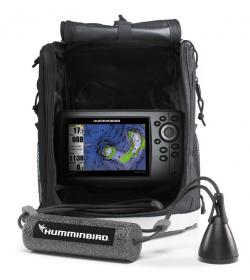
2. Find the bait, find the smallmouth bass: Electronic sonar units, commonly called “fish finders,” improve each year. Users can manipulate the sensitivity of even inexpensive units to find schools of baitfish in reservoirs. These resemble cotton balls on the screen. However, astute anglers also look for gulls diving to the surface to discern the location of baitfish. If all else fails, fishing a point near the old river channel on the main lake presents a good chance of an angler intercepting a school of roving baitfish and the smallmouth bass following it. Fishing points, sloping banks or channel ledges near schools of baitfish greatly increases angling efficiency and boost the chances of a large smallmouth striking your lure. Dropping a jigging spoon or blade bait near the baitfish school often produces several fish.

3. Keep lure selection simple: One of the best things about winter smallmouth fishing is you can fit a day’s worth of productive lures in a cigar box. A selection of ½-ounce football jigs for bottom fishing, some 3/16-ounce hair jigs for a swimming retrieve, a few blade baits like the ½-ounce Silver Buddy, a couple of jigging spoons and a bag or two of swimbaits with some ¼-ounce ball heads are all you need. These lures consistently produce reservoir smallmouth bass all winter long. Concentrate on fishing slowly and thoroughly probing likely smallmouth structures instead of changing lures every half-hour. If all else fails, try live shiners or large crappie minnows rigged on a size 1 Octopus-style hook with a few split shots crimped about 18-inches above the hook.

4. Have the right mentality: Winter fishing for smallmouth bass is a big fish game, not a numbers game. You’ll have lulls in the fishing and a lot of empty casts. It is the nature of the game. Boredom and frustration can worm their way into the mind and you’ll find yourself going through the motions. Trophy smallmouth bass often bite when you aren’t mentally prepared. Keep concentration on the task at hand, so you won’t be flatfooted and consequently panicked when the 22-incher hits. This is especially important during that prime time of 3:30 p.m. to dark. Smallmouth anglers in winter often go fishless until this time of day, then land several before dark with the shortest one measuring 19 inches. Keep on your toes and mentally push through the lulls.

5. Big, deep water = big, fat smallmouth bass: Large smallmouth bass use acres and acres of deep water as their sanctuary much like white-tailed deer use heavy thickets. Anglers confused about where to prospect for winter smallmouth bass should stick to the main lake of the lower one-third of a reservoir nearest the dam. This is especially true on Kentucky’s mid-depth hill-land smallmouth reservoirs such as Barren River or Green River lakes. You can’t go wrong fishing main lake points or small covelets just off the main lake nearest the old river channel in winter for smallmouths. Anglers without boats can fish these areas from the bank in winter with just a few lures or some large crappie minnows and do just as well as those in expensive boats.

Texas, Florida and California offer largemouth bass anglers an authentic chance of catching several larger than 10 pounds. Trout anglers fishing the reservoir tailwaters of the Ozarks have an opportunity for the fish of a lifetime.

Kentucky is one of the few places in the world where anglers can routinely catch smallmouth bass heavier than 5 pounds with a chance at much larger fish. Its waters produced the largest smallmouth ever caught and documented and produces world class fish year after year.

Get out this winter and keep these simple tips in mind. A battle with a 5-pound smallmouth bass on a December day sure beats remodeling the basement.

Author Lee McClellan is a nationally award-winning associate editor for Kentucky Afield magazine, the official publication of the Kentucky Department of Fish and Wildlife Resources. He is a life-long hunter and angler, with a passion for smallmouth bass fishing.

Time To Join A Bass Club

The last tournament of the year didn’t go exactly as planned for me. I fished hard for eight hours and got exactly one bite. A fish hit my crankbait and jumped and threw it. It looked like a throwback but that was the way my day went. Congratulations to the folks that did catch fish.

At Jackson last Sunday 23 members of the Flint River Bass Club and the Spalding County Sportsman Club fished our December tournament together. There were 37 keeper bass weighing about 54 pounds brought to the scales and all but 13 of them were spotted bass. There was one limit of five fish and 8 of us didn’t catch a keeper.

Chuck Croft won it all with a good catch of five fish weighing 12.34 pounds and his 4.85 pound largemouth was big fish. Brandon Stooksbury had three keepers weighing 5.12 pounds for second, third was Niles Murray with four at 4.98 pounds and Brian

Bennett had four weighing 4.40 pounds for fourth.

The water was in the upper 50s, three or four degrees colder than when I had fished with Jordan McDonald there on Tuesday. And it was much more stained. On Tuesday I could see a crankbait down about a foot, by Sunday I could see it down about four or five inches.

Now that the tournaments are over the clubs have their top six set. Those top six fishermen are the tournament committee in each club and the top fisherman is the tournament chairman for the coming year.

In the Spalding County Sportsman Club Raymond English won the point standings and had big fish for the year with a 6.61 pound largemouth caught at Clarks Hill last April. Zane Fleck was second, I came in third, Chris Davies placed fourth, Sam Smith was fifth and Billy Roberts rounded out the top six.

In the Flint River Bass Club I won the point standings, Chuck Croft came in second and had big fish for the year with a 6.02 pounder caught at Clarks Hill in August, Niles Murray placed third, Jordan McDonald was fourth, Jack Ridgeway came in fifth and Don Gober was sixth for the year.

At each tournament during the year the members catching fish earn points. In the Sportsman Club 1st place gets 25 points, 2nd 24 on down to 1 for 25th place. In the Flint River club 1st gets 100 points, 2nd 90 down to 10 for tenth place.

Some clubs use total pounds and ounces for their standings each year. The point system seems fairer to me. With points each tournament is worth the same. With weight the tournaments in the spring and fall are worth a lot more than the winter and summer tournaments when fishing is tough.

A January tournament is usually won with less than ten pounds, but in April a two day tournament may be won with 25 or more pounds. That makes one tournament worth a lot more based on pounds and ounces.

I keep a spread sheet for both clubs showing total fish caught each year as well at total weight. It is amazing how close the weights follow the points. For example, in Flint River I had 47 keepers weighing 85.23 pounds, Chuck Croft had 27 bass weighing 63.93 pounds and Niles Murray had 45 fish weighing 82.5 pounds. So Niles and Chuck would have changed places based on weigh.

In the Sportsman Club Raymond English had 52 bass weighing 88.68 pounds, Zane Fleck had 46 weighing 71.97 pounds and I had 51 weighing 94.46 pounds. The top three would have stayed the same with a pounds system but we would have changed order.

What really hurts is to zero a tournament. When that happens you get no points and no weight! It is very hard to win the points standings for the year if you have even one zero in the 12 tournaments.

All three Griffin clubs start new years in January. The Flint River Club meets the first Tuesday each month and fishes the weekend after the meeting, with tournaments on Sunday. The Potato Creek Bassmasters meets the Monday after the first Tuesday and fish their tournaments on the Saturday following the meeting. The Spalding County Sportsman Club meets on the third Tuesday each month and fish the following Sunday.

This is a good time to get in on the fun and join a bass club, or two or three of them! I fish with two clubs but some of the members fish with all three. We have a lot of fun, learn about bass fishing from each other and each tournament, and enjoy a little competition.

You don’t have to have a boat to join a club. Dues are about $75 per year and each tournament entry fee is about $30. There are also a variety of side pots in each club. There is not much money involved and you can’t really win enough to even pay for gas for your two vehicle and boat in a tournament, but it is not about the money. For those wanting to win money there are all kinds of pot, buddy and individual trails for that.

I joined the Sportsman Club in 1974 and the Flint River club in 1978 and have not missed many tournaments in either club in all those years. I do enjoy the meetings and the tournaments and plan on fishing club tournaments as long as my health will allow.

Chose the Right Rod and Land More Fish

Wrong Rod Choice Often Leads to Lost Fish

Yamaha Pro Todd Faircloth Matches Rod Actions to Specific Lures
from The Fishing Wire

Todd Faircloth landing a bass

Todd Faircloth landing a bass

Among his contemporaries in professional bass fishing, Todd Faircloth rates as one of the most consistent anglers in the sport, regularly finishing well and always a threat to win any tournament he enters. The Yamaha Pro has a simple answer for his consistency: he doesn’t lose very many fish.

“It’s not an easy lesson to learn, and believe me, I’ve lost my share of fish that ended up costing me some high finishes and definitely a lot of money,” smiles Faircloth, a six-time Bassmaster® Elite winner who will be fishing his 14th Bassmaster Classic® in March, “but I have also spent a lot of time studying why I lost those fish, and have made some serious adjustments in my fishing style to keep fish losses at a minimum.”

The first adjustment Faircloth made was to change to softer action rods when he fishes treble hook lures such as crankbaits and jerkbaits. One of the main reasons anglers lose bass is because their rods are too stiff and hooks simply pull free. Instead of using a heavy action rod, Faircloth has changed to slightly more limber medium action rods that flex evenly and with less pressure. Chose the right rod and land more fish.

In winning a Bassmaster® Elite tournament at Lake Amistad several years ago, for example, Faircloth used a medium-action, 7-foot 6-inch flipping stick while fishing a heavy swimbait lure. Most want the heaviest action rod they can find with these types of lures, but Faircloth boated bass over eight pounds with the more limber rod and won with a total of 76 pounds, 15 ounces. Just as importantly, he never lost a fish.

Todd Faircloth

Todd Faircloth

“On swimbaits, crankbaits, and jerkbaits especially, you’re not really setting the hooks on the fish itself,” explains the Yamaha Pro. “Instead, the bass is grabbing the lure and you’re just pulling the hooks into it. A stiffer, heavy action rod simply does not flex to absorb the shock when you do this, and the hooks never grab the fish.

“This doesn’t happen nearly as often with a single-hook lure like a jig or plastic worm because you’re just driving the one hook into the fish’s mouth, and a stiffer rod can do this.”

At the same time, adds Faircloth, treble hook lures often tend to be larger lures, and bass use the weight of the lure itself as leverage to help them “throw” the lure free. That led to Faircloth’s second major fishing adjustment, which is to change all the treble hooks on his lures to short-shank models.

“The majority of factory-made lures today are fitted with long-shank treble hooks that swing more freely when a bass jumps and shakes its head,” he adds. “Every time a fish does that, chances increase the lure will come loose. A short-shank hook actually keeps my lure pinned closer to the fish’s head so the bait can’t swing back and forth. I’ve changed to short-shank trebles on every treble hook lure I have.”

Faircloth’s third fishing adjustment was to change how he played bass as he was bringing them to the boat. He stopped depending on the drag systems in his baitcasting reels to control the fish and began relying entirely on spool pressure he applied himself.

“I don’t use the drag system on baitcasters at all,” the Yamaha Pro emphasizes. “Instead, I disengage the reel and thumb my spool. I feel like this gives me quicker and more complete control, especially on a larger bass.

“I can put pressure on the spool with my left thumb and keep my right hand on the reel handles to engage the reel instantly when I need to. If I feel the bass is pulling hard enough to possibly break my line, all I do is lessen my thumb pressure and let the fish gain a little line.

“These are just three changes I’ve made in my fishing over the years, and now I hardly think twice about them,” concludes Faircloth. “I still lose a bass occasionally, as does every fisherman, but certainly not as many as I did a few years ago.”

Why I Love and Hate Fall

I Love and Hate Fall!

I always looked forward to September with dread and excitement. I hated the fact that school was starting back. Gone would be the long, lazy, fun days of fishing local ponds, damming Dearing Branch, building tree houses and camping out in the back yard.

But fall also meant hunting seasons were near. Dove season opened soon after school started, easing the pain a little. I could not wait until squirrel season opened, usually in September back then, and rabbit and quail seasons followed in November.

When I was growing up there was no deer hunting anywhere near me. There were not enough deer to hunt and the Department of Natural Resources was stocking deer and trying to get them established. By the time I started high school in the mid-1960s it was still rare to see a deer. If anyone saw one crossing the road we talked about it for a week.

Daddy didn’t fish and hunted little, but we always got to go to dove shoots on Saturdays during season. And we had two pointers we spent many hours following through fields near the house to find quail. Bird hunting with him was always special.

Since daddy didn’t get to go hunting except on Saturdays, I squirrel hunted by myself or with friends. We often went after school and hunted all day on Saturdays when bird season was not open. I could walk out my back door and be in the woods in five minutes. I knew where every pine the squirrels liked to cut pinecones grew and the location of favorite white oak trees where they fed.

One very special place was behind my house on a ridge beside Dearing Branch. There was a huge white oak tree about three fourths the way up the slope and it was always loaded with acorns in the fall. And it was usually loaded with squirrels. I spend hours sitting near that tree waiting on bushytails to come to feed. It was a magical place for me.

I hunted with a .410 shotgun or a .22 rifle. In those much younger days I could shoot squirrels in the head with my .22 and used it when the leaves fell. But the shotgun was better early in the season when the trees were full of leaves and the squirrels harder to see.

One trip with my friend Hal stands out in my mind, even after 50 years. We had ridden our bicycles to Harrison’s pond, a favorite fishing hole in the summer, but this time we had our guns. It was about five miles from my house but we thought little about the distance.

Hal shot a squirrel with his over and under .410 and .22. It had a rifle barrel on top and a shotgun barrel underneath. I always wanted one but my daddy said I could make do with what I had.

The squirrel Hal shot ran into a hollow about 20 feet off the ground. We never let anything get away if there was any possible way to get it but it seemed impossible on that one. We came up with a plan. I rode back to my house, got a saw and hatchet, and headed back to where Hal waited by the tree in case the squirrel was able to come out.

We cut that tree down about three feet off the ground, planning on getting the squirrel out. When we cut it we looked in the hollow stump and could see hair. I grabbed it and pulled a dead squirrel out. It had died after crawling into the tree.

While we were celebrating getting the squirrel, I noticed the wood chips and sawdust in the stump moved. I looked and saw more hair, so I shot into it with my rifle and pulled out another squirrel. That made us look closer, and we again saw hair, shot into it and pulled out another squirrel. We got three out of that hole!

We ate anything we caught or killed and three squirrels made a decent number for squirrel and dumplings that night. My mother could cook anything. I often thought she could take and old hunting boot, season it and cook it and it would turn out as a gourmet meal!

We ate a lot of squirrel, rabbit, quail, dove and all kinds of fish. My mother often said a fish was big enough to keep and clean if it would make the grease smell. She especially liked the crunch tips of the tail and fins after deep frying little bream.

I have great memories of growing up wild in Georgia and hope many other kids are making those memories right now.

Will I Fish More Effectively With an Underwater Cam?

Fish More Effectively With an Underwater Cam

By Steve Pennaz
from The Fishing Wire

Given the drastic reduction in size, huge increase in performance, and ease on the pocketbook, I’m convinced the underwater camera is here to stay. Used in combination with mapping and sonar, there is no better combination of tools available to help anglers decipher lake structure and fish behavior secrets. I know I’m using my Aqua-Vu in more situations all the time.

Case in point, this past year we were filming a Lake Commandos episode on a lake known for its largemouth, but there was a small population of big smallmouth there as well. About 100-150 yards down a long weedline, my guest caught a 4-pound smallmouth. We turned back around and she caught another in roughly the same spot. After this happened a third time in this one little stretch of weedline, I got curious to find out what was holding the fish. So I dropped the Aqua-Vu over and discovered a 15-yard field of boulders that started inside the weedline and spread out deeper. And there were 3-pound and bigger smallies spread out over the rock!

each bridge corner had different habitat and a different fish species on it,

each bridge corner had different habitat and a different fish species on it,

Image courtesy of Aqua-Vu. “Only 200′ from one of the busiest boat ramps in Minnesota, we learned each bridge corner had different habitat and a different fish species on it, including walleyes, crappies and bass,” says Lake Commandos host Steve Pennaz.

This situation is just one of many and illustrates how important understanding “spot on the spot” locations can be to consistently catching fish. First, consider that there was almost no indication of the rocks on the the graph due to the weed cover.

Yet, with the camera, not only did we learn there were rocks down there, we figured out where the bigger boulders were and how the fish were positioned. So, when we came down the weedline again, it was a lot easier to fish effectively.

And that’s just one example of how Aqua-Vu cameras have helped me better understand lake structure, cover and fish behavior.

Plug it in and use it

Plug it in and use it

Image courtesy of Aqua-Vu

“It’s plug and play. Viewing the Aqua-Vu Multi-Vu on my Garmin 7612 XVS gives a brilliant and easy-to-ready picture of what’s below,” says Lake Commandos host Steve Pennaz.
Historically, putting underwater cameras into practice has been far from convenient. When the technology first hit the scene weight and size was an issue; it was like dragging around a dormitory refrigerator! And even as cameras grew smaller, screens were often hard to read in the sun. Lastly, there was always a lot of labor to put it all together, get it to run right and interpret what was on the small screen.

Aqua-Vu has made huge advancements in all of these areas. New models like the AV Micro 5 offer an unprecedented level of portability (fitting into your pocket), brighter screens, cool features live a built-in DVR, and ease of use. For me, I love the fact that new cameras are also compatible with the sonar units on my boat. So, rather than having to carry a camera, screen and other hardware, I’m simply attaching the Aqua-Vu Multi-Vu Complete Camera System to my Garmin 7612XVS. It’s as easy as connecting one wire, hitting a couple buttons and dropping the camera overboard. Some sonar units may require the addition of an RCA to BNC connector to integrate the camera, but these are available at RadioShack for under $10.

Image courtesy of Aqua-Vu

Find and learn structure

Find and learn structure

fwuc3Lake Commandos host Steve Pennaz says underwater cameras have helped him find and learn more about “spot on the spot” locations, even on waters he thought he knew well. He’s also a big fan of the ultra-portable AV Micro 5 with built-in DVR, seen here.
Nothing beats viewing underwater footage on the big screen of a video-capable sonar combo unit. On my Garmin, I can view underwater video in full-screen brilliance or run split-screen to compare with 2D sonar, cartography or Down- and Side-viewing technologies. That can be really revealing! And with the HD resolution found in units like the Garmin 7612XVS, the images are just stunning!

I’ve found that the Aqua-Vu penetrates 20′-25′ in clear waters to reveal structure, cover, transition areas – and the fish species of the marks on my 2D sonar, saving countless hours of fishing time. Are the fish I’m seeing on my graph really smallmouths? Or am I targeting suckers? (I’ve run into this twice in the past year!) Used as a species verification tool, the Aqua-Vu is a huge confidence-booster. You look down and say, “Wow, there’s a bunch of walleyes” or “Wow, look at the size of that bass!” I’m still like a kid in a candy store.

Recommendations

Find bass

Find bass

Image courtesy of Aqua-Vu
Lake Commandos host Steve Pennaz locates panfish in weeds near one of the busiest boat launches in Minnesota.
I’ve found that one of the best ways to learn waters is to allow some undivided time to camera use/underwater study. Choose a day when the conditions are tough, like when the lake’s flat calm, and go out with your GPS/sonar and get to know key structure in a way nobody else does. Leave the fishing rods in the locker, lower the camera into the water, and idle around off-shore reefs, points, cribs, what-have-you. Study what you see and when you find boulders interspersed along a weedline or bottom transitions you didn’t know were there, drop a waypoint. Then you’ll have something nobody else on the lake does!

About Steve Pennaz
Steve Pennaz excels at finding and catching fish on new waters, a skill developed over 30 years of extensive travel in search of giant fish. His television series, Lake Commandos, Man vs. Lake vs. Man, helps anglers understand the steps to building successful patterns on the water.

Fishing Jackson Lake and Lay Lake

I spent the day last Tuesday on Jackson with Jordan McDonald getting information for the January Georgia Outdoor News Map of the Month article. Then I went to Lay Lake Thursday with Matt Herrin for the Alabama Outdoor News Map of the month article.

Jordan showed me ten of his favorite places to fish on Jackson in January and how to fish them. He also talked about the baits he use to catch fish in the cold water. I will be trying out those places and baits today in the Flint River/Spalding County Sportsman Club tournament on Jackson. It is the last tournament of the year for both clubs.

We caught three good keepers at Jackson and really didn’t fish that hard, so I have high hopes for today.

Lay Lake was a little different. All the rain in north Alabama last week had the TVA trying to run a lot of water down the Coosa River. All the flood gates at the Logan Martin dam were open and all the generators were running wide open, too. Logan Martin is the next lake upstream of Lay.

The river was about four feet high and out of its banks, and the current was so strong all we could do was point the boat upstream, run the trolling motor on high and try to cast to cover as we washed past it.

Matt Herrin lives near Lay Lake and has been fishing it all his life. He is a pro fisherman at the top level, fishing the Bassmasters Elite trail. He has made the Bassmasters Classic three times and the FlW Championship tournament three times. Over the past ten years he has won almost 1.5 million dollars in tournaments.

With his top level skills and knowledge of the lake and river we were able to catch a few spotted bass under very difficult conditions. Pro fishermen have to adapt to whatever conditions exist during a tournament or they cannot be successful. Matt showed me how he adjusts and catches fish under conditions most folks would just give up and not fish. We did not see another boat all day Thursday, nobody else was even trying to fish.

I got to go fishing Jackson Lake and Lay Lake in three days. Fishing should be good for the next few weeks until the water gets real cold, and you can catch fish then if you are adaptable. It is a lot more fun than just sitting at home listening to the bad news!

What Is In Chesapeake Bay Predators’ Diets?

Little things turn out to be big deals in Chesapeake Bay predators’ diets

Today’s feature comes to us from Karl Blankenship, long-time editor of Bay Journal, detailing a topic that is beginning to be understood as critical to gamefish populations everywhere—the forage the fish eat.

Analysis finds invertebrates, tiny anchovies are critical in Chesapeake food web

By Karl Blankenship, Editor
Bay Journal; www.bayjournal.com.

Menhaden are caught in a purse seine net

Menhaden are caught in a purse seine net

Menhaden are caught in a purse seine net. An analysis of the diets of five major Bay predators found that menhaden was important for only one, striped bass, and even for them, the bay anchovy was more important. (Dave Harp)
t-studied estuary in the world, but a group of scientists attending a recent workshop were surprised about how little they knew about what predatory fish eat.

After all, menhaden — dubbed by some as the “most important fish in the sea” would also be the “most important” fish in the Bay, right?

Apparently not. That honor, were one species to be singled out, might belong to the tiny bay anchovy — a fish that rarely grows more than 3–4 inches in length and typically doesn’t live longer than a year.

“They’re the most abundant fish in the Bay,” said Ed Houde, a fisheries scientist with the University of Maryland Center for Environmental Science, who helped organize the workshop. “They’re really important in the Bay’s food web.”

An analysis of 12 years of Baywide diet information for five major predators prepared for the workshop found that bay anchovy was a significant portion of the diet for four of those species. Menhaden was important for only one, striped bass, and even for them, bay anchovy were more important.

“Menhaden came out not as high on the list as people thought it was going to be,” Houde said. “It was an important prey, but it certainly wasn’t in the top three or four.”

Even more significantly, the analysis showed that the Bay’s food web is less of a fish-eat-fish world than popularly thought, even among many scientists. A host of unheralded species, from worms to clams to crustaceans, are major food sources for the Chesapeake’s predatory fish.

Those were some of the findings that came out of the workshop conducted by the Bay Program’s Scientific and Technical Advisory Committee late last year. The workshop focused on the question of whether the Bay produces enough food, or “forage,” to adequately support its predator population. The workshop stemmed from a commitment in the 2014 Chesapeake Bay Watershed Agreement that called for assessing the “forage fish base.”

It’s a question conservation groups, scientists and fishery managers are increasingly asking for oceans and coastal areas around the globe: Are there enough herring, anchovies, menhaden and similar species to feed predatory fish, marine mammals, fish-eating birds and, in many cases, to support major fisheries?

It was once thought those small schooling fish were so abundant that they could not be overfished. Around the world, they account for about a third of all fish harvested, after which they are processed for oils, fish meal, livestock feed and other products. A 2012 report by the Lenfest Forage Fish Task Force, prepared by scientists around the world, including Houde, called for global harvests to be cut in half to protect both forage species and the many predators that depend upon them.

Similar questions about the forage base have been raised around the Bay. Anglers have complained for years that striped bass were underfed because of a lack of menhaden, and watermen have contended that large numbers of striped bass and other fish looking for food ate too many blue crabs.

Fishery management over the years has sought to maximize the production of predators like striped bass. Other predators have been introduced, sometimes accidentally, such as snakeheads, at other times deliberately, to give anglers new pursuits, such as blue catfish and flathead catfish.

Populations of many fish-eating birds, including bald eagles, osprey, great blue herons and cormorants are at or near record highs, at least compared with recent decades. Meanwhile, some prey thought to have been important historically, such as river herrings and American shad, are at historic lows.

Invertebrates ‘key’ food source

The forage workshop, which followed the new Bay agreement commitment by a few months, was aimed at reviewing what data were available about forage in the Bay and identifying new information that might be needed to guide future forage fish management — and to ensure high and sustainable production of their predators.

But along the way, workshop organizers began to realize that in the Chesapeake, the emphasis just on “forage fish” might be less important than it is for some other areas.

That stemmed from an analysis done for the workshop that examined the diets of five predators thought to be good indicators of predator food demand in different areas around the Bay. The predators in the analysis included striped bass, summer flounder, Atlantic croaker, clearnose skate and white perch.

The analysis drew on 12 years of data from the Chesapeake Bay Multispecies Monitoring and Assessment Program (ChesMMAP), conducted by the Virginia Institute of Marine Science, which collects fish at locations from the mouth of the Bay to near Baltimore five times a year.

Since 2002, the survey has captured 391,000 fish, and measured 285,000. Biologists have examined the stomach contents of more than 35,000 fish, representing 94 species, to determine what the fish had been eating.

A type of forage was considered “important” if it accounted for more than 5 percent of the food in any predator species in at least one survey. It was “key” if it accounted for 5 percent in more than one predator.

More than half of the 20 forage groups identified as “key” or “important” turned out to be invertebrates such as mollusks, worms and crustaceans.

For instance, mysids, a small shrimp-like crustacean, was the most common food consumed by summer flounder, measured by weight, the second most common consumed by striped bass, and the third most common prey of Atlantic croaker. Polychaete worms were the most common prey of Atlantic croaker and white perch, and the third most important for striped bass.

In other coastal areas, “the invertebrates are not the big issue — it is the small schooling herring and anchovies or what have you,” said Tom Ihde, an ecosystem modeler with the National Oceanic and Atmospheric Administration Chesapeake Bay Office, who helped organize the workshop.

Forage fish vs. forage base

Bay Anchovy

Bay Anchovy

In real life, the bay anchovy behind Ed Houde, a fisheries scientist with the University of Maryland Center for Environmental Science, only grows to be 3–4 inches long. (Dave Harp)

Ihde and Houde said much of the previous work concerning forage has focused on predators in ocean fisheries. Those fish are often larger, and primarily consume small fish. Also, much of that focus has been in places such as the West Coast, which lack large estuarine feeding grounds like the Chesapeake Bay.

In the Chesapeake, the predators are often smaller — the largest striped bass generally are here only a few weeks of the year to spawn — and much of the food of the smaller, resident striped bass consists of a variety of bottom-dwelling organisms. As a result, what started out as a discussion aimed at addressing forage fish turned into one focused on the entire forage base.

In fact, the importance of soft-bodied organisms like worms is likely understated when fish stomach contents are examined, Ihde said. “Some of these invertebrates are digested quickly and are probably even more important than our analysis would show because they very quickly turn into unidentifiable goo,” he said.

That said, workshop participants said in their recently released report that menhaden should still be considered a key forage species because the species is important to large striped bass for whom the Bay is a critical spawning area, even if they are only here part of the year. Menhaden are also considered important prey for larger individuals of other large predatory fish such as weakfish and bluefish. And menhaden are likely important for other species, such as fish-eating birds, workshop participants said.

“There’s a general perception that it is all about menhaden,” Ihde said. “They are important. But we can’t forget about all these other things that in some cases are more important to our current system.”

And those other things add to the complexity of understanding, and ultimately trying to manage, the Bay’s food web.

Some organisms not typically thought of as forage turned out to be important in the Bay, such as the young of croaker, weakfish and spot — adults of which are generally considered predators.

“It was a big surprise to me to see something like young-of-the-year weakfish show up as one of the more important prey in the diets of predators,” said Houde, who has participated in several forage fish studies in recent years.

Scant data for tributaries

But the total picture is far from complete. The ChesMMAP surveys only cover the mainstem of the Chesapeake. There is little information available about tidal tributaries.

Those areas are important nurseries for many fish — and are also home to a rapidly growing population of predatory blue catfish. Although some studies are under way to better understand the diet of blue catfish, much less is known about the forage base and food demand by predators in those areas.

Because of those limitations, workshop participants suggested the data from ChesMMAP may under-represent the importance of some forage species such as American shad, river herrings, mummichog, killifishes, gizzard shad, silversides and some small bivalves, which tend to be found in low-salinity areas.

Even less is known about shallow water of less than 2 meters, especially in habitats such as underwater grass beds and marshes, which biologists think may be particularly important for forage production, and where survey boats have a hard time operating.

And the ChesMMAP data have their own limitations. It is a trawl survey, so it collects fish mainly from the bottom, and collections from its gear under-represents both the largest and smallest fish.

The survey is being modified in coming years to collect more samples from higher in the water column and from the benthic invertebrate communities at its collection sites.

While that should refine its information, it is not likely to dramatically change overall conclusions, as other — albeit smaller — surveys examined in the workshop analysis found similar results.

“Our hope is it will lead to a much better understanding of the ecosystem,” said Chris Bonzek, the VIMS scientist who oversees the ChesMMAP survey and who prepared the forage analysis for the workshop. “But we are not going to all of a sudden see that bluefin tuna are the most important predator in the Bay.”

A more complete picture

Because predators are eating so many types of prey — many of which are poorly studied — it’s difficult to characterize the current status of the Bay’s forage base. But, with support from the Bay Program’s Sustainable Fisheries Goal Implementation Team, Houde and several colleagues are reviewing existing information to start piecing together a more complete picture of forage abundance and predator demand.

With information gleaned from the ChesMMAP analysis and other sources, they are assessing the relative abundance of different forage groups in regions of the Bay to see if there are trends in the overall amount and availability of prey, or in the relative abundance of the different types of forage.

In addition, they are looking at stomach content data from major predator fish species to begin to estimate the amount and kinds of forage they are consuming.

That information will start addressing the fundamental questions of how much forage is consumed by predators, what type of forage is most important in different regions of the Bay and how much change has taken place over the years. Ultimately, it will help answer the question of how much food is needed to support the Bay’s predators, both now, and in the future.

“While we are not close to getting that answer, it is the direction we are heading in,” Houde said. “Providing estimates of consumption and forage demand is something we would like to be able to deliver to managers in the next decade.”

A ‘balanced’ ecosystem

Figuring out how to use that information to maintain a “balanced” ecosystem will be a challenge for managers as populations of many forage species vary widely. For instance, the numbers of bay anchovy can fluctuate tenfold from year-to-year — they can live up to three years, but most are eaten by predators within a year — so the relative success of annual reproduction drives their overall abundance. Likewise, the numbers of young croaker, weakfish and spot available to be eaten depend on year-to-year reproduction success.

When the issue moves beyond fish to the broader forage base, the level of complexity increases. Many bottom-dwelling species can be sensitive to extended periods of low oxygen, so a large seasonal “dead zone” can reduce overall abundance, and even eliminate species, from some areas. “If it is a bad hypoxia year, the benthic invertebrates cannot get up and swim away like the fishes,” Ihde said.

The loss of underwater grass beds, coastal marshes and oyster reefs have reduced the amount of habitat available for many forage species. The hardening of shorelines, development of land adjacent to the Bay and its tributaries, sea-level rise and climate change will likely cause continued habitat losses, the workshop report said.

At the same time, predator populations are constantly changing — and not just the fish.

Around the Bay, the populations of fish-eating birds such as eagles, osprey and blue herons are large — and growing. The Bay’s population of double-crested cormorants, which was almost nonexistent four decades ago, is nearly 5,000 today. That’s enough cormorants to consume 300 tons of fish annually, according to the workshop report.

Overall, the fish demand of birds around the Bay is largely unknown, Houde said. Birds, though, could be one of the first indicators of stress if there were a problem with the Bay’s forage base. Houde noted that research in other areas has shown that when forage fish populations decline by a third of unfished levels, the populations of fish-eating birds may drop precipitously.

Protecting forage fish

Other than menhaden, most of the forage species in the Bay are not actively managed fishery species. Menhaden have been increasingly regulated in recent years by the Atlantic States Marine Fisheries Commission, which manages migratory fish along the coast. The commission is working to establish new harvest goals in the next several years that recognize the role of menhaden as prey for predators.

The abundance of other forage can be influenced by a range of actions aimed at improving environmental conditions and protecting habitat, the workshop report said.

For instance, reducing nutrient pollution could reduce the size and duration of dead zones — Bay water quality standards were written to promote a greater diversity of benthic creatures as well as larger, longer-lived species.

Other actions can help protect habitat important for forage species, the report said, such as limiting the use of bulkheads and other hardened shorelines that degrade local habitats, and controlling development near the shore, which is increasingly linked to the lost or reduced production of benthic species.

Forage could also be protected by reducing some predator fish populations, such as snakeheads or blue catfish, but managers have little control over other predators, such as birds.

But the emerging information could offer other opportunities for management. The recognition that the little bay anchovy plays a relatively big role in the Bay food chain could promote efforts to better understand it, Houde said.

“The anchovy is so tiny that most people have discounted it as the target of a directed fishery,” he said, “but there have been proposals for bay anchovy fisheries in other areas along the Atlantic coast.”

Although he said such a proposal is unlikely for the Bay, fishery managers might want to consider policies to prohibit a future fishery in recognition of the bay anchovy’s importance to other species.

“Sometimes,” he said, “in the case of a forage fish, it is easier to develop and implement management policies before there is a fishery.”

The workshop report, “Assessing the Chesapeake Bay Forage Base: Existing Data and Research Priorities,” is found at the Scientific and Technical Advisory Committee website, chesapeake.org/stac/; click on “publications.”

The Bay Program’s management strategy for its forage fish outcome is found at chesapeakebay.net/chesapeakebaywatershedagreement/goal/sustainable_fisheries.

What’s on the menu for Bay’s predators

Drawing on information from the Scientific and Technical Advisory Committee’s workshop report, the Management Strategy for the Chesapeake Bay Watershed Agreement’s Forage Fish outcome preliminarily identified these as the Bay’s key forage species and groups for a wide variety of predators:

Bay Anchovy
Polychaetes
Mysids
Amphipods
Isopods
Mantis Shrimp
Young Spot
Young Weakfish
Sand Shrimp
Young Atlantic Croaker
Razor Clams
Atlantic Menhaden

These species were recognized as potentially important forage groups or species, but were not identified as the top contributors to the diets of predatory fish by information presented at the workshop:

American Shad
River Herring
Atlantic Rock Crab
Atlantic Silverside
Blackcheek Tonguefish
Blue Crab
Flounders
Gizzard Shad
Kingfish
Lady Crab
Macoma Clams
Mud Crab
Mummichog
Killifishes
Small Bivalves

Carl Blankenship

Carl Blankenship

About Karl Blankenship
Karl Blankenship is editor of the Bay Journal and Executive Director of Chesapeake Media Service. He has served as editor of the Bay Journal since its inception in 1991.

Read more about Chesapeake Bay at www.bayjournal.com.

Is Gun Control Insanity?

One definition of insanity is to keep doing what you have been doing and expect different results. The recent shootings in California and Colorado show that the gun control fanatics have only one mantra, and they don’t care how insane it is. Based on that definition, gun control insanity it common.

Within minutes of the news of the shooting in San Bernardino, California, President Obama was calling for “common sense” gun control laws to be passed nationwide. Those laws he wants include extended background checks, bans on so-called assault weapons, and bans on high capacity magazines. All those laws are now in effect in California and have been for a couple of years.

How insane is it to demand passing laws nationwide that had absolutely no effect on the terroristic actions of fanatics? President Obama wasn’t the only one demanding insane actions. Many talking heads on the news and celebrities with armed guards also were demanding them. Hillary Clinton was on the insane bandwagon, too.

Some folks were honest enough to admit what they wanted was the confiscation of all guns in the US. Odd how these folks think it is a good idea that the government somehow take away 300 million guns from law-abiding citizens while claiming it is impossible for the same government to identify, arrest and deport 11 million criminal illegal aliens.

I guess they only want to punish the law-abiding gun owner, not criminals in the US illegally.

When you push an agenda so hard you abandon all logic you often look foolish, as did President Obama when he said last week in Paris, soon after over 100 people were killed in a mass shooting there, that mass shootings happen only in the US, not in other countries. Even some of the liberal media had to look at that comment as silly.

It seems more and more rational citizens realize how insane the calls for more gun control really are. When our president and others say we should not blame a large group, like Muslims, for the action of a few extremists, but are perfectly happy to punish all law abiding gun owners for the actions of a few extremists criminals, it just makes him and the others look out of touch with reality.

The gun control Brady Bunch immediately sent out fun raising emails. And they got one of their gun control puppets in the US Senate to introduce a bill to make it a federal law that all gun sales have to go through a background check, their holy grail that has never worked anywhere. They bragged they got 10,000 gun control fanatics to contact the senators on this failed bill.

The Brady Bunch has somewhere around 30,000 members. Yet the NRA, with over 5,000,000 members like me, are called an arm of the gun industry. How stupid do they think the American people are?