Category Archives: Saltwater Fishing

Everything saltwater fishing

How Can I Catch Summer Trout On Topwater?

Catch saltwater trout like these on topwater

Catch saltwater trout like these on topwater

Summer Topwater Trout

By William Redmond
from The Fishing Wire

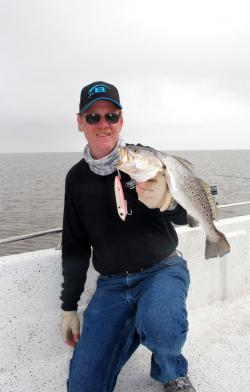
They could very well be one of the most underrated sport fish of the Gulf Coast. Lacking the sturdiness of a snook or redfish, speckled trout are known for their soft bodies and paper thin mouths, but once these fish reach about 24 inches, they earn the nickname “gator trout” for an undeniable ferocity most clearly displayed in their treatment of topwater plugs.

Monster trout like this one are tough adversaries, unlike their smaller cousins. They readily attack big topwaters like the Heddon Spook.

From a boat or on foot, casting surface plugs for speckled trout ranks as one of the most popular angling pursuits for shallow water anglers throughout the Sunshine State’s Gulf Coast region. Capt. Jason Stock, who guides from a flats skiff and a kayak in the Tampa Bay area, knows well the trout’s penchant for attacking topwaters. For him, the entertainment value is tough to beat.

“It’s so visually exciting,” Stock said. “When they pop it, there’s no question. He may blast it, miss it and come right back for it again.”

Stock’s a fan of Heddon topwaters – typically the Spook Junior in calm conditions and a One Knocker Spook when a summer breeze puts a little motion on the ocean and requires an audible trail to help the trout track their target. A 7- to 7 ½-foot medium- action spinning outfit with 25-pound braid and a 20- to 30-pound fluorocarbon leader will handle even the 7-pound-plus monsters. At any size, Stock said, trout are crafty fish, so seamless attention is a must.

“Be ready, because they might hit at the end of a long cast,” he said.

Trout are widely dispersed throughout Gulf of Mexico coastal environments, but Stock has three favorite scenarios:

Daybreak

Easing up to island edges or onto the top of a skinny grass flat just as the sun starts to “pink out” the sky, Stock expects to find big trout hunting finger mullet, sardines and anything else they can catch in a foot or so of water. Dimpling pods of bait are a sure sign, as the food source won’t go overlooked by hungry trout.

Stealth is a must in this shallow habitat, as big trout are keenly aware of their vulnerability to porpoises and ospreys. Here, especially, long rods and thin-diameter braid play essential roles in achieving the long casts needed to reach these fish from a distance they can tolerate.

Note: Minimize your movement in a boat, as pressure wakes will alert the perceptive trout. Likewise, wade with soft, sliding steps rather than a noisy, stomping pace that sounds like thunder beneath the surface.

Smaller trout are always part of the game–keep this size for the pan and let the big females go to spawn.
For either Spook model, Stock likes the bone, chrome and black/gold colors. It’s the same for the new 3 ½-inch Chug’n Spook Jr., which creates more surface commotion while still retaining the ability to do the classic walk-the-dog retrieve. Stock often employs a slow, steady retrieve with a 1-2-3, 1-2-3 cadence that produces the enticing walk-the-dog action. Resembling a wayward finger mullet, this Spook display will draw some of the most indescribably violent strikes you’ll ever see.

When it’s on, this shallow water trout bite will have you begging the sun to delay its ascent, but once the big orange ball rises high enough to start warming the meager depths, the daybreak madness quickly wanes and it’s time to move on to Scenario Number 2.

Midday

During the heat of midday, anglers often ditch their trout pursuits and turn their attention elsewhere. Stock, however, knows that trout don’t depart the area – they simply relocate. In most cases, the fish will move away from the shallow flats and slip off the outer edges of adjacent bars.

Settling into potholes and grassy trenches in the 4- to 6-foot range, the fish usually require a little more coaxing before they’ll venture topside. This is where the One Knocker and the Chug’n Spook really shine, as this low-pitch rattle speaks to the trout’s belly and the added surface disturbance makes the lure easier to locate and track.

Tidal movement always benefits predators with food delivery, but incoming cycles really stimulate summer fish with cooler, oxygenated water. Also, Stock said weather can profoundly influence the midday action.

“Approaching storms will often get the fish going,” he said. “They might chew really good right before the rain comes and then also after the storm because that rain cools the water.”

After Hours

Particularly at dawn and dusk, noisy floating plugs do the job on sea trout along the Gulf Coast.

Nighttime offers a twofold benefit for trout anglers. For one thing, lower light reduces visibility and thereby makes the fish more approachable. Moreover, the abundance of dock and bridge lights offer countless targets where Stock finds trout ambushing tide-born crustaceans and baitfish that flow past the illuminated areas.

A variety of baits work in this scenario and topwaters certainly have their place in the game. Walk a spook past the edge of a dock light and the result may look like someone dropped a coconut into the water.

Of course, the pinnacle of nighttime trout fishing is the full moon phase when the silvery beams bring the dock light affect to the entire coastal region. Anglers are still better concealed than they are pre-sundown, but trout enjoy the cooler feeding period with plenty of visibility for targeting those bait schools. Stock said he uses his ears as much as his eyes to locate the full-moon action.

“You can hear the smaller mullet getting blasted,” he said. “Look where there’s activity, ease in slowly and anchor off the mullet schools. Or, if you’re looking, just drift through the area and fan cast.”

In any of these scenarios, remember that those giant “gator” trout that love Spooks are typically females. Handle these fish with great care and consider releasing your bigger trout. Returning these breeders to their coastal habitat will help perpetuate the awesome topwater action.
How Can I Find Fat Redfish?

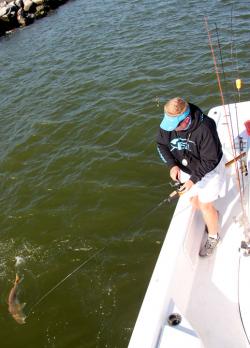
Redfish can be tough to land

Redfish can be tough to land

Finding Fat Redfish: White, Dufrene Pop To IFA Win
from The Fishing Wire

Barnie White and his partner Chad Dufrene were named champions of the 2013 IFA Grand Isle Redfish Event on Sunday, Aug. 25. For the win, the team takes home a fully rigged Ranger Banshee Extreme powered by a Yamaha Outboard, valued at $30,000, and qualified to fish the Series Championship Oct. 25-26.

When sight fishing is tough, breaking out the noise-makers can be the trick to luring fat Louisiana redfish.

To win the tournament, each team weighed in two fish under the Louisiana maximum length of 27 inches, so beyond just catching fish, teams must catch fish as close to the maximum length as possible while releasing any overs. White and Dufrene weighed in two fish for 16.47 pounds.

The morning began with rain and wind, which continued throughout the day. Not only did the conditions make fishing more difficult, but it also slowed travel and prompted the team to fish a back-up area closer to weigh-in.

“The spot we actually started fishing was our backup spot in Venice,” White said. “Conditions just went from bad to worse. We had torrential rain and heavy wind and decided to stay closer. It saved us about 2 hours of fishing time.”

The team started out throwing jigs with soft-plastics suspended under a Paradise Popper Xtreme popping cork. Sight-fishing these redfish was impossible because of the heavy cloud cover, rain and waves. Those same conditions also make it more difficult for the fish to feed, so the anglers needed extra noise and surface disturbance for attraction.

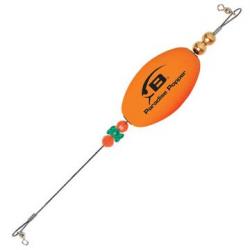
The Extreme Popper makes a lot of noise

The Extreme Popper makes a lot of noise

The Paradise Popper X-Treme from Bomber imparts unique action to jigs and adds lots of noise to get the fish’s attention.

The Paradise Popper Xtreme features a deep concave face that produces a big splash when twitched, plus two brass beads on top and three specialized plastic beads on bottom. The beads click together to simulate the sound of shrimp popping. The wire that runs through the unit is high-grade titanium, which resists bending or kinking and is up to the task of catching multiple big bull reds without failure.

“Cheap popping corks don’t hold up as well,” White said. “The Popper Xtreme makes a lot of noise, a lot of ripples on the water, produces the right sound, and can handle big redfish all day long.”

One key to that popping cork’s longevity and consistence is two metal grommets, one at the top and the other at the bottom of the foam cork. These grommets prevent the wire from cutting into the cork and diminishing the sound.

Another important factor for fishing a popping cork in low-light conditions is leader length. While many anglers use leaders 2-feet long or longer, White keeps his leaders at around a foot.

“Shorter leaders work for two reasons,” White said. “If you’re fishing a long leader, fish can swallow the jig easier without you knowing it, and we have to keep these fish alive. If a fish hits on a short leader you know it immediately. The other reason is that fish are drawn to the sound of the cork, so you want the jig where they immediately see it when they come in to investigate. You don’t want to make them hunt for it, especially in low-light conditions.”

Barnie White and Chad Dufrene found a pair of “toads”, super fat reds that earned them some $30,000 in prizes.

Another factor to the team’s success was matching the size and colors of the baitfish the reds were feeding on. Using a glow-color, 4-inch plastic and glow jighead created the appearance of a small pogy. White says that anglers need to take into consideration the light level and water clarity when selecting colors. If the light level is low and the water stained, the fish need all the help they can get seeing the bait, making black or glow-colors more important than matching the exact colors on the prevalent baitfish.

“If you cut the lights out at night in my shed where I’ve got glow-colored plastics and jigheads hanging up, you can see them,” he said. “I know in darker conditions when the water’s a little murky, I know that bait is putting off some light.”

White said the team started catching fish immediately that morning, and had 14 1/2-pounds in the livewell within 45 minutes. Considering the weather and knowing they had enough weight to be in the race, the team headed back to weigh-in with several hours of fishing time remaining.

How Can I Catch Bluefin Tuna From A Small Boat?

Bluefin Tuna are great to eat

Bluefin Tuna are great to eat

Catching Tuna From A Small Boat
from The Fishing Wire

You don’t need a big sportfisherman to chase summer bluefin

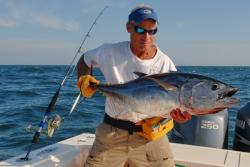
Jigging up a bluefin tuna is super summertime sport, and fish this size can be handled without resorting to big game tackle.

Summertime presents an interesting fishing opportunity for outboard boat owners in the Mid-Atlantic region as schools of small-to-midsize bluefin tuna take up residence on the middle grounds. That means that boats incapable of making the run to the edge of the Continental Shelf and the many submarine canyons that attract yellowfin and bigeye tuna, have a shot at catching those species’ very substantial inshore cousins.

Bluefin are hard-fighting gamefish that can grow to four times the size of their next largest relative. These summer fish tend to weigh between 30 and 100 pounds with some as large as 250 pounds. They are truly big game, so be prepared for a fight if you’ve never caught one before.

Bluefin are highly regulated and therefore U.S. restrictions on seasons, sizes and bag limits must conform to the plan developed by the International Commission for the Conservation of Atlantic Tunas (ICCAT).

To fish for bluefin, you must have an Atlantic Highly Migratory Species Angling Permit, which is issued by the National Marine Fisheries Service (NMFS). You can purchase a permit online by going to https://hmspermits.noaa.gov/PermitList.asp, paying the $20 fee with a credit card, and then printing it out on your computer printer. The permit is for the boat, covers all anglers aboard and is good for the calendar year in which you purchase it. There are no individual angler permits required.

Lots of delicious steaks in hand–but only one per boat per day is permitted.

Since conservation of bluefin tuna is paramount at this time, commercial and recreational fishing is tightly controlled. On the recreational side, retention is strictly limited. Currently regulations stand at one fish per vessel per day, larger than 27 inches and smaller than 73 inches. The season is open until NMFS estimates that the quota has been reached, although that is not expected to occur until later in the year. With these restrictions in place, the fishery is overwhelmingly catch and release. The good news is that bluefin have an extremely low estimated release mortality rate, but care should always be taken when handling them.

The Yamaha crew joined Captain Jim Freda of Shore Catch Guide Service recently for a day of bluefin tuna fishing aboard his twin Yamaha-powered 28-foot Parker® Sportcabin. We left from Manasquan Inlet, N.J. in the dark for a slow ride to an area of lumps about 50 miles offshore, carefully watching the radar until the sky started to lighten with the rising sun. We arrived in an area where the water changed from a dull green to a clear, green/blue color, and the water temperature bumped up a few degrees. There were slicks throughout the area, oily calm spots amid the waves and chop, created by tuna and bluefish feeding on the schools of baitfish below. You could actually smell the fish, a pleasant watermelon type of aroma, when we got into the area. Tuna chicks, small dark colored sea birds that flit across the surface picking up pieces of baitfish that float to the surface, were present by the hundreds. These are things offshore fishermen call “signs of life” and when we stopped, the depthfinder lit up with massive schools of baitfish near the bottom in 180 feet of water.

The initial plan was to troll spreader bars, small plastic lures and cedar plugs, a very effective method of catching bluefin, and when we stopped Freda began prepping the boat by dropping the outriggers. While he was doing that, he instructed us to grab the jigging outfits and drop a variety of jigs to the bottom. As soon as the first one hit and was lifted and dropped a couple of times, the line came tight and we were into our first bluefin of the morning. It wasn’t a big one, but it fought hard, running line off the jigging outfit at will. Then a second one was hooked, and Jim put the outriggers back up and grabbed a jigging stick. The tuna’s response to the jigs was good enough that we never switched to trolling. The tally by morning’s end was nine tuna at 50 pounds, one 40-pounder on ice in the boat, and the rest released. Four of the bluefins released were tagged with ICCAT research tags, something Capt. Jim does on a voluntary basis.

Use a jig to catch bluefin tuna

Use a jig to catch bluefin tuna

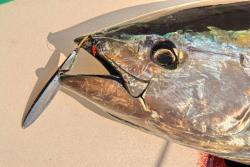
Heavy jigs that look like slender sand eels are among the most effective jigging lures.

Jigging is an extremely effective method for summer bluefins, especially when the bait is low in the water column. We were over schools of sand eels, small thin-bodied fish that swarm by the millions and tend to hug the bottom, diving into the sand to escape predators. When the tuna are feeding deep, trolling near the surface is not very effective. However, dropping jigs to the basement puts you right in the middle of the action. It is loads of fun because the specialized rods and reels used for this fishing are small, light and make fighting tuna both fun and challenging. The reels are all packed with thin 50- or 65-pound test braided line so you can get the jigs deep and feel them easily. The jigs vary in weight so you can get to the bottom and stay there regardless of the current or drift speed. We were using 200-to-260 grain jigs made by a variety of manufacturers, letting them hit the bottom and then bouncing them up and down rhythmically.

When a tuna grabs one, the drill is to reel like crazy until the line comes tight and then set the hook hard. After that, you have to hold on because you are likely in for quite a ride.

Before you go offshore for bluefin, you should have your boat prepared. Your engines should be in top condition, fuel tank topped off, all your safety gear checked and easily accessible, and you should have more than just the basic emergency equipment. An EPIRB (emergency position indicating radio beacon) and a life raft are musts. There are valise-type rafts available for smaller boats that are easy to stow and deploy should an emergency arise. Take the use of PFDs very seriously, especially if the water is rough. Remember, you’re likely to be be a half hour away from rescue help by Coast Guard helicopter and two hours away by Coast Guard boat at the minimum.

When packing your gear, you should be prepared for three possible techniques: trolling, jigging and chunking. Trolling is usually the top producer earlier in the bluefin season when bait and tuna tend to be closer to the surface. Jigging comes on strong as the surface water warms and tuna do more feeding below the thermocline on baitfish like sand eels. Chunking can work from midseason through the fall. This technique usually requires anchoring the boat and using sardines cut into small pieces as chum and whole ones on your lines as hook baits.

You should also have a large enough supply of ice on board to cover a tuna that could run to well over 100 pounds in your fish box. Bluefin can spoil quickly if not properly cared for, and it would be a shame to ruin a delicacy because you didn’t plan ahead. When you get a retainable fish on board, it should be bled while alive. The next step is to collar the fish (remove the gills and organs inside the body cavity) and finally get it on ice, completely covered, until you get back to the dock to cut it into loins and steaks.

Of critical concern is picking a weather window for your trip. While many modern small outboard boats with twin engines are quite seaworthy and can easily handle moderate sea conditions, you have to take safety and passenger comfort into consideration. It’s not much fun getting thrown around a small boat in four-to-six foot seas. Make sure you hook up with the best marine forecasting services, and check them religiously before you make the call to head offshore.

What size boat can make the run to the bluefin grounds? You’d be surprised. During the day we had outboard powered boats fishing around us that varied from 23-to-38 feet with single, twin and triple engine applications. So if you’ve always wanted to catch a tuna and you’re up for running your boat a couple hours from shore, this is your chance.

Fishing In Florida’s Dry Tortugas

Take this ferry to teh Dry Tortugas

Take this ferry to teh Dry Tortugas

Fishing adventures await in Florida’s Dry Tortugas
from The Fishing Wire

The Dry Tortugas Ferry out of Key West makes it easy to access Dry Tortugas National Park, and you can bring your kayak with you.

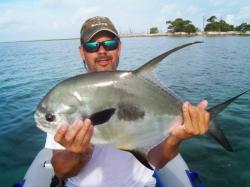
A few weeks ago, I had an opportunity to spend four days and three nights on Garden Key in Dry Tortugas National Park; the experience was one that I will never forget. Sneaking up on a tailing 15-pound permit in 12 inches of water, presenting a live crab to it, and having the fish scream off a hundred yards of 20-pound braid on the first run will make your heart pump like just about nothing else!

The Dry Tortugas, a series of very small islands and submerged coral reefs about 70 miles west of Key West, has a rich history and offers some of the most exceptional and exciting fishing opportunities in Florida. While you are there enjoying saltwater fishing, you will also see an array of marine and terrestrial wildlife and have an opportunity to tour historic Fort Jefferson.

Warning! This is not a posh resort. With the exception of the visitor’s center and museum, which are accessible only during the day, Garden Key has no fresh water and no electricity. So if you require air conditioning, hot tubs, cable television, fine restaurants and all the luxuries of home, you might want to consider a day trip instead.

Getting out there

Catch permit like this one in the Dry Tortuga

Catch permit like this one in the Dry Tortuga

Permit and bonefish are abundant on the clear, shallow flats. Live crabs are top bait for the permit.

If you happen to own a sweet, 36-foot offshore boat with triple motors or something comparable, just load up all your fishing and camping gear, fuel up and bust out there. More than likely, your options include a high-speed catamaran, called the Yankee Freedom, that makes one trip per day, a commercial float plane that makes multiple trips per day, depending on demand, or a chartered vessel.

My old, 17-foot Whaler with a 12-gallon tank seemed a little inadequate for the trip, so I opted to take the Yankee Freedom, which arrives at Garden Key at 10:30 a.m. each day and departs for the return trip to Key West at by 2:45 p.m. The ferry holds approximately 150 passengers and makes the trip out there in a little over two hours. The boat is very comfortable, and breakfast and lunch are provided at no additional cost.

If you simply want to do some snorkeling, view the wildlife and tour the fort, a 4.5-hour stay is all you need to have a great day of sightseeing. The ferry has room for only four hard-sided kayaks per trip, so if you intend to camp and fish, reserve space for yourself and your kayak well in advance.

Camping

If you can handle a few days without all the comforts of home and want to enjoy some truly amazing fishing, try camping. At $3 per day per person, camping is very inexpensive, but spaces are limited and on a first-come, first-served basis. Each camping space includes a grill and a picnic table, and your normal camp ground rules apply in terms of quiet hours and keeping things clean. Very nice, waterless restroom facilities are available right next to the camp sites.

Fishing

Visit the fort between fishingtrips

Visit the fort between fishingtrips

The old fort is worth a visit in itself, but the fishing and diving are the true stars for outdoors families.

For starters, the park boundaries encompass around 100 square miles of open water, but only half of the area is open to fishing and anchoring. The rest of the waters of the park make up the Research Natural Area (RNA), designed to provide protection for important shallow-water habitats. Garden Key and Fort Jefferson are within the RNA; however, a 2-mile-diameter fishing area is established around Garden Key. Within that circle, fishing is allowed except in the swimming/snorkeling area adjacent to the fort and within a couple of small coral and nurse shark protection areas. Park rangers will provide information and maps to help you stay within the boundaries.

If you are fishing by kayak (and I would suggest using one), you will be limited to the 2-mile-diameter circle around the fort, as the larger portions of the park (outside the RNA) are too far to reach by kayak. But don’t be alarmed. Within that relatively small fishing area you can catch a huge variety of species.

In the morning or late afternoon, especially during a low tide, scan the flats and you will likely see schools of bonefish cruising in 6 to 10 inches of water in search of crabs. With a little luck you will also see a solitary permit tailing as it digs crabs out of the coral rubble. To catch the bonefish and permit, you need to get pretty close and present your bait quietly to avoid spooking the fish. This can be done from the kayak or by wading, but the key is to keep quiet, cast beyond the fish and drag your bait back to the fish and then let it sink.

The water is clear and fish abundant

The water is clear and fish abundant

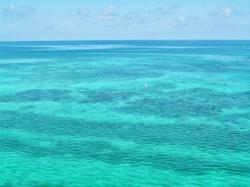
The clear water here makes sight fishing easy during the day, and tarpon come cruising the channels after dark.

During the day, the shallow coral reefs in 6 to 25 feet of water are covered with yellowtail snapper, mutton snapper, red grouper, scamp, graysby and various wrasses. You can also move out into the deeper reef areas and catch larger snapper and grouper, but on medium/heavy spinning tackle, the 6- to 9-pound muttons were about all I could handle from a kayak. A variety of pelagics, including yellow jacks, rainbow runners, blackfin tuna and cero mackerel, also move through the area in search of baitfish and squid.

At night, bigger game are afoot. Tarpon in the 80- to 200-pound range are just about everywhere you look and relatively easy to hook up with live bait, dead bait or by trolling diving lures. Huge sharks also cruise around in the boat basin at night and can be hooked directly from the ferry dock. You may also see one of the resident goliath grouper hanging around the dock’s fish-cleaning areas, looking for scraps. I don’t know where else you can do all that in a kayak!

If wildlife viewing is more your thing there is also an 8-foot saltwater crocodile that sometimes visits the moat during the day and several species of shorebirds that nest each summer on Bush Key.

Fishing regulations

The 2-mile-wide fishing bubble around the fort is within state waters of the Gulf of Mexico, so the fishing regulations are pretty simple. Just follow the regulations that apply to state waters of the Gulf and stay within the boundary line.

If you access the Tortugas by private or charter vessel and have the opportunity to fish outside the RNA, things become more tricky, because you have to know the Gulf-Atlantic boundary line as well as the state and federal boundary lines for the Gulf and Atlantic. You will also need to remember that grouper regulations in all state waters off Monroe County follow the regulations for state waters of the Atlantic in terms of seasons, size limits, bag limits and gear requirements.

If you need maps showing the Atlantic-Gulf boundary line, the Dry Tortugas National Park boundary line, or the state waters boundary line around the Dry Tortugas, please send me an email and I will be happy to help you access the maps.

So make your plans for a fishing adventure of a lifetime at the Dry Tortugas, and don’t forget to record all of your catches on the iAngler phone app or at snookfoundation.org. Share your photos, video and fishing tales with us as well by emailing them to Alan.Peirce@MyFWC.com.

Gone Coastal is one of many ways that the Florida Fish and Wildlife Conservation Commission (FWC) Division of Marine Fisheries Management is helping recreational anglers understand complex saltwater regulations and learn more about saltwater fishing opportunities and issues in Florida. We are also available to answer questions by phone or email anytime, and we would love the opportunity to share information through in-person presentations with recreational or commercial fishing organizations. To contact the FWC’s Regulatory Outreach subsection call 850-487-0554 or email Alan.Peirce@MyFWC.com.

Can I Catch Saltwater Fish By Fly Fishing?

Sailfish can be caught fly fishing

Sailfish can be caught fly fishing

Step Up to Saltwater Fly Fishing

A World-Renowned Angler and Teacher Talks About Getting Started
from The Fishing Wire

Only a handful of fishermen have attained the reputation and status of Capt. Jake Jordan in the world of saltwater fly fishing. He attained his incredible bank of knowledge by catching almost every oceanic gamefish that swims on the fly. How many people can you name who have caught salmon sharks in Alaska on a fly rod?

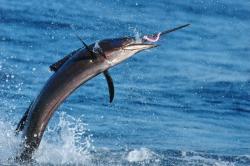
Sailfish are a perfect target for the saltwater flyrod. Fast and acrobatic, they readily take a fly when lured into range with teaser lures.

Jordan has over 40 years of experience as one of the top flats and tarpon guides in the Florida Keys. He pioneered a series of exclusive saltwater fly fishing schools for bonefish and billfish, taking small groups of anglers to exotic locales like Guatemala, the Dominican Republic and Exuma where he instructs them on how to fish for, and successfully catch, the world’s premiere gamefish with fly tackle. The remainder of the year he splits between his home in North Carolina, where he charters for red drum and false albacore during the fall, and Marathon, Fla. in the spring, where he takes charters for his first love-tarpon. His clientele fish exclusively with fly tackle and they include some of the most accomplished anglers in the world as well as newcomers who want to learn at the hands of one of the true masters of the sport. During the winter months, he is a featured speaker and presenter at the top fly fishing shows around the nation.

“When I started taking charters fly fishing in the Keys the 1960s, there were probably not more than 20 fly fishing guides in the world,” Capt. Jordan recounted. “And they were ALL in the Keys!”

Jordan has developed cutting edge techniques for casting, hooking and fighting big fish of every stripe, and has personally released blue marlin that would have crushed the current fly rod 20-lb. tippet world record except for his personal conservation ethic-he will not kill a billfish anywhere for any reason. In recent years, he developed a night fly fishery for Florida Keys tarpon that produces more hookups and releases in a three-month period than most guides can account for in a year. He has revolutionized the techniques for fighting big fish on fly tackle, and the technique is slowly catching on with other types of light tackle fishing.

The Yamaha team recently had a chance to sit down and talk with Jordan about what stepping up to saltwater fly fishing entails for a newcomer. When we arrived, he had just finished washing his favorite skiff, a Yamaha-powered 20′ Jones Brothers built just a few miles away from his home. The boat is aptly called the Fly Reel.

Captain Jake Jordan is one of the nation’s top saltwater fly fishing guides, with venues in North Carolina and the Florida Keys and travels worldwide.

“I spend a lot of time at fly fishing shows and fishing clubs giving presentations on topics from tarpon to sailfish to blue marlin,” said Capt. Jordan. “Interest in the saltwater aspect of the sport is growing, especially interest in catching big fish with fly tackle. Most of the anglers I come into contact with are either accomplished saltwater anglers with spinning and conventional gear who want to try something more challenging, or anglers who use fly tackle in freshwater and want to make the move to salt. Anglers in both categories have some learning to do, but it has never been easier to access the information you need or obtain personal instruction.”

Jordan is not only an International Federation of Fly FishersTM certified instructor, he was a member of the organization’s original board of directors back in the 60s. He said that any angler new to the sport will benefit from casting lessons.

“Learning to cast the right way from the beginning is much preferred to picking up bad habits that have to be unlearned later,” said Capt. Jordan.

“There is a major difference between casting with fly tackle and spinning or conventional,” said Jordan. “With spinning and conventional, you are casting a weighted lure that pulls light line, monofilament or braid, off the reel. It’s the complete opposite with fly gear where you are casting a light, often wind-resistant lure called a fly with a line that has a forward section weighted to pull the fly behind it. You’re casting the line instead of the lure, and the dynamics are very different.

“The front 30 feet of most fly lines is weighted and tapered,” Jordan explained. “Fly lines are rated (10-WT, 12-WT, etc.) for a specific rod designed to cast that weight line. You wouldn’t use the same rod and reel for sailfish as you would for bonefish any more than you would use an 80-lb. class standup tuna outfit for casting poppers to striped bass. While the rating system might sound confusing at first, it’s actually quite simple. The first thing you should do before you run out to buy fly tackle is identify what your main target species will be, and then get some good advice on the appropriate rod, reel and lines you will need to fish for it. You can do this at a fly fishing show, a local fly shop or in the fly tackle departments of big box stores where they have experienced and educated fishermen on staff.

Sails are capable of lightning runs and greyhounding leaps, making line handling a real challenge with fly fishing gear.

“You don’t have to spend an arm and a leg to get quality tackle anymore,” he continued. “High performance fly rods are available for a fraction of what they used to be, and there are a host of very affordable fly reels to mate with them. I’ve worked with Temple Fork Outfitters to develop rods of a quality level that would have cost well over $500 a few years back, but now can be purchased for less than half the price.”

Where can a neophyte go for casting instructions? There are hundreds of books and videos for sale from great fly fishermen like Joe Brooks, Lefty Kreh and Stu Apte. You can do a keyword search on YouTube® and pull up hundreds of free videos on all phases of fly fishing in saltwater. Do a search for fly fishing shows and you’ll probably find one or two good ones in your area where you can meet casting instructors, fly tiers and compare rods, reels, lines and flies from dozens of manufacturers and pick up some great deals, too.

“Probably one of the best resources you can find is the International Federation of Fly FishersTM website www.fedflyfishers.org,” Jordan suggested. “They have videos, seminars, libraries, lists of casting classes held all over the country by FFF-certified instructors, youth classes, fly tying how-to and much, much more. It’s the ultimate information source and a great place to start.

“Fly fishing is a challenging and highly rewarding way to fish for almost any gamefish. Once you get bitten by the bug, you’ll be hard pressed to put down your fly rod for any other type of tackle,” Jordan advised. “With the right gear, knowledge and practice, you can catch pretty much any fish that swims.”

For more information about Capt. Jake Jordan, visit www.jakejordan.com and be sure to sign up for his regular fishing reports blog – it’s fascinating!

Why Should I Use Planers To Get My Bait Down Deep?

Use a planer board to get a small bait down deep

Use a planer board to get a small bait down deep

Get Down With Planers

Trolling Deep Made Easy
From The Fishing Wire

On a recent trip to North Carolina, Yamaha caught up with the charter captain brothers Brant and Barrett McMullan, highly-ranked professional kingfish tournament anglers and Yamaha Pro Team members. The McMullan family owns and operates the Ocean Isle Fishing Center in Ocean Isle Beach, home to the Jolly Mon King Mackerel Tournament. The initial plan was to run offshore to fish for tuna and wahoo, but Mother Nature was not cooperating so the brothers took the heavy tackle off their Yamaha-powered 32′ Yellowfin center console and replaced it with some light gear to fish for Spanish mackerel, bonito and gray trout inshore.

During the switch, we noticed the McMullan’s had heavy outfits with large planers coming off the boat and light outfits equipped with little tiny planers going on. So we asked them, “Why do you guys always seem to have planers on the boat?”

“It doesn’t matter what kind of fishing we are doing, or whether it’s inshore or offshore,” said Capt. Brant. “You can be sure that there are a lot more fish holding down in the water column than there are feeding on the surface. Trolling planers are the easiest way I know to get a lure or rigged bait down there to catch those fish.”

For those unfamiliar with trolling planers, they are basically weighted, stainless steel wings with a ring and wire trip mechanism. When armed, the forward motion of the boat forces the planer to dive to a predetermined depth pulling whatever lure or bait is attached along with it. As demonstrated by the McMullan’s, trolling planers come in a wide variety of sizes for covering almost any trolling situation.

“We use the smallest planers (#1 and #2) for fish like Spanish mackerel and bonito inshore, and the larger sizes (#16 and above) offshore for fish like tuna and wahoo,” Capt. Brant explained. “In recent years, the hot setup for catching big bluefin tuna around here in the winter has been using the large planers to troll rigged ballyhoo 50-to-60 feet down and about a hundred yards behind the boat. With all the different sizes available, you can find a planer that will work in almost any fishing situation.”

Planers can be used a couple of different ways depending on the size and application. The small ones are attached directly to the end of the running line on a light trolling outfit. Then a long leader is run between the planer and the lure. That day, the McMullan’s used #1 planers on light trolling outfits with a 12-foot leader running back to a tiny Clark spoon that matched the size of the baitfish the Spanish mackerel were chasing. It would be impossible to get those nearly weightless spoons down at trolling speed any other way.

The planers pulled them along at 15-to-20 feet below the surface. When a fish strikes and gets hooked, the pressure trips the ring mechanism, which allows the wing to change from a diving angle to a flat position (see figure 2) This allows the angler to play the fish back to the boat.
Once the planer is reeled to the rod tip, simply pull the fish in by hand using the leader.

“Larger planers are rigged differently,” McMullan told us. “At speed, they create so much resistance that you would have to attach them to an extremely heavy outfit just to handle the pressure. When you hooked a fish, the outfit would be so heavy you would have to fight the fish with the rod still in the rod holder, and that’s not much fun. So we attach the big planers to the line from a downrigger, and the lures or baits are fished from a separate outfit using a simple release system made up of a double snap swivel and a rubber band to link it to the planer line.”

The downrigger is loaded with 250-lb. test braided line to handle the pressure the planer generates as it digs to run deep. It is attached to the downrigger line with a 400-lb. test snap swivel replacing the downrigger ball that would normally be there. When it’s time to deploy the planer, the boat should be in gear and at trolling speed. Drop the planer in the water armed so it will dive, and lower it under pressure from the drag on the downrigger to its maximum depth, then lock it up. Next grab the outfit you’re going to fish with and release the lure or rigged bait as far back behind the boat as you want it. For some gamefish like wahoo, running it 20 or 30 feet behind the planer is fine. The planer is shiny stainless steel and can actually help attract some fish to the hook bait. For others species that tend to shy away from boats, like bluefin tuna, you will want to get the bait way back behind the boat, 50-to-100 yards or more.

To link the bait line to the downrigger line so the planer can pull it down, wrap a #64 rubber band around the line (see figure 3) and attach it to one side of a double snap swivel. The other snap is closed around the braided line between the downrigger and the planer. With your thumb on the spool of the reel, slowly let line out. The pressure of the water at trolling speed will push the swivel release down the line to the top of the planer along with the line running to the bait behind the boat. Once it reaches the planer, tighten up the line a little to take as much belly out of the length between the rod tip and the rubber band release as possible. When a fish hits, the rubber band breaks releasing the line from its connection to the planer, and you can fight the fish free and clear.

If you don’t have downriggers, you can make a simple planer line that will accomplish the same goal. Use a 75-foot length of 200-lb. test monofilament line and crimp on a 400-lb. test swivel to the end you will use to attach to the planer. Tie a large loop that will fit over the stern clean of the boat to the other end. Clip it to the planer and let it out by hand. (see figure 4)
Figure 4. These skilled North Carolina captains never leave the docks without planers in a number of sizes on board.
Once the planer is at running depth, use the same rubber band release procedure as Capt. Brant described for the downrigger and you’ll be fishing deep for cheap! When you want to retrieve the planer, slow the boat to a stop and pull it up or pull the line hard and release it quickly to trip the mechanism.

If you’re going to be in the coastal area of North Carolina be sure to check out the McMullan’s new cable television show – OIFC No Limits Fishing, which will be broadcast daily on ATNC Cable’s local access channel with support from Yamaha Marine, Yellowfin® Boats and Pelagic® clothing. It will feature Captains Brant and Barrett providing fishing reports and forecasts, phone interviews with local captains, and an action segment with on-the-water tips and techniques to help you catch more fish. You can also access the show by going to www.oifc.com and clicking the link.

Early Spring Striped Bass Fishing

You can catch early sprain striped bass

You can catch early sprain striped bass

Conquer cold water early spring striped bass fishing with this easy technique


from The Fishing Wire

It’s been a long winter followed by an unseasonably cold spring that has been keeping water temperatures down. These cooler temperatures have many eager striped bass fishermen suffering from a case of dampened enthusiasm. Instead of lamenting the cool days of spring, try breaking out of the doldrums with some clams.

Striped bass, like all fish, are affected by the temperature of the water that surrounds them. Cold temperatures keep a striper’s metabolic rate low. They move slower, burn fewer calories and therefore they don’t need to eat as much. They tend to gravitate toward foraging rather than actively hunting live prey, and their shortened feeding forays are very tide-dependent. When foraging, they show a preference for food sources that require less effort to digest, what veteran striper fishermen often call “soft baits.” The number one soft bait you can offer stripers in cold water, and one that will continue to produce even as water temperatures rise, is clams. A nice hunk of fresh-shucked clam on a circle hook fished on the bottom in a prime tidal area will catch early stripers – and lots of them.

Northeast striper authority, Gary Caputi, has years of experience fishing inside waters for early season stripers. Here’s what he had to say.

“Depending on weather and how fast the water temperature starts to rise, clams can produce as early as March in some areas and still be going strong well into May. This gives you almost a three-month window when clams are a top producing bait,” said Caputi. “Early season fishing starts with smaller, non-migratory bass, the ones that winter over in the waters near where they were spawned in the Mid-Atlantic. That means the estuaries surrounding the Delaware and Hudson Rivers are all prime
locations for this technique.

“In the case of the Delaware Bay, clams can produce both striped bass and bonus black drum, which move into the bay system each spring and feed on the shallow flats adjacent to channel edges. The technique is not difficult, but you will need a chum pot, which in this case is a weighted wire mesh container that gets filled with crushed clams and dropped to the bottom under your boat to attract stripers to your baited hooks. Use a good supply of clams, either whole surf clams or fresh shucked in containers, but avoid frozen as they simply do not put out that strong scent that really gets a striper’s attention,” advised Caputi.

The fun part of this type of fishing, according to Caputi, is that the angler can use very light tackle and still enjoy the fight of these smaller, but very feisty stripers. Light spinning rods or baitcasting gear is all it takes. Rigging up to fish with clams is simple.

Slip your running line through a sinker slide, also called a fishfinder rig, and then tie on a small barrel swivel to prevent the hook from sliding all the way back to the sinker. Next tie a three-foot leader of 20-or 30-pound fluorocarbon leader material to the swivel, and snell a 7/0 light-wire circle hook onto the other end. Add a one- or two-ounce bank sinker to the sinker slide, and you’re done.

“Next you have to pick some good places to fish and determine the tides for each,” Caputi said. “Tides are very important as the bass will use them as feeding windows, and they will feed most heavily on the outgoing tide when warmer water will be spilling out of the shallows.

“Just a degree or two increase in temperature is all it takes to spark a strong feeding reaction. Pick places in relatively shallow water adjacent to channels, and anchor the boat so it is still well up on the flats with the current flowing under the boat toward the deeper water. Once you’re anchored, fill the chum pot with crushed clams, shells and all. You can do this by crushing a few clams in a bucket with a piece of wood. I keep an old baseball bat handy for this purpose, but a short length of 2×4 works fine, too.”

After the chum pot is on the bottom with the line tied to a spring line cleat, it’s time to bait up. Grab a good hunk of clam, preferably with some of the belly attached, and thread it onto the circle hook. Then cast it a short distance behind the boat so that bass attracted by the chum pot will find your hook-bait first. Twenty feet back is a good distance and an easy cast for anyone. Then just settle in and wait as the tide brings the scent of your chum and baits over the channel edge. Remember, if they smell it they will come.

“You can keep a couple of rods in the rod holders in the back of the boat or hold them, but be sure to pay attention to them at all times,” said Caputi. “The bites will come in several ways. The easiest to see is when a bass grabs the bait and moves away from the boat. All you have to do is let the line come tight and lift the rod. The circle hook will do the rest.

But when one picks up the clam and keeps swimming towards the boat, the strike is harder to detect. You might see the line between the rod tip and the water go slack for just a moment or the rod tip might twitch. Pick it up and start reeling to come tight to the fish, and keep reeling until the rod tip dips and the hook wraps around the fish’s jaw. Remember, when fishing circle hooks never jerk the rod tip to set the hook. Circle hooks will hook bass around the mouth opening and not in the gills or stomach if they swallow the bait. That makes live release of short fish, or the ones you don’t keep, easier on you and the fish. A release today represents a fish you might catch another time when it is bigger.”

So if the water stays cold, break out the clams and get in on some great early season striper fishing. And be sure to bring the kids because this is fishing everyone can enjoy!