Category Archives: Saltwater Fishing

Everything saltwater fishing

What Is the Value of Rocky Habitat In Saltwater?

On the Rocks-Value of Rocky Habitat

By Alison Verkade, NOAA Fisheries Greater Atlantic Regional Fisheries Office
from The Fishing Wire

Effects on rockx

Effects on rockx

Subtidal rocky gravel habitat recovering from fishing gear impacts on Georges Bank. Photo credit: NOAA-NURP

Marine rocky habitats provide Essential Fish Habitat for many fish species – places where fish can feed, breed and grow. They are places for fish to hide from predators and find food. They are among the most structurally complex habitats in the ocean.

Rocky habitats are three-dimensional, providing both height in the water column and crevices between rocks. These crevices provide fish shelter from predators and strong water currents. Rocky habitats also contain a diversity of sessile (non-mobile) animals and algae that serve as food and cover for young fish.

compare

compare

Disturbed and undisturbed site with Atlantic cod swimming among dense invertebrate coverage. Photo credit: Institute of Marine Research, Norway.

These habitats include gravel, cobble and boulders. You might expect that a habitat made up of rocks would be rugged enough to withstand a lot of disturbance. That is not always the case. It’s really a matter of how much disturbance occurs. Natural or man-made disturbances that cause sedimentation, turbidity, water quality degradation, or directly contacts rocky substrate can harm or change these habitats.

Natural disturbances from typical storm events are usually not destructive because sessile organisms like barnacles and sea squirts are adapted to high-energy environments. They attach to rock surfaces and can remain upright in the moving current to take advantage of the influx of food and nutrients. However, this adaptation also makes them vulnerable to other disturbances they cannot escape. For instance, beach nourishment projects, where sand is used to restore beaches after major storms, can threaten these important habitats. Some of the sand placed on the beach may run off into the surrounding water. The runoff can cover nearby rocky habitats — filling crevices used by fish, or smothering the animals that live there. Other human activities like undersea gravel mining, construction and navigation dredging can actually scrape away the rocks and animals that live there, resulting in a loss of structural complexity.

Cod like rocks

Cod like rocks

Atlantic cod taking shelter in rocky habitat. Photo credit: NOAA Fisheries

What do changes to rocky habitats mean for the fish and other marine life that use them? Scientific studies have shown that algal cover and attached marine organisms in rocky habitats are important in the survivorship of commercial and recreational species like juvenile Atlantic cod, and forage fish like blueback herring, alewife and shad.

For centuries, Atlantic cod supported important commercial and recreational fisheries along the New England coast. Today, the Gulf of Maine cod stock is in poor condition. The condition of the Georges Bank cod stock is not much better, with few young fish being born each year. Blueback herring and alewife, collectively known as river herring, and shad are key components of the marine food chain. While the numbers of alewife seem to be increasing in some rivers, both species’ overall populations are much lower than historic levels. Protecting rocky habitats is important to helping all of these species recover.

Rocks shelter cod

Rocks shelter cod

Cod and rocky habitat. Photo credit: NOAA/SBNMS

How does NOAA Fisheries protect these important habitats?

We make recommendations to other federal agencies that fund or permit beach nourishment, mining or construction projects. We want to help ensure that projects can move forward in a responsible way. The key is to both protect the rocks that make up the habitat and the attached organisms and macroalgae that are essential for fish.

Why Track Florida Redfish?

Scientists Track Florida Redfish

redfish

redfish

Dr. Sue Lowerre-Barbieri and team from Florida’s Fish & Wildlife Research Institute implant acoustic tags in adult red drum to determine habitat use and site fidelity in association with reproduction as part of a three-year study to evaluate red drum spawning stock size and structure in the eastern Gulf of Mexico.

The red drum (Sciaenops ocellatus) fishery is one of the largest and most popular in the state of Florida. Whether it consists of one stock or subpopulations more strongly affected by local fishing pressure is a persistent question for resource managers. To begin to address it, there is a need to better understand reproductive behavior, such as the number and spatial distribution of spawning aggregations and movement to and from these aggregations. Of particular interest is whether red drum exhibit spawning site fidelity by returning consistently to some specific location, such as where they were spawned (known as natal homing).

Large aggregations of red drum form every fall in nearshore Gulf waters to spawn (Figure 1). Spawning typically starts in mid-September and continues for about two months. Since 2009, biologists with the FWC’s Fish and Wildlife Research Institute have used aerial surveys to assess the distribution and number of spawning aggregations, as well as target aggregations for acoustic tagging.

Big Red

Big Red

Figure 2.
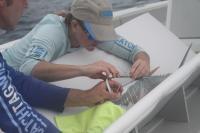
On an acoustic tagging trip, biologists in the air guide colleagues on the water to an aggregation where they catch fish with a rod and reel (Figure 2). Within three to four minutes of bringing the fish on board, biologists

make a small, shallow incision between the pectoral fins along the midline of the belly, taking care to avoid the egg-laden ovaries, which lie close to the body cavity wall (Figure 3a).
insert an acoustic tag into the abdomen (Figure 3b) and close the wound with one or two stitches made of absorbable material (Figure 3c).
take length measurements and insert a dart tag behind the dorsal fin before returning the fish to the water.

3a

3a

Figure 3a. A small incision allows insertion of an acoustic transmitter tag.

3b

3b

Figure 3b. The tag slides into the belly of the fish.

3c

3c

Figure 3c. An absorbable stitch or two closes the incision.

Figure 4

Figure 4

Figure 4. The study area in which biologists conduct aerial surveys and deploy underwater receivers (shown in red) extends from Pinellas County to Sarasota County, roughly 0-7 miles west of the coastline.

During the tagging process, biologists take ovarian samples from females to determine whether fish were about to spawn that night or spawned the day before. A catheter (a small tube with a syringe at the end) is used to extract a few eggs. Later in the laboratory, biologists process the samples to make histology slides, which they examine under a microscope.

One of two types of acoustic tags, continuous or coded, is implanted into a fish. Continuous tags are used to follow an aggregation when reflected sun on the water would make an aggregation difficult to see from the air. Continuous tags constantly emit a signal, allowing biologists to immediately follow and track a released fish with a handheld receiver. The goal–dependent on the tagged fish remaining with the aggregation–is to track the aggregation to its spawning location around dusk.

To evaluate longer-term movements, biologists use coded tags that are passively detected by underwater receivers. Depending on research goals, biologists place 20 to 40 receivers at historic and recent aggregation locations off the mouth of Tampa Bay (Figure 4) to determine whether aggregations return to the same sites within the same spawning season and from year to year. Data from these fixed stations indicates site fidelity, while tracking data may reveal spawning locations. Although both tag types provide movement information, they differ in that continuous tags show both movement and direction over the short term (as long as biologists are able to track it), while coded tags show movement over the long term (up to two years of battery life) but without directionality.

Since 2009, biologists have worked on this methodology to test and improve sampling design as well as collect preliminary data. Results indicate that red drum survive the tag implantation, return to previously identified aggregation sites, and can move up to 16 kilometers (10 miles) a day. Using data collected from these pilot studies, researchers are developing larger-scale studies to estimate red drum spawning stock abundance and assess spawning site fidelity and potential mixing along the Florida west coast.

What Is Regional Red Snapper Control In the Gulf States?

Gulf States Continue to Work Towards Regional Red Snapper Control

By David Rainer
Alabama Department of Conservation and Natural Resources
from The Fishing Wire

To borrow from an old song from the holidays that I was forced to endure for six years as a snaggle-toothed youngster, “All I want for Christmas are my two red snapper.”

It’s obviously not going to happen in a couple of weeks, but there is hope the situation will look much better in the near future.

Good catch of red snapper

Good catch of red snapper

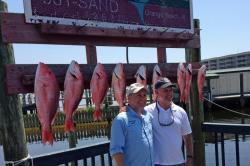
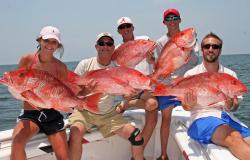
Rep. Bradley Byrne, right, of Alabama’s First District and Rep. Steve Scalise from Louisiana show off the red snapper catch after a trip out of Orange Beach this past summer. (ADCNR)

Congressman Bradley Byrne, Alabama’s U.S. Representative from the First District, and Alabama Marine Resources Director Chris Blankenship think a plan to move red snapper management to regional control could become a reality.

“We’re optimistic going into the new year that we will have a legislative solution in the first half of the year, in time enough to save our red snapper season for next summer,” Congressman Byrne said. “What we did, in committee, is we amended the reauthorization of the Magnuson-Stevens Act, the law that governs the fisheries of the United States.

“That language does a couple of things. First is it pushes all Gulf states’ (state waters) borders out to nine miles. Secondly, it relieves the Gulf states, when it comes to reef fish, from having to comply with the quotas established under Magnuson. Thirdly, it puts into the place of NOAA (National Oceanic and Atmospheric Administration), which currently does the stock assessment, the Gulf States Marine Fisheries Commission, which is different from the (Gulf of Mexico Fishery Management) Council.”

Congressman Byrne said he and many others he has spoken to believe the data collected by the Gulf States Marine Fisheries Commission (GSMFC) would be much more reliable than the data currently used by NOAA.

“We would get better science,” he said. “We would no longer use the scientists used by NOAA down in Miami. We would use regional scientists, using Dr. Bob Shipp as an example. I feel confident, as does Chris Blankenship, that we will get accurate science as to the health of the stock, which is very healthy, but also more reliable data on the size of the catch. Chris has good information that NOAA is overestimating the number of snapper we are catching. So if you underestimate the stock and overestimate the catch, that’s going to artificially skew the season to be much smaller than necessary.”

The data from Blankenship that Congressman Byrne referred to came from the Red Snapper Reporting System, which was implemented by Alabama Marine Resources for the 2014 season. NOAA estimated the catch off Alabama during the nine-day federal season at slightly more than 1 million pounds. The data collected through the mandatory Red Snapper Reporting System indicated Alabama anglers landed 418,000 pounds of red snapper.

Congressman Byrne invited fellow Congressman Steve Scalise (R-Louisiana) on a red snapper fishing trip this past summer to give the new House Whip an idea of how outstanding the fishing is off the Alabama Gulf Coast.

“That was a great opportunity for Congressman Scalise to go out and see just how plentiful the stock is,” Congressman Byrne said. “That’s important because I will be on the Natural Resources Committee next year, so I can drive it through committee. But getting it up on the House floor for a vote is another thing. To have the Whip as an ardent advocate for it really does help. That’s one of the reasons I’m optimistic.

“You may not have your two red snapper for this Christmas, but you may have it for next Christmas. That’s what we’re working on. That’s our goal.”

Blankenship was invited by Congressman Byrne to testify before the House’s Natural Resources Committee recently in Washington.

“I’m glad Congressman Byrne and the Natural Resources Committee asked me to come to Washington to talk about what we’re doing in Alabama and what we’re doing on red snapper,” Blankenship said. “I think it went very well. We talked about our Red Snapper Reporting System and what we’re doing with the University of South Alabama to get information that goes into the stock assessment

“I think it was really eye-opening for some of the congressmen on that committee to see what a small state like Alabama is doing when the federal government is getting all this money to manage the fishery and doing such a poor job of it. I think it was very well-received.”

During those committee hearings, Congressman Byrne grilled Samuel Rauch from the National Marine Fisheries Service (NMFS) about the enormous NMFS budget of almost $900 million and how that expenditure failed to produce reliable fisheries data.

“The three things I stressed in my testimony started with what a great red snapper fishery we have off Alabama because of all the work we’ve done over several decades to build artificial reefs,” Blankenship said. “That laid the foundation on why that fishery is so economically important to our state.

“The second thing is we had to implement our own Red Snapper Reporting System because the information gathered by the federal government through its program we felt was incorrect.

“The third thing we talked about was the stock assessment and how NOAA, in their sampling protocol, basically excludes artificial reefs. So we talked about the work we’re doing off Alabama, that we’re paying for out of our own pockets, because NOAA is excluding the artificial reef zones.”

The obviously defensive Rauch said that some of the artificial-reef data has been used in the last stock assessment, although he admitted it was not a large factor.

Blankenship said that is exactly the problem.

fwredsnapperview

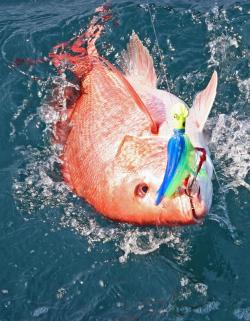
Catching red snapper

Catching red snapper

The Congressmen are working on legislation that would give the Gulf states regional control of the red snapper fishery and extend the boundary for state waters of each of the Gulf states to 9 miles. (ADCNR)

“What NOAA did was down-weighted our information because, in their opinion, it wasn’t as valuable as the data they collected,” Blankenship said. “They didn’t use our information at the same level or with the same importance in the model. So we’re really striving in the next red snapper stock assessment that our work will be used the way it should be in the model.

“And I have to commend Congressman Byrne. He was very well-prepared. He’s been down several times to go out on the boat when the University of South Alabama puts the cameras down to see what’s on the bottom around the reefs. He was prepared to ask those hard questions and be able to show the fallacies in the red snapper management where we are now. I have no doubt that he will continue to bird-dog this issue in the next Congress in January.”

Blankenship said he fielded several questions during the hearing and meetings with congressmen after the hearings on how Alabama could manage the fishery.

“The things we are doing in Alabama show that we can manage this fishery regionally,” he said. “We don’t need to have it managed by the federal government. Some changes to federal law would give us the flexibility and opportunity to manage the fishery. We can handle it here in Alabama. I think it meant a lot for them to see that the states are willing to do that.”

A regional management plan is still working through the Gulf Council process as well. The next Gulf Council meeting is scheduled for Jan. 26-30, 2015, at the Grand Hotel in Point Clear, Ala.

Blankenship said he’s not sure snapper fishermen will see relief in 2015, but he does think 2016 holds a great deal of promise.

“If they start using our red snapper data and get an update on the stock assessment, I hope to see the season back up to between 30 and 60 days in 2016,” Blankenship said. “The stock is required to be rebuilt by 2032, and we’re meeting those goals much quicker than that.

“It’s not a stock that’s in trouble. The federal management has just not kept up with the growth of the stock. We need to break that paradigm and get us off this merry-go-round we’re on at the federal level.”

PHOTOS: (ADCNR) Rep. Bradley Byrne, right, of Alabama’s First District and Rep. Steve Scalise from Louisiana show off the red snapper catch after a trip out of Orange Beach this past summer. The Congressmen are working on legislation that would give the Gulf states regional control of the red snapper fishery and extend the boundary for state waters of each of the Gulf states to 9 miles.

Do Forrest Buffers Provide Benefits for Waters Like the Chesapeake Bay?

Forest buffer research reveals more benefits than previously thought

Here’s food for thought for land managers all over the nation from Karl Blankenship, Editor of The Bay Journal, the great conservation publication that keeps watch over Chesapeake Bay.
from The Fishing Wire

White Clay Creek at Stroud Center has transformed from ‘impaired’ stream into habitat for trout.

By Karl Blankenship, Editor
The Bay Journal; www.bayjournal.com.
Stroud Water Research Center

Stroud Water Research Center

The Stroud Water Research Center in Chester County, PA. (Dave Harp)

Standing amid tall trees next to White Clay Creek, listening to the forest birds sing and the water splash along rocks, roots and fallen branches, one could imagine the creek had always looked like this.

But, walking through the site one summer afternoon, Bern Sweeney pointed to a tell-tale sign that the site wasn’t as pristine as it appeared. “If you look over there,” he said, “the trees are all in rows.”

Just a bit more than three decades ago a cornfield grew right to the edge of the stream. Another section was a pasture, again to the edge of the stream.

Sweeney and other scientists from the Stroud Water Research Center planted trees on a portion of the field and the pasture, and have been watching – and studying – changes ever since.

Just a few hundred yards downstream, the creek winds through a meadow and is so narrow a person could jump across. Here, among the tall trees, it requires a bridge – even though this upstream site was carrying less water.

“There is a lot of stuff happening here that is not happening down there,” said Sweeney, who helped plant the rows of trees as a young scientist and is now the center’s director. Despite the unnatural neat rows of trees, they have helped to transform what was once an “impaired” stream into one of the healthiest waterways in the region, with reduced pollution and improved habitat – and one that seems to keep getting better over time.

Located in Chester County, PA, the 48-year-old Stroud Center is just outside the Chesapeake Bay watershed, but its work, dating to that first planting in 1982, has greatly influenced Bay restoration efforts.

Its research was pivotal in convincing the state-federal Bay Program partnership that forested stream buffers should be a key restoration objective. That led the Bay Program in 1996 to adopt the nation’s first regional forest buffer restoration goal. That, in turn, led to the creation of the U.S. Department of Agriculture’s Conservation Reserve Enhancement Program, which made funding available to plant buffers and resulted in the quick achievement of the initial, 2,010-mile buffer goal.

“I do not believe the Bay region would be a champion of riparian forest buffers had it not been for the early intervention and education provided by Stroud,” said Ann Swanson, executive director of the Chesapeake Bay Commission, an advisory panel representing state legislatures that was a champion of the forest buffer goal.

Sweeney and Stroud scientists showed policy-makers like Swanson how forest buffers were the last line of defense for waterways against the human activities on the watershed. They could slow runoff, absorb nutrients and trap sediment before the pollutants could reach streams.

“Their science has been crucial to our understanding of how streams work and what makes them healthy,” said Al Todd, who is now executive director of the Alliance for the Chesapeake Bay but in the mid-1990s led U.S. Forest Service efforts to develop a Bay buffer policy.

“But more than just doing good science, people like Bern Sweeney have the unique ability to tell the story of riparian forests and stream health in a way that anyone can understand,” Todd said. “And Sweeney has not been timid about telling farmers or policy-makers they need to pay attention.”

More reductions than thought

One of the things that Sweeney and colleagues increasingly stress is that forest stream buffers are substantially different from other management practices used to control runoff. Not only are they highly effective at reducing nutrient runoff, but buffers also provide a host of additional stream benefits, such as stabilizing banks, regulating water temperatures and improving habitat quality.

White Clay Creek

White Clay Creek

White Clay Creek, once an “impaired” stream, is now one of the healthiest waterways in the region, and it seems to keep getting better over time. (Dave Harp)

New research by scientists at the center offers tantalizing hints that buffered streams may reduce nutrients even more than previously thought.

Furthermore, many benefits related to a forest buffter appear to increase as the buffer ages – unlike other pollution control efforts, such as grass buffers, which become less effective over time.

The center has stepped up efforts to spread the word about buffers – and helped to get more of them on the ground. It has increased research about cost-effective ways to plant buffers, and it established a new watershed restoration group to quickly translate its science into on-the-ground initiatives. “We see it as a way to directly inject science into an applied role,” Sweeney said. “And that needs to happen.”

Indeed. The rate of forest buffer plantings in the Bay watershed has dropped sharply in the last decade. Last year, just a little more than 200 miles were planted, down from a peak of more than 1,100 miles in 2002, and well short of the 900-mile-a-year goal contained in the new Chesapeake Bay Watershed Agreement.

Numerous factors have contributed to the trend: High commodity prices have made farmers reluctant to take crop land out of production to plant buffers, and the bureaucracy involved with the CREP program – which funds most buffer plantings – can be difficult for landowners to navigate.

Also, state restoration programs often haven’t prioritized forest buffers. Virginia instead has prioritized stream bank fencing to keep cows out of streams, and along a narrower band than is required for an effective buffer. Maryland’s forest buffer goals are modest compared with those of other states.

In Pennsylvania, the state legislature recently sided with builders and their allies to roll back a requirement that new development in state-designated exceptional value or high-quality watersheds maintain a 150-foot buffer along streams, contending water quality objectives could be met with other pollution control technologies.

Environmental groups and the state Fish and Boat Commission – citing Stroud’s work – argued that other pollution control practices could not match the full range of stream services provided by forest buffers. They lost.

Such emphasis on pollution reduction, rather than a more holistic view of stream health, frustrates buffer advocates. “I think the segregation of the Bay goals from local water quality sometimes has not helped,” said Matt Ehrhart, director of watershed restoration at the Stroud Center, and former executive director of the Chesapeake Bay Foundation’s Pennsylvania office. In Pennsylvania, he noted, streams are placed on the impaired waters list based on the presence of insects and benthic organisms that generally need conditions provided by forests.

Forest buffers are not a silver bullet that eliminates the need for other pollution-control practices upland, Ehrhart cautioned. But they provide an essential part of the solution, especially when it comes to stream health.

“At the end of the day, you can reduce phosphorus, but if you don’t have cooler temperatures and the conditions that foster your stream ecology, you won’t see the local changes that we’re looking for,” Ehrhart said. “Or trout.”

Forests vs. grass buffers

When Capt. John Smith explored the “faire bay” fed by “clear rivers and brooks,” he noted the landscape was “overgrown with trees.” Smith may not have recognized that the condition of the Bay and its tributary rivers was closely linked to the trees. At the time of his explorations in 1607-08, an estimated 95 percent of the watershed was forested.

The giant trees, their expansive root system, along with understory plants, greedily absorbed available nutrients. Their roots held sediment in place, resulting in a network of clean waterways that fed the Bay. Sweeney characterized the wholesale clearing of forests following European colonization as perhaps having the most devastating impact on Eastern streams.

As forests were removed, sediment and pollution entering waterways increased. Water quality worsened, and sunlight pounded the water, making it too warm for trout. Fish and other aquatic dwellers began to disappear. Flooding increased. Soil from clear-cut uplands flooded into valleys where it was trapped by a proliferation of small dams that powered grist and saw mills, smothering floodplains.

When grasses replaced trees along streams, as in the meadow immediately downstream of Stroud’s forested research site, they proactivey extend their root systems into the water and trap sediment. The sod that is formed at the stream edge causes the stream banks to gradually creep towards one another – narrowing the stream to an unnatural configuration. That forces the stream to dig deeper, cutting a narrow, steep-sided channel through the soil. Eventually, the channel digs below the roots, and begins eating away at the banks, causing the surface to collapse into the stream, releasing sediment but, more importantly, causing instability as the stream rapidly moves in an unnatural way across its floodplain.

No trees along a stream also means no leaves to fuel the diverse variety of insects and microorganisms that evolved in the stream over thousands of years of forest cover. Steady influxes of sediment from destabilized stream banks would smother much of their bottom habitat, anyway.

Bern Sweeney

Bern Sweeney

Bern Sweeney conducts a Stream and Buffer Ecology Workshop along White Clay Creek at the Stroud Water Research Center. (Dave Harp)

But along reforested sections of White Clay Creek, some of those lost functions are returning. The stream channel has widened and stabilized. Diverse stream insects thrive. Instead of a mud-covered bottom, the creek has pools, riffles and runs, offering habitat variety. Each fall, the food chain is fed by a huge influx of leaves – almost all of which are consumed before they can travel 100 yards downstream.

Sweeney is cautious about using words like “pristine” or “natural” to describe the stream. That’s because there are no untouched streams in the Piedmont for comparison. “We don’t have the ultimate reference site.” And, outside the stream channel, a layer of built-up sediment remains beyond the edges of the stream, over what was once a larger floodplain.

But, it does have something it didn’t used to: a reproducing trout population.

“I would argue it is a functional stream, ecologically,” Sweeney said, noting the state now classifies it as an “exceptional value” waterway. “It is a protected stream because it is so close to being natural. It has a great community in it with reproducing trout. We know that it processes nitrogen effectively. It works.”

Lessons learned

Almost everything along the stream seems to be monitored. The creek is lined with monitoring wells on either side so scientists can test water quality at different depths as it moves through the forest along the stream. Nets over the stream even collect flying aquatic insects.

The monitoring gives scientists new information about how the stream works. As it has gotten wider and shallower, the water it carries is more likely to come into contact with the microbes and insects that dwell on the bottom. Those organisms consume, or otherwise alter material, that the stream is carrying. Bacterial communities can remove pollution-causing nitrogen compounds from the water by turning it into harmless nitrogen gas – a process known as denitrification. Others break down pollutants such as pesticides into harmless components.

Some of those functions can take place in narrower streams, but the increased amount of stream bottom, combined with the presence of rocks, riffles and roots that slow the water through wooded areas, gives those organisms a greater opportunity to “process” the streamwater.

That’s further enhanced in the fall when an influx of leaves pours into the stream, providing more surface areas for bacteria, and food to fuel their growth – the leaves themselves. “All of a sudden we see a huge increase in the stream’s ability to take up something like nitrogen,” Sweeney said. “A deforested stream is not going to have that.”

Those processes may get better with age, according to Sweeney, as the wide forest streams stabilize and the trees exert more influence over the local environment, including the microbial communities in both the soil and the water. In addition, as trees become old and begin to drop “large woody debris” into waterways, those tree limbs and trunks provide additional habitat for still more organisms, and further slow the water, allowing more processing time.

Researchers at Stroud are hard at work trying to quantify those added benefits associated with forest buffers. “We don’t have a good handle on that yet, and those are really important services that we need to quantify because it puts additional value on the buffer,” Sweeney said.

But some research by Stroud scientists about the added denitrification potential of forested streams has begun to influence policy. An expert panel reviewing the Bay Program’s assumptions about forest buffer nutrient reductions recently gave a nod to that work. Historically, the Bay Program’s estimates of forest buffer nutrient removal were based solely on what happened in the buffers. In an updated recommendation, the panel suggested that streams with forest buffers on both sides be given an additional 4 percent nitrogen reduction credit because of the in-stream processes.

Sweeney thinks research will eventually show the in-stream benefits are even greater. “In my opinion, I think at some point the in-stream aspects that are associated with a forest buffer are going to actually be greater than what we are getting from the filtration from the buffer, or at least equal to,” he said.

“We weren’t even paying attention to this back in 1990 when we started talking about buffers, and now we realize that this is a big part of the overall equation.”

Sweeney wants to see the lessons learned at Stroud transferred to technicians who work with landowners, and to policy-makers and the staffs of agencies and environmental groups. That was the impetus for the launch last year of the center’s Watershed Restoration Group which, besides Ehrhart, also employs former Pennsylvania CBF staffers David Wise and Lamonte Garber.

The disconnect between what scientists know about the function of buffers and the policies and technology that guides their implementation has had real-world consequences. Sweeney had learned from the earliest planting along White Clay Creek, that if newly planted seedlings were not protected from invasive plants and browsing deer, they were unlikely to survive. He and colleagues published a paper in 2002 showing the importance of using 5-foot tree shelters and herbicide treatments for the survival of tree plantings.

But that paper went unseen by people working in the field, and funding for those actions was not initially included in federally funded buffer planting programs. “That gap in knowledge killed a lot of trees for three years,” Ehrhart said.

Staff from the restoration group, along with scientists, conduct workshops and meet with professionals throughout the region to tout the latest information and techniques.

Meanwhile, the center is branching out into new research to better address buffer planting issues. For instance, the use of herbicides is generally considered essential to keep invasive plants from overwhelming newly planted trees. But that’s not an option for organic farmers interested in tree buffers, so they are looking into non-herbicide methods, such as placing stone around seedlings to keep plants away.

Voles, tiny mouselike animals, can be a plague on newly planted trees. The biodegradable plant shelters that are routinely placed around seedlings to protect them from deer sometimes become “vole condos” in which the trees fall victim to small mammals instead of large ones. Stroud is experimenting with a product from Europe that has a small tree tube to exclude voles within the larger tube that excludes deer. “These things are only 20 cents, and they only take a second to put on,” Sweeney said. “If they work, a big problem goes away for us.”

They are also experimenting with new, low-cost planting techniques, such as planting seeds instead of seedlings and protecting them with fences instead of individual tree shelters. While most won’t survive, the hope is that enough will to create a functional buffer. “It’s not just about success, but also about cost-effectiveness,” Ehrhart said.

Another project under way is importing large pieces of trees and placing them in a stream that is getting a new forest buffer planting. The idea is to mimic the services provided by large woody debris, and determine whether it achieves measurable benefits.

One for the biggest goals is to avoid past mistakes. Ehrhart said that one of the impediments to putting forest buffers on the ground today is the lingering effects from early failures when buffer plantings were ramped up in the late 1990s and early 2000s, often with staffs and programs ill-prepared for the challenges and maintenance required by newly planted buffers.

“There are some areas within the whole Bay region that have a lot of pushback to Conservation Reserve Enhancement Program just because it created weed patches and trees died,” Ehrhart said. “We think there is a definite incentive to not go back to that. Whatever we do, we want to know that we are going to be successful with it.”

Forest Buffer Benefits

Riparian, or streamside forests, serve as a buffer, or “last line of defense” between upland areas and streams. Research shows that forest buffers of at least 100-feet width on each side of a stream provide such benefit as:

Moderate Stream Temperature: Leafy canopies shade and cool water, especially in small streams, preventing sharp fluctuations in temperatures that can stress fish and aquatic life. Cooler, stabler temperatures also promote the growth of beneficial algae and aquatic insects and contains more oxygen.

Protect Stream Banks: Healthy riparian forests help stabilize stream banks and reduce erosion. Tree roots hold soils in place. Roots and fallen branches protect stream banks by reducing stream flow velocity.

Filter Pollution: In many settings, forest buffers are among the most effective controls for reducing runoff. Their soils trap and remove nutrients moving in surface flows, while their deep roots absorb nitrogen in shallow groundwater. Depending on the setting, the Bay Program estimates forest buffers remove 19-65 percent of the nitrogen; 30-45 percent of the phosphorus; and 40-60 percent of the sediment that would otherwise enter the stream. Additional amounts of these pollutants can be removed by in-stream processes promoted by forest buffers.

Sustaining Aquatic Habitats: Orga-nic material entering the stream from the forest, whether from fallen leaves or organic matter collected by water flowing through the forest floor, provides the food needed to feed stream organisms that evolved to live in forested settings over thousands of years.

Source: State of the Chesapeake Forests / Chesapeake Bay Program

Karl Blankenship

Karl Blankenship

About Karl Blankenship

Karl Blankenship is editor of the Bay Journal and Executive Director of Chesapeake Media Service. He has served as editor of the Bay Journal since its inception in 1991.

Have You Caught A Tagged Tuna In Louisianna

Recovering Tuna Tags is Rewarding in More Ways Than One
Editor’s Note: Today’s feature comes to us courtesy of the Louisiana Department of Wildlife and Fisheries.
from The Fishing Wire

If you reel in a big one, you might catch more than just a trophy fish for dinner

The Louisiana Department of Wildlife and Fisheries is actively implementing a research program that involves the insertion of electronic tracking devices in yellowfin tuna to better understand their behavior. Fish tagging programs are typically designed by scientists, but any angler can contribute to this important research.

Putting a tag in tuna

Putting a tag in tuna

LDWF biologist Jennifer McKinney performs surgery on a yellowfin tuna to insert an internal archival tag.

The most important action that anglers can take to aid tagging programs is to return tags and information. In order for the Department to learn more about yellowfin tuna movements and habitat use in the Gulf of Mexico, biologists are requesting anglers return the internal archival tags when a tagged fish is caught.

“The holy grail of these electronic tags is the detailed data they record,” explained LDWF Assistant Secretary Randy Pausina. “But LDWF researchers can only access that level of information if they get the tag back.”

Not only can anglers expect a better-managed fishery, but the department is also offering up a reward for every tag returned. Individuals who return an intact electronic tag will receive a $200 Academy Sports and Outdoors gift card.

Tuna tag

Tuna tag

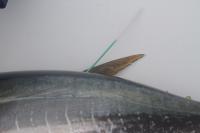
Tuna included in this study are surgically implanted with an electronic tag in the abdominal cavity and can be identified by an external green and white conventional tag at the base of the second dorsal fin.

If you catch a tagged yellowfin tuna:
• Record date, time and catch location (GPS coordinates).
• Measure fork length, weight and take photos of the surgical site (when possible).
• Carefully remove the tag from the fish. The light stalk, which can be seen protruding from the abdomen of the fish, must remain connected with the tag body inside the fish.
• Call the reward line at (855) 728-8247 or email sattag@wlf.la.gov to arrange pickup of the tag.

The internal archival tags are surgically implanted into the belly of the fish and record a range of parameters every 30 seconds including depth, light intensity, water temperature and the internal body temperature of the tagged tuna.

Since the study began in June 2013, over 100 internal tags have been deployed with approximately a 10% recapture rate. Thus far, the greatest movement of an internally tagged yellowfin is 155 nautical miles after 417 days at large.

The department will continue the study over the next few years, and resulting data can indicate habitat preferences and feeding and spawning behavior. Findings will greatly improve the body of knowledge of the yellowfin tuna resource in the Gulf of Mexico and its connectivity with the Atlantic-wide population, resulting in improved stock assessments and fishery management.

The Department of Wildlife and Fisheries is charged with managing and protecting Louisiana’s abundant natural resources. For more information, visit us at www.wlf.la.gov, on Facebook at www.facebook.com/ldwffb or follow us on Twitter @LDWF.

Humminbird® Pros Win Inshore Redfish Tour (IFA) 2014 Championship

Captains Rick Murphy and Geoff Page commit to insanely long runs, take top honors

HOUMA, LA. – Captains Rick Murphy and Geoff Page are no strangers to top IFA Redfish rankings. In 2004 and 2010 the duo won IFA Team of the Year. In 2011 and 2013, they won qualifying IFA events, but until now, never an IFA Championship.

“We would have been proud as pumpkins with 5th or 6th place,” says Sarasota, Florida-based Captain Geoff Page. “After the first day we were in 11th place and we didn’t think we could win it. Our goal was just to get a Top 10. The win never crossed our mind. And then it just fell in our laps.”

Still, the win is the result of an ambitious plan-one that required a 108-mile run each way from Houma, Louisiana, to Venice. The trip was 200 miles plus round trip!

Murphy started scouting the Houma area a week prior to the tournament while Page fished around Venice, marking waypoints on his Humminbird 798ci HD SI.

“Here I am scouting in Venice and Rick is eliminating any potential waters near Houma. And not once did I have to consider how to get to Venice – that was all Rick’s inherent skill, Humminbird GPS and Yamaha Fuel Management Gauge,” says Page.

Wasn’t long into practice that the two realized Venice would be the place to be come tournament time. Because Venice extends so far into the Gulf, it serves as a natural stopping point for baitfish moving from west to east or east to west in fall and winter.

“We knew that 26- to 27-inch reds near Venice would weigh more than anywhere else. Pogies are plentiful there and they pack a ton of protein. All we had to do was figure out how to get there,” says Homestead, Florida’s Captain Rick Murphy.

Skeptical that the run could even be made without diverting far into the Gulf, the duo sought the advice of locals familiar with labyrinthine canals, marshes and bays.

Page laughs: “Homeboys told us, ‘A little crazy, but you can do it!'”

“I marked all the waypoints on my 798ci HD SI unit. When we decided to use Murphy’s Pathfinder to make the 200+ round trip journey, I simply saved all my waypoints onto an SD card and plugged them straight into Murphy’s 1199. It worked flawlessly and took just a few seconds! I’ve always said fishing a Humminbird is easy, but that wins the prize – literally!”

So, using the GPS on his Humminbird 1199ci HD SI Combo, Murphy was able to map a quick route to their preferred redfish waters.

“I ran the Intracoastal Waterway and Houma Canal down past Cocodrie Bayou and headed east through marshes, using the Humminbird GPS to navigate old oil landcuts, coming out about 16 miles northwest of Grand Isle. From there I continued using the GPS, following the barrier islands in the Gulf to Venice.”

Murphy says the key was dropping waypoints during the entire route to aid in navigation.

“All I had to do was go from one waypoint, push exit, and go to the cursor for the next waypoint. That kept me on the right path, rather than hitting ‘Go To,’ which might divert me around an island. I ran the 1199 in split-screen with mapping and satellite overlay: 1-mile scale on the left and ¼- or ½-mile scale on the right side. I set the cursor 16 miles away; made it real simple.”
Following Murphy’s mapping run the Tuesday prior to the tournament, the team felt confident in their plan.

“We transferred all my waypoints from Venice to Rick’s 1199 and we were ready to go,” says Page.

Pushing Pogies, Boxing Reds

“On Day One we did the route in I hour 45 minutes, fished for 3.5 hours and then ran back to Grand Isle, got fuel, and ran home for weigh-in,” says Murphy.

What they found were “millions and millions” of pogies and some fat reds, including the second and third biggest fish of the tournament, including a 9.67-pound fish on Day One that measured a mere 1/32-inch from the 27-inch cut off.

The duo’s program involved Murphy using a Yeti cooler as a platform on the bow of his Pathfinder 2300 HPS for added elevation to spot active reds.

“I’d stand at the cockpit and help Rick spot fish, which he’d get first crack at. Thing is, he’s probably one of the best sight fishermen in the world. If he saw a fish he’d press stop on his iPilot remote and take the shot. If there was another fish in the boil, I’d cast,” says Page.

“I ran the Minn Kota iPilot remote in my left hand and a baitcaster in my right. It was all about spinnerbaits. Vibration was key – big blade and the thump of a Bass Assassin paddletail on the back,” says Murphy.

Moving the boat slowly ahead with the Minn Kota iPilot remote, Murphy would literally part massive schools of pogies with the boat, pushing them toward shore.

“The redfish went nuts as soon as the pogies hit the grass. You’d have about three to five seconds to throw to a redfish boil and intercept them. It was pretty intense sight fishing,” says Murphy.

“It was a cool deal. We worked island after island without ever cranking up the big Yamaha. Just point the iPilot toward the next island, hit the due north button and get ready for the next throw down. You might see three fish, you might see 13 … and they’re Louisiana fish, which don’t spook like Florida reds. You’d throw a spinnerbait at ’em and they’d run it down and eat it,” says Page.

After Day One the team was in 11th place with 16.85 pounds. On Day two they started in the first
flight of boats and shaved 15 minutes off their morning run, reaching Venice in 90 minutes.

“On Day Two we had a 9.77 and a high 8 for a two-day total of 35.29,” says Murphy. “It was a really great surprise. Definitely made the running worth it!”

Page says the Championship win demonstrates just how important the right equipment can be.

“Sure, we found the right fish, but we never would have been able to reach them without stuff that works. Humminbird and Minn Kota were a big part of it, as well as the reliability and speed of our Pathfinder boat and Yamaha motor. Keep in mind it was pretty dark when they cut us loose in the morning. But we had good waypoints so we could get there safe and sound, even at some pretty high speeds.”

Although humble, Page says the bragging rights will be used.

“We’re in our early 50s now. Sure, we can go hard all day long on the water, but do you think we could stay awake through the ninth inning of the World Series games? We’re like the old men of IFA Redfish, but this win proves we can still hang with the young bucks!”

Murphy and Page also earned $44,990 in cash and prizes.

For more information visit humminbird.com, contact Humminbird, 678 Humminbird Lane, Eufaula, AL 36027, or call 800-633-1468.

Who Tracks Smalltooth Sawfish?

FFWCC Continues Sawfish Research

Today’s feature on smalltooth sawfish, comes to us from the Florida Fish & Wildlife Commission. Though sawfish are scarce these days in most parts of Florida, there’s a small continuing population along the southwest coast, with the muddy creeks of the lower Everglades often a good spot to see one of these unique creatures. They’re also found in the lower Caloosahatchee and Peace Rivers and in Charlotte Harbor.
from The Fishing Wire

Studying Sawfish

Studying Sawfish

The endangered smalltooth sawfish is the only sawfish species found in Florida waters. It is a type of ray.

Researchers are studying the ecology and life history of the endangered smalltooth sawfish to aid recovery efforts.

Considered by some to be a symbol of strength and spirituality, the sawfish is culturally important to many tribal societies around the world. Belonging to the family Pristidae, derived from a Greek term meaning saw, sawfish possess a characteristic long, flattened, toothed rostrum, often referred to as the “saw,” which is used for feeding and defense against sharks, their only known predators. There are five species of sawfish worldwide.

The only species found in Florida waters is the smalltooth sawfish (Pristis pectinata). It is part of a group of fishes called elasmobranchs that includes all other rays and sharks. This protected species is listed federally under the Endangered Species Act because its population experienced significant decline and range reduction over the last century due to unintentional overfishing and its limited reproductive potential.

To learn more about the ecology and life history of the smalltooth sawfish and monitor its recovery, staff from the Fish and Wildlife Research Institute’s Charlotte Harbor Field Laboratory have spent over a decade monitoring and sampling juveniles in the estuaries of the Caloosahatchee River, Peace River and Charlotte Harbor. The project, led by biologist Dr. Gregg Poulakis, began with researchers compiling reports of angler encounters (which is still ongoing) and has evolved into a sampling program that addresses many of the priorities identified in NOAA’s Smalltooth Sawfish Recovery Plan icon_pdf.gif.

Smalltooth sawfish

Smalltooth sawfish

Though most sawfish seen today are small ones, the species is known to exceed 15 feet including their lengthy bill or saw, at full maturity.

Researchers tag each sawfish, which allows them to document the fish’s movements and determine which habitats they use. Researchers also collect a fin clip from each sawfish captured. These small samples have the potential to help scientists answer a variety of questions about the biology and ecology of the smalltooth sawfish. Researchers have already gathered information from these samples on population health, stability, habitat use and feeding biology.

Public participation is an important component of this research project, as reports of sawfish encounters provide a primary data source for determining the historic and current distribution of the population. For example, data provided by the public were instrumental in designating official critical habitat areas for juvenile sawfish – an important step in the recovery process. Members of the public are encouraged to report sawfish captures or sightings by email at Sawfish@MyFWC.com or phone at 941-255-7403. It is important to note that captures or sightings of even one sawfish are useful to the research team.

Through their work so far, Dr. Poulakis and his team have discovered some interesting facts about smalltooth sawfish. They determined that juveniles double in size during their first year, growing from a birth length of 2.5 feet up to 5 feet, and continue to grow relatively fast in their second year. Researchers also determined that sawfish are affected by marine debris, such as discarded fishing line, but can heal quickly if freed from the debris. Data also show that juveniles sometimes occur near specific locations for months, are found in natural creeks and man-made canals, and respond to large increases in river flow by moving downriver.

Dr. Poulakis and his team receive funding from the National Marine Fisheries Service to conduct this research, which addresses the ongoing management needs of multiple agencies and stakeholder groups

Who Tracks Baby Tarpon In Florida?

BTT Tracks Baby Tarpon in Southwest Florida
from The Fishing Wire

Checking baby tarpon

Checking baby tarpon

The Bonefish & Tarpon Trust continues their efforts at improving Florida’s flats fisheries with efforts to map the nursery areas used by juvenile tarpon on Florida’s southwest coast.

Last week, scientists at Bonefish and Tarpon Trust broke ground at their newest Juvenile Tarpon Habitat Restoration site by setting up antenna arrays that will be used to track juvenile tarpon movements within a series of canals. This project, being done in conjunction with the Southwest Florida Water Management District, Charlotte Harbor National Estuary Program, Florida Department of Environmental Protection Charlotte Harbor Buffer Preserve, and the Florida Fish and Wildlife Conservation Commission, will turn what are now old canals from a long-abandoned development into juvenile tarpon habitats. The crew made their way into the new site early Tuesday morning and were able to assemble 4 antenna arrays at a number of strategic locations. “The first step is to see how the fish currently use the canal system,” said JoEllen Wilson, BTT’s Juvenile Tarpon Habitat Program Manager. “Then once the restoration is complete, we will continue to sample to see if the tarpon prefer one type of habitat over another.”

BTT scientists will return later this year to begin the sampling. Sampling includes capturing juvenile tarpon with cast nets and seine nets, taking measurements, and then tagging the individual fish with PIT tags. When a tagged fish passes through one of the antenna arrays the antenna will log the date, time, and the unique tag number.

Juvenile tarpon depend upon shallow, backwater habitats for at least the first 2 to 3 years of their lives. Common characteristics include:

Mangrove or other fringing vegetation that provides structure and protection from bird predators;
A mixture of depths – primarily shallow with some deeper pools for fish to congregate when water levels decrease;
Tidal exchange through narrow, shallow passages that keeps predatory fish away;
Freshwater inflow;
Calm backwaters.

As coastal human populations continue to increase, coastal ecosystems and the fisheries they support are becoming increasingly stressed due to factors such as habitat loss and degradation. Therefore, there is an
urgent need to protect and restore these critically important habitats.

BTT thanks its collaborators the Southwest Florida Water Management District, Charlotte Harbor National Estuary Program, Florida Department of Environmental Protection Charlotte Harbor Buffer Preserve (especially Mr. Jay Garner), and the Florida Fish and Wildlife Conservation Commission.

For more info on the Juvenile Tarpon Habitat Initiative, or to help out this initiative by becoming a member, please visit www.btt.org

Can Anglers Help Recover Puget Sound Rockfish?

Working with anglers to recover threatened Puget Sound rockfish
from The Fishing Wire

Today’s feature, on Pacific rockfish that live 75 to 100 years, comes to us from NOAA Fisheries.

Written by Ed Quimby with contributions by Kelly Andrews and Jennifer Sawchuck

Rockfish don’t put up a fight like Chinook salmon (Oncorhynchus tshawytscha), so what’s the allure of catching them? Quite simply, they’re tasty. Randy Jones, a charter boat captain from Bremerton, remembers being about 10-years old when his dad was a commercial fisherman off Westport on the Washington coast, where the catch included yelloweye rockfish.

“They taste really good,” he said. “I’d take a rockfish over salmon any day of the week.”;

For Ray Frederick, a recreational fisherman near Silverdale with more than 70 years of experience, rockfish were an incidental catch decades ago. “I considered myself lucky if I caught a rockfish and brought it home, because they’re really good eating,” he said. “I prefer salmon, but my wife likes rockfish better.”

A dramatic decline

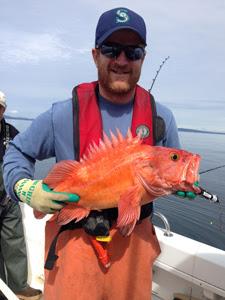
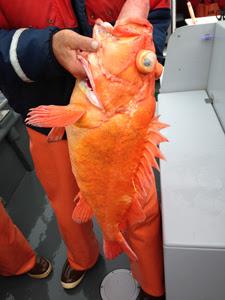
But these tasty populations have been in decline in Puget Sound for decades, in large part due to the species’ late maturation. Yelloweye rockfish (Sebastes ruberrimus)-aka red snapper or rockco-can live for more than 100 years and canary rockfish (Sebastes pinniger) for more than 75 years. Both species take more than a decade to mature and reproduce. This means that mature individuals taken by fishermen reduce reproductive potential and juveniles don’t mature fast enough to replace them.

After decades of commercial and recreational fishing on these species, decreases in catch were observed in the 1980s and the state began to impose catch limits. Some species, however, continued a dramatic decline in numbers, and in 2010 Puget Sound/Georgia Basin yelloweye and canary rockfish were listed as threatened under the U.S. Endangered Species Act (ESA).

Scientists team up with anglers

Captain Jay Field  and NOAA biologist Kelly Andrews

Captain Jay Field and NOAA biologist Kelly Andrews

Captain Jay Field of Dash One Charters and NOAA biologist Kelly Andrews prepare to release a 37 cm subadult yelloweye rockfish in the San Juan Islands.

Now that these depleted populations are protected, NOAA is working to restore them. An important goal for managing recovery is to identify genetic differences between these rockfish populations in Puget Sound and those on the outer coast to better define the boundaries of the distinct population segment (DPS), which is the smallest division of a species that can be listed under the Endangered Species Act.

That task fell to biologist Kelly Andrews and fellow researchers at NOAA Fisheries’ Northwest Fisheries Science Center (NWFSC). They decided to partner with experienced recreational charter boat captains and expert anglers who used to catch these elusive bottomfish. Even if it won’t happen in their lifetime, many of these anglers want a sustainable fishery for their children, the next generation of anglers. That’s how the rockfish research voyages of several charter boat captains, including Randy Jones and anglers such as Ray Frederick, were born.

As Andrews explained, “The low abundance of these two rockfish species makes cooperation with experienced local anglers the key to successful sample collection. Teaming up with them allows us to fish historical hotspots with methods and gear that were successful in the past.”

Andrews believes this research will be of great interest to anglers, because genetic information can inform fisheries management and the recovery of the species over time, which can impact economic activities related to charter and recreational fishing. The sampling could also point to the key answers about the populations themselves. Genetic diversity is one of the keys of healthy populations, and understanding how closely related these fish are could help determine that.

Searching for rockfish

Fishing for Rockfish

Fishing for Rockfish

After obtaining NOAA research permits to catch members of a protected species, and several spring shake-down cruises off the San Juan Islands and Whidbey Island to test methods, the team is sampling selected locations this summer. “We have six to eight captains available for fishing days,” Andrews said. Most of the charter boats are in the 25 to 30 foot range and can hold six passengers, but he said most captains want three or four anglers fishing at a time. They are fishing mostly below 150 feet for adults of these species. Canary depth ranges vary, but yelloweye are typically deep, with most being caught below 250 feet.

Jay Field, a charter operator from Anacortes and an experienced fisherman, also signed up his boat to be part of the research. As captain, he enjoys “putting the puzzle together, looking for certain structure and depths, a certain period in the tide” at a given hotspot. “Rockfish need a softer tide set,” he observed. “Too much current doesn’t work.”

Kelly Andrews

Kelly Andrews

Kelly Andrews with a 56 cm yelloweye rockfish.

But he also couldn’t resist the chance to do a little “rockfishing” again when the opportunity arose. “I’m a tried and true Chinook salmon fisherman,” Field said, “but I caught plenty of rockfish in the past.” He said the bottom is “snaggy and grabby,” which runs the risk of losing some expensive gear, “but if you’re not fishing at the bottom, you’re not fishing where they live.” He also noted that “Everybody does things a bit different. I fish more bait than hardware.” Evidently his technique works for him, as he caught several yelloweye, one about 17 pounds, over two feet long, and potentially 100 years old.

“Reeling in” barotrauma

The sampling is designed to be nonlethal. Scientists note the gender, measure total length and weight, cut a small piece of caudal fin for a genetic sample, then release the fish. While fishing at these depths can cause physical stress due to rapid changes in barometric pressure while being reeled to the surface, rapid recompression to captured depths may alleviate external signs of barotrauma.

Rockfish with Popeye

Rockfish with Popeye

Bottom-dwelling rockfish are susceptible to barotrauma when they are quickly brought to the surface, with symptoms including “pop-eye” as shown here.

Immediately after data collection, the researchers clip the mouth of the fish to a pressure-activated descending device called a SeaQualizer, which quickly takes the specimen down to the appropriate depth for release. However, more research is currently being conducted to determine long-term survival after decompression. Even if fish do not resurface they may have injuries that later lead to death.

“The rockfish’s swim bladder expands like a balloon on the way up,” Andrews explained, “and it doesn’t have the strength to get back down. Bottomfish can’t adjust to pressure changes as quickly as fish that spend a lot of time going up and down, but as the individual goes down on the SeaQualizer, the air compresses again in its swim bladder. Once down at the depth of capture, the rockfish can self-regulate again.”

Collecting genetic data

The caudal fin samples are collected from the fish and sent to the NWFSC laboratory in Seattle for genetic analysis. By comparing the genetic profiles of rockfish caught in Puget Sound with those on the outer coast, we can better understand the level of difference between these populations. By collecting samples from several regions of Puget Sound and the surrounding areas, we can identify geographically where differences in these populations occur. Answers to these questions will better inform spatial management boundaries and recovery actions for these species.

Biologists record GPS location and depth of catch, length, weight and gender of fish, snip a small piece of the tail fin for a genetic sample on every fish collected and attach a Floy tag into listed rockfish. Each fish is on board for approximately one minute andthen released back to the water, either on their own or using a descending device. Approximately 30 – 50 fish are sampled per angling trip.

Toward rockfish recovery

While the NWFSC scientists and their community partners are out on the water, and the geneticists are running DNA sequences, Jennifer Sawchuk, a marine ecologist in the NOAA Fisheries Protected Resources Division, is working with an team of experts from various organizations to draft the rockfish recovery plan for canary and yelloweye rockfish, and a third ESA-listed species, bocaccio (S. paucispinis). Just as the scientists have been working with the recreational fishing community, such partnerships are integral to her recovery planning efforts.

Previously as a University of Washington graduate student she interviewed more than 500 anglers in Puget Sound to gain an understanding of their knowledge about rockfish, perceptions of threats to rockfish, fishing practices, and preferences for recovery measures. The results of her study have informed NOAA’s outreach and education efforts around rockfish, as well as understanding how to better utilize angler’s knowledge about marine resources.

“We’ve done several projects over the years that involve experts and the public in recovering yelloweye, canary, and bocaccio, and much of that work has been with the regional fishing community,” Sawchuk said.

“We recognize that fishers can offer a lot of experience and expertise, and their support is important. To recover threatened and endangered species, it’s just as important to understand stakeholders as it is to understand the species themselves. Our hope is to continue working with anglers and other groups in the future – recovering these rockfish species will take the dedication of a lot of people from all over Puget Sound and we need their help.”

After internal review, co-manager and scientific peer review, and subsequent public review, a final recovery plan for these species in Puget Sound is targeted for release in 2015.

Northwest Fisheries Science Center

2725 Montlake Boulevard East
Seattle, WA 98112

(206) 860-3200
nwfsc.info@noaa.gov

Illegal Fishing In Gulf Make Fishermen Call for More Enforcement

Fishermen Call for Stronger Policies and Enforcement As Illegal Fishing in Gulf Grows

Today’s feature, on the growing issue with Mexican poachers in U.S. waters off Texas, comes to us from Chad Wilbanks with the Gulf Coast Leadership Conference.

by Chad Wilbanks, Gulf Coast Leadership Conference
from The Fishing Wire

350 dead sharks

350 dead sharks

Approximate 350 dead sharks lay on the ground outside of Coast Guard Station South Padre Island after their boat crew located a 5-mile-long gill net floating 4 miles offshore. Photo: U.S. Coast Guard

It seems every week brings another story of U.S. Coast Guard or other Gulf Coast maritime law enforcement giving chase to foreign fishermen sneaking into U.S. waters to fish illegally. Foreign illegal fishing in the Gulf, mostly by Mexican crew in boats called lanchas, is a persistent and alarming problem according to authorities from Gulf Coast states, as well as the federal government.

At a recent leadership summit at the Texas A&M University in Galveston campus, the urgency of the issue brought together a diverse group of stakeholders; commercial and recreational fishermen, state and federal fisheries enforcers and elected officials. Participants focused on how best to combat illegal fishing, and was hosted by the Gulf Coast Leadership Conference.

Randy Weber

Randy Weber

“Foreign illegal fishing in the Gulf “is an extremely important topic,” said U.S. Representative Randy Weber. Photo: Facebook

“Foreign illegal fishing in the Gulf “is an extremely important topic,” said U.S. Representative Randy Weber (R-TX). “Those who don’t play by the rules take advantage of our fishing industry.” Weber added that more can, and should be done to “level that playing field and shut down all illegal activities.”

Both commercial and recreational fisheries are an economic engine in the Gulf of Mexico driving jobs, tourism, state revenue and sustainable seafood.

According to the National Marine Fisheries Service, the Gulf of Mexico’s commercial and recreational fishing industries support more than 168,000 jobs and contribute $13.7 billion annually to the region’s economy. That significant economic lift reverberates far inland.

A $23.5 Billion Industry

Illegal and unreported fishing accounts for up to $23.5 billion worth of wild-caught marine fish globally, or around one-in-five fish harvested worldwide. That equates to up to 1,800 pounds of fish stolen every second.

Seized Fish

Seized Fish

The Coast Guard Cutter Zephyr seized an estimated 400 pounds of fish from a suspected illegal fishing vessel. Photo: U.S. Coast Guard

Aside from the theft of the fish, so-called pirate fishers show stark disregard for the marine environment. Often they sets miles of nets or lines that indiscriminately kill marine life, including endangered turtles and other imperiled species.

“I have visited extensively with business owners, recreational and commercial fisherman, and concerned citizens in Florida, Alabama, Mississippi, Louisiana, and Texas,” said Will Ward, CEO of Captain’s Finest Seafood in Clearwater, Fla., and a member of the Board of Directors for the Gulf Fishermen’s Association. “Everyone that I have spoken to is deeply troubled by the ongoing and chronic problem of foreign vessels engaging in illegal fishing. It is hard to grasp the impact this has had on our communities and our economy in the Gulf, unless you’ve lived it.”

Comprehensive statistics on illegal fishing in the Gulf are scarce, but according to Lt. Les Casterline with Texas Parks and Wildlife Department Fisheries Enforcement, just one of his wardens in fiscal year 2012 recovered 130,080 feet of illegal long line and 53,840 feet of gill net. “That gear alone held more than 6,000 sharks, 300 red snapper and an uncountable number of Spanish mackerel,” Casterline said.

Legislation Needed to Solve Problems

A key tool to solving illegal fishing is federal legislation that will tighten the net on illegal fishing operations. In April the U.S. Senate voted unanimously to approve the Port State Measures Agreement, which would strengthen and harmonize port inspection standards for foreign flagged fishing vessels. The agreement cannot take effect however until House of Representatives passes legislation to implement the pact.

Julio Fuentes

Julio Fuentes

Julio Fuentes, President and CEO of the Florida State Hispanic Chamber of Commerce, urged citizens to “tell Congress that it’s time to take a stand against foreign illegal fishing in the Gulf.” Photo: FHCC

Julio Fuentes, President and CEO of the Florida State Hispanic Chamber of Commerce, urged citizens to “tell Congress that it’s time to take a stand against foreign illegal fishing in the Gulf.”

“Illegal fishing could pose a serious economic, environmental, and human rights threat to Florida and the Gulf region,” said Fuentes. He cited numerous recent media stories on how illegal fishers around the world enslave workers, often keeping them at sea for years in deplorable working conditions that often result in the murder of dissenters.

The United Nations Office on Drugs and Crime has also linked pirate-fishing fleets to drug and migrant smuggling around the world.

Fleeing capture by Gulf law enforcement, outlaw crews have shot at officers hoping to create enough of a head start so that they can live to fish another day. Those caught face relatively light consequences: confiscation of their boat and repatriation to Mexico. Experts say this fails to deter offenders, with some illegal fishermen getting caught as many as eight times.

Harms Commercial and Recreational Sectors

Foreign illegal fishing is “the number one topic” among South Texas charter fishermen, according to Scott Hickman, a board advisor with the Charter Fishermen’s Association. “Illegal fishers are taking the ability from the charter industry to make a living. Our members see it every day. We need somebody guarding the fence,” he said.

Harlon Pearce, Gulf Seafood Institute president

Harlon Pearce, Gulf Seafood Institute president

“I take great care to sell only seafood that was caught legally and sustainably, and I know my customers appreciate it,” said Harlon Pearce, Gulf Seafood Institute president. Photo: Ed Lallo/Newsroom Ink

The challenge for U.S. authorities is clear: clamp down on current illegal fishing and implement policies to better prevent it from occurring in the future.

According to Gulf Seafood Institute president Harlon Peace, if that doesn’t happen soon the Gulf seafood industry faces an uncertain future.

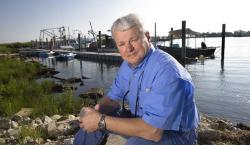
“I take great care to sell only seafood that was caught legally and sustainably, and I know my customers appreciate it,” said Pearce, who is also the owner of New Orleans Harlon’s LA Fish and Seafood. “I take great care to sell only seafood that was caught legally and sustainably, and I know my customers appreciate that. It is imperative that we as leaders in the Gulf Coast fishing and seafood industry work with our elected officials to ensure our fisheries are protected from illegal fishing.”