Category Archives: Saltwater Fishing

Everything saltwater fishing

What Are Gator Sea Trout In Alabama?

Year of the Gator Sea Trout in Alabama

Oddly enough, some anglers think the oil spill allowed more trout to reach jumbo sizes.

By David Rainer
Alabama Department of Conservation and Natural Resources
from The Fishing Wire

Big Alabama sea trout

Big Alabama sea trout

One gator has dominated the outdoors coverage this summer and rightfully so. Mandy Stokes’ world record American alligator at 15-feet, 9-inches is famous worldwide.

However, a gator of another sort has surfaced along the Alabama Gulf Coast that has inshore fishermen excited. It’s called a gator trout. Conjecture is that when the speckled trout (spotted seatrout for you purists) reaches 25 inches or larger, its tooth-filled mouth begins to resemble that toothy, giant reptile.

Highlighted by the Alabama Deep Sea Fishing Rodeo record trout of 8.88 pounds caught by Trenny Woodham in Theodore Industrial Canal, 2014 has been a banner year for gator trout.

Chris Blankenship, Director of the Alabama Marine Resources Division, said there is no research to pinpoint why some years are better for monster trout.

“The big fish we’re catching now are 8 or 9 years old,” Blankenship said. “Sometimes we have these spells where we catch a lot of big fish. That trout brought in at the rodeo was impressive.”

Inshore guide Jay Gunn, who spends most of his time in the Fort Morgan area, said there’s usually no warning that a gator trout is on the prowl until it takes the bait.

Based on his anecdotal evidence, Gunn thinks the 2010 oil spill may have impacted the trout fishery by reducing the harvest of specks for most of the spawning season.

“My theory is that most of those trout didn’t get caught and were able to spawn,” Gunn said. “That helped with recruitment the next year. That meant there were a lot of three-pound trout in the fishery. When they get that big, they start splitting away from the group and don’t run with the school anymore.

“Because those fish didn’t get caught, instead of seeing a lot of fish between five and seven pounds, we’re seeing a number of fish between eight and nine pounds. There are some not weighed and turned loose that could be even bigger.”

Gunn’s largest trout of 2014 measured 30 1/2 inches, which he estimated at 9-plus pounds. Like most big fish he’s caught during his career, he had no idea the fish was in the area.

“You kind of catch them out of nowhere,” he said. “All of sudden it happens. You don’t get many of those bites. It almost never happens when you’re catching other fish.”

When it comes to gator trout, it’s hard to beat live bait, according to Gunn, although he did catch a 29-incher on a DOA shrimp earlier this year.

“I’ll probably catch 50 trophy trout on croakers or menhaden for every one I catch on artificial,” he said. “I always use a Kahle hook with live bait, and almost every time the fish will be hooked in the corner of the mouth. If you hook one on a lure, your chance of landing that fish goes down with the size of the bait. If you’re fishing with a MirrOlure or Zara Spook, that trout is going to make a long run and then come to the top and shake his head. Then he’s going to make a shorter run and come to the top and shake his head. The weight of the lure can make it easier for the trout to throw the bait.

“The fish I catch on croakers seldom jump at all. They usually run and run and run.”

Inshore guide Bobby Abruscato, who has been on the winning team in three straight redfish tournaments, said the biggest trout he has seen all year was boated by his friend Bruce Howle Jr., who caught a 30-incher that Abruscato estimated at 10 pounds. Howell released the fish after photos were taken.

Abruscato said he seconds Gunn’s assessment that the oil spill likely kept a good many large trout from being thrown into anglers’ ice chests.

Gator trout

Gator trout

“I certainly think the oil spill was one of the factors,” Abruscato said. “The two summers after that were some of the best years I’ve had for trout. It’s still good, but not as good as that. I think what happened is with those fish in the population, it allowed some of those fish to grow and get to be that trophy size.

“When you start talking about catching a seven-plus fish, you’re just going to have to be real lucky. There are some guys who cut down on the luck, but with the super-big trout we’re seeing this year, it’s just luck. You have to be in the right place and have something on the end of the line that they want to eat.”

Abruscato says larger trout tend to be in or near deeper water, like the mouth of Dog River, Theodore Industrial and Mobile River, especially during the fall and winter.

“I just think those bigger fish like to stay in those areas where the salinity is more stable,” he said. “But that doesn’t mean they won’t move up in the shallows to feed. The biggest fish I ever caught in my life was in a foot of water. I was wade-fishing in May. The fish was 30 inches and hit a Catch 2000 MirrOlure. That fish knocked some mullet almost up on the beach. I threw over there and he nailed it.”

Both Abruscato and Gunn think the fall fishing in the Mobile Delta and other estuaries could be excellent this year, barring some sort of tropical weather.

“We haven’t had much rain lately,” Abruscato said. “With the salinity, the fish have pushed up the bay.”

Gunn added, “I think there are a good number of fish 15 to 17 inches, and they should be easy to catch. As little rain as we’ve had, they should be moving into the upper ends of the bays. It should be a good year in the Delta if we don’t get a storm to wash the shrimp out.”

But back to Woodham’s rodeo record trout. Will Patterson of Dauphin Island Sea Lab has headed a project to collect otoliths (ear bones) from speckled trout during the rodeo for the past two years. Like tree rings, the otolith reveals the age of the trout. The rodeo-record trout was a 7-year-old female.

Patterson said there is not enough evidence to conclude the oil spill had an effect on the number of gator trout seen in 2014. He said there could be several factors involved.

“A lot of fish in that genus are cannibalistic, so the bigger fish eat the smaller fish,” Patterson said. “When I was in college and working at a marina in Virginia, there’s a cousin to the speckled trout called the weakfish. I was cleaning a 14-pound weakfish and pulled a four-pound weakfish out of its stomach.”

Patterson said the otolith study will allow marine scientists to gather significantly more information on speckled trout.
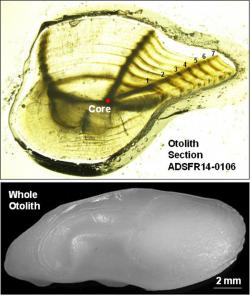
You can age fish by their otoliths

You can age fish by their otoliths

“An increase in size and age will be recorded in the otoliths,” he said. “We’ve got two years of data now, and we’re going to keep this going. There is a wealth of information to be gathered in rodeo samples.”

Blankenship said the proof of the great fishing off Alabama is in the number of state records broken in the last few years. He said 39 saltwater records have been broken since 2011.

“It’s encouraging to see all these big fish,” Blankenship said. “Our inshore artificial reef program and other habitat protections we’ve done have helped. We closed some areas in north Mobile Bay to shrimping, and Grand Bay is closed to trawling. I think things like that really give those smaller fish sanctuary and help with the shrimp production. That allows those fish to have plenty to eat and facilitates great growth.

“I get excited about seeing big fish. I get to see the applications for state-record fish before they go out to the committee. I’m proud when I see the size of the fish being caught off Alabama. This is just more confirmation of what a great fishery we have.”

PHOTOS: Jay Gunn holds a gator trout caught this summer near Fort Morgan that measured 30 1/2 inches. Bruce Howle Jr. landed a 30-inch gator trout near Dauphin Island that was at estimated at 10 pounds. Graduate student Brian Klimek, working with Will Patterson from the Dauphin Island Sea Lab, dissected the otolith (ear bone) of the Alabama Deep Sea Fishing Rodeo record trout caught by Trenny Woodham this year and determined the trout was 7 years old by counting the growth rings.
How Is A Florida Team Saving Dolphins Tangled In Fishing Line?

Florida Team Saves Dolphin from Tangled Fishing Gear
from The Fishing Line

Dolphin Team

Dolphin Team

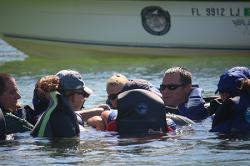
A team of 10 organizations, including Mote Marine Laboratory and the Sarasota Dolphin Research Program, helped to free a dolphin calf from fishing gear that was entangled around its tail. Without this help, the dolphin’s tail likely would have been severed.
Photo by Florida’s Fish and Wildlife Conservation Commission.

Today, an 11-month-old female bottlenose dolphin calf is swimming free and clear of fishing gear that could have severed her tail after 10 groups – including Mote Marine Laboratory – mounted a life-saving rescue in Little Marco Pass in Collier County.

The dolphin, a dependent calf nicknamed Skipper, was first spotted by members of the 10,000 Islands Dolphin Project, who documented the entanglement and reported it to state and federal authorities in August. After the dolphin was spotted several times over several weeks still entangled in fishing gear, NOAA’s National Marine Fisheries Service (NMFS) – which oversees the protection of marine mammals in the U.S. – asked the Sarasota Dolphin Research Program (SDRP), a partnership between Mote Marine Laboratory and the Chicago Zoological Society, to try to free the dolphin of the gear.

An initial effort by SDRP and Mote to remove the gear with a long-handled disentanglement tool on Aug. 28 was not successful.

Dolphin Tangling Fishing Gear

Dolphin Tangling Fishing Gear

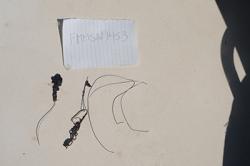
This is the gear that was tangled around the tail of “Skipper,” an 11-month-old bottlenose dolphin calf. Photo by the Chicago Zoological Society.

NMFS and SDRP contacted members of the Southeast Regional Marine Mammal Stranding Network to help with a rescue. The team included Florida’s Fish and Wildlife Conservation Commission (FWC) and FWC Law Enforcement, NMFS, the Chicago Zoological Society, Mote Marine Laboratory, Sea World, Clearwater Marine Aquarium, University of Florida, the Rookery Bay National Estuarine Research Reserve and 10,000 Islands Dolphin Project.

Early on Thursday, Sept. 4, 2014, a team of 39 people and six boats gathered at the Collier Boulevard boat ramp near Marco Island. Members of the 10,000 Islands Dolphin Project and a team from Clearwater Marine Aquarium had already been on the water looking for the calf and her mother, Halfway, and had found them.

The SDRP orchestrated the rescue: One boat set a net to encircle the dolphins, then the net corral was moved to shallower water and team members got into the water around the net and briefly restrained the animals. In the water, veterinarians found that about a foot of metal fishing leader, probably from a trolling rig, was wrapped around the base of Skipper’s tail peduncle and flukes. Left unchecked, the stiff metal wire would have cut deeper into the dolphin and eventually severed her tail.

“We are seeing situations like this all too often along Florida’s coasts,” said Dr. Randy Wells, director of the Sarasota Dolphin Research Program and the rescue’s coordinator. “This otherwise healthy dolphin calf likely would have died had we not been able to remove the gear. Her entanglement is a prime example of why we humans need to be careful with our fishing gear and watch out for wildlife that lives in our coastal waters.”

This year alone, Mote’s Stranding Investigations Program and animal hospitals have responded to more than 80 stranded sea turtles and 40 stranded marine mammals within Sarasota and Manatee counties and throughout the wider region covered by the Stranding Network.

Skipper is the 22nd live animal that Mote has helped to rescue this year, said Gretchen Lovewell, manager of Mote’s Stranding Investigations Program. The team also recently helped to rescue “Speedy,” a dolphin that was trapped in a lake in the Everglades in July. In addition to responding to stranded dolphins and sea turtles, Mote’s team also supports FWC’s response to stranded manatees in Southwest Florida.

“This rescue was really rewarding,” Lovewell said. “Not only was it a demonstration of how well the Stranding Network comes together to respond to animals in distress, but it was also an opportunity to give this individual dolphin a better chance at survival and to show what can be accomplished when all of us work together.”

Learn how you can help dolphins.

The rescue was possible in-part to grants from the John H. Prescott Marine Mammal Rescue Assistance Grant Program. This federal program supports the costs for teams to help dolphins and whales – like Skipper – that face life-threatening situations.

“This was a great team effort for a successful dolphin calf disentanglement,” said Denise Boyd, FWC Research Associate who coordinates stranding responses in Charlotte, Lee and Collier counties. “We hope that the dolphin will go on to lead a healthy life from here on in.”

Injured Dolphin Tail

Injured Dolphin Tail

This image shows the injury to Skipper’s tail. Photo by the Chicago Zoological Society.

Rescuing stranded marine mammals takes a group effort – from members of the public who report sick or injured animals and the management agencies that authorize such rescues to take place to the “boots-on-the-ground” teams at nonprofit institutions and organizations that conduct many such rescues. Nonprofit organizations rely on public donations to fund such work. Please consider making a donation to Mote Marine Laboratory or another participating agency to help. Online at mote.org/donate.

Does Florida Relesing Hatchery Raised Snook Help Me Catch Fish?

Florida’s Snook Population Gets a Boost from Release of Hatchery Fish

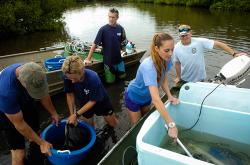
On Friday, Aug. 15, scientists with Mote Marine Laboratory and Florida’s Fish and Wildlife Conservation Commission released hatchery-reared juvenile snook into the wild as part of an ongoing program designed to find the most effective methods to replenish and enhance wild snook populations.

Stocking Snook

Stocking Snook

Scientists net snook raised in Mote’s hatchery facility near Sarasota, Florida, for stocking in area waters. (Photo Credit Mote Marine)

The species is one of Florida’s most popular sport fish and plays an important role in drawing recreational anglers to the state. According to the American Sportfishing Association, Florida is the top-ranked state in economic output from recreational fishing, which draws $8.6 billion to the economy annually. Saltwater fishing alone generates 80 percent – $6.8 billion – of that income.

Snook, along with red drum, are the main test species for restocking efforts statewide. This project – which involves tagging and then releasing more than 2,200 snook into Sarasota Bay during over three days – is designed to determine whether snook that have been conditioned for release at Mote have better growth and survival rates in the wild.

This event is a key example of Mote’s efforts to develop and support public-private partnerships for the conservation and sustainable use of our marine resources. The snook release is possible now thanks to a private donation to Mote and from funding provided by FWC. For more than 25 years, Mote and FWC scientists have partnered on studies designed to increase the effectiveness of stock enhancement in Florida; their work on the topic is followed globally.

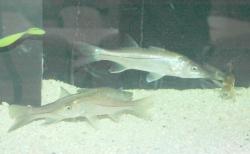
Snook In Hatchery

Snook In Hatchery

Snook are Florida’s premiere inshore gamefish, but have proven a challenge to grow in hatcheries in numbers large enough to affect wild populations in past efforts. (Photo Credit Mote Marine)

Past Mote and FWC research conducted through pilot snook releases that took place between 1997 and 2006 has shown that hatchery-reared fish released into the wild can indeed contribute to the local fishery with the fish growing to adulthood. And, in fact, tag data recovered following these small-scale pilot release experiments showed that using the knowledge we gained, we were able to improve the survival rate of stocked fish by more than 200 percent.

“We’ve found over time that we can improve the survival of hatchery snook released into the wild by 10 times just by choosing the right habitat,” said Dr. Kenneth Leber, Associate Vice President for Mote’s Directorate for Fisheries and Aquaculture. “We also know that there are limits on how many fish you can put in each habitat before you start to lose hatchery snook. These pilot studies we’re doing now are further defining the best methods for snook stock enhancement.”

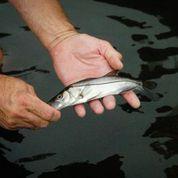
Fingerling Snooki

Fingerling Snooki

This baby snook must survive predators, anglers, cold weather and red tide for at least four years before it will become a spawning adult. (Photo Credit Mote Marine)

Such findings are key to developing large-scale stocking techniques that are financially and environmentally feasible that can help rapidly boost populations of species affected by overfishing or natural phenomenon like the 2010 winter cold spell that resulted in the deaths of millions of snook and the closure of the fishery. Snook populations have only recently rebounded on the Gulf Coast from that event enough that FWC was able to reopen the fishery earlier this year.

This latest experiment will look at the survival in the wild of 2,000 juvenile snook that were born and raised at Mote Aquaculture Park in eastern Sarasota County. The Park is Mote’s aquaculture research and development test-bed where we are developing new methods for spawning, hatching and rearing marine species for restocking purposes and for human consumption. Many of these studies are conducted in partnership with FWC biologists.

“FWC and Mote Marine Lab have worked together since 1985 to advance marine stock enhancement in Florida,” said Chris Young, Director of FWC’s Stock Enhancement Program. “We’re excited to continue our partnership with Mote Marine Lab in support of these snook releases.”

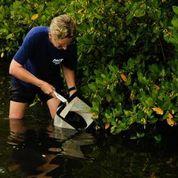
Releasing Snook

Releasing Snook

Scientists have discovered that releasing snook in remote backwaters with lots of mangroves gives them the best chance of survival. (Photo credit Mote Marine)

For this release, FWC and Mote biologists inserted PIT tags – passive integrated transponder tags – in the juvenile snook before release. These small, 23 mm-long tags are about the size of a pencil eraser and each one transmits a unique identifying number. The transmissions will be picked up by underwater antennae placed by scientists near the release site in the wild. These antennae will listen for the released snook as they swim by and each time a tagged snook passes through the array, a receiver will record the movement.

Scientists will also use seine nets to periodically gather snook and evaluate growth rates, compare performance between wild and hatchery snook and determine whether the released fish are contributing to overall snook abundances.

One key to the study is the conditioning that some of the snook have undergone prior to release, Leber said. “We have a control group of fish that have been raised in traditional aquaculture manner – in bare tanks using artificial feed. We also have a group of conditioned fish that have been fed live prey for three days prior to their release. We’ve also placed structures into their tanks, which mimics the structure fish will have in the wild. We think these two factors will help hatchery-reared snook be more prepared for life in the wild – with a better ability to hide from predators and ready to hunt for prey of their own.”

What Are my Odds of Getting Bitten By A Shark?

Sharky Odds = What are my odds of getting bitten by a shark?

By Frank Sargeant, Editor
from The Fishing Wire

Shark

Shark

Ever wonder what the odds are of being bitten by a shark on that Florida vacation?

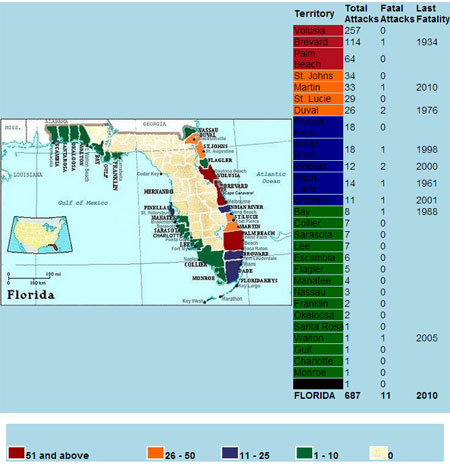
The International Shark Attack File maintained by George Burgess at the University of Florida can give you a pretty good idea of which beaches around Florida’s coast are safest, and which are less so-though to be sure, the odds of anyone ever getting bitten in an unprovoked attack are almost infinitely small-there have been a total of 687 recorded attacks since record-keeping started in 1882. Considering the hundreds of millions who have enjoyed swimming at Florida’s beaches since then, you can see the chances of an encounter are not something to be greatly concerned about.

In fact, says Burgess, a person’s odds of getting killed by a shark anywhere worldwide are 1 in 3.7 million. (an animal group sent me this: “this figure has been updated to “1 in 4,332,817) To put that into perspective, the chances of being killed by another human, based on data from the UN Office on Drugs and Crime, are roughly 1 in 16,000. (Of course, only people who swim in the ocean or estuarine areas can be bitten, so when you take that much more limited universe, the odds are probably considerably higher, but not nearly so high as if you decided to take a walk on the wild side of Detroit on a Saturday night.)

Florida’s central east coast has by far the highest number of bites, with Volusia and Brevard recording many times the number of attacks in most other counties. The reasons are not difficult to understand–the water here is often at least slightly murky, the area is seasonally loaded with baitfish which attract sharks, and it’s also the favorite spot in Florida for surfers. Put lots of people in the water well offshore in a bait-rich and shark-rich environment where the sharks can’t clearly see their feeding targets and people get bitten.

It’s worth noting that most of these bites are not extremely serious as shark bites go, though even getting brushed with the open jaw of a shark of any size is going to mean stitches. The last fatality in the area was in 1934–the sharks that bite people here are very likely biting at sound and motion, and very few follow through in a serious feeding attack once they realize the target is not their usual food.

Palm Beach, with 64 bites over the recorded period since 1883, ranks high also because it’s an area where bait and predators swarm at certain times of the year. The water is much clearer in these southern areas, however, so the chances of a “mistake bite” go down. If you don’t do something stupid, like swimming at dawn or dusk or in the moonlight, your odds are minimal. St. Lucie and Martin counties, adjacent the Palm Beach “bump” towards near-shore deep water, also rank relatively high in bites, for the same reasons–great places to fish, particularly during the spring and fall mullet runs, but if you’re smart you’ll stay very close to shore as far as swimming at those times.

The rest of the state has such a smattering of bites–far fewer than 1 per county per decade–that it’s really not a consideration. Some places seem made for sharks to bite humans, like the beaches between Boca Grande Pass and Tampa Bay, where in spring and summer vast schools of tarpon lure giant hammerheads, bulls and lemons in right against the beaches to feed on them–and yet this area is very low in the number of bites. Clear water and shallow beaches are probably the reason–the sharks can easily see what they’re after, and the swimmers can easily stay shallow and still enjoy a good swim in most areas.

Are there any counties in Florida where sharks do not bite swimmers? Yes, there are: those in what’s known as the “Big Bend” of Florida’s west coast, from Pasco to Wakulla counties. There has never been a bite recorded in this broad area–probably because there are almost no beaches here–the vast shallow grass flats, in many areas dropping only a foot per mile from shore, keep big predators far offshore, and also do not offer attractive swimming spots. Great for trout fishing and wildlife watching, however, in relative peace from the crowds that swarm white sand beaches in the rest of the Sunshine State, and you can wadefish for miles without concern of sharks. Stingrays, however, are another matter.

Here’s a look at the statistics compiled by Dr. Burgess:

1882-2013 Map of Florida’s Confirmed Unprovoked Shark Attacks (N=687)

Florida shark bite chart

Florida shark bite chart

© International Shark Attack File
Florida Museum of Natural History, University of Florida

Are Underwater Robots Used To Monitor Oceans?

Underwater Robots from Mote and USF Monitor Red Tide, Ocean Conditions in Gulf of Mexico

Robot Waldo

Robot Waldo

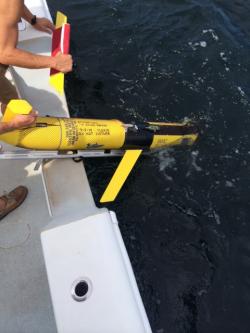
Waldo (top) and Bass (bottom) are two underwater robots launched by Mote Marine Laboratory and the University of South Florida, respectively, to monitor for Florida red tide and the ocean conditions that might affect it. (Photo credit: Capt. Greg Byrd/Mote Marine Laboratory)
Robot Bass

Robot Bass


Two underwater robots deployed Friday by Mote Marine Laboratory and the University of South Florida (USF) are helping scientists learn about the offshore bloom of Florida red tide in the Gulf and the ocean conditions that might be affecting it.

The bloom – first reported offshore in a statewide update issued July 25 by the Florida Fish and Wildlife Conservation Commission (FWC) – is presently offshore of Hernando and Pasco Counties and appears to be 80 miles long, 50 miles wide and 40-90 miles offshore, according to satellite images. (See the latest update from FWC.)

While satellites capture the bloom’s surface appearance, only underwater robots and water sampling crews can verify the presence of the red tide algae, Karenia brevis, and detect the bloom beneath the surface. While scientists on boats can return water samples to the lab for more detailed analyses, robots can stay in the environment much longer, work in challenging weather and gather more data per mission.

Mote’s robot, an autonomous underwater vehicle (AUV) nicknamed “Waldo,” carries a Mote-designed red tide detector called an optical phytoplankton discriminator, nicknamed the “BreveBuster.” This instrument examines microscopic algae in the water and tells scientists how closely they resemble K. brevis. In addition, Waldo’s equipment measures salinity and temperature – two physical factors that can affect blooms and help scientists develop better short-term forecasts of bloom movement.

USF’s AUV, nicknamed “Bass,” collects physical and optical oceanography data, including chlorophyll from algae, oxygen levels and water clarity. Data from both AUVs will support mathematical modeling of the bloom for short-term forecasts developed by the USF-FWC Collaboration for the Prediction of Red Tides.

“The team effort between our AUVs is crucial,” said Dr. L. Kellie Dixon, manager of the Ocean Technology Program at Mote. “The bloom is large and one AUV would have difficulty surveying all of it within a reasonable amount of time. Each AUV also has its own strengths – Waldo is equipped to sense the presence of red tide, important for ground-truthing the satellite images, while Bass is designed to make deeper dives further offshore.”

Waldo is programmed to move south along the shallower eastern edge of the bloom while Bass is set to move south along the deeper, western edge. Both gliders will dive up and down, collecting data at various depths and then surfacing every few hours to send updates to scientists using satellite transmitters in their tails.

Results so far: Since deployment on Friday, Waldo has been patrolling to within about 40 miles from the Pasco/Hernando border and has found red tide at the surface and to depths of about 25 meters (82 feet) in areas where it was indicated by satellites. Bass has been transecting the outer portion of the bloom and has found elevated chlorophyll associated with the red tide into waters as deep as 40 meters (131 feet).

Both gliders indicate stratified (or layered) water, with warmer and fresher water on the surface, and an abrupt transition to colder, saltier water at mid-depth.

Where are Waldo and Bass?

The public can see Waldo’s position by visiting: http://coolcloud.mote.org and clicking “Glider Operations,” and Google Earth users can see Waldo and Bass’ positions at: http://ooma.marine.usf.edu/CROW/

Through underwater robot missions and other monitoring efforts, Mote and USF are partners in a major environmental monitoring collaboration called GCOOS – the Gulf of Mexico Coastal Ocean Observing System. GCOOS provides timely information about the environment of the U.S. portion of the Gulf of Mexico and its estuaries for use by decision-makers, including researchers, government managers, industry, the military, educators, emergency responders and the general public. Both gliders are reporting data to GCOOS’s Data Portal (http://gcoos.org/products/) in support of these efforts.

“In the future, we’d really like to compliment satellite imagery in the Gulf of Mexico with our underwater robots’ findings continuously, so that we can see what’s going on below the surface before a bloom initiates and starts killing fish and potentially impacting our coastlines,” said USF’s Chad Lembke, recently named leader of the Gulf Glider Task Team organized by GCOOS to assist in the coordination of glider efforts in the Gulf region. (“Glider” is another name for these AUVs or underwater robots.)

Red tide resources:

Statewide red tide updates and info from FWC: http://myfwc.com/redtide
Statewide updates in the HAB Bulletin from NOAA: http://tidesandcurrents.noaa.gov/hab/
Red tide information from Mote, including FAQs and the Beach Conditions Report: a monitoring system for red tide impacts on multiple Florida beaches: http://mote.org/news/environment-updates#RedTide
Learn about red tide on Facebook from this FWC-Mote page about Florida’s harmful algal blooms: www.facebook.com/flhabs
Latest model forecasts from USF-FWC Collaboration for Prediction of Red Tides at: http://cprweb.marine.usf.edu/

Founded in 1955, Mote Marine Laboratory & Aquarium is an independent, nonprofit 501(c)3 research organization based in Sarasota, Fla., with field stations in eastern Sarasota County, Charlotte Harbor and the Florida Keys. Mote has 24 research programs and a variety of initiatives dedicated to today’s research for tomorrow’s oceans with an emphasis on world-class research relevant to conservation and sustainable use of marine biodiversity, healthy habitats and natural resources. Mote’s vision includes positively impacting public policy through science-based outreach and education. Showcasing this research is The Aquarium at Mote, open from 10 a.m. to 5 p.m. 365 days a year. Learn more at www.mote.org.

A Response to “Another View on Gulf Red Snapper Management”

In Response to “Another View on Gulf Red Snapper Management”
from The Fishing Wire

Recreational angling stakeholders recently released a joint one-pager on the potential impacts of bureaucratic decisions regarding the red snapper fishery in the Gulf of Mexico. As part of that release, the Congressional Sportsmen’s Foundation (Foundation) – not the Congressional Sportsmen’s Caucus – issued a press release on the current proposal before the Gulf of Mexico Fishery Management Council (Council) that looks to pit components of the recreational sector against one another. While coverage of the one-pager has been well-received, the release’s recreational angling outlook received a naïve assessment entitled “Another View on Gulf Red Snapper Management” as published in the July 24 edition of the Fishing Wire.

The author, a former representative on the Gulf of Mexico Fishery Management Council, criticizes the Foundation and its partners for suggesting that the Council has not done a good job of developing real solutions to the challenges facing red snapper anglers. He states that, “In reality, the Council has been working on red snapper management alternatives for decades by implementing various management tools, such as bag and size limits, seasons, and quotas.” Unfortunately, the “reality” we’ve seen is shorter and shorter federal recreational red snapper seasons, culminating in the shortest ever: nine days in 2014. If sector separation (Amendment 40) is successful, the average recreational angler will likely see zero days in federal waters despite snapper populations that are more abundant than ever documented. How can the trend of fewer and fewer days to fish for the healthiest population of red snapper in history be considered successful management?

It is clear the author subscribes to the theory that separating the two identifiable components of the recreational sector will solve the problems for recreational anglers, especially the charter-for-hire (CFH) component. If you are a charter captain who was given only nine days to fish this year, having your own quota may seem like the silver bullet you need to make a living. Any business owner could sympathize with looking for an alternative lifeline. But one must question if it is really the salvation of the industry?

Although he states there is no comparison between the commercial sector’s catch share program and sector separation, later on he says that “each new recreational sector would be responsible for their quota.” How can a small, finite number of charter captains not be allocated some form of individual shares or quota? Although an Individual Fishing Quota (IFQ) program for the CFH sector is not specifically part of Amendment 40, the 178-page amendment document makes several references where this form of catch shares would be an option for managing the new CFH sector if Amendment 40 is successful. That, combined with the current Head Boat Exempted Fishing Permit (EFP) and the proposed Alabama Charter-for-Hire EFP, suggests that is exactly where this is headed – Individual charter captains holding individual shares of quota.

Charter captains need only to take a look at other sector separation and catch share programs to be concerned. In all catch share fisheries to date, over 50% of all fishery participants exited the fishery. Ultimately, if you don’t hold an initial share, you are out of luck to begin with. That’s what catch shares are designed to do … to reduce capacity by getting boats off the water. There will be winners, yes. But there will be losers as well. More losers than winners. Is it worth the gamble? Just ask an Alaskan charter boat captain how sector separation in the halibut fishery has worked for them.

The author points out that since the commercial sector’s individual fishing quota went into effect, that sector has not exceeded their quota once, while the recreational sector has exceeded their quota most every year. This is the same argument used by the commercial sector to emphasize how great the commercial IFQ program is while labeling the recreational sector “unaccountable.” Despite what the commercial industry and environmental groups proclaim, recreational anglers (both private and CFH components) have been accountable and abide by the law and the regulations. It is the federal system of fisheries management that has been “unaccountable” and has failed the recreational fishing public as a whole.

Finally the editorial states that, “Currently, there are two distinct components of the recreational fishing sector…” According to section 407(d) of the Magnuson-Stevens Act, which deals specifically with red snapper, there is just one. Private recreational anglers and CFH are distinctly treated as a single component and rightly so. One has the means of accessing red snapper on their own, whether they own a boat or know folks who do, while the other provides a service for the rest of the American public who does not. The recreational sector of the red snapper fishery is intended for any American to be able to go to the Gulf of Mexico and catch red snapper if they so choose. All other successfully managed Gulf recreational fisheries have the same two components of the recreational sector, yet they are successfully managed as one. Why do we need to split the two for Gulf red snapper to provide relief for a minority of the CFH captains?

In short – we don’t. The Council needs to get serious about managing the fishery as a whole. Trying to apply that same commercial model to the recreational sector has proven unsuccessful. Holistic management will require some controversial, but appropriate, choices like that of true re-examination of allocations, not just above 9.12 million pounds. The current quota of 49% recreational/51% commercial has not been updated in nearly three decades and was established at a time when recreational angling for red snapper was at an all-time low using survey methodologies that have since been replaced because of gross inaccuracies. That, in and of itself, begs for a new look at where we are today. Red snapper, and all our marine fisheries resources, belong to us all. Good government mandates that we make the best use of our public trust resources for the benefit of the nation as a whole.

We need to take a hard look at how the states would manage red snapper. The states have successfully managed recreational fisheries for a century, but not based on how the Council or NOAA fumbles with fisheries management. States have been successful because they manage on a rate of harvest and not by trying to squeeze every pound out of the fishery as does federal fisheries management with its concept of maximum sustainable yield. The Council needs to implement alternative, harvest-based management of the fisheries, or simply give it to the states which have more experience and better data.

Red snapper can be managed to benefit both recreational and commercial fishermen. However, sector separation will only ensure that there are a few winners and a bunch of losers. Sector separation is not the answer.

Mike Nussman
American Sportfishing Association

Jeff Crane
Congressional Sportsmen’s Foundation

Pat Murray
Coastal Conservation Association

Steve Stock
Guy Harvey Foundation

Jeff Angers
Center for Coastal Conservation

Thom Dammrich
National Marine Manufacturers Association

Another View on Gulf Red Snapper Management

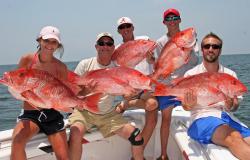
Red Snapper Catch

Red Snapper Catch

From William Teehan, Another View on Gulf Red Snapper Management

Here’s an alternate take on the current haggling over red snapper management in the Gulf of Mexico. We may not necessarily agree with it, but Bill Teehan has been around fishery management a long time and has a lot of useful knowledge on the topic-here are his thoughts:

By William Teehan
from The Fishing Wire

As a retired Florida Fish and Wildlife Commission marine fisheries manager who represented the agency at Gulf of Mexico Fishery Management Council meetings, a July 15, 2014, Congressional Sportsman s Caucus press release published in The Fishing Wire entitled re e Congressional Sportsman Commission marine fisheries manager who represented the agency at Gulf of Mexico Fishery Management Council meetings, I’ve built up a lot of information about this issue, how it came about and why the Council is considering it. Frankly, I found the press release and its additional signatories the American Sportfishing Association, the Guy Harvey Ocean Foundation, the Center for Coastal Conservation, the International Game Fish Association, the Coastal Conservation Association, the National Marine Manufacturers Association, and the Congressional Sportsman’s Foundation misleading. I would like to take this opportunity to debunk a few of the statements made in the press release.

Currently, there are two very distinct components to the recreational fishing sector, but the Caucus and its press release signatories do not want to recognize the differences. The recreational sector is comprised of anglers that hire federally permitted vessels to access the fishery and anglers that own private vessels and do not rely upon the for-hire fleet to go fishing. Under current management, these two distinct recreational angler groups share one red snapper quota.

The Caucus issue is with the Councils proposed Reef Fish Amendment 40, which will separate these two distinct fishing groups into their own sectors within the recreational red snapper fishery. Short story: Amendment 40 proposes looking at the catch histories of these two distinct components and making them their own sectors on equal footing with each other based upon their historical catches.

The Caucus states that Amendment 40 will divide the recreational quota e two distinct components and making them their own sfor-hire sectors. The Caucus is misleading this as the Council preferred alternative. In reality, the Council is considering establishing the private angler share as 54.1% and the for-hire share as 45.9% of the recreational quota. These allotments are based on average landings histories between 1996 through 2013. The Council has also requested new alternatives based upon different landings. All catch history alternatives exclude 2010 landings because of the broad closures resulting from the Deepwater Horizon Oil Spill. To see the full suite of allocation alternatives please see Council’s Sector Separation video.

The Caucus lays the blame for the red snapper situation squarely at the feet of the Council, going so far as to say that the Council is not working “to develop real solutions to the challenges facing the recreational red snapper management.a In reality, the Council has been working on red snapper management alternatives for decades by implementing various management tools such as bag and size limits, seasons, and quotas. The concept of separating the recreational sector components first arose in late 2008 when federal fishery managers, of which I was one, were required by the 2007 Magnuson-Stevens Act reauthorization to get serious about ending overfishing in marine waters.

Before the 2007 Magnuson-Stevens Acterfisauthorization, the red snapper fishery was severely overfished and substantial cuts were made to both commercial and recreational sector quotas to begin rebuilding the depleted stock. The commercial sector even adopted an individual fishing quota management tool to keep their fishermen on the water while protecting the red snapper resource. Since 2007, the commercial sector has not exceeded their quota once, while the recreational sector has gone over theirs every year, excepting 2010.

The Caucus attempts to compare sector separation to the individual fishing quota program presently used in the commercial sector. In reality, there is no comparison between the two sectors. The commercial quota program allots individual fishermen a share of the fishery based upon landings history; whereas, sector separation would split the overall recreational quota between private anglers and the for-hire sectors based upon landings histories of the sectors, not individual anglers. Each new recreational sector would be responsible for their quota, which will allow managers the flexibility the Caucus and its signatories ask for and allow the new sectors to use their quota as their fishery dictates.

The Caucus press release also suggests that sector separation will expand to other fisheries. But sector separation is only one type of management tool. In the case of Amendment 40, it is being discussed for the Gulf recreational red snapper fishery only. There are no plans to apply this tool to other fisheries at this time; however, it is available to use on as a species or a complex basis.

Finally, the Caucus press release would make you believe that sector separation is a done deal. It points the reader to the next two full Council meetings in August and October as the ock. hallenges frn the tide.r The reality is that the Council will be conducting public hearings in all of the Gulf States during early August to gather public testimony on a draft document, including suggestions for management alternatives. The Council will also be taking written comments on Amendment 40. Dates, times and locations for those hearings can be found here.

How Can I Catch Summer Trout On Topwater Baits?

Summer Topwater Trout

By William Redmond
from The Fishing Wire

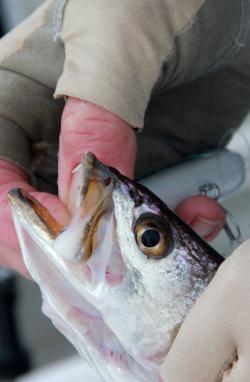
They could very well be one of the most underrated of Florida’s sport fish. Lacking the sturdiness of a snook or redfish, speckled trout are known for their soft bodies and paper thin mouths, but once these fish reach about 24 inches, they earn the nickname “gator trout” for an undeniable ferocity most clearly displayed in their treatment of topwater plugs.

From a boat or on foot, casting surface plugs for speckled trout ranks as one of the most popular angling pursuits for shallow water anglers throughout the Sunshine State’s Gulf Coast region. Capt. Jason Stock, who guides from a flats skiff and a kayak, knows well the trout’s penchant for attacking topwaters. For him, the entertainment value is tough to beat.

“It’s so visually exciting,” Stock said. “When they pop it, there’s no question. He may blast it, miss it and come right back for it again.”

Trout On Spook

Trout On Spook

The venerable Heddon Spook, in nearly any size, can be a seatrout killer in summer.

Stock’s a fan of Heddon topwaters – typically the Spook Junior in calm conditions and a One Knocker Spook when a summer breeze puts a little motion on the ocean and requires an audible trail to help the trout track their target. A 7- to 7 ½-foot medium- action spinning outfit with 25-pound braid and a 20- to 30-pound fluorocarbon leader will handle even the 7-pound-plus monsters. At any size, Stock said, trout are crafty fish, so seamless attention is a must.

“Be ready, because they might hit at the end of a long cast,” he said.

Trout are widely dispersed throughout Florida’s coastal environments, but Stock has three favorite scenarios:

Daybreak

Easing up to island edges or onto the top of a skinny grass flat just as the sun starts to “pink out” the sky, Stock expects to find big trout hunting finger mullet, sardines and anything else they can catch in a foot or so of water. Dimpling pods of bait are a sure sign, as the food source won’t go overlooked by hungry trout.

Stealth is a must in this shallow habitat, as big trout are keenly aware of their vulnerability to porpoises and ospreys. Here, especially, long rods and thin-diameter braid play essential roles in achieving the long casts needed to reach these fish from a distance they can tolerate.

Note: Minimize your movement in a boat, as pressure wakes will alert the perceptive trout. Likewise, wade with soft, sliding steps rather than a noisy, stomping pace that sounds like thunder beneath the surface.

For either Spook model, Stock likes the bone, chrome and black/gold colors. It’s the same for the new 3 ½-inch Chug’n Spook Jr., which creates more surface commotion while still retaining the ability to do the classic walk-the-dog retrieve. Stock often employs a slow, steady retrieve with a 1-2-3, 1-2-3 cadence that produces the enticing walk-the-dog action. Resembling a wayward finger mullet, this Spook display will draw some of the most indescribably violent strikes you’ll ever see.

When it’s on, this shallow water trout bite will have you begging the sun to delay its ascent, but once the big orange ball rises high enough to start warming the meager depths, the daybreak madness quickly wanes and it’s time to move on to Scenario Number 2.

Midday

During the heat of midday, anglers often ditch their trout pursuits and turn their attention elsewhere. Stock, however, knows that trout don’t depart the area – they simply relocate. In most cases, the fish will move away from the shallow flats and slip off the outer edges of adjacent bars.

Settling into potholes and grassy trenches in the 4- to 6-foot range, the fish usually require a little more coaxing before they’ll venture topside. This is where the One Knocker and the Chug’n Spook really shine, as this low-pitch rattle speaks to the trout’s belly and the added surface disturbance makes the lure easier to locate and track.

Tidal movement always benefits predators with food delivery, but incoming cycles really stimulate summer fish with cooler, oxygenated water. Also, Stock said weather can profoundly influence the midday action.

“Approaching storms will often get the fish going,” he said. “They might chew really good right before the rain comes and then also after the storm because that rain cools the water.”

After Hours

Nighttime offers a twofold benefit for trout anglers. For one thing, lower light reduces visibility and thereby makes the fish more approachable. Moreover, the abundance of dock and bridge lights offer countless targets where Stock finds trout ambushing tide-born crustaceans and baitfish that flow past the illuminated areas.

Fish bars and flats for trout

Fish bars and flats for trout

Topwater trout action is best at dawn and dusk on the flats, but you might also connect at mid-day by fishing the outer edges of flats and bars.

A variety of baits work in this scenario and topwaters certainly have their place in the game. Walk a spook past the edge of a dock light and the result may look like someone dropped a coconut into the water.

Of course, the pinnacle of nighttime trout fishing is the full moon phase when the silvery beams bring the dock light affect to the entire coastal region. Anglers are still better concealed than they are pre-sundown, but trout enjoy the cooler feeding period with plenty of visibility for targeting those bait schools. Stock said he uses his ears as much as his eyes to locate the full-moon action.

“You can hear the smaller mullet getting blasted,” he said. “Look where there’s activity, ease in slowly and anchor off the mullet schools. Or, if you’re looking, just drift through the area and fan cast.”

In any of these scenarios, remember that those giant “gator” trout that love Spooks are typically females. Handle these fish with great care and consider releasing your bigger trout. Returning these breeders to their coastal habitat will help perpetuate Florida’s awesome topwater action.

Is An Alaska Halibut Weighing 480 Pounds A World Record?

480-pound halibut landed in southeast Alaska-but it’s not a world record

Editor’s Note: Occasionally, our colleagues in other publications share great stories with us. Today, we’re sharing a great one with you by Andy Martin, a field reporter for California’s Western Outdoor News. Our thanks to WON editor Bill Karr for sharing this one with our readers.
from The Fishing Wire

GUSTAVUS, ALASKA–A Southern California man caught a giant Pacific halibut in Southeast Alaska last week that rivals the sport fishing world record.

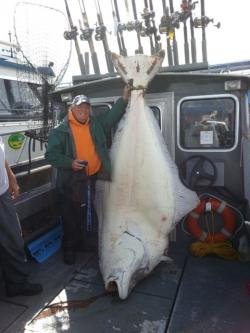
Jack McGuire of Anaheim was fishing with Capt. Rye Phillips aboard the Icy Rose on July 3 when he hooked and landed a 95-inch, 482-pound halibut near the mouth of Glacier Bay. The barndoor halibut would likely challenge the 459-pound International Game Fish Association (IGFA) world record caught in 1996 by Jack Tragis if it had not been shot and harpooned.

McGuire, 77, was fishing out of Alaskan Anglers Inn in Gustavus for the Fourth of July holiday week. Phillips took McGuire and three other passengers aboard his charter boat to one of his favorite big fish spots in Icy Straight near Lemesurier Island in about 130 feet of water.

The giant halibut hit an octopus fished just off of the bottom. It took off on a long run after the size 16/0 Eagle Claw circle hook dug in, before McGuire was able to ease it off the ocean floor, thanks mainly to the two-speed Shimano TLD II 30 two-speed reel he was using. After a 30-minute give-and-take battle, Phillips spotted the halibut below the boat and let McGuire know it was legal size. In Southeast Alaska, anglers on charter boats can keep one halibut per day as long as it is less than 44 inches, or more than 76 inches.

“It was giant,” Phillips said. “We knew right away it was over 76 inches, but we didn’t know it was going to be bigger than the world record.”

Like he does with all big halibut that anglers decide to keep, Phillips subdued the fish with a .410 shotgun, and then harpooned it. Most guides kill the giant halibut before bringing them onto their boats because of how dangerous they are if they are flopping on the deck. Some anglers have been seriously injured by trophy-size halibut.

482 Pound Halibut

482 Pound Halibut

Jack McGuire, 77, of Anaheim, California, stands next to the 95-inch, 482-pound halibut he caught July 3 near Gustavus, Alaska, while fishing with Capt. Rye Phillips of Alaskan Anglers Inn. Photo courtesy Western Outdoor News with permission.

Phillips and two of the other customers used gaff hooks to pull the mammoth halibut over the side of the boat. At first the fish’s gills got stuck on the rail, but after a second attempt they were able to drag the halibut aboard.

Phillips immediately measured the fish, letting him know it was a potential world record. Unfortunately, the fish would not qualify because it was shot and harpooned. Phillips also assisted McGuire by grabbing the line and lifting on the rod during the battle.

McGuire caught the halibut on 100-pound-test Tuf Line and a 240-pound nylon leader. Phillips had rigged the rods with heavy gear because he was targeting trophy-size fish that day.

The massive halibut drew quite a crowd at the Gustavus dock. Dozens of people gathered to see the fish hoisted up for photographs before Phillips filleted it for McGuire. The halibut yielded nearly 200 pounds of boneless, skinless fillets.

Just a week earlier, Phillips, who played baseball at Western Oregon University and lives in Brookings, Ore., during the winter, put a customer into a 275-pound halibut.

Gustavus, located 45 miles west of Juneau, is a relatively unknown halibut hot spot. It typically has the largest average size of halibut caught in Alaska, according to Alaska Department of Fish and Game stats, and the small charter fleet fishing out of the Gustavus dock brings in dozens of 200-plus-pound fish each season.

Steve Brown, owner of Alaskan Anglers Inn, said each week many customers catch halibut topping 100 pounds. Last year, when anglers could keep halibut 68 inches or bigger, which weigh roughly 165 pounds or more, anglers fishing at his lodge landed more than 50 of the trophy-size fish. More than two dozen of those were over 200 pounds, including five over 300 pounds.

— Andy Martin
Martin is a Field Reporter for Western Outdoor (www.wonews.com)

How Is the Population of Great White Sharks Doing?

NOAA Great White Shark Study Offers Optimistic Outlook

From the 90’s onward, NOAA scientists say, white shark numbers have slowly increased, mostly thanks to limited harvest.

Studies including hook-and-line captures indicate white sharks are recovering to safe numbers in Atlantic Waters off the U.S. coast.

Great White Shark

Great White Shark

White sharks are among the largest, most widespread apex predators in the ocean, but are also among the most vulnerable. A new study, the most comprehensive ever on seasonal distribution patterns and historic trends in abundance of white sharks (Carcharodon carcharias) in the western North Atlantic Ocean, used records compiled over more than 200 years to update knowledge and fill in gaps in information about this species.

Scientists from NOAA Fisheries and colleagues added recent unpublished records to previously published data to present a broad picture of 649 confirmed white shark records obtained between 1800 and 2010, the largest white shark dataset ever compiled for the region. Their study was published June 11 in the journal PLOS ONE.

“White sharks in the Northwest Atlantic are like a big jigsaw puzzle, where each year we are given only a handful of pieces,” said Tobey Curtis, a shark researcher at NOAA’s Greater Atlantic Regional Fisheries Office in Gloucester, Mass. and lead author of the study. “After decades of effort by a lot of researchers, we finally have enough puzzle pieces for a picture to emerge on distribution and abundance patterns. We are pleased to see signs of population recovery.”

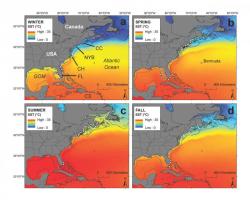
Among the findings: White sharks occur primarily between Massachusetts and New Jersey during the summer, off Florida during winter, and with a broad distribution along the U.S. East Coast during spring and fall. The sharks are much more common along the coast than in offshore waters. The annual north-south distribution shift of the population is driven by environmental preferences, such as water temperature, and the availability of prey. In recent years, white sharks have been increasingly associated with the return of gray seal colonies off the coast of Massachusetts.

Many whites travel north in summer to waters off New England, south to waters off Florida in winter.

Great White Shark Movemen

Great White Shark Movemen

“White sharks possess life history traits that make them vulnerable to exploitation,” said Nancy Kohler, chief of the Apex Predators Program at NOAA’s Northeast Fisheries Science Center (NEFSC) and a study co-author. “These sharks can live 70 years or more, mature late, and do not produce many young. Their status and highly valued jaws and fins have made them the target of recreational and trophy fisheries in areas where their populations are not protected.”

Opportunistic capture and sighting records remain the primary source of information on this species. The updated information in this study is aimed at improving the conservation and management of white sharks both regionally and internationally, and providing a new baseline for future study.

This study updates understanding of white shark relative abundance trends, seasonal distribution, habitat use, and fisheries interactions, most of which occur with rod and reel, longline, and gillnet gear. White shark records were collected from landings data, commercial fishery observer programs, recreational tournament information, scientific research surveys, commercial and recreational fishermen, and other sources. The records were further classified, based on biological information such as length and life stage – neonate, young of the year, juvenile, or mature. Distribution patterns of each life stage were examined.

In the 1970s and 1980s, relative abundance data indicated that white shark populations declined, likely due to expanding commercial and recreational shark fisheries. However, from the early 1990s onward, abundance has increased.

“Both the declines and, more notably, the increases in abundance seen in our study were supported by multiple data sources” said Cami McCandless, a biologist in the NEFSC’s Apex Predators Program and a study co-author. “The increase in relative abundance is likely due, in part, to the implementation of management measures. The U.S. has managed its shark fisheries since 1993, and banned both commercial and recreational harvesting of white sharks in 1997.”

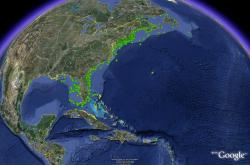
Sightings of white sharks have increased considerably in recent years along much of the East Coast.

Great White Shark Sightings

Great White Shark Sightings


While the overall distribution of white sharks is very broad, ranging from Newfoundland to the British Virgin Islands and from the Grand Banks to the Gulf of Mexico as far west as the Texas coast, 90 percent of the animals recorded in this study were found along the East Coast roughly between the Florida Keys and northern Caribbean Sea to Nova Scotia, Canada. The center of the distribution is in southern New England and the Mid-Atlantic Bight, where 66 percent of the sharks occurred.

Newborn white sharks, as small as 4.0 feet long, regularly occur off Long Island, New York, suggesting this area may provide nursery habitat. The largest shark in the study considered accurately measured was a female landed on Prince Edward Island, Canada, in August 1983. The animal measured 17.26 feet from the tip of its snout to the fork in its tail.

White sharks of all ages and sizes are present in continental shelf waters year-round, but their distribution varies by season. During winter, most white sharks are found off the northeast coast of Florida, the Florida Keys, and in the Gulf of Mexico offshore of Tampa Bay, Florida, where they have generally been considered rare. In spring, the distribution expands northward, and by summer most sharks occur in the waters off New York and southern New England, and around Cape Cod. In August some large juvenile and mature individuals reach Newfoundland and the Gulf of St. Lawrence, the northernmost limit of their range. During fall, most sharks remain in northern latitudes, but begin to shift southward in November and December.

Most of the sharks were found in water depths shallower than 330 feet, although they seem to use deeper and colder waters as their size increases. The authors note that, in general, “white sharks remain an uncommon and sparsely distributed predator in the Northwest Atlantic Ocean.”

“We have improved our understanding of white sharks in the Northwest Atlantic in recent years through field research and technology,” said Kohler. “But we still have many questions about life history, population structure and size, behavior, habitat preferences, feeding habits, movements, and migration.”

White sharks live 70 years or more and mature late, so are highly vulnerable to over-harvest despite their formidable predatory capabilities.

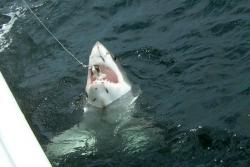
Great White Shark Mouth

Great White Shark Mouth

Questions include when and where the sharks mate and give birth, their use of offshore habitats beyond the continental shelf, and whether the timings of white shark migrations in the Northwest Atlantic are similar to those in the Pacific and Indian Oceans. More observations, fishery captures and analyses of occasional specimens, along with tagging and telemetry studies, are needed to help answer these questions and improve conservation strategies.

In addition to Curtis, Kohler, and McCandless, study authors include Lisa Natanson and John Hoey from the NEFSC’s Narragansett Laboratory in Rhode Island; John Carlson from NOAA’s Southeast Fisheries Science Center Laboratory in Panama City, Florida; Greg Skomal of the Massachusetts Division of Marine Fisheries; George Burgess from the Florida Museum of Natural History at the University of Florida in Gainesville; and Harold “Wes” Pratt, Jr. from Mote Marine Laboratory’s Tropical Research Laboratory in Summerland Key, Florida, a former member of the NEFSC’s Apex Predators Program.

# # #

NOAA Fisheries Service is dedicated to protecting and preserving our nation’s living marine resources and their habitat through scientific research, management and enforcement. NOAA Fisheries Service provides effective stewardship of these resources for the benefit of the nation, supporting coastal communities that depend upon them, and helping to provide safe and healthy seafood to consumers and recreational opportunities for the American public.

NOAA’s mission is to understand and predict changes in the Earth’s environment, from the depths of the ocean to the surface of the sun, and to conserve and manage our coastal and marine resources. Join us on Facebook, Twitter and our other social media channels.