Category Archives: How To Fish

How To Catch Spring Bass In Small Ponds

Bass Caught at High Falls

Bass Caught at High Falls

Big lakes often get all the publicity in the spring, but to get a jump on them and catch more fish, try a smaller pond. Bass start feeding in ponds early in the spring and you can often catch more bass in them than on a big lake. And your chances for a wall-hanger are much better.

Ponds warm faster in the early spring than bigger bodies of water for several reasons. Their size protects them from wind stirring them up like it does the bigger lakes, and shoreline trees often give even more protection. Less mixing of the water from wind allows the surface of the pond to warm and stay warm faster.

Shallows in ponds often have dark bottoms from sediment and this absorbs sunlight and warms the shallows faster. On big lakes waves usually washed away the darker sediment leaving sand and gravel that does not absorb heat as well.

Most ponds have more shallow water relative to size than the bigger lakes, so they have more area to warm more quickly. And vegetation growing in the shallows help absorb heat, adding to the warming. All these factors mean ponds warm more quickly than bigger lakes.

Bass respond to warming water in ways to make any fisherman smile. As soon as the water starts a warming trend and gets above about 50 degrees the bass will go to shallow water and feed. This movement makes them much easier to catch on a variety of baits and they are feeding heavily.

To catch these early spring active bass target water less then six feet deep. Don’t hesitate to cast right to the bank in less than a foot of water. Bass will get in water that barely covers their backs this time of year. That is where the water is most warm and they are most likely to find food.

Fish all shallow water in a pond. On the first warm days in early spring the bass might move into contact with the bank near deeper water at the dam. After two or three days of warm sun they will be in shallows far from the deeper water, often in the very far upper end of the pond.

Any kind of shallow cover will hold bass. Target early growing vegetation, old weeds that have not rotted away, brush, trees in the water, overhanging bushes and rocks. Bass tend to hold tight against cover but are willing to ambush any bait fairly close to them. Your cast should be past the cover, bring your bait back by it, when possible.

A spinnerbait is hard to beat in the early spring. Use a fairly small bait like a three-sixteenths ounce bait with a willowleaf blade and a smaller Colorado blade. Colors depend on water clarity but a standard that works well is a chartreuse skirt with one gold blade and one silver blade. Adding a curly tail trailer gives it more action and allows you to fish the bait more slowly, too.

The reason a spinnerbait is so good is you can fish it at any speed and fish water from the surface to the bottom. On warmer days buzz the bait just under the surface, reeling it fast over any cover you see. For a change-up stop the bait and let it fall by a stump or other wood cover, then start reeling it fast again, if a bass has not already inhaled it.

Slow down and reel the bait a foot or so under the surface, with pauses and twitches to make the skirt flare and the blades flutter. Fish from right on the bank all the way out to six feet deep. If fishing from the bank, make parallel casts to the bank, fan casting from right against the edge to angles that put the bait in deeper water.

Very early in the spring, when the water first starts to warm, try slow rolling the spinnerbait, crawling it along the bottom. You want to fish the bait as slowly as you can to keep the blades turning. Let the bait bump anything on the bottom but keep it moving slowly and steadily.

A soft jerk bait like the Zoom Fluke will get bit when other baits are passed up in small ponds in the early spring. Rig the bait weightless and cast it to the edge of the water. Work it back with soft twitches, making it look like an injured minnow that is struggling to swim. Bass find such an easy meal hard to pass up.

A light colored bait like albino or natural blue is easier to see in the water and you can tell when a bass takes it. Watch your bait and line and set the hook when anything unusual happens, like a line twitch or if your bait suddenly disappears.

A jig and pig is an excellent bait early in the spring, too. As soon as the water starts to warm crayfish come out of their tunnels where they spent the winter and bass love them. Clay and rock banks are best for imitating crayfish, but a jig and pig will work anywhere.

In clear water use browns and greens, like a brown jig with a green pumpkin trailer. For stained water tie on a black and blue jig with a blue trailer. Use a realistic crawfish looking trailer or a simple twin tail curly tail trailer. The curly tail trailer has more action and makes the bait fall slower, too.

Use a fairly light jig, three-sixteenths to one quarter ounce, and stick to smaller size trailers and skirts, too. Cast the bait right to the bank and crawl it along the bottom with small hops. If you have ever watched a crawfish feeding it will crawl along then suddenly jump several inches, especially when startled. Make your bait look like a crawfish feeding.

Cover clay and rock areas with many casts, but also cast to any wood cover you find. Try to skip the bait under overhanging bushes right to the bank, let it sit a few seconds then slowly work it out. Keep your line tight and be ready to set the hook at any mushy feeling or thump on your line.

Small crankbaits are good in ponds in early spring, too. Use a shallow running bait that will dig down to six feet deep, like the two inch Spro Little John, and try colors that imitate a bluegill, like the Sunny Bream. Bass feed heavily on bluegill in ponds and they are common in almost all ponds.

Make fairly long cast in clear water and fish the bait so it bumps the bottom from right on the bank out to six feet deep. Try different speeds, from a fast retrieve for active fish to a slow crawl that looks like a meal too easy to pass up. When you hit bottom pause and let the bait float up a little, then dig it down again.

Its hard to beat a small pond for bass this time of year. Give them a try to catch more and bigger bass.

How Can I Catch Fall Bass On Plastic Baits?

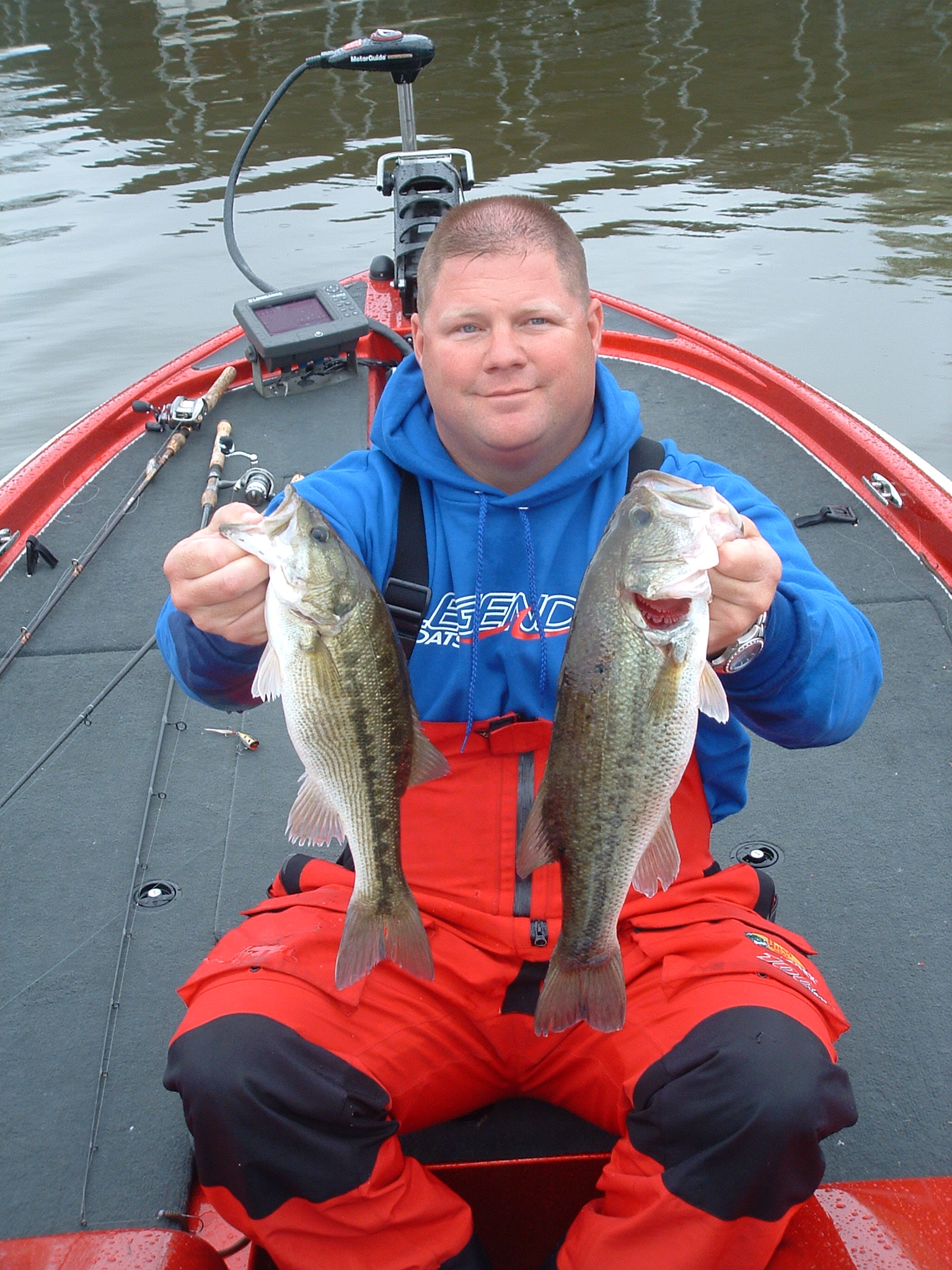
Nice spot and largemouth from Wedowee

Nice spot and largemouth from Wedowee

Use plastic baits for fall bass!

Hunting in October? Hunting for bass, maybe. October is one of the best months to catch a lot of bass, and an excellent time to land one worth bragging about. Cool waters and pleasant weather make bass feed and makes it an enjoyable time to be on the water.

Bass move to the shallows to feed in October and offer you a good chance to find them in easy to locate cover. It is more fun to cast to shallow cover and, if you use the right baits, you can have some amazing catches. Water is usually clear this time of year, making it easy for bass to find your baits but also making it more important to offer them something natural that looks like food since they can get a better look at your bait.

Bass will seek rocks, brush piles, docks and blowdowns in October where they can hide and find the food they like. They feed on baitfish and crawfish, storing up fat for the cold weather to come. Baits that imitate their favorite food improve your odds of catching them.

Soft plastics are a perfect choice for those conditions. You can choose a color that works best in the water you are fishing and a size that the bass will eat. But walk into any bait and tackle store and the choices you have can be overwhelming.

A soft plastic jerk bait like a Zoom Fluke is hard to beat right now. They come in colors that look like the baitfish in your lake and you can fish them in a wide variety of ways. And, like other soft plastics, they are fairly weedless, making it easy to fish them around cover without constantly getting hung up.

The most common way to fish a soft jerk bait is weightless, with a hook Texas rigged in them. Since the baits are fairly bulky a wide gap 4/0 hook is best. You can leave the hook exposed on the tip if fishing rocks or bury it lightly in the back of the bait to come through wood. Tie the hook directly to the line or use a swivel a foot or so ahead of it to add a little weight and reduce line twist.

Cast the bait out and let it sink a foot or so deep, then work it over cover with twitches of your rod tip. Since you can see the bait you can find out how to make it dart from side to side, walking the dog with it, and letting it sink slowly between twitches, imitating a injured or dying baitfish. And it is exciting to see the bass come up and eat it.

Also try the bait on a jig head or with a bullet weight ahead of it. This makes the bait sink to the bottom where you can hop it slowly or crawl it along. Many kinds of baitfish feed on the bottom with their tail up so a jig head makes the bait show this action to the bass. A bullet weight will make the bait lay flatter on the bottom so hopping it will look like a baitfish struggling to swim up and bass love an easy meal.

Fish weighless soft jerkbaits over brush piles and around dock posts where bass hide waiting on a meal. Start with a very slow action, jerking the bait then letting it sink a foot or so. If the bass don’t like this, speed up your retrieve until you find the speed the bass want. Under some conditions you want to fish the bait as fast as you can reel and jerk it, especially on windblown rocky banks.

Work the jig head or bullet weigh rig on rocks and hard bottom banks and points. Bass often eat crayfish on this kind of cover but will not pass up and easy baitfish meal. Go with as light a jig head or weigh as you can fish under the conditions.

A Texas rigged four or five inch finesse type worm is also a good soft plastic to use now. Texas rig a French Fry or straight worm with a 2/0 hook behind a 3/16s ounce sinker and cast it to wood or rock cover. The small bait looks like young baitfish or crayfish that feed on the bottom so choose a dark color like Junebug or green pumpkin.

For some reason there are days, especially in clear water, when the bass want a small bait. And don’t think only small bass will eat a small worm. Big bass will inhale a finesse type worm if they think it is an easy meal.

Try sliding the worm along gravel or other hard bottoms like a crayfish crawling along, then hop it to make it look like the crawfish was startled and tried to get away. The straight worm may not look like much to you, but bass sometimes find them irresistible. Square ends or pointed ends seem not to matter but try both kinds to let the bass choose.

These baits also work well around brush and blowdowns. Very weedless, you can work them through the thickest cover without getting hung up. Crawl them over limbs and branches then let them fall back into the thickest cover. Jiggle the bait on the bottom then pull it over the next limb. It takes some practice to know when a bass is holding the bait rather than a limb, but if you feel mushy resistance set the hook and reel hard to get the fish out of the cover.

Carolina rig a small worm behind a heavy sinker for fishing in the wind or when you want to move the bait faster. For fishing wood cover a short leader a foot or so long is best but you can use longer leaders when fishing more open bottoms. The lead will stir up the bottom and make noise, attracting the bass, and the following soft plastic worm looks like an easy meal.

Putting the small worm on a jig head and fishing it on light line is a great choice in clear water. This type of finesse fishing often results in bites when all else fails, and you can leave the hook exposed for easier hookups or bury it in the worm for fishing cover. Throw the jig head worm around any kind of cover that holds bass and you will get bit.

On the opposite end of the size spectrum, try a big worm like a Zoom Old Monster. A 10 or 11 inch worm will look like a filling meal to a bass, and many baitfish have grown big during the summer so there is a lot of food that is fairly big this time of year. Texas rig the big worm on a light bullet sinker for fishing brush and blowdowns or go heavier to get down into them on windy days.

Many big worms had ribbon tails that swim with movement, looking like fins of baitfish. As you bring the worm over a limb and let it fall it looks like food trying to get into thick cover. Swimming it along rocks and other hard bottoms looks like a cruising baitfish. Try a steady swimming action right on the bottom or hop it and let it fall back.

For faster fishing try a Carolina rigged monster worm. Shorter leaders up to 18 inches long make it easier to cast. You can fish the bait faster, covering more water to find feeding fish. And separating the worm and the lead sometimes makes the bass more willing to hit it.

Some colors that work well look nothing like a baitfish to us, but bass seem to like them. Reds and purples with green or blue flakes to give flash can be the best colors to use this time of year. The clear water lets the flakes flash and attract bass. Adding a little chartreuse to the tail will also look like the tips of baitfish tails and fins as they reflect sunlight.

A jig is just a jig until you add a soft plastic trailer, making a jig and pig that is a great big bass bait. And few baits look as much like a crawfish as a jig and pig, and big bass love crayfish. You can fish a jig and pig around any kind of cover and catch all sizes of bass, but you improve your odds of hooking the biggest bass in the area.

Trailers for jigs come in a huge variety of shapes and sizes. From straight tail chunks to those with swimming tails, all work well. You can even get trailers that look exactly like a crawfish. And baits like the Big Bite Flying Squirrel have tails that float up from the jig, imitating the pinchers of a crawfish waving in the water in the defensive posture bass often see from a crawfish just before they eat it.

Rig the trailer on either a plain jig head or one dressed with a skirt and hop it along the bottom. Let the bait sit between hops. Crawfish often move in spurts then pause before moving again. When you hit any kind of cover, from wood to rocks, let the bait sit and temp any bass hiding there.

Put the Flying Squirrel on a straight jig head and hop it along the bottom. When you pause it between hops the tails will float up and wave in the water, and action bass love. Pick a dark color with lighter patches on the tails or dye the tips of the tails with a bright color that will attract attention.

You can use any color trailer on a jig but browns in clear water and either black or blue in stained water are the usual choices. Match the plastic trailer to the color of the jig or contrast with it, putting a brown or blue trailer on a black jig or black trailer on a brown jig. The colors seem to be more important to the fisherman than the bass.

Choose a soft plastic bait in the fall and you will be fishing a bait that the bass will love. Rig one kind and fish it all day, or have a variety of different shapes and sizes of baits on several rods to find out which one the bass prefer on the day you are fishing. Without soft plastics in the fall you are limiting your options and lowering your chances of catching bass.

A Zoom Fluke is very versatile bait that is hard to beat in the fall. They come in just about any color you want to fish and in several sizes to match the size of the baitfish bass are eating. And they are fun to fish since you can work them just under the surface and see bass come up and inhale them.

When a bass takes a Fluke don’t set the hook immediately. It is hard not to jerk back when you see the fish hit, but pause and drop your rod tip, then set the hook. The pause makes sure the bait is in the fishes mouth deep enough so you will get a good hookset.

Fish the Fluke on 10 to 12 pound test fluorocarbon line. The invisible line improves your chances of getting bit and the lack of stretch helps setting the hook.

How To Catch Shallow Water Walleye In the Spring

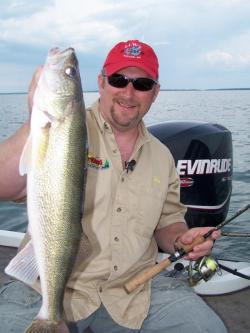
This walleye came from shallow water in the spring

This walleye came from shallow water in the spring

What Are Shallow Water Walleyes and How Can I Catch Them?

By Bob Jensen
from The Fishing Wire

Big walleyes like this one prowl the shallows for some time after the spawn–a live minnow on a jig often fools them.

The standup jig has special appeal when tipped with a live minnow.

Plastic tails can also be effective, particularly in late spring as water warms a bit.

Walleyes sometimes prowl water as shallow as a foot deep, particularly in low light periods.

Walleyes are often thought of as a fish that inhabits the depths, and there are times when most of them will be found in deep water. However, there are other times, more than you may think, when you can catch walleyes shallow, often eight feet or less. Here are some ideas for taking walleyes in shallow water.

Walleyes spawn so shallow sometimes their dorsal fin will be above the surface of the water. After the spawn they move into the mid-depths to recover from the rigors of spawning, or maybe they stay in the shallows and just don’t eat much. But a few days after spawning has ended, walleyes will get active in the shallows. This is when they get easy to catch.

Look for shallow walleyes wherever the shiners or other baitfish are spawning. Shorelines with small rocks, areas with vegetation starting to come up, points related to shorelines, these areas will all hold shallow walleyes early in the summer, and there are lots of ways to catch ’em when they’re in these locations.

Crankbaits, slip-bobber rigs and live bait rigs will all catch shallow walleyes. But the folks who catch walleyes most regularly are probably throwing a jig tipped with either a minnow or plastic.

When the walleyes have just recovered from the spawn, they’ll be most susceptible to a jig and minnow combination. In some bodies of water the walleyes will eat a jig tipped with a fathead minnow: Elsewhere a shiner on the back of a jig will be far more productive. I almost always have both shiners and fatheads in the boat. Shiners can be tough to keep lively, so I put them in a Frabill 1404 aerated container. This unit keeps shiners in a fish-catching attitude.

I’m hooking the minnow to an eighth ounce stand-up Fire-Ball jig almost all of the time. The stand-up design of this jig enables me to pause my retrieve, but the jig stands up, remaining in full view of the fish. A round head jig lies flat on the bottom at rest, making it harder for the fish to see.

As the water warms, the walleyes become more susceptible to a jig/plastic presentation. Where a couple of days earlier we were crawling the jig/minnow along the bottom, with the plastic we’ll be snapping it pretty aggressively. Walleyes in warmer water will eagerly whack a jig/plastic combo that is moving quickly along the bottom. Many of the strikes will come as the jig is gliding back to the bottom after it has been snapped. A Rock-It jig tipped with something like an Impulse Paddle Minnow is tough to beat. Fish the jig/plastic with eight or ten pound test Bionic Walleye Braid. The braid works better with the snapping retrieve. Fish the jig/minnow on six, seven, or eight pound test Bionic Walleye monofilament.

Walleyes can be found in shallow water year ’round in most lakes, rivers, and reservoirs wherever walleyes swim, particularly after dark, but look for them in the shallows especially in late spring and early summer. Make long casts, keep a low profile, and be quiet. If you do these things, you’ll find yourself catching walleyes shallower than you might have imagined.

To see all the newest episodes of Fishing the Midwest television, visit fishingthemidwest.com Join us at Facebook.com/fishingthemidwest

How To Catch Spring Transiton Weather Largemouth Bass

I caught this bass after a bad cold front

I caught this bass after a bad cold front

What are transition weather largemouth?

You just knew it. All week at work you have enjoyed calm, sunny, warm days and could not wait till the weekend to hit the water and catch some bass. But Saturday morning dawns lion-like, with high winds, dropping temperatures and rain. By noon the ragged clouds fly across the sky and you need a snowmobile suit to stay warm. Welcome to March fishing in the south!

Longer days make bass start moving toward spawning areas from their deep winter holes in March. They move to main lake structure and cover near the mouths of spawning pockets and hold there until conditions are right to move in. They like cover near deep water so they can drop back when the temperature drops but move back up quickly when it starts to warm again.

Weather like cold fronts, wind and rain affect them, but longer days and the overall warming trend controls where the bass will be. They will move and be harder to catch under bad conditions but they won’t be far away, and when conditions get good they can be found and caught much easier.

When searching for transition largemouth, look north. Small creeks, coves and pockets on the north bank of the lake get sun all day long and tend to warm faster. Those are the areas bass will move to first in March. The more protected the cove the faster the water will warm, and shallow water warms faster. Watching your temperature gauge for a slight increase in water temperature can point out a good area to check carefully.

Hard bottoms attract bass. If you can find a clay, shell or rock point near the mouth of a spawning area that drops off into deep water, bass should be on it. If it runs out to the channel it is even better. Bass will move up and down on this point, taking advantage of any food they find, while waiting to move into the shallows.

Cover will sweeten any good area. Stumps, brush, big rocks and blowdowns all hold bass this time of year, and they will hit a bait presented to them. Under some conditions bass will hold tight to cover but they will roam and feed, moving from one piece of cover to the next, under favorable conditions.

If you are lucky enough to hit the water when the weather is good, tie on a bait you can cover a lot of water with, put your trolling motor on high and make lots of casts. That would include the end of a warming trend and also early in the next front, when wind moves water and bass feed.

Under good conditions many baits will work well. One of the best is a lipless vibrating bait like a Rat-L-Trap or Strike King Red Eye Shad. They can be fished fast, they make a lot of noise and flash in the water and can be run at different depths and speeds. Crankbaits and spinnerbaits are also good under these conditions.

Under less favorable conditions, like the bright, high pressure day after a cold front comes through, tie on a bait you can use to pick apart the cover and fish slowly and carefully. The bass will be less likely to chase your bait.

A jig and pig is one of the best baits for tough conditions, especially for bigger bass. You can fish it slowly in thick cover like blowdowns and bass have a hard time resisting it. A jig head worm and a Carolina rigged worm also work well under tough conditions and downsizing to finesse size worms will draw bites from bass that ignore bigger baits. Both can rake points to find deeper cover where bass hold.

Wind can be your friend. As long as you can control your boat and fish, you can catch bass on wind-blown points and banks. Wave action stirs up the water and confuses baitfish, making them easier targets. It also moves schools of baitfish if strong enough to create a current, and moves food like algae that baitfish follow if just a gentle breeze. Either way, windblown points and banks attract bass.

Find a hard bottom point at the mouth of a cove and make long cast across it with a lipless crankbait. Try to keep your bait near the bottom, ticking it every few feet. If there is a lot of wood cover you need to switch to a spinnerbait or crankbait with a lip that will bounce off it better. Work either bait with the wind in a natural way.

Watch for a mud line made by the waves hitting the bank then washing across the mouth of the cove. Bass will hold in the mud line and use it for cover, then jump on any food that comes by. Run your bait parallel to the mud line a foot from it or cast into it and bring your bait from muddy water to clear water.

Work fast and hit as many similar places as you can. Slow down when you catch a bass, chances are there is a school using the area. When you move, try to duplicate conditions where you caught bass earlier, fishing similar points and cover.

After the cold front bright blue-bird skies make fishing tough for a day or two. Bass will move deeper and hold tighter to cover. The lack of wind on the water surface means they can see your bait better and are less likely to hit. So, go with natural looking, smaller baits, fish them deeper around heavy cover and fish slowly.

If you caught fish shallow on a point a few days ago, the bass will still be there. Look for them in water several feet deeper. This is when a Carolina rig or jig head worm shines. Put a natural colored four inch worm on either bait and fish it slowly. Probe for cover and slow down even more when you hit brush, rocks or stumps.

This is also an excellent time to find a blowdown where deep water hits the bank near the point and fish it out with a jig and pig. Use a natural colored bait in clear water and a bright color in stained water and try to work it along every limb. Work the trunk of the tree harder. The heaviest cover is where a big limb comes off the trunk and that is where the biggest bass will take up residence. Don’t overlook the very end of the tip of the tree, in the deepest water, too.

Under these conditions pay very careful attention to your bait. Strikes will usually be very light whether you are fishing a jig and pig or worm. Often a bass will suck the bait in and not move, so set the hook if you feel any mushy resistance. Don’t wait for the tap that tells you the bass has spit your bait out.

Muddy water offers a whole new twist to catching bass. If the water is clear enough to see your bait a foot or so down bass can see it even better. But early spring conditions often present you with water so muddy a chanteuse crankbait disappears as soon as it goes below the surface.

Extremely muddy water may affect fishermen more than the fish. After all, they have to eat. So adapt. Fish a very bright, loud bait. A chartreuse Red Eye Shad slow rolled along the bottom can be found by a hungry bass. Bigger baits are usually better, too. Go with a half to three quarters ounce bait under muddy conditions.

When the weather turns, don’t give up. Adapt to the weather and changes in it and you will catch bass. You may be uncomfortable, but landing bass after bass will warm you up better than any coat!

What Is Snap Jigging Early Summer Walleyes?

Walleye caught snap jigging

Walleye caught snap jigging

How To Snap Jig for Early Summer Walleyes

By Nathan Shore
from The Fishing Wire

Snap jigging for walleye is a key technique in late spring and early summer. If you want to catch limits of big walleyes right now, take this guide’s advice and start snapping them up.

Hopping a jig along bottom in the shallows is a favorite tactic of many walleye guides in early spring.

The jig slips into a world of minnows. It rises and drifts, pops and slides. Clearly different, somehow the same, it looks right at home but stands out. It’s getting away, and now it’s not.

“Snap jigging means different things to different people,” says Jeff Sundin, guide with the Early Bird Fishing Guide Service out of Deer River, Minn. “Some call it snap jigging, others ‘rip jigging.’ There’s hopping, popping-it’s never exactly all the same. Put 12 snap jiggers in the room and you’ll get 12 different versions.”

Snap jigging is the act of “popping” a jig so it rapidly darts upward in the water column, then slowly descends back toward the bottom. The fast, escaping baitfish action gets the fish’s attention because an easy meal is getting away, and the fish often strike on the drop. Usually the physical movement is a quick wrist move like snapping a yo-yo back up to your hand, but intensity if modified depending on various factors, including the mood of the fish. During the early season, Sundin likes a softer, shorter snap that doesn’t pull the bait too far from the fish.

Sundin plies his dialed-down version of snap jigging when walleyes are shallow. Classic snap jigging requires heavy stuff, moving quickly and covering water at a fast clip. Sundin, though, isn’t as aggressive as some guys during the early season. He uses a 6 ½-foot, medium-light power spinning rod and 4- to 6-pound line, and tries to keep the boat at or below 1 mph. He also restrains his actual jigging, moving the jig only 5 to 6 inches at a time.

The fish are sometimes in 2 to 4 feet of water, so small, lightweight jigs, often tipped with a minnow, do the job.

Sundin pitches the jig a “comfortable, short distance” when walleyes are in 5 feet of water or less. As the jig sinks, he starts with the rod tip pointing up at 11 o’clock. As it touches bottom, he drops the rod tip to create slack then snaps it back up.

“As soon as I feel the weight of the jig, I stop,” he said. “I’m only popping it 5 to 6 inches off bottom then letting it drift on a semi-tight line with the boat moving slowly. Then, I drop the tip, push slack into the line, and snap it again. When we’re fishing a sand flat, dragging bottom rarely triggers a strike. The guy who gets snagged up the most is the guy catching the fewest fish. The jig may hit bottom, but there’s no requirement to hit bottom. We’re trying to snap it while it’s hovering just off bottom.”

Early walleyes are shallow walleyes. Until surface temperatures hit the mid 60s, walleyes will be where the bait is. After a long, hard winter, baitfish want to be in the warmest available water, which tends to be close to the bank.

Add baitfish spawns into the equation and there’s another reason for shallow walleyes. Shiners and perch are the most important forage in Sundin’s neck of the woods.

“Shiners spawn in spring and they go right up into 2 feet of water,” Sundin said. “When walleyes key on shiners in lakes with big, shallow flats, they move up into water less than 4-feet deep. They’re so shallow you can actually see them.”

The Watsit Jig is among several that work well for the tactic known as “snap-jigging”.
Jig weight is based on where the fish are. At the earliest stages of summer, Sundin is still using 1/8-ounce jigs. He starts out in spring with a 1/16-ounce Lindy Jig tipped with a shiner, rainbow, or fathead in that order of preference. When the water hits the mid 50s and perch are spawning in depths of 4 to 6 feet, he moves up to a 1/8-ounce jig.

“That’s the weight we snap jig with at least 65 percent of the time,” he said. “But when walleyes move out to depths of 10 to 12 feet a little later, we use ¼-ounce heads. If it’s windy, we might go as heavy as 3/8-ounce. At 12 feet you need lighter line to rifle casts farther from the boat so it swings back into that close, comfortable range best for controlling the jig. We keep tipping with minnows, bringing the hook out in the center of the skull. When rigged perfectly, the mouth of the minnow is against the round ball of the jig.”

On wind-swept, sandy lakes with a lot of sand grass and few taller weedlines, Sundin finds walleyes doubling back into the shallows a lot in summer, especially shallow rocks in 4 to 7 feet of water. When this occurs, he often throws a Watsit Jig minus the bait.

“I really like the Watsit more and more the later it gets,” he said. “We snap it in a similar fashion, but we’re trying to imitate crayfish a little more on those shallow rocks. The Watsit has a way of darting forward then falling back in a semi-circle. If you put anything on it, it won’t perform as well. That circling action triggers walleyes without any other incentive required.”

Snap jigging is effective any time walleyes are in relatively shallow water regardless of time of year. Most of the time the only reason the fish are in less than 8 feet of water is because that’s where the food is, so they’re susceptible to a jig popped up right in front of their faces.

Snap, drift, pop. Sounds like a breakfast cereal. But in practice, Sundin’s version of snap jigging is more like Muhammad Ali. It floats like a butterfly, stings like a bee.

Why Should I Fast Troll Shadraps for Walleye?

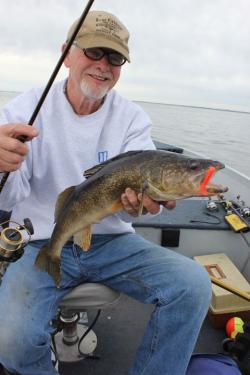
Walleye Caught Trolling Shadrap

Walleye Caught Trolling Shadrap

By Greg Huff
from The Fishing Wire

Goose the throttle on your next fishing trip, and you’ll be lapping other anglers as you boat walleye after walleye.

A number 5 Shad Rap is among the favorite lures for the fast troll that James Holst perfers for putting “eater” walleyes in the boat.

“This is a pattern I’ve used for many years to put numbers of eating-size fish in the boat,” says Rapala Pro-Staffer James Holst. “So make sure you try speeding up. For us, it’s just magic.”

Holst, host of In-Depth Outdoors TV on Fox Sports North, is filming a show on Lake Pepin, a wide spot on the Mississippi River south of the Twin Cities, on the Minnesota-Wisconsin border. It’s a sunny, cool late-May afternoon, and he and fellow Rapala pro-staffer Joel Nelson are loading their Skeeter MX 2025’s livewell with eater ‘eyes.

“I don’t have an answer for why these fish respond well to trolling fast, but they do,” Holst says. “We’re spending almost all of our time trolling from two and three-quarters to three miles-an-hour.”

“That’s pretty fast, by most freshwater trolling standards,” Nelson says.

“And we only get faster as that water temperature rises,” Holst notes.

Today, water temps are in the mid-60s. Because that’s still relatively cool for walleyes, Holst says, “the common thought would be you’re going to want to slow down.” But conventional wisdom is often wrong.

“We troll at two miles-per-hour and all we catch is white bass and sheephead,” Holst explains. “We throw a little speed at these fish, and all we catch is walleyes.”

Lots of walleyes.

Holst trolls at up to 3 miles per hour, considered fast in the world of walleye fishing.
“You’re typically going to be able to catch a lot of fish very quickly,” Holst says.

Trophy fish are less frequent with this pattern, “but don’t be surprised if it’s a 25-, 26-inch walleye,” Holst tells Nelson, whose rod is bent in half as he reels in what both anglers suspect is a big sheephead.

But it’s not. It’s a 26-inch walleye, which Holst nets for Nelson.

“Nice work, net man,” Nelson says, before admiring the fat fish and then releasing it.

“You don’t need to keep any big fish, because by the end of the day, we’re going to have all the 16-, 18-, 19-inch fish we’re going to possibly want,” Holst explains to the camera.

“Whether you’re throwing it or trolling it, this bait is as close as you’ll get to finding a sure thing in a tackle box,” he says.

Orange craw has been the best color today. That’s one of three colors Holst calls The Trinity for post-spawn ‘eyes. Perch and firetiger are the others.

“Those three colors really stand heads and tails above everything else as producers, year after year, on this particular body of water,” Holst says.

Line

Because they’re trolling shallow near shoreline cover, Holst and Nelson are pulling six-pound diameter, 20-pound test, Sufix 832 braid.

“We’ve got sticks and stumps, rocks and bumps, and all kinds of things that we’re just bashing these crankbaits into, so that braid is great because it’s very durable,” Holst explains.

And it provides solid hooksets.

“That fish grabs that crankbait, there’s not a lot of stretch in the line, and bang, that’s a really positive hookset,” Holst says.

His Sufix 832’s test strength and diameter is a “critical piece” to Holst’s speed-trolling pattern.

“I can get a lot more dive depth out of these crankbaits if I went with a two- or a three-pound diameter line, obviously, but I don’t want to do that because we’re fishing in such shallow water,” he explains. “I want to get the baits away from the boat.”

Pulling your baits too close to the boat can spook fish.

Rods

To counteract the braid’s lack of stretch, Holst and Nelson are fishing with 10-foot, six-inch St. Croix Eyecon and seven-foot, six-inch St. Croix Tidemaster rods. Both feature soft tips, which “keeps you from ripping those hooks free once you’ve got them hooked up,” Holst explains.

Where and when

Though most walleyes caught trolling fast are 15 to 18 inches, occasionally a whopper crashes the party.
Lake Pepin is a “troller’s dream body of water” on which to speed-troll Shad Raps, Holst says, because it features few sharp breaks and a bottom composed primarily of sand and mud.

“So it’s a really easy area to troll in one direction for a long time,” he explains. “The depths don’t change a lot and it makes this body of water perfectly applicable for trolling techniques, because … the fish are going to be very spread out due to the lack of structure.”

The pattern is not specific to Lake Pepin, however, and will work throughout the Upper Midwest.

“I’ve used this on Mille Lacs Lake, Lake of the Woods, just about everywhere you go this time of the year, after the spawn when the water temperatures start to warm up,” Holst says. “You get to that mid-65-degree water temperature, and fish – walleyes particularly – are very susceptible to a No. 5 Shad Rap trolling presentation.”

The pattern will remain effective through mid-June, when water levels generally drop and pull fish off shoreline breaks. If water levels remain high, however, the bite will persist.

As water temperatures rise through June, Holst will increase his trolling speed. By the time the pattern slows, he’ll be pulling his Shad Raps at 3.5 to 3.75 miles-per-hour.

“You’re covering water so fast that it’s incredibly efficient,” Holst says. “You’re covering so much ground at that speed putting baits in front of so many fish, you’re bound to load the boat.”

“So definitely give that some consideration,” Holst concludes. “If you want practice reeling in fish, this is the bite. You’re going to be busy.”

Greg Huff is an outdoors writer and video producer based in Minneapolis, MN. He has written for and produced videos for In-Depth Outdoors, Bassmaster.com, Fishhound.com and North American Fisherman’s FishingClub.com.

How To Catch Summer Walleye On Crankbaits

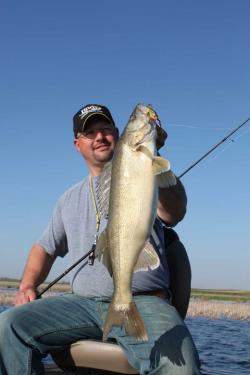
Catch walleye like this on crankbaits

Catch walleye like this on crankbaits

from The Fishing Wire
by Daniel Quade

Trolling, rigging and jigging are great ways to put walleyes in the boat, but when conditions are right, casting shad-bodied crankbaits to shallow structure knows no equal for racking up big numbers of early summer ‘eyes.

North Dakota guide Jason Feldner likes shallow running crankbaits for walleyes from early spring through the month of June.
Just ask Jason Feldner, proprietor of Perch-Eyes Guide Service. A veteran guide who earns his keep connecting clients with walleyes on North Dakota’s 160,000-acre Devils Lake, he casts cranks to fish-rich banks from the first warm fronts of spring throughout the month of June.

“When the bite’s on, 100-fish days are possible,” he says.

And the good news is, even though the sprawling High Plains paradise Feldner calls home is a bit unique, the tactics he employs here work wonders on a variety of other walleye waters as well.

As water temperatures inch upward into the mid-50s, Feldner targets sheltered, fast-warming shallows, where hungry ‘eyes find a feast of baitfish, freshwater shrimp and other food items.

On Devils Lake, rising water levels have in recent years created an almost endless supply of such environments. While few fisheries offer exactly the same opportunities, you can in most systems find concentrations of shallow fish feeding somewhere. Potential hotspots include necked-down current areas, emerging weedbeds and shoreline riprap.

As the water continues warming, Feldner factors the wind into his fishing locations.

“Once the water temp hits the 60s, I look for windswept areas where wave action stirs up the shallows, concentrating forage and reducing light penetration,” he says. Opportunistic ‘eyes quickly move in to scarf up shrimp and minnows, but a sustained wind lasting several days or more can really fire up a shoreline.

When planning his daily structural hit list, he always keeps yesterday’s weather in mind. A lot of times he gets a strong wind one day, then dead calm the next. The downwind bank is good when the wind is blowing, but even after it dies down, the shoreline that got pounded the day before stills hold fish.

Certain structure is central to both temperature-related and wind-driven scenarios.

“I prefer slow-tapering shorelines over banks with steep breaks,” he says. “Not necessarily because they hold more fish, but because my bait stays in the strike zone longer on a gradual slope.”

In the early season, soft muck bottoms absorb sunlight and help boost the water temperature. But later, shorelines exposed to the prevailing winds are typically dominated by gravel and rocks. Flooded woody cover-in the form of trees and brush-is also a common occurrence on Devils Lake, as it is on manmade reservoirs and flowages across the Walleye Belt. Feldner frequently plays the timber card, too, targeting walleyes in and around the shallow treeline.

“During the early season, I cruise the bank, targeting fallen trees,” he says, explaining that walleyes often tuck tight to such timber, lurking in the shade as they await passing prey. “You won’t catch a bunch of fish in one area, but you’ll get one here and one there, so it’s important to cover water and keep moving.”

Shad-bodied crankbaits are another pillar of the program. Like walleyes in most waters, Devils Lake fish eat a variety of forage, from shrimp to juvenile yellow perch and white bass. A crankbait’s deep, stout profile mimics a range of prey, and is easy for walleyes to home in on in low-visibility conditions, such as when wind and waves roil near-shore waters.

The Lindy Shadling and Bomber Flat A are two of Feldner’s go-to baits. Both the Shadling and Flat A are tight-wiggling, rattling baits capable of drawing the ire of nearby ‘eyes, even when visibility is reduced. Another key attribute-their near-buoyancy allows them to be fished with a variety of moves, without rocketing to the surface on the pause. Such versatility is critical, because Feldner’s presentations run the gamut-from a steady pull to ultra-animated retrieve-depending on the mood of the fish.

With his boat hovering in eight feet of water, Feldner makes a long cast close to shore, then works the bait along bottom back to the boat.

“Start with the rodtip high, then lower it during the retrieve, so the bait dives deeper and stays close to bottom,” he notes.

Given walleyes’ notoriously fickle nature, experimentation is key to finding the best retrieve for the situation at hand. Every day is a little different. Sometimes they want it slow and steady, other times you have to get aggressive and really pound bottom or burn it along to trigger reaction strikes.

The shallow crank-casting pattern shines through early summer, until water temperatures reach the 70-degree mark. After that, Feldner typically focuses his efforts a bit deeper, often pulling deep-diving cranks or spinner rigs along outside weed edges and deep treelines. But even then, the shallow pattern is always an option, should the right wind come up along a slow-tapering shore.

How To Beat the Summer Doldrums While Fishing

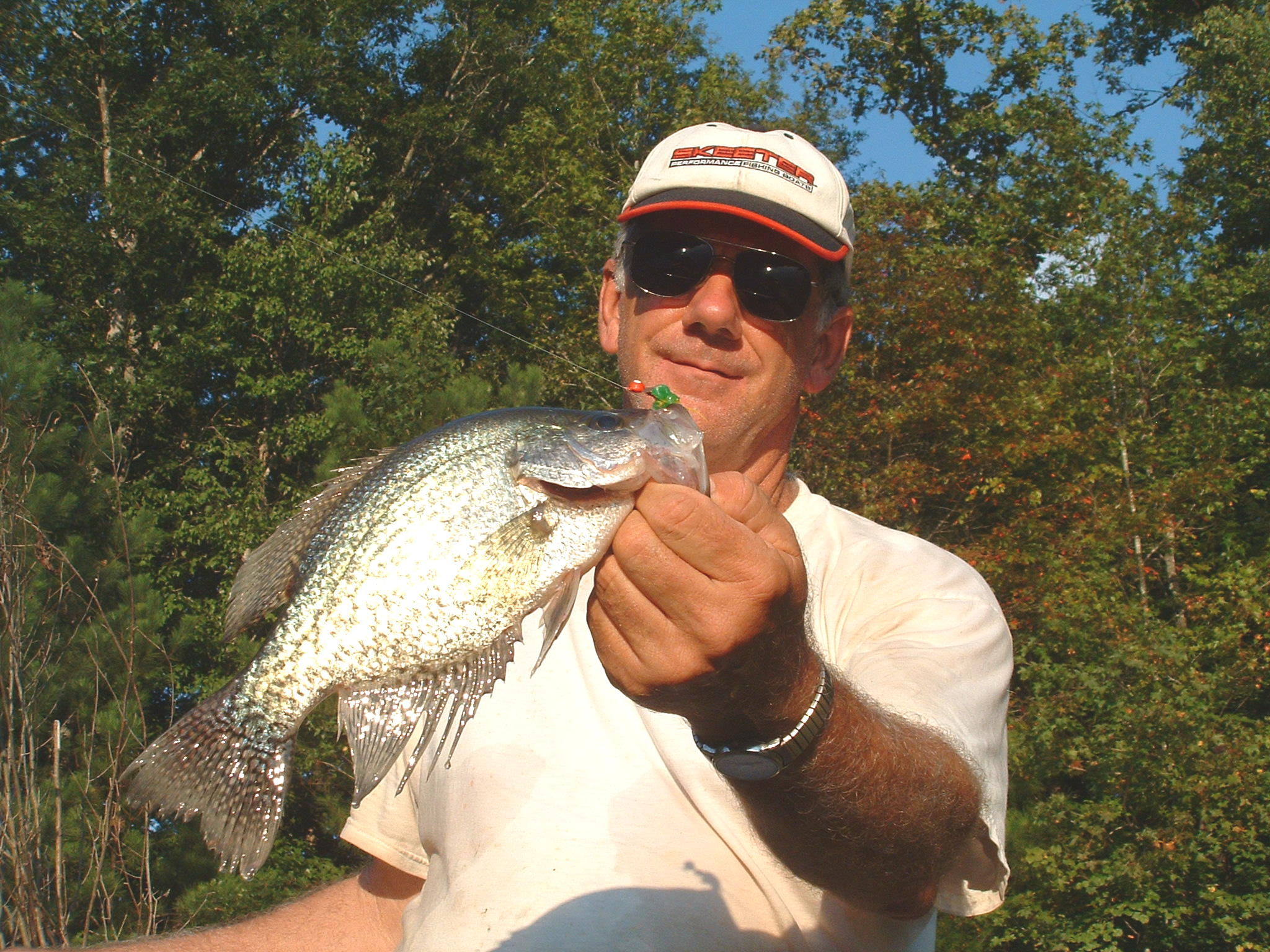
I caught this crappie in my pond

I caught this crappie in my pond

Beating The Summer Fishing Doldrums In Georgia

September can be our meanest month for fishing. Early in the month water temperatures are as high as they get all year. Oxygen content is as low as it gets, with a thermocline just a few feet down in many lakes and ponds. Water levels are usually dropping. And fish have been hit hard all summer, to the point it seems they can quote the price of popular lures.

The good thing about September fishing in Georgia is things will get much better toward its end, but there is no need to stay home and wait. Many places around out state offer good fishing even now, and you can catch a wide variety of kinds of fish in many different kinds of waters.

If you are ready to give up and stay home until things cool down, consider these places for a trip right now.

Lake Andrews Catfish

Like big catfish? Or just want a good mess of eating size fish? Lake Andrews offers both, and you can do well there now. You can catch blues, channels and flatheads from the lake.

Andrews is a small 801 acre lake on the Chattahoochee River that backs up to the Walter F. George dam. There is a lot of current in the lake due to discharges at the George dam, and current keeps the oxygen content higher and makes fish feed. Six boat ramps give good access to the lake, and a boat is the best way to fish for catfish.

How big are the cats in Andrews? The current state record 80 pound, 4 ounce blue cat was caught there in February, 2010. In 2006 it produced a state record at that time of 67 pounds, 8 ounces. If a big blue is what you want Andrews is a good place to find it.

The waters just below the Walter F. George dam as well as below the Andrew dam are good places for big cats. Anchor so you can fish the seams of current from normal discharge or power generation from the dam.

For the big blue cats fish cut gizzard or threadfin shad. Big baits catch big cats, so don’t hesitate to use a whole gizzard shad eight to ten inches long. Big flatheads like live bait so try a live bream, sucker or shad for them.

For eating size blues in the one to four pound range, which are common in the lake, try smaller pieces of cut gizzard shad or whole threadfin shad. Also try earthworms and bloodbaits for them and channel cats. Night fishing is best this time of year. Anchor your boat at deep holes near shallow water and fish the hole as well as the lip of the more shallow water around it.

For smaller flatheads try small live bream or shad and crayfish. The same deep holes will harbor flatheads. You can also catch smaller cats near the dams is areas with less current, so let your baits drift into eddies and other current breaks.

Flint River Shoal Bass

The Flint River offers fun fishing for shoal bass in September and much of it will be wading, so you can stay cool and comfortable while catching fish. The river from the Lake Blackshear dam to the Highway 32 Bridge offers a solid day’s fishing trip. You can launch a boat below the dam and take out at the bridge.

This section of the river is beautiful, with cypress trees and wildlife on both banks. It is very wild, with only a few houses and fields on the river. There are multiple shoals along this section of the river and in September the water is low so expect to get out and push your boat often.

A jon boat with a small gas motor is best since there are some fairly long flat water sections of the river. If you don’t motor through most of these sections you won’t make the trip in one day, and paddling a canoe or kayak is fun but you will do a lot more paddling and less fishing from them. You can camp on sand bars along the river if you want to make this a multiple day trip.

Shoal bass are the main target here although the river has everything from catfish to chain pickerel to warmouth. Shoal bass are first cousins of the smallmouth and are mostly brown with vertical bars. And they fight like a smallmouth, pulling hard, making exciting jumps and not giving up till they are out of the water.

Artificials work well and you can use topwater, crankbaits and plastics. Live bait like spring lizards, crawfish, hellgrammites and minnows will catch the bass, too. Ten pound test line on a spinning rod and reel will help give you the best fight and make throwing smaller baits easier. You will be wading and fishing a good bit so a lighter outfit is easier to handle, too.

In flat water sections of the river cast a small topwater popper or prop bait around blowdowns. Also work a small bream or crawfish colored crankbait like a #5 Shadrap through the limbs of the trees. Follow up with a green pumpkin curly tail worm behind a one-eighth to one-quarter ounce sinker. Go as light as you can based on current.

Let a spring lizard drift into a blowdown on a weedless hook and no sinker and you are almost guaranteed to hook a fish. It is hard to carry enough bait with you, though. You can catch small minnows and crawfish along the way and do the same with them. Also, rock worms or hellgrammites are common along the river and bass love them. Fish them and crayfish suspended under a cork since they will latch onto rocks.

Artificals work better when wading the shoals since you don’t have to carry a lot of bait with you and you can work them more effectively. Anchor your boat at the head of the shoals and fish down one area and back up the other side to the boat. Or, if there are two fishermen, one can start at the head of bigger shoals while the other drifts half way down, leaves the boat and fishes to the end. Just be sure to pick up your partner if you are the first one out, even if he is catching more fish than you!

When wading the shoals target deeper pools and runs between rocks. Hit any eddy behind a rock or log in the shoal. Let a green pumpkin worm drift into the holes and eddies. A light sinker works best. Also run your crankbait with the current through the riffs and into deeper holes.

Alatamaha River Tarpon

The Georgia Coast may seem like a strange place to head when it is so hot, but the fishing will make up for being too warm. There are a variety of good choices on the lower Altamaha River and sound but the most exciting has to be tarpon.

Tarpon migrate north during the summer and hit the Georgia coast in late June most years. There are still large numbers of them around in September. They move into the rivers and feed and you can sight fish for them in the river and the sounds. Hooking a tarpon gives you one of the most thrilling fights in fishing, with water throwing jumps and sizzling runs from fish that can weigh over 100 pounds.

You don’t need really heavy tackle for this kind of fishing. A stout bass flipping stick or heavy freshwater spinning rod to light saltwater outfits you can cast work well. You need a reel that will hold a good amount of twenty to thirty pound test line. That is strong enough but you need a much heavier leader to keep the fish from cutting the line.

Net live menhaden, also called “pogies,” or catch some cigar mullet about 12 inches long for bait and cast them ahead of surfacing tarpon for thrilling sight fishing. Fish them weighless for the best action. You can also get hits on artificials like bucktail jigs and big crankbaits.

Some days the tarpon are very spooky and you can’t approach them very closely, and they will take off when your lure or bait hits near them. On those days or when you don’t see them surfacing and feeding much try drifting live bait anywhere you see signs of tarpon. Put out a pogie on one weightless flat line and a mullet on another and drop one of each baits down on weighed rigs. Offer them a choice but be ready to grab a rod fast when you get a hit.

Lake Thurmond Largemouths

Lake Thurmond, better known as Clarks Hill to Georgia fishermen, is well known for its great bass fishing. It is full of keeper size bass with a good chance of landing a mounting size largemouth. Tournament catches of five fish weighing 15 pounds are common and 20 pound stringers are weighed in often.

September is as tough as it gets on Clarks Hill. During the day you can get on some topwater action as bass smash herring and shad on top but night fishing really shines. You can be comfortable while fishing and catch a lot of bass, too.

Many bass will feed in shallow water right at dark and again at daylight, and some will be active there all night long. Small flats near channel bends in the creeks are best. Deeper structure like rocky points near channels and riprap on bridges is good all night long, too.

Start about an hour before the sun sets with a big buzzbait fished on shady banks. Throw it right on the bank and work it fairly fast back to the boat. Make as long a cast as you can to cover more water. Hydrilla growing in the shallows makes for much better fishing but in some places it can be to thick for a buzzbait. If so, try a popping frog over the hydrilla. Also slow down and fish a big plastic worm.

Fish the same shallows from first light until the sun gets on the water, too. Again stay on the shady side of the bank. Both morning and night try to find some stumps or bushes in the water to fish as well as the hydrilla. The lake has been so low for so long bushes are hard to find now, though.

After full dark Texas rig a black plastic bait behind a three sixteenths ounce lead or use a one eighth ounce jig head with the same worm. Something with curly tails or legs moves more water making it easier for the bass to hone in on them in the dark.

Get on a bridge riprap or rocky point and fish both from the bank to the end and back. On the points keep your boat out in deep water and cast up on top of the point, working the shallow part then down the slope. If you put a bead or two between the lead and worm on your Texas rig you can shake your rod tip and make them click, further attracting the bass.

On riprap keep your boat out in about 20 feet of water and make angle casts, throwing your bait right against the rocks and fishing it slowly all the way back under the boat. Try to hit every rock and twitch your bait in one place. If you are getting hung too much go to a one eighth or even one sixteenth ounce sinker. You will have to work the lighter leads more slowly, but that is a good thing.

Toccoa River Trout

The Toccoa River below Lake Blue Ridge Dam has been a good place to catch rainbows in the past but the drawdown of the lake for dam repair hurt the fishing. The good news is cold water is flowing from the dam again and fishing is good again. In the past two years the DNR and volunteers have released 40,000 brown, rainbow, and brook trout ranging from 3 inches to over 4 pounds in the river.

You will catch a lot of trout in the river between 10 and 14 inches long this fall but you also have a good chance of a big rainbow or brown. Fish from the Blue Ridge dam downstream to Horseshoe Bend Park. Four public access points, at Blue Ridge Dam, Curtis Switch, Tammen and Horseshoe Bend Parks often get crowded but you can float between them in a canoe, kayak or tube and catch fish.

Trout in this section of the river can be anywhere from one side to the other but you will have your best luck near some kind of cover. Fish fast runs, undercut banks, deeper holes and any kind of break in the current like big rocks or wood.

You can use live bait (except live minnows), flies or artificials on this section of the river and all will catch fish. Nightcrawlers are one of the most popular and best baits. Drift a worm weightless through deeper holes for big fish. Also try canned kernel corn. Put it on a bare hook or stick a piece on one of the hooks of a small inline spinner. The corn must look like hatchery food since they like it so much.

You can’t use live minnows but artificials like small crankbaits, inline spinners and spoons will fool trout. Brown trout especially like minnows and these fake minnows are good baits to fool them. Fish them on four to six pound fluorocarbon line on a light spinning outfit.

For fly fishing the Toccoa offers good caddis, mayfly and midge hatches. Carry flies to match the hatch from any of these and you will catch trout. You can also catch good trout on streamers and wet flies. Streamers work well when fished deep in slower water in big pools.

Carters Lake Spotted Bass

Carters Lake has one of the best populations of big spotted bass in the state. Four and five pound spots are common and six to seven pounders are caught every year. The lake is very deep and has shad as well as alewives baitfish that the bass focus on this time of year.

During the day drop live bait, drop shot rigs or spoons down to suspended bass. They will hold under schools of baitfish, often in the tops of standing timber in very deep water. Focus on the main lake and use your deptfinder to locate them.

At night fish a small jig and pig on steep rocky banks near the dam. Also try a big black spinnerbait slow rolled on points and parallel to bluff banks. A little red in the skirt will help. A deep running crankbait will also catch spots in the same places.

These six places around out state give you some good options to beat the September funk and catch fish. Give one or all a try this month and you might not dislike September fishing so much in the future.

How To Follow Moving Bass

From The Fishing Wire

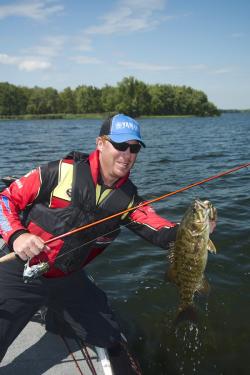
Greg Vionson with Smallmouth Bass

Greg Vionson with Smallmouth Bass


Even the Pros Struggle to Follow Moving Bass

Of all the problems bass tournament pros face, being forced to re-locate fish that have suddenly moved ranks among the hardest to solve, and it happens often this time of year during the transition from spring into summer. It happened recently to Yamaha Pro Greg Vinson, who after leading a Bassmaster® Elite event for two days, lost his fish the next day and fell to 23rd in the standings.

“I did not have a good practice at Bull Shoals, but on the first day of competition the bass had moved to an area I thought they might go to,” explains Vinson, considered one of the best at re-locating lost bass, “and I caught nearly 17 pounds, enough to lead the tournament. The next day, they weren’t there, but I managed to find them again nearly 400 yards away, and caught more than 13 pounds and kept the lead.

“On the third day, they disappeared again and I never re-located them. I really don’t know where they went, or why they left.”

Over the years, Vinson has studied bass habits closely in order to better figure out why bass do change locations so suddenly and where they might move to under certain situations. What continually surprises him is how fast bass do re-locate, and how far they may travel.

Vinson says finding the baitfish can sometimes be key to relocating a school of quality fish.
“Generally, if the weather has been cooler than normal in the spring and it starts warming quickly, bass will move shallow,” notes the Yamaha Pro, “while if it has been warm in the autumn and turns suddenly cold, any fish in shallow water move back out toward deeper water. In either case, a school of fish can make a mass movement overnight and travel several hundred yards.

“At Bull Shoals, when the bass moved shallow, I re-located them by finding baitfish first, and sometimes forage like this will actually trigger bass to move, because the forage is even more sensitive to temperature changes and moves first. When I’m trying to re-locate bass that have moved, I always start looking for baitfish at the same time because bass do follow them.”

Changes in water conditions, such as becoming extremely muddy due to rain and runoff, may also cause bass to move. When that happens, Vinson looks for the nearest clear water.

“Changing water conditions can be tricky because the bass may simply become inactive and just stop biting,” warns the Yamaha Pro. “Whenever I’ve been catching bass steadily and then stop getting bites, I first change lures and retrieves, just to make certain the fish really have left.

Rapid changes in temperature are the biggest mover or schools of bass, says Vinson–and sometimes, relocating them can be a real challenge.

If I’ve been using a fast-moving jerkbait, for example, I’ll change to a much slower soft plastic bait, or if I’ve been catching bass on a slow retrieve, I’ll speed up and try for a reaction strike.

“After I’m sure the fish have moved, I’ll usually use a spinnerbait to try to find them again because it’s such a good reaction strike lure.”

When he realizes his bass have definitely left the area, Vinson also looks for the nearest available cover when he thinks the fish have moved shallow, or the first substantial depth change when he believes they have moved deeper.

“And sometimes, if you just can’t find your bass again anywhere, the best thing may be to leave the area entirely and just start over again,” laughs the Yamaha Pro. “If I’ve been catching bass in a tributary creek, for instance, I may try to find another creek with similar cover or structure and I can establish a similar pattern.

“The trouble is that when you have been catching bass consistently in a certain area, it’s really, really hard to make yourself leave that spot. That’s what happened to me at Bull Shoals. After catching more than 30 pounds of bass in two days and leading the tournament both of those days, I was convinced I could re-locate those fish and start catching them again, but I never did.

“I honestly do not know where they went.”

How To Fish Lake Oconee and Lake Sinclair

I caught this bass after a bad cold front

I caught this bass after a bad cold front

How to fish Lakes Oconee and Sinclair In Winter

Along its 170 mile course the Oconee River passes through some beautiful country, from its hilly beginnings north of Athens to the flatlands where is joins the Ocmulgee River near Lumber City. But to bass fishermen none of the river is it prettier than the 45 miles contained in Lake Oconee and Lake Sinclair.

Oconee and Sinclair offer some of the best bass fishing in Georgia, especially in the winter. Although the lakes are back to back with the Oconee dam separating the two, and have many similarities, they are different in many ways. Those differences and similarities are important to the bass fishing on each.

Lake Oconee is the newer of the two and its 19,050 acres of water was dammed in 1979. It has 374 miles of shoreline covered with golf courses, expensive houses and docks. There are areas of huge boulders in parts of the lake and natural rock is common. Shallow sandy coves and clay points are found throughout the lake as are big areas of standing timber.

Lake Sinclair is smaller and older than Oconee, with 14,750 acres of water. It has more long creeks so it has slightly more shoreline with 417 miles. Although work on the dam was started in 1929 the Great Depression and World War II stopped it and it was not completed until 1953. There are many sandy coves and shallow creeks with extensive grassbeds, but no standing timber. Some natural rock is in the lake but you won’t find the big boulders common at Oconee. Like Oconee, it is lined with docks.

Lake Sinclair has always had a 12 inch size limit on bass but at Oconee there is a slot limit from 11 to 14 inches, meaning you can keep bass over or under that length. That was done to try to keep down the population of small bass since Oconee is not a fertile lake, but fishermen seldom keep the smaller bass so the slot limit may not be very effective. Both lakes have a ten bass daily possession limit.

Water clarity is similar on both lakes and ranges from very muddy to slightly stained. The upper Oconee River at Oconee is most likely to be muddy while Little River on Sinclair stays heavily stained year round. The clearest water on Sinclair will usually be in Island and Rocky Creeks near the dam and Richland Creek on Oconee is usually the clearest. Sinclair also has a steam power plant that warms areas of the lake, keeping winter temperatures well above those at Oconee in some sections.

At the Oconee Dam the power generators were specially designed to work as pumps, too. During the day water runs through them from Lake Oconee into Lake Sinclair, producing electricity. At night some of the generators are reversed, pumping water from Sinclair back into Oconee. This pump-back operation creates unusual current patterns on both lakes and affects the bass fishing.

When power is being generated at the Oconee dam current runs downstream through Lake Oconee and Lake Sinclair. But when water is being pumped back the current flows upstream in both lakes. This current positions bass in different ways on structure and cover.

The pump-back operation does keep both lakes at a fairly stable water level. Oconee will drop a foot or two during the day and Sinclair will rise the same amount, then Sinclair will drop a foot or two at night while Oconee rises. But the water does not show the drastic drops found on other Georgia lakes in the winter, with both lakes staying within a couple of feet of full pool most of the time.

According to the Georgia Bass Chapter Federation Creel Census Report, in 2007 Sinclair had 81 tournaments and Oconee 73, the second and third highest totals of any Georgia lake. A lot of tournaments are held on the two lakes because fishing is good on them. On Sinclair 2.91 bass per man hour of tournament fishing were weighed in, the highest in the state. At Oconee it was 1.88, not real high but tournaments have an effective 14 inch size limit that lowers the numbers weighed in.

For tournament winning weights Oconee and Sinclair had identical 9.83 pounds, tied for fourth highest in the state. So bass fishermen catch a lot of bass in tournaments on both lakes. The numbers are good and success rates reflect this, meaning you should catch a good number of bass on either lake this winter.

The Georgia DNR says Sinclair has a lot of small bass in it, no surprise to anyone fishing it, and the good 2006 and 2007 year class bass should dominate this winter. Since over 90 percent of bass caught at Sinclair are usually released the numbers should stay high and the size increase with time.

At Oconee the bass population is stable but the DNR is concerned that the numbers of small bass will hurt the lake. Unless bass fishermen start keeping the small bass under the 11 inch slot limit the quality will suffer. That may be reflected in the fact the average big bass in tournaments at Oconee was only 3.68 pounds, compared to 4.20 pounds at Sinclair.

There are a lot of ways to catch bass on both lakes right now. You can follow the same patterns on each or specialize on patterns that work best on one lake or the other.

Fishing docks is a good winter pattern on both lakes. Find a dock near deep water and flip a jig and pig or curly tail worm to the pilings and brush around it and you should get bit. On both lakes pay attention to the current. Strong currents are not as good in the winter but a slight current moving water under docks helps. The bass will hold behind post and brush, facing into the current waiting on food. Position your boat downstream of the current, no matter which way it is flowing, and flip upstream, working your bait back in a natural action.

Crankbaits also work well around docks in both lakes. A #5 or #7 Shadrap run by dock pilings will draw strikes from winter bass. Natural colors like shad or black and silver are good. Just like with the jig and pig, fish with the current. Run your crankbait at a slow, steady retrieve, going slower in colder water.

On Oconee the docks from Long Shoals Ramp up to the Highway 44 Bridge are good. Stay on main lake areas where the docks are deeper and concentrate on outside posts and brush this time of year. Work your jig and pig or worm slowly in the cold water, dropping it to the bottom and jiggling it in one spot by a post.

At Sinclair the docks in Beaverdam Creek are good since the warm discharge from the steam plant keeps the water warmer. There is almost always some current here, too. The discharge from the steam plant moves water even when there is no current from the dams. Also try the docks from Beaverdam Creek to the dam. If the water is muddy go into Rocky and Island Creeks and flip docks in clearer water.

Riprap is excellent on both lakes in the winter. A spinnerbait slow rolled just over the rocks, ticking them as it eases along, it a good choice. Fish it with the current. Crankbaits are also good. Use different sizes to reach different depths. For five-foot deep rocks cast a #5 Shadrap but go to a #8 Shadrap for rocks down to ten feet. Fish all sizes with the current, reel them down to the desired depths then crank them in slowly.

At Sinclair there is almost always current around the rocks at the Highway 441 Bridges and the one in Beaverdam Creek has the added advantage of warmer water. Also check out the riprap around the steam plant outflow in that creek. The riprap at Crooked Creek can be good and riprap around houses and docks on points on the main lake often holds fish, especially if the sun is warming it.

On Oconee the bridges in Lick Creek area always good as is the Highway 44 Bridge over the river. You can catch fish on the I-20 riprap up the river, too. Many of the houses on the main lake have riprap protecting their shoreline. Riprap in front of a seawall that drops into deep water is best. Current is the key and the bass bite much better when some water is moving across the rocks.

Both Oconee and Sinclair have a lot of long points and humps on the main lake that are good places to jig a spoon in cold water. Bass stack up in deep water and hold there all winter long A shallow point or hump with a good drop on it is an ideal place to find a school of bass. Most are near creek and river channels.

Jigging a spoon works best in clearer water. You can locate schools of baitfish with bass under them with a good depthfinder then get right on top of the school and drop a spoon. Mark them with a buoy to you can stay on them. Drop the spoon down to the bottom, pop it up about two feet and let fall back on a tight line. Vary the height you pop it up and the speed of the pop until you find what the bass want.

In both lakes hard bottoms are best. Sand, clay or rock hold more fish so look for these type bottoms no the humps and points. Sometimes bass want cover like a brush pile, stumps or rocks but usually they will be on slick bottoms this time of year on these points and humps.

On Oconee the humps and points from the dam up to the mouth of Richland Creek are good. You can also find fish on up Richland Creek and up the Oconee River if the water is clear but the best spots in the River will be from Lick Creek downstream and in Richland Creek from Sandy Creek downstream. Look for the bass to be holding in 18 to 22 feet of water most days.

At Sinclair the long points and humps from the mouth of Little River to the dam are good and there are some excellent points in both Rocky and Island Creeks. If the main lake is heavily stained concentrate your efforts in the creeks. Bass tend to hold a little deeper in those areas at Sinclair so look for them 18 to 25 feet deep.

Even on the coldest days some bass will be shallow in both lakes. If the sun is shining it will warm the backs of coves and pockets and bass will feed in them. Find a short cove with a good channel running into it, with shallow flats in the back, and the bass will be there looking for something to eat. Crankbaits and spinnerbaits are good bets to catch them.

On Sinclair look for shallow flat pockets on the west side of the lake around Nancy Creek to the dam. Some grass in them helps. Throw a Rat-L-Trap or #5 Shadrap up very shallow and work it back just fast enough to bump the bottom. Also slow roll a spinnerbait along the bottom. Hard sand or clay bottoms are best.

On Oconee there are good pockets from the mouth of Lick Creek to the dam. A pocket that gets sun most of the day is better and grassbeds helps, although there is not a lot of it on Oconee. Although the grass will be dead baitfish still feed on it and they attract bass. A spinnerbait worked along the bottom is an excellent bait for these bass.

Sinclair has a lot more grass than Oconee and the pattern of fishing grass is better there. Most of the coves and creeks from Crooked Creek to the dam on the Oconee River have some grass beds in them. Fish a spinnerbait around them and let the bass tell you if they are holding in the grass or on the edge. Once you establish this pattern you can find similar places in most coves.

Standing timber can be a place to catch winter bass at Oconee but Sinclair does not have it. The timber that runs for a long way on both sides of the point between the Oconee River and Richland Creek as well as the patches of timber in Double Branches are good. You are more likely to have current on the main lake timber on the point than in the patches in the creek.

There are several ways to fish the timber. Bass sometimes suspend in the branches and you can catch them on a crankbait or spinnerbait fished through them. Make fairly short cast with either bait and get them down to about ten feet deep. Bounce them through the limbs and off the trunks of the trees. Vary the depth until you catch a bass then concentrate on that depth.

Also pay attention to which tree the bass hits. Is it on the outside edge of the patch of timber or on the inside edge. Or is it in the middle of the patch. If on the edges concentrate on them but if inside the timber fish every tree.

You may also be able to tell what kind of tree it is and whether it has underwater branches. An old cedar tree will have more branches than most others. If you are hitting a lot of branches when you catch a bass try to find trees that have a lot of them to fish.

If the fish don’t want a bait moving through the trees, try dropping a jig and pig down the trunk. A light jig and pig with a twin curly tail trailer will fall slowly and draw a bite. Fish it on heavy line and set the hook hard if you see a twitch or jump in your line as your bait falls. If it stops falling before getting to the bottom be ready to set the hook, a bass probably has it.

Don’t pass up jigging a spoon along the creek channels and ditches in the timber, too. Bass will often hold right on the bottom on the lip of the ditch by the tree. The best way to get to them is to drop a spoon down and jig it vertically.

Start at the back of the pockets of timber in Double Branches where the channel enters the trees and work deeper, or work the outside of the trees along the channel in Richland Creek. Any change in the bottom, like two ditches coming together, a big rock or a hump, will help hold bass. When you find the best depth concentrate on it.

Spend some time on Lake Oconee or Sinclair this winter. Even if you are cold, the bass will make it worth your time.