Category Archives: How To Fish

What Are Some Tips for Catching Muskie

Michigan DNR Offers Muskie Tips
from The Fishing Wire

Catch trophy muskie

Catch trophy muskie


Catching a big muskie will put a smile on your face.
Catching a big muskie will put a smile on your face.


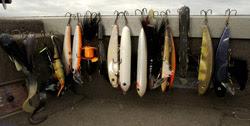
Lures to catch  muskie

Lures to catch muskie


Catch a big muskie

Catch a big muskie

Michigan is home to two strains of muskellunge – the Great Lakes muskellunge and the northern muskellunge. Naturally-reproducing populations of northern muskellunge are located primarily in the western Upper Peninsula, but they have been stocked in numerous lakes statewide. Northern strain muskellunge were the primary strain stocked in Michigan until 2011 when the State shifted to raising only Great Lakes strain muskellunge. Still, northern strain fish are occasionally stocked through cooperative arrangements with other states and muskellunge organizations. Photo of boy holding muskie Naturally-reproducing populations of Great Lakes muskellunge exist in the Great Lakes and various connected waters, and they are also stocked into inland lakes and rivers where they do not naturally reproduce Tiger muskellunge, a hybrid between northern pike and muskellunge, were once stocked in Michigan, but no longer are raised in state fish hatcheries. Naturally-produced tiger muskellunge are rarely caught, though they are more prevalent in lakes with high abundance of northern pike.

Michigan’s Great Lakes muskellunge are most common in Lake St. Clair and the Detroit River, which feature world-class fisheries for the large, toothy predators. Lake St. Clair has a fairly large fleet of charter boats that target muskellunge by trolling, and a growing contingent of small boat anglers that cast or jig for them as well. Because the St. Clair system is fed by cold, Great Lakes water, the muskellunge season does not open until the first Saturday of June and runs through Dec. 15. Photo of muskie lures This season is being considered in other locations where muskellunge spawning occurs in May and June. Elsewhere, the fishing seasons mimic walleye seasons.

Often called “the fish of a thousand casts,” muskellunges are hard to come by; they are slow to mature and take many years to reach the minimum legal size of 42 inches. Legal-sized muskellunge are rarely caught by anglers who are not fishing specifically for them; Man with muskybecause of their large size and sharp teeth, they often break lines. Usually found with shallow weedy lakes and rivers with log jams and fallen timber, muskellunge retreat into deeper water during the heat of the summer. They can be caught by casting or trolling with very large plugs, spoons and spinners — usually behind a wire leader — that are retrieved or trolled at a fast rate or by bait anglers using large suckers. Though primarily fish eaters, muskellunge will take waterfowl or rodents when available.

While muskellunge can be taken by hook and line or spearing, there are special regulations on a number of inland lakes. Lake Hudson in Lenawee County, Thornapple Lake in Barry County, and Big Bear Lake in Otsego County are the state’s brood stock lakes and are closed to spearing.

For details on Michigan muskellunge, visit http://www.michigan.gov/documents/dnr/Muskellunge_-_A_Michigan_Resource_-_May_2012_386501_7.pdf.

Can I Catch Muskie In Kentucky In the Fall?

Kentucky Afield Outdoors: Muskellunge fishing heats up in fall

By Kevin Kelly
from The Fishing Wire

This is the first installment of a series of articles titled “Fall Fishing Festival” profiling the productive fishing on Kentucky’s lakes, rivers and streams in fall.

FRANKFORT, Ky. – The angler’s whoop traveled fast and loud over the water from the back of Buck Creek on Cave Run Lake.

Bringing a trophy muskellunge to the boat after a spirited fight uncorks raw emotions and provides a unique sense of satisfaction. In this instance, the 45-inch torpedo of a fish was a new personal best and the fourth muskellunge the angler had caught on this cool, calm, overcast Friday in mid-September.

The fall muskellunge bite was turning on, and word traveled quickly. A parking lot that held only a handful of boat trailers on Friday was full Saturday.

The shorter days, brisk nights and cooler water temperatures of early fall trigger the start of some of the finest muskellunge fishing of the year. Cave Run, Green River and Buckhorn lakes are the state’s top destinations as they have been proven to produce trophy fish.

Sarah Terry’s state record came from Cave Run Lake in November 2008 and was caught on a silver Double Cowgirl in-line spinner. It measured 54 inches and 47 pounds.

In recent weeks, muskellunge at Cave Run Lake have been caught in the backs of creeks – many of them loaded with weed beds and standing timber – in 8 feet of water or less. Weed beds near submerged channels and across the main lake flats aren’t to be overlooked either.

“They’re looking for one thing: food to get them through the winter,” said Tom Timmermann, northeastern fisheries district program coordinator with the Kentucky Department of Fish and Wildlife Resources. “Bass go through a heavy feeding period in the fall, and muskellunge do the same thing.”

Smaller lures such as a 4-inch balsa wood crankbait in silver and black, a ½-ounce dressed in-line spinner or a ¼-ounce skirted buzz bait can be effective in early fall. As the water cools, consider upsizing to rubber and hard-bodied jerkbaits, and single and double-bladed in-line spinners and spinnerbaits.

“Don’t overlook those smaller baits,” Timmermann said. “If you’ve never fished Cave Run before, you can throw some of those larger bass crankbaits, especially in black and white colors, and do pretty well.”

Buckhorn Lake in Leslie and Perry counties is rated good for muskellunge and holds ample numbers of fish in the 36 to 40-inch range.

In early fall, target the back of creeks and shallower areas that have weed beds. The best fishing once the lake level has reached winter pool is on the lower end of the lake by the dam, said Kevin Frey, eastern fisheries district program coordinator with Kentucky Fish and Wildlife.

Crank baits, jerk baits and bucktail spinners are proven producers. Generally, orange and sucker-imitating colors work well in the creeks while silver, purple or chartreuse are go-to colors for the main lake.

“There are several good spawns of shad throughout the year,” Frey said. “There will be a lot of smaller shad, so there could be an opportunity to try some muskie-sized baits and some bass-sized baits.”

Leatherwood Creek, Otter Creek and Meetinghouse Branch are a few of the best spots for fall muskie on Buckhorn Lake. The tailwaters can be excellent for muskellunge as well.

“There’s lots of bank access,” Frey said. “There’s also a small creek that comes into the tailwater. Over the years, that’s been popular with local anglers.”

Fisheries biologists routinely see muskellunge exceeding 45 inches on Green River Lake, which is rated excellent for the species.

“It certainly still has big fish potential,” said Eric Cummins, southwestern fisheries district program coordinator with Kentucky Fish and Wildlife.

While a lot of the standing timber is gone, Russell Branch is one notable exception. Try the slides on main lake bluffs and the edges of flats. Robinson Creek features expansive flats with some isolated brush piles and flooded timber.

The upper reaches of creek arms often will hold muskellunge.

“It’s just a little cooler than the main lake itself,” Cummins said, “and they can find whatever they’re eating.”

Where there are shad, muskellunge probably aren’t far away. Give a shad-imitating crankbait a try. Jerkbaits also produce on Green River Lake.

Kentucky Fish and Wildlife maintains these fisheries and others around the state by stocking them with 13-inch long muskellunge reared at Minor E. Clark Fish Hatchery in Morehead.

Cave Run, Buckhorn and Green River lakes received stockings of the sub-adult fish this week. On average, it takes five to six years for a muskellunge to reach 36 inches, the minimum size limit in these impoundments.

Lake level and outflow information for Cave Run, Buckhorn and Green River lakes can be found online via the Louisville District of the U.S. Army Corps of Engineers’ webpage at www.lrl.usace.army.mil.

Kevin Kelly is a staff writer for Kentucky Afield magazine, the official publication of the Kentucky Department of Fish and Wildlife Resources. Get the latest from Kevin and the entire Kentucky Afield staff by following them on Twitter: @kyafield.

Should I Fish A Spinnerbait Around Grass In Lake Sinclair In December?

I was taught a lesson about fishing a spinnerbait in grass beds on Lake Sinlair one December. Charles Redding allowed me to fish with him at Sinclair to get information for a Georgia Outdoor News article. We caught nine nice keeper bass on a pattern I would not have fished.

It was in the early 1970’s that I first heard Charles’ name. He pretty much invented spoon jigging at Lanier. Over the years I got to know him as one of the best spinnerbait fishermen in Georgia. He was a member of the South Cobb Bass Club, the club that won 9 Top Six tournaments in a row! He now fishes team tournaments many weekends and usually is in the top fishermen.

Sinclair has lots of grass beds. In the spring, you can cast a spinnerbait into them and expect to catch bass. I do not think of that as a December pattern, but that is what we did. Although the water was dropping and that always makes shallow water fishing less productive, Charles showed me bass can be caught shallow even under unusual conditions.

Water temperature ranged from 58 to 63 degrees in the areas we fish, and we tried grass beds from Nancy Creek all the way up into Rooty Creek. Charles kept the boat close to the grass, making short, quick cast and then moving on. He said he expected to find feeding fish somewhere during the day while fishing like that. His success in tournaments proves him correct.

If you try Sinclair during the winter, Charles says fish hit all winter long on the grass bed pattern. Just don’t give up on it.

Catching Spotted Bass On Lake Lanier In November

Lake Lanier was the site for the November Spalding County Sportsman Club tournament a few years ago. Nine of us fished for eight hours and caught 19 bass weighing 31 pounds,15 ounces. That is a good average size for any lake and it is even better if you know most of the bass we caught were spotted bass. They tend to be smaller and lighter than largemouth.

James Pilgrim, Jr. had a limit of 5 keepers that weighed 9-2 for first. He had one of the prettiest spots I have ever seen, a 4 pound, 4 ounce fish that took big fish honors. Kwong Yu also had a limit and his 7-7 weight was good for second place. David Pilgrim had 4 keepers weighing 6-0 for third.

I caught only two spots but they weighed 5-8 and that was good for fourth place. I caught one on a jig and pig at 8:00 am and the other on the same bait at 2:00 pm. Both were on rocky points. My big one weighing 3-8 was the biggest spotted bass I have ever caught, but it wasn’t quite big enough!

James, David and Kwong said they caught their fish on worms in fairly deep water. They were fishing brush piles 20 to 30 feet deep. I am always amazed how deep the fish hold at Lanier. The shad I saw on my depthfinder were all 35 to 40 feet deep and other fish were holding under them. I caught a couple of little hybrids jigging a spoon in 40 feet of water.

I never fish that deep on other lakes. I guess it is the clear water at Lanier. If you try Lanier anytime soon, plan of fishing deep water. Jigging spoons are a good way to fish that deep.

The pro fishermen found similar conditions at Lake Russell that year. They also caught fish deep. The winner jigged spoons and slow rolled a spinnerbait through standing timber in 30 feet of water. Russell also has very clear water. Remember, the clearer the water, the deeper the bass will usually hold.

Fishing Lake Eufaula with Bobby Padgett

I had the chance to fish Lake Eufaula a few years ago with Bobby Padgett. He knows the lake well since he grew up in Columbus and still lives there, fishing Eufaula about twice a week. He won a BASS tournament there in May, 1996, bringing 15 bass weighing 77 pounds, 9 ounces to the scales. That weight set a new record for a three day, five fish limit tournament.

My trip with Bobby was to mark ten places to fish for bass in December for a Georgia Outdoor News article. It was unbelievable the way he found fish. We could be riding down the lake and he would slow down, circle an area, throw out a marker and say cast there. We would be so far from the bank you could not have hit it with a rifle shot! Sure enough, we would catch fish.

Bobby fishes the ledges on Eufaula with Mann’s 20 Plus crankbaits and Cedar Shad crankbaits. We were fishing ledges that were shallow even though in the middle of the lake or its major creeks. When we cranked the plug down and hit bottom in about 12 to 15 feet of water, and then bumped a stump or brush, a bass would often grab the plug.

Although we did not catch any bass over 5 pounds and Bobby said it was a bad day, I was amazed. Fishing only half a day, we probably caught 30 bass, and had about ten 16 inch keepers. Several of them weighed better than three pounds.

According to Bobby, there are more 16 and 17 inch bass in Eufaula than he has ever seen before. He had been catching at least 25 keepers each trip, and had several over five pounds each time before I went with him. I can bring bad luck to anyone! He was nice enough to blame it on the cloudy weather rather than me.

You can catch bass like that at Eufaula now. Find shallow ledges on a lake map and crank a plug down to hit them. Concentrate on brush if you find any. The bass will also hit worms and jigs, but a crankbait allows you to cover more area quickly.

There were big bass there last week. As I said, if it wasn’t for bad luck, I wouldn’t have any luck at all. Late in the afternoon, I cranked my 20 Plus down and hit brush. A bass grabbed it and, when I set the hook, it pulled my rod tip to the water. I had just caught a three pounder that did not pull my rod tip down at all. Bobby said I had a grown one. About the time I agreed, the fish pulled off.

A little later I was cranking a Mann’s Loudmouth on a more shallow hump. It stopped like it hit a stump and when I set the hook, a bass almost pulled the rod out of my hand. It also pulled off after a few seconds. I was using heavy equipment with 20 pound line, and Bobby said I was tearing the hooks out of the mouth of the big bass. He uses 12 pound Stren Easy Cast line on all his reels. I guess I should have changed to lighter line after losing the first one.

In the BASS tournament, Bobby landed one weighing 10-1 for big fish. He caught it on a deer hair jig. He caught a couple on that jig while I was with him. He showed me a way to fish jigs that I will have to learn. It is different from the way I fish now but it definitely works.

Bobby finds a fairly smooth point or ledge, casts the jig out and lets it sink on a tight line. When it hits bottom, he holds his rod tip at about a 10:00 angle and cranks the reel handle two or three times to swim it off the bottom, then lets the jig sink back on a tight line. The rod is at the right angle to set the hook if a bass hits. He does not pump the rod tip.

The jig looks like a shad swimming up and then darting down to the bass holding off the bottom. You have to set the hook hard and fast when one hits. This method also works with a Mann’s George-N-Shad. Bobby gave me one to use, showed me how and I quickly missed several strikes. I do plan to learn this new method!

Fall Fishing At Its Best

Fishing West Point with Ed Sheppard a few years ago reminded me again why fall fishing can’t be beat. We had a beautiful day with bright sun, clear calm water, bank trees beginning to show some color and air temperatures in the upper 70’s. To make it even better, we didn’t see a dozen other boats on the lake.

Although Ed was showing me some holes for a Georgia Outdoor News article, we stumbled on something that might interest you. While in the back of Turkey Creek above the boat ramp, a big school of hybrids surfaced around a small island. They stayed on top for almost an hour, feeding on the schools of shad that were everywhere.

Ed caught a couple on a Rat-L-Trap while I stubbornly casted a spinnerbait and bumped it on the bottom, trying to find a big largemouth feeding under the hybrids. I didn’t have any light equipment and I needed a big largemouth for a picture. I didn’t get one.

If you go to West Point, carry an ultralight and tie on a quarter ounce jig. White or yellow should be good. You probably can catch hybrid after hybrid weighing a pound to a pound and a half. They will give you a super fight on light tackle.

Shad were on top everywhere we fished late in the afternoon. Check backs of creeks as well as open water. Watch for schools on top the last couple of hours of light. They are easy to spot if there is no wind. With or without wind, keep your gas motor off and listen. You can often get the direction of a school by hearing them when the hybrids start hitting. When you find a school, ease up to them and don’t spook them. If they go down, wait a while and they will probably return.

We also enjoyed watching a couple of osprey diving and picking up shad off the top. They would fly back to a tree, eat the shad and return for another. These majestic brown and white birds are firmly re-established in our state. When I was growing up, there were not any to watch. They add to a day’s fishing.

What Is Your Summer Go-To Bait?

Pros Throw Go-To Baits All Summer
from The Fishing Wire

If you could only fish a handful of baits this summer, what would they be? We asked Bassmaster pro Ott Defoe and walleye guide Tom Neustrom, neither of whom hesitated before rattling off a short list of go-to lures.

Rapala and VMC Lures make many go-to baits

Rapala and VMC Lures make many go-to baits

Rapala and VMC offer an assortment of lures ideal for probing the depths during the heat of summer

A Freshwater Hall of Fame Legendary Guide, Neustrom primarily targets walleyes in Minnesota. His top summer baits are the Rapala Scatter Rap, Rapala Husky Jerk, VMC Moon Eye Jig and Rapala Glass Shad Rap.

The 2011 Bassmaster Rookie of the Year, DeFoe hails from rural Knoxville, Tennessee. As a Bassmaster Elite Series and Bassmaster Open tournament competitor, he targets bass all across the country. His top summer baits are a Rapala DT-10, Rapala DT-16, Terminator Pro Series Jig and a VMC Shaky Head Jig.

“With those four baits, man, you should be able to catch a fish anywhere you go,” DeFoe says.

Scatter Rap

Several baits in the Scatter Rap family are in Neustrom’s regular rotation. Built on classic Rapala balsa body shapes, Scatter Raps derive their name and signature sweeping action from an innovative, patent-pending, curved Scatter Lip™.

“I love the Scatter Rap,” Neustrom says. “It’s a great bait with great action, especially when you change the cadence on your retrieve, which changes the action of the bait.”

A Scatter Rap is often a go-to bait

A Scatter Rap is often a go-to bait

The Scatter Rap Shad has a unique, erratic action, and dives 5 to 8 feet.

Featuring what’s best described as evasive action, baits in the Scatter Rap family perfectly mimic a spooked baitfish fleeing attack, moving from one side to the next, triggering reactive bites.

When Neustrom wants to get Scatter action deeper than a Scatter Rap Shad’s 5- to 8-foot diving depth, he’ll cast a Scatter Rap Countdown, which will sink to whatever depth he wants to fish it. To get it to depth, he simply counts it down, “just like the names says.”

“I like to count ‘one-thousand-one, one-thousand-two,’ and when it do that, I usually get about two- to two-and-a-half feet per ‘one-thousand,'” Neustrom explains. “If you get to ‘five-one-thousand,’ you’re usually down ten feet.”

Once he gets the Scatter Rap Countdown to the strike zone, he slow rolls it back to the boat. “Just lift your rod and reel, pull it back, lift it again, pull it back,” Neustrom explains. “That gives you that erratic action in deeper water.”

Husky Jerk

Neustrom is “really partial to Husky Jerks,” he says. “I’ve caught a lot of smallmouths and walleyes on that bait.”

A natural-looking minnow profile and neutral buoyancy make the Husky Jerk practically irresistible to gamefish. Intermittently pausing the bait on the retrieve is key.

“You just stop reeling that bait and just let it sit there for a couple seconds and then start to reel again,” Neustrom explains. “It’s a great triggering action.”

VMC Moon Eye Jig

When he’s vertical jigging or pitching for walleyes with live minnows, Neustrom will often thread them on a VMC Moon Eye Jig, which features a very effective bait-keeper. “That bait keeper will keep even live bait on the hook, even better than just a straight hook.”

Glass Shad Rap

When trolling for walleyes, Neustrom favors Shad Raps, Scatter Rap Shads and Glass Shad Raps. He ties on the latter in clear water and when he’s needs a little extra running depth.

“I seem to get a little bit better depth with the Glass Rap than a regular Shad Rap,” he says.

His go-to size is a No. 5, which will run 12 1/2 to 14 feet at 2 to 2.5 mph, with 105 feet of Sufix 832 Advanced Superline braid out. His favorite colors are Glass Blue Shad and Glass Perch.

“They just work really, really good in these northern-tier lakes,” he says. “They outproduce a lot of other baits.”

DT-10 and DT-16

Throughout the summer, you’ll find both Rapala DT-10’s and DT-16’s tied on rods on DeFoe’s boat deck.

“Any time the fish are out offshore on deeper structure, as they often are in the summer months, one of those two baits is going to reach the range those fish are in,” he says.

Terminator Pro Series Jig

Not all summer bass live deep. “There’s always fish that live shallow in the summer time,” DeFoe says. “Even when it’s very, very hot.”

Ott Defoe's go-to bait

Ott Defoe’s go-to bait

Elite Pro Ott DeFoe relies on a variety of lures to score despite hot weather.

Flipping a Terminator Pro Series Jig in shallow water is among DeFoe’s favorite ways to catch summer bass. “Those fish, when they want to bite something, a lot of times, they want a big meal,” he explains. “You can put a big trailer on the back of that jig to give you a large profile.”

Featuring a unique head design, the Terminator Pro Series Jig is much more versatile than most jigs – it’s not just for shallow presentations. “You can cast that jig deep too,” Defoe explains. “You can basically do anything you want to do with it.”

Custom jig-skirt colors, color-matched brush guards, a single rattle and a heavy VMC® Black Nickel hook further differentiate the Terminator Pro Series Jig from other cookie-cutter jigs that all pretty much look the same.

VMC Shaky Head

When the going gets tough, DeFoe’s going to break out the spinning tackle and toss a green-pumpkin finesse worm on a VMC Shaky Head Jig.

“When times are tough and you need to get a bite, you can tie on that combination and catch one,” he advises.

Catching Catfish After Independnce Day

Classic Catfish

Ichtalurids Beyond Independence Day

By Ted Pilgrim
from The Fishing Wire

Big summer cat

Big summer cat

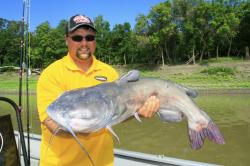
Captain Brad Durick clutches one of his pets, a dandy 25-pound channel cat.” Photo courtesy of Rippin Lips

Last time the U.S. Fish & Wildlife Service took the temperature of licensed anglers, 7-million savvy souls named the catfish their favored species. By comparison, 10-million anglers preferred bass, while a meager million liked walleyes. America’s love affair with catfish dates back decades, even centuries, with reports of 200- and 300-pound blues caught during the early 19th century. Mark Twain revered cats, too, frequently romanticizing the species in print, and once writing of “a Mississippi River catfish that was more than six feet long.”

Rockwellian portraits of Americana commonly depict summertime scenes of kids and crusty characters alike sharing a bank and a bucket of worms in hopes that a catfish might bite. Thank goodness all these years later, a visit to the local river or pond often reveals this same pastoral setting.

Meanwhile, on countless water bodies across the country, hot fishing for great big channel cats awaits any interested angler. Their abundance and potential size are just two among many reasons for the popularity of these barbel-faced fish. One other beautiful basis for a summertime catfish adventure: there are as many ways to catch them as your imagination can concoct. Not only do any of the 7-million anglers stand a fair chance of taking home a catfish dinner, they’re just as likely to land a whale today as during the days of Huck Finn.

Current Thoughts on Catfish

Carolina rig for cats

Carolina rig for cats

Simple three-way or Carolina-style rigging and fresh cutbait are key ingredients to successful catfishin’. Photo by Bill Lindner

Brad Durick, popular catfish guide on the famed Red River of the North, might not wear a straw hat nor clench a corncob pipe, but he’s as comfortable contending with current and catfish as Twain’s historic hero, Huck Finn. The channel cats Durick hunts daily, from May through October, are some of the biggest on the planet. On this crazy good catfish river, current runs bizarrely south to north-rather than dropping toward the Gulf of Mexico-and drains into Lake Winnipeg following a 550-mile northbound run.

Most years, water flows have stabilized by mid July. Catfish have fully finished spawning and patterns become predictable. While most anglers during this time continue focusing on obvious areas, such as visible wood snags, rockpiles, deep holes or dams, Durick has a whole other world of catfish spots to himself.

“Everything I do relates to current,” says the Coast Guard licensed captain. “The best thing catfish anglers can do for themselves is learn to read the water. Every key change in the river bottom is revealed by things happening on the surface.

“Catfish flock to current seams-where two currents come together. On the surface, it’s often a subtle sign. But once you know what it looks like, seams are as obvious as a downed oak tree. Current breaks and their underlying topography are incredibly overlooked, but they have everything a catfish needs-a break from current, oxygen and of course, food.”

Add on scents help

Add on scents help

Powerful new fish attractants like Rippin Lips’ Scent Trail have become increasingly important in the arsenals of many veteran catmen. Photo by Bill Lindner

Durick says that while a big gnarly woodpile might look great, if it lies out of the main flow, anglers will struggle to catch catfish there. Conversely, even a small bush or a subtle hole can gather multiple whopper catfish-if it’s associated with substantial current. One of Durick’s better midsummer spots is a 4 to 10 foot trench cut into the outside of a river bend. His best troughs are often the shallowest ones.

“I really like 3 to 4 foot holes with a trough-like effect. Food is dropping into these spots all the time. And even though there might be strong current flowing into it, there are always areas of reduced water flow where cats can hold and wait for food.”

Associated overlooked summer spots, Durick says, are small holes near a shoreline break, especially those with current seams running along their edges. In higher water years, he’s also had great fishing below dams all through summer.

In each instance, Durick baits with Carolina style rigs-a 2- to 5-ounce No-Roll sinker above a ball bearing swivel and a 10-inch leader of 30-pound test mono snelled to a 4/0 to 8/0 circle hook, depending on bait size and how catfish are striking. He prefers circle hooks by Rippin Lips and Bottom Dwellers Tackle. In heavier current, Durick says big cats routinely grab a bait and run aggressively, necessitating wider gap (larger size) hooks and shorter snells.

Use cut bait

Use cut bait

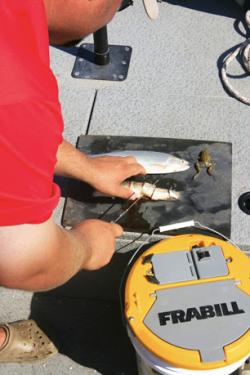
“Most of the time, I use suckers cut into small ‘steaks’,” offers Durick. “They’re abundant, inexpensive and catfish gobble ’em up.” When available, Durick also uses wild goldeye, fresh from the river. In wetter years, particularly during August and September, leopard frogs emerge en masse. The late summer frog bite can be exceptional, but prevailing dry weather sometimes eliminates this amphibious pattern.

Durick adds another observation about extra warm water. “In the hottest summer weather, for whatever reason, catfish often prefer to bite frozen bait over fresh cut specimens. I think maybe warmer water pulls the blood and oils out of fresh bait faster than frozen stuff. Regardless, I’ve found that marinating or dousing my cutbaits in an attractant called Scent Trail has significantly increased my bites. It’s powerful stuff.”

Catch big catfish

Catch big catfish

In most spots, Durick employs a special 20-pound Cat River Anchor, which he says holds in any type of bottom. He very rarely sits in a single spot for more than 15 minutes, unless he’s fishing after a front, or after a drop in water temperature, which slows catfish activity.

Still, most days produce electrifying action, with channel catfish in sizes you just can’t find anywhere else. If you’re in need of a serious string stretching, you might want to head to the Minnesota-North Dakota border right now, or for a quick fix, beeline straight for your neighborhood catfish river. Fun and big kitties await.

Light Tackle Gives You More Fight

Go Light for More Fight
from The Fishing Wire

The Light Line Gamefish Challenge

Catching fish on light tackle requires skill and understanding. It’s also a lot of fun!

Use light tackle for fun

Use light tackle for fun

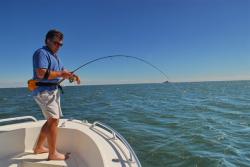
Returning to truly light tackle can add to the thrill of catching even medium sized fish.

The popularity of thin braided lines has resulted in anglers using line tests that far outstrip the fighting ability of many of the fish they catch. The simple fact that gel-spun braided lines offer all the breaking strength of monofilament, but at a fraction of the diameter, has created a strange trend. Many anglers who used to load a reel with 12-pound test monofilament are now filling it with 30-pound or stronger braid. Why? Because they are about the same diameter so the reel holds about the same amount of either line. For some, being able to use stronger line on smaller outfits is a benefit, but for many species of gamefish it poses a serious question. Does fighting a fish with such strong line require less skill on the part of the angler and, therefore, is it less sporting?

Saltwater fishing is a very diverse pastime and people participate for a variety of reasons. For many, catching a few fish for dinner makes for a great day on the water, while for others, catching and releasing fish on light tackle is the ultimate expression of the sport.

Fast Fish Are Great On LIght Tackle

Fast Fish Are Great On LIght Tackle

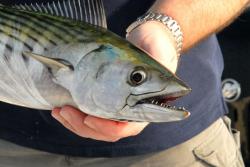
Ocean speedsters provide particular enjoyment on lighter gear.

Before the advent of super braids, many anglers used 12-pound test on medium weight outfits when casting for popular inshore gamefish like redfish and striped bass. Fighting a 20- or 30-pound fish on 12-pound test required a deft hand with the tackle. With the advent of high-tech braids, many anglers spooled those same outfits with 30-pound or heavier line. Is that an advantage an accomplished angler really wants? That means the angler is catching the same fish with the same gear, but now the line is as much as three times as strong as the monofilament used before. Making the switch back to light monofilament on some reels and catching a 30-pound striper brought back some of the challenge. It was the difference between using skill and patience to fight a fish that was pulling drag like no tomorrow, and just bending the rod as we reeled it in on stronger line with a heavy drag setting.

“It’s just more fun,” said Tim Surgent, owner of the popular website Stripersonline.com. “Fishing for bottom species like fluke and black sea bass with small bucktails and four- or six-pound test line on ultralight rods and reels not only requires a higher degree of skill to not lose the fish during the fight, it also generates more and frequently larger fish than typical heavier bottom tackle. It’s even more fun using the same outfits for bonito or false albacore.”

If you are fishing for food use heavier tackle

If you are fishing for food use heavier tackle

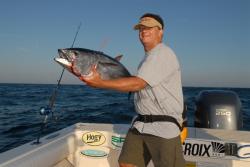
Powerful predators headed for the cooler might better justify heavier gear.

So just what constitutes light tackle? That varies with the fish you’re chasing. Light tackle for striped bass and redfish might be a medium/light outfit spooled with 10- or 12-pound line, while light for school-size bluefin tuna might be a light action jigging outfit filled with 20- or 30-pound line. You could say a general rule of thumb is to use line that is half the breaking strength of the average weight of the fish you expect to catch. But even that rule is just a generality since the fighting qualities of gamefish vary dramatically from species to species.

Battling fish on light line has been a hallmark of skilled anglers since the introduction of modern fishing reels with drag systems and dependable light lines. Not only does it require quality gear, it takes an understanding of how best to use it and some insight into the fighting abilities of the fish you are chasing. Your technical skills have to be honed, from knot tying to fighting technique, or you will break off a lot more fish than you’ll land. When the line is light, your drag has to be velvet smooth. When dropping down to two- or four-pound test for speedy fish like Spanish mackerel, ladyfish or bonito, even the slightest unevenness in the drag can break the line. Over matching these fish with heavier tackle tends to take the challenge out of catching them.

Light line requires a rod with a softer action to absorb shock, and many light tackle specialists prefer rods that are longer for the same reason. Setting the drag on your reel properly is extremely important because there’s so little room for error. Even with all the right gear and a properly set drag, when it comes time to fight a fish there are techniques that help you best apply what little pressure you’ve brought to the party.

Reds Are Fun On Light Tackle

Reds Are Fun On Light Tackle

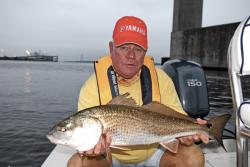
Species like reds, which are frequently released, are particularly good light tackle targets.

When you first hook up and the fish takes off, do not lift the rod tip high unless you are fishing in very shallow water where a high angle between the rod and fish will help prevent break-offs on obstacles. Bonefish on the flats require a rod-high fighting stance at times, but in most cases keep the tip low, the rod lightly loaded and pointed in the direction it is running. High sticking doesn’t put any more pressure on the fish than pointing the rod directly at it, and the practice can put you at a disadvantage. By keeping the rod low, you can pick up slack quickly if a fish changes direction or turns toward you. Slack can allow the hook to back out, especially with light line that doesn’t give you much pressure to generate the initial hook set. And speaking of hooks, yours needs to be razor sharp.

If the fish is acrobatic, a slightly different approach comes into play. When the fish runs, keep the rod tip up a little so when it jumps you can dip it quickly to prevent the fish from landing on a tight line and breaking it. If your fish is making a long initial run, it is best to let it pull against the drag and tire. When the run ends, immediately begin gaining back line by lifting the rod and reeling it back down. If you need a little extra drag to budge the fish, now is the time to palm the reel. Cup the bottom of the reel with your cranking hand and gently apply pressure to the base or top rim of the spool. Be very careful. If the fish lunges, drop your fingers away and go back on the reel drag only. If the fish is particularly large and gaining line is difficult, use the boat to pick up line by running slowly in the direction of the fish. The same holds true if a fish’s initial run is so hard and fast that it might strip the reel. The boat can be an important fish fighting tool, part of your arsenal when needed. Most fish are lost on light tackle at the very end of the fight near the boat on a short line. If this is happening to you, try slacking off slightly on the drag setting when it is close, and palm the reel to pull the fish the rest of the way in. If it lunges, controlling the pressure with your fingers is faster than reaching for the drag knob.

The beauty of light tackle fishing is the fish don’t have to be huge to be an awful lot of fun to catch. Match the tackle to the quarry; keep it light and sporty, and you’ll add another dimension to your fishing adventures.

How Can I Catch Summer Trout On Topwater Baits?

Summer Topwater Trout

By William Redmond
from The Fishing Wire

They could very well be one of the most underrated of Florida’s sport fish. Lacking the sturdiness of a snook or redfish, speckled trout are known for their soft bodies and paper thin mouths, but once these fish reach about 24 inches, they earn the nickname “gator trout” for an undeniable ferocity most clearly displayed in their treatment of topwater plugs.

From a boat or on foot, casting surface plugs for speckled trout ranks as one of the most popular angling pursuits for shallow water anglers throughout the Sunshine State’s Gulf Coast region. Capt. Jason Stock, who guides from a flats skiff and a kayak, knows well the trout’s penchant for attacking topwaters. For him, the entertainment value is tough to beat.

“It’s so visually exciting,” Stock said. “When they pop it, there’s no question. He may blast it, miss it and come right back for it again.”

Trout On Spook

Trout On Spook

The venerable Heddon Spook, in nearly any size, can be a seatrout killer in summer.

Stock’s a fan of Heddon topwaters – typically the Spook Junior in calm conditions and a One Knocker Spook when a summer breeze puts a little motion on the ocean and requires an audible trail to help the trout track their target. A 7- to 7 ½-foot medium- action spinning outfit with 25-pound braid and a 20- to 30-pound fluorocarbon leader will handle even the 7-pound-plus monsters. At any size, Stock said, trout are crafty fish, so seamless attention is a must.

“Be ready, because they might hit at the end of a long cast,” he said.

Trout are widely dispersed throughout Florida’s coastal environments, but Stock has three favorite scenarios:

Daybreak

Easing up to island edges or onto the top of a skinny grass flat just as the sun starts to “pink out” the sky, Stock expects to find big trout hunting finger mullet, sardines and anything else they can catch in a foot or so of water. Dimpling pods of bait are a sure sign, as the food source won’t go overlooked by hungry trout.

Stealth is a must in this shallow habitat, as big trout are keenly aware of their vulnerability to porpoises and ospreys. Here, especially, long rods and thin-diameter braid play essential roles in achieving the long casts needed to reach these fish from a distance they can tolerate.

Note: Minimize your movement in a boat, as pressure wakes will alert the perceptive trout. Likewise, wade with soft, sliding steps rather than a noisy, stomping pace that sounds like thunder beneath the surface.

For either Spook model, Stock likes the bone, chrome and black/gold colors. It’s the same for the new 3 ½-inch Chug’n Spook Jr., which creates more surface commotion while still retaining the ability to do the classic walk-the-dog retrieve. Stock often employs a slow, steady retrieve with a 1-2-3, 1-2-3 cadence that produces the enticing walk-the-dog action. Resembling a wayward finger mullet, this Spook display will draw some of the most indescribably violent strikes you’ll ever see.

When it’s on, this shallow water trout bite will have you begging the sun to delay its ascent, but once the big orange ball rises high enough to start warming the meager depths, the daybreak madness quickly wanes and it’s time to move on to Scenario Number 2.

Midday

During the heat of midday, anglers often ditch their trout pursuits and turn their attention elsewhere. Stock, however, knows that trout don’t depart the area – they simply relocate. In most cases, the fish will move away from the shallow flats and slip off the outer edges of adjacent bars.

Settling into potholes and grassy trenches in the 4- to 6-foot range, the fish usually require a little more coaxing before they’ll venture topside. This is where the One Knocker and the Chug’n Spook really shine, as this low-pitch rattle speaks to the trout’s belly and the added surface disturbance makes the lure easier to locate and track.

Tidal movement always benefits predators with food delivery, but incoming cycles really stimulate summer fish with cooler, oxygenated water. Also, Stock said weather can profoundly influence the midday action.

“Approaching storms will often get the fish going,” he said. “They might chew really good right before the rain comes and then also after the storm because that rain cools the water.”

After Hours

Nighttime offers a twofold benefit for trout anglers. For one thing, lower light reduces visibility and thereby makes the fish more approachable. Moreover, the abundance of dock and bridge lights offer countless targets where Stock finds trout ambushing tide-born crustaceans and baitfish that flow past the illuminated areas.

Fish bars and flats for trout

Fish bars and flats for trout

Topwater trout action is best at dawn and dusk on the flats, but you might also connect at mid-day by fishing the outer edges of flats and bars.

A variety of baits work in this scenario and topwaters certainly have their place in the game. Walk a spook past the edge of a dock light and the result may look like someone dropped a coconut into the water.

Of course, the pinnacle of nighttime trout fishing is the full moon phase when the silvery beams bring the dock light affect to the entire coastal region. Anglers are still better concealed than they are pre-sundown, but trout enjoy the cooler feeding period with plenty of visibility for targeting those bait schools. Stock said he uses his ears as much as his eyes to locate the full-moon action.

“You can hear the smaller mullet getting blasted,” he said. “Look where there’s activity, ease in slowly and anchor off the mullet schools. Or, if you’re looking, just drift through the area and fan cast.”

In any of these scenarios, remember that those giant “gator” trout that love Spooks are typically females. Handle these fish with great care and consider releasing your bigger trout. Returning these breeders to their coastal habitat will help perpetuate Florida’s awesome topwater action.