Category Archives: How To Fish

Where and How Can I Catch Middle Georgia Bass In April?

Middle Georgia April Bassin’

If you like catching bass in April and live in the central part of Georgia, you are in luck. Bass are shallow and feeding, and you can catch them from big lakes and smaller public waters.

The following lakes give you a variety of types of fishing and offer chances to catch either largemouth or spotted bass, or both.

Lake Harding

Often called Bartletts Ferry by Georgia fishermen, Harding is a 5850 acre lake on the Chattahoochee River north of Columbus. It has varied cover and structure, from rocky banks and points to channels, grass beds, docks and blowdowns that all hold bass.

The lake has a big population of spotted bass as well as largemouth. Most of the spots are small with an average size of only about half a pound, and anglers should keep spots for a meal. There is no size restriction on them. The largemouths have an average size over 12 inches long and 15 inch plus fish are fairly common.

In the Georgia Bass Chapter Federation Creel Census report, it took about four hours to catch a 12 inch keeper, yet almost 20 percent of club tournament fishermen weighed in a five fish limit. The average bass weighed 1.36 pounds and just over 70 percent of the fish weighed in were largemouth.

To catch largemouth in April the water willow grass beds up the river from the Georgia Power ramp are good targets. Bass feed in them as well as bed around them. A spinnerbait run through the grass is a good way to cover water. Use a chartreuse and white bait with one gold and one silver willowleaf blade.

Also fish the grass beds, docks and blowdowns with a weightless worm. A black or white Trick worm works well. Try moving it steadily with short twitches just under the surface, but also let it sink to the bottom and sit still for several seconds before moving it. Bedding bass on the edge of the grass will often pick up a worm sitting on the bottom.

For spots, target rocky points and banks with a small jig and pig or jig head worm. In clear water use a three sixteenths ounce brown jig with a brown twin curly tail trailer. In stained water use a black jig with a blue trailer. Raise the bait off the bottom a few inches and let it fall back, making the tails of the trailer wiggle. Dip the tails of both color trailers in chartreuse JJ’s Magic. Spots love chartreuse.

A green pumpkin Zoom Trick worm or smaller Finesse worm work well on jig heads. Dip the tail to color it and give it scent, and work it with shakes and short hops through the rocks. Also fish both baits around docks, both largemouth and spots will hold on them and hit the worm.

Lake Tobesofkee

Lake Tobesofkee is a 1750 acre lake just outside Macon owned and operated by Bibb County. Although a small lake, it has plenty of structure and cover to fish for largemouth, with grass beds, rocky points and banks, docks, channels and wood cover.

The largemouth population is excellent at Tobesofkee, with 20 pound plus tournament stringers of five bass not unusual. According to the Department of Natural Resources, up to one-third of the catch should be fish in the 15 to 25 inch range with good numbers in the bragging size from 20 to 25 inches.

A spinnerbait or buzzbait worked in the grass and around docks will catch bigger fish. Also try a chartreuse or crawfish crankbait that runs six to eight feet deep on the rocks and docks. Riprap on the bridges hold bass this month to fish it with those baits, too.

For slower fishing try a half ounce jig and pig or three sixteenths ounce jig head worm. A black and blue jig or a green pumpkin worm on a jig head works well. Fish both around dock pilings, brush piles and rocky banks. For riprap go to a one-eight ounce jig head and fish the rocks, concentrating on the corners at the bridges.

The area above the Lower Thomaston Road Bridge has a lot of shallow water but is ringed by good grassbeds to fish. Where the creek enters the lake is a good area to target. The docks and points as well as the riprap on the lower lake offers more varied cover to try.

High Falls

High Falls is a 650 acre lake east of I-75 north of Forsyth that is a Georgia State Park. It is an old lake that has been silted in so most cover is shallow. There are grass beds, stumps and docks to fish all over the lake and you can easily spot the best places to fish.

You are limited to a ten horse power motor but you can use a boat with a bigger motor if you do not crank it. The lake is small enough to cover with a trolling motor from the ramp in Buck Creek and the one at the dam. Fishing is limited to sunrise to sunset.

The Georgia DNR says High Falls is an untapped resource for largemouth. It has one of the highest populations of bass larger than 15 inches long of any of our lakes, with average size about 14 inches long and weighing about 1.5 pounds.

Ricky Hightower lives near the lake and fishes jon boat tournaments like the Lil’ Waters Bass trail and others. He also puts on pot tournaments on High Falls and fishes it often.

Since most of the cover in High Falls is on the bank, Ricky fishes a lot of water fast in April with a spinnerbait. The fish are scattered and will move in and out of the shoreline cover, so he will fish the same places more than one time during each trip.

A Constant Threat spinnerbait made by Terry Lee in Griffin, director of the Lil’ Waters Bass Trail, is his favorite. He likes a white skirt and one silver and one gold blade on a half ounce bait. He fishes it fairly fast around and through the grass and blowdowns as well as around docks.

A KVD 1.5 or 2.5 crankbait also works well around the docks. Try a natural shad or orange belly bait and try to bump the dock posts and other wood cover.

If the bass seem to be reluctant to bite Ricky fishes a jig and pig or jig head worm. He likes a black and blue three sixteenths ounce jig with a blue twin tail trailer. His jig head is one eight ounce Spot Remover head with a candy bug Trick worm on it. Both should be cast around and under docks and to blowdowns and brush piles.

Favorite areas include Brushy Creek, Watkins Bottom and the area near the dam. All have docks, grass and wood to fish. Keep moving and cover water to catch the scattered bass this month.

Lake Jackson

Jackson Lake is a 4750 acre Georgia Power Lake at the very upper end of the Ocmulgee River east of Jackson, Georgia. It is an old lake but still has a lot of good structure and cover to fish for spotted and largemouth bass.

Although the DNR says largemouth make up about 42 percent of the bass population, only half the bass weighed in at club tournaments are largemouth. And the numbers are sometimes skewed in tournaments since spots are usually culled for heavier largemouth.

In club tournaments it takes about four hours to catch a 12 inch keeper that weighs an average of 1.77 pounds. There are some quality bass in the lake, with it taking 254 angling hours to catch one over five pounds, one of the lowest times per five pound bass of any of our lakes.

The lake record largemouth, caught in March, 1986, weighed 14 pounds, 7 ounces. Twenty years later a 5.08 pound spot set the record for that species. There are some grown spots in the lake and you still have a chance of landing a wall hanger largemouth.

Kip Carter is a well known tournament fisherman that grew up on Jackson and still fishes it often. He guides on Jackson and other area lakes when not fishing a tournament, and makes Bass Hound lures. He sells his lures in tackle stores and through his web site at http://ginebrewedtackle.com. “Everything on Jackson centers around the spawn in April,” Kip said. Some bass have already spawned by early April but bass continue to move to the spawning areas in waves all month long. You can catch pre spawn, spawning and post spawn bass all during the month.

The shad spawn also takes place in April and is a key to catching both largemouth and spots while it is happening. During the shad spawn a spinnerbait fished on main lake seawalls and rocky banks is a sure way to catch fish early in the morning.

You can catch bass off the beds during the day but Kip does not concentrate on them. If he sees a good one on the bed he will try to get it to bite, but he is usually fishing a variety of baits to fish for bass he does not see.

During the shad spawn a white buzzbait and white spinnerbait are always ready to cast around the spawning shad. A Pointer jerk bait will also catch bass around the shad spawn.
A brown jig tipped with a Zoom brown or pumpkinseed trailer is a good bait to fish around shallow cover, and it will catch bedding bass, too. He likes a three-eights to one-quarter ounce jig and trims them down.

A weightless worm s one of the best baits to fish around shallow cover on Jackson this month. Natural colors are best and the bait should be fished around all shoreline cover, from docks to blowdowns and seawalls.

A Carolina Rig and a jig head worm work for fishing a little deeper, too. A Baby Brush Hog is fished on the Carolina rig and a Trick or Finesse worm works well on the jig head. Green pumpkin and natural shad are good colors.

Start at the mouth of spawning coves all over the lake and fish from the point to the back, covering all the cover. If you are not catching fish back in the pockets concentrate on the points with your jig head worm or Carolina rig.

Lake Russell

Lake Russell is a 26,650 acre Corps of Engineers lake on the Savannah River north of Augusta. No shoreline development is allowed so its natural shorelines are pretty to fish and the lake holds good numbers of both largemouth and spotted bass.

You can catch a lot of bass on Russell as the Creel Census Report shows. Average time to catch a 12 inch keeper in club tournaments was less than three hours, the best in the state. Sizes are good with the average tournament bass weighing 1.38 pounds and about 31 percent of the fish were largemouth.

Kent Guest is a tournament fisherman from Elberton and fishes Russell often. He says bass are on many patterns that work this month, with pre spawn, spawn and post spawn bass all month long. Baitfish are the key to catching both pre and post spawn bass and Kent fishes where he finds bait, knowing bass will be feeding around them.

A variety of baits are good, including crankbaits, a jerk bait, a jig and pig, a weightless worm and a Carolina rig. A jig head worm also catches fish but he prefers the Carolina rig to the jig head. And he also has a drop shot worm ready to catch fish he spots holding deeper.

Wind really helps the bite this month so Kent fishes wind blown banks and points as long as he can control the boat in the wind. Rocky points and banks are best but bass feed on clay bottoms, too. Use a crankbait or jerk bait in the wind to fish fairly fast. Cast near the bank and work both baits back all the way to the boat.

If the wind is not blowing try the points at the mouths of spawning coves with your Carolina rig and jig and pig. The water is usually clear so stick with browns and green pumpkin colors. Fish water from three to 15 feet deep and rock or brush cover holds the bass on the points.

Also work the back one-third of coves with a weightless work, fishing it around all cover in shallow water. A bright colored worm like white or chartreuse will help you see the bite and know when to set the hook.

Spots are all over the lake now but the best largemouth fishing is in the creeks like Beaverdam, Coldwater and Pickens. And the largemouth are more likely to be around wood cover with rocks holding spotted bass. The DNR says it is easier to catch spots than largemouth on Russell.

Head to one of these lakes near you or travel to one a little further away for some great April bass fishing. You won’t go wrong with any of them.

Where, When and How To Fish A Jig and PIg

A jig and pig is one of my favorite baits and I have at least one tied on year round. I have caught fish on them every month of the year, both at night and during the day. But I think October through March here in middle Georgia is the best time to fish them. I never hesitate to fish with a jig and pig any time of year, though.

The jig and pig can be fished in many ways. I usually start by dragging it along the bottom for a foot or so then hoping it up off the bottom an few inches. That imitates a crayfish feeding along the bottom then being startled and trying to get a way. When I hit brush I will pull it up a limb then let it fall back a couple of times before pulling it over the limb and letting it fall. That looks like a bream feeding in the brush. Both are effective for catching bass.

Rocks are one of the best places to fish a jig and pig. I will slide the bait along pulling it over rocks and letting it fall between them. I also hop it and pop it over rocks then let it fall back to the bottom. Spotted bass especially like rocks and a small jig and pig is almost irresistible to them. On riprap or bluff banks, I cast right to the edge and move the jig and pig slowly, keeping in contact with the fast dropping bottom. When it falls I keep my line simislack, watching it for a tick or jump until it hits the next step down, let it sit then move it until it falls again.

Around docks I try to get the jig and pig as far back into shady areas as possible. I work the bottom under the dock probing for cover. On docks with posts I pitch to each one, getting my bait right beside it then letting it fall straight down the post to the bottom. When I go over a cross brace I will pull the bait up and let it fall, just like on brush.

Stroking a jig is not something I do a lot but it is effective. Let your jig and pig fall to the bottom by a post, hesitate a few seconds then stroke your rod tip up a couple of feet, then let it fall back. This looks like a bream that gets spooked by a bass and tries to escape and will often trigger a reaction bite.

I use browns in clear water and black and blue in stained to muddy water, and dip the tails in chartreuse JJs Magic. Bream fins and tails have a chartreuse glimmer in bright light and this helps, and spots just love anything chartreuse.

Give a jig and pig a try. You will catch fish on it.

How Can Eyes In the Sky Help You Catch Fish?

Yamaha Skipper Offers Fish-Finding Tips via “Eyes in the Sky”
from The Fishing Wire

Satellite Data that Helps You Find Fish

Ready to go fishing

Ready to go fishing

Captain George Mitchell’s Yamaha powered Yellowfin has a full complement of “eyes in the sky” navigation aids to help him find fish.

Offshore fishing is as popular as ever and with the advent of larger, more seaworthy outboard-powered boats, the desire to catch tuna, billfish, sharks, kingfish and other pelagic species of gamefish will likely continue to grow. More reasonable fuel prices will no doubt add to the affordability of chasing big fish offshore, and there are certainly plenty of opportunities along the U.S. coastline.

As is the case with any kind of fishing, the most difficult part of putting together a successful day on the water is figuring out where the fish are most likely to be, but the problem is compounded when you’re dealing with open ocean species that are frequently found many miles offshore.

“There’s a lot of water out there,” said Captain George Mitchell, “but there are resources available to offshore fishermen that can help put them in the right place at the right time.”

Mitchell is a tournament fisherman and a professional charter captain with a large and loyal clientele. His home port is Jupiter, Florida, but he also charters from Venice Marina in Venice, Louisiana at various times of the year in addition to competing in professional kingfish tournaments with his son, Eddie. His latest ride is a Yamaha-powered 36-foot Yellowfin® center console, rigged to the nines for offshore fishing. Pushed by three Yamaha F300 outboards, the boat can get him pretty much anywhere the fish are quickly and safely. But how does he determine where “anywhere” is each day?

Tuna

Tuna

Tuna and other pelagic species seek out currents and temperatures revealed by services like Roff’s.

“There are tools available that take a lot of the guesswork out of finding the most likely places for the gamefish I’m after,” said Mitchell. “Some of these tools come right out of the sky. I’m talking about satellite-generated sea surface temperature (SST), chlorophyll and altimetry charts. They sound high-tech, and they really are, but getting this quality fishing data has never been easier. Spending a little time viewing online tutorials coupled with some on-the-water practice, these tools are worth their weight in fuel savings.”

Large bodies of saltwater, like the Atlantic Ocean and Gulf of Mexico, are not vast tracts of static water. They are living ecosystems with currents, counter currents, areas of deep-water upwelling and gyres (eddies) that are constantly moving. While locating physical structure is important when fishing for inshore species, ocean features can also become structures that attract fish. What makes the ocean features harder to locate is the fact that they are dynamic, as opposed to static like bottom structures. Identifying how ocean features can impact the location of pelagic fish requires a whole different set of tools from bottom charts. That means researching current data so you can identify areas where the conditions are most conducive to concentrating forage and gamefish.

“I use SST, chlorophyll and altimetry charts to help me nail down where I am going to fish, regardless of whether I have a charter right here in Jupiter and I’m looking for dolphin, sailfish or tuna, or if I’m fishing a kingfish tournament out of a port in the Gulf,” said Mitchell. “It’s critically important to have access to real-time data and charts developed from the most current satellite passes for decision-making. When putting together a game plan, I start by identifying the catchable species in the area and then look at the developing trends in water movement, surface temperature, chlorophyll concentrations and areas of water upwelling. If, for example, I am fishing my home waters, I figure in the movement of the Gulf Stream and also factor in wind direction and speed.

Currents help find fish

Currents help find fish

This Roff’s image of the Florida Current and Gulf Stream can be a big help to offshore anglers.

“If I see an area where conditions conducive to my target species converged over the past few days, it will be high on my list of spots,” Mitchell continued. “But I will try and pick out several locations that look promising so I have a Plan A, B and C. With the mobility of high-speed fish boats like my Yellowfin,® I can easily hit a number of likely spots should one or two not pan out.”

So what is it you should be looking for on these wonders of satellite technology? You’re trying to find areas where contact between two water mass boundaries occurs; where upwelling of nutrient-rich deep water is being pushed to the surface; and where phytoplankton blooms occur.

SST charts depict ocean surface temperature to locate water mass boundaries and can help indicate where current edges and upwelling might be taking place. SST charts are generated from data provided by numerous earth-orbiting satellites. There can be numerous images available daily or, if cloud cover is persistent, none. Temperature sensing is impeded by clouds, but such areas will be marked on SST charts by the provider.

Chlorophyll data is available from just a few satellites, so one chart per day under optimal conditions might be available. What chlorophyll data provides is a look at where phytoplankton blooms are occurring. Phytoplankton is the bottom of the food chain, which will attract baitfish that feed on these micro organisms. They, in turn, should attract the predators you seek.

Altimetry is a radar image of the surface of the ocean that shows minute differences in the height of the water in colors similar to chlorophyll and temperature charts. Minor depressions in the ocean surface tend to indicate where a deep water upwelling is occurring. This brings nutrient-rich water to the surface, which kicks off a phytoplankton bloom.

Temperature and water movement patterns help catch fish

Temperature and water movement patterns help catch fish

The temperature and water movement patterns around islands are all revealed in satellite imagery today.

Offshore of the Mid-Atlantic States there is a wide Continental Shelf, and the eastern edge is pockmarked with submarine canyons. The Gulf Stream runs up the coast, but for most of the region it is well offshore of the canyons. However, the Stream creates gyres— great spinning bodies of warm, dark blue water also called warm-core eddies—which break off from the main current and migrate inshore to the canyons along the Shelf. Think of them as huge bowls of Gulf Stream water spinning in a clockwise direction that do not readily mix with the inshore water in its path. Such eddies create upwelling of deep ocean water where they encounter the steep walls of a canyon. SST charts clearly mark the location of eddies or fingers of warm water extending inshore from the Stream. Altimetry charts can help pinpoint where upwelling is taking place, and chlorophyll charts indicate where they are generating plankton blooms. These are the building blocks of a hot bite of pelagic fish that can include a variety of tuna and billfish species. With information like this, coastal anglers heading offshore can narrow down the vastness of the ocean to a few places that have the right conditions to be holding forage and the gamefish they seek.

Services that provide satellite-generated charts for recreational anglers are in hot demand because these ocean features are often located 60-to-100+ miles offshore, certainly well within the range of today’s high speed fishing boats. Without these charts, this is a long way to go to troll around blind with no idea whether you’re within five or 50 miles of the action. The charts used in this article were provided by Roffers Ocean Fishing Forecasting Service which, under the direction of Fisheries Biologist/Ph.D. and owner, Mitchell Roffer, has been providing these services for three decades. However, there are numerous companies that offer subscriptions to accurate fishing charts prepared from satellite data. There are also a number of free government and university websites that offer raw SST charts.

Hilton’s Realtime Navigator
www.realtime-navigator.com

Terrafin Satellite Imaging
www.terrafin.com

OceanTemp
www.oceantemp.com

Offshore Satellite Services
www.offshoresatelliteservice.com

Roffers Ocean Fishing Forecasting Service
www.roffs.com

How To Catch Bass On a Fly Rod

Bass On The Long Rod – Catching Bass On A Fly Rod

By Mike Gnatkowski / www.gnatoutdoors.com
from The Fishing Wire

Flyrod bass on eelworm

Flyrod bass on eelworm

This largemouth was caught on an Eelworm Streamer, which is the fly-fisher’s alternative to a rubber worm.

Think of fly-fishing and you automatically think of trout. Fly-fishing is ideally suited to presenting tiny flies that imitate a lot of what a trout eats. But fly-fishing can be a challenging technique for targeting bass, too. And most of us have a pond or lake close by that has bass in it so they’re readily available and we don’t have to travel far to find good fishing.

Most anglers pursue bass with a spinning rod or bait-casting gear from the deck of a bass boat like the anglers they see on Saturday mornings. But there are more and more anglers trying the long rod for bass and they’re finding it both challenging and rewarding. With fly gear, you’re certainly not going to hoist a 5-pound bass into the boat and you’re going to have to fight it more than 30 seconds. An extended fight alone might be the real attraction.

New materials mean better flies

New materials mean better flies

The explosion in fly tying materials in recent years has fostered even more realistic flies, many intended for bass.

The real interest in fly-fishing for bass got started in the 1980’s jumpstarted by two legends in the fishing world. Oklahoman Dave Whitlock was one of the first to design flies specifically for warm-water species and extolled the joys of fly-fishing for bass. Whitlock was a master fly tier, artist, author and fly-fishing innovator who eventually transplanted to Arkansas to be close to the White River and its fabulous trout fishing, but he never forgot about bass.

Whitlock’s innovative designs included the Eelworm Streamer, which was the fly rodder’s equivalent to the bass fisherman’s plastic worm. With heavy lead dumbbell eyes, the fly exhibited a nose-down attitude that mimicked the classic rubber worm, but with undulating feathers and mottled tones the Eelworm Streamer looked more life-like than any piece of plastic.

Whitlock continued to create bass flies that covered everything from top to bottom. Flies like the Hare Water Pup, Wiggle-Legs Frog, Dragon Flies and Sheep Minnows that look more real than any crankbait. Bass are more opportunistic than trout. Most times there’s no need to match-the-hatch when fly fishing for bass, but Whitlock’s designs opened the eyes of fly fishers who had their sights set on bass and had come from a trout fishing background. Although many of Whitlock’s flies appealed to both largemouth and smallmouth bass, his flies had a particular bucketmouth appeal.

Float tubes are great for fly fishing

Float tubes are great for fly fishing

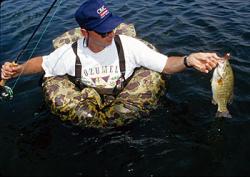
Kicking around in a float tube is a great way to target bass with a fly rod.

Larry Dahlberg grew up fishing and guiding on the St. Croix River on the Minnesota/Wisconsin border. Dahlberg was so infatuated with fishing that by the time his friends were bagging groceries at the local supermarket, he was guiding anglers on the river for good money, most with a fly rod. Dahlberg, like Whitlock, was an innovator and inventor and went about designing flies that would catch his clients more fish.

One of his creations, the Dahlberg Diver, was fly-fishing’s answer to the bass fishermen’s crankbait. The Dahlberg Diver has a cone-shaped head made of spun deer hair with a stiff collar. The idea was that when stripped hard, the cone-shaped head would act like a lip on a crankbait causing the fly to dive. The harder and more you stripped, the deeper the fly would dive. Stop stripping and the fly would swim back to the surface. It’s a triggering mechanism that most predators can’t stand. The Dahlberg Diver proved to be a killer on not only St. Croix River smallmouths, but also sizable pike and muskies. Dahlberg also tied life-like poppers and sliders that catch plenty of bass even today.

The explosion in fly tying materials in recent years has fostered even more realistic flies, many intended for bass. With a variety of synthetic furs, rabbit strips, Krystal Flash and rubber legs, pinchers and feelers, bass flies look like the real thing. Made from natural materials or synthetics, bass flies not only look real, they feel natural. When a bass chomps on a hair mouse or frog, it feels natural so that fish is less likely to let go. Undulating feathers or quivering rubber legs gives bass flies an added realism that cannot be duplicated with conventional hard baits.

River fly fishing for smallmouth

River fly fishing for smallmouth

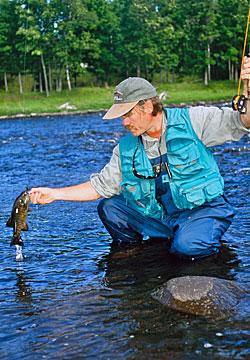
Many rivers have outstanding smallmouth populations and targeting them in the summer with the long rod can be great fun.

What kind of fly rod you choose for bass fishing depends on which kind of bass you intend to fish for. Largemouths tend to inhabit thick cover where a heavier rod can be an advantage for muscling big bass. The flies that are used to entice largemouth bass are generally larger and bulkier and more easily cast with an 8- or 9-weight fly rod. Smallmouths frequent more open structure where rocks or wood are the main habitat. Nymphs, streamers and bugs that trigger strikes from smallmouths can be easily cast with a 6-weight fly rod. The reel is relatively unimportant and is used mainly for line storage. Bass don’t run so an intricate drag system is not necessary.

Unlike when casting a lure with a spinning or bait-casting rod, when fly-fishing the line carries the lure or fly not the other way around. To throw bulky, wind-resistant frogs or poppers requires a weight-forward or bass-bug tapered line. A line like this is heavier at the forward end and is better suited to driving out-sized bugs that require more power to cast. Match the line weight to the rod. Leaders need to be nothing more than a four-foot length of 20-pound fluorocarbon when fishing largemouths. A tapered leader of no more the 7-1/2 feet is perfect for smallmouths.

Late spring and summer is primetime for fly-fishing for bass. Bass are most susceptible to fly-rod tactics when they are in the shallows. Actively spawning bass are suckers for flies twitched around beds. I’ve caught dozens of largemouths and smallmouths on rubber spiders intended for bluegills. A good pair of polarized glasses will help you spot active beds and spawning bass. This can be done from the front deck of a bass boat or out of a float tube.

Fly-rodding for bass is hot during the heat of summer. Bass take up residence in predictable locations during the summer and fly fishers can capitalize. Working minnow imitations along weed edges can be a great tactic for scoring on summer largemouths.

Use a sponge spider for bass

Use a sponge spider for bass

One of many bass the author has caught on a sponge spider intended for panfish.

Largemouths will also take up residence under mats of floating vegetation to avoid the hot sun and jet skis. Lily pads and largemouths are like peanut butter and jelly. Frogs, Divers and bugs tied with monofilament weed guards can be cast into the thickest junk without fear of getting hung up. Dropping a hair frog into the opening between pads and then causing it to twitch and skitter will bring explosive strikes from resident bass. Many times the best action is during the heat of the day.

Smallmouth thrive in cool, clear lakes and can be targeted by fly fishers with life-like imitations that simulate smallmouth fare like crayfish, minnows and gobies. In large cool bodies of water smallmouths may not spawn until July, so you’ll find them still patrolling the shallows. During the post spawn, you’ll find male bass protecting the beds. Look a little deeper for the rotund females.

Many rivers have outstanding smallmouth populations and targeting them in the summer with the long rod can be great fun. As water levels drop in the summer time bass will be highly concentrated on the pools and deeper runs. Bass will move into riffles to feed or in slack-water areas to root out crayfish.

Fly-fishing for smallmouth in rivers is a lot like fly-fishing for trout. Many of the same nymphs, Wooly Buggers, Muddler Minnows that catch trout will catch smallies. There may even be times when hatches of aquatic insects will bring smallmouths to the surface like trout.

Streams and rivers become tepid during the summer months so wading wet is an option. You can use a canoe to cover water and then get out and fish the best pools and runs. Tangling with a 3 or 4-pound bulldogging smallie on the long rod is a hoot.

(See more of Mike Gnatkowski’s work at www.gnatoutdoors.com. )

What Is A Jig and Pig for Bass Fishing and Why Should I Use One?

If you read or hear much about bass fishing, you will hear people say they use a jig and pig. But what is a jig and pig and why should you use one to fish for bass?

Lead head jig with rubber skirt and fiber weed guard

Lead head jig with rubber skirt and fiber weed guard

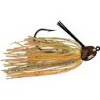
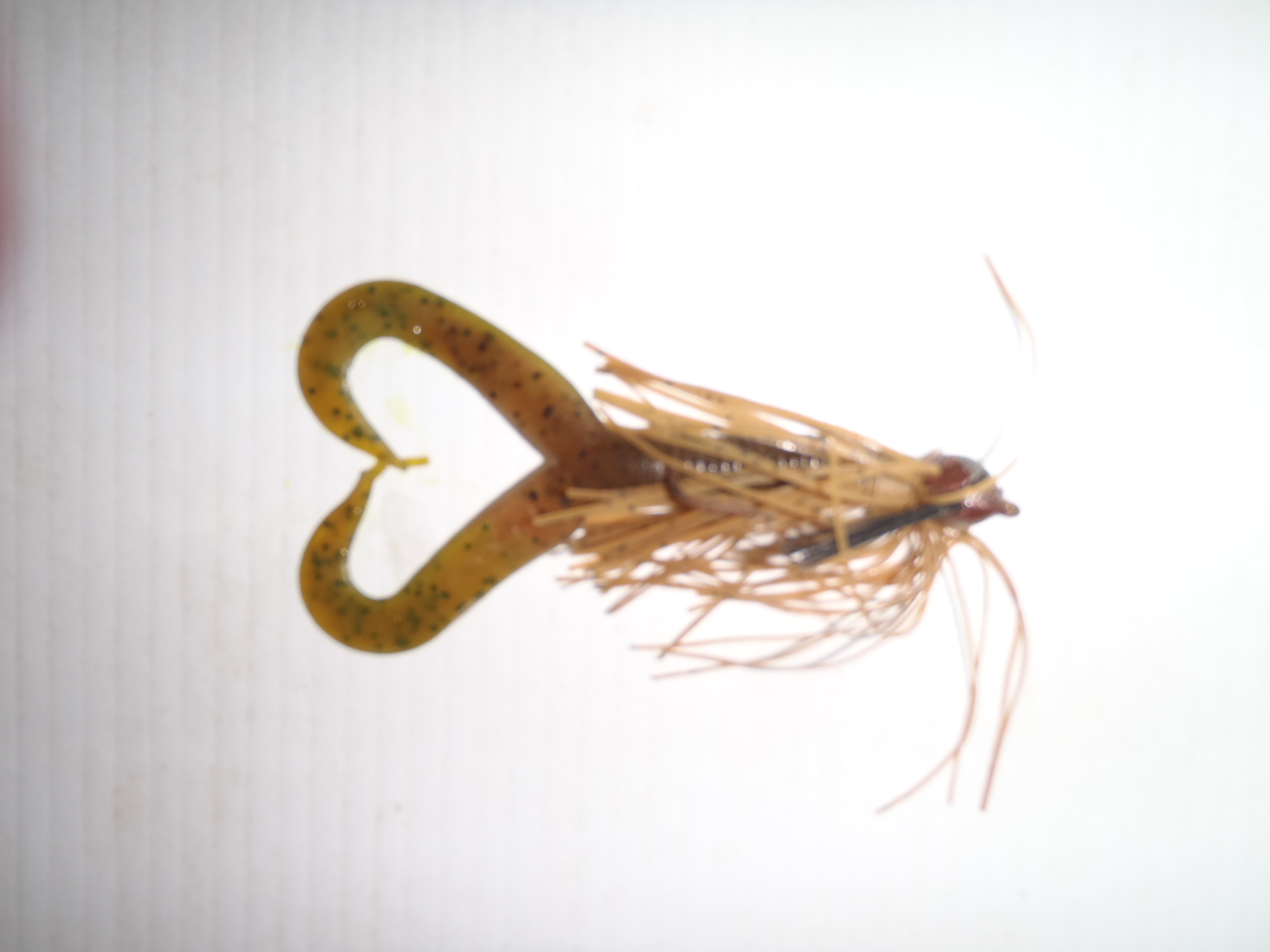
The jig part is a lead head jig with rubber legs or skirt. It may or may not have a weed guard on the hook.

The pig can be several things. The first ones were Uncle Josh Pork Rind Frogs – hence the name “pig.” Now most fishermen use a plastic pig and they can be many shapes and sizes. Some popular ones are chunks – a round body with two legs like the Zoom Chunk. I like a twin curly tail trailer like the Zoom Creepy Crawler or Fat Albert. Others look like crawfish, like the Net Bait Paca Craw. They come in a wide variety of colors.

The pig is attached to the hook of the jig so the body is mostly covered by the skirt and the legs or tails stick out behind the bait.

Bitsy Bug Jig and Creepy Crawler Trailer

Bitsy Bug Jig and Creepy Crawler Trailer

It is important to put the pig or trailer on so it is straight and the legs at a flat plane with the head, perpendicular to the hook. If it is bent the bait may spin and twist your line. If it is at an angle it does not look natural.

The picture above is of my favorite jig and pig – a Strike King Bitsy Bug with a Zoom Creepy Crawler trailer. This one is in browns for clear water. I use a black and blue jig and blue trailer in stained to muddy water. I use a 3/16ths to 1/4 ounce Bitsy Bug and always dip the tips ot the trailer, no matter what color it is, in chartreuse JJs Magic.

For deeper fishing or when the wind is blowing too much for the light jig, I go with the same colors in a 3/8ths to 1/2 ounce Rattleback Jig with the bigger Zoom twin tail Fat Albert trailer. And if I am trying for bigger fish I use the bigger bait. A big bass will hit the smaller bait but I do think bigger fish like bigger baits.

The Bitsy Bug and Creepy Crawler is a great bait for spotted bass but largemouth love it, too. I have done well many tournaments on a variety of lakes on these baits.

A jig and pig can be fished in all kinds of structure and cover. And they can be fished in a wide variety of ways.

What Are Some Tips for the Michigan Opening Day for Fishing?

Michigan DNR fisheries experts offer opening-day tips

(Michigan’s DNR Biologists offer these tips for their home state, but they’re also very useful for anglers fishing early spring anywhere in the Midwest in the next month. Editor)
from The Fishing Wire

Fishing may be a 12-months-a-year sport in Michigan, but there’s little doubt that the last Saturday of April is one of the biggest days of the year for anglers. It marks the opening day of trout fishing, statewide on more than 80 percent of the state’s trout streams, as well as the season opener for walleye, pike and muskellunge on the inland waters of the Lower Peninsula.

Like many anglers, a fair number of Department of Natural Resources fisheries personnel will take to lakes and streams very soon. Here’s what some of them have to say about opening-weekend opportunities:

Trout from Michigan

Trout from Michigan

Trout:

Mark Tonello, a fisheries biologist out of Cadillac and a trout aficionado, says anglers must rid themselves of preconceived notions.

“Don’t pigeonhole yourself into one river,” Tonello said. “What if you get up there and the river you chose is running 4,000 feet per second and all mud? You might want to look at smaller waters, further upstream, where it may be clearer.

“And use all weapons available,” he continued. “A lot of good anglers I know go ready for anything. If there are hatches going off, they’ve got their fly rods and are ready to match the hatch. But if there’s no hatch, they’re ready to throw spinners. And if that’s not working don’t be afraid to try bait.”

Tonello said anglers shouldn’t be afraid of competition.

“Opening weekend tends to be one of the busiest weekends of the year, but we have so much water, you can find places to fish,” he said. “A good hint is to start with our trout regulations maps that are all color coded – you can catch trout from any of those streams.

“And don’t be afraid to contact the local biologist,” Tonello said. “As a biologist, those are some of my most enjoyable phone calls, when someone calls and says, ‘I’m heading up to Cadillac, can you give me tips on where to fish?'”

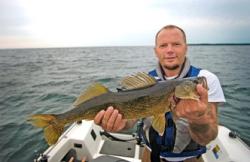
Walleye caught in Michigan

Walleye caught in Michigan

Walleyes

Walleye anglers will likely be spread between rivers and lakes and anglers should wait until right before opening day to decide where to fish.

“Last year there were a lot of fish still in the river for the opener,” said Tim Cwalinski, a fisheries biologist in Gaylord. “This year we’re warming up a little more quickly and we didn’t get as much snow, so the fish may be further along this spring than last spring. On our big lakes – Hubbard, Grand, Long, Burt and Mullet, for instance — there are going to be fish in close, near the river mouth, but your best bet is probably going to be fishing really, really slowly. Trolling won’t cut it.

“If they’re still spawning, they’ll be in rocky, cobble areas in 2 to 10 feet of water,” he continued. “If they’ve finished spawning they’ll be out deeper. Males hit the spawning grounds first and stay on the grounds longer; there are fish there all the time, but there are aggressive fish there only part of the time. So don’t be afraid to fish well into evening. That’s what I’ve found on some of these big lakes.”

Fisheries biologist Jim Baker of Bay City – whose management unit includes the tributaries that feed Saginaw Bay – says a lot will depend on what happens weather-wise the couple of days immediately preceding the opener.

“If you get a big rain and the rivers get high and muddy, it can be hard to catch fish,” Baker said. “But we think the fish will be spawning late because it was so cold, so there should be a lot of fish left in the river when the opener arrives. Most of the guys will be vertical jigging with jigs, baited either with minnows or twister tails, but after the crowds dissipate, we know some guys troll up and down the rivers with Rapalas and they do pretty well.”

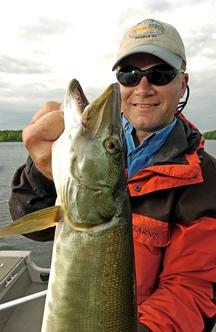
Muskie caught in Michigan

Muskie caught in Michigan

Muskellunge and Pike:

Muskellunge enthusiast Don Barnard, a fisheries technician out of Bay City, says the colder water around opening day means anglers should downsize their baits.

“I use smaller baits in the spring than what they use in summer and fall,” he said. “In fall we use 10- or 12-inch baits. The advice is to scale that down to about 8 inches or less in the spring. I use a smaller bucktail or twitch bait, 6 to 7 inches.

“A lot of anglers like to sight fish for spawning fish,” Barnard continued. “Spot them and cast to them.”

Barnard said he often fishes reservoirs and creek mouths.

“Fish the north end of the lake where it gets more sunlight and it warms up a little faster,” he said. Fish 6 to 8 feet of water, not any deeper than that. The fish are going to be up trying to sun themselves.”

Pike anglers should follow the same strategy.

“We like to fish them shallow around the opener,” said Jody Johnston, a fisheries technician out of Crystal Falls. “A lot of times they’re up very shallow – I wouldn’t be afraid to throw up in 2 feet of water. That’s where some of those nicer fish hang out, especially if you get a wind that is blowing the warm water into the shallows.”

Gary Whelan, the fisheries biologist who runs the DNR research team out of Lansing, says pike anglers should use bass techniques, only more so.

“Use the biggest flies and lures you’ve got,” he said. “I like to fish rivers, and pike will take large streamers like you use for bass – deceivers, Clouser minnows, zonkers – something that looks big and offers a lot of motion. But make sure you use some sort of shock tippets or heavy leader.

“If you’re casting lures, use spinnerbaits or body baits like Rapalas – the biggest ones you’ve got.”

To get more tips and information – including Family Friendly Fishing Waters, the June 13-14 Summer Free Fishing Weekend, and season rules and regulations – visit www.michigan.gov/fishing.

How Can I Get Ready for Spring Stripers?

Yamaha Tips: Get Ready for Spring Stripers
from The Fishing Wire

Use soft  natural baits

Use soft natural baits

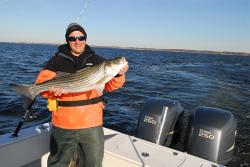
Big stripers like this one may prefer soft natural baits early in the season, especially in murky water.

It’s been a brutal winter for most of the Mid-Atlantic States, with record low temperatures and an amazing amount of precipitation in the form of snow, sleet and freezing rain. Just what does that mean for spring striper fishing? If past experience is any indicator, fishing might get off to a slightly later start. The water will be a bit colder due to the spring snow melt, resulting in a rush of cold water pouring into the bays where the first bass of the year are usually encountered. All that extra fresh water will probably be carrying more silt, which could hinder water clarity and affect feeding preferences, but that can be accounted for with the right techniques.

A look back in our fishing log books reveals that striped bass fishing after cold winters has been as good if not better than during mild years. So if you haven’t gotten to it already, you better start getting the boat and tackle ready.

Extreme cold water temperatures in rivers and estuaries where small-to-midsize stripers reside can put them in near hibernation throughout much of the winter. When the first hints of spring make an appearance—the sun gets a little higher in the sky, the days get a little longer, air temperatures start to rise—the bass stir and start to get hungry. If you’re willing to brave the weather and get on the water, chances are you’ll be rewarded with some decent fishing action. But are you prepared? Have you gone through the spring commissioning process with your boat, outboard and trailer? Have you serviced your reels and filled them with fresh line? Do you have the gear you’ll need for early season tactics in your tackle box? If not, you have some catching up to do.

The following two techniques can be effective under the spring conditions you will probably encounter when fishing for stripers in the coming weeks, and we will follow those up with some tips on where you should look for them.

Use clams for spring stripers

Use clams for spring stripers

Clams and other natural offerings fished on a circle hook can be just the ticket to turn early spring stripers on.

One of the best ways to coax bass out of cold water is fishing with soft, natural baits like sandworms and fresh clams. This is especially true when the run-off from winter snows and spring rains keep bay temperatures cold and hamper water clarity. When this happens, bass will rely more on scavenging by using their sense of smell rather than on their ability to seek out baitfish visually. When striper metabolism is sluggish, soft baits are easier to digest, making them preferable when the water is colder. If the water temps are below 50 degrees or water clarity is poor, break out the clams, sandworms or bloodworms and go fishing.

These baits are fished on or very near the bottom, and light spinning or baitcasting outfits filled with 10- to 15-pound test line are more than ample tackle. The preferred bottom rig is a simple fish finder type, with a light bank sinker mated to a 24-inch fluorocarbon leader armed with a 4/0 or larger circle hook. Using circle hooks is important because stripers feeding on soft baits are likely to swallow the hook in the time it takes for you to realize they are mouthing the bait. Circle hooks almost always set in the corner of a fish’s mouth, making unhooking and releasing them easier for you with less potential to harm the fish. That reduces release mortality of young fish or any fish you catch over the bag limit. If you’re using worms, the addition of a small float between the hook and the sinker will help keep the bait off the bottom and attract more bites. Clams give off more scent and are easier for bass to locate and gulp down lying on the bottom. When clam fishing, bring along a chum basket and fill it with crushed clams, then suspend it on the bottom under the boat to disperse even more scent to attract bass from further away.

Once water temperatures have risen above 50 degrees and river herring and alewives start their move from the ocean into bays (and eventually into rivers and streams to spawn), try switching over to trolling with diving plugs. Several lure companies offer swimming plugs with long diving lips rated to run from 15 to 30 feet down. They are excellent lures for early season stripers and a lot of fun to use because they do not require heavy rods and reels with special line to get them deep and make them work.

Trolling these plugs can be done on a variety of light conventional rod and reel combinations, but be sure they are loaded with 30- to 50-pound test braided line. The thin braid allows these plugs to dive to their rated depth. Add a six-foot fluorocarbon leader and a snap for quick changing lures, and fish them from outrodder-type rod holders to keep them spread apart behind the boat. Be sure to keep your eyes on the depthfinder to locate schools of baitfish, and to watch for stripers. That way you can be sure you’re fishing in the right places and using plugs that are running at the depth the fish are holding. You should have plugs in a range of colors that run at a variety of depths.

Use light tackle

Use light tackle

Light tackle is adequate to handle even big stripers like this one when fishing natural bait.

If you are not familiar with where to hunt for early season stripers, here are a few tips that might help. Review charts of the estuary you’re planning to fish, and look for areas adjacent to where feeder streams and rivers enter the bay. Then look for areas of flats along channel edges, especially flats that get exposed to the most sun during the days as they will warm faster, and warmer is better this time of year. In a lot of cases, flats along shorelines with southern exposure will fit the bill because the sun is still in the southern sky and will strike those flats with the most direct light. You can find stripers in water depths from a few feet out to edges of channel drop offs in 20 to 30 feet.

Bottom fishing with soft baits will often be best on flats near drop offs. Anchor the boat up current of the drop, and set out a chum pot with clams or just cast your bait behind the boat and let the fish come to you. Time your fishing to coincide with the top of the incoming and first few hours of the outgoing tide, when bass will be most active. This way the current carries the scent of your baits to deeper water, and the fish will be working into the current for just that reason. Pay attention to tides when trolling with plugs, too. High tide stages will produce the most bites.

With spring upon us (even if it might not feel like it quite yet), it’s time to put down the winter projects, get the boat and gear loaded, and go fishing. The stripers are hungry and waiting, and fishing for them is a great way to shake off the bad case of cabin fever you’ve been suffering from this winter.

What Is An Overlooked Crankbait for Cold Water Bass?

An Over-Looked Crank For Cold-Weather Bass

By Steve Pennaz
from The Fishing Wire

Bass on a Flicker Shad

Bass on a Flicker Shad

When you fish against a guy like Tony Owens, biologist with the Texas Freshwater Fishery Center in Athens, Texas, you pay attention to the little things or you get left in the dust.

Tony not only lives bass every day at his job, he regularly fishes tournaments in East Texas and knows how to catch fish.

But on this trip, he was struggling almost as badly as me. His spinnerbait pattern produced a couple good fish, as did mine (flippin’ PowerBait Jigger Craws), but the cold front that blew through the day before had shut the fish down. Texas’ world-class bass fisheries were built by stocking Florida-strain largemouths, a fish that doesn’t like it much when water temps plummet quickly. (http://www.berkley-fishing.com/PowerBait-Chigger-Craw/Berkley-ae-powerBait-chigger-craw,default,pg.html)

When I tape an episode of “Lake Commandos” television show, I compete with my guest to see who can catch the most fish. While it’s always my goal to catch the most fish, really what I like about the show’s format is seeing how my guests react to not only what the fish are doing, but to what I am doing. And today, Tony reacted to the slow bite by fishing faster. Traditional wisdom calls for slowing down when dealing with cold-front fish, but I have found that it’s often better to actually speed up to see if I can trigger reaction strikes. http://www.lakecommandos.com/

And one of the best baits for doing that is a crankbait.

The lake we were fishing was loaded with shad, which serve as the primary forage for the bass and other gamefish. So I switched over to a Berkley Flicker Shad, casting it on a medium heavy spinning rod loaded with 10-pound NanoFil to make it easy to cast long distances. http://www.berkley-fishing.com/Berkley%C2%AE-Flicker-Shad%C2%AE/1285348,default,pd.html

Most bass anglers seem to overlook cranks with subtle side-to-side rolls like the Flicker Shad, opting more often for baits that have a more aggressive action. But the shad imitators can be dynamite under certain conditions and I like to toss them after a cold front.

The fact is, I should have started the day with the Flicker Shad as the day before I had been targeting crappies on another east Texas lake, casting small #4 and #5 Flicker Shads, and while we caught a ton of slabs (one pushing 3 pounds!), we also caught a lot of big bass. In fact, we caught so many bass they interfered with our planned fish fry for that evening!

I was guilty of fishing inside the box of what’s comfortable. Like a lot of anglers, I had forgotten just how effective small, tight-wobbling crankbaits can be for early-season or cold-water bass.

Fact is, small, tight-wobbling cranks like the Berkley Flicker Shad can trigger bites when nothing else does.

A thin bait by design, the Flicker Shad has a tight wobble – actually, more of a roll – than a square bill. As such, it sends out an entirely different underwater sound, which is picked up bass both in the auditory sense and via the fish’s lateral line. Could be that thin, narrow baits with roll produce an acoustical signature more akin to the sounds and vibrations that shad emit as they travel through the water.

Another thing that’s great about the Flicker Shad is it’s a great casting bait, which means you can cover great distances without spooking fish in clear or pressured waters. It also makes it a great option when you visually locate schooling bass busting bait on the surface.

When I locate schooling bass in open water I like to cast past the school, working the bait quickly to get to the larger fish in the school, which are typically deeper than the smaller bucks. These larger fish have learned that the lunch falls right on their plate as smaller fish shred and slash shad high in the water column.

On rivers and reservoirs, I’ve found casting Flicker Shads along rip rap or timber and brush a great way to locate active fish. On natural lakes, I’ve gotten past my fear of fishing crankbaits around emergent weeds using smaller, shallower-running baits for ripping bait through small gaps or lanes in the weeds.

I typically choose Flicker Shads according to the depth I’m fishing – a #4, #5, or #6 for waters up to 7 feet — and a #7 or #9 for depths over 8 feet. Consult the following dive curves to pick the best sizes for where you fish.

Four Go-To Colors

The Flicker Shad

The Flicker Shad

For cold, clear early-season waters, I rely on four color patterns that allow me flexibility on different waters. The first is Natural Shad, the match-the-hatch choice for lakes, rivers and reservoirs with threadfin and gizzard shad. Second is Red Tiger, which mimics both crawfish and bluegills – definitely a solid early-season pick. Third, I like Racy Shad, which has hues of green and orange in it, as well as a chartreuse lateral line for dirtier, stained waters. And lastly, sometimes plain Pearl White can be a great performer, which mimics young white bass or shad that have been regurgitated by other fish – the same reason plain white Flukes are so effective.

How to Work ‘Em

I rarely fish Flicker Shads on a steady retrieve for bass. Instead, I use a fast twitch-twitch, twitch-twitch, which mimics shad movement. And the key to this retrieve is using spinning gear.

For me, I prefer a 7′ Abu Garcia Veritas with a little softer tip, like a medium power, fast action model. I like Abu Garcia Revo Sx20 or Sx30 spinning reels for their smooth gearing, powerful drag and how easily line falls off the spool for long, accurate casts. http://www.abugarcia.com/Rods/AbuGarcia-Rods,default,sc.html?prefn1=ZZSUBSER&prefv1=Abu%20Garcia%20Veritas & http://www.abugarcia.com/Abu-Garcia%C2%AE-Revo%C2%AE-SX-Spinning/1290278,default,pd.html

In terms of line choice, NanoFil Dyneema-based superline casts farther than anything on the market. Ten-pound Nano has the diameter of 2- to 4-pound mono and gives me the sensitivity I need ensure the bait is working as it should. It’s amazingly telegraphic. I can tell if one treble has a piece of leaf on it, even with 16 inches of 8- or 10-pound Trilene 100% Fluorocarbon leader. Speaking to the leader, I like it for making bait changes easier and it virtually eliminates the tendency of the line tangling in the trebles during the cast. http://www.berkley-fishing.com/Berkley%C2%AE-NanoFil%C2%AE/1285551,default,pd.html

Consider adding an additional spinning stick and a subtle action crank like the Flicker Shad to your boat deck this season. Not only is this system effective for early-season and open-water bass – especially on shad-filled waters – it’s a solid MVP for anything that swims.

And if you ask me, that’s pretty cool. In my world more bites equals more fun!

How Can I Locate Fish In the Surf?

Locating Fish in the Surf

by Captain Rodney Smith
from The Fishing Wire

Taking the time to learn the intricacies of surf fishing can help to expand and improve on one’s overall knowledge of fishing because of its many facets.

Catch snook in the surf

Catch snook in the surf

At the right time of year, snook can be a prime target for surf anglers along Florida’s east coast, particularly from Cape Canaveral southward. (Rodney Smith Photo)

The first tip for anglers searching new waters for fishy places is to go buy a chart, study it and highlight the suspicious areas, particularity points, pockets and passes. But when it comes to surf fishing from the beach, especially the areas I fish most often along Florida’s central east coast, this may not be your best starting point. The beach is such a dynamic and changeable place that charts will not give you the foundation needed to get a grasp on where to get started and what to look for while surf fishing.

The exception to this is charts that are geared strictly for sharing surf fishing information. In my first book, Catching Made Easy, I included several chapters that should help you locate more fish. In these chapters I focus on how to develop a successful game plan, touch on the importance of listening to your intuition, and dive into where you can find the hotspots. I’ve published a couple of Catching Made Easy Surf Fishing Maps for a portion of the Indian River Coast, which should help you locate the places where fish might be hanging out.

Scout the beaches; take a walk with or without your fishing rod and reel, but don’t forget your binoculars. A good pair is a helpful tool when surveying new waters or when searching for diving birds and bait pods. Ask other anglers questions. Go to the local bait and tackle shop, get to know the folks working and hanging out there at the shop. Ask questions, and be grateful when anglers share their knowledge and experience with you.

It’s been my experience that this one tactic will help you locate the most desirable places to start. In most cases ninety percent of the fish are found in ten percent of the water. In the surf you need to establish the location of sandbars, the trough between the shore and sandbar, and the swash and run-outs, aka rip currents.

And read the surf

And read the surf

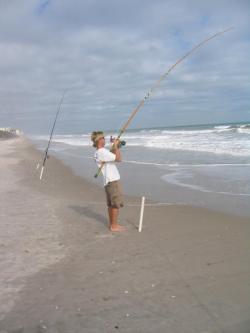
A long surf rod and a good eye for the right spots are keys to success in surf fishing. (Rodney Smith Photo)

It’s important to remember fishy surf spots can and will vary for a number of reasons, including changes in water temperature, time of day, seasons, bait availability, rainfall, wind direction, tides, etc. And don’t forget that in the surf one storm or big ground swell can completely transform the playing field.

Quite often, fishy spots will stand out like a crooked nose. Other times, it might be a very subtle hint that gives these places away. For instance; when surf fishing a flat, long stretch of beach the run-outs and feeding areas are probably not going to be obvious to the inexperienced eye, but over time and much observation things like recognizing a steady flow of water traveling out a certain cut through a sandbar or break in a reef will become more easily spotted.

Keep an eye out for bait. Seeing ghost crabs on the beach, sand fleas (mole crab) down in the swash, and finger mullet or glass minnows (a number of different species of baitfish are called glass minnows, including Spanish and bay anchovies) holding near shore is a good sign. Feeding birds is another good indicator that game fish are close. Remember, gulls are scavengers and terns and pelicans prefer live baits.

While finding fish is a very important part of catching, it’s only a portion of successful fishing. Other factors, like reading the water, understanding fish habits, making your cast count and being prepared can often be equally important to catching more fish.

Take it from me, the task of finding fish hasn’t changed much during the 50- plus years I’ve been hunting for them. If you locate healthy habitat, those places that provide food, shelter or both, you will find fish. Word of mouth can be very important; the information you can get from someone more experienced or an angler with local knowledge will go a long ways down the road toward success.

Talk to anglers fishing the waters where you’re scouting. Instead of asking them if they’re catching fish, ask them if they are fishing or catching. This usually loosens them up and they’re more willing to share their fishing stories. Remember to make friends with the guy or gal at your local bait and tackle shop, too. They work hard providing services you need, and they are also purveyors of very useful and up-to-date information. Surf fishing venues are some of the fastest changing places in the world to fish, so it is particularity nice to get to know someone who keeps their finger on the pulse.

Catch redfish surf fishing

Catch redfish surf fishing

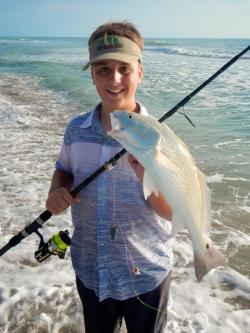
Redfish are another favorite species for Florida surf anglers, and they come in all sizes from “keepers” like this one to giants of 30 pounds and more. (Rodney Smith Photo)

Sidebar: When exploring the surf by foot looking for game fish crashing bait pods, try to keep it simple. For example, bring along a seven-to-nine foot, medium-weight spinning rod with you (depending on the size of the lures you will be casting and fish you are targeting). Wearing a vest with multiple pockets to stowaway poppers, diving lures (crank baits) and D.O.A. plastic baits plus leaders, dehooker and binoculars is best. I’ll usually bring along an assortment of smaller white or pink bucktails and a handful of silver or gold spoons. These work well when encountering Spanish mackerel, bluefish, snook, pompano and other fishes cruising the surf.

This changes when it comes to fishing baits in the surf, like live sand fleas, cut clams or shrimp in the cooler months for pompano, whiting and drum. In this case, a twelve-foot rod is most manageable and works best at keeping the line above the pull of the surf when using a bottom rig and heavier weight. Your binoculars can still come in handy when you want to see what the other surf anglers are catching down the beach.

Once you get serious about improving your ability to locating productive surf fishing spots you will also develop your own personal tactics and techniques leading you down the road to success.

Learn more about Florida’s fishing and natural resources by reading or listening to Captain Rodney Smith’s books Catching Made Easy and Enjoying Life on the Indian River Lagoon Coast. To contact Capt. Smith about a private fishing lesson, call him at 321-750-3374, or send an email to irlcoast@gmail.com. And don’t forget to check out www.rodneysmithmedia.com.

What Is Transitional Trout Fishing?

Transitional Trout
from The Fishing Wire

While the period between ice fishing and open-water action puts some anglers in limbo, it’s actually one of the best times of the year to wet a line for a variety of winter-weary trout, including rainbows, browns and lakers.

“Hungry trout cruising predictable shoreline areas add up to the best bank fishing you’ll ever experience,” says veteran guide and compulsive salmonid stalker Bernie Keefe. While Keefe plies pristine lakes and reservoirs in the idyllic high country around Granby, Colorado, his strategies hold water in fisheries across the continent.

The first step is finding an A-list trout lake or pond where the ice is beginning to recede from shore. “I look for open water off points, here and there along darker banks, and near tributary inflows,” he says, explaining that each of these scenarios offers trout a place to fill their stomachs after a long winter under the ice.

“This pattern is all about food,” he says. “Everything is hungry right now. Browns and lakers are totally focused on eating anything they can. And even though rainbows and cuttbows may be looking for spawning areas, they need to eat, too.”

Let’s start with shorelines and points. “Both of these areas offer increased bug life, especially spots with darker bottoms,” says Keefe. “But it’s important to understand the baitfish connection as well.”

Catch trout like this one

Catch trout like this one

Spring is a great time for shore-casting browns, rainbows and lakers.

Here’s how it works. “All winter, juvenile trout and suckers cruised the shorelines,” he begins. “They survived by darting toward the bank whenever a predator appeared, and by tucking themselves into inches of water, where large trout couldn’t reach them. Now that the ice is going out, this sanctuary is gone-and big, old, smart trout know these smaller fish are fair game.”

Which explains why Keefe’s lure of choice for such scenarios is a 3- to 5-inch-long, shallow-running slender stickbait, in natural shades of silver, gold or rainbow trout. Wielding a 7-foot, medium- to medium-heavy power Fenwick HMX spinning rod-paired with a Pflueger Patriarch reel spooled with 10-4 FireLine-he tiptoes quietly to the waterline and fires long casts parallel to the bank.

“Keep the bait close to shore, in about two feet of water,” he says, noting that a 5-foot leader of 10-pound test Berkley Trilene 100% Fluorocarbon helps fool line-shy fish in gin-clear water. “Make a slow retrieve interspersed with rodtip twitches that give the bait an erratic action, so it acts like a disoriented baitfish.” Keeping all casts tight to shore, Keefe methodically works any stretches of open water between the bank and main icepack.

Many shorelines drop quickly into deep water, but some offer slow tapers that create expansive feeding grounds for trout. When Keefe reaches such a flat, he makes long casts from shore, then wades in and gradually works his way out to about waist-deep water. “Obviously, a good pair of waders is critical,” he laughs.

Early mornings are prime time for Keefe’s shoreline stickbait pattern. “Cloud cover and ripples on the water can extend it, but it’s generally over by 9 a.m.,” he explains. “On our mountain lakes, you typically get glass calm conditions with full sun about this time of day.” When that happens, it’s time to shift gears. He rigs a 3- to 5-inch softbait such as a Berkley Gulp! Jerk Shad or PowerBait Minnow on a 1/8- to 3/8-ounce leadhead jig and tosses it out into deeper water a long cast from shore.

“Let the jig sink to bottom,” he says. “Lift the rodtip and, while lowering it, quickly reel in slack to make the jig swim just above bottom. Continue this cadence back to shore. Work your way down the bank, casting every few feet to pick off trout that have moved into deeper water to feed on crayfish and minnows.”

Once he’s thoroughly worked near-shore depths in this manner, Keefe moves on to fertile inflows ranging in size from small creeks to mid-sized rivers. “Tributaries are usually running high and a little darker than normal, and offer trout an abundance of worms and bugs,” he notes.

As main-lake ice recedes, hungry lake trout of trophy proportions prowl the shallows each spring on the hunt for baitfish.

Presentational options include various flies and jig-and-softbait combos. “Or, you can do it the really easy way and bounce an angleworm along bottom on a split-shot rig,” Keefe confides. Keys to successful worm rigging include threading the bait on a size 6 baitholder hook, and using just enough weight to allow the sinker to hop downstream with the current, without becoming anchored in one place. “Bouncing catches more trout than suckers, while anchoring gets you more suckers than trout,” he explains.

To present a worm rig, Keefe casts slightly upstream and lets the rig wash down-current until it sweeps toward the bank. Strikes typically register as solid taps, and are met with a quick and solid hookset. “Focus on the rivermouth,” he notes. “On a large creek you can work your way upstream, but the lower reaches are often the hot zone.”

Keefe notes that the timing of ice-out bites varies from lake to lake. “In my area, it’s starting right now in some of the high mountain lakes, and usually runs through the end of May on larger waters that are slow to lose their ice.” By following Keefe’s lead and monitoring the progression of ice-out on lakes in your area, it’s possible to enjoy first-class shore-fishing for trout all spring.

Contact Information
For more information or to book a trip with Keefe, visit: www.fishingwithbernie.com or call (970) 531-2318.