Category Archives: How To Fish

How Should I Fish the Shad Spawn?

Fishing the Shad Spawn

Its time for Georgia bass fishermen to go hunting – for the shad spawn. Spawning shad draw bass to the banks like a winning Bassmasters Classic lure draws anglers’ dollars, and you can enjoy some fast action in the mornings right now.
The end of last April one of my bass clubs had a tournament at Walter George. I camped at Lake Point State Park on Thursday and practiced Friday for the tournament. Early Friday morning as I idled under the bridge I saw the tell-tail flicker of shad on the rocks. I didn’t stop but filed it away for the tournament.
Saturday morning I was still taking up money from a late arrival when the tournament director let everyone else go. I was mad until I saw nobody stopped on the side of the riprap where I had seen the shad. I idled to it and quickly caught two good keepers on a spinnerbait. After fishing nine hours, running all over the lake, I had added one small spot to my livewell.
On the way to weigh-in I stopped at the bridge and caught another good keeper near where I had seen the shad. I told everyone I was going to stay put on Sunday, right there at the bridge. And I did, but saw no shad and caught no fish. Two of the guys in my club were fishing the other side of the riprap and I saw them catching bass and at about 10:00 they idled over and said they had eight keepers.
I left and tried another spot but soon headed back to the bridge. The club members had moved over to the side I had been fishing so I hit the other side. I stayed there for 30 minutes and landed a limit of bass slow rolling a spinnerbait on the rocks. The shad, and the bass, had moved to the other side of the riprap.
Starting in April schools of threadfin shad move to shoreline cover and lay their eggs. The eggs stick to hard surfaces until they hatch. They spawn so shallow you will often see them jumping out of the water onto the bank, and see them splashing along, looking like a small wave running down the bank.
The eggs need something hard to stick to so shad are attracted to riprap, seawalls, grassbeds and even dock floats and boats. The bass will follow them and run in to eat. Birds will also be eating them, swooping down or standing on the bank. Splashing and birds right on the bank are a good way to find the shad.
Shad spawn at first light and the activity is often over by the time the sun comes up, so you have to be on the water early. With only 30 minutes to fish on a sunny day and maybe and hour on cloudy days you must know where the shad are spawning so it is critical to get on the water early and locate them.
A spinnerbait is the best bait for the shad spawn since you need to cast it right on the bank. Crankbaits and rattle baits will work but are more likely to get hung. Choose a white one-quarter ounce double willow leaf spinnerbait with number three or four silver blades to match the small shad. Cast it as shallow as possible, even hitting the bank, and work it parallel to the bank. Be ready for a hit as soon as the bait touches the water.
You will often see shad following your bait, a very good sign you are in the right area. Make as many casts as possible before the shad move out. When they move deeper, slow roll your spinnerbait in the same area in deeper water since the bass will often stay under the shad.
Don’t miss the shad spawn; it is some of the best fishing of the year.

How To Catch Winter Bass At Lakes Sinclair and Oconee

Oconee and Sinclair In Winter

Along its 170 mile course the Oconee River passes through some beautiful country, from its hilly beginnings north of Athens to the flatlands where is joins the Ocmulgee River near Lumber City. But to bass fishermen none of the river is it prettier than the 45 miles contained in Lake Oconee and Lake Sinclair.

Oconee and Sinclair offer some of the best bass fishing in Georgia, especially in the winter. Although the lakes are back to back with the Oconee dam separating the two, and have many similarities, they are different in many ways. Those differences and similarities are important to the bass fishing on each.

Lake Oconee is the newer of the two and its 19,050 acres of water was dammed in 1979. It has 374 miles of shoreline covered with golf courses, expensive houses and docks. There are areas of huge boulders in parts of the lake and natural rock is common. Shallow sandy coves and clay points are found throughout the lake as are big areas of standing timber.

Lake Sinclair is smaller and older than Oconee, with 14,750 acres of water. It has more long creeks so it has slightly more shoreline with 417 miles. Although work on the dam was started in 1929 the Great Depression and World War II stopped it and it was not completed until 1953. There are many sandy coves and shallow creeks with extensive grassbeds, but no standing timber. Some natural rock is in the lake but you won’t find the big boulders common at Oconee. Like Oconee, it is lined with docks.

Lake Sinclair has always had a 12 inch size limit on bass but at Oconee there is a slot limit from 11 to 14 inches, meaning you can keep bass over or under that length. That was done to try to keep down the population of small bass since Oconee is not a fertile lake, but fishermen seldom keep the smaller bass so the slot limit may not be very effective. Both lakes have a ten bass daily possession limit.

Water clarity is similar on both lakes and ranges from very muddy to slightly stained. The upper Oconee River at Oconee is most likely to be muddy while Little River on Sinclair stays heavily stained year round. The clearest water on Sinclair will usually be in Island and Rocky Creeks near the dam and Richland Creek on Oconee is usually the clearest. Sinclair also has a steam power plant that warms areas of the lake, keeping winter temperatures well above those at Oconee in some sections.

At the Oconee Dam the power generators were specially designed to work as pumps, too. During the day water runs through them from Lake Oconee into Lake Sinclair, producing electricity. At night some of the generators are reversed, pumping water from Sinclair back into Oconee. This pump-back operation creates unusual current patterns on both lakes and affects the bass fishing.

When power is being generated at the Oconee dam current runs downstream through Lake Oconee and Lake Sinclair. But when water is being pumped back the current flows upstream in both lakes. This current positions bass in different ways on structure and cover.

The pump-back operation does keep both lakes at a fairly stable water level. Oconee will drop a foot or two during the day and Sinclair will rise the same amount, then Sinclair will drop a foot or two at night while Oconee rises. But the water does not show the drastic drops found on other Georgia lakes in the winter, with both lakes staying within a couple of feet of full pool most of the time.

According to the Georgia Bass Chapter Federation Creel Census Report, in 2007 Sinclair had 81 tournaments and Oconee 73, the second and third highest totals of any Georgia lake. A lot of tournaments are held on the two lakes because fishing is good on them. On Sinclair 2.91 bass per man hour of tournament fishing were weighed in, the highest in the state. At Oconee it was 1.88, not real high but tournaments have an effective 14 inch size limit that lowers the numbers weighed in.

For tournament winning weights Oconee and Sinclair had identical 9.83 pounds, tied for fourth highest in the state. So bass fishermen catch a lot of bass in tournaments on both lakes. The numbers are good and success rates reflect this, meaning you should catch a good number of bass on either lake this winter.

The Georgia DNR says Sinclair has a lot of small bass in it, no surprise to anyone fishing it, and the good 2006 and 2007 year class bass should dominate this winter. Since over 90 percent of bass caught at Sinclair are usually released the numbers should stay high and the size increase with time.

At Oconee the bass population is stable but the DNR is concerned that the numbers of small bass will hurt the lake. Unless bass fishermen start keeping the small bass under the 11 inch slot limit the quality will suffer. That may be reflected in the fact the average big bass in tournaments at Oconee was only 3.68 pounds, compared to 4.20 pounds at Sinclair.

There are a lot of ways to catch bass on both lakes right now. You can follow the same patterns on each or specialize on patterns that work best on one lake or the other.

Fishing docks is a good winter pattern on both lakes. Find a dock near deep water and flip a jig and pig or curly tail worm to the pilings and brush around it and you should get bit. On both lakes pay attention to the current. Strong currents are not as good in the winter but a slight current moving water under docks helps. The bass will hold behind post and brush, facing into the current waiting on food. Position your boat downstream of the current, no matter which way it is flowing, and flip upstream, working your bait back in a natural action.

Crankbaits also work well around docks in both lakes. A #5 or #7 Shadrap run by dock pilings will draw strikes from winter bass. Natural colors like shad or black and silver are good. Just like with the jig and pig, fish with the current. Run your crankbait at a slow, steady retrieve, going slower in colder water.

On Oconee the docks from Long Shoals Ramp up to the Highway 44 Bridge are good. Stay on main lake areas where the docks are deeper and concentrate on outside posts and brush this time of year. Work your jig and pig or worm slowly in the cold water, dropping it to the bottom and jiggling it in one spot by a post.

At Sinclair the docks in Beaverdam Creek are good since the warm discharge from the steam plant keeps the water warmer. There is almost always some current here, too. The discharge from the steam plant moves water even when there is no current from the dams. Also try the docks from Beaverdam Creek to the dam. If the water is muddy go into Rocky and Island Creeks and flip docks in clearer water.

Riprap is excellent on both lakes in the winter. A spinnerbait slow rolled just over the rocks, ticking them as it eases along, it a good choice. Fish it with the current. Crankbaits are also good. Use different sizes to reach different depths. For five-foot deep rocks cast a #5 Shadrap but go to a #8 Shadrap for rocks down to ten feet. Fish all sizes with the current, reel them down to the desired depths then crank them in slowly.

At Sinclair there is almost always current around the rocks at the Highway 441 Bridges and the one in Beaverdam Creek has the added advantage of warmer water. Also check out the riprap around the steam plant outflow in that creek. The riprap at Crooked Creek can be good and riprap around houses and docks on points on the main lake often holds fish, especially if the sun is warming it.

On Oconee the bridges in Lick Creek area always good as is the Highway 44 Bridge over the river. You can catch fish on the I-20 riprap up the river, too. Many of the houses on the main lake have riprap protecting their shoreline. Riprap in front of a seawall that drops into deep water is best. Current is the key and the bass bite much better when some water is moving across the rocks.

Both Oconee and Sinclair have a lot of long points and humps on the main lake that are good places to jig a spoon in cold water. Bass stack up in deep water and hold there all winter long A shallow point or hump with a good drop on it is an ideal place to find a school of bass. Most are near creek and river channels.

Jigging a spoon works best in clearer water. You can locate schools of baitfish with bass under them with a good depthfinder then get right on top of the school and drop a spoon. Mark them with a buoy to you can stay on them. Drop the spoon down to the bottom, pop it up about two feet and let fall back on a tight line. Vary the height you pop it up and the speed of the pop until you find what the bass want.

In both lakes hard bottoms are best. Sand, clay or rock hold more fish so look for these type bottoms no the humps and points. Sometimes bass want cover like a brush pile, stumps or rocks but usually they will be on slick bottoms this time of year on these points and humps.

On Oconee the humps and points from the dam up to the mouth of Richland Creek are good. You can also find fish on up Richland Creek and up the Oconee River if the water is clear but the best spots in the River will be from Lick Creek downstream and in Richland Creek from Sandy Creek downstream. Look for the bass to be holding in 18 to 22 feet of water most days.

At Sinclair the long points and humps from the mouth of Little River to the dam are good and there are some excellent points in both Rocky and Island Creeks. If the main lake is heavily stained concentrate your efforts in the creeks. Bass tend to hold a little deeper in those areas at Sinclair so look for them 18 to 25 feet deep.

Even on the coldest days some bass will be shallow in both lakes. If the sun is shining it will warm the backs of coves and pockets and bass will feed in them. Find a short cove with a good channel running into it, with shallow flats in the back, and the bass will be there looking for something to eat. Crankbaits and spinnerbaits are good bets to catch them .

On Sinclair look for shallow flat pockets on the west side of the lake around Nancy Creek to the dam. Some grass in them helps. Throw a Rat-L-Trap or #5 Shadrap up very shallow and work it back just fast enough to bump the bottom. Also slow roll a spinnerbait along the bottom. Hard sand or clay bottoms are best.

On Oconee there are good pockets from the mouth of Lick Creek to the dam. A pocket that gets sun most of the day is better and grassbeds helps, although there is not a lot of it on Oconee. Although the grass will be dead baitfish still feed on it and they attract bass. A spinnerbait worked along the bottom is an excellent bait for these bass.

Sinclair has a lot more grass than Oconee and the pattern of fishing grass is better there. Most of the coves and creeks from Crooked Creek to the dam on the Oconee River have some grass beds in them. Fish a spinnerbait around them and let the bass tell you if they are holding in the grass or on the edge. Once you establish this pattern you can find similar places in most coves.

Standing timber can be a place to catch winter bass at Oconee but Sinclair does not have it. The timber that runs for a long way on both sides of the point between the Oconee River and Richland Creek as well as the patches of timber in Double Branches are good. You are more likely to have current on the main lake timber on the point than in the patches in the creek.

There are several ways to fish the timber. Bass sometimes suspend in the branches and you can catch them on a crankbait or spinnerbait fished through them. Make fairly short cast with either bait and get them down to about ten feet deep. Bounce them through the limbs and off the trunks of the trees. Vary the depth until you catch a bass then concentrate on that depth.

Also pay attention to which tree the bass hits. Is it on the outside edge of the patch of timber or on the inside edge. Or is it in the middle of the patch. If on the edges concentrate on them but if inside the timber fish every tree.

You may also be able to tell what kind of tree it is and whether it has underwater branches. An old cedar tree will have more branches than most others. If you are hitting a lot of branches when you catch a bass try to find trees that have a lot of them to fish.

If the fish don’t want a bait moving through the trees, try dropping a jig and pig down the trunk. A light jig and pig with a twin curly tail trailer will fall slowly and draw a bite. Fish it on heavy line and set the hook hard if you see a twitch or jump in your line as your bait falls. If it stops falling before getting to the bottom be ready to set the hook, a bass probably has it.

Don’t pass up jigging a spoon along the creek channels and ditches in the timber, too. Bass will often hold right on the bottom on the lip of the ditch by the tree. The best way to get to them is to drop a spoon down and jig it vertically.

Start at the back of the pockets of timber in Double Branches where the channel enters the trees and work deeper, or work the outside of the trees along the channel in Richland Creek. Any change in the bottom, like two ditches coming together, a big rock or a hump, will help hold bass. When you find the best depth concentrate on it.

Spend some time on Lake Oconee or Sinclair this winter. Even if you are cold, the bass will make it worth your time.

Can Finesse Swim Baits Catch More Summer Bass?

Finesse Swim Baits’ Should Increase Your Summer Bass Catch
from The Fishing Wire

Chris Zaldain

Chris Zaldain

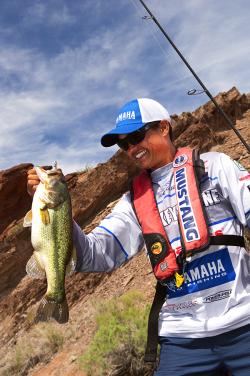
For more than two decades, big eight-, 10-, and 12-inch trout-imitation lures known as ‘swim baits’ have enjoyed a well-deserved reputation for catching huge largemouths, especially in California where they originated. Now, however, a handful of anglers like Yamaha Pro Chris Zaldain have been equally successful using much smaller swim baits with light lines and spinning rods.

“We call this presentation ‘finesse swim baiting’,” notes Zaldain, himself a Californian who grew up using the larger lures.

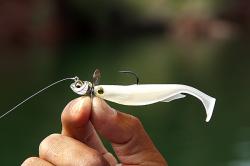
“Finesse swim baits are only about three inches long, somewhat like a plastic grub, but they’re slimmer and extremely detailed like a larger swim bait, which is really important in clear water.

“Between late spring and early autumn, there are a lot of small baitfish in the water, and these lures look just like them. That’s why they’re so productive. The best ones also have swimming-type tails that create vibrations and make them even more appealing.”

As nearly all swim bait anglers have experienced, the larger lures attract a lot of bass that follow the baits but don’t strike. With smaller swim baits, however, fish seem to strike much faster. Zaldain believes this is because the three-inch swim baits are more subtle than the larger ones, and imitate the forage so well.

“Although I have caught bass as heavy as seven pounds with these small lures, finesse swim baiting is not a technique for giant bass,” explains the Yamaha Pro. “Instead, I believe it’s a technique better suited for clear water during the hot summer, on lakes that receive heavy fishing pressure, or when bass are suspended and much less active. Traditionally, these are times and places where using smaller lures of any type often work better, and finesse swim baiting is another presentation to consider.”

Finesse swim bait

Finesse swim bait

Zaldain rigs his swim bait with a 1/8-ounce head, which is as detailed as the lure itself, and often features a small spinning propeller that increases water movement and vibration. He often fishes with 20-pound braided line with an added four- to five-foot leader of six- or eight-pound fluorocarbon. The limpness of the braided line allows for longer casts with such a light lure, while the fluorocarbon, practically invisible underwater, makes the lure itself appear to be swimming freely. Color-wise, he prefers white or pearl lures, with a slight hint of chartreuse if the water is cloudy.

“I fish these lures in the very same places I would fish a larger swim bait,” continues Zaldain, “and usually key on the most obvious types of structure or cover in a lake. My favorites are main lake points, but I won’t pass up isolated boat docks, bridge pilings, underwater humps, or even bluff walls if I find them.

“The basic rule of thumb is to make long casts and let the swim bait sink just out of sight. Then, reel it back very slowly, letting it swim. This is the same way you fish the larger swim baits, and it’s easy to work these small lures as deep as 12 or 14 feet because all you’re doing is swimming them back to you. You’re not jerking your rod or trying to hit cover. You want the little swim bait to act just like a small shad moving through the water.”

One of the advantages Zaldain sees in finesse swim baiting over using the larger swim baits is that they catch bass on lakes throughout the country. As a Bassmaster® Elite angler, he’s used the technique successfully from Tennessee to Wisconsin to Texas. Bass have become accustomed to seeing larger jerkbaits, crankbaits, jigs and spinnerbaits, but thus far, they’ve seen very few finesse swimbaits.

“I think finesse swim baiting is a trend that will continue to grow as our lakes become more crowded and fishing pressure increases,” concludes the Yamaha Pro. “On clear water lakes, especially, these little swim baits may turn out to be one of the most effective lures we’ve seen in years.”

What Are the Best Lures for Fooling Fall Bass?

Top Lures For Fooling Fall Pattern Bass

Die hard bass fishermen love the fall. We would much rather be on the water trying to fool a bass than perched in a tree waiting on something with horns to wander by or sitting in front of the TV watching guys play with a ball.

Fortunately, many of our less fanatical bass fishing brethren like those other sports so we don’t have to share the honey holes with as many other fishermen. Add in the lack of pleasure boats, jet skis and skiers and fall fishing is almost heaven.

Bass activity also makes fall a fantastic time to fish for them. The cooling waters spur a feeding spree as the bass fatten up for the coming months. They like a high protein diet so shad and crayfish are their favorite prey this time of year.

Several other factors make this a good time of year to chase bass. The water is settled and clearer than during much of the year so you don’t have to worry as much about changing conditions. Lake levels are generally dropping so you can easily spot cover and structure on the exposed shoreline that shows you were to fish. The weather is not miserably hot or cold above the water, so you can fish in comfort. And you can simplify your tackle and areas of the lake you cover.

Starting in October but at its peak in November three baits really shine for bass fishing. You can have a crankbait, spinnerbait and jig and pig tied on and leave all the other rods and lures in the rod locker. These three baits will allow you to cover the water the fish are in and catch them now.

A crankbait is a good choice to fish fast and look for feeding bass. Choose a one-quarter to three-eights ounce bait in browns to match crayfish in clear water. If the water is a little stained pick the same size baits but some chartreuse helps. An orange belly is best for either one.

A white spinnerbait with two silver willowleaf blades works well in the fall. One quarter to half ounce baits with matching size blades look like shad and can be fished from top to bottom. Add a split tail white trailer for bulk and a little more action and bass will eat it. Change to a gold willowleaf and silver Colorado blades and use a skirt with some chartreuse as well as white if you find any stained water.

In clear water a brown jig and pig is an excellent choice. One with a brown skirt with a few strands of orange imitates a crayfish. A one eight ounce bait is good when working heavy cover like rocks and brush since it won’t get hung as badly. Don’t downsize the skirt and trailer size, just use a lighter head.

Got to a three eights ounce jig for more open cover where you are less likely to get hung. Try a blue and black combination jig and pig for water with some stain in it. With either bait, use a straight tail chunk type pig when you want a faster moving bait but hook on a twin curly tail grub to slow the fall and for more action in the bait when hopping it off the bottom.

Bass tend to move into creeks looking for food as the water cools. Shad will migrate into creeks and bass follow them. Pick a few smaller creeks on your favorite lake, start working at the first main lake point and work back into the creek until you find the fish. Until you locate them work all the cover and structure as you come to it.

Once you locate the area the fish are in you can go to other creeks and start fishing the same area and cover in them. If you find fish on secondary points half way back into one creek you are likely to find them in the same places in other creeks. Try to pattern the fish and you can then fish many areas without spending time in unproductive water.

Crayfish like rocks and hard mud bottoms so look for places that have them. Riprap and natural rock banks hold crayfish. They like to hide in the rocks and bass will be looking for them. Crayfish dig tunnels in hard mud bottoms and hibernate there so work any such places you can find; the crayfish are likely to be concentrated on them right now.

As shad move into the creeks they cross points and creek channel drops and bass will wait to ambush them there. A point or bar running out across deeper water is a good place to find them as is a creek swing where the lip runs across the creek. Always be watching for ambush points, a place where the bottom rises up from deeper water where bass can wait on the shad.

A crankbait is a good choice to start with since you can cover a lot of water quickly. Fish it on ten pound monofilament line and use a rod with some give to it. The mono and somewhat limber rod will help you hook the bass without pulling the lure away from them or tearing it out of their mouth. Check to make sure the hooks are sharp on the crankbait before your first cast, even on brand new baits.

Choose a crankbait that runs six to ten feet deep and make long casts and bump the cover. To keep it in the strike zone keep your boat in close to the bank and make parallel casts, angling the cast slightly to cover the water six to ten feet deep where the bait works best.

For a crankbait to be most effective it needs to be bumping the cover. Crank it down on a hard mud point and make it bounce along, kicking up puffs of mud like a moving crayfish. Pause every few feet then twitch your rod tip, making it dart forward like a startled mudbug. That will often trigger a reaction strike from a reluctant bass. Fish it the same way on rocks.

When fishing blowdowns, brush or stumps make your bait bump into it then pause so it floats up a little, then reel again. A crankbait with a large bill on its nose will bounce off wood cover and not get hung as much as one with a down facing bill further back on the body of the bait.

If you see baitfish dimpling the water pick up your spinnerbait and make a long cast. Reel it back fast so it “wakes” the surface like a fleeing baitfish. You need a well tuned balanced bait that will not roll at high speeds for this to be effective. You can use 12 to 14 pound monofilament line and a stiffer rod since the single hook on a spinnerbait will not tear out as easily.

If the bass don’t slam the fast moving bait, slow it down in steps. Try a retrieve that brings the bait back a few inches under the surface. Keep slowing it down until you are slow-rolling it, moving it with the blades turning but bumping the bottom. On all the retrieves stop the bait every few feet to make the skirt flare and draw a reaction strike.

Fish the spinnerbait over and across all drops where bass might ambush shad. You can also work it through blowdowns and over brushpiles where bass might be holding. In brush and blowdowns let it bump the limb then fall a few inches as it clears the limb. This falling action will draw strikes.

A jig and pig is one of the most versatile baits this time of year. Once you find the areas the bass are holding and the type cover they like, work a jig and pig for some of the bigger bass. Although any size bass will eat a jig and pig they are known for catching quality fish. Match line size to the cover and size of the jig you are fishing and use a rod with some backbone.

A light jig and pig is good worked slowly on rocks and through wood cover, imitating a feeding crayfish. Crawl it along slowly on the bottom, pausing every few inches like a feeding crayfish. When you bump a rock or limb stop it and jiggle it, then move it over the cover, letting it fall as it comes past it.

Hopping a jig and pig is very effective. Work the bait along the bottom but every few inches jump it six to 12 inches off the bottom like a startled crayfish. Let it fall back and sit still a few seconds, then move it forward again to the next hop.

The only thing you can do wrong this time of year is sitting at home. The weather and fish are cooperative; all it takes is you getting on the water to catch them.

What Is Fall Bass Fishing With A Jig and Pig?

Fantastic Fall Bass Fishing with a Jig and Pig

I love that morning in September when I walk out the door and feel the first hint of fall in the air. There is not much change, but for the first time in months the air has a quality that makes me feel good. There is just a little change from hot, humid, muggy air to a little cool crispness. And that means great fall fishing is not far off.

That little change is a sign to me that jig and pig fishing is about to take off. Although I keep a jig and pig rigged year round on one of my rods and throw it some, especially at night, I rely on them starting in the fall. I often have three rigged and ready for club tournaments and throw them more than any other bait.

I always keep a 3/8ths ounce jig on a heavy action rod and 20 pound test fluorocarbon line on the reel. It will have a big chunk or twin curly tail trailer on it for more bulk. I throw it around docks, brush and blowdowns, anywhere I need heavy line to pull the fish out.

This is my go-to bait when I need a kicker bass in a tournament since a jig and pig tends to produce bigger fish. Big largemouths seem to love the big bait and will hit it readily all year long. From Thurmond on the east side to West Point on the west, I will fish this bait on every lake I visit.

Starting in late September I also keep a 1/16 ounce jig on a spinning rod and reel spooled with eight pound fluorocarbon line. It is teamed with a Zoom Tiny Chunk and this small bait is fished around rock and clay banks. It is especially good for spotted bass in middle Georgia lakes that have become infested with them like Jackson, West Point, Harding and Russell.

By mid October I usually have a one/quarter ounce jig rigged on a medium action bait casting rod and reel spooled with 12 pound fluorocarbon line. This lighter jig is teamed with a mid size chunk or curly tail and I fish it everywhere, from open clay banks to docks. It will catch more bass than the bigger jig but bigger bass than the little one. It is a good all-around size to throw on all kinds of cover and structure.

In clear water I like a brown jig with a few strands of orange in the skirt. I hook on a brown trailer and usually dip the very tips of the tails in chartreuse JJ’s Magic. The chartreuse tails seem especially attractive to spotted bass and all bass seem to like the garlic scent.

The fluorocarbon line is especially important in very clear water you often find in our lakes in the early fall. It helps to make long casts to stay way back from the fish in clear water, too.

In stained water a black and blue jig with both colors in the skirt teamed with a blue twin curly tail trailer is my favorite. The twin curly tails create more action in the water that the bass can feel. The more stained the water the bigger bait and more action you need.

Even in stained water I like the fluorocarbon line because of the low stretch and I go with heavier line. In real muddy water I will even spool up with braid for the great feel and lack of stretch, but the water has to be extremely muddy for me to use a line I can see.

The bass here in Georgia won’t feel the slight change in air temperature for several weeks after I do. But they definitely feel the shorter days. Less daylight is a signal to them to start feeding actively, especially on crawfish.

Have a jig and pig ready to offer to them.

Georgis Bass Fishing At Night

Night Time Is The Right Time For Georgia Bass

“Cast over that way,” I told my partner. “If you hear a splash your bait is in the water, if you don’t hear a splash you are in a bush,” I added.

Why would anyone want to fish in the dark when you can’t see what lure you are using, can’t see how to tie a knot and can’t even see where you are casting? There are a bunch of reasons to bass fish at night here in Georgia this time of year. The most important to me is the bass are biting.

If you like temperatures in the 90s and broiling sun on your skin you will love day time fishing in Georgia in the summer. If you prefer to be a little cooler, try going after dark. No only is it more comfortable, most of the pleasure boaters, skiers and jet skis are parked.

For many years while I was teaching school I would go to my place on Clark’s Hill late in the afternoon on Sunday and fish until dark. At about 10:00 PM I would come in, take a shower, eat and go back out. After fishing all night I would try for the early morning topwater bite then hit the shower and bed by 9:00 AM and sleep the hot day away, repeating the process every day for a week.

I did this several times each summer. During that time I experimented a lot and found some patterns and baits that work for me. One of the bass clubs I am in fishes our July and August tournaments at night and I have done well in them, winning three of the past four night tournaments in July at Jackson Lake. Many people don’t like to fish at night but I love it.

You have to remember bass can see much better in the dark that you or I can. A bass’s eye can collect much more light than our eyes. They can find food in the dark with their eyes from star light and they can locate food with their lateral line even in pitch black dark.

If you fish at night key on two things – rocks and brush. I really like rocks because crayfish come out at night and feed on the rocks and bass are looking for them. Riprap and natural rock points and banks are both good.

Bass hold in brush at night and will hit a bait that comes close to them. I look for blowdowns and deep brush piles to fish in the dark. A lighted buoy is a good investment but you can tape a chemical light stick to your buoy to mark deep brush.

Brush around docks is excellent and it is even better if a light on the dock draws in baitfish. You can also see what you are doing. The only drawback, other than angry dock owners, are the bugs that the light attracts. They tend to fly to your face.

When fishing rocks and brush I use a black plastic worm Texas rigged with a light sinker or a jig and pig. Color really doesn’t matter in the dark but a black bait had a better silhouette against any light. Crawl the bait slowly along the rocks and brush, shaking it in place a lot. Rattles in the jig and worm help. You can not fish a bait too slowly at night.

Crankbaits and jigs also catch bass at night. I like a little light from the moon or nearby shore lights when throwing them. Fish both slowly and with a steady retrieve so the bass can home in on them. Keep both baits near the bottom unless fishing under a dock light. Color really does not matter much but I stick with black in both baits.

Give night fishing a try this summer. Put on some bug juice, keep your running lights on and catch some bass.

How Can I Catch Five Pound Bass at Lake Seminole?

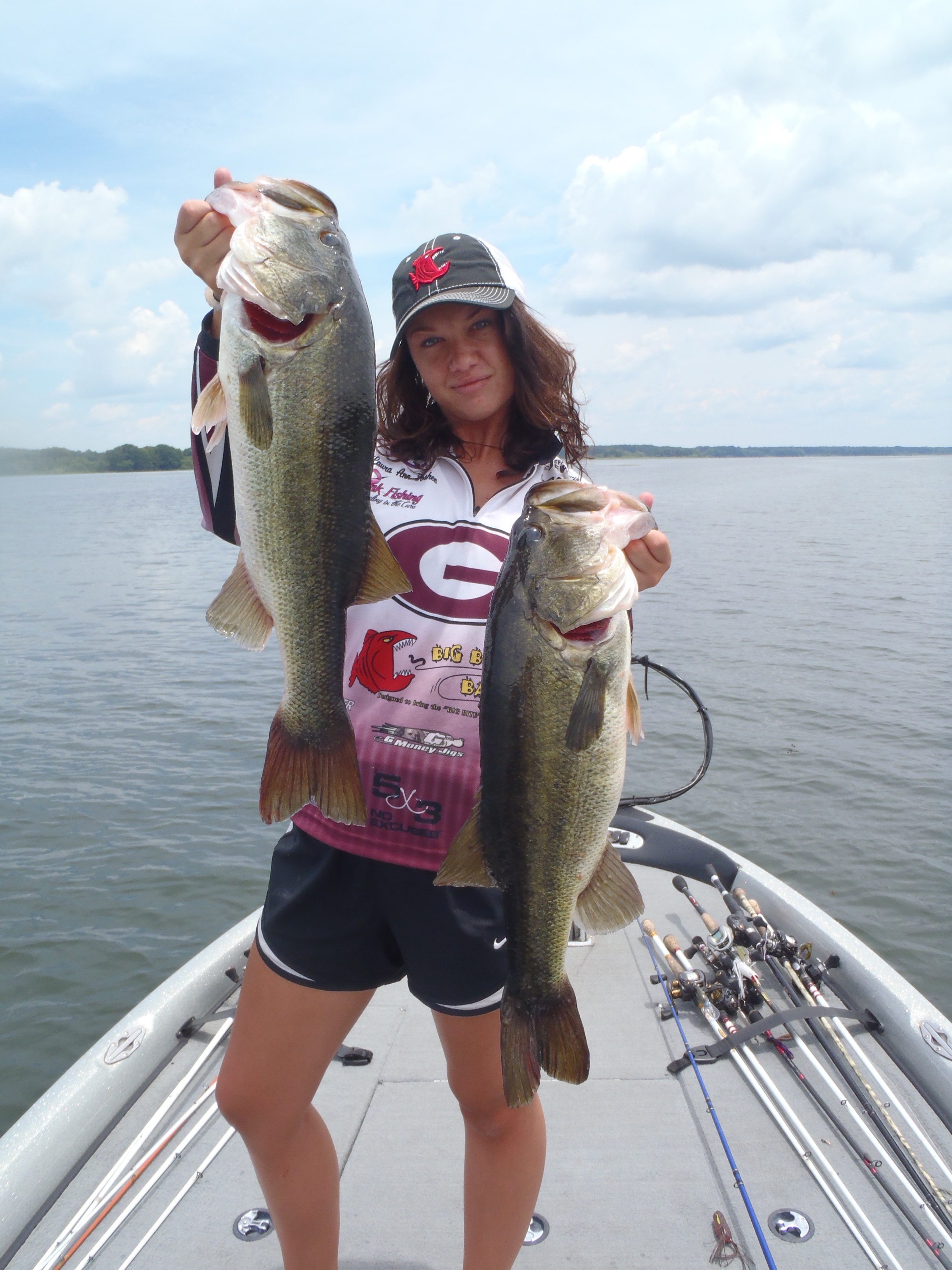
Laura Ann Foshee with Two Five Pound Lake Seminole Bass

Laura Ann Foshee with Two Five Pound Lake Seminole Bass

How early are you willing to get up in the morning to do something you love and how far are you willing to drive to do it? Sometimes I think nothing is better than the “job” of fishing and writing about it, but sometimes it wears me out.

Sunday I got up at 3:00 AM for the Spalding County Sportsman Club tournament at West Point and drove the 65 miles to the lake. After fishing eight hours, I got home at 4:00 PM, ate dinner, took a shower and was asleep by 6:00 PM since I had to get up at 1:00 AM Monday for a Georgia Outdoor News article at Lake Seminole.

After a four hour, 210 mile drive I got to Wingates Lunker Lodge and met Laura Ann Foshee, the young fishermen highlighted in the article. We fished until 2:00 PM then I drove the four hours home. I was worn out after those two trips!

Both trips were fun though. Laura Ann lives near Birmingham, Alabama and fishes for her high school bass team. She is one of only 12 high school anglers nationwide to be named to the Bass Anglers Sportsman Society 2015 High School All American Team. And she is the only female angler on it.

Laura Ann gets her love of fishing from her uncle, Scott Montgomery, owner of Big Bite Bait Company in Georgetown, Georgia. Big Bite is one of the biggest plastic bait companies in the US. So she has a lot of contacts with good fishermen, especially members of the Big Bite Pro Staff.

One of those Pro Staff Members took us out for the day on Seminole. Matt Baty lives in Bainbridge and fishes Seminole a lot, and does well in tournaments. We had a good day, landing two bass over five pounds each and several more keepers. And they hit in shallow grass beds. Laura Ann caught one of the five pounders on a topwater popping frog and that was very exciting! The other one hit a paddle tail worm swam over another grass bed. Both hit not far from Wingates in the Flint River and will be marked in the article.

She marked ten of her favorite spots to catch August bass on Seminole and explained how to fish them. That information will be in a Map of the Month article that will run in the August issue of both Georgia and Alabama Outdoor News magazines.

What Are Ten Tricks For Walleye?

Ten Top Tricks for Walleyes

By Ted Pilgrim
from The Fishing Wire

Nice Walleye

Nice Walleye

Few species put grins on anglers’ faces like the wonderful walleye. (Photo by Bill Lindner)

Every walleye angler worth his or her salt has one. You know, that sneaky trick up the sleeve that always gets rods thumping with action. Cold fronts, Jet Ski conventions, breathless summer days, or August blizzards (it could happen); the conditions are almost beside the point. You want a plan of action that works for walleyes, especially when the going gets tough and you’re fresh out of fish-catching ideas. Consider . . .

1) Deadsticking a Minnow

Big frisky minnows like creek chubs or golden shiners appeal to walleyes on basic, animalistic levels. It’s why anglers often rig an extra rod or two for minnow duty, placing them in rod holders while they cast with more active presentations. A long, soft spinning combo, such as a 7’6″ St. Croix Legend Tournament Walleye rod, outfitted with a slip-sinker rig allows the minnow to struggle freely, while a #1 circle hook safely self-hooks fish, even if you’re not paying attention. Always exciting to suddenly realize one of your rods is folded over and pounding under the weight of a big ‘eye.

2) Working the Weeds

Particularly in stocked walleye waters, submerged vegetation provides these white-tailed predators with prime habitat: cover, oxygen and a ready-made supply of food. When it comes to walleye weeds, variety matters. Preferred plant species include large leaf pondweed (cabbage), elodea, chara, and coontail, with patchy, intermingled forests usually providing the most favorable environs.

Crankbaits and jigs can score within deep or sparse vegetation, while 3/8- to ¾-ounce jigs dressed with specialized soft plastics, such as BFishn Tackle’s 4-inch Moxi and Paddle Tail yield wonderful results, often throughout the summer. Cast and simply do a nice steady retrieve, and hang on for arm-wrenching strikes.

3) Make a Map

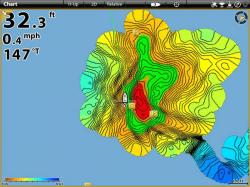
High tech has become a big part of the walleye game, and one of the neatest new developments allows angling adventurers to create their own custom contour maps on previously uncharted water. Imagine the advantages of possessing the only depth map in existence of your local river or favorite backwoods lake? Discovering that sweet little sunken island no one knew existed?

Make your own map

Make your own map

DIY map making programs uncover potentially new hotspots on previously uncharted walleye waters. (Photo courtesy of Humminbird)

Humminbird offers Auto Chart Live, specialized mapping software that couples GPS waypoints with corresponding depth to instantly build never-before-seen contours on your chosen waterbody. Lowrance also offers Insight Genesis, a DIY map program requiring computer processing in addition to on-water reconnaissance.

4) Drop a Bomb

Previously deployed primarily by ice anglers, heavy jigging-style lures such as the Jigging Rapala and Custom Jigs & Spins’ RPM Minnow (new for fall 2016) have become new classic walleye lures, especially in open water. The anvil-like weight of these compact baitfish imitators allows them to be cast or jigged in deeper water, giving the angler complete contact and control. A simple snap, drop, pause presentation makes the lure dart, glide and stop on a dime—moves that have lately scored boatloads of big ‘eyes all season long, winter notwithstanding.

5) Fish . . . Nowhere

Keep your live bait healthy

Keep your live bait healthy

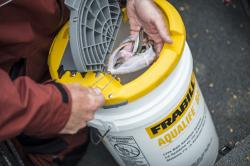
Presentation propaganda aside, a nice frisky minnow remains the most reliable producer of big ‘eyes ever created. Frabill’s 6-gallon AquaLife Bait Station holds a heavy helping of large minnow. (Photo courtesy of Frabill)

Walleyes like structure, right? Not always. With apologies to Buck Perry, the truth is, walleyes go where the food goes. In many lakes and reservoirs, that means featureless open water. From late spring through summer, some of the biggest walleyes in many waters (not just the Great Lakes) suspend 10 to 25 feet down over much deeper water. Sonar and surface-feeding birds help unearth schools of pelagic bait—ciscoes, shad, smelt, alewives, and shiners. Baitfish clouds also point to the presence of predators. Trolling baitfish imitating cranks or casting with spoons can each produce a surprising quantity of outsize ‘eyes.

6) Find the ‘Cline

One of the most overlooked fish-finding factors is oxygen and an aquatic phenomenon known as the thermocline. This thin layer of water can be a walleye-holding goldmine. The thermocline is the region offering a precipitous change in dissolved oxygen levels. Below the thermocline, oxygen may be too scarce to sustain fish life. But above is an ample supply for healthy fish activity.

Easiest way to find the ‘cline is to drop an underwater camera armed with a depth and temperature probe, such as the Aqua-Vu 760cz. When the temp starts dropping fast—often going from the 70s to upper 50s within several feet— you’ve hit it. You can also ID the ‘cline with a well-tuned sonar, which may display the thermocline as a continuously line of “clutter.” Focus on or just above these depths, especially along structural intersections, and you’re likely to put on a walleye-catching clinic.

7) ‘Yak a Small River

Another delightfully overlooked option, small rivers can offer ideal walleye habitat that often see scant few hooks all summer. Constant current means walleyes are always actively feeding somewhere. And a fishing kayak, such as Old Town Predator XL, can be the perfect way to float a sizeable stretch, surveying some alluring flora and fauna and sampling some potentially amazing fishing.

Fish from a Kayak

Fish from a Kayak

Kayaks, small rivers a walleyes present a fascinating fishing combination. (Photo courtesy of Old Town)

Grab a medium-action spinning rod and a small box of tackle; small minnowbaits and ¼- and 3/8-ounce jigheads alongside packs of your favorite softbait. Among masses of super twisters and a profusion of paddletails, BFishn’s 4-inch Ringworm has become a go-to option among seasoned river rats. Swim lures through shallow riffles above deep holes, or jig behind any type of current break—from downed logs to boulders to inside bends of small points.

8) Go “Video Fishing”

Use an underwater camera

Use an underwater camera

An underwater camera with water temperature and depth readouts offers the best way to quickly find the thermocline, and in turn, walleyes. (Photo courtesy of Aqua-Vu)

Many modern depth finders allow anglers to observe their lures as they’re worked below the boat, and show fish reacting to and biting them, right on screen. Humminbird units offer a special “jigging mode” that auto-selects a specific ping pattern for easily observing vertical bait presentations. Other units can be tuned to operate with narrower cone angles to help display

small lures and fish below the boat. For vertical jigging suspended walleyes or fish in tight clusters in deep water, this sort of interactive fishing can become addictively fun, and is often an effective way to gauge fish activity and response to different lures.

9) Pitch a Cork

Folks tend to write bobber fishing off as simplistic, juvenile, and only effective for sunfish. Actually, a slip float rigged above a lively ribbon leech is among the deadliest of all walleye presentations. And it is simple, which is the other part of its charm. With the addition of a stop knot, you can deliver bait to any depth, or keep it hovering enticingly above snaggy rock or vegetation. In wind, slip-bobber fishing while anchored near a rocky point can yield remarkable results. And at night, a lighted cork has been known to produce many a walleye monster.

10) The Carp Cure

Some days, the walleyes just don’t want to bite. Other times, they seem as scarce as Sasquatch. No problem. There’s always something biting. Why not carp? Blimp-size carp thrive in many top walleye waters, as do channel catfish and bowfin—two more freshwater rogues with lots to love. These unconventional sportfish like to bite, pull like freight trains and can be caught with simple rigs and tackle; often the same stuff you use for walleyes. Many times, the opportunity for pure fishing fun is but a cast away—swimming right before your eyeballs.

How Can I Catch Crappie On Lake Lanier?

Slab Crappie Time On Lanier

Lake Lanier is a 38,000 acre Corps of Engineers lake just north east of Atlanta. Since Atlanta draws much of its water supply from the lake, it has been in the news a lot the past year because of low water levels. It is also one of the most popular recreation lakes in the US.

Mention fishing at Lake Lanier and people immediately think of spotted bass and stripers. But the lake has an excellent population of crappie and a few fishermen have learned how to catch them. You can often catch 100 crappie a day at Lanier this spring and 200 fish days are possible.

Todd Goade lives in Buford and loves all kinds of fishing. Last year he finished third in the point standings on the Bulldog BFL Trail. He enjoys tournament fishing and when he is not fishing the BFL or another bass fishing trail he often will be catching crappie at Lanier.

Last spring he teamed up with Alan Gee to place second in the Crappie, USA tournament on Lanier. Todd and Alan fished the pro division and weighed in a seven crappie limit that weighed 9.83 pounds. Although they caught over 200 crappie that day, they did not catch the big fish that would have increased their weight. Catching and culling through 200 crappie is a fun way to spend a day on the lake.

There are several reasons Todd likes crappie fishing at Lanier. It is more relaxing than bass fishing so it is a nice change-up. The tackle is simple and easy to use. Crappie are excellent table fare and are hard to beat no matter how you cook them. And you can catch a lot of fish. Who wouldn’t like feeling a fish at the end of your line every few minutes.

Todd says there are a lot of pound to pound and a half crappie in Lanier but two pounders are hard to find. The Crappie, USA tournament results from last March bear this out. There were only five crappie brought to the scales weighing over two pounds and big fish for the day was a 2.31 pound fish. But who can complain about catching crappie that weigh over a pound each? And that is scale weight, not “guesstimate” weight.

Todd has learned how to catch Lanier’s crappie and the way he does it will work for you. Shooting docks with jigs is the way he likes to catch them. You will need a boat, light spinning rod and reel loaded with 4# test line and a couple of cards of Hal Flies.

“In April it seems like every crappie in Lanier is under a dock,” Todd said. Since there are so many docks on the lake and so many crappie under them, targeting docks is definitely the way to go. And you can catch crappie under docks all year, not just in the spring.

Little River and Wahoo Creek are the areas Todd usually fishes, especially early in the spring. It is good year round but the water warms first further up the lake and those areas turn on first. Later in the spring the docks down the lake will be better as the water warms there. There is a little more color in the water further up and that causes it to warm faster.

Water with a little stain in it is good. Todd likes to be able to see his jig down a foot or two but no more. Stained water warms seems to make the fish hit a little better since they don’t get as good a look at the jig. You can catch fish from extremely clear water but a little stain will help you catch more. Muddy water is tougher, too, so try to find stained water.

Any dock on Lanier can hold crappie. Todd says you should start fishing an area and keep records and notes of where you catch good fish. He will often hit a bunch of docks in the morning then return to the ones where he caught fish later in the day.

Early in March the crappie are likely to be holding on deeper docks toward bigger water. Docks with at least 17 feet of water under them are best. As the spawning urge takes hold when the water starts to warm the crappie will move back into the docks in coves and pockets and will be under docks with as little as six or seven feet of water.

“The dogwoods bloom and the crappie spawn is the old saying,” Todd told me. When the water temperature is 62 to 64 degrees I expect most of the crappie to be back in pockets in shallow water spawning. But not all spawn at the same time. They move back in waves so you can find some fish in different depths most of the time.

By late April after spawning the fish will move back out, holding on the same docks they used as they moved in. And some docks will be “honey holes” and hold crappie better than others. Sometimes you can pick these docks out by looking at them but you usually have to fish to find them.

Covered docks are best and the more stuff overhead the better, according to Todd. Pontoon boats are especially good. Older docks seem to be better. A boathouse with a pontoon or boat lift under it can be excellent. Brush piles under and around the docks sweeten them, too.

Todd seldom fishes an open slip in a boat dock. Crappie want something over there heads and an empty slip is way too bright. If there is a brush pile under the slip it might be worth hitting but usually he just goes to the next slip where a boat or lift offers lots of cover over the fish.

Seeing green algae growing on boats, dock floats, posts and boat lifts means the dock is likely to be better. Baitfish feed on the algae and are attracted to docks with it. Crappie eat the baitfish so they are more likely to be under docks where there is a lot of food for them.

To shoot a jig under a dock you need a five to five and a half foot spinning rod with a light tip. Todd likes an All American 5.5 foot rod and teams it with a small Pflueger President reel. The reel needs a smooth drag and the small spool helps the line come off faster.

The line is very important and Todd chooses 4# test Trilene Fluorocarbon Professional Grade. This line is tough for its size, invisible in the water and works well on his spinning reel. A limp line is necessary for small reels and thin line helps the light jigs sink better.

Todd uses Hal Flies for all his crappie fishing. He likes the 1/24 ounce jig best and he starts with a white or white and chartreuse jig. One with some pink in it is good in clear water, too. Many colors work well and some jigs with reds and yellows attract bites, especially if there is a little color to the water.

Hal Flies have feather tails and Todd bites off a little of the end of them, making them just a bit shorter. He says he is not positive this helps him get more hits but he does it anyway. It is worth trying, especially if the fishing is tough. You never know what might help.

Quietly approach a dock you want to shoot and get in close. Your boat will usually be just a few feet from your target. Kneeling or even sitting on the boat deck helps you get on the right level to shoot under the dock. A quiet trolling motor is best and Todd often uses his hand to move the foot control to position the boat. If you are in the back of the boat you can often just sit on the deck and stay in the right position for shooting the dock.

Boat position can be critical. Sometimes fish seem to want the lure moving in a certain direction, especially if they are holding on a brush pile right in front of the dock. Experiment with different angles and let the fish tell you what they want.

The bigger crappie usually hold in the hardest area of the dock to get your jig into. A narrow opening between dock floats and a boat lift float or pontoon float may mean you have to hit a six inch wide, four inch high hole, and you need your jig to go as far back as possible. Remember, the more stuff overhead the more likely the crappie are to be there, and the further back and darker the spot the more likely bigger crappie are to be holding.

Open the bail on your reel and drop your jig down to the last guide above the reel. Grab the head of the jig between thumb and trigger finger with your free hand. While holding the line at the reel with your finger, pull the tip of the rod down to make it bow. Aim the rod at the opening you want to hit and release the jig. As it flies toward the target, release the line at the reel.

It takes some practice to do this but is easier than it sounds. You will go high and hit the dock or go low and hit the water too soon but a little practice will have you putting your jig in spots impossible to reach any other way. Sometimes your jig will skip on the water and you can get it even further back, especially if there is not much clearance between the water and the top of the gap you are shooting.

When your jig hit’s the water flip your bail shut and count the jig down. A 1/24 ounce jig on 4# line will sink about a foot a second. Todd says he counts “One Mississippi, Two Mississippi” to keep a consistent space on his count. You need to know the depth your jig is at when you start getting bites.

Start by counting down to six and then slowly reel your jig back. No action is needed on the retrieve. Actually, jiggling your rod tip may hurt the chances of a bite. If you have ever watched a small minnow swim along it does not move much, it just glides along. That is what you want your jig to do.

Try a few shots with a six count then try eight, ten and even 12 counts. Watch your line carefully at all times. If it jumps as the jig sinks, set the hook and reel in the fish. Just remember where it was on the strike and start using that count. Crappie usually hold at about the same depth on most docks.

When Todd fishes with a partner they try different counts with one reeling in at six and the other at ten then both changing. That way they can cover different depths quickly. They will also try different colors. Once the fish tell them what depth they are holding and which color they like best both will concentrate on those keys.

Another trick Todd uses is to let his jig fall an few inches just when it passes the end of the float or edge of the boat he is fishing. Sometimes a crappie will follow the jig and that little drop will trigger a hit.

As you reel in watch your line, too. If it jumps or if you just feel it get heavy, set the hook. Don’t use a break-their-jaw hook set, just sweep the rod tip and the light wire hook in the jig will go into the soft mouth of the crappie.

Play the fish slowly and carefully to the boat. Crappie aren’t called “paper mouth” for nothing. It is easy to pull a hook out of a big fish, even with four pound line. And you don’t want to break the light line.

Often you will shoot over a bar or part of the dock under water. When you hook a crappie with your line over something, go to it with the boat and get it. You can not pull a decent fish over anything with such light line.

Some people worry about getting a hook in their finger while shooting a dock. Todd says that has never happened to him. Holding the jig by the head turns the hook up and away from your fingers so it will not hook you when you release it. And it won’t come flying back at you if you try to pull it loose if it gets hung. Four pound line will almost always break before that happens.

Todd will shoot his jig into openings on a small dock seven or eight times then move on. He tries a few shots at different depths but says crappie usually hit pretty quickly if they are there. There is no need to waste a lot of time if you are not getting bit. But if you do catch one fish you are likely to catch several.

Don’t hesitate to go back to docks where you caught fish earlier. Crappie will often move in and out around the dock and will be easier to catch at different times. And Todd says watch your depth finder. You will often see a school of crappie near a dock, or brush out from it. When you spot either back off and work your jig through that area at different depths.

Schools of crappie often look like balls of baitfish on your depth finder they are so close together. Baitfish may be present, too, and that is a good sign. Always keep an eye on what is under the front of your boat.

Bass boats are fine for shooting docks but their high decks are a drawback. A lower, smaller boat allows you to get down to the water level easier and make better shots under docks. If you are in a small boat just put in near where you want to fish since Lanier can get so rough.

If you want to try your luck in a crappie tournament, Crappie USA has a tournament on Lanier on March 15, 2008 and West Point on March 29, 2008. There is also a tournament on Weiss on March 8, 2008 and Hartwell on April 5, 2008. You can enter the Amateur Division for a $75 per team fee or choose the Semi-Pro Division at a higher cost. Cash prizes are paid in each division but are higher in the Semi-Pro side.

Crappie, USA was formed in 1996 and purchased the “Crappiethon” tournament trail. They hold 45 tournaments in 20 states each year. Each region has at least six spring and two fall tournaments. The Georgia tournament last fall was on Oconee.

To fish in their tournaments you must join their American Crappie Association organization for a cost of $25 per year. You can get more information about Crappie, USA and their tournaments at http://www.crappieusa.com/
When Should I Use Big Baits for Bass?

When Big Baits Are Best for Bass

How up-sizing can work magic on heavily-pressured waters, especially during “heat fronts”

By Steve Pennaz
from The Fishing Wire

Steve Pennaz with bass

Steve Pennaz with bass

Pennaz has found that soft plastic lizards are a great bait to fish during both cold and heat fronts. “The beauty of the lizard is it resembles salamanders, which pack a big caloric punch, motivating bass to eat during negative to neutral bites. Also, not a lot of anglers throw them anymore, so fish are less conditioned on pressured waters,” says Pennaz.

Fish studies confirm that bass can become conditioned through continual exposure to baits. Especially on heavily-pressured waters, bass do learn to avoid baits. Berkley’s Dr. Keith Jones covers the subject in his book Knowing Bass: The Scientific Approach for Catching More Fish. In it, Jones discusses research evidence that suggests bass remember lures for a long time – “for at least up to three months and perhaps much, much longer.”

The challenge for the angler is staying ahead of the curve. One of the best ways is to fish outside of the box, choosing baits the fish have probably never seen before. Or fishing baits that have fallen out-of-favor for newer, trendier baits.

Or simply up-sizing the same baits we already know are effective.

I remember fishing a river system one spring day. We had started early to avoid the crowds, then battled skyrocketing temps throughout the day. I know a lot of anglers like to be on the water during those warm spring days, but I prefer more stable conditions.

Fishing was predictably slow under the changing conditions so I slowed down like you do during a cold front and went to smaller baits while casting to timber and current seams along the bank. We landed four bass running between 1.5 and 2 pounds.

There was another boat working the same bank behind us…with a lone angler in the bow. I saw him hook up a couple times, but didn’t think much of it at the time.

Later, back at the launch, I asked the other angler how he had done. He said he caught five fish, including a 3-pounder and two 4-pound fish flippin’ the same river timber I had fished ahead of him.

I asked him, “What bait where you flippin’?”

His plaintive response: “Power Lizards.”

I hadn’t thought to go larger with my presentation and so this information was striking. But the more I thought about it, the logic behind it was too strong to ignore…how many other anglers would go in this direction during difficult situations like cold fronts or what I call “heat fronts”?

When you get a week of average temps and all of a sudden the temperature sky-rockets into the 80 or 90s (or higher), water temps change drastically. It’s like what happens during a cold front, but in reverse. And the effects on bass and other fish are the same; their movements slow. If you monitor the water temps on your electronics, there are situations where increases can be as much as 8, 10 or even more degrees in a day. Where I live, going from 40-degree overnight air temps to 80 degrees by late afternoon is not uncommon!

When faced with drastic temperature increases, I often hold off fishing my best spots until late in the day when temperatures stabilize somewhat. By this time, the biggest fish with the most mass will have had time to acclimate to the change and will be more active. The bass that do feed during these dramatic shifts in water temperature often look for the biggest meal with the least amount of metabolic effort. Like any host of large amphibians, salamanders and the like.

Still, a lot of anglers are hesitant to fish lizards, thinking they’re only big-fish baits. In reality, a lizard doesn’t appear too large to bass, which typically track prey from behind. The visual cue is only part of the equation. What can really stimulate their feeding or attack response has to do with how they feel that bait. With its many appendages, a lizard displaces more water and produces more vibrations, which the bass picks up via its lateral line.

An angler needs to ask a few questions:

How big of a bait can I get away with on a given body of water? And secondly, what will be most appealing to the biggest fish in a school?

At times it makes sense to start smaller, but there are times when going large is the right move.

If the waters have big fish and lots of pressure, I may start bigger because I can. And for the past couple of years, I’ve been fishing lizards … a lot.

Why more anglers aren’t fishing lizards is a real head-scratcher. But I can relate. The past decade we’ve seen so many new and effective creature-style baits and worm designs hit tackle shelves that it was easy to forget the proven performer.

Big mistake. Lizards worked then — and still do.

Lizard Rigging Tips

When rigging lizards, hooks can make or break your day. I learned long ago that while great for compact, creature baits, EWG-style hooks are not the best choice for Texas-rigging lizards or big worms.

Instead, I use a 5/0 or 6/0 offset worm hook that provides great hook-up ratios and allows the baits to move fluidly, as designed.

Historically, my favorite lizard is the 6-inch PowerBait Power Lizard, although I’m starting to catch a lot of bass on the Gary Klein-designed Havoc Boss Dog, too. But given that bass will often grab lizards and big worms in the middle – rather than inhaling the entire bait – the PowerBait formula really puts the odds in your favor. They simply hold on to the bait longer, giving you more time for a solid hookset.

In terms of color, my favorite is pumpkin with a chartreuse tail, which is based purely on nostalgia; it produced my first giant bass years ago and still works great today. But I also carry black/blue, black, green pumpkin and watermelon.

In terms of line…I fish 10- to 15-lb. Berkley Trilene 100% Fluorocarbon in clear waters; 15- to 17- lb. for stained conditions. And in waters with double-digit bass, I’ll go even heavier. I like the sensitivity you get with fluoro, the fact it sinks, and the near invisibility factor.

Another cool thing about fishing heavy fluoro with lizards or big worms is it decreases the amount of tungsten or lead weight you need to use. You get some sinking factor with the line itself. That means I’ll often fish lizards or big worms weightless in shallow-water (1.5- to 2 feet) situations. Plus, the Berkley PowerBait Power Lizard is pretty bulky in the body. All this adds up to long casts and easy fishability.

Rod & Reel Setup

One of my secrets to fishing lizards is upping the speed. Rather than the typical “lift-drag” Texas rig retrieve, I’ll use a twitch-twitch-reel-reel-shake and repeat. This gets the appendages really pushing water. To those ends, I like a higher-geared baitcaster like the 7.0:1 Abu Garcia Revo MGX.

Big hooks for big baits

Big hooks for big baits

Pennaz prefers a 5/0 or 6/0 offset worm hook over an EWG for Texas-rigging lizards or big worms. “You’ll get greater hook-up ratios and a more natural bait action,” says Pennaz.
Speaking to that reel, it weighs around 5 ounces, which means when combined with a feathery 7’6″ fast action, medium-heavy power Abu Garcia Veracity, you can easily fish these big baits all day without fatigue. Plus, fishing lighter rods and reels gives you better sensitivity…important for detecting bites on the drop.

Parting Words

This season pay attention to drastic temperature swings and fish them like cold fronts in reverse. Size up and try lizards for more and bigger bass, even during difficult situations on pressured waters.

About Steve Pennaz

Steve is one of the most trusted voices in fishing. From 1988 until 2012, he served as Executive Director for the North American Fishing Club, including North American Fisherman magazine, fishingclub.com and the club’s daily enewsletter “Fishin’ Informer.” He’s also hosted several television series, including “North American Outdoors,” “North American Fisherman,” and “Fishing Club Journal.” Pennaz launched Knot Wars, now a successful app on iPhone and Droid. He excels at finding and catching fish on new waters, a skill that now drives “Lake Commandos.”