Category Archives: How To Fish

How Can I Catch More Tautog?

Yamaha Fishing Tip of the Week: Be Anchor Savvy to Catch More Tautog
from The Fishing Wire

Use two anchors to get on the structure and stay there!

Tautog

Tautog

Even though the hot days of summer fishing are a memory and fall is starting its march toward winter, mid-Atlantic anglers shouldn’t have to take their boats out of the water just yet. The best fishing of the year for blackfish, aka tautog or tog, is just getting started, and the season is open through January in most states along the mid-Atlantic and New England coasts. Open seasons, size and bag limits vary from one jurisdiction to another, so be sure to check your state’s marine fish regulations so you don’t run afoul of the law.

Tog are bottom fish that live and feed in and around structure. Likely places include mussel beds, wrecks and rocky outcroppings – pretty much any form of what is classed as “hard” structure. Regardless of whether it’s naturally occurring or manmade, if it’s been on the bottom in 25 to 100 feet of water long enough to be encrusted with mussels and other anchoring life forms and invaded by crustaceans like crabs, tog will inhabit it at some time during the year. The most productive depths to fish will change with the seasons and water temperature because tog will generally move from shallower to deeper environs as temperatures drop. In late fall and early winter, concentrate your efforts on hard structure in 40 to 70 feet. When ocean temps get down into the 40s, shift to even deeper spots. There are many artificial reefs found off states such as New York, New Jersey, Delaware and Maryland that provide prime tog habitat; further north your focus will be on naturally-occurring hard structure.

Fishing for tog requires a higher level of boat handling expertise and an understanding of how to use your depth finder, chart plotter and anchor(s) to position your boat. Your depth finder and chart plotter are the keys to finding and saving good structure spots to fish, but they will also be critical in helping you anchor directly over those spots to cash in on the tog they are holding. Private boaters will learn that some of the most productive pieces of structure consist of smaller wrecks and rock piles that are overlooked by larger head boats and charter boats. But to get on them you have to be able to anchor with pinpoint accuracy, and that’s an art form that requires a little practice.

Most serious tog fishermen keep two complete sets of ground tackle (anchor, chain and rode) aboard their boats and with good reason. One is typically kept in the boat’s bow anchor compartment, the second in a tub so it can be stowed when not in use. There are a number of anchor designs, but a Danforth-style is the most widely accepted for recreational fishing boats and works well for both sets of ground gear. When choosing an anchor, start by referring to the manufacturer’s application chart for the weight generally recommended for your size boat, but for fishing purposes go up one additional size. This will let you anchor more quickly and with less line between the boat and anchor, which makes deploying and retrieving less work. For a typical 20- to 27-foot boat, each set of ground tackle should consist of an anchor, 12 feet of 1/4-inch chain attached to the anchor with a shackle, and one cable length (600 feet) of 3/8-inch braided nylon line, which is called the “rode.”

Catch Tautog

Catch Tautog

If you’re new to this, you’ll probably want to have a marker buoy or two rigged and ready to drop on the structure as the boat passes over it. A buoy will provide you with a visible reference point when trying to get the boat settled over a spot. If you are well practiced with your GPS, you can forego the buoy and use the saved structure waypoints on the plotter screen for your anchoring reference point. Buoys can be purchased at marine specialty stores or websites, or you can make your own out of brightly colored commercial pot marker buoys wrapped with 150 feet of 1/8-inch nylon twine, marked every 50 feet with a permanent marker with a sash weight attached to the opposite end. Use stainless steel screws to attach a Velcro strap from the top to the bottom of the marker buoy, and use it to control how much line will pay off the buoy when it hits the water. If the water is 75 feet deep, release about 85 feet of twine before dropping the buoy to keep it above your spot, with enough extra line to keep the weight from being bounced off the bottom by waves.

One anchor might be sufficient for most boating needs, but for serious tog fishing two anchors spread approximately 90 degrees apart allow you to adjust the boat’s position by lengthening or shortening the rode for each anchor. By double anchoring, you can hit your mark quickly with some wiggle room to spare for adjusting position if the wind or current changes after you’re anchored. Nothing is more frustrating than getting on a spot and building a good bite only to have the wind change a few degrees and blow you off the spot.

Here’s how to do it. Once you mark a spot, either on your chart plotter or using a marker buoy as a visual reference, you have to determine how the wind and current are going to affect the way the boat will lay at anchor. To do this put the boat in neutral, and let it drift for a few minutes with your plotter scaled down to a very tight range setting (200-500 feet works fine for this phase) with the plot trail feature activated to record the direction of the drift on screen. That trail will be your guide to approximate how the boat will settle back on the anchor lines. The other thing you have to determine is how much rode you’ll have to let out for the anchors to set and hold the boat, because that will tell you how far away from the structure point you have to drop them. To get that number, simply multiply the depth of the water by five. For example, if the structure is in 70 feet of water, you’ll want to drop each anchor about 350 feet away from the mark. Don’t worry about being off by as much as 50 feet one way or another – that’s why you’re using an anchor one size larger than recommended.

Anchors

Anchors

Now that you’ve determined the direction the boat should rest at anchor and how far away the anchors should be dropped from the mark, get your anchors ready for deployment at the bow of the boat, and then slowly run the boat directly down current of the buoy or the waypoint marker on your plotter. Turn so it parallels the drift trail you just created, passing directly alongside the buoy or over the mark on the plotter screen. As soon as the boat reaches the mark, turn the boat at least 45 degrees to port of the drift line, and proceed at a slow speed until you are about 350 feet from the mark and drop the first anchor. Once it strikes bottom, carefully power backwards toward the buoy in reverse letting line out until you get close to the mark. Then hold the anchor line tight until the anchor sets in the bottom and pulls the line through your hand. Take a wrap on a bow cleat, let the boat settle back on the rode to be sure the anchor is firmly set, then loosen that line and repeat the procedure, but this time running the boat from the mark at least 45 degrees to starboard of your drift line. When you’re done you will have two anchors set 350 feet out from the mark, spread approximately 90 degrees apart.

Drop back both lines until you get close to your mark, and wrap them around a bow cleat and let the boat settle in. If the boat is positioned too far forward, drop back by letting out more rode from both lines to put it on the mark. If it’s behind the mark, pull up on both lines. If it is laying to the right, let out a little line on the starboard anchor and pull in some line on the port. Do the opposite if the boat is laying too
far to the left. It’s that simple.

If you want to move the boat while you’re fishing to cover more of the structure, you’ll find that adjusting the anchor lines will give you quite a bit of latitude to do so. This is important because you will encounter structure where you will only catch tog on specific areas and not on the whole piece. Sometimes bigger tog will show a preference for a specific portion of a larger piece of structure. For example, there are wrecks where they feed on the up-current side so anchoring over the up-current portion of the wreck will catch a lot of fish, while being off that spot might only produce a few bites or small fish.

Remember that anchoring accurately is an art that takes into consideration some scientific observations on your part and the smart use of the tools you have on your boat. It takes practice to gain an understanding of how sea and wind conditions affect your boat under different anchoring scenarios. Just remember that tog fishing is all about location, so with some good structure numbers, a compliment of well set-up ground gear and these techniques, you can get on even the smallest piece accurately and hold the boat there while you limit out. If conditions change during the day, you might have to reposition one or both anchors, but that’s the price you pay for great fishing. Anchoring might be the least fun part of the trip, but nine times out of ten it’s the most important.

How To Catch Cold Water Smallmouth

Don’t Miss the Skinny Wasteland for Autumn Smallies

Super shallow and non-structured bottoms entice smallmouth so you can Catch Cold Water Smallmouth bass there

Catch cold water smallmouth

Catch cold water smallmouth

By Mitch Eeagan
from The Fishing Wire

Cool days and even colder nights have water temperatures tumbling; bug hatches are coming to a halt. The once warm summer rains are turning bitter, too – crawlers and the like burrowing deep rather than getting washed into the drink. Young-of-the-year fishes that have avoided being eaten since birth have learned to be on the lookout for predators better than ever.

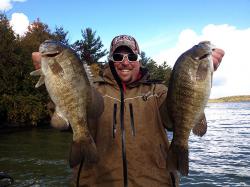
Captain Chris Noffsinger sporting smallmouth bling, which were caught from super-shallow water during the fall season.

To say the food sources of smallmouth bass dwindle as autumn arrives is an understatement.

As fall starts showing its face, a smallie’s diet turns to the only forage left: baitfish and crayfish; with the latter becoming scarcer as the season wanes. It’s this forage-vanishing-act that has bronze-finned prowlers on the move. It’s also what makes them easier to catch this time of year.

But smallmouths aren’t always roaming where you might think. Classic deep water haunts, weedbeds, reefs and sunken timber aren’t providing sustenance. So where might one find smallies when the leaves start turning? In depths registering only in the single digits; that’s 2 to 5 feet, even in ultra-clear water.

Wide Open Spaces

Enter Captain Chris Noffsinger, bass aficionado and fulltime guide on the waterways surrounding Traverse City, Michigan. Smallmouths have populated the Great Lakes and natural inland lakes here since the last glacier receded nearly 10,000 years ago. The fishery is loaded with trophy-size bass; many which are caught in places the average angler wouldn’t even consider casting.

“Sometimes my clients get a dumbfounded look on their faces when I tell them where to cast,” said Noffsinger. “But I don’t blame them, because, after all, we’re on giant sand flats with not a stitch of cover to be found except maybe some gravel or sand grass.

“The key to finding fish here lies in finding minnows,” adds Noffsinger. “You’ll see them near shore through your polarized glasses. And if you look closely, you’ll see smallies there, too.”

Cover and Cast

With trolling motor deployed, Noffsinger covers as much water as possible. Overall, the trick is using lures that imitate minnows, but at the same time, won’t dive into the dirt – spinnerbaits being a prime example. The captain’s favorite is Red Dirt Bait Company’s 1/2- and 3/4-ouncers, with painted willow-leaf blades, because they can be cast far, fished fast and his clients can cover a lot of water.

Spoons can be worked slowly, all the while staying in the strike zone without dredging bottom. Spoons, however, are rarely thought of as a smallmouth bait, yet do catch fish, and deserve more respect.

Smallmouth caught on  Fin-Wing

Smallmouth caught on
Fin-Wing

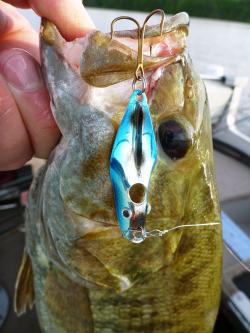
Lures that don’t dive into the dirt, like spinnerbaits and the Fin-Wing (pictured) imitate the minnows smallmouth chase in autumn.

The #-3 Fin-Wing can be retrieved at a steady pace in super-shallow water without snagging up. It’s stamped from metal, but its wide, swimming wobble is nothing like that of an ordinary spoon. Because of the Fin-Wing’s unique shape, light reflects off it at multiple angles and the lure gets noticed like the flashing blades of a spinnerbait. Increase the speed of your retrieve and the Fin-Wing turns toward the sun and creates a wake, even rides the surface with a walk-the-dog action; perfect for first light in the shallows.

Soft Side

Noffsinger and his guests also throw soft-bodied lures like un-weighted flukes, aka soft jerkbaits. When retrieved with a twitch, these lures dart side to side wildly like an injured minnow.

If the smallies aren’t responding to the erratic motion of flukes, large grubs on a light-weight jig head, fished with a steady retrieve will often do the trick. BFishN’s 5-inch K Grub on a H20 Precision Jig is a great option as the grub’s mega tail has more than enough whirl to emit vibrations.

Stick it to ‘Em

Making long casts is a must in such clear, shallow water. Seven foot plus rods will get your bait farther from the boat. But fishin’ sticks must also have enough backbone to make a solid hookset, which can be challenging with so much line out.

Seventeen-pound-test fluorocarbon coursing through a St. Croix 7-foot Mojo Bass Spinnerbait casting rod, for example, will whip a spinnerbait a country mile and still stick a hook. The low stretch of fluoro helps oversized hooks penetrate a bass’ boney jaw, making the line perfect for spoons and spinnerbaits. Meanwhile, a 7-foot medium-power fast-action St. Croix Avid X, for instance, has the ability to properly launch a lighter soft plastic on 8-pound-test fluoro.

Going Nowhere Fast

If you’re looking to catch big smallies this fall, explore the shallow wastelands.

Position your boat on a shallow flat, cast shoreward and cover water with baitfish imitating lures. Make long casts and employ a rod and line that support solid hooksets at long distances.

You know all those featureless shallow flats you buzzed by all summer long? Time to put on the brakes and commence casting.

What Is Dropshotting for Crappie?

Get The Drop On Crappies – Dropshotting for crappie

Crappie caught dropshotting

Crappie caught dropshotting

Drop shot rigging not just for bass anymore

Drop shot rigging is a staple presentation of serious bass fans from coast to coast. But it remains a largely overlooked option for anglers pursuing other species of gamefish, including crappies.

That’s unfortunate, because in the right situations, drop shotting can yield banner catches, and even outfish textbook strategies.

“Drop shotting is a great choice whenever the fish are relatively close to bottom and you want to cover water a little faster, or with more precision, than you can with slip bobbers or vertical jigging,” says veteran fishing guide and lifelong panfish fanatic Scott Glorvigen.

Case in point: the late summer to early fall crappie migration.

“When crappies abandon withering shoreline weedbeds and head toward the main basin where they’ll spend the winter, they often follow bars and points that serve as travel corridors on their way out to deeper water,” he explains.

Drop shot rigs excel at presenting a tantalizing softbait or minnow at or just above the level of fish, and allow anglers to customize the speed of retrieve and amount of animation, without fear of the rig falling to bottom or drifting out of the strike zone.

Glorvigen admits his fall panfish epiphany came while chasing bass on a north-central Minnesota lake.

“I was drop shotting bass with a 6-inch worm on a long finger bar leading from a shoreline saddle straight into the basin,” he recalls. “I was catching bass, but noticed on my sonar there were a lot of crappies and bluegills mixed in with them.”

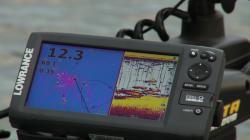
Glorvigen credits the ultra-sensitive readings from his Lowrance Elite 9 CHIRP electronics for revealing the difference between bass and panfish.

“I was also catching the occasional crappie here and there, which told me that drop shotting might be a winning presentation in this scenario,” he adds.

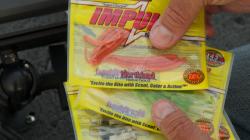
To tempt more crappies into biting, he traded the bass-sized worm for a more panfish-appropriate, 3-inch Impulse Angleworm from Northland Fishing Tackle.

Small crappie dropshot baits

Small crappie dropshot baits

Panfish-sized softbaits excel on drop shot rigs.

He also down-sized the business end of the setup to a size 4 VMC Spinshot Drop-Shot Hook. “The Spinshot hook is great for drop shotting because it spins around, allowing the bait to move freely, without causing line twist,” he says.

After threading on the worm so the tail remained free for maximum gyrations, he added a live crappie minnow for extra attraction.

“The plastic bait’s constant movement and water displacement makes it easy for crappies to find it, even in stained water, and the minnow is icing on the cake,” he explains. “Plus, if the minnow comes off halfway through the retrieve, I still have a chance to catch fish because the plastic is still in place.”

Glorvigen’s rigging also included a 7-foot, medium-light Lew’s spinning outfit spooled with 10-pound-test Northland Bionic Braid mainline and an 8-pound-test monofilament leader tethered to the hook’s lower line tie.

“The setup works great for crappies, and can still handle the occasional big bass that grabs the bait,” he says.

Leader length was tailored to how high crappies were above bottom. “On structure, the fish were close to bottom and an 18-inch leader worked the best,” he says. “But when they occasionally moved off to suspend over deeper water, leader lengths up to 36 inches produced fish.”

Glorvigen compulsively keeps sinker weight as light as possible when drop shotting panfish, and this was no exception. “It’s important to use the lightest weight you can get away with, so you can feel the fish but they can’t feel the sinker,” he explains.

Glorvigen says pencil-style weights ranging from 1/8- to 3/16-ounce were perfect in the 11- to 19-foot depths he was working.

Once rigged up, he’d cast out, let the sinker settle, and then tighten the line for a direct connection that allowed him to detect bottom as well as subtle bites.

“You can move the rig across by reeling, drifting or using your trolling motor to slowly cover key areas,” he notes.

No matter which means of propulsion you choose, Glorvigen recommends toning down the amount of action you give the bait.

“If the bait jumps around too fast, it’s hard for them to hit it,” he cautions. “I’ve had the best luck with a more subtle approach than what I’d use when bass fishing. Simply shaking and gently twitching the worm is enough. If you get too aggressive, the number of fish drops off dramatically.”

High-quality sonar and GPS can help you find and catch fall crappies.

Find crappie on depthfinder

Find crappie on depthfinder

Glorvigen notes that a good GPS chartplotter is a big help in mapping out structural thoroughfares and waypointing key areas that hold the most fish.

“Custom mapping systems like Lowrance’s Insight Genesis, which allow you to map structure in fine detail, can really help you get the lay of the land and learn why the crappies are attracted to certain areas over others,” he adds.

While the fall crappie transition is a great time to throw drop shot rigs, Glorvigen says there are plenty of other times it pays to keep an open mind on the water.

“Anglers get stuck in our ways and pigeonholed into certain presentations,” he says. “But it’s always good to experiment, adjust, and pay attention to what the fish are trying to tell you, all the way from early spring to last ice.”

Check out this video for more of Scott’s drop shot tricks.

CONTACT INFORMATION
Glorvigen & Glorvigen LLC – 29 County Road 63, Grand Rapids, MN 55744
sglorvigen@wired2fish.com – 218-301-9072

What Are Some Good Pre-Spawn Largemouth Tactics?

Top Pre-Spawn Largemouth Tactics

March is well known for several reasons. The Ides of March were pretty important to Caesar. Basketball fans go crazy over March Madness. But to a bass fisherman, this time of year means bass are feeling the spawning urge, moving toward the bedding areas, feeding heavily and are much easier to catch. Pre-spawn season is here.

It also means you can catch them on a wide variety of baits and patterning them is easy. It doesn’t matter if you favor crank baits, spinnerbaits, jerk baits, a jig and pig or plastic worms, all are good. And topwater action, a favorite of most fishermen, comes into play and gets better and better.

As our days get longer bass respond by moving toward shallow, protected coves to spawn. They follow established routes like creek channels, break lines and points as they move, stopping on cover to feed. You can follow them and catch large numbers of fish, as well as some of the biggest bass of the year, along these routes.

When the water first starts to warm look for the fish on the structure and cover just outside the mouths of the spawning areas. Find stumps on a drop or point, a blowdown where the channel swings near the cove mouth and brush and rocks on points and the bass will be there.

Follow them to secondary points and steeper banks back in the cove as they move. Follow the channel back into the coves since that is what the bass will follow. Fish the key areas where the channel swings near a secondary point, where it runs along a bank making a steep drop and along the edges of flats where the bass feed.

Then look for stumps, logs and brush on hard bottoms near the back of the coves where they set up to bed as the water temperature approached 65 degrees. Gravel and hard sand bottoms are what attract the bass so concentrate on areas with those kinds of bottom.

Coves on the north side of the lake warm fastest due to the angle of the sun, and a breeze blowing across the lake moves warmer surface water with it. Check out the areas on the north side of the lake, especially if a light breeze is blowing toward them. Stronger winds stir up the colder water below the surface and don’t help increase the temperature, but wave action can make the bass feed on windblown points and banks.

Although bass are cold blooded and really don’t get uncomfortable from water temperature, they are more active in warmer water. Also, water temperature affects spawning time. Since stained water warms more quickly than clear water, look for stained to muddy water. A surface temperature gauge helps since just two to three degrees change can make a difference.

A three day warming trend is a classic time to find bigger bass moving very shallow to feed. Cold fronts move through often this time of year and then a warming trend follows. After a front drops the water temperature then it starts warming, the bass will respond by moving and feeding.

Since the bass are moving you should fish fairly fast, covering water until you find them. Spinnerbaits and crank baits work well to cover a lot of water looking for the areas they are holding.

When you start catching fish note the kind of area and bass should be in the same kinds of places in other parts of the lake. When you find concentrations of fish slow down and work every piece of cover thoroughly.

Choose your bait color based on water clarity. Use natural baitfish colors in clear water but go to brighter colors in more stained water. White spinnerbaits with silver blades work well in clearer water while chartreuse or red skirts teamed with gold or copper blades are better in stained water. Bigger baits are usually better in stained to muddy water, too.

With crankbaits use shad colors in clear water. Grays, light blues and silver are good. Chartreuse crankbaits show up better in muddy water, as do red and black baits. A rattle in the baits can be good no matter what the water color but are more important in stained water where visibility is less.

You can fish a spinnerbait at any depth but lighter one-quarter ounce baits can be moved slower in more shallow water. Go to three eights to one half ounce baits for deeper water earlier in the month. Try willowleaf blades in clear water and for fishing faster but use Colorado blades for slower fishing and in stained to muddy water.

Carry a variety of crankbaits, too. Some should be small and have smaller bills for water less than four feet deep. Bigger baits that bump the bottom in six to ten feet are needed earlier. Bumping the bottom is important. You are much more likely to get bit when your crankbait is digging into the bottom.

Square bill crankbaits have become very popular in the past few years. They bounce off wood cover better and are made for fishing stumps, brush and blowdowns. Most run several feet deep. Carry several sizes and colors and fish any wood cover you see with them.

Jerkbaits are known for clear water fishing but work well during the prespawn in stained water, too. Fish a pearl or silver bait and work it slower in colder water then faster and faster as the water warms. Long pauses between jerks will often make bigger bass hit.

A jig and pig is one of the best baits for March fishing. It can be fished around any kind of cover and is especially effective around rocks and clay where crayfish live. Black and blue baits are the norm in stained water with browns good in clear water. Try different sizes, from three-sixteenths to full one ounce baits depending on conditions.

Plastic worms fished on Carolina and Texas rigs as well as jig heads account for more bass than any other bait. A Carolina rig is good for raking gravel and clay bottoms while a Texas rig comes through cover better. A jig head worm is good around any kind of bottom or cover.

As soon as the water temperature hits the mid 50s try topwater. A buzzbait will catch bass in colder water than you might think and you can cover water quickly. You can fish it over any kind of cover. A popper or prop bait can be worked more slowly and a stick bait like the classic Zara Spook will catch pre-spawn bass. Topwater tends to get better and better as the water warms.

You can find the bass this time of year with your favorite bait. Start at the mouths of spawning coves and smaller creeks then work further and further into them. Hit key areas with cover. Watch the water temperature and concentrate in areas with warmer water.

Work fast until you find the pattern. Remember it can change during the day but when you find the fish in one area you should be able to go to similar places on the lake and repeat it.

Spinnerbaits are very versatile baits this time of year, allowing you to fish fast or slow around any kind of cover or bottom. They come in a wide variety of colors and blade styles to match anything you need.

Secret Weapon makes a spinnerbait that is a little different. The blades attach on a clip on shaft rather than the usual fixed clevis on the arm followed by a blade on a swivel on the end. This arrangement gives the bait a different sound and look as well as allowing you to quickly change color and size of blades and add or take away the number of blades on the bait.

Why Should I Fish The Weedline In The Fall?

Fish The Weedline In The Fall

by Bob Jensen
from The Fishing Wire

Weedlines are great places to find and catch fish all during the open water fishing season. Lots of anglers even work the weedline while ice-fishing. Simply put, there is almost always a fish somewhere along the weedline that is willing to get caught.

Doug Veldhuizen

Doug Veldhuizen

In the autumn months hungry groups of walleyes will work the weedline in search of something to eat. Doug Veldhuizen caught this one on a crankbait.

In the autumn months a variety of fish will be in the vicinity of the weedline. You might have a school of crappies suspended just off the edge of the deep weedline, there might be a group of largemouth on a corner of the weedline, and just a little farther down the weedline where the vegetation juts out a bit and forms a point, there could be some walleyes. And it’s not unusual to find a bonus musky or northern pike roaming over the tops of the weeds or along the deep edge. Although there may be more fish grouped tighter in different areas, the deep weedline in the fall will often provide a smorgasbord of fishing action.

Lots of techniques will take fish along the weedline in the fall. If you’re after walleyes, try the largest Mimic Minnow or Mimic Minnow Shad. Move it aggressively: Lots of hops will trigger the most fish until the water really cools off. Then a redtail chub worked slower on a jig or live-bait rig will produce.

If largemouth bass are the target, tie on 6.5 Hornet and work it parallel to the weedline. Work it a different speeds and with your rod held at different angles to get the bait to run at different levels along the weedline. Sometimes, especially on warm, cloudy days, the bass will be over the tops of the weeds. Throw the bait over the weeds, keep your rod tip high, reel slowly, and hang on. If they bass are there, they’ll let you know.

Another outstanding way to catch largemouth bass when they’re over or along the weedline is with a spinnerbait. Use one with a big blade. Tip it with plastic, something like an Impulse Paddle Shad or Paddle Minnow. You want some tail action, but not a lot.

Cast the spinnerbait over the tops of the weeds and work it back to the weedline. When you think it’s near the deep edge of the weeds, let it fall. Keep your line tight and watch and feel for a tick. The strike won’t be hard, but it will be distinct. Reel down and set hard. After a few fish you’ll know if they’re over the tops or along the edge, and sometimes they’ll be in both places.

If it’s a calm late afternoon or early evening when you start fishing, and you see fish dimpling the surface near the weedline, move very quietly toward the dimpling and throw a sixteenth ounce Thumper Crappie King jig/plastic. Swim it slowly through the area being dimpled and you’ll probably catch some crappies. The dimples are created by crappies sucking bugs off the surface. Since the crappies are feeding on the surface, you’ll want to swim your bait just a couple of feet below the surface of the water.

Another crappie killer we’ve been using a lot the past couple of years is a #4 Hornet. If the crappies are home, they’ll hammer this bait aggressively.

The weedline can provide lots of fall action. Make sure you’re fishing healthy green weeds. Keep moving until you find the fish. When you find them, they’ll usually bite. You’ll see Mother Nature at her best and you’ll have the opportunity to have a good time: What more can you ask for?

To see all the newest episodes of Fishing the Midwest television, new fishing related tips, and fishing articles from the past, visit fishingthemidwest.com If you do Facebook, check us out for a variety of fishing related things.

Crankbaiting Deeper Water Works Well in Late Summer for Bass

Crankbaiting Deeper Water Works Well in Late Summer

Yamaha Pro Mark Davis Offers Suggestions to Improve Your Technique
from The Fishing Wire

Mark Davis

Mark Davis

Even though it’s September and the next major move bass make will be into shallow creeks and bays, Mark Davis still has a deep diving crankbait tied on and ready to cast. For him, the deep cranking season will continue for at least another month.

“It’s been an extremely hot summer across much of the country, and the water temperature in most lakes is still pretty warm,” explains the Yamaha Pro, “so neither the bass nor the baitfish seem to be very anxious to move shallow. They’re going to remain in deeper water until the lakes start cooling, and until they do, a deep diving crankbait will still be one of the best lures to use to catch them.”

Mark Davis Lands A Bass

Mark Davis Lands A Bass

The technique of deep cranking depths between 10 and about 18 feet is not an easy one to master, but Davis, a three-time B.A.S.S.® Angler of the Year and winner of the 1995 Bassmaster Classic,® began using the presentation more than three decades ago as a guide on Lake Ouachita. Today, he’s considered one of the best deepwater crankbait fishermen in the sport.

“There are some shortcuts to deep water crankbaiting I’ve learned over the years,” smiles Davis, “but it took me a long time to accept them. Probably the most important one is not to even start casting until you know what you’re fishing. About 90 percent of the time, deep cranking is about fishing some feature in deep water, such as a ridge, a hump, or a channel, and you really can’t fish it effectively until you know what it looks like.

“I always idle slowly over the structure and study it with my electronics. Today’s depthfinders and side-scan units will show you the shape of the structure, how big it may be, and provide clues on how you can fish it most effectively.”

While the Yamaha Pro studies the structure, he’s not always looking for bass, either. Instead, he concentrates on trying to identify some smaller, special spot on the structure that might attract and hold a school of fish. Among bass fishermen like Davis, this is known as a ‘sweet spot,’ and it might be a sharp bend in a creek channel, a depth change on a ridge, or a group of stumps on the edge of a point. Sometimes, a sweet spot may not be as large as a bass boat, but even that is large enough to attract bass.

“One type of sweet spot I always try to locate is an area of hard bottom,” emphasizes Davis, “which is particularly important on older lakes where silt usually covers most of the bottom. A hard bottom can be rock, gravel, a shell bed, or even just smooth clay, but it will show up very well on today’s electronics and isn’t hard to identify. When I find hard bottom like this, that’s what I’m going to fish.”

Mark Davis and Bass

Mark Davis and Bass

Initially, Davis keeps his lure choice as simple as possible, choosing either a shad or chartreuse-colored crankbait capable of diving deep enough to reach that hard bottom with a long cast and light, 10-pound line. If the hard bottom or cover is deeper than about 20 feet, he may use a presentation known as long-lining to get his crankbait eight to 10 feet deeper.

“Boat positioning is an important part of deep cranking, too,” continues the Yamaha Pro. “I want to be as far away from my target as possible, but still get my lure down to that target. I’ll also experiment with casting angles, circling the spot to see if the bass want my lure coming from a certain direction. Most of the time, I’ll have my boat in deep water and cast shallow, but sometimes it’ll be just the opposite, and I’ll usually learn this by making a complete casting circle around the target.

There is no way to tell what your best casting angle will be until you experiment like this.

“Deep cranking doesn’t have to be that difficult or that complicated,” concludes Davis, “especially if you learn as much as you can about the structure before you start trying to fish it. In fact, with the quality of today’s electronics, deep cranking has probably never been easier.”

Where and How Can I Catch Bass in Georgia In September

Bass fishermen have something to look forward at the beginning of September each year. It will only be about another month before fishing gets good again after a long hot summer. September can be a mean month for catching bass, but they can be caught even now. Yes, you can catch bass in Georgia in September

Our Georgia lakes are as hot as they get all year in September and oxygen content is at its lowest level. And there are more baitfish making easy meals for bass, but shad and herring draw them to open water, making them harder to find and pattern.

Fortunately, there are three patterns that will usually pay off in September. You may be able to find bass on all three on some lakes but at least one or two will work on all our lakes. You can fish at night, go deep or find moving water.

At night many bass move shallow and get more active. For years fishing early in the morning and late in the afternoon has been known as the best time to catch bass in hot weather. Extend that and fish during the dark. It means adjusting some of the things you do, and works best on clear lakes, but you will be more comfortable and catch more bass after the sun goes down.

Fishing deep it a traditional way to catch bass in hot water and bass are schooled up and holding on deep structure and cover. It takes special techniques to find and catch them, but once you find a school you can often catch large numbers of fish in one spot. And bass often come up from deep cover to hit baitfish on top, opening up an exciting way to catch them.

Current turns bass on and finding moving water usually means catching bass. Everything from natural current way up rivers and creeks to water moving across main lake points from power generation at the dam will make bass feed. Look in the right places and you can find active bass in current in most of our lakes.

Each of the following lakes has its own characteristics that fit some of the above three methods of catching September bass:

Thurmond (Clarks Hill}

One Labor Day weekend several years ago I was staying at my place at Raysville Boat Club on Clark’s Hill and woke up very early Saturday morning. I was too excited about an afternoon dove shoot to sleep, so I got in the boat and idled across to a brush pile I had built in eight feet of water. The full moon was beautiful and lit the lake brightly enough to throw shadows.

A bass took my Texas rigged curly tail worm in the brush and jumped twice when I set the hook. It looked to be well over eight pounds, but it threw the hook on the second jump. Two weeks later, just before the sun rose over the trees, I hooked and landed my first nine-pound bass from that same brush pile, on the same kind of worm.

Fishing at night is very good at Clarks Hill and you can catch bass from sunset until sunrise in shallow water. There is a full moon on September 23 this year and there is no more exciting way to catch bass than running a buzzbait or Jitterbug over shallow cover in the moonlight. Fish a topwater bait slowly and steadily to give the bass a better shot at it.

Riprap is always good on Clarks Hill at night but shallow hydrilla beds are excellent, too. Start fishing as the sun sets and keep fishing topwater as long as there is any light, working around the outside edges of the hydrilla and through cuts in it. It is best to locate the beds in daylight so you have an idea of the area to fish. Keep at it until the sun rises.

On dark nights work a Texas rigged worm on a light lead or a light jig and pig around riprap and the hydrilla, too. Crawl both baits on the rocks and drop them into holes and cuts in the hydrilla. You can use a black light to help you see the cover and your line, but this is a great way to learn to feel what your bait is doing.

Moving water is hard to find on Clarks Hill but you can run up the Savannah River to near the Russell dam and catch current flowing both ways. When power is being generated at the Russell dam strong current flows down the river. At night and early in the morning when the Corps is pumping water back into Russell current goes up the river.

Get out on main lake points and work a big crankbait or big Carolina rigged worm with the current. The bass will usually hold on the break on the downstream side of the current, so their position will change depending on which way the water is flowing.

On most of the lake, current is not a factor and bass hold as deep as oxygen levels allow. One year in late August I was playing with an oxygen monitor and discovered there was not enough oxygen below 11 feet deep in the Raysville area for a bass to survive. Further down the lake the depth of good oxygen got deeper.

Ride over deep points and humps watching your depthfinder. When you find fish, often holding near stumps and brush on the steepest drop on the structure, back off and make long casts with a big crankbait or big Carolina or Texas rigged worm. Bass will usually be holding from 18 to 30 feet deep on the lower Savannah River and Little River areas of the main lake.

Watch for surface activity in these same areas. Largemouth will come up to the surface to hit blueback herring and shad and will fall for topwater plugs like Spooks and Sammys. Work these baits over the deep cover even if they are not coming up and you can sometimes draw them to the surface.

Lanier

Lanier means spots and herring in September, and night fishing is usually best on this big, heavily used lake. At night you can actually hold your boat on points on the main lake without getting thrown out by the wake of passing cruisers. And it is a lot cooler.

Lanier is so clear and busy with pleasure craft that bass usually hold deep even at night. You can fish the same places and patterns day and night to catch them, and use the same baits.

Laura and Trent Gober fish many tournaments on Lanier and often finish high on the list. Laura fished the Women’s Bass Tour before it closed and did well on that trail, too. Lanier is her home lake and she loves to go after the big spots there.

Find brush on a deep hump or point and you are likely to find big spots holding there day and night. And think real deep. Bass on Lanier often hold 30 to 60 feet deep. It is harder to fish that deep but it pays off in bigger fish.

Laura likes to throw a Texas rigged Senko on light line and work it through the brush and any other cover on points and humps from Brown’s Bridge to the dam. Ride over the humps and points watching your depthfinder carefully for cover. Sometimes you will see the fish in it if you have a good unit. When you spot a likely looking place, throw a marker out a few feet from it so you can stay on it. At night you can attach a small glow stick to your marker so you can see it.

Back off and make long casts. Feed line out so your lure sinks straight down. When fishing extreme depths, if you don’t let your lure sink on a slack line, the lure will swing way off the cover as it sinks. When you hit the cover, work your bait in it slowly, twitching it in one spot. Yo-yo it on limbs in brush piles, making it dance up and down in one spot.

The same deep places hold bass day and night and the Texas rigged worm works well, but blueback herring offer another option during the day. Bass holding 30 feet deep in brush and tree tops will come to the surface to eat herring that swim near the top on bright, sunny days. During the day, find deep cover, back off and cast a topwater bait like a Spook or Sammy over it. A Fluke can be worked in the same spots in the same way.

Make long casts and work the bait fast, making it look like a bass chasing a herring across the surface. Be ready for a smashing hit when a big spots comes rushing up for an easy meal.

Finding current on Lanier means running way up the Chattahoochee River, and you need a shallow draft boat to be safe. You have to be very careful in any boat, but if you go up the river far enough you will find moving water. If power is being generated at the dam you can find current further down the river.

When you get to moving water fish any cover you see with a Texas rigged worm. Most cover this far up the river will be shoreline rocks and trees in the water. Pitch your bait to the upstream side of the cover and let is wash downstream with the current in a natural movement.

You can also keep your boat downstream of the cover and cast a small crankbait up past it and work it back. Make it look like a baitfish being moved down the river, making it an easy meal for waiting bass.

Oconee

Lake Oconee is unusual for its strong currents that flow both ways. Power generation at the dam creates current all over the lake, and the pumpback moves water back upstream far up the Oconee River and main creeks. That current makes the bass feed heavily in September.

Terry Adams lives near Oconee and fishes it often. He won the BFL and an Oconee Marine tournament on Oconee two years ago with five bass limits weighing over 17 pounds in each. In 2006 he and one of his mentors, Jack Brown, won the Berry’s Classic on Oconee and Sinclair. Terry has won several other tournaments there including some of the old JR Tournaments.

Docks are a key to Terry’s fishing and he looks for docks on deep water. He wants to find a dock with at least ten feet of water in front of it. He pitches a jig and pig to the dock posts, lets it sink to the bottom, strokes it up off the bottom and lets it fall back, then hits the next post. He does not try to get his bait way back under a dock, he says too many fish get tangled up and break off. He looks for active fish on the outside posts.

Current running by the docks makes them much better and pulls the fish out to the outside posts. Waves from passing boats can do this, too, so Terry likes boat traffic. Docks from the Highway 44 Bridge to the mouth of Richland Creek are his favorite ones.

Docks are good at night, too. Terry will look for a lighted dock and run a crankbait under the light if he can get an angle on it. He casts a Shadrap or other small crankbait in shad color. He will also pitch a big worm to the lights. Dock lights are inconsistent on Oconee because they get turned on and off. The best bet is to ride the lake and hit any lighted docks you find.

Fishing a big crankbait 12 to 20 feet deep on points and humps is a good way to catch quality bass on Oconee, too. The bass will hold on the drop on the downstream side of the current, so that can change between generation current running downstream and pumpback current running upstream. Find the drop with your depthfinder then make long casts to get your bait down to the bottom.

West Point

Although the Corps of Engineers seems determined to remove as much shoreline cover as they can pile up and burn every winter, night fishing around blowdowns and stumps can be good at West Point. Brushpiles are also good in the dark and any wood cover you can find will produce bass in the dark.

Find blowdowns during daylight hours and learn how they lay and how to fish them when you can see them. Also find deeper brush on points and humps and mark it. Work a Texas rigged worm through all the wood cover. A big worm, from a Zoom Mag 2 up to an Old Monster, in dark colors, will draw bites from fish holding in the wood.

Look for blowdowns from Highland Marina up Yellowjacket Creek and the Chattahoochee River. From Highland Marina down, much of the shoreline cover has been removed so look for brush piles in 10 to 20 feet of water to fish. If you ride almost any point or hump you will find bush somebody has put out.

During the day bass really key on current moving across the humps and points on the main lake. Week days are best by far since power generation is stronger and more consistent than on weekends. Current moves schools of shad across deeper cover and bass feed heavily on them.

Look for roadbeds, humps and long points from Highland Marina to the dam. Bass will often feed during the day from 12 to 30 feet deep as current flows across them, and they will usually hold on the downsteam side, where there is a drop. Cover like brush and stumps make it even better.

Big crankbaits like Mann’s 20+, Fat Free Shad and Norman DD22 Ns work well to imitate the shad the bass feed on and get down deep enough to catch them. You need to fish them on eight to 10 pound line to get them deep, and fluorocarbon line is best since it is thin, sinks and does not stretch much.

Get on the downstream side of structure and cover and make long casts upstream. Stay close enough to the cover to get your bait down to it. It takes 20 to 30 feet to get a big crankbait down 20 feet, so you have to cast that far past the target to hit it.

Reel your lure steadily with a medium speed. When you hit cover, pause it a second and let it float up, then jerk it so it darts away. Check your line on every cast since it will get frayed hitting the cover.

You can catch bass right now. Try these tactics and adapt them to the ways you fish, and you won’t have to wait another month to enjoy successful bass fishing!

What Is the Fall Kokanee Salmon Run?

By Dan Johnson
Fall kokanee salmon run offers fine fishing

Kokanee Salmon

Kokanee Salmon

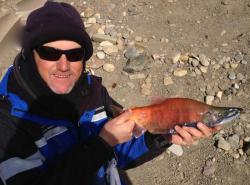
Kokanee head to the shorelines and inlets to spawn in fall, providing good targets for anglers in many areas of the northwest.

Autumn is a time of plenty for anglers, as cooling water temperatures spark feeding binges among a variety of gamefish. For some species, however, fall ushers in an equally primal urge, causing fish to migrate en masse toward spawning areas.

Such is the case with many members of the trout and salmon family, including the kokanee salmon. A downsized freshwater version of the Pacific sockeye salmon, the kokanee is nonetheless hard fighting and great tasting.

Plankton eaters that mature in four years, kokanee salmon can reach weights of 3 to 5 pounds, but 1-pounders are the most common catches in many waters.

In states where stocking efforts produce fishable populations, the fall kokanee run is a huge draw for anglers. “It’s a really fun bite, there’s nothing not to love about it,” says veteran fishing guide Bernie Keefe of Granby, Colorado.

“As water temperatures fall into the 55- to 60-degree range, usually sometime in September in Colorado, salmon begin migrating from their summertime haunts in the main lake toward the spawning grounds,” he explains.

Normally bright silver in color, kokanee undergo a dramatic transformation as spawning draws near. Both sexes develop reddish sides and green heads, but the male’s red caste is most pronounced. Amorous bucks also develop a humped back and hooked jaw—also called a kype.

Spawn makes the fish change

Spawn makes the fish change

As the spawn nears, male kokanee develop a humped back and extended jaw.

As schools of fiery red salmon gather in predictable places, the fishing can be nothing short of amazing. “You can get into some pretty fast action,” Keefe grins.

Kokanee spawn over rubble, gravel and sand in tributary streams and along lake shorelines. This narrows the search, but Keefe adds another nugget of information on their whereabouts.

“They typically return to the area where they were stocked,” he says. “Inlets and boat ramps are two of the most common areas.”

To pinpoint the best lakes and stocking points, Keefe recommends contacting local fisheries biologists and bait shops. “Most lakes are a little different, so pre-trip research can really pay off,” he says.

On the tactical front, Keefe offers two surefire plans of attack.

“One great option is to get on the water before sunrise and quietly wait for the fish to start porpoising,” he says. “As soon as it’s light enough to see where they are, use your electric trolling motor to sneak within casting range. Just be careful not to crowd them or it’s game over.”

Salmon often school close to shorelines, making bank fishing a great alternative. “You don’t need a boat to enjoy the action,” he says.

When fishing the morning bite, Keefe wields a lightweight spinning outfit armed with either a bobber rig or small spoon.

Given the kokanee’s soft mouth and spirited fight, he typically spools up with a forgiving monofilament mainline like 6-pound-test Berkley Trilene XL. “You can use superline with a fluorocarbon or mono leader, but set your drag really loose or the fish will tear the hooks out,” he cautions.

The bobber setup includes a 1/16- to 1/8-ounce micro-jig tipped with a 2 1/2-inch Berkley PowerBait Power Tube, positioned two to six feet below a small float.

“Either slip- or fixed floats work in early fall, but fixed floats are the rule once temperatures drop below freezing,” he adds.

Keefe avoids adding split shot for ballast. “Don’t expect the fish to pull the bobber under,” he notes. “A lot of times they just lay it on its side, so you can’t have any extra weight on the line or you’ll miss fish.”

He does sweeten the jig with bait, however. “Two or three waxworms work great, as do kernels of shoepeg corn,” he says.

To fish the float rig, he lobs a long cast past fish dimpling the surface. “Let it sit a minute,” he says. “Most mornings there’s enough breeze to ripple the surface and work the jig just enough to attract nearby salmon.”

Surface feeding salmon

Surface feeding salmon

Afoot and afloat, Keefe casts to schools of Kokanee dimpling the surface.

After the initial pause, he pulls the rig about six inches, lets it sit again, and repeats the process until his float is out of the strike zone.

Spoons are another productive presentation. Keefe favors something long and slender, like an Acme Kastmaster or Johnson Splinter, in the 1/16- to 1/8-ounce class.

Retrieves are slow and gently animated. “One rotation of the reel handle per second is fast enough,” he says. “Spice it up by raising and lowering the rodtip six inches to a foot, reeling the whole time. Most fish hit when the spoon begins to fall.”
Keefe cautions that once the sun hits the water, salmon sound and the near-surface bite dies. “Wind, clouds and waves can prolong the action a little, but not for long,” he adds.

At that point, he recommends trolling small willow-leaf spinners 1.5 to 2 mph in the top 10 feet of the water column. “The fish will move around the immediate area, so you have to go looking for them,” he explains.

Keefe says the fall kokanee bite typically lasts from September until ice covers the lakes, usually sometime in November or December.

“Kokanee are great table fare,” he adds. “But they die after spawning, and by the end of the season are looking pretty rough, like the swimming dead.”

As a rule of thumb, he says, “As long as the meat is orange, it’s good to cook. Once it turns pale, however, put it in the smoker.”

How Can You Catch Suspended Bass?

If you ask most bass fishermen how to catch suspended bass, don’t be surprised if the response is: “you can’t.” Suspended bass present fishermen with one of the most difficult problems to solve and many just give up and go look for easier fish to catch. But there are ways to get them to bite and tactics that will help you land fish that others give up on.

Bass suspend away from structure and cover for a variety of reasons. One of the most common is when lakes stratify, forming a thermocline between hot upper oxygenated layers of water and cooler, deeper layers with little oxygen. Bass can’t live in the cooler waters so they get as close to it as they can, suspending over deep water at the level where they can still find enough oxygen.

Suspended bass will often be found holding off points and humps at the most comfortable depth to them. They will be over a deeper channel but not far from the rise in the bottom where it meets the depth they are holding. That allows them to run in and feed, then move back out over deeper water.

Some lakes present a special situation where standing timber under the water rises many feet off the bottom. Bass will often use these trees as cover, relating to the trunks and limbs while holding well off the bottom of the lake.

The best way to find suspended bass where you fish is to ride the lake and watch a depth finder carefully. Follow channels and ditches while watching for fish holding between the bottom and the surface. Riding back and forth over a point or hump, not turning your boat until well past the drop of the bottom contour, will show you schools of bass suspended near them. And moving slowly over standing timber will reveal bass suspended in it if your depth finder is a good one.

Depth control of your bait is critical to catching suspended bass. They are holding at a set depth and will not move far up or down to take a bait. So finding the bass and knowing what level they are holding is just the first step. You must then find a way to put your bait at the level where they will see it.

A crankbait is a good way to catch suspended bass but you must make it work at the dept the bass are holding. There is an old tried and true method of doing this that has fallen out of favor. Trolling it a great way to get your crankbait down to a set depth and keep it there while covering a lot of water, but it is against the rules in bass tournaments so many bass fishermen have abandoned it, but it still works.

Most lure companies have designed a variety of crankbaits that run down to a set depth. For example, a Bandit Series 400 will run 12 to 16 feet deep and a Series 700 will run 14 to 18 feet deep. A Bomber Fat Free Shad will run 14 to 18 feet deep while a Fat Free Fingerling will run eight to 10 feet deep.

The depth varies depending on factors like trolling speed, line size and amount of line out, so you need to experiment to find out the exact combination to produce the exact depth you want. Mark a set depth on a point then troll over it varying line size, length of line out and trolling speed until your bait just ticks the bottom at the depth you want it to run, then troll through schools of bass at that depth.

You can do the same thing if you are limiting yourself to casting, but line size and the distance you cast are even more important. And boat position becomes critical. When you cast a crankbait like the Bomber or Bandit it will dive to its maximum depth as you start your retrieve then rise when it gets near the boat.

Since your crankbait will stay a the desired depth for only a short distance when casting, you must locate the schools of bass then position your boat near them so you can cast past them and work the bait back, keeping it at the critical depth as long a as possible.

Some newer baits on the market make casting and controlling your depth easier. Both the Swarming Hornet and the Fish Head Spin are lead-head baits with a small spinner under the head. When you attach a Roboworm E-Z Shad or other shad looking plastic bait, it imitates a baitfish.

Tie on one of these baits and vary the weight of the lure and the line size to match the conditions like wind, water clarity and depth you want to fish. Smaller diameter line helps keep the bait at the depth you want to fish and you can get by with lighter line since the bass are away from cover.

Position your boat near the school of suspended bass and make a long cast past it. Feed line to the bait as it falls so it drops straight down and count it down. Figure one second per foot of drop, but to be more exact cast to a known depth and count it down to make sure your are accurate.

When the Fish Head Spin or Swarming Hornet reaches the correct depth, slowly reel the lure along. A slow, steady retrieve keeps the spinner turning and keeps the bait at the optimum depth. You can cover much more water at the best depth with one of these lures than with a crankbait since the lure drops straight down to the correct depth then stays at that depth all the way back to the boat.

One of the easiest and most effective ways to control the exact depth you want to fish is by using a drop shot rig. A drop shot rig is one where the lead is tied to the very end of your line and a hook tied on up the line. Special hooks and sinkers are designed for drop shotting and make it a more efficient way to fish, but you can use any sinker and hook as long as the hook is very sharp.

Gamakatsu hooks are known to be super sharp and they make a Drop Shot/Split Shot hook that comes in a variety of sizes and you can choose red or black hooks. These hooks are relatively small and are perfect for nose hooking small plastic bait like a Slider Worm, Roboworm or Gulp Minnow Grub.

A soft, straight worm like the Slider or Roboworm is the usual choice for drop shotting, but experiment with other shapes of baits, too. Some days the bass might like a fat Gulp Grub with a quivering curly tail over a thin straight worm.

Choose one of the plastic baits that match the size of the baitfish the bass are eating, and use a color based on water color. Clear water is usually best for drop shotting so line choice is critical, too. Fluorocarbon line is the standard for drop shotting and Sunline is invisible in the water and holds up well. The lack of stretch of fluorocarbons like Sunline also help with hooking fish on light line.

You can drop shot at any depth you find the fish holding. If they are three feet off the bottom, tie your hook three feet up the line. If they are 15 feet off the bottom, tie your hook 15 feet up the line.

This may sound strange but, since the sinker is at the end of the line, when you hook a bass and reel it in, there is nothing to get in the way of landing it. You may have a lot of line trailing the bass but you can land the fish without reeling it all in.

Get your boat right on top of the school of bass and hold over them watching your depthfinder. Let the sinker on your drop shot rig hit the bottom and you know your bait will be at the exact depth you tied it above the sinker. Twitch your rod tip, making the worm or grub dance right in front of the bass’s mouth.

Drop shotting is the best way to catch bass suspended in timber, too. For these bass, tie a hook a few inches to a foot above a sinker and get right on top of the fish. A good depth finder will allow you to watch your bait as it falls and you can stop it right in front of the bass and shake it. You are usually targeting a single bass in timber rather than a school. A drop shot rig moves the sinker away from the bait while still giving ou exact depth control.

Don’t let suspended bass ruin your day. Try these techniques to land them when others are just shaking their heads.

Where Should I jig a Spoon for Georgia Bass?

Jig A Spoon For Bass

One of the most efficient ways to catch a bass this time of year is to jig a spoon. But which of our lakes are best for jigging, and what works best on them?

Way back in 1974 I was spending my Christmas holidays at Clark’s Hill. I had my first depth finder, a Lowarence flasher, on my first bass boat and I was learning to use it. On a ridge in Germany Creek I kept seeing flashes just off the bottom in 12 feet of water. Although I drug crankbaits and worms through the area I never hit anything, so I guessed it must be fish. But I never got a bite, either.

I remembered something I had read about jigging a spoon and dug around in my tacklebox. I didn’t have a spoon but did have some Little Georges, so I tied one on. After trying a variety of retrieves, from casting and hopping to dragging along the bottom, I found if I jigged it straight up and down about two feet, feeling the blade spin going up and down, I would get a hit.

In three days I landed over 60 bass from that school before they moved on. I often find bass stacked up in deep water schools like that and catch them on spoons and Little Georges starting in November and that pattern usually holds up until late February.

What makes a good jigging lake? Clear water helps. Deep structure like trees and rocks can be good, but sometimes bass like a hard clay or sand bottom. A good population of threadfin shad is good since they usually have a die-off from cold water and bass hold under the schools looking for an easy meal.

What do you need for jigging a spoon? A good depthfinder is a must. My old Lowrance flasher worked but to really find fish you need a high quality unit that will show you fish even when they are holding tight to cover. And you need to find the little changes in structure and cover that attracts them.

I like a six foot baitcasting rod and reel spooled with 12 to 17 pound fluorocarbon line. The rod needs to have a fairly light tip so you can feel every move the spoon makes but plenty of backbone so you can set the hook and get the fish away from cover.

Lake Lanier offers almost perfect jigging conditions and I have heard jigging spoons in Georgia got its start there back in the 1960s. Spotted bass are also seem to take spoons even better than largemouth and Lanier is full of spots. But be prepared to go deep in Lanier – spots there often hold in water 50 to 60 feet deep in the winter.

Find standing timber in deep water and ride over it until you spot fish. When you find fish drop a marker near them – it is very easy to get off the fish if you don’t. Drop your spoon down and jig it up and down in front of them. You can usually see your spoon with a quality depth finder to know exactly where it is. If your spoon stops before it hits bottom, set the hook. Bass will usually hit on the fall.

Other good clear water lakes like Lanier are Russell, Hartwell, Allatoona and many north Georgia lakes. They have similar cover and fish as Lanier.

Clark’s Hill is where I got my start and it is a good place to jig, but it is usually more stained. In stained water I often use a Little George for more vibration and flash. And the fish are shallower. Check hard clay and sand humps and points in 12 to 30 feet of water there and on Oconee, West Point and Jackson for similar fishing.

Don’t let the weather keep you inside this time of year. Get a spoon and get on the lake.