Category Archives: Fishing Tackle

Rods and reels to live bait

How Can I Catch Fall Walleye By Flipping and Pitching

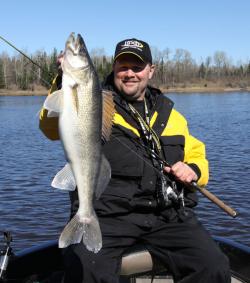
Big fall walleye caught pitching

Big fall walleye caught pitching

Flip and Pitch for Fall Walleyes
By Nathan Shore
from The Fishing Wire

All summer walleyes have been in deep water following baitfish around, but come September and the start of cooler weather many those baitfish head back to shallower water to spawn. Walleyes follow, and flipping and pitching a jig in shallow water becomes the No. 1 tactic for boating a big limit.

Walleyes readily attack a swimming jig over their heads when ciscoes are spawning in the shallows.

“Baitfish like ciscoes come back out of open water to spawn in fall,” said tournament pro Jon Thelen. “That’s why walleyes make that shallow movement when water temperatures start cooling off. I begin looking at the same spots I fished in spring, when other species were spawning. Prime locations are rockpiles and anywhere the bottom gets harder beyond a weed edge.”

Ciscoes (also called tulibees) spawn above gravel or rock, generally in depths of 10 to 15 feet. Actual spawning occurs as water temperatures dip to about 50°F, but ciscoes come in prior to that to stage. And, ciscoes aren’t the only baitfish busting shallow moves in fall.

“Other baitfish that come in during fall are spottail and emerald shiners,” Thelen said. “And you’re trying to match all the other shiner species that stay shallow all year, too.”

The arrival of ciscoes, spottails, and emeralds to shoreline areas can draw the majority of the walleye population out of deep water. Silvers are black-silver, goldens are black-gold, emeralds are green-pearl and ciscoes have blue or gray backs with pearl to gray bellies. Thelen matches those basic color patterns most of the time, but notes that at times the fish want bright colors or glow patterns, especially in dark water or during low-light periods.

For fall shallow jigging, Thelen goes to a Lindy Watsit or Fuzz-E Grub, but there’s no long-line trolling or long-distance casting in his bag of tricks for fall walleyes.

“When walleyes are on the chew this time of year, they don’t mind a jig passing by several feet over their head, so I often pitch and swim the jig back to the boat,” he said “You can get away with vertical jigging and moving the boat around when fish are staging out on deeper transitions between the basin and the structures these baitfish spawn on, but when you’re seeing ciscoes dimpling the surface over depths of 10 to 17 feet, I like to make little flips of about 30 feet. With a short cast, the retrieve stays close to vertical, but you add a little horizontal to the package as you bring it back.”

Tipping jigs with a 3-inch rainbow shiner or a 4-inch redtail chub is the way to go in fall.

“The boat is moving slowly and I’m flicking the jig out with soft casts to keep the bait secured on the hook,” Thelen said. “Sometimes I hop it aggressively, but I generally start slow.”

He may simply swim the jig slowly just off the bottom, making short flips and allowing the jig to sink. The short flips allow him to cover every depth more precisely than with a long cast. A short flip gives him better accuracy in knowing the depth a fish came from, allowing him to refine his pattern for the day, as well as more precisely re-target that depth.

During daytime hours, Thelen looks for spots on the deep side of rockpiles, reefs and gravel bars.

Big walleyes are easier to catch if you sweeten the jig with a live minnow.

“Ciscoes spawn around the end of September in most areas,” he said. “They begin to come in during the first full moon in September. By the full moon in October, action is phenomenal. Good fishing continues in shallow water right through November and you can begin sight fishing those same fish at first ice.”

Thelen prefers color combos of blue-white, black with gold flake, metallic gold, and green pumpkin, natural colors that represent the shiners and ciscoes walleyes expect to see in shallow water.

“Crayfish are always a backup option, so brown-orange works, too,” he said. “Fish can decipher colors really well in water less than 15-feet deep, however, a bright gold, bright orange or flashy metal-flake pattern can be natural, especially in the evening, under heavy cloud cover and on windy days.”

Thelen determines jig weight and size depending on the body of water he’s fishing, but most of the time he sticks to 1/8- to ¼-ounce jigs. A 3/16-ounce Watsit can be an important size this time of year, too.

“Drop speed is critical,” he said. “Aggressive walleyes will accept faster drop speeds, but wary, finicky fish won’t. Try to match the depth to jig weight so the jig swims just above a walleye’s head, right in his wheelhouse, You don’t want the jig to fall out of that zone very quickly.”

Thelen uses a medium-action, 6-foot, 6-inch spinning rod with 10-pound braid and a short, 2- to 3-foot leader of Silver Thread Fluorocarbon. He prefers a braid that’s easy to see and sensitive. Walleyes bite on the drop a lot during fall and it’s generally an aggressive ‘thunk,” and he sets the hook the moment he feels the second bite.

“Minnows are bigger in fall, and bulked-up jigs with plastic bodies like the Fuzz-E Grub and Watsit match those sizes better and slow the drop of the jig, but can interfere with hooksets unless you make sure the fish have a firm grip on the whole package.”
Is There Any Such Thing As A Lucky Hook?

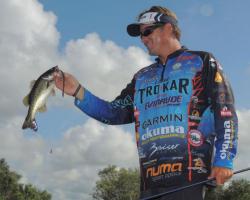
Scott used his lucky hook to catch this bass

Scott used his lucky hook to catch this bass

Scott Martin’s Lucky Bass Hook
By Ron Presley
from The Fishing Wire

Bass pro Scott Martin, like a lot of top anglers, has a “thing” about his hooks–when money is on the line, he sticks with his favorites.

Stories of superstition and luck are not uncommon in the lore of the fishing community. One such story involves a lucky hook. Scott Martin is a bass fishing pro. He also hosts his own TV show, The Scott Martin Challenge. His tournament travels take him all over the place in search of big bags of bass. On one particular tournament trail he was heading toward Washington, D.C. to fish the 2012 FLW event on the Potomac River.

Like many conscientious tournament anglers he spent the evening before leaving for the Potomac in preparation. “As I was packing, getting ready to go to the tournament, getting my tackle in order, getting all my lures in order, getting all my hooks in order, I realized I was basically out of a particular size hook.” The missing hook was a Trokar TK130 4/0. A little bit of panic came over Scott as he realized he didn’t have a single one of his favorite worm hooks.

Scott immediately called Trokar with an urgent request. “Hey guys, overnight me some TK130’s immediately, I am leaving for the Potomac tomorrow and I am completely out.” The guys at Trokar responded, “no problem,” and Scott thought the dilemma was solved.

Morning came and in anticipation of the tournament he ended up taking off from his home in Clewiston, FL a little early. By the time the package of hooks showed up at Scott’s home he was on the highway travelling through north Florida. Decision making is a prominent part of tournament angling and in this case Scott had to make a decision to have his wife overnight the package again, at a personal cost of nearly $100, or pick up some hooks on the way. “The fact that I even considered overnight delivery tells you just how bad I wanted those hooks,” says Scott.

The Trokar TK130 in size 4/0 is Martin’s favorite for soft plastics in many situations.

With that decision made in favor of picking up some hooks on the way, Scott’s thoughts turned to prefishing. “Knowing that I had practice to complete I decided to stop at Bass Pro Shops. They carry Trokar and I planned to buy a couple packages to get me through the week.” Passing a few BPS along the way he waited until Washington D.C., where he walks into Bass Pro Shops the day before practice begins, looking for his hooks.

“I go to the Trokar Hook section,” says Scott, “and they have one pack of 4/0 hooks left.” There are five hooks in a pack, so Scott figures every thing is OK, at least for the next day of practice. “I was happy to find the one pack of TK130’s and I felt ready for practice the next day.”

Scott launched on the Potomac the next morning and wasted no time catching some nice fish. “I was flippin’ a worm rigged on a TK130 and the bass were tearing it up.” Scott likes the TK130 because it is a straight shank hook with a bait keeper on it. The offset hooks will sometimes grab pieces of slime or pieces of grass which fouls the presentation. The straight shank TK130 eliminates that. “It is a very weedless way of fishing a worm and contributed to my success on the Potomac.”

It is on the river that the suspense thickens. If there are two anglers in a boat and one is catching fish and the other isn’t, the one that’s not wants what the other one has, right? “So here we are,” says Scott, “catching some nice fish. My fishing buddy wanted a hook or two so I gave him a couple of hooks.” Scout thinks nothing about it, since he still has some spare hooks.

What he hadn’t planned on was what happened when he met up with his dad. When he did, he mentioned that he was catching a few fish on his worm rig and you guessed it, dad wanted a couple hooks too. Of course Scott obliged. “The next thing you know I am down to one hook. I’ve given all my hooks away except for the original one I tied on that morning. My idea was that I would run back to Bass Pro and hope they have some more in stock. I thought I would be OK.”

The first day of practice ends, but he doesn’t go to Bass Pro Shops to replenish his supply of hooks. The second day of practice ends and he still hasn’t been to Bass Pro. The third day of practice ends without Scott returning to Bass Pro Shops. “I kept checking that point on the only TK130 I had, and it felt super sharp, just like it did when I pulled it out of the package.”

Martin nearly ran short of hook-power in an FLW event on the Potomac River in 2012–and it could have cost him big money.

Day one of the tournament starts and Scott has one hook. It is the same “special” hook, on the same exact rod, that he fished all three days of practice with.

Scott goes out the first day of the Potomac River event and catches the biggest bag of the tournament at 22 pounds. He was leading by several pounds over his nearest competitor. “Now, I am getting a little panic stricken over this hook situation. I check the point again, realizing that Bass Pro Shops is an hour drive away; I am tired, the hook feels just like it did when I put it on. At this point it has become my lucky hook.”

So here he is, worried but tired. He caught a big giant bag of fish on his lucky hook. It is still sharp. He decides, “I am not going to change anything. It is kind of like not changing your underwear; I don’t think I changed that or my socks that day either. Call me superstitious.”

Now the one hook saga continues. The second day of the tournament comes around and Scott finished that day with the same TK130. Then the third and fourth day of the tournament come to an end. “At the end of the fourth day I am holding up a trophy with a $100,000 check in my hand, Potomac River champion, 2012. I caught every one of my bass on that TK130 4/0 hook.”

Scott Martin’s lucky hook now resides in a glass case at Eagle Claw headquarters in Denver, CO. Scott sums up the whole story by saying, “That’s why I love Trokar.”

Learn more about Scott Martin and The Scott Martin Challenge by visiting the website at http://www.scottmartinchallenge.com.

Fishing Muddy Water

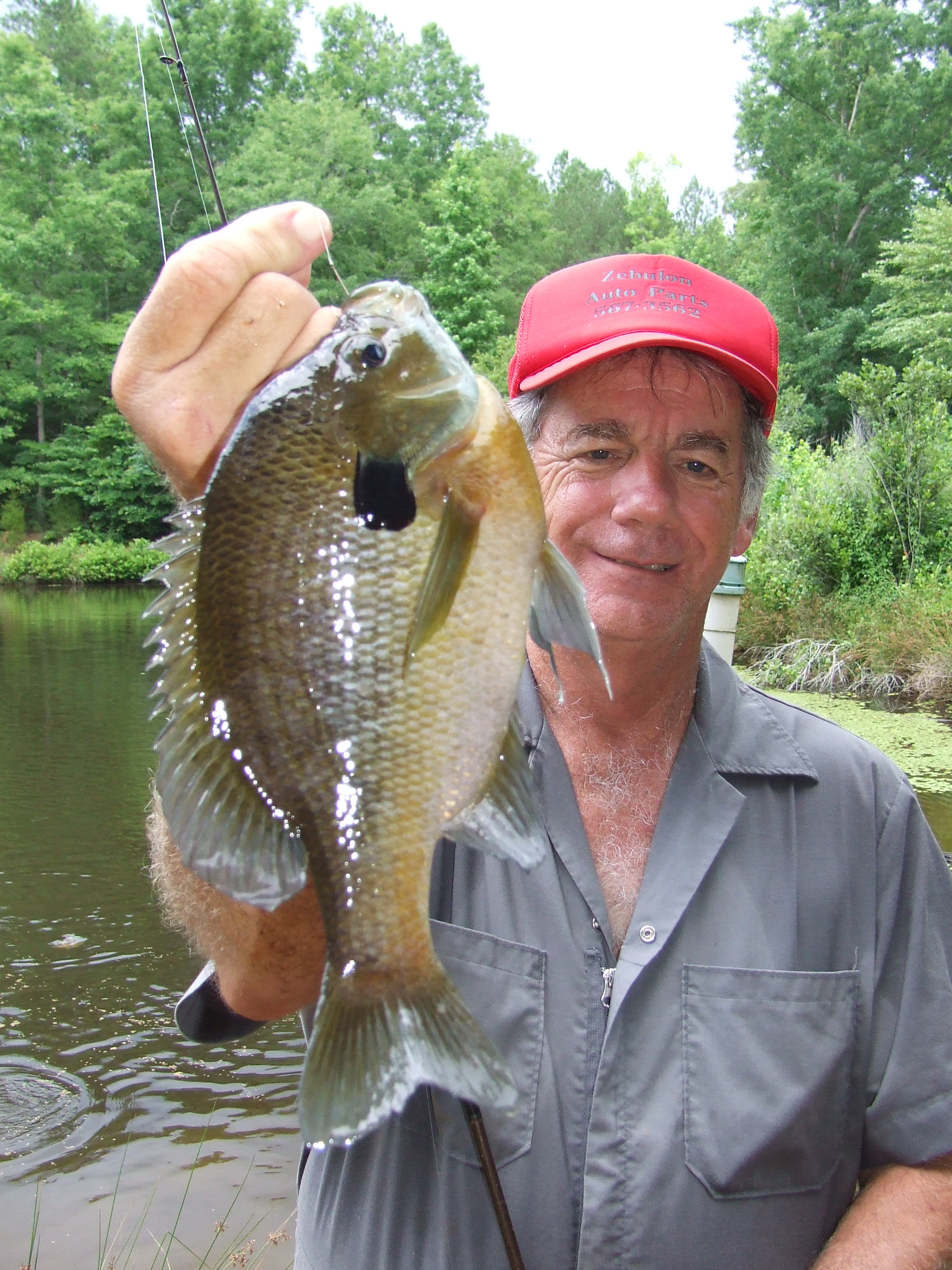
Its hot, yes I am wet with sweat, but this bluegill put a smile on my face

Its hot, yes I am wet with sweat, but this bluegill put a smile on my face

All the rain the past few weeks has made fishing interesting in my ponds. Both ponds got pretty muddy and that made the bream bite better. Since I fish out there most days and let most of the bream go that I catch, I have taught the danger of a hook. I often see a bream, especially the bigger ones, swim up to a piece of food on the #6 hook and stop. It is like they are thinking “I know there is a catch to this, I have seen something like this before.”

Muddy water makes it harder for them to see the hook as does other low light conditions. Late in the afternoon and early in the morning the bream bite better. Some wind rippling the surface of the water also breaks up the light and makes it harder for them to see the hook.

Bass fishermen should take note. If bream can learn to avoid hooks, I am sure bass can, too. And bass get fished hard on our big lakes. One nice weekends you often have to take a number and get in line to fish a good point on many of our lakes.

There is an old joke that the bass at Jackson Lake know the Bass Pro Shops catalog number of each plug they see. That is one reason a new bait can be hot for a time when it first comes out then the fish seem to stop hitting it. They learn what it looks like and how it moves in the water.

Fishing for bass under low light conditions works. Early morning and late afternoon, as well as after dark, is more comfortable and the bass bite better. Wind blowing onto a point is a classic type situation to catch bass and the disturbed surface and water makes it harder for the bass to see the bait and more likely they are going to hit.

There is no bad time to go fishing but some times are better than others for catching. Go any time you can but take advantage of anything that makes it harder for fish to see your bait. Under those conditions fishing is more likely to also be catching.

Shakespeare Ugly Stik GX2 Spinning Outfit Review

Shakespeare makes good products

Shakespeare makes good products

I recently received a Ugly Stick GX2 rod paired with a Shakespeare 5.2 to 1 ratio spinning reel to test. I spooled the reel with ten pound test Trilene line and tied on a Norman’s DD22N to see if it would work for deep cranking.

Ugly Sticks are tough rods and mostly used for fishing for catfish and stripers in freshwater. They are also great in saltwater. These rods are made to take the abuse big fish, and fishermen, can give them. Since I mostly fish for bass and am trying to get better at deep cranking, I wanted an alternative to a casting outfit. As I have gotten older it is harder for me to deep crank for hours and I thought being able to switch between a spinning out fit and a casting outfit would ease the pain I get in my hands and arms when fishing this way.

With this outfit I could cast the big crankbait a long way. Chris Jackson even commented on how far I could cast the lure while I tested it at Lay Lake fishing with him. I also used it in a club tournament at Lake Sinclair. The rod is a six foot six inch medium action two piece rod. I could cast even further with a longer rod.

The outfit worked well for this application. It allowed me to switch hands holding the rod since I hold a casting rod in my left hand and reel with my right, and hold the spinning rod in my right hand and reel with my left. It took a few casts to get used to the outfit and learn the right angle to hold it to get good depth on the lure and keep it at an angle to absorb the shock of a strike.

The ratio of the reel was fine for deep cranking and the rod action was just right for that type fishing. I will keep it rigged and ready when I want to deep crank for bass.

The outfit would be excellent for many kinds of fishing. It is fairly heavy so it tires you more than a very expensive rod and reel that is lighter, but at $49.99 for the outfit, the cost helps ease the pain. When fishing for hybrids, cats, stripers and other similar fish in freshwater the weight of the outfit would not be a problem since you often put the rod and reel in some kind of holder rather than holding it in your hands while fishing for them. the same is true in many saltwater applications.

The reel did make noise while reeling it and the drag system is not as smooth as I would like it to be.

Disclaimer – I was sent this outfit free to test.

What Are the Best Places To Catch Crappie From the Bank?

Best Areas For Bank Crappie Fishing

by Ray Rudolph
from The Fishing Wire

You don’t need a boat to catch early fall crappies, just a good plan of action. It can be as relaxing or adventurous as you want it to be. Here are the three best areas to focus on to catch a stringer of crappies from the bank.

Way Up The Creek

This jig will catch crappie

This jig will catch crappie

The odd-looking “Watsit” soft plastic on a jighead makes an ideal late summer and early fall offering for crappies.

“I grew up walking creeks,” says crappie guide Barry Morrow. “I’m talking about the uppermost areas of creeks. Most have access within a short walking distance. Access will often be from a backroad or where a bridge crosses the creek. Some have parks or picnic areas that provide easy access. Public lands are best because you must have permission if you walk private land.”

He moves along in search of laydowns, old stumps or other cover where fish might hide. His weapon of choice is an 11-foot pole, 12-pound test Silver Thread line and a 1/4-ounce jighead with a Lindy Fat Watsit body. He agrees that most fishermen are more comfortable with a lighter-weight jighead, but that extra weight allows better sensitivity to feel the bottom, brush and bites.

“Start at the outside edges of brush or laydowns and work toward the inside,” says Morrow. “The best bite is usually in the heart of the cover, but you can pick off aggressive fish from the edges without disturbing those deep in the thick stuff. Every piece of cover has a sweet spot and you’ll soon learn a pattern where most of these are located.”

Barry Morrow will guide you to crappie like these

Barry Morrow will guide you to crappie like these

Guide Barry Morrow says whopper crappies like these can be dredged from brush in creeks with a long crappie pole.

His technique requires both hands. Hold the pole in one hand and the line in the other. Pull the jig up to the tip, push the bait where you want it and then drop the jig by slowly moving your free hand toward the pole. Keep dropping it until you feel bottom or reach the strike zone. Controlling the line with your free hand is very important to this style of fishing. Because the rod is often confined within the branches of a laydown tree or bush, use that free hand to set the hook, pull the crappie almost to the tip then back it out.

Spillways for Crappie and More

Spillways damming man-made reservoirs are crappie guide Todd Huckabee’s favorite spots for summertime shore fishing.

“Late summer is the perfect time,” he said. “The lake becomes a little stagnate in late summer with the thermocline, low oxygen levels and water temperature all being stressful on the fish. But in the spillway the water will be cooler and dissolved oxygen levels are great. The fish feel better and are more active.”

He says with fairly uniform oxygen levels throughout the water column of a spillway, crappie can be at any depth. Every spillway is different so there are no ‘cookie cutter’ spots that work everywhere. However, he says two important features, current and eddies, are present at all spillways.

Todd Huckabee likes this jig

Todd Huckabee likes this jig

Guide Todd Hucakbee likes a Yum F2 Wooly Beavertail jig in dam spillways in summer.

“Many fishermen use a cast and retrieve tactic, but their baits don’t stay in the strike zone long enough. I use a float like the Wobble Bobber to stay above the rocks and to find the eddies. Once a float gets in an eddy it will circle around, which is perfect because the eddy is where baitfish and predator fish are holding. The bite usually happens quickly.”

Equipment includes his signature series 10-foot spinning rod, a float and a YUM F2 Wooly Beavertail jig. He prefers using one jig but says a tandem jig rig is fine if you prefer.

“My best tip: Don’t overlook shallow water,” he said. “Since oxygen levels are the same everywhere, spillway crappie may be very shallow where it is easier for them to ambush food.

“Another great thing about a spillway is you might catch a pound crappie, and on the next cast a white bass, then a 3-pound walleye, a northern or one of the many other species there. Spillway fishing is a lot of fun.”

Surprising Docks

The float and jig is a good choice for crapipe

The float and jig is a good choice for crapipe

A float and a jig can be a good combo around docks, especially those with brush close by.

Boat docks are well known crappie magnets, but most boating crappie anglers hit the fronts and maybe halfway down the sides. During summer, especially early and late in the day, the bank-side of docks can be more productive.

“Fish can be at many different locations on a dock but the backside can have the right depths and cover for this time of year,” said Morrow. “Fishing from the bank will put you in the action.”

Morrow casts and pitches using 7- or 10-foot poles spooled with 6- or 8-pound test Silver Thread line. The shorter pole is good for casting and flipping while the 10-foot Huckabee spinning rod is good for vertical dipping, pitching and casting.

Rigs can vary based upon your favorite baits. Morrow says his choice easy.

“I use a Lindy Crappie Cork because I can fish any depth by adjusting it up or down and I can cast it for distance and accuracy. Under the float I like a 1/16-ounce Fuzzy Grub or 1/8-ounce Watsit jig in a natural color. Green pumpkin has always worked well for me in late summer. If the water is super-clear or the fish run on the small side, use a smaller jig.

“I target brushpiles and cover near the backsides of the docks. Sometimes you can see them but most of the time you’ll have to find them by retrieving your bait between the dock and bank. Keep raising the slip float to put the bait deeper until you find cover.”

Fishing In Alaska

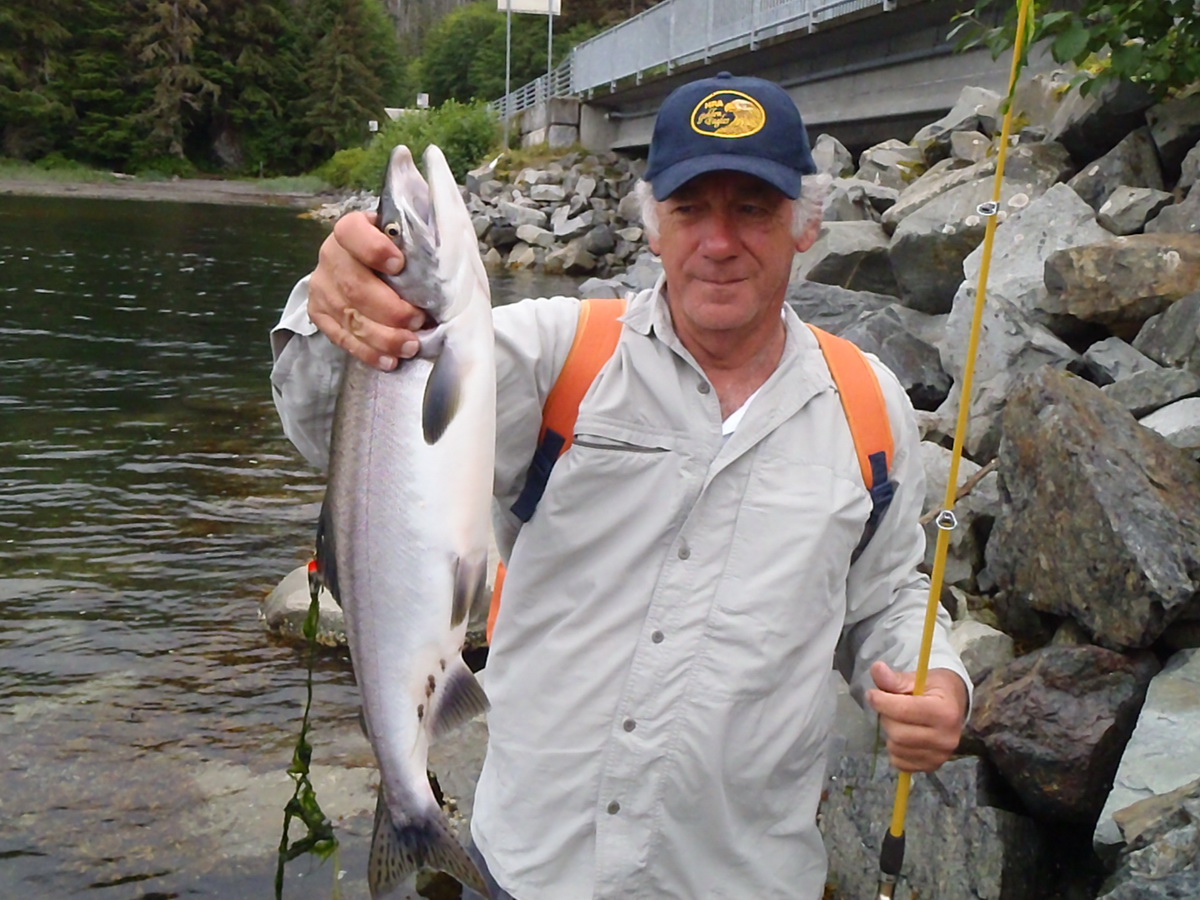
I caught this salmon in Sitka not long before getting on the plane

I caught this salmon in Sitka not long before getting on the plane

I hate flying! Unfortunately, airplanes are by far the best way to get to Alaska. This small-town Georgia boy grew up reading outdoor magazines about the fantastic fishing and hunting in Alaska but could never really imagine experiencing it first-hand.

My wife Linda has a second career as a travel writer and I have been many places I could only imagine growing up. I have kneeled on the ice in Antarctica with penguins waddling by a few feet away, fished for piranha 700 miles up the Amazon River, snorkeled in Tahiti and spent the night in a five-star hotel in Marrakesh, Morocco. All those were beyond my wildest dreams as a kid in Dearing, Georgia!

Linda and I left July 26 three years ago and flew to Anchorage, Alaska. We spent a week driving up to Denali National Park, over to Valdez then back to Alaska. The vastness of Alaska is amazing. I drove 1150 miles during that week. At dinner back in Anchorage the placemat had a map of the state about the size of my palm. The area we covered in a week was about the size of my thumb tip placed on the very corner of my palm! The same distance here would have taken us all the way around the state – with some overlap!

On that drive we passed many beautiful mountain ranges and terrain varying from damp forest to tundra. Rivers that were hard to get to looked inviting but I didn’t get to fish until we got to Valdez. There we stood on the shore of the bay and hooked salmon after salmon, landing about ten each but losing twice that many each.

We flew to Juneau and got on a small cruise ship, the Mist Cove, and spent a week with 14 other passengers and 12 crew cruising the Inner Passage, anchoring each night in secluded bays. Each day we had the option of taking out kayaks, going on hikes on shore, or taking the skiffs to fish for halibut or to streams to catch salmon.

The limit on halibut is one per day and two in possession. We brought back 46 pounds of filets from the four we kept. The salmon we caught were already in the creeks and not good to eat, but were a ball to catch on light tackle.

On my 60th birthday I was standing in a stream in Alaska catching salmon. I landed my first salmon ever on a fly rod that day, hooking and landing four after landing nine on a spinning rod and losing about 15. The screaming runs across riffles and the way they jumped were just like in my dreams!

Wildlife was amazing. Eagles were everywhere. We watched one young eagle eat a salmon on a gravel bar about 100 feet from us. One day two couples were fishing the mouth of a stream and another couple had hiked up the stream to fly-fish. Each group had a guide. Ours had a 12 gauge shotgun loaded with slugs on his back and the other guide had a 30-06 on his.

The three that went up stream came walking back pretty fast and we heard the radio crackle. Their guide was calling for a skiff to pick us up immediately. About that time, less than 100 yards behind them, a brown bear stood up. The grass was about chest high on me in the area. It came up to her waist. Beside her a cub poked his head above the grass, too.

The grizzly had followed them back down the creek after they walked up on her. She disappeared then popped up a little closer to us. About that time the skiff picked us up and we left her to fish with her cubs all by themselves!

On the trip we saw moose, caribou, mountain goats and many other critters. It was exciting.

That Sunday we loaded on an Air Alaska 737 in Sitka to come home. The plane was packed, not an empty seat. And we were amazed at the number of boxes of fish loaded on it. The luggage belt would have five or six boxes of fish, then a suitcase. The cargo hold was full.

We started down the runway and just as I felt the plane get light, mostly from me holding it up by the arm rests, there was a loud “BANG,” the left side of the plane dropped a little and the whole thing shuddered and shook. The pilot got us stopped about 100 yards from the end of the runway where it dropped into the bay.

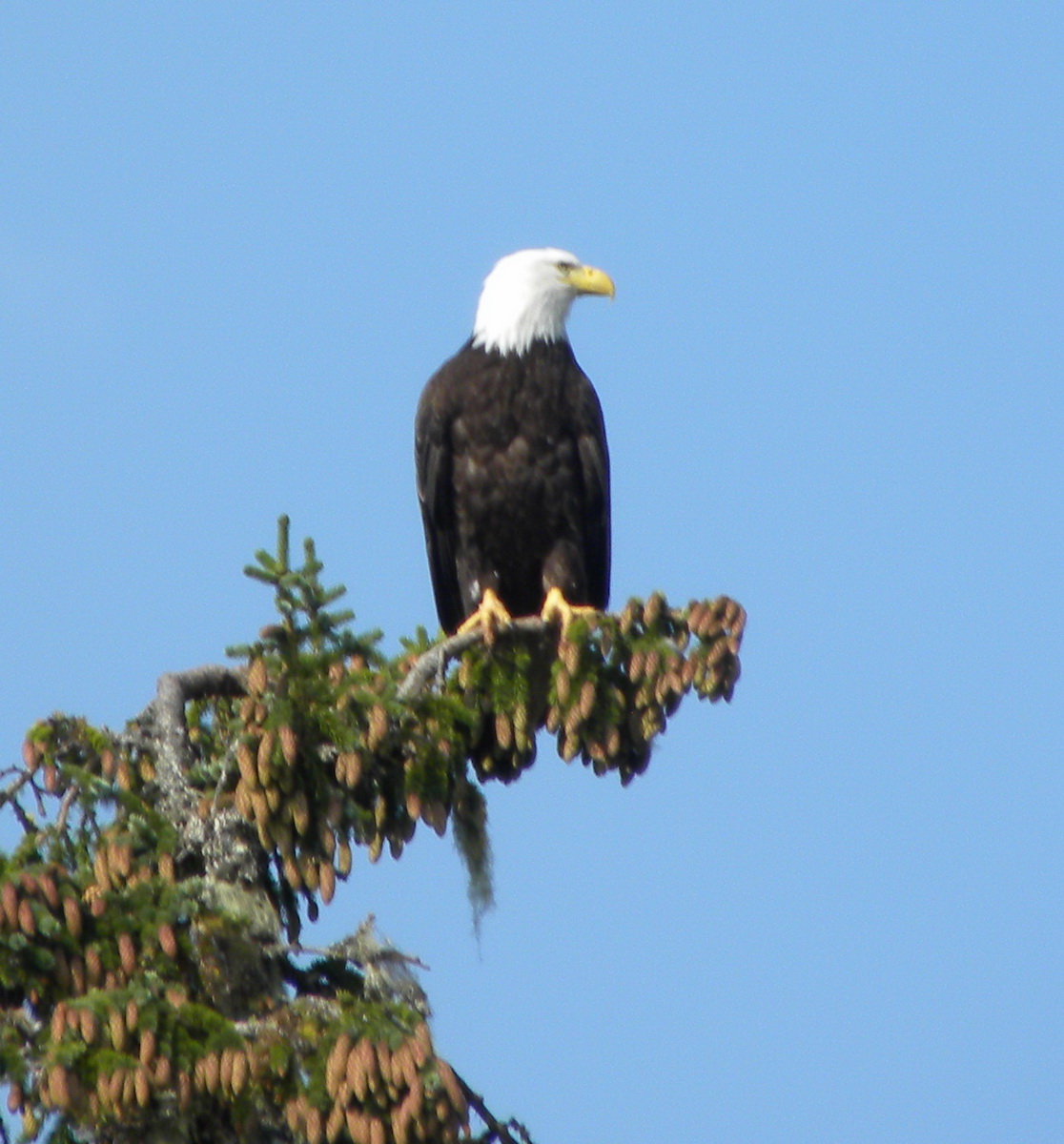
Is this the eagle that almost caused our plane to crash?

Is this the eagle that almost caused our plane to crash?

He came on the PA an said we had hit an eagle. It tore up the engine I was sitting over and just in front of. The co-pilot and flight attendants were looking out the windows at the engine, looking for smoke and flames, I guess. They said we had been running down the runway at 110 MPH, 10 MPH under lift off speed, when we sucked in the eagle. That is 160 feet per second, if my calculations are right. If the pilot had hesitated even for two seconds before slamming on brakes and reverse thrusters I don’t think we would have stopped in time.

Six hours later they got another plane to Sitka to take us to Seattle and we caught the red-eye to Atlanta, the only flight left that night. We landed in Atlanta as the sun came up. I am still shaking from the experience.

Did I mention I HATE TO FLY?

Linda has details of our trip on her web site at http://cruises.about.com

Watch A Salmon Cam

Sockeye salmon from the salmon cam

Sockeye salmon from the salmon cam

Web cam catches sockeye salmon returning to Tongass spawning grounds

EDITOR’S NOTE: The following was provided to The Outdoor Wire by the U.S. Forest Service

Through the end of August, you will get the chance to be entertained as sockeye salmon swim along Alaska’s Steep Creek as the adults spawn before swimming to their deaths.

The Forest Service has placed the salmon cam in the creek on the Tongass National Forest so viewers world-wide have the opportunity to view fish in their natural setting. The ability to watch salmon in the wild is a treat for many people, but the underwater camera gives you a more intimate, unique look.

“The overall escapement, or numbers of fish that reach the spawning grounds, for Steep Creek sockeye varies from year to year,” said Pete Schneider, a fisheries biologist on the Tongass. “An average run would be considered 1,000 fish. We have seen it as low as 350 and as high as 4,000. So many factors can contribute to run size. It’s difficult to predict. So keep watching.”

Early in the spring sockeye fry emerge from the gravels and move into Mendenhall Lake and Mendenhall River sloughs and ponds, where they feed for 1-3 years before migrating to the ocean. After spending several years at sea, the adult sockeye return to Steep Creek to spawn, their last act before they die.

But all is not lost. The dead sockeye are still good meals for a variety of forest critters, including their own fry and as their nitrogen-rich carcasses decompose they provide valuable nutrients into the ecosystem.

If you see the view clouded, it could be because a female salmon is building her redd (gravel nest) by agitating the bottom of the creek bed with her fins and tail. She then bends her body back and forth to make a depression where she deposits her eggs. A male then moves in and deposits his milt, or sperm, over the eggs after an often lengthy courtship. The female uses her tail fin to cover the redd then moves upstream to do it again. Female salmon will often build multiple redds in the same general vicinity and then guard them as long as they can before eventually dying.

Sockeye salmon are held in high regard in Alaska. They are known for the high quality of their meat, bold spawning colors, unique habitat requirements and the fact that they can be tough to catch because they rarely bite on sport gear in salt water. Add all these factors together and sockeye rival king, or Chinook, salmon for the most attention.

“I typically leave the camera in place until the end of September. Often the water quality becomes too poor by October due to the amount of rainfall,” Schneider said. “The sockeye run will dwindle by the end of August. After a short lull for a week or two the coho salmon will arrive.”

Schneider said the coho run will not be as large as the sockeye. However, more Dolly Varden char enter the stream, too. Many Dollies arrive “early” to feed on loose eggs during sockeye spawning, but many more arrive in early fall to spawn. They spawn about the same time as the coho in different locations along the creek so they do not overlap with the coho, a process refined over years of evolution.

As the fish are making their way along the creek, Schneider and other Forest Service employees make daily counts. The third week of July they counted about 30 sockeye milling about in the beaver pond downstream from the camera.

“They are in full spawning colors, but are likely waiting until a rain event occurs. This lowers water temps and raises water levels, which often will trigger the movement of fish upstream to the actual spawning grounds and into camera view,” he said. “Unfortunately, I can’t move the camera downstream any further than I have to see them.”

Surprise guests for the fish and viewers could be a black bear or two. Bears that feed on salmon are larger because they eat. A lot. And salmon provide the high calorie diets they need to gear up for the winter hibernation.

“Bears will often target the female salmon for their eggs. Their keen sense of smell can detect the eggs, and I have seen them actually release a male and return to fishing for females,” Schneider said. “When salmon are plentiful, it is normal to see a carcass along the bank with only the belly eaten. The brains are also a high-calorie hotspot, even though they are smaller than a walnut.

“Make no mistake, however, as absolutely none of the salmon go to waste. There is a plethora of mammals, birds, insects, fungi, and plants waiting to make full use of the remaining nutrients.”

https://www.youtube.com/watch?feature=player_embedded&v=iAYSF1h05HM

How Can I Follow Bass From Shallow to Deep Water in the Summer?

Kelly Jordan follows summer bass from shallow to deep water.

Kelly Jordan follows summer bass from shallow to deep water.

Yamaha Pro Kelly Jordon Offers Summer Bassing Tips

There’s a good reason tournament angler Kelly Jordon describes the hot months of summer as one of his favorite bass fishing seasons. The Yamaha Pro follows fish from shallow water to deep during the day, a technique he learned during years of guiding at Lake Fork in Texas.

Jordan advises starting around brushy cover at daybreak in depths as shallow as two feet–but says fish move deeper as the sun rises.

“The key to following bass in summer is fishing an area that has some type of route like an old roadbed, a tree line, or a creek channel leading from the shallows to deep water nearby,” Jordon emphasizes. “The bass move back and forth between shallow water and deep, so finding a shallow flat, a long point, or a cove that gradually falls into deeper depths is always worth trying.

“This movement may not be more than a hundred yards, or it may be 300 to 400 yards. It depends on what the deeper water offers the bass. At the same time, if there is abundant shallow cover, particularly hydrilla or some other thick vegetation, the bass will usually stay shallow longer, too.”

Jordon strongly recommends starting a July or August day of bass fishing 30 to 45 minutes before daylight because that is when fish are most likely to be in very shallow water. He believes these bass may be the same fish that moved shallow to feed during the night, and they’re extremely susceptible to topwater lures like buzz baits and frogs.

Jordan throws a buzzbait at dawn, but often switches to a crankbait as the morning draws on.

“This shallow bite does not last long after the sun rises,” the Yamaha Pro continues, “so I really like a buzz bait because I can make long casts and cover a lot of water. I try to key on cover like logs and laydowns, lily pads, and rocks, and generally in just two feet of water or less. I work the cover thoroughly, too, usually making two or three casts to the same object with a slow, steady retrieve to give a fish plenty of time to hit it.”

When this early, shallow water action ends, the Yamaha Pro changes to a shallow running crankbait, often a square bill model, and begins fishing slightly deeper water down to five or six feet. He may also try flipping soft plastics if the cover is thick enough, but his primary choice is the crankbait.

“What I’m trying to do is take advantage of all my options in relatively shallow water before the fish move,” Jordon continues. “Frequently, I’ll fish the same cover with the crankbait that I fished with the buzz bait, simply because it has such a different action. Buzz baits bring reaction strikes, while the crankbait may entice more of a feeding strike.”

When this bite does end, Jordon moves further out to 12- to 20-foot depths, studying his electronics to locate both steeper depth changes as well as possible schools of baitfish. If he has found a creek channel or even a ditch leading from the shallow water toward deeper water, this is where he concentrates his search. If he’s been fishing a point, he just keeps following it further and further out in the deeper water.

The Yamaha pro says fish may move up to 400 yards seeking deeper water as the sun rises, but smart anglers can learn to follow them and continue the action.

“I’ll really cover this water thoroughly with a deep diving crankbait, grinding it along the bottom across any breaklines from shallow water to deep,” he explains. “Places I really look for are bends in a channel, and cover like rocks, stumps, and flooded timber. I just keep working further out into the deeper water because I know eventually I will find the fish again.

Jordon emphasizes the importance of looking for baitfish, especially shad, as he moves into this deeper zone. Baitfish make this same movement, and the bass follow them. They show up on electronics because they’ll gather in large schools, and the bass will hover just below them.

“Summer bass fishing doesn’t need to be a long, hot exercise in deep water crankbaiting or dragging plastic worms along the bottom,” concludes the Yamaha Pro. “As long as a fisherman is willing to start fishing early, he will nearly always find some bass in shallow water, and this can be a truly magical time to be on the water.

“Then all you need to do is change your lures and gradually work out into deeper water. You really can follow the bass as they make this movement.”

Are Micro Guides On Fishing Rods Better Than Regular Guides?

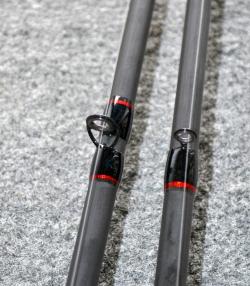
Picture showing both micro guide and regular guide

Picture showing both micro guide and regular guide

Guide To Regular Guides vs Micro Guides

By Frank Sargeant, Editor
from: The Fishing Wire

So, do you “need” a new micro-guide rod? Or not?

If you’re like me, you find yourself “needing” practically everything that’s new related to fishing, whether you need it or not.

Micro-guide rods have been around for several years now, and have been a popular seller in many well-known lines. Here’s the basic pitch that has made them take off:

Micro-guides are much smaller and lighter than conventional guides and are usually “single foot”, thus do not impede the natural action of a quality rod blank.

Micro-guides keep the line closer to the rod blank than conventional guides, which results in better performance on casts as well as when fighting fish.

Micro-guides fit into rod tubes aboard a boat more readily than standard guides, thus are less subject to damage.

And here’s the biggy: Micro-guides look cool. You have to look closely to see them at all. They give the rod a sleek, modern appearance-and that’s probably the primary reason they have taken off so well.

But could it be that there’s a real performance difference?

The Falcon BuCoo Micro is a good-looking mid-range rod with the fit and finish of high-dollar sticks.
We asked Chris Beckwith at Falcon Rods to help us out on this one. Falcon makes an amazing array of rods for every purpose, and in fact in their mid-priced BuCoo Line they have a pair of baitcasters that are identical in length, action and power-except the BMC-7MH has micro-guides, the BMC-5-17 has conventional.

Both are 7 foot rods rated for 12- to 20-pound test line and lures of ¼ to ¾ ounce, in medium heavy action with medium-fast tips-like most top quality rod makers, Falcon distinguishes between the “action” or power of the rod and the tip stiffness.

Both BuCoo’s are constructed on Falcon’s FXB American-made graphite blanks with all Fuji guides. Both have exposed-blank reel seats for sensitivity, and EVA grips, with 14 ½ inch handle length which makes power casting and big hook sets easy. Weight is a near match at around 4 ounces. Both feature Falcon’s five-year warranty.

The Falcon BMC-7MH is built on an identical blank to the standard BMC-5-17, but the micro version has three more guides, a total of 10 plus the tip.
The micro model has three more guides, a total of 10 plus the tip, and that adds $20 to the price: it’s about $129.99 at on-line retailers, versus $109.99 for the standard version. (An editor’s note here-these rods fish like rods priced much higher and fit and finish is excellent-they appear to be a great value for the money. I like the clever naming, too-“Bucoo” being Cajun for beaucoup, or a bunch of value.)

In my tests with Shimano Chronarch 200-E7 reels, the casting range was the same for both micro and standard versions throwing a 3/4 ounce weight on 12-pound mono, about 150 feet. The feel in the hand was also the same. Either is an easy stick for all-day casting.

I fished them interchangeably on several trips to Lake Guntersville in North Alabama, and had to look to tell which was which-I could feel no difference in their handling while throwing everything from topwaters to lipless crankbaits to big swimbaits and football-head jigs. Ditto on hook-setting, very similar.

I’d say the micro makes better use of the power in the rod in handling heavy fish, perhaps because of the additional guides which keep the line more closely following the spline of the graphite.

The lower height of the guides also makes them somewhat less likely to grab a loop of loose line and create a tangle, though I had no problems with this on either version of the BuCoo rods.

It is significantly harder to string up a micro-guide rod, but of course that’s a chore you don’t have to do often and shouldn’t be much of a factor in your buying decision.

However, if you are among those anglers who frequently make use of a leader, which requires a knot that slides through the first several guides, micro-guide rods may not be for you. Anglers who throw topwaters on braid, for example, frequently add 12 to 18 inches of monofilament because the slightly stiffer mono is less prone to loop back on itself and tangle the hooks as you walk the dog. And some feel a foot or two of fluorocarbon, much less visible than braid, increases the number of bites in some situations. But getting a line-to-leader knot to fit through a microguide can be a challenge, to say the least.

Other than that, there’s not much to distinguish one from the other.

Bottom line is, if you “need” a micro-guide rod, go ahead and buy one. They do look cool, and the slight bump up in price is worth it when you go strolling down the dock in front of your envious buddies. But it probably won’t make a great deal of difference on your casting or fish-fighting ability.

For more details on the whole Falcon line, visit www.falconrods.com.

What Is A Jig Head or Shaky Head Worm?

Jig Head Worms: The Appetizer Bass Can’t Pass Up

Jig head worms have been around for many years but have gotten very popular the past few years, for a very good reason. They catch bass, especially in the fall.

If you asked a bass fisherman about “shaky head worms” a few years ago, your only response was likely to be a shake of the head saying no. Today you would have a hard time finding a bass boat on the water without a shaky head rig in it. It is one of the most popular ways to catch bass right now.

Shaky head worm rigs have many different names but the most descriptive is “jig head worm” since that is the basic rig. Fishermen have used worms and other trailers on jigs almost as long as there have been fishermen. But this system got real popular a few years ago with the introduction of jigs with big hooks, made especially for bass. It seems to catch bass when nothing else will work.

A jig head worm is simply a ball jig head with a plastic trailer on it. Most tackle companies make them now under a wide variety of names. They come in all kinds of shapes and colors and some have special ways of attaching the worm. Light wire hooks from 1/0 to 4/0 are common.

On a basic jig you thread a worm on the hook Texas style, with a quarter inch of the head of the worm against the jig and the hook inserted back into the worm to make it weedless. Some jigs come with a spike or small spring behind the eye of the hook. On them you put the head of the worm on the spike or spring then stick the hook into the worm body. This setup keeps the worm from balling up on the hook when you set the hook.

The reason a jig head worm is so good is it makes the worm stand up. Unlike a standard Texas rig, the tail of the worm sticks straight up from the bottom, looking like a baitfish or other bass meal feeding along with its head down.

Watch a jig head in clear water and you will see the trailer stand up when the head hits the bottom. It will fall over but falls much slower than a Texas rig. Some jig heads have a flat surface to make them stand up better, and some are a mushroom or football shape that is supposed to make them stand up when pulled.

A finesse type straight-tail four inch worm is the most common trailer to use and fishermen have their favorite colors. But other trailers work great, too. A bigger worm like a six inch straight tail worm sometimes draws more strikes. And don’t hesitate to put a big worm, up to 10 or 12 inches long, on a jig head that has a hook big enough to handle it.

Creature baits like the Reaction Innovations Sweet Beaver or the Berkley Little Chigger Craw that imitate crawfish are especially good in the fall. Bass are feeding up for the winter and crawfish are one of their favorite foods. The jig head makes the crawfish imitation stand up and be more visible to the fish.

When jig head worms first became popular most fishermen cast them on a spinning rod and light line. They were a finesse way of fishing with one-eight ounce heads, a four inch worm and eight pound test line the standard. And that still works. But don’t hesitate to tie a jig head worm on a bait casting outfit spooled with 12 to 15 pound line. And use bigger three-sixteenths to one quarter ounce heads with bigger, heavier hooks.

Fluorocarbon line is the standard for jig head worms since bass usually have a long time to inspect the bait. And this bait works best in clear water, so the invisible line helps you get more strikes. Some fishermen use braid line but tie a two to three foot fluorocarbon leader to it. If you go that route it is best to use a swivel to attach the two lines since braid will cut fluorocarbon.

Trailer colors are your choice. It is hard to beat a standard black worm in any color water but darker colors tend to be better in stained water. Try clear colors like watermelon in clear water. And dipping the tail of the worm in a chartreuse dye like JJs Magic will add a flicker of color bass like.

For craw trailers dark colors work well in stained water but try to match the color of local crawfish. You can find them at night in the shallows. Their eyes look ruby red when hit by a flashlight beam. Some lakes have very dark, almost black crawfish. Other lakes have populations with brown to almost red coloration. Match your bait to the color of the food the bass are eating when possible.

Jig heads shine on hard bottoms from clay and gravel to hard mud, so these kinds of points and banks are some of the best places to fish them. Since crayfish live in clay and hard mud bottoms and around rocks where they make their burrows, working a jig head with a crawfish imitation where they live is deadly in the fall.

Let your bait hit bottom and sit for a few seconds, then slide it along like a crayfish crawling along. Suddenly hop it like a startled crayfish swimming off. When it falls back it will stand up with claws raised and waving, just like the real thing. Bass will eat it up.

Also try a worm trailer on these hard bottoms but fish it a little differently. The name “shaky head” comes from one of the most popular ways to fish a jig head worm. Let it hit the bottom and sit for several seconds. Then tighten up your line and shake the rod tip, making the bait dance in place.

You don’t want the bait to move across the bottom, you want it to stay put and vibrate and shake. This is especially effective in clear water where a bass might sit and look at a bait a long time before hitting it. Give the fish a reason to eat the bait by shaking it in one place.

Jig heads don’t come through chunk rocks very well but are great around them. When fishing rocks like riprap use a very light head, as light as you can throw on your outfit and fish effectively in any wind that is blowing. Crawl and hop it over the rocks. The light head is less likely to get hung but expect to lose jigs when fishing rocks.

Round jig heads come through wood better than some other shapes. When working blowdowns or brush piles use a light head and fish slowly. If the jig gets hung up try popping your line. Put some slack in your line, pull it to the side with your hand while tightening up with your rod tip, then let the line pop free of your hand. For some reason this often frees a jig head that is hung up in brush.

Bass hang out in brush and other wood cover so you need to fish it. Fish very slowly with your jig head. Let it fall to the bottom by the brush and sit, making it work most effectively by keeping the trailer up and off the bottom. Fish the outside edges first with your jig head; you are less likely to get hung up.

When a bass takes a jig head worm you will sometimes feel a “thump” as it sucks the bait in, but often you won’t feel a hit. Watch your line for any slight twitch of sideways movement. Raise your rod tip carefully and tighten your line before hopping the bait. If you feel any weight, set the hook. Or, if you don’t feel anything, if your line is slack, reel up some of the slack and set the hook. A bass is probably swimming toward you with the bait. It doesn’t cost anything to set the hook so if in doubt set it.

Driving a nail into a board is much easier if you tap it with a hammer rather than trying to push it in. Sticking a hook in a bass’s mouth is the same way. Try to pop the hook rather than making a sweeping hook set. Most jig heads come with light wire hooks so they penetrate the bass’s mouth better and you don’t need to rock the boat when setting the hook.

When using heavier line don’t set the hook too hard and be careful fighting the fish. The light wire hooks can straighten out. Set your drag a little lighter than normal so it slips a little on the hookset. That will lessen the likelihood of a bent hook and also keep you from breaking the lighter line when you set the hook hard.

Give a jig head worm a try. Call it anything you like but keep one in the water and you will catch bass when other baits fail.