New York’s Finger Lakes Country

A Visit to New York’s Finger Lakes Country
By Frank Sargeant, Editor
from the Fishing Wire

Fall is a great time to be in Upstate New York. The cool breezes are blowing off the giant lakes, the leaves are turning, and the yard-long salmon and steelhead are pushing out of the open water and up into the tributary rivers where they provide some amazing action and draw some amazing crowds.

If that’s not enough, 40-inch muskies are coming out of their summer doldrums, and smallmouth bass are stuffing themselves into football proportions prior to getting iced in for the winter.

I had the opportunity to make a brief tour through the area thanks to an invitation from the Western New York Regional Development Council and Buffalo-based Hart Hotels to take a look at a public/private partnership being touted as a way to bring economic development, including recreational fishing and boating jobs as well as tourism, to the less-developed areas of the state. Over a week’s visit, we toured three prime fishing/tourism locations. Today, we have a look at Watkins Glen and the Seneca Lake region, southwest of Syracuse.

Watkins Glen, located on the south end of Seneca Lake, is part of the Finger Lake Country, a bear-claw scratch deep into the rolling hardwood terrain. There are lakes everywhere in this country, and most of them are stiff with fish. I met with guide Mark Moskal here, who operates not only a guide service but also a kayak rental operation on Seneca.

“We depend on visitors here for our income about 8 months a year,” he told me. “When the tourists leave in November, I look for odd jobs until spring—the hotel operation has been huge for us at bringing in more customers.”

Moskal works not only Seneca but also Cuyuga, Owasco, Waneta and Keuka lakes and the streams that feed them, depending on what’s biting where.

“Come at the right time and you can choose between brown and rainbow trout, lake trout, Atlantic salmon, muskies, smallmouth, largemouth and walleye,” says Moskal. “There’s outstanding fishing for all of them within 20 miles of Watkins Glen.”

He said one of his favorite fisheries occurs in October when Atlantic salmon and lunker browns run out of Cuyuga Lake into the Fall River, offering fly-rodders a shot at athletic, leg-long fish in some of the prettiest surroundings of the area, including a 100-foot waterfall that terminates their upstream journey just below the campus of Cornell University.

Muskie fishing is also impressive here—many anglers have fished for them for years without putting one in the boat, but Moskal says if you visit at prime time—late fall—on Lake Waneta, a heavily stocked 3-mile-long impoundment just west of town, you’re highly likely to get at least one fish in for a hero photo, and many are better than 40 inches long, a few over 50 inches.

New York Muskie


Monster muskies like this one are part of the angling action in the Finger Lakes Region, particularly on Lake Waneta, which is heavily stocked with the predatory pike. (Mark Moskal Photo)

“We get most of the fish trolling—we put out a spread of Rapala X-Raps, Williams Wobblers and Evil Eye Spoons, spacing them at 6 feet, 8 feet, 10 feet and 12 feet, and pull them fast enough to bring out a strong vibration. It’s a very dependable way to fish, and it doesn’t require the angler to fling those huge lures for hours.”

He said trolling is also the preferred tactic for lakers in Seneca, which typically hang at 70 feet and more and are reached via downrigger gear–the fish average 5 to 8 pounds, but 15 pounders are possible.

For more, contact Mark Moskal at www.summittostream.com.

Watkins Glen Harbor Hotel here is a big part of bringing not only anglers and boaters but travelers of all interests to the Finger Lakes. The upscale 104-room hostelry, recently voted one of the top waterfront hotels in the nation by USA Today, sits at the southern tip of Lake Seneca, with al fresco dining overlooking the city harbor. It’s got all the usual amenities including an exercise room, indoor pool and a business center where road warriors will appreciate the jumbo iMac all-in-one computers.

Watkins Glen Harbor Hotel is the result of a public/private partnership that helped bring the upscale facility to a small upstate town where jobs are at a premium. The result is a great spot for anglers, boaters and tourists to hang their hat, as well as a big boost for the local economy.

The world-class (but pricey) Blue Pointe Restaurant offers an impressive variety–as an old waterfowler, I enjoyed the duck with andouille sausage risotto. The miso glazed salmon was also particularly good, all washed down with some good wine that not too long ago had been inside grapes growing on the surrounding hills—the area is famed as wine country.

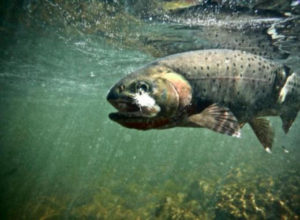
Steelhead run into Catherine Creek at Watkins Glen in spring, providing great action for lunker fish in its narrow flow. (Mark Moskal Photo)
The hotel is within walking distance of Mark Moskal’s kayak operation, where you can rent a ‘yak to get out on the lake and have a really good shot at catching some quality smallmouths over 18 inches long, particularly during the spring spawn in May and early June when they move to the flats along the shorelines—soft plastic tubes are one of the favorite lures.

It’s also within a couple long casts of the Barge Canal, which leads spawning steelhead right into Catherine Creek in late March and early April. You can access the creek directly from State Route 14, which runs alongside it south of town for miles. Salmon egg imitations, and the real thing, do most of the damage.

It’s just over a half-mile stroll from spectacular Watkins Glen State Park, a must-see in this area, with 19 waterfalls over its 2-mile, 400-foot plunge through a gorge down to lake level.

The hotel also puts on a jumbo Ice Bar event fund raiser each winter—they carve an entire bar out of block ice, set up on the hotel patio—given the late January date of the event, thawing is not a problem—bring your long johns.

See full Watkins Glen Harbor Hotel details here: https://www.watkinsglenharborhotel.com

Other Attractions at Watkins Glen

Watkins Glen International Raceway is worth a visit if you’re an auto racing fan—many classic races have taken place here over decades. You can actually drive the family vehicle for a few hot laps on the track for a fee—I didn’t think my Pathfinder or my driving skills were up to it.

The western shore of Seneca has one of the densest wine tasting operations in the country—there are about 30 wineries and breweries with tasting facilities on the east shore, over 20 more on the west side, in the 30 plus miles from Watkins Glen to Geneva on the Lake, at the north end. Every winery has a half-dozen or more vintages they will insist you try—YOU NEED A DESIGNATED DRIVER. But that said, it’s a pleasant way to while away a rainy afternoon when you can’t fish—tasting fee is about $6 for a variety of “flights”, and most throw in some great local cheeses, as well. Learn more here: www.senecalakewine.com.

Rain and Lakes

All the rain in December has really affected lakes. Most are usually several feet low this time of year, making them ready to fill up in the spring from rain to control flooding, but they filled early, with most above full pool right now.

Millers Ferry is south of Selma, Alabama on the Alabama River. Rain really changes river lakes like it, with flooding common. It is a beautiful lake with a main river run and miles of shallow sloughs and creeks off it that are full of grass and wood cover.

I went there the day after Christmas to get information for my February Alabama Outdoor News Map of the Month article with local fisherman Billy Black. He warned me the river was “blown out” from rain, bad conditions for catching fish. But we went anyway to meet my deadline.

The ramp we used had a dock about six inches above the water and water came to the top of the ramp. We had to idle over a mile through shallow water out to the river. Both were full of floating wood and the water was heavily stained. He caught one nice bass and a big catfish, and I got the information and pictures I needed for the article.

The next week he sent me a picture of the ramp, saying it was a good thing we went when we did. The water completely covered the dock and came half way up in the parking lot. Floating wood covered everything, and the water was very muddy. The land is so flat down there a couple feet of water rise really floods a lot of land.

The lakes like Millers Ferry are fun to fish and the scenery is beautiful, and you can catch big Alabama spots as well as largemouth, but you have to plan your trip more carefully than on the lakes around here!

Winter Fishing Tips

Winter Fishing Tips and Tricks from Georgia DNR
from The Fishing Wire

Fishing is good in Georgia in winter


Whether you’re fishing for largemouth bass on Ocmulgee WMA or brown trout in the Chattahoochee River, fishing in the cooler months is relatively the same for any fish species. You’ll want to fish a smaller bait with a slower action. Fish are cold-blooded, so cooler water temperatures make them lethargic. Cooler temperatures will also slow their metabolism so they don’t feed as often or on as large of prey.

Bait and Action

You’ll need to consider the type of bait you will be using. Many food sources available in the spring and summer months aren’t in the winter. Frogs, grasshoppers, and leeches aren’t seen much during winter, so fishing with these lures will be unnatural to the fish. The same goes for fishing stream fish with larger dry flies. For stream fish try using small midge and nymph flies behind split shot weights. Drop them behind strike indicators so you can tell when you get a strike. On lakes and rivers, use lures that resemble crayfish or small baitfish such as minnows and shad. Soft plastics like small plastic worms, skirted jigs, and tube baits can be successful if fished slowly and patiently. The hardest part about fishing with artificial bait in the winter is slowing your action down to a crawl. If you think you are fishing too slow then you’re close to the speed that will get a response from your target. Live bait works well because it will move naturally with the water conditions. Minnows and shad will move slowly and provide their own action same as a nightcrawler or red wriggler. This way you don’t have to worry as much about bait size and action.

Location, location, location!

No matter what you choose to fish with, you have to know where these fish are going to be when the water temperature drops. You can use the perfect bait with marvelous presentation but it wouldn’t matter if you can’t put it in front of a fish. You might have heard of the term “turn over”. This is when the warm water on the surface gets cold in the fall and winter. This water then falls to the bottom and the bottom layer rises to the top “turning over the lake”. After this process, the deeper water will now be warmer than the surface. Fish will hang out in this warmer water in the deeper parts of the lake or pond where you are fishing. Try casting over deep spots where there are changes in the structure of the lake bottom, such as a ledge or hump. Any change in structure along with cover like a dock or weed bed can make great habitat for holding fish. This is where fish finder and hydrographic maps come in real handy. They make it generally easy to find the structure/cover combination you are looking for. Shallow, muddy water can also be a reservoir hotspot as the water warms and attracts baitfish. In streams, look for the deepest and slowest pools that provide slow-moving trout and bass a refuge from floods and predators.

Fishing is a fun pastime that many people enjoy, but it can seem frustrating if you don’t catch anything. These tips will get you closer to fish you’d like to have strike the other end of you line when the weather gets cold and breezy. If you’re looking for new spots or somewhere close to home, the GA DNR has public fishing areas all across the state. You can find your new fishing hole here: http://georgiawildlife.com/allpfas. The Wildlife Resources Division’s weekly fishing blog, https://georgiawildlife.wordpress.com/category/fishing/, is also a great site for timely tips and the latest fishing “hotspots,” even in the cold weather!

Steelhead Resurgence

Central Washington Fosters Steelhead Resurgence
Federal agencies focus efforts to boost Middle Columbia steelhead toward recovery
from The Fishing Wire

Farmer Urban Eberhart recalls watching a video of Middle Columbia River steelhead trying in vain a few years ago to jump a diversion dam blocking historic spawning grounds in the upper reaches of Central Washington’s Manastash Creek.

Helping steelhead


Heavy equipment removing the Reed Diversion Dam in late 2016.

Now that diversion dam is gone, dismantled through the cooperative efforts of local irrigators, Kittitas County Conservation District, and the Yakima Basin Integrated Plan partners, Mid-Columbia steelhead, a threatened species under the Endangered Species Act (ESA), are now re-establishing themselves in more than 20 newly accessible miles of healthy creek habitat.

“By working together, creating trust and relationships among the Yakama Nation, agencies, and the irrigators, we’re really turning things around and getting fish where they need to be to recover,” said Eberhart, manager of the Kittitas Reclamation District (KRD), one of the partners in the 2016 removal of Reed Diversion Dam and restoration of the Manastash and its tributaries. “That cooperation is not only making the difference, it’s how it happened. It’s what made this progress possible.”

“The local collaboration that opened the upper reaches of the Manastash illustrates the kind of focused, coordinated efforts that federal agencies are now working to bring to bear on behalf of steelhead elsewhere in the mid-Columbia,” said Rosemary Furfey of NOAA Fisheries’ West Coast Region, chair of the Federal Caucus. The Federal Caucus is a coordinating organization of 10 federal agencies with roles in the recovery of ESA-listed salmon and steelhead in the Columbia River Basin.

The Caucus is now working to support mid-Columbia steelhead through focused federal coordination that will improve the viability of the species and move it closer to recovery. The agencies are coordinating efforts around mid-Columbia steelhead because it has shown progress over the last decade and may be approaching the point where it could be considered for removal from the list of threatened and endangered species. Much of this progress is a result of restoration efforts such as those on the Manastash.

“This is one place where if we bring people together, and really coordinate efforts, we may be able to make a real difference for this species and demonstrate success in recovering a species,” Furfey said.
.
Federal agencies active in restoring the Manastash and recovering its steelhead populations include the Bureau of Reclamation, Bonneville Power Administration (BPA), U.S. Fish and Wildlife Service, and NOAA Fisheries. Manastash Creek reaches into the Okanogan-Wenatchee National Forest and stands out among tributaries of the Yakima River because much of its watershed remains undeveloped and in public ownership.

The Yakama Nation, Washington Department of Fish and Wildlife (WDFW), Kittitas County Conservation District, and Trout Unlimited have also played critical roles.

“Our accomplishments for this steelhead species are remarkable,” said Lorri Bodi, Vice President of Environment, Fish, and Wildlife at BPA, one of the agencies helping fund the project. “Working together to remove the dam has allowed more fish to make it to their traditional spawning grounds, boosting survival, and adding fish to the river.”

Irrigators on the Manastash have worked almost since mid-Columbia steelhead were listed as threatened in 1999 to improve conditions for the fish. Although tension first prevailed as environmental groups threatened to go to court for better protection of the fish, a cooperative steering committee of irrigators, agency representatives, and other organizations began pursuing conservation improvements, such as screening of irrigation diversions that would support fish recovery while also maintaining farms and other agricultural operations across the watershed.

“This is a place that has really exemplified how far you can go when you have good backing from the community that sees the benefit in improving conditions for fish,” said Michael Tehan, Assistant Regional Administrator for the Interior Columbia Basin Office in NOAA Fisheries’ West Coast Region. “Now our challenge is to see if we can take this recipe and try to reproduce it in other basins.”

Another example of progress is the Kittitas Reclamation District’s novel use of irrigation canals and ditches to deliver water to stretches of the Manastash and its tributaries that sometimes ran dry in low-water years like this one. Water conservation measures, such as lining of canals and installation of sprinkler systems, funded in large part by BPA, National Fish and Wildlife Foundation, Bureau of Reclamation, and Washington Department of Ecology have helped free up water that can remain in the streams to support fish.

“Reclamation is pleased to be part of the team that has advanced Manastash Creek Enhancement Project which has produced such positive benefits for both steelhead, an ESA-listed species, and the agricultural community of Manastash Creek; and has made it possible to start the streamflow enhancement supplementation that KRD, Ecology, and Reclamation fully support for other creeks in the Kittitas Valley,” said Wendy Christensen, Yakima River Basin Water Enhancement Project Manager for the Bureau of Reclamation.

Federal and state agencies have invested nearly $24 million in the Manastash Creek Restoration Project since 2003. While the collective price may seem steep, Tehan said that when agencies align efforts and leverage funding, success is more likely.

For mid-Columbia steelhead, that has proven true. Biologists from the WDFW monitoring the streams with renewed water flows are finding a resurgence of streamside plants and aquatic insects that form the ecological building blocks of healthy fish habitat.

As Eberhart recounts the story of cooperation and progress on the Manastash to others around the Columbia Basin, he has fielded more requests for advice and suggestions on how to undertake similar efforts elsewhere. As climate change puts added pressure on both agriculture and fish populations to make the most of limited water supplies, he said, such conservation and cooperation will become even more important.

“We’re utilizing our canal system to carry water to places where the tributaries need help,” he said. “We’re all focusing on how to find success, and that is a win.”

FOR MORE INFORMATION

Middle Columbia River Steelhead Recovery Plan, NOAA Fisheries

Yakima Basin Integrated Plan: Habitat and Agricultural Improvements, U.S. Bureau of Reclamation.

Yakima Creeks Replenished: Yakima Integrated Plan saves steelhead habitat, U.S. Bureau of Reclamation.

Spalding County Sportsman Club Rules

The Spalding County Sportsman Club was formed in the 1950s and the group hunted and fished together. In the late 1960s the club started having bass tournaments and these rules were started from club rules at the time. No input from the Bass Angler Sportsman Society was used, unlike the Flint River Bass Club rules Those rules were developed from BASS. These rules have developed over the years and have served the club well.

I. TOURNAMENT COMMITTEES AND OFFICERS
A. Tournament committee shall be comprised of the executive officers and the top six fishermen. This committee shall make all new rules and will rule on all decisions. Its decisions shall be final in all tournament matters.
B. The tournament committee shall plan the dates and locations of all tournaments. This committee reserves the right to change the date and location of any tournament. The schedule will be presented for a vote by the club membership at the January meeting each year. After adoption, the schedule can only be changed by following the rule for a by-law change. Tournaments can be canceled by the tournament director due to dangerous conditions. NO canceled tournament will be rescheduled.
C. Recorder shall be the same as the club tournament director. Duties shall consist of keeping complete tournament records and enforcing tournament rules.
D. Tournament director will receive and distribute any tournament money.
E. Inspection officers shall be appointed by the president and the tournament director. Duties shall be enforcing all rules set forth by the tournament committee, including random live well checks.
F. The weigher shall be appointed by the president and the tournament director with approval of the tournament committee. Duties shall be maintaining the club scales and conducting the weigh-ins for all tournaments.
G. Scorers shall consist of the weigher, the recorder, and one or more assistants appointed by them.
H. Each tournament officer shall appoint an alternate if unable to perform his duties.
II. TOURNAMENT ENTRANCE
A. Former members in good standing of the Spalding County Sportsman Club must pay dues at least one meeting prior to his first tournament during the calendar year.
B. Former members in good standing must pay dues by March meeting or attend a meeting prior to fishing a tournament.
C. Each tournament shall have an entrance fee determined by the tournament committee prior to the first tournament. The entrance fee shall be $25.00 until changed.
III. TOURNAMENT RULES
A. All participants shall leave from a designated starting point and return to the same point for weigh-in.
B. Participant shall not be allowed to fish with a nonmember except a member may bring a guest to a tournament. The guest may fish only one tournament a year and will pay all entry fees and be eligible for all tournament winnings. They may participate in the tournament big fish pot but may not participate in the cumulative big fish pot. Guest will not receive any points for the tournament they fish.
C. Roll call will be taken preceding each tournament by the president and /or tournament director. Any participant missing his name at roll call shall be considered late. Any late participant must find another participating member (A club member who was on time) who will check his livewell fish and collect his entrance fee before the late member is allowed to start fishing . Failure to do so will mean disqualification.
D. Penalty for late arrival for weigh-in shall be 3% per minute up to 15 minutes late. Later arrival will call for disqualification.
E. Only artificial lures may be used. No live bait is permitted. All fish must be caught live and in a conventional sporting manner.
F. Scoring shall be determined by pounds and ounces. Tournament winners shall be determined by accumulated weight for entire tournament. 25 points shall be awarded for the largest total weight in each tournament, 24 for second, down to one point for 25th place. No points shall be awarded unless the participant has weighed at least one fish. One additional point will be awarded to anyone catching a daily limit of bass (5 except in three club tournament, 7 in it). Also , 1 additional point will be give for the largest bass caught in each tournament and 1 point for each club meeting, and 1 point for each tournament attended.
G. There will be one division and we will pay the top four places.
H. Only black bass; largemouth , spotted, red eye or smallmouth bass will be weighed. Five bass per day is the limit. Each contestant must present his own catch at weigh-in if possible. A bass will not be counted or weighed that is not at least 12 inches in length, and all bass must meet state requirements for the lake being fished. Length of a bass will be determined by measurement of the bass with the mouth closed an one tip of the tail touching. The tail will be smoothed down and pinched together As a penalty, a contestant with short fish will have one pound weight deducted for each short bass. This shall apply to both days of a two day tournament. If a short bass is weighed in the first day and the contestant has no other fish, the pound penalty shall be deducted on the second day. Any contestant weighing in more than 5 fish will have his bass culled down to the limit by culling the largest bass first. All fish taken out of the boat will be weighed in. Any bass that appears to be mangled, mashed or mauled will be measured and credited only the discretion of the weighing officials.
I. The tournament committee reserves the right to change or postpone any tournament. However, no tournament shall be postponed once it starts.
J. Weigh-ins. In case of unavoidable delays, catches must be brought to the weighing station by a fellow member and registered as the delayed members catch and reason for the delay shall be given to the recorder.
K. Any member in good standing missing a tournament because he is representing the club in a Federation Tournament shall be given his average points for the present years tournaments.
IV. Tournament Prizes
A. Total prize for each tournament shall be set at a fixed percentage of the money taken in for each tournament. The percentages are 1st – 40%, 2nd – 30%, 3rd – 20%, 4th – 10%.
B. Fifty dollars of all entrance fees shall be placed in the club treasury before any prizes are given out. This money will be used to promote the club and its activities. Examples: Patches for each member, scrapbook of tournaments, pictures, slides, film and film processing, entrance fees for members attending federation tournament and jackets for the top six members representing the club at federation tournaments.
C. Trophies or plaques shall be given to the top six and for the largest fish for the year. These places will be based on total number of points for the year. All tournaments will count in the point standing.
V. RULES NOT COVERED
A. Any situation not covered by these rules and regulations shall be ruled upon by the tournament committee but may be appealed to the club at large.
B. These rules were adopted by the tournament committee on January 12, 1993
Last Revision February 2004

Fishing Kentucky’s Drakes Creek

Floating and Fishing Kentucky’s Drakes Creek
From the Kentucky Department of Fish and Wildlife Resources
from the Fishing Wire

Map of Drake Creek

Trammel Fork and Middle Fork of Drakes Creek rise in the northern Highland Rim area along the Tennessee border in Allen County. The two forks flow into Warren County where they meet the main stem of Drakes Creek that drains into Barren River near Bowling Green.

The gravel substrate of Trammel Fork, Middle Fork and Drakes Creek allows floodwaters to carve holes of varying depths, reminiscent of the world famous blue ribbon smallmouth streams of the Arkansas and Missouri Ozarks. The Drakes Creek system is vastly different water than smallmouth streams flowing through the limestone sections of Kentucky where the water is rarely over an adult’s head. Trammel Fork, Middle Fork and Drakes Creek also hold largemouth bass, spotted bass, rock bass, bluegill and a few muskellunge.

Fisheries personnel with the Kentucky Department of Fish and Wildlife Resources routinely see smallmouth bass from 15 to 18 inches long in this system. Trammel Fork, Middle Fork and Drakes Creek also have many riffles that make the paddling interesting, but are easy enough for beginners and families.

Western Kentucky University has a helpful website for paddlers on the Drakes Creek system called the Warren County Blueways at www.wku.edu/blueways. The website features an interactive and printable map with GPS coordinates, locations of put-in and take-out locations, floating mileages and other important information along with links to participating partners. This map corresponds with brown metal markers at the put-in and take-out locations on the river to avoid confusion and also on the map that accompanies this article.

In its journey from its spring-laden headwaters to its confluence with Drakes Creek, Trammel Fork has deep holes, gravelly shoals and riffles that make ideal habitat for smallmouth bass.

The first float on Trammel Fork of Drakes Creek begins near the Warren and Allen County line at the KY 240 Bridge on Woodburn – Allen Springs Road and ends two miles downstream at Boyce – Fairview Road Bridge in Warren County. Limited parking exists at the put-in at the KY 240 Bridge.

Trammel Fork in this section has many long, moderately deep holes interspersed with gravel bars and braided stream drops. This float makes an excellent half-day float for anglers pursuing black bass, rock bass or sunfish.

The second float begins at the Boyce – Fairview Road Bridge and ends five and one-half miles downstream at Romanza Johnson Park on Mt. Lebanon Road in Warren County. This float makes an excellent full-day float for those who plan to fish and half-day float on a straight paddle.

Boaters may put in at the KY 240 Bridge and paddle to Romanza Johnson Park on Mt. Lebanon Road for a seven and one-half mile float. Those who plan to fish should put in early in the morning and plan to take out at dusk on this stretch.

Fly rod anglers interested in smallmouth bass should try the Middle Fork of Drakes Creek. The Middle Fork is much smaller and intimate compared to Trammel Fork and offers excellent opportunity for fly casters to present black deer hair poppers and larger chartreuse cork poppers to woody cover in the flowing shoals and above and below riffles. The top-water bite grows stronger as the days shorten and water cools in September.

Kayak fishing on Drake Creek


Kayaks provide access to miles of good fishing on the forks of Drakes Creek near Bowling Green, Kentucky.

Due to its small stature, deadfalls blocking the stream can be a problem on the Middle Fork and may require some portaging, especially after high flow periods.

The put-in for this float is on Goodrum Road in Warren County for a nearly four-mile paddle to the KY 240 Bridge on Woodburn – Allen Springs Road near the community of Drake. Parking for several vehicles and an easy carry down at the Goodrum Road access awaits boaters. However, the KY 240 Bridge access has limited parking and presents a long carry over private property that requires landowner permission. Paddlers can shorten this float to about three miles by putting in at the ford on Duncan Road, also known as White’s Chapel Road.

The next float is on the main stem of Drakes Creek. It begins at the KY 240 Bridge near Drake and concludes roughly five miles later at Romanza Johnson Park. Boaters need to paddle a short distance up Trammel Fork to the park which enters Drakes Creek on the right.

This section of Drakes Creek has many sharp turns that create flowing outside bends that hold smallmouth bass. Target these areas with a 4-inch black double-tailed skirted grub on a 3/16-ounce standup leadhead. Larger smallmouth bass prefer this presentation.

This stretch also features many sandbars slightly under water. Swim a 3-inch green pumpkin-colored curly-tailed grub just over bottom in these areas for smallmouths. Grubs really shine on hot days during low flow periods.

The next float begins at Romanza Johnson Park and ends about six miles downstream at Phil Moore Park in U.S. 231 near Bowling Green. This stretch is perfect for paddlers who want to spend a day on the water without worrying about time or difficulty of paddling. Both of these parks close at dusk.

Drakes Creek widens and deepens in this stretch and the same outside bends hold smallmouth bass, but anglers should also work the woody cover in the slower holes for spotted and largemouth bass. A pearl-colored weightless soft plastic jerkbait draws strikes when slowly worked alongside the submerged wood. A four-inch black finesse worm rigged on a 1/16-ounce leadhead and allowed to slowly fall beside this cover is also a deadly tactic for these fish.

Two take-outs await paddlers at Phil Moore Park. One is on the left just upstream of the U.S. 231 Bridge. Warren County Parks and Recreation installed a concrete pad for paddlers to land boats and gain their footing in current before ascending the steps to the parking area. The other take-out is about one mile downstream around a bend to the left. Look for a small set of concrete steps.

The last float on Drakes Creek begins at Phil Moore Park and ends about five miles downstream at the KY 2629 Bridge on Old Scottsville Road. The KY 2629 Bridge access has extremely limited parking and a long carry. Do not block the farm gates while parking vehicles here.

This section flows much more river-like and holds good numbers of largemouth and spotted bass. Anglers should also target sunken brush and tree tops for surprisingly large bluegill.

This section also holds some large muskellunge that migrate upstream from Barren River. Fish flooded timber with a large black and gold minnow-shaped crankbait for muskellunge.

Paddlers should consult the Drakes Creek near Alvaton, Kentucky gauge on the Kentucky Streamflow page at the U.S. Geological Survey’s website at www.waterdata.gov. For Trammel Fork and Drakes Creek, flows of at least 100 cubic feet per second (cfs) are best for minimal dragging with a 150 cfs minimum for the Middle Fork. Anglers can float these at lower flows, but expect to drag.

The upper stretch of Trammel Fork at the Concord Church Road Bridge and Blankenship Road Bridge in Allen County offers excellent wade fishing for trout at these two Kentucky Fish and Wildlife Voluntary Public Access Sites. Springs feeding Trammel Fork drop the water temperature low enough for trout to survive year-round.

Scottsville and Allen County offer plenty of antiquing for visitors to accompany paddling the Drakes Creek system. Both Allen and Warren counties’ strategic location on the main transportation routes from Louisville to the interior of the South provided much Civil War action in the area.

Scottsville/Allen County Chamber of Commerce:
www.scottsvilleky.info

Bowling Green Area Convention and Visitors Bureau:
www.visitbgky.com

View a detailed map.

Match in Jigs and Tails

The Perfect Match in Jigs and Tails from Z-Man’s ElaZTech
from The Fishing
Wire

Catch bass on jigs


How the right jig & softbait combo can uplift your ElaZtech® game

Ladson, SC – Holmes and Watson. Jordan and Pippen. Lennon and McCartney . . .

When two complementary forces join talents, things like genius, championship performance and all-time awesome music inevitably follow. The power of the one-two punch extends to inanimate objects, as well, and certainly to fishing tackle. Of course, that doesn’t mean it’s cool to Texas rig your favorite plastic worm on a treble hook. Nor does it explain why anglers can be so painfully picky about swimbait selection or choice in finesse worms, and yet impale said bait onto whatever jighead’s lying on the deck.

The job of any good jighead is to bring out the unique talents of baits that best match its design. Disparate jighead styles deliver softbaits at different speeds, actions and depths, each performing a singular, premeditated presentation. Collars and keeper configurations are made to match and pin certain baits firmly in place. Jig-hooks vary by anatomy: size, gap, throat, shank length, wire gauge and more; with justifiable reasons for each. While a mismatched jig and bait might still catch fish, a perfect pairing can stimulate an onslaught of bites.

“We recognized early on that because ElaZtech baits are different—softer, livelier, more buoyant and much more durable—than traditional PVC baits, designing a super-tuned rigging system would take fishing ElaZtech to a whole other level,” said Daniel Nussbaum, talented fisherman and president of Z-Man® Fishing. “Sure, you can rig your favorite ElaZtech bait onto a plain jane jighead. But to take full advantage of each bait’s action, longevity and fish-catching performance, grab the right jig for the job.”

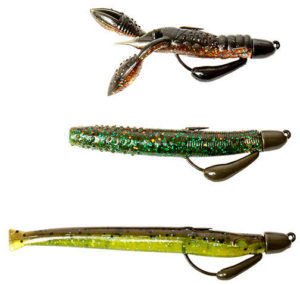
Among fifteen unique Z-Man jigheads and over fifty ElaZtech softbaits, Nussbaum highlights four of his favorite perfect pairings. “A 3-inch MinnowZ on a 3/16-ounce Trout Eye jighead is a versatile player—it’s my ‘stranded on a desert island’ survival bait,” he divulges.

A jighead with an interesting backstory, the Trout Eye jig comes from South Carolina seatrout guru Ralph Phillips, who discovered a predator’s primal attraction to the unmistakable eyes of baitfish. The U.S.-made Trout Eye jig is poured with the largest 3D eyes possible, set into a flattened teardrop shape. Strategically placed to bring out subtle rolling action on paddletail baits like the MinnowZ, the jig’s forward eye position helps the whole lure slide through sparse grass with ease. Back-to-back conical keeper barbs secure ElaZtech and other softbaits tightly to the base of the jig’s collar, while a heavy-duty, 2/0 Mustad UltraPoint hook penetrates quickly, and won’t straighten under heavy loads.

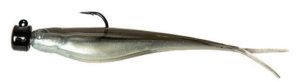
“Think of the 3-inch MinnowZ as an aggressive paddletail,” notes Nussbaum. “When you rig it on a Trout Eye jig the whole body moves with a really sweet side-to-side roll, while the tail wags the dog; looks just like the panicked swim of a minnow and catches everything—seatrout, redfish, bass, snook, and more.”

First introduced to beat back Australia’s brutally strong gamefish, the HeadlockZ HD jighead is an amazing jig and a perfect match for Z-Man’s SwimmerZ— a super-soft, split-belly paddletail that’s produced world-record barramundi. “The SwimmerZ is one of my favorite paddletails for big redfish and largemouths,” says Nussbaum. “The 4-inch version teams up nicely with a 4/0-size HeadlockZ HD, while a 6-inch SwimmerZ on an 8/0 HeadlockZ is ideal for bull reds and stripers, and holds up to the teeth of big pike.”

Matching Z-Man’s tough-as-nails ElaZtech baits, the HeadlockZ HD boasts bulletproof jighead construction, built around a custom, heavy duty 3/0, 4/0, 6/0 or 8/0 Mustad UltraPoint hook (jig-weight is engraved in head for easy ID). Riding high on the hook-shank is an ingenious, split bait keeper. The design greatly eases rigging and prevents ElaZtech and other soft plastics from sliding off the jig collar.

Exceptionally balanced for use with larger, bulkier baits, the HeadlockZ’ 90-degree bullet head amplifies body roll, which produces accentuated tail-thump and vibration. “This combo represents one of Z-Man’s most underrated big fish baits, one you can tie on and catch fish with all day long.”

The definitive lure for Ned Rig-style fishing, casting a Finesse ShroomZ / Finesse TRD combo might be the smartest bass-catching decision you can make. Simple, unassuming and almost immune to fishing pressure, this little 2-3/4-inch finesse bait and refined mushroom-shaped jighead regularly boats over 50 per day for Ned Kehde and other skilled finesse fishers. Of course, the beauty of the bait is that less-experienced anglers also hook oodles of fish with it.

Kehde himself admits the key to success is a method he calls ‘no feel.’ “That means we cannot feel what the jig-and-softbait combo is doing or where it is during the retrieve,” says Kehde. This is largely attributed to Kehde’s preference for a light jighead, in the neighborhood of 1/16-ounce. Proving the combo’s astonishing versatility, Kehde and his friends have ascribed six different finesse retrieves, including the swim-glide-and-shake, hop-and-bounce and drag-and-deadstick, among others.

Creating the illusion of a single edible critter, the mushroom shaped Finesse ShroomZ head flows seamlessly into the nose of the sub-3-inch Finesse TRD. The unique head shape moves smoothly over the substrate, pivoting and activating the ElaZtech material with each interruption in the jig’s path. The jig’s minimally invasive “hangnail” keeper barb pins finesse baits like the TRD surprisingly tight to the jig; some anglers add a drop of superglue to the underside of the jighead for an even better bond.

A model of simplicity, the Finesse TRD itself glides seductively on the drop, tail shimmying just enough to speak of something alive. Imbued with custom salt content for a precise sink rate, anglers like Kehde often chose to increase buoyancy by stretching the bait and removing salt.

A rising star in swimbait circles, the 2-1/2- and 3-inch Slim SwimZ offers an intelligent design that gives it some interesting underwater moves. Rigged on a downsized NedlockZ HD jig, the finesse paddletail bait comes to life, even at slow retrieve speeds. Molded in lighter 1/5- to 1/15-ounce sizes, the NedlockZ HD sports an extra-heavy-duty hook that allow for heavier tackle and drag settings than Finesse ShroomZ jigheads. The jig’s innovative split keeper allows for effortless rigging, holding both ElaZtech and soft plastics firmly in place. The medium-length hook shank is a fine fit for the Slim SwimZ and other finesse baits.

“We crafted the Slim SwimZ with an inward-curved tail,” Nussbaum says. “The configuration lets you activate the bait at extra slow speeds. Or fish it fast for even more action. When you pull it, the tail scoops water, producing a high-velocity, high-action wiggle. We’re getting great feedback from folks catching big crappies, white bass and even walleyes. And when bass key on small forage, this compact combo scores big.”

About Z-Man Fishing Products: A dynamic Charleston, South Carolina based company, Z-Man Fishing Products has melded leading edge fishing tackle with technology for nearly three decades. Z-Man has long been among the industry’s largest suppliers of silicone skirt material used in jigs, spinnerbaits and other lures. Creator of the Original ChatterBait®, Z-Man is also the renowned innovators of 10X Tough ElaZtech softbaits, fast becoming the most coveted baits in fresh- and saltwater. Z-Man is one of the fastest-growing lure brands worldwide. See more at www.zmanfishing.com.

About ElaZtech®: Z-Man’s proprietary ElaZtech material is remarkably soft, pliable, and 10X tougher than traditional soft plastics. ElaZtech resists nicks, cuts, and tears better than other softbaits and boasts one of the highest fish-per-bait ratings in the industry, resulting in anglers not having to waste time searching for a new bait when the fish are biting. This unique material is naturally buoyant, creating a more visible, lifelike, and attractive target to gamefish. Unlike most other soft plastic baits, ElaZtech contains no PVC, plastisol or phthalates, and is non-toxic.

Christmas Holidays

Christmas Holidays were always a special time during my school years in the 1950s and 60s. Two weeks out of school meant many happy, free days, most involving hunting, family and church.

The first week after school was out usually meant a trip to Aunt Alice and Uncle Charlie’s house in Ocala. Daddy’s mother lived with them and we almost always left on the long trip as soon as possible to have a few days there and be home before Christmas. The drive was exciting, looking at Christmas decorations and seeing new territory.

My brother and I passed time “counting cows,” a standing chimney doubles your count, and arguing and fighting in the back seat. But we always concentrated so not to miss mama’s dream house down near Dublin. It was a nice brick ranch, similar to what we would eventually build. But what made it special to mama was the little pond in the front yard.

I know mama imagined herself, probably with her mother and maybe me, sitting on the edge of the pond fishing. We all three loved fishing, I guess that is where I got it.

Although mama got her dream house there was no pond in front. But daddy dug one a few hundred yards behind the house. She spent many happy hours there, catching anything that would bite.

On one trip, mama and Billy were asleep. I was old enough to just be learning fractions and daddy taught math at my elementary school, as well as being principal. It was a small school.

As the car rumbled along the road, I asked him about fractions. He patiently kept answering my question “What is 1/1” with “one,” but I never did understand it. (I kept saying “one-onth,” but I don’t think that is a word) But it was nice to talk with him like that.

In Ocala my brother and I loved to dig holes in the soft, sandy soil so different from the hard clay and rocks at home. We always planned on digging to China, but never made it. We picked oranges in their back yard and enjoyed the warm weather. We also went to Silver Springs where I imagined catching the huge catfish that played “football” with dough balls below the glass bottomed boats.

On the drive home we would stop in south Georgia and get a 50 pound bag of peanuts. Mama used them cooking, but there were plenty for us to roast in the oven. On nights we didn’t have ice cream before bed we sat watching TV and shelling peanuts to go with our Coke.

As much as I loved those trips, I could not wait to get home, grab my .22 or .410 and head to my little piece of heaven. There were three special places along Dearing Branch, one on our property, and two on either side of it. I spent many wonderful hours in them hunting squirrels and hoping to see a rabbit.

A few days every holiday daddy would take some hours off the never-ending work on our chicken farm and take me quail hunting. Those were especially good times that I will never forget.

The one thing I hated when we got home was choir practice. My parents insisted I be in the youth choir, but I did not like singing, or the wasted hours of practice when I could have been hunting. That lasted until I was 14 and got up the courage to just stand in the choir loft with my mouth shut. After a few weeks of that they gave up and I never went to another practice. And I still do not sing, even in the shower!

Christmas Eve was spent with great anticipation. We didn’t get a lot compared to now, and there was always underwear and sox. But there were special gifts, too, like the year I got my first outfit of Duckbax pants and jacket. They were briar proof and made a huge difference quail hunting with daddy and later rabbit hunting with my friend when wading through briar patches.

My stocking always had oranges in it, strangely just like the ones we picked in Ocala. We also had some pecans, just like the ones we picked up that year in our yard. There were apples and oranges, but candy, too. And bullets and shells for my guns. Those were my favorite.

I always had time for an afternoon in my rock fort, either alone or with Harold or Hal. There was a pile of big boulders in a small patch of trees about 50 feet from our fence line at the edge of the pasture. We made a circle of rocks that used one side of a big one to make an enclosed space.

There was no roof, but little nooks were perfect for hiding our valuables. And we had a fire place with a spit for roasting robins we shot in the field, and a big can where we boiled eggs poached from the chicken house.

I never did understand why the bird that is a “sign of spring” showed up in huge numbers on our farm in late November. Now I know they can not get worms out of frozen ground up north so come south to live where the ground doesn’t freeze, then head back north as it thaws there in the spring. Stills seems backwards to me, though.

It’s hard to believe the holidays lasted only two weeks, but I guess back then two weeks were a much longer part of my life than they are now. And I did a lot of living during those two weeks at Christmas each year.

I have what seem like unlimited memories of those times, and they are some of my favorites. I wish
I could go back and refresh them in person, but just remembering them always makes me smile.

Top Crappie Lures for Winter

Three Top Crappie Lures for Winter

By Casey Kidder
Z-Man Pro Angler
from The Fishing Wire

Catch winter crappie like this one


Z-Man ElazTech Allures Big SlabZ

For the past ten winters, I’ve enjoyed finessing winter bass with the Ned Rig. It was amazing at how effective Z-Man ElazTech baits like the ZinkerZ and Finesse TRD are for alluring cold-water bass. As the winter of 2016 approached, I was excited to try something new. Even though Z-Man doesn’t have a dedicated line of crappie baits, I wanted to see if ElazTech baits were as effective on cold-water crappie as they are on cold-water bass. Spoiler alert: Crappie love them, too!

Midwest Winter Crappie Fishing
In a nutshell, winter Midwest crappie fishing is all about locating brushpiles in deep water with your electronics. Usually about 14-18 feet of water. Once the brush is located, vertical jigging with light line, jigs and soft plastics will entice crappie to bite. Water temperatures generally range from 34-38 degrees, and that is when crappie congregate in big schools around brushpiles, feeding periodically on schools of shad that meander by.

Bait Size Matters
In my region, crappie will bite a fairly large bait, even in winter. A 2.5 to 3 inch bait closely matches our shad size, so I selected a trio of baits in that size range. I’ll tell you more about those below. Throughout the year and until ice-up, these bigger baits caught bigger average crappie, and sometimes MORE crappie than small traditional crappie tubes and grubs. The reasoning is simple. Crappie are sight feeders, which is why you see so many color options in crappie baits. But size can also be used to get their attention. I kept my color selection pretty simple. Just to see how big of bait they would hit, I even fished a Z-Man Diesel MinnowZ, which is a 4″ swimbait! Yep, they ate it.

Top Three Crappie Baits

Slim SwimZ

When I first dropped this 2.5 inch swimbait in the water, I was amazed at the action! The unique, curved paddletail flat comes to life when it touches water. You really have to see it to appreciate it. Being a swimbait, this bait is traditionally fished with a straight retrieve, and you can bet I’ll be fishing it this way come spring when the crappie move to shallow water. For winter fishing, I found this bait was tremendously effective vertically jigged as well. Most crappie anglers use straight tail and tube-type baits for vertical fishing. These baits require small twitches to impart action. The Slim SwimZ is effective with these twitches as well, but you can catch many crappie by simply raising or dropping your rod tip slowly 1-2 feet. The tail does all the work, and it adds a whole new way to present your lure. It’s also something the crappie haven’t seen much of before! My top colors this winter were Electric Chicken, Space Guppy, and Pearl. Jighead: 1/15, 1/10 or 1/5 chartreuse Finesse ShroomZ

MinnowZ

Some days crappie really respond to a bigger profile, and that’s when switching to the MinnowZ filled the livewell. This is a 3-inch swimbait with a much larger profile than the Slim SwimZ. As I mentioned before, I even caught fish on the Diesel MinnowZ, a 4-inch version of the MinnowZ, so it just goes to show that size matters even to crappie!
The MinnowZ also fishes well vertically or with a swimming retrieve. You’ll want to use a heavier jighead for this bigger bait. The 1/6 ounce Finesse ShroomZ works very well.
The MinnowZ comes in an array of natural and bright saltwater color patterns that are also appealing to crappie. My favorites were similar to the Slim SwimZ: electric chicken, pearl, space guppy, and chartreuse/silver.
Jighead: 1/6 chartreuse Finesse ShroomZ

Finesse TRD and cut-down ZinkerZ

Yes, the Ned rig works on crappie, too. To be honest, I haven’t had many days when this versatile little rig didn’t catch something. And I found it worked really well fishing brush piles for winter crappie.On days when the crappie wanted a subtler action, I switch to a FinesseTRD or a ZinkerZ cut in half. Rigged on a 1/15, 1/10 or 1/6 chartreuse Finesse ShroomZ, this little bait has tremendous dead stick appeal. Use subtle twitches to entice bites, though many bites will occur while holding it dead still.
Colors like Coppertreuse, Pumpkin/Chartreuse Laminate and Bama Craw have vivid color and contrast that really appeals to big slabs. But don’t overlook the plain Pearl color with a chartreuse Finesse ShroomZ.
Jighead: 1/15, 1/10 or 1/5 chartreuse Finesse ShroomZ

I hope these tips help you think outside the box and harness the ElazTech magic for your winter crappie. Upsizing your presentation and utilizing small swimbaits for vertical presentations can really help fill your livewell with some big slabs. If you’re already a Ned rig convert, you know how effective it is on bass. Be sure to rig one up when crappie are your target, because they love it, too!

Hunt the Rut

Depending on where you live, if you want to kill a big buck, the next couple of weeks or so is your best chance all season. The rut is starting in our area and bucks that are normally careful and spooky lose their minds, looking for does and putting themselves in places where they are easier to kill.

Georgia Outdoor News publishes a rut map each year based on hunter and biologist input. It shows the peak of the rut in Spalding and nearby counties to be mid-November, with November 15 being the peak. Counties not far east of us start a little earlier, with the peak on November 9.

The rut seems to have started a little early in this area, with online pictures showing big bucks taken last weekend and comments from hunters about them chasing does. And I saw scrapes a little earlier than normal on my hunting land.

When bucks start shedding the velvet on their antlers, they rub them on small trees, helping to get it off. A good sign that a buck is in your area in early October around here are saplings and small trees with bark peeled off near the ground.

The bigger the buck the higher off the ground these marks will usually be, and bigger bucks use bigger trees. They seem to favor cedar saplings, but rubs are found on pine, sweetgum and others.

When hormones start flowing in November, the bucks paw a scrape near trails and urinate on it, leaving their scent. They also rub their head and antlers on overhanging limbs leaving more scent.

When a doe’s hormones make her ready to mate, she stops at scrapes and leaves her scent. Bucks leave scrapes in lines spaced out along trails and will run them as often as they can until they locate a suitable doe. They move at all times of day and night in this quest, throwing their usual caution to the quest.

In the Georgia Outdoor News Truck Buck competition where big bucks are entered into a contest, data from them show 43 percent killed from daylight until 9:00 AM, 18 percent from 9:01 to 11:00 AM and 1.6 percent from 11:01 AM to 1:30 PM. Then it goes back up, with 2.4 percent killed from 1:31 to 3:30 PM and 34 percent from 3:31 to dark.

Part of the reason 77 percent are killed early and late in the day is that is the time most hunters are in their stands. Every year some very big bucks are killed during the middle of the day, so it is a good idea to be on your stand all day if you can.

The rut timing is based mostly on length of day with some influence from weather. “Common sense” would seem to tell you the rut would get later due to climate change, but I guess any change fits that narrative.

It is interesting to me to compare the rut map for Georgia to the one for Alabama. Again, “common sense” would tell you areas with the same length of day and temperatures would be similar, but science shows they are not.

Directly west of us in Alabama the length of day and weather are the same. But in Alabama, south of I-20 in the same area of the state we are in here in Georgia, the rut peak is late January. Even further north in Alabama the rut peak is in January, about two months later that similar areas in Georgia.

I killed my first two bucks, way back in the 1960s, while they were following does. I try to be in the woods during the rut, not to kill a big buck but because does also move more during it. It offers meat shooters better odds, too. Doe days here run from
November 4 until January 13.

This season is frustrating. I had a port put in just before gun deer season. Although I asked it to be put in on my left side, so I could shoot my 7 mm mag, it is on my right shoulder very near where I put my gun stock. I switched to this higher power, and stronger kick, gun about 20 years ago after hunting deer with a 30-30 for 30 years.

I do have an AR-15 with a good scope on it and its .223 caliber bullet is suitable for shooting deer. I will use it this year. This much lower caliber bullet, along with a lot less powder, had a very light kick. That seems contrary to “common sense” if you listen to the gun banners claim that AR-15s are big, high caliber guns that spray death. The .223 is actually just about the smallest, lowest power bullet legal for hunting in Georgia.

A .223 has just over 900-foot pounds of energy at 100 yards. Compared to my 7 mm mag, with over 2700-foot pounds of energy at the same range, that makes shot placement more important. Even my old 30-30 has about 1300-foot pounds of energy at 100 yards.

Tips on hunting the rut include: Hunting near bedding areas where does are concentrated. This puts you where the bucks are looking. Going to areas where you hear bucks chasing does. And hunting in high wind since it makes deer move more for several reasons.

Most important, stay on your stand and eat lunch. Many expert trophy hunters say little bucks move earlier and later, but the real trophy bucks wait until the does bed down in the middle of the day and are easier for the bucks to find.

Get out in the woods no mater what you goal, meat or antlers. This is the time.