Category Archives: Walleye and Sauger

Can I Use Ice Fishing Jigs to Win Open Water Walleye Tourneys?

Anglers use Ice Fishing Jigs to Win Open Water Walleye Tourneys
from The Fishing Wire
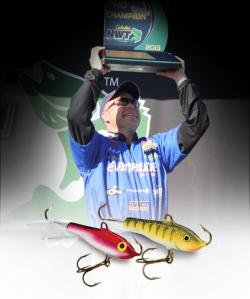
Use ice jigs for walleye

Use ice jigs for walleye

When Al Lindner spilled the beans on a hush-hush tactic for boating open-water walleyes with an ice-fishing lure, the Rapala Jigging Rap, he noted that a Canadian walleye pro had already won two tournaments with it.

Two years later, the hardwater hardbait brought tournament hardware to an American open-water angler, Rapala pro Chris Gilman. In September, Gilman hoisted a Cabela’s National Walleye Tour Championship trophy after enjoying an epic Jigging Rap bite on North Dakota’s Devils Lake.

“It was almost magical,” says Gilman, an FLW Walleye Championship winner and FLW Walleye Angler of the Year. “As fast as my partner and I could get the Jigging Raps down, we had one on.”

Sounds like the success Lindner predicted for the open-water Jigging Rap pattern in 2011.

“You land a fish, you get it off, you drop that bait down again and you can go bam, bam, bam! – Get two, three, four fish as fast as you can drop it,” Lindner says in this “Angling Edge” TV episode, [http://www.lindnermedia.com/angling-edge/video/rapala-Jigging-rap-deep-open-water-walleye-0] in which he and Gary “Mac” McEnelly demonstrate how to effectively fish the pattern. “You can’t do that with a live-bait rig.”

So fast and furious were big walleyes crushing Gilman’s Jigging Raps on the final day of the NWT championship, he and his partner fished for less than 20 minutes on their magic spot before heading back to the dock with a 22.26-pound limit that would win the tournament.

“We got there around 8:00 and had a limit by about 8:20,” Gilman recalls.

He found the winning school of fish in about 16 feet of water in a channel in East Devils lake. “We dropped right onto of a school of big ones,” he says.

On the first day of the tournament, Gilman caught most of his fish casting Rapala Glass Shad Raps. “But when the wind slowed down and my shallow fish turned finicky, the Jigging Raps were the answer,” he says.

A Masters Walleye Circuit tournament was won on Jigging Raps at Devils Lake about a month before the NWT, and “most guys heard the news and came prepared to try Jigging raps,” Gilman says. “I have had a lot of success with them in the past, but this is really the first time I fished a tournament with them.”

He started the third and final day of the tournament in second place, after catching a 16.10-pound limit on Day 2, mostly on Jigging Raps that he vertically jigged around a rock hump that topped out at about 25 feet.

“I could troll around the hump and pick off the active fish,” Gilman explains. He snaps the Jigging Rap off the bottom “pretty aggressively,” about a foot and a half up and down, he says. “It draws the fishes’ attention and they are triggered to bite.”

Gilman favors bigger Jigging Raps, which are available in four sizes. As he does most often, he was fishing 7/8th oz. No. 9’s in the NWT championship.

“The fish are not afraid of the size and the heavier weight allowed me to move around while still staying relatively vertical,” he says. He could troll as quickly as half a mile an hour “without much of a problem,” he says.

In Gilman’s experience, a Jigging Rap’s weight and action is more important than its color pattern. “Color does not seem to matter as much with the Jigging Raps, as with crankbaits,” he says. “It is the action that triggers the strike, not the color.”

Gilman throws Jigging Raps on 20-pound-test Sufix 832 braid attached by a barrel swivel to a 12-inch, 20-pound-test Sufix fluorocarbon leader. He uses a 6-foot, 3-inch medium-action spinning rod with an extra-fast tip.

Gilman weighed 55.91 pounds of walleye to win the NWT championship by a 0.05-pound margin over an angler fishing a similar pattern – his roommate, Josh Vanderweide.

“He was also fishing Jigging’ Raps, but his spot was 25 miles from mine,” Gilman says.

Open-Water Jigging Rap How-To’s

In the 2011 open-water Jigging Rap demonstration, Lindner positions his boat on the deep edge of a contour line and followed it. Using a foot-operated bow-mounted electric motor, he trolls forward at 7/10 to 1 mph, casting from the bow to a deep weed edge in about 15 to 16 feet and worked his bait over a gravel-sand bottom to about 21 to 22 feet. In the back of the boat, McEnelly drags his bait a short distance behind the boat, the line descending at a 60-degree angle to the water surface.

“We’re covering a lot of depth patterns at one time,” Lindner explains. “You cover so much water so fast with this bait, way more than you could ever, ever do with a live-bait rig.”

When fished through the ice as they were designed, Jigging Raps require a vertical pump-and-swim motion. An open-water presentation, however, requires a horizontal triggering action.

“You sweep the rod tip, and the heavy lure shoots forward like a panicked baitfish before plunging back to the bottom,” McEnelly explains. The action elicits an aggressive reaction from walleyes.

“They see it jump off the bottom, dart to the side, fall in front of their face, and they go ‘Gulp!’ They eat it!” Lindner says. “Whether you’re casting, vertical Jigging, or dragging, it is a triggering bite.”

Do not let the Jigging Rap pause very long on the bottom, McEnelly says. “As soon as you feel that bait hit the bottom, pick up again and keep it moving.”

When And Where?

On the spring day Lindner and McEnelly demonstrate the Jigging Rap bite in the video, water temps are about 63 degrees and the bite is fantastic for both size and numbers. The bite is effective all summer as well and into the late fall. “There’s a large window of time when this technique is very effective,” McEnelly says

It’s not effective, though, over soft, silty bottoms or big boulders fields. Fished over sand and gravel bottoms, however, 40- to 60-fish days can be expected, even “in the middle of summer when everyone else is dragging live-bait rigs with leeches and night crawlers and red-tailed chubs and sitting on schools of fish and catching two, three four fish,” Lindner says. “And you come through the exact same school and catch 12, 15, 20.

“It’s an amazing thing when that bite is on – how effective this bait is. …” Lindner says. “Jigging Raps in open water – it isn’t only for ice fishing.”

New Converts?

Although it was two years ago that Lindner said “the secret is out” about the open-water Jigging Rap walleye bite, not much about it was mentioned in the media until Gilman’s NWT win this fall. But as word of the win spreads – and word of the Jigging Rap bite behind it – perhaps Al’s 2011 assessment of his fishing partner, McEnelly, will soon extend to the larger walleye world: “I have a new convert to the Jigging’ Rap Brigade!” Count Chris Gilman among the converted.

Can I Catch Walleye No One Else Can Catch?

Walleye No One Else Can Catch
from The Fishing Wire

Two factors greatly impact walleye fishing success, yet most walleye anglers don’t even consider them.

Steve Pennaz of “Lake Commandos” TV says targeting walleye in weeds can produce big fish missed by other anglers

The first is fishing pressure and it is more intense than anglers realize. Last year, anglers invested 3.05 million hours of fishing effort on Minnesota’s 128,000-acre Lake Mille Lacs. The impact of this much pressure can’t be ignored; it pushes walleye off classic structure and secondary spots often become “A list” fish-catching locations.

Secondly, many lakes across the walleye belt are aging, and their fertility levels are increasing. In some lakes light penetration is too low to support weed growth beyond 7-8 feet of depth. Vegetation draws biodiversity, from micro-invertebrates to baitfish, and that draws in walleye. Drop an Aqua-Vu® underwater camera and the number of walleye in the jungle is surprising.

“When you take a step back and look at the big picture,” said long-time Yamaha pro and ‘Lake Commandos’ television host Steve Pennaz, “it makes perfect sense why we should be spending more time targeting walleye in weeds. Walleye love structure, but they’re also an adaptive animal that utilize weeds often to feed and rest.”

Steve with fat walleye

Steve with fat walleye

Seek out secondary structure, advises Pennaz, and you may come up with fish like this.

So why do so few anglers chase weed walleye? Pennaz believes that many still cling to walleye lore dating back 50 years or more.

“When you revisit the 1960s,” said Pennaz, “two advancements changed walleye fishing forever. The first was sonar. It seems silly today that a dial and flashing light could be considered revolutionary, but ‘the flasher’ opened vast new areas of unexplored water.

“The development of spinning tackle that performed well with monofilament was also huge. For a generation of anglers forced to rely on heavy black Dacron® braid it was a massive move forward. Millions of Mitchell® 300 spinning reels were sold and anglers filled them with monofilament lines made by tackle pioneer Berkley® Bedell.

“Top walleye anglers of the day used these new tools to make amazing catches, typically using light lines, small hooks and live bait. Unfortunately, there are still anglers today who believe the only way to catch walleye is by using finesse rigs and live bait. It wasn’t true then and it’s not true today. In fact, artificial lures routinely out-fish live bait for walleye, which is great because artificials make catching weed-loving walleye easier,” said Pennaz.

Walleye & Salad

Use Jigs

Use Jigs

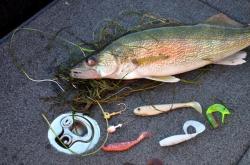
An assortment of jigs and soft plastics do the job on walleyes over scattered weeds.

Walleye are not ambush feeders like bass so they prefer sparser areas of weed growth or weed edges.

Summer/early fall fish are active so fishing larger baits is effective. Both cranks and spinner rigs work well when trolled along the deep weed edge.

“Trolling weed edges is tough to beat in summer/early fall … if you can avoid pesky panfish,” said Pennaz. “Live baits like leeches and crawlers are usually mauled in short order making it difficult to keep your presentation in the strike zone.

“Several years ago I made the switch from live crawlers to Gulp!® worms when fishing a weed edge with a bottom bouncer/spinner rig and have been thrilled by the results,” said Pennaz. “The bait is tough enough to withstand panfish attacks and walleye love ’em. My favorite is the 4-inch model; its subtle paddle tail swims realistically even at slow speeds.”

Jig worms are also deadly on weed walleye.

“A bass fishing friend told me about all the walleye he was catching on jig worms when targeting weed line bass,” he said. “At first I thought he was joking, but it soon became clear he wasn’t.

“I typically fish a 4- to 6-inch worm on an 1/8 or 1/4-ounce mushroom head jig. Long casts parallel to the weed line are best. In most waters, this technique produces both walleye and bass,” said Pennaz.

Swimbait Walleye

Swimbait Walleye

Swimbaits can also be effective for walleye in the right place and at the right time.

In early spring, shallow flats hold a lot of walleye, particularly when located near prime spawning areas.

Light jigs in the 1/16- to 1/8-ounce range are ideal, particularly when paired with a durable soft bait. A swimming grub or 3-inch swimbait is tough to beat on windy days, and when more finesse is required, Pennaz recommends switching to presentations like a 3- or 4-inch Berkley® Power Minnow, Gulp!® Minnow or Twitchtail Minnow fished bare.

“If you absolutely must fish live bait for confidence reasons,” said Pennaz, “tip the jig with an inch-long piece of nightcrawler.”

“Target flats in the 2-6-foot range and cover a ton of water as the fish are typically scattered.”

Cranks are also deadly. The best walleye cranks cast well on spinning gear and have a tight wobble. Pennaz’s favorite crankbait is the #5 Flicker Shad in black/gold; he’ll upsize to a #7 when fishing deeper. In both cases he throws the cranks on 8-pound Nanofil® for maximum casting distance and sensitivity… you’ll know immediately if the bait is fouled.

As summer approaches, walleye move to mid-depth weeds; 4-8 feet is typical in highly stained waters, 8-15 feet in clear waters.

How Can I Catch First Freeze Walleye?

First-Freeze Walleyes On Featureless Lakes

by Daniel Quade
from The Fishing Wire

A shout echoes unanswered across the barren icepack of Minnesota’s massive Upper Red Lake. It’s hardly a call for help, much less a greeting. It’s veteran walleye guide Jonny Petrowske, proving a point about getting away from the crowd to corral first-ice ‘eyes.

“If I yell at the top of my lungs and no one hears me, I’m far enough away from other anglers,” he grins.

Catch big walleye

Catch big walleye

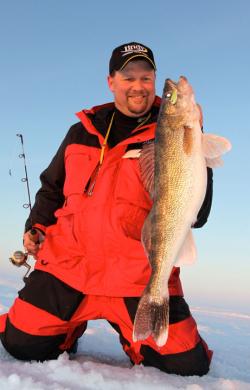
Guide Jonny Petrowske says the trick is to find the fish, then not spook them, to produce whoppers like this.

Petrowske says that even aggressive walleyes get skittish when clamorous hordes of winter warriors overrun the ice. Since the only reply to his thunderous vociferations was the raspy, disapproving cackle of a raven drifting overhead, it appears we’re good to go.

We’re targeting early winter walleyes shortly after the mighty lake’s surface has solidified. Shallow and relatively featureless, Upper Red is typical of many fisheries that are first to freeze, and first to offer a chance at hardwater walleyes.

“It’s largely devoid of structure,” Petrowske said, “so the walleyes are nomadic, wandering vast flats looking for food.”

Catching them calls for two things, he says, finding the fish, and then not spooking them once we do.

“Since there’s nothing tying them to small area, they won’t tolerate the sound of your feet shuffling around above their heads.”

With nearly 50,000 acres at our disposal on the state-managed section of Upper Red, we have an intimidating amount of territory to cover. Petrowske quickly narrows it down to forage-rich shallows within a mile of shore.

“Depending on the lake, such areas offer walleyes everything from emerald shiners and young-of-the-year yellow perch to frogs and other forage,” he says. “Water depths of 4- to 8-feet are ideal. On lakes with slow-tapering bottoms, the search area may stretch a mile or more from the bank.”

Beginning far from shore over the deepest part of our chosen hunting grounds, Petrowske punches a string of holes spaced at 1/8-mile intervals all the way back to the shallows. At each stop, he augers a pair of portals to the underwater world 6- to 7-feet apart to allow for fishing two presentations simultaneously. Since silence is golden, he drills all of the holes in one fell swoop, which gives all spots except the last drop zone time to quiet down.

After deftly skimming away the slush from our first hole, Petrowske pulls out a 28-inch ice rod spooled with 6-lb-test, high-visibility monofilament. A study in compromise, the blank is medium-action.

“If the rod is too stiff, your jigging motions can get herky-jerky,” he says. “If it’s too soft and you exert a lot of energy bending the rod, the bait barely moves.”

Use small lures for big walleye

Use small lures for big walleye

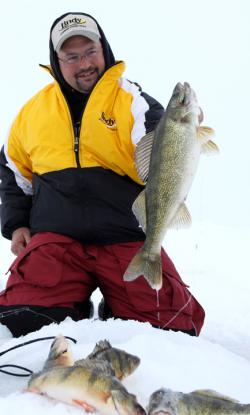
Lindy Darters and other small lures do the job on walleyes under the ice.

A small ant swivel links the mainline to an 18-inch, 6-lb fluorocarbon leader. The swivel fights twist, while the fluoro battles abrasion and is less visible to the fish. At the end of the line he ties a Lindy Darter, a hard-bodied rattler that’s raucous on the uptake and swims on the fall.

“Not all noise is bad,” admits Petrowske. “Walleyes are curious and often check out something that sounds like a meal. And, since we’re focused on scattered fish, the ability to call them in is key when fishing a vast, featureless lake like this.”

Although the fertile water is decidedly less than gin clear, he opts for natural lure colors that mimic the lake’s forage base. Natural Perch is his favorite, but Yellow Perch and various shiner patterns are good, too. On cloudy or snowy days, brighter patterns with a touch of chartreuse get the nod.

With a plop Petrowske’s Darter drops into the ice water and quickly swims to bottom on a slack line. After tightening the tether, he twitches the rodtip several times to tap-dance the bait on bottom, generating slight puffs of sediment. Next, he raises the lure 6 inches and pauses. He says that this pause often triggers a strike.

If it doesn’t, he begins phase two. Gently swim the lure up a foot, just fast enough to lightly engage the rattles, let it fall, then lift again.

If you’ve never fished a Darter before, he recommends practicing various lifts and drops within sight of the surface. Such swimming lessons are invaluable for learning how different jig-strokes affect the lure.

Petrowske’s final performance before pulling up stakes starts off wildly animated.

“I rip the heck out of it,” he laughs, explaining that the routine includes three or four sharp lifts of 12 to 18 inches, followed by a pause. “If that fails, but I think there are fish around, I slowly jiggle the lure upward until I can see it in the hole, then open the bail so it swims off to the side and crashes like a B-52.”

After the lure touches down, he reels slowly, crawling it along bottom.

“When it gets directly beneath the hole, I raise it 6 inches and pause,” he says. He credits this “reset” maneuver to fellow guide Jon Thelen, who developed it to turn watchful ‘eyes into biters. “If that doesn’t do it, I head to the next pair of holes.”

When Petrowske pinpoints a pod of active fish, he deploys a set-line in the second pre-drilled hole. The rig consists of a lively minnow tail-hooked on a jig or jigging spoon and suspended 8 to 12 inches off bottom beneath a bobber.

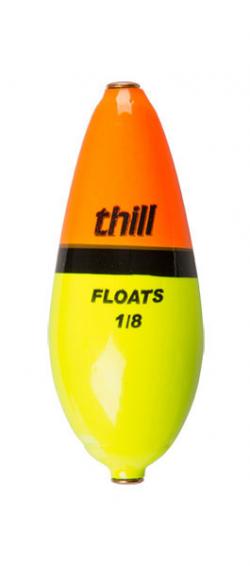
“Lindy’s Rattl’n Flyer Spoon, Frostee and Frostee Spoon are my favorite lures,” he says, noting that slip-floats with large metal grommets, such as members of Thill’s Pro Series lineup, limit ice buildup.

Strung with 4-pound Silver Thread Trout Line or AN40, the bobber rod tempts hungry ‘eyes that were lured in by Petrowske’s jigging theatrics, but not tempted enough to strike. It’s one more ploy in his bag of tricks for taking first-freeze walleyes in shallow, featureless lakes.

What Is Slip Bobber Fishing For Walleye?

Wobble Bobbin’ Slip Bobber Fishing for Walleyes

by Daniel Quade
from The Fishing Wire

Complex presentations get plenty of press these days, but few walleye tactics are as deadly-or as easy to fish-as the simple slip-bobber rig. With a well-balanced float, you can efficiently and precisely suspend mouthwatering live bait in front of hungry ‘eyes. Plus, you know exactly when a fish has inhaled your bait.

Guide Mike Christensen

Guide Mike Christensen

Guide Mike Christensen at Minnesota’s Mille Lacs knows where the big walleyes live.

Veteran guide Mike Christensen is a believer. Big time. From his home base out of historic Hunter Winfield’s Resort on the scenic south shores of Minnesota’s mighty Mille Lacs Lake, the jovial yet dead-serious walleye hunter launches literally hundreds of missions onto the fabled fishery with one goal in mind: connect clients with the big lake’s walleye bounty.

His success rate is epic, and one of his favorite presentations throughout much of the season is, you guessed it, a slip-float rig.

When wind whips the surface, a Thill Pro Series Slip Float rules the waves. He favors the size XXL version, a 1-incher that’s easy to see bobbing amidst the whitecaps. But when the wind dies and surface flattens, he deploys a new secret weapon that livens up his bait in spite of the lull-Thill’s Wobble Bobber.

Fresh on the walleye scene this season, the pear-shaped float rocks back and forth with the slightest ripple or twitch of the rodtip. “It’s ideal for calmer conditions,” he says. “If it’s absolutely dead flat, you can impart action to your bait just by shaking the rod.”

Thanks to an aerodynamic profile and slick internal weighting system, the Wobble Bobber also grabs serious air when slung from standard spinning tackle. Such long-casting properties are perfect for keeping your distance when targeting nervous ‘eyes roaming the shallows. Long casts also make it easy to thoroughly cover a reef or other structure from an anchored position-without moving the boat-and are a huge plus for the shore patrol.

Wobble Bobber

Wobble Bobber

When wind dies and bait action is minimal, a Wobble Bobber can liven up the bite.

Christensen says the Wobble Bobber is lethal for skinny water walleyes that are patrolling weeds, shallow rockpiles and boulders, or holding on the edge of steep breaks. “I use it in deep water situations as well,” he adds.

When it comes to the deep game, one of the classics is a pattern Christensen and fellow Mille Lacs guide Jon Thelen fondly call “road hunting.” At its core, the tactic involves cruising the tops and slow-tapering edges of promising reefs, mud flats, gravel bars and other promising areas at slow speeds, watching the sonar for signs of active fish hovering a foot or so off bottom.

“These are the biters,” says Christensen. “Bottom-huggers may eat if you park on top of them and wait it out, but we’d rather catch five aggressive walleyes in the time it takes to coax one less-active fish into eating.”

Proper sonar settings are crucial to distinguishing walleyes from clouds of baitfish or insects, as well as smaller fish such as perch. “I set the chart speed, sensitivity and color on my Humminbird sonar so suspended walleyes are identified by yellow highlights inside the arc,” Thelen explains. “On bottom, low-riding fish will have a bluish halo on the sides, while rocks won’t.”

Whether it’s calm or windy, Christensen likes the Wobble Bobber for road hunting because of its ability to deploy 20 to 30 feet of line more quickly than many conventional floats. “It has brass grommets at both ends, so line slides through it fast,” he says. “This is important with this presentation, because you want the bait in the strike zone before an aggressive fish moves off or settles back to bottom.”

His standard road-hunting rig includes a 7½- to 8½-foot spinning outfit. “A rod with a long, sensitive tip is key to good hooksets,” he says, explaining that when a fish pulls the float under water, the limber tip lets you reel up slack until you feel the weight of the fish on the line. “Otherwise, anglers have a tendency to set too soon. And when you try setting the hook before getting all the slack out of the line, you miss the fish.”

Christensen spools with 8-pound green monofilament mainline. After threading on an adjustable bobber stop, he slides on the Wobble Bobber and then ties a swivel to the business end, followed by a four-foot length of the same line. (Note: Christensen says that doubling the line makes it easier to thread through the Wobble Bobber.) A split shot large enough to balance the bobber is pinched on a foot or so beneath the swivel. “This reduces the chances of the rig tangling on the cast or the drop,” he notes.

Leeches are great walleye bait

Leeches are great walleye bait

Live leeches, hard to handle, are among walleyes’ favorite foods.

Another 24 to 30 inches below the shot, he adds a 1/32-ounce Lindy Jig. The leadhead sports a sturdy hook that’s large enough to hold a jumbo leech or half ‘crawler, yet is light enough to rise and fall seductively with the waves, or action imparted by the bobber.

Jigs also offer a more lifelike profile than plain hooks, he adds. “Hooks hang vertical, but I want a horizontal profile, which mimics the natural look of swimming prey,” he explains. While leeches are Christensen’s go-to bait, nightcrawlers often get the nod during bug hatches. “Hook them through the nose and pinch the crawler off halfway down,” he says.

To set the stop, he clips a Thill depth finder to the jig and drops it to bottom. “Set the bobber stop so the jig rides a foot above the fish-not a foot above the bottom,” he continues. “This is important, because active fish are looking up, and they’re far more likely to move up to hit the bait than they are to move down.”

Rigged and ready, Christensen idles over flat-topped feeding structures and gradually tapering edges along their sides. “Steep drops are tough to road hunt, because you have to change the depth of the jig,” he says.

Once a fish is marked, he flips the float directly behind the boat’s transom and pays out line so the jig can quickly reach the fish. “Let the boat drift away, to avoid spooking the fish,” he adds. “If it’s calm, twitch the cork to give the jig a little action.”

If nothing happens within a few minutes, Christensen reels in and moves on. “If they’re going to hit, they do it pretty fast,” he says. “On a good day, about one out of two to three drops results in a fish, so don’t waste time if the fish moves away or decides it’s not in the mood.”

Dale Stroschein Inducted Into Fishing Hall Of Fame

Record walleye caught ice fishing

Record walleye caught ice fishing

Fishing Hall of Fame recognizes Dale Stroschein
from Frabill

Its safe to assume that fishing guides are responsible for plenty of ‘my best fishing trip ever’ moments. It’s not a stretch, either, to assume that professional guide Dale Stroschein has personally hosted a few of those bests. But it’s quite different when that proclamation comes from another legend.

Venerated fishing writer Robert Montgomery recently made such a public statement. In his new book ‘Why We Fish,’ Montgomery dedicates a chapter to a fabled trip with Stroschein on Lake Michigan where they scooped dozens of smallmouth bass over five-clicks apiece. It stands as Montgomery’s best fishing trip ever.

And now, the Freshwater Fishing Hall of Fame in Hayward, Wis., is recognizing Frabill prostaff Dale Stroschein’s greater contributions to fishing.

Stroschein was born and raised on the same property where he and his wife Karyn now operate Sand Bay Beach Resort and Wacky Walleye Guide Service. His family purchased the resort in 1961; Stroschein took the reins in 1998. “It was always my parents’ dream for me to take over the resort,” says Stroschein.

Today, based out of the resort, Stroschein guides some 300 trips a year, including ice and openwater. Rain or shine, he dedicates himself to catching fish. “I need to produce every day, whether it’s calm, rough, snowing or blowing. My customers expect that. My job is putting fish in the boat and on the ice.” Those fish species include walleyes and whitefish through the ice and walleyes and smallmouth bass on the open waves.

Earlier in his ongoing 28-year guiding career, Stroschein gained recognition as a touring professional walleye angler. It began in 1985, competing in the Masters Walleye Circuit (MWC). Shooting pool at a bar owned by his friend’s sister, Stroschein would look out the window and see the mighty trucks and trailers piloted by contemporaries like Gary Parsons and Keith Kavajecz.

He thought, “Maybe I can do that,” and that he did.

Since 1985, Stroschein has racked up some pretty big numbers. He’s qualified 12 times for national championships in the MWC, Professional Walleye Trail (PWT) and Cabela’s NAWA, including six top ten finishes. From 1992-94, Stroschein held the PWT’s big fish record of 11.36 lbs., and claims a similar mark for his 10.56 lb. walleye caught at a Cabela’s NAWA event in 1994.

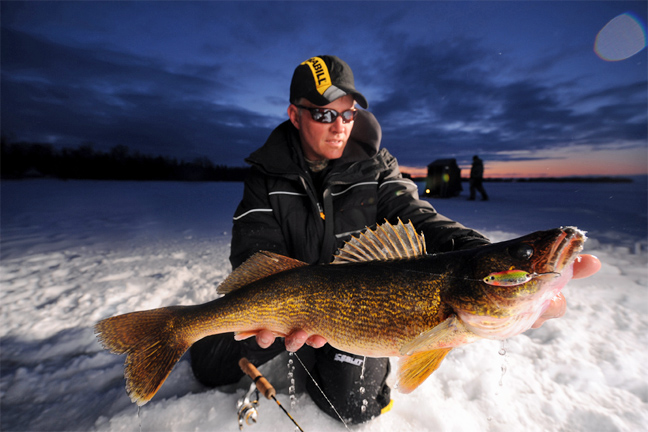
Perhaps Stroschein’s most proud catch, however, was his record walleye taken through the ice. On March 21, 1995, he iced a 13.76 lb. walleye. For years, it stood as the largest ever caught by hook and line through the ice, as certified by the Freshwater Fishing Hall of Fame.

Now there are plenty of great fisherman, but what put Stroschein on the Hall’s shortlist is his passion to teach. Stroschein reminisces about committing, finally, to his first speaking engagement. “I took a call from the Green Bay Sportsman’s Club to speak and turned it down. Well, my Dad overheard the conversation. He said ‘son, if you really want this to be your career, you better call them back.’”

“I reconsidered, and well, the rest is history.

Since, Stroschein has given hundreds of seminars at fishing clubs, sport shows and retail engagements.

Stroschein has also been a prominent contributor to outdoors publications, including In-Fisherman, North American Fisherman, Outdoor Life, Field & Stream, Sports Afield, Midwest Outdoors, Outdoor Notebook, Game & Fish Publications, even a piece on ice fishing published by mainstream Coastal Living.

His television credits include In-Fisherman, Midwest Outdoors, John Gillespie’s Waters & Woods, The Next Bite, Bass Pro Shops programming, Ron Schara’s Minnesota Bound, Kent Hrbek Outdoors, Hank Parker’s Outdoor Magazine and North American Fisherman.

These days, Stroschein’s preference is teaching one on one in the boat, on the ice, and at fishing schools he hosts at the resort. “I want people to know that fishing is more than pulling a crankbait around the bay, like I started. It’s much, much more than that.”

Can I Catch More Walleye On Artificials Or On Live Bait?

Use Artificials To Catch More Walleyes? Leave the Live Bait at Home.

You can catch walleye like this on artificial baits

You can catch walleye like this on artificial baits

Meatless Walleyes
from The Fishing Wire

Like a lot anglers in the heart of walleye country, Steve Pennaz finds himself using live bait less often when pursuing ol’ marble eyes.

“Ten years ago live bait was my go-to offering when fishing walleyes,” said Pennaz. “Today, I use it only occasionally, maybe 10 percent of the time.”

Flavored artificials work just as well as live baits for walleyes, and stay on the hook much better.

Across the walleye belt, regulations on the transportation of live bait have been significantly tightened to slow the spread of invasive species like zebra mussels. In states like Wisconsin and Minnesota, anglers are now required drain their bilge, livewell and baitwell prior to exiting the lake access area. They must also empty all live bait containers of lake water and replace it with tap or bottled water if they want to transport their minnows elsewhere.

Even the use of dead bait is highly regulated. But these regulations are not the reason Pennaz usually bypasses live bait these days.

“It’s simple,” says the long-time Yamaha pro. “There are better options, even when you leave crankbaits out of the equation.

“It used to be I would automatically reach for a minnow, nightcrawler or leech when fishing walleyes,” says Pennaz. “Then, I fished with one of country’s most successful river walleye anglers. I was shocked when he told me he never used live bait. His bait of choice was a soft plastic shad. I soon learned what he already knew…not only do soft plastics work for walleyes, they are often the best choice.

You can cast artifiicals for walleye

You can cast artifiicals for walleye

Whether casting or slow-trolling, a jig or spinner trimmed with a flavored soft bait can turn on the walleye bite.

“Look at the advantages: You can fish them fast, making it easier to cover water quickly. They hold up better than live bait in waters where panfish are a problem. And they come in a wide variety of colors, shapes and sizes, which makes it really easy to fine-tune your presentation.

“My favorite soft bait for walleyes is the 3-inch swimming grub, though it soon may be replaced by the 4-inch ring worm. Both baits fish well on light jigs; I generally use 1/16- and 1/8-ounce most often.

“The third option includes minnow imitators like the 3- and 4-inch Gulp!® and PowerBait® minnows. I also fish these baits on a jig, hooking them like a live minnow (hook running from bottom to top through the head).

“I fish Gulp!® and PowerBait® minnows exactly the same way I fish live minnows. However, I am not afraid to work them more aggressively when fish are active.

“Years back, I was fishing Rainy Lake with a friend from the South. We located an offshore hump that topped out at 23 feet, with 75 feet of water surrounding it. The place was crawling with walleyes, but after an hour of dragging live leeches and nightcrawlers through them we had caught just six fish.

“My buddy finally threw up his hands and said, ‘I can’t fish like this; give me another option.’ So I switched him to a 3/8-ounce jig, tipped it with a 4-inch PowerBait® minnow and told him to snap jig. His jig strokes started looking like hook-sets. Just seconds later he was into his first fish. We landed 42 more in the next hour.”

Meatless Spinner Rigs

Dragging a bait works well

Dragging a bait works well

Dragging a soft plastic down a gravel bar or over an offshore hump is a sure way to find fish.

As deadly as spinners are on walleye, there is still much to be learned about this combination of blade, beads and bait. Traditional walleye anglers still tip their spinner rig with a lively nightcrawler, but Pennaz has found artificials offer definite advantages over the real thing.

“The challenge with using real crawlers is simple…every freshwater fish on the planet likes to eat them. So when your spinner flashes by a school of perch or bluegill they almost always attack the ‘crawler and you are left with a mess or two bare hooks.
“To combat this problem, I started experimenting with the use of plastic worms on spinner rigs. The problem is, none I tried ever worked well. That changed when Berkley® came out with the Gulp!® Crawler. Unlike the worms I had tried before, this one was only four inches long and featured a small paddle that swims back-and-forth, even at a slow retrieve of a spinner rig.

“I’ve found that real nightcrawlers and the Gulp!® Crawler produce about the same number of fish when fished on spinners, and there is no mess with the Gulp!.®

“On Green Bay once I tipped a spinner with a chartreuse/pepper Gulp!® Crawler. The thing was so bright I laughed when letting out the planer board. A half-hour later a 9-pound stud inhaled that bait. Yes, I was stunned.”

Going meatless for walleye? Sounds like an idea whose time has come.
(P

How To Catch Shallow Water Walleye In the Spring

This walleye came from shallow water in the spring

This walleye came from shallow water in the spring

What Are Shallow Water Walleyes and How Can I Catch Them?

By Bob Jensen
from The Fishing Wire

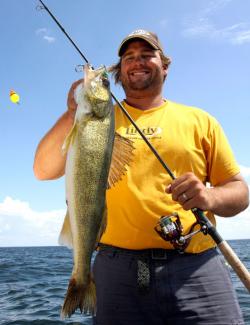
Big walleyes like this one prowl the shallows for some time after the spawn–a live minnow on a jig often fools them.

The standup jig has special appeal when tipped with a live minnow.

Plastic tails can also be effective, particularly in late spring as water warms a bit.

Walleyes sometimes prowl water as shallow as a foot deep, particularly in low light periods.

Walleyes are often thought of as a fish that inhabits the depths, and there are times when most of them will be found in deep water. However, there are other times, more than you may think, when you can catch walleyes shallow, often eight feet or less. Here are some ideas for taking walleyes in shallow water.

Walleyes spawn so shallow sometimes their dorsal fin will be above the surface of the water. After the spawn they move into the mid-depths to recover from the rigors of spawning, or maybe they stay in the shallows and just don’t eat much. But a few days after spawning has ended, walleyes will get active in the shallows. This is when they get easy to catch.

Look for shallow walleyes wherever the shiners or other baitfish are spawning. Shorelines with small rocks, areas with vegetation starting to come up, points related to shorelines, these areas will all hold shallow walleyes early in the summer, and there are lots of ways to catch ’em when they’re in these locations.

Crankbaits, slip-bobber rigs and live bait rigs will all catch shallow walleyes. But the folks who catch walleyes most regularly are probably throwing a jig tipped with either a minnow or plastic.

When the walleyes have just recovered from the spawn, they’ll be most susceptible to a jig and minnow combination. In some bodies of water the walleyes will eat a jig tipped with a fathead minnow: Elsewhere a shiner on the back of a jig will be far more productive. I almost always have both shiners and fatheads in the boat. Shiners can be tough to keep lively, so I put them in a Frabill 1404 aerated container. This unit keeps shiners in a fish-catching attitude.

I’m hooking the minnow to an eighth ounce stand-up Fire-Ball jig almost all of the time. The stand-up design of this jig enables me to pause my retrieve, but the jig stands up, remaining in full view of the fish. A round head jig lies flat on the bottom at rest, making it harder for the fish to see.

As the water warms, the walleyes become more susceptible to a jig/plastic presentation. Where a couple of days earlier we were crawling the jig/minnow along the bottom, with the plastic we’ll be snapping it pretty aggressively. Walleyes in warmer water will eagerly whack a jig/plastic combo that is moving quickly along the bottom. Many of the strikes will come as the jig is gliding back to the bottom after it has been snapped. A Rock-It jig tipped with something like an Impulse Paddle Minnow is tough to beat. Fish the jig/plastic with eight or ten pound test Bionic Walleye Braid. The braid works better with the snapping retrieve. Fish the jig/minnow on six, seven, or eight pound test Bionic Walleye monofilament.

Walleyes can be found in shallow water year ’round in most lakes, rivers, and reservoirs wherever walleyes swim, particularly after dark, but look for them in the shallows especially in late spring and early summer. Make long casts, keep a low profile, and be quiet. If you do these things, you’ll find yourself catching walleyes shallower than you might have imagined.

To see all the newest episodes of Fishing the Midwest television, visit fishingthemidwest.com Join us at Facebook.com/fishingthemidwest

What Is Snap Jigging Early Summer Walleyes?

Walleye caught snap jigging

Walleye caught snap jigging

How To Snap Jig for Early Summer Walleyes

By Nathan Shore
from The Fishing Wire

Snap jigging for walleye is a key technique in late spring and early summer. If you want to catch limits of big walleyes right now, take this guide’s advice and start snapping them up.

Hopping a jig along bottom in the shallows is a favorite tactic of many walleye guides in early spring.

The jig slips into a world of minnows. It rises and drifts, pops and slides. Clearly different, somehow the same, it looks right at home but stands out. It’s getting away, and now it’s not.

“Snap jigging means different things to different people,” says Jeff Sundin, guide with the Early Bird Fishing Guide Service out of Deer River, Minn. “Some call it snap jigging, others ‘rip jigging.’ There’s hopping, popping-it’s never exactly all the same. Put 12 snap jiggers in the room and you’ll get 12 different versions.”

Snap jigging is the act of “popping” a jig so it rapidly darts upward in the water column, then slowly descends back toward the bottom. The fast, escaping baitfish action gets the fish’s attention because an easy meal is getting away, and the fish often strike on the drop. Usually the physical movement is a quick wrist move like snapping a yo-yo back up to your hand, but intensity if modified depending on various factors, including the mood of the fish. During the early season, Sundin likes a softer, shorter snap that doesn’t pull the bait too far from the fish.

Sundin plies his dialed-down version of snap jigging when walleyes are shallow. Classic snap jigging requires heavy stuff, moving quickly and covering water at a fast clip. Sundin, though, isn’t as aggressive as some guys during the early season. He uses a 6 ½-foot, medium-light power spinning rod and 4- to 6-pound line, and tries to keep the boat at or below 1 mph. He also restrains his actual jigging, moving the jig only 5 to 6 inches at a time.

The fish are sometimes in 2 to 4 feet of water, so small, lightweight jigs, often tipped with a minnow, do the job.

Sundin pitches the jig a “comfortable, short distance” when walleyes are in 5 feet of water or less. As the jig sinks, he starts with the rod tip pointing up at 11 o’clock. As it touches bottom, he drops the rod tip to create slack then snaps it back up.

“As soon as I feel the weight of the jig, I stop,” he said. “I’m only popping it 5 to 6 inches off bottom then letting it drift on a semi-tight line with the boat moving slowly. Then, I drop the tip, push slack into the line, and snap it again. When we’re fishing a sand flat, dragging bottom rarely triggers a strike. The guy who gets snagged up the most is the guy catching the fewest fish. The jig may hit bottom, but there’s no requirement to hit bottom. We’re trying to snap it while it’s hovering just off bottom.”

Early walleyes are shallow walleyes. Until surface temperatures hit the mid 60s, walleyes will be where the bait is. After a long, hard winter, baitfish want to be in the warmest available water, which tends to be close to the bank.

Add baitfish spawns into the equation and there’s another reason for shallow walleyes. Shiners and perch are the most important forage in Sundin’s neck of the woods.

“Shiners spawn in spring and they go right up into 2 feet of water,” Sundin said. “When walleyes key on shiners in lakes with big, shallow flats, they move up into water less than 4-feet deep. They’re so shallow you can actually see them.”

The Watsit Jig is among several that work well for the tactic known as “snap-jigging”.
Jig weight is based on where the fish are. At the earliest stages of summer, Sundin is still using 1/8-ounce jigs. He starts out in spring with a 1/16-ounce Lindy Jig tipped with a shiner, rainbow, or fathead in that order of preference. When the water hits the mid 50s and perch are spawning in depths of 4 to 6 feet, he moves up to a 1/8-ounce jig.

“That’s the weight we snap jig with at least 65 percent of the time,” he said. “But when walleyes move out to depths of 10 to 12 feet a little later, we use ¼-ounce heads. If it’s windy, we might go as heavy as 3/8-ounce. At 12 feet you need lighter line to rifle casts farther from the boat so it swings back into that close, comfortable range best for controlling the jig. We keep tipping with minnows, bringing the hook out in the center of the skull. When rigged perfectly, the mouth of the minnow is against the round ball of the jig.”

On wind-swept, sandy lakes with a lot of sand grass and few taller weedlines, Sundin finds walleyes doubling back into the shallows a lot in summer, especially shallow rocks in 4 to 7 feet of water. When this occurs, he often throws a Watsit Jig minus the bait.

“I really like the Watsit more and more the later it gets,” he said. “We snap it in a similar fashion, but we’re trying to imitate crayfish a little more on those shallow rocks. The Watsit has a way of darting forward then falling back in a semi-circle. If you put anything on it, it won’t perform as well. That circling action triggers walleyes without any other incentive required.”

Snap jigging is effective any time walleyes are in relatively shallow water regardless of time of year. Most of the time the only reason the fish are in less than 8 feet of water is because that’s where the food is, so they’re susceptible to a jig popped up right in front of their faces.

Snap, drift, pop. Sounds like a breakfast cereal. But in practice, Sundin’s version of snap jigging is more like Muhammad Ali. It floats like a butterfly, stings like a bee.

Why Should I Fast Troll Shadraps for Walleye?

Walleye Caught Trolling Shadrap

Walleye Caught Trolling Shadrap

By Greg Huff
from The Fishing Wire

Goose the throttle on your next fishing trip, and you’ll be lapping other anglers as you boat walleye after walleye.

A number 5 Shad Rap is among the favorite lures for the fast troll that James Holst perfers for putting “eater” walleyes in the boat.

“This is a pattern I’ve used for many years to put numbers of eating-size fish in the boat,” says Rapala Pro-Staffer James Holst. “So make sure you try speeding up. For us, it’s just magic.”

Holst, host of In-Depth Outdoors TV on Fox Sports North, is filming a show on Lake Pepin, a wide spot on the Mississippi River south of the Twin Cities, on the Minnesota-Wisconsin border. It’s a sunny, cool late-May afternoon, and he and fellow Rapala pro-staffer Joel Nelson are loading their Skeeter MX 2025’s livewell with eater ‘eyes.

“I don’t have an answer for why these fish respond well to trolling fast, but they do,” Holst says. “We’re spending almost all of our time trolling from two and three-quarters to three miles-an-hour.”

“That’s pretty fast, by most freshwater trolling standards,” Nelson says.

“And we only get faster as that water temperature rises,” Holst notes.

Today, water temps are in the mid-60s. Because that’s still relatively cool for walleyes, Holst says, “the common thought would be you’re going to want to slow down.” But conventional wisdom is often wrong.

“We troll at two miles-per-hour and all we catch is white bass and sheephead,” Holst explains. “We throw a little speed at these fish, and all we catch is walleyes.”

Lots of walleyes.

Holst trolls at up to 3 miles per hour, considered fast in the world of walleye fishing.
“You’re typically going to be able to catch a lot of fish very quickly,” Holst says.

Trophy fish are less frequent with this pattern, “but don’t be surprised if it’s a 25-, 26-inch walleye,” Holst tells Nelson, whose rod is bent in half as he reels in what both anglers suspect is a big sheephead.

But it’s not. It’s a 26-inch walleye, which Holst nets for Nelson.

“Nice work, net man,” Nelson says, before admiring the fat fish and then releasing it.

“You don’t need to keep any big fish, because by the end of the day, we’re going to have all the 16-, 18-, 19-inch fish we’re going to possibly want,” Holst explains to the camera.

“Whether you’re throwing it or trolling it, this bait is as close as you’ll get to finding a sure thing in a tackle box,” he says.

Orange craw has been the best color today. That’s one of three colors Holst calls The Trinity for post-spawn ‘eyes. Perch and firetiger are the others.

“Those three colors really stand heads and tails above everything else as producers, year after year, on this particular body of water,” Holst says.

Line

Because they’re trolling shallow near shoreline cover, Holst and Nelson are pulling six-pound diameter, 20-pound test, Sufix 832 braid.

“We’ve got sticks and stumps, rocks and bumps, and all kinds of things that we’re just bashing these crankbaits into, so that braid is great because it’s very durable,” Holst explains.

And it provides solid hooksets.

“That fish grabs that crankbait, there’s not a lot of stretch in the line, and bang, that’s a really positive hookset,” Holst says.

His Sufix 832’s test strength and diameter is a “critical piece” to Holst’s speed-trolling pattern.

“I can get a lot more dive depth out of these crankbaits if I went with a two- or a three-pound diameter line, obviously, but I don’t want to do that because we’re fishing in such shallow water,” he explains. “I want to get the baits away from the boat.”

Pulling your baits too close to the boat can spook fish.

Rods

To counteract the braid’s lack of stretch, Holst and Nelson are fishing with 10-foot, six-inch St. Croix Eyecon and seven-foot, six-inch St. Croix Tidemaster rods. Both feature soft tips, which “keeps you from ripping those hooks free once you’ve got them hooked up,” Holst explains.

Where and when

Though most walleyes caught trolling fast are 15 to 18 inches, occasionally a whopper crashes the party.
Lake Pepin is a “troller’s dream body of water” on which to speed-troll Shad Raps, Holst says, because it features few sharp breaks and a bottom composed primarily of sand and mud.

“So it’s a really easy area to troll in one direction for a long time,” he explains. “The depths don’t change a lot and it makes this body of water perfectly applicable for trolling techniques, because … the fish are going to be very spread out due to the lack of structure.”

The pattern is not specific to Lake Pepin, however, and will work throughout the Upper Midwest.

“I’ve used this on Mille Lacs Lake, Lake of the Woods, just about everywhere you go this time of the year, after the spawn when the water temperatures start to warm up,” Holst says. “You get to that mid-65-degree water temperature, and fish – walleyes particularly – are very susceptible to a No. 5 Shad Rap trolling presentation.”

The pattern will remain effective through mid-June, when water levels generally drop and pull fish off shoreline breaks. If water levels remain high, however, the bite will persist.

As water temperatures rise through June, Holst will increase his trolling speed. By the time the pattern slows, he’ll be pulling his Shad Raps at 3.5 to 3.75 miles-per-hour.

“You’re covering water so fast that it’s incredibly efficient,” Holst says. “You’re covering so much ground at that speed putting baits in front of so many fish, you’re bound to load the boat.”

“So definitely give that some consideration,” Holst concludes. “If you want practice reeling in fish, this is the bite. You’re going to be busy.”

Greg Huff is an outdoors writer and video producer based in Minneapolis, MN. He has written for and produced videos for In-Depth Outdoors, Bassmaster.com, Fishhound.com and North American Fisherman’s FishingClub.com.

How To Catch Summer Walleye On Crankbaits

Catch walleye like this on crankbaits

Catch walleye like this on crankbaits

from The Fishing Wire
by Daniel Quade

Trolling, rigging and jigging are great ways to put walleyes in the boat, but when conditions are right, casting shad-bodied crankbaits to shallow structure knows no equal for racking up big numbers of early summer ‘eyes.

North Dakota guide Jason Feldner likes shallow running crankbaits for walleyes from early spring through the month of June.
Just ask Jason Feldner, proprietor of Perch-Eyes Guide Service. A veteran guide who earns his keep connecting clients with walleyes on North Dakota’s 160,000-acre Devils Lake, he casts cranks to fish-rich banks from the first warm fronts of spring throughout the month of June.

“When the bite’s on, 100-fish days are possible,” he says.

And the good news is, even though the sprawling High Plains paradise Feldner calls home is a bit unique, the tactics he employs here work wonders on a variety of other walleye waters as well.

As water temperatures inch upward into the mid-50s, Feldner targets sheltered, fast-warming shallows, where hungry ‘eyes find a feast of baitfish, freshwater shrimp and other food items.

On Devils Lake, rising water levels have in recent years created an almost endless supply of such environments. While few fisheries offer exactly the same opportunities, you can in most systems find concentrations of shallow fish feeding somewhere. Potential hotspots include necked-down current areas, emerging weedbeds and shoreline riprap.

As the water continues warming, Feldner factors the wind into his fishing locations.

“Once the water temp hits the 60s, I look for windswept areas where wave action stirs up the shallows, concentrating forage and reducing light penetration,” he says. Opportunistic ‘eyes quickly move in to scarf up shrimp and minnows, but a sustained wind lasting several days or more can really fire up a shoreline.

When planning his daily structural hit list, he always keeps yesterday’s weather in mind. A lot of times he gets a strong wind one day, then dead calm the next. The downwind bank is good when the wind is blowing, but even after it dies down, the shoreline that got pounded the day before stills hold fish.

Certain structure is central to both temperature-related and wind-driven scenarios.

“I prefer slow-tapering shorelines over banks with steep breaks,” he says. “Not necessarily because they hold more fish, but because my bait stays in the strike zone longer on a gradual slope.”

In the early season, soft muck bottoms absorb sunlight and help boost the water temperature. But later, shorelines exposed to the prevailing winds are typically dominated by gravel and rocks. Flooded woody cover-in the form of trees and brush-is also a common occurrence on Devils Lake, as it is on manmade reservoirs and flowages across the Walleye Belt. Feldner frequently plays the timber card, too, targeting walleyes in and around the shallow treeline.

“During the early season, I cruise the bank, targeting fallen trees,” he says, explaining that walleyes often tuck tight to such timber, lurking in the shade as they await passing prey. “You won’t catch a bunch of fish in one area, but you’ll get one here and one there, so it’s important to cover water and keep moving.”

Shad-bodied crankbaits are another pillar of the program. Like walleyes in most waters, Devils Lake fish eat a variety of forage, from shrimp to juvenile yellow perch and white bass. A crankbait’s deep, stout profile mimics a range of prey, and is easy for walleyes to home in on in low-visibility conditions, such as when wind and waves roil near-shore waters.

The Lindy Shadling and Bomber Flat A are two of Feldner’s go-to baits. Both the Shadling and Flat A are tight-wiggling, rattling baits capable of drawing the ire of nearby ‘eyes, even when visibility is reduced. Another key attribute-their near-buoyancy allows them to be fished with a variety of moves, without rocketing to the surface on the pause. Such versatility is critical, because Feldner’s presentations run the gamut-from a steady pull to ultra-animated retrieve-depending on the mood of the fish.

With his boat hovering in eight feet of water, Feldner makes a long cast close to shore, then works the bait along bottom back to the boat.

“Start with the rodtip high, then lower it during the retrieve, so the bait dives deeper and stays close to bottom,” he notes.

Given walleyes’ notoriously fickle nature, experimentation is key to finding the best retrieve for the situation at hand. Every day is a little different. Sometimes they want it slow and steady, other times you have to get aggressive and really pound bottom or burn it along to trigger reaction strikes.

The shallow crank-casting pattern shines through early summer, until water temperatures reach the 70-degree mark. After that, Feldner typically focuses his efforts a bit deeper, often pulling deep-diving cranks or spinner rigs along outside weed edges and deep treelines. But even then, the shallow pattern is always an option, should the right wind come up along a slow-tapering shore.