Category Archives: How To Fish

What Are Wobble Jigs and Why Should I Fish With Them?

Wobble-Jigs

This specialty bait is sometimes the only one you need.

By Frank Sargeant
from The Fishing Wire

What might be called “wobble-jigs” or bladed swim jigs are the ace in the hole of many expert anglers. They perform as a combo of crankbait, swimbait and swimjig, with a bit of spinnerbait flash and buzzbait clatter thrown in on some versions.

Scrounger Jig

Scrounger Jig

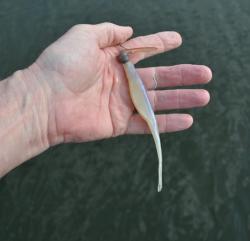
The Scrounger features a plastic collar that causes the lure to wobble. Other wobble jigs have a metal plate ahead of the jig head.

The lures have accounted for two major national tournament wins already this spring, one at Florida’s Lake Okeechobee, the other just this past Sunday at South Carolina’s Lake Hartwell. Clearly, for pre-spawn and post-spawn bass, these lures have got what it takes.

The lures are basically a jig with something extra, either a metal plate or a plastic lip that makes them wobble when retrieved steadily. The Z-Man Chatterbait, the BooYah Boogee Bait, the Strike King Pure Poison and the Choo-Choo Lures Shaker are all designed with metal plates at the head of the jig that wobble and flash and cause the trailer to swim like mad. The Luck-E-Strike Scrounger is somewhat different-it’s a jig with a flexible plastic collar-but it still has the same wild action.

When dressed with a swimming soft-plastic tail, all of these lures come to life with a remarkably fishy wiggle–sort of swimbaits on steroids–and in many lakes when conditions are right, the bass kill them.

Quality Bass On Wobble Jig

Quality Bass On Wobble Jig

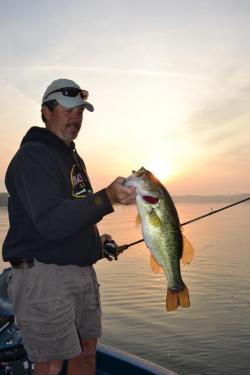
Quality bass like this one captured by Guntersville guide Mike Carter at sunrise are suckers for wobble jigs in spring.

The lures have a wobble similar to a crankbait, but since they sink rapidly, it’s easier to get them down to where the fish are and keep them there-without extremely long casts, thin lines or rapid retrieves.

The single hook of these lures means they’re much less likely to pick up weeds or to get snagged than a standard treble-hook crankbait, and are also easier on fish you tend to release. And for bouncing off hard cover, the shovel-like wobbling plate works like the bill of a crankbait.

Wobble-jig fans agree, one key to success with these lures is to use a tail of the appropriate size-too big and you don’t get an adequate wiggle, too small and the profile of the lure is less attractive to quality fish. Another factor is retrieve speed. Too slow and you don’t get the rapid wobble that draws the bites, too fast and some versions simply roll over and plane to the surface. As with a crankbait, the rod will tell you when the speed is right-the perfect speed is the one with the most resistance.

The classic Chatterbait-apparently the original of the genre–is a 4.5 inch lure dressed with plastic skirt, available in weights of 5/8 to ¼ ounce. A slightly longer version, the Chatterbait Trailer in 3/8 ounce, has added length to the skirt, while the Chatterbait Pro has an added nylon weedguard, twin rattles and oversized reflective eyes. The lure also comes in skirtless models with baitfish profiles on swimming plastic bodies.

The single hook jigs stick and hold, but do less damage to fish than treble hook lures and are also easier to remove.
The Booyah Boogee Bait has a couple of interesting innovations, including a spring-like flex zone in the hook shank which the company says will help to prevent fish from shaking the lure. The Boogee Bait also has the longest hook shank of the four bladed baits, aimed at sticking short-strikers. Also unique, says company spokesman Lawrence Taylor, the wobbling plate sits on a clip-release allowing you to quickly change swim-jig bodies without retying the line to the plate.

Lake Guntersville guide Mike Carter is a big fan of the

“You get the swimming action without the extra hardware up front, and when the fish want a more subtle presentation, the Scrounger does the job,” says Carter. He fishes the lures in heads from 3/8 ounce for shallow water to 3/4 for water up to 8 feet deep–any deeper and he switches to a standard jig or crankbait.

In short, there are lots of options when it comes to using wobble-jigs. Tie one on one of your working rods this spring-you may be surprised at how it adds to your catch.

CONTACTS
Booyah Baits: www.booyahbaits.com
Choo-Choo Lures: www.choochoolures.com
Luck-E-Strike: www.luck-e-strike.us
Strike King: www.strikeking.com
Z-Man: www.zmanfishing.com

Top Water Bass Fishing

Topwater Time in Georgia

The pond is absolutely still in the early morning haze, without a single ripple in the water, even from your paddle. Your Hula Popper makes a flat arch and falls just past the stump in the edge of the water. It sits still as long as you can stand it, then you let it sit a little longer. A tiny twitch of your rod tip makes it gurgle beside the stump, and the water explodes.

The big reservoir has a slight ripple on the surface as the sun tints the eastern sky. Shad flicker on the surface. Your Zara Spook flies long and fast to the far side of a shallow gravel point. As soon as it touches the water you start twitching your rod tip, making it flip from side to side, walking the dog. A huge swirl makes it disappear and the fight is on.

The shallow grassy flat in the back of a creek on a lake is still. Your buzz bait lands near the bank and you start reeling it fast enough to keep it on the surface, churning along making a nice wake. A shower of water interrupts it track and your rod bows as you set the hook.

These kinds of events are the reason topwater fishing is so fantastic. You can see your bait and the hit of the bass, making it even more thrilling than other kinds of strikes. And bass seem to hate topwater baits, annihilating them with gusto.

I got my introduction to topwater fishing in the 1950’s when I sculled the wooden boat for my father and uncles while they cast wooden plugs. I wanted to fish but knew I had to put in my time on the paddle.

One of my most exciting topwater bites came when I was about 12 years old. Three of us young boys were with our fathers at Clark’s Hill. We pulled a jon boat with an old wooden runabout to a cove and they left us at the mouth, paddling the jon boat to the back to fish for bass. They told us we were too loud and would scare the fish so we had to stay well away from them.

Shouts told us they were getting bites. I had a Devil’s Horse topwater plug, a thin wooden plug with spinners on both ends, tied to the line on my Mitchell 300 spinning outfit. As we tried to move the big, heavy boat around with paddles and cast I threw it toward a button bush near the bank.

My cast was way off target so I cranked it back for another cast as fast as I could turn the reel handle. The plug was buzzing across the surface when the water exploded. I hooked and fought a huge bass, the biggest by far that I had ever hooked, to the boat.

That bass weighed just over seven pounds at the store on their meat scales, and we talked for days about how crazy that bass was, hitting a plug moving way too fast over open water. Everyone knew you were supposed to fish topwater baits very slowly by cover in the water. If I had just realized it, I had come up with the idea for buzzbaits at a very young age!

A much more recent topwater memory was in a club tournament at West Point a couple of years ago. I looked at my watch as I put my trolling motor in the water and it was exactly 7:00 AM, our first stop. Five minutes later I looked at my watch again as I put my fifth keeper in the live well.

I had made seven casts, got hits on a Sammy on every cast, lost two bass and landed five. My partner had stopped fishing and was just netting my fish, unhooking them and putting them in the livewell for me.

I told him he needed to be casting but he said he was having too much fun watching me. I know I get excited when I catch a fish, but I would never have too much fun to not cast when the fish are biting!

For the next few months bass will give you a thrill on top no matter where you fish. Tie on an old reliable topwater plug or try one of the newer, fancier ones. They will all get hit and give you a thrill!

Keys To Catching Lake Lanier Bass

Keys to Catching Lake Lanier Bass eBook

Ten spots on Lake Lanier for each month of the year, with GPS Coordinates, description, lures to use and how to fish each one
By: Ronnie Garrison – ISBN# 978-1-940263-01-4

For an emailed copy in Microsoft Word, email ronnie@fishing-about.com – $4.00
CDs are also available for $6.00 – email ronnie@fishing-about.com


From Georgia Outdoor News Map of the Month series of articles and the eBook series “Keys to Catching Georgia Bass”

2014 © Ronnie Garrison – All Rights Reserved
Maps – 2014 © Georgia Outdoor News – All Rights Reserved

How to Use This Book

The articles for this series of books, Keys to Catching Georgia Bass, were written over a span of 18 years. Conditions change but bass tend to follow patterns year after year.

For example, Lake Lanier has gone through a series of years with low water then full again. After a couple of years of low water, grass and bushes grow that will be flooded in shallow water when the lake fills. But after a few years that cover rots away. Bass will still be in the same areas, you just have to fish the cover in them that is available when you fish.

The eBook is $4.99. I may have some copies printed but the price would be about $10.00. If you want a printed copy please email me at ronnie@fishing-about.com to reserve a copy if I do have them printed.

How Can I Catch Backwater Stripers?

Plugging Backwater Stripers
from The Fishing Wire

Light Tackle and Small Plugs Catch Early Season Linesiders

While the Mid-Atlantic states are still dealing with a long, cold winter, there are signs of spring showing up every day – like the robins seen pecking away on the front lawn this morning or the tiny buds of new leaves sprouting on bushes and trees. Even though it’s still cold, we are only a few weeks away from some early season striper fishing. Time to get your gear ready for action.

Early striped bass won’t be giants but they’re often abundant and eager to strike.
From North Carolina’s Roanoke to New Jersey’s Nevasink and north to the Connecticut, numerous tidal rivers will see the early influx of schooling striped bass. This time of year they are very hungry after surviving a winter of cold water and scarce forage. Their targets will be the small baitfish that will begin moving around the shallows as the days get longer and sun warms the flats enough to increase their activity.

Don’t expect these early fish to be monsters. Most will be measured in inches rather than pounds but if you put in your time, you could catch bass in the teens. The fishing is best accomplished with light spinning tackle, seven-foot medium/light action rods with matching reels loaded with light line, six-to-ten pound test low-visibility monofilament. Since you will encounter many of these fish in water that is just a few feet deep, long casts will often be rewarded with hits, and lighter line will cast the small plugs further. Also keep in mind that the water in tidal rivers in the spring can vary dramatically in color depending on tide stage and fresh water flow from up river. It can range from turbid with silt from runoff to clear, especially on the incoming and high tides, so two to three feet of 12-to-15 pound fluorocarbon used as a leader is recommended because it disappears under the water and makes for a much more natural presentation of the lures.

Swimming plugs are the go-to lure for many light tackle guides, like Capt. Terry Sullivan of Flats Rat Charters in New Jersey. He spends much of the early season fishing from his bay skiff in the Nevasink and Shrewsbury Rivers, which feed into Sandy Hook Bay only ten miles from the entrance to New York Harbor. He favors small swimming plugs, most four or five inches in length and minnow-shaped to resemble the prevalent baitfish. He uses a variety of models that run at different depths, from just under the surface to four feet, so he can cover water from very shallow to flats near channel drop-offs. Color selection varies, too. The determining factor is frequently water clarity. If the water is clean, he tends to use natural colors like metallic silver, gold and pale olive green with darker backs. When the water is more turbid, switching to fluorescent colors like chartreuse can get more hits. And if you’re fishing low light conditions that can occur early and late in the day or under heavy overcast skies, colors like yellows and whites can be more easily seen.

An assortment of minnow-shaped diving lures usually do the job on spring stripers in coastal rivers.
Lure speed is an important consideration and can vary with water temperature or activity level of the baitfish present. Bait and bass will tend to congregate in the areas of the river where the water is warmer. Frequently these are found in coves and along shallow banks on the north side of the river. With the sun still low in the southern sky, the north side will get more sunshine and tends to warm more quickly. Early in the spring, the incoming tide will push baitfish upstream with the tide line. As the tide slows the water warms with the sun, and usually all it takes is a degree or two in temperature to get the bait moving and the bass feeding. So be sure to pay close attention to tides and pick your fishing time to coincide with the top of the incoming, slack high and the beginning of the outgoing tide. In some rivers the feeding will continue throughout the outgoing tide.

Keep your eyes open and be aware of what is happening around you. If you don’t see baitfish along the shorelines or in the shallows, work the deep edge of flats or along channel edges. Try working the lures slowly at first. If the bass are not actively feeding they will be more attracted to a slower moving lure, which represents an easier meal. If you start to see bait showering on the surface or moving fast along the shorelines, pick up your retrieve a little. School bass can be very aggressive predators when they are actively feeding and will nail a lure fished at a more brisk pace. Bright, sunny days that warm the water more quickly tend to ignite more active feeding, while on overcast days you will often find the bass holding deeper and a little more difficult to get to respond to the plugs. If that should occur, switching to small plastic shad-type lures with paddle tails, and working them a little slower and deeper, can save the day.

A quiet four-stroke outboard can allow anglers to get close to the fish without spooking them.
When fishing tight spots and narrow, shallow river areas a stealth approach can mean the difference between catching fish or spooking them and putting them off the feed. Quiet four-stroke outboards like Yamaha’s F115, F150, F200 and even the larger V6 models make entering quiet backwaters less intrusive. Using an electric trolling motor to move around them while you stalk stripers can put you within easy casting range without scaring the fish or taking their attention away from the baitfish on which they are feeding.

Paying close attention to all these factors can make catching early season stripers in tidal rivers more productive. As always, when you’re catching fish you’re having a lot more fun. There are hundreds of coastal rivers that will play host to early season striped bass in North Carolina, Virginia, Maryland, Delaware, New Jersey and Connecticut. So get the boat prepped and the light tackle ready for some fishing fun – spring is right around the corner.

Fishing A Winter Tournament At Lake Sinclair

Last Sunday 18 members of the Flint River Bass Club fished an 8 hour tournament at Lake Sinclair. The water was cold and the breeze off it kept us cool all day, and the fish were hard to find. Ten of the members had keeper bass and there was a total of 20 bass weighing 44.02 pounds.

Bobby Ferris won with 11.17 pounds. He said he caught his bass fishing crankbaits around docks and weedbeds. David Grace had 6.41 pounds and his 4.09 pound bass was good for big fish in the tournament.

Donnie Willis and Tom Perdue fished together and finished 3rd and 4th. Donnie had 5.01 pounds and Tom had 4.45 pounds. I had two bass weighing 4.13 pounds for fifth and Roger Morrow, fresh from driving back from Seminole, placed sixth with 3.36 pounds.

I started out the day pretty good, landing a 3 pound bass on a spinnerbait near a grassbed the first place I stopped. Although I fished that area for over an hour with everything from spinnerbaits, crankbaits, worms, jig and pig and spoons, I never had another hit there.

Then about an hour later I landed my second keeper jigging a spoon under a school of shad back in a creek across the lake from where the first one hit. There were shad and fish all in that small creek, but I fished there for two hours without another bite. After the second one hit just after 9:00 AM I could not catch another fish even though several people said they caught bass in the middle of the day.

Congratulations to Bobby for winning this club tournament.

Practice and Results for a January Lake Jackson Tournament

Several years ago, during a much warmer winter, to get ready for the Flint River Bass Club tournament at Jackson the next to last Sunday in January I made a couple of trips to that lake the week before it. It was wonderful to fish this time of year in a short sleeved shirt, and the water temperatures in the low 50s encouraged me to think the bass would bite.

On Wednesday soon after I started fishing I cast a Shadrap up into shallow water on a sandy bank. A fish hit the lure and when I set the hook a boil the size of a #2 wash tub came up. I fought that fish on a light spinning rod and 8 pound test line until my right hand ached, but it would not come to the surface.

When the bass got under the boat I put all the pressure on it I could with the light outfit, trying to turn it before it got into the motor. Suddenly the hook came loose, for no reason that I could tell. I never got to see the big fish so it could have been a carp that I foul hooked, but it surely did fight like a bass.

Not long after losing that fish I hooked and landed a 3 pound largemouth on a Fat Free Shad crankbait. It fought a lot like the bigger fish, making short runs and shaking its head, but it did not fight half as hard.

A little later I cast a Carolina rig across a point probing for some rocks that are on it. I hit the rocks on the first cast and as soon as the lead started coming through them a 2 pound largemouth hit and I landed it. Just before dark I landed two more keeper largemouth on two different crankbaits, for four for the day.

On Friday I went back and fished the spot were I had lost the big one but did not get a bite. In another place there was a log off the bank in about six feet of water and I cast my Fat Free Shad across it, and landed a 4 pound largemouth. Later I had my second and last strike of the day when a 2 pound largemouth hit a Fat Free Fry.

I landed six bass in two days and all were largemouth, very unusual this time of year at Jackson. I expected to catch spotted bass. After the poor catch on Friday I really did not know what to try in the tournament.

As luck would have it, after several weeks of warm weather and a lot of clouds, a cold front came through Saturday night and we launched boats in 34 degree air temperatures. I ran up to a brushpile I like to fish, but nothing hit my crankbait or spinnerbait. Then I dropped a jig and pig into the brush and a fish grabbed it and headed out under the boat. I was able to land a 14 inch spot – the first spot in a week and the first on a jig and pig, but at least I would not zero.

At about 9:00 I threw my Fat Free Fry across a shallow point and it just stopped. When I set the hook my heart almost stopped when a big bass jumped. As it fought I could just feel the hooks pull loose like they did on Wednesday, but I landed this one and guessed it would weigh between 5 and 6 pounds.

After lunch I fished a line of docks and out around a point. As I left Kwong Yu pulled in behind me. I landed my third keeper on a Carolina rig out of some brush just after seeing him, my last fish of the day.

At weigh-in I was happy until someone said Kwong had a big one. He had beaten me for the big fish of the year pot at Jackson in December, and he did it again last Sunday. He had a 6.67 pound bass, beating my 5.68 pounder. To add insult to injury, he caught the big one right behind me after I left the area and he pulled in.

Kwong won the tournament, too, with 11.90 pounds. Tom Tanner placed second with 10.60 pounds, Bobby Ferris was third with 10.15 pounds, Toney Roberts had 8.93 for fourth and I placed fifth with 7.97 pounds.

We had 19 fishermen in the tournament and 13 brought in a total of 32 keeper bass weighing 74.85 pounds. That is pretty good for a January tournament, but what we had until this weekend was not really January weather. I am sure the fishing will be tougher now with the cold nights.

Can I Catch Shallow Bass On the Carolina Rig?

Learn How Shallow Carolina Rigging Offers a Different Presentation

Yamaha Pro Bobby Lane Adds Personal Touch to a Traditional Technique

Smallmouth caught on a Carolina Rig

Smallmouth caught on a Carolina Rig

Elite Pro Bobby Lane uses creature baits that float above bottom on Carolina rigs to fool both smallmouths like this one and largemouths.

For more than two decades, Yamaha Pro Bobby Lane has relied on a technique and presentation known as “Carolina rigging” to propel him to the top of tournament leader boards, but, as in almost every professional bass fishing technique, Lane adds his own personal touch. In his case, the difference is concentrating in extremely shallow water.

“I fish water only about eight feet deep or less,” explains Lane, who used this presentation for three top 10 finishes in Bassmaster® Elite competition during the 2013 season. He ranked fourth in the Angler of the Year standings, and in February will fish in his 7th Bassmaster Classic.® “I believe it works because it’s just something a little different that bass don’t see very often, and it fools both largemouth and smallmouth.

“The real key is using a lure that floats above the bottom. I think bass are usually suspended a foot or so above the bottom, anyway, and a floating lure looks very natural to them. I prefer a soft plastic creature bait that glides through the water like a small salamander. It’s a fairly large bait bass can’t resist, and because I can rig it weedless, I don’t worry about getting snagged in the cover.”

Lane likes a shorter leader than most anglers for the Carolina rig, typically using only about 18 inches.

Developed more than half a century ago, the Carolina rig consists of a sliding sinker threaded on the main line, followed by a swivel that stops the sinker. A length of leader line containing the hook and lure is then tied to the opposite swivel terminal; this leader is what allows the lure to move freely while the sinker is dragged along the bottom. Most anglers use the Carolina rig in deeper water and with three-foot leaders and heavy 3/8- and one-ounce sinkers.

“I use sinkers weighing only ¼- or 3/8-ounce, and my standard leader length is only about 18 inches,” continues the Yamaha Pro, “and if the fish are active, I’ll use an even shorter leader.

“What I concentrate on is shallow cover, most of which I can’t even see. I make extremely long casts, then slowly pull the sinker back along the bottom until I feel it hit some of that cover. When it does, I slow my retrieve even more because I know I’m close to fish. I don’t hop the lure with my rod tip at all, but rather, very slowly and steadily pull my rod to the side so the sinker stays on the bottom.”

Another key to Lane’s presentation is his use of monofilament line, because it floats far better than fluorocarbon or braided lines. By using 12- to 15-pound test mono for both his main line and leader, he doesn’t have to worry about having his line nicked and weakened by the cover he’s fishing, either.

Largemouths like the C-Rig even better than smallmouths, says Lane.

Bobby Lane with largemouith

Bobby Lane with largemouith

“I fish whatever type of cover is in the water,” he explains, “because that’s where the bass are going to be in shallow water. This can include vegetation, rock piles, laydown timber, boat dock pilings, even shell beds. In shallow water Carolina rigging, I’m not looking for depth changes and channels, just cover.

“I don’t go along a shoreline and cast the water’s edge, but rather, stay further offshore and cast at an angle into the shallow water. I use a 7’3″ medium action rod with a fast tip that lets me make extremely long casts with my light lure and sinker, so in many cases, I’m actually using the Carolina rig as a search tool to help me locate bass because I can cover so much water.”

The Yamaha Pro’s shallow water Carolina rig presentation is a year-round technique, too. Lane doesn’t use it in extremely muddy conditions or when a strong current is present, but he has enough confidence in it to always have two or three rods rigged with different sinkers and leaders no matter where he’s fishing.

How To Catch Big Bass On the Bottom In the Winter

Big Bass On The Bottom In Winter

When the air is hand-numbing cold outside it is easy to stay home and be warm and comfortable. You just know the bass are as miserable as you would be if you went fishing. After all, they can’t come inside and warm up like you can. They stay cold all the time so there is no way you can catch them.

Such thinking is misleading. Bass are cold blooded and do not get uncomfortable because of cold water. Their bodies respond to it by slowing down. They become very inactive and don’t eat very often. They usually won’t chase anything very far. But, they can be caught.

The good news is they do eat, and the bigger bass seem to feed more than smaller ones. When you are miserable because it is so cold can be a good time to hook the biggest bass of the year. You just have to adapt your fishing methods to the way the bass are reacting to the cold water.

In the cold water of winter bass hold in deep water. With one big exception they seem to like cover like rocks, stumps and brush. They don’t migrate to shallow feeding areas very often, if at all. Bass may not move for days at a time. They eat very little since their bodies don’t require much food because they are so inactive.

To catch bass you first have to find them. Deep structure with cover is where you should search. Find humps, long points that drop off into the channel, channel edges and other deep contour breaks that all attract winter bass. Add a rock pile, stump or brush to the deep structure and you sweeten it.

The one exception to holding in cover is the attraction of a smooth, slick hard bottom. Hard sand or clay on a hump or point will attract bass and they will hug the bottom in such places. Sometimes you will land a bass with mud on its belly fins, a sure sign they are holding in contact with the bottom.

A good depthfinder is essential to finding winter bass in deep water. Bass will usually bunch up on a small spot on the deep structure and, since they won’t move far to hit your bait, you must hit the place they are holding. Riding deep humps, points and drops while watching for anything on the bottom will give you a good place to start.

Sometimes you will actually see the bass holding just off the bottom on hard areas with no cover, but usually you are watching for brush, stumps and rocks where the bass are holding. In either case you need a marker buoy to drop near, but not right on top of, the cover or fish you spot.

Also watch for balls of baitfish over the structure. Bass will hold in areas where baitfish are plentiful since they do need some meals during the winter, and baitfish like shad often die in the cold water and fall to the bottom, offering bass an easy meal as they flutter down. So spotting baitfish over the structure you fish is definitely a plus.

There are two basic methods to fishing for deep bass in cold water. You either jig for them or slide for them. Jigging means hopping a bait up and down, preferably in one place, to attract a bite. Sliding means crawling your bait along the bottom, keeping in contact with it and moving very slowly.

Jigging is best when you are fishing a tight school of bass or small patches of cover. Sliding works best when you think the bass are holding right on the bottom on scattered cover like stumps or on a slick, hard bottom. Some baits work best for one method or the other but several can be fished in either way.

A jigging spoon is the classic way to catch bass in the winter and they work well, but you can also jig a tail spinner lure like a Little George or a lead head jig. Jigs can be either hair like bucktails or plastic bodies. With jigging, you want to present a bait right in front of a bass over and over. Make it look like a dying baitfish falling to the bottom and struggling to swim back up and it looks like a meal too easy to pass up.

Baits that work well sliding on the bottom to cover more area include a jig and pig, horse head jigs with as small spinner like the Fishhead Spin and plastic worms. A Carolina or Texas rigged plastic worm crawled along the bottom works in cold water but a shaky head jig is often better in very cold water since it has better action when sitting in one spot and not moving.

You can slide a tail spinner lure along the bottom but you will get hung a lot due to the dangling hooks, so you would be better sliding a Fish Head Spin with its upturned hook. You can jig a Texas rigged worm up and down but it won’t have the same appeal as a spoon fluttering up and down. But try different methods and you may find one that works best for you that is not the norm.

Your depthfinder has revealed a group of bass holding on a deep ledge. Since they are tightly bunched it is the prefect place to jig for bass. Drop a marker buoy a few feet away from the fish so it doesn’t spook them and doesn’t get in the way while jigging, and ease your boat right on top of the fish.

When jigging, it is important to get directly over winter bass since they won’t move far. Many times the guy in front of a bass boat will catch fish after fish while the guy in the back, using the exact same lure, never gets a bite. That is why it is important to stay right on top of the fish. A depthfinder with its transducer mounted on the trolling motor helps you fine tune your position relative to the marker buoy and keep you in the right spot.

Drop your bait down till it hits bottom. Take up the slack in your line until your rod tip is near the water with the line tight and the lure on the bottom. Pop your rod tip up then let the lure fall back on a tight line. When it hits bottom, repeat the process.

It is extremely important to keep your line tight as the bait falls since that is when almost all your hits will happen. With slack line a bass will suck in a bait and spit it out before you feel it hit. Watch your line for any ticks or unusual movements as it falls, and set the hook. Also set the hook if the lure does not go down as far as it should. That often means a bass holding just off the bottom has sucked in your bait.

Try different speeds of your jig, from a fast pop to a slow pumping rise and fall. Also jig it up different heights off the bottom. Sometimes bass want a bait going up a foot or so, other times you need to raise it several feet off the bottom. Experiment and let the fish tell you what they want that day.

With a jigging spoon or bucktail you won’t feel much as you raise it up and down. A tail spinner will vibrate as it goes up and down. Each has its own feel and you will get tuned in to what it is doing as you fish it.

A couple of things will make your jigging more effective and easier. On a spoon, use a split ring to attach your line. This allows it to swing freely and move better. And put a swivel on your line about 18 inches above the spoon. Spoons twist line badly as they fall and a quality ball bearing swivel will cut out most of the problems. Attaching it on a leader above the spoon keeps it away from the bait but still cuts out most line twists.

The end of a long point has revealed scattered stumps near where it drops into the creek channel. Although no fish are visible on the bottom, balls of baitfish are suspended over the point. This is a good spot to slide a bait along the bottom and bump the stumps. Throw out a marker at the shallow end of the area you want to cover then back off. Start your casts near the marker and make each casts after it a little deeper.

Slide your bait along the bottom. Use a heavy enough bait to stay in contact with the bottom, going heavier if wind or current is affecting your bait. Deeper water calls for heavier baits, too. Slide it along until you bump a stump then pause it, giving a bass holding there time to hit in the cold water. Keep moving your bait along until you cover the whole area from your marker to the drop, then move to another spot.

If your bait feels mushy as you move it along, set the hook. Watch your line for any unusual movement but bass in cold water often suck in a bait and stay in one place and you never see your line move. If you feel anything different, set the hook.

Water clarity is more important when jigging than when sliding. Clearer water seems to always produce more hits when jigging a bait up and down. In stained water a bait that makes more vibration, like a Little George, would be better than a quiet jigging spoon or bucktail. Sliding a bait along the bottom makes vibrations the bass can feel and help them hone in on it as it approaches them.

For jigging a baitcasting reel works best since you can control your line easier, letting more out slowly as the depth changes. A rod with a light tip but strong backbone allows you to feel your bait going up and down but gives you a good hookset when a bass hits.

A short 5.5 foot rod gives more control over the jigging action but a longer rod will allow you to move the bait up and down more, and also gives you more leverage when setting the hook. Try different lengths rod until you find what works best for you.

For sliding a bait along the bottom a longer rod is better and you can use either spinning or baitcasting. You need enough backbone to set the hook with a lot of line out but a light tip gives you better feel for hits or bumping cover.

Fluorocarbon line is a good choice for either kind of fishing. It does not stretch as much as monofilament so the hook set is more positive, and it gives you good feel for strikes. That also helps know what your bait is hitting on the bottom when sliding it along. The invisibility of fluorocarbon line helps in clear water, too. You can go with heavier line without spooking the fish.

The bass are out there and they are not uncomfortable. They will hit if you adapt your fishing to the way they respond to cold water. Dress warmly, get out there on the water and you can catch bass, even in miserably cold weather.

Put a little spin and flash in your cold weather baits. For jigging, a tail spinner like the Mann’s Little George gives flash and vibration as you pump it up and down. The blade slows the fall, too, making it more attractive to lethargic bass.

For sliding a lure along the bottom, a horse head jig like the Fish Head Spin, has a small under slung spinner that gives a little flash and some vibration. As you slide this bait along the bottom the spinner adds to its appeal, attracting bass that ignore as lead head jig without the spinner.

How To Fish Suddeth Crankbaits In Cold Water

Bass fishermen dream of caching fish, but many also have the fantasy of working in the fishing industry, spending all their time fishing and thinking about it. Few make that dream come true but Joey Baskins did, developing and making lures for bass fishing.

Joey worked in a plant but loved fishing. He fished bass tournaments and made contact with many sporting goods stores, and saw a need for good, reliable baits that caught bass.

He developed Blademaster Lures then acquired Suddeth Crankbaits, and now spends his time coming up with new lures and colors and testing them out. He has been fishing for over 30 years and is fishing the some of the BFLs and Fishers of Men tournament trails.

The Blademaster side of the company produces spinnerbaits, buzzbaits, all kinds of jigs and jigs with belly blades. Suddeth Crankbaits were developed in South Carolina back in the early 1980s and Joey bought the company from the brothers that started it about ten years ago.

A few years ago there were problems with Suddeth Crankbaits. Joey had some health problems, took about a year and a half off from working with the crankbaits, and the crankbaits produced during that time often did not run right. Those problems have been corrected now. Each and every crankbait he produces is now hand tuned in a tank at the plant before they go out the door.

Joey has also invested many thousands of dollars in new molds to insure each bait is exactly right. The new molds mean better quality and uniformity of the baits. A thicker, sturdier wire is used in them to keep them from becoming “untuned” when they bounce off cover, too.

“I try to make the baits fishermen want, and will make any color bait a customer wants to order,” Joey said. All of the baits produced by Suddeth and Blademaster are hand made and painted. He has also teamed up with John Kissel of Kissel Krafts Custom Rods to develop the perfect crankbait rod, called the Little Early Rod.

Crankbaits in the Suddeth series include the well known Little Earl and Boss Hog. The Fat Earl is made to bounce off cover better and the new Pot Bellied Hog is coming out soon. It is a square billed bait that runs shallow and has a profile that should drive bass wild. He is also coming out with the Big Boss Hog, a bigger version of the Little Boss Hog.

All Suddeth crankbaits currently come with sharp hooks but the hook design Joey likes best is being discontinued so he is looking at different companies for future hooks. No matter which company he goes with he will make sure the hooks are sharp right out of the box and hold bass that hit.

Suddeth baits currently come in 67 different colors and color combinations. One of the best for February fishing in stained water is the 049 color. This bait has a brown back and chartreuse sides and produced most of the bass we caught a couple of weeks ago.

The most popular color of Suddeth Crankbaits is the GGG “dollar bill” color, or green/gold/glitter bait. The 026 color is very good in clear to stained water and looks like a baitfish. Both the 049 and 026 are good colors to have with you on any lake you fish this time of year.

Joey took me fishing in mid-January with one of his pro staff, Ken Cothran, who fishes the Bulldog BFL, Stren series and FLW Tour and FLW Series tournaments, the last two on the co-angler side. He also fishes many local team, pot and charity tournaments. They showed me where and how to fish crankbaits in February on Jackson Lake, a small lake in middle Georgia known for good crankbait fishing in the winter.

“Where you fish a crankbait in February is important,” Joey said. Points are always a key, with main lake points with deep water nearby usually producing the best bites this time of year. Rocks and hard clay are needed to draw bass to the point to feed, and some brush or stumps definitely help.

Main lake points are usually best in early February but as the days warm later in the month the bass will move back into the creeks and coves. Start out on the main lake but don’t hesitate to work back into the creeks, hitting points in them near deep water.

Sunny days draw bass up on the points in more shallow water and a little wind helps make them bite better. Some current running across the cover on the point definitely makes the bass more active. Bass will move in on these points and feed, so Joey and Ken keep moving, looking for active fish. If they catch one they will stick around for a while but will definitely come back since fish move in and out where they are feeding.

Crank the bait down with seven or eight turns of the reel handle then slow down the retrieve, working the bait very slowly across the point and through the cover. Suddeth baits are tuned to have good action at a very slow speed, which makes them ideal in cold water.

Ken says water colder than 40 degrees makes the bite extremely tough but water 45 to 50 degrees, which is more typical in February, means decent fishing. A few warm days in a row, making the water temperature increase, turns the fish on and we often have series of warm days this month like that. When the water temperature goes over 50 degrees the bite gets much better.

Keep your boat in fairly close to the point and work around it casting at an angle, fishing from the bank out. Angle casts like that keep your bait in the feeding zone and does not waste time. Bass usually feed from very shallow out to about ten feet deep on these points and that is the depth you want to cover.

We have all had it happen. The guy with us, using the same bait, line and even rod and reel, will catch more bass than us. The way you work the crankbait can make a huge difference. Joey and Ken both say try different things until the fish tell you want they want.

Try a steady, very slow retrieve first. Always try to bump the bottom with your crankbait. Most crankbait strikes are reaction strikes and bumping cover will make them hit. When you are reeling slowly the bait will turn on its side then move off, much like an injured baitfish, just what the bass want.

Also try a stop and go retrieve. Crank your bait down to the bottom then work it with your rod tip and reel, making it pause and then move forward. Again, it looks like and easy meal when moving erratically like this.

Suddeth makes both floating and sinking models of their crankbaits. With the floating models when you pause the bait will sit in one place, and then slowly rise. Try pausing floating baits for varying amounts of time, going from a pause where the bait just hesitates in one place, to one where the bait floats up several inches to a foot.

The slow rise of a bait will sometimes make a reluctant bass hit it. If you don’t get the reaction strike this pause and rise can make the difference. When a bass is not feeding actively they still can’t turn down such an easy meal.

With the sinking baits, do the same thing. The very slow fall of the Little Earl sinking model makes it look easy to eat, and the baits will settle to the bottom upright, looking like a baitfish that is trying to hide from the bass by not moving.

Wood cover definitely holds bass this time of year on the points and the square bill Pot Bellied Hog is made to bounce off shallow wood. It will run about three feet deep and is perfect for those sunny warm days at the end of a warming trend when the bass hold very shallow to take advantage of the warmer surface water.

Run it over any wood you see or know is there and the bait bill will hit it and make it deflect off it without getting hung like a round bill will do. Try the stop and go and the steady retrieve even when fishing this shallow, offering the bass different views of the bait.

Try to hit the wood. This seems like a bad idea when throwing a crankbait but the deflection off wood is often what is needed to get a bite. You may get hung up some, but you will get hung up on a bass more often if you bump your crankbait through the wood cover. The floating models of both baits work much better than the sinking models around wood cover.

With deeper wood try the Fat Earl. The shape of the lure will help it stay off the wood when you hit it, doing the same kind of action as the square bill in more shallow water. Bump the wood and pause it, or bump the wood and keep it moving, for different actions. But try both and let the bass tell you which they like best.

The line, rod and reel can make a big difference in crankbait fishing. A rod designed for crankbait fishing like the Kissle Little Earl rod has a parabolic action that makes for better casting and helps keep bass from pulling off when hooked. Reels are a personal choice but should have a good drag system and allow you to reel the lure at different speeds.

Joey and Ken like monofilament line like Trilene Big Game in ten pound test. Monofilament line has some stretch and is less likely to allow the bass to pull off the hook. Ten pound line is heavy enough to get bass away from cover but thin enough to let the bait work at the depth it is designed to run.

Most of the Suddeth crankbaits come with a rattle but some don’t, and Joey says he thinks bass in cold water often want a silent bait. If you are throwing a rattling model and not getting bites, try the ones without a rattle. This often happens in water that is clear. A rattle almost always helps in muddy water.

Crankbaits are great baits to fish right now, no matter where you fish. Give Suddeth baits a try and see if they produce for you like they do for Joey and his pro staff. You will be happy with the new, improved versions of the older models and the new baits coming out right now will offer you the ability to fish even more ways.

Joey has just come out with a new website at
http://blademasterluresusa.com/. The old site is at http://bladesandbaits.com/ and you can check out more information on their facebook page at http://www.facebook.com/pages/Suddeth-Crankbaits-and-Blademaster-Lures-and-D-J-Guide-Service/124833912020.

Many sporting goods stores carry Blademaster Lures and Suddeth baits and you can order directly from the site, as well as contact Joey about any custom colors you want him to paint a bait for you on the site.
What Are Some New Ways To Fish For Bass With Soft Plastic Baits?

Three New Ways To Use Old Soft Plastic Rigs

By Lawrence Taylor
from The Fishing Wire

If you call yourself a bass fisherman, you likely know the three basic soft-plastic rigs, the two named after states and the one that’s wacky. What you may be unaware of, however, is that you’re not using them to their full potential. Here are three ways to use those rigs to catch fish and impress your friends.

Sweet and Weedless Carolina Rigs

You think the Carolina Rig is a super-slow technique involving barely noticeable pulls of the rod and pauses long enough to read a chapter of Steven King’s new novel, “Dr. Sleep.” Heck, sometimes your pauses are long enough you actually fall asleep.

There are times when you do need to go slow with this rig, usually during post-front, bluebird days, but bass love a Carolina Rig fished faster than that. B.A.S.S. Elite Pro Terry Scroggins uses a Carolina Rig as a search bait.

“It’s perfect for quickly checking areas,” he said. “I use it a lot during practice.”

Scroggins pulls and pauses, but he uses long pulls and short pauses, until he feels something interesting.

“I’ll let it sit longer when I feel it hit a stump or rock, but usually I’m working it pretty quick.”

Jason Christie, the current No. 1 Angler in the World according to the BassFan World Rankings, used a Carolina Rig during the 2013 season to add to a tournament-winning bag of fish. In that tournament he eliminated the pauses altogether.

“The smallmouth were moving in to spawn and I noticed that every bite I was getting was while I was moving the bait,” he said. “So, I just left out the pauses and used the reel to move the bait. It wasn’t super slow, but somewhere between that and a medium-speed retrieve.”

One problem associated with this rig is that the weight easily slips into cracks and crevices in rocky bottoms. We all know those places, where rocks, wood and all kinds of “junk” on the bottom eat lures for every meal. One fix lure designer Mitch Looper, a big-bass expert with many 10-pound-plus bass to his credit including one of the biggest northern-strain largemouth ever caught, uses to beat this type of “sticky” bottom is to change the weight.

“The reason you get hung in those places is because the weight gets caught,” he said. “I like a banana-shaped weight in those situations, like the Lindy No Snagg. It’s made for walleye fishing, but the bass don’t know that.”

Surprising Texas Rigs

Traditional Texas-rigging normally means bumping a worm or craw off the bottom, or flipping a craw or creature bait into shoreline brush and cover. Like the Carolina Rig, though, the Texas rig doesn’t have to be fished slowly with a lift-and-pause retrieve.

Alabama fishing guide and tournament angler Jimmy Mason uses a Texas Rigged lizard like most people use a hollow-body frog.

“It’s a great alternative when everyone’s throwing frog on the grass mats,” he said. “Rig it with very little weight – just enough to get a good cast – then just pull it along on top of the mats and let it fall a little in any open holes.”

This Texas-Rigged lizard in the grass doesn’t just fit into the Alabama plan, but works everywhere bass get into shoreline weeds, too. One April on a little-fished body of water in Oklahoma, the big females were moving up into the shallow grass to spawn and a weightless Texas rigged lizard worked quickly on top of and through the grass was exactly what they wanted to eat.

While other anglers were slowly pitching tubes or jigs into the weeds, we sped around the area keeping the lizards just at the surface, and landed seven bass in two hours with the smallest weighing more than 5 pounds. With a little practice, you can even get this rig to walk like a Spook on top.

Everyone knows that B.A.S.S. Elite pro Alton Jones is a fan of the YUM Dinger, but he uses it far more extensively than most anglers. Most anglers believe this soft plastic stickbait should only be used weightless in water less than 6 or so feet, but Jones doesn’t hesitate to add a weight as heavy as ¾- or even 1-ounce and fish the Dinger deep, especially when he’s targeting big bass in big-bass waters.

“It’s just as good down deep as it is up toward the surface,” he said. “At Falcon Lake, it’s one of my go-to rigs. It’s a big, fat meal that gets their attention, but it doesn’t move much, so it’s also easy to catch.”

Wacky World

Legendary FLW angler David Dudley fishes a Dinger or Mighty Worm wacky style when bass are in relatively shallow water, but like most fishing geniuses he does it differently than most. The rigging is the same, a hook impaled through the midsection or egg sack area of a straight plastic so that when held by the hook eye, the worm drapes downward on both sides like an upside-down “U.”

Traditional retrieve with a wacky worm is to cast, allow the bait to sink a bit then give it a couple of twitches with the rod tip before letting it sink some more. It’s a tremendously effective retrieve when fishing a vertical structure, such as a dam face, weed edge or against bridge or dock pilings, but the rest of the time, Dudley is fishing it fast to cover water and pick off fish that are relating to sparse shoreline cover. His rod is almost always moving, twitching quickly while he reels in the slack.

“You want the two ends of the worm coming together in almost a clapping motion,” Dudley said. “It’s like it’s saying, ‘You come eat me now or I’m getting away.'”

Another wacky rig modification is to use a finishing nail impaled straight into the tail end. The nail adds a little weight and a different look as it sinks. This works best with a slender, flexible worm like the 6-inch Mighty Worm. The weight pulls that end of the worm down faster than the non-weighted, end, giving fish a totally different look that’s perfect during the post-spawn when bass are guarding fry.

This last modification can make you the hero from the back of the boat. How many times have you spotted a great spot to throw a wacky worm, but you miss it because of the captain’s heavy trolling motor foot? A great solution is to rig a wacky worm Dinger below a small float, either a traditional tear-drop shape or a fly fisherman’s casting bubble.

With this rig, you can cast to the spot and feed out line as the boat moves away, allowing you to slowly and thoroughly fish the spot. Giving the rig a few twitches now and then provides all of the action the rig needs to trigger strikes. Use the longest rod possible and non-stretch braided line to get a good hookset from a distance.