Category Archives: Fishing Tackle

Rods and reels to live bait

What Fishing Gear Won ICast Awards This Year?

Sportfishing Industry Presents the ICAST 2015 “Best of Show” Fishing Gear Awards
from The Fishing Wire

eddlyline wins “Best of Show” during the world’s largest sportfishing trade show

Orange County Convention Center, Orlando, FL The world’s largest sportfishing trade show, the International Convention of Allied Sportfishing Trades, better known as ICAST, is being held July 14 – 17, at the Orange County Convention Center Orlando, Fla. Produced by the American Sportfishing Association (ASA), the industry’s trade association, ICAST – in its 58th year as the industry’s trade show – is the annual destination for the global recreational fishing industry. More than 12,000 representatives from the global sportfishing industry are in Orlando to see the latest innovations in tackle, gear, accessories and apparel.

The single most important feature for ICAST exhibitors and attendees alike is the New Product Showcase. The New Product Showcase, sponsored by Fishing Tackle Retailer, embodies the sportfishing industry’s innovative and entrepreneurial spirit and rewards that ingenuity through the “Best of Show” new product awards competition.

This year, 270 companies submitted 889 products in the New Product Showcase, all vying for the “Best of Show” award in 24 categories and for the overall ICAST 2015 “Best of Show” award.

Making up a special section of ICAST’s half a million gross square feet show floor, the New Product Showcase provides special visibility for the industry’s latest innovations in gear, apparel and accessories.

Best of Show Awards
This year, first time exhibitor eddyline kayaks and their C-135 YakAttack Edition, was voted by buyers and media as the best product in both the Boat category and the overall “Best of Show.”

“We are still a family-owned company, after 44 years,” said Tom Remsing, eddyline kayaks Sales manager. “With limited resources and a lot of drive, our staff worked very hard to bring this product to fruition. It’s an honor to win the Best of Show.”

This year’s New Product Showcase winner’s also included first-time ICAST exhibitors Under Armour, Lifeshirt, RinseKit and YOLOtek.

“I congratulate all of the winners and everyone who participated in the New Product Showcase. Every year it’s amazing to see all the creativity and ingenuity our member companies use to add curiosity, excitement and discovery to the adventure of fishing,” said ASA President and CEO Mike Nussman. “I also thank Fishing Tackle Retailer for their sponsorship of this important event.”

The ICAST 2015 “Best of Show” awards were presented on Wednesday, July 15, during the Chairman’s Industry Awards Reception, sponsored by Costa, at the Orange County Convention Center.

2015 ICAST New Product Showcase Award Winners
For product details, images and other information please contact the individual award winners’ contacts listed below.

ICAST 2015 Overall Best of Show – eddyline kayaks
Product: eddyline C-135 YakAttack Edition
Media Contact: Tom Remsing remsing@eddyline.com

Best of Show – Freshwater Rod – G. Loomis, Inc.
Product: E6X Bass
Media Contact: John Mazurkiewicz jpmazurk@ameritech.net

Best of Show – Saltwater Rod – St. Croix Rods
Product: Avid Inshore
Media Contact: Rich Belanger richb@stcroixrods.com

Best of Show – Fly Fishing Rod – St. Croix Rods
Product: Mojo Bass Fly
Media Contact: Rich Belanger richb@stcroixrods.com

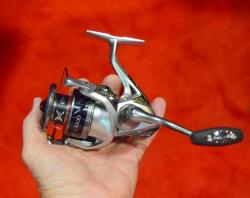
Best of Show – Freshwater Reel – Shimano American Corporation
Product: STRADIC C3000HG-K
Media Contact: John Mazurkiewicz jpmazurk@ameritech.net

Best of Show – Saltwater Reel – Pure Fishing, Inc.
Product: PENN Clash
Media Contact: Ron Giudice ron@blueherron.com

Best of Show – Fly Reel – Pure Fishing, Inc.
Product: New Pflueger Medalist Fly Reel
Media Contact: Ron Giudice ron@blueherron.com

Best of Show – Hard Lure – Savage Gear
Product: Hard Shrimp
Media Contact: Brandon Cotton brandon.cotton@okumafishing.com

Best of Show – Soft Lure – Koppers Fishing
Product: LIVETARGET Hollow Body Sunfish
Media Contact: Tom Chopin tom@kopperfishing.com

Best of Show – Lifestyle Apparel – Under Armour, Inc.
Product: UA Storm Covert Pant
Media Contact: Eddie Stevenson eddie@driftwoodmedia.com

Best of Show – Technical Apparel – Lifeshirt
Product: Aegis Lifeshirt
Media Contact: Jim Emmons jemmons@lifeshirt.com

Best of Show – Boating Accessories – YETI Coolers
Product: YETI Hopper 20
Media Contact: Mike May mikemay@backbonemedia.com

Best of Show – Boats – eddyline kayaks
Product: eddyline C-135 YakAttack Edition
Media Contact: Tom Remsing remsing@eddyline.com

Best of Show – Combo – Lew’s Fishing Tackle
Product: Mach 1 Combo
Media Contact: Gary Dollahon gary@dollahonpr.com

Best of Show – Electronics –Johnson Outdoors
Product: Humminbird HELIX 7 SI
Media Contact: Jim Edlund jim@traditionsmedia.com

Best of Show – Eyewear – Costa
Product: Rooster
Media Contact: Liza Jones liza@fullcirclepr.com

Best of Show – Fishing Accessory – RinseKit
Product: RinseKit
Media Contact: Whitney Coombs whitney@verdepr.com

Best of Show – FishSmart – Release Ruler
Product: Freshwater Release Rulers
Media Contact: Neilson Paty neilson@jettyproductions.com

Best of Show – Fly Fishing Accessory – Simms Fishing Products
Product: G3 Guide Stockingfoot
Media Contact: Rich Hohne rhohne@simmsfishig.com

Best of Show – Footwear – Simms Fishing Products
Product: Current Shoes
Media Contact: Rich Hohne rhohne@simmsfishig.com

Best of Show – Giftware – YOLOtek Product:PowerStick
Media Contact: Christian Corley christian@yolotek.com

Best of Show – Kids’ Tackle – Steinhauser, LLC
Product: Tangle-FREE Combo
Media Contact: Ralph Duda rduda@lilanglers.com

Best of Show – Line – PowerPro
Product: Maxcuatro
Media Contact: John Mazurkiewicz jpmazurk@ameritech.net

Best of Show – Tackle Management – Eposeidon Outdoor Adventures, Inc.
Product: KastKing Rack ’em Up Rod Racks
Media Contact: Tom Gahan tgahan@eposeidon.com

Best of Show – Terminal Tackle – Eagle Claw Fishing Tackle
Product: Lazer Sharp Fillet Knife
Media Contact: Nickie Kiefer nkiefer@eagleclaw.com

ICAST 2016 will be held at the Orange County Convention Center, Orlando, Fla., July 12 – 15, 2016. For complete ICAST information, visit ICASTfishing.org.

###

The American Sportfishing Association (ASA) is the sportfishing industry’s trade association committed to representing the interests of the entire sportfishing community. We give the industry a unified voice, speaking out on behalf of sportfishing and boating industries, state and federal natural resource agencies, conservation organizations, angler advocacy groups and outdoor journalists when emerging laws and policies could significantly affect sportfishing business or sportfishing itself. ASA invests in long-term ventures to ensure the industry will remain strong and prosperous, as well as safeguard and promote the enduring social, economic and conservation values of sportfishing in America. ASA also gives America’s 60 million anglers a voice in policy decisions that affect their ability to sustainably fish on our nation’s waterways through KeepAmericaFishing™, our angler advocacy campaign. America’s anglers generate over $48 billion in retail sales with a $115 billion impact on the nation’s economy creating employment for more than 828,000 people.

Are Big Baits Better for Big Bass?

Lunker Baits for Lunker Bass

By Frank Sargeant
from The Fishing Wire

There’s something that just doesn’t compute for me when it comes to tying a $50 bill on the end of my line and throwing it out there for the Fates to intervene.

But for a growing number of bass anglers, the opportunity of hooking a lunker largemouth is worth the risk: lures that cost $50 and even more are now available, and a fair number of anglers are catching fish on them.

Bucca Bull Shad Bait

Bucca Bull Shad Bait

One of the best is the big “Bull Shad”, a hand-carved lure produced by one Mike Bucca in his garage in North Georgia. The lure is pretty much a spitting image of a sizeable gizzard shad, and they do catch really big fish for anglers with the patience to throw them long and hard–they’re a favorite in the hard-fished clear water lakes of California, for example, where giant Florida-strain largemouths of 12 pounds and more are common.

At least one local guide has also discovered the magic of the Bull Shad. Captain Mike Carter, who fishes mostly from Goose Pond area up-river at Guntersville, has been putting some very large summertime bass in the boat in the last week on this lure.

Carter says his success on fish to 8 pounds has been primarily on grass edges and flats, not over the main channel where most bass anglers spend most of their time in the heat of summer. He says the first hour of daylight and the last after sundown are prime times, and even at that it takes lots of casting to find a bass big enough to eat the jumbo lure, but production has been impressive considering how difficult it usually is to catch big bass at this time of year. (You can learn more from Carter by visiting www.anglingadventures.info.)

The basic Bull Shad is a 5-incher that sells for $49.95 at Tackle Warehouse and other retailers. It’s available in a floater, a slow sinker or a deep diver. Bucca also makes larger–including much larger–models, up to 9 inches long. The big one weighs 5.5 ounces, about as much as a hand-sized bluegill, and it takes a man to throw it more than a few times–to say nothing of some man-sized tackle. The lure has a man-sized price, too, at $89.95!

The lures have four wobbling segments and a swimmer tail, and are so nicely carved that they look like someone has cut a live shad into four pieces and then stitched them back together. Bucca says the appearance, along with the action, does the job on big fish, which are very hard to fool on baits that are less lifelike because they’ve probably been caught many times over their life span.

Be that as it may, the idea of risking a lure that’s going to take a full day’s labor at minimum wage to purchase will give many anglers pause. Braided line testing 80 or 100 pounds should give some assurance, but when you hook up with a really big fish, anything can happen–failed knots or a knick in the line might bring on disaster.

The Bull Shad is not the only high-dollar lure on the market these days–many imported from Japan are in this price range, and like Bucca’s lure, they offer incredible realism and action, but at a price that will limit purchase only to the most avid anglers.

Some older anglers may remember a few decades back when the first fat lipped crankbait, the “Big O” came out and proved itself incredibly successful–the few who owned these lures sometimes rented them out for a day of tournament fishing. That may be no bad way to go when it comes to the new breed of high-dollar lures, for those unwilling to take the risk of amortizing a $50 lure.

When Should I Use Big Baits for Bass?

When Big Baits Are Best for Bass

How up-sizing can work magic on heavily-pressured waters, especially during “heat fronts”

By Steve Pennaz
from The Fishing Wire

Steve Pennaz with bass

Steve Pennaz with bass

Pennaz has found that soft plastic lizards are a great bait to fish during both cold and heat fronts. “The beauty of the lizard is it resembles salamanders, which pack a big caloric punch, motivating bass to eat during negative to neutral bites. Also, not a lot of anglers throw them anymore, so fish are less conditioned on pressured waters,” says Pennaz.

Fish studies confirm that bass can become conditioned through continual exposure to baits. Especially on heavily-pressured waters, bass do learn to avoid baits. Berkley’s Dr. Keith Jones covers the subject in his book Knowing Bass: The Scientific Approach for Catching More Fish. In it, Jones discusses research evidence that suggests bass remember lures for a long time – “for at least up to three months and perhaps much, much longer.”

The challenge for the angler is staying ahead of the curve. One of the best ways is to fish outside of the box, choosing baits the fish have probably never seen before. Or fishing baits that have fallen out-of-favor for newer, trendier baits.

Or simply up-sizing the same baits we already know are effective.

I remember fishing a river system one spring day. We had started early to avoid the crowds, then battled skyrocketing temps throughout the day. I know a lot of anglers like to be on the water during those warm spring days, but I prefer more stable conditions.

Fishing was predictably slow under the changing conditions so I slowed down like you do during a cold front and went to smaller baits while casting to timber and current seams along the bank. We landed four bass running between 1.5 and 2 pounds.

There was another boat working the same bank behind us…with a lone angler in the bow. I saw him hook up a couple times, but didn’t think much of it at the time.

Later, back at the launch, I asked the other angler how he had done. He said he caught five fish, including a 3-pounder and two 4-pound fish flippin’ the same river timber I had fished ahead of him.

I asked him, “What bait where you flippin’?”

His plaintive response: “Power Lizards.”

I hadn’t thought to go larger with my presentation and so this information was striking. But the more I thought about it, the logic behind it was too strong to ignore…how many other anglers would go in this direction during difficult situations like cold fronts or what I call “heat fronts”?

When you get a week of average temps and all of a sudden the temperature sky-rockets into the 80 or 90s (or higher), water temps change drastically. It’s like what happens during a cold front, but in reverse. And the effects on bass and other fish are the same; their movements slow. If you monitor the water temps on your electronics, there are situations where increases can be as much as 8, 10 or even more degrees in a day. Where I live, going from 40-degree overnight air temps to 80 degrees by late afternoon is not uncommon!

When faced with drastic temperature increases, I often hold off fishing my best spots until late in the day when temperatures stabilize somewhat. By this time, the biggest fish with the most mass will have had time to acclimate to the change and will be more active. The bass that do feed during these dramatic shifts in water temperature often look for the biggest meal with the least amount of metabolic effort. Like any host of large amphibians, salamanders and the like.

Still, a lot of anglers are hesitant to fish lizards, thinking they’re only big-fish baits. In reality, a lizard doesn’t appear too large to bass, which typically track prey from behind. The visual cue is only part of the equation. What can really stimulate their feeding or attack response has to do with how they feel that bait. With its many appendages, a lizard displaces more water and produces more vibrations, which the bass picks up via its lateral line.

An angler needs to ask a few questions:

How big of a bait can I get away with on a given body of water? And secondly, what will be most appealing to the biggest fish in a school?

At times it makes sense to start smaller, but there are times when going large is the right move.

If the waters have big fish and lots of pressure, I may start bigger because I can. And for the past couple of years, I’ve been fishing lizards … a lot.

Why more anglers aren’t fishing lizards is a real head-scratcher. But I can relate. The past decade we’ve seen so many new and effective creature-style baits and worm designs hit tackle shelves that it was easy to forget the proven performer.

Big mistake. Lizards worked then — and still do.

Lizard Rigging Tips

When rigging lizards, hooks can make or break your day. I learned long ago that while great for compact, creature baits, EWG-style hooks are not the best choice for Texas-rigging lizards or big worms.

Instead, I use a 5/0 or 6/0 offset worm hook that provides great hook-up ratios and allows the baits to move fluidly, as designed.

Historically, my favorite lizard is the 6-inch PowerBait Power Lizard, although I’m starting to catch a lot of bass on the Gary Klein-designed Havoc Boss Dog, too. But given that bass will often grab lizards and big worms in the middle – rather than inhaling the entire bait – the PowerBait formula really puts the odds in your favor. They simply hold on to the bait longer, giving you more time for a solid hookset.

In terms of color, my favorite is pumpkin with a chartreuse tail, which is based purely on nostalgia; it produced my first giant bass years ago and still works great today. But I also carry black/blue, black, green pumpkin and watermelon.

In terms of line…I fish 10- to 15-lb. Berkley Trilene 100% Fluorocarbon in clear waters; 15- to 17- lb. for stained conditions. And in waters with double-digit bass, I’ll go even heavier. I like the sensitivity you get with fluoro, the fact it sinks, and the near invisibility factor.

Another cool thing about fishing heavy fluoro with lizards or big worms is it decreases the amount of tungsten or lead weight you need to use. You get some sinking factor with the line itself. That means I’ll often fish lizards or big worms weightless in shallow-water (1.5- to 2 feet) situations. Plus, the Berkley PowerBait Power Lizard is pretty bulky in the body. All this adds up to long casts and easy fishability.

Rod & Reel Setup

One of my secrets to fishing lizards is upping the speed. Rather than the typical “lift-drag” Texas rig retrieve, I’ll use a twitch-twitch-reel-reel-shake and repeat. This gets the appendages really pushing water. To those ends, I like a higher-geared baitcaster like the 7.0:1 Abu Garcia Revo MGX.
Big hooks for big baits

Big hooks for big baits

Pennaz prefers a 5/0 or 6/0 offset worm hook over an EWG for Texas-rigging lizards or big worms. “You’ll get greater hook-up ratios and a more natural bait action,” says Pennaz.
Speaking to that reel, it weighs around 5 ounces, which means when combined with a feathery 7’6″ fast action, medium-heavy power Abu Garcia Veracity, you can easily fish these big baits all day without fatigue. Plus, fishing lighter rods and reels gives you better sensitivity…important for detecting bites on the drop.

Parting Words

This season pay attention to drastic temperature swings and fish them like cold fronts in reverse. Size up and try lizards for more and bigger bass, even during difficult situations on pressured waters.

About Steve Pennaz

Steve is one of the most trusted voices in fishing. From 1988 until 2012, he served as Executive Director for the North American Fishing Club, including North American Fisherman magazine, fishingclub.com and the club’s daily enewsletter “Fishin’ Informer.” He’s also hosted several television series, including “North American Outdoors,” “North American Fisherman,” and “Fishing Club Journal.” Pennaz launched Knot Wars, now a successful app on iPhone and Droid. He excels at finding and catching fish on new waters, a skill that now drives “Lake Commandos.”
Fishing Fathers’ Day Gifts

A Few Ideas for Dad’s Day Gifts

By Frank Sargeant
from The Fishing Wire

Forget the socks and ties, OK? We want outdoors stuff for Father’s Day. Here are a few suggestions:

Anglers are hard on shoes, no doubt about it. Our feet are frequently wet, from spray, from rain, or from hopping over the side to beach the boat. It’s not uncommon to have shoes drizzled with fish blood and slime and with mud, either. And most of us spend long hours standing up to fish–sitting restricts casting efficiency too much.

Most of us also like “kick off” type shoes, low-cut, just in case we someday fall over the side–it happens to everybody eventually.

Finding shoes that are at home in the water, stain-resistant, comfortable enough to make long hours of standing bearable, and easy to get off and on can be a bit of a challenge.

Soft Science is one good solution. Their “Fin” model shoes are amazingly comfortable and light–under a pound for a pair, which is about half the weight of conventional shoes. The microfiber mesh uppers keep feet cool, whether you wear socks or not, and the material is both strong and stain-resistant.

The removable insole is made of a soft composite the company calls Trileon, which is waterproof, stain-resistant, odor-resistant and washable, and which provides great arch support and heel cushioning. The sole is made of this same material, and it’s non-marking on boat decks and very “grippy”, even on wet fiberglass or mossy boat ramps.

Vents in the sole allow water to run out if you go wading, and the sole wraps up well over the mesh uppers to give a bit of protection on rough terrain. Fins are available in sizes from 6 to 13, and in five colors. Price is $79.99; www.softscience.com.

The Impecca Power-It is an amazingly compact jump-starter, about the size of an iPhone 6 Plus (but thicker) and yet it’s got the oomph to kick off your outboard or tow vehicle for an emergency start. It’s also a charger that works for 12-volt marine and automotive batteries, and it also has dual USB outlets to charge cellphones, tablets and laptops. It includes an LED flashlight with SOS signaling device–all for $79.95 in the 8,000mAh version.

The company says the product will recycle 3000 times before needing replacement. Larger versions capable of jumpstarting even large trucks and big RV’s are also available; www.impecca.com.

Also for those who need portable power, the Olympia External Battery/Dual Solar Charger provides charging and battery power for those who go “off-grid” in areas where electrical power is not available. The system includes a 5500mAh rechargeable battery, solar recharging panels and both USB and micro-USB ports for charging. It’s designed to handle wet weather and the bumps and shocks of backcountry life, according to the company. It charged my iPhone 6 in about three hours, and the company says it will charge most tablets in 5 to 6 hours. It’s $59.99: www.olympiaproducts.com.

Every outdoorsman can use another set of Cablz, the clever sunglasses retainers made of stainless steel cable or heavy monofilament. These things not only keep your glasses handy at all times, they also don’t hang on the back of your neck and draw sweat, as cloth retainers do.

The rubber tips of these retainers slide easily onto the ear pieces of most glasses, and several models have adjustable lanyards, especially handy if you need to keep several pairs of glasses handy, as I have to do these days–one for running the boat, one for reading the GPS and one for tying knots. They’re 11.99 to $14.99. A flotation device that slides on the retainer is also available–I’ve never had one blow off, but considering the price of prescription sunglasses these days, probably a good idea; www.Cablz.com.

How Can I Catch White Bass?

A Cast to the Other Bass white bass

Overlooked and underappreciated, white bass are a blast

By Mitch Eeagan

You’d be hard-pressed to find an avid angler who doesn’t recognize bass as the most sought-after sport fish in North America. We all have our favorite fish, but statistics prove that bass are #1.

Overlooked and underappreciated, however, is a bass of a different color. Its DNA differs from the most popular, yet the species roams a majority of waterways throughout the lands. I’m talkin’ white bass…. And they are a blast to catch.

Mae Edlund and White Bass

Mae Edlund and White Bass

Eight-year-old Mae Edlund is all smiles during the Mississippi River white bass blitz! An H20 Precision Jig and minnow or B Fish N Tackle Pulse-R is like candy to these voracious pelagics!

White bass fans look forward to massive spring spawning runs in rivers that connect to the large natural lakes and reservoirs the fish call home during the rest of the year. But after the run, most anglers set their sights on other species.

So why are they summer’s Rodney Dangerfield, earning such little respect?

It can’t be their unwillingness to whack a vibrating or flashing lure. The fact is, white bass have voracious appetites, and once schools are located, the catching comes quite easy.

It’s certainly not what they lack during battle. White bass zig-zag and power-dive straight for the fathoms. And, by far, it’s not their poor table fare. On the contrary, white bass make for good eats if you ice ‘em right away or keep them in a well-aerated livewell – and then remove all the red-colored flesh when filleted.

More than likely, it’s simply because they aren’t easy to find come summertime. Just like their saltwater cousins, the striped bass, white bass turn pelagic. They don’t dwell near bottom or hug shoreline structure, making them more difficult to find. Instead, white bass rove high in the water column and create havoc with pods of nomadic baitfish.

Or maybe they’re simply not trendy enough to target. But that’s about to change.

When the lovin’ is over

Enter ardent angler Jim Edlund, who is far from troubled to speak in favor of targeting white bass. The Minnesota-based outdoor writer says he fishes white bass every chance he gets, and now coaches his daughters on how to catch them year-round; even well after the massive spawning migrations have ended.

“Springtime is primetime, typically when water temps are in that 50 to 60 degree range. Fish a day or two before, on, or immediate after a full moon and you’re really rocking. That’s when the spawn is in full-swing. It’s the perfect bite to get kids really excited about fishing. Not surprising, my kids are big fans of white bass,” says Edlund

Although spring can be easy pickings, Edlund says good electronics can help you find white bass the rest of the year.

“Despite all the pretty pictures of bridges and sunken boats you see in the advertising, what Side Imaging really does is minimize the amount of time it takes to find fish,” says Edlund. “I simply idle around river points, sandbars, feeder creeks and watch for white splotches of bait and fish on my SI screen. Once I see life, I scroll the cursor over the spot and boom, there’s the waypoint on my LakeMaster map. This lets me back off and idle into the spot from upwind with my Minn Kota and get the kids casting without spooking them.”

A fan of river fishing from a small, aluminum Lund that’s taken years of abuse, Edlund calls his system “high-tech, old-school.”

“To think that a guy can get Side Imaging, Down Imaging, mapping and 2D sonar for under $500 is awesome. Fishing with the Humminbird Helix SI GPS is like drinking Don Perignon on a Boone’s Farm budget.”

As Edlund nears the waypoints he marked on Side Imaging, he switches to split-screen view of 2D sonar and LakeMaster map, noting the depth marks start appearing, more than likely the same depth white bass will move into if the wind kicks up and waves roll over sunken islands or points adjacent to the deeper water.

“I can’t tell you how many times I’ve stopped jigging walleyes on the Mississippi River to chase a school of white bass. I have buddies who just shake their heads. Then out comes the casting stick for as long as the whities will play along.

“Same goes for North Dakota’s Devils Lake. Take a break from walleyes and survey a few windswept shorelines with Side Imaging until we find fish; doesn’t take long. And they’re giants out there. They’re just too much fun to be ignored, especially with kids in the boat. My new plan is throwing Clousers at ‘em with a 4 or 5 weight fly rod. That should be a hoot!”

Overall, once white bass have spawned, they move out into the main lake and can be found in areas with a turbid layer over ultra-clear water. In reservoirs, both bait and bass are often found along the old river and creek channels. In natural lakes, white bass tend to hover over main-lake flats. It’s in these areas you may see baitfish leaping for their lives, indicating there are white bass below attacking the clan.

“Although electronics are great, always pay attention to what’s going on around you, like busting bait and surfacing fish. And watch where the birds are feeding on the water,” says Edlund.

Once it’s determined the bass are at the surface or just below, it’s time to cast into the chaos.

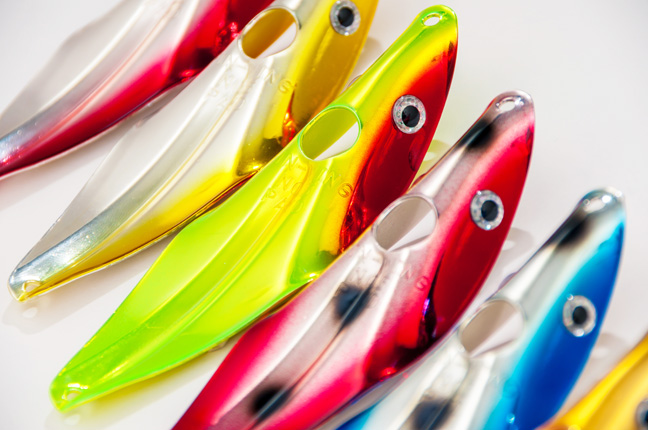
Fin-Wing Lure

Fin-Wing Lure

Fluttered deep or burned across the surface, the Fin-Wing is a nemesis to white bass

Gearing up

Lures and gear should be beefed up from what one might expect when catching fish that range from 1-4 pounds. Because white bass feed on shad and shiners, lures that match the size of the baitfish are best. Vibration and flash are key as well.

Soft jerkbaits with large paddle tails, such as 3.5-inch Castaic Jerky J Swim Series and Custom Jigs & Spins 3.25-inch Pulse-R Paddle Tail, rigged onto a jig head with a narrow shape like an H20 Precision Jig, or the Rapala Ultra-Light Rippin’ Rap are some of Edlund’s favorite baits to cast. He throws them with 10-pound-test superline and an 8-pound-test fluorocarbon leader on a fast-action medium-power St. Croix AVID-X spinning rod.

“I could use lighter gear, but I don’t like to baby ‘em. Plus, it’s a numbers thing; I want to boat the fish without any unnecessary ballet and get right back out to hot fish. Plus, these same river spots can produce some big ‘eyes, smallies, cats … when there’s a lot of bait getting slashed, your next fish could be anything,” says Edlund

Spinners are also a great choice for whities, with number-3 and -4 Mepps Aglia in-line spinners mainstays. Spoons with a wide wobble that can be fished both fast and slow and can be stopped and fluttered on the fall, such as a size-1 Fin-Wing or Custom Jigs & Spins Pro Series Slender Spoon, work wonders, too.

Cast, retrieve, repeat

Overlooked and underappreciated? That’s the white bass. Once located high in the water column, catching them is straightforward – just cast, retrieve and repeat. Once you land a few you’ll realize just why white bass should rank right up there with black and brown bass.

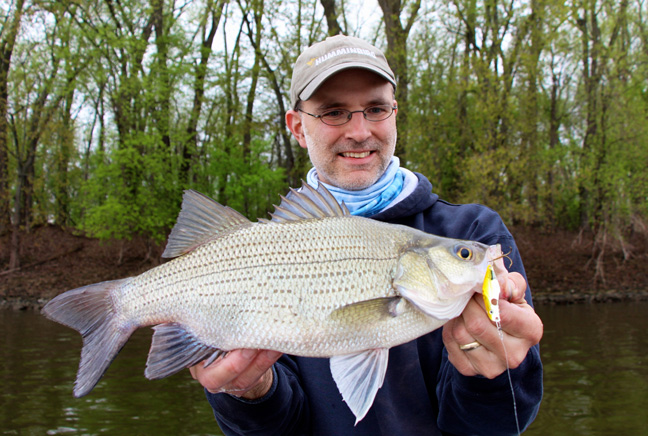
Jason Halfen with White Bass

Jason Halfen with White Bass

Jason Halfen with a chunky and spunky white bass snared on a Fin-Wing

Mitch Eeagan is a writer that lives off the land and water, who resides in the heart of the mosquito-filled cedar swamps of Michigan’s Upper Peninsula.

Why Is April A Big Bass Month?

April is a great month to catch a big bass and it will just get better and better the next few weeks. A couple of text pictures reminded me just how good it can be. Peyton James sent me a picture of two bass he caught a few days ago at Lake McIntosh. Both were over five pounds and they hit a pumpkinseed Fluke. Peyton catches some big bass – a few years ago I talked about the big bass he caught at High Falls Lake.

Peyton’s fish hit in shallow water with some grass. Eric Bruce also sent me a picture last week of a five pounder he caught on a Rooster Tail in shallow water. All these five pounders came from smaller lakes which warm faster than the big ones. But the big lakes are getting good, too. The 5.65 pounder I caught at the Top Six was the seventh largest fish caught in that tournament, so there were some good ones. Mine hit in about three feet of water and I caught it on a Carolina rigged green pumpkin lizard with its tail dipped in chartreuse JJ’s Magic.

As soon as the water starts warming and the days start getting longer bass get the spawning urge. They start their annual migration from their deep winter holding areas to shallow spawning flats, usually in the backs of protected coves. Hard bottoms are key. And they feed heavily getting ready for the stress of bedding.

After they spawn the females are hard to catch for a week or so, then they go on a feeding spree. And the males guarding the nests and fry will hit anything that comes near them. While they are bedding you can sight fish for them, dropping something into their bed to irritate them into hitting. But that can be a slow, frustrating process. I have cast to an eight pound bass on the bed for over two hours, only to give up and leave without getting her to bite.

Some say catching bass on the beds is bad for the population, but biologists say it does not hurt them in our waters. Although you may remove a bass and keep it from spawning, she has already spawned many times over the years, so her genes are well established in the body of water. And bass spawn so prolifically, with each female producing thousands of eggs each year, that fishermen can’t really hurt the population.

Some northern states have closed seasons on bass fishing during the spawning times. They may need it since bass do not reproduce as well in colder waters, and have less time to spawn. Here in Georgia bass will spawn from late February through June on most lakes. Some females will be spawning all those months, and some spawn deep enough you can’t see them to sight fish for them.

I have to laugh at a fisherman who says he will not sight fish for bass on the bed, it is unethical, but he will drag a lizard all over the spawning flats and catch bass off the beds he can’t see. Sure, he is not sight fishing, but he is still catching them off the beds just the same.

No matter how you like to fish for bass right now is a good time to go to any of your favorite pond and lakes and catch bass. Sight fish for them if you like. Or try Flukes, Rooster Tails or lizards in the shallows. You might catch the biggest bass of your life.

Bass Pro Shops Pro Qualifer Baitcasting Reel Review

Bass Pro Shops Pro Qualifier Baitcasting Reel – List price $99.99 – often on sale for significantly less.
Bass Pro Shops Pro Qualifier Baitcast Reel
buy now

A few weeks ago during a club tournament the level wind on one of my favorite baitcasting reels started sticking on the side when it started to reverse. I have had this problem on several reels over the years. With heavy use the paul that moves back and forth in the screw and moves the line guide wears and sticks. Everytime in the past it was a simple matter to get it replaced but my repair shop could not get one for this reel. So I needed a new reel.

I had heard some good things about the Bass Pro Shops Pro Qualifer reel so I checked online and they were on sale for $79.99. The reviews there were very good. I have a media discount card – disclaimer, I get 25 percent off on Bass Pro Shops branded items – so I drove to the Macon Bass Pro Shop. Unfortunately for me, the sale ended the day before I went, so with my discount I got two of the reels for about the sale price that I missed.

I put the reels on two of my rods, replacing the broken reel and changing out an old round reel on another rod. That Saturday my bass club had a youth tournament at Jackson Lake and a club tournament on Sunday at Lake Oconee, so I got to test them out under tournament conditions.

Both reels were great! I cast a chatterbait on one and a crankbait on the other. I had spooled both reels with 14 pound Bass Pro Shops Excel Monofilament Line. Bass Pro Shops Excel Monofilament Line - 1 lb. Spool
buy now

I have used this line in the past and it is a very good line for the price. I got a 120 yard spool for $10.99, a little less with my discount.

Goth reels, with just a little adjustment, were easy to make long casts without backlash. They were very smooth during the cast and retrieve. And the drag with smooth and easy to adjust to the tension I wanted for the rod and bait I was using.

Bottom line is, I will definitely buy more of these reels to replace some of my older reels.

Rapala DT 6 Crankbait Review

A broken DT 6 and bill, one with a cracked bill and a XR full of water

A broken DT 6 and bill, one with a cracked bill and a XR full of water

I have a love/hate relationship with Rapala DT 6 crankbaits right now. In five club tournaments so far this year i have won two, placed second in two and fifth in one. Of the 19 keepers I have weighed in, 17 have been caught on crawfish Rapala DT 6 crankbaits. In January the first tournament I fished I had three keepers and the biggest one, a 3.7 pounder, hit the DT 6. The second January tournament I won with a limit and caught all five on the DT 6. In early February I had just one keeper, but it was on the DT 6 but then in the next one I had a limit and caught all five on the crankbait. In the first March tournament I again had a limit and four of the five were on the crankbait. And in the December club tournament two of the three I landed hit the DT 6. But I have broken five of the $8.00 crankbaits in those five tournaments!

I started using them last fall when I did a Georgia Outdoor News article on West Point with guide Ken Bearden. He caught several nice bass on the DT 6 crankbaits that day so I bought a few. They all run true right out of the box and have good hooks on them. And bass seem to like them.

Breaking the first two were my fault. I slapped them on the water to get a leaf off and broke them. The first one I thought it was a defective plug or I had cracked it somehow, but the second one made me realize I could not do that so I was real careful after that. But while fishing at Bartletts Ferry in the third tournament one broke on a cast. Then after the fourth tournament at Sinclair I was retying to get ready for the West Point tournament and saw the bill was cracked on that plug so I got a new one out.

During that tournament I was reeling the new plug very slowly, bumping the bottom, when my line went slack. I thought a bass had hit from behind and ran toward me so I started reeling fast, and reeled in the lip. A few seconds later the plug floated up.

Rapala has always made quality lures. I caught many bass on the floating Rapala while fishing ponds growing up and then caught a lot on the Countdown modle in bigger lakes when I started fishing tournaments. And I have caught hundreds of bass on Shadraps since they came out in the early 1980s.

I had another problem with the Rapala XR jerkbait. I tied a new one on at Clarks Hill in February and after a few casts it started sinking. I looked at it and it had water in it. I did catch two bass on it after that but by then it sank so fast I quit using it.

I am sending some of the broken plugs to Rapala. It will be interesting to see what they say.

Second Place At West Point Lake On A Rapala DT 6 Crankbait

Two tournaments at West Point in the last month showed fishing can be good but the water is still a little cold for it to be great for everybody. The Potato Creek Bassmasters had a tournament there on February 14 and the Flint River Bass Club fished our tournament on March 8 and both had some members with decent catches but others struggling to even catch a keeper.

In the Potato Creek tournament, 16 members fished for eight hours to land 15 keepers weighing about 36 pounds. There was one five-fish limit and nine fishermen didn’t catch a keeper. At West Point largemouth have to be 14 inches long to keep but spots an be 12 inches long.

Lee Hancock had the limit weighing 14.33 pounds and won, and his 3.99 pounder was big fish. That is an excellent catch any time of year. Bobby Ferris had four at 9.83 pounds for second, third was Eric Blessitt with two at 4.96 pounds and Ryan Edge placed fourth with one at 1.83 pounds.

In the Flint River Tournament 19 members fished eight hours to land 24 keepers weighing about 49 pounds. There were two five-fish limits and eight members didn’t have as keeper. The water had warmed some and the weather was much nicer the day we fished, making it a little better.

Niles Murray won with five weighing 9.31 pounds, my five at 9.08 pounds was second, third was Chuck Croft with three at 6.11 pounds and Jack Ridgeway had two at 5.80 pounds for fourth. Gary Hattaway had a 5.30 pound largemouth for big fish. There were only four largemouth weighed in, all the rest were spotted bass.

I have a love/hate relationship with Rapala DT 6 crankbaits. Last Saturday when checking and getting my tackle ready for the tournament I looked at the bill of the one I had caught four of my five keepers on at Sinclair. It was cracked so I tied a new one on. Sunday morning we started at 8:00 and by 10:00 I had caught four keepers on it.

A little after catching my fourth fish I was reeling it along, bumping the bottom, when the line went slack. I thought a bass had hit it and ran toward me so I started reeling fast, and reeled in the bill of the new plug. It had broken just behind the line tie.

So far this year I have broken the bill on five of these $8 crankbaits. The first two I thought were my fault since I slapped them on the water to get leaves off them and they broke. But the third one broke at Bartletts Ferry soon after I landed my only keeper that day, and the one I caught fish on at Sinclair was not useable since it was cracked.

I wish I was not catching almost all my keepers on this bait so I could quit using it. I am scared I am going to hook a big bass on one and lose the fish when the bill breaks. That is when I will throw all of them away. But right now I would rather catch fish and take a chance on breaking the bill than not catch fish at all.

I have three of the baits on my table to send to Rapala. It will be interesting to see how they respond. I have always liked Rapala baits. One of my favorites growing up fishing ponds was the 11S floating Rapala and then I started catching a lot of fish in bigger lakes on the Countdown model. And since they came out Shadraps have caught many bass for me.

I landed my fifth keeper on a jig head worm after losing one on it in the tournament. I got seven bites all day and landed five of them so I was happy with second place.

Can A Dockworkers Strike Affect My Fishing?

Dockworkers Strike Keeps Fishing Gear From Anglers
from The Fishing Wire

“We have hundreds of containers sitting offshore right now,” one fishing industry executive told me last week at the Bassmaster Classic, “the country’s losing hundreds of millions of dollars every day and the administration doesn’t even seem to notice-or care.”

Thousands of containers on hundreds of ships clogging ports on the west coast may finally begin to unload as a tentative five-year agreement has been reached after nine months of extremely contentious negotiations between the International Longshore and Warehouse Union (ILWU) and Pacific Maritime Association (PMA). On Friday evening, the groups issued their joint announcement crediting Labor Secretary Ray Perez with helping break the stalemate.

These latest rancorous disturbance is really nothing unprecedented in a rocky relationship that traces its roots back to the great depression. This latest slowdown was never really a strike, because dockworkers used what owners called “questionable safety violations” to slow work to a crawl. In retaliation, the owners cutting nights, weekends and overtime hours in retaliation.

But not everything is immediately back to normal. Industry officials I’ve spoken with tell me it will take “some time” go get supplies of finished goods and manufacturing components back to normal levels. The Port of Los Angeles, for example, has as many as 54 ships waiting to offload and hundreds of containers sitting on the docks waiting to be processed.

Bassmasters  Classic Outdoor show

Bassmasters Classic Outdoor show

Crowds of consumers walked, shopped and even purchased product as the 2015 Bassmaster Classic visited Greenville, South Carolina. Jim Shepherd/OWDN photo

The Port of Oakland says it may need eight weeks to catch up with processing, and that it, like Los Angeles, will work to offload perishables and other needed cargo as priority items.

As the fishing crazy crowd wandered through the exhibits of the 2015 Bassmaster Classic, they really had no way of knowing that many of the new items on display weren’t available for purchase. That’s because, as one exec told me, “they don’t know just how deeply this slowdown has cut into the country’s safety net of product supply.”

Overall, the mood at this year’s Classic was improved over the last couple of events. The mood was lightened somewhat last year as boat manufacturers reported they were finally seeing a consumer resurgence after four years of a faltering economy. This year several manufacturers tell me their big challenge isn’t rolling out new product, it’s keeping up with demand.

Upgrades to existing boats remained a hot market, but manufacturers like Rigid Industries, manufacturers of high-end performance LED lighting for vehicles, say that while demand remains strong in that category, many new buyers are planning the lighting upgrades into their original purchasing budgets.