Category Archives: Fishing Tackle

Rods and reels to live bait

The Hook Depthfinders from Lowrance

Mew depthfinders

Mew depthfinders

Lowrance is announcing a new family of fish finders/chart plotters 式 the HOOKT series, featuring 9 , 7 , 5 , 4 and 3 inch models, and the End of Life for all models of the Elite CHIRP series.

The HOOK series features HOOK 9, HOOK 7, HOOK 5 and HOOK 4 standalone displays that combine CHIRP Sonar with DownScan ImagingT technology, a super bright, LED backlit display, built in GPS antenna and a wide range of high definition mapping opt ions. The HOOK family also includes the HOOK 3 series, featuring bright color displays with Broadband SounderT or DownScan ImagingT. CHIRP Sonar Advantage Easier to identify and distinguish bait and game fish targets • Better target identification at greater depths Mark fish clearly at faster boat speeds Exclusive HOOK CHIRP Advantages No other standalone fish finder has integrated CHIRP sonar No other standalone fish finder offers fish revealing DownScan Overlay Multiple CHIRP frequency options from a single transducer CHIRP sonar performance with the Lowrance HDI SkimmerY TrackBackT sonar history Simple to Use Intuitive page selection Simple menu selections On screen sonar adjustments Quick release, tilt swivel bracket with optional RAMY mount integration Best Mapping Insight GenesisT Insight PRO Navionics C MAP Elite CHIRP End of Life With the announcement of the new HOOK series all Elite CHIRP series models are being discontinued

Elite CHIRP inventory is available while supplies last, on a first come, first served basis, and must be delivered in 2015. If the Elite CHIRP model you want to order is not available, you can place an order for a new HOOK series unit with shipments beginning in December 2015

Lowrance is announcing a new family of fish finders/chart plotters 式 The Elite Ti series, featuring 7 and 5 inch touchscreen displays. The Elite Ti series combines high end features with powerful performance at an affordable price.

Hook depthfinders

Hook depthfinders


The Elite Ti series features 7 and 5 inch standalone displays that include a touchscreen, easy to use interface, CHIRP Sonar, StructureScanY HD SideScan and DownScan ImagingT, built in GPS antenna and a wide range of high definition mapping options. Elite Ti models support Low/Mid/High CHIRP and 50/83/200/455/800kHz frequencies.

Integrated wireless connectivity allows boaters to not only download software updates directly to the unit, but also gives them the capability to download Insight Genesis custom maps Directly to the chartplotter 式 for immediate use. The Elite Ti series is scheduled to start shipping in February 2016. Elite Ti Feature Summary: High resolution touch display LED backlit color display with touchscreen interface provides fast, fingertip access to all Elite Ti features CHIRP Sonar, StructureScanY HD and DownScan ImagingT CHIRP Sonar offers improved fish target separation and screen clarity, while the StructureScanY HD sonar imaging system with exclusive Lowrance DownScan ImagingT delivers photo like images of fish holding structure on both sides and directly beneath your boat. StructureScan HD requires optional TotalScanT transducer. TrackBackT Rewind your CHIRP sonar, SideScan or DownScan Imaging history to review structure or fish targets and mark the location with a waypoint. Internal GPS antenna Highly accurate, built in GPS antenna plus a detailed U.S. map Optional chart upgrades Optional Americas chart upgrades include Lake InsightT and Nautic InsightT PRO and HD, Navionics HotMapsY Premium and Fishing HotspotsY PRO. Global chart upgrade options include Navionics + and Jeppesen C MAP MAX N and MAX N+. Built in wireless connectivity Provides access to the GoFree Cloud where you can shop, purchase, download and immediately use Insight maps, and third party maps from GoFree partners MicroSD card slot Quick Release bracket

Jordan McDonald and Douglas Outdoors

Jordan McDonald called me Tuesday to tell me he was leaving for New York. After doing well on tournament trails this year, he is starting a full time job with Douglas Outdoors. That is a dream come true for him. He will be working with a great outdoor company and spending his time hunting, fishing and talking to fellow hunters and fishermen.

Jordan will be a great representative for Douglas Outdoors. I have known him for ten years. He joined the Flint River Bass Club ten years ago and has fished with me in club tournaments over most of the years since then. I have watched him mature, learn about bass fishing and increase his skill levels.

Many young people have the dream of fishing professionally but very few make it. Just like many youth dream of playing football or soccer professionally, very few are able to make it. Jordan has done what it took to reach the level he is at currently and is in a good position to go on even further. I think Jordan McDonald and Douglas Outdoors is a good fit.

I wish him well.

Atlanta Boat Show Fishing Schedule

2016 Atlanta Boat Show Fishing Seminar Schedule

You can learn a lot about fishing at the Atlanta Boat Show. Look over the schedule below to see what you would like to attend. You can also check out new bass boats and dream of owning one, or buy one. I bought my first bass boat at the Atlanta Boat Show in 1974! I found exactly what I wanted and got a good deal on it. To show how thing have changed in the past 40 years, my first bot was a 16 foot Arrowglass with a 70 HP Evinrude, Motor Guide trolling motor, Lowrance depth finder and trailer. It was one of the nicest and highest power motors available at the time. I paid less for it than I paid two years ago for a Lowrance HDS system with an HD10 on the console, an HD8 up front, down scan and installation!

The Atlanta Boat Show is January 14 through 17, 2016 at the Georgia World Congress Center. Southern Fishing Schools will be there.

Thursday – January 14, 2015

2:00 pm Trophy Bass Tactics, Hawg Trough Fishing team

3:00 pm Crappie Year Round, Al Bassett

4:00 pm Bass Tactics, Rick Burns

5:00 pm Stripers! Captain Ken West

6:00 pm Lowrance HDS Technology, Ken Sturdivant

7:00 pm Fly Fishing, Rene Hess CCI

8:00 pm Lake Lanier Bass, Ken Sturdivant

Friday, January 15, 2016

1:00 pm Crank Baits for Bass, Ken Sturdivant

2:00 pm Trophy Bass Tactics, Hawg Trough Fishing Team

3:00 pm Crappie Year Round, Al Bassett

4:00 pm Fly Fishing, Rene Hess

5:00 pm Lake Lanier Secrets, Ken Sturdivant

6:00 pm Stripers! Captain Ken West

7:00 pm Lowrance HDS Technology, Ken Sturdivant

8:00 pm Lake Oconee, Captain Mark Smith


Saturday, January 16, 2016

11:00 am Crappie Year Round, Mark Smith

Noon Fly Fishing, Rene Hess

1:00 pm Trout on the Chattahoochee River, Chris Scalley

2:00 pm Bass fishing Lake Lanier, Jimbo Mathley

3:00 pm Stripers! Captain Ken West

4:00 pm Lake Allatoona Bass, Matt Driver

5:00 pm Lowrance HDS Technology, Ken Sturdivant

6:00 pm Bass tactics, Rick Burns

7:00 pm Lake Oconee, Captain Mark Smith

8:00 pm Trophy Bass Tactics, Hawg Trough Fishing Team


Sunday, January 17, 2016

11 am Trophy Bass Tactics, Hawg Trough Fishing Team

Noon Lake Allatoona Bass, Matt Driver

1:00 pm Trout on the Chattahoochee River, Chris Scalley

2:00 pm Lowrance HDS Technology, Ken Sturdivant

3:00 pm Stripers! Captain Ken West

4:00 pm Lake Oconee Crappie, Al Basset

Copyright 2013 Southern Fishing Schools Inc. calls us to set up a school Maps and Depth Finders or SONAR and Rods Reels and Lures for Bass. 770 889 2654.

Want specific holes to fish each month of the year on Lake Lanier? Check out Keys To Catching Lake Lanier Bass in eBook format, with ten spots for each month of the year, with GPS coordinates, how to fish each and lures to use. The eBook is $4.99. Now available on CD ($6.00) or Email ($4.00) – contact me at ronnie@fishing-about.com I may have some copies printed but the price would be about $10.00. If you want a printed copy please email me at ronnie@fishing-about.com to reserve a copy if I do have them printed.

Where Can I Catch Fish In Georgia Each Month of the Year?

You can catch fish in Georgia each month of the year – Angling Calendar

If Larry the Cable Guy asked “What is great about Georgia fishing” it would be a trick question. The only sensible answer is “Everything!”
We can fish from small streams to wide open oceans. Rivers and lakes as well as saltwater bays and inlets are open to the public and full of a huge variety of game fish. And our water never gets hard on top, so we can fish year round without chopping holes to get to the water.
Try these places and species this year for some fun and great eating, too.
January
Species: Largemouth Bass
What To Expect
Jackson Lake is a very old Georgia Power reservoir in the middle of the state. It has many rocky shorelines and points, shallow flats and docks around the lake.
How To
Shad are the most common baitfish and there are lots of crawfish in the lake, too. Jackson is known for its trophy largemouth and you have a good chance of a five pound plus fish in January. Fish a shad colored crankbait like the Series 5 Sexy Shad from Strike King around docks, rocks and seawalls with sand. Also try a big jig and pig in the same locations.
I landed an eight pound, thirteen ounce largemouth in a club tournament three years ago in January on this pattern. You won’t catch a lot of largemouth but every cast could produce a trophy.
Contact : Berrys Sporting Goods in Griffin – 770-227-3048
Trout on the coast are in deep holes in the bays and rivers. Work a small curly tail jig very slowly in these holes or use live shrimp fished on the bottom, crawling it along close to the bottom. For big spotted bass try a float and fly on bluff walls at Carters Lake, or jig a spoon under schools of baitfish.
February
Species: Crappie
What To Expect
Lake Walter F. George is a big, shallow Corps of Engineers lake south of Columbus on the Chattahoochee River. Many of its creeks and sloughs are full of standing timber and crappie hold in the tops of it.
How To
Drift or troll small jigs and minnows from near the mouths of creeks and sloughs toward the backs until you find the schools of crappie. Keep trolling the area or stop and work a concentration of fish carefully.
You can also tie up to stumps sticking above the water near channels in the creeks and drop your baits down to wait on passing schools of crappie. Try different depths until you find the depth the fish are holding. You will catch lots of crappie and most are a good size.
Contact Capt. Sam Williams’ guide service (334) 687-6266 or (334) 355-5057.
Walleye are not common in Georgia but you can catch some with a chance at a big fish on Lake Blue Ridge. Fish rocky points at night with earthworms or small jigs. Try the Savannah River below the Thurmond dam for large numbers of good size yellow perch. Drift in deeper water and fish small live minnows or jigs tipped with minnows.

March
Species: Stripers
What To Expect
Lake Hartwell is a big Corps of Engineers lake on the upper end of the Savannah River. There are many good boat ramps and campgrounds on the lake, making it easily accessible. The lower lake usually stays clear in the spring and schools of stripers roam it.
How To
Stripers congregate and feed on wind blown banks in March. Cast bucktail jigs or Zoom Flukes to any stained water and mud lines caused by the wind in the lower lake, especially in major creeks on secondary points. If there is no wind, fish live blueback herring in deeper water along creek channels in the same areas.
Check out Lightwood Log Creek, Eastanollee Creek and Little Beaverdam Creek on the Tugaloo River arm of the lake for concentrations of stripers.
Contact: Ricks Guide Service 864-356-7271.
Go to West Point Lake and fish jig head worms on gravel points near creek mouths for large numbers of spotted bass. Try the lower parts of Rock Creek in Fannin County with flies for stocked rainbows.

April
Species: Largemouths
What To Expect
Thurmond is the biggest lake in Georgia and it produces huge numbers of bass. Located on the Savannah River near Augusta, some of the lake is in South Carolina but a Georgia fishing license is good anywhere on the lake.
Last year in the Georgia Bass Chapter Federation Top Six tournament in April, 250 fishermen weighed in 2239 bass over 12 inches long weighing 4172 pounds in two days. There were many reports of 30 plus keepers per fisherman per day.
How To
The lake has been down several feet for several years. Bass stack up on clay and rock secondary points in coves and can be caught on Carolina rigs, jig head worms and crankbaits. Try watermelon worms if the water is clear and green pumpkin if stained. Contact Dave Willard, Crockett Rocket Guide Service – (803) 637-6379 Boat: (706) 214-0236
Troll crappie jigs at Lake Oconee up the Apalachee River or the back of Lick Creek. Follow the creek and river channel. Put a small boat in the Etowah River upstream of Rome, motor up above its junction with the Oostanaula River and fish small spinners and jigs for the white bass spawning run. Cast to trees, rocks and the mouths of creeks.

May
Species: Smallmouth Bass
What To Expect
Lake Blue Ridge is a Tennessee Valley Authority lake on the Toccoa River in Fannin County. This small lake has rocky shorelines and deep bluff banks. It is the one lake in Georgia where you have a good chance to catch a smallmouth bass.
How To
Fish Zoom Flukes and topwater poppers on rocky points and pockets early and late in the day. In the morning watch for any shad spawning on the shoreline and fish it hard with the Fluke or spinnerbait.
After the sun gets on the water back off the points in deep water and fish a jig head worm or drop shot rig. Watch for schools of shad with bigger fish under them on your depthfinder and fish them.
Contact: Bob Borgwat, Reel Angling Adventures – 866-899-5259
Sight fish for triple tail off the coast of Jekyll Island this month. Look for fish floating on the surface or holding under anything that will cast a shadow, like a floating palmetto frond. Cast a live shrimp in front of the fish. Bluegill will bed on West Point on the full moon this month. Find the beds in protected sandy pockets and fish them with crickets
June
Species: Shellcracker
What To Expect
Lake Seminole is a sprawling grass filled Corps of Engineers lake in the corner of Georgia, Florida and Alabama. It is very shallow with miles of sand and mud flats less than five feet deep. Stumps and standing trees cover the lake, too.
How To
Shellcracker spawn late April through May and they grow big on Seminole, with fish weighing a full pound common. Beds are easy to spot in the shallow water. Look for saucer shaped marks on the bottom one to four feet deep in protected areas.
Cast a red wiggler near the beds on light tackle or use a cane pole to dabble them over the beds. Use a cork to suspend the worm off the bottom and a small split shot above a #6 hook will work well. Contact: Wingates Lunker Lodge – 229-246-0658
Take a wade/float trip on the upper Flint River for shoal bass. Put in at the Highway 36 Bridge and arrange for a pickup at the next ramp. Fish small worms, topwater plugs and small spinnerbaits in the shoals. For giant flatheads, fish deep holes with heavy tackle and live bream in the Altamaha River near Jesup.
July
Species: Tarpon
What To Expect
The bays and inlets on the coast around Brunswick are cut by river channels, sloughs and creeks. Oyster beds attract baitfish and many species move into them to spawn.
How To
Tarpon move into the bays and rivers in the summer and offer the chance to hook into some big fish. They feed on mullet and menhaden, locally called pogies. You can see the tarpon rolling on the surface as they feed, making this exciting fishing.
Use a cast net to catch pogies and small mullet and fish several live baits when you see feeding fish. Freeline a couple of baits and suspend a couple more under big corks. An incoming or outgoing tide is best.
Contact: Captain Mark Noble – 912-638-7673
Lake Andrews between Walter F. George and Seminole produced the state record 80 pound, 4 ounce blue cat. Fish live bream and cut bait on heavy tackle in riffs and current breaks below the George dam. Blueback herring in Hartwell draw topwater schooling action on sunny summer days. Cast a big topwater plug over shoals and points on the lower lake and watch for surface activity.
August
Species: Blue Catfish
What To Expect
Lake Oconee is a Georgia Power lake near Madison. It has current moving both ways most summer days due to power generation at the dam and a pumpback system. The catfish population has exploded in the past few years and there are many big blue cats in the lake.
How To
Anchor in 15 feet of water off river channels, humps and points on the main lake. Current moving across these areas makes the bite much better. Cast out a variety of live bream and cut or whole shad on a slip sinker rig. Use a heavy enough sinker to keep your bait near the bottom.
Put out several heavy rods and reels with 20 pound line, casting down current of your anchored boat. Put them in rod holders and watch for a catfish to pull the rod tip down as it swims off with the bait. Circle hooks will hook the fish better.
Contact: Chad Smith Guide Service 706–207-2411
The Chatthoochee River upstream of Poor Boy Ramp on Lake Harding is lined with grass beds. Fish a buzzbait or jig head worm around the edges of them for large numbers of bass. Bait a point at the mouth of a cove on Lake Thurmond with sinking catfish food and fish on the bottom with earthworms or kernel corn on a short shank hook for fast action from some big fish.
September
Species: Spotted Bass
What To Expect
Lake Russell is a Corps of Engineers lake on the Savannah River between Hartwell and Thurmond. It is undeveloped with a natural shoreline but crossed by many bridges. Spotted bass are plentiful and hit well in September.
How To
Riprap holds large numbers of spotted bass in September. Start early in the mornings with topwater baits like a Pop-R around the rocks and pilings. Also run a big crankbait parallel to the rocks and beside pilings.
When the sun is on the water fish a light jig head worm in the same areas. Also find brush piles and rocks around the pole channel markers and fish them with topwater baits and jig head worms. Spots will come to the top to hit topwater all day long on some days.
Contact: 72 Marine – 866-575-8847
For grouper, fish live cigar minnows or Spanish Sardines on the bottom on ledges surrounded by sand on the Savannah Live Banks. At Allatoona, follow the shad as they migrate into creeks with the bass following them. Throw a square bill crankbait or spinnerbait on points going into the creeks.
October
Species: Rainbow Trout
What To Expect
The Toccoa River below Lake Blue Ridge dam is very scenic and offers several good access points. It is stocked with Rainbow and Brown trout and high catch rates are normal, with a good chance for a trophy trout.
How To
You can use live bait, artificial lures and flies on the river. Live nightcrawlers are good choices for live bait but minnows are illegal. Rooster tails and small spoons are good minnow imitations for bigger trout. Fly fishermen should match the hatch when trout are rising, otherwise use nymphs and streamers.
Fish your choice of baits anywhere there is a current break. Boulders, riffs, logs and trees in the water all provide feeding stations for trout. Also drift bait through deeper pools for trout holding there.
Contact: Kent Klewin – 770-330-7583
Fish live minnows straight under the boat beside standing trees along the river channel on the upper end of Lake Blackshear for large numbers of good size crappie. Fish buzzbaits around grassbeds on Lake Sinclair early and late. During the day run a crankbait or jig head worm around seawalls and rocky points.

November
Species: Redfish
What To Expect
The Georgia coast is lined with barrier islands and shallow sand bars are everywhere. Bull red drum, usually called redfish, come in to feed on those sandbars in the fall. They are big, with some up to seventy and eighty pounds.
How To
Anchor on shallow sand bars so the current takes your bait out across the bar. Let your bait drift into deeper holes just off the sandbars. Cut and live menhaden and mullet work well.
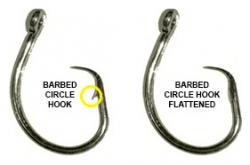
This is sport fishing since you can not keep the big redfish. Use heavy tackle and a big 7/0 to 9/0 circle hook to help release fish alive to spawn again. They are exciting to catch and will offer you all the fight you can handle.
Contact: Captain Bob Barnett – 912-727-5335
Cast in-line spinners around the Lake Burton dam, the Murray’s Cove boat ramp and Moccasin Creek boat ramp to catch recently stocked ten inch brown trout and some bigger ones that come to feed. For fliers, fish a Yellow Sallie fly in backwaters and sloughs on the upper reaches of the Suwannee River near the Okefenokee Swamp.
December
Species: Rainbow Trout
What To Expect
The Chattahoochee River from the Lake Lanier Dam to Peachtree Creek is cold enough to support trout. Trout are stocked in the river and fishing can be excellent, especially in the delayed harvest area from Sope Creek to U.S. Highway 41, with catches of 30 trout a day reported.
How To
Access the river at Cochran Shoals, Whitewater Creek and Paces Mill and fish single-hook artificial lures and flies only. This is during the delayed harvest time and lures are restricted, and all trout must be released. About 50,000 trout are released into the river between November 1 and April each year, so there are large numbers of fish here.
Fly fishermen use black or olive wooly buggers and #18 – #20 Parachute Adams. For recently stocked fish high visibility flies like the Y2K purple warrior are good. For spinning tackle, use a small yellow Rooster Tail or the smallest yellow Rapalas on two to four pound test line.
Contact: Chris Scalley – 770-650-8630
Fish Lake Lanier brush piles in 30 feet of water with four inch fruit colored worms on a drop shot rig. Fish near the pump outlet and the dam on Lake Juliette with cut or live shad in deep water for some trophy size stripers.
If you want to go fishing this year, you will find something hitting near you every month of the year.

Can A Depthfinder Crack Decades-Old Cold Case?

Humminbird® Helps Crack Decades-Old Cold Case

Humminbird® Side Imaging® assists investigators on North Carolina lake – can a depthfinder crack decades-old cold case?

EUFAULA, AL. – “Closure” was the word used to describe the recent discovery of the whereabouts of a man who had been missing for more than forty years in Caldwell County, North Carolina.

Car Found with Depthfinder

Car Found with Depthfinder

The man, Air Force retiree Amos Shook, had vanished 43 years ago, leaving family members with a lot of questions.

Still unresolved after four plus decades, Shook’s daughter recently reached out to North Carolina authorities, asking them to revisit the cold case. Obligingly, Caldwell County investigators took to the waters of North Carolina’s Lake Rhodhiss with Humminbird Side Imaging technology, now a staple piece of equipment with Search and Rescue (SAR) teams across the globe.

“Unfortunately, in cases like this, water is often a good place to look. In the ’70s they sent divers down but they didn’t locate anything. But with our Humminbird unit we did find the car. I dove down, confirmed it, did some digging, hooked the cable to the car and the sheriff’s department had a tow truck pull it out,” says Jason Holder, Battalion Chief, North Catawba Fire and Rescue.

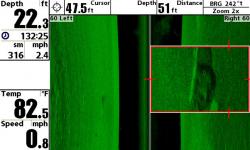
According to authorities, Shook lived near the lake boat ramp, which led detectives and search and rescue to investigate the area. Holder says North Catawba Fire and Rescue’s boat operator was the first to sweep the area on the evening of Monday, July 20, turning up compelling underwater imagery 50 yards off the bank in nearly 30 feet of water. The area was close to where the boat ramp was located 1970s and where the new boat ramp currently resides.

“We went back first-thing on Tuesday and I dove down, verified it was a car and they pulled it out that day,” adds Holder.

Side Imaging View of Car

Side Imaging View of Car

As to the specifics of their Search and Rescue program, Holder says they use Humminbird Side Imaging to look off each side of the boat and immediately below the boat via 2D sonar.

“The 997ci SI on our RescueONE Connector Boat is approximately 10 years old but it still works great. When we found the car we hadn’t even updated the software, which we have done since. For this particular search we set Side Imaging set to look 60 feet left and right,” says Holder.

He adds: “Humminbird Side Imaging is an excellent technology for us. It eliminates a lot of blind searching underwater. The water is so murky you can’t see anything when you dive; everything is by feel.”

Once the team had the car located, they set a waypoint on their Humminbird, also dropping a marker buoy so they could image from many different sides of the car while watching the screen and the buoy position in the water.

“After we look at an object sufficiently with Side Imaging we’ll reposition the boat, look at it with 2D sonar and then drop an underwater basket attached to a rope and weight that picks up excellent on the sonar. This allows a diver like myself to so the drop down hand over hand to the anchor and the object,” adds Holder.

Another View of Car

Another View of Car

Following their recent discovery, Caldwell County investigators dispatched a tow-truck to remove the car from the lake. Inside the silt-filled car investigators found human remains and Shook’s wallet. The remains were taken to the county medical examiner’s office for an autopsy.

Although questions still remain as to what happened, investigators do not suspect suicide or foul play.

This much is certain: After 43 years wondering what happened to their loved one, the family finally has some closure.

For more information visit www.humminbird.com, contact Humminbird, 678 Humminbird Lane, Eufaula, AL 36027, or call 800-633-1468.

Electronic Fishing Equipment I Use and Like

The following electronic fishing equipment, from depthfinders to cameras, are things I use and like:
You can never have enough charging cables!


Audio System for GoPro Camera


SD Cards

GoPro Hero 3 Silver

GoPro Skeleton Case


Batteries and Charger for GoPro Camera

Mic Adapter for GoPro

Underwater Camera

Underwater Camera
Aqua-Vu AV710 Underwater Camera

Does Cooler Weather Help Bass Fishing?

The cooler weather has me fired up to go bass fishing, but I keep reminding myself this happens every fall. The weather changes and I think the bass change their feeding patterns immediately but they don’t respond as fast as I hope. But does cooler weather help bass fishing.

I went to Lake Oconee last Sunday with Cody Stahl and Tate Van Egmond for a Georgia Outdoor News article. For the first time in many months I was actually cold riding in a boat!

Cody and Tate won the Georgia BASS High School Championship at Eufaula last fall then came in 10th in the National High School Championship on Kentucky Lake this past spring. They attend CrossPointe Christian Academy in Hollonville and represent their school well. Both are very nice young men.

Cody and Tate both play sports and are good at their positions in football, but Cody really loves fishing and plans to attend a college next year with a fishing team so he can continue what he likes best. There are many colleges in Georgia and Alabama that offer scholarships for bass fishing, just like other sports.

Cody and Tate are very good fishermen and work together as a team while fishing. I was impressed with their skills and knowledge of fishing and bass patterns. Although fishing was still tough, we landed several short bass and Cody caught three keepers, including one weighing 3.5 pounds.

We fished shallow docks, the same thing I did the week before when I zeroed a Flint River Bass Club tournament at Oconee. The way Cody fished them was a little different. He can skip a bait under a dock much better than I can.

Bass under docks see baits a lot since a lot of people fish around them. If your bait doesn’t get back under the dock a long way they often won’t hit. And if the bait makes a big splash when it hits it seems to turn the fish off. They know it is not real.

Fishing has improved some and will get even better during the next few weeks. The Potato Creek Bassmasters fished their September tournament at Oconee last Saturday and did much better than the Flint River Club did the week before.

In their tournament, 12 members landed 24 keepers weighing 50 pounds. Kwong Yu won with a five fish limit weighing 9.57 pounds, Mike Cox was second with four at 8.10 pounds, Wesley Gunnels came in third with three weighing 6.45 pounds and Niles Murray was fourth with three at 6.27 pounds. Donnie Willis had big fish with a 3.50 pound largemouth.

In comparison, Niles came in second in the Flint River tournament the week before with two bass weighing 3.04 pounds and the nine Flint River members caught only six keepers. That is a good sign the fishing is getting better.

Bass are cold blooded so their body is the temperature of the water they are in. They are most active when water temperatures are between 68 and 72 degrees. At Oconee in the Flint River tournament the water was 88 degrees, making them sluggish. By the next week it had dropped to 81 degrees, still hotter than the best range but much better.

As the water cools and bass become more active they will chase a faster moving bait, and go further to eat it. They also move to more shallow water. They will feed more and more until the water drops into the 50s in December. Then they become more sluggish until it warms in the spring.

When water is too far above or below the best range the bass tend to go to deeper water and not feed as much so they are harder to catch. Fishermen have to change the way they fish and the baits they use to catch fish as conditions change all year long.

In water near the optimum range faster moving baits like crankbaits and spinnerbaits allow you to cover more water, fish more places and catch more fish. Slower moving baits like worms and jigs usually work best when the water is too cold or hot.

For the next three months fishing will be much more comfortable for the fisherman and fishing will be better. Combine that with the fact most pleasure boaters are off the water so you don’t rock and roll all day, and many part time fishermen are in the woods hunting or stuck in front of TVs watching football. That is why fall is my favorite time of the year to fish.

Can I Catch Tuna On Spinning Tackle?

Spinning for Tuna
from The Fishing Wire

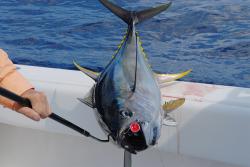
This yellowfin slammed a popper fished on stout spinning tackle

This yellowfin slammed a popper fished on stout spinning tackle


Does spinning tackle have a place offshore?

This yellowfin slammed a popper fished on stout spinning tackle by the Yamaha team around oil rigs off Louisiana.

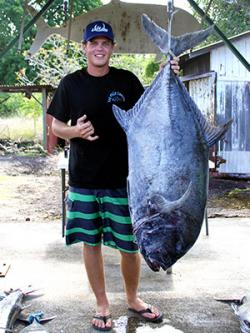
If you like offshore fishing imagine this—three days running around the Gulf of Mexico in a triple Yamaha-powered 42-foot Invincible center console doing nothing but fishing for yellowfin and blackfin tuna with surface plugs. The excitement of watching tuna attack a popper right before your eyes, not once, but again and again and again, is enough to give any saltwater angler heart palpitations. The Yamaha team recently spent some time with Bill Butler, owner of Venice Marina, aboard his tournament-rigged boat. Using his vast knowledge of the Gulf, Bill really put our team on the fish.

Casting poppers and working them in an erratic fashion to get a finicky gamefish to bite requires the right kind of tackle. This kind of tackle should be capable of making long casts and fast retrieves. Obviously, it’s a job for spinning tackle, but can spinning tackle stand up to the power of tuna? Not only was it able to, the gear we fished put quite a hurting on the fish, which ran from 25-pound blackfins to 70-pound yellowfins.

Even big tuna can be landed on spinning tackle

Even big tuna can be landed on spinning tackle

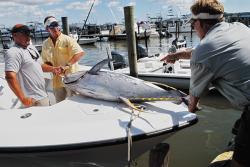
Even big tuna like this one can be handled with 65-pound-test braid on heavy spinning gear.

Spinning tackle has come a long way on the big game scene in recent years. The introduction of ultra-expensive oversized spinning reels started with an elite fraternity of surf casters who needed big, strong reels with lots of line capacity and super-smooth drags – but it didn’t end there. After its introduction and rapid rise to popularity, vertical jigging became the next technique that got saltwater anglers interested in oversized spinning tackle. While casting is not a prerequisite when jigging, (most of which consists of positioning the boat over potential fish holding structure or schools of bait or gamefish and then dropping the jigs straight down) it does offer some strategic advantages. The key to successful vertical jigging is working the metals in a quick, erratic manner or with long lift and drop motions. Spinning tackle can pick up more line in a single turn of the handle than most high-speed conventional reels. Once this advantage was realized and it became obvious that the new generation reels could indeed hold up to the power of tuna, they started showing up on offshore grounds.

The revolution in heavy-duty spinning tackle didn’t stop with the surf crowd. All the major reel manufacturers stepped up to the plate with products that were bigger, stronger, held a ton of line and offered drags with enough stopping power to put the brakes on a small elephant. Today, manufacturers offer tuna-strong reels at more modest price points. When this phenomenon first began, only a few reels were available that could meet the rigorous demands of challenging pelagic brawlers, and they were very expensive, most in the $700 to $1,000 price range. Now there are models that can be purchased for under $300 and are capable of doing the job dependably.

Blackfin On Spinning Tackle

Blackfin On Spinning Tackle

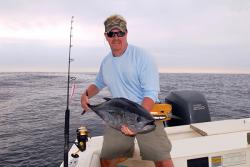
Blackfins are another natural offshore target for spinning gear loaded with strong braid.

Rod manufacturers also went back to the drawing board and developed a variety of specialty saltwater sticks that could cover the gamut of big game fishing needs, from jigging to casting surface lures. These products provide the actions and backbone necessary to make them applicable to catching tuna. They incorporate blends of materials that make them as close to indestructible as possible, and there are a variety of lengths and actions that cover the gamut of techniques used offshore.

In the Gulf with Butler, we used longer rods designed for casting and working poppers for tuna. Those rods were 7-feet 10-inches in length, and could throw surface plugs up to four ounces a long way. When fishing around oil and gas production platforms, casting distance is important and the longer rods did the trick. When a tuna was hooked, even the larger yellowfins, the rods proved to be excellent fighting tools.

When a tuna is hooked on the surface, the early phase of the fight can incorporate long runs near the surface, and the longer rods worked fine with the 65-pound test braided line and drag settings in the 18- to 20-pound range. As a tuna tires, it will run deep and eventually begin to circle straight below the boat. This requires a lot of lifting power to work it back to the surface, something longer rods with softer actions do not do well. But these tuna popping rods, while soft in the tip for casting, offered plenty of backbone to lift the fish during the end game.

Spinning Gear Moves Lures Fast

Spinning Gear Moves Lures Fast

Here’s some great eating, courtesy of spinning gear and a fast-moving plug.

On a trip with Capt. Jim Freda of Shore Catch Charters in New Jersey (aboard his Yamaha-powered 28-foot Parker® Sport Cabin), team Yamaha had the opportunity to jig bluefin tuna. While some on board were fishing with conventional reels and jigging rods, Capt. Freda used a spinner with a jigging stick designed for tuna. He said he liked the way the spinning reel picked up line when he was dropping the flutter jigs to the bottom in a hundred-plus feet of water and then working them back up using a fast, erratic retrieve. He did a great job of making the jig dance, or at least the tuna thought so, because he hooked up frequently. He mentioned he has caught bluefin up to 100 pounds on spinning tackle, and has had clients beat fish considerably bigger on theirs.

Spinning tackle for offshore fishing has come of age, and it’s being used to catch fish that would have been considered unlikely at best just a few short years ago. It offers the offshore enthusiast another tackle option for challenging the ocean’s strongest pelagic species. Fishing for tuna with spinning tackle is both fun and productive. If you enjoy offshore fishing, give it a try this summer!

Why Does Fishing Need To Be Preserved Biscayne National Park?

Legislation Introduced to Preserve Fishing Access in Biscayne National Park

Editor’s Note: Today, news on legislation designed to preserve fishing access to major portions of Biscayne National Park from the American Sportfishing Association (ASA).
from The Fishing Wire

Washington – On the heels of the recent announcement to close over 10,000 acres of Biscayne National Park to fishing, a coalition of recreational fishing and boating organizations praised the introduction of a bipartisan bill, H.R. 3310, that will help stop this and similar unwarranted fishing closures from occurring. Led by Reps. Ileana Ros-Lehtinen (R-Fla.), Mario Diaz-Balart (R-Fla.), Carlos Curbelo (R-Fla.), and 28 other original sponsors, the “Preserving Public Access to Public Waters Act” requires the National Park Service and Office of National Marine Sanctuaries to have approval from state fish and wildlife agencies before closing state waters to recreational or commercial fishing.

“Probably the most concerning aspect of the Biscayne National Park marine reserve decision is the total disregard for the fisheries management expertise of the Florida Fish and Wildlife Conservation Commission,” said Mike Leonard, Ocean Resource Policy director for the American Sportfishing Association. “The states are responsible for nearly all of our nation’s saltwater fisheries management successes. This legislative safeguard will prevent the federal government from ignoring the fisheries management expertise of the states in these types of situations.”

Throughout the development of the General Management Plan for Biscayne National Park, through which the marine reserve is being implemented, the Florida Fish and Wildlife Conservation Commission has provided detailed recommendations to improve the condition of the fisheries resources in the park. The Commission has continually expressed its position that the proposed marine reserve is overly restrictive to the public; will not be biologically effective; and that less restrictive management tools can rebuild the park’s fisheries resources and conserve habitat.

The recreational fishing and boating community has echoed these concerns, but nevertheless the National Park Service ultimately elected to close nearly 40 percent of the park’s reef tract to fishing.

“The Congressional leaders who are sponsoring this bill are to be commended for this common sense approach to protect saltwater anglers from unwarranted access restrictions,” said Chris Horton, Fisheries Program director for the Congressional Sportsmen’s Foundation. “The Biscayne National Park marine reserve is part of a concerning trend of closing marine areas without scientific basis or an understanding of the critical role anglers play in the economy and in funding conservation.”

“Marine reserves are a tool in the fisheries management toolbox, but too often we see them promoted with questionable-at-best motivations,” said Jeff Miller, chairman of Coastal Conservation Association Florida’s Government Relations Committee. “This bill will ensure that Florida has a say in important fisheries management decisions in Biscayne National Park, including marine reserves, and that similar issues don’t arise in other parts of the state and country.”

On Monday, August 3, the House Committee on Natural Resources and the House Committee on Small Business will hold a joint hearing to explore the potential implications of lost access due to the Biscayne marine reserve. The hearing will begin at 10am EST and is being held at the William F. Dickinson Community Center in Homestead, Florida.

What Fishing Products Were In the ICast New Products Showcase?

ICAST New Fishing Product Showcase
Frank Sargeant, Editor
The Fishing Wire

The ICAST New Product Showcase, as usual, rolled out a treasure trove of interesting new fishing gear, but as this is written the votes have not been counted or the winners of this year’s “Best of Show” in the many categories released.

So here’s a brief personal look at some items that caught our eye during the walk-through

Zebco 888 reel

Zebco 888 reel

The Zebco 888 looks like the classic Zebco on steroids–it’s a big, heavy, strong fishing machine, with all metal gears in 2.6:1 retrieve, and it comes loaded with 25-pound test mono. There are not many close-faced reels that you could take on snook and redfish with, but this one qualifies, and it should also do a good job on big bass in heavy hydrilla–for young anglers who are having trouble mastering the revolving spool as well as for more experienced anglers who are just plain tired of backlashes, this may be an interesting and economical option–it’s just $29.99; www.zebco.com.

Revo Spinning Reel

Revo Spinning Reel

Abu Garcia’s Revo series of baitcasters has really carved out a place for itself in the revolving spool market, but the company’s spinning reels have been less impressive–until now. The new Revo series spinning reels boast many of the top-end features of the Revo baitcasters according to Hunter Cole, chief the marketing for Berkley, who reports that the reels have been four years in design and testing. The gears are machined from solid aluminum stock, making them strong, light and very smooth in operation, and the carbon matrix drag system is light weight and very easy to put into motion, a big plus especially when fishing lighter lines for heavy fish. The composite parts are carbon infused, making them strong but light, and the gear box is aluminum, assuring long-term perfect alignment. The reels are available in a wide variety of sizes from UL up to medium heavy saltwater. The top of the line Revo MGX is an 11 bearing reel that lists for $299.95, while value-priced models go for as low as $129.95; www.abugarcia.com.

Berkley has come out with a series of hard baits that pro angler and company advisor David Fritts–one of the few guys to with both the Forrest Wood Cup and the Bassmaster Classic–says have been several years in development.

Berkley Rattle Bait

Berkley Rattle Bait

“Designing a plastic lure that works like a wood lure is a real challenge, but I think we’ve done it with this series,” says Fritts.

The company makes use of test tanks with flowing water and slo-mo photography as well as clay prototyping to get just the right shape and action on the lures. The paint jobs are particularly impressive, with the same shine and detail as that seen in Japanese lures that cost $20, but the new line goes for $6.95 to $7.95. They get points for the names, too, which include the Warpig, the Bad Shad and the Wild Thang, among others; www.berkley-fishing.com.

Shimano Stradic spinning reel

Shimano Stradic spinning reel

The Shimano Stradic has been a favorite reel for expert level anglers for many years, particularly for flats fishing, and the completely redesigned Stradic the company revealed at the show should make fans very happy. The new model has cold-forged aluminum gears and machined aluminum frame, along with the company’s well-known X-SHIP construction which makes a very stiff but light unit that keeps things in perfect alignment for years of hard use. The reel is also rebalanced to feel lighter on the rod, and includes improved waterproofing to keep out saltwater. Prices range from $199.99 to $129.99; www.fish-shimano.com.

There’s tons more to talk about, and we will in the near future, but this should be enough to whet your appetite for a trip to the local tackle shop–most of the products that appear at the show start shipping no later than early September, and some are available already from online suppliers.