Category Archives: Fishing Tackle

Rods and reels to live bait

Why Are Dams Coming Down?

Unneeded Dams Coming Down, Fisheries Improving

By Chris Wood, President
Trout Unlimited
from The Fishing Wire

Unneeded Dam?


Last week, I saw a video celebrating the removal of the Tack Factory Dam on Third Herring Brook in Massachusetts. Like all dam removals, it involved many partners especially the North and South Rivers Watershed Association, local TU chapters, the MA/RI Council, NOAA, and Steve Hurley of the Massachusetts Division of Fisheries and Wildlife, an unsung hero in the effort to protect salter brook trout—a unique form of brook trout that often occupy saltwater habitat.

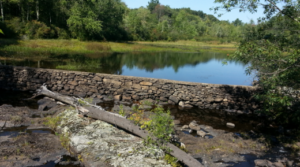
What makes the story of what happened on Third Herring Brook so cool is its now commonplace nature. Rivers in the East are riddled with dams that were built for long-forgotten purposes. Some dams are important for power generation or flood control. Some make awesome tailwater fisheries for wild trout. But many are deadbeats, liabilities for their owners—serving only to to pond water, warm streams, and block passage for migrating fish.

Ten years ago, I remember walking along the Musconetcong River in New Jersey, and looking at a dam adjacent to a restaurant, and asking Agust Gudmundsson, then the New Jersey council chair, “what is the dam for?” He said, “who knows? That’s why it is coming down.”

Most TU members and supporters are aware of TU’s role in re-opening over 1100 miles of the Penobscot River in Maine, and our contributions to reopen more than 500 miles of the Klamath River on the California and Oregon border. Across the eastern United States, TU, and its chapters, councils, and partners, have become quietly expert in working together to remove old and obsolete dams. This work is particularly vital as trout and salmon need to move in response to flood, fire, and drought. Dams also block access for spawning and rearing habitat for trout and salmon.

The Squanatissit and Boston chapters removed a dam on the Nissittissit River, a gorgeous trout stream that flows into the, once blighted but now cleaned up, Nashua River. The Nor’east chapter is working on dam removals on the Shawsheen and the Ipswich Rivers.

On the Boardman River TU is working with an array of partners on a series of dam removals that will reconnect over 160 miles of rivers and streams.

In the Adirondacks, the Lake Champlain chapter is working with the Tri-Lakes chapter and using funding from a variety of sources, including Embrace A Stream to remove the Quarry Dam, which will open the upper West Branch of the Ausable to spawning and as a summer refuge.

TU removed a dam, and is replacing two culverts on Kinne Brook in Massachusetts— an area that TU scientists call a brook trout portfolio stronghold.

In Pennsylvania, we worked with American Rivers to remove an old stone dam and open up nearly 100 miles of ChestCreek, a priority for native brook trout recovery.

My favorite dam removal story comes from the Sebago Chapter in Maine. They worked with several other chapters, the Nature Conservancy, and others to remove the Swett Brook Dam in 2013. The chapter then set a goal to remove at least one dam or culvert that blocks fish passage every year through 2020!

Every one of these dam removals, and the dozens more that are happening around the nation, share a common theme—local people working together to improve the places they fish, live and love. The same combination of pluck, ingenuity, and smarts that led us to build dams to allow a young nation to prosper are helping to remove them today, and we are a richer country for it.

Chris Wood is the president and CEO of Trout Unlimited. He lives in Washington, D.C., and works from TU’s Arlington, Va., headquarters.

Why Use A Wading Staff?

Stick It to Dangerous Currents With a Wading Staff
By Lee McClellan, Kentucky DFW
from The Fishing Wire

Use a wading staff when fishing rivers and streams


FRANKFORT, Ky. – Those of us who wade rocky streams for smallmouth or tailwaters for trout sometimes bite off more than we can chew.

An eddy on the other side of the stream looks inviting and the more you stare at it, the more you want to cast there. The only problem is a waist-deep run with strong current lies between you and the enticing water.

You begin crossing the stream, but about half way, the current begins to push hard against your legs. You barely lift your foot and the current pushes it out from your body, nearly causing a fall. You look back and realize it will be just as hard to get back to where you started, as it will be to get to the other side of the stream.

You are stuck.

A wading staff will save your bacon in this situation. Made from aluminum, carbon fiber, crafted wood or a hickory stick, a wading staff gives anglers an extra balance point that can prevent a fall in sticky situations.

“I use my wading staff for balance whenever I wade,” said Dr. Larry Kelley of Richmond, retired assistant chair of nursing at Eastern Kentucky University. “It’s kept me from falling many times.”

Kelley also uses his wading staff, made from a cedar branch, to probe the water in front of him for depth. Clear water often looks shallower than it actually is and misjudgment can lead to a hat-floating, wader-filling mishap.

“This is another area where my wading staff is invaluable,” Kelley said. “It keeps me from making mistakes concerning the depth of a hole.”

This safety feature proves handy when wading cold tailwaters, like the Cumberland River below Wolf Creek Dam. The water temperatures in the Lake Cumberland tailwater run cold enough to induce hypothermia. Stepping off a shelf into water over your head quickly fills a set of waders. Waders filled with water become a dangerous weight in moving, cold water.

This is the reason wading anglers must always use a snug wading belt when wearing waders. The belt prevents the legs of the waders from quickly filling with water in the event of a fall.

You can use a wading staff to test the bottom composition before venturing into a hole. Muddy areas of the stream bottom often look like hard-packed sand, but are actually a gooey muck that can pull off your wading boots. Wading staffs are also invaluable in negotiating steep stream banks.

Some debate exists on whether wood, carbon fiber or aluminum make the best wading staff.

“I prefer a wooden staff because it floats behind me and out of the way when fishing,” Kelley said. “I can also quickly get the staff in my hand when I need it.”

You can make a wooden wading staff cheaply by finding a dense hickory or cedar branch stick about shoulder height. Rub in several coats of tung oil and let it cure.

Slide a piece of hypalon foam replacement handle for walking canes over the thickest end of the stick and glue if necessary. Drill a hole through the stick just above the handle. Work a large key ring though the hole to attach a lanyard system. Kelley uses a magnetic net release used by fly anglers to attach his wading staff to his vest via a carabiner.

Epoxy a rubber cane tip on the other end and you are in business. Some anglers epoxy a wrap of lead tape used on golf clubs just above the rubber protector to help weigh down the wooden staff in current.

Wood does not make fish spooking noises when contacting the stream bottom and possesses character that manufactured wading staffs lack.

However, a wooden staff does not collapse. Some anglers use collapsible ski poles or hiking staffs for wading staffs, but their thin bottom ends vibrate wildly in current.

The collapsible hiking staffs that use a twisting lock mechanism often freeze up after getting wet several times. The parts inside these staffs oxidize and all of the king’s money and all of the king’s men can’t get it separated again. This is incredibly frustrating if they lock up during a wading trip.

If you decide to use one of these for a wading staff, find one with a lever to lock and unlock the collapsible parts.

Some wading staffs use a piece of elastic cord in the middle to hold the pieces together, similar to a collapsible tent pole. These staffs fold up into a sheath for convenience. If these staffs get stuck in rocks on the bottom, they separate when pulled on, rendering them useless.

Higher-end trekking poles used for hiking have the elastic cord, but also a locking mechanism to keep them together during use. These make good wading staffs, but start at about $100.

Predictable water levels and hungry fish make late summer through late fall the best time to wade a stream. A wading staff makes wade fishing safer and more efficient.

Author Lee McClellan is a nationally award-winning associate editor for Kentucky Afield magazine, the official publication of the Kentucky Department of Fish and Wildlife Resources. He is a life-long hunter and angler, with a passion for smallmouth bass fishing.

Kentucky Fish and Wildlife news releases are available online at fw.ky.gov

The Kentucky Department of Fish and Wildlife Resources manages, regulates, enforces and promotes responsible use of all fish and wildlife species, their habitats, public wildlife areas and waterways for the benefit of those resources and for public enjoyment. Kentucky Fish and Wildlife is an agency of the Tourism, Arts and Heritage Cabinet. For more information on the department, visit our website at fw.ky.gov

Rare Trout Species

Fishingenuity “Backs Up the Data” on Rare Trout Species
Editor’s Note: Here’s an interesting feature from Craig Springer of the U.S. Fish & Wildlife Service on a program designed to assure the continued existence of a unique strain of trout.

By Craig Springer, USFWS
from The Fishing Wire

The biological clock never ceases ticking, and all living things die. But that clock can be frozen, and decay ceased indefinitely. The implications to fish conservation are large.

Rare trout


Apache trout – photo Jennifer Johnson USFWS
Williams Creek National Fish Hatchery, situated amid the ponderosa pine-studded hills of the White Mountains of eastern Arizona, harbors gold: the only captive Apache trout brood stock in existence.

This hatchery, one of 70 other national fish hatcheries, turns 80 years old this year. It’s a product of the New Deal era—a hatchery built on Apache lands under the auspices of the White Mountain Apache Tribe for the express purpose of raising trout for fishing. Trout fishing, then as now, helps fuel a rural and tourism-based economy in the White Mountains.

The Apache trout, as odd as it may seem, is a fairly recent arrival to the hatchery given that it sits so closely juxtaposed to native trout’s habitats. Recognizing the trout swimming in their streams as something special, the tribe closed off reservation waters to fishing approximately 30 years before the Endangered Species Act became law in 1973. The tribe was the first conservator of Apache trout.

Though this rare trout wasn’t described for science until 1972, hatchery biologists made early attempts at creating an Apache trout brood stock. Getting wild fish accustomed to captivity is difficult. Those attempts fell flat until 1983, by which time commercial fish food had become more refined such that captive wild fish take to it easier. The existing Apache trout brood stock turns 35 year old this year. Those captive fish descend from the original fish brought on station more than three decades ago.

Apache trout sperm for freezing


Apache Trout sperm label indicates to be frozen at Warm Springs Fish Tech Center in GA Jennifer Johnson USFWS
To bolster the brood stock, the biologists have turned to what sounds like science-fiction: “cryopreservation.” It’s a big word for this: they collected sperm from wild Apache trout and froze it.

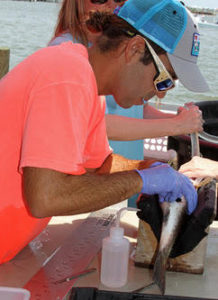
It’s science-fact. Hatchery biologists along with staff from the U.S. Fish and Wildlife Service’s (Service) Arizona Fish and Wildlife Conservation Office and White Mountain Apache Tribe collected sperm from wild Apache trout from the East Fork White River. Under the guidance of Service biologist Dr. William Wayman at the Warm Springs Fish Technology Center in Georgia, the team of biologists collected and froze sperm from several individual Apache trout this past spring.

Gathered and stored in clear straws the approximate size of a coffee stirrer, the sperm now reside in vats of liquid nitrogen at -321 degrees Fahrenheit in Georgia in permanent storage, locked in time. And there it will be stored until it’s needed for spawning at the hatchery in November.

“We expect cryopreservation to boost our brood stock,” said hatchery manager, Bruce Thompson. “Cryopreservation reduces the likelihood of spreading disease that comes with having live fish brought in from the wild, not to mention the savings—a savings in space, in time and in money—by not having to keep wild male trout alive on the hatchery.”

The hatchery stock originated from the East Fork White River—it’s a rare lineage of a rare trout, says Service geneticist, Dr. Wade Wilson. He’s stationed at the Southwestern Native Aquatic Resources and Recovery Center in Dexter, New Mexico. Wilson has expert knowledge of trout, having worked with two other species native to the American Southwest, the Rio Grande cutthroat trout and Gila trout.

“Cryopreservation at least preserves the genetic diversity of the males, and the main advantage is that we can infuse wild genetics into the captive fish with great ease,” said Wilson. And the approach will be disciplined, as Wilson has developed a plan for the hatchery staff to ensure that each pairing yields genetically robust Apache trout offspring that exemplify the East Fork lineage. Having collected the genetics from the wild male fish and the captive female Apache trout, data from Wilson’s shop will steer captive spawning this autumn. Those offspring will be future brood stock.

Caught a large Apache trout


Bradley Clarkson Alchesay-Williams Creek National Fish Hatchery biologist and White Mountain Apache Tribe member handles a large Apache trout – photo Craig Springer USFWS

The whole idea of freezing and thawing a living organism gives flight to the imagination, even if it is a single cell. Cryopreservation hasn’t been use yet for Apache trout brood stock management, but the concept isn’t new. The method is common in the livestock industry and has been used for decades.

For rare, native trout, “it’s like backing up your data” says Thompson. “You store off-site what’s precious, and we’re confident that this is good for Apache trout conservation.”

Craig Springer, External Affairs, U.S. Fish and Wildlife Service – Southwest Region

How Much Fishing Equipment Is Too Much?

Someone walking into Berry’s Sporting Goods who does not bass fish will be amazed at the vast array of lures on display. There are soft plastics, crankbaits and wire contraptions in every color of the rainbow, and many other colors never seen anywhere else other than maybe an artist’s dreams.

Everything comes in an amazing number of shapes and sizes, and many things look like something from a science fiction movie. All of them have a purpose – to catch fishermen’s dollars! But they will probably all catch fish, too.

That being said, my “tackle box” is a 20-foot-long bass boat with four compartments filled with all kinds of lures. I could get in and hide in a couple of those compartments they are so big. And the walls of my garage are lined with big boxes of lures and sacks of plastic worms that I no longer use but won’t throw away. I use many of them as prizes in our kid’s tournaments.

They will all catch fish, but I have settled on a couple of colors of plastic worms I always use, and a few crankbait in favorite colors. I carry some other colors in my boat just in case, but there are not enough hours in a day to try them all. I have confidence in certain baits, so I tend to fish them all day.

Some people constantly change baits and colors trying to find the magic one for that day and conditions. And it probably works, for them, but I am confident in one or two colors based on water color and time of year. That simplifies things and makes it easier but may not be the best thing every trip.

On the deck of my boat I usually have 14 rods up front, seven on each side. And if fishing alone there are usually six or seven more at the back deck. I say one side is the rods I plan to use, the other side is just in case I want to try something different, and the ones in back are my desperation rods.

There is another dozen in my rod locker. Most fishermen put their rods up after fishing but there is no room in my locker for all of mine, so they just stay strapped down on the deck all the time.

There is a good reason for having so many rods. I not have to stop and tie on a new bait to try if I want to, I simply pick up a different rod and start casting. And rods come in a wide variety of lengths, actions and taper. Some are better for certain baits.

For example, a stiff rod with a light tip, or fast action, is best for baits like a Texas rigged worm or jig and pig. But for a crankbait those rods are too stiff, you need a longer rod with medium action. A stiff rod will often pull the hooks out of the fish while fighting it on a crankbait.

One small compartment is filled with spools of line. I have everything from six to 20-pound test line in monofilament and fluorocarbon, and there are also a couple of spools of braided line for special conditions.

Worms and jigs call for heavy line, and I like fluorocarbon since it is almost invisible in the water. Crankbaits are better on lighter line since it allows them to run deeper. And topwater needs monofilament since fluorocarbon sinks and hurts the action of the bait.

Braid is used when fishing around grass. It will cut through it when fighting a fish and has no stretch, so you can pull fish from cover quickly. But it is very visible in the water and I think it spooks fish when fishing clear water, so it is not good under all conditions.

Electronics are a whole nother story! When I got a new boat two years ago, it came with for big Humminbird depthfinders. The are capable of showing a sonar image, a down and side scan image and include a GPS map. The sonar shows a quick glance at anything under the boat. The down scan shows a detailed image of anything under the boat, to the point of showing every limb on a brush pile and even fish holding in it.

The side scan can be set to show things out to either side of the boat. You can ride slowly by a dock and see the post on it and fish holding under it. And going around a point looking for cover, you can find rocks, brush, drop offs and fish without going right over them. I keep mine set to show 60 feet out on either side of the boat, so I cover a 120-foot-wide strip on every pass.

One thing that came on my new/used boat is the 360 scan. I had never had one but will never be without one in the future. On the screen it shows what looks like a radar with rotating dial. Anything anywhere around the boat shows up. You don’t have to go right over something to fish it.

I have been amazed how many times I would be fishing around a point I have fished for 40 years, casting toward the bank. I would see a rock or brush pile or drop off out from the boat, cast to it and catch a fish. I never knew that cover was there and would never have found it unless idling around looking at down and side scan.

All these things may seem to give me an unfair advantage over the bass, and they help, but it is amazing how often bass with a brain the size of a marble outsmart me and all my equipment!

ICAST News and Notes

ICAST News and Notes
Frank Sargeant, Editor
from The Fishing Wire

New reel from Shimano


The stampede is on. As you read this, I’ll be among the kid-in-the-candy-store throngs stumbling among the aisles of ICAST, trying to figure exactly how many of these wonderful new toys I’ll be able to fit into my tackleboxes–and my budget.

At first blush, here are a few that popped out at me:

The Bi-Yak is an inventive combination of kayak and paddleboard, with twin sponsons that can be opened out for added stability when used as a SUP, pushed together to function as a cat-hull kayak otherwise for easier paddling. I like the idea that it’s a lot more stable than a mono-hull–I’m not as nimble as I used to be, and I never was. The maker says it’s exceptionally stable due to the twin hulls, and it’s unsinkable; www.biyakboats.com.

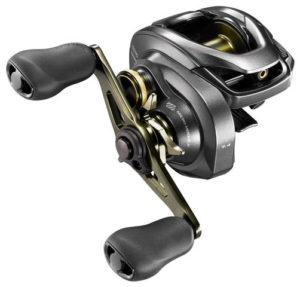
Shimano’s digital Curado DC Series baitcasters should be a hot item both for bass-heads and for inshore saltwater guys–a microcomputer inside the reel monitors spool speeds up to 1000 times per second(!!) to make sure there are no over-runs, even when making tricky upwind casts or skipping lures under a dock, according to the company. Product Manager Trey Epich says the reel also has the legendary durability of the Curado lineup. Amazingly, the thing still sells for around $250, which is not that much more than a conventional top-level baitcaster. No word on whether it can be hacked by the Russians; www.fish.shimano.com.

Epich also introduced the new Aldebaran MGL, an ultralight baitcaster that weighs an incredible 4.8 ounces.

“For anglers who don’t want to use spinning tackle and yet still need to throw lures that may weigh as little as 1/8 ounce, this is the reel,” says Epich. It’s likely to be a favorite with competition anglers who don’t like to shift gears from baitcasters to spinning, though the price, over $400, will limit it to all but very serious (and flush) competitors.

Raymarine’s Axiom now integrates with DJI drones. This will give a big advantage for anglers seeking fish (or bait) in clear water, and of course it also allows taking some really spectacular photos and video of your boat and angling action–once you learn to fly the thing. We suggest practicing, a lot, on dry land first; www.raymarine.com.

In apparel, fisher-friendly gear keeps on getting better, and selling very well according to Travis Gessley, designer for Under Armour. He said all price points are doing well, but the Seamless Fish Hunter Hoodie, at $65, seems in the sweet spot–very light, stretchable, cool and quick-drying, according to Gessley; www.underarmour.com. (PS: He said lady’s fishing clothing makes up about 10 percent of the UA market, and growing steadily.)

Remember the Crocodile Dundee quote “That’s not a knife–THIS is a knife”? That’s likely to be the reaction when you bring the new Danco 13″ Boning Knife to the cleaning table. For those who clean big grouper, snapper, mahi, kings and the like, a really long, thin but strong blade like this one can be a big help, and it’s priced right; www.dancopliers.com.

We’ll have more tomorrow, as the Big Show heads towards the wind-up.

What Is ICast 2018?

Welcome to ICAST, 2018
By Frank Sargeant, Editor
from The Fishing Wire

Today is the opener of the world’s largest fishing tackle show, the annual ICAST show at the Orange County Convention Center in Orlando, Florida. (Yeah, I know–Orlando in July? In air-you-can-wear, gnats-big-as-rats July? The alternative is Vegas, where it “cools down” to 99 at night in July if you get lucky, so Florida is good, also closer to the huge southeast bass market buyers.)

Actually, today is more like some initial throat-clearing before things get down to brass tacks tomorrow through Friday.

The events for today are geared more towards getting us all into ICAST mode; there’s a bass tournament where media anglers fish with some noted pros on Lake Toho hosted by our partner publication Fishing Tackle Retailer, a golf tournament hosted by Florida Sportsman for those more inclined to chase golfs than largemouths, and a hands-on event at the lake behind the north hall called On the Water, where many of us will show our ability to throw backlashes with baitcasters or tie wind-knots in fly leaders.

More importantly, starting at 5 p.m. the annual New Product Showcase opens, the annual beauty pageant of the industry (no swimsuit competition this year–now it’s all about the talent). Getting your product named a “Best in Class” or ideally “Best in Show” means lots of sales, and so there’s a good bit of campaigning both before and during the show for the votes from the media and buyers. (At issue for all of us voting is that there are now so many entries in some of the categories that it’s virtually impossible to really give them each a careful, comparative review–but we do our best.)

And all of us in attendance will see hundreds of familiar faces, shake a whole lot of hands, spread a whole lot of industry scuttlebutt, and hopefully discover some actually new and exciting gear among all the “exciting color changes” and “brand new sizes”.

One likely bull-session topic this year will likely be the burgeoning trade war with China. Large contingents from China always attend, and if you took all the tackle built in China under American brand names out of the show, the hall would be decimated. How that high-stakes poker game plays out will surely affect not only the tackle industry but the boating industry as well in coming months.

Also important for many in the industry, there are near-continuous free seminars from some of the top names in retail and merchandising that can help the small business, i.e. back porch lure makers, rod builders, small tackle shop owners and the like, to thrive.

As Friday afternoon rolls around, the business of business will have been conducted, and the fishing tackle all of us will be seeing in the catalogs, on line and in the brick and mortar stores for the next 12 months will have been ordered.

And (at last!) the foot-weary, bleary-eyed road warriors will break down the sometimes massive exhibits–a total of more than 1200 of them–the buyers will wrap up their order sheets, the scribes will begin sorting through enough media kits to sink a bass boat and the professional angler personalities will go back to what they love doing most, fishing.

And a lot of smart attendees will be going over in their minds what worked, what did not, and what they’ll plan to do better when they come back next year.

We’ll have a closer look at some of the products that caught our eye in the days ahead.

Use the Right Fishing Line

The Right Fishing Line for Soft Plastics

Using the right fishing line will help you land fish


Your line is the crucial connection when using Carolina and Texas rigs

By David A. Rose
from The Fishing Wire

Every few years, one of the best bass-tournament pros in the nation sweeps the competition during a major derby, landing the largest limit of fish while rigging their favorite soft plastics in an innovative way. After that, what was once their secret technique suddenly becomes all the rage. The drop-shot rig, Neko rig and advances in wacky-rigging are just a few techniques that have come to the forefront during the past couple of decades after major tournament successes.

But when all is said and done, even after these fresh approaches have become widespread, two rigs still stand the test of time – both sticking out as must-use-when-all-else-is-failing techniques: the Carolina rig and the Texas rig.

Worms? Lizards? Tubes? Creature baits? It really doesn’t matter what your go-to bait is, as both Carolina and Texas rigs have been catching fish almost since soft plastics were first created.

But like any well-established technique (and I mean any,) the single most important connection between you and any fish is your line.

The Missing Link

Seaguar Pro Chris Zaldain is a 33-year-old Bassmaster Elite tournament angler from Laughlin, Nevada, who has taken top honors twice in Bassmaster Elite events, as well numerous top 20 finishes. This carries his winnings over the half-million-dollar mark since his start only 8 years ago.

“There’s no doubt, line is the most crucial link when using both Carolina and Texas rigs,” says the Seaguar pro. “I have been using Seaguar fluorocarbon since the early 2000’s, well before I wore their logo on my jersey [2010], and I’m here to tell you, I have literally spooled many, many miles of it on my reels since I started fishing.

“Seaguar fishing lines have helped me fool fish in the clear-water lakes I fished growing up, and it was InvizX that was my choice from the very day I started. And InvizX is still is a line I trust today because it’s super soft and allows me to cast any lure with ease. And I’ve never had a knot I’ve tied with it unravel.”

Everything’s Bigger When Texas-Rigging…Maybe

One of the most weedless/snagless methods of delivering a lure to a lunker is the Texas rig. Zaldain uses 1/4- to 3/8-ounce weights, pegging them to his hook and soft plastic with a bobber stop on 15-pound-test InvizX.

“That particular pound-test isn’t too light for most applications and hook-sets; yet, it’s not so heavy that it hinders the action of your bait,” Zaldain states. “And 15-pound test Seaguar InvizX is as strong as other manufacture’s 20-pound test, but with a smaller overall line diameter. And the thinner a line is, the more bites you’ll get.

“It boils down to the fact that the thinner the line, the more naturally a bait moves in the water. It just moves more like the real thing…period.”

Zaldain is never nervous about using InvizX for his Texas-rigged offerings for near-shore shallow-water fish, even amongst submerged trees or along steep, rocky bluffs; the line’s suppleness allows it to snake through limbs and around shale with ease. Moreover, it has plenty of abrasion resistance to pull even the heftiest largemouth from structure without worrying about getting nicked up and breaking off.

Also, InvizX fluorocarbon has less stretch than monofilament, which allows Zaldain to feel a strike the moment it occurs. This means he’s able to set the hook and pull a fish out of its snag-infested haunt before it even knows it being bit back.

Cover Me, I’m Going in… Carolina-Style

Along thick-and-gnarly structure in deep water is where Zaldain tends to employ the Carolina rig—which was devised to separate the weight from your offering so that the latter has a natural, horizontal free-swimming movement verses the more precise bottom-bouncing motion of a Texas-rigged bait.

“My line of choice with long-leader Carolina rig applications is Seaguar AbrazX because of its extreme abrasion resistance,” Zaldain states.

If structure isn’t extremely dense, Zaldain still uses 15-pound-test – rarely anything lighter. When the bass are utilizing extremely-thick cover, conversely, he will boost his leader to 20-pound test.

Complementing the lower stretch and sensitivity of fluorocarbon, Zaldain prefers what he calls “old-school” lead bullet-style weights over tungsten. With the former, he claims, he can feel what’s on bottom much better.

Telegraphed through the lead weight, line and then rod, he can sense the difference between gravel verses rock, for example, which lets him know when to lift his Carolina-rigged offering up and out of a snag. Zaldain starts with a 3/4-ounce bullet or egg-sinker weight above his bead and swivel, and then adjusts his rig from there.

Lessons Learned

Without a doubt, your line is the only link between you and any fish, whether you’re using the newest technique to hit the tournament trail or the most tried and true rigs ever created, like Texas and Carolina rigs.

Overall, use the lightest line you can get away with, but have different rods spooled with diverse pound test and toughness (abrasion resistance); because where you find fish may change with every cast.

Jig Fishing

Tips for Jig Fishing in Northern Lakes
By Tony Roach, Northland Tackle
from The Fishing Wire

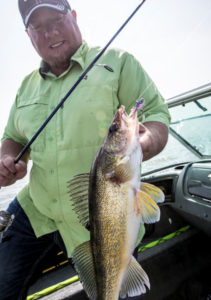
Walleye caught on jig


Few baits will ever be as successful as the plain lead-head jig like the Northland Current Cutter. As a bait-delivery method or a stand-alone option, it excels for multiple species throughout the country, moving water or stagnant, stained or clear. It can be swam, hopped, plopped, dropped, dragged, shook, pitched, and fished vertically, among other presentations. No matter how you choose to fish it, there’s a species that’ll eat it on every water body near you. However, that doesn’t mean it’s necessarily easy to fish, and it can be downright challenging if you’ve never been much for jig-fishing.

I learned to fish jigs on a river system in current, which is quite the curveball compared to natural lakes. With moving water, you need to take into account more variables like sweep, casting angle, mono vs. braid, among others. However, with a few pointers, anyone can catch fish with jigs. Here’s a few to get you started in the right direction.

Use the Right Tools for the Job – Start with a lightweight, high-quality carbon-fiber (no fiberglass) rod in an Extra Fast (XF) action, along with a featherweight reel combination. Jig-fishing, perhaps more than any other technique relies heavily on feel, and you simply can’t feel much with poor equipment. While there are techniques that don’t require you to spend as much on a rod and reel, here’s one instance where you really get what you pay for, and better tech quite simply leads to more fish.

Line – Start with braid and a fluorocarbon leader of a few feet in length, joined by an Albright Special or Uni-to-Uni knot. This offers you the best ability to feel the jig, while still having some stealth with the nearly translucent fluorocarbon line up against the jig itself. Mono can excel in certain situations, especially in current where the sweep and way it cuts through the water presents the jig differently, but braid offers you the best feel overall.

Map the Bottom – Your first couple of casts should be an exploratory mission, as you decipher clues that are telegraphed back to your rod-hand. Cast out and let the jig settle to bottom. Then slowly drag it back to you, hopping or with mixed-in quicker pulls along the way. You’re actively figuring out substrate at distance, such that you can understand the big picture and where fish will be holding. Like any experiment, start with a “control” retrieve, and compare various types of retrieves thereafter.

No Cross-Wind Casting – No matter the orientation of shore or where you’re pitching, wind could be the single largest inhibitor to your catch-total for the day. Position your back to the wind, or directly face it to enjoy far better direct contact with what your jig is doing. Drift into a crosswind, and every fish in the lake could hit your bait on a single retrieve, and you’d never know it because of the huge bow in your line. Wind triggers many fish species up shallow, so on these days, mitigate the effect by keeping your rod-tip close to the water and off to one side of the boat to reduce that problem.

Stay Back in Clear Water – Jig fishing can only be productive in the clear shallows when you’re not driving over fish. In hyper-clear water bodies like Mille Lacs, this means fish spook in 10FOW or even more, meaning you have to stay over deep water and simply pitch a little bit further up to the zones you’d like to cover.

Fish From the Outside In – When fish are schooled up near cover, it pays to work your casts from the outside in. As you pick off fish after fish from the outside, you have less chance of disturbing an entire school by casting up to the center of the most prime piece of cover.

When Vertical, Stay That Way – Vertical jigging works really well in deeper water, but only if you keep your rod tip directly over the top of the bait. Poor boat control when fishing vertically leads to baits off bottom, and less ability to detect bites, especially when the bait is under the boat.

Re-Bait – Whether plastics or live-bait, degraded or destroyed additions to a jig hinder the action and direct appeal. Resist the temptation to leave it on for “one-more-cast” and put your best bait forward. It’s amazing how selective fish can be at times, and at the end of the day you may only use a handful more minnows or plastic grubs. Call that cheap insurance to a successful bite.

Focus – Probably the single biggest deterrent to catching fish on a jig is distracted fishing. If you prefer to doze off, drink coffee, or otherwise just relax, start trolling or bobber fishing. The best jig anglers I know are machines. They’re casting, processing bottom content, hooking walleyes, and positioning the boat for the next cast. They’re mentally engaged nearly all of the time, as they pick apart pieces of structure bit-by-bit. While it’s true that the more you pay attention for any fishing scenario, the more you’ll catch, with jig-fishing it’s absolutely critical.

Fish For Multiple Species

Dominate Your Early Season Fishing Trips – Fish For Multiple Species
Five tips for multi-species success in warming waters
By Dr. Jason Halfen
from The Fishing Wire

Fish for multiple species like big crappie

The natural world bristles with life in the spring. Your lawn’s formerly brown grass transitions to a lush, vibrant green. Bare branches on trees and shrubs become dressed wardrobes of blossoms and leaves. And beneath the water’s surface, once dormant shallows now teem with life, from the smallest insects to the largest aquatic predators, as the sun’s powerful photons drag water temperatures out of their wintertime lows.

Early season fishing can be a daunting proposition for many anglers. Which species of fish should we pursue? Which part of the lake holds the most active fish? Once we start fishing, which baits or lures might be most effective?

These five tips are proven winners in the spring and will get you on your way to early season multispecies success.

1. Water temperature is the key. No matter which species of fish you decide to pursue as your season opens, water temperature is the key to success. Surface water that is even just a few degrees warmer than surrounding areas will tend to concentrate actively feeding fish. In general terms, focus your efforts on soft-bottomed bays that are off the main body of water. The best bays will frequently be sheltered from the prevailing wind to minimize the influx of cold water. Within these bays, shallow, near-shore areas are generally better than deeper ones.

Interestingly enough, current from river inlets can be a double-edged sword in the spring: while current will help to attract and retain species like walleyes, cold runoff delivered by river inlets can also reduce local water temperatures and turn the bite off. Monitor surface temperatures with your electronics as you approach river inlets; if you encounter a plume of substantially colder water, it’s time to continue your search in another area.

2. Think small and subtle for panfish. Many a panfish has landed in a livewell after munching a chunk of nightcrawler or slurping a crappie-sized minnow in the spring. Nevertheless, savvy anglers recognize that they will typically catch more and larger fish by using artificial presentations. Such an approach has the added advantage of making fish far more releasable, as bluegills and crappies are rarely hooked deeply when caught on lures.

Oversized bluegills respond favorably to slender-profile soft plastics, rigged on the same small tungsten jigheads that northern anglers use all winter through the ice. A particularly potent combination is a 5 mm tungsten jig dressed with an inch-long orange, red or black soft plastic tail. Suspend this offering beneath a bobber so that the bait rides near the tops of the season’s first green weeds and retrieve with a series of twitches and pauses to imitate an emerging insect larva or small baitfish.

Early season crappies love minnow imitations. I enjoy presenting a 1-1.5” minnow-profile soft plastic dressed on a 1/16 oz jighead that features a wire bait keeper, which helps to keep the bait rigged correctly on the jig over many fish catches. A long cast and slow swimming retrieve that keeps the bait above emerging weed or standing wood cover can be highly effective. On windy days, suspend the same lure beneath a float, and allow wave action to provide all the swimming motion needed to land a bounty of spring crappies.

My favorite rod for both bluegills and crappies is the 7-foot, light-power, extra fast action Panfish Series Rod (PFS70LXF) from St. Croix Rod. The length of this rod helps to propel lightweight offerings long distances on the cast and moves a lot of line fast to ensure productive hooksets what a strike occurs far from the boat. Its light power rating ensures abundant sport from our panfish targets, yet also retains plenty of backbone to handle the incidental bass and pike that you’ll encounter in the panfish zone. Seaguar Finesse fluorocarbon is an excellent choice.

3. Early season bass are ready to feast. Cold water bass are notoriously fickle feeders. However, this lethargic attitude is rapidly replaced with an aggressive, predatory stance as water temperatures rise into the 60s. Their rapidly warming environment puts bass on the feed, as they increase their calorie counts in advance of impending spawning rituals.

Hardbaits are excellent choices for targeting early season bass. In southern reservoirs, the LIVETARGET HFC Craw can be fished productively along swing banks as creek channels run from the main lake toward the backs of bays. In the north country, where prespawn bass congregate near shallow weedgrowth, the LIVETARGET Sunfish Rattlebait is an outstanding option. In this situation, a steady retrieve through the tops of submerged weedgrowth in 4-8 feet of water is all that is required to catch and release vast numbers of early season largemouth. The Sunfish Rattlebait’s ultra-lifelike appearance and profile, three-dimensional anatomical features, tight swimming action and high-frequency rattle all contribute to the lure’s remarkable effectiveness.

When fishing the Sunfish Rattlebait, I rig with 20 lb Seaguar Smackdown braided line, which maximizes my casting distance so I can rapidly cover lots of water in search of actively feeding schools of largemouth. I also fish without a leader, opting instead to tie on a cross-lock snap; this strategy makes it far more likely that I will land marauding pike and prespawn muskies that frequent the same bass-infested zones, without breaking off and donating my LIVETARGET offerings to the fishing gods.

4. Rattle up post-spawn walleyes. Once water temperatures have risen into the 50s, walleyes will have completed their annual spawning movements, but will remain in relatively shallow water in search of recuperative meals. Contrary to popular belief, these fish can be targeted with great success using lures that provoke aggressive reaction strikes. A great place to look for postspawn walleyes is on the edges of near-shore sand flats, frequently in 8-12 feet of water.

Lipless rattlebaits, like the LIVETARGET Golden Shiner Rattlebait, are outstanding choices for targeting postspawn walleyes wherever they swim. These baits excel at provoking reaction strikes, especially when presented with an active rip-jigging motion. Within this family of lures, the ½ oz size is preferred for beefcake Great Lakes walleyes, while the smaller, ¼ oz rattlebait is a good choice for inland waters, pressured fish, or post-frontal conditions when a more subdued presentation may be required.

Line selection for presenting lipless rattlebaits to walleyes is similar to that used for bass in the bays, with 20 lb test Seaguar Smackdown serving as an excellent foundation, terminated with 2 feet of 15 lb test Seaguar AbrazX 100% fluorocarbon leader. A powerful, responsive rod is preferred when rip jigging rattlebaits. Indeed, the Legend Tournament Walleye “Snap Jig” (LWS68MXF) rod from St. Croix Rod is an outstanding choice for this presentation. This 6-foot-8-inch, medium-power, extra fast action rod is the backbone of many aggressive walleye techniques that you’ll use throughout the season.

5. Don’t forget the fundamentals. Whether your boat took a long winter’s nap under a blanket of snow, or you fish throughout the year on soft waters, pay attention to the basics of boat and motor maintenance to ensure enjoyable trips in the early season. Arrive at the ramp with a tank of fresh gas, oil for two-stroke motors, and a fully charged complement of batteries. Ensure that your boat and trailer registration are current, and that you possess this year’s license documents.

Planning to fish before sunrise or after dark? Take a moment to check your boat’s navigation lights, as filaments may have snapped during the cold winter months. And for goodness sakes, wear your lifejacket, as the cold waters of the early season dramatically increase the threat of hypothermia and limit survivability, should an unplanned swim be added to your early season fishing trip.

Fishing season is at our doorstep. These five tips are guaranteed to bring you early season multispecies success and help you to build some great memories on the water this spring. Enjoy the fast action while it lasts, as the dog days of summer will be here soon enough!

About the author

Dr. Jason Halfen owns and operates The Technological Angler, a company dedicated to training anglers to leverage modern technology to find and catch more fish. Visit them online at www.technologicalangler.com.

Try “Skating” a Fly for Fast Trout Action

Try “Skating” a Fly for Fast Trout Action
Chris Hunt, Trout Unlimited
from The Fishing Wire

Ah, the dry fly, cast upstream over the perfect current seam. Is there a better sight in all of fly fishing?

And when it works out … Damn, it’s awesome. It’s inspiring, effective and, well, it’s proper. But things don’t always line up just right, do they? Sometimes, you’re faced with a downstream run, and getting that perfect drift means you have to cast that Elk-hair caddis downstream, breaking that tweedy rule, but maybe catching a trout in the process. And, as often as not, sometimes, you end up “skating” that fly over the foam line. Why? Because it works.

Skating is nothing new in fly fishing, but the riverkeeper on the River Test might offer some strong words for the angler who dares pursue the noble trout with anything other than an upstream presentation. Just ignore him—he’s old school. Skating is one of the best ways to bring trout to the top, and there should be no guilt acquired when your caddis skis lightly over the seam and a nice rainbow rises to take it.

Just this past weekend, my best fishing buddy and I were chasing trout in a small stream high in the mountains above Cascade, Idaho. We charged through a few snow drifts looking for clear-ish water to fish as runoff pulsed off the mountains and into every creek, gully and wash. We came across a really small creek, and by the looks of it, I was certain it would be fishless. In fact, I was certain that, during high summer, this “creek” was probably dry (and it very well might be). But the water was clear (well, clear-ish) where most other creeks were stained with snowmelt.

We’d driven the hills for hours, enjoying that first real sojourn into the mountains. Fishing was more of a hopeful afterthought. When we came across this little stream, I noticed a really sexy run—long, slow and frothed with the perfect foam line.

“If there are fish in here,” I said. “They’re going to be right there.”

We only strung up one rod—I’ll be honest. I thought it was a long shot. I greased up a size 16 Elk-hair caddis, and my partner flipped the fly into the foam. She fed some line downstream (because approaching it from upstream was impossible, thanks to brush and a big, woody snag), and when the fly reached the end of the run, she lifted her rod, and the caddis skated it appreciatively. It took a second, but a small-stream rainbow darted from the depths and ate the fly.

Skating isn’t just a steelheader’s game. It works for trout, too. Last summer, I caught easily the biggest brook trout of my life in northwest Ontario by skating a fat Chernobyl over a deep run in an unnamed river that ran between two lakes. It was the brookie of a lifetime, without a doubt, and I didn’t catch it “upstream and dry.”

In austere mountain streams, skating works wonders. On mountain lakes, don’t hesitate to occasionally skate a fly back to you. It’s not illegal. It’s not even unethical. It’s just one more way to bring trout to hand.

— Chris Hunt, Trout Unlimited