Category Archives: Fishing Tackle

Rods and reels to live bait

Bristol Bay’s Salmon

Bristol Bay’s Salmon Economy Needs Protection
from The Fishing Wire

The U.S. Army Corps of Engineers has published a Notice of Intent to conduct an Environmental Impact Statement on the proposed Pebble Mine project in southwest Alaska’s famed Bristol Bay region. The timeline for the EIS is extremely aggressive, as the Corps has seemingly put this extremely controversial project on a fast track, with an estimated 2-year timeframe. The Corps recently announced a 30-day public scoping comment period that would have ended in April 2018. Similar projects overseen by the Corps in Alaska have included scoping comment periods ranging from 75 to 106 days.

After pushback from stakeholders about the short length of the scoping period for this massive mining project proposal, the Corps extended the comment period until June 29, 2018.

The Bristol Bay region is home to the world’s most productive wild salmon fishery, worth $1.5 billion annually and employing 14,000 workers.

The opinion editorial below shows the unity on this issue between the nation’s commercial fishing and recreational fishing industries – both of which have a very large stake in the future of the Bristol Bay fishery.

Bristol Bay’s Salmon Economy Needs Protection

Authors – Scott Gudes is the Vice President of Government Affairs at the American Sportfishing Association; and Chris Brown is a Rhode Island commercial fisherman and President of the Seafood Harvesters of America.

The recreational and commercial fishing industries don’t always see eye to eye on resource issues. But when foreign mining interests jeopardize the world’s largest salmon fishery, our fishermen stand united.

Bristol Bay, Alaska’s prolific salmon fishery is under threat. On average, over 40 million sockeye salmon return to Bristol Bay’s mighty rivers every year. Anglers worldwide flock to try their luck with lure or fly, and commercial fishermen nationwide sustainably harvest tens of millions of salmon annually. It is one of the most productive ecosystems on Earth.

Unlike salmon in other Pacific Coast states, Alaskan salmon runs benefit from plentiful cold, clean water flows and have not been listed as endangered or threatened under the Endangered Species Act. Bristol Bay fisheries are healthy, sustainable and thrive because of wise, science-based management by local communities, the fishing industry and the State of Alaska.

The goal of both recreational and commercial fishing industries is to keep Bristol Bay salmon stocks healthy and to ensure these fisheries remain a national treasure for future generations.

However, for over a decade, Bristol Bay’s recreational and commercial fishing industries and communities have faced economic uncertainty created by the proposed Pebble Mine project. Pebble Mine would be a massive low-grade ore extraction enterprise in a seismically active, wet and porous region at the headwaters of the Bristol Bay watershed. If developed, the Pebble Mine would jeopardize thousands of independent businesses and tens of thousands of jobs. The mine puts at risk an economic engine that sustains Alaska’s economy.

In 2010, at the request of Alaska Native tribes, commercial and sport fishermen, the U.S. Environmental Protection Agency began assessing the impact mineral extraction would have on Bristol Bay’s habitat. The EPA conducted two peer-reviewed, scientific assessments to understand the effects of large-scale mining in the Bristol Bay watershed. Whether a small, medium or large mine, the EPA’s conclusions were unequivocal: mines like Pebble will have deleterious consequences on salmon habitat and fishery resources.

Recently, EPA Administrator Scott Pruitt agreed that any mining in the region would pose risks to Bristol Bay’s world-class resources. We support Administrator Pruitt’s decision to keep the proposed determination that offers permanent protections to Bristol Bay on the table. However, the recreation and commercial fishing industries’ message is the same: until Bristol Bay’s fisheries are permanently protected, our industries are under serious threat.

Bristol Bay’s economic impact ripples throughout our nation’s outdoor economy. Outdoor enthusiasts consider it one of sport fishing’s meccas, where anglers can land 30-inch rainbow trout, along with Arctic char, grayling, and five species of salmon including prized Chinook or King Salmon. Anglers from around the world make 37,000 trips annually to Bristol Bay, pumping tens of millions of dollars into the Alaskan economy.

Last summer, commercial fishermen harvested a near-record 37 million sockeye salmon from a total return of 60 million fish. Over one billion portions of sockeye salmon have been distributed to grocery stores, restaurants and dinner plates worldwide. Combined, Bristol Bay’s commercial and recreational fisheries contribute 20,000 jobs and $1.5 billion in economic impact, every year.

But Bristol Bay’s contributions stretch beyond Alaska to the rest of the nation. Made and sold throughout the country, waders, rods, reels, boats, apparel and tackle are bought and used by anglers in Bristol Bay’s famed rivers. Nationwide, companies manufacture hydraulic equipment, aluminum and engines which are purchased and used by thousands of Bristol Bay commercial harvesters. Consumers in every state enjoy delicious Bristol Bay salmon for dinner every night. Bristol Bay is truly unmatched in its ecological and economic contributions to the United States.

In late December, the threat of Pebble Mine evolved from hypothetical to a very real one. The backers of Pebble applied for a wetland fill permit with the U.S. Army Corps of Engineers, the details of which include removing 3,000 acres of wetlands, installing an 83-mile transportation corridor while employing only 850 people. We urge the Army Corp of Engineers to solicit participation from experts within the EPA, U.S. Fish and Wildlife Service, National Oceanic and Atmospheric Administration and other federal and state agencies in the permitting process. By doing so, we are confident the results will be as clear as Administrator Pruitt’s conclusions: that any mining in the region will post significant risk to Bristol Bay’s renewable fishery resources.

During his campaign, President Trump promised to be the “greatest jobs producer God ever created.” In our eyes, preserving and sustaining fish populations for recreational anglers, commercial harvesters and seafood consumers is essential to meeting the President’s goal. This is why our organizations have joined Businesses for Bristol Bay – a coalition of hundreds of companies from Fortune 100 businesses and James Beard-award winning chefs, to family lodges and commercial fishing businesses that are united in our opposition to Pebble Mine.

If you’d like to submit a comment for the public record during this scoping period, here is where you can do that.

For more information, contact –

Scott Hed, Director – Sportsman’s Alliance for Alaska

605-351-1646; scott@sportsmansalliance4ak.org

Good Practice, Frustrating Tournament at Clarks Hill Top Six

Catching fish like these in practice at the Clarks Hill Top Six gave me hope!

First chatterbait fish


Six pounder in practice at Clarks Hill


A week ago last Wednesday I went to my place at Raysville Boat Club on Clarks Hill to practice for the Top Six tournament. I have no TV there and it was wonderful to escape the insanity of the world for six days. No talking heads babbling about how they have to take my guns to protect kids, no whining about the actions of a duly elected president, no stupidity about how words upset some people, so they need to be banned.

The weather was not great for fishing. It was so cold and windy Thursday morning I did not go out until noon. While idling around looking at brush piles and trying to find schools of bait fish, I kept looking at the bank. The lake had come up about three feet and the shallows were full of dead weeds.

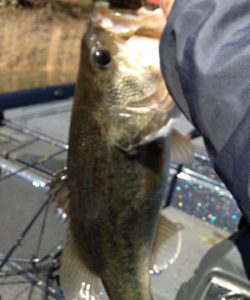
At one shallow cove that was protected from the wind I decided to try fishing it. After just a few casts with a Chatterbait I hoked and landed a three-pound largemouth. I was surprised it was in two feet of water with the bright sun and hoped it was not a fluke I caught it.

After fishing a couple more places like that without a bite I was afraid it was, but then I pitched a jig head worm to a tree top in a couple of feet of water back in a pocket. I thought I had a bite and when I tightened up my line in the wind I realized it was headed for deep water.

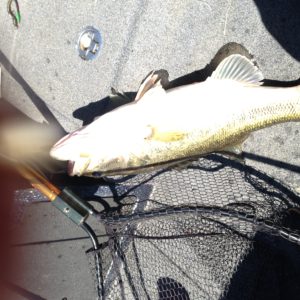
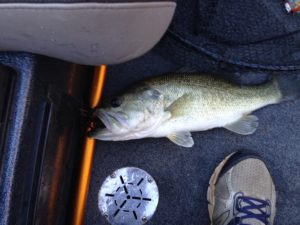
When I set the hook my heart almost stopped when a big bass took off then jumped clear of the water. After two more jumps I managed to land a bass that weighed six and one quarter pounds on my scales. That made me feel pretty good there were some quality bass in shallow water, although the temperature was only 56 degrees.

The first bass looked like a male, without the fat belly of a female this time of year. The big one was very fat, and her tail was bloody and raw, like she was fanning a bed. Many bass tried to bed a few weeks ago when the weather had been unusually warm so many days, but the cold weather made them back off. I tried a few more places without a bite before heading in.

Friday morning was even colder and the wind blowing even more, but I got up and on the water as the sun came up. After trying two shallow coves with weeds I caught a bass a little over three pounds on the Chatterbait, strengthening my faith in that pattern. I fished some points and brush piles where the bass should be holding this time of year, waiting to go in and spawn, but got no more bites before giving up and heading to a warm place to take a nap about noon.

Saturday was better, with little wind and much warmer. I fished several places where I had caught bass in the past under these conditions and hooked and lost one over four pounds and several smaller bass on the Chatterbait. I also lost one over three pounds on a crankbait and caught several on other baits. That make me think the bass were responding and moving into shallow water.

Sunday morning was colder, and I hooked only two bass in the weeds, but at least there were some still in them. When I headed in to get ready to go draw for partners I thought I could run a lot of shallow backouts with the Chatterbait, catch a quality bass out of a few and have a good limit after eight hours of fishing.

At the meeting I was told I would have an observer fishing with me Monday morning since there was an uneven number of boaters and no boaters. But the next morning, after meeting him and getting his stuff in my boat and lining up to launch, the tournament director called me. Another no boater had dropped out and they wanted me to leave my boat in the parking lot and go out as a no boater.

After a lot of confusion and me telling them I
would just go home and not fish, they finally made arrangements for the extra boater in the club that had a no boater back out at the last minute swap and take his place, I was the last boat to go out, about ten minutes behind everyone else. We made a 30-minute run in very rough water to the place I had caught the six pounder, but the wind was blowing right into it and it was almost unfishable.

After three hours of not getting a bite trying the Chatterbait pattern I gave up and started fishing just to try to catch a keeper and landed four. With an hour left to fish I decided to try the Chatterbait one more place and hooked and lost a bass that looked like it weighed close to four pounds. In the very next pocket I landed a bass over 3.5 pounds.

At weigh-in my five weighed 7.67 pounds and one of them was as heavy as the other four put together. The next day we again tried the Chatterbait pattern and my partner and I caught one each doing that, and each had four more keepers. The bass again didn’t hit the Chatterbait until there was only an hour left to fish.

My five the second day weighed 8.64 and my biggest fish was about half of that weight. I ended up with 16.31 pounds and 41st place out of 130 fishermen, not the finish I had hope for!

Academy Outdoors Mentor Reel

I had fun at the Classic and think I learned a lot. Watching Steve Kennedy trying to figure out patterns based on what he had learned during previous days of practice was instructional. He thought he had three patterns going where he could catch a limit of three-pound bass each day, and he caught a bass weighing more than three pounds each on each pattern while I watched. Based on the results, they didn’t work out as hoped.

Thursday night Academy Sports and Outdoors hosted media for dinner and a presentation of their fishing products and gave us a few samples. Most interesting to me was their new “Mentor” bait casting reel. Fishermen learning to cast with a bait caster have a lot of problems with backlashes, when the spool turns too fast at the end of the cast and creates a “birds nest” of looped line on the reel.

Their new reel is supposed to help with this problem. All bait casting reels have adjustable internal brakes to help prevent backlashes, but the tighter you set them the shorter your cast. Experienced fishermen are able to use their thumb to control reel speed, most of the time.

The new reel has the usual internal brakes that help, but has a second set of them gives you more control. The second set helps a lot and, as you learn to use your thumb, you can release the second set completely. Then as you get better you can back off the other set, too, and get longer and longer casts.

Academy Outdoors has been a big supporter of youth fishing and this reel should be excellent for the beginner.

Potato Creek Bassmasters Tournament at West

Last Sunday in our February tournament at West Point, 22 members of the Potato Creek Bassmaster fished for eight hours to land 89 keeper bass weighing 164 pounds. There were 11 limits and one person did not weigh in a fish.

Doug Acree won with five weighing 14.82 pounds, anchored by a nice 6.63 pound largemouth. Mike Cox had five weighing 14.75 pounds and his 6.70 pound largemouth was big fish. Tom Tanner drove up from Florida to catch five weighing 11.56 for third, and Niles Murray placed fourth with five at 9.40 pounds.

William Scott fished with me and quickly caught two small spots on a spinnerbait while I was throwing a crankbait. I’m hardheaded, but not stupid, so I picked up a spinnerbait and a few minutes before 8:00 I hooked and landed a 4.79 pound largemouth, a good start I thought.

We fished the next seven hours and had a very frustrating day. Time after time we would get a bite on a worm or jig, set the hook and nothing would be there. I missed more bites than in any one day I can remember!

On one point, after we had both missed several bites, I let one pick up my worm and swim with it a few feet before setting the hook and landed a 12.5-inch spot. We had tried setting the hook immediately and missed fish, and tried letting them run and then missing them, but that time it worked, for the last time that day. I think a lot of the bites we missed were from small spots.

We ended up with three keepers each. Even with my good kicker fish I had only seven pounds and finished ninth. That made for a very frustrating day.

The Sportsman Club is at West Point today. I wonder how many bites I am missing right now.

Early Spring At Lanier

Right on time, sandhill cranes showed up a few weeks ago, headed back north on their annual migration. This is a sure sign spring is not far away. Even more significant, daffodils in my yard started blooming last week, offering a small splash of bright yellow against all the browns and grays of lingering winter.

Thursday morning there was a strange bright light in the sky for a few minutes at my house, something not seen in days. Rainy, cloudy days seem the norm in February this year and many more are in the weather guessers forecast. Sometimes, although uncomfortable, it makes fishing and catching better.

Water in lakes is warming slowly. Sun on the water warms it faster so it has been slow. Longer days have made bass and other fish start moving more shallow, thinking about spawning. But cold nights are keeping them from getting in a hurry.

I went to Lanier a week ago last Thursday and fished one day in wind and bright sun and two days in the rain. It was interesting, and I spent a lot of time looking for bait and bass but was not successful. I was hoping to find a school of bass or a pattern that would help me in the Flint River Bass Club tournament last Sunday but did not.

In our February tournament six of us braved a rainy day to cast for eight hours. We landed only seven keepers longer than the required 14 inches on Lanier, and they weighed about 15 pounds. There were no limits and two fishermen didn’t have a keeper.

Jack “Zero” Ridgeway didn’t live up to his name, winning with three fish weighing 5.40 pounds. My one largemouth, the only one caught, weighing 4.85 pounds was good for second and big fish. Niles Murray was third with two at 3.24 pounds and Alex Gober placed fourth with one weighing 1.48 pounds.

Sometimes little things come together to make a difference. After fishing Friday without a bite I had dinner with Jim Farmer and his wife. He asked if I had tried the very back of coves where muddy water was running in from all the rain.

A few years ago I did an article with Ryan Coleman on Lanier after a lot of rain. He took me to the back of a creek where muddy water was running in and we caught some nice fish on spinnerbaits.

I really did not think much of those two things since I was expecting to catch big spotted bass on main lake rocky points.

Saturday, I again fished and looked at places where I expected spots to be feeding, and think I had one bite. That was a calm day with no wind, and wind usually helps make spots feed. When Sunday morning had wind, I was ready to fish a spinnerbait all day on rocky points.

I started on a rocky point where I won two club tournaments last November but never got a bite in 90 minutes of casting. While fishing another point nearby I kept hearing a noise like running water and spotted a small waterfall in a ditch. All the rain made water flow down the steep rocky bank and gurgle muddily into the lake, staining the whole ditch.

All the memories came back so I went to it and cast my spinnerbait all around it. When I cast right to the base of the small waterfall in about a foot of water a fish thumped my bait hard and I set the hook. I thought I had hooked a keeper bass about 20 feet from the boat, but when I set the hook it almost pulled me out of the boat.

The fish fought hard, especially with the short amount of line out, and I just knew I would lose it, especially after seeing how big it was. But I was able to net the fish and stop shaking after about ten minutes.

For the next three hours I rode around looking for more places where water was running into the lake and fished every one I found, but never got another bite. I had gone back to the place I caught the fish after about an hour to try it again, but the water flow had slowed to a trickle.

For the last three hours of the tournament I again tried deep, rocky points and banks and got one bite but did not hook it. I think it was a crappie or bream based on the way it hit, and I was fishing a jig and pig with the tips of the trailer tail dipped in chartreuse JJs Magic. Every fish in the lake will hit at the wiggling tails of a trailer like that.

The Potato Creek Bassmasters fished our tournament yesterday at West Point. I’m sure I spent hours fishing backs of pockets with muddy water. As I write this I wonder if they will be there!

Florida’s Forage Fish

New Program Shines Spotlight on Florida’s Forage Fish
By Brett Fitzgerald
Snook and Gamefish Foundation
from The Fishing Wire

Pinfish or trout?


If you have ever been grouper fishing, I know this has happened to you: You feel the thump of a bite, reel down and next thing you know the fish has “rocked you up” and before you can react, your line goes slack. Fish – and tackle – gone. More times than not the tackle failure takes place at the connections, such as the knot connecting the leader to swivel.

Like me, I am sure you have also lost a gator trout, a big snook, or a tarpon because of knot failure. Or maybe the knot was OK, but it was chopped off by a misguided kingfish or Spanish mackerel.

Here’s my point: Our tackle is only as strong as its connections. Healthy marine fisheries depend upon strong linkages in the food web too.

Take for example the lowly pinfish. They need healthy seagrass flats to provide them with food and cover. This important species of forage fish give back to seagrasses by cleaning and pruning the plants, which helps keep the meadow growing and healthy. (Small pinfish eat shrimp, as any angler knows, but at about 4 inches and larger they mostly convert to being herbivores.) They are also an essential food resource for a variety of predators that depend upon the pinfish’s ability to turn phytoplankton, algae and seagrass blades into high-octane fatty acids.

Ecologists have a handle on the basic linkages of such “trophic” connections, and I bet most anglers have an intuitive understanding of this too. But even though we grasp the importance of forage fish like pinfish, there is not a thorough enough understanding of how or why their populations change over time. Drawing back the curtain on the life history dynamics of forage fish is key to help us prevent the types of trophic “break-offs” that could have devastating impacts on our fisheries.

The good news is we’re on our way to gathering this kind of information. Last year the Florida Forage Fish Research Program (FFFRP) – a collaboration between the Florida Forage Fish Coalition, Florida Fish & Wildlife Research Institute (FWRI), and academic institutions –funded two student-led research fellowships and is currently raising funds for additional fellowships in 2018 and beyond. This work will shed some interesting and important light on forage fish populations and their impacts on predators, with the added benefit of supporting the next generation of fisheries scientists.

Eyeing Pinfish Research

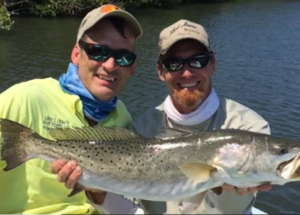
Terry Tomalin, the late Tampa Times outdoors editor, once suggested to a friend that “Gut Content Analysis” would make a great name for a punk band. FWRI’s Fish Biology “Gut Lab” rocks at identifying partially digested forage items found in the stomachs of the predator species we target. For example, a 2006 study conducted by the Florida Wildlife Research Institute (FWRI) showed that forage fish account for 40% of a snook’s diet in the Charlotte Harbor Estuary, and pinfish make up half of that (20% overall). I know gator seatrout love ’em – it was a pinfish that landed my biggest to date (see above right).

But when it comes to where these critically important pinfish spawn and spend their lives, we have a lot to learn. We’re left to wonder whether pinfish offshore spawning that supplies the Eastern Gulf’s estuaries occurs in a few critical locations or whether spawning activities are spread out. We also don’t know whether pinfish from all of the Gulf estuaries move offshore to spawn at once, or whether they take turns. Fortunately, scientists from the University of South Florida (USF) plan to change that.

USF researchers awarded the first of two FFFRP fellowships in 2017 will use a new technique to discover the secret lives of pinfish. Such insight is gained not by following these fish around and watching what they eat, but rather by examining chemical markers stored in the fish’s tissues. By analyzing carbon and nitrogen isotopes stored in the core of pinfish eye lenses, USF scientists will gain insights about where they were spawned and spent the planktonic phase of their lives before settling into our coastal estuaries.

Foraging Arena Theory

We all know that habitat loss and fragmentation can reduce recruitment of juveniles into gamefish populations. But couldn’t limitations on prey availability also reduce recruitment of wildly popular species such as redfish?

For many years, FWRI collected data on forage abundance in Gulf estuaries. Now, the FFFRP fellowship program is funding a University of Florida researcher to evaluate trends for what they think are the ten most important forage sources for redfish and gag grouper. They will specifically try to identify any significant population changes in these key forage species, and determine what effect, if any, these fluctuations might have had on redfish and gag grouper populations. After all, we can’t adequately protect healthy populations of iconic species such as redfish and gag grouper, unless we understand such basic predator-prey relationships.

These promising fellowships will publish their results this year. In the meantime, the Florida Forage Fish Coalition is hopeful that the FFFRP can secure funding for many more fellowship projects in the future. This work will provide valuable scientific insight to the FWC as they work to maintain healthy forage, predator populations, and fisheries as outlined in the Florida Forage Fish Resolution passed in June 2015.

Visit www.floridaforagefish.org to take the Florida Forage Fish Coalition pledge. You can donate to the Florida Forage Fish Research Program at https://www.igfa.org/fffrp.

Editor’s Note: The Florida Forage Fish Coalition is a small yet diverse coalition of organizations who understand the critical importance of the baitfish that swim in Florida waters. Some coalition members contributed to information in this story. Please do take the time to visit the web page and take the pledge!

Image credits: Pinfsih in Hand image courtesy of Live Advantage Bait.

Bass Boats Have Come A Long Way In 44 Years

My first bass boat was a 1974 17-foot Arrowglass with a 70 horsepower two stroke Evinrude motor, foot controlled 12 volt trolling motor with about 40 pounds of thrust and a Lowrance flasher depthfinder on the console. It would run about 35 miles per hour top speed. It had an Anchormate on both ends, a winch that raised and lowered a ten-pound mushroom shaped anchor. There was on car battery that cranked the boat and ran everything on it.

The trailer was a single axle one with 12-inch tires. I carried a paper lake map with me that showed the basic outline of the lake. I did order a contour map of Clarks Hill, a 52-page book with pages two feet square, that showed depth contours in five-foot intervals. I put sections of it on the wall in my lake trailer.

The Arrowglass had a live well of sorts, that would fill about four inches deep with water to keep fish alive, but it did not work very well. The boat was top of the line at the time, and cost just under half my annual teacher’s salary when bought new.

When I joined the Sportsman Club that April I had the second biggest motor in the club, there was one 100 horsepower, and the second longest boat. Most boats were 14-foot Sing Fishers with 40 horsepower motors and stick steering.

Now I have a top of the line 2016 20-foot Skeeter with a 250 horsepower four stroke motor that will fly down the lake at over 75 miles per hour if I get in a hurry. The trolling motor is a foot controlled 36-volt 112 pound thrust one that will zip the boat along on high and hold it in any wind as long as the waves are not so high they lift the front of the boat get the motor out of the water. It requires four big deep cycle batteries to run everything.

There are two live wells that hold about 20 gallons of water. Pumps pull water from the lake to fill them and constantly put in fresh water. Other pumps recirculate the water, keeping it oxygenated, and with the pull of a valve will pump the water out of them to drain then faster than just opening the plug, which can be done remotely.

On the back are two Power Pole shallow water anchors. With a push of a button I can extend or retract poles that go down eight feet deep to hold the boat in one place. There are two Humminbird Helix 10 depthfinders on the front and two more on the console, each with 10-inch screens. The trailer is a dual axle with 14-inch tires. It cost almost 20 times as much as my first boat, even though I bought it used. Although my salary had gone up a bit before I retired, the used boat cost almost a full year’s pay.

The change in deptfinders is unreal. My old Lowrance had a light that spun around a dial marked in depth numbers and flashed when its sonar pulse hit something. Thats why they were called “flashers.” The bottom showed as a constant bright line and anything above the bottom, like a fish or brush, flashed at its depth.

My Helix 10s are like TV screens. Just the electronics on my new boat sell for more than three times the total cost of my first boat. They are networked together and can be divided into windows and all four will show everything that shows up on any of them. A GPS map shows bottom contours of the lake with great detail and I can highlight a depth.

If I want to fish from 5 to 10 feet deep I can highlight it in red and keep my boat just outside it to fish that depth consistently. I can also see shallow spots to avoid as I run down the lake and put in waypoints to exactly mark a brush pile or anything else I want to go back to.

The depthfinder part is an LCD that shows a moving picture of whatever is below the boat, in color. It will show in detail brush, stumps and fish. The down and side scan paint a picture that looks like a photo, with brush, stumps and rocks looking just like they would look if you were able to see them. Fish show up as small white dots.

Even more amazing on the front is a 360 Scan transducer. The image it produces looks like a radar screen with a line going around a circle picture. It scans all around the boat, showing rocks, brush and fish ahead, to the sides and even behind the boat. I have mine set on 60 feet, so I see everything within that distance of the boat.

My first boat was a tri hull that was stable while fishing but pounded through waves and jarred you if the water was rough. My new boat is stable while fishing but will cut through two to three-foot waves with little bouncing. It is three feet longer and much heavier, which helps a lot.

Do I need all the stuff I now have? No. Do I like having it? Yes. Do all the advancements help me catch more fish? Maybe. After all the difference between men and boys is the price of their toys.

Fishing Lake Seminole with Buddha Baits

On Wednesday, January 31, I went to Lake Seminole and met Jason Smith to get information for the March Georgia and Alabama Outdoor News Map of the Month articles. Since Seminole is a border lake with parts of it in both Georgia and Alabama the article runs in both states.

Jason lives in Albany and fishes Seminole often. He is owner of Buddha Baits and makes and sells fishing tackle. He makes jigs, spinnerbaits, and worms, and also makes rods. He will start selling a line of reels this year and also has a branded fishing line.

Jason fished a local pot tournament on the Seminole Winter Trail at Seminole a couple of weeks ago and weighed in five bass weighing 24 pounds and did not get a check! Seminole has been on fire for big bass this winter, with five pounders common and many bigger fish.

Seminole is different from any lake in our area. It is very shallow, with miles of grass beds, sand bars and stump fields. The dam in in Florida on the Apalachicola River, just past the junction of the Flint and Chattahoochee Rivers. It is so far south that bass often bed there in January, much sooner than lakes around here.

We started as the sun rose, fishing a deep creek channel bend. The cold winter has kept the bass deeper this year, but they are full of eggs and ready to move up and spawn. This creek bend was just off a point that leads back into a spawning flat, a classic setup for pre-spawn bass.

Jason caught a five pound plus largemouth on his Inseine Jig and I missed a bite on my jig. (note – I landed a 4.85 pound largemouth on one of Jason’s spinnerbaits at Lanier in my next club tournament) With a big bass in the livewell for pictures, we started running around the lake, marking spots for the March map and fishing some of them. It was still a few weeks early for the bass to be on these spawning areas, but they were nearby, and we caught several on grassbeds out from the spots we marked.

It was a cold day, especially when fishing in the wind or running down the lake at 60 mph. But sitting in the sun after the wind died was very warm. Warmer weather over the next few weeks will warm the water and move the bass to the places we marked.

Seminole is about four hours from Griffin, but the roads are good, with four lane most of the way. Bainbridge has good motels and restaurants. I stayed at the Days Inn and was impressed with the friendliness of the staff and how helpful they were, filling every request I made quickly and efficiently.

Plan a trip there in the next couple of months and you may catch a limit of five-pound bass, or one so big you want to have it mounted. Just be considerate of other fishermen.

What Is the Most Important Improvement In

Bass fishing equipment has made unreal advancements in my lifetime. When my uncles took me fishing in my preteen years we went in wooden jon boats, usually homemade, and paddled them around ponds and backwaters of Clarks Hill. Fishing was always close to where we put in, paddling very far was too hard.

My job was to scull the boat, working the paddle quietly without taking it out of the water, while my one of my uncles fished from the front of the boat. Maneuvering around was difficult and we fished slowly. Sometimes, if I was lucky, I got to make a few casts with my trusty Mitchell 300 spinning reel while my uncle paddled.

Line was a black braid that broke all to easily, or the new-fangled monofilament line that was stiff, weak and hard to tie. Lures were wooden, hand painted creations like Jitterbugs, Hula Poppers or Lazy Ikes. Sometimes we fished a Crème “rubber” worm with a two or three hook harness and a small spinner up front. They came in two colors, black or red.

We used the paddle for a depthfinder and usually fished water where it would touch the bottom. Fish were kept on stringers, either metal chains with clips or cords with a ring at one end and a metal shaft on the other. All fish were kept to eat.

Now bass boats fly over the water at amazing speeds while electronics show depth, water temperature and exactly what is under and out to the side of the boat, like looking at a picture. Rods and reels are light and trouble free and line comes in so many choices it gets confusing.

You need only to walk into Berry’s Sporting Goods to see the vast array of shapes, color and sizes of plastic worms and huge numbers of hard baits that will run from the top down to more than 30 feet. And they come in colors that look exactly like bait.

Bass are put in live wells with pumps that keep fresh water circulating to keep the fish alive, and almost all are released. Pictures are taken with cell phones to share with hundreds of people on social media. And you can win money in tournaments.

But what is the most important advancement for actual fishing. There are discussions of this in magazines and on-line. People have varying ideas but to me, without a doubt, the most important improvement is the foot-controlled trolling motor on the front of the boat.

You can sit or stand on the front of the boat and, with practice, move the boat precisely, without even thinking about what you are doing, while casting. You can go into tight places quietly and cast to spots that would be inaccessible without the trolling motor.

What do you think the most important of all those changes over the past 60 years?

How Many Guns Should I Be Allowed To Own?

“Why was the Las Vegas shooter allowed to have 48 guns? No one should be allowed to have 48 of anything,” so spoke either a main stream media talking head or a comedian. I often can not tell the difference. He went on to say, “If you have 48 cats you are called a ‘crazy cat woman.’

That was just a small example of the unhinged comments from liberals demanding control over the rest of us based on their prejudices. As is often said, and demonstrated, it is not about guns, it is about control.

Do you own 48 of anything? Should you be controlled and should the government confiscate anything the liberals do not want you to own?

I am not sure exactly sure how many guns I own, I have not counted lately. I may have more than 48 and I definitely have thousands of rounds of ammo for them. Not a single one of them has ever hurt anyone and never will, unless I am threatened. It is not up to comedians, actors, talking heads or politicians, all with armed security, to tell me how many I can own.

Two very liberal politicians actually told the truth, a real surprise. California Senator Diane Feinstein, who wants to ban all guns, admitted no gun control law could have affected the Las Vegas shooting, then called for more gun control laws in response to that shooting. That is the definition of illogical.

California Representative (see a pattern here) Nancy Pelosi, in response to a question about people’s fear that any new law would be a “slippery slope” toward a total gun ban, responded “I hope so.”

What ever happened to “Saturday Night Specials?” Just a few years ago gun banners were claiming that outlawing inexpensive revolvers, so called “Saturday Night Specials,” would solve gun crime. Now their mantra is “semiautomatic” or “bump stock.” They will use anything to try to get their control over those of us who disagree with their agenda. They use any crisis or tragedy to try to control the rest of us.

Arms are the only physical thing citizens are guaranteed a right to own in the constitution. But folks like movie producer Michael Moore want to take the 2nd Amendment out of the constitution. It inhibits their ability to control the rest of us.

If laws kept people from getting things, we would have no cocaine, meth or heroin problem. To see how effective gun laws are, read any crime report. It is illegal for felons to have a gun, but almost every arrest record says, “also charged with possession of a firearm by a convicted felon.”

Laws do not control criminals, only us law abiding citizens.