Category Archives: Conservation

California Marine Life Protection Act

California Marine Life Protection Act: The Ultimate Bait and Switch
from The Fishing Wire

There is no question that the passage of the Marine Life Protection Act (MLPA) has been the most controversial environmental issue California’s angling community has ever faced. It signaled the state’s shift from a shared philosophy of conserving California’s natural resources to outright protectionism, with little regard to the interests of outdoor recreation, tourism and all of their economic benefits.

As the MLPA established the framework for Marine Protected Areas (MPAs), the state promised California anglers that areas designated as off-limits to commercial and recreational fishing may one day be open to fishing. In fact, they were very specific in their promises. Scientific assessments would be conducted every five years, and as fish populations were assessed as sustainably viable, the restrictions would be lifted.

Over time, the state established many MPAs along California’s coastline, totaling over 850 square miles. As new MPAs were introduced, the angling community not only challenged the merits of closing some prime fishing spots, but the process by which they were selected. The locations and boundaries were not set by a presumably objective government agency, rather, a private organization who’s funding was fueled by environmental groups, many of which shared an anti-fishing agenda.

As the plans came before the California Fish and Game Commission, the science or lack thereof was challenged, but to no avail. Even with considerable restrictions on the amount and manner of take already in place, commissioners simply assured anglers that timely assessments would be conducted and such drastic action would only lead to more plentiful fishing in the years to come.

That was then and not now. Deadlines to conduct these assessments have come and gone, and so apparently have assurances that the state can keep its word. This was evident at the April 13 California Fish and Game Commission, where some commissioners echoed the view of environmentalists that no promises were ever made. In fact, the president of commission stated that he didn’t expect fishing to be restored during his lifetime.

In retrospect, this stunning pronouncement was not surprising. At the April meeting, the commission was functioning with only three commissioners and two vacancies after several longstanding commissioners resigned out of frustration. Defending hunters and anglers had become too tiresome. Ironically, it was the two recently appointed commissioners who challenged the assertion that promises were made, as if they had an institutional knowledge of the all the public hearings and stakeholder meetings.

The bottom line is the state did not recruit recreational anglers to serve on stakeholder groups to seek their advice on how best to deny them access to some of California’s finest fishing, permanently. That would have been a none-starter. Rather, stakeholders were assured that environmental mitigation was required to protect the ocean’s natural resources, and their participation aimed to balance the interests of responsible environmental stewardship and outdoor recreation.

The commission would be wise to abandon their current course of action of denying the truth, thereby enshrining the Marine Life Protection Act’s legacy as the greatest bait and switch act ever. It will only further damage their relationship with those who were once their partners in conserving our state’s natural resources. What’s more, their actions have economic consequences. Recreational fishing contributes over $4.9 billion in economic activity each year, and its economic value will only decrease as the state continues to deny access to some of the nation’s finest fishing.

Marko Mlikotin is the executive director of the California Sportfishing League, California’s leading advocate for anglers and businesses dependent on outdoor recreation.
West Point Buddy Tournament and Eating Spotted Bass

Last Saturday nine two-man teams fished a Potato Creek Bassmasters Buddy Tournament at West Point. I should say two-person teams. There were some wives fishing as well as children and grandkids. A club member could bring anyone they wanted as a partner. It was pretty day even if a little cool first thing that morning.

In this tournament each team could weigh in their best five bass, so it was really a per boat limit. I think all nine teams weighed in a limit. We had prizes for the top three places and big fish.

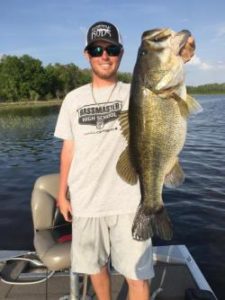
Jordan McDonald fished with me and, thanks to Jordan, we placed second with about 12.5 pounds and had big fish with a 5.87 pound largemouth Jordan landed at 2:00 PM. There were two other largemouth weighing over five pounds each weighed in, both by the first place team. They had five weighing over 14 pounds.

Jordan and I started throwing topwater baits on a point and quickly caught three small spotted bass, big enough to keep but not really what we wanted. Jordan set the pace for the day, catching the biggest of the three.

We fished shady banks until the sun got high and caught some more keeper spots but, again, not what we wanted. At about 10:00 we ran to a deep bank with two blown down trees on it. I caught a keeper largemouth on top over them but Jordan got a bigger one on a jig and pig, and lost two more good size fish.

By noon we had about ten fish and we found some keeper spots on a roadbed but only one of them was big enough to cull one of our best five. I caught it on a jig head worm. With only an hour left to fish, at 2:00 PM, we decided to try the trees one more time. Almost as soon as we stopped Jordan set the hook on a big fish.

I got the net and went to the back of the boat, but the way the fish fought, staying down deep, we thought it might be a catfish. And when it came under the boat down several feet deep I saw it and was sure it was a cat. I went back to the front of the boat to keep it from drifting into the trees.

Suddenly Jordan yelled “its a bass!” The fish had come to the top where he could see it. I managed to get back there and net the 5.87 that was big fish for the day. I think Jordan caught either three or four of the five we weighed in that day.

We had a lot of fun and could have kept over a dozen eating size spotted bass. That is a good plan if you want fish to eat. Go to West Point and catch spots to eat and let the largemouth go. Spots have about overrun the lake, but largemouth seem to be making something of a come-back there. A good many of the fish weighed in Saturday were largemouth.

Spots are not native to Georgia waters and are not good for most of our lakes. Fishermen have “mid-night stocked” them in Jackson and Russell, and they have gotten into West Point, Bartletts Ferry and even Clarks Hill, maybe by illegal stocking but maybe from natural movement from upstream lakes where they were illegally stocked many years ago.

Spots are fun to catch but they don’t grow as fast and don’t get as big as largemouth. Lanier is an exception with its deep clear water, standing timber and blueback herring, also stocked illegally. There they grow to quality size and fishermen think other lakes will be the same.

In Alabama lakes, especially the Coosa River lakes, they are native and do grow to quality size. But conditions there are different. Fishermen may have hurt our lakes over the long term by messing with Mother Nature.

So if you want some bass to eat go to a lake where spots are not native and keep a limit, ten per person, to eat. There is no size limit on them anywhere in Georgia except at Lanier so you can keep those 10 and 11 inch fish. They are a good eating size.

Catch a bunch of spots to eat, have some good meals and fun catching them, and help the lakes at the same time.

What Is Management of Recreational Fish Species?

Fish don’t talk, but we can

Today’s feature comes to us from the Florida Fish and Wildlife Conservation Commission, and it would surely act as a good template for all states to follow regarding management of recreational fish species.

By Bob Wattendorf, with Amber Nabors
from The Fishing Wire

Big Florida Bass

Big Florida Bass

Fish don’t talk – even if they are referred to as largemouths. But we can and should. The Florida Fish and Wildlife Conservation Commission’s (FWC) mission is “To manage fish and wildlife resources for their long-term well-being and the benefit of people.” The latter aspect of that mission makes it critical that FWC staff and stakeholders, such as freshwater anglers and boaters, collaborate to ensure the use of the most appropriate fisheries management practices.

The FWC’s Division of Freshwater Fisheries Management has a long history of prioritizing the desires of anglers along with those of other stakeholders including recreational users, riparian owners, fishing-related businesses and destination marketing groups. The FWC’s scientists often collaborate with other researchers and universities to ensure conservation measures are sustainable for affected fish populations.

Fisheries management is a delicate art the FWC continually strives to perfect when managing species and crafting programs to optimize fisheries for people, while ensuring long-term health and survival of vibrant fish populations. An excellent example is the way the Division approached creating a Florida Black Bass Management Plan. More than 7,500 anglers provided input during the plan’s development, as did a technical assistance group representing a variety of anglers, fishing-related businesses, university experts, professional anglers and outdoor media. The goal is to use this plan to ensure Florida is and remains the Black Bass Fishing Capital of the World.

The FBBMP was adopted in June 2011 and produced numerous initiatives that have been previously reported. Here, we’ll focus on two.

The first inititative, the TrophyCatch citizen-science program, was initiated in 2012 to reward anglers for providing data on bass caught and released in Florida that weigh at least 8 pounds. By developing partnerships with businesses such as Bass Pro Shops and Phoenix boats, the FWC continues to expand this program. More than 4,000 eligible bass have been successfully documented and released to date. The data collected allows biologists to determine which programs and natural conditions foster trophy bass, such as habitat enhancement, regulation management or stocking efforts (see TrophyCatchFlorida.com).

The second initiative is the development of simplified black bass regulations to help achieve optimum sustained use of these fisheries statewide. The FWC conducted an extensive review of existing rules and analyzed their effects on fisheries enhancement. Then anglers and other stakeholders provided their input through online surveys sent to 170,000 freshwater fishing license holders, 9,400 mail-in surveys distributed at various locations and 10 open-house events hosted throughout the state. More than 3,500 anglers provided responses.

Following the preliminary input, FWC biologists worked with other experts to determine a range of rules that could accomplish the requested changes. These proposals were evaluated in public meetings during 2014, and several additional surveys were distributed and advertised, garnering 3,000 specific responses.

Florida Sportsman Magazine, BASS Times, Outdoor Life and The Fishing Wire each provided detailed articles. Several television shows favored by Florida anglers, including Chevy Florida Insider Fishing Report with Capt. Rick Murphy, and One More Cast with Shaw Grigsby, provided coverage.

“This effort to solicit public input and keep them informed will culminate in rules that make it easier for anglers to understand the law and participate, and will encourage harvest of smaller bass and enhance catch-and-release opportunities for larger, quality-size bass,” said Tom Champeau, director of the Division of Freshwater Fisheries Management.

Below is a summary of new black bass regulations that were approved by Commissioners in February 2016 and go into effect July 1, 2016 (see bit.ly/BassRegs). There are no longer separate zones, and more than 40 special regulations or specific Fish Management Area rules for black bass were eliminated.

Daily Bag Limit for Black Bass: All species (largemouth, Choctaw, shoal, Suwannee and spotted) are included in the five fish daily aggregate black bass bag limit. This is the same as the previous statewide rule.

Largemouth bass: Only one may be 16 inches or longer in total length per angler per day, with no minimum length limit.
Suwannee, shoal, Choctaw and spotted basses: 12-inch minimum size limit, only one may be 16 inches or longer in total length.

Shoal Bass Conservation Zone: In the Chipola River between Peacock Bridge and Johnny Boy Landing, shoal bass must be released immediately. This conservation zone for shoal bass further protects this relatively rare species that depends on a limited area of unique habitat.

Tournament Fishing: The bass-tournament permit program will allow anglers participating in permitted tournaments temporary possession of five bass of any size. This program has been ongoing for more than 20 years and allows delayed-release bass tournaments to take place while ensuring proper care, handling and release of all bass caught during the tournament, including those that could otherwise be harvested legally.

Through these inititives, anglers, biologists and other stakeholders shared ideas and collaborated to try something different.

“This new approach is very innovative and I anticipate many states will follow suit,” said Dr. Michael Allen, professor of freshwater fisheries ecology at the University of Florida.

Instant licenses are available at GoOutdoorsFlorida.com or by calling 888-FISH-FLORIDA (347-4356). Report violators by calling 888-404-3922, *FWC or #FWC on your cell phone, or texting to Tip@MyFWC.com. Visit MyFWC.com/ and select “News,” then “Monthly Columns,” or bit.ly/FishBusters for more Fish Busters’ Bulletins. To subscribe to FWC columns or to receive news releases, visit MyFWC.com/Contact.

Tips on Spring Inland Season

Wisconsin Offers Tips on Spring Inland Season Opening May 7
from The Fishing Wire

MADISON, Wis. – Warming temperatures throughout Wisconsin this week should make for a great bite when the general inland fishing season gets underway on Saturday, May 7.

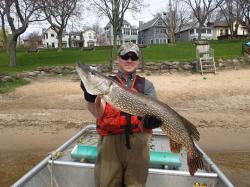
DNR southern fisheries supervisor David Rowe holds a northern pike netted during a musky survey on Lake Monona in Dane County.
Photo Credit: DNR

Matt Andre  with big catfish

Matt Andre with big catfish

Lake Wissota, a 6,300 acre impoundment of the Chippewa River, is well known for its trophy musky. However, the catfish fishery has been gaining popularity and during the spring 2016 fisheries survey, flathead catfish over 20 pounds were a frequent occurrence with flatheads over 40 pounds not uncommon – including this one held by fisheries technician Matt Andre.
Photo Credit: DNR

David Rowe holds a northern pike

David Rowe holds a northern pike

Joseph Gerbyshak holds two 7-plus pound walleyes

Joseph Gerbyshak holds two 7-plus pound walleyes

DNR fisheries biologist Joseph Gerbyshak holds two 7-plus pound walleyes from Long Lake in northern Chippewa County. The lake’s walleye population is rebounding according to recent fisheries survey data and now totals 3.6 adult walleye per acre, up from 2.9 adult walleye per acre four years ago.
Photo Credit: DNR

Justine Hasz, fisheries director for the Wisconsin Department of Natural Resources, said spring survey work on lakes and rivers around Wisconsin indicates healthy fish populations and great opportunities for anglers based on the walleye, bass, northern pike, panfish, trout, muskies and even catfish netted and promptly released by fisheries crew members in recent days.

“Wisconsin remains among the top three angling destinations in the nation and for good reason,” Hasz said. “Whether you prefer fly fishing, casting live bait, trolling or simply watching your bobber dip, our fisheries offer something for everyone.”

While fishing is a passion for many, it is also an economic driver for the state, with an estimated 1.2 million anglers producing a $2.3 billion economic impact, according to the American Sportfishing Association. That impact becomes clear as tens of thousands of anglers take to Wisconsin’s 15,000 lakes, rivers and 13,000 miles of trout streams for opening day.

Walleye continue to be an important target for anglers and since 2013, the Wisconsin Walleye Initiative has worked to rebuild and enhance walleye populations throughout the state. The fish that have been stocked should reach legal size over the next two to three years although some anglers have reported increased catch and release activity from the young fish.

In 2015, Wisconsin stocked 760,000 extended growth walleyes, eclipsing the 2014 record of 720,000. For 2016, DNR intends to stock some 827,000 of the six to eight inch fingerlings, including some 229,000 fish from private and tribal fish farms and 598,000 from DNR hatcheries.

The trout population continues to make gains throughout the state and this year anglers will find 14 streams with upgraded classifications as well as 27 that for the first time have been documented as sustaining trout populations. Six of the newly classified streams have earned the coveted Class 1 designation.

Also new for anglers in 2016 will be simplified trout regulations designed to create more uniformity for anglers who fish on different trout streams and within small geographic areas. Under the new system, maps online and in the regulation pamphlet will indicate one of three regulations:

Green means go fish, with no length limit, a bag limit of five fish and no bait restrictions;
Yellow means caution, with an 8 inch length limit, a bag limit of three fish and no bait restrictions; and
Red means special regulations are in place. Anglers are advised to stop and understand the regulations before fishing.

Anglers targeting panfish also will find new, experimental bag limits to optimize panfish size on high potential lakes capable of producing large panfish. On these lakes, identified in the fishing regulations book, daily bag limits reflect efforts to limit harvest during spawning season or prevent overharvest of any one species.

New Go Wild licensing system makes it easier than ever for anglers to buy, display licenses

Buying a license is easy and convenient through the new Go Wild licensing system, with online access available 24-7. Visit GoWild.wi.gov, one of more than 1,000 vendor locations or a DNR service center to purchase licenses.

While the GoWild licensing system allows several new ways to display proof of your license purchase including use of a personal conservation card, authenticated driver’s license and pdf display on mobile devices, anglers fishing in boundary waters must use the paper printouts as law enforcement officials in the surrounding states do not have access to the Wisconsin database.

Wisconsin residents and nonresidents 16 years old or older need a fishing license to fish in any waters of the state. Residents born before Jan. 1, 1927, do not need a license and resident members of the U.S. Armed Forces on active duty are entitled to obtain a free fishing license when on furlough or leave.

Anglers can buy a one-day fishing license that allows them to take someone out to try fishing, and if they like it, the purchase price of that one-day license will be credited toward purchase of an annual license. The one day license is $8 for residents and $10 for nonresidents.

Information about how to provide proof of your purchase may be found at dnr.wi.gov by searching “Go Wild.”

The general Wisconsin fishing season runs from May 7, 2016 to March 5, 2017. To learn more about statewide fishing regulations and rules that apply on specific lakes, visit dnr.wi.gov and search “fishing regulations.” For a complete calendar, search “fishing season dates.”

Anglers can find fish species information, boat access sites, shore fishing areas, lake information and regulations by downloading the free Wisconsin Fish & Wildlife mobile app, which includes a full array of fishing information. DNR has tackle loaner sites in 50 locations, including many state parks, making it easy for people to enjoy fishing if they don’t have their own equipment or if they left it at home.

Managing Chinook Seasons in Idaho

Managing Chinook Seasons Is A Constant Work In Progress

By Roger Phillips, Idaho Fish and Game public information specialist
from The Fishing Wire

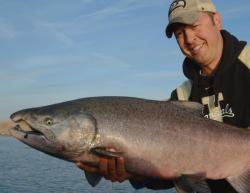
Idaho Chinook

Idaho Chinook

Spring Chinook fishing opens April 23, and anglers often wonder how many salmon there will be and how long the season will last. It’s a challenging question to answer because unlike most Idaho fisheries, salmon seasons are dependent on how many fish return from the ocean each year.

That number varies wildly from year to year, and Fish and Game must balance the wants of anglers with ensuring enough Chinook are available to keep hatcheries operating, protect wild fish listed under the Endangered Species Act, and abide by agreements with other states and tribes to share the harvest of hatchery Chinook.

It’s a tricky mix of management that can complicate the answer for folks who just want to know how long salmon season will last.

The good news

Idaho has had an unprecedented run of chinook fishing seasons. This year will be the 16th straight year Fish and Game has provided a season, which is the longest unbroken streak dating back to 1954. Before then, salmon fishing was largely unregulated.

Chinook fishing kicks off with the spring run, and there’s fishing in the Snake River, Clearwater River and Salmon River and several tributaries. Over the last 20 years, spring chinook runs have averaged 54,160 fish annually. The previous 20 years (1976-95), the spring runs averaged 17,646, and fishing seasons were sporadic and often short-lived.

Last year, about 95,300 hatchery chinook crossed Lower Granite Dam about 25 miles downstream from Lewiston. Non-tribal anglers in Idaho harvested 22,075 of them during the spring and summer seasons.

The forecast for this year is 66,100 hatchery fish to cross Lower Granite, which means about 24,000 will be available for sport anglers to harvest. But biologists won’t know how exactly how many can be harvested until fish start reaching Idaho, and the run has just started.

Forecasting the season

Each winter, Fish and Game biologists predict the upcoming run based on the return of jacks from the previous year. Young salmon, known as smolts, migrate to the ocean each spring at about two years old. Those smolts grow in the ocean and return over the next three years.

Some chinook return to rivers after spending only a year in the ocean. They’re known as “jacks” because they’re almost all males, and younger than most other salmon returning. Most chinook that return to Idaho spend two years in the ocean, so the number of jacks is an indicator of how many “two-ocean” chinook will return the following year.

Finally, a small percentage returns after three years in the ocean, and on rare occasions, four years.

Biologists use last year’s jack salmon return to forecast the size of this year’s run, and that information allows Fish and Game to set a salmon season before the first Chinook arrives in Idaho.

Biologists also monitor the run as fish move past fish counters at the dams on the Columbia and Snake rivers, and they use fish embedded with tiny electronic tags known as PIT tags to determine where the fish are headed.

“We’re able to make the forecast of fish returning to each hatchery or river section based on PIT-tagged fish,” Fish and Game’s anadromous fish manager Pete Hassemer said.

Spring run

Chinook start crossing Lower Granite Dam in April, but the peak usually hits in May. That’s when Fish and Game closely watches the number of fish arriving in Idaho, where they’re heading, and how many fish anglers are catching.

Since the seasons and limits were based on a forecast, it’s important to track the actual return and harvest by anglers. Small daily bag limits help keep the harvest within quotas and spread the fishery over a larger area and ensure enough fish are available for anglers farther upstream.

“We’re catching fish in the early part of the run without knowing exactly how many fish are coming back,” Hassemer said. “Fishing can be really good, and there’s a limited number of fish available to anglers, so they can catch those fairly quickly.”

How’s fishing?

It’s more than a curious question – it’s how Fish and Game determines how many fish are caught each day and how long the season lasts. Fish and Game personnel count anglers and interview them throughout the fishery to see how many fish they’re catching.

“Our creel program has been designed to ensure we conduct enough angler counts and interview enough anglers to have a good understanding of how many fish are caught each day,” Hassemer said.

Fish and Game communicates weekly with the other states, tribes and federal agencies during the season to share information. By Tuesday of each week, biologists have a good idea if there are enough fish remaining to sustain fishing through the following weekend.

Fish and Game posts updated information on its web page so anglers can see how many have been caught. They can find that information at http://fishandgame.idaho.gov/ by looking the under “Chinook Salmon” under the Fishing tab. (Direct link: http://fishandgame.idaho.gov/public/fish/?getPage=114).

The goal is to provide good information for anglers so they have a better understanding where fish are being caught, how good the fishing is, and when closures might occur.

“We generally avoid closing on Friday because we want to give anglers as much opportunity as we can,” he said.

Different rivers, different fisheries

But anglers should remember that their portion of the Chinook return can be caught very quickly, especially when fishing is good and the harvest share is modest.

That’s often the case during popular river stretches. On the Lower Clearwater River, the season typically lasts about 15 days after the first fish arrive. On the South Fork of the Salmon River, the harvest share can be caught within a few days of the peak run arriving.

“Once fish start arriving in the smaller streams and the water is low and clear, anglers are quite successful,” Hassemer said.

Fishing seasons on the Lower Salmon and Little Salmon rivers tend to last longer and are a little more predictable.

Snowpack and spring run-off influence the timing of the runs. Spring chinook tend to follow peak spring run-off, so when the Salmon River starts receding, usually in late May, early June, it’s time to go salmon fishing.

Biologists also carefully watch tag data to ensure fish bound for hatcheries in the Upper Salmon aren’t overharvested lower in the river system. Long-term data shows about 90 percent of the chinook harvested in the Salmon River around Riggins and White Bird are bound for the Rapid River Hatchery.

A moving target

Considering forecasts rarely predict the exact number of fish, biologists keep a watchful eye on the actual return. Sometimes late-returning fish will allow them to keep the season open a little longer. Other times, fewer fish than expected return, and the season is cut short.

But Fish and Game’s goal is to ensure anglers get an equitable share of the available harvest.

“We really try to make sure we don’t close too early and have anglers off the water when they could be fishing for these prized salmon,” Hassemer said.

What Are Missouri Paddlefish and When Does Season Open?

Missouri Paddlefish Season Opens March 15

Editor’s Note: Here’s an interesting look at a sport many of us have never tried, but it’s apparently one of the few ways to harvest the giant “spoonbills” that populate many of our big Midwestern rivers and lakes.

MDC makes paddlefish snagging possible through annual stockings of fingerlings.

tagging a mature paddlefish

tagging a mature paddlefish

Missouri DOC biologists tag a mature paddlefish. Thousands of fingerlings are stocked in larger state lakes and rivers each year. (Credit MDOC)

Missouri’s annual spring paddlefish snagging season is a popular pastime for thousands of anglers. The state’s major paddlefish snagging waters include Lake of the Ozarks, Truman Lake, and Table Rock Lake with the season running March 15 through April 30. The season for the Mississippi River is March 15 through May 15 with a fall season of Sept. 15 through Dec. 15.

Also known as “spoonbills” because of the shape of their snouts, paddlefish take seven or eight years to grow to legal size. The fish feed on plankton and other microscopic prey. These filter feeders therefore do not take bait from hooks and must be snagged using large hooks that catch in the mouth, gills or other areas of their bodies.

The success of paddlefish snagging is dependent on weather conditions, primarily water temperature and flow.

“The best snagging conditions occur when water temperature reaches 50 to 55 degrees and there is an increase in water flow,” MDC Fisheries Management Biologist Trish Yasger said. “This prompts them to move upstream to spawn. We don’t usually see a lot of big fish being caught on opening day. Harvest early in the season is typically dominated by local fish and small males with the occasional large female. As water temperature and flow increase, you will start seeing more of the larger females.”

Stocking Efforts

The Missouri Department of Conservation (MDC) makes paddlefish snagging possible in the Show-Me State through annual stocking of up to 38,000 fingerlings raised at Blind Pony Hatchery near Sweet Springs. The fingerlings are released into Lake of the Ozarks, Truman Lake and Table Rock Lake, plus the Black River. The annual stocking is necessary because dams and other barriers to spawning areas have eliminated sustainable natural reproduction in the lakes.

“Without annual stocking by MDC staff, this popular pastime and food source would go away,” said Yasger. “And we need help from snaggers to learn more about and to better manage this popular game fish.”

Yasger added that MDC released an especially large number of fingerlings into Lake of the Ozarks, Truman Lake, and Table Rock Lake in 2008. The more than 164,000 fingerlings released are now eight years old and should start providing good numbers of fish for snaggers to harvest.

Snag A Tag – Get A Reward

MDC is beginning its second year in a five-year tagging project to help monitor paddlefish numbers and improve species management. Department staff are placing metal jaw tags on up to 6,000 paddlefish netted in Lake of the Ozarks, Truman Lake, and Table Rock Lake and up to 1,000 netted from the Mississippi River. Yasger encourages all snaggers to help out by reporting tagged paddlefish and to NOT remove tags from undersized paddlefish.

“We will send a special ‘I caught a Missouri paddlefish!’ t-shirt to each snagger who returns or reports their first tag on a legal-sized fish,” Yasger explained. “All returned and reported tags will be placed into an annual drawing for cash prizes with a grand prize of $500.”

Tags or photos of tags from harvested paddlefish must be submitted for rewards. Snaggers must include the following information with each tag:

Date caught
Location of catch including reservoir or river, mile marker, and county
Tag number
Fish length from eye to fork of the tail
Snagger’s name and complete address

Report tags by calling MDC at 573-579-6825 with the information, or mail the information with the flattened tag to: Missouri Department of Conservation, 3815 East Jackson Blvd., Jackson, MO 63755. Learn more about the tagging project from MDC online at http://on.mo.gov/1VA1E6B.

Report Transmitters

MDC biologists are also implanting ultrasonic transmitters in adult paddlefish at Truman Lake, Lake of the Ozarks, Table Rock Lake, and the Mississippi River to track their movements and gain other important information. MDC asks that all snaggers who harvest fish with a transmitter to report it by calling 573-579-6825 or by e-mailing Trish Yasger at Trish.Yasger@mdc.mo.gov. It is important to return transmitters so they can be implanted in other fish.

Help smaller fish survive

Yasger reminds snaggers to help undersized snagged fish survive to grow larger.

“Do not land paddlefish with gaffs. This can fatally injure sublegal fish. Use large landing nets,” she said. “Remove hooks carefully and get sublegal fish back into the water as quickly as possible. Wet your hands before handling fish and avoid excessive handling. Do not pass them around for photos and hold fish firmly to avoid dropping them. Never put fingers in the gills or eyes.”

Regulation Requirements

Paddlefish snagging

Paddlefish snagging

The state’s major paddlefish snagging waters include Lake of the Ozarks, Truman Lake, and Table Rock Lake with the season running March 15 through April 30. The season for the Mississippi River is March 15 through May 15 with a fall season of Sept. 15 through Dec. 15.

Unless exempt, anglers must have a current fishing permit to snag or to operate a boat for snaggers. The daily limit is two paddlefish and snaggers must stop snagging after obtaining the daily limit on Lake of the Ozarks and Truman Lake and their tributaries, and the Osage River below Bagnell Dam. The minimum legal body length for paddlefish at Lake of the Ozarks, Truman Lake, Table Rock Lake, and their tributaries is 34 inches, measured from the eye to the fork of the tail. The minimum legal body length is 24 inches on the Osage River below Bagnell Dam and in other Missouri waters. All paddlefish under the legal minimum length must be returned to the water unharmed immediately after being caught.

The Wildlife Code of Missouri requires the head, tail, and skin to remain attached to all paddlefish while on the water so paddlefish should not be cleaned until off of the water. Also, extracted paddlefish eggs may not be possessed while on waters of the state or adjacent banks and may not be transported. Paddlefish eggs may not be bought, sold or offered for sale. Additionally, paddlefish or their parts, including eggs, may not be used for bait.

Learn more about Missouri’s official aquatic animal, regulations, snagging reports, and more at http://huntfish.mdc.mo.gov/fishing/species/paddlefish.

What Is Giant Salvinia?

A Weed Over Troubled Water

Editor’s Note: As we wind up National Invasive Species Awareness Week, here’s a look at one of the worst, the giant salvinia that is creating problems across much of the south these days.
from The Fishing Wire
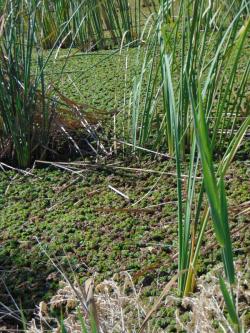
endangers fishing and boating waters and destroys habitat for aquatic plants and animals.

Craig Springer, USFWS

Giant Salvinia chokes waters

Giant Salvinia chokes waters

The plant’s scientific name is your first clue that it is something that you do not want. Botanists know it as Salvinia molesta. It’s commonly known as giant salvinia. Native to South America, the floating fern made its way to the United States via the ornamental plant industry. It’s pretty, but the beauty belies serious economic and ecological harm that usually follow when it is accidentally or purposely released into the wild.

John Naugle would know. He’s a fisheries biological technician at the U.S. Fish and Wildlife Service’s (Service) Arizona Fish and Wildlife Conservation Office, in Parker, Arizona. Naugle is fully immersed in controlling the spread of the nasty plant from a waterway of great importance to the regional economy of Arizona and California. Giant salvinia showed up in the United States in 1995, and four years later it had a hold in the Palo Verde Irrigation District Drain that parallels the Colorado River. The irrigation drain delivers water downstream for agriculture. Since 2004, it has fallen on Naugle and colleagues to put a staunch on the spread.

He’s pretty much “Mr. Salvinia.” As long as the weather is conducive for plant growth, Naugle is out combatting the plant in the waterway. “For seven months of the year, I am on the water up to seven hours a day,” said Naugle. “It’s survey and treat, survey and treat—it’s a near-continuous effort.” That treatment is spraying an herbicide that knocks back the mats of the lime-green floating fern.

“Knock back” is often the best that can be done, according to the Service’s Southwest Region invasive species biologist, Dr. David Britton. Britton says that complete eradication of giant salvinia is nearly impossible given how the plant survives.

“It’s remarkable,” said Britton, “you can break off a tiny piece of plant and it will start a new population.” Britton notes that the plant easily gets carried by boats unintentionally, underscoring the need to be careful and inspect watercraft and trailers. “It grows fast, too, and will quickly cover the water surface, shading out all light.”

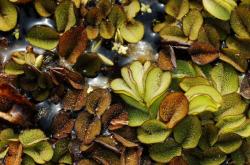
Giant Salvinia up close

Giant Salvinia up close

The plant’s dangerous growth habitat is spoken in its scientific name. The floating plant does best in slow-moving canals, backwaters or ponds. It can double the amount of surface area it covers in a week’s time and create a deep carpet—a shroud three feet thick. That’s troublesome for boating, fishing, waterfowl hunting, not to mention the value of private property associated with infested waters.

Then there’s water delivery associated with public works, part of the reason Naugle performs his labor. Downstream of Palo Verde Irrigation District Drain are dams and water intake structures. Giant salvinia has accumulated and clogged structures in the past. But not so much anymore; Naugle has been successful at controlling the plant. He continues to keep a watch out, and herbicidal treatments are fewer and fewer because of his diligence.

“Once giant salvinia gets established,” says Britton, “it will likely never be eradicated entirely. Prevention is the first measure—and it’s cheaper than what it takes to control the plant.” To learn more, visit www.fws.gov/southwest

How Do They Track Lake Erie Walleyes?

E-Z Pass for Fish Helps Track Lake Erie Walleyes

Written by Christina Dierkes Technical Editor, Ohio Sea Grant dierkes.10@osu.edu
from The Fishing Wire

For about six years, students in Ohio State University’s Stone Lab’s Research Experience for Undergraduates (REU) Scholarship Program have participated in a multi-state walleye movement and mortality study in Lake Erie.

Using acoustic telemetry, researchers from the Ohio Department of Natural Resources (ODNR) and similar agencies across the region are tracking the movement of fish including Walleye, an important sport fish, to better understand how the fish travel throughout the lake during their life cycle.

In a contributing project funded by Ohio Sea Grant, ODNR researcher Dr. Chris Vandergoot is implanting acoustic trackers into Walleye spawning below a dam located in Ballville Township, just outside of Fremont, Ohio. The trackers in the fish, along with receivers placed throughout Lake Erie and neighboring lakes and streams, act much like the E-ZPass system in place on many U.S. turnpikes.

“Each of the receivers acts like a toll booth, and each fish with a transmitter in it is like a car,” Vandergoot said. “So when you drive by an E-ZPass station on the highway, it records what time you were there, and in which direction you were heading. When a fish swims by these receivers, the system basically does the same thing; it logs when a fish was swimming by that receiver.”

 Stone Lab's Research Experience for Undergraduates

Stone Lab’s Research Experience for Undergraduates

Students in Stone Lab’s Research Experience for Undergraduates (REU) Scholarship Program have worked with the Ohio Department of Natural Resources on tracking fish in Lake Erie for about six years. Many have gone on to present the research at conferences, or to jobs in similar fields.

When combined with data on each individual fish – they’re aged and sexed when the transmitters are implanted – researchers can determine where fish go between spawning seasons, whether they return to the same spawning location, and if they spawn every year or take “reproductive holidays” on occasion.

Receiver data is shared on the Great Lakes Acoustic Telemetry Observation System (GLATOS) website, along with general information about the research projects and instructions for anglers who find a transmitter tag in their catch.

“For the first time we can actually follow fish and see what they’re doing,” said Vandergoot. “We’re not relying upon anglers to turn in tags like we historically did.”

Of course, the researchers aren’t just digitally following fish around the lake for fun. “This is very cool science stuff, but at the end of the day this needs to be able to address management questions,” Vandergoot said.

Spawning site fidelity – whether fish return to their “home” stream or reef to spawn – is an important consideration when making management decisions concerning sport fish like Walleye in Lake Erie. For population modeling purposes, it is important for biologist to understand the origin of Lake Erie Walleye as well as where they go over the course of their lives.

Stone Lab REU students have participated in research related to GLATOS for about six years, examining everything from how to best anesthetize a fish for the transmitter implant surgery to how well fish survive after being released back into the lake or after the stress of a spawning season.

The REU program allows students to work one-on-one with professional Lake Erie scientists on an independent research project while taking a Stone Lab course. Selected students receive a full scholarship to Stone Lab, including room and board, and often go on to present their projects at academic conferences, giving them a head start on graduate school or science careers.

One of those students is Zach Steffensmeier, currently a junior in environmental science at Duquesne University in Pittsburgh. During the summer of 2015, he worked with Vandergoot on a Fisheries Management REU, analyzing transmitter data and assessing Walleye mortality during spawning seasons in 2013 and 2014. In addition, he was able to work with ODNR staff to collect receiver data in western Lake Erie.

“I heard about Stone Lab back in high school, and went for a weeklong aquatic biology class,” he said. “I just loved being out there, and when I was looking for a summer job this past year, I thought it would be great to go back there. I also really wanted to do research, so this was the best opportunity for me.”

In addition to gaining experience in hands-on research and delivering a scientific presentation, the REU also solidified Steffensmeier’s goal to work in the same field in the future.

“I want to do something with fish, that’s for sure,” he said. “I enjoy being outside in the field for fieldwork, so I’m definitely interested in being a fisheries biologist, whether that’s through the Ohio Department of Natural Resources, through EPA, or at a university as a professor.”

And with recommendation letters from Stone Lab and Ohio Department of Natural Resources staff, he’s well on his way to one of those careers.

The larger GLATOS project involves agencies in Ohio, Michigan, Ontario, New York and Pennsylvania, as well as the Great Lakes Fishery Commission and the United States Geological Survey’s Lake Erie Biological Station, and funding from the Great Lakes Restoration Initiative (GLRI) and Ohio Sea Grant. Overall, close to $1 million in assets are involved in this fisheries management effort.

“These projects are very large, and no one funding source can pull these off,” Vandergoot said. “But when you bring different collaborators together with all these different resources, we’re able to do amazing things.”

(From the January 2016 issue of Ohio Sea Grant eNewsletter. To subscribe, visit https://ohioseagrant.osu.edu/news/subscribe)

Streambank Restoration on Private Land

Streambank Restoration on Private Land is Putting More Brookies in Your Favorite Fishing Hole

Today’s feature comes to us from the Theodore Roosevelt Conservation Partnership

By Ariel Wiegard, TRCP
Why CRP works for trout and other freshwater fish
from The Fishing Wire

The national Conservation Reserve Program is 30! The CRP was signed into law by President Reagan as part of the Farm Bill on December 23, 1985, to help agricultural producers to voluntarily conserve soil, water, and wildlife. The TRCP and our partners are celebrating the 30th anniversary of CRP throughout 2016, by highlighting the successes of this popular bipartisan program—regarded by many as the greatest private lands conservation initiative in U.S. history. Here on our blog, we’re devoting a series of posts to the critters that have seen tremendous habitat benefits: upland birds, wild turkeys, waterfowl, and freshwater fish. CRP works for wildlife, and it works for sportsmen.

On this blog, we’ve written a lot about the Conservation Reserve Program and how it benefits wildlife. Because the program incentivizes landowners to use their land for conservation instead of for crops, it makes sense that a lot of the program’s results would visible on the landscape itself, where pheasants, turkeys, ducks, and the other wildlife benefit from upland and wetland cover. But CRP is also working beneath the surface, and improved water quality downstream is giving brookies and other fish a serious boost.

CRP enhances the watershed

In the Chesapeake Bay watershed, anglers are counting on a CRP initiative known as the Conservation Reserve Enhancement Program (CREP), which targets high priority conservation projects on a local, rather than a national, level. Federal resources for CREP are often augmented by the state where the project takes place, meaning more funding is available for landowners to implement conservation.

The various Chesapeake Bay watershed states each have their own version of CREP, but they share a goal of helping to “Save the Bay,” which has been degraded over time by runoff from agriculture, industry, and cities. All throughout the watershed, landowners are voluntarily enrolling thousands of acres along waterways large and small to help make the Bay fishable and swimmable.

When it comes to agricultural land, one of the most important things the CREP can do is keep cattle out of farm streams by paying farmers to build fences. When they wade around and into the water, cows eat the plants that shade banks and provide cover for critters and insects. Plus, cattle hooves quickly erode stream banks, allowing farm nutrients and sediment to flow into the water. Cows also defecate in the water, further affecting the biology of the stream.

Free Flowing Stream

Free Flowing Stream

Image courtesy Scott Robinson/Flickr.

The end result is terrible for native fish like brook trout. Lack of shade can dramatically raise the temperature of the water, which, aside from generally causing fish stress, lowers oxygen levels. Where trout spawn, heavy sediment and cow pies turn gravelly stream beds to muck, making it impossible for fish to lay their eggs. Brookies need consistently cold, clear water with a high level of dissolved oxygen to live, feed, and reproduce, but cow pasture streams tend to be hot, muddy, and suffocating.

That’s why groups like Trout Unlimited have rallied around a special CREP effort in the headwaters of the Potomac River, which flows into Chesapeake Bay. The resources that TU can deliver to farmers through CREP are often greater than what other state or federal conservation programs can offer, which means the infrastructure these projects create, like fences and bridges, is often higher quality and has a long shelf life—often as long as a 10- to 15-year CREP contract. And because CREP offers a rental payment for each acre of land taken out of agricultural production, farmers can afford to commit more acres of streamside land to the program and place cow fences further back from the stream bank—at least 35 feet, but sometimes as much as 300 feet on both sides. Given this room to breathe, floodplains can replenish the natural ecosystem over time.

Aside from fencing for cattle, TU’s dedication to this program has helped farmers to plant mature trees and native grasses along waterways, stabilizing the banks and providing the shade that is absolutely critical to regulating water temperature. Cooler streams are more fishable. And Chesapeake Bay farmers want that as much as anglers do.

Healthy Systems, Not Just Healthy Pools

Many farmers have inherited land from family, and they remember their grandfathers teaching them to fish on a particular bank—they want to be able to teach their grandchildren to do the same, and maybe reclaim a little bit of their own childhood in the process. To date, tens of thousands of acres of stream buffers have been applied throughout the watershed, and brookies are returning as a result. Of course, privately-owned stream banks, no matter how well restored, may not be accessible for most anglers in the region. But every step in conservation is incremental, and the impacts multiply both upstream and downstream.

Brook Trout

Brook Trout

Image courtesy USFWS.

Restored headwaters, even if they are private, serve as spawning grounds and nurseries for the entire river system. Work that has been done over the last twenty years has helped to restore large, healthy populations of native brook trout to the system, greatly reducing the need to stock the streams each spring. These native trout tend to grow larger, live longer, and travel farther than their stocked cousins. In fact, they have been tracked swimming from their West Virginia headwaters to popular public fishing areas like Shenandoah National Park in Virginia and the Potomac River flowing straight through Washington, D.C. Of course, each restored acre will ensure that those downstream waters will be cooler and cleaner, too, thanks to the fast-flowing, gravelly headwaters upstream.

Programs like CREP incentivize healthy systems, not just isolated healthy pools, and brook trout are an indicator of that health. If a headwater stream has brookies, the top-level native aquatic predator, its river banks will also have good habitat for a variety of wildlife and be full of fish food like frogs, mayflies, and crickets. There will be sufficient shade from mature trees, and the stream bed will be gravelly and have places for young fish to hide. The CRP, with its local habitat enhancement program, can’t accomplish this alone, but it is certainly an important tool for helping farmers and landowners to do the right thing for fish and sportsmen.

Ariel Wiegard

Ariel Wiegard joined the TRCP in November 2014. As Director of the Center for Agricultural Lands, she works with TRCP’s partners to enact policies that both balance the needs of production agriculture with the needs of fish and wildlife, and that sustain and enhance recreational access to wildlife habitat locked up in private lands. Outside of the office, you’ll find Ariel and her husband hiking, upland hunting, foraging, and cooking what they find in field and forest. She is usually accompanied by her German Shorthaired Pointer, Argos.

Gulf Red Snapper

Gulf Red Snapper Fishery Management

Red Snapper

Red Snapper

Editor’s Note: The following is an opinion piece by Louisiana Congressman Garrett Graves in response to a story that ran across the Gulf Coast recently (http://www.al.com/news/index.ssf/2016/01/kingpins_of_the_gulf_make_mill.html) . As you’ll read, Congressman Graves is among those quite unhappy with the way the Gulf of Mexico’s plentiful red snapper fishery is being managed.
from The Fishing Wire

How would you feel if the federal government took all of the gold in Fort Knox and gave it to a few dozen unelected, unaccountable people to decide how to manage it behind closed doors? How would you feel if that same small group unsurprisingly decided to split the country’s gold among themselves – each becoming multi-millionaires? If our government gave away the public’s property for free and allowed millionaires to be born overnight by diverting that public’s property to themselves, I’d be pretty upset – and I am.

As Ben Raines’ weekend article in the Times Picayune and AL.com illuminated, the federal government has hand-picked dozens of multi-millionaire “Sea Lords” by allowing them to control the red snapper fishery in the Gulf of Mexico. While these select few “Sea Lords” are making millions from our fish, the season for recreational anglers – who used to be able to fish for red snapper all year long – has been absurdly diminished. In 2015, the recreational red snapper season was ten days.

The agency charged with managing our national fishery, the National Marine Fisheries Service, conducted a study on the health of red snapper fish stocks in the Gulf of Mexico. You’ll be shocked to learn that federal government’s methodology and results were grossly inadequate. Their analysis failed to include reef areas – the actual habitat of red snapper, a reef fish. Think about that. It’s like looking for polar bears in Louisiana, finding none, and declaring the population to be at risk of extinction.

Let me be clear, the sustainability of our fisheries is paramount. It is critical that we employ the best science to responsibly manage them and to support their long-term viability. It’s no secret that Louisiana is home to some of the nation’s top restaurants that rely on the supply of fresh, wild seafood to meet demand. Some argue that expanding recreational access would lead to overfishing and threaten commercial interests. This mentality has bred the current system of a government sanctioned oligarchy that monopolizes a public resource. And it has punished tens of thousands of families across the Gulf Coast that enjoy fishing in Sportsman’s Paradise. Luckily, there is another way.

In July of last year, I introduced HR 3094, the Gulf States Red Snapper Management Authority Act in the US House of Representatives. The bill simply gives the five Gulf States’ Wildlife Departments the authority to manage the red snapper that live offshore their coast. This approach favors local control and would transfer management decisions to the professionals who are closest to the fishery. In Louisiana for example, our Department of Wildlife and Fisheries has demonstrated a commitment to using the best science to sustainability manage our fisheries through efforts like the agency’s LA Creel program, which helps to provide an accurate count of red snapper fish stocks in our coastal waters. Today, HR 3094 has nearly 30 bipartisan sponsors from across the nation.

The fisheries in the Gulf of Mexico are public property and should be enjoyed by all – not managed like a long-abandoned “sharecropper” model that enriches a select few. Sometimes all it takes is a little sunshine on bad policy to fix things. To quote Herbert Hoover, “all men are equal before fish.” Let’s enact HR 3094 so we can ALL enjoy the Gulf’s bounty.

– Garret Graves, Member of Congress