Category Archives: Bass Fishing

Bass Fishing Information

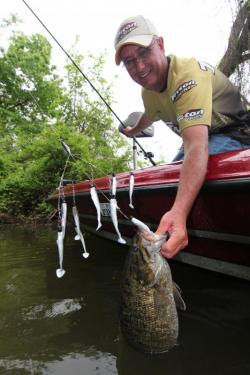
Alabama Rig Inventor Andy Poss

The Alabama Rig and its inventor Andy Poss

The Alabama Rig and its inventor Andy Poss

Man Behind the Controversial Alabama Rig

By Brad Wiegmann
from The Fishing Wire


Every angler has an opinion on the Alabama Rig. Even bass tournament trails are divided on sanctioning it for use during tournaments. For or against it, the Alabama Rig has changed the fishing industry, bass tournaments and one man’s life forever.

Andy Poss, lure designer and inventor of the Alabama Rig, couldn’t have fathomed the controversy that his lure would create. Professional bass anglers are taking sides either steadfast for or adamantly against it. The debate rages on every fishing website with the naysayers claiming it will be the doom of bass fishing while other anglers point out there is no legitimate argument that it harms bass populations.

For Poss, the Alabama Rig was a lure that he had designed to catch fish like stripers, smallmouth, largemouth and other gamefish once they start feeding on shad. It was so effective that Poss once won 19 of 21 bass tournaments he entered. “Most anglers were bringing in 15 pound stringers and we would have around 28 pound stringers. We hardly ever had less than 25 pounds,” recalled Poss.

All the controversy seems strange to Poss over the Alabama Rig. “When I was 14 or so my Dad, Houston, a well-known lure designer and builder, would drop me off to go fishing in the morning at city lake and pick me back up in the afternoon. Everything about fishing was uncomplicated back then,” said Poss.

Later, Poss would make a living diving for mussels on the Tennessee River. During this time, he learned about rivers and how fish related to structure, cover and bait fish. He would use this knowledge to design and build the Alabama Rig.

Life for Poss all changed in August of 2009 when he built the first Alabama Rig–although he didn’t sell the first one until July of 2011 for $25. “I filed for a Patent on December 12, 2010 and officially filed with the United States Patent and Trademark Office on February 12, 2011. We met with Mann’s Bait Company in November of 2011 and signed a three year OEM Licensee and Trademark agreement on December 4, 2011,” recalled Poss.

Also influenced by the Alabama Rig phenomena, Seeker Rods began producing the technique specific official Alabama Rig rod with input from Poss and professional bass angler Paul Elias on the rod design.

Before signing the contract with Mann’s Bait Company, Poss and his wife Tammy did everything when it came to producing the rigs–building, taking orders and shipping. It consumed their lives and over took the house. “The house was the command center where we would build them, take the orders and package them for shipping,” explained Tammy.

Family members and friends pitched in to help out. At the peak of the selling frenzy, Poss had ten people bending wires and even that wasn’t enough to meet the demand.

Demand for the Alabama Rig brought about unbelievable prices on EBay and soon other lure builders were capitalizing on Poss’s invention.

“I saw some being sold on EBay from $99 to $600 at one point Sunday night after Paul Elias won the FLW Tour Tournament on Lake Guntersville in Alabama,” noted Poss. Through it all, Poss never changed the cost of the Alabama Rig, keeping it at $25, and built in the USA.

“We never jacked the price up to take advantage of anglers like others did during that time. We even went up to a Kentucky Lake Everstart tournament and sold them to anglers at $25 insuring that they weren’t going to be taken advantage of by tackle stores selling them at a high price,” acknowledged Poss.

Once the Alabama Rig took off, Poss put his fulltime job as a pipe fitter on hold. A union worker with all the benefits it was one of the biggest decisions he would ever make.

Now Andy and Tammy are waiting for a decision from the United States Patent and Trademark Office on the Patent they applied for back in 2010. “It’s really taken a toll on me, my family and friends. Really it’s just the uncertainty of it all that has me concerned,” Poss continued, “everyone assumes that if you designed a lure that created such a demand you would be rich or would get rich, but that’s not the reality of it.” Copycats and knock-offs in the fishing industry siphoned substantial potential and future income from Poss.

Knowing what Poss knows today, he would approach it differently next time. “If I had to do it all over again, I would build 250,000 of them along with a line of jig heads, soft plastic swimbaits, hats, shirts and other items we could sell,” insisted Poss.

Poss noted that the boost in sales directly related to terminal tackle like snaps, jig heads, swimbait hooks and swivels was just the jolt the fishing industry needed. Sales of terminal tackle was rivaled only by soft plastic lures that anglers were rigging the Alabama Rigs which require multiple swimbaits or spinnerbait blades to rig.

If Poss is issued a patent, the next phase of his life will be extremely challenging, but that’s another matter all together. Right now all Poss can do is pray and wonder while waiting for the patent outcome.

For more commentary and fishing tips, visit Brad Wiegmann’s website, http://www.bradwiegmann.com

How To Catch Bass In May At Lake Wedowee

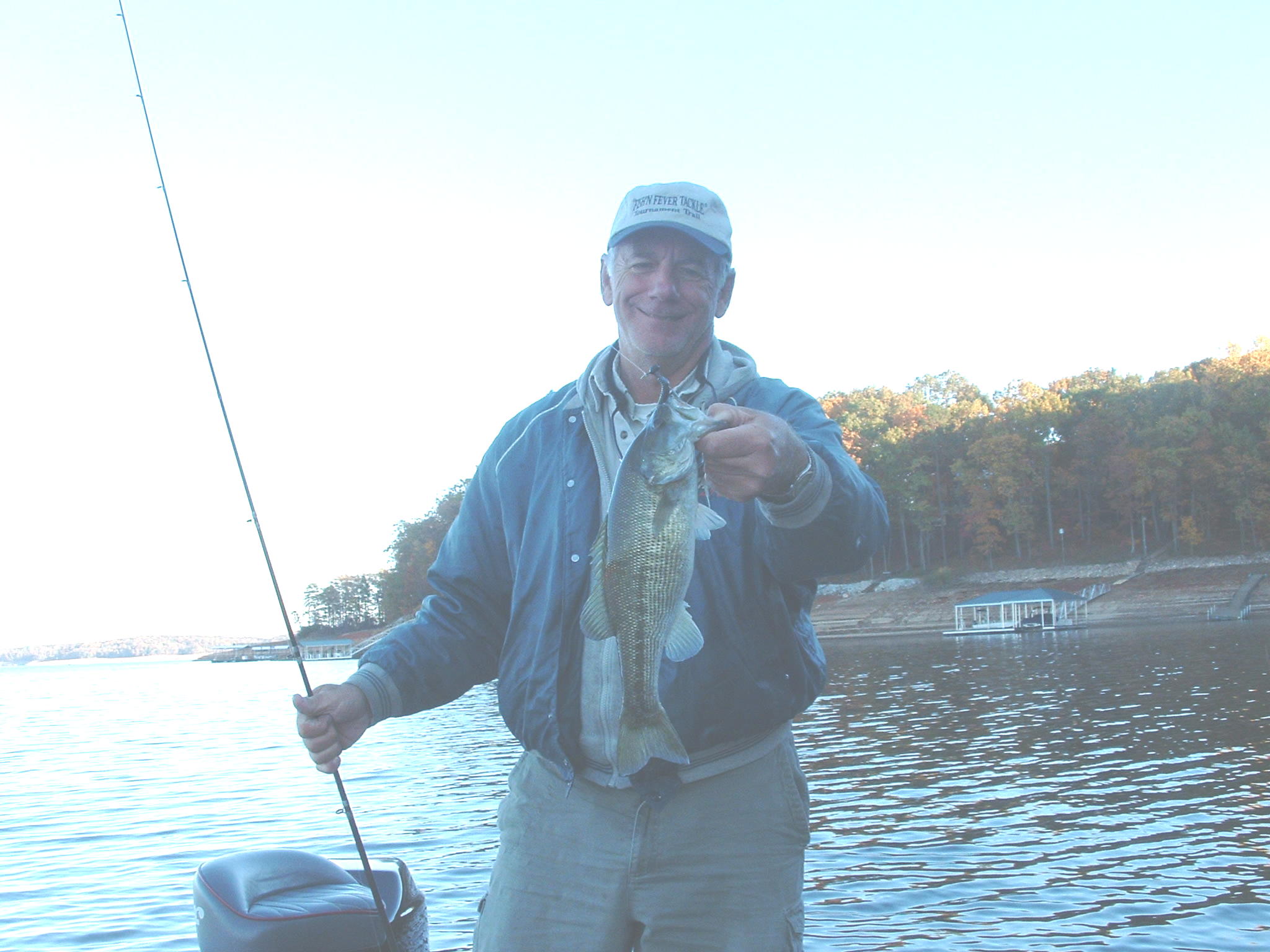
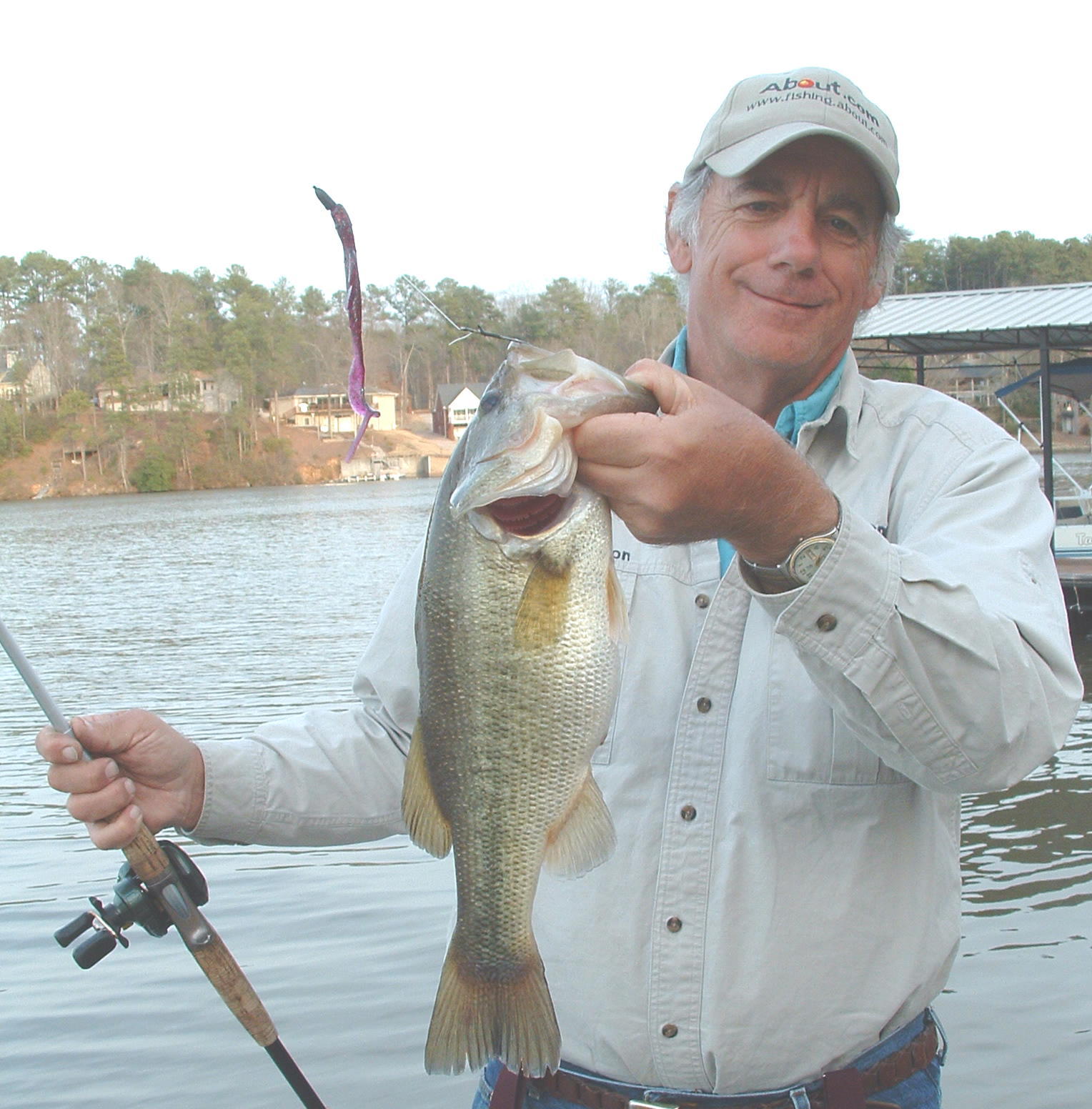
Nice spot and largemouth from Wedowee

Nice spot and largemouth from Wedowee

Catching May Bass at Wedowee

     May is an amazing month for bass fishermen.  Many big bass are hungry after the spawn and feed heavily. Some are still on the beds early in the month so you can sight fish if you like that. And males are guarding fry, making them aggressive and easy to catch.  This is a good month for catching lots of bass as well as landing one big enough to brag about.  You would be hard pressed to find a better May lake than Wedowee.

May bass fishing on Lake Wedowee is a pleasant surprise to many who have not tried it.  Limited access keeps big tournaments off the lake so it is not real crowded.  The lake is full of good sized spots that are very aggressive.  And you can catch some big largemouth if you target them.

Dammed in 1983, Wedowee is the newest Alabama Power Lake and is officially known as R.L.Harris Reservoir.  It is on the Tallapoosa River and covers just less than 11,000 acres on it and the Little Tallapoosa River and has 270 miles of shoreline.

The steep, rocky banks and clear water favor spotted bass and they are the predominate species on the lake.  Wedowee is not a real fertile lake so the Alabama DNR set a slot limit, requiring the release of all bass between 13 and 16 inches long to give that group of bass a chance to grow.  Spots became so common that they are no longer included in the slot and fishermen are encouraged to keep spots to eat. You are also encouraged to keep largemouth under the 13 inch limit to give more food for the bigger bass.

In the 2008 Bass Angler Information Team (BAIT) survey, Wedowee ranked first in angler success in club tournaments.  That means club anglers caught more bass per fisherman on Wedowee than any other lake in Alabama.  It ranked third in bass per angler day and a surprising fourth in the amount of time it took to catch a bass weighing over five pound.  So, you will catch a lot of bass and have an excellent chance at landing a five pound plus fish.

Due to all those factors, Wedowee was ranked as the best lake in Alabama for bass fishermen in 2008, and it seems to be getting better and better.  Plan a trip in May to take advantage of some excellent bass fishing.

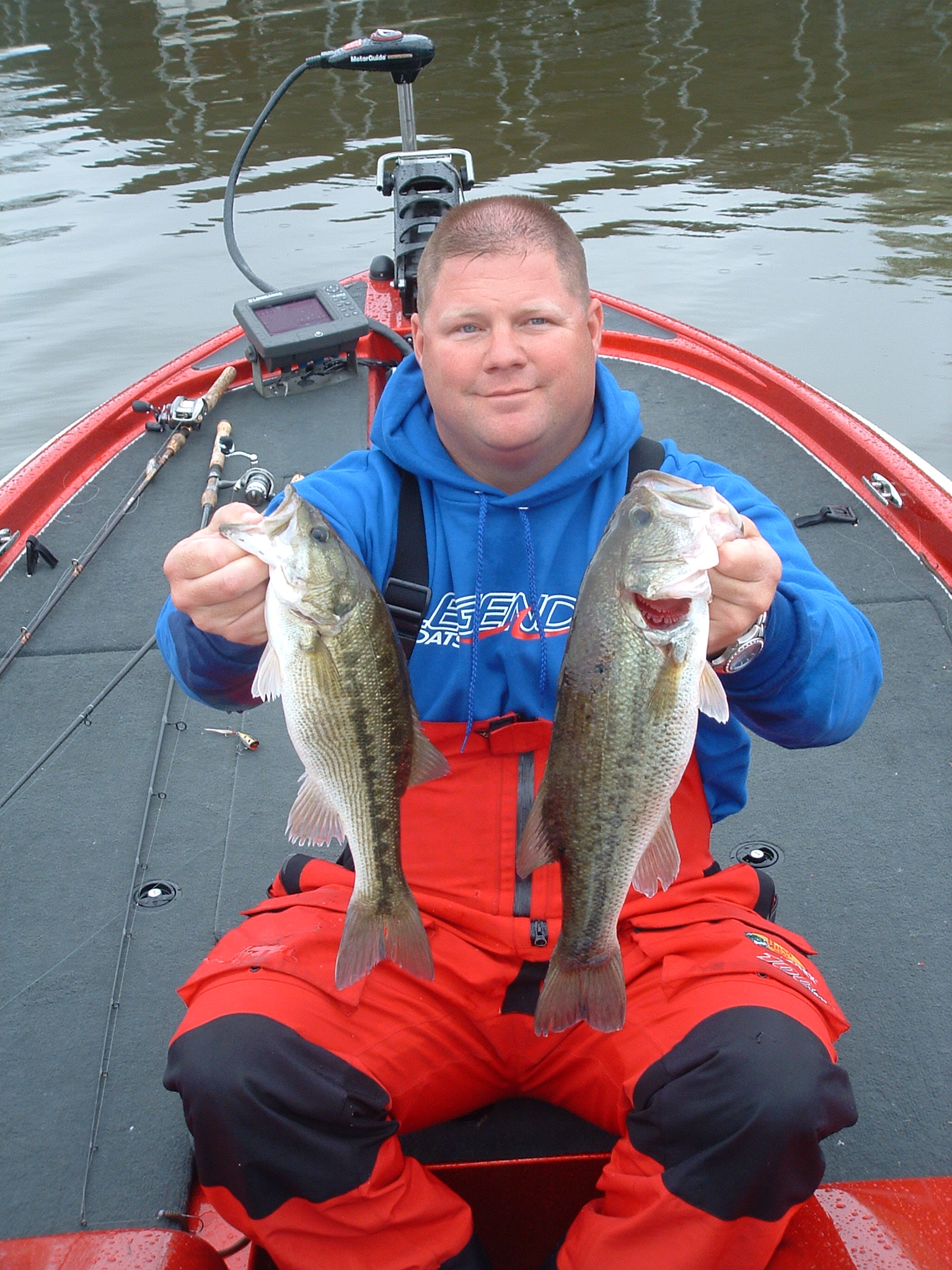
Eric Morris loves bass fishing. Right now Eric is service manager of All Pro Auto Group in LaGrange. A few years ago he, his father and brother bought and now operate Wedowee Marina on Highway 431 right at the bridge on the Little Tallapoosa River.  They are taking on Legend Bass Boats this year and Eric is on the Legend Pro Staff. He is also sponsored by Falcon Rods.  He visits a wide variety of lakes and fishes more than 40 tournaments a year but Wedowee is his favorite lake.

Although he never fished a tournament until he was 25 years old, the first one his father took him to got him hooked to the point of addiction.  He loved it and now fishes tournaments every chance he gets. He has fished with a couple of bass clubs and now competes with the Harrelson Hawg Hunters bass club in Georgia, where he won the point standings two years. He also fishes every pot and charity tournament he can enter on Wedowee.

Eric has won four straight January club tournaments on the lake, but May is his favorite time to fish Wedowee.  He loves topwater fishing and it is excellent this month, and he catches some big fish on Spooks and Zell Pops all month long. And he can catch numbers of bass on a variety of baits.

We fished Wedowee on a rainy day the second week of April and some bass were already on the beds.  There should be a big wave of bass moving onto beds in late April around the full moon on the 28th, and some will bed even after that. So, for the next few weeks, you can catch bedding bass, a few pre spawn fish, and a lot of hungry post spawn bass.

An 8.5 pound largemouth is Eric’s best from Wedowee, and he has landed a 4.45 pound spot there. His best tournament catch on Wedowee was five bass weighing 21.36 pounds and, surprisingly, included three largemouth and two spots.  And that weigh gave him third place in the tournament. It often takes well over 20 pounds to win on Wedowee.

Largemouth are Eric’s target in tournaments since they get bigger and weigh more, but he may fish all day for five or six bites to win.  For fun catching lots of bass, Eric will go after spots, especially when taking kids and inexperienced fishermen out.  He separates the methods and areas of the lake to catch each although you can catch some bass of each species on either pattern.

For largemouth, Eric says fish the upper stretches of either the Tallapoosa or Little Tallapoosa Rivers.  There is a higher percentage of largemouth to spots up the rivers so you are more likely to catch them.  And Eric uses baits that bigger largemouth eat, like a full size Spook.

In late April and early May Eric will fish back in the pockets, looking for fish around the bedding areas. Any small pocket is likely to hold bedding bass on Wedowee since there are not many creeks for them to go to.  Work every inch of the bank with your Foxy Shad or chrome and blue Spook or a ghost pattern Zell Pop with a feather trailer since there is a lot of underwater wood you can’t see that will hold fish. Make repeated casts to wood you can see.

As the water warms and it gets later in May, Eric will work more toward the outer banks of the pockets and the main points at their mouths. Post spawn bass will migrate out of the backs of the pockets and feed as they work their way out to the main channel.

Early mornings are best for topwater baits but Eric will fish them any time there is low light.  If the day is overcast he will throw a Spook or popper all day long. On sunny days, anytime there is a patch of shade on the water he will work it with the topwater baits, too.

A spinnerbait is another good bait for big largemouth, especially during the shad spawn. Watch for shad on the rocky banks early in the morning and throw a double willow leaf bladed white spinnerbait right on the bank. If there is no activity, slow roll it from the bank back to the boat. Eric says he will reel four or five turns of his reel handle then stop the bait and start it moving again with a twitch of the bait to give it more action.

If the bite is slow and the largemouth sluggish, Eric will pull out a green pumpkin Senko and work it weightless around all wood cover in the pockets.  A big Senko works best and he lets if fall slowly by any cover he spots.

Watch your line carefully for any twitches as a bass inhales the bait, and tighten up your line very slowly before moving it. If you feel weight, set the hook. Bass will often take the Senko and not move, and the first thing you feel when you move it is them spitting it out!

The main lake below the Highway 48 Bridge is the area to fish for spotted bass.  The water is clear, most banks are rocky and it is ideal spot habitat.  A wide variety of baits will catch fish down the lake.

First thing in the morning a small topwater bait like the Zell Pop will draw strikes when cast close to rocky bluff banks.  The strike will usually come within two feet of the rocks, so get in close and make parallel casts to the rocks, keeping your bait it the strike zone longer.

A jig head worm is Eric’s “go-to” bait and he uses it to catch, in his words, a “whole lotta numbers” of spots on the lower lake. He fishes a one-eight ounce jig head on eight pound fluorocarbon line and puts a green pumpkin or Bama Bug color Trick worm on it.  He says the lower lake is full of rocky points that hold large numbers of spots.

The best points are flat points at the end of a bluff wall, where the vertical rocks change to a flatter, gravel and rock area.  Eric will sit out in the channel with his boat in 20 feet of water, but near the end of the bluff, and cast up onto the flat point, working his bait from the shallows out and down the drop.

Cast your jig head right against the bank and make sure it goes to the bottom. Eric says too many fishermen keep their line tight and that makes the bait swing away from the edge of the rocks, and many start moving the worm before it hits bottom. Eric says he makes sure the jig is on the bottom then starts moving it “a half-inch” at a time, shaking his rod tip to make the tail of the worm dance.

Bass will often hit as the bait falls, so be ready as soon as your jig hits the water.  And move the bait slowly. Some of these points drop off steeply and if you pull your bait too far it will drop right past the fish holding on the bottom.

Jig head worms are great baits to let a kid use to learn to catch bass. They will get a lot of bites on this bait fished on this pattern so they don’t lose interest, and they will catch some hard pulling fish.

If the wind is strong, making it difficult to fish a light jig head worm, Eric will throw a Carolina rig in the same areas.  Fish the same worm or a green pumpkin lizard on a three-foot leader behind a heavy enough sinker to keep your bait near the bottom.   He fishes Carolina rigs on 12 pound Segar Fluorocarbon line, his choice of brand of line for all his fishing.

Also ride the points on the lower lake and watch your depthfinder for brush piles. Eric says every point on the lake seems to have a man made brush pile. Look for them where you would make one and there is probably one there.  Back off them and fish them with the jig head worm or a Carolina rigged worm.  Brush from 15 to 20 feet deep will hold bass best, in Eric’s opinion.

By the middle of May night tournaments start on Wedowee and night time is a great time to catch fish there. Eric fishes as many of the night tournaments as he can, and enjoys the change from daytime fishing.  He says by early June the lake will be on fire at night, with lots of bass feeding in the dark.

Dock lights attract bait and bass in the dark and Eric will fish any lights he can find with a small light colored crankbait. He tries to match the shad swimming around the lights and works the edges of the light first, then under them in the brighter light.

Spinnerbaits work well at night when fished on the down-lake points, too. Eric surprised me when he said he uses a white spinnerbait with silver blades in the dark. He does use a black or sapphire blue trailer on his white spinnerbait.  Make long casts across the points and reel the bait back steadily to give the bass an easier target in the dark.

You can catch bass at night on the points and brush piles, too. Fish them like you do during the day, but fish even slower.  When you hit brush or a rock, jiggle your bait in one place longer to let the bass find it in the dark.

Wedowee is a great lake for catching bass right now and will just bet better and better over the next several weeks.  Give Eric’s patterns a try and see how he catches them. These tactics will work for you.

How and Where To Catch North Georgia Bass

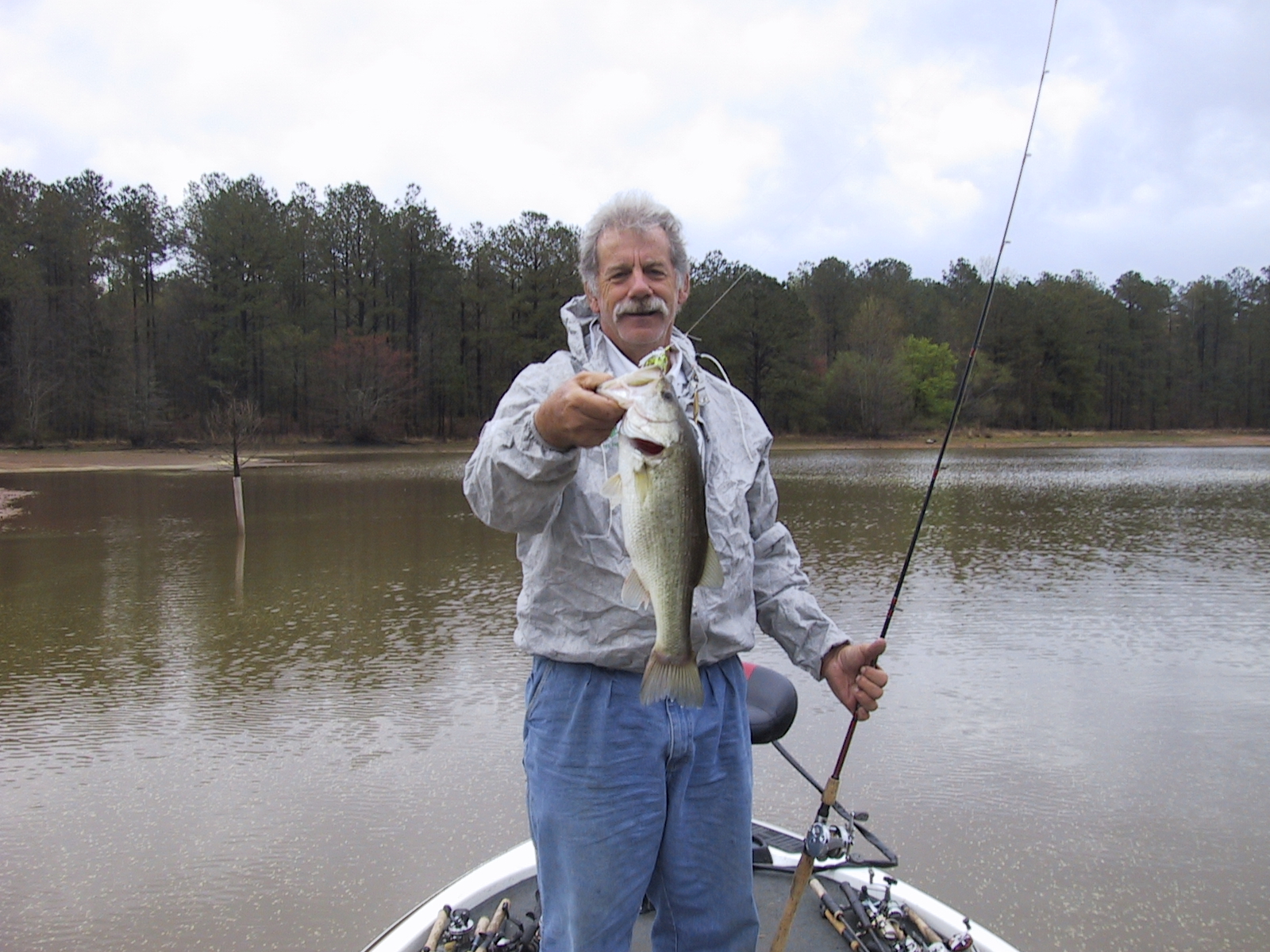
Rainy day bass

Rainy day bass

North Georgia’s Top Bass Waters – How and Where To Catch North Georgia Bass

Ask a bass fisherman which month of the year is best and the response is likely to be “April.”  April is a dream month for bass fishing in the north half of our state.  The weather is comfortable and fairly stable for you and the bass are shallow, feeding and looking for bedding areas.

You have a wide variety of big lakes to fish north of Macon and you can catch largemouth and spotted bass in many of them.  No matter which lake you choose, from the South Carolina line to our border with Alabama, you can catch bass several different ways.  And you have a good shot at catching a wall hanger as well as filling up your livewell with keepers.

Pick any of the following lakes, give the suggested tactics a try and you will love April fishing even more.

Thurmond Lake

Called Clarks Hill by Georgia fishermen, Thurmond on the Savannah River is our biggest lake at 72,000 acres.  Georgia fishermen love it. The Georgia Bass Chapter Federation Creel Census Report shows it as the most popular lake for Georgia bass club tournaments year after year.

Jon Hair grew up fishing Clarks Hill and landed a dream job as the office manager for Buckeye Lures.  He gets to fish Clarks Hill a lot and does well in tournaments there. Last April he and his partner won the Easter Seals tournament in April with a five bass limit weighing 20.10 pounds.

“You can catch bass pre-spawn, on the bed and post spawn during the month of April,” Jon said.  He concentrates his fishing on the Savanna River side of the lake due to current there when the Corps of Engineers is generating power and the water is usually clearer.

Early in the month Jon will throw a Carolina rigged green pumpkin Zoom lizard with a chartreuse tail on secondary points and gravel banks going into coves.  Bass are on them looking for bedding spots and will eat the lizard or a three-eights to one-half ounce brown Buckeye Mop Jig with a green pumpkin trailer. Both are dragged on the gravel bottoms and the jig can be hopped for added action.

When bass are on the bed Jon will sight fish for them and throw a Spot Remover jig head with a Zoom Trick worm into the beds. The Spot Remover head will make the worm stand up in the bed and drive the bass crazy.

Later in the month the blueback herring spawn on gravel beds on the main lake, mostly in “blow-throughs,” shallow areas between the bank and off shore islands and humps.   Early in the morning Jon will throw a JWill Swimbait Head with a Zoom Super Fluke, a topwater bait like a Sammy or a Gunfish and a weightless Fluke around those area.  As the sun gets high he will fish a little deeper with a Mop Jig, working the same areas.

Lake Lanier 

Lake Lanier is well known for its huge spotted bass.  Our second biggest lake at 40,000 acres located just outside Atlanta, it is a very heavily used lake by pleasure boaters and fishermen.  But the spots are there and you can catch them this month.  If you want a wall hanger spot Lanier is a good place to land it and April is a good month to get it.

Eric Aldrich lives near Lanier and fishes tournaments on it almost every week, as well as doing some guiding there.  He writes fishing reports for three local newspapers and is on the pro staff for Hummingbird, SPRO, Gamakatsu, and Tru Tungsten. He and his partner finished 4th in the Boating Atlanta trail on Lanier last year.

A seven pound one ounce spotted bass is Eric’s personal record from Lanier and he has also landed a 10 pound largemouth on the lake.  His best five fish catch was five spots weighing just over 30 pounds.

“Big spots are in a pre-spawn pattern much of April, with a good many going on the bed during the month,” Eric said.  You can catch them on secondary points and in pockets with flats where they bed all during the month and the main lake and creeks below Brown’s Bridge are the best areas.

A couple of baits will cover what you need. Eric will keep a Spro McRip or McStick jerk bait rigged on one rod and a Spot Remover jig head with a Big Bait Finesse Worm on it on a second rod. His targeted depth is five to 20 feet, but he says you will catch a lot of big spots at the upper end of that range.

“Look for cover like rocks on points and docks back in pockets with flats,” Eric said.  Throw a jerk bait on the points and around the docks first for active fish. Try a variety of retrieves, from a steady jerking motion to a jerk, pause, jerk. Let the fish tell you what they want.

Then throw the jig head worm around the same areas for fish that don’t want to come up to hit the jerk bait.  Work it slowly on the bottom, giving the Spot Remover jig head time to sit and hold the worm up, its signature action.  Then hop it, let it fall back and sit again.  Big spots can’t stand that action.

Also, watch for beds and throw the jig head worm into them.  Remember that spots often bed in five to ten feet of water, so look deep.  Spots are usually aggressive on the beds and you can sight fish and land some big spots in April.

Lake Oconee

Lake Oconee is one of our newer lakes located on the Oconee River right in the middle of the north half of the state.  It is a popular lake with lots of big house and golf courses, but the fishing for largemouth is outstanding.  Georgia Power has a several good ramps on the lake and two campgrounds give fishermen a chance to stay on the lake and fish for several days.

Roger McKee has fished Oconee since 1985 and lived on the lake since 1995. He is on the lake almost every day checking out the bass and guiding other fishermen.  He fishes most tournaments on the lake and does well in them.

In April there is no better lake for largemouth fishing than Oconee in north Georgia. Bass are shallow for their spawn as well as taking advantage of the shad spawn.  Numerous sea walls and lots of riprap give the shad many places to lay their eggs. And numerous pockets and small creeks offer bass excellent bedding areas.

Roger likes to fish fast in April, looking for post spawn fish that were on the beds in late March, as well as pre spawn fish still looking for a bedding spot.  The stained water at Oconee makes sight fishing difficult so sight fishing for bass on the bed is hard to do, but it can produce some big fish.

“Tie on a bait that will cover water and get a reaction strike,” Roger said.  He will have a spinnerbait and a crankbait tied on two rods and those are his key baits.  Roger said he would depend on the crankbait when covering water and would throw it on points and banks going into spawning areas, fishing it fast so the bass don’t get a good look at it.

Bass fishing doesn’t get any better than when the shad spawn on Oconee. You can see the schools of shad running the seawalls and riprap banks early in the morning in April, especially the last half the month.

Tie on a double willow leaf three eights ounce spinnerbait with silver blades and a white skirt and throw it right against the seawalls and on the riprap rocks on the main lake.  You can’t cast too shallow so get your bait against the wall or right on the rocks out of the water. Expect a strike as soon as the bait hits the water, but fish it back to five feet deep or so before reeling in to make another cast.

You can contact Roger for a guide trip through his website at http://lakeoconeesinclairguideservices.com/.

Carters Lake

If you want a record spot, a trip to Carters Lake might produce it.  Carters Lake is a Corps of Engineers lake in northwest Georgia east of Dalton and I-75. At 3220 acres, Carter’s is a fairly small lake.  There is no shoreline development other than a few boat ramps and a marina, so fishing Carter’s gives you a natural setting.

Louie Bartenfield grew up around Carter’s Lake and he and his father fished it often, with good success. His father has landed three largemouth weighing over 10 pounds at Carter’s, and Louie learned from him. They fished tournaments together for a year or so then Louie teamed up with family friend Tony Hill.

Now Louie concentrated mainly on the big spots in Carters that have come on strong over the past few years. He is a well known guide and tournament fisherman on Carters and he catches some huge spots there every year.

Since spots on Carters spawn late in April or in May, Louie will be looking for fish on a main lake pattern. There is also a good creek pattern that develops as the fish move into the creeks and both patterns work most of April.

“An easy pattern on Carters in April is to fish the alewife spawn,” Louie said.  Many people don’t realize there is big population of alewife in the lake. Unlike blueback herring, which are also in the lake, alewife spawn during the night. As the sun comes up they pull out off the main lake spawning area and suspend 10 to 12 feet down.  Louie says you can see huge schools of them on your depthfinder.

To catch the big spots feeding on them Louie will tie on a big War Eagle three-quarters ounce white spinnerbait with two silver willowleaf blades.  He will get way off main lake points and humps and make as long a cast as he can toward the bank. Slow roll the spinnerbait back to the boat in a steady retrieve, making it run down 12 to 14 feet deep where the big spots are holding under the alewife.

This pattern is best in the mornings and some wind helps.  Wind breaks up the water surface and makes it harder for the bass to see the bait, and they are more likely to hit it in the very clear water.  Louie will fish this pattern all morning, or until the bite fades.

“Everyone loves catching bass on top, and in the middle of the day there is a fun pattern that anybody can enjoy,” Louie said. He will go into the creeks on the lake and throw a small topwater bait like a Pop-R under overhanging brush and trees, working any shade he can find. The sun concentrates bass in the shade and they will hit the topwater bait all day long.

To contact Louie check out his website at http://carterslakeguideservice.com/. There are pictures there of some of the huge spots he catches as well as videos of some April fishing trips.

West Point Lake

West Point Lake on the Georgia Alabama line is a great lake for both spotted bass and largemouth.       A Corp of Engineers Lake with 25,900 acres of water and 525 miles of shoreline, fishing opportunities are varied and you can find any kind of cover and structure you desire.   A huge range of methods work during April, from sight fishing for bedding bass to working the shad spawn.

Last April in a club tournament I started on a gravel point near the dam back in a big creek and hooked seven bass on the first casts seven casts I made. I landed five of those bass and had a limit in the livewell in 12 minutes.  All hit a Sammy worked across a couple of feet of water.  Although I culled four of those first five bass, that fast action was fun.

Early in the morning bass are looking for shad spawning during April, especially later in the month. Find any hard bottom like gravel points and riprap and  you will find bass.  Throw a spinnerbait or topwater bait near the hard bottom and you will catch bass.

As the sun gets high later in the month, or early in the month before the shad spawn, throw a jig head worm on points leading into small spawning pockets or on secondary points back in the bigger pockets.  Work any cover you can find from wood to rocks in two to ten feet of water, bumping the worm through the cover.  That is how I culled four fish in the tournament last April.

I like the lower lake, from Wehadkee Creek to the dam, including the big creeks like Wehadkee, since the water is usually more stable and clearer.

Try these lakes this month. You can’t go wrong anywhere you go in April, but these tips should help you get on the fish quickly and catch a lot of bass.

How and Where To Catch Big Bass In Georgia

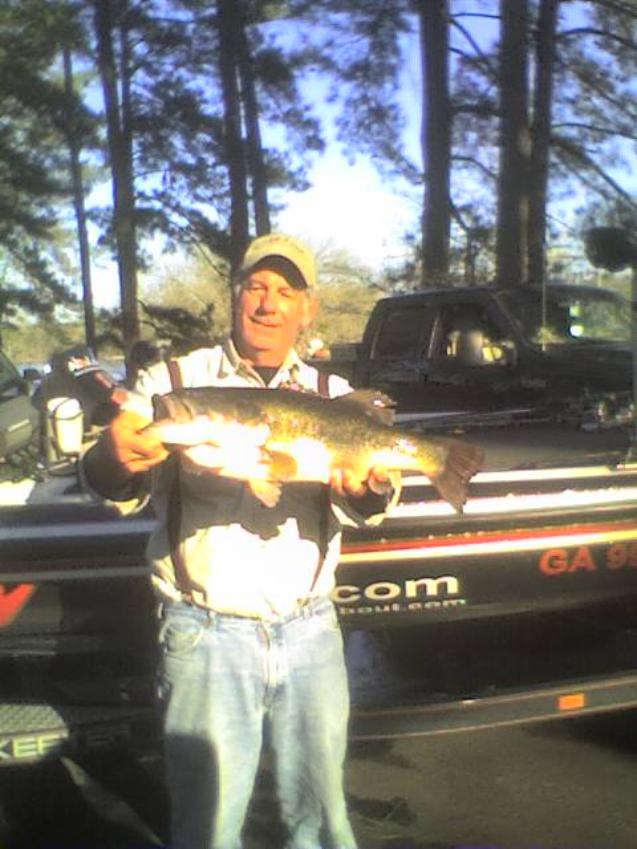
I caught this bass in a club tournament in January at Jackson Lake a few years ago

I caught this bass in a club tournament in January at Jackson Lake a few years ago

How and Where To Catch Big Bass In Georgia

Catching your limit when bass fishing is always fun.  But there is something very special about catching a big bass.  Landing a five pound plus largemouth or spotted bass will bring a smile to any fisherman’s face. Putting a true trophy in the boat, a spot over six pounds or a largemouth over eight pounds, is something to brag about for years.

Where you fish can make or break you when trying to land a bragging size bass. Some waters produce trophies on a regular basis, others not so much.  We are lucky here in Georgia to have choices where big bass are not rare. After all, our waters produced the world record bass!

When trying to decide where to go hunt your trophy there are several things to consider. An important one is access. It does not matter how big bass get in private ponds if you can’t fish them.  And some public waters have so many restrictions on boats and times you can fish that they are not good choices.

Our big lakes offer a wide variety of choices for a big bass.  But how to determine which ones are best? The Georgia Bass Chapter Federation Creel Census Report compiles data from about 100 bass clubs each year.  The clubs submit information from each tournament and most have 12 per year, so there is a lot of water covered. And one of the data points recorded is bass over five pounds caught.

By keeping up with the number of five pound plus bass landed and the hours fished in the tournament by the number of fishermen, a category “hours to catch a five pound bass” is produced for each lake.  That can be a good guide to show you where your have your best chances of landing a big bass.

The following lakes will all give you a good shot at a bass over five pounds.  Right now is a fun time to be after them with good weather and stable conditions. Make your choice, head to the lake and hook a wall hanger.

Seminole

Lake Seminole is hands down the best big lake in Georgia to land a five pounder.  In club tournaments it took only 85 man hours to weigh in a five pound plus fish.  That may seem like a lot, but in an average club tournament lasting eight hours with at least 11 fishermen there was probably a five pounder brought to the scales.

Seminole is about as far south as you can fish in Georgia.  Located right in the corner of Georgia, Florida and Alabama where the Flint and Chattahoochee Rivers join to form the Apalachicola River, its waters are filled with a wide variety of kinds of water plants.  Bass love things like water hyacinths, hydrilla and lily pads and they are everywhere.

All the plant life is the bottom of the food chain that produces all kinds of goodies bass love to eat and grow fat.  From eels to shad, just about any kind of baitfish and other food for bass is plentiful for them.  And they have lots of shallow cover so you don’t have to go dredge the depths for them.

The big water in the lower rivers and near the dam is full of shallow flats, ridges, humps and channels and they are covered with stumps, standing timber and a variety of grass.  By now most bass are done spawning and have moved toward the old river channels so that is the area you want to fish.

Find a ditch or channel coming out of a shallow spawning area and follow it to the main channel. Look for flats covered with grass on both sides of it.  Bass will hold and feed on the edge of the grass, right on a drop.  They use grass edges for cover to ambush passing food.

Work a big bait for a big bass. On cloudy or windy days a big spinnerbait slow rolled right along the edge of the grass will produce strikes.  A big vibrating bait like a one-ounce Rat-L-Trap can also be run along these edges. When it hangs on grass rip it free. That sudden surge will often draw a reaction strike.

A huge plastic worm will eliminate some smaller bass but will attract the hawgs you want.  The Zoom Old Monster 10.5 inch worm and the Big Bite 10 inch Kriet Tail worm are good choices and a big worm will get big bites.  Rig it on a big 5/0 hook with a light sinker to work along and through the grass line and fish it slowly.  A big bass usually does not like to go far or fast for its meal.

Lake Walter F. George

Just up the Chattahoochee River Walter F. George, called Eufaula by most, also produces good catches of big largemouth.  It took 156 man hours to land a five pound plus fish in club tournaments, a lot higher than Seminole but still second best in the state.

Eufaula is on the Georgia Alabama line just south of Columbus and is known for its river and creek ledge fishing.  Its shallows are full of grass and stumps where largemouth grow fat in the spring and the water is fertile enough to produce lots of schools of big shad.

Big largemouth stack up on deep drops out in open water by this time of year and you can sometimes find a school and land several big bass from one spot.  Cowikee Creek and the lake downstream of it contain lots of good channel ledges.  It may seem strange to be sitting so far from the bank you could not hit it with a                  30-06, but the bass are there.

You want to look for a sharp bend in the creek or river channel and a ditch or cut in the ledge formed by it helps.  Cover like stumps, brush or rocks also are important to holding bass on the ledges, and you need some kind of hard bottom.

Current is critical on these ledges. Fish during the week when power is being generated at the dam, pulling water and bait across the drops.  It is an amazing difference in the bite when the water is moving.

A big crankbait like a Mann’s 20 plus, Fat Free Shad or Norman’s DD22N are good baits to fish on the ledges. Right now look for ledges that top out 12 to 16 feet down.  Position your boat downstream and down current of the ledge and make long cast upstream across them.  You want your bait to bump the bottom along the ledge to draw a strike.

If you don’t want to throw a big crankbait all day, or can’t hold up to throw one that long, try a Carolina or Texas rigged worm dragged across the same ledges. Go with big worms like the Old Monster and use sinkers heavy enough to keep it on the bottom in the current. Drag the Carolina rig across the ledge and stop it when you hit cover. Hop the Texas rig and let it rise and fall, but stop it too when you hit cover.

Jackson Lake

Back in the 1970s and 80s Jackson Lake produced more big bass than just about any other lake in the state.  I landed my first two eight pound plus largemouth at Jackson in club tournaments in the 70s and my best ever, a nine pound, seven ounce fish, hit in a club tournament in 1991.  Although smaller spots have hurt the lake the past 20 years, you can still land a big largemouth there. Two years ago I landed an eight pound, thirteen ounce largemouth there in a club tournament.

Jackson was a very fertile lake years ago with sewage from Atlanta fertilizing its waters.  The water is much cleaner now but that means it is less fertile and bass grow slower.  You might have to work harder for a five pounder now, but you will catch some.

Jackson is almost in the middle of the state about 15 miles east of I-75 and south of I-20.  It is formed by a dam just downstream of where the Ocmulgee River starts. The waters of that river produced the world record bass so you know it has potential.

Bass have been feeding on the shad spawn for several weeks in April and are fat and happy now.  They are still holding near the main lake seawalls and riprap where the shad spawn and will look for late spawning shad still. But they will quickly back off as the sun comes up and you will need to fish a little deeper during the day.

Start early in the morning with a big topwater bait like a Zara Spook and work it along the  main lake points with seawalls and riprap.  Cast right on the bank and work it all the way back to the boat with as steady, slow walk the dog action.  Be ready for a hit any time.

As the sun gets higher, try a Zoom Trick worm or Fluke fished weightless in these same areas. Start with the bait just under the surface but let it go deeper and deeper as the sky gets brighter.  Work both baits slowly, offering an easy meal to a fat hawg.

Bumping the bottom with a jig and pig will work well on these points, too.  Use a black and blue jig and pig in stained water or a brown one in clear water and slowly hop it down the sloping bottom, working from a couple of feet deep down to 15 feet. Slow down and fish it carefully if you hit wood or rock cover.

Lake Burton

For a big spotted bass, go where the state record eight pound two ounce bass was landed.  Lake Burton has been producing big spots since blueback herring were introduced into the lake and five pounders are fairly common.  The eight pounder shows what is possible.

Lake Burton is a Georgia Power lake on the Tallulah River west of Clayton. It is an old lake and has steep rocky shorelines with lots of wood cover like dock posts and blowdown trees. Seawalls and riprap line the banks with the rocks, too, and the water is very clear

The blueback herring spawn in early May in Burton and that is a key to catching a monster spotted bass.  The big spots will be holding right on seawalls on the main lake, watching for the herring first thing in the mornings.  Cast a white spinnerbait against the rocks and seawalls and slow roll it back out. It usually won’t go far!

As the sun get higher the bass will back off but will still hit the spinnerbait. Also try a topwater plug like a Spook worked from the bank out over deeper water.  Follow up with a Fluke.  Get your boat in fairly close and make angled casts since the bottom drops fast.  Work the Spook and Fluke fast, drawing the bass up to hit them.

Also try swimming a Buckhead Pulse Jig with a Zoom Fluke on it just off the bottom. If the big spots won’t come up they will often eat a more subtle bait like the Pulse Jig.  Use a natural colored Fluke behind the head.

Blowdowns hold big largemouth and spots on Burton, so after the sun gets high work trees in the water with a jig and pig.  Find the nearest blowdown to the areas where the herring spawn and work a brown and green jig and pig through them, bouncing from limb to limb, from the bank all the way out to the tip of the tree.

In the clear water, use fluorocarbon line and make long casts. Also, be aware of the sun position and make your casts to cover the shady side of the tree trunk and limbs in the water. Use as light a jig and pig as you can work depending on wind and depth water.

Lake Lanier

Lake Lanier may produce more quality spotted bass than any other lake anywhere.  With the introduction of blueback herring and the 14 inch size limit on all bass, Lanier has become a well known trophy spot lake.  Five fish limits of spots weighing over 20 pounds are common in tournaments and seven pound spots are weighed in each year. Several people say they have hooked a new world record spot but only time, and landing the fish, will prove if a record spot is on Lanier.

Located just northeast of Atlanta on the Chattahoochee River, Lanier is a big Corps of Engineers lake with good access but heavy usage. It is difficult to impossible to fish the lake on warm weekend days but week days are often uncrowded this time of year.  If you fish the weekend, try to be on the water at first light and fish as long as the waves will allow.

Laura Gober lives near Lanier and fishes it often with husband Trent. They fish a good many tournaments there and do well.  Laura fished the Woman’s Bass Tour and did well in it during its run, too.  She won one tournament and had 11 top 20 finishes on that trail.  Lanier is her home lake and she loves to catch big spots there.

By late spring the bass are mostly done spawning and are moving deep on main lake humps and points. Big spots will come up to hit topwater baits like the Chug Bug, Laura’s favorite, and jerkbaits like the Staysee 90, especially early in the morning. Laura will fish both these baits over humps and points.

If your boat is in 35 feet of water and you are casting over 15 feet you are about right this time of year, according to Laura.  She will work the faster moving baits as long as the bass will hit, but she then slows down and fishes a Texas rigged Senko through cover on the bottom in the same places.

Rig a green pumpkin Senko behind a one-quarter to three-eights ounce sinker and dip the tail in chartreuse JJ’s Magic to give it scent and flash.  Work it slowly through rocks and stumps in 17 to 30 feet of water.  Laura says she catches bigger spots by fishing deeper than most anglers do on Lanier, so back off some and fish deep for a wallhanger.

No mater which lake you choose, use quality line and equipment when fishing for big bass.  On big public lakes the fish are getting more and more wary so fluorocarbon line is a good choice.  Use as light line as you can depending on water clarity. Pick a reel that has smooth drag and set it so your trophy pulls drag and does not pop your line.

All of the above lakes will give you a shot at a bragging size bass this month. Decide if you want a largemouth or spot and fish the lake that offers the best of that species.  Fish long and hard to increase your odds and you will get that big one.

May Means Crankbaits On The Tennessee River Chain

Pickwick bass caught on a crank bait in May

Pickwick bass caught on a crank bait in May

May Means Crankbaits On The Tennessee River Chain

By Abe Smith

from The Fishing Wire

Basketball fans have their “March Madness,” but there’s madness in May, too, on the storied reservoirs of the Tennessee River. It’s time for Crankbait Madness.

“By mid-May, bass are done spawning and they come out from the shallows and gang up on offshore structure to recuperate,” notes Jimmy Mason, Bassmaster pro who also guides throughout the Tennessee River system. “And a crankbait is a dynamite tool to locate and catch them. Get a school fired up, and you can catch them cast after cast!”

Timmy Horton used the Tennessee River waters of Guntersville, Wheeler, Wilson, Chickamauga and Pickwick as springboards to his Bassmaster Elite Series career.

“In May bass start schooling in the creeks,” echoes Horton. “I like to find them with a crankbait as they start coming out toward the main lake.”

Though largemouth bass predominate on the river system, the Tennessee River impoundments along the Mississippi, Tennessee and Alabama borders also produce some of the largest smallmouth bass found anywhere. Pickwick is the most well known and Horton cut his teeth there. He said that at times both species can be caught from the same areas.

“They will be together at times, ” says Horton, “but in May the smallmouth will already be on main lake current breaks. They spawn on main river bars and are already set up on main lake current breaks while largemouth are still migrating out from their protected spawning bays. It’s late May or early June before they get back together on the Tennessee River.”

The key to May crankin’ is to track post-spawn bass on their reverse migration from spawning areas to the main river channel, the primary summer sanctuary on all the Tennessee River impoundments. Mason and Horton intercept retreating bass on cover and primary structural elements like points and humps along that migration route.

Mason draws a map line between spawning areas and the river channel and looks for holding structure along the way. Holding areas off the shallows are generally within eight to 12 foot depths, but he is also looking for structure in the 15- to 18-foot range.

The wild card in this Tennessee River chain poker game is the shad spawn.

“Post-spawn bass fishing is all about the shad,” says Horton.

He looks for areas with rough, rocky or shell bottoms. Shad eat algae off the rocks and shells, and spawn on shallow bars nearby. Most of the shad spawning activity occurs at night or during the wee hours of the morning.

“This is the time of year when you want to be out at daybreak,” Mason said. “When your baits are bringing clouds of shad in with them, you know you are going to get slammed!”

Horton comes to the shad feast with the Bomber Switchback Shad #6 or Fat Free Shad BD6 and moves to the bigger, deeper-running #7 Switchback or BD7F Fat Free Shad as the fish move deeper and more to the main lake. The Square Lip Fat Free Shads come into play if there’s wood cover involved. During the prime early morning hours when he’s covering a lot of water and catching active fish he throws a lipless crankbait.

“In May on Guntersville and Chickamauga the fish are moving throughout the day. You’ll find them shallow early, but once the sun comes up they’ll settle deeper. They’re just following the shad. I throw an Xr50 to locate the fish,” Horton said.

Squarebill crankbaits also factor into Mason’s arsenal.

“Immediately after the bass spawn, you have the shad spawn period, and bass gorge themselves on the spawning shad,” says Mason. “On Guntersville, they key on the grass edges. On Pickwick, they are on grass edges and gravel bars. During that period I throw a squarebill crankbait a lot. I use the XCalibur XCS 100 and XCS 200, and if they’re deeper I go to the square bill Fat Free Shads.”

His color selection is a shad palette of Foxy Shad, Foxy Lady, More Chartreuse, Blueback Chartreuse, Dance Citrus Shad and Dance Tennessee Shad.

“Those colors cover 95 percent of my cranking in May,” says Mason.

How and Where To Catch Georgia Spotted Bass

I saw this bass holding under a dock and caught it on a Trick

I saw this bass holding under a dock and caught it on a Trick

Best Bets for Georgia Spotted Bass

Tell a bass fisherman spotted bass are not native to Georgia and he will look at you like you are crazy. After all, every big lake in the state has spots in them, and in many of our lakes they outnumber largemouth by a wide margin.

Add that spots are bad for the largemouth population in most lakes and you really will get that “You are crazy” look, and will get many arguments. Unfortunately, the arguments are “fisherman” knowledge and are not based on biology or science. The misunderstanding about how spots affect a lake is one reason they are so widespread.

Spotted bass are native to the Mississippi River drainage, including the Tennessee River that has some tributaries that barely touch Georgia, but Georgia waters are not in their native range. Spots were stocked into every lake in Georgia, mostly by fishermen that liked to catch them. They do have some good qualities but also change the dynamics of a lake and affect the largemouth population in negative ways.

WRD Senior Fisheries Biologist Anthony Rabern is responsible for northeast Georgia lakes has some interesting information about spotted bass. For one thing, spots don’t really move from one lake to the next one downstream naturally. It is possible for them to get through a dam and move downstream, but unlikely. So the spots downstream of Lanier in West Point, Bartletts Ferry and others probably did not get there through natural means.

Spots are more aggressive than largemouth, one of their endearing qualities to fishermen. But that also means they out compete largemouth for food, so a few spots can turn into the predominate species in a lake fairly quickly. Spots are fun to catch and pull hard, but they don’t grow as fast as largemouth and don’t reach the same sizes as largemouth.

Lakes can support a certain biomass per acre of bass. Since spots don’t grow as fast or as big as largemouth but are more aggressive, that lowers the average size of the bass in the biomass. Spots compete with largemouth for the available food, and usually out compete the largemouth.

For a theoretical example, if a lake can support 100 pounds of bass per acre, it does not matter if it is 100 pounds of spots or 100 pounds of largemouth, or a mixture of the two. So with largemouth, you would expect to find a variety of smaller fish in the one pound range, a good many in the two to three pound range, and some above five pounds. But with spots you would tend to have 100 one-pound fish.

Spots also act differently. They roam the lake more and chase baitfish. Rabern says when they tag a largemouth bass and release it at Point “A” in the lake it will usually stay near that point the rest of its life. But a spot may be tagged and released up a river and show up near the dam a few days later, even in big lakes.

This roaming and following baitfish is the reason blueback herring really help the spotted bass population in a lake. Bluebacks cause a lot of problems when established in a lake, but under the right conditions they become the favorite food of spots and make them grow bigger and fatter. Lake Lanier is a good example of that interaction, but it does not happen on all lakes.

Two north Georgia lakes offer opposite extremes. At Lake Chatuge there are large numbers of spots but most are 10 inches long or less. Those ten inchers still fill the biomass and reduce the number of largemouth in the lake. Lake Burton has a lot of big spots, and the state record 8 pound, 2 ounce spot came from it. Two similar lakes with very different results from the introduction of spots.

Many lakes in Georgia have gone from no spots to two-thirds spots and one third largemouth in just a few years. Where fishermen used to catch a variety of sizes of largemouth they now catch a bunch of small spots. It is fun to catch a lot of bass, but you give up catching quality fish in most cases when spots take over.

Each club in the Georgia Bass Chapter Federation sends Creel Census reports to Dr. Carl Quertermus at University of West Georgia each year, reporting on each club’s tournament catches. One of the questions is the percentage of bass that are largemouth, and that data shows the trend when spots get into a lake.

Lanier has long had a good spot population but in 1994 27.49 percent of club tournament catches were largemouth. By 2010 that was down to only 10 percent. Allatoona is also known for having spots for many years. In 1994 26.71 percent of bass were largemouth, by 2010 it was 9.8 percent. The largest average bass at Allatoona in 1994 was 3.27 pounds, by 2010 it was down to 2.81 pounds. At Lanier the average size of the largest bass actually went up from 3.49 pounds in 1994 to 3.75 pounds in 2010.

West Point did not have a large population of spots in its early years but they are much more common now. In 1994 90.17 percent of bass in club tournaments were largemouth, but the 16 inch size limit on largemouth may have impacted that number of spots weighed in. By 2010 only 34.3 percent of the catch was largemouth and the average largest bass went from 4.56 pounds to 4.27 pounds.

The following lakes give you a good chance to catch spots, some of decent size, this spring.

Lake Lanier

Spots have been in Lanier almost since it was dammed. Back in the 1970s you could catch them but most were small. After bluebacks were introduced to the lake the spots grew in weight and now you can catch big spots there. Unfortunately, not all lakes respond to this combination like Lanier.

Three pound spots are common on Lanier and five pounders are weighed in at most tournaments. Seven pounders are caught every year and some fishermen say they have had on eight pound plus spots. You have a change of breaking the state record for spots on Lanier in May.

Spots are aggressive when on the bed, and in late April and early May some are still bedding since spots tend to bed later than largemouth. If you find one on the bed you are likely going to be able to get it to hit on just a few casts. So looking for bedding bass is a good tactic. Drop a small jig and pig or Texas rigged worm in the bed and the spot will eat it.

Herring spawn in May on open water cover like shallow gravel bars, and the “blowthrough” fishing for spots on the herring spawn is fantastic. Go out to just about any island or long point on the lower lake below Browns Bridge and throw a big topwater bait like a Zara Spook or Sammy at first light and you will catch some big spots.

A spinnerbait, soft or hard jerk bait or swimbait also works well in the same places. You are looking for a gravel bottom in six feet of water or less and should work your bait from very shallow out to 15 feet deep. Spots will come up from cover to smash the bait even after the early morning feed when they are roaming the gravel looking for herring.

After the sun gets up the spots will hold on deeper cover like brush piles and standing timber but will still come up to hit baits fished over them, especially if wind puts some chop on the water. You can also fish the cover with a jig head worm, drop shot rig or small jig and pig to catch them where they are holding. Look for cover in 25 to 30 feet of water, especially toward the end of the month, and work your bait through it.

Lake Burton

Lake Burton is another success story where blueback herring and spots have produced a good fishery. The Georgia Department of Natural Resources, Wildlife Resources Davison says it is a quality spotted bass fishery. An adequate food supply, mainly blueback herring, coupled with a spot population that tends to have fish that live longer, make big spots common.

The state record spot came from Burton and the WRD says it has the potential to produce a new world record spot, weighing more then the current 10 pound, 4 ounce fish. There are above average numbers of spots over 12 inches long and above average trophy fish, so if you want a wall hanger spot Burton would be a good choice.

The same patterns for the blueback spawn that work at Lanier will work at Burton. Another pattern that works well on Burton is to fish a Super Fluke and Texas rigged worms around boat docks and blowdowns in deep water. The lower lake is the best area to catch big spots.

West Point Lake

The population of spots at West Point has exploded in the past 15 years and there are some big spots in the lake. Bluebacks have been showing up there, too, but the population is not dense enough yet to really offer a good spawn fishery. Spots tend to rely on shad on West Point and the shad spawn is pretty much over by May each year, but you can still catch some on the places the shad spawned.

Fish a gravel point below the Highway 109 Bridge before the sun comes up and you should have good action. A Spook or Sammy work well, but since the spots tent to be smaller also throw a smaller bait, like a Pop-R, on those points. They can get the smaller bait in their mouths easier and you will hook more of the fish that hit.

After the sun gets up throw a Finesse worm on a jig head on those same gravel points, fishing from right on the bank out to 15 feet deep. Drag it along and then hop it every foot or so to draw their attention. A little chartreuse on the tail of the worm really attracts spots, so dip your favorite color in JJs Magic.

Fish the same bait or a small jig and pig on rocky points on the lower lake for spots, too. If the water is clear, browns and green pumpkin work well, but if it is stained try black and blue. Keep in contact with the bottom but hop the jig and pig along, imitating a fleeing crayfish. Spots love crayfish.

The bridge riprap and pilings on the railroad causeway, Highway 109 and in Wehadkee Creek are also good. A light one-eight ounce jig with a small chunk works well on the riprap and the light weight will keep you from getting hung in the rocks too much. Try a small crankbait on the rocks and around the pilings, too. Shad or crawfish colors work well.

Jackson Lake

The transition to spotted bass on Jackson Lake is the one with which I am most familiar. The two bass clubs I am in each fish it three times a year, and I have been fishing it since 1974. My first two eight pound bass came from there in club tournaments in the 1970s, and my best ever, a nine pound, seven ounce fish came in a club tournament there in 1992.

We have had some memorable catches. The day I caught my second eight pounder there were two other eight pounders weighing a little more weighed in. I netted a nine pound, two ounce bass for my partner in one tournament where there was another nine pounder, an eight and a seven the same day. We seldom fished Jackson without a seven pound plus fish being weighed in, but there has been only one weighing over seven pounds in the past 10 years.

In 1992 at a weigh-in someone said “That looks like a spot,” and it was, the first we ever weighed in. Now at least three fourths of the bass we catch are spots and we have had many tournaments where not a single largemouth was brought to the scales. In the Creel Census Report, in 1994 99.52 percent of bass were largemouth. The percent largemouth was in the upper 30s to low 40s the first nine years this century, but for some reason in 2010 largemoouth were 52.1 percent.

There are some big spots in Jackson and we usually have some over three pounds, with an occasional four pounder. The best bet this time of year it so throw a topwater popper around rocky points on the main lake early in the morning. If you can find a May Fly hatch it really makes it better.

After the sun gets up back off and throw a jig head worm on the rocky points. Use a five inch worm in green pumpkin and dip the tail in dye to make it more attractive to spots. Work it from right on the bank to 15 feet deep. Rocks are the key to catching spots on Jackson.

Lake Russell

Lake Russell is full of spots and some of them are big. Club fishermen transported spots from Lanier to Russell as soon as it was built and they have taken over. In 1994 99.83 percent of bass in club tournaments were largemouth. By 2010 that was down to just 42.3 percent largemouth.

The simplest pattern for finding spots on Russell is to run the poles marking the channels and fish around each one. The poles mark the ends of points in most cases and many have rocks around them. Fishermen have put out brush around most of them, too.

Fish a Spook over the points around the poles in the morning then fish them with a small jig and pig or jig head worm. Probe for the rocks and brush and jiggle your bait when you hit cover. Make it quiver in one place as long as you can. Doodling was invented for spots and it works wherever they live.

Also try the riprap. Shad spawn on it so a spinnerbait or topwater works well around the rocks on the many bridges in Russell. Soft jerkbaits like Flukes are good, too. Fish them as an angle to the rocks, keeping your boat in fairly close. Cast right on the bank and work the Fuke back to the boat parallel to the rocks.

These patterns and techniques will work on most any lake with spots, and that means most of our lakes. Give them a try. Rocks are always the key, and clear water is usually best for spotted bass, so stick with clear water lakes.

Spots are here to stay, no matter if they are good or bad for a lake. There is no size limit on spots on any lake except Lanier, so if you want some fish to eat take home a limit of small spots. They taste good and removing them won’t hurt the lake. In fact, it may help.
How To Catch Lake Murray’s Pre-Spawn Bass

ronwpshallowlmMurray’s Pre-Spawn Bass Fishing

This big lake on the Saluda River offers a lot of water to cover to find bass. Here are some tips that will help you find the bass this month.

March is a great month to be a bass fisherman. Warming waters and longer days kick in the spawning urge and bass move shallow and feed, getting ready to bed. Some early spawners even start bedding. That means bass are hungry and easy to catch. Lake Murray is one of the best bets in the state to find those hungry bass.

Murray is a 50,000 acre South Carolina Electric and Gas Company lake on the Saluda River. It has about 500 miles of shoreline and runs 41 miles east to west from the dam up the river. When the dam was completed in 1930 is was the biggest earth and rock dam in the world and it backed up the largest reservoir in the world at that time.

Until a few years ago Murray was full of grass like elodea and hydrilla. That submerged grass made the bass populations expand and the fish grow bigger. Big tournaments were attracted to Murray and fishermen brought in huge stringers of bass. It was called a world class fishery by visiting professional fishermen.

Since the grass interfered with pleasure boating huge numbers of grass carp were released in the lake, and they did their job only too well, cleaning out almost all underwater vegetation. Due to the loss of the grass the bass populations have started to suffer. They got a little help when the lake levels went up and down a good bit starting three years ago. That allowed some grass to grow on exposed ground and it was flooded when the lake came back up.

The good news is there are plenty of quality fish in Murray and March is a great month to catch them. But you will have better luck if you concentrate on certain areas of the lake and use some proven techniques. To help you get started three fishermen that know Murray well and fish it often agreed to share their March tactics.

Captain Rob Thames got started bass fishing as a child and got into tournament fishing in 1974 when he and his father joined the Lake Murray Bassmasters club. He and his father also helped found the Mid-Carolina Bassmasters. He is now a full time Coast Guard licensed bass guide and is on the water most days, studying the habits and movements of Lake Murray bass.

“Bass are staging for the spawn in March, moving up into the bedding areas,” Thames said. He added that some will be spawning by late March in years when the weather is warm. These shallow fish can be caught in a variety of ways.

The northern creeks on Murray always warm up first and are the best bet for shallow bass in March. Since the lake runs east and west, wind is often a problem. But if you put in at the dam at the power company public ramp on the north side of the dam or at Dreher Island State Park you can stay on the north side of the lake and be protected by the long points. Thames says the best fishing is from the dam to the state park in March. The bass move up earlier on the north side since the sun warms it more so that is the area you want to fish.

Cover is crucial in March and there is little left since the grass is gone. You should look for boat docks, boat ramps, brush piles and rocks this time of year. The bass will hold on any cover and feed until the water temperature gets right for them to bed. They will be feeding on shad, bream and crayfish in the shallow water.

Have a crankbait in a shad pattern rigged. Thames likes Bandit, Lucky Craft and Strike King baits and they all work well. He will fish them around dock posts, ramps and even brush piles. He says don’t be afraid to put your crankbait right in the middle of a brush pile to get a bite. You may get hung up but you may hang a bass, too.

Dock posts are excellent cover this time of year and Thames will make his casts so his crankbait deflects off them on the retrieve. He follows up the crankbait with a jig and pig, pitching it around the dock posts, too. Let it fall and hit bottom then shake it and hop it a couple of times before reeling in for another cast.

An Omega Jig in browns and greens, with a Zoom Super Chunk in brown or green pumpkin is his choice for this kind of fishing. It also works well when hopped down a ramp or worked through a brush pile. Fish it slowly in brush, jiggling it as it comes up a limb and falls off. Give the bass plenty of time to hit it.

Both those baits also work on rocks. Look for rocks on points and off the bank in three to five feet of water, and around boat ramps. Rocks and boat ramps are especially good when the sun is warming them in March. Work the rocks and boat ramps from different angles with both baits.

For a backup plan, especially if a cold front comes through or if the weather stays cooler than normal, look for deeper brush piles. You can often find them out from docks or along the channels going into coves. Also check out on points at the mouths of spawning areas. Look for brush in five to 12 feet of water for bass holding and waiting on better conditions.

Fish the brush piles with either your jig and pig or soak a Senko in them. Sometimes a Senko type stick bait is best since it falls slower and gives the bass more time to decide to eat it. Fish both baits very slowly and work the brush you find carefully.

Norm Attaway has been a professional bass fisherman for over ten years and was the BFL Angler of the Year in the Carolina Division in 2001. Last year he fished the BASS Tundra Series and finished in the top ten in all but the last two tournaments. He guides on Murray when he is not fishing tournaments and did an Orlando Wilson TV Fishing Show at Murray. He knows the lake well and has watched the changes it has gone through the past few years.

“Late February though March is my favorite time on Murray,” Attaway said. The bass are moving onto the flats getting ready to spawn and some big females are bedding in March if the water is warm. They will be holding on cover and feeding this time of year.

Attaway likes boat dock posts and broom straw out on the flats for fishing in March. The broom straw grass grew up when the lake was low then got flooded when the water came up. It holds bass this time of year, especially out in the middle of flats in five or six feet of water. He also looks for docks near the flats in the same depths.

The best areas of the lake in March are on the north side since they are protected from strong winds and the sun warms them faster than on the south side. Although a cold front will push them out of the shallows they won’t go far and you can find them and follow them back in as the water starts to warm again.

You can often see fish in the shallows, according to Attaway, and that tells you where to fish. The clear water allows you to spot bass up shallow either looking for a bedding spot or already on the bed.

Attaway will fish for them with a brown hand-tied Ernest Langley jig with a green pumpkin chunk trailer. Fish the jig around the dead grass and let the fish tell you how they want it fished. Try swimming it through the grass and also letting it hit bottom and make short hops with it. Sometimes bass favor a moving bait and other times they want it on the bottom, so try both. When you catch a bass, keep doing what you were doing when it hit.

Also pitch your jig to boat dock post and work it around them. Try both retrieves there, too. And if they want even a slower moving bait, try a stick bait like a Senko. It falls slower and you can fish it even slower then a jig and pig.

If a cold front comes through back out to a little deeper water and look for rocks at the mouths of the spawning flats. Fish your jig around the rocks to get strikes from bass that have moved out to wait on warmer water. You can also catch bass on rocks like this if March is unusually cold and they are slower moving in. They will be holding on rocks until the water warms.

Boat ramps offer a good spot for bass to hold and the sun warms them, making them even better. Attaway says you can get on a good pattern some days just fishing boat ramps. Work the jig along both sides, down the middle and make several casts so you cover the end of the ramp where it drops off.

As a back-up Attaway will always throw a Basstrix four or six-inch swim bait over the grass. He says sometimes the catch can be incredible for quality bass on a swimbait but this bite is inconsistent. You may load the boat one day and not get a bite the next day. But try it, and if you catch a bass keep throwing it. It can pay off big.

Fluorocarbon line in 20 pound test is Attaway’s choice for his jig and swimbait. He drops back to 12 pound line for stick bait fishing since it is a more subtle presentation. He wants the heavy line on jigs and swimbaits to make sure he lands anything that hits and the fish don’t mind the heavier line. On stick baits the lighter line gets more bites.

Attaway usually puts in at the Larry Koon Boat Landing, also called Shull Island ramp. It is convenient for him from his house and gives him a central location on the lake. If you use it you will have to run across to the north side of the lake to fish, but if you are coming in from the south that may be much shorter then driving around the lake.

Paul Ham lives in West Columbus and fishes Murray every chance he gets. As a member of the Sandhill Bass Club he fishes club tournaments on the lake. He also fishes the Low Country Fishers of Men Trail and the Carolina Angler Team Trail on Murray. He has done well in tournaments there and says March is a good month on the lake.

Ham agrees March is a good time to find fish shallow near the bank getting ready to spawn. He will often spend time before a tournament searching for visible bass to know where to fish. One good way to spot bass in the clear water is to get your boat in about 20 yards off the bank and ride with your trolling motor, looking for cruising bass up in five feet of water or less. If you see the bass cruising you know they are there.

The north creeks on Murray are where Ham will be fishing now. He says Camp, Bear, Johns and Beards Creeks are his favorites. Those are the creeks on the north side between the dam and Dreher Island State Park so he suggests putting in at the state park, Hilton Recreation Area or at Lake Murray Marina or Lighthouse Marina. All will give you good access to the north side creeks.

Warm weather and calm winds bring the bass in, often as early as late February. Wind, cold nights and rain may delay them coming in or push them back out. But under normal conditions you can fish the banks back in spawning coves and catch bass during March.

First thing in the morning Ham will start with a stick bait like a Senko or weightless worm and fish them slowly, letting them wiggle their way down near brush, dock posts or any other cover he finds in the shallows. Fish the baits slowly. He says many fishermen work stick baits and floating worms way too fast. You need to let them sink and pull them back up to sink again, not work them with a constant jerking motion.

Ham will then switch to a buzzbait or buzz frog like the Zoom Horny Toad early in March, looking for active bass, especially as the water gets warmer. Run both baits over and around any cover in three to five feet of water. These are good baits to use to locate active bass.

With all your baits stay way back and make long casts. Ham says fishing pressure has made bass on Murray spooky so you need to stay far enough away from them so you don’t scare them.

Another good bait is a jig head worm. Ham likes the Buckeye Pro Model with the spring screw in eye. That arrangement holds the worm on better for the long casts he wants to make with it. He fishes it on the bottom on ten pound test fluorocarbon line. A green pumpkin worm is the best bet on the jig. A jig and pig in greens and browns, to match the crayfish the bass are feeding on, is also good. Work both baits with short hops and let the jig head stand the worm up.

Don’t pass up looking for and fishing for bedding bass, especially in late March. Ham says many fishermen are catching bass on the bed even if they are not sight fishing. Drag a green pumpkin six inch lizard on a light Texas rigged weight or a Carolina rig across bedding flats. If you feel a thump but don’t hook up, throw right back. There is a good chance a bass “blew” the bait out of the bed and might eat it on the next cast.

The Camp Creek area called Crystal Lake is especially good for bedding fish, according to Ham. The water is usually very clear and warms early, and you can sight fish or blind cast in deeper water on gravel and sand bottoms to find bedding bass.

These three local fishermen offer you a variety of baits and methods to fish. They all agree you should stay on the north side of the lake and fish shallow water for prespawn fish. If a cold front comes through back off and fish a little deeper cover.

The lack of grass is hurting Murray but it also means the bass are more concentrated on the cover that is available. Get on the lake this month, try these tactics, and you will have a great trip.

Big Georgia Bass and Fishing Clarks Hill

I was happy with this keeper bass

I was happy with this keeper bass

Week before last was a good week in this area of Georgia for big bass. A young man from Griffin caught a 7.53 pound bass at High Falls Thursday afternoon that week and a fisherman from the Oconee Lake area got a bass weighing just under 12 pounds there the same day.

Peyton James was fishing at High Falls Thursday afternoon when the 24 5/8ths inch bass hit a Pop R. Any fish caught on topwater is exciting but one this size will make your heart stop. He also got a 2.5 and a three pounder soon after the big one hit.

At 15 years old Peyton is just getting started bass fishing and he was mentioned here when he did well in his youth bass club tournament at Lake Sinclair a few weeks ago. Peyton is a member of the Jr. Bass Procasters Club in Macon and he made that club’s state team this year.

That team won the state tournament in March at Lake Sinclair with 40 pounds of bass. The youth teams send their top six to a state tournament, just like the adult clubs. Peyton’s club has won the tournament the last two years and many on that team were on the Flint/Spalding Youth Club team that won the state championship the two years before that.

Congratulations to Peyton – many of us adults fish for years without catching a bass that big.

I was on the way to Clark’s Hill last Thursday when Peyton’s father called me about the big bass. Soon after that I got a call from Jeremy York, owner of Anglers Warehouse in Athens. A friend of his had caught a huge bass that afternoon at Lake Oconee that they thought would weigh 14 pounds, a new lake record.

I told them they needed to get it weighed on certified scales with at least two witnesses just in case it was a lake record. Turns out the bass weighed just under 12 pounds – you know how we fishermen exaggerate! – just under the state record. It is still a great catch. I didn’t get any info on how it was caught.

This is a great time of year to catch a big fish since the females are shallow looking for beds. There are many ways to catch them.

Last Saturday and Sunday 13 members and guests of the Spalding County Sportsman Club fished our April tournament at Clark’s Hill. We caught a lot of bass even under the cold, windy conditions that surprised us.

There were 103 bass weighing about 174 pounds brought to the scales. We had 15 limits weighed in during the two days and everybody caught some fish. Bass were caught on a wide variety of baits, from topwater to jig head worms.

Kwong Yu won with ten weighing 22.30 pounds, Raymond English was second with ten at 18.84 and I was third with ten weighing 17.06. Al Rosser was forth with six weighing 15.05 and his 3.77 pound bass tied one the same weight caught by Billy Roberts for big fish. Niles Murray came in fifth with nine bass weighing 14.64 pounds.

After a disastrous practice day Friday when I never got my boat in the water, Al and I both had limits before 10:00 AM Saturday. We found fish feeding on some rocky points and caught most of them on Shadraps but also got fish on a jig and pig, Carolina Rig and jig head worm.

Al had two big ones, almost the same size. One hit a Carolina rigged lizard on a wind blown point and the other smashed a Fluke back in a pocket. He had seven keepers that day and I had 11, but his two big ones put him in first for the day and I was in third.

Sunday we ran to those points and caught three on Shadraps but that was it. I managed to scratch out three more keepers over the next six hours, all on jig head worms, for a limit but Al was not able to catch another keeper.

The wind was awful. One point I like to fish we had to crank the gas motor and move upwind of it, make a few casts as we blew backwards by it with the trolling motor on high, then crank up again. I could not keep the trolling motor in the water the waves were so bad. That kind of fishing is miserable!

Fishing the L-28 in South Florida

Fishing the L-28 in South Florida
by Ron Brooks

Way out the Tamiami Trail (US41) about 40 miles west of Miami is a small canal. It was dredged almost due north into the everglades into the cypress head county. Islands of cypress trees on slightly higher ground are sitting in a sea of grass and water that runs about two feet deep. It is the original and unspoiled everglades.

When you hit the 40 mile bend, the road turns northwest. Dixie Webb’s old place was there and we had some of the finest count45ry ham and eggs breakfast feasts I ever ate over the years. About two miles farther on the trail, a canal takes off to the north into the glades. It’s a small canal and if you plan to launch a boat, it will have to be a canoe or kayak or small Jon boat, because there is no ramp there. You had to drop the boat over the guard rail on the highway, between the big Australian pine trees. We had a 12 foot Jon and a fifteen horse motor on this trip in 1977.

The canal was dug and the fill was placed on the east side of it as a dike for about 8 miles north into the glades. Then the canal just stopped. But the dike kept going, because for some reason they started digging on the east side of the dike. We would drag the boat out and over the dike and launch it in the new canal, which ran for many miles back into the interior of the glades.

I’m not sure why these two canals were dug. A story I once heard said they were for access for an oil drilling exploration. There have been several attempts to find oil in the glades, and this may have been an accurate story. Whatever the reason, it left a couple of canals full of fish and not many fishermen.

I was fishing with a good friend from North Carolina and up until noon, we had caught literally zero fish. It was summer; it was hot; and, the fish were simply not interested in anything we had to offer.

At 2PM on the button, it was as if someone turned on a light switch. The area we had fished for the past 8 hours suddenly turned on. When I say turned on, I mean catching a bass on every cast. Without exaggeration, we could cast 5, 6 or 7 times in a row and catch a bass every time!

The whole thing lasted for about an hour, and just as if someone turned the switch off, they quit. We released all of them; most were in the one or two pound category. The biggest was a tad over 7 pounds and was the poorest bass I had seen in a long time. If he had a full belly he would easily have topped ten pounds.

We caught them on a grape/firetail worm. That’s all we fished with back then. In my world it was unheard of to have a huge tackle box and more than one rod and reel. We had two outfits, and a couple of bags of Mann’s grape/firetail worms. Toward the end we were using a lighter to heat up worm pieces and glue them together to make one we could fish with!

We caught 62 bass in that one hour span – as fast as we could get a line in the water. And after they quit, we never had another strike for the rest of the day. I had never seen anything like it before and have never seen anything like it again.

I’ve fished that canal dozens of more times over the years, and had some awfully good days. In the fall, we would take shotguns with us. We ran out to where one of the big cypress heads was close to the dike. In the early dawn we waded out to the east and shot wood ducks and teal. Then we fished for a while. After the sun got a bit higher we would get out of the boat on the west side where the land was a bit dryer. We took our guns and walked some muddy swamp buggy trails and shot our limit of snipe – yes, Margaret the real deal snipe, like a Southern woodcock – before noon. Sometimes in the late afternoon we would roost a couple of wild turkeys in a cypress head and return the next morning before dawn to shoot one when he flew down from the roost. I’ve watched a small herd of deer swim across the canal on more than one occasion. I’ve watched and fed wild otters in the canal. They would hang around the boat – not too close – and wait for you to pitch a fish up on the bank or the dike. And, of course I have counted alligators in the canal as far as the eye could see. But I never, ever had a day of fishing like the one on that day!

Sight Fishing for Bass

Sight Fishing
by: Scott Suggs

I saw this bass holding under a dock and caught it on a Trick

I saw this bass holding under a dock and caught it on a Trick

By Scott Suggs

Maybe it’s cold outside where you are right now, maybe the lakes are all iced over. Or perhaps the sun is shining and the temperature hasn’t dipped below 70 degrees in a while. Either way, if you consider yourself an angler, it’s time to start thinking about sight fishing.

If you are lucky enough to live somewhere where the weather is warm and sunny right now, then it’s time to start employing sight fishing in order to catch bass. If it’s cold where you are, then that gives you plenty of time to start practicing your skills before the fish head to bedding areas. Some of the year’s biggest fish are caught by sight fishing and it’s easiest to do in clear, shallow water. It can be hard to master but can be very productive for bass and other species once the basics are understood.

Sight fishing involves spotting fish in the water – far easier said than done. In my experiences, I simply look for a shiny or bright spot with a shadow over it. The shiny spot is the bedding area. Big bass will find a place to hang out and then proceed to fan the area clear of algae and debris. This produces the shiny spot; the fish produces the shadow lingering over the bed. Spotting the fish any other way is very difficult because bass have evolved in such a way that the tops of their bodies take on the color of their environment enabling them to stalk their prey more effectively.

To see any of the features and fish beneath the surface, a must-have for anglers is a pair of quality, polarized sunglasses. Different people prefer different colored lenses for sight fishing with each offering advantages and disadvantages. Green lenses are more comfortable but are average in terms of contrast. Gray lenses offer more true color distinction but are lacking in terms of contrast. Amber lenses (preferred by most saltwater anglers) can be uncomfortable in the bright sun but offer the most contrast. There is no right or wrong lens color for sight fishing, only personal preference.

Once a fish is sighted, it is important to understand whether or not the fish is still spawning, protecting fry or just hanging out. If the fish is still spawning or guarding a hatch, it will be protective of its bed and will strike more out of aggression, not necessarily out of hunger. In this case, it will be necessary to cast closer to the fish as it will be less likely to leave its bed unprotected. If the fish is not guarding a bed, cast beyond the fish and retrieve it in front of it to get its attention. If the fish is moving, cast in front of it.

When selecting bait for sight fishing, it is not as necessary to mimic prey as it is to make sure your bait is seen. I prefer to fish brightly colored baits to make sure it grabs the attention of the fish. A large 4-inch Berkley PowerBait Power Flippin’ Tube is ideal rigged with a 4/0 wide gap hook; I like white because it allows me to easily see the bait in the water so I always know where it is in relation to the fish. Line size can also be a factor, so the clearer the water, the smaller the line. To give me the best strength-to-diameter ration, I use Berkley Trilene 100% Fluorocarbon line. It disappears underwater and is less likely to spook line-shy bass that can be especially finicky when on the spawning beds.

Once you’ve found a bed, pitch the bait beyond the bed and work it slowly into the middle. Try to move it to the different sections of the bed, and take careful note of the bass’s reaction with each move. What you’re trying to do is determine where the “sweet spot” of the bed is. The “sweet spot” is the area of the bed – for whatever reason – that, when intruded upon by the bait, elicits an aggressive response from the fish. If the fish gets mad enough, it will strike the bait.

Other baits like a Texas-rigged PowerBait Power Worm or a PowerBait Classic Jig or even a small dropshot rigged with a PowerBait Hand Pour Finesse Worm or other similar-style baits can be effective. But the white tube is a tried-and-true sight fishing bait, one that brought a lot of bass to the boat for me over the years.

Sight fishing is an exciting way to fish for bass. It takes concentration, a keen eye, accurate casting and a requisite amount of stealth to be good at it. If the bass are on the beds right now where you live, go give it a try. If it’s going to be a while before your local fish start the spawning process, then you’ve plenty of time to practice.

Scott Suggs is the 2007 FLW Champion and the first angler in professional bass fishing to win $1 million in a single tournament.