Is There A Strategy and Science Behind Fish Stocking

The Strategy and Science Behind Fish Stocking
Why fisheries experts stock certain species and sizes of fish in public water.

Stocking Trout


By Chris Penne, Utah DWR
from The Fishing Wire

“Why did you stock that species of fish in that water?” is one of the most common questions I get as a fisheries professional. That question is usually followed by “And, why did you stock the fish at that size?”

While the answer to each of these questions can be tied to specific situations, there are some general reasons why biologists choose to stock certain species and sizes of fish.

Providing fish and fun

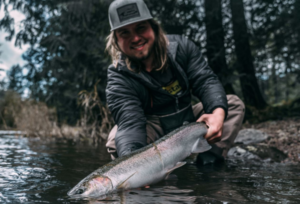
Rainbow trout are a favorite catch for many anglers. We stock them in Utah’s community ponds in the spring and fall.

The most common reason to stock a fish in a river, lake or reservoir is to provide anglers with a recreational fishing opportunity.

Stocking rainbow trout in waters across Utah is a good example of recreational fish stocking. Rainbow trout are stocked solely to provide a great fishing experience for anglers.

Rainbow trout are very adaptable. They can be stocked everywhere from high-mountain lakes and streams to valley reservoirs — and even into the fisheries in our towns and cities. Other fish stocked for recreational reasons include brook trout, Arctic grayling, walleye and channel catfish.

Munching other fish

Our biologists are always happy to find chunky wipers during survey work — it means they’ve been eating the prey fish we’re trying to control.
In addition to providing a recreational opportunity, some fish are stocked for more scientific reasons — to serve as management tools. This means the stocked fish have a job to do. Often, that job is to consume (and thereby manage) overabundant forage fish, such as Utah chub or golden shiner.

Bear Lake cutthroat trout are a great example of a predator fish. We’ve stocked them in Strawberry, Scofield and Lost Creek reservoirs to feast on populations of Utah chub, a fish species that would get out of control without a predator to keep them in check.

Wipers — a hybrid cross between a striped bass and a white bass — are another predator we often use to control prey fish. Wipers prevent the overpopulation of prey species in Minersville, Newcastle and Scofield reservoirs.

In each case, these fish have a job to do first, but there’s a major upside to having them in these waters: they reach large sizes, providing anglers with a chance to catch a trophy fish.

Helping fish in need

There are other species of fish in Utah, particularly fish that are native to the state (i.e., in Utah when European settlers arrived), which need stocking to boost or maintain their populations until conditions improve.

In most cases, populations of these fish have decreased as a result of changes humans have made to the fish’s environment. Stocking them helps maintain or enhance populations while biologists work with partners to find and address the factors leading to the population decline.

This can be a slow process, but there are recent indications it’s working. For example, in recent years, the U.S. Fish and Wildlife Service has recommended that two fish — June sucker in Utah Lake and razorback sucker in the Colorado River — be downlisted from endangered to threatened on the federal Endangered Species list.

This move to downlist is only possible because populations of both species are improving. More work still needs to be done, but raising and stocking these fish is one of the key factors in the progress they’re making toward recovery.

Stocking fish at the right size

The fish that fisheries managers stock typically fall into one of three categories: fry, fingerlings or catchables.

Supplemental stocking has helped Utah’s razorback sucker population.
Fry are newly hatched fish that are just a few days old. Fingerlings are months older than fry, and — just like the name implies — are about the size of your finger, typically 3 to 6 inches long.

Catchables are even bigger. They get their name because they’ve already reached a size anglers want to catch.

Choosing which size to stock often comes down to giving anglers the most bang for their buck.

It takes personnel time and money to raise fish. In fact, because fish put on more weight for every inch they grow, every additional inch a fish grows makes it more expensive to raise.

Stocking fish at the smallest size necessary to achieve management goals saves a lot of money. With that in mind, fisheries managers frequently conduct comparisons of different sizes of fish to see which size provides anglers with the greatest return.

These tiger muskie fingerlings were stocked in Scofield Reservoir in 2017. Today, any surviving adult fish could be more than 3 feet long!
Being cost conscious allows us to stretch our funding farther and maximize the number and variety of fish we can stock for anglers.

Using research to improve efficiency

Most of the rainbow trout stocked in Utah enter the water as either large fingerlings or catchables. If we stocked rainbows at a smaller size, we could put even more into Utah’s waters, but the vast majority of these smaller rainbows wouldn’t survive.

We’ve learned through studies that for every dollar spent to raise them in a hatchery, anglers catch larger rainbow trout, at a higher rate, than they would if we stocked the fish at a smaller size. Therefore, it’s more cost effective to raise rainbow trout to a larger size before stocking them.

In contrast, other species — such as kokanee salmon, splake, tiger trout, wiper and tiger muskie — perform well when stocked as small fingerlings. Stocking them at a smaller size saves money that would otherwise be spent feeding and maintaining hatchery space for the fish as they continued growing.

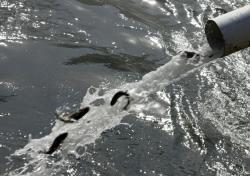
Some fish, such as walleye, are stocked as fry. We stock these fish by the thousands — and even the millions. Despite being about the length of your fingernail and the width of a pinhead, walleye stocked as fry are a major contributor to some of Utah’s fisheries. Willard Bay Reservoir is a good example.

A study conducted at Willard Bay found stocking only 500,000 walleye fry each year created measurable increases in the already existing walleye population in the reservoir. In fact, during two years of the three-year study, walleye stocked in the reservoir as fry made up a larger portion of each new year class of fish than those produced by natural reproduction.

Stocking walleye fry may not be successful in every water, but you can bet fisheries managers will try stocking fry first before considering stocking larger walleye, simply because anglers are receiving more for their money by stocking smaller fish.

Understanding the strategy

So, there you have it. The next time you’re looking at fish stocking reports or reading a news story about a fish that’s been stocked somewhere in Utah — or reeling in a stocked fish — you’ll have a better idea why that fish was stocked in a particular location, at a particular size.

Chris Penne

Chris Penne is the regional aquatic manager in the DWR’s Ogden office. As a self-described fish-head, he loves managing fish on the job and then catching them in his spare time.

I Love All Kinds of Fishing

I love bass fishing and all other kinds, too


There is nothing quite like the joy of sitting by the water watching a bobber float, waiting on a passing fish to bite your bait. You can kick back in peace and quiet, relax and enjoy watching the world go by.

There is nothing quite like the joy of running down the lake 70 mph at daylight, slowing as you go in a cove, hopping up on the front deck of your bass boat and making your first of thousands of casts. You concentrate on every little detail going on the water, how your bait is working and the images on your electronics.

I love both. I spent many happy hours while growing up sitting by mama or grandmama waiting on a bream or catfish to bite in ponds near home. There is something special about seeing the cork move to the side or go under when a fish takes your bait. And I learned a lot listening to them give me life advice.

Until 1974 when Jim Berry invited me to join the Spalding County Sportsman Club and we fished a tournament, my first ever, at Clarks Hill in April, I never realized how exciting fishing can be. I fell in love with the challenge of tournament fishing and the highs and lows of those events.

I will never forget sitting by a small fire on the bank of a cove at Clarks Hill with mama. We had put a trotline across the cove then built a small fire at dusk and set out our rods, hoping for a catfish. We talked lot that night, staying out there till well after midnight.

At 18 years old, that was the first time I really remember mama talking to me like an adult. It is a melancholy memory, I left for my freshman year of college a few weeks after that and my life at home was never the same.

I will also never forget the thrill of figuring out a pattern at West Point Lake in 1983, catching 18 keepers in two days that weighed 28 pounds, and placing fourth in the state Top Six tournament with 570 competitors.

That was a high. Lows like last July at West Point, where I fished for eight hours in a club tournament and got one bite and missed it, are all too common. Zero days happen as do winning days.

Every bite in a tournament is a challenge to get and then to land what hits. It is different from sitting on the bank. Not better, just different.

I have many great memories of fishing ponds and Clarks Hill with daddy and mama, as well as with friends and other family memories. I have more great memories of tournament fishing. My growing up memories cover about 18 years, my tournament memories cover 47!

To each his own in choosing the way to fish. Me, I will choose both!

WHAT IS AN EASY WAY TO FIND ARKANSAS FISHING HOTSPOTS

EASY WAY TO FIND ARKANSAS FISHING HOTSPOTS
from The Fishing Wire

Fish around these


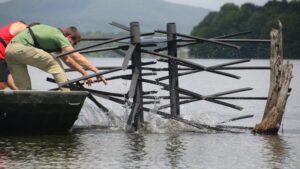
LITTLE ROCK — Each year, AGFC biologists sink hundreds of fish attractors made from natural brush or environmentally friendly inert materials in water bodies ranging from community ponds to large U.S. Corps of Engineers reservoirs spanning tens of thousands of surface acres. Adding this sort of cover can help baitfish and young-of-the-year sport fish hide from predators. It also provides sport fish such as bass and crappie ambush points to conserve energy and increase their growth rate.

Perhaps the most important aspect of a fish attractor is its ability to concentrate sportfish in a known location for anglers looking for an enjoyable day on the water. During spring, when many species move shallow to feed and spawn, practically any flooded bush or grassline has the potential to hold fish. Changes in depth along points and creek channels can increase the odds of finding a willing target, but fish can be found fairly easily with enough casting to potential targets. During summer, when many fish move to deeper water to avoid the summer heat, fish attractors shine. As the water gets deeper, less cover is available, increasing the chances a fish will take up residence in whatever they can find. Sunken trees, brush, PVC structures and other manmade cover can be the difference between fun and frustration. But finding this cover often requires using electronic sonar to probe the depths and reveal what lies beneath. Even with the investment of electronics, anglers can spend hours scanning their favorite lake for likely spots.

Interactive maps show where the hot spots are.

AGFC fish attractors can shorten your search time to minutes.

Fish attractor locations as well as fishing access points to most lakes and rivers in the state can be found through the AGFC’s interactive map at www.agfc.com/maps. Click on the Interactive Map tab to start this free software and zoom in to the areas that pique your interest. Fish attractors are labeled with a symbol of a white fish inside a blue square. Zooming in closer may reveal multiple attractors within the location. Clicking or tapping on the fish icon will open a box that describes the attractor’s location and construction materials. The latitude and longitude may be copied and pasted to your GPS device or Google Maps on your phone to take you to the attractor you are interested in. If you have a good cellular data signal where you fish, you can also click the “locate me” pin button in the upper left portion of the screen to place a blue dot where you are on the map.

For people who have a GPS-enabled fishfinder, the entire list of all fish attractors for each lake the AGFC manages also is available for downloading and easy navigation. Visit www.agfc.com/fishattractors from your home computer and you will be able to download data files compatible with most major fishfinder and GPS units. A list of videos on the AGFC’s YouTube page can walk you step-by-step through the download process to help you get on the fish faster than ever before.

One Fish Tournament at West Point Lake

Sunday, July 25 was certainly a challenge at West Point for the 12 members and guests in the July Spalding County Sportsman Club tournament. We landed 16 keepers weighing about 25 pounds in eight hours of very hot casting. There was one five-bass limit and five people didn’t catch a keeper.

Jay Gerson made it two in a row, winning with the only limit weighing 7.97 pounds. Kwong Yu caught two keepers weighing 6.19 pounds for second and his 4.78 pound largemouth was big fish. Third went to Wayne Teal, fishing with Jay, with three weighing 3.60 pounds and Raymond English had two at 2.07 pounds for fourth.

Chris Davies and I started at 6:00 AM in the dark on a deep rocky bank that transitioned to shallow wood. I thought some bass may have moved to that area to feed during the night. The full moon would encourage them to feed at night, and bream should be bedding around the wood, another attraction.

It was the same bank I started on last July and got and missed my only bite that day on a buzzbait at first light. I started casting the buzzbait in the dark. We could barely make out the bank we were casting to in the moonlight.

Suddenly, at the end of a cast right beside the boat, a bass grabbed my buzzbait. I instinctively set the hook, the fish arched out of the water but luckily stayed on the hook and landed in the bottom of the boat. It was a 13-inch spotted bass.

I continued to fish the buzzbait around cover while Chris tried a variety of baits behind me. Neither of us could get a bite. As the sun got higher, I went to a rocky point where I have caught bass this time of year in the past. My first cast with a shaky head something thumped it as soon as the bait hit the bottom.

I tried to set the hook but the fish ran toward me, never a good sign. But then my line tightened up and went under the boat, the fish was hooked. Unfortunately, when I reeled the pound and a half fish to where I could see it, it was a channel cat. Fun to catch, good to eat, but no help in a tournament.

At weigh-in Zane said he caught two catfish while fishing for bass. A trip to West Point for catfish might be a good idea right now. If they are hitting artificial baits no telling what you can catch on catfish bait!

In the next shallow pocket I caught a 13 inch largemouth on my buzzbait, but largemouth have to be 14 inches long. Then Chris caught a 13-inch largemouth. Although we fished hard until quitting time and were the last boat to come back to the ramp, we did not catch another fish!

My 13 inch spot weighed one pound and was good for 7th place!

WHAT IS SLOW-ROLLING HILDEBRANDT SPINNERBAITS FOR SUMMER LARGEMOUTHS

SLOW-ROLLING HILDEBRANDT SPINNERBAITS FOR SUMMER LARGEMOUTHS
from The Fishing Wire

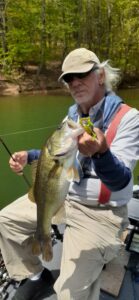
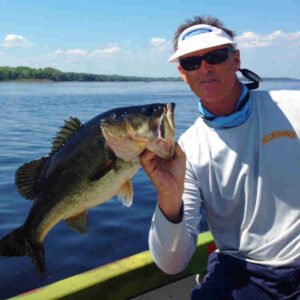
Catch big largemouth like this one


At this time of year, many of the bass we are after are deep. They’re away from the shoreline relating to offshore features. And though today’s electronics can help us find them, catching them is a whole other matter.

Let’s assume we know where they are, their depth and the type of structure they’re holding on. What lures would you throw?

One that’s high on my list is a big spinnerbait — the kind specifically designed for fishing deep. I’m talking 3/4-ounce and heavier. The kind that get down quick and stay there throughout the retrieve. The kind that can also attract bass from a distance, or pull them out of heavy cover … even trick those that aren’t in the mood to feed.

Why a blade bait, you ask?

Spinnerbaits are relatively snag proof. They have the ability to pass through cover too gnarly for other moving lures — particularly crankbaits. And that makes them ideal for probing submerged brush, rockpiles and thick grass.

Spinnerbaits are also great baitfish imitators.

Whether it’s a cluster of small threadfin or large, single gizzard shad, the right blade size, color and profile can fool bass into believing the lure is real. We’re talking willow-leaf blades, of course — either tandem or paired with a leading Colorado blade.

Willow-leaf blades are fish-shaped and they give off a tremendous amount of flash. Built with the right combination of components and head weight, they can maintain lateral movement while maximizing travel time through the strike zone. And that is precisely why slow-rolling a spinnerbait is so effective. The key is keeping the lure in frequent contact with the bottom or the cover related to it.

For instance, if you’re fishing the edge of a deep, submerged grassbed, you’ll want to be sure the lure stays in contact with the grass as it tapers off into deeper water. When the lure grabs the grass, rip it free and let it fall on a semi-slack line. At least until you feel the grass again. Then repeat. Strikes will usually occur as the lure is falling or when it regains forward motion.

The same applies to stumps, brush and rock. When the bait gets hung up, try ripping it free with a snatch of the rod tip. This sudden movement and flash mimics escaping prey and it can trigger a bass to strike.

The right setup

To better facilitate these moves, it’s important to have the right balance of tackle.

Big spinnerbaits require heavier line with stout rods and reels.

My personal preference includes a Shimano 7’2” Expride casting rod in a medium-heavy action with moderate-fast tip. That length and action is ideal for casting big blade baits, as well as taking up slack on long distance hooksets. And I can feel every pulse of the lure as the blades turn. I pair it with their slower, 6.2:1 ratio Metanium MGL III reel, which allows me to retrieve the spinnerbait at the right rate of speed — assuring that it stays deep throughout the retrieve. The Metanium’s magnesium frame telegraphs even the most subtle vibrations, so I know what the lure is doing at all times. And it has the guts to handle big baits and big bass in thick cover.

The line I spool it with depends on certain variables. If the water I’m fishing is super clear or the fish are line sensitive, I’ll go with 15- to 20-pound fluoro. If I want to “feather” the lure through the tops of submerged grass or brush, I may choose mono in the same pound rating for its buoyancy. In extra thick cover or if I know I’m on big bass, I’ll opt for Power Pro Super Slick braid — usually in the 30-pound class.

The business end

Assuming you have the right balance of tackle, let’s discuss lure choice.

Most spinnerbaits used for this technique come with tandem blades, consisting of double willow or Colorado-willow combinations. That’s not to say that single spins won’t work, they will at times. But if you surveyed the top touring bass professionals, most would tell you they prefer a tandem model with a leading Colorado and trailing willow-leaf. The Colorado will provide much of the vibration, while the willow-leaf will better match the profile of live baitfish. Willows also provide maximum flash without forcing the lure to rise too much.

Spinnerbaits designed for slow rolling are usually bigger in all aspects — the blades, frame, head and hooks are all upsized. But it’s important that all of these components are balanced and working together … even the skirt and/or trailer can influence the lures overall performance.

Some anglers prefer super-sized trailing blades — No. 7 or 8 willow leafs. That’s fine if you’re after giant bass. But keep in mind, the larger the blade, the more resistance it will

create, and the more likely the lure will “climb” during the retrieve. So, unless you have the patience of Job, I would suggest No. 5 or 6 willow-shaped blades. They turn easier, which can create more flash and vibration.

I generally prefer a No.4 front blade (either Colorado or willow) paired to a No.6 trailing willow leaf.

My spin on things

Years ago, I designed a spinnerbait for Hildebrandt, specifically for slow rolling. We named it the Tin Roller. And, as you can probably guess, it’s molded with pure tin.

We chose this material for several reasons. At the time of its design, a national ban on lead was being considered. Concerned, I worked with Hildebrandt to find an alternative material — one with similar properties but nontoxic to birds, mammals or fish. And after numerous trials, we found tin to be the best alternative. It wasn’t as good as lead. It was better!

Here’s how.

Because tin is much harder than lead, it transmits sound and vibration better. That means, when the lure is traveling and the blades are turning, the head, hook and shirt will shake more with each pulse. And that extra movement can attract fish. Also, because tin is approximately two-thirds the weight of lead by volume, a large profile spinnerbait can be finessed through structure with less chance of snagging … appearing more realistic as it pulses.

When it comes to blade finishes, nickel-silver or gold are the two most common choices. Skirt patterns are normally white, chartreuse, or a blend of the two. If a soft-plastic trailer is added, its coloration usually matches one of these patterns. Obviously there are exceptions. But day in and day out, these are the most reliable combinations.

These are the tools I use when fishing a spinnerbait through deep structure. Hopefully what I’ve shared will help you next time you’re out on the water.

Follow Bernie Schultz on Facebook and through his website.

Outright Lies About Guns and Gun Owners

I came home Wednesday from a nice three-day trip to Lay Lake, where I saw no news at all, to turn on the TV to see a program showing a campaign to end civil rights of millions of United States citizens. I totally oppose the agenda this presentation pushed, full of false information and outright lies about guns and gun owners.

Rational folks know they should never believe anything any politician says. Their number one job description is to get re-elected no matter how many lies they have to tell. But when a president of the United States lies about the effect of gun bans, claims the 2nd Amendment is about deer hunting and thinks armed opposition does not work unless you have “F-16s and nuclear bombs,” I get disgusted.

You might want to check with the Russia and the Afghanistan Mujahideen or the US government and the Taliban and Viet Cong on that last idiotic claim.

Everyone has their own beliefs about guns but beliefs and feelings do not change facts. When you blame an inanimate object for the actions of people, there is no logic involved, especially when you blame the gun in most instances but blame the shooter when it is a cop doing the shooting.

When a politician says giving folks jobs will stop them from committing crime while, at the same time, also paying people to stay home and not work is about as senseless as anything said at the presentation.

Read any of the crime and arrest stories in the Griffin Daily News and you are likely to see, under charges filed, “possession of a firearm by a convicted felon.” That has been a law for years, criminals ignore it and prosecutors, for some strange reason, usually plea bargain it away. Maybe felons would pay attention to that law if it included mandatory capital punishment for violation.

When political district attorneys release criminals without bond, do not prosecute rioters and looters and ignore the law, more laws that affect only the law-abiding are stupid.

As long as politicians take actions based on false information and their feelings rather than facts, the problem will only get worse.

Boat Fuel Economy

Optimize Your Boat’s Fuel Economy and Range
Advice from the fuel experts at Chevron
from The Fishing Wire

If you’re an avid power boater or fisherman, what truly fuels your passion for time on the water is, well, fuel.

While they are unquestionably the most fun way of getting from Point A to Point B, boats are inherently un-economical conveyances when it comes to fuel consumption. Not only do boats consume a lot of fuel (measured in Gallons Per Hour rather than Miles Per Gallon), they operate in a dynamic environment where wind, waves and currents can cut “normal” fuel economy in half on any given day.

On land, the maximum fuel range of your car is rarely of critical concern — cars are generally fuel efficient and there are gas stations everywhere. Boats are different. Once you leave the harbor or launch ramp, you are generally limited to the fuel your boat carries onboard. On the water, fuel range is the limiting factor that dictates everything — from how far you can run to find fish to how long you can stay out looking for and/or catching them.

There are some simple steps all power boaters can take to squeeze every drop of fun out of their boat’s fuel tank, whether it’s an aluminum walleye rig, high-performance bass boat or multi-engine offshore fishing machine that holds 400 gallons.

1. Always start full. Well, duh…but you’d be surprised how many fishermen try to save a little time or money by not fueling up before each trip. You never know what a fishing day will bring, and you don’t want to have to stop short if the fish are farther away or the weather comes up. Also remember the rule of thirds when it comes to estimating your boat’s range – a third of a tank for the day’s fishing, a third of your fuel to get back, and a third to keep in reserve. Smart boaters who’ve learned from past mistakes know that “empty” can sneak up pretty fast when conditions change, so they keep a good amount in reserve just in case.

2. Lose some weight. Carrying unnecessary weight or having an unbalanced weight load can change the way a boat rides and drastically reduce fuel economy and range. Go through your boat and consider removing things you don’t really need, like extra fishing gear you never use, boxes of lead sinkers, extra anchors and chain, old expired fire extinguishers, and the like. Water weighs about 8 pounds per gallon, so it’s easy to see how filling live bait tanks and livewells when they’re not needed can really weigh you down and cut fuel economy.

3. Know your boat’s “sweet spot.” Every boat/motor combination has its own “sweet spot” where it’s operating most efficiently. In magazine boat tests, this is often referred to as Most Economical Cruising Speed. Depending on vessel style and hull type, it may be quite a bit faster than you imagine. Most modern boats/outboard engines come equipped with fuel computer systems, which allow you to track fuel consumption at various engine RPMs and boat speeds. You can compute your Most Economical Cruising Speed by looking at the Gallons Per Hour being burned and cross referencing it with the boat’s GPS speed. For example, if you’re burning 10 gallons per hour and traveling at 20 miles per hour, you’re netting 2 miles per gallon. You might find, however, that your boat burns 13 gallons per hour at 32 miles per hour, which works out to almost 2.5 miles per gallon. At this cruising speed, you’ll get where you’re going faster while ultimately burning less fuel. It’s important to figure this out with your boat loaded the way you normally use it, which might be loaded with a full tank, gear and fishing buddies.

4. Propellers matter. Your boat’s propeller(s) is responsible for efficiently translating the RPMs of the boat’s engine into forward movement of the vessel. There are a wide variety of propeller types and sizes, and finding the right one for your boat may require some trial and testing. One of the key propeller measurements is pitch, which refers to how much forward movement it provides. For example, a propeller with a pitch size of 21 will move forward 21 inches for each turn, while a “less aggressive” 18-pitch propeller will move three inches less. When you consider that high performance outboard engines can run at 5,000+ RPMs for sustained periods, this can make a huge difference. A propeller with too much pitch will make it hard for a boat to get “out of the hole” and accelerate from a standstill. A propeller with too little pitch might over-rev the engine and reduce top-end performance. Either one can negatively impact fuel range and economy. A well-matched propeller will allow the engine to fall within the manufacturer’s recommended maximum RPM range (say 5,000-5,500 RPM) when the boat is well trimmed and running at Wide Open Throttle (WOT).

5. Keep the engine and fuel system clean. Techron Marine Fuel Treatment provides boaters with the cleaning power they’ve long counted on in their automobiles and tow vehicles. The fuel experts at Chevron developed this specialized formula to clean gasoline engines used in the harshest marine environments. When used with every fill up, Techron Marine restores power and maximizes fuel efficiency by cleaning fuel injectors, throttle bodies, carburetors, intake valves and combustion chambers, preventing corrosion and removing gum, varnish and carbon deposits. It also keeps the entire fuel system clean, preventing gunk, corrosion and deposits in the tanks, fuel lines, filters and fuel pumps from interrupting fuel flow and compromising performance. A fuel system kept clean with Techron Marine will also deliver quick and easy starting in any weather, smoother idling and faster response when it’s time to hit the throttle. With a range of economical bottle sizes and a treat rate of just one ounce per 10 gallons of fuel, Techron Marine is a cost-effective way to stretch the fuel range of any gasoline-powered boat.
Doing these things will help maximize your range and time on the water between visits to the fuel pump. It’s also important to remember to treat your fuel when you won’t be using your boat for an extended time. In addition to cleaning your engine and fuel system and keeping everything running like a top, Techron Marine Fuel Treatment provides best-in-class corrosion protection and stabilizes fuel up to 24 months.

To learn more about optimizing your boat’s fuel efficiency and range, while protecting your boat’s fuel system and engine in the harshest marine environments, visit www.TechronClean.com.

Liberal Politicians Fear Guns and Law-Abiding Gun Owners

Answer: Rust and politicians. Question: What are the only two natural enemies of guns? I’m not sure who first said that, but it is a popular saying seen on shirts and posters. And it is all too true.

Liberal politicians naturally fear guns and gun owners. We are harder to control than those without guns. Another old saying is “people with guns are citizens, people without guns are slaves.” We won our freedom from Britain with guns. But slaves and even free blacks were not allowed to own or possess guns.

Biden compares the current Georgia voting law to Jim Crow laws. He should go back and actually read some Jim Crow laws and the Georgia voting law, especially the Jim Crow prohibition of gun ownership to keep black citizens in line. His gun laws apply to everyone, but they are designed to keep us in line.

Looking at some of the individual proposals from the democrats show how ineffective they are in dealing with crime. Biden wants to ban “assault weapons” which are described as semiautomatic rifles with certain “scary” characteristics.

Some sources say there are approximately 17,000,000 modern sporting rifles in the US – the guns some mistakenly call “assault weapons.” Others say up to 25 million. They are the most popular kind of gun in the
US. Most fire a .223 caliber bullet, legal for deer hunting in most states. Its ironic to see some gun banners call this a big dangerous bullet while also saying too small to use hunting deer.

According to the FBI there were 13,927 murder victims in 2019. Of those, 6778 were by handgun, 300 by rifles of all kinds. That includes every rifle made so only a part of them were by so-called “assault weapon” rifles.

There were 1562 deaths by knife or cutting instrument. The FBI does not say how many of those were assault knives. And hands, feet and fists killed 668 – more than twice the number killed with all rifles.

I know facts don’t matter when you are on a mission to play to your political base, but what sense does it make to concentrate on guns that are used in such a tiny part of murders. And what sense does it make to concentrate on the inanimate object when people using them are the problem.

If criminals were punished for crimes maybe there would be less crime. But the murders on the golf course in Kennesaw are a perfect example. Three people were shot, the kind of gun is not mentioned, but a little research on the killer is interesting.

Brian Rhoden, the accused murderer, was arrested in 2016 for trying to sell drugs to two teenagers then getting into a shoot out with them. He faced several felony charges after that but a Fulton County judge sealed his record in 2017 and the court spokesman could not say why.

In May 2020 he was arrested for having drugs for sale in his car. At that time he also had a warrant for his arrest in East Point, but was let go for some reason. In August 2020 he was arrested in Indiana after a high-speed chase going over 150 mph but was let go with a fine.

In April this year he threatened a Uber driver with a gun and Rhoden admitted having one, but he was let go. Now he is arrested for killing three people, including the golf pro who just happened to be in the way while Rhoden was killing two folks.

The above information is mostly from an article from CBS 45, but also other online sources like the FBI.

I am waiting on someone to say the gun he used should be banned.

Criminals do not follow laws. Law-abiding citizens do, until something legal for all their life is suddenly illegal.

GEORGIA BASS SLAM

CHALLENGE YOUR ANGLING SKILLS WITH A GEORGIA BASS SLAM

SOCIAL CIRCLE, GA (July 20, 2021) – Catch five different black bass species and you have a Georgia Bass Slam! This program recognizes anglers with the knowledge and skill to catch different species of bass in a variety of habitats across the state, while also stimulating interest in the conservation and management of black bass and their habitats, according to the Georgia Department of Natural Resources’ Wildlife Resources Division.

Georgia’s ten (10) recognized native black bass species are largemouth, smallmouth, shoal, Suwannee, spotted, redeye, Chattahoochee, Tallapoosa, Altamaha and Bartram’s. Anglers can find out more about these eligible bass species, including images, location maps and more at www.BassSlam.com.

How Can You Participate? To qualify for the Georgia Bass Slam, fish must be caught within a calendar year, must be legally caught on waters where you have permission to fish, and anglers must provide some basic information on the catch (length, weight-if available, county and waterbody where caught) accompanied by several photos of each fish. Anglers will submit information to Georgia.BassSlam@dnr.ga.gov for verification. Complete rules posted at www.BassSlam.com.

What is Your Reward? Well, besides bragging rights among all the anglers and non-anglers you know, you will receive a certificate worthy of framing, two Go Fish Education Center passes, and some fantastic and fun stickers (for vehicle windows/bumpers) to advertise your achievement. Anglers also will be recognized on the WRD website, at the Go Fish Education Center (www.GoFishEducationCenter.com), and possibly through a variety of social media platforms. In addition, all successful submissions will go into a drawing for an annual grand prize!

Don’t have time to dedicate to catch five species of bass, but maybe you have your eye on a lunker largemouth? We have a program for that, too! The Trophy Bass Angler Award program recognizes largemouth bass catches of 10 pounds or greater. These fish are rare, and the data from these catches helps to provide genetics and growth information that is valuable to fisheries managers. Those that successfully submit a qualified fish will receive a certificate, hat, t-shirt and an entry into a drawing for a reward package. Oh, and catch one larger than 13 pounds, and you may be eligible for a free mount of your bass! More info at https://georgiawildlife.com/fishing/anglerawards.

For more information, visit www.BassSlam.com.

Bass Are Always Biting Somewhere for Someone

Bass are always biting somewhere for someone on a big lake. The Flint River Bass Club July tournament on Lake Sinclair last Sunday proved this in a big way. In eight hours of fishing, 11 members and guests landed 29 12-inch keeper bass weighing about 61 pounds. There were two five bass limits and one person did not catch a keeper.

Niles Murray blew us all away with five bass weighing 17.08 pounds and his stringer included two identical 4.52 pounders. Lee Hancock placed second with three weighing 8.46 pounds and had big fish with a 4.76 pound largemouth. Doug Acree came in third with fiv weighing 8.39 pounds and Niles’s guest, Otis Budd, came in fourth with four weighing 7.32 pounds.

My day started and ended bad. On the way to the ramp I hit either a hole or something right on the side of the road with my trailer tire. When I got in the boat and Alex started backing me in, I heard the telltale sound of a flat tire. I had not noticed anything wrong until then.

I waited to put the spare on after weigh-in since it is much easier to put it on an empty trailer. Thanks to Doug Acree and Niles Murray for their help, it took only a few minutes. Then Chuck Croft stuck around and pulled me out after I loaded my boat.

In the tournament my start was not good. I missed two hits on a buzzbait, jerking one keeper out of the water all the way to the boat but it came off. Then I caught a keeper on the buzzbati between two docks. There seemed to be no reason for the fish to be where it was.

I noticed some mayflies and started fishing around them but caught only bream. I finally caught a second keeper at 9:00 on a shaky head worm near some brush, then with an hour left to fish caught my third one on a floating worm in grass. My three weighed 3.46 pounds and was good for sixth place, not the day I wanted.