What Is the Fishing Like On Alabama’s Lake Tuscaloosa

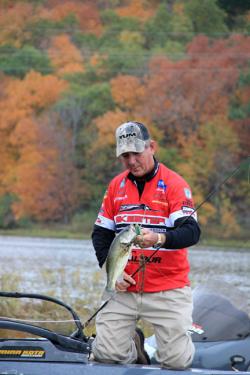
Each time I go to Alabama for an Alabama Outdoor News article I am amazed at their fantastic lakes and rivers. I drove to Tuscaloosa last Wednesday to meet Brandon Ligon, a young bass tournament fisherman that lives there. We fished Lake Tuscaloosa, a relatively small 5885 acre lake on the North River that provides the water supply for the city.

It is a beautiful river lake with steep rocky banks and the water was clear at the dam, although the upper river was muddy. Brandon caught a nice two pound spot the first place we tried and we caught a couple more keeper spots during the day. I wish it was not a four hour drive to go back!

There are dozens of well-known lakes in Alabama like Guntersville, Wheeler, Wilson, Pickwick, Wedowee, Martin, Logan Martin and Lay Lake. But there are dozens more small lakes I have never heard of all over the state. All seem to have an abundance of big spotted bass and largemouth. Many of the north Alabama lakes have smallmouth, too.

Folks in Alabama even consider West Point and Eufaula as their lakes, but I claim them for Georgia. They offer great fishing but don’t produce the big spotted bass like others do. I am not sure why the bass don’t grow in them like they do in other lakes nearby.

If you get a chance, explore our local lakes, but for a change drive over to any lake in Alabama and check it out. You will be pleasantly surprised at the scenery and big bass you can catch.

Fishing A Three Club Tournament At Lake Martin In Alabama

Even with the problems we had a great tournament, as usual. The Flint River, Spalding County and Potato Creek clubs go every October and many of us stay for most of the week, camping or renting cabins. In two days the 28 members fished 17 hours and landed 213 keepers weighing 279.47 pounds.

On Saturday I won with a five fish limit weighing 9.79 pounds, Tom Tanner was second with five at 9.54 pounds, Lee Hancock placed third with a limit weighing 9.31 pounds and had big fish at 3.26 pounds and Brent Terry was fourth with five qt 8.62 pounds. We had 22 limits that day.

On Sunday we fished only seven hours but there were still 11 limits brought to the scales. Bobby Ferris blew us all away with five at 12.01 pounds and his 4.06 pound largemouth was big fish, Niles Murray was second with five at 8.79 pounds, my five at 7.66 pounds was good for third and Raymond English was fourth with five at 6.61 pounds.

As expected there were many more spotted bass than largemouth weighed in. On Saturday there were only 18 largemouth and Sunday there were nine largemouth, so 27 of the 213 fish were largemouth.

Spots are great fun to catch and pull hard, much harder than largemouth, but are usually smaller. I had a spot and a largemouth just under three pounds each on Saturday and the spot felt twice as strong as the largemouth. And another three pound spot on Sunday almost took the rod away from me.

Martin would be a great trip this fall but be aware of the rules at Wind Creek if you plan on camping.

What Are Permit and Where Can I Catch Them?

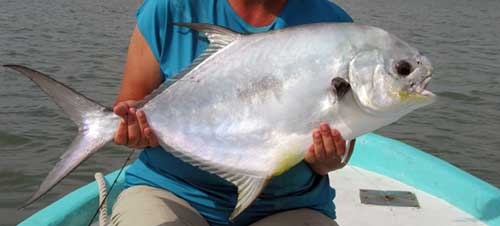
Permit are fun to catch

Permit are fun to catch

Florida’s Permit Fishery: An Update from the FFWCC
from The Fishing Wire

Permit is a species on the bucket-list of many anglers world-wide. Here’s a review of the fishery in Florida, where they’re found both on the flats and over deep water reefs.

Permit is a highly sought-after fish in Florida. Learn about the current and historical status of this fishery.

Permit (Trachinotus falcatus) have long been sought after by commercial and recreational fishers on Florida’s Atlantic and Gulf coasts. Though this species is a prized catch, little is known about the status of the permit fishery. Commercial landings are relatively low; however, recreational landings data are scarce and there is still much to learn about the permit’s basic biology. That’s why Fish and Wildlife Research Institute (FWRI) biologists, in collaboration with Bonefish and Tarpon Trust and Costa Del Mar, are conducting a multi-year study on permit biology, life history and movement patterns.

The study relies on anglers tagging and fin-clipping, which is collecting a tissue sample, permit they catch and release. Biologists can then track movement patterns (e.g., reefs to shore, reef to reef, inshore to offshore, south to north) when anglers recapture and report catches of tagged permit. In addition, FWRI scientists are conducting genetic analysis of fin clips to assess permit population structure and determine whether permit throughout Florida’s coastal and inshore waters share a single genetic stock. This valuable data can help Florida’s fishery managers determine the best management methods for permit. To learn more about how anglers can contribute to this research, read the article Tag a Permit for Research Gains.

This permit is fitted with a tag that will allow researchers to track when and where the fish is caught again if it is recaptured in the future.

History of the Fishery

Commercial landings accounted for the majority of the statewide permit landings before the net limitation amendment (Amendment Three to the Florida Constitution) went into effect July 1, 1995, making use of entangling nets (e.g., gill nets, trammel nets) illegal. Since then, the majority of permit has been taken by the recreational sector, which accounted for 82 percent of permit landings from 2001 to 2007 on average.

Commercial landings have been declining since 1998, which can be partially attributed to changes in commercial regulations. Fishers target permit in the 1.5- to 3-pound range, which is characteristic of permit of legal harvest size. Most commercial fishers along the Gulf Coast (where most of the landings come from) land less than 500 pounds of permit annually. This equates to approximately 250 fish or less, which is a relatively small number of fish compared to other commercial fisheries. In fact, the monthly average weight of permit landed per trip from 2006 to 2010 was less than 55 pounds for all months but August, when it was 75 pounds.

In 2011, the FWC eliminated all directed commercial harvest of permit in state and federal waters off Florida. Since then, only 100 permit may be kept as bycatch by commercial fishers who hold a saltwater products license and a restricted species license and who are legally fishing for other species with gill or entangling nets in federal waters outside a Special Permit Zone, so landings remain low. The Special Permit Zone, an area in south Florida that includes all state and federal waters south of Cape Florida and south of Cape Sable, was created by the FWC in 2011 to provide additional protection to the species. There is no direct or indirect commercial harvest of permit inside the Special Permit Zone.

The recreational fishing sector accounts for the majority of statewide permit landings and most are taken along the Gulf Coast. However, recreational permit landings have increased along the Atlantic coast since 1997. The most productive months for recreational permit fishing appear to be March through June with a peak in April, based on estimates using Marine Recreational Fisheries Statistics Survey data (1982-2009). This coincides with the start of permit spawning season. There is a secondary peak in catches from November through January when permit aggregate at warm-water areas such as around power plants, allowing recreational anglers to more easily find them.

Permit are targeted by some anglers for catch-and-release sport fishing, but they are also commonly harvested and eaten. Data from 2004 to 2007 show anglers harvested an average of 59 percent of the recreationally caught permit. Since permit form large schools that will gather by reefs and wrecks for days at a time, they can be easily targeted by spear-fishers and hook-and-line anglers once the schools are located, especially during spawning season. In 2011, the FWC implemented regulations to protect adult permit aggregations found along Florida’s wrecks and reefs from too much fishing pressure. Managers also changed size and bag limits and established a closed harvest from May through July inside the Special Permit Zone. The closed season equates to catch-and-release fishing only during spawning. Both of these changes help to protect both juvenile and adult permit.

For a map of the Special Permit Zone, visit the Permit, Florida pompano and African pompano regulations page. For up-to-date permit fishing regulations, always check the FWC Saltwater Fishing Regulations.

Fishing A Winter Tournament At Lake Jackson

At Jackson last winter fishing was as tough as expected in the Spalding County Sportsman Club January tournament. Many members let the weather guessers scare them off with the terrible weather they told us to expect but which never arrived. Only nine of us braved the chance of bad weather to fish for eight hours and land a total of seven bass weighing just under 17 pounds. Five of the nine didn’t land a keeper all day.

Niles Murray wore us all out and caught more than the rest of us put together. His four keepers weighing 9.93 pounds ran away with first place. I got one bite but it was a good one and my keeper largemouth weighing 4.09 pounds was good for second place and big fish. Third went to Billy Roberts with a keeper weighing 1.42 pounds and Brent Terry was fourth with one spotted bass weighing .98 pounds.

Niles said he caught his bass on a crankbait and most were on rocky banks and points. My one keeper hit a jig and pig on a rocky point. Brent said his fish hit a crankbait, too.

Although it did rain some, I kept my rain suit hood down most of the day. And it was much warmer than expected. I dressed for very cold weather but had to keep my heavy rain suit bibs and jacket unzipped and open most of the day. And, although thunderstorms were predicted, we never heard any thunder all day.

I started fishing my favorite area of the lake with crankbaits but did not get a hit the first hour. Out on the main lake the water was 48 degrees and very muddy, with a chartreuse crankbait disappearing about 3 inches under the water. After the first hour I went into Tussahaw Creek,and the further up it I went the clearer the water got but the colder it got, too.

Clearer did not mean much clearer! At the best I could see a crankbait down about six inches. And the water was only 45 degrees. I went all the way to the Highway 36 Bridge and thought I had one hit up there but was never sure.

I used all my skill to catch the one I got. I was throwing a crankbait around the bridge in Tussahaw and decided to crank up and run up to some docks further up the creek. But it started raining hard so I just kept fishing up the bank and caught the bass in a place I had never fished before, and would not have fished if the rain had not started.

I cast a black and blue jig and pig up on a rocky point and worked it slowly down the slope under the water. Somewhere around 12 to 15 feet deep my bait felt mushy and I set the hook on a heavy fish. I almost had a heart attack when it came to the surface and I saw how big it was. It did not fight very hard in the ice water, which was good since I was fishing by myself and had to net it while fighting it.

What Is Slip Bobber Fishing For Walleye?

Wobble Bobbin’ Slip Bobber Fishing for Walleyes

by Daniel Quade
from The Fishing Wire

Complex presentations get plenty of press these days, but few walleye tactics are as deadly-or as easy to fish-as the simple slip-bobber rig. With a well-balanced float, you can efficiently and precisely suspend mouthwatering live bait in front of hungry ‘eyes. Plus, you know exactly when a fish has inhaled your bait.

Guide Mike Christensen

Guide Mike Christensen

Guide Mike Christensen at Minnesota’s Mille Lacs knows where the big walleyes live.

Veteran guide Mike Christensen is a believer. Big time. From his home base out of historic Hunter Winfield’s Resort on the scenic south shores of Minnesota’s mighty Mille Lacs Lake, the jovial yet dead-serious walleye hunter launches literally hundreds of missions onto the fabled fishery with one goal in mind: connect clients with the big lake’s walleye bounty.

His success rate is epic, and one of his favorite presentations throughout much of the season is, you guessed it, a slip-float rig.

When wind whips the surface, a Thill Pro Series Slip Float rules the waves. He favors the size XXL version, a 1-incher that’s easy to see bobbing amidst the whitecaps. But when the wind dies and surface flattens, he deploys a new secret weapon that livens up his bait in spite of the lull-Thill’s Wobble Bobber.

Fresh on the walleye scene this season, the pear-shaped float rocks back and forth with the slightest ripple or twitch of the rodtip. “It’s ideal for calmer conditions,” he says. “If it’s absolutely dead flat, you can impart action to your bait just by shaking the rod.”

Thanks to an aerodynamic profile and slick internal weighting system, the Wobble Bobber also grabs serious air when slung from standard spinning tackle. Such long-casting properties are perfect for keeping your distance when targeting nervous ‘eyes roaming the shallows. Long casts also make it easy to thoroughly cover a reef or other structure from an anchored position-without moving the boat-and are a huge plus for the shore patrol.

Wobble Bobber

Wobble Bobber

When wind dies and bait action is minimal, a Wobble Bobber can liven up the bite.

Christensen says the Wobble Bobber is lethal for skinny water walleyes that are patrolling weeds, shallow rockpiles and boulders, or holding on the edge of steep breaks. “I use it in deep water situations as well,” he adds.

When it comes to the deep game, one of the classics is a pattern Christensen and fellow Mille Lacs guide Jon Thelen fondly call “road hunting.” At its core, the tactic involves cruising the tops and slow-tapering edges of promising reefs, mud flats, gravel bars and other promising areas at slow speeds, watching the sonar for signs of active fish hovering a foot or so off bottom.

“These are the biters,” says Christensen. “Bottom-huggers may eat if you park on top of them and wait it out, but we’d rather catch five aggressive walleyes in the time it takes to coax one less-active fish into eating.”

Proper sonar settings are crucial to distinguishing walleyes from clouds of baitfish or insects, as well as smaller fish such as perch. “I set the chart speed, sensitivity and color on my Humminbird sonar so suspended walleyes are identified by yellow highlights inside the arc,” Thelen explains. “On bottom, low-riding fish will have a bluish halo on the sides, while rocks won’t.”

Whether it’s calm or windy, Christensen likes the Wobble Bobber for road hunting because of its ability to deploy 20 to 30 feet of line more quickly than many conventional floats. “It has brass grommets at both ends, so line slides through it fast,” he says. “This is important with this presentation, because you want the bait in the strike zone before an aggressive fish moves off or settles back to bottom.”

His standard road-hunting rig includes a 7½- to 8½-foot spinning outfit. “A rod with a long, sensitive tip is key to good hooksets,” he says, explaining that when a fish pulls the float under water, the limber tip lets you reel up slack until you feel the weight of the fish on the line. “Otherwise, anglers have a tendency to set too soon. And when you try setting the hook before getting all the slack out of the line, you miss the fish.”

Christensen spools with 8-pound green monofilament mainline. After threading on an adjustable bobber stop, he slides on the Wobble Bobber and then ties a swivel to the business end, followed by a four-foot length of the same line. (Note: Christensen says that doubling the line makes it easier to thread through the Wobble Bobber.) A split shot large enough to balance the bobber is pinched on a foot or so beneath the swivel. “This reduces the chances of the rig tangling on the cast or the drop,” he notes.

Leeches are great walleye bait

Leeches are great walleye bait

Live leeches, hard to handle, are among walleyes’ favorite foods.

Another 24 to 30 inches below the shot, he adds a 1/32-ounce Lindy Jig. The leadhead sports a sturdy hook that’s large enough to hold a jumbo leech or half ‘crawler, yet is light enough to rise and fall seductively with the waves, or action imparted by the bobber.

Jigs also offer a more lifelike profile than plain hooks, he adds. “Hooks hang vertical, but I want a horizontal profile, which mimics the natural look of swimming prey,” he explains. While leeches are Christensen’s go-to bait, nightcrawlers often get the nod during bug hatches. “Hook them through the nose and pinch the crawler off halfway down,” he says.

To set the stop, he clips a Thill depth finder to the jig and drops it to bottom. “Set the bobber stop so the jig rides a foot above the fish-not a foot above the bottom,” he continues. “This is important, because active fish are looking up, and they’re far more likely to move up to hit the bait than they are to move down.”

Rigged and ready, Christensen idles over flat-topped feeding structures and gradually tapering edges along their sides. “Steep drops are tough to road hunt, because you have to change the depth of the jig,” he says.

Once a fish is marked, he flips the float directly behind the boat’s transom and pays out line so the jig can quickly reach the fish. “Let the boat drift away, to avoid spooking the fish,” he adds. “If it’s calm, twitch the cork to give the jig a little action.”

If nothing happens within a few minutes, Christensen reels in and moves on. “If they’re going to hit, they do it pretty fast,” he says. “On a good day, about one out of two to three drops results in a fish, so don’t waste time if the fish moves away or decides it’s not in the mood.”

How To Catch Deep South Bass After A Cold Front

How Deep-South Bass Deal With Fall Cold Fronts

(And How To Still Catch Them)

By William Redmond
from The Fishing Wire

Technically, it’s not “cold” just yet, but Mother Nature likes to fiddle with fishermen on the front and backside of winter with minor fronts that rattle the bass fishing cage just enough to push anglers outside their comfort zone. Adjustments may range from minor tweaks to major overhauls, and experienced fishermen keep all options open.

We asked a couple of top-shelf southern bass pros, Terry Scroggins and Zell Rowland, for their insight into making the right moves for fall’s post-front days. Scroggins knows Florida bass fishing as well as anyone in the country, and Zell’s been a South-Texas legend for many years. Each contributes advice on catching cold-front bass in their home states.

FLORIDA FUNK

Fish thick cover after a cold front

Fish thick cover after a cold front

Elite Pro Terry Scroggins likes flippin’ with a heavy weight in thick cover after the first cold front of fall.

Scroggins said specific movements depend on the body of water. In rivers like the St. Johns, he looks for fish to stack around shell bars. You’ll keep the rods bent in this scenario, but he says that it’s definitely quantity over quality.

“A lot of times in the fall they’ll gang up on shell bars,” he said. “Typically, they’re not very big but you can still catch the numbers. That’s typically a fallback pattern that you can go to if you need it.

“Most of that is current-related (activity). The bait gets schooled up and the fish just sit there on ambush points, current breaks and things like that and wait for something to wash over them.”

When post-frontal bass hug tight to the shell bars, it’s hard to beat a Carolina rig. Just consider the scene: A pack of fish are holding on the structure’s down-current side with high hopes of nabbing an easy meal, when all of a sudden this noisy little egg-shaped deal comes clickity-clacking across that mound of bivalves. The intruder doesn’t look edible, but hold on just a second. What’s this tasty little morsel strolling along back there all by its lonesome?

No doubt, waking up the gang with a tungsten weight positioned 3- or 4-feet in front of a Yum Mighty Worm in Junebug or Red Bug is an easy sell. That being said, Scroggins knows that if the bite slows on the shell bar, he often can trigger a few more fish by changing the way he retrieves the rig.

Fish offshore after a cold front

Fish offshore after a cold front

Scroggins also finds fish on offshore shell bars, where a Carolina rig is hard to beat.

By switching from the standard Carolina rig lateral sweep to more of a sharp upstroke action, Scroggins maximizes the noise potential of his Carolina rig. The usual retrieve is certainly no stealthy approach – the weight rattles and rumbles in steady cadence — but when the weight jumps several inches off the bottom and belly flops back into the shell bed below, the resulting “crack” is a sure enough attention-getter.

At grassy Florida lakes like Okeechobee, there are more opportunities to target big bass as the season’s initial cold snaps trigger the fish to head for the safety of thick vegetation. The thicker the better, Scroggins said of this straight-up flip-fest.

“Anytime I encounter these conditions — which I like — I find the heaviest, densest cover and start flippin’,” he said. “Most of the time, the fish will be in 3 to 5 feet of water.”

In the weed mats, Scroggins keeps it simple – just a Texas-rigged Yum Wooly Bug, a stout 5/0 flipping hook and enough weight to drive the whole deal through the salad. Typical range is 1 ¼- to 1 ½-ounce, but Scroggins said he rarely pegs his weight when flipping and punching Florida lakes. He says that the thick layer of detritus (decaying organic matter) can stand several inches off the bottom and when a bait makes it through cover without drawing a bite, a pegged rig will take the bait beneath the muck where bass can’t see it. An unpegged weight will continue to the bottom, but the bait will stay on top of the gunk.

LONE STAR LOW DOWN

In weedy Texas Lakes like Sam Rayburn and Toledo Bend, Zell Rowland expects early cold fronts to push bass up from their summer haunts to the shallow hydrilla beds. In Texas lakes featuring little or no grass (example: Conroe), the fronts usher bass up to shallow drops. These post-frontal zones are easy to spot with polarized glasses, as the light sandy bottom distinctly darkens with the falling depth.

You can catch fish after a cold front on topwater

You can catch fish after a cold front on topwater

Zell Rowland turns on Texas bass after a front with his namesake Zell Pop, among other lures

“Anytime that water temp starts to drop 6- to 10-degrees, those bass go crazy,” Rowland said. “It moves them up shallow. It almost gets them into a feeding frenzy like they do in the spring after they spawn.”

In grass-free lakes, Rowland finds that swimming a Texas-rigged Yum Money Minnow along those drop-off edges delivers plenty of action. Around grass, he favors a splashy surface display with his namesake XCalibur Zell Pop, a Rebel Pop-R or even a Zara Spook. If he thinks the fish require a really boisterous display, he’ll pull the old reliable Smithwick Devil’s Horse and get to sputtering.

For optimal grass-friendly presentations, Rowland also keeps a Booyah Pad Crasher frog handy – in walking and popping styles. And when the fish are really being stubborn, he’ll dress up his amphibian with No. 1 willow blades – one on each side of the double hook, attached with a swivel and split ring.

“This gives the bait flash and vibration, while those blades are also hitting each other and creating noise,” Rowland said.

Whatever he throws, Rowland said he reminds himself that these post-frontal fish may still feed, but they’re not nearly as rambunctious as they were before the chill. Therefore, casting accuracy is paramount.

“It’s really critical where you throw the bait – it has to be on the edge (of the grass or a drop-off),” Rowland said. “Your casts have to be pretty precise and then you have to experiment to see what speed they want the bait moving.”

How To Fish Muddy Water

Rain, rain go away. A year ago, who would have thought we would have such an excess of rain and be ready for it to stop. Lakes that are overflowing again were very low a year ago and there were dire predictions Lanier and others would never fill again. So much for such doomsayers.

My ponds are both overflowing and are muddy, as are most area ponds and lakes. Friday morning they could have filmed “A River Runs Through It” in my back yard, and I live near the top of a hill. My wife says she keeps expecting to look out the window and see water buffalo working there, getting it ready to plant rice.

Fish are amazingly adaptive. They can survive in very clear water when the lakes are low and in very muddy water when the lakes are high. I always wonder how bass find food when the water is so muddy a chartreuse crankbait disappears as soon as it goes under, but then I remember they can find a black plastic worm on the bottom on a pitch black night.

For a while the bluegill in my pond just quit feeding and I thought the muddy water had something to do with it, but Thursday and Friday they fed real good. I caught at least 15 bream each of those days in just a few minutes. A catfish even took my bait on Thursday, and I always think of them as warm weather feeders.

I asked on a bass fishing internet forum how people there respond to muddy, cold water and got several responses. The one I try to remember most came from a well known outdoor writer and bass tournament fisherman that lives in the Northeast. He said he is sure the muddy, cold water affects the fisherman’s attitude more than it affects the fish.

He says he has caught bass on smoke colored grubs in extremely muddy water. Those baits are usually best in very clear water. Bu the did say his go-to bait was a big heavy black jig and pig that he drug along the bottom, moving it very slowly. That bait has caught a lot of big bass for him.

The Flint River Bass Club is at Lake Sinclair today and I guess I will have a big black jig and pig tied on. But I will also try my lighter black and blue jig and pig as well as chartreuse crankbaits. I also plan on trying a slider rig – a 1/16 ounce jig head with a four inch curly tail worm on it. There is a big tournament going on while we are fishing so the bass will be under a lot of pressure, so I will try to “finesse” one or two.

Sinclair is a popular lake this time of year since the warm water discharge from the power plant there warms some of the lake a few degrees. The warmer water attracts baitfish and bass follow, and are slightly more active than in colder water. I will be watching my temperature gauge and trying to stay in the warmest water I can find.

Fishing Spinnerbaits

Spin Up Some Fall Bass Fast in Northern Lakes

Spinnerbait secrets for late-season success

By Dan Johnson
from The Fishing Wire

Use a big spinnerbait

Use a big spinnerbait

Beefy spinnerbaits like Terminator’s T-1 Original are great options for tackling deep fall bass other anglers miss.

Duck hunters’ jonboats may outnumber bass boats on many lakes in mid to late fall, but that doesn’t mean there isn’t fine fishing to be found. Both largemouths and smallmouths offer great opportunities for bass fans faithful enough to pursue their favorite fish deep into autumn.

One of the most effective and easiest to fish patterns hinges on the simple but deadly spinnerbait. Just ask bassin’ ace Scott Bonnema, who slings blades for burly bass virtually until first ice ushers in the hard-water season. “From the time water temperatures hit the low to upper 50-degree range, right through ice-up, is some of the best fishing of the year on North-country lakes,” he says.

While shoreline reed beds, docks and other skinny water cover and structure may be tempting targets, the action actually heats up farther from the bank, in depths of 12 to 14 feet or more, depending on the lake. “As shallow weed growth dies off, bass slide out into deeper vegetation that’s still green and healthy, such as clumps of coontail and cabbage,” he explains.

Structurally speaking, one of his favorite finds is a weed-crowned underwater hump, although points, inside turns and other irregularities have potential as well. Access to deeper water is a plus, but bass have no problem wintering on flats in the 20-foot range, so don’t limit your search to areas adjacent to extreme depths.

To find fish fast, Bonnema idles his boat over likely lies, keenly eyeing the split-screen display on his Humminbird 1198c electronics. As GPS mapping guides him along key contours and across prime flats, sonar returns-both in traditional and picture-like Down Imaging mode-highlight promising weed patches and fish lurking in or near the greenery.

Big fish like spinnerbaits

Big fish like spinnerbaits

Make long casts and allow the bait to settle on bottom before beginning your retrieve.

On the presentational front, he favors hefty spinnerbaits in the ¾- to 1½-ounce class for their ability to cover deep water in search of fish, as well as trigger strikes. One of his favorite designs is Terminator’s T-1 Original Titanium Spinnerbait. It stands up to abuse from bass and bonus northern pike, and has beveled blades and an easy-to-swap, QuickChange silicone skirt.

“Experiment with skirt color, along with blade finish and style, to find what the fish prefer,” he says. “I typically start with a white skirt and chrome, double willow-leaf blades for largemouths. Smallmouths love chartreuse, so adding a touch of that to the pattern can make a big difference.”

Colors that mimic baitfish are also hot. “For the most part, bass are feeding on young of the year sunfish-we call them bass potato chips-as well as various minnows and juvenile yellow perch,” he adds. “So darker colors, along with golds and blues, have their place, too.”

A variety of middleweight spinning and casting tackle works for this tactic. Bonnema prefers a medium to medium-heavy, 7-foot Lew’s Tournament Speed Stick, which offers ample length for long casts, and plenty of backbone for solid hooksets. A tractor-geared casting reel like the 5.1:1 model in Lew’s BB1 Pro Speed Spool lineup is a plus for pulling big baits slowly along bottom. He typically spools up with 14-pound Sufix Castable Invisiline fluorocarbon, but bumps up to 17-pound test in dirty water.

After firing out a cast, Bonnema lets the spinnerbait settle. “One of the most common mistakes I see people make this time of year is to throw way out there and instantly start to reel it in,” he says. “It’s important to let it hit bottom.” When the bait lands, he tightens the line and gives it a sharp snap to start the blades spinning.

The ensuing retrieve is unhurried and relatively inanimate. “It’s natural to want to fish fast and cover water, but you need to keep the bait moving slow and steady over the weed clumps-not making the bass chase it too hard,” he says. “When you tick grass, snap the spinnerbait out and let it flutter back down.”

Slowly ticking a spinnerbait across deep weed clumps is key to consistent catches once bass abandon shoreline cover.

Getting the first strike is often key to a flurry of action. “Bass are a little more lethargic right now, but once you trigger one, the rest of the group gets excited and you can usually catch a few more from the same area,” he says. “In fact, anytime you catch a fish, mark the spot with a waypoint or marker buoy, or make a good mental note of the location, and target it with multiple casts.”

Bonnema believes time of day is also a factor in the pattern. “The morning bite is good, but you don’t need to be out at first light like earlier in the season,” he says. “As the day warms, the fish move higher in the weeds, and you can be a little more aggressive with your presentation.”

One word of caution is in order for northern anglers, however. When fall turnover occurs, it can shut down the fishing in a hurry. “It’s like flipping a switch,” says Bonnema. “You know right away what happened. Weeds and bottom debris are floating everywhere, the water looks dingy, and the bass aren’t biting.”

When turnover strikes, he suggests switching to a lake that’s not undergoing this annual process, or waiting at least a week to fish the affected lake again.

In the end, the deep game can be intimidating to anglers accustomed to flipping and pitching close to shore, but it’s a simple and stellar tactic for tapping the fine fall fishing overlooked by all but a few die-hard bass fans.

Yellowjackets and Fishing

I should have killed the yellow jackets in the nest at my dock faster. A few days ago when I went to the farm and when I got near the dock I would see the yellow jackets flying around their hole. I really didn’t think it was a problem and went out on the dock to fish.

I guess my dog Rip was attracted to the noise, or he just stepped in the wrong place. I heard him “yip” and when I looked at him his black coat was half yellow. He was furiously pawing at his face and scratching. When I yelled at him he finally came to me on the dock. Unfortunately, he brought the yellow jackets with him.

I grabbed Rip and threw him in the water, which helped him but left many of the swarm of mad yellow jackets with me. They started stinging me and I took my cell phone and wallet out of my pocket and got ready to jump in the pond myself.

I guess I knocked enough of them off me and killed them that they stopped. I noticed the bream were having a feast on the bugs in the water when I realized Rip had gone back to the bank, right at the nest, and was covered with them again.

Rip hates swimming and often will not come near me on the dock. I think he remembers past trips when I helped him into the water to cool off. Anyway, this time he came running to me, like he realize getting in the water helped. I threw him in again and, again got some stings before I could kill the ones around me.

When I looked for Rip he had swam to the bank and was sitting in the water up to his neck. He knew staying in the water protected him this time.

When I got him and eased around the nest I noticed something had been digging at it. The next day I went back with a drink of gasoline for the striped stingers but they were gone. There was a much bigger hole and parts of the nest were on the dock where something had dug it up and ate the larvae. The rest of the bugs went away.

Raccoons and skunks will dig up nest like that. I guess the meal is worth the pain, or their furry coats protect them. I wonder if armadillos will dig them up, too. The armor plating on a possum on the half shell should protect them from the stings.

No matter what dug them up, I am glad they are gone!

Kingfish Fishing

Saltwater Fishing’s Fall Classic for Kingfish
from The Fishing Wire

The SKA® National Championship and Yamaha Professional Kingfish Championship in Biloxi this November are the offshore equivalent of the Bassmaster Classic® and more

Big King Fish Mackerel

Big King Fish Mackerel

Monster king mackerel like this one are the target in the Southern Kingfish Association’s National Championship, which gets underway Nov. 4 in Biloxi, Mississippi.

Winning Kingfish at Tournament

Winning Kingfish at Tournament

Big payouts await the winners in these tournaments, but the competition is tough–and sometimes, so are the seas.

If you want to see hundreds of the most exotic, high-performance center console fishing boats on the water today, fielded by the top competition saltwater fishing teams in the nation going head-to-head for big cash purses and glory, then you better head to the Golden Nugget Casino and Marina in Biloxi, Miss. for the week of November 4th. It promises to be an amazing display of fishing prowess and the newest, hottest boats and gear.

Kingfish boat powered by three Yamaha Outboards

Kingfish boat powered by three Yamaha Outboards

Triple power like these big Yamaha’s is favored for dependability and speed during top-tier tournaments.

The Southern Kingfish Association (SKA®) is the largest saltwater fishing tournament organization in the nation. Structured somewhat like the Bass Angler Sportsmans Society (B.A.S.S.®), it has ten regional divisions that stretch from N.C. to La., pretty much everywhere king mackerel are found in U.S. waters in abundance. Each division has at least three SKA® sanctioned kingfish tournaments per year that are open to members from within or outside of that division, for a total of 45 events in 2013. By entering and placing in divisional tournaments, teams earn points in addition to cash and prizes offered in each event. At the end of the season the top teams, as determined by the points earned in those events, are invited to compete in the National Championship in Biloxi.

There are two levels of divisional competition, the “open class,” dedicated to the biggest, baddest most powerful boats you can bring to the tournaments; and the “small boat class,” which limits boat size to no larger than 23-feet 11-inches at the water line. While large boats can only compete in the open class, small boats are permitted to compete in either class, but the team must declare which class it will fish at registration before a tournament begins.

In addition to the divisional competition, the most consistently successful teams are invited to step up to the SKA® Professional Kingfish Tour, which culminates with the highly anticipated Yamaha Professional Kingfish Championship. The money and prizes offered to the top-tier competitors makes for top-flight competition. Every division tournament has a pro class, which leads up to the final pro event of the year held in Biloxi the same week as the SKA® National Championship.

Like B.A.S.S.®, the SKA® is devoted to fishing for a single species-king mackerel. These missile-shaped pelagic gamefish are long, strong, very fast and sport a mouth full of teeth that can slice and dice pretty much anything they want to eat. Kings are found throughout the Gulf of Mexico, around the horn of the Florida peninsula and northwards as far as Virginia. Their range pretty much sets the range of the sanctioned tournaments. Unlike B.A.S.S.®, where tournaments are individual angler events, SKA® sanctioned tournaments are team efforts. Each boat can be “manned” by two to six people.

In an effort to make their tournaments more family-oriented, SKA® has offered special awards, trophies and even scholarships for female and junior anglers for more than 20 years. There are teams made up of fathers, mothers and their children. A great example is Team Ocean Isle Fishing Center from N.C., fielded by the McMullan family. At any given tournament there can be three generations aboard; Grandfather Rube, fathers Brant and Barrett, mother Amy and one or more of the family’s children including daughter Caroline.

The McMullan’s compete in a Yamaha-powered 32-foot Yellowfin center console in both divisional and pro events. Two years ago they weighed the largest kingfish ever brought to the scales in 25 years of SKA® tournaments, breaking the Mississippi state record in the process. The fish weighed an amazing 74 pounds. There is usually a large and very vocal audience filling the bleachers at tournament weigh-in time, and this fish brought them to their feet. Many more spectators walk the docks discussing the boats, talking to teams to learn more about the fish and fishing, and just drinking in the festive atmosphere that is the SKA® Nationals.

What makes the SKA® unique is the level of competition and the unbelievably harsh demands tournament teams put on their boats, motors and tackle. They fish in rough weather, think nothing of making runs of up to 100 miles in a day to find that one big king, and then racing back to the scales in time for weigh-in. It has made SKA® competitors a driving force in the development of bigger, stronger, better-handling boats and larger, stronger, more powerful and dependable outboards. So it stands to reason that when you get to the Championships in Biloxi in November, you will be seeing the best-of-the-best in fishing boats, engines and fishing tackle being used by the best tournament teams in the nation.

Here’s how the week shapes up. Registration for the Yamaha Professional Kingfish Championship takes place at the Golden Nugget on November 4th, but many teams will have arrived a day or two early to scout out bait and pre-fish the area. Tuesday and Wednesday are fishing days, and Thursday is registration for the National Championship and awards presentation for the Pros. Friday and Saturday are the fishing days for the Nationals, and Sunday is the awards presentation. There are numerous parties, gatherings, sponsor displays and more during the week. This year, Garmin Marine Electronics will be sponsoring a live simulcast of both events. To learn more, go to www.fishska.com and click on the banner for the Nationals. It’s one of the biggest events hosted by the city of Biloxi each year, and this one promises to be bigger and better than ever.