Is Spring Bass Fishing Good On Jackson Lake In Georgia?

Spring Bassin’ On Jackson

Jackson Lake is like some of us older fishermen that visit it often. It has gone through many changes over its life and the cycles of its bass population reflect the good and bad fishing trips all of us have experienced. Right now the lake seems to have settled down into a steady fishery, not as hot and gung-ho as in the past but reliable and more even-tempered.

Living in Griffin, Jackson is the closest lake to me. I joined the Spalding County Sportsman Club in 1974 and the Flint River Bass Club in 1978 and both clubs fish Jackson several times each year. Our tournaments have seen the changes over the years and we have fished all the cycles it has been through.

I caught my first two 8 pound bass at Jackson, the first in a January club tournament in 1978 and the second in a January club tournament in 1983. My biggest bass ever, a 9-7, came in a February club tournament there in 1991. In a 1979 December tournament at Jackson Larry Stubbs netted a big fish for me early that morning and I netted one for him after lunch. Mine weighed 7-14 and his weighed 7-7.

A December tournament in 1987 showed what Jackson could produce. Early that morning I landed a bass that I knew was over 7 pounds. After lunch I netted a bigger one for my partner Roy Davis. At weigh-in my bass weighed 7-4. Tony Evans had one weighing 7-8. Larry Stubbs had one weighing 9-1. And the one I netted for Roy weighed 9-2!

Those kinds of catches were not unusual back then. Unfortunately, those days are gone. I have not landed a bass over 7 pounds at Jackson since 1991 and we have not had a 7 pounder weighed in there in many years.

In a club tournament in the early 1990s I saw the future. We had a spotted bass weighed in, the first one any of us in the club had seen from that lake. According to the Georgia Bass Chapter Federation Creek Census Report, in 1994 99.52 percent of the bass weighed in during club tournaments at Jackson were largemouth. By 2004 almost 45 percent of the bass weighed in were spots.

There may be a relationship between the decline in big largemouth and the increase in the numbers of spots. In simple terms, an acre of lake water can support a set number of pounds of bass, say 100 pounds. Since spots are more aggressive than largemouth but don’t grow as large, you might swap 20 largemouth from 2 to 10 pounds for 50 spots from 1 to 3 pounds in that acre of water.

There are still big largemouth at Jackson. Each year there are a few 8 pound plus fish caught in tournaments. Unfortunately, they make the news now because they are the exception rather than the rule. State fisheries biologists still shock up 10 pound fish at Jackson, but they are very hard to catch.

So what does all this mean for your spring fishing trip to Jackson? It means you are less likely to catch a big largemouth but should be able to catch a bunch of spots. You can still target largemouth and they will win most tournaments, but you can catch more bass if you go after the spots. The patterns and places you will catch them differ a little.

Spots tend to live a little deeper than largemouth and like rocks. They even bed in deeper water than largemouth and tend to bed on rocky places rather than the very backs of coves. They don’t move as far from prespawn to spawn and back to post spawn, and they are not affected as much by cold fronts.

Smaller baits usually work better for spotted bass. Start in early April working small crankbaits and jigs and pigs around rocky points at the mouths of creeks and coves. Spots are more aggressive so you can move faster, covering more water to find the fish if you are after spotted bass.

When spots start to spawn in the middle to late part of the month, look for them on secondary rocky or gravel points and banks near the mouth of the cove. You probably won’t be able to spot them on the bed since they will be deeper, but a jig and pig or Carolina rigged lizard dragged across spawning areas should make them hit.

After the spawn the spots will hold on rocky points and feed. Crankbaits, spinnerbaits and a jig and pig will all catch them. Fish the baits fairly fast and jump from point to point. Wind blowing in on the point will make it even better. Spots seem to like bright colors, so chartreuse plugs and spinnerbaits are good.

Topwater baits are also good late in April and in May. Work a buzzbait or Pop-R around points on the main lake and in the coves and creeks for spots. Largemouth like those baits, too. You can fish into the coves, concentrating on wood cover for them. Work a Pop-R slowly over a brush pile or around a log for largemouth.

Early in April largemouth should be moving back into the pockets to get ready to spawn. Fish a spinnerbait around any wood cover from the mouths of the pockets to half way back, and follow the bass as they move further back later in the month. Also try a Trick worm fished slowly around wood cover and docks.

During the spawn look for beds way back in the pockets. You may find a big female on the bed and you can get her to bite a tube or lizard dropped into the bed. Sight fishing for a big bass is one of the most exciting and nerve wracking ways to fish.

A topwater plug fished slowly over the bed will work, too. Randy Crosby grew up in Griffin and fished Jackson a lot in the 1980s and early 1990s. He landed six bass from 10-14 to 11-14 from Jackson and four of them came in the spring. One of his favorite tactics was to fish a Bang-O-Lure slowly around wood cover all the way back in the pockets.

Post spawn female largemouth tend to be sluggish and not move much for a week or so. One of the best ways to get them to bite is to cast a Carolina rigged lizard or Trick worm to gravel secondary points and let is sit there. Deadstick it, not moving it for several minutes at a time, is often the only way to get them to hit. Keep your line tight enough to see it move when one hits and set the hook hard.

As the post spawn fish get more active they will move toward the deeper water and you can catch them by fishing topwater baits and spinnerbaits around wood cover. Also try Texas rigged plastics around docks, brush piles and logs. Follow ditches and channels probing for cover along them to find the migrating bass.

In late spring, look for brush piles in deeper water for largemouth. Fish big crankbaits like a Norman’s DD22N, Mann’s 20+ or a Fat Free Shad that will run down and tick the top limbs of the brush. Use shad colors. If the plug does not draw a strike, try a jig and pig or a big Texas rigged worm like an Ole Monster.

Spots should be deep on rocky points and humps. The same deep running plugs will attract them as will Trick worms and Finesse worms on Carolina rigs. Fan cast rocky points with both types of baits covering water from 10 to 25 feet deep.

All spring, after a cold front your best bet will be spotted bass. Stick with main lake rocky points that drop fast into deep water and fish a jig and pig or Carolina rigged Finesse worm on them. Slow down some, but keep it moving. Concentrate on any points with wind blowing into them.

Although my clubs have not produced any 7 pound bass for a long time, we did have two over six pounds and three more over five pounds each weighed in last year. Even during the good years Jackson was very cyclical. For two or three years even smaller bass would be hard to catch, then for a couple of years bigger and bigger bass would appear. Then it would crash and you would wonder how you ever caught a bass over two pounds at Jackson for a couple of years. The lake seems to be improving right now so give it a try.

Take your pick of largemouth or spots and you should have a good trip. Of if you are fishing a tournament, go for a quick limit of spots then look for a kicker largemouth. No matter what you target, Jackson will produce some good catches for you this spring.

Booyah Baits Help Jordan Lee Make the Classic

Jordan Lee makes the Classic

Jordan Lee makes the Classic

Jordan Lee Fishes BOOYAH To Championship, Classic
from The Fishing Wire

Q: What’s in the water at Auburn University?
A: Bass

Auburn student Jordan Lee is on his way to the Bassmaster Classic thanks to a win in the College Championship.

For two years in a row, final round of the Carhartt College Series Bassmaster Classic tournament came down to two Auburn University anglers battling for the opportunity to fish the Bassmaster Classic. One of them, Jordan Lee, was in that same position last year, then fishing against his brother, Matt. Matt edged him out and qualified to fish the 2013 Classic on Oklahoma’s Grand Lake O’ The Cherokees.

This year the anglers were fishing for entry to a Classic held on a body of water Jordan considers his home lake, and his final-day opponent was an angler he considers “like a brother,” his best friend and tournament partner Shane Powell.

“We’ve been best friends since we started college,” Shane said. “We’ve been tournament partners since the first semester.”

The three-day event on the Grand River in Michigan pitted one team from Auburn, one from Eastern Washington University, one from Young Harris College and one from Auburn University at Montgomery in a head-to-head bracket style tournament. With Jordan in the top half of the bracket and his partner Shane in the bottom half, a best-friend-versus-best-friend finals was a distinct possibility.

If Shane and Jordan beat the competitors they were matched against on Friday and Saturday, Sunday would again be an all-Auburn final. And that’s how it went down.

Launch for the event was in the Spring Lake area of Grand River, and Jordan fished the lake the entire tournament, while Shane normally picked up a fish or two from areas around the ramp before fishing a portion of the river for the rest of the tournament. Jordan found an area in the lake that featured water depths he liked, docks and vegetation, and this 600- to 700-yard stretch is where he fished all three days.

The Booyah Poppin’ Pad Crasher frog scored well for Lee in the backs of coves during the tournament.

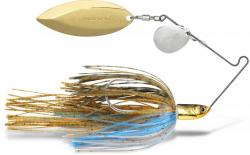
Jordan rode three main lures to the trophy, a BOOYAH Poppin’ Pad Crasher for skipping under docks and to vegetation, a 3/8-ounce BOOYAH Blade spinnerbait retrieved at high speeds, and a YUM Wooly Bug for flipping.

When the water was flat he could catch them on the Poppin’ Pad Crasher, a hollow body frog with a cupped mouth that chugs water, especially when the sun was bright. Early mornings and when there was chop or a lot of boat wakes he caught his fish on the double willowleaf spinnerbait in Snow White color pattern. His spinnerbait fish hit while he “burned” the bait around docks.

When the wind really kicked up and boat traffic was at its highest on Saturday, he flipped the Wooly Bug around the docks and caught six or seven more, culling a few times.

He said the pieces to his pattern really didn’t come together until the first day of the tournament, when he caught four of his five-fish limit on the Poppin’ Pad Crasher, including big bass of the tournament, a 4-pound, 1-ounce largemouth that netted him an extra $500 on top of the boat, truck and $5,000.

Lee also scored by “burning” a Booyah Blade in 3/8 ounce size, which he said matched the baitfish at Grand River.

He caught his fifth Day 1 weigh-in fish burning the spinnerbait, and brought the biggest sack of the tournament to the scales, 15-pounds, 2-ounces.

What keyed him into the spinnerbait bite was the size of the baitfish in the area he was fishing. The smaller spinnerbait blades on the BOOYAH Blade matched the size of baitfish. He also trimmed the skirt up to the point right beyond the hook bend to give it a smaller overall profile.

The frog he skipped as shallow as possible under and around docks as well as in any vegetation that was protected from the wind. Color pattern on the Poppin’ Pad Crasher was Aqua-Frog, and he trimmed the spinnerbait-style legs to give it a more subtle surface disturbance.

“I also trimmed one leg about a half-inch shorter than the other so it walked easier,” he said.

On day two, extra boat traffic and wind created more chop than the other two days. He’d put a small limit in the livewell, but the conditions were so different than what he’d experienced that with an hour-and-a-half left he pulled out a flippin’ stick and started hitting the docks with a Wooly Bug in Green Pumpkin color.

Lee also added a few fish to his bag by flippin’ a YUM Wooly Bug soft plastic.

“I caught five or six fish and culled once or twice,” he said “I knew there were still fish there but they wouldn’t hit the frog or the spinnerbait. The Wooly Bug is a smaller flippin’ bait that also matched the size of the baitfish.”

At Day 2 weigh-in, Shane brought in a limit weighing 11-pounds, 7-ounces, to win his bracket, and Jordan easily won his match-up, so the final day was set for an emotional, all-Auburn shoot-out.

Jordan started the day by burning the spinnerbait around docks and had a good limit within an hour or so. He culled several times before the action slowed, then switched to the frog and started hitting the calm areas at the backs of docks and in any vegetation, and culled again before heading to the final weigh-in.

Shane brought his bag to the stage first, and even though it held big-bass for the day, was one short of a limit. Jordan brought in a 5-bass limit weighing an even 12 pounds, and celebrated with the monkey off his back and his ticket to the Classic punched.

“I told (Shane) I know how he feels,” Jordan said. “I felt that way last year, getting beaten by my brother, and honestly it made me work harder. I told Shane’s parents the day before that I would be pulling for him, and that he’s my best friend. We all want to fish the Classic.”

For Jordan, getting to fish a Bassmaster Classic on his home lake is like a dream come true. It’s a body of water he fishes more than 30 times a year, and loves fishing it in winter and early spring. He even recalled skipping high school basketball practice one February day to prefish a tournament on Guntersville.

“I grew up fishing there,” he said. “I fished my first tournament on Guntersville when I was 15 years old. Last year I won a BFL there, and a B.A.S.S. Weekend Series event there in early March of 2009. It’s probably my favorite place to fish.”

Where Can I Catch Spring Crappie In Georgia?

Slab Time In The Peach State
Catching Spring Crappie In Georgia

If you have missed out on the ritual of catching crappie in Georgia in the spring you have missed one of the most enjoyable fishing experiences our state offers. The action is fast, the fish taste great and thousands of your fellow anglers take advantage of some of the best fishing Georgia has to offer.

Growing up near Clarks Hill I experienced the excitement each spring. Word would spread around McDuffie County like pine pollen blowing in the April wind – “The crappie are in the bushes.” Everyone from farmers who got in a boat once a year to bass fishermen who concentrated on largemouth 50 weeks a year to mommas and young kids would head to the lake to catch a mess of crappie.

This was the time to fill your freezer for fish fries that would last for months. For a two to three week period every cove at the lake would have several boats full of fishermen easing round the bank dropping minnows or jigs beside button bushes and pulling out shinning crappie. Everyone had a big smile on their face.

In lakes all over Georgia crappie go through their spawning cycle and fishermen show up to catch them. With a little effort you can expand the two week spawn when they are shallow into a full spring of catching fish. And you can do it on almost any public lake near you.

During the winter crappie are suspended out over big water, usually around some kind of wood. They hold over brush piles and tree tops and you can catch them but the weather is not very much fun and they are hard to find. Trolling and jigging is the most effective way to catch them.

As the water starts to warm in late February and early March the fish start to move toward the spawning areas. Depending on how fast it warms up, some crappie may be back in the spawning areas in late February but by mid to late March you can count on some laying eggs. Late March and early April is usually the prime time to catch them shallow.

Usually by mid to late April the shallow action is gone and the fish are heading back to deeper water. As they work out you can troll for them or shoot docks on lakes with lots of them. You can hit them in blowdowns on deeper banks toward the main lake. Then by early summer it is back to trolling and jigging in deeper water.

Spring is the time bank fishermen catch their share of crappie, too. From late February to late April the crappie are more likely to be near the bank and in reach of fishermen without boats. Find access at boat ramps, parks, fishing piers and roads that run near the water. Stay on public land and you can catch them.

If fishing from the bank it is a good idea to have several rods and poles so you can cover a fairly wide area. Keep some baits in near the bank but make long casts with others. When you catch one fish put all your bait in that spot because a school of crappie is probably moving through the area.

One exciting way to catch crappie on all our lakes is to tie up under a bridge or beside a treetop in deep water, hang a lantern over the side or drop a light into the water and wait for the shad to come to the light. Crappie will follow them and you can again load your boat. Many bridges look like small cities this time of year as dozens of boats light them up.

You can catch crappie all around Georgia but some lakes are better than others. Clarks Hill seems to always be good as are most bigger lakes. But don’t forget the smaller public waters like Public Fishing Areas and State Parks. If you live near one you know how good the fishing can be.

The following six lakes should all be good for crappie this spring. Choose one near you, hook up the boat if you have one, grab some poles and enjoy this ritual of spring.

Lake Allatoona

Although not known as a crappie hot spot, Allatoona has a good population of crappie and many anglers take advantage of it. Early spring fishing is good and there is less of the famed pleasure boat traffic on Allatoona. You can fish in relative peace.

The crappie fishing at Allatoona has been consistent for several years, according to the Georgia Department of Natural Resources, Wildlife Resources Division. (WRD) The crappie you catch should average about one-half pound and be just over eight inches long. Some crappie weighing a pound are better should be in your catch, too.

There is very little shoreline cover like bushes to fish unless the water is very high, so look for shallow crappie around blowdowns and brush piles put out by fishermen. There are also some docks to fish in the creeks.

Troll the creeks for them in the early spring then drop a jig or minnow beside any kind of wood cover when they are spawning.

Look for crappie back in Kellogg, Illinois and Stamp Creek. The DNR says these are all good places for crappie. You are likely to catch some of the biggest crappie of the year while the females are full of eggs and back in the spawning areas in the early spring.

As the water warms follow the crappie back out by trolling toward the mouths of the creeks. By early summer they will be schooled up on state brush piles and other cover put out by anglers on drops and humps on the main lake. Fishing for them at night will help you avoid most of the boat traffic and gives you the best chance of catching them.

Lake Harding

Lake Harding, also known as Bartletts Ferry, has a good population of big crappie. According to the DNR at least half the crappie in the lake are in the 10 to 14 inch range and will weigh about one-half to three-fourths of a pound. There are many larger fish that you can catch, too.

In late February crappie start moving into the many pockets and small creeks on the lake. Almost all these creeks and pockets have docks in them and many have brush piles around them. Crappie will move following the deeper water and you can catch them by trolling jigs. Then they will hold on the shallow dock posts and brush piles to spawn and this is a good time to shoot jigs under the docks and dabble jigs and minnows around the shallow cover.

Also look for the cypress trees planted by the WRD and Georgia Power on shallow areas on the main lake. The root balls of these trees often hold spawning crappie. Fish all around them with jigs and minnows, just like fishing shallow brush in the creeks.

As the crappie start to move out they will hold on deeper docks. Late spring is a good time to shoot jigs back under the docks into the shady areas where they are feeding. Try to get all the way back under docks to the heaviest shade on bright, sunny days. Respect dock owners and skip docks where they are fishing, there will be plenty of empty docks to fish.

There are six fish attractors put out by the WRD that offer excellent fishing as summer approaches. Drop minnows and jigs around them during the day or anchor and fish over them at night with a light. You can do the same kind of fishing in the river by tying up to treetops and logs in deeper water.

Lake Blackshear

When you first see Lake Blackshear you can’t help but think it is crappie heaven. And it is. The acres of cypress trees standing in shallow water, numerous docks and bridges all look like crappie hot spots and they are. Add to those places the 10 brush piles put out by the WRD and you can find crappie all over the lake.

According to the WRD you will catch both black and white crappie on Blackshear and the populations of both is fair. Most of the fish are under 10 inches long but there are a good many pound to pound-and-a-half fish to be caught. Early spring is the best time to get the bigger fish.

Blackshear is far enough south that many are spawning by late February. Look for them in the cypress tree root balls and around the docks in Collins Branch, Spring Creek, Gum Creek and Boy Scout Slough. Up the river all the backouts have good spawning areas as do many of the main river runs.

Drop jigs and minnows beside cypress tress but remember the root ball may extend out several feet. Fish from right beside the trunk out at least three feet from it. A minnow swimming around just over the root ball should be hit, and you can drop jigs down to the same areas.

By late March there are still good populations of crappie holding around docks but you can also catch them off the state brush piles or around the bridges. Fish both areas day or night from late March on through the summer.

Also troll creek channel ledges for them. Take lots of bug spray.

Lake Sinclair

Probably our most popular crappie fishing lake in the winter because of the warm water released from the Georgia Power steam plant, Sinclair is a good bet all spring long, too. Year after year it produces good catches of crappie and that should continue this year.

There are some two-pound plus crappie caught each year at Sinclair and most are over eight inches long. About a third of the crappie at Sinclair are 10 inches long or longer and will weigh over half a pound. In the spring they will be fat and heavy.

You can start trolling for crappie and catching them early at Sinclair if you concentrate on water warmed by the outflow in Beaverdam Creek. By early March many crappie will be found in the backs of coves looking for spawning areas around docks, brush and bushes. The area from Beaverdam Creek to the dam will see fish move in earlier with those up the Little River and Oconee River arms moving in shallow a little later.

Check out Rooty Creek for good spawning areas all during the spring. The lower creek is warmed by Beaverdam some when pumpback is running at Oconee and the upper end warms a little later. Drop minnows and jigs around dock posts and brush back in the creeks. The back one third should be best early when the fish are spawning.

When the water hits the mid 60s the fish are mostly finished spawning and moving back out. Start shooting docks in the coves, concentrating on the docks in the outer two-thirds of the creek. When you catch a crappie around a dock stay there, there should be others as they school up this time of year.

There are several good state brush piles to fish in late spring and the main lake docks hold crappie, too. Troll the open water around the brush piles or shoot jigs to deeper docks in late spring to find the fish. Many crappie are also caught under the Little River bridge from late spring to summer.

Hamburg Lake

One of the most peaceful places to catch crappie may also be the best to catch big crappie. Hamburg is a 225 acre lake located in Hamburg State Park just north of Sandersville. Motors are limited to 10 horsepower so the lake stays quiet and calm. You can camp there and boat rental is also available.

Although crappie you catch at Hamburg will average about a half-pound, there are a good many two-pound-plus fish in the lake. The lake is full of stumps and crappie love wood cover, so you can usually locate them fairly easily.

In the early spring look for stump beds and brush out from the bank and either troll carefully through the area or cast jigs to them. As the water warms cast jigs to all the shoreline cover or dabble minnows in it. In late spring troll the old river channel and fish the standing timber along it with jigs and minnows.

When fishing standing timber, try to find the depth the crappie are holding by spotting them on a depthfinder. If you can’t see the fish for the forest, drop a live minnow or jig down and work it deeper and deeper until you catch a crappie. When you catch one note the depth and concentrate on it, that is the depth most of the crappie should be holding.

Lake Hartwell

Hartwell is a big lake with lots of arms and they all offer good crappie fishing. Different parts of the lake warm at different rates so you can usually find a variety of types of fishing at the same time. You can pick one area to fish and follow them as they move in or try to hit spawning crappie over different areas and extend that catch.

There was an excellent crappie spawn a few years ago after the water was down and that year class is getting bigger every year. They should be around 10 to 12 inches long this year and weigh about three-fourths of a pound. There are bigger crappie in the lake but for a good average size Hartwell should be excellent this year.

Start looking for crappie over structure like roadbeds and standing timber near the mouths of coves and creeks in early March. As the water warms follow the schools back into the creeks and coves, trolling for them. Watch for schools of baitfish as well as the crappie as you troll. They will often follow the shad as them move in, too.

By early April the crappie should be back in the coves spawning around bushes and other cover. Check out Eastanollee, Gum Log and Shoal Creek for better chances at crappie since those creeks have more color to the water and you can catch more there. If the water is too clear it is hard to get them to bite if they are real shallow, and the stained water is more fertile and supports more fish.

Late in the spring follow the fish back out trolling the creek channels and over standing timber. Night fishing is excellent in the clear water under bridges and over the standing timber. Use a bright light and fish your favorite jig or live minnow. Try different depths until the fish start hitting and tell you where they are holding if you don’t see them on your depthfinder.

All of these lakes offer great crappie fishing this spring. Pick one near you or head out to find new waters. Don’t miss one of the best times of the year to catch crappie.
Do Red Snapper Provide Protein For America?

Protein for America?

By Ted Venker

Early in October, news came that more than 130 chefs, restaurant owners, fishermen and seafood industry leaders had partnered with the Environmental Defense Fund to launch a new propaganda campaign called “Share the Gulf.” The goal of this benignly labeled effort is to maintain 51 percent of the red snapper harvest for commercial fishermen and 49 percent to recreational fishermen – an allocation that was set using harvest data from the mid-1980s.

Red Snapper

Red Snapper

Sportfishermen say there are more big red snapper in the Gulf of Mexico today than there have been in decades, maybe in generations–but they’re not happy about a commercial fishing campaign to take away a portion of the share allocated to recreational anglers. (Photo Credit David Rainer, Alabama DCNR)

Coalition members maintain that any change to allocation could be a blow to commercial fishermen that could take red snapper off restaurant menus and out of grocery stores. Keep in mind, this is an allocation literally set about 30 years ago in a very different time with a very different stock.

“We need to draw a line in the sand,” John Schmidt, a Florida-based commercial fisherman and co-chairman of the coalition, said in a recent article. “Recreation groups need to stop taking away America’s fish and start managing their fish better.”

Just chew on that thought for a moment: Recreational angling groups are taking away America’s fish. Then consider that the commercial red snapper sector is currently comprised of less than 400 “shareholders” who personally own 51 percent of all the red snapper in the Gulf of Mexico.

A bit infuriating, isn’t it?

Those 400 shareholders didn’t pay a dime when they were gifted that public resource through the federal catch share program in 2007, a gift recently valued by one Gulf of Mexico Fishery Management Council member at more than $79 million. Those shareholders to this day don’t pay enough in administrative fees to cover the cost of monitoring their own program. Many of them don’t even fish anymore and instead lease their shares to others to fish for them.

Yet those 400 shareholders are demanding America’s recreational anglers – me, you, my kids, your friends and family – stop taking away “America’s fish.” Who exactly would we taking those fish away from? Why, the people making money from the capture and sale of a public marine resource, of course – those few shareholders, some chefs, and a few seafood dealers.

Red snapper are a long-lived species and take some time to reach maximum sizes, but tight harvest rules seem to have worked very well in the Gulf over the last decade.

The commercial sector does offer a different view of the situation. The snapper barons who own 51 percent of the red snapper resource are quick to tell anyone who listens that they are feeding America with those snapper. It is not uncommon at a Gulf Council meeting to hear several of them state the importance of their work providing protein for America. Providing fresh red snapper for the millions of people who don’t live near the coast and don’t go fishing.

That’s a noble sentiment until you start to do the math on exactly how many Americans are turning to red snapper fillets that often run as high as $18 to $20 per pound for their daily protein. How many families of six on a budget pass by the hamburger and choose a $100 snapper dinner instead? How many Americans depend on that weekly visit to a five-star New Orleans restaurant with white tablecloths to feed their family vital protein?

Let’s be real here. These folks are not providing protein for America. They’re providing protein for a very few Americans. And they’ve gotten very wealthy doing it.

Given that, it is easy to understand the very real influence of greed on the part of the snapper barons in this coalition, but less clear is the motivation of the chefs and restaurant owners. I would assume that they don’t have the full picture here. As business owners and professionals removed from the front lines of fisheries management, I would be willing to bet they aren’t completely tuned in to the politics of the Gulf red snapper fishery.

Those chefs and restaurant owners who depend on the good will of the public may not realize that there are far fewer commercial red snapper fishermen today than there have ever been, and yet they are currently harvesting more red snapper than the commercial sector ever has. No one is close to getting run out of business – far from it. Through consolidation and the gift of a public resource, the remaining snapper barons have a degree of job security that most in this country would envy.

And like good business owners, the shareholders are looking to diversify. One of the primary motivations behind their efforts in this coalition to prevent reallocation is not to provide more protein for America (at $20 per pound), but to have the ability to lease some of their red snapper shares to recreational charter/for-hire boats and headboats.

One of the tastiest fish in the sea, the red snapper is a favorite with reef fishermen from Key West to Brownsville, Texas.

Ironically, the shareholders who are chastising recreational anglers to stop taking away America’s fish are banking on schemes under discussion at the Gulf Council to allow them to lease their red snapper shares to … recreational anglers. If the Gulf Council reallocates, it may dampen the market for leasing their red snapper shares to the recreational sector.

Perhaps the chefs and restaurant owners weren’t made fully aware of that little detail.

Lastly, there is the Environmental Defense Fund which is often found lurking somewhere in the background of any plan that may result in fewer people on the water catching red snapper. EDF has poured millions into threatening the sportsmen’s ethic of wildlife management in the marine environment in pursuit of its distorted view of conservation.

The latest result is a coalition of 400 wealthy shareholders who are in it for the money, a few chefs and restaurant owners who are risking the wrath of the sporting public because they may not be aware of the real game here, and an environmental group that made the bizarre decision to champion the industrial gear of the commercial fishing sector against America’s sportsmen.

No wonder Gulf red snapper is such a mess.

The next Gulf of Mexico Fishery Management Council meeting is in New Orleans Oct. 28- Nov. 1. Many local supporters of the “Share the Gulf” campaign are expected to be on hand to make sure “America’s recreational anglers stop taking away America’s fish.” If you are an American angler, perhaps you should be there, too…so that the Council hears a slightly different point of view.

Watching the World Wake Up From A Deer Stand

In honor of deer season opening here in Georgia – yes, I do hunt since I love venison!

There is something special about sitting 30 feet up in an oak tree during deer season. You have made your way to your stand in the dark, easing through the still woods with nothing to guide you but your flashlight and any markers you put up during daylight. The woods look completely different and nothing is the same.

When you finally settle on your seat and arrange everything carefully so you can move into shooting position without a sound, you relax. It is about 30 minutes before legal shooting time and far too dark to see a deer on the ground, anyway.

The first thing you notice are the stars. Clear and bright beyond anything you can see from town, they are hard and cold. And if the air is icy they do not blink at all, they just stare at you wondering how you intruded into their night world.

Then you hear a sound, a slight crackling in the leaves. Is it the big buck you seek, moving past you well before you have any chance to take it? Or is it a raccoon making his last food forage before the sun runs him into hiding? Or is it Bigfoot coming after you for his breakfast?

Then you remember the mountain lion killed near LaGrange last year – not nearly far enough away. In the dark you will never know what it is, but your imagination sure can go wild.

Then there is a little lightening of the sky to the east. The stars seem to fade a little in that direction and within minutes vague shapes emerge on the forest floor. That one beside the big pine has to be a trophy buck staring at you, doesn’t it? You don’t dare move for fear of spooking him. Please let him stay there for just long enough to get shooting light.

Shooting light proves the big buck to be a stump. You knew it was there but the gray light changed it. Bushes, trees, rocks and stumps take on a different life before the sun comes up.

Suddenly you notice your breath. Foggy plumes issue from you into the air, like waving a white flag for any wise old buck to stay clear. So you breathe gently, trying to make it disappear.

When it gets light enough to shoot, you keep your head still and move only your eyes. When you hear a distinct crunch in the leaves behind you, there is absolutely no doubt it is a squirrel. No deer ever makes that much noise. There is no reason to even look. So you inch your head around as carefully as possible, with tiny movements. Sure enough, there is that bushy tail.

Birds appear like out of a magician’s hat, suddenly perching on limbs around you and greeting the sun. They go about their breakfast business as you watch. It is amazing how many different kinds of birds inhabit Georgia woods. And when a woodpecker drums on the tree just over your head you almost jump to the ground in fear.

Minutes drag, but suddenly you have been in the tree for hours. The sun is high and bright and there has not been a sign of a deer. But just as you decide to leave for the day, you see a whitetail standing broadside to you not 30 yards away in the open. How in the world did it get there? It must have popped out of the ground like a mushroom.

Your heart pounds louder than the woodpecker’s racket until you see it is a doe and you are not meat hunting today. You watch her browse on acorns and enjoy her beauty, and wonder again about the conflict you feel shooting such a pretty animal, but knowing you will when the time comes, and enjoy venison cooked many ways.

It never fails. The doe leaves so you decide it is time to return to the real world. As you lower your gun to the ground a snort behind you snaps your head around and there stands the biggest buck you have ever seen, watching you intently. And your gun is 30 feet below. No matter, you would not have time to raise it to fire even if it was in your hands.

You watch as the buck bounds off, knowing this stand will be avoided for the rest of the season. But you have other stands and plans in mind. His time will come.

As you climb down, get your gun and start walking out of the woods, you wonder how anyone could consider such a day unsuccessful.

Ronnie Garrison

Ronnie Garrison is an outdoors internet, magazine and newspaper writer who has won many awards for his magazine, newspaper and internet columns, and the author of The Everything Fishing Book and “Keys To Catching Clarks Hill Bass” eBook. He fishes almost everyday and has been a bass club tournament fisherman for 39 years.
Experience:

Ronnie Garrison has written a weekly outdoor column for the Griffin Daily News since 1986 . His has been writing feature magazine articlse for state magazines since 1987 and he has over 500 articles published in Georgia Outdoor News, Alabama Outdoor News, Georgia Sportsman, Kitchen Drawer, Bassin Times, Bass Champions and Sporting Clays magazines and in 2002 wrote The Everything Fishing Book published by Adams Media. Those articles have won more than 30 “Excellence in Craft” awards from the Georgia Outdoor Writers Association. He is a member and past president of that organization and a member of Southeast Outdoor Press Association and Profession Outdoor Media Association.

From Ronnie Garrison:

Some of my earliest memories are of following my grandmother to local farm ponds, trying to catch anything that would bite. I never met a fish I didn’t want to catch. If you love fishing as much as I do, I think you will enjoy my About Fishing web site.

I love all kinds of fishing, both fresh and saltwater and enjoy trying to catch any kind of fish. Let me know what you like. What is your favorite. Give me a question about your specialty and I will help you find an answer!

What Is Fine Tuning Your Spinnerbait Selection?

Fine-Tuning Your Spinnerbait Selection
from The Fishing Wire

Matt Herren carries a selection of spinnerbait blades

Matt Herren carries a selection of spinnerbait blades

An assortment of spinnerbait blades makes it possible to match changing conditions where ever you fish says Yamaha pro Matt Herren.

Among his contemporaries, Matt Herren has long been considered one of the best spinnerbait fishermen competing on the Bassmaster® Elite Series, but all are surprised to learn the Yamaha Pro actually keeps very few of the popular blade-type lures in his boat.

Instead, Herren carries boxes of spinnerbait components, including blades, skirts, and heads, and makes his lures on the water as he needs them.

“I wouldn’t have enough room in my boat to carry all the different spinnerbaits I might want during a tournament,” laughs Herren, “so I keep boxes of parts in different colors and weights and put them together as the conditions dictate. It only takes a minute or so to make one, so I’m really not losing much time at all, and I can have exactly what I want.”

Herren likes double willowleaf baits

Herren likes double willowleaf baits

Herren likes a double willow leaf spinner in autumn, but is always ready for a quick change as needed.

Herren believes spinnerbaits are far more specialized than most anglers realize, and he uses several criteria to fine-tune his selection, including water temperature, water color, and the type of structure and cover he will be fishing. During the autumn months, for instance, he normally fishes spinnerbaits with double willow leaf blades, or a combination of Colorado and willow leaf blades.

“Fall is perfect for spinnerbaits because the primary bass forage this time of year is shad, and with willow leaf blades I can match the size and even the color of that forage very closely,” Herren explains. “Normally, the water is clear in the fall, too, so if I’m fishing 10 feet deep or less, I’ll make a spinnerbait with double willow leaf blades, because those blades keep the lure from sinking very deep. If I want to fish deeper, I’ll replace the front willow leaf with a more rounded Colorado-style blade so the lure will sink.

“I believe a lot of fishermen overlook the importance of blade size and color, but at times these can be critical in determining whether bass hit or not. I’ve experienced many days where a slight blade change made all the difference in the world. That’s why I prefer to make my spinnerbaits while I’m fishing.”

Spinnerbait bass

Spinnerbait bass

Chunky bass like this one are chasing shad in fall, and the flashing blades of a spinner are a good imitation.

The Yamaha Pro’s favorite blade color in clear water this time of year is copper, since it isn’t as bright as gold or nickel, but still provides enough flash to attract bass. In his component boxes, Herren has not only these three blade colors, but also white and chartreuse in a variety of sizes.

“My blade and color choices now as summer changes into fall are quite a bit different than they are in the spring,” points out Herren. “In the spring, when the water is often more stained and the temperature is cooler, I want more vibration from my spinnerbait blades, so I really prefer the more rounded Colorado blades. In extremely dingy water, I’ll even make spinnerbaits with double Colorado blades. You don’t find many spinnerbaits like this in the tackle stores, but they’re a major part of my fishing.

“Depending on how deep I want to fish, I’ll make them in weights ranging from as light as ¼-ounce to as heavy as 1 ½-ounces. Then, as the water temperature gradually warms, I’ll switch one of those Colorado blades for an elongated willow leaf. For me, it’s easier to make the exact spinnerbait I want rather than try to carry so many with me and then try to find it.”

Herren changes baits as neededc

Herren changes baits as neededc

Herren says he’d rather make up his own spinnerbaits as needed, fine-tuning them to match whatever a tournament throws at him.

Herren’s ability to make his own spinnerbaits while on the water has also allowed him to fine-tune his presentations, as well. Few think of making vertical presentations with spinnerbaits, for example, but this is one of the Yamaha Pro’s favorite fall techniques. Instead of casting, he makes short underhand pitches and lets the lure free-fall straight down on a slack line. He uses this technique around rock bluffs, at the ends of laydowns, and even around boathouse pilings.

“I’ve a lot of caught bass doing this with ¼-ounce spinnerbaits with a single large size 4 blade, and also with heavier ¾-oz. spinnerbaits with size 4 ½ and 5 blades,” continues the Yamaha Pro, “blade and weight combinations you’ll never find on the store shelves.

“Building my own spinnerbaits has allowed me to experiment like this and not only create my own favorite combinations, but also to learn to fish the lures a little differently than the other tournament pros, and over the years it’s really paid off for me.”

Fishing During the Full Moon

Middle Georgia Full Moon Fishing

“I got another one,” Hal said to me, but I was too busy reeling in my own bream to pay any attention to him. We already had full stringers of nice bluegill at our feet but we continued to catch one on almost every cast.

Hal and I had dug some red wigglers behind the chicken house on my family’s farm then rode our bicycles to Black’s pond to fish for bass and bream. We were very happy since school would be out in just two more weeks and the long summer filled with fishing trips would start.

When we got to the McDuffie County pond owned by the family of a teacher at Dearing Elementary School we tried for bass for several hours without much luck. Then we went to our favorite place to catch bream in the upper end of the pond. There were two boards on the bank so we could stand side by side and cast without sinking into the soft bottom.

Most days we would catch a few bluegill near the scattered stumps in this spot then move one when they quit biting. Our tackle was simple, both of us had Mitchell 300 reels on Conlon six-foot spinning rods. The ten pound test line was good for all kinds of fishing. On the end of the line was a #6 hook, a small split shot and a cork.

We stood on those boards and caught fish until it started to get dark. We had to hurry back to our bikes and head home fast to beat the night. As we rode home we commented that the full moon would keep it from getting completely dark and that could be our excuse for being so late.

All week we talked about going back and catching a pile of bream again. The next Saturday we went back to the pond and caught one or two small bluegill from the same area that had been so good the weekend before. We had no idea what happened to change the fishing, and did not realize that full moon had anything to do with our good luck. We had hit a bedding area without knowing it.

Bluegill are common in all Georgia waters and are always cooperative. You can catch them on just about any bait and they are great fish to start kids with since they can enjoy the thrill of catching something. But the full moon in May is a special time for Georgia bream fishermen.

The full moon is the time bream bed. Although bluegill will start bedding as early as late March in middle Georgia and some will bed every month from then until fall, May is the height of the bedding for them. Add in the spawn of shellcracker that bed just on the full moon in May and you have a bonanza of great fishing this month.

May 2 is a full moon so fishing should be good the first week of the month. There is almost a blue moon in May, with another full moon on June 1, so the end of the month will also be good.

Starting about a week before the full moon bluegill move into the shallow bedding areas and fan out a depression on a hard bottom. The female will lay her eggs in the depression and the male fertilizes them. Both fish will stay and guard the nest until the eggs hatch several days later. They will hit anything that looks like a threat to their eggs, as well as anything that looks like food, for about a week.

Many bream fishermen claim they can smell out bluegill beds, and you will often notice a distinctive odor near them. It is described as smelling like watermelon but not exactly. It is a musty smell that you will recognize once you experience it, and will remember it. If you hit that smell, look for beds nearby.

To find beds, go to the upper ends of coves and look for them in shallow water, from two to six feet deep. If the water is not muddy you will see the beds as light spots against a dark background. This is the depression fanned out by the male to make the bed.

Bream like to bed in large groups so you are not looking for one or two scattered beds. A good sandy spot protected from the wind in the back of a cove will often look like a waffle on the bottom, with beds almost touching each other. In muddy water the beds will be more shallow, in real clear water a little deeper.

If you find beds one year they are likely to be in the same place the next year. Any hard bottom will do but sand seems to be preferred, and some scattered stumps make it even better.

You can find beds from the bank but a boat makes it easier. Cruise the shallows very slowly until you spot them. You will probably spook the fish but if you back off and wait about 15 minutes the fish will be back. It is a good idea to anchor your boat a long cast from the beds so you don’t get too close and spook them while fishing.

From the bank ease around until you spot the beds. Wear dark or camouflage clothing and don’t make fast movements. Stay low, too. Try to keep any bushes on the bank between you and the beds. While fishing stay low and don’t approach too close. Long casts are best to keep from scaring fish away.

You can find bluegill beds on any of Georgia’s waters from rivers to big reservoirs, but smaller public ponds are your best bet. Scattered all across middle Georgia are small public lakes and ponds you can fish. The following list should contain some within a short drive of you.

Indian Springs State Park Lake is a 105 acre lake in Butts County four miles southeast of Jackson on Georgia Highway 42. There is a good paved boat ramp and you can rent a boat there, too. Camping and cabins are available for longer stays. A $2.00 parking fee gives you access to bank fishing or boat launching.

Boat motors are limited to 10 horsepower or smaller and you can fish from sunrise to sunset year round. The lake has many protected coves where the bream bed and the upper end has good shallow spawning flats.

Contact the park at 678 Lake Clark Road Flovilla, GA 30216, phone(770) 504-2277

John Tanner State Park has two lakes, one 15 acres and one 12 acres in size. They are located in Carroll County six miles west of Carrollton off Georgia Highway 16. You can camp there if you want to stay but a $2.00 daily parking fee gives you access to both lakes for fishing from the bank. You can rent a boat but you can launch your private boat only on the smaller lake.

Boats are limited to electric power only. You can fish from 7:00 AM to 10:00 PM daily all year long. The lakes are small enough to cover easily to find the bedding areas. If you have a boat look for beds in areas not easily accessible to the bank fishermen.

Contact them at 354 Tanner Beach Road Carrollton, GA 30117, Phone (770) 830-2222

Blalock Reservoir is a 260 acre lake in Clayton County south of Jonesboro near US Highway 19/41. A boat ramp allows you to launch and there is bank fishing allowed for a small access fee.

Boats area limited to 16 feet or shorter with electric motors only. You can fish from dawn to dusk Wednesday through Sunday year round. Many shallow areas are good for bedding bream and a boat will cover this lake better than fishing from the bank.

Contact them at 2755 Freeman Road Hampton, GA 30228, phone (770) 603-5605.

J. W. Smith Reservoir is a 250 acre lake in Clayton County 10 miles south of Jonesboro on Panhandle Road. There is a boat ramp on the lake and you need a season pass or pay a daily fee.

Boats are limited to electric only and the lake is open

Wednesday through Sunday, April 1 through September 30 from sunup to sundown. There are many areas of this lake you need a boat to fish effectively.

Contact the Clayton County Water Authority at 2755 Freeman Road Hampton, GA 30228, phone (770) 603-5605.

Shamrock Reservoir is a 68 acre lake in Clayton County south of Jonesboro near US. Highway 19/41. There is a boat ramp and this lake is designated a “Kids Lake” so no adults may fish the lake unless they have a kid 12 years old or younger with them. There is a user fee.

Boats are limited to 16 feet or less and electric motors only. Open from dawn to dusk Wednesday through Sunday year round. Since access is limit to those with kids, this lake is a great choice to take your kids fishing.

Contact the Clayton County Water Authority listed above.

Lake Horton is a 780 acre lake in Fayette County south of Fayetteville near Georgia Highway 92. There are two boat ramps and the daily fee is $10 for non-Fayette County residents.

Boats are limited to electric only and the lake is open 6;30 AM to 6:30 PM daily. This lake is known for big bass but its sunfish population is good and spawning area are scattered all over the lake.

Horton is owned and operated by Fayette County P.O. Box 190 Fayetteville, GA 30214, phone (770) 461-1146.

Lake Kedron has 235 acres with a boat ramp. It is in Fayette County off Georgia Highway 54 near Peachtree Parkway. There are no special fees.

Boats are limited to electric only and the lake is open daily from 6:30 AM to 6:30 PM. It is owned and operated by

Fayette County, see contact above.
\Franklin D. Roosevelt State Park has two lakes, Franklin at 23 acres and Delano at 18 acres. They are located in Harris County east of Pine Mountain on Georgia Highways No private boats but boat rental is available. . Camping and cabins are available.

You can fish Delano year round and Franklin with a permit from September through May. There is a $2.00 parking fee.

Contact them at 2970 Hwy 190 Pine Mountain, GA 31822, phone(706) 663-4858.

Barnsville Reservoir in Lamar County has 160 acres and is located off Highway 36 near Barnsville. There is a boat ramp and yearly permits are required for fishing and for boat use.

Boats are limited to electric motors only and the lake is open year round.

Contact the City of Barnesville at 109 Forsyth Street, Barnesville, GA 30204, phone (770) 358-3431.

McDuffie Public Fishing Area has 13 ponds from 1 to 28 acres and is located in McDuffie County four miles southwest of Dearing off U. S. Highway 278. There are boat ramps on some of the lakes and camping is available. Boats are limited to electric only and a state fishing license as well s a WMA stamp is required. Lakes are open from sunrise to sunset daily year round.

I grew up less than two miles from these lakes. They were private until I was a teenager. My mother loved these lakes and I have the mount of a 2 pound, 6 ounce bluegill she caught there. The lakes are managed for fishing and all lakes are excellent for panfish.
Contact them at 4695 Fish Hatchery Road Dearing, GA 30808, phone(706) 595-1684.

Lake Meriwether in Meriwether County has 144 acres and is located one mile southwest of Woodbury on Georgia Highway 85 Alt. Camping is available and there is a daily fee for fishing. Boats are allowed but restricted to electric motors.

Owned the County Commissioners Office, P. O. Box 428 Greenville, GA 30222, phone (706) 672-1314.
High Falls State Park has a 650 acre lake and is in Monroe County 10 miles east of Forsyth near I-75. There are two boat tramps and boat rental as well as camping available. There is some bank fishing but most of the lake shore is private.

Motors are limited to 10 horsepower, a $2.00 parking fee is required and the lake is open from sunrise to sunset daily. This lake is very fertile and has good populations of bluegill. The back ends of most creeks are sandy and offer good bedding areas.

Contact the park at 76 High Falls Park Drive Jackson, GA 30233 at phone (912) 994-5080

Lake Olmstead in Richmond County is an 87 acre lake in northeast Augusta near Georgia Highway 28. There is a public boat ramp but no camping. There are no fees to fish here and there is good bank access.

Motors are limited to 9.9 horsepower except on Tuesdays, Thursdays and Saturdays when there is no limit. The lake is open 24 hours a day all year. This lake gets a lot of pleasure boat traffic on days big motors are allowed, so plan your fishing trips on the days motor restrictions apply.

Contact Augusta Parks and Recreation, 2027 Lumpkin road Augusta, GA 30906, phone (706) 796-5025

Hamburg State Park Lake is 225 acres located in Washington County north of Sandersville off Georgia Highway 102. There is a boat ramp and you can rent boats as well as camp. A $2.00 parking fee is charged.

Motors are limited to 10 horsepower and the lake is open all year from sunrise to sunset. There is excellent bluegill fishing in the pockets and coves.

Contact them at 6071 Hamburg State Park Road Mitchell, GA 30820, phone (912) 552-2393

Big Lazer Creek Public Fishing Area has a 200 acre lake and is located in Talbot County northeast of Talbotton near Pobiddy Road. A boat ramp is available as is primitive camping and you are required to have a Wildlife Management Area stamp a well as a fishing license.

There is no motor limit size but all must be operated at idle speed only. The lake is open from sunrise to sunset daily all year. It is managed for good fishing and the lake has excellent populations of bluegill and shellcracker.

Contact Manchester Fisheries Office, 601 Third Avenue Manchester GA 31816, phone: (706) 846-8448

Houston Lake is 180 acres in Houston County east of Perry on Georgia Highway 127. There is a boat ramp and good bank fishing access. No fees are charged at this lake.

Motors of any size can be used but at idle speed only. The lake is open during daylight hours year round and offers good bluegill fishing from boats or the bank.

Contact Region 4 Fisheries Office, phone (912) 987-4280

This is just a partial list of lakes open to the public in middle Georgia. For a complete list, go to http://georgiawildlife.dnr.state.ga.us/content/displaysmalllakes.asp to find lakes by name or by county. Find one near you, hit it on the full moon this month and enjoy some fast panfish action.

Government Shut Down and Fishing

Anglers and the Sportfishing Industry Are Falling Prey to the Federal Government Shutdown

Today’s feature is a commentary on the Federal government shutdown from the American Sport Fishing Association.
from The Fishing Wire

Industry urges resolution to government shutdown that is crippling fisheries access and conservation

Millions of anglers are now locked out of federal lands and waters and thousands of small businesses are suffering because Congress and the Administration can’t agree on the nation’s finances.

According to the American Sportfishing Association (ASA), federal agencies across the nation are warning anglers that they are not permitted to use public waters managed by the federal government during the federal shutdown. A statement from one federal land management agency says, “…facilities and lands are now closed to the public and public use activities have been suspended nationwide.”

“This is ludicrous,” said ASA Vice President Gordon Robertson. “We understand that public facilities that require staffing, such as buildings and federally-operated marinas and hatcheries, are not open and that federal employees are not permitted to operate these facilities. But let’s face it, most of the federal areas used by anglers are undeveloped and the recreational user typically visits them many times without seeing a federal employee of any type.”

Robertson further said, “We know that many of the complaints being voiced to the Department of Interior are from angry anglers who have planned trips, spent money on plane tickets, guides, lodging and new equipment who now can’t make their trip.”

As the stalemate between the Administration and Congress continues, the damage to the recreation industry mounts. Federally-controlled waters have a sportfishing community support system that is comprised of lodging facilities, restaurants, guide services and bait and tackle shops, just to name a few of the services used by anglers. Sportfishing in the United States on federal lands supports more than 100,000 jobs, providing $984 million in federal taxes to the federal government and contributing $13.8 billion to the nation’s economy each year.

“The public knows where staff is needed to manage facilities and developed areas and where they are not,” continued Robertson. “More baffling are statements from federal agencies saying that law enforcement staff will be on hand to enforce the closure of these waters during this federal shutdown. For example, law enforcement staff in areas like Everglades National Park and Biscayne National Park will be on hand to stop the public from entering park waters during the federal shutdown. Attempting to ban the public from areas of the ocean due to budgetary restrictions – while paying law enforcement officers to enforce the ban – defies logic and can only be viewed as intentionally burdensome. Where will the closures stop? Will the federal government close down the oceans’ entire exclusive economic zone too?”

Aside from the edict from the federal government that all federally owned waters are closed to anglers and all outdoor enthusiasts, the impacts to conservation are considerable. Every day that passes represents approximately $2 million that doesn’t get spent on fisheries conservation and federal fish hatcheries that don’t meet their schedules for fish production. Not to mention the inability of thousands of federal conservation employees to do their job and an even greater number of volunteer fishery conservation efforts that fall by the wayside. The cost to fishery conservation is incalculable.

“Many segments of the economy are being damaged by the failure to come to agreement over the nation’s finances and the recreation community is not exempt,” concluded Robertson. “The American Sportfishing Association encourages anglers to go to www.KeepAmericaFishing.org and send a letter to their Members of Congress saying it is time to stop the shutdown and get the nation back on its financial track so resource conservation can move forward and the public can once again enjoy its public trust lands.”

###

The American Sportfishing Association (ASA) is the sportfishing industry’s trade association committed to representing the interests of the entire sportfishing community. We give the industry a unified voice, speaking out on behalf of sportfishing and boating industries, state and federal natural resource agencies, conservation organizations, angler advocacy groups and outdoor journalists when emerging laws and policies could significantly affect sportfishing business or sportfishing itself. ASA invests in long-term ventures to ensure the industry will remain strong and prosperous, as well as safeguard and promote the enduring social, economic and conservation values of sportfishing in America. ASA also gives America’s 60 million anglers a voice in policy decisions that affect their ability to sustainably fish on our nation’s waterways through KeepAmericaFishing™, our angler advocacy campaign. America’s anglers generate over $48 billion in retail sales with a $115 billion impact on the nation’s economy creating employment for more than 828,000 people.

How and Where To Catch Georgia Spotted Bass

I saw this bass holding under a dock and caught it on a Trick

I saw this bass holding under a dock and caught it on a Trick

Chasing Georgia’s Spotted Bass

We have a Jekyl and Hyde bass here in Georgia and it is taking over more and more of our waters each year. The Hyde side of spotted bass is that they are aggressive, meaning you can catch them easier under tough conditions. They are prolific, meaning you can catch a bunch. And they fight hard.

The Jekyll side is that they are aggressive, taking over habitat and eating food largemouth need. They are prolific, meaning they can take over a lake and crowd out largemouth and smallmouth. And they don’t grow nearly as big as largemouth, meaning your may give up catching a five pound largemouth to catch five one-pound spots.

Spots are native to a few north Georgia lakes and streams but misguided anglers have illegally transplanted them to many other waters. They do provide a good fishery in some of them, but often at the expense of other bass. Spots have almost eliminated smallmouth from most Georgia lakes where they once existed and have hurt populations of largemouth on many lakes.

The impact of spotted bass is reflected in the Georgia Bass Chapter Federation Creek Census Report compiled by Dr. Carl Quertermus at the University of West Georgia. Many middle Georgia lakes showed a spotted bass catch of less than ten percent in the early 1990s when they were first introduced. That percentage has increased to higher than 50 percent in many club tournaments now.

I remember the first spotted bass I ever saw at Jackson Lake. It was weighed in during a Spalding County Sportsman Club tournament in the early 1990s. Although the club fished Jackson several times a year that was the first one ever caught in a club tournament there. In December 2006 in a Sportsman Club tournament on Jackson 69.7 percent of the bass weighed in were spots.

Unless you have seen a lot of spots it is not easy to tell them from a largemouth without careful examination. Spots are usually a brighter color than largemouth, with more defined differences between the green blotches and the other areas. They have small black spots on their lower body below the lateral line, made up of the dark ends of scales there. And they have a smaller mouth.

The way most club fishermen identify spots is by rubbing their “tongue” and feeling a small rough spot. These so-called teeth are present in almost all spots and are absent in almost all largemouth. The identification is important because of the different size limits for spots and largemouth on some lakes.

The specific way to identify spots is the jaw does not extend back past the eye. Spots have scales on the base portion of the second dorsal fin and largemouth do not. A spot’s first and second dorsal fins are clearly connected and a largemouth’s are almost completely separated by a deep dip.

Spots seem to fight harder than largemouth. For some reason they pull harder for similar size largemouth. For that reason they are popular with fishermen. But spots do not grow as fast or as big as largemouth. The record largemouth was caught in Georgia and weighed 22 pounds, 4 ounces. A 25 pound plus largemouth was caught last year in California but was not submitted for the record.

The world record spot weighed 10 pounds 4 ounces and was caught in California. The Georgia record spot weighed 8 pounds 2 ounces. Ten pound largemouth are caught every year in Georgia but there has never been a ten pound spotted bass caught here. In most lakes spots average about a pound and you will seldom see a four pounder, but four pound largemouth are more common in those lakes.

Many of our middle Georgia lakes have cleared up significantly over the past 20 years and they helps spotted bass. Spots tend to bed deeper than largemouth and clearer water makes their spawn more successful. That habit also helps their spawn survive when lakes are pulled down during the spawn since their deeper beds are less likely to be left high and dry.

No matter how spots got in so many of our waters, and no matter their effect on other fish, they are fun to catch so we might as well take advantage of them. If you target spots you might need to change your tactics a little if you are used to fishing strictly for largemouth.

Rocks are a key to spots, as is deep water. Although you can catch them around other cover and structure, deep rocks are a favorite for them. Since they like open water the main lake is usually better for spots. So a deep rocky main lake point is ideal habitat for spotted bass.

Spots will hit a variety of baits but smaller baits seem to be better. They will take a 5 inch worm over a 10 inch worm most days, and they prefer a 1/4 ounce spinnerbait to a half ounce. Since they tend to be more aggressive a fast moving bait is usually better. So fishing a 1/4 ounce crankbait fast will produce more spots than a big crankbait reeled slowly under most conditions.

For some reason spots seem to have an affinity to chartreuse. Chartreuse crankbaits, spinnerbaits and worms all work well for spotted bass. Even the tip of a worm’s tail dipped in chartreuse dye increases your chance of catching a spot.

Since you are more likely to find spots in clear water and down deeper, lighter line is better. It also helps in throwing the smaller baits. And since spots tend to be smaller than largemouth and hold in more open water the lighter line on lighter outfits will allow you to take advantage of their stronger fight without as much risk losing them.

The preference of spots for smaller baits and lighter lines has lead to the popularity of small jig heads with small worms on them. Several brands like Spotsticker, Spot Remover and others attest to the popularity of fishing this kind of rig for spotted bass.

Some of our lakes are very good for spotted bass. If you want to target spots, give one of the following a try.

Lake Lanier

Lanier is Georgia’s premier spotted bass lake. Spots have been in it at least since the 1960s and may have been present when the lake was dammed in 1956. The introduction of blueback herring and the increase to 14 inches for the minimum size for bass at Lanier has made it a trophy spotted bass fishery.

Lanier has the qualities spots love. Deep rocky points cover the lake and the water is clear. There is also a lot of deep standing timber, another type cover spots like. Those characteristics combine with the herring and the size limit to make Lanier a special case in Georgia.

Spotted bass fishing is good all over the main lake. From the rocks at the dam to the riprap at Clark’s Bridge you will catch spots. In the 2005 Creel Census Report 87 percent of the bass weighed in at Lanier are spots, the second highest in the state. That is up from 78 percent in 1996.

By early summer there are two good ways to catch spots. Boat traffic makes fishing during the day tough, but if you can ride out the waves a topwater lure or soft jerkbait worked over humps and standing timber will bring spots up to eat them. Sunny days are best since blueback herring come toward the surface when it is sunny and spots wait to ambush the schools of herring as they pass over. Make your bait act like a herring being chased by a bass.

Fishing at night is a way to catch spots and avoid some of the boat traffic. Target humps and rocky points with spinnerbaits, crankbaits and Texas rigged worms. Try the Spotsticker jig on the bottom, fished with a shaking action. Fish as many different places as you can and you are likely to catch some good spots, often with a four pounder in your sack.

Lake Allatoona

Spots are native to Allatoona and they are plentiful there but not as big as at Lanier. That may be changing with the illegal introduction of bluebacks, but the long term impact is yet to be seen. Boat traffic is a problem at Allatoona like it is at Lanier.

Although once called “The Dead Sea” by bass fishermen, the Creel Census Report actually shows Allatoona with the highest number of bass weighed in per angler hour of any Georgia lake. Almost 88 percent of the bass weighed in during 2005 tournaments are spots, and this may be skewed some since largemouth tend to weigh more than spots so spots are often culled in favor of largemouth. In 1996 it was 78 percent spots.

Night fishing is the way to go at Allatoona in warm weather. Target rocky points and sheer bluff walls with small jigs and worms, or try a crankbait and spinnerbait run parallel to them. Say on the main lake since spots like deeper water. You can catch some up the creeks but bigger spots tend to hold on bigger water.

The points and bluffs on the Etowah River from Little River down to the dam and back up the Allatoona Creek side to Clark Creek are best. Fishermen have put out a lot of brush piles on Allatoona and you can find them with a good depthfinder. Fish a Texas rigged five inch worm or small jig and pig in them for big spots, too.

Lake Burton

Burton is a small lake with lots of big spots. They have been present there for a long time but the introduction of blueback herring made the population grow fast and now Burton is a trophy spot lake. The state record 8 pound, 2 ounce spot was caught there in 2005.

Burton gets crowded in warm weather and night fishing is best on the weekends. If you can fish during the week when the lake is not too crowded, try topwater baits over the points near on all main lake and bigger feeder creek points. After dark look for brush or fish the same points with a jig and pig or small worm.

Burton has limited access and is lined with docks. The fishing can be good around the deeper docks, too. Many have brush piles around them and the best ones are on rocky banks near points. Find that combination and there should be some quality spots nearby.

Lake Russell

Russell is a good spot lake and its undeveloped shoreline make it a joy to fish if you like nature, not cabins and skidoos. The clear water and standing timber make it a perfect spot lake and they have really increased in number since being illegally introduced by bass fishermen.

In 1996 the Creel Census Report shows 98 percent largemouth weighed in during club tournaments with an average weight of 1.59 pounds and an average big fish of 4.04. By 2005 that changed to 48 percent spots with an average weight of 1.47 pounds and a big fish of 3.27 pounds. That gradual decrease in size is typical of lakes changing from mostly largemouth to mostly spots.

Russell has telephone poles as channel markers. They sit on the ends of points marking the edge of deep water. They also mark good spot holes. Many are rocky and a lot have brush piles around them. There is standing timber off most of them.

Spots at Russell like to hold in the timber and run in on the points to feed. You can sometimes catch them by fishing topwater baits over the timber or bouncing a Texas rigged worm through the limbs. Use a 1/4 ounce sinker and a green pumpkin five inch worm. That also works in the bigger feeder creeks with visible standing timber. Follow the channel and fish the timber near it.

Throw big crankbaits and Carolina or Texas rigged five inch worms on the points. When you hit rocks or brush shake the worm in it. Make repeated casts to any brush you find since it will often be the place feeding bass move to and look for food.

Lake Jackson

In the 1970s and 80s Jackson waters were often pea soup green from the discharge of sewage from Atlanta. The water is now much clearer and more suitable to the spots stocked there illegally. In the 1996 Creel Census Report over 95 percent of the bass were largemouth and by 2005 43 percent of the catch was spots. During the 1980s six pound and bigger largemouth were common in tournaments but now a six pounder is rare.

Spot fishing is good at Jackson and on this old lake you can catch more bass now than you could back when it was mostly largemouth. From the points at the dam up the Tussahaw Creek and up the river to Berry’s Boat Dock, spots abound in rocky areas and around brush. The lake is small enough to fish a lot of it in one day.

Hit rocky points with topwater early then switch to small worms during the day. Night fishing is also good with a jig and pig or a Texas rigged worm. If you catch a spot on a point make repeated casts to it since spots tend to school up with lots of fish in the same area.

West Point

Spots probably got into West Point naturally since Lanier upstream was full of them when West Point was built, but they have increased in number as the water cleared up. From almost 95 percent largemouth in the 1995 Creel Census Report with an average weight of 2.69 and a average big fish of 4.81 to a 62 percent catch of spots with an average weight of 1.75 and an average weight of 4.62, the lake has changed like many others. Some of that change is the reduction of size limit on largemouth from 16 inches to 14 inches in that time.

The main lake from Highland Marina to the dam and in Wehadkee, Stroud and Veasey Creeks spotted bass fishing is good. Fish rocky points and banks with a small crankbait, jig and pig or worm. Early in the morning throw a topwater bait like a Pop-R or Tiny Torpedo. A jig like the Spotsticker with a five inch green pumpkin worm is also good around the rocks.

There is no size limit on spots anywhere except at Lake Lanier because they don’t grow as fast or as big as largemouth. If you want some bass to eat target spots. Their average size of about a pound is a good size for filets and smaller ones can be cooked whole. Removing spots, especially the smaller ones, will not hurt the lake.

Target spots for some hard fighting fish that are good to eat. You will have fun, catch a bunch of bass and can take home some to eat without feeling guilty about practicing catch and hot grease.