Three Fishing Trips In Five Days

Getting up three days out of five at 4:45 AM to go fishing is almost too much of a good thing. A week ago Friday I drove over to Wedowee to fish with Rusty Mayfield for an Alabama Outdoor News article, then fished a Flint River tournament on Sunday at Lanier. Then I drove to Carters on Tuesday to meet Brian Drain for a Georgia Outdoor News article. All of those lakes are about two hours away.

Wedowee is beautiful and full of bass, and we caught about a dozen between daylight and 2:00 PM when I had to leave. Rusty went back out after taking me to the ramp and caught about 15 more. The bass hit crankbaits and a jig and pig on points and cover from the main lake about half way back into the coves. The spots and largemouth are staging to spawn and the fishing there will get better and better for the next month.

Wedowee has very clear water, as does Carters and Lanier, something I am not used to fishing much. I would go to Wedowee more but there are few good ramps on the lake and almost nowhere to camp, something I like to do when making a trip that far. I want to fish more than one day after dragging my boat 100 miles.

Rusty is a coach near Wedowdee and fishes it a lot, and knows the lake well. The fish are fairly easy to catch on Wedowee and you can catch a lot of keeper size spots to eat. Largemouth are not as common and you have to let all largemouth shorter than 12 inches long, and also release all between 13 and 16 inches long. It is fun catching a 15 inch largemouth but frustrating to have to let it go in a tournament!

Carters is also a beautiful lake with clear water and steep rocky banks rising up to the foothills of the mountains. There is no development on the shores so that makes it even prettier. And it has some huge spots in it. Brian landed pairs of five pounders in two tournaments there this time last year, and in another he had a huge 6.8 pound spot.

In four weekends in a row last February and March he had five fish limits between 19.75 pounds and 23 pounds. Those are quality catches. We didn’t catch any big fish and had motor trouble cutting our trip short, but we landed six keepers on the first and only place we fished.

Fish on Carters are moving in to spawn, too. The ones we caught were holding about twenty feet deep and Brian spotted them on his depth finder. We caught the six to pound fish in about 15 minutes by dropping a spoon down to them.

At Lanier 23 members and guests of the Flint River Bass Club fished from 8:00 AM to 4:00 PM and it was tough. There was only one five-fish limit and 12 people didn’t land a keeper. We weighed in 26 bass over 14 inches long, the size limit at Lanier, and they weighed about 57 pounds. Only four of the bass were largemouth.

William Scott fished as a guest and he won it all, with three bass weighing 10.23 pounds and had a huge 6.64 pound largemouth for big fish. JJ Polak, president of the club and owner of Jjs Magic, had the limit and 8.67 pounds for second. My four weighed 7.81 pounds for third and Travis Weatherly had three at 6.78 for fourth.

I always seem to have a tough time catching bass at Lanier but the pretty weather had me fired up to go. Jordan McDonald fished with me and we ran to a small creek first thing that morning. I just knew we could find the fish somewhere in that creek, but after fishing everything in it for 2.5 hours we never had a bite. We did see two keepers holding under a dock but they took off as soon as I skipped a Senko to them.
10.23 pounds and had a huge 6.64 pound largemouth for big fish. JJ Polak, president of the club and owner of Jjs Magic, had the limit and 8.67 pounds for second. My four weighed 7.81 pounds for third and Travis Weatherly had three at 6.78 for fourth.

I always seem to have a tough time catching bass at Lanier but the pretty weather had me fired up to go. Jordan McDonald fished with me and we ran to a small creek first thing that morning. I just knew we could find the fish somewhere in that creek, but after fishing everything in it for 2.5 hours we never had a bite. We did see two keepers holding under a dock but they took off as soon as I skipped a Senko to them.

Jordan wanted to fish the very back end of the Chestatee River so we headed that way, stopping on the way to fish a rocky point. A dock nearby looked good and I caught my biggest fish, a three pound spot, off it on a spinner bait. We wore docks out in that area with no more bites.

In the back of the river we started fishing docks and shoreline cover. On about the fifth dock we fished Jordan got hung at the back of the dock and I cast a crankbait out and ran it under the dock as we moved down beside it. A keeper largemouth hit and I landed it. After getting him loose we eased around to the other side of the dock and I caught a keeper spot on a jig and pig.

We fished that area until 3:00 without catching anything but two short bass. At 3:00 we headed back down the river toward the weigh-in and I stopped on the dock where I got the first fish, and caught another keeper spot on an Alabama Rig. That made four fish on four different baits, but all off just two docks.

We fished everything we could until we had to head in but had no more bites.

Fishing will be great on all three lakes for the next six weeks. This is a fantastic time to go fishing, if you don’t want to spend all your time turkey hunting.

What Is the Story of A Drift Bottle Found On Martha’s Vineyard?

Drift Bottle Found on Martha’s Vineyard Has Quite a Story to Tell

Keith Moreis likes to walk the beaches of Martha’s Vineyard, often finding pieces of sea glass. Occasionally he finds other treasures. On December 22, 2013, during a routine walk on Long Point Reservation in West Tisbury, he found a glass bottle resting in the sand next to some seagrass. After brushing aside the sand, he was surprised to see that the bottle was intact.

Drift bottle found on Martha's Vineyard

Drift bottle found on Martha’s Vineyard

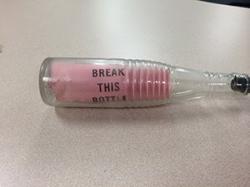
The drift bottle found on Martha’s Vineyard in December 2013. Photo credit: Shelley Dawicki, NEFSC/NOAA.

The clear glass soda bottle, about 8 inches tall, had a black stopper on top and contained some papers. Inside the bottle, a pink sheet printed with the words “Break This Bottle” caught his attention. He took the bottle home.

Intrigued by the message and not wanting to break the bottle, Moreis managed to get the black top off with a corkscrew. It was not easy. With a wire, he pulled out the pink sheet and a postcard with printing on both sides. One side of the postcard had an address; the other side had instructions to the finder and some stamped and handwritten information.

Moreis, who was born and raised on Martha’s Vineyard, remained curious about the bottle and its contents and showed it to friends, who suggested he bring it to Woods Hole to see if anyone knew about it. On February 20 he went to the Woods Hole Oceanographic Institution (WHOI), which had reported finding another drift bottle a few weeks earlier. Since the postcard had Coast and Geodetic Survey, Department of Commerce in the return address, WHOI staff suggested that Moreis contact oceanographer Jim Manning at the Woods Hole Laboratory of NOAA’s Northeast Fisheries Science Center (NEFSC). He did, and brought the bottle to the Center later that day.

Both sides of a sample postcard placed inside Coast and Geodetic Survey drift bottles. When released, the ship’s name, location and date of release, and the bottle number were stamped or handwritten on the card. Photo credit: NOAA.
The postcard had both stamped and handwritten information on the top: U.S.C.&G.S. HYDROGRAPHER was stamped on the left corner, and Sep 19, 1959 on the right corner, with the day handwritten. In the middle, just above the printed words “FINDER OF THIS BOTTLE” and instructions below, was the handwritten number 279B, written twice.

USCGS refers to the U.S. Coast and Geodetic Survey. The U.S. Coast Survey, created by President Thomas Jefferson in 1807 as the Survey of the Coast, expanded as the nation grew westward to include surveys of the interior of the country. The agency was renamed the U.S. Coast and Geodetic Survey in 1878. Today it is known as the National Geodetic Survey and has been part of the National Oceanic and Atmospheric Administration (NOAA) since NOAA was created in 1970 in the Department of Commerce.

Manning reviewed copies of drift bottle records through 1958 published by the Fish and Wildlife Service and compiled by Dean Bumpus of WHOI. However, the release date for this bottle was 1959 and therefore was not in these records. A trip by Manning to the WHOI Data Library and Archive a few days later uncovered more information about drift bottles released by the ship Hydrographer during Coast and Geodetic Survey (USC&GS) surveys. Bumpus had asked other agencies, including the Coast and Geodetic Survey in late 1959, to provide him with copies of their drift bottle data.

This sheet was also inside the drift bottles. A faded sheet is visible in the bottle pictured above found in December 2013. Photo credit: NOAA.
In February 2014, Albert “Skip” Theberge at the NOAA Central Library had also contacted the NEFSC regarding another drift bottle story. After sharing news of this latest bottle find with him, the NEFSC asked Theberge about drift bottle releases by USC&GS ships. Drift bottles had been in use by the Coast and Geodetic Survey to track ocean currents since 1846. The last drift bottles used by the survey were released between 1958 and 1966.

It did not take long to locate information from the Coast and Geodetic Ship Explorer in the Pacific Ocean in the 1950s, and about Explorer cruises in the Atlantic Ocean. However, there were no images related to drift bottles releases from the Hydrographer. But there was something else of interest: An image of a postcard from drift bottle 17465, found 25 miles south of Nelson Lagoon in southwest Alaska on February 8, 2011.

The image caption read: “Perhaps the last drift bottle that will ever be found. All drift bottle records have been closed for years so the exact location and even ship that launched Drift Bottle 17465 is unknown. It is probable that it was launched from either the EXPLORER or PATHFINDER in the 1950’s or 1960’s. It is remarkable that the bottle survived for close to fifty years.”

As for the last drift bottle from Coast and Geodetic Surveys to be found, the bottle found by Keith Moreis on Martha’s Vineyard may now hold the record.

In the meantime, archive documents revealed that in September and October of 1959 the USC&GS Ship Hydrographer conducted environmental studies in three areas off the New England Coast: 16 miles northeast of Cape Cod Light, just south of Nomans Land, and 36 miles south of Gay Head on Martha’s Vineyard.

A detailed hydrographic survey had been conducted in each area. In addition to collecting bottom sediment samples and biological dredge hauls, the Hydrographer had obtained 100 hours of current meter measurements made at the surface, mid-depth and near the bottom with current meters suspended from anchored buoys. Drift bottles were released at each buoy station at the rate of six per hour, all six with the same bottle number, for the 100 hours of current measurements.

The bottle releases were part of a study of ocean currents and the drift of floating objects off the New England coast. They were also part of a study to determine currents in the vicinity of proposed offshore atomic waste dumping sites.

As of February 8, 1960, only two drift bottle cards had been returned from the area 36 miles south of Gay Head (now known as Aquinnah), but nearly 60 percent from the area just south of Nomans Land. Approximately 5 percent of bottle card returns came from the area 16 miles northeast of Cape Cod Light, now known as Highland Light, in Truro.

Records as of March 1960 indicate that four of the six bottles numbered 279B released south of Nomans Land were recovered within two months of their September 19, 1959 release: one after 2 days, another after 4 days, and a third after 7 days. All three were found on Martha’s Vineyard. The fourth was found after 55 days on Nantucket.

The December 2013 bottle is one of the last two bottles released in that group. Like the others, it was recovered just miles away from where it began its journey, but in this case more than 54 years later.

For Keith Moreis, that December beach walk on a cold winter day yielded a treasure indeed.

“Finding the bottle was exciting,” said Moreis. “Learning more about it and its history has been a rewarding experience, to say the least. I never expected to find something like this, but then again, you never know what you will find on the beach.”

How Big Was That Fish?

I saw the definition of “fish” on Facebook last week. It was “Fish (n) A cold blooded aquatic animal that shows its greatest growth rate between the time it is caught and the first time the fisherman describes his catch.”

There is a lot of truth to that definition!

Bass fishermen are terrible about estimating the weight of their catch, most of the time. I will never forget a tournament a few years ago at Oconee. I had five in the live well at about noon and I was real happy since I guessed they averaged about two pounds each.

A fellow club member stopped to talk and said he had a limit of three pounders. That made me think my catch was not so great. But at weigh in my five weighed 10.4 pounds and his five “three pounders” weighed 9.1 pounds.

The bigger the fish gets the faster the difference between its real and guessed weight seems to grow. It is not unusual at a tournament for a fisherman to come in and say he has broken our big fish pot, only to find out the fish weighs less than five pounds when taken out of the live well.

It would seem the pros could estimate the weight of their fish more accurately, but I am not sure. During the Bassmasters Classic the observers have phones and text in the weight of each bass the pro they are with lands during the day. A score card is kept on the BASS internet site that tracks their catches during the day. Many of the days during the last Classic it was no where near accurate.

Supposedly the pro tells the observer how much his fish weighs and that is what is sent in. So it may be some of the pros intentionally try to play mind games by over or underestimating the weight of their fish. And it is possible the people running the tournament fudge the numbers to keep it more interesting.

Just like in a blowout in football, like this year’s Super Bowl, if it isn’t close it is less interesting. So to make people want to watch the live weigh-in at the Classic, they may try to keep it looking close to keep up interest.

I have been very guilty of overestimating my bass’s weight at times. On a trip to West Point the last day of February a few years aqo I hooked the biggest bass I had hooked in a long time. When I got it in the boat I was sure it would weigh at least ten pounds, but when put on my digital scales it showed 7.6 pounds. A nice fish but no ten pounder. Those digital scales can really deflate a fish – and your ego.

Smaller fish can fool you, too. I don’t know how many times in tournaments I have had a limit of bass, especially spots, and think they will average a pound and a half each, or around 7.5 pounds for the limit, only to find they weigh six pounds or less on the scales. Spots often weigh less than largemouth the same length since they tend to be thinner.

In a Sinclair January tournament way back in the 1970s we had really tough fishing. Only four keepers were brought to the scales. My fish was the last to be weighted and I just knew I had won and got big fish since the first three weighed 12, 13 and 14 ounces. My fish looked bigger. It weighed 11 ounces. I think it is the lightest fish ever weighed in during a tournament!

Crappie fishermen are just as bad or worse then bass fishermen. I have been told many times a fisherman had a bunch of two pound crappie, but then their biggest fish of the bunch weighs less than a pound. A two pound crappie is a really big crappie.

Bream are the same way. A one pound bluegill is a really nice size fish but I have been told a lot of times fish weighing less than a pound weighed over two pounds in the telling. My biggest bluegill ever weighed one pound, twelve ounces, on digital scales, and it was huge.

Catfish grow huge, with some blue and flathead cats weighing over 100 pounds. But those fish are rare. Usually the tale I hear is that they caught a catfish so big when held up at shoulder height its tail dragged the ground. Such cats are caught, but if it was really that big it would be really hard to hold it at shoulder height.

When a fisherman tells you about his big catch, remember to allow for the growth from the time it was caught until when he tells you about it.

Someday I hope to catch a fish so big I don’t even have to exaggerate about its size.

Why Kiss Bass?

Kissing Bass

By Frank Sargeant
from The Fishing Wire

Let’s talk a little smack.

I’m not a prude, you understand. Nor lacking in the normal human need for affection. And I’m a broad-minded, inclusive kind of guy.

But what is this thing with fish-kissing?

Why does Houston kiss bassaa/

Why does Houston kiss bassaa/

It used to be just Jimmy Houston. I mean, I can see it, Jimmy is sort of a wacky guy, he’s a natural comedian as well as a heck of an angler, and if he wants to get a little weird and kiss fish and make that his trademark, that’s his business.

But now I can’t get in a boat without somebody planting a big wet one on a catch before sending it back over the side. Like campaigning politicians pursuing babies, they rush to kiss everything that comes aboard. A guy doesn’t want to see that stuff. Not even on Valentines Day.

I admit it, I might smooch a pooch now and then. A bird-dog likes a little extra reward at the end of a good day. But osculating an Oscar is not my idea of fun. Tangling tongues with a tarpon, not for me. Ditto for bussing a bluegill. Lip-locking a ladyfish, uh-uh. Sucking-face with a sucker, not. Smooching a smallmouth, I’ll pass. Snuggling up to a snook, negative. No spooning with a spoonbill or mergin’ with a sturgeon for me. Smackers don’t go to snappers. I’m not pecking a perch, either. And I will in no way exchange bodily fluids with a sailcat, AKA “snot on a knot” by some of the rather rough and ready fellows around Tampa Bay, I blush to report.

I mean, I can understand, it’s sort of a gesture. We love the fish, we wish them well, we want to see them again, we hate to let ’em go.

Or maybe it’s sort of like the mobster kiss de la morte, you know, ‘I see you again, Little Vinnie, I kill you.’

Or maybe the Middle Eastern approach, a fervent smacker, three times on each cheek, love you so much, and then a good riot, rock tossing, a little tire-burning, shooting guns in the air and a good time had by all. But whatever the logic, it escapes me.

Not to say I would never do it, of course. When it comes down to it, l can kiss bass with the best of them if I have to. In fact, bass kissing runs in my family, you could say. But we try to avoid it when we can.

Part of my thing about selective kissing probably came from my childhood. When I was in kindergarten I used to have an aunt who would come rushing towards me, lips like slabs of whale meat, dripping crimson lipstick and saliva, to plant a big wet one on my cheek every time she saw me, sometimes bashing my nose with her five pound ear-rings in the process. It gave me a lifetime bad attitude about kissing anybody whom I’m not taking out.

I have never been one for kissing cold-blooded creatures, anyway, except during a brief period in 1965 when I dated an Ohio University coed who called herself Zarga. She kept snakes. You get the picture.

Just because I love fish does not mean I love fish, you know what I’m saying? Some have accused me, in my divorced years, of dating female life forms that looked somewhat carpish. But they were all kissable rainbow trout to me, and kiss-catch-and-release was a wonderful thing.

For them, not for actual fish. To each his own, but for me, to tell the truth, the closest thing I want to get to fish lips is my needle-nose pliers.

Late February Bartletts Ferry Tournament

Last Sunday 18 members of the Spalding County Sportsman Club fished our February tournament at Bartlett’s Ferry. After eight hours of casting we brought in 53 keepers weighing about 78 pounds, much better than the Flint River club did two weeks ago there. The warming weather really made it better.

There were two five-fish limits brought in and only two people didn’t land a keeper. Most were spots, with only eight largemouth caught. We must be doing something wrong, though. A club weighed in just before we did and that tournament was won with an incredible five fish limit weighing over 19 pounds. That sounds like a Bassmasters Classic catch!

Sam Smith won with a limit weighing 7.1 pounds, Mark Knight was second with four at 6.85 pounds, Micky McHenry was third with four weighing 6.5 pounds and Gary Hattaway’s limit at 5.3 pounds was fourth. Niles Murray won the big fish pot with a 3.4 pound bass.

My day started wrong, as usual, with problems latching the trailer hitch on my trailer. I have got to figure out what is causing that problem. At least I didn’t follow the detour this time and made to the ramp on time.

Then, on the first place I fished, a bass hit my jig and pig by a dock but when I set the hook the line was around the concrete piling and broke. I caught my first keeper off that dock a few minutes later.

It took an hour to get another bite but I landed my second fish on a Texas rigged tube in about a foot of water on a seawall. Almost an hour later I saw a bass swirl at my crankbait right at the boat and saw others suspended off the bottom on that point. I threw a jerk bait to the area and caught my third keeper but no more hit.

Another hour passed then another bite. This one hit a Shadrap near a log. That made four. A few casts later I hooked a big, strong fish on the Shadrap and it fought hard, but I was worried. It stayed deep and did not fight like a bass. Sure enough, when I got it to the boat a five pound channel cat had my plug in its mouth. Good eating but I couldn’t weigh it in.

I landed no more fish. I did hook a good two pound keeper on a crankbait but it came off the second time it rolled on top. I was trying to keep it down but it would not stay underwater. I guess it knew it could get off by coming to the top.

Although we had a cold week this past week, everything is setting up for the bass to start feeding a lot in shallow water. The water early in the morning on the main lake at Bartlett’s Ferry was 49 degrees but that afternoon, back in a pocket, it was 57 degrees. Even though the sun was not bright it warmed the water a lot.

Get ready to catch some bass, they will be ready to hit soon. And the crappie are already eating jigs and minnows, and a catfish should eat some liver if that one hit my crankbait.

Keys To Catching Lake Lanier Bass

Keys to Catching Lake Lanier Bass eBook

Ten spots on Lake Lanier for each month of the year, with GPS Coordinates, description, lures to use and how to fish each one
By: Ronnie Garrison – ISBN# 978-1-940263-01-4

For an emailed copy in Microsoft Word, email ronnie@fishing-about.com – $4.00
CDs are also available for $6.00 – email ronnie@fishing-about.com


From Georgia Outdoor News Map of the Month series of articles and the eBook series “Keys to Catching Georgia Bass”

2014 © Ronnie Garrison – All Rights Reserved
Maps – 2014 © Georgia Outdoor News – All Rights Reserved

How to Use This Book

The articles for this series of books, Keys to Catching Georgia Bass, were written over a span of 18 years. Conditions change but bass tend to follow patterns year after year.

For example, Lake Lanier has gone through a series of years with low water then full again. After a couple of years of low water, grass and bushes grow that will be flooded in shallow water when the lake fills. But after a few years that cover rots away. Bass will still be in the same areas, you just have to fish the cover in them that is available when you fish.

The eBook is $4.99. I may have some copies printed but the price would be about $10.00. If you want a printed copy please email me at ronnie@fishing-about.com to reserve a copy if I do have them printed.

How Can I Catch Backwater Stripers?

Plugging Backwater Stripers
from The Fishing Wire

Light Tackle and Small Plugs Catch Early Season Linesiders

While the Mid-Atlantic states are still dealing with a long, cold winter, there are signs of spring showing up every day – like the robins seen pecking away on the front lawn this morning or the tiny buds of new leaves sprouting on bushes and trees. Even though it’s still cold, we are only a few weeks away from some early season striper fishing. Time to get your gear ready for action.

Early striped bass won’t be giants but they’re often abundant and eager to strike.
From North Carolina’s Roanoke to New Jersey’s Nevasink and north to the Connecticut, numerous tidal rivers will see the early influx of schooling striped bass. This time of year they are very hungry after surviving a winter of cold water and scarce forage. Their targets will be the small baitfish that will begin moving around the shallows as the days get longer and sun warms the flats enough to increase their activity.

Don’t expect these early fish to be monsters. Most will be measured in inches rather than pounds but if you put in your time, you could catch bass in the teens. The fishing is best accomplished with light spinning tackle, seven-foot medium/light action rods with matching reels loaded with light line, six-to-ten pound test low-visibility monofilament. Since you will encounter many of these fish in water that is just a few feet deep, long casts will often be rewarded with hits, and lighter line will cast the small plugs further. Also keep in mind that the water in tidal rivers in the spring can vary dramatically in color depending on tide stage and fresh water flow from up river. It can range from turbid with silt from runoff to clear, especially on the incoming and high tides, so two to three feet of 12-to-15 pound fluorocarbon used as a leader is recommended because it disappears under the water and makes for a much more natural presentation of the lures.

Swimming plugs are the go-to lure for many light tackle guides, like Capt. Terry Sullivan of Flats Rat Charters in New Jersey. He spends much of the early season fishing from his bay skiff in the Nevasink and Shrewsbury Rivers, which feed into Sandy Hook Bay only ten miles from the entrance to New York Harbor. He favors small swimming plugs, most four or five inches in length and minnow-shaped to resemble the prevalent baitfish. He uses a variety of models that run at different depths, from just under the surface to four feet, so he can cover water from very shallow to flats near channel drop-offs. Color selection varies, too. The determining factor is frequently water clarity. If the water is clean, he tends to use natural colors like metallic silver, gold and pale olive green with darker backs. When the water is more turbid, switching to fluorescent colors like chartreuse can get more hits. And if you’re fishing low light conditions that can occur early and late in the day or under heavy overcast skies, colors like yellows and whites can be more easily seen.

An assortment of minnow-shaped diving lures usually do the job on spring stripers in coastal rivers.
Lure speed is an important consideration and can vary with water temperature or activity level of the baitfish present. Bait and bass will tend to congregate in the areas of the river where the water is warmer. Frequently these are found in coves and along shallow banks on the north side of the river. With the sun still low in the southern sky, the north side will get more sunshine and tends to warm more quickly. Early in the spring, the incoming tide will push baitfish upstream with the tide line. As the tide slows the water warms with the sun, and usually all it takes is a degree or two in temperature to get the bait moving and the bass feeding. So be sure to pay close attention to tides and pick your fishing time to coincide with the top of the incoming, slack high and the beginning of the outgoing tide. In some rivers the feeding will continue throughout the outgoing tide.

Keep your eyes open and be aware of what is happening around you. If you don’t see baitfish along the shorelines or in the shallows, work the deep edge of flats or along channel edges. Try working the lures slowly at first. If the bass are not actively feeding they will be more attracted to a slower moving lure, which represents an easier meal. If you start to see bait showering on the surface or moving fast along the shorelines, pick up your retrieve a little. School bass can be very aggressive predators when they are actively feeding and will nail a lure fished at a more brisk pace. Bright, sunny days that warm the water more quickly tend to ignite more active feeding, while on overcast days you will often find the bass holding deeper and a little more difficult to get to respond to the plugs. If that should occur, switching to small plastic shad-type lures with paddle tails, and working them a little slower and deeper, can save the day.

A quiet four-stroke outboard can allow anglers to get close to the fish without spooking them.
When fishing tight spots and narrow, shallow river areas a stealth approach can mean the difference between catching fish or spooking them and putting them off the feed. Quiet four-stroke outboards like Yamaha’s F115, F150, F200 and even the larger V6 models make entering quiet backwaters less intrusive. Using an electric trolling motor to move around them while you stalk stripers can put you within easy casting range without scaring the fish or taking their attention away from the baitfish on which they are feeding.

Paying close attention to all these factors can make catching early season stripers in tidal rivers more productive. As always, when you’re catching fish you’re having a lot more fun. There are hundreds of coastal rivers that will play host to early season striped bass in North Carolina, Virginia, Maryland, Delaware, New Jersey and Connecticut. So get the boat prepped and the light tackle ready for some fishing fun – spring is right around the corner.

What Can I Learn From A Fishing Guide?

You Can Learn A Lot From A Fishing Guide
from The Fishing Wire

You can learn a whole lot from a professional fishing guide…some of it applies to fishing. Most of it, however, applies to life and fishing.

Each March for the past few years, I’ve quietly cleared a space on my calendar for an event called the “Gaston’s Gathering”. It’s a two-day retreat where outdoor writers, editors and photographers fortunate enough to be included on the guest list have the opportunity to come together at Gaston’s White River Resort in Lakeview, Arkansas.

For those of you who aren’t familiar with the area, Gaston’s bills itself as the country’s finest fishing resort. It’s located down the White River from the Bull Shoals dam, on what is, arguably, some of the most productive trout water in America. I’ve caught rainbow, cutthroat and brown trout there, and have been fortunate enough that some of them have been the kind of trout many of us fish a lifetime without catching.

Gaston’s is a family-owned and operated business, and has for the past half-century or so been managed by Jim Gaston. He’s a gracious host, fellow photography enthusiast and collector of all manner of cool stuff. Gaston’s great restaurant-literally built out over the water- boasts great food, along with a ceiling full of some of the most interesting gear you’ll ever sea. The collection includes vintage fishing motors, bicycles, signs and about anything else that’s caught Jim’s interest over the years. Cases inside the restaurant, hotel office and gift shop are full of other interesting collections, from old safety razors to watches and some amazing fountain pens.

It’s the kind of place where you can bring your spouse, children and even the family dog and be assured of being treated like family. If you’d like to know more about Gaston’s, you can visit www.gastons.com and check it out for yourself. And before you ask, yes most of the cabins and lodges are pink. There’s a story there, but no space for it here.

Gaston and his guides. At the annual “Shore Lunch” Gaston’s owner Jim Gaston (with camera on left), poses for a photo with the group of guides who regularly wrangle a gaggle of outdoor media types like the professionals they are. Jim Shepherd/OWDN photo.
Gaston’s also has a collection of fishing guides that are, in every sense, pretty unique characters. They include lifelong natives, “transplanted yankees” and others who don’t really talk about where they’re from. I’ve been fortunate enough to fish with a cross-section of them over the years, and their personalities are about as different as people who enjoy common activities can be.

But they all share short snippets of wisdom about fishing- and life- in their own unique ways. And you can learn- a lot- about your fishing and life if you’re paying attention.

On Tuesday, I asked guide Chuck Meyer what the single most common fishing mistake he saw on a recurring basis. What I expected was the usual rote answer about fishing too-fast or not giving the fish the opportunity to take the bait.

What I got was a two pronged explanation about why we weren’t having particularly good luck Tuesday morning-and why many of us seem at times to be playing life in the catch-up mode.

“Well, pal,” he said, “I’d have to say the biggest problem I see- and one I can’t really help with a lot of the time: lack of preparation.”

Boom. Right there he explained why the “hello, I’m here to fish” approach to the White River- and life- frequently doesn’t work. He quietly chastened both anglers in the boat with him at the time.

I, for example, arrived with a pair of ultralight rigs I’d had good luck with in the past at Gastons. One had been purchased in their shop and the only change was what I’d considered an “upgrade” over the original line.

On a river where there are lots of anglers -and guides- it’s tough to be successful if your customer doesn’t do their part. Jim Shepherd/OWDN photo.

What I’d thought too-light for the job was, in fact, exactly what I should have been using on Tuesday. It was a four-pound test light-green monofilament. I’d replaced it with a six- pound, high-tech line that I’d used successfully on some pie-plate sized panfish last summer.

But line that’s too-heavy – and visible to the fish- doesn’t have much of a chance to work in a fishery that gets pressure every day. Consequently, I wasn’t catching a lot of fish although I was getting the bites. Heavier line also disguises light bites in fast-moving water.

Without saying anything, I nodded my head with what I’d hoped was an appropriate amount of contrition. The guide may be working for you, but you have to give him the chance to give you the benefit of his experience.

My unnamed fishing partner had brought along a rig that was capable of yanking great big fish through heavy brush. It was also rigged with line that could have been used for a tow truck more effectively than trout.

We weren’t catching fish- but it had absolutely nothing to do with the guide. Unfortunately, many of us are inclined to blame the gear, the boat, the current or the guide when the culprit is sitting inside our own lucky fishing shirt.

And it’s not like being prepared would have taken that much work. The guide inside every room at Gaston’s says very clearly that they suggest “4 lb. green Trilene or green Maxima line, not fluorescent.” We’d also ignored the part that said “you can always catch trout on works, Nitro Eggs, Powerbait and corn. Lures that work consistently are spinners, Little Cleo spoons… and certain fly patterns.”

We had exactly none of those with us.

Sound familiar?

If it does, you might find it time to take a mental inventory of problem areas in other parts of your life. You might find that your career-equivalent of a professional fisherman’s tackle box is lacking some basic gear as well.

A fishing guide’s income is not really based on his daily rate, although that rate is set where if covers his basic expenses. Guides make a significant portion of their income from gratuities after they’ve shared their expertise. If you’re not adequately prepared to take advantage of that expertise and experience, it’s not the guide’s fault, but in many cases he’ll see that reflected in the gratuity. Sometimes, they’ll quietly admit, they’ve done some of their best work on some of the least productive days.

“Sometimes,” another guide confided on the dock as I was gathering my gear to leave, “even our best work can’t fix problems the fishermen bring with them.”

We didn’t catch a whole bunch of lunker-sized trout on Tuesday, but the gratuity I left reflected the even more valuable lessons I’d gotten from the guides. That’s because I didn’t give them a chance to show how good they were.

But there’s still one question I’ve asked every professional instructor and guide I’ve ever met that they can’t- or won’t- answer: “why don’t you laugh out loud at us?”

–Jim Shepherd

Lake Seminole Elite Series Tournament

Bassmaster Elite Series Preview – Lake Seminole

By David A. Brown
from The Fishing Wire

When the Bassmaster Elite Series opens its 2014 season March 13, it will do so on a lake blessed with abundant opportunity. Record-breaking potential lives here, but the treasure is guarded by some pretty formidable habitat.

Located in Georgia’s southwest corner, right at the Florida border, this U.S. Army Corps of Engineers reservoir was formed by the Jim Woodruff Lock and Dam, which impounds the confluence of the Chattahoochee and Flint rivers. BOOYAH pro Terry Scroggins said the tournament could find a couple of different scenarios playing out within the 37,500 surface acres and 376 miles of shoreline. If the weather is good, he suspects the sight-fishing game will be the prominent focus.

“The first day of the tournament is on a full moon, so they’re going to want to pull up as long as the weather’s straight,” Scroggins said. “If that’s the case, everything’s going to be sight fishing and throwing swim jigs and chatterbaits. If the weather’s bad, it’s going to be a flipping tournament.

With the latter, Scroggins said that targeting dead hyacinth mats, along with the creek channels and sloughs running into spawning grounds, will be the plan. He also believes that jerkbaits could play a key role in the Lake Seminole event, particularly if the weather does not deliver ideal sight-fishing conditions.

“The fish in Seminole love a jerkbait and you can bet I’ll have three or four of them tied on,” Scroggins said. “That’s going to be a really good technique for catching them there.”

Scroggins said his jerkbait of choice will be the Smithwick Perfect 10 Rogue. A modern version of the heralded jerkbait design, the Perfect 10 reaches an impressive depth and tempts bass holding lower in the water column.

“Seminole has some deep channels and deep grass, so that bait is really going to excel there,” Scroggins said. “Then, I’ll throw some other jerkbaits with a lot of erratic action that go 4- or 5-feet deep, depending on what water depth I’m targeting.”

Gerald Swindle says cleaner water on Seminole may mean a good jerkbait bite there-he likes the Smithwick Perfect 10 among others.

Alabama pro Gerald Swindle has a similar vision. He’s also planning on putting the Perfect 10 to work in that opening event. For him, the expected water clarity bodes well for such tactics.

“Seminole is a little bit cleaner than (Bassmaster Classic site) Lake Guntersville is right now, so anytime you get clear water, the Perfect 10 jerkbait will be a good idea.”

For any of his jerkbaits, Scroggins likes flashy, chrome finishes, but he notes that those with orange bellies are always a good bet for southern lakes like Seminole. Reason being, that belly mimics a common bluegill coloration.

Scroggins said he’ll specifically look for sand bars and other shallow hard bottom where big female bass will pull up for spawning. Lily pad fields, bulrush and reeds will also hold potential, he said.

For Swindle, Lake Seminole’s abundant hydrilla will get a lot of his attention. Offering ideal habitat for prespawners to hold in cover just outside their spawning grounds. This tangled mass of aquatic vegetation presents a potential-packed transitional zone along its edges. Here, Swindle hopes to trigger several big bites with a lipless crankbait.

“I think the Xcalibur XR50 and the XR75 will play a key role here,” he said. “We may not be on the red colors like we were at Guntersville, we may be more on the translucents like the Ghost Minnow or Pearl Melon color. But I think the rattling baits will be a factor.

“They’re either going to be in the grass, or they’ve going to be bedding. If they’re in the grass, you can’t beat that lipless bait. You want to throw it out there, let it sink down into the grass and then rip it out. It’s all a reaction bite.”

THE SKINNY

Stacking up the pros and cons for Lake Seminole, Scroggins and Swindle summarized Seminole as rewarding, but no cake walk.

“The biggest thing is that it fishes small,” Scroggins said. “Seminole only fishes about 10 miles long – through the Spring Creek area, up the Chattahoochee River a little bit and up the Flint. So everything is really confined and in three days of practice, you can pretty much look at everything you want to look at.”

Swindle adds this: “I think Seminole offers some of the best sight fishing opportunities. Guys can break records by sight fishing.”

Balancing the opportunities, Seminole also presents significant navigational concerns demanding awareness and abundant caution.

“Seminole has a lot of standing timber and it takes a little time to get around in it,” Scroggins said. “You really have to know how to run that lake because you can get in trouble in a hurry.”

Swindle concurs: “This is one of the most dangerous lakes we fish. A lot of equipment can get torn up there. Seminole is definitely a dangerous body of water to navigate. There’s stumps, stumps and more stumps.”

Nevertheless, Lake Seminole has a reputation for producing big sacks and a recent local event in which the winner sacked up a 39-pound limit, has Scroggins eager to see what the lake will offer the Elite field.

“The hadn’t even started spawning yet (during that event), so looking at that, I’ll say that it’s going to take big weights – probably 30 pounds a day to remain competitive.”

Global Warming As A Diversion

I am always amazed at the lengths the Obama administration will go to in order to divert attention from the problems with the economy, Obamacare, their stance on gun control and other things that make them look bad to most voters. Right now is not a good time to be focusing on “global warming” with the weather we have had.

Oh, I forget, it is “global climate change” since there is no evidence of actual global warming.

Last weekend, Secretary of State John Kerry said global climate change was the biggest weapon of mass destruction we have to worry about. I think nuclear weapons, poison gas and contagious disease weapons are a little bigger threat.

President Obama went to California last week to propose a one billion dollar fund, from money you and I pay in taxes, to fight global climate change because of the drought there. There have always been droughts there. But farmers had no problem watering their crops until the EPA put restrictions on taking water from rivers for irrigation. Why the restrictions? Some kind of small fish living in the rivers is on the endangered species list.

That is typical of our government. Look for or create a problem then try to solve it by spending tax money you and I pay, and in the meantime try to create votes for your party.

Global warming was changed to global climate change since the evidence for warming is very iffy. And by calling it climate change you can claim any weather event is caused by it. Its kind of pathetic that any weather event, like the recent ice storm and the snow storms this winter, are blamed on it. The Atlanta papers ran some pictures of past ice storms in Atlanta. The first they had pictures from was in the late 1800s.

Remember “Snowjam” from the 1970s? There have been dozens of storms like we had a couple of weeks ago, most before climate change became a buzzword to raise money and spend tax money, and many were when Times magazine was running a cover story in the 1970s about the coming Ice Age. I guess that is climate change, too, but different from now, just the opposite of what is being claimed.

After Hurricane Katrina several years ago the global climate change alarmists were proclaiming more and bigger hurricanes every year. We have not had a major hurricane since then.

Anyone spending a lifetime outdoors sees weather extremes. Some winters are very cold, some pretty warm. Some summers are miserably hot while others are nice. Weather changes.

Animals and humans adapt to weather changes. The claims of species die off due to a one tenth of a degree change in climate is ridiculous since all animals and fish survive changes of temperature of several degrees every day. And fears of sea level rise are strange. Anyone hear the Great Lakes are almost completely frozen over this year and the polar ice cap is larger than it has been in a long time?

While in Alaska a few years ago I visited Glacier National Park. We sailed up a bay and the guide showed us where the glacier used to end. It has retreated over 100 miles – starting almost 200 years ago. And the biggest recorded retreat, over 10 miles between 1860 and 1870, must have been the pollution from all those Civil War SUVs!

We can all remember extremes in weather. In the early 1980s I went without power for five days due to an ice storm. And school was closed the whole time. Now we have an ice storm lasting a couple of days and it is global climate change.

Bass respond to the unusually cold weather by settling in deep water and not eating much, as do all fish and most cold blooded animals. Yet they will eat, and they move shallow to feed after a nice warm week like we had this past week. Fishing can be tough for a few days but it does not last.

In fact, bass and other fish and animals respond to the length of daylight more than temperature to go into their reproductive cycles. Bass bed earlier than we realize most years, with big bass on the bed around here in late March every year rather than the late April time frame most people think of. A cold front will slow them down a day or two but nature takes its course, to make sure there are little bass to keep the species going.

Anytime someone says the debate is over and the question is settled is trying to pull the wool over your eyes. That statement means they are running out of facts and don’t want to debate the issue any more. When you hear it, especially from a government official, be very wary!

I agree with Ronald Reagan when he said the nine scariest words in the English language are “I’m from the government, and I’m here to help.”