Does Cooler Weather Help Bass Fishing?

The cooler weather has me fired up to go bass fishing, but I keep reminding myself this happens every fall. The weather changes and I think the bass change their feeding patterns immediately but they don’t respond as fast as I hope. But does cooler weather help bass fishing.

I went to Lake Oconee last Sunday with Cody Stahl and Tate Van Egmond for a Georgia Outdoor News article. For the first time in many months I was actually cold riding in a boat!

Cody and Tate won the Georgia BASS High School Championship at Eufaula last fall then came in 10th in the National High School Championship on Kentucky Lake this past spring. They attend CrossPointe Christian Academy in Hollonville and represent their school well. Both are very nice young men.

Cody and Tate both play sports and are good at their positions in football, but Cody really loves fishing and plans to attend a college next year with a fishing team so he can continue what he likes best. There are many colleges in Georgia and Alabama that offer scholarships for bass fishing, just like other sports.

Cody and Tate are very good fishermen and work together as a team while fishing. I was impressed with their skills and knowledge of fishing and bass patterns. Although fishing was still tough, we landed several short bass and Cody caught three keepers, including one weighing 3.5 pounds.

We fished shallow docks, the same thing I did the week before when I zeroed a Flint River Bass Club tournament at Oconee. The way Cody fished them was a little different. He can skip a bait under a dock much better than I can.

Bass under docks see baits a lot since a lot of people fish around them. If your bait doesn’t get back under the dock a long way they often won’t hit. And if the bait makes a big splash when it hits it seems to turn the fish off. They know it is not real.

Fishing has improved some and will get even better during the next few weeks. The Potato Creek Bassmasters fished their September tournament at Oconee last Saturday and did much better than the Flint River Club did the week before.

In their tournament, 12 members landed 24 keepers weighing 50 pounds. Kwong Yu won with a five fish limit weighing 9.57 pounds, Mike Cox was second with four at 8.10 pounds, Wesley Gunnels came in third with three weighing 6.45 pounds and Niles Murray was fourth with three at 6.27 pounds. Donnie Willis had big fish with a 3.50 pound largemouth.

In comparison, Niles came in second in the Flint River tournament the week before with two bass weighing 3.04 pounds and the nine Flint River members caught only six keepers. That is a good sign the fishing is getting better.

Bass are cold blooded so their body is the temperature of the water they are in. They are most active when water temperatures are between 68 and 72 degrees. At Oconee in the Flint River tournament the water was 88 degrees, making them sluggish. By the next week it had dropped to 81 degrees, still hotter than the best range but much better.

As the water cools and bass become more active they will chase a faster moving bait, and go further to eat it. They also move to more shallow water. They will feed more and more until the water drops into the 50s in December. Then they become more sluggish until it warms in the spring.

When water is too far above or below the best range the bass tend to go to deeper water and not feed as much so they are harder to catch. Fishermen have to change the way they fish and the baits they use to catch fish as conditions change all year long.

In water near the optimum range faster moving baits like crankbaits and spinnerbaits allow you to cover more water, fish more places and catch more fish. Slower moving baits like worms and jigs usually work best when the water is too cold or hot.

For the next three months fishing will be much more comfortable for the fisherman and fishing will be better. Combine that with the fact most pleasure boaters are off the water so you don’t rock and roll all day, and many part time fishermen are in the woods hunting or stuck in front of TVs watching football. That is why fall is my favorite time of the year to fish.

What Is the Wisconsin Sturgeon Fest?

Wisconsin Sturgeon Fest to Celebrate a Decade of Progress
from The Fishing Wire

MILWAUKEE – Efforts to return lake sturgeon to the Milwaukee River will enter a second decade with growing support and new evidence of progress thanks to a partnership involving the Wisconsin Department of Natural Resources, Riveredge Nature Center and Fund for Lake Michigan, among others.

The efforts will be celebrated at the 10th anniversary of Sturgeon Fest – a free, family oriented event on Saturday, Sept. 26 from 11 a.m. to 3 p.m. at Lakeshore State Park near the Summerfest grounds. This year’s event includes a free presentation by Scott Sampson, also known as “Dr. Scott,” a dinosaur paleontologist at the Denver Museum of Nature & Science who serves as host and science adviser of the Emmy‐nominated PBS KIDS series Dinosaur Train.

Lake sturgeon

Lake sturgeon

Lake sturgeon hatched from eggs collected on the Wolf River were raised at a streamside rearing facility operated by Riveredge and DNR so they imprint on the waters of the Milwaukee River.
WDNR Photo

“Lake sturgeon are sometimes referred to as living fossils but despite the 150 million year history of the species, they’ve faced a variety of challenges in modern times,” said Jessica Jens, executive director of Riveredge Nature Center. “In partnership with DNR and the Fund for Lake Michigan, our past decade of work to reintroduce a naturally reproducing population of sturgeon to the Milwaukee River has shown tremendous progress and we are excited to welcome everyone to Sturgeon Fest.”

The event features the opportunity for youth and adults to sponsor and release young sturgeon into Lake Michigan. The fish, hatched from eggs collected on the Wolf River, have been carefully raised at a streamside rearing facility operated by Riveredge and DNR where they have imprinted on the waters of the Milwaukee River.

If all goes according to plan, the fish will return to the river for spawning – a day that may well come before the 25-year Return of the Sturgeon project officially concludes. Brad Eggold, DNR southern Lake Michigan fisheries team supervisor, said the department’s lake sturgeon juvenile assessment work shows many of the more than 7,500 sturgeon released over the past decade appear to be doing well.

Releasing sturgeon

Releasing sturgeon

The festival offers an opportunity for youth and adults to sponsor and release young sturgeon into Lake Michigan.
WDNR Photo

In July, fisheries team members caught and released a 5-year-old sturgeon that measured 35 inches and weighed nearly 10 pounds. The fish, which has been growing about 6 inches per year, was the 57th lake sturgeon captured in the Milwaukee River and harbor area and adds to evidence that a number of the stocked fish are staying nearby and using the harbor as a nursery.

Fisheries team members are able to identify the age and origin of the stocked fish thanks to tiny passive integrated transponder – or PIT tags – inserted into the sturgeons before they are released. The pencil-lead sized tags and nets used to conduct the juvenile sturgeon assessments come thanks to additional support from the U.S. Fish and Wildlife Service and Great Lakes Fishery Trust of Lansing, Mich.

“During the past year, we also picked up a young sturgeon that was reared more than 100 miles away in Kewaunee at the C.D. “Buzz” Besadny Anadromous Fish Facility and released at a sturgeon sponsorship event there,” Eggold said. “We’re pleased to see that conditions in Lake Michigan appear to support survival of the fish; habitat work on the Milwaukee River will further improve the odds for successful reproduction.”

Given current growth rates of the fish, some of the males are likely to reach sexual maturity in the next five to six years and the females within 10 to 15 years. That timeline is not lost on Vicki Elkin, executive director of the Fund for Lake Michigan, which has provided nearly $150,000 in the past three years to restore spawning habitat and support improvements to the streamside rearing facility that should lead to higher survival rates for the fish.

“We’re pleased to work in partnership with Riveredge and DNR on projects including construction of a spawning reef in the Milwaukee River that now provides more than an acre of prime habitat for sturgeon as well as walleye,” Elkin said. “Healthy populations of lake sturgeon were found in Lake Michigan as recently as the late 1800s and we hope our shared efforts contribute to natural reproduction in the decade ahead. Lake sturgeon serve as an important indicator of ecosystem health, so work to improve habitat for sturgeon benefits many species.”

Families and individuals interested in sponsoring a sturgeon for Sturgeon Fest are encouraged to register online before 2 p.m. on Friday, September 25, although it will still be possible to sign up at the event. The sturgeon are typically released between noon and 3 p.m. following a short presentation and a blessing of the fish by a Native American representative.

The free, family oriented presentation by Dr. Scott runs from 2 to 3 p.m. at the Johnson Controls World Stage on the Summerfest Grounds, a short walk from the sturgeon release site. Free parking for Sturgeon Fest is available at designated Summerfest parking lots and a shuttle to Lakeshore Park will be available.

To learn more about sturgeon, visit dnr.wi.gov and search for “lake sturgeon” as well as “lake sturgeon rehabilitation.” For more about the festival, visit the Riveredge Nature Center website and search for “Sturgeon Fest” (both links exit DNR).

FOR MORE INFORMATION CONTACT: Brad Eggold, DNR Lake Michigan fisheries supervisor, Bradley.Eggold@wisconsin.gov, 414-382-7921; Jessica Jens, Riveredge Nature Center executive director, jjens@riveredge.us, 262-375-2715; Vicki Elkin, Fund for Lake Michigan executive director, vicki@fundforlakemichigan.org, 414-418-5008; Jennifer Sereno, DNR communications, 608-770-8084,Jennifer.Sereno@wisconsin.gov.

How To Cook Jack Gaither’s Fish with Cheese and Wine Sauce

Jack Gaither sent me a recipe for bass filets in cheese and wine sauce I have cooked many times. It is very rich but delicious! The recipe seems complicated but it is not really difficult to cook.

All the ingredients

All the ingredients


You need the following ingredients:

bass filets – or any other mild white fish
cheese – several kinds of shredded cheese
onions
bell peppers
sour cream
white wine

Chop filets into bitesize pieces and put in greased baking dish. Sprinkle with white wine and let sit.
Chop up an onion fairly fine – I use a medium onion if I have about a dozen filets

Chop up onions and bell peppers

Chop up onions and bell peppers

Saute Onions and Peppers

Saute Onions and Peppers

Saute the onions and peppers in a little olive oil until the onions are clear. I don’t brown them.

Melt cheese with peppers and onions

Melt cheese with peppers and onions

Add shredded cheese to the onions and peppers. I like cheddar, Mexican mix, Colby, Monterrey Jack and similar fairly mild cheeses. I do not use American cheese

Add sour cream to melted cheese

Add sour cream to melted cheese

Add sour cream to melted cheese and stir constantly to keep from sticking or burning

Add wine until the sauce is the desired thickness

Add wine until the sauce is the desired thickness

Add wine while stirring until the sauce is thick but will pour.

Pour cheese sauce over fish and bake at 300 degrees until fish is done.

I serve with broccoli – the cheese sauce is delicious on broccoli, too! And i usually make potatoes au gratin to go with it. You can bake the potatoes at the same time as the fish. Or just chop up and boil potatoes and cover them with wine sauce. Make a lot of sauce to use with side dishes!

Plate of fish and sides ready to eat

Plate of fish and sides ready to eat

Crankbaiting Deeper Water Works Well in Late Summer for Bass

Crankbaiting Deeper Water Works Well in Late Summer

Yamaha Pro Mark Davis Offers Suggestions to Improve Your Technique
from The Fishing Wire

Mark Davis

Mark Davis

Even though it’s September and the next major move bass make will be into shallow creeks and bays, Mark Davis still has a deep diving crankbait tied on and ready to cast. For him, the deep cranking season will continue for at least another month.

“It’s been an extremely hot summer across much of the country, and the water temperature in most lakes is still pretty warm,” explains the Yamaha Pro, “so neither the bass nor the baitfish seem to be very anxious to move shallow. They’re going to remain in deeper water until the lakes start cooling, and until they do, a deep diving crankbait will still be one of the best lures to use to catch them.”

Mark Davis Lands A Bass

Mark Davis Lands A Bass

The technique of deep cranking depths between 10 and about 18 feet is not an easy one to master, but Davis, a three-time B.A.S.S.® Angler of the Year and winner of the 1995 Bassmaster Classic,® began using the presentation more than three decades ago as a guide on Lake Ouachita. Today, he’s considered one of the best deepwater crankbait fishermen in the sport.

“There are some shortcuts to deep water crankbaiting I’ve learned over the years,” smiles Davis, “but it took me a long time to accept them. Probably the most important one is not to even start casting until you know what you’re fishing. About 90 percent of the time, deep cranking is about fishing some feature in deep water, such as a ridge, a hump, or a channel, and you really can’t fish it effectively until you know what it looks like.

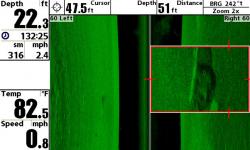
“I always idle slowly over the structure and study it with my electronics. Today’s depthfinders and side-scan units will show you the shape of the structure, how big it may be, and provide clues on how you can fish it most effectively.”

While the Yamaha Pro studies the structure, he’s not always looking for bass, either. Instead, he concentrates on trying to identify some smaller, special spot on the structure that might attract and hold a school of fish. Among bass fishermen like Davis, this is known as a ‘sweet spot,’ and it might be a sharp bend in a creek channel, a depth change on a ridge, or a group of stumps on the edge of a point. Sometimes, a sweet spot may not be as large as a bass boat, but even that is large enough to attract bass.

“One type of sweet spot I always try to locate is an area of hard bottom,” emphasizes Davis, “which is particularly important on older lakes where silt usually covers most of the bottom. A hard bottom can be rock, gravel, a shell bed, or even just smooth clay, but it will show up very well on today’s electronics and isn’t hard to identify. When I find hard bottom like this, that’s what I’m going to fish.”

Mark Davis and Bass

Mark Davis and Bass

Initially, Davis keeps his lure choice as simple as possible, choosing either a shad or chartreuse-colored crankbait capable of diving deep enough to reach that hard bottom with a long cast and light, 10-pound line. If the hard bottom or cover is deeper than about 20 feet, he may use a presentation known as long-lining to get his crankbait eight to 10 feet deeper.

“Boat positioning is an important part of deep cranking, too,” continues the Yamaha Pro. “I want to be as far away from my target as possible, but still get my lure down to that target. I’ll also experiment with casting angles, circling the spot to see if the bass want my lure coming from a certain direction. Most of the time, I’ll have my boat in deep water and cast shallow, but sometimes it’ll be just the opposite, and I’ll usually learn this by making a complete casting circle around the target.

There is no way to tell what your best casting angle will be until you experiment like this.

“Deep cranking doesn’t have to be that difficult or that complicated,” concludes Davis, “especially if you learn as much as you can about the structure before you start trying to fish it. In fact, with the quality of today’s electronics, deep cranking has probably never been easier.”

How Bass Fishing Can Be Extremely Frustrating?

Bass fishing can be extremely frustrating! It never fails, when I think I know what to do to catch fish it doesn’t work. And when two days in a row are completely different because you are on two different lakes it gets crazy.

Last Friday I left at 4:00 PM to go to Lake Demopolis in west Alabama to do an article for Alabama Outdoor News magazine. The 200 mile drive was supposed to take about four hours so I went on Friday since I had a tournament at Oconee on Sunday and didn’t think I could drive eight hours and fish several hours on Saturday.

When I was about 30 miles this side of Montgomery on I-85 I passed one of those trailer signs that said “Wreck Ahead – Slow Down.” I knew it must have been bad if they had time to get a sign beside the road.

Sure enough, about two miles later I came to a stop. Traffic was backed up as far as I could see. To make things worse, I was low on gas and had been planning on stopping at the next exit to fill up.

An hour later I got to that exit, one mile from where I had stopped. And it looked like half the people on the interstate had the same idea as me. It took me another full hour to get off the interstate, get gas and get back on the interstate. The gas station was so crowded half that time was just trying to get out of the parking lot!

Back on the interstate I never saw any sign of a wreck. And I got to Demopolis in six hours, not four, so I didn’t get as much sleep as I had hoped.

I fished with local angler Corey Smith and he knows Demopolis well. This lake is really a river with a dam on each end. The downstream dam is just past where the Black Warrior and Tombigbee Rivers join. You can go up either river more than 50 miles.

We caught about 15 bass and two of them were nice. Corey caught a three pounder on a spinnerbait and a five pounder on a swim jig. I caught several bass on a jig and pig.

Fortunately, the drive home that afternoon was uneventful and took only four hours. I got up at 3:00 Sunday morning and headed to Oconee, confident I could catch some bass.

At blast off Jordan and I headed to a lighted dock where I had caught two keepers two weeks before in the Sportsman Club tournament. All we caught there was a short bass. Bass at Oconee have to be 14 inches long to keep and weigh in.

We spent eight hours fishing every kind of cover and structure I could think of to catch a fish. All we caught were fish under the size limit. I did have one that looked like a keeper when it jumped threw my jig head worm. It was a very frustrating day.

In the Flint River Tournament nine people fished eight hour to land six keeper bass weighing about 11 pounds. There were no limits, two people had two each and two people had one each, and five of us did not catch a keeper.

Chuck Croft won it all, first place and big fish, with one weighing 3.27 pounds. Niles Murray came in second with two weighing 3.05 pounds, Phil King was third with two at 3.03 pounds and Dan Phillips came in fourth with one at 1.89 pounds. That was it. Nobody else had a keeper.

Thank goodness fishing will get better around here soon. Highs are supposed to be in the 70s and low 80s this week, so lakes will start cooling and bass will start their fall feeding spree.

I am back on Oconee today with Cody Stahl, a local high school fisherman, doing an article for Georgia Outdoor News. I hope he can show me how to catch a bass there!

Are Shark Populations Improving off U.S. East Coast?

2015 Coastal Shark Survey Reveals Shark Populations Improving off U.S. East Coast
from The Fishing Wire

Cutting the line

Cutting the line

Cutting the line to release a tagged white shark. Credit: Joe Mello, NEFSC/NOAA.

The longest running coastal shark research survey along the East Coast has completed its 2015 field work, capturing and tagging more than 2,800 sharks, the most in the survey’s 29-year history. The results are very good news for shark populations.

“We caught fish throughout the survey,” said Lisa Natanson, a scientist at the Narragansett Laboratory of NOAA Fisheries’ Northeast Fisheries Science Center (NEFSC) and leader of the coastal shark survey. “Sandbar sharks were all along the coast, while most of the dusky sharks were off North Carolina. We captured a bull shark for the first time since 2001, and recaptured 10 sharks previously tagged by our program and two sharks tagged by the Virginia Institute of Marine Science.”

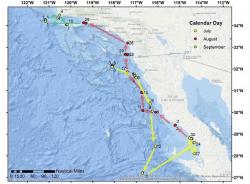
The survey began in 1986 and is conducted every two to three years. It covers coastal waters from Florida, where coastal shark species concentrate during the winter and spring, north to Delaware, where many shark species migrate during spring and summer as more northerly waters warm. Following this migratory route, at this time of year, makes it easier to survey the whole population.

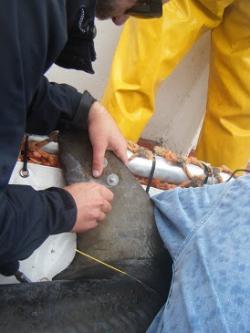
tagging a shark

tagging a shark

Lisa Natanson tagging a shark. Credit: Joe Mello, NEFSC/NOAA.

The last survey was in 2012, during which 1,831 sharks were captured and tagged, compared with 2,835 in 2015. Sandbar, Atlantic sharpnose, dusky, and tiger sharks were the most common shark species captured this year. In all, 13 shark species were among the 16 species of fish caught. The three non-shark species were remora, cobia and gold spot eel.

“Sharks are very vulnerable. Even though they are at the top of the oceanic food chain and can live for decades, they are fragile in the sense that compared to other fish they grow very slowly, reproduce late in life and have only a few offspring,” said Karyl Brewster-Geisz of NOAA Fisheries Office of Highly Migratory Species. “An increase in the numbers caught and tagged during each survey indicates a slow climb back. It is very good news for shark populations and for the ecosystem.”

This year, the survey was conducted aboard the 100-foot charter fishing vessel Eagle Eye II from Port Royal, South Carolina, from April 4 to May 22, and from just south of Ft. Pierce, Florida to North Carolina. As in 2012, poor weather and time prevented sampling further north. The surveys are conducted in the 5-40 fathom (30 to 240 feet) depth zone with most sampling between 11-20 fathoms (66 to 120 feet deep) and use commercial Florida-style bottom longline fishing methods to standardize survey results. This method uses a long, or main, line with baited shark hooks spaced at regular intervals along the line.

“The number of fish this year was amazing. We captured and tagged more fish than ever before, but once again weather was a factor. It started off nice, but conditions worsened as we headed north,” said Natanson.

sandbar shark

sandbar shark

A sandbar shark is brought aboard for tagging. Credit: Lisa Natanson, NEFSC/NOAA.

Most (2,179, or 77 percent) of the sharks captured were tagged and released, 434 (15.3 percent) were brought aboard, and 222 (7.8 percent) were released untagged or lost. Researchers record the length, sex, and location of each animal caught. Environmental information, such as water temperature and ocean chemistry, was also obtained at each station.

Researchers do not intentionally kill any animals for their studies. However, some sharks do not survive capture, and these are carefully dissected at sea to obtain biological samples important for studies on shark age and growth, reproduction, and food habits. On this survey, reproductive information was obtained from 170 sharks, backbones were removed for age and growth work from 109 sharks, and stomachs were examined in 82 sharks. The scientists also collect parasites, DNA and blood samples.

Among the catch this year were three white sharks, which were tagged and released; all were less than eight feet long. No white sharks were captured during the 2012 survey, and only one white shark was captured during the 2009 survey. The largest shark captured on the 2015 survey was a tiger shark, 12.5 feet in fork length, off North Carolina.

Natanson said the survey’s primary goal is to gather information about the distribution, abundance, and species composition of sharks found in these waters. Survey objectives also include tagging sharks for migration studies and collecting catch-per-unit-effort data.

tag a tiger shark

tag a tiger shark

Lisa Natanson (in yellow hard hat) and the ship’s crew tag a tiger shark. Credit: Cami McCandless, NEFSC/NOAA.

“All the survey data are provided to NOAA Fisheries managers to monitor the health and abundance of shark populations in the Atlantic,” said Natanson. “We’ve seen an increase in the number of sharks in every survey since 2001; that reflects management efforts to conserve the populations of various shark species.”

NOAA Fisheries is the federal agency charged with managing commercial and recreational shark fisheries in U.S. waters, including the Caribbean Sea and the Gulf of Mexico. The United States shark management began in 1993; currently 42 species are managed.

In addition to Natanson and colleagues from the NEFSC’s Narragansett and Woods Hole Laboratories, researchers participating in the 2015 survey came from the Southeast Fisheries Science Center, Florida Atlantic University, and the University of New Haven.

Another memorable tale from the 2015 survey
In addition to the record number of sharks caught this year, which was itself cause for excitement, the team aboard the Eagle Eye II also rescued five people off Oregon Inlet in North Carolina during the survey. Their small fishing boat had experienced engine trouble and was adrift in the Gulf Stream. The boat’s mayday signal was not received by the Coast Guard, but was by the Eagle Eye II, who came to the rescue. After determining that everyone aboard was okay, they contacted the Coast Guard and towed the vessel for a few hours closer to shore, where the Coast Guard took over.

Where and How Can I Catch Bass in Georgia In September

Bass fishermen have something to look forward at the beginning of September each year. It will only be about another month before fishing gets good again after a long hot summer. September can be a mean month for catching bass, but they can be caught even now. Yes, you can catch bass in Georgia in September

Our Georgia lakes are as hot as they get all year in September and oxygen content is at its lowest level. And there are more baitfish making easy meals for bass, but shad and herring draw them to open water, making them harder to find and pattern.

Fortunately, there are three patterns that will usually pay off in September. You may be able to find bass on all three on some lakes but at least one or two will work on all our lakes. You can fish at night, go deep or find moving water.

At night many bass move shallow and get more active. For years fishing early in the morning and late in the afternoon has been known as the best time to catch bass in hot weather. Extend that and fish during the dark. It means adjusting some of the things you do, and works best on clear lakes, but you will be more comfortable and catch more bass after the sun goes down.

Fishing deep it a traditional way to catch bass in hot water and bass are schooled up and holding on deep structure and cover. It takes special techniques to find and catch them, but once you find a school you can often catch large numbers of fish in one spot. And bass often come up from deep cover to hit baitfish on top, opening up an exciting way to catch them.

Current turns bass on and finding moving water usually means catching bass. Everything from natural current way up rivers and creeks to water moving across main lake points from power generation at the dam will make bass feed. Look in the right places and you can find active bass in current in most of our lakes.

Each of the following lakes has its own characteristics that fit some of the above three methods of catching September bass:

Thurmond (Clarks Hill}

One Labor Day weekend several years ago I was staying at my place at Raysville Boat Club on Clark’s Hill and woke up very early Saturday morning. I was too excited about an afternoon dove shoot to sleep, so I got in the boat and idled across to a brush pile I had built in eight feet of water. The full moon was beautiful and lit the lake brightly enough to throw shadows.

A bass took my Texas rigged curly tail worm in the brush and jumped twice when I set the hook. It looked to be well over eight pounds, but it threw the hook on the second jump. Two weeks later, just before the sun rose over the trees, I hooked and landed my first nine-pound bass from that same brush pile, on the same kind of worm.

Fishing at night is very good at Clarks Hill and you can catch bass from sunset until sunrise in shallow water. There is a full moon on September 23 this year and there is no more exciting way to catch bass than running a buzzbait or Jitterbug over shallow cover in the moonlight. Fish a topwater bait slowly and steadily to give the bass a better shot at it.

Riprap is always good on Clarks Hill at night but shallow hydrilla beds are excellent, too. Start fishing as the sun sets and keep fishing topwater as long as there is any light, working around the outside edges of the hydrilla and through cuts in it. It is best to locate the beds in daylight so you have an idea of the area to fish. Keep at it until the sun rises.

On dark nights work a Texas rigged worm on a light lead or a light jig and pig around riprap and the hydrilla, too. Crawl both baits on the rocks and drop them into holes and cuts in the hydrilla. You can use a black light to help you see the cover and your line, but this is a great way to learn to feel what your bait is doing.

Moving water is hard to find on Clarks Hill but you can run up the Savannah River to near the Russell dam and catch current flowing both ways. When power is being generated at the Russell dam strong current flows down the river. At night and early in the morning when the Corps is pumping water back into Russell current goes up the river.

Get out on main lake points and work a big crankbait or big Carolina rigged worm with the current. The bass will usually hold on the break on the downstream side of the current, so their position will change depending on which way the water is flowing.

On most of the lake, current is not a factor and bass hold as deep as oxygen levels allow. One year in late August I was playing with an oxygen monitor and discovered there was not enough oxygen below 11 feet deep in the Raysville area for a bass to survive. Further down the lake the depth of good oxygen got deeper.

Ride over deep points and humps watching your depthfinder. When you find fish, often holding near stumps and brush on the steepest drop on the structure, back off and make long casts with a big crankbait or big Carolina or Texas rigged worm. Bass will usually be holding from 18 to 30 feet deep on the lower Savannah River and Little River areas of the main lake.

Watch for surface activity in these same areas. Largemouth will come up to the surface to hit blueback herring and shad and will fall for topwater plugs like Spooks and Sammys. Work these baits over the deep cover even if they are not coming up and you can sometimes draw them to the surface.

Lanier

Lanier means spots and herring in September, and night fishing is usually best on this big, heavily used lake. At night you can actually hold your boat on points on the main lake without getting thrown out by the wake of passing cruisers. And it is a lot cooler.

Lanier is so clear and busy with pleasure craft that bass usually hold deep even at night. You can fish the same places and patterns day and night to catch them, and use the same baits.

Laura and Trent Gober fish many tournaments on Lanier and often finish high on the list. Laura fished the Women’s Bass Tour before it closed and did well on that trail, too. Lanier is her home lake and she loves to go after the big spots there.

Find brush on a deep hump or point and you are likely to find big spots holding there day and night. And think real deep. Bass on Lanier often hold 30 to 60 feet deep. It is harder to fish that deep but it pays off in bigger fish.

Laura likes to throw a Texas rigged Senko on light line and work it through the brush and any other cover on points and humps from Brown’s Bridge to the dam. Ride over the humps and points watching your depthfinder carefully for cover. Sometimes you will see the fish in it if you have a good unit. When you spot a likely looking place, throw a marker out a few feet from it so you can stay on it. At night you can attach a small glow stick to your marker so you can see it.

Back off and make long casts. Feed line out so your lure sinks straight down. When fishing extreme depths, if you don’t let your lure sink on a slack line, the lure will swing way off the cover as it sinks. When you hit the cover, work your bait in it slowly, twitching it in one spot. Yo-yo it on limbs in brush piles, making it dance up and down in one spot.

The same deep places hold bass day and night and the Texas rigged worm works well, but blueback herring offer another option during the day. Bass holding 30 feet deep in brush and tree tops will come to the surface to eat herring that swim near the top on bright, sunny days. During the day, find deep cover, back off and cast a topwater bait like a Spook or Sammy over it. A Fluke can be worked in the same spots in the same way.

Make long casts and work the bait fast, making it look like a bass chasing a herring across the surface. Be ready for a smashing hit when a big spots comes rushing up for an easy meal.

Finding current on Lanier means running way up the Chattahoochee River, and you need a shallow draft boat to be safe. You have to be very careful in any boat, but if you go up the river far enough you will find moving water. If power is being generated at the dam you can find current further down the river.

When you get to moving water fish any cover you see with a Texas rigged worm. Most cover this far up the river will be shoreline rocks and trees in the water. Pitch your bait to the upstream side of the cover and let is wash downstream with the current in a natural movement.

You can also keep your boat downstream of the cover and cast a small crankbait up past it and work it back. Make it look like a baitfish being moved down the river, making it an easy meal for waiting bass.

Oconee

Lake Oconee is unusual for its strong currents that flow both ways. Power generation at the dam creates current all over the lake, and the pumpback moves water back upstream far up the Oconee River and main creeks. That current makes the bass feed heavily in September.

Terry Adams lives near Oconee and fishes it often. He won the BFL and an Oconee Marine tournament on Oconee two years ago with five bass limits weighing over 17 pounds in each. In 2006 he and one of his mentors, Jack Brown, won the Berry’s Classic on Oconee and Sinclair. Terry has won several other tournaments there including some of the old JR Tournaments.

Docks are a key to Terry’s fishing and he looks for docks on deep water. He wants to find a dock with at least ten feet of water in front of it. He pitches a jig and pig to the dock posts, lets it sink to the bottom, strokes it up off the bottom and lets it fall back, then hits the next post. He does not try to get his bait way back under a dock, he says too many fish get tangled up and break off. He looks for active fish on the outside posts.

Current running by the docks makes them much better and pulls the fish out to the outside posts. Waves from passing boats can do this, too, so Terry likes boat traffic. Docks from the Highway 44 Bridge to the mouth of Richland Creek are his favorite ones.

Docks are good at night, too. Terry will look for a lighted dock and run a crankbait under the light if he can get an angle on it. He casts a Shadrap or other small crankbait in shad color. He will also pitch a big worm to the lights. Dock lights are inconsistent on Oconee because they get turned on and off. The best bet is to ride the lake and hit any lighted docks you find.

Fishing a big crankbait 12 to 20 feet deep on points and humps is a good way to catch quality bass on Oconee, too. The bass will hold on the drop on the downstream side of the current, so that can change between generation current running downstream and pumpback current running upstream. Find the drop with your depthfinder then make long casts to get your bait down to the bottom.

West Point

Although the Corps of Engineers seems determined to remove as much shoreline cover as they can pile up and burn every winter, night fishing around blowdowns and stumps can be good at West Point. Brushpiles are also good in the dark and any wood cover you can find will produce bass in the dark.

Find blowdowns during daylight hours and learn how they lay and how to fish them when you can see them. Also find deeper brush on points and humps and mark it. Work a Texas rigged worm through all the wood cover. A big worm, from a Zoom Mag 2 up to an Old Monster, in dark colors, will draw bites from fish holding in the wood.

Look for blowdowns from Highland Marina up Yellowjacket Creek and the Chattahoochee River. From Highland Marina down, much of the shoreline cover has been removed so look for brush piles in 10 to 20 feet of water to fish. If you ride almost any point or hump you will find bush somebody has put out.

During the day bass really key on current moving across the humps and points on the main lake. Week days are best by far since power generation is stronger and more consistent than on weekends. Current moves schools of shad across deeper cover and bass feed heavily on them.

Look for roadbeds, humps and long points from Highland Marina to the dam. Bass will often feed during the day from 12 to 30 feet deep as current flows across them, and they will usually hold on the downsteam side, where there is a drop. Cover like brush and stumps make it even better.

Big crankbaits like Mann’s 20+, Fat Free Shad and Norman DD22 Ns work well to imitate the shad the bass feed on and get down deep enough to catch them. You need to fish them on eight to 10 pound line to get them deep, and fluorocarbon line is best since it is thin, sinks and does not stretch much.

Get on the downstream side of structure and cover and make long casts upstream. Stay close enough to the cover to get your bait down to it. It takes 20 to 30 feet to get a big crankbait down 20 feet, so you have to cast that far past the target to hit it.

Reel your lure steadily with a medium speed. When you hit cover, pause it a second and let it float up, then jerk it so it darts away. Check your line on every cast since it will get frayed hitting the cover.

You can catch bass right now. Try these tactics and adapt them to the ways you fish, and you won’t have to wait another month to enjoy successful bass fishing!

What Is Being Done for Endangered Salmon in California?

For Endangered Salmon in California, a Very Measured Sip of Cold Water

With Chinook salmon facing lethally high stream temperatures, scientists deploy a new device to help manage the dwindling supply of cold water that the fish need to survive.

By Rich Press, NOAA Fisheries Science Writer | Follow Rich on Twitter: @Rich_NOAAFish
from The Fishing Wire

Chinook Salmon

Chinook Salmon

Chinook Salmon. Credit: Michael Humling/USFWS.

The State of California, now in the fourth year of a historic drought, is parched. But in the north of the state, at the bottom of the reservoir behind Shasta Dam, lies a big drink of cold water. For salmon in the Sacramento River, especially winter-run Chinook—considered by NOAA Fisheries to be among the eight endangered species most at risk of extinction—that cold water is a lifeline. Water managers tap it to cool off the river in summertime, when streams become hot enough to kill developing salmon eggs and newly hatched fry.

The cold water flows in from the mountains as snowmelt. But with winter snowpack at record lows, the supply of cold water is dwindling. If it’s not managed carefully, winter-run Chinook might be lost forever.

So last month, scientists from NOAA Fisheries and the University of Nevada, Reno, installed a new system to measure the temperature of the water behind Shasta Dam. The temperature profiler, which is based on fiber optic technology, will allow scientists to accurately estimate how much cold water is available so it can be used as efficiently as possible.

“The big question we’re facing, especially during this drought, is how much of the river can we keep cool enough for salmon eggs to survive?” said Eric Danner, the NOAA Fisheries biologist and salmon expert who is leading the project. “And can we keep it cool through October without running out of cold water first?”

Measuring the Vertical Temperature Profile

lower a fiber optic cable

lower a fiber optic cable

Cherisa Friedlander and Skip Bertolino of NOAA Fisheries and Scott Tyler of the University of Nevada, Reno, lower a fiber optic cable to the bottom of the reservoir behind Shasta Dam. The fiber optic system will provide a continuous, real-time temperature reading at every depth of the reservoir, allowing for more efficient management of the dwindling supply of cold water that endangered salmon need to survive. Credit: Rachel Hallnan/University of Nevada, Reno.
Cold water is heavier than warm water, so when it flows into the reservoir, it sinks to the bottom like hidden treasure. The agency that operates the dam, the U.S. Bureau of Reclamation, manages downstream water temperatures by mixing cold water from the bottom of the reservoir with warm water from above before sending it through the dam.

Until now, technicians from the Bureau of Reclamation measured the cold-water pool manually by going out on the lake every 2 weeks and dropping a temperature probe at various locations. That method is time-tested, but it left a lot of uncertainty in the results.

At the heart of the new system is a fiber optic cable that runs from the surface of the reservoir to the bottom. Photons are shot through the cable, and the backscatter can be interpreted to measure the temperature at every point along the cable. This will provide a continuous, real-time temperature reading at every depth.

The temperature data will be freely available online. In addition, water managers will be able to run computer simulations to predict how long the cold water will last, and what stream temperatures will result, given different scenarios of weather and dam operations.

Surviving in a New Environment

 install a fiber optic-based temperature sensor

install a fiber optic-based temperature sensor

Scientists from NOAA Fisheries and the University of Nevada, Reno, install a fiber optic-based temperature sensor in the reservoir behind Shasta Dam. Credit: Rachel Hallnan/University of Nevada, Reno.
Before Shasta Dam was built, Chinook salmon traveled far upstream to spawn. Today, the dam blocks their passage, forcing them to spawn downstream, where water temperatures are higher. Because they didn’t evolve under these conditions, Chinook and many other species are not adapted to the hot water they find themselves in today.

Winter-run Chinook are especially vulnerable because of their timing. As their name indicates, they swim upstream in winter. Most spawn in late spring, and their eggs and newly hatched fry—the life stages most at risk from high temperatures—must survive the heat of summer.

“If the water gets too warm, the eggs are stuck in a tomb under the gravel,” said NOAA Fisheries biologist Garwin Yip. If high temperatures don’t kill the eggs outright, they can cause higher rates of disease. And even if the young fry do make it out of their nests, they face long odds as well, as high temperatures make predators more voracious.

The goal of water managers is to keep the average daily stream temperature no higher than 56 degrees Fahrenheit through October. Last year, due to imperfect estimates of its volume, the cold-water pool was unexpectedly drained by mid-September, and stream temperatures soon shot up to 62 degrees. Scientists estimate that only 5 percent of winter-run Chinook eggs survived as fry in the upper Sacramento River, compared to 25 percent survival in an average year.

Chinook Salmon

Chinook Salmon

Chinook salmon. Credit: NOAA.

“We don’t want a repeat of what happened last year,” Danner said.

Hopefully, with the new fiber optic temperature profiler in place, water managers will be able to take very controlled sips from the cold-water pool, and make sure it lasts until the salmon are out of danger.

Do Lakes Go Through Fishing Cycles?

If you have been bass fishing for very long you have seen it. For some reason a lake gets “hot” and bass bite like crazy. Suddenly, fishermen are catching more and bigger bass than they have for years. Our Georgia lakes go through fishing cycles, but what causes a lake to produce better bass fishing than normal?

We all know the bass spawn makes a difference in bass populations, but it is not felt for several years. The success or failure of a few bass does not change the long term effect. It is not how many eggs are laid and hatched, it is the survival of the little bass that matters.

In Georgia lakes most bass spawn in April. Some spawn earlier, especially way down south in Seminole, and some spawn later in northern lakes, but the bulk of the spawn is in April. So what happens on our lakes in April and May this year may control how many bass you catch in three to five years on that lake. It is definitely a delayed reaction.

After bass spawn the male protects the fry for a few days but then they must fend for themselves. Everything in the lake, from bream and blueback herring to papa bass, wants to eat the tiny bass. So they must hide while finding enough food to grow big enough that they aren’t near the bottom of the food chain.

Walter George, usually called Eufaula, is a good example of the cycles our lakes go through. There is a lot of very shallow shoreline cover that is perfect for baby bass to hide in and eat as they grow. But if the lake drops a foot or two it leaves the grass they need to hide in high and dry, and many baby bass are eaten.

For some reason the Corps of Engineers seems to drop Eufaula in April after the bulk of the spawn, at the worst time possible. Although there are extensive lily pad fields and deeper grass on some areas of the lake, the very shallow shoreline cover the baby bass need is unavailable to them. So the numbers of them are greatly reduced, all over the lake.

If the water at Eufaula stays high in April and a lot of young bass survive you will see the effect in a couple of years. It will seem you catch throwbacks everywhere you fish, and you will catch a bunch of them. Your bass fishing skill didn’t suddenly get better, there are simply more bass to catch.

The bass hatch is considered a year class and it includes all the bass spawned in a year. As that group of bass grows you can follow their year class and see the ways it affects the catch rate. After three or four years you will catch a lot of keepers, then after five or six years you will start catching more quality bass. That is when it seems it takes a 20 pound plus stringer to win every tournament.

It would seem that a large year class would produce more and more bass every year because the higher numbers produce more young bass, but just laying eggs and having them hatch does not affect the future numbers. What makes a difference is the numbers of fry that survive their first few months. Since each bass produces hundreds of eggs, it does not take many to produce all the young bass needed. What matters is how many survive.

While our lakes were low the past few years lots of stuff grew in the exposed bottom. This cover runs way out so, even if the lakes drop after the spawn, there will be shallow cover for the fry. This spring should see an excellent survival rate in most of our lakes, so our fishing should get better and better for the next five years. That gives us something to look forward to!

Stupid Criminal Tricks from Texas Game Wardens

Stupid criminal tricks from Texas game wardens field Nnotes

Editor’s Notes: After chucking through a book called Bear in the Back Seat by Kim DeLozier and Carolyn Jourdan telling the real stories of a wildlife ranger, I realized- again- that there are more stories from game wardens, rangers and conservation officers than we ever see. With that in mind, I wanted to share what one sample week from the Texas Game Warden’s Field Notes really looks like. It’s true, you really can’t make this stuff up.

The following items are compiled from recent Texas Parks and Wildlife Department law enforcement reports.
from The Fishing Wire

Paper Shuffling Pays Off

An individual stopped by the Brownwood law enforcement office asking for information on his boat so he could report it as stolen. Office clerks were helping the customer when they realized the boat had been registered the week before in the customer’s name but with a different address. The clerks showed the paperwork to a game warden, who began a search for the stolen vessel. When he found the boat, the suspected thief admitted partial guilt. Other suspects were interviewed, but the vessel was returned to its rightful owner.

Turn Around, Don’t Drown

A Brown County man ignored warning signs, drove his pickup truck across a flooded roadway and was swept away. A deputy saw the pickup floating downstream with the man on top of the cab, until at one point the water became too strong and the man fell in. The deputy observed the man being washed downstream with a blue bag in hand until he was out of sight. Two wardens launched their boat and began a search and rescue, which continued for several days with no luck. Eventually, they found the blue bag, and then recovered the body of the 61-year-old disabled vet from under a pile of logs.

The Disappearing Child

Small children standing up in cars tend to attract attention. A small child did just that when a Williamson County game warden passed by on his way to Austin. The warden waited for the car to pass him so he could get a better look, but by that point, the child had disappeared. When he passed them again, he looked into the back seat and could not see the child or a child seat. He pulled the driver over and found the kid hiding on the back floorboard and the driver without a license. When asked if she had ever been ticketed for her lack of license, the lady replied she had been ticketed a couple of times and even had a warrant for her arrest. The warden instructed her to find licensed drivers who could bring a car seat, and she said her sister would be there in 20 minutes. But almost 45 minutes later, the sister arrived on foot to drive the car back, but without a child’s seat. The warden called for a wrecker who took possession of the vehicle, and the driver was placed under arrest for her warrant and was issued two citations: one for driving without a driver’s license, and one for the child not in a seat.

Two are Better Than One

An overturned yellow kayak caught the attention of two Bexar County game wardens on Calaveras Lake. While navigating the choppy water to examine the kayak, the wardens observed another kayaker waving his arms to get their attention – with good reason. His 80-year-old friend had flipped out of the upturned kayak and had been floating for several minutes, exhausted. The wardens were able to get the elderly man and his friend out of the water and into their vessel. Both were taken to the bank where the San Antonio Fire Department was waiting to provide medical attention. Both of the friends checked out fine after some rest.

A Reason to Sweat

A red passenger van was driving slowly on the shoulder of the road near Dumas. A warden stopped the van and noticed a white crystal substance on the driver’s shirt and a loaded syringe on the floorboard. The driver was confused and profusely sweating. The warden found 2.7 grams of liquid heroin in the syringe on the floorboard alongside .30 grams of methamphetamine. The driver, who had an invalid license, was arrested and taken to the Moore County Jail.

Uniform Doesn’t Match the Badge

In Lubbock County, a man wearing a McDonald’s uniform and claiming to be a police officer, was flashing a security guard badge as he asked for gas receipts for tax write-off purposes. A warden tracked him down, and he insisted, “You know me, I’m one of you, I’m an officer, too.” He said he worked at the Lubbock County Sheriff’s Office, but he had left his badge at the office. In reality, he was a volunteer in the ministry for the Lubbock County Sheriff’s Office and possessed an expired security officer license and badge. An arrest warrant was obtained and he was booked for impersonating a public servant; as well as, a security officer.

More than One Reason

Two men with their watercrafts were stopped by wardens on Lake Georgetown for safety violations and expired licenses. The wardens were escorting them to their truck to retrieve their identifications, but after a brief exchange between the boaters, one of them took off at high speed. A white Ford F-350 was found waiting at the ramp with its trailer in the water. They immediately loaded up their watercraft and drove off. After the warden notified the Williamson County Sheriff’s Office, the vehicle was stopped and the driver was arrested for driving with an invalid license. Both boaters were arrested for evading detention, lack of boater education, expired registration, lack of fire extinguisher, no sound producing devise, and failure to obey a Marine Safety Enforcement Officer – a full package deal.