Why Should I Fish The Weedline In The Fall?

Fish The Weedline In The Fall

by Bob Jensen
from The Fishing Wire

Weedlines are great places to find and catch fish all during the open water fishing season. Lots of anglers even work the weedline while ice-fishing. Simply put, there is almost always a fish somewhere along the weedline that is willing to get caught.

Doug Veldhuizen

Doug Veldhuizen

In the autumn months hungry groups of walleyes will work the weedline in search of something to eat. Doug Veldhuizen caught this one on a crankbait.

In the autumn months a variety of fish will be in the vicinity of the weedline. You might have a school of crappies suspended just off the edge of the deep weedline, there might be a group of largemouth on a corner of the weedline, and just a little farther down the weedline where the vegetation juts out a bit and forms a point, there could be some walleyes. And it’s not unusual to find a bonus musky or northern pike roaming over the tops of the weeds or along the deep edge. Although there may be more fish grouped tighter in different areas, the deep weedline in the fall will often provide a smorgasbord of fishing action.

Lots of techniques will take fish along the weedline in the fall. If you’re after walleyes, try the largest Mimic Minnow or Mimic Minnow Shad. Move it aggressively: Lots of hops will trigger the most fish until the water really cools off. Then a redtail chub worked slower on a jig or live-bait rig will produce.

If largemouth bass are the target, tie on 6.5 Hornet and work it parallel to the weedline. Work it a different speeds and with your rod held at different angles to get the bait to run at different levels along the weedline. Sometimes, especially on warm, cloudy days, the bass will be over the tops of the weeds. Throw the bait over the weeds, keep your rod tip high, reel slowly, and hang on. If they bass are there, they’ll let you know.

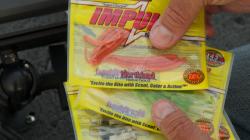
Another outstanding way to catch largemouth bass when they’re over or along the weedline is with a spinnerbait. Use one with a big blade. Tip it with plastic, something like an Impulse Paddle Shad or Paddle Minnow. You want some tail action, but not a lot.

Cast the spinnerbait over the tops of the weeds and work it back to the weedline. When you think it’s near the deep edge of the weeds, let it fall. Keep your line tight and watch and feel for a tick. The strike won’t be hard, but it will be distinct. Reel down and set hard. After a few fish you’ll know if they’re over the tops or along the edge, and sometimes they’ll be in both places.

If it’s a calm late afternoon or early evening when you start fishing, and you see fish dimpling the surface near the weedline, move very quietly toward the dimpling and throw a sixteenth ounce Thumper Crappie King jig/plastic. Swim it slowly through the area being dimpled and you’ll probably catch some crappies. The dimples are created by crappies sucking bugs off the surface. Since the crappies are feeding on the surface, you’ll want to swim your bait just a couple of feet below the surface of the water.

Another crappie killer we’ve been using a lot the past couple of years is a #4 Hornet. If the crappies are home, they’ll hammer this bait aggressively.

The weedline can provide lots of fall action. Make sure you’re fishing healthy green weeds. Keep moving until you find the fish. When you find them, they’ll usually bite. You’ll see Mother Nature at her best and you’ll have the opportunity to have a good time: What more can you ask for?

To see all the newest episodes of Fishing the Midwest television, new fishing related tips, and fishing articles from the past, visit fishingthemidwest.com If you do Facebook, check us out for a variety of fishing related things.

Where Can I Catch North Georgia Catfish?

Hot weather and catfish go together like fried fish and hushpuppies. And catfish are one of the best fish to fry with your hushpuppies, too. Summer is a great time to catch some hard fighting, tasty catfish and there are several excellent places to catch North Georgia catfish. From lakes and public ponds to rivers, catfish are plentiful and hungry.

Catfish are the ordinary citizen of the underwater world. You can find them in most waters, they aren’t picky about what they eat, tackle does not have to be fancy or expensive, and you can catch them from the bank as well as from a boat. They bite night and day and there are several kinds of cats you can catch in most places.

Tackle can be as simple as a cane pole or as fancy as a custom rod and expensive reel. But you can catch them on trotlines, jugs and limb lines, too. Bait ranges from live bream and minnows to stink bait that only a scavenger could love. You can go after frying size fish or try for a trophy weighing over 100 pounds.

There is nothing quite like setting out a trotline across a cove, baiting up a few limb lines and then sitting around a fire on the bank with a few rods in holders waiting on a bite. You can pretty much keep as many cats as you want to clean since some species have no creel limit and the ones that do have a limit have a very high number you can keep.

Georgia produces some big catfish. The state record flathead weighed 83 pounds, the record blue cat 80 pounds and the channel cat record is 45 pounds. You may break one of those records.
The following waters offer a variety of kinds of places to fish in north Georgia and the chance to catch several kinds of catfish.

Lake Thurmond

Also known as Clark’s Hill to most Georgia anglers, this big lake has flatheads, blue cats, channel cats and bullheads. Located on the Savannah River near Augusta, you can find good bank access in several areas and there are many boat ramps to launch and go to secluded coves to fish. The lake record cats show what you might have a chance of catching. The biggest flathead from Clarks Hill is a 64 pound fish caught in 2010. A 62 pound blue cat was landed several years ago and the lake has produced a 25 pound channel cat. There are bigger cats in the lake.

I grew up running hooks on Clark’s Hill for catfish back in the 1960s and 70s. We used live bluegill for bait and never caught a flathead since there were none in the lake back then. Fishermen introduced them to the lake and they have grown fast and you have a good chance of catching a 40 pound plus fish.

Live minnows and small panfish are the preferred bait for flatheads and the big ones usually stay deep. The Georgia Little River arm is a good place to catch them and concentrating on the old river and creek channels are your best bet. Fish a three inch bluegill on a stout rod and reel loaded with heavy line and you can hook one of the monsters that live there. If you want a really big flathead, use a bigger bluegill.

Blue and channel cats will also hit small live bream and minnows. A couple of summers ago Javin English and I put out 50 jug hooks with small bream for bait one night and landed 14 channel cats, all about six pounds each. We put them out in Germany Creek and checked them twice that night. One problem with jugs at Clark’s Hill now is the hydrilla. You have to keep moving them out in more open water or at least near the edge of the hydrilla.

Better baits for channel cats include earthworms, chicken liver, shrimp, cut bait and stinkbait. They have smaller mouths than the other species so smaller baits are best. Cut blueback herring, mullet or whole threadfin shad are excellent baits for channel cats and blues will hit those baits, too. Cut bait and stinkbait seem to work best for the blue cats at Clarks Hill.

There is good bank access at the Highway 43 Bridge. The river channel swings right in to the bank at the south end of the bridge, the corner on your left before you get to the bridge going toward Lincolnton. You can park there and join the group usually fishing there at night for big flatheads, blues and channel cats. There is also bank access at the other bridge further downstream on Little River and there are many ramps, like the one at Amity Park, where you can fish from the bank.

Put in at one of the many ramps in Little River and go up above the Highway 43 Bridge and fish the edge of the river channel for cats. A hot spot is where two channels come together, like the one just above the island upstream of the bridge. The Little River channel comes in from the right going upstream and the Hart Creek channel comes in from straight ahead. Anchor on the point between the two channels and you will catch cats.

Also find ditches and small creeks running into either Hart Creek or Little River and fish their junctions. The outside bends of the creek and river channels are also good. Put out several rods with different baits, sit back and let the cats tell you what they want that night.

All catfish from Clarks Hill are good to eat and there are no advisories on any species. Bigger blue and channel cats may be tough and better for stews, but big flatheads stay tender and delicious.

Etowah River

The Etowah River downstream of the Lake Allatoona Dam is an excellent river for catfish. There is some bank access at bridge crossings and boat ramps but your best bet is to launch a small boat and fish from it. There are channel, blue and flathead cats in this section of the river. You will catch a lot of three pound blue cats and one pound channel cats, but ten pound blues and five pound channel cats are fairly common.

River fishing is different from lakes but fish can be found in consistent places. Find a deeper hole where the river forms a pool and the biggest cats will be living there. Logjams or rocks make pools even better. The fish hold in the deeper water and will feed, but they also move to the more shallow water at each end of the pool to feed.

The best baits in the river for blues and channel cats are chicken liver, earthworms and stink baits. For bigger blues and flatheads try live or cut shad or live bream. The bigger fish tend to stay deeper so fish the deepest water in the pool with big live baits to entice them.

Anchor your boat at the head of the pool and let your bait drift down the slope into the deeper water, or cast into the deep water and fish on the bottom. Also try anchoring in the pool or tying to a shoreline limb and letting your bait drift to the end of the pool where the water gets shallower.

Two of the best areas to catch catfish here are just downstream of the Allatoona Dam and near Heritage Park in Rome. There are some good holes near the dam and at the park where the Etowah joins with the Oostanaula River to form the Coosa River.

There are no restrictions on eating catfish from the Etowah River and the average size blue and channel cat is good eating, any way you want to cook them. Flatheads are also good at any size cooked any way you like. There are restrictions of one meal per week on channel cats from the Coosa River because of PCB contamination, so if you fish near the junction of the two rivers near the head of the Coosa you should consider releasing most of the channel cats you catch there.

Lake Oconee

The numbers and size of catfish in Lake Oconee often surprise anglers, especially when bass fishermen have their plugs slammed by one. I have caught an 18 pound channel cat on a spinnerbait and a 35 pound flathead on a jig and pig in club tournaments there. If they will eat artificial baits you can catch a lot of big cats on baits they like better.

Located on the Oconee River near Eatonton, Lake Oconee offers both bank and boat fishing. You can fish from the bank at any of the boat ramps and bridge crossings on the lake and catch fish. Bridge crossings are especially good around the riprap at night if you suspend your bait a few inches above the rocks so you don’t get hung up on every cast.

You can catch blue, channel and flathead catfish as well as bullheads there. The lake has produced a 40 pound flathead, a 34 pound channel cat and a 15 pound blue cat, but much bigger blue cats are in the lake. Bullheads will average about a pound each but are very common. Often called mud cats or yellow cats, bullheads are good to eat but have very red, soft meat. There are also white catfish in the lake and they look a lot like channel cats.

Live shad or bluegill as well as cut bait work well for blues and flatheads. For channel cats earthworms and stink baits are good. Night fishing is best on this heavily used lake and the calmer water at night gives you peace and quiet and there is a more consistent bite than during the day.

There is a lot of standing timber on the lake and cats live in it, but it is hard to land a big one around it. The best bet is to anchor your boat on a point near the timber and fish on the bottom. Baiting up a hole to draw the fish out of the timber works. You can pour out a bag of rice, put a bag of fish guts on the bottom or throw out some sinking catfish food in advance of your trip then sweeten the hole the day before you go fishing to get them to come to you.

Rocky points always hold bullheads and catfish so concentrate on them. There are fish all over the lake but the Oconee River above the interstate bridge has some good holes and channel swings to fish. Anchor on the edge of the river channel where it makes a bend or where a feeder creek or ditch enters it and catfish will be there.

There are no advisories or restrictions on eating catfish of any size or species from Lake Oconee.

West Point Lake

West Point Lake on the Chattahoochee River near LaGrange is one of the best catfish lakes in middle Georgia. There are many two to three pound channel cats in it and they are a good eating size. There used to be a lot of commercial cat fishermen working the lake due to the numbers of fish there, and the fish are still there. Flatheads and blue cats are also in the lake.

A 33 pound flathead and a 20 pound blue cat have been recorded at West Point but there are much bigger fish in the lake. Access is good for fishing from the many parks and ramps on the bank and there is a boat ramp close to any part of the lake you want to fish. Yellowjacket Creek, Whitewater Creek and Wehadkee Creek are all good areas to try for channel cats. Your best bet for flatheads is the upper Chattahoochee River.

Fish at night around the bridges in Yellowjacket and Wehadkee Creeks but also try the Highway 109 bridge on the main lake. You can fish from the bank around those bridges or tie up under the bridges and fish beside the end pilings. Also try fishing just off the riprap from your boat.

For flatheads here and anywhere else live bream are the best bait. For blues and channel cats the usual baits like earthworms, stink baits, live or cut shad and cut mullet works very well. When getting a fish for cut bait, an oily fish like a mullet or shad is best since it will put more scent into the water to attract the fish.

The Georgia Environmental Protection Division has no restrictions on smaller channel cats from West Point but you should not eat more than one meal per week of fish 16 inches long or longer due to PCB contamination.

McDuffie Public Fishing Area

McDuffie PFA offers great fishing for channel cats and easy access for bank and boat fishing. There is handicapped fishing access and the seven ponds ranging from five to 37 acres are stocked with channel cats regularly and are fertilized. You will one of the following if you are ages 16 to 64: A 3-day hunting/fishing license, a Wildlife Management Area License, a 3-day hunting/fishing license, a Sportsman’s, Honorary or Lifetime License or a Georgia Outdoor Recreation Pass.

The McDuffie PFA is near Thomson and offers concrete boat ramps, restrooms, picnic tables and camping. Shorelines are clean and easy to fish from but you can fish only from sunrise to sunset Wednesday through Sunday. The limit on channel cats is five per day and you are limited to two lines in the water at a time.

Best baits are chicken liver, blood and stink baits and earthworms. You are not allowed to use live fish of any kind, including minnows, to fish here. Most channel cats are good eating size but you are not likely to catch a really big cat here. The best bet is to find a sandy bank, set up two lines in the water with one of the above baits on a small catfish hook and light lead and wait for a bite. Fishing is relaxed and simple.

You can launch a boat on any of the open ponds and get away from the more crowded bank access areas. Boats are restricted to electric or paddle power only. A gas motor may be attached to the boat but may not be cranked. Find a small drop off or channel with a depthfinder in the ponds and fish around it for the best chances of catching fish.

This is a great place to take kids fishing since facilities are convenient and fishing is good. Kids can play when they get tired of fishing, something important when teaching young kids to fish.

Any of these destinations would be a great choice this summer and you will catch catfish if you give them a try. Load up your tackle, head to one and bring home a mess of delicious fish for your next c

Can A Depthfinder Crack Decades-Old Cold Case?

Humminbird® Helps Crack Decades-Old Cold Case

Humminbird® Side Imaging® assists investigators on North Carolina lake – can a depthfinder crack decades-old cold case?

EUFAULA, AL. – “Closure” was the word used to describe the recent discovery of the whereabouts of a man who had been missing for more than forty years in Caldwell County, North Carolina.

Car Found with Depthfinder

Car Found with Depthfinder

The man, Air Force retiree Amos Shook, had vanished 43 years ago, leaving family members with a lot of questions.

Still unresolved after four plus decades, Shook’s daughter recently reached out to North Carolina authorities, asking them to revisit the cold case. Obligingly, Caldwell County investigators took to the waters of North Carolina’s Lake Rhodhiss with Humminbird Side Imaging technology, now a staple piece of equipment with Search and Rescue (SAR) teams across the globe.

“Unfortunately, in cases like this, water is often a good place to look. In the ’70s they sent divers down but they didn’t locate anything. But with our Humminbird unit we did find the car. I dove down, confirmed it, did some digging, hooked the cable to the car and the sheriff’s department had a tow truck pull it out,” says Jason Holder, Battalion Chief, North Catawba Fire and Rescue.

According to authorities, Shook lived near the lake boat ramp, which led detectives and search and rescue to investigate the area. Holder says North Catawba Fire and Rescue’s boat operator was the first to sweep the area on the evening of Monday, July 20, turning up compelling underwater imagery 50 yards off the bank in nearly 30 feet of water. The area was close to where the boat ramp was located 1970s and where the new boat ramp currently resides.

“We went back first-thing on Tuesday and I dove down, verified it was a car and they pulled it out that day,” adds Holder.

Side Imaging View of Car

Side Imaging View of Car

As to the specifics of their Search and Rescue program, Holder says they use Humminbird Side Imaging to look off each side of the boat and immediately below the boat via 2D sonar.

“The 997ci SI on our RescueONE Connector Boat is approximately 10 years old but it still works great. When we found the car we hadn’t even updated the software, which we have done since. For this particular search we set Side Imaging set to look 60 feet left and right,” says Holder.

He adds: “Humminbird Side Imaging is an excellent technology for us. It eliminates a lot of blind searching underwater. The water is so murky you can’t see anything when you dive; everything is by feel.”

Once the team had the car located, they set a waypoint on their Humminbird, also dropping a marker buoy so they could image from many different sides of the car while watching the screen and the buoy position in the water.

“After we look at an object sufficiently with Side Imaging we’ll reposition the boat, look at it with 2D sonar and then drop an underwater basket attached to a rope and weight that picks up excellent on the sonar. This allows a diver like myself to so the drop down hand over hand to the anchor and the object,” adds Holder.

Another View of Car

Another View of Car

Following their recent discovery, Caldwell County investigators dispatched a tow-truck to remove the car from the lake. Inside the silt-filled car investigators found human remains and Shook’s wallet. The remains were taken to the county medical examiner’s office for an autopsy.

Although questions still remain as to what happened, investigators do not suspect suicide or foul play.

This much is certain: After 43 years wondering what happened to their loved one, the family finally has some closure.

For more information visit www.humminbird.com, contact Humminbird, 678 Humminbird Lane, Eufaula, AL 36027, or call 800-633-1468.

Bass At West Point

As expected, the weather threw me a curve last Sunday. I was hoping the bass at West Point would be feeding in response to the cooler water but was disappointed.

The water temperature was around 80 degrees, the coolest it has been since last May. But it was still too soon, I guess, for the bass to really respond. And the day was hot with no breeze and bright sun all day so it was not as comfortable as I had hoped.

In the Spalding County Sportsman Club tournament 12 members fished eight hours to land 41 bass weighing about 54 pounds. There were four five-bass limits and one person didn’t catch a keeper. There were only two largemouth, all the rest were spots.

Raymond English won with five at 8.53 pounds and his 2.76 pound largemouth was big fish. Kwong Yu was second with five weighing 7.03 pounds, Billy Roberts came in third with five at 6.58 pounds and my five weighing 6.05 pounds was fourth.

I started fishing around the ramp, thinking some of the bass released in tournaments there might hit, but they didn’t. The third place I stopped my biggest fish of the day, not very big at all, hit a Texas rigged worm in about 8 feet of water in a cove around some brush. Then I caught a keeper spot on a rocky point in about six feet of water on a jig head worm.

I tried a few more places then at 11:00 I went to what I hoped was my ace in the hole. There is a brush pile in about 17 feet of water and I have caught a lot of fish around it. When I rode over it to mark it my depthfinder showed it covered in fish.

Almost as soon as my drop shot worm got to the top of it a keeper spot thumped it. Then a couple of minutes later I got another one. But after fishing it for thirty minutes I had not gotten another bite.

I left and tried another place, then went back to the brush and quickly caught two more keepers. It is strange. Jordan and I caught two off that brush the last tournament we fished then didn’t get another bite for an hour. The pattern seems to be catch two and leave.

The water at West Point is clear and to fish a drop shot worm, a good tactic in clear water, you get right on top of the brush and drop it straight down. Although 17 feet deep sounds pretty deep, when you stop and think it is less deep than the boat is long.

I think the boat right on top of the fish scares them and they quit hitting. If you leave and come back after they settle down they will hit again – for a few minutes until they get scared again. I have tried staying out from that brush and casting to it from distance but can’t seem to get bite that way.

I fished a lot more places and caught several short fish before quitting time at 3:00, but no more keepers. As I said, the fish were much harder to catch than I had hoped!

When I got home I got an interesting thrill. After backing the boat into the garage I took my ice chest into the house and went back out to unhook the boat. Something didn’t seem exactly right while kneeling at the hitch and I looked back. Under the boat was a four foot black snake, lowly crawling across the floor.

Those kinds of snakes are harmless and eat mice and other vermin so I left it alone. I guess last week was my snake week. I have not seen a snake in months but Monday while cutting my field I noticed something white in the last strip I cut. It was another black snake, about three feet long, laying on its back. It had gotten too close to the bush hog blade.

I guess the cooler weather is making something more active!

How to Winterize Your Yamaha Four-Cylinder Outboard

DIY – Winterize Your Yamaha Four-Cylinder Outboard
from The Fishing Wire

I am so glad I get to use my boat year round!

Have the Right Tools

Have the Right Tools

Yamaha offers a popular line of four-cylinder four-stroke outboards that are used in a wide range of single and twin installation applications, in both fresh and saltwater, all over the world. From pontoons to center consoles, bass boats to work skiffs and even water taxis, they are great performers and real workhorses. The most popular are the F90, F115 and F150 models, and many are used in climates where they are taken out of service for the winter months.

While there’s definitely merit in having your outboard winterized by a certified Yamaha dealer, the process is simple enough for owners to do themselves when armed with the right tools, products, and a bit of proper education. Pete Reils, a long-time certified Yamaha Technician at Garden State Marina in Pt. Pleasant, New Jersey, recently took the time to show us how he winterizes Yamaha outboards. The boat featured here is a late model Cobia® center console powered by a single Yamaha F150.

Prep Work

Clean and Oil

Clean and Oil

Prior to winterizing the outboard, it’s a good idea to give the boat a good cleaning inside and out, power wash the bottom, and put a coat of wax on fiberglass hulls.

Before you get started, check out Yamaha’s Maintenance MattersTM publication under Extended Storage then put together a checklist of everything you’ll need, and be sure you have the proper Yamalube® lubricants, additives and filters for the job. (A list is available in your owner’s manual, and on our website at http://yamahaoutboards.com/owner-resources/FAQ). The correct amount of engine oil for your four-cylinder model can be found on late model Yamahas on the engine cover under the cowling. Your dealer also has handy Yamaha Outboard oil change kits that have the correct amount of Yamalube 4M, the Genuine Yamaha oil filter, and the drain plug gasket you’ll need to do the job right.

Draining the Oil

Drain the Oil

Drain the Oil

Pete’s process starts with changing the crankcase oil. Place an oil pan under the lower unit and with the engine trimmed all the way up, remove the drain plug located inside the rubber tube below the rear of the cowling (most mid-range models).

Pete places a piece of plastic tubing as an extension over the rubber tube to direct the oil into the pan. Lower the engine using the trim switch on the starboard side to start the oil flowing. After the oil has finished draining, replace the gasket on the drain plug and re-install the drain plug, tightening to spec (see Owner’s Manual).

Draining the Lower Unit

Drain Lower Unit

Drain Lower Unit

With the engine still down, slide an oil catch pan directly underneath the lower unit and remove both the vent screw and the drain screw on the starboard side of the lower unit to remove the old lubricant. Depending on the temperature of the air and the outboard, this may take a while. Be patient, until all the oil is drained. Check the old lubricant for any milky residue, which is an indication that water could be getting into the lower unit through a damaged seal. If this is found, it’s time to contact your authorized Yamaha Marine dealer for a seal replacement and a pressure test. Also, check for any large metal particles in the oil or adhering to the drain plugs (they’re magnetic). This would be a reason to see your dealer, too.

The most common cause of lower unit water ingestion is discarded fishing line caught behind the propeller. While you’re here, remove the propeller, remove any line or other debris, and grease the propshaft with Yamalube Marine Grease. Keep the prop off in a safe place until you’re ready to use it again.

Replacing the Oil Filter
While the gearcase is draining, remove the engine oil filter found on the port side. You can use the Yamaha special tool like Pete or on these smaller engines, a simple strap wrench works fine. Just be careful not to disturb the oil sensor located on the block just above the filter.

Lubricate the rubber gasket on the new filter with a little fresh engine oil to assure a proper seal, and then install by hand tightening the filter to specification (the procedure and spec are printed on every Genuine Yamaha outboard oil filter).

Refill the crank case with the proper amount of Yamalube® engine oil (see owner’s manual).

Filling the Lower Unit
Now it’s time to refill the lower unit. Pete winterizes so many outboards he uses a bulk can of Yamaha lower unit lubricant with a pump, but you can use quarts and a hand pump available from your Yamaha dealer. Thread the fill hose into the drain plug hole and carefully pump in the lubricant until it starts weeping out of the upper vent. Pause for 5 minutes to allow all air to escape, then slowly pump additional lubricant until it comes out the vent hole again. Make sure to change the gaskets on both the vent and the drain plugs (do not reuse them).

Reinstall the vent plug until tight, then remove the fill hose from the bottom and reinstall the drain plug.

Fuel Filters
Now it’s time to turn your attention to the fuel system. First, carefully remove the 10-micron fuel/water separating the filter located in the boat (Yamaha’s is light blue) and discard filter and contents appropriate to your local regulations. Then, reinstall a new 10-micron canister, using another thin film of clean oil on the gasket surface.

Stabilizing the Fuel
For the next step, Pete uses a portable fuel tank with a small amount of fresh gas treated with Yamalube® Ring Free, Yamalube EFI Fogging Oil and Yamalube Fuel Stabilizer and Conditioner. Start by placing a hose flusher over the main lower unit water pickups and turn on the water.

Disconnect the rubber fuel hose at the inlet side of the primary on-engine fuel filter by loosening the spring clamp with needle nose pliers and connect the hose from the portable tank. Pump a primer bulb installed in the portable tank’s fuel line until firm and then start the engine, after turning on the water. Run it for 10 minutes at fast idle until the mixture is thoroughly distributed throughout the fuel system and combustion chambers. This lubricates the injectors, valves, cylinder walls and piston rings for the long storage period ahead.

When 10 minutes are up, quickly rev the engine very briefly until you see a puff of smoke caused by the fogging oil exit through the prop hub and shut it down. Turn off the water and remove the flush muff. Remove the fuel hose from the portable tank and securely refit the onboard fuel hose.

Trim the engine fully “in” to drain the water from the cooling system and disconnect the onboard flushing hose so that it drains, too. Then reconnect.

Don’t Forget

Tilt the engine up and use a grease gun charged with Yamaha marine grease to lubricate all grease fittings. There is one on each side of the steering slide forward of the engine, another found on the steering column, and one on the shift mechanism where the shift cables enter the cowling.
Spray the engine and rubber components with a liberal application of Yamalube® Silicone Engine Protectant and Lubricant or YamaShield. Once the boat gets to its final winter resting spot, trim the engine full “in” for storage and disconnect the negative battery cable(s).
Remove the battery or batteries to a cool (but not freezing), dry place. Charge the battery fully before storage.
Return the cowling to its proper position and your outboard should be ready for winter storage and start up in the spring.

The typical Do-It-Yourself-er can usually complete the entire job in a couple of hours. Just be sure you have all the supplies you need on hand and take your time, covering all the steps.

You’ll find more information in Yamaha’s comprehensive “Maintenance Matters” publication, available at your nearest Yamaha Marine dealer or online at maintenance.yamahaoutboards.com.

Not a DIY’er? No worries. Just contact your local dealer and set up an appointment, but don’t wait too long. The threat of winter’s first freeze is almost always too late. Taking time now helps ensure good times come spring.

Where Can I Catch March Bass In Georgia?

Georgia bass fishermen dream of days like this in March. You get up early to head for the lake. The weather has been warm for several days with bright sun warming the water. When you get to the lake there is a slight wind blowing out of the west. You just know you are going to catch bass.

In early March bass in Georgia are really coming out of their winter doldrums, feeding heavily as soon as the water warms. They are shallow and will hit a wide variety of baits as they feed up for the coming spawn. By the end of the month some are already on the beds and others are cruising the shallow spawning pockets, searching for suitable bedding spots.

Even in bad weather the bass will bite in March. Heavy winds can be a problem for the fisherman but wind can be your friend, blowing baitfish onto banks and points where bass take advantage of the confusion of the shad to gorge on them. Cold fronts are a problem but the bass recover quickly, returning to feeding as soon as the front settles down.

Try one of the following lakes to have a great catch this month. You can fish just about any lure you like and catch fish if you follow patterns that are consistent every March in out state.

Oconee

My best ever catch of bass in a tournament was several years ago in March at Oconee. The weather had been warm all week and it was beautiful by the mid-March Saturday when we launched. I just knew I would catch bass, and I did, landing nine in two days that weighed 37 pounds. That catch included a 6 pound 15 ounce and an 8 pound 11 ounce bass on Saturday and a 9 pound, 5 ounce beauty on Sunday.

All those fish hit a spinnerbait slow rolled on riprap in Lick Creek. Riprap always attracts bass in March from the beginning of the month to its end. The rocks hold heat and warm fast from the sun and riprap on bridges are great holding areas as bass move up the creeks as the water warms.

Oconee is in the middle of the state on the Oconee River and has a lot of different kinds of cover and structure. The slot limit allows bass to grow and put on weight until they reach the 14 inch size limit that tournaments require and most fishermen observe, releasing the smaller bass they can keep legally.

Big houses line much of the lake and riprap seawalls cover the points and coves they are on. Clay points are common as are natural rocks, all attracting bass in March. Shad are the most common baitfish but bass also feed heavily on crayfish and bream this time of year.

A spinnerbait is a good choice in March. You can fish it fairly fast to cove a lot of water and the active bass are attracted to the flash. Use a chartreuse and white skirted bait with two willowleaf blades, one gold and one silver, and stick with a 3/16ths to half ounce bait. Cast it near rocks and reel it back at varying speeds to find what the bass want.

A crawfish colored crankbait like a #8 Shadrap is a good choice around rocks and clay points where mudbugs live. Cast it near the bank and try to bump the bottom as you reel it in. That erratic darting motion and puffs of mud from hitting the bottom attract strikes.

Main lake points through-out the lake are good but the ones near the mouths of pockets and smaller creeks hold the most bass. They stage on them and feed all month long. Near the end of the month a buzzbait will allow you to cover water faster and draw explosive strikes. Use a white bait with a silver blade and run it near any cover you see.

Hartwell

Lake Hartwell is a big 55,000 acre impoundment on the upper Savannah River. It has a variety of water color, with the main lake staying clear most of the spring but the rivers like the Tugaloo staining up from runoff. It has a wide variety of types of cover, from shallow creeks with lots of brush and other wood cover to rocky points. You can catch largemouth, spotted bass and redeye bass on Hartwell.

Jeff Jones is president of the Georgia BASS Federation Nation and does well at Hartwell, placing second in the Top Six there in 2010. He was top man on the Georgia team at the Regional tournament and went to the Nationals, competing for a spot in the Bassmasters Classic last year.

Bass move out of their deep winter holding area in the standing timber in early March, according to Jeff. They stage on rocky points and steep banks near the spawning pockets and can be caught there on a variety of baits. Roadbeds crossing spawning pockets are also key places for catching March bass.

As soon as the water starts warming bass start moving and, as the month progresses and the water gets warmer, they move further back into the pockets. Spawning pockets with standing timber in deep water nearby improves your chances since this is where Hartwell bass live in the winter.

You can catch spotted bass in the same areas but they tend to move to them a little later in the month and spawn in deeper water, so a cove with gravel and rock in six feet of water is ideal for them. Most of the time both species will be holding in the same area by the middle of the month.

Jeff likes a Lucky Craft 1.5 DD shad pattern crankbait and a Pointer 78 XD in ghost minnow for working the points and banks fairly fast. For a slower presentation he has a three sixteenths ounce jig head with a red crawler Robo worm rigged on it. These baits are best early in the month.

As the bass move more shallow Jeff switches to a regular Lucky Craft 1.5 crankbait but sticks with the same jerk bait. He also likes a white Shaddie Shad soft jerkbait and a five sixteenths ounce Bi Hawg Jig with qn Okeechobee Craw Net Bait trailer.

The best places in March are the creeks and pockets off the main lake from Big Water Marina to Mary Ann Branch. You can fish this area without running all over the lake and the water tends to stay more stable, not mudding up with rains.

Lanier

Lanier is a 40,000 acre lake just outside Atlanta on the upper Chattahoochee River. It is famous for its big spotted bass, clear water and deep structure and cover. Spots turn on in March, moving into more shallow water where they are easier to catch for most fishermen.

Mike Millsaps is well known on the tournament trails in Georgia and has had some incredible catches at Lanier, like a five fish limit weighing 23.5 pounds in a couple’s tournament there. He says the big spots are easy to follow in March.

As the water warms early in the month the big spots move out of the deep structure and cover and work back into spawning pockets, holding on any cover in the pockets as they move back. Early in the month they will be near the mouths of the pockets and by the end of the month on the cover near the backs of the coves.

Boat docks are the key to the cover and most spawning pockets are lined with them. The bass will also hold on stumps, brush, blowdowns and rocks. Mike likes the lower lake below Brown’s Bridge and will catch some largemouth there, but most of his catch are spotted bass.

You need only three baits for March at Lanier, according to Mike. He throws a Team Diawai TD Minnow jerk bait, a one eight ounce Money Maker jig head and worm, and a Blademaster Jig with a Zoom Chunk.

Pick a pocket on the lower lake, start on the outer point early in the month and work back, hitting all the cover you come to with those three baits and you will catch fish. As the month progresses start further back in the coves and pockets and work all the way to the back. By the end of the month start in the back and work out until you find where the bass are holding. It will be consistent on most other similar places.

Lake Harding

Also called Bartlett’s Ferry, Harding is a small Georgia Power Lake on the Chattahoochee north of Columbus. It is a deep, rocky lake near the dam but has many shallow flats in the river above the mouth of Hawalakee Creek. Grassbeds are common on the lake, with water willow the most prolific weed.

Harding has produced good largemouth and spots over the years but spotted bass are most common now. There are lots of small bass in the lake and a limit of five spots weighing six pounds is not unusual. It is a good lake in March to catch large numbers of fish.

Nick Roberson lived near Harding and fished it often until recently. He weighed in a five fish limit weighing just over 22 pounds there a couple of years ago. He also has an 8 pound, 8 ounce largemouth from the lake.

After a warm winter Nick often finds bass on the beds up the river in oxbow lakes as early as February, and they are usually spawning heavily in March there. Bass in the river oxbows spawn a lot earlier then most people realize, according to Nick. The bass on the lake will be spawning by late March most years.

Several baits catch bass in March and Nick will have a Jawbreaker jig and pig, a jig head worm, a Senko, a spinnerbait, a crankbait, a topwater bait and a jerk bait tied on this month. The Senkos and spinnerbaits work best in the oxbow lakes where there is a lot of grass and he drops the Senko into holes in it. The spinnerbait is worked through more open grass.

On the main lake throw the crankbait, spinnerbait and jerk bait on rocky points and around docks. Fish the jig head worm in the same places but work the jig and pig in brush and other wood cover. Use dark colors in stained water and lighter browns in more clear water.

Blackshear

Lake Blackshear is west of Cordele on the Flint River and it just looks “bassy.” Cypress trees, grass beds and stumps are everywhere and all hold bass. Huge shallows up the river warm early and attract bass to them in March.

Jim Murray, Jr. is a well known Georgia pro fisherman and he grew up on Blackshear. He guides on Blackshear, Seminole and Eufaula and makes lures with his Custom Bass Tackle business at http://custombasstackle.com/

In March most of Blackshear bass will be prespawn, feeding around shallow cover, so stay in shallow water to catch them. Cypress trees and grassbeds are the key and Lee fishes for them with a three eights ounce chartreuse and white spinnerbait with Indiana blades and a eight inch green pumpkin Zoom lizard behind a one eight ounce sinker or a green pumpkin Senko rigged weightless.

Lee will go up the river above the bridge at Veterans State Park and fish pockets and backouts, hitting all the grass beds and cypress trees in them. Points and edges are best and he fishes them fairly fast, looking for active bass.

Isolated cover is where you are most likely to catch a fish so trees out from the others, a tree or clump of grass on a point or a single clump of grass on a bank a few feet from other grass is best. Make repeated casts to isolated cover.

These lakes will all give you a good chance to catch bass this month. Choose the one you like best and get on the water.

Where and How To Catch Catfish In Georgia

Georgia’s Catfish Bonanza
Where and how can I catch catfish in Georgia?

If you want variety in your fishing, go for catfish. They are in all our waters so you have a wide choice of places to fish. You can try for small eating size channel cats or you can go for a huge flatheads that approach 100 pounds. And you can use just about any method you want to catch them, from jugs to rod and reel.

The following offer a place to catch cats in a wide variety of waters around our state. Check them out for some fun this summer.

McDuffie Public Fishing Area

Located about eight miles east of Thomson and a couple of miles off Highway 278, McDuffie PFA offers seven ponds ranging in size from five to 37 acres. Six of the ponds are stocked with channel catfish. Bank fishing is good and you can use a boat with an electric motor. In most cases you will need a Wildlife Management Stamp as well as your fishing license.

The ponds are maintained for easy bank access and offer bank anglers good fishing. Some of the ponds have fishing platforms on the water that are handicapped accessible. Concrete boat ramps make loading and unloading your boat easy. Restrooms on the PFA as well as hiking trails and picnic tables make this a good place for a family outing. Camping is available on-site but fishing is limited to sunrise to sunset.

Channel cats are the only cats you are likely to catch here and most will be eating size in the one to two pound range. There are cats up to 20 pounds in some of the ponds so be prepared for a strong fight at any time. You can not use live baits like minnows so stick with earthworms, chicken liver, stink baits and crickets.

I grew up less than three miles from the McDuffie PFA and spent many happy hours there. My best luck for catfish came late in the afternoon although cats will bite all during the day. Warmer months were best so right now through the end of September is a good time to go.

Find a sandy spot on the bank near the pond dam and drive a forked stick or rod holder in the ground. Cast out a cricket, earthworm or piece of liver on a #4 hook and a light split shot, let it hit bottom, tighten up your line and place the rod in the holder. Watch your line for bites but wait to pick up your rod when the cat starts swimming off with the bait. Channel cats often bite slowly and you can pull the bait away from them if you try to hook them too quickly.

High Falls State Park

This 660 acre lake in a state park is just a few miles east of I-75 north of Forsyth. There is limited bank access at the dam and at the park and boat ramp on the Buck Creek arm, but most fishing is from a boat. Motors are limited to 10 horsepower and two concrete ramps offer easy loading and unloading. You can be on the water only from sunrise to sunset each day.

Some big flatheads are caught each year with fish in the 30 pound range showing up fairly often. There are tales of much bigger flatheads, too. I took a picture of a 35 pounds flathead from High Falls that was the state record for a short time many years ago so there can be some huge fish in the lake.

But your best bet will be for channel cats. In 2008 there was an exceptional spawn and survival rate and those fish have now grown to a good size for eating. Almost half the channel cats will be in the 12 to 18 inch size and weigh an average of about two pounds. You will have a good chance at a five pound channel cat.

The best fishing for all cats will be in the deepest water in the area this time of year. The old channels at High Falls are silted in badly but the depressions formed by them are still the deepest water. A depthfinder helps find this deeper water to concentrate your fishing and the lower lake will be best.

If fishing for flatheads a live bream or shad is best, and bigger channel cats will hit them, too. For smaller fish go with cut bait. You are more likely to catch channel cats if you use earthworms or stink bait.

Rig up a sinker heavy enough to keep your bait near the bottom and tie your hook on a short leader. Put the bait on a #2 to #4 hook for smaller cats and slowly drift the bait right on the bottom. There is a lot of slimy “moss” on much of the bottom at High Falls and the leader will allow your sinker to stay on the bottom without getting the gunk on your bait.

Lake Oconee

I-20 crosses the upper end of Lake Oconee west of Greensboro and the lake extends south, covering 19,000 acres and 374 miles of shoreline. Access is good for boat anglers at several marinas and public boat ramps, and bank fishermen can fish around bridges and in the parks. The lake is so big a boat is definitely the way to fish.

There are lots of channel and white cats and bullheads in Oconee but the population of big flatheads and blues is increasing. Oconee may be the sleeper lake in the state for big catfish. I landed a 20 pound blue cat on a spinnerbait three years ago in Double Branches and a 35 pound flathead on a jig and pig last summer in Lick Creek while bass fishing. If you target cats there is no telling what size you might catch!

There are a lot of 15 pound plus blues and flatheads in the lake so use stout tackle if you are fishing for them. Live shad or bluegill are best for the bigger fish but cut bait also works well. For smaller channel cats and bullheads live earthworms are good.

Both big cats I caught hit in the middle of the day but late afternoon to early morning is the best time for catfish. On a big lake like Oconee it pays to bait up a hole for them. Pick out a small cove that drops off to deep water and throw out sinking catfish food for several days. Although cats like the standing timber on Oconee, make sure you pick a cove a good ways from it or any big cat you hook will likely wrap you up.

Come back late in the afternoon and anchor, cast out several rods baited with live bait, cut bait and earthworms and wait for the action. Offer a variety of kinds of baits and sizes of baits since you may draw in smaller channels or trophy size flatheads and blues. You can fish all night during the summer and catch fish.

Andrews Lake

Although Andrews Lake offers good cat fishing, the best area of it is just below the Walter F. George dam. The bigger cats tend to move up the lake to the fast water in the tailrace just below the dam on the Chattahoochee River and feed there. There is some bank access but a boat is a better way to fish. The dam at Walter F. George is near Fort Gaines.

You can catch a lot of ten pound plus flatheads and blue cats here and a real trophy is possible. The state record blue was held for a short time by a 67 pound, 8 ounce monster caught just below the dam in 2006. Then in February, 2010 an 80 pound, 4 ounce monster caught here set the new state record. There are good numbers of 40 pound plus blues in the area. Channel cats are also abundant and will average from two to four pounds.

For smaller blue and channel cats try earthworms and blood baits fished on the bottom. Bigger fish are used to eating shad injured or killed at the dam so live or cut gizzard or threadfin shad are excellent baits here. Bream and live shad or suckers are best for flatheads but will also catch big blues.

During the day fish your bait on the bottom in the deepest water near the Walter F. George dam. At night you can anchor and cast your bait up onto flats and sandbars near the deeper water. The big cats hold in deep water during the day and move up into the shallows to feed at night.

Use heavy tackle and a one ounce sinker will often be needed to hold your bait on the bottom in the current. Try to find eddies or slack water where the current washes injured baitfish and let your bait soak on the bottom in those places.

Be careful of water release at the dam when fishing from a boat or the bank. Water can rise quickly and become very strong when power is being generated so be aware of the changes. Don’t get caught by rising water and strong currents.

Coosa River

Most fishermen think of spotted bass when the Coosa River in northwest Georgia is mentioned, but it is a quality catfish river, too. From its start north of Rome to where it crosses the state line into Lake Weiss, big cats are caught in this river. Boat fishing is the best way to find the fish here since you need to seek out the places they hide.

One thing may help to make this river a trophy catfish hole is the restriction on eating big cats from it. The Georgia DNR says you should not eat blue cats over 32 inches long from the Coosa and should limit eating smaller cats, so many of the cats here get released to fight again. If you want a fight the Coosa is a good place to head but if you want catfish to eat you would be better fishing another spot.

You can catch blue, channel and flathead cats of all sizes in the Coosa and 50 pound blues are not uncommon. For smaller fish use stink baits, earthworms and liver. For the bigger trophy size cats the best baits are live bream and shad, or cut bream and shad.

The Coosa is full of log jams on the bank and big blues and flatheads love to hide in them. Drift a live bream or shad into eddies created by brush and log jams and be ready for a strong fight. Use very heavy tackle to get the fish away from the wood and out into the main river to have a chance of landing it.

Deep outside bends in the river where the current creates slack water can be excellent, too. You can anchor on the inside part of the bend and fish your bait on the bottom toward deeper water. Drifting it with the current will also take it to where the catfish hold, rather than waiting for them to come to your bait. But they are going to be harder to get out of the place they are holding since it is likely to be in heavy cover.

Also look for current breaks in the middle of the river. Bridge pilings, logs and deeper holes will hold fish. Let your live bream or shad or cut bait drift into those areas and the current will take it right to where the catfish is waiting. Use the current to move your bait in a natural way.

These spots offer you examples of the wide variety of cat fishing hole we have in Georgia. Check them out for some fun fishing and, in most of them, good eating. There are many similar lakes, rivers, state parks and Public Fishing Areas around the state to try if one of these is not near you. The same methods that work on these should work on one closer to you.

Would A Hammerhead Shark Travel Widely?

Would a Tagged Hammerhead Shark Travel Widely”
from The Fishing Wire

Smooth Hammerhead Shark

Smooth Hammerhead Shark

Smooth Hammerhead Shark (Sphyrna zygaena), Nine Mile Bank, San Diego, California.
Credit: Richard Herrmann/NOAA
The first hammerhead shark fitted with a satellite tracking tag off Southern California has traveled more than 1,000 miles to Mexico and back again since NOAA Fisheries researchers tagged it near San Clemente Island about two months ago.

The shark, which is now off Ventura, California, is providing new insight into the great distance hammerheads may cover in search of food, mainly fish and squid. Unusually warm ocean temperatures in the Southern California Bight since last summer has drawn hammerheads north, making them more visible off Southern California.

“The surprising thing we’ve learned from this is just how much they move around within a season,” said Russ Vetter, Senior Scientist at NOAA Fisheries’ Southwest Fisheries Science Center in La Jolla, Calif. “This one went way down to central Baja and then shot back up here again just to find food, and that is a lot of territory for an animal to cover.”

Hammerheads have been sighted off Southern California more frequently in recent weeks, including one case last weekend where a hammerhead on a fishing line bit the foot of a kayaker reeling it in. While hammerheads are not usually aggressive, scientists warn that caution is warranted around sharks since they can act unpredictably.

Researchers on an annual NOAA shark survey caught the tagged female hammerhead June 30 off San Clemente Island and attached the satellite tag to its distinctive dorsal fin. The satellite position only, or SPOT, tag relays high resolution location data as the animal travels. The shark is known as a smooth hammerhead, one of three types of hammerheads that occur in California waters and also include bonnethead and scalloped hammerheads.

attached a satellite tag to a hammerhead shark

attached a satellite tag to a hammerhead shark

Researchers attached a satellite tag to a hammerhead shark captured in a regular offshore survey June 30. The tag should last two to three years.
Credit: NOAA Fisheries/SWFSC

The smooth hammerhead shark traveled more than 1,000 miles to Mexico and back after it was tagged near San Clemente Island June 30.
Credit: NOAA Fisheries/SWFSC
The tagged shark measured more than seven feet long from its head to the fork of its tail. NOAA Fisheries scientists tagged a smooth hammerhead in the same area in 2008 with a different kind of tag that stores data for a few months and then detaches from the animal.

The shark tagging was conducted in collaboration with the Tagging of Pelagic Predators program.

Hammerhead habits are poorly known and researchers took advantage of the animal’s catch to learn more about its movements ahead of an approaching El Niño climate pattern, which typically boosts water temperatures along the West Coast. Patches of unusually warm water known collectively as “the warm blob” had raised temperatures off Southern California last year prior to El Niño, initially attracting warmer water species such as hammerheads.

 shark traveled more than 1,000 miles

shark traveled more than 1,000 miles

The new satellite tag shows that the hammerhead swam more than 400 miles south after its capture to an area off the central Baja Peninsula known for its production of sardines and anchovy, Vetter said. The shark then returned north to an area off Ventura this week.

The sharks’ distinctive hammer-shaped heads carry special sensory features and widely spaced eyes that may help them see and detect prey. The tagged hammerhead mostly hugged the continental shelf along the Pacific Coast but in one case made an open-ocean foray of a few hundred miles off of the Baja Peninsula. Vetter hopes the satellite tag will remain active for two to three years, providing a long-term record of the shark’s movements.

“It’s very interesting to us to see the neighborhoods this shark frequents,” he said. “For an animal to swim all the way to Baja just to see if there’s food suggests its food supply is not super abundant, which tells us something about conditions out there.”

The opportunity to track the shark during a warm El Niño year may provide clues about how hammerhead habitats may shift during gradual warming expected with climate change.

“It’s certainly possible they may spend more time farther north,” Vetter said. “We’ll be very curious to watch how far north this shark goes, which could give us an idea what to expect in the future.”

PETA Loses!

PETA Loses Last-Minute Bid to Block DC-Area Urban Bowhunting
Editor’s Note: Today’s feature first appeared in our companion service, The Archery Wire.
from The Hunting Wire

A judge in Bethesda, Maryland on Friday ruled that the Pilot Archery Managed Deer Hunting Program in two Montgomery County parks could proceed as planned, despite a desperate, last-ditch effort by the notorious and publicity-mongering animal rights group, People for the Ethical Treatment of Animals (PETA), to block the bowhunt through a court order.

Montgomery County Circuit Court Judge Cynthia Callahan denied a motion filed Thursday, September 10 for a temporary restraining order sought by Bethesda resident and PETA member Eilene Cohhn to stop the managed archery deer hunts approved earlier this year by Montgomery Parks.

Bethesda Magazine reported this week the ruling marked the second setback in two days for PETA’s the effort to derail the archery deer hunt, after seeking an immediate restraining order upon filing the suit Thursday. Judge Callahan refused to issue the order before an initial hearing Friday, at which she formally denied the restraining order.

PETA’s legal attempt served only to temporarily delay the parks hunt, which was originally scheduled to begin Sept. 11, the same day as the regular Maryland archery deer season. As a result, the bowhunts designed to control the problematic deer population were free to commence yesterday (September 15) at sunrise and will run through October 21.

The hunt will mark the first time the parks department, part of the Maryland-National Capital Park and Planning Commission, will use archers to safely cull the county’s deer population.

The archery program utilizes pre-approved hunters to take part in managed hunts over a combined area of 733 acres in the Watts Branch Stream Valley Park in Potomac and one section of the Great Seneca Valley Stream Park in Germantown. Candidates for the hunting program were required to provide a resume outlining their archery-hunting experience and written, verifiable references. Further, hunters must have completed the Maryland Hunter Education and Safety Course and a National Bowhunter Education Foundation (NBEF) course.

Other participation qualifications included:
– Minimum age of 18 years.
– At least 3 years of archery hunting experience AND harvest records indicating harvest of at least 5 deer with archery equipment.
– Fulfillment of the requirements of a background check.
– Successful completion of Montgomery Parks Archery Shooting Qualification standards (at specified ranges, only).
– Current Maryland Hunting License and Archery Stamp.

Predictably, a statement issued by PETA this week contained the usual handwringing and anthropomorphic references to animals using human terms and pronouns.

“We are extremely disappointed by the ruling and deeply saddened about the fate of the deer, who are Montgomery County’s gentle Cecils. The day will come when human beings must recognize that wild animals have a right to live on their ancestral lands and not be forced out and slaughtered simply for living as they have for generations.”

Here at The Archery Wire, we believe the only thing better than a victory for bowhunting over animal-rights extremists will be the taste of venison loins in Montgomery County, Maryland during the coming weeks.

– J.R. Absher

Electronic Fishing Equipment I Use and Like

The following electronic fishing equipment, from depthfinders to cameras, are things I use and like:
You can never have enough charging cables!


Audio System for GoPro Camera


SD Cards

GoPro Hero 3 Silver

GoPro Skeleton Case


Batteries and Charger for GoPro Camera

Mic Adapter for GoPro

Underwater Camera

Underwater Camera
Aqua-Vu AV710 Underwater Camera