Category Archives: How To Fish

Why Should I Be Casting Crankbaits for Springtime Bass?

CASTING CRANKBAITS FOR SPRINGTIME BASS

fromThe Fishing Wire

Casting Crankbaits for Springtime Bass

PARK FALLS, Wisc. – Any discussion of pre-spawn bass is bound to include the topic of crankbaits. Why? Put simply, of all the baits in the boat, cranks offer distinct advantages over most other lure types, especially in the springtime.

“Bass feed up in the early season before they spawn,” says Addison, Alabama MLF tournament competitor and St. Croix pro, Jesse Wiggins. “As water temps start to rise and baitfish get livelier, bass get used to chasing them.” That makes active presentations like crankbaits a favored springtime option in any angler’s arsenal.

Jesse’s brother, Jordan (aka Jordy) Wiggins, resides just 30-miles east of Jesse’s stomping grounds. The other half of the Wiggins Dynasty, Jordy – a BFL and Toyota Trail angler, St. Croix pro and 2021 Bassmaster Classic qualifier – agrees with his sibling rival’s assessment on spring bait choice. “I like cranks in the spring because they cover water and fish dingy water better than about anything else,” he says. Given spring conditions often involve rainy days and resulting runoff that creates the cloudy water Jordy refers to, cranks become a critical pre-spawn consideration.

Yet there’s more to spring cranking than ripping down the bank with big-billed wobble baits. The brothers Wiggins have some differing thoughts when it comes to the best approaches and effective details that contribute to a great springtime day in the boat. Much of the method to their madness is dictated by water bodies, clarity as already mentioned, but also cover and structure. They agree, however, that no matter the variables, anytime you’re throwing a crankbait come spring, you’re increasing your odds of contacting active fish.

The Approach

To be clear, the Wiggins boys don’t just huck hard baits with trebles because it’s an effective tournament tactic; they also do it because it’s fun. True, both anglers’ tournament successes have been heavily crankbait-centric; it’s a technique their dad – tournament angler, Craig Wiggins – taught them in their earliest days of fishing. “I just like actively cranking and feeling what the bait is doing the whole time,” says Jesse. “You feel exactly what that bottom or piece of structure is, and there’s no mistaking when the fish actually eats the bait. It’s a great way to get bit.” Jordy confirms, “If it’s spring, you’ll usually catch my brother Jesse throwing a square-bill whether close to shore or fishing off the bank a ways.”

Jordy continues, “I like to look for rocks and clay. As that water warms up faster, the crawfish are up in that clay especially.” Fishing near the bank then, becomes a matter of looking upslope and identifying likely lakeshore where clay and rock areas extend well underwater. “Bluff and sandy points aren’t as much in play for the lakes I fish,” Jordy adds. “It’s just not as productive as that clay is. The fish are where the forage are.”

Jesse takes a slightly different approach, biding his time away from the bank, at least at first. “I like outside channel swings,” he says. “Fish stop and concentrate here before they move up onto adjacent flats to spawn. If you think about it, it’s just another bank – but this one starts its break in a few feet of water and continues down to the bottom of the channel. I use the chart on my electronics and imagine a wall where that channel is. I fish down that wall on the deep side earlier in the spring, then focus on adjacent flats with stump fields as we get closer and closer to spawn.”

Both brothers feel strongly that there’s less chance to get bit in clean water; “clean” in terms of both turbidity and the amount of cover and structure present. “I need that lure to be banging into something. You simply have to come into contact with cover,” says Jesse. Jordan supports that statement, saying, “It just has to be hitting stumps, hard clay, rocks, laydowns, really anything.”

That contact and deflection off of cover is what makes squarebill crankbaits such an obvious choice in the spring, whether operating out from the bank, or nearly on it. “Squarebills just deflect so well,” says Jesse. “They’re pretty forgiving, and seem to ride through the thick stuff better, which is exactly when I expect to get hit.”

Jordy prefers running up and down the bank until he’s contacting the kinds of cover and structure he’s looking for or targeting main-lake points. “I’ll fish down the bank on that point, or across it, but some days I get more fish setting up on the point with a deeper diving bait,” Jordan says. “I’ll cast in deeper water out from the point, dragging it back up shallower and attacking the cover fish are in from different directions. Sometimes, the only way to extract more than one or two fish from a spot is to hit the same fish from a bunch of different angles.”

The Details

Both Wiggins brothers love squarebills during spring, with Jesse favoring a Jackyll Bling 55 for its distinctive deflective properties. “I just think it comes through cover better, and that’s all kinds of cover. Some baits work well in wood, but wedge in rocks, where this one seems to do well in a variety of cover types and has an erratic action that triggers strikes. Jordy throws the kitchen sink at spring fish, favoring a host of baits depending on the water body and depths he’s targeting. For deeper situations, a Rapala DT14, DT10, or Norman Little N gets the nod, where shallower waters call for a Strike King KVD Squarebill 1.5 in the bank-raider situations Jordy likes to target.

Color is a popular topic for any hardbait discussion, and the Wiggins both feel fish are highly selective based on the specific water body and its clarity. Crawfish in any hue is a big spring pattern which both brothers lean on heavily. “Fish definitely show a preference, and when they’re up shallow, it’s a lot of oranges and reds,” Jesse says. “Anything crawfish-looking and I’m throwing it.” But that changes as the water clears up, with Jesse opting for more natural colors at that point. “With clearer water I’m trying to imitate a shad,” says Jesse. “I just don’t go as bright or flashy and tend to stick to more whites and grays.”

Jordan notes a few exceptions, like Guntersville, where red craw patterns are in play even in clear water. “You get fish in grass systems and clear water and think that those bright colors may not work as well, but down there and a few other places they’re still the ticket,” says Jordy. “That tells you how important it is anywhere that bass are eating crawfish.” Whether fishing in heavy cover, or just near the bottom of the bank, both anglers agree that craw-patterned cranks are about as perfect as it gets come spring.

Jordy likes working the bank heavily, covering water as a matter of principle. “I like my trolling motor on 5 or 6, meaning I’m working harder to throw more baits to more water, while reeling faster to cover it,” he says. Older than Jesse by 18 months, Jordan utilizes a few extra weeks’ worth of wisdom to slow down once he does find pods of fish. Jesse likes covering water, too, albeit somewhat more methodically, and usually farther from the bank. “Those channel walls hold fish, and in deeper water you can usually see them well on the electronics. It’s just up to me to make the right choices that will get them to bite,” says Jesse.

Rigging Up Rods

With both brothers living so near one another, fishing the same lakes, and growing up fishing quite a bit in the same boat, it should come as no surprise that they rig up nearly the same. Each prefers baitcasting reels in the mid-to-upper speed ranges – somewhere between 6:1:1 and 6:8:1 – mostly on account of the speed required to keep up with a moving boat looking to cover water. Jesse feels he can more easily figure out a cadence with a faster reel, rather than fighting to keep the bait moving while on the hunt. “Sometimes, a small pause or faster pattern of reeling is what they want, and with a quicker retrieve I can still fish it slow, but I also have the option for quick burst,” he says.

The Wiggins boys are carbon copies when it comes to line choice also, opting to wind Seaguar AbrasX fluorocarbon in 12-pound test. Jordan offers, “I run fluoro because of less stretch and more sensitivity like other guys, but I also like how it keeps my baits at the deeper end of the dive chart.” Jesse adds that it’s important to re-tie often. “Because we’re throwing in cover and know to get bit we have to hit something most of the time, I’m a big fan of constantly retying knots. That, and pre-spawn fish get spunky as water temps climb, so you’re always rubbing rocks, stumps, and sticks when fighting fish. It’s a good habit to get into.” Both brothers tie fluorocarbon directly to the split ring of the crankbait. “I’ve gotten so quick at clipping line and retying that I think it’s as fast or faster than a snap,” Jesse says.

Of course, rod choice is important for a technique such as cranking, with Jesse outlining the basics. “All I’m looking for is sensitivity with forgiveness – the sensitivity to be able to feel what the bait is doing and what it’s coming into contact with down there and the forgiveness that’s needed to cushion the strike and keep the hooks in the fish’s mouth during the fight.” A demanding tournament angler like Jesse Wiggins knows what feels right, and in most cases that’s St. Croix’s 6’10” Legend Glass moderate action casting rod in medium-heavy power (LGC610MHM). While he appreciates the 7’2” and 7’4” Legend Glass models in certain situations, he prefers the nimbler 6’10” rod when beating the banks while traveling close and parallel to shore. “I’m casting under limbs and at targets with my rod right up against the bank,” says Jesse. “For back arm casts, and small flips, I can be more efficient and ultimately more productive with that slightly shorter rod.”

Brother Jordan prefers to wield the big stick, opting for the 7’4” (LGC74MHM) Legend Glass casting rod, noting the increased casting distance he can attain when out in the open. He concedes that the 6’10” (LGC610MHM) is about perfect for squarebills and other near-bank baits, while agreeing with Jesse on the power and action aspects of each of the Legend Glass rods. “I just love the extra power when fighting fish to lift them above stumps and laydowns,” says Jordy. “It’s tough to find that perfect balance of strength and sensitivity, feel and forgiveness, and these linear S-glass crankin’ rods deliver like no others.”

Honorable mention goes to the corresponding models in St. Croix’s Mojo Bass Glass series, as both brothers sing their praises. “You need a rod that won’t pull hooks, and all of the St. Croix Legend Glass and Mojo Bass Glass bass rods bow to the fish a bit with a parabolic, moderate action,” says Jordy. “Without that forgiveness you lose opportunities. Fish coming unbuttoned near the boat just can’t happen in a tournament situation, and we lose very few crankbait fish with these glass rods. Even skin-hooked fish we’ve got a good chance of landing with these rods.”

Jesse continues, “Once you use one of these rods – either the top-of-the-line Legend Glass or the more affordable but incredibly capable Mojo Bass Glass rods – you finally understand what a good crankbait rod is. Medium-heavy power to extract fish from cover, and truly moderate actions that don’t let fish throw hooks. Linear S-glass and continuous tapers from IPC construction deliver that ever-important feel that crankbait anglers need, too, while forming glass rods that feel surprisingly light, crisp and balanced in the hand. It’s so important with these smaller squarebills and tight-wobbling baits that you feel exactly what’s going on,” Jesse continues. “Not only to feel cover and strikes, but to make sure the bait is free and clear of debris, too. If that lure hangs on one tiny leaf, it’s not doing its job and that costs you bites that can be critical to winning a tournament. You just don’t get that sensitivity with other duller-feeling glass rods.”

Agree to Disagree

With both anglers putting down roots and spreading canopy over similar areas and disciplines, it might come as a surprise that they differ on certain important stuff. They actually disagree on the number-one presentation in the springtime. While both love crankin’ and say it’s a top-three springtime pattern, Jesse is all in on crankbaits, but Jordy is obsessed with chatterbaits. “If we’re in a boat together come spring, I’m almost always throwing a crank, and he’s probably throwing a chatterbait,” says Jesse. “That makes us fish well together when we do get out, each giving the fish a slightly different look.”

Jordy’s chatterbait fascination is the result of the distinctive lakes he fishes. “If I’m in eelgrass especially, I prefer a chatterbait over anything else,” he says. “Crankbaits can be good if you dial in the depth of dive perfectly, but I have more options to fish chatterbaits at varying depths in these waters, and they fish great in other systems too,” Jordy adds. Even Jesse concedes that chatterbaits and vegetation go together. “I throw them in some of the systems where weeds are the primary cover we’re fishing, for sure,” he says. It’s a keen observation for a technique that often involves letting that bait drop into grass before ripping it out, knowing that a strike can happen at any time.

Jordy says St. Croix makes his ideal chatterbait rod in both the Mojo Bass Glass (MGC72HM) and Legend Glass (LGC72HM) Series, the 7’2” heavy power, moderate action Rip-N-Chatter models. “That thing is a home run for throwing chatterbaits in grass,” says Jordy. “It’s got the heavy power I need to rip bladed jigs through the grass, but when a fish eats – just like with the crankbait models – that rod bows to it. I can put great hooks in fish without pulling them, yet still have the power to force them out of the grass. That’s hard to do in a single rod blank, but St. Croix got it done for me and every other chatterbait angler with these rods.”

Wrap-Up

For the Wiggins Dynasty, brotherly love often comes in the form of busting big bass on banks, together with crankbaits and chatterbaits, squarebills up against shore, or deeper diving cranks that hit those channel-swing walls. Remember, as springtime water temperatures climb, so does a fish’s ability and willingness to chase. That makes active presentations like crankbaits, chatterbaits and spinnerbaits key weapons in a bass angler’s arsenal. As fish draw nearer and nearer to the spawn, anglers find themselves adjacent to stump flats and spawning shelves, slinging squarebills and the like to hungry pre-spawn bass looking to eat as many crawfish as it takes to fill the tanks.

Specialized equipment is the salve for a technique-specific bite like crankin’, where a rod and its rigging need to master certain specialized tasks. The forgiveness of a moderate action will keep help keep fish hooked and is a good start, provided you can get them to strike. That requires sensitivity, not to feel the strike itself, but to provide the angler with feedback on how the bait is running and what it’s coming in contact with. Without the sensitivity portion of the equation, it’s impossible to feel if your lure is fouled, or more importantly, if you’re even contacting the cover necessary to trigger the bite to begin with.

Pairing a lightweight blank with heavyweight glass performance solves the equation. Strength meets sensitivity; forgiveness is served, but with responsiveness and power. Fast reels, fluorocarbon, and color-specific cranks that feature crawfish anything are the other constants that will help earn success. So, take this information and hit the lake this spring, cover some water and find ‘em.

And don’t forget to call your brother.

Get These Five Baits for Ice Fishing To Catch Fish Through the Ice This Season

THE TOP FIVE ICE FISHING BAITS YOU NEED THIS SEASON

HOMEFEATURE  THE TOP FIVE ICE FISHING BAITS YOU NEED THIS SEASONFEATUREFISHING TIPSTHE LEADFEBRUARY 3, 20220

The Top Five Ice Fishing Baits You Need This Season

OCEAN SPRINGS, Mississippi – With this year’s ice fishing season approaching, here are the top five ice fishing lures you should add to your arsenal. American Baitworks brands’ Freedom Tackle and STH Bait Co. have you covered with some of the best ice fishing lures available.

Freedom Tackle Minnow Jigging Spoon

The Freedom Minnow jigging spoon delivers a combination of flash, one-of-a-kind action, and bait-fish appeal that all species find irresistible.

Highly reactive, the Freedom Minnow can be worked with several retrieves to draw strikes, including a quick, attention-grabbing jerk and a slow stop-and-go. On the drop, the Freedom Minnow Spoon delivers a slow-falling flutter and an abundance of bite-inducing flash.

On the top and bottom of the center wire shaft, the Freedom Minnow Spoon is fitted with a metal bead and a glass bead that bang against the body to create a unique underwater sound. Armed with chemically sharpened hooks, the Freedom Minnow Spoon delivers a highly individualized presentation that will catch a wide range of species.

Freedom Tackle Turnback Shad – Vertical Jigging

The Freedom Tackle Turnback Shad is the perfect vertical jig for open water or through the ice. The lure features a full metal body that swings freely on the metal line tie shaft.

With a jerk of the rod, the lure will dart off in random directions, turn around and swim back the other way, covering more water and imparting a more life-like action. The Glass beads on the metal shaft offer a visual and audio attraction to compliment the beautifully sculpted metal body.

Available in 4 sizes (3/32oz, 3/16oz, 5/8oz, 1oz) and 8 colors, including natural, glow, and UV colors for any situation.

Freedom Tackle Blade Bait

The most versatile Blade Bait on the market, the Freedom Blade Bait is a three in one tool to get the job done through the ice. The lure features multiple ways to rig the hooks to match your desired presentation.

The Blade Bait delivers maximum vibration and flash that draws in fish. Designed with a unique feature, the ability to rig the double hook on the top of the lure head and lock it into place on the custom design hook notch.

STH Bait Co. Drifter

A legend for targeting walleye and whitefish through the ice, the Drifter is one of the best baits available for catching these sometimes-tight-lipped species.

A classic, handcrafted, and hand-poured bait with year-round application, the Drifter is 2.75”/69 mm in length. Super soft with 3D eyes gives the Drifter a life-like appearance, giving fish the visual cues and makes them think it’s real prey. Try rigging this bait as a drop shot or on a jig head to maximize its action and fish catching ability.

STH Bait Co. Dart Minnow

Uniquely designed to target panfish, walleye, and whitefish, the Dart Minnow delivers a lot of fish catching power in its relatively small size at 2.3”. Designed to be used on a jig head or as a drop shot, the Dart Minnow is a consistent performer and a must-have in your ice fishing arsenal.

American Baitworks Keeps You Fishing in Every Season of the Year

Undoubtedly, American Baitworks’ ice fishing lures will keep you pulling fish throughout the ice season. Carrying mix of vertical jigs, multiuse hard baits, and finesse soft plastics from Freedom Tackle and STH Bait Co. will give you more variety to throw at your target species this winter.

For more information about and to check out our full line of ice fishing products, please visit americanbaitworks.com.

Are There Methods and Tactics To Find Mid-Season Success While Ice Fishing?

HOW TO FIND CONSISTENT MID-SEASON ICE FISHING SUCCESS

How To Find Consistent Mid-Season Ice Fishing Success

In many areas across ice fishing country, the ice fishing action got off to a bit of a late start this time around. Warmer than usual weather prevented safe ice from forming, and then when it did form, more warm weather sent things backwards. Now though, the action is underway. Lots of anglers are on the ice and success has been anywhere from good to exceptionally good. For that particularly good action to continue, there are some things that we can do. Following are some of those things.

I usually like the later rounds of the ice season better than the first few. We can get around on the ice better, and that’s a big deal. This time of year, it’s not unusual to drill dozens of holes in the ice in our attempts to find fish. The ice is thicker and there’s more snow on it, so the fish aren’t as easily spooked. And, although additional traffic on the ice can spook fish this time of year, the extra traffic won’t be as noticeable as it was earlier in the season.

The weather is usually warmer as mid-winter turns into late- winter, and that makes us more likely to get out and move around. I like to put my equipment in a flip-over and cover the ice, drilling holes as I move. Even with all my gear, it’s possible to be comfortable yet efficient. It’s not unusual to be covering territory and realize that you’re farther from your starting point than you might have imagined. When that happens, fish the holes that have been drilled on your way back to your starting point. You can often catch a bunch of fish by re-visiting holes that you’ve already fished.

Sonar is such an important part of successful ice-fishing. This time of year, it usually doesn’t pay to sit on a hole for more than 5 minutes if there are no fish below. The FLX-28 that sees the most use from me does all I need it to do to help me see and catch more fish. If I don’t see fish, I don’t hang around. But if I do see something that looks interesting but doesn’t want to eat what I’m showing them, I show them something different.

The biggest challenge to catching fish through the ice at this time of year is fishing pressure and conditioning. The fish have seen a lot of baits so they’re more selective. Additionally, many fish have been caught and taken home, so there’s fewer of them down there. Now is the time to abandon community spots and go out searching for other locations that aren’t as popular or well-known. There might not be as many fish on these spots, but the fish that are there often won’t be as finicky. Find different fish and show them different presentations and you’re chances for success will improve.

Downsizing and going to a slower presentation can be a good idea later in the season, especially when the fish are more choosy than usual. Some of the most successful ice anglers are using what is referred to as a 1-2 punch. They attract the fish with a bait that gets the fishes attention, something like a Tikka Mino. This style of bait has a good amount of action. The fish come in and look and will often eat it. But sometimes they just look. When this happens, drop a smaller jig to them. A Drop Jig tipped with live bait or plastic works well especially for panfish. Impart little action to the jig. Once you get the fish’s attention with the larger more aggressive bait, they have a tough time saying “No” to the smaller bait with less action.

The weather is warming or will be soon. The days will get longer, and the fish will get hungrier. If you get out on the ice in the next few weeks, the odds that you’ll catch a few are good, and that should be enough of a reason to go ice-fishing while the ice is still safe.

– By Bob Jensen of fishingthemidwest.com.

ICE FISHING FUNDAMENTALS To Get You Started Right

ICE FISHING FUNDAMENTALS

Ice Fishing Fundamentals

As winter sets in, many Vermonters are preparing for one of the most popular cold weather pastimes in the state – ice fishing.  Anglers spend more than 400,000 days each winter ice fishing in Vermont, and the state’s Fish and Wildlife Department is encouraging more people to give it a try.

Department fisheries biologist Shawn Good says ice fishing is a fun, social, family-oriented activity, and that there are many great reasons for Vermonters new to the sport to try it this year.

“Ice fishing is generally more accessible than open water fishing,” says Good.  “Almost anyone can walk out on a frozen lake or pond and fish through the ice.  And once you’re out there, there’s lots of room to spread out.”

Ice fishing can also be more sociable than open water fishing, with friends and family gathering on the ice for cookouts and winter fun along with the fishing.  With an uptick in anglers trying the sport last year as a way to get outside with friends during the pandemic, Good expects to see a lot of action on the ice this winter.

“For many, it’s not just about the fish.  Kids love ice fishing because they can run around and slide on the ice or play in the snow.  I’ve seen families with grills, food and hot drinks having a great time.  They set their tip-ups, build snowmen, play football, and even skate in between bouts of fishing.”

Ice fishing is inexpensive and simple to get started.  “An auger used for cutting holes in the ice is the most expensive piece of equipment you’ll need,” says Good. “But you can get a 4-inch or 6-inch hand auger for under $50 and share it with others, so not everyone needs one.  Add a scoop for cleaning out the holes and an ice fishing rod and reel combo or a couple tip-ups with hooks, weights and bait and you’re set for a fun day on the ice.”

When you’ve had a successful outing, bringing home a meal of healthy, locally caught fresh fish is a delicious benefit.  Videos from the department’s Vermont Wild Kitchen partnership are a great place to find fun recipes for fresh caught fish, like lake trout or crappie.

“I think fish taste better in the winter,” says Good.  “There’s something different about pulling a tasty perch, bluegill or bass from ice cold water.  They tend to be firmer and have a milder taste than in the summer.”

Good says it is normal for new anglers to worry about venturing out on frozen water, but with a few basic precautions and common sense, ice fishing is safe.

“A minimum of three to four inches of clear black ice is safe to walk on,” advised Good.  “If you’re unsure about ice thickness in your area call your local bait and tackle shop.  They’re always up on current conditions and can help you get started with gear and advice, too.  You can also look for other people out fishing.  Experienced anglers know how to read the ice, so if you’re unsure, go where others are or have been.”

Good says that with the mild winter so far this year, most anglers are finding that ice fishing opportunities have been restricted primarily to Vermont’s smaller ponds or higher elevation areas that have formed good ice.  Where ice is thick enough for safe fishing, access has been broadly simplified this year with Vermont’s new 2022 Fishing Regulations.

“Many large lakes still have not developed thick, solid black ice,” noted Good.  “Some haven’t frozen over at all yet.  Anglers looking to get out should focus on smaller waters and make the effort to check ice thickness frequently as they venture across the ice.”

It is important to know that ice is not always uniform in thickness.  Areas around pressure cracks or near stream or river inlets can be thinner and weaker than surrounding ice.  Good advises anglers to carry a set of ice picks, head out with a partner, and let someone know where you will be fishing, your access point, and when you plan on returning home.

Good says dressing properly is key.  “On a calm sunny day, you’ll be surprised how comfortable you feel.  Even with the thermometer showing single digits, the sun will warm you right up.  Make sure you dress in layers and keep your head, hands and feet covered and dry, and you’ll be quite toasty,” said Good.

No matter where you are in Vermont, an ice fishing opportunity is close by.  Ice fishing is a great way to enjoy the outdoors in winter, offering a fun, unique winter experience.

To learn more about ice fishing for beginners, visit Vermont Fish and Wildlife’s “Ice Fishing Basics” webpage.

Think Horizontally when Ice Fishing Just Like When Fishing Open Water

Horizontal Options for Hardwater Success

Philosophies borrowed from the boat prove highly effective on the ice

Dr. Jason Halfen
The Technological Angler

from The Fishing Wire

Open water anglers have long recognized the importance of a two-pronged approach to mobility. First, we burn untold gallons of gasoline motoring around the lake in search of active fish. Then, once we find evidence of our quarry, we churn the water to a fine froth with both vertical and horizontal presentations.
For anglers across the Ice Belt, however, mobility must be redefined during the winter months. How does the intrepid ice angler remain mobile with respect to location and presentation?

Once ice thickness is sufficient to support travel by snow machine or vehicle, anglers can generally access the same range of locations they visited in the warm water months. Moreover, with access to a gas, propane or electric-powered auger, there is no limit to the number of holes that might be punched. Thus, aside from the thin-ice periods of early- and late-season ice fishing, mobility with respect to location does not differ significantly from the open-water period.

Let us turn our attention to eliciting strikes from our cold-blooded targets. At its heart, vertical presentations reign on the ice. Through one hole, we can target walleyes and perch close to the bottom, crappies and bluegills in intermediate depths, and marauding pike and late-season panfish mere inches beneath the ice. We make vertical adjustments by simply letting more line out, or reeling up a bit, often in response to the flicker of sonar signals.

But to break our presentations out of a vertical column requires more creativity than simply turning the reel handle.

Baits that tumble or swim well outside the column are particularly advantageous when targeting active, cold-water species like pike or trout, and for times when more sedentary targets, like walleyes and crappies, are experiencing a short-lived surge in feeding activity. Indeed, presentations that move within the horizontal plane are more visible to fish swimming nearby, and exhibit more vulnerable, realistic movements than the simple yo-yo of baits that are restricted to purely vertical motions.

Perhaps best known within this class are minnow-shaped jigging baits like the Rotating Power Minnow (RPM) from Custom Jigs and Spins and FISKAS Swimmer. Both swimming baits feature precisely-tuneds tails, which cause them to swim outside of the hole on the lift and dart erratically on the fall. Present both baits with a medium power rod, like the St. Croix Mojo Ice MIR28M, to aggressively work the bait through the water and drive hooks home upon a strike.

Fluttering spoons represent a broad class of baits that swim and roll outside of the hole. Their lightweight construction and variety of sizes makes such spoons a versatile option for targeting everything from bluegills and bass to walleye and trout. A classic example is the Pro Series Slender Spoon from Custom Jigs and Spins, which couples flash with a wide-wobble. Be sure to rig the Slender Spoon with the included snap to enhance its action.

A related fluttering spoon is the Demon Tongue from J & S Custom Jigs. This panfish-sized spoon features a precisely-machined hole in its body, adorned with a thin flicker blade that imparts incredible action as the bait comes to rest. The 1/16-oz Demon Tongue is best presented using a sensitive, ultralight rod, like the St. Croix Mojo Ice MIR28UL. If you enjoy spoon-feeding your icy quarry, Slender Spoons and Demon Tongues belong in your arsenal.

A horizontal swimmer that defies being categorized is the Fin-Wing from Keweenaw Tackle Company. This uniquely-shaped metal bait, with a patent-protected design and the versatility to be fished “as is” or dressed with a live or soft-plastic bait, is an emerging superstar on big fish waters like Lake Winnipeg and Lake Erie. The Fin-Wing swims outside of the hole on the lift, and then slowly descends toward the bottom with a unique, lifelike wobble on the fall. Sumo walleyes can’t resist the Fin-Wing’s unparalleled action in both the horizontal and vertical planes. When pursuing apex predators like walleye, pike or giant lake trout, choose a rod with power and resiliency like the St. Croix Mojo ICE MIR36MH for spinning reels or the MIRC34MH for casting gear.

Baits like the Rotating Power Minnow, Slender Spoon, Demon Tongue and Fin-Wing probe the water column in both the vertical and horizontal dimensions, allowing you to cover water more efficiently and present your baits to more fish on each trip. As the ice season continues, resolve to increase your mobility, both above the ice as well as beneath it, and watch your hardwater catch rates soar!

About the author: Dr. Jason Halfen owns and operates The Technological Angler, a company dedicated to teaching anglers to leverage modern technology to find and catch more and bigger fish. Learn more at www.technologicalangler.com .

What Is A Burbot and How and Where Can I Catch One

IDAHO’S STRANGEST FISH –  The Burdot

– Connor Liess, Idaho Fish & Game Public Information Specialist

from The Fishing Wire

Riddle me this: What lives in the Kootenai River, has the body of a cod, the meat of a lobster and the soul patch of Frank Zappa? No, that’s not a trick question. There really is a species of freshwater cod that calls the Kootenai River home, but that almost came to an end just 20 years ago. Herein lies the tale of one of Idaho’s strangest fish – the burbot.

What’s the deal with burbot?

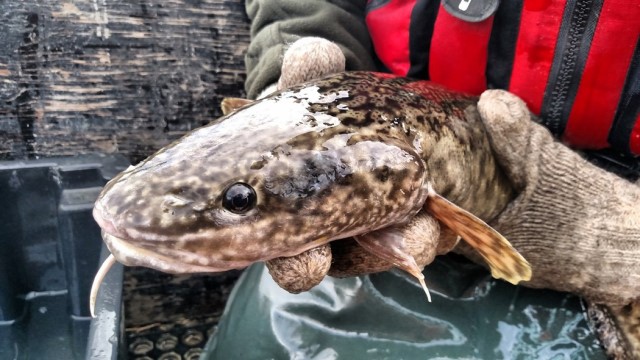
Burbot – also known as bubbot, cusk, freshwater cod, ling, lingcod and eelpout – are the only freshwater cod species in North America, and they have a special place in Idaho’s heart. With a face that only a mother could love, these long-bodied, cold-water fish are not your run-of-the-mill sport fish. Burbot have flat heads and long bodies that sprout long pectoral fins just behind their gills. Their back-half is eel-like, with stumpy rounded fins. Burbot have brownish-yellow mottled skin, earning them the nickname “Kootenai leopards” among anglers.

As the name implies, these “leopard-like” fish are predatory and feed during the night. They hang out during the day in deep, slow-moving pools, then seek out food such as crayfish or small fish in shallow water. With the help of inward slanting teeth and a funky little chin whisker called a barbel, burbot have no trouble scoping out and hanging on to prey.

Burbot march to the beat of their own drum in more ways than one, but when it comes to reproduction, things get even weirder. Unlike most freshwater fish that spawn in spring or early summer, burbot prefer to do their business in winter. Some Kootenai River burbot will even migrate from watersheds up in Canada, roughly 75 miles away. Spawning can occur from December to late March, with most spawning happening mid-February through mid-March. Females will lay anywhere between 60,000 to 3 million eggs, each being the size a grain of sand. Burbot will often live to 8 to 10 years old, and even longer in other parts of the world.

Unbeknownst to many Idaho anglers, burbot are a healthy sport fish living right here in our backyard, but it didn’t always use to be that way.

Bouncing back

Just 20 years ago, anglers would be hard-pressed to hook a burbot in Idaho’s Kootenai River. It was estimated that only 50 fish remained in 2004. Thanks to an international, multi-state effort including Idaho Fish and Game, the Kootenai Tribe of Idaho and fisheries biologists from Canada and Montana, Kootenai River’s burbot population recovered.

Research began in the 1990’s, with burbot fishing closed down in 1992 because of a decline in numbers. Biologists started using hoop nets – a non-invasive fish trap – to capture, tag and study these fish. Researchers also tagged burbot with PIT tags to track migration.

In 2004, the Kootenai Tribe of Idaho began operating a burbot hatchery in hopes of increasing the population. The Kootenai Tribe took Canadian-spawned burbot eggs back to the hatchery and hatched the tiny eggs from there. Once they reached adolescence, the young fish were released into the Kootenai River.

From the decades’ long research, two important takeaways were found: Burbot weren’t very successful at spawning naturally, and hatchery-raised burbot were surviving but still relied on the hatchery to produce more fish for the population to continue growing.

In 2019, the burbot population finally hit its restoration goal. Partners from the original recovery project are still monitoring burbot populations in the Kootenai River fishery.

You had me at lobster cod

Hit up your buddy to take the rods out on the Kootenai River and its tributaries in mid-winter and you might get a solid “no” before you can even finish your sentence. But tickle their fancy with a prized fresh-water cod that tastes like lobster and it might change their tune.

Anglers will most likely find burbot between mid-February and mid-March when spawning is at its peak, but because burbot fly by night usually, it can be a little challenging to locate them. But before you cast off these unicorn fish as a myth, here are a few fishing tips to help you track down a “Kootenai leopard”:

  • Fish shallow flats (5-15 feet deep) at dusk or during the night.
  • Try river junctions where smaller streams flow into the mainstem of the river.
  • If fishing during the day, try dropping a line in 40-plus foot deep holes. Burbot like to rest in these deep pockets during the day.
  • Anglers can also try ice fishing for burbot on Bonner Lake.
  • Worms and shrimp work well for bait.
  • Use weights to get the line down deep towards the bottom.

Fishing for burbot can be a great way to kick off any angler’s new year. Be sure to dress warm and bring extra layers in case that North Idaho weather takes a turn. Whether you land one of these leopard-like cod or simply use it as a way to get outdoors this winter, burbot fishing is not only a chance to put a delicious, native fish on the supper table, but a true reminder of the persistence and revitalization of one of our state’s fish species.

To learn more about burbot, check out this month’s issue of Wildlife Express. In it you will find all kinds of fun facts, puzzles and more!

Green Bay Whitefish with the Right Baits

Stirring Up Green Bay Whitefish

Heading out on Green Bay soon? Anchor a Slider Rig with a No. 3 Rapala Jigging Rap, dress your “cheater hook” with half a Mustache Worm and hang on, says in-demand Door County guide and ICE FORCE Pro JJ Malvitz.

“The whitefish bite has been amazing,” he says. “And the cool thing about whitefish is that they’re really easy to catch and you can catch a lot of them.”

There’s more to whitefish angling than just quantity though, Malvitz notes – the fish provide a quality fight as well, especially in the deep water in which they’re often found in Green Bay this time of year.

“You’re catching them in super-deep water – 50 to 100 feet – so you get a lot of time on the rod to really play them out,” Malvitz says. “Any time you can prolong a fish on the end of your line, it maximizes the fun factor. It provides a lot of action, so it’s really good for kids and people who have not ice-fished much before.”

Also, whitefish are delicious.

“They are great table fare,” Malvitz says. He likes them deep-fried, pan-fried and says “you can’t beat smoked whitefish.”

A good keeper whitefish is anything 16 inches long or better, Malvitz says – “you can really get a really good filet off of them.” A whitefish big enough to brag about a bit will be 21-plus inches, about 4 to 5 pounds. “That’s a really good one,” he says. Most you’ll catch on Green Bay will weigh around 1 ½ to 2 pounds. The bigger ones taste better smoked, he says. Wisconsin’s daily limit is 10 whitefish.

“We just started in the first weekend in January to be able to get on this bite safely – to get to that offshore structure where we catch whitefish,” Malvitz says. “We’ve been catching limits from the get-go.”

Slider Rig
Finding whitefish can often be the hardest part of catching them. Once you find a group of fish, though, getting them to bite a Slider Rig is usually pretty easy.

“It’s really kind of a neat little rig,” Malvitz says. “It’s a lot of fun.”

Malvitz’ Slider Rigs comprise a main line of 6-pound-test Sufix 832 Advanced Superline, a six-foot tip line of 6-pound-test Sufix Invisiline 100% Fluorocarbon, a 12- to 16-inch leader of the same Sufix fluoro and four pieces of tackle:

• A heavy, bottom-pounding anchor bait like a No. 3 Jigging Rap or 1/8th oz. VMC Rattle Spoon. Black-gold, silver-black and Firetiger color patterns have all been “producing pretty good,” Malvitz says.

• A small VMC swivel

• A No. 6 VMC Octopus hook

• A brown Trigger X Mustache Worm with one of the arms pulled off. (The brown color is named “Natural”

Here’s how the rig all comes together:

• Use a double-uni knot to connect the main line and the six-foot section of fluoro

• Thread the Octopus hook onto the fluoro, point up, then tie the swivel to the end of the fluoro. Some people call this section of the rig the “cheater hook or slider hook” Malvitz says. (Note: Don’t tie on the hook – after threading it on the line, just let it slide around, free)

• To the other end of the swivel, tie the leader.

• Tie the Jigging Rap or Rattle Spoon at the end of the leader

• Nose-hook the center bulb of the half Mustache Worm on the cheater hook

Fish the rig by dropping it to the bottom, banging the anchor bait around a bit and then lifting it all up. Repeat until you get bit. “Sometimes they’ll pin the Jigging Rap on the bottom and we’ll catch ’em on that, but 75 to 90 percent of our fish come on that top, slider hook,” Malvitz says.

More times than not, you won’t feel your bites. “It’s not a detection bite like when you’re walleye or bluegill fishing, where you’ll feel the fish smoke your lure,” Malvitz explains. “You’ll be lifting upward and all of a sudden, the weight of the fish is just there.”

Steep and Deep
As safe ice allows, Malvitz targets steep drops from 15 to 25 feet of water to 40 to 90 feet. “You want steep breaks with an edge that has some structure. The fish will hold on those breaks. They’ll be running all over those edges.”

Because whitefish are in the salmon and trout family, productive areas will have current as well. “They really relate to current,” Malvitz says. You’ll know you found adequate current when your line very obviously drifts to the edge of your hole.

Unlike some other freshwater fish, whitefish can survive trips to the surface from very deep water, Malvitz says. “They have the ability to ‘burp’ themselves,” he explains. “Sometimes, when you’re reeling up, you’ll have this surge of bubbles come up through your hole. That’s the fish purging its air bladder. They don’t puke up their air bladder like perch out of deep water.”

See Rapala® Jigging Rap

See Trigger X® Mustache Worm

Bass Are Cold Blooded So Slow Down for Winter Bass

Slow Down for Winter Bass

By Billy Decoteau

from The Fishing Wire

Bass are cold-blooded creatures, meaning as the water temperature drops lower and lower, bass move slower and slower. Add in some ice chilling water temperatures and lethargic becomes the norm in the underwater world of Micropterus salmoides. (The scientific name for largemouth bass.)

Speaking of scientific, this is the perfect opportunity to employ Z-MAN’s cutting edge ElaZtech soft plastic technology. At no time does ‘Do-Nothing Dead-Sticking’ mean more. When nose hooked on a drop-shot rig, the 4-inch Finesse ShadZ coupled with its exceptional inherent buoyancy mimics the lifelike movement of lethargic baitfish in frigid water. This is also the time when vertical presentations out perform horizontal presentations.

Making the perfect vertical presentation requires anglers to first locate wintering areas with their electronic sonars. Chasing winter bass requires anglers to spend time idling slowly as they monitor their screen, logging waypoints, then dissecting these waypoints even slower with their trolling motors, inserting additional waypoints and pinpointing high percentage spots. High percentage areas may be in the form of vertical cover such as brush piles, rocks, large boulders and ledges or as pictured above structural contour changes. Add in deep vegetation and baitfish… and, you may have found a real winter honey-hole!

Utilize your trolling motor to position yourself above the baitfish/bass. This is when a trolling motor mounted sonar pays off big time. Allow your drop-shot rig to fall straight down to the bottom, as you monitor it falling on your sonar screen. If bass move towards your bait, this signals an active or aggressive school. If your bait misses the target you may need to attach a heavier drop-shot weight or adjust your boat position.

Remember both the water and air temperatures are cold. Pre-rigging several drop-shot rods and jighead rods prior to hitting the water makes life a whole lot easier when snags or bass break-off and re-tying becomes a cold on-the-water chore.

3″ Scented LeechZ™

Keep it simple and subtle when choosing baits for winter bass. More often than not when it comes to action ‘Less is Best’. The following Z-MAN 3″ to 4″ baits are excellent Winter Bass choices for Drop-Shot Rigs.

One important factor to increasing your drop-shot bites when fishing cold water is to keep your baits on or close to the bottom A short six-inch or less drop-shot leader allows your Z-MAN bait to float just off the bottom.

The same subtle action applies when choosing jig-head baits for winter bass. When it comes to the dead-sticking technique, Z-MAN ElaZtech plastics out perform all other plastic baits in my experience. Z-MAN ElaZtech’s inherent buoyancy allows your bait to imitate the movement of lethargic forage in cold water. The following Z-MAN 2.75″ and 4″ baits are excellent winter bass choices for jighead rigs.

2.75″ TRD TubeZ™

The above Z-MAN JigheadZ models allow for several versatile rigging options. For sliding or gliding applications as well as penetrating deep weedlines and vegetation, the pointed large wide-eye head of the Trout Eye jighead falls faster and characterizes a dying shad. Z-MAN’s Finesse ShroomZ matches perfectly as designed with all four of the above baits. While, both the Finesse ShroomZ and Shaky HeadZ may be inserted into the TRD TubeZ, rigging any of the baits by sliding them on the 4/0 Mustad Ultra Point Hook is the perfect Shaky Head combination.

The same vertical boat position over the bass/baitfish applies when descending a jighead presentation. Let your bait fall to the bottom and allow it to lay motionless for as long as you can stand it. Then apply a smooth upward jigging or stroking action allowing your bait to fall back to the bottom, then lay motionless before reeling in and making another cast. Change up your retrieve and cadence until you trigger strikes.

As the aggressive JigheadZ Bait hopping presentation becomes non-productive its time to return to finesse dead-stick and drop-shot techniques. I have caught bass in 34 degree water drop-shotting, when other sections of the lake were iced over! The key to success is downsizing both your line and baits as the water temperature drops. Bass become more lethargic as water temperatures decrease. This is the time for smaller do-nothing baits to entice big cold-water bass.

30 DAYS STRAIGHT FISHING ON THE ICE

30 DAYS STRAIGHT FISHING ON THE ICE WITH NICK LINDNER AND NORTHLAND

from The Fishing Wire

BEMIDJI, Minn.  – Doubt if any hardwater enthusiasts are sympathetic that Nick Lindner “has to” ice fish for 30 days straight. Torture? Not so much. Fortunately, Nick is documenting the month-long pursuit on video. And now at the halfway point, Nick offers a highlight reel of several of his top tips to improve your fishing this winter. (I once fished 424 days in a row!)

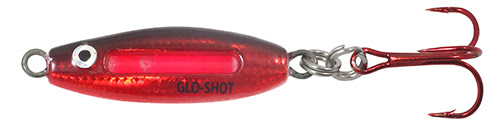
In this video, Nick talks about how a simple glow-stick color change on his Glo-Shot Fired-Belly Spoon triggered the walleyes. He also demonstrates key custom rigging for catching more low-light crappies. You’ll appreciate how Nick breaks down deadsticking to the deep details. And lastly, Nick gives up his number one combination for jumbo perch.

Enjoy the video.

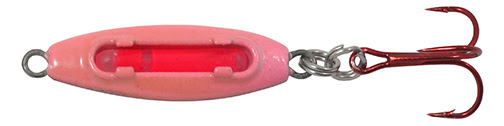
The Glo-Shot® Fire-Belly Spoon relies on its proven exposed light-stick that beams impressively for up to 8 hours. Available in red, green and chartreuse, the replaceable and interchangeable light-sticks give you the flexibility of color choice depending on light levels and water clarity. From a scientific position, florescent green light travels the furthest underwater, making it a great choice for summoning fish from distances. In exceptionally clear water, however, it might be too bright, making chartreuse, and even more so red, better choices. Overall, red is a universal producer, and proves to be the most intense at short range. Red has a storied history of producing beneath the ice.

The body of the Glo-Shot Fire-Belly Spoon is forged from lead-free Z-alloy (Zinc), which cuts through the water column at break wind speed, quickly getting to hot marks on your flasher. Z-alloy yields weight without bulk, too, producing speed minus the intimidating sizes of most heavy spoons.

The Glo-Shot Fire-Belly Spoon is offered in 14 fish-catching colors inside and outside of the UV color spectrum. Speaking of UV, the specialty pigment refracts more natural light than traditional paint. The result is a lure that maintains its color deeper, in lower light, and in stained water.

The spectrum of 14 color patterns include the same colors tested year-in and year-out in the most popular waters throughout the U.S. and Canada, making the Glo-Shot Fire-Belly Spoon an instant classic. Add the fact that anglers can purchase individual glo-sticks to mix and match colors, and you have an endlessly customizable bait to address any situation on the water.

With an MSRP of $7.99, the Glo-Shot Fire-Belly Spoon comes ready to fish with one bait, three glow-sticks and changing tool per card. Select from 14 colors and 4 sizes 1/8 (#10 hook), 3/16 (#8 hook), ¼ (#8 hook), 3/8 (#6 hook) to accommodate multiple depths and species including walleyes, pike, crappies, bass and trout.

WALLEYES UNDER THE ICE

FIRST BREAK WALLEYES UNDER THE ICE

By Joel Nelson for Northland Tackle

from The Fishing Wire

First Break Walleyes Under the Ice

It’s been a few years, but I’ve always been a big fan of full-moon fall trolling on the big lakes. What thermocline may have kept bait and ‘eyes out deeper all summer, gave way to incredible shallow water fishing come late October and November. What surprised me however, was just how many anglers had that full-moon fever bite going, and never re-connected with it come first ice. Those same fish didn’t make vast moves or change their feeding patterns too much. They were just under a few inches of ice now.

It’s that same mentality you need to take with you to the lake come first ice walleyes, especially from a location perspective. You’ll have plenty of time to pound off-shore reefs, deep mud, gravel bars, and rock piles. Early ice is the time for fishing right off of shore, just below or on the “first break.” By that, I mean simply that you should look for the first appreciable steep drop from shore, which could bottom out anywhere from 5 to 15 FOW. First ice walleyes love to cruise the bottom of these edges in search of food, and when you’ve got some weed cover, substrate change, or other features to target, the spot is all that much better.

Large, main-lake points are favorites no matter where you go, to focus feeding attention of hungry ‘eyes. They’re also angler magnets, so if you’re fishing pressured bodies of water, understand that you don’t always need to be on a prominent piece of structure to get it done. More and more, I’m looking for small areas of interest. A living-room sized patch of rock that doesn’t show up on the contour map, a quality weed-bed that’s more dense than the surrounding area, or even some hard-pan sand vs. nearby mud or muck. Often, that’s all it takes to gather some near-shore walleyes once the lakes freeze over.

Where most anglers miss out on the shallow water walleye bite, is that they fish it the way they would mid-winter walleyes in deeper parts of the lake. They ice troll across the shallow flats, scaring the very fish they seek. With fall trolling, we learned that there were nights where hundreds of feet of line behind the boat was what it took to get bit. The same walleyes that don’t love hanging tight in your main-motor wash, don’t appreciate lots of hole drilling and overhead traffic.

First Break Walleyes

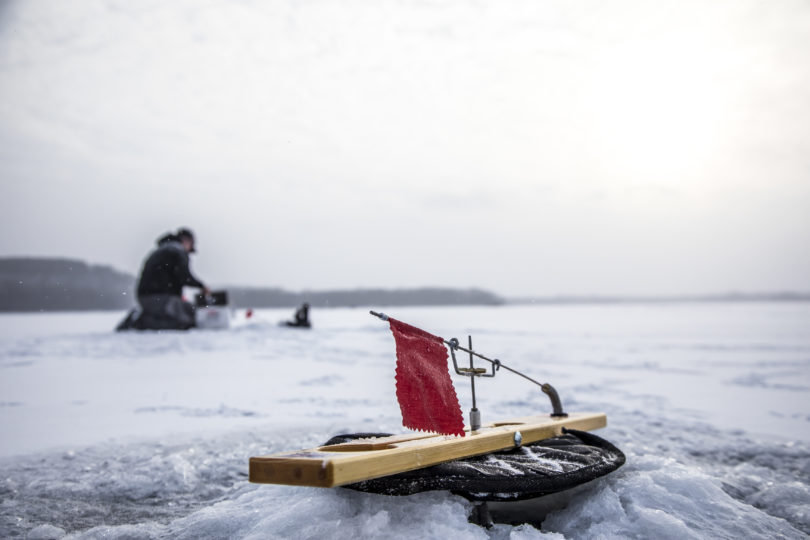
For that reason, it’s best to have a few dead-set approaches. While there are a few ways to skin that walleye, the two I employ are tip-ups and deadstick rods. Tip-ups for early ice eyes are a mainstay and have been around for forever, so there’s not much new under the sun here. Select some quality fluorocarbon line in or around 10lb test, select a good light wire live-bait hook, and rig up a small sucker or preferably shiner pegged with a sinker above the hook a few inches. Put that sinker closer to the bait if a lively sucker, or further for less lively minnow species. Set your tip-up on a very “light-trip” setting, preferably not under the notch unless needed for wind’s-sake. Then you wait.

Tip-ups are great, but do have their problems. Namely, fighting a fish hand-over-hand, especially if it’s a trophy. Dead-stick rods on simple rod-holders have been a great solution to that problem and more, while offering several advantages over the standard tip-up scenario. Why a specialized rod for this type of fishing? Mostly because a dead-stick is unlike any other ice rod. The action is extremely slow for half or better of the length of the rod, offering bite-detection and minnow-monitoring convenience. Then, a hard-wall on the blank that goes straight to very stiff backbone – perfect for setting the hook.

While dead-stick rods may tangle, any issues are usually seen quickly and above ice, rather than the below-water snarls that can happen on a tip-up without you knowing about it. More importantly, a quality dead-stick will telegraph every movement of the minnow, all while offering you immediate clues both during and after the bite. Set the rod in the holder, and watch your bait or several baits go to work.

Sometimes the fish will grab the bait and sit right below the hole, which is easily seen on a deadstick as it very slowly loads. That’s far less visible and harder to manage a hookset when that happens on a tip-up. I highly recommend bait-feeder reel designs for these rods, as with the flip of a switch, free-spool is offered to running walleyes. These quick runs are easy to detect for either tip-ups or dead-sticks, but the hookset and fight are usually superior on a dead-stick-setup.

First Break Walleyes

Usually, I’ll either jig on the deeper side of the break and watch a deadstick rod right on it, or many times, simply put out the max number of lines I’m allowed in dead-sticks and wait. As with most things walleye, the bite is best early and late, but cloudy days can make for spurts of great fishing throughout. It’s a really fun way to fish if you’ve got a group of friends, as you can cover a long section of break, all while enjoying each other’s company until a rod goes off.

Just make sure to tend the set, just as you would a tip-up. Extreme cold weather doesn’t bode well for this type of fishing, but the good news is that first ice is typically pretty mild after that first blast of cold that locks everything up. Check your baits, make sure the hole isn’t icing up too badly, and more than anything, resist the urge to drill too many holes and stomp around throughout the day. These fish are sensitive to noise, as you may only be targeting them in 5-8FOW.

Especially when your panfish lakes aren’t locked up well, or you’ve got good walkable ice near-shore but not the whole way out, this is the way to go. Setup a few hours before dark, stake out your spot, and wait until some rods start bending or flags start flying.