Category Archives: Fishing Tackle

Rods and reels to live bait

Fall Smallmouth Bass Fishing in Virginia

How to catch Fall Smallmouth Bass Fishing in Virginia
Tactics and Techniques to Target Smallmouth Through the Changing Seasons

Fall is one of the best times of the year to target big smallmouth bass across the state.

By Alex McCrickard, DGIF Aquatic Education Coordinator
from The Fishing Wire

There might not be a finer season to explore our freshwater fisheries across Virginia than in fall.  Maples, tulip poplars, oaks, and sycamores turn red, orange, yellow, and brown as air temperatures cool to a comfortable range in the 60s and 70s.  The cool crisp air during this time of the year is a welcome change to anglers who have fished throughout the hot humid Virginia summer.  The changing of the seasons creates excellent conditions for anglers targeting smallmouth bass across the state.Smallmouth Bass in Virginia.

Smallmouth bass, frequently referred to as smallies or bronzebacks, are a freshwater member of the sunfish family: Centrarchidae.  Their green and brown sides are often marked with vertical black bars.  Some of these fish have war paint like markings extending horizontally and diagonally behind their eyes and across their gill plates.  Smallmouth bass are native to the Great Lakes system and the Mississippi River Basin including the Tennessee and Big Sandy River Drainages of Southwest Virginia.  However, these game fish have been introduced all across the Piedmont of Virginia and are truly a worthy opponent on rod and reel. 

Because of the smallmouth’s widespread range in Virginia, they are readily available to anglers fishing west of the coastal plains above the fall lines of our major river systems.  This allows anglers who reside in cities and large metropolitan areas to fish local as smallmouth opportunities are plentiful.  The James River in Lynchburg and RichmondRappahannock River in Fredericksburg, Rivanna River in Charlottesville, Maury River near Lexington, and the New River in Blacksburg are fine examples of local opportunities.Mid-October fall foliage on the New River in Southwest, Virginia.

The mainstem and larger tributaries of these rivers are full of smallmouth. Anglers in Northern Virginia can focus efforts on the Upper Potomac River as well as the Shenandoah mainstemNorth Fork, and South Fork.  The North Fork of the Holston River and the Clinch River provide excellent smallmouth opportunities in Southwest Virginia.  Floating these larger rivers in a canoe or raft can be a great way to cover water, just remember to wear your life jacket. You can also wade fish these rivers and their tributaries in lower water conditions.Changing River Conditions.

Rivers and streams across Virginia are typically in low flow conditions on average years as summer moves to early fall.  As the days get shorter and air temperatures drop, water temperatures are soon to follow.  As water temperatures cool from the upper 80s down to the mid 70s and eventually upper 60s, smallmouth will become very active.  While the smallmouth’s metabolism might be highest in warmer water temperatures, these conditions can sometimes make the fish a bit sluggish, especially on bright sunny days in the heat of the summer.  Therefore, the cooling trends that occur in early to mid-fall can oftentimes put smallmouth on the feed. 

Also, as water temperatures drop, dissolved oxygen will increase.  During the hottest summer months, smallmouth often congregate at the heads of riffles in broken water where dissolved oxygen levels are highest.  It’s the fall cooling of water temperatures that in turn can spread more smallmouth out evenly throughout various habitats from riffles and pocket water to long runs, pools, and flats.  Smallmouth can also disperse when large rain events occur throughout fall and river levels rise from typical low late summer and early fall flows.

As mid-fall progresses into late fall, water temperatures will drop even further.  As water temperatures drop into the mid to low 50s, smallmouth will stage in transitionary water between their summer habitat and deep overwintering holes.  In Virginia, this oftentimes happens from late October through the middle of November. 

Where They Live
Look for smallmouth to be on the edges of drop-offs as well as congregating around river points and bends.  During this transitionary time smallmouth can also be found in the middle sections and tailouts of deep riffles holding around structure like log jams and big boulders.Early Fall –

Techniques and Approach
Topwater lures and flies will continue to produce good numbers of smallmouth bass throughout the entire month of September and well into the month of October.  Anglers should take advantage of this last opportunity to fish on the surface before winter kicks in.  Popular topwater lures that anglers enjoy to fish in the summer will also prove to be productive in early to mid-Autumn.  Make sure to keep buzzbaits, Whopper Ploppers, Zara Spooks, Heddon Tiny Torpedos, and the Rebel Pop-R in your box of topwater lures.September and October are great months to fish topwater lures and flies for Virginia smallmouth bass.

For fly fishing, make sure to keep your flybox stocked with your favorite poppers.  I always carry Boogle Bugs, Double Barrel poppers, and Walt’s Bass Popper in a variety of sizes and colors in early fall.  It’s best to experiment with your retrieve to figure out if the fish are looking for fast or slow action.  Your retrieve and approach can also depend on the type of water you are fishing and the action of your fly or lure.  Sometimes in choppy riffles a faster retrieve can allow the lure or fly to move more water where as a slower pop and pause retrieve can be very productive in flat water stretches.

Late Fall – Techniques and Approach
As water temperatures continue to drop in late October through November, a subsurface approach is best.  It’s still possible to catch bass on topwater lures and flies but you will find more fish feeding subsurface with water temperatures in the 50s.  Smallmouth will actively ambush smaller forage fish during this time of the year as they attempt to put on weight for the upcoming winter season.  This makes mid to late fall one of the best times of the year to target large smallmouth in our rivers and streams across Virginia.  Use baitfish imitations and target the transitionary water that smallmouth occupy during this time frame.

A variety of subsurface crankbaits, soft plastic swimbaits and flukes, spinnerbaits, and jerkbaits will prove productive.  The Rebel Crawfish, a crayfish crankbait, should also be in your selection of subsurface lures as smallmouth will prowl pools and flats for crayfish in the fall.When fishing some of these subsurface lures, especially soft plastic swimbaits and flukes, its important to apply action to the lure on occasion by quickly jerking your rod to the side and then pausing briefly during your retrieve.  This will give your lure an erratic motion and imitate a stressed and injured baitfish which is exactly what the smallmouth are looking for.  When fishing soft plastics with a jig head, you can adjust the size of your jig head based upon the depth and current that you are focusing on.  Anglers can also fish a variety of different colored jig and pigs for targeting late fall smallmouth that are holding lower in the water column closer to the bottom of the river.

Subsurface lures work well when targeting fall smallmouth.

Late October through November is an excellent time to fish large streamers for big smallmouth bass.  When fly fishing in mid to late fall, consider fishing with a sinktip or a 250 grain full sinking line in the deeper riffles and pools on our larger rivers.  Sometimes it pays off huge when you can get your fly down to the fish during this time of the year, especially in the latter part of the season as winter approaches. I have had great success in the fall fishing Bob Clouser’s Clouser Minnow, Lefty Kreh’s Deceiver, as well as the combination of the two patterns: the Half & Half. Large articulated streamers that were originally developed for trout fishing in western states likes Montana, Colorado, and Wyoming will also be productive on fall smallmouth.

Kelly Galloup’s articulated streamer patterns from Montana work well and most of these flies have large profiles as some of them are tied with wool or spun deer hair heads.  Charlie Craven’s patterns from Colorado are also quite productive on our Virginia smallmouth.  The profile of these large articulated streamers attracts fall smallmouth and these patterns swim really well through the water as they are articulated.  The multi-sectioned Gamechanger tied by Blane Chocklett also works quite well this time of the year.  You should also carry large beadhead or conehead Woolly Buggers.  I like fishing this classic pattern in sizes 2-4 in black, dark brown, and olive. Chuck Kraft’s Clawdad and Harry Murray’s Hellgrammite are also productive patterns to fish lower in the water column this time of year.

Fishing large streamers is a great technique for targeting big smallmouth bass. Consider fishing a sinktip or full sinking line in mid to late fall on our larger Virginia rivers, especially in higher flows. Photo by Meghan Marchetti/DGIF.Autumn can truly be one of the most pleasant times of the year to target smallmouth across the Commonwealth.  Anglers will enjoy cooler temperatures and wearing waders when fishing these rivers during this time of the year. 

As the season progresses from October into November, it’s important to bring a dry bag with a towel and an extra change of clothes for safety precautions due to cooler water and air temperatures.  Make time to get out this fall and take advantage of the prime fishing conditions for smallmouth across the state.

St Croix Musky Mojo Rod

More Manageable Musky Mojo
Upgraded St. Croix Mojo Musky Series casting rods available now! Reinvented and improved lineup includes 14 versatile models, three with all-new telescopic construction.
Muskie on St Croix Muskie Mojo Rod
press release: Park Falls, WI (October 23, 2019) – Musky aficionados are some of the most passionate anglers on the water. Their zeal for the sport extends to their gear, of which they tend to be both critical and demanding. Specific rods are chosen for a targeted presentation or to match current angling conditions… and they’d better deliver.St. Croix – makers of the rods musky fanatics prefer – offers some exciting news: The highly popular Mojo Musky Series has been reinvented and improved for 2020!

The significant upgrades include lighter SCIII carbon blanks; IPC® mandrel technology, which eliminates all transition points in the blank from butt to tip, resulting in rods that are incredibly smooth, strong and sensitive; custom Winn split-grip handles for improved grip; and new upgraded hardware. Musky anglers can now choose from 14 upgraded and unique Mojo Musky casting models. Best of all, these economical, high-performance musky fishing tools are available to purchase right now.
EXTENDED ADVANTAGESLonger rods create extra advantages in a variety of musky fishing situations. But they can be challenging to transport and store. The upgraded Mojo Musky Series delivers an ideal solution to this dilemma via three all-new telescopic models that combine the length anglers demand with the convenience of a clever, collapsible design.
St. Croix is proud to offer two heavy power, fast action telescopic Mojo Musky casting rods (MM86HFT and MM90HFT) and one medium-heavy, fast action telescopic casting model (MJM90MHFT). These rods easily collapse for simplified maneuverability, transport and storage, without sacrifice to their big bait and big fish handling performance. The 8’6” model collapses to a manageable 7’6” and the 9’ models down to 7’10”.8’6” heavy power, fast action, telescopic, collapses to 7’6” (MM86HFT)9’ heavy power, fast action, telescopic, collapses to 7’10” (MM90HFT)9’ medium-heavy power, fast action, telescopic, collapses to 7’10” (MM90MHFT)“

The trend for a number of years has been going longer and longer in musky rods,” says St. Croix Promotion Manager, Rich Belanger. “That’s due to a number of factors. First, longer musky rods are just more efficient tools. They offer better performance, greater casting distance, deeper figure 8s, and better leverage on the hookset.

”But most anglers experience challenges in transporting and storing long rods; they’re hard to fit in a truck or SUV, most boat rod lockers, and are awkward in other storage situations.“We solved those challenges,” comments Belanger. “With these telescopic Mojo Musky models, anglers can finally get longer rods around without the common headaches or storage issues associated with traditional one-piece rods.”
Musky guide and St. Croix Rod pro angler, Rob Manthei, is enthralled about his early experiences with the new, updated Mojo Musky rods. “I really like the lightweight feel from the new carbon blanks, the Winn grip, and IPC technology makes them super smooth. What they offer for the dollar value – especially with all the new upgrades – is just unreal,” he says. “And with regards to the telescopic design, rod storage is no longer an issue. They fit easily in the boat, in the truck and are really manageable. Big blades, big rubber, they handle it all,”

Manthei continues. “We’ve caught quite a few fish on them, and the performance has been just outstanding. I was never a fan of telescopic rods, but St. Croix really hit the mark with the construction… did it right, like they do everything else. I’d definitely recommend them to anyone.”Indeed, each St. Croix Mojo Musky rod is uniquely designed and engineered to exceed the expectations of the most demanding musky anglers. 
ST. CROIX MOJO MUSKY CASTING ROD FEATURESIntegrated Poly Curve® (IPC®) mandrel technologyPremium, high-modulus SCIII carbonKigan Master Hand 3D guides with slim, strong aluminum-oxide rings and black framesKigan Master Hand 3D top with SiC ringFuji® TCS or PSSLD Deluxe reel seat with black hoodCustom Winn split-grip handleKigan hook-keeperTwo coats of Flex-Coat slow cure finishThree telescopic models collapse down to under eight feet for easy storage and transportSpecialized musky series designed for superior performance
#CROIXGEARLike the rods? You’ll love our lifestyle apparel. Shop now! Save 15% on our Northwoods Musky Tee! through October 31st!

American Hero Speed Stick Rod Review

I won a Fig Rig rod in a Top Six tournament at West Point years ago. That northern company and made muskie rods but decided to get into the bass market.  This six-foot six-inch rod was the most sensitive rod I have ever used for worm and jig fishing.  

    I broke the rod several weeks ago and, unfortunately, the company is no longer in business. So, I went looking for a replacement.  I ordered a St. Croix rod but needed one fast and I went to Berrys Sporting Goods to see what he had.

    After looking at several rods Jim showed me an American Hero Speed Stick rod.  It felt good even though it is a seven-foot rod and I really wanted a shorter rod for skipping baits under docks.  The medium heavy, fast action was right, though, and I got it.

    After using it several times and catching a few fish on it, I am very happy with it.  It cast half ounce jigs and Texas rigs with a three sixteenths ounce sinker well, exactly what I wanted it for.  I can skip ok with it and it has good sensitivity for feeling bites on those baits.  The seven-foot length gives me good leverage when setting the hook.

    The rod weighs more than my St. Croix rods but cost less than $100, about half the cost of my St. Croix rods. Usually the more expensive the rod the less it weighs. 

    It serves my needs well and I am very happy with it.

Hydrowave H2 Review

Hydrowave H2 Review

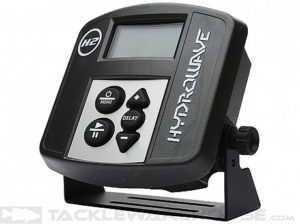
The TH Marine Hydrowave H2 is a unit that plays a sound through an underwater speaker that is usually mounted on a trolling motor. The sounds it plays are supposed to represent sounds that make fish feed. The Hydrowave H2 has a variety of choices of sounds, from crawfish on gravel, one of my favorites, to deep bait to blueback herring, a good one on herring lakes like Clarks Hill and Lanier.

Does it work? Honestly, I do not know, but I always have it playing during tournaments.

Many of the pros I have done Map of the Month articles with for Alabama and Georgia Outdoor News swear by it, even those not sponsored by the company and have to buy their own units. That means a lot to me, the ones not sponsored using it.

One experience indicates it does work. While fishing a club tournament at Lake Lanier during the herring spawn, I stopped off a seawall where the spotted bass had been schooling. There was no surface activity at all.

When I got up front and put my trolling motor in the water, with the Hydrowave H2 playing the herring spawn, the water off the seawall exploded with several big spots chasing baitfish. Like a dummy, I had not picked up my rod first, and by the time I unstrapped it and was ready to cast, the fish had disappeared. From then on I have my rod ready to cast when putting the unit in the water.

I have had my unit for about two years and have done well in many tournaments when the fishing was very tough. It gives me a little extra confidence when it is on, always an important factor.

The unit is not cheap, costing about $400.00. Is it worth it?

My old unit died last week, out of warranty that last one year, but I ordered another one to replace it. That is how much I believe in it. Since I was replacing an old unit, they did give me a good discount on the new one.

New Product Showcase Winners Plus “Best of Show”

ICAST Announces 29 Fishing Tackle Retailer New Product Showcase Winners Plus “Best of Show”
from The Fishing Wire

One of the most popular featured events at ICAST, the New Product Showcase, sponsored by Fishing Tackle Retailer/Decode, is a once-a-year opportunity to see the latest and greatest innovations all in one place.

Orlando, FL – Wednesday night, the ICAST 2019 “Best of Category” winners were announced during the awards reception. One of those 29 category winners on Thursday was named “Best of Show”. This year’s winner:

The “Best of Category” awards were presented during the Wednesday night New Product Showcase Awards Reception, sponsored by SiOnyx. Winners were selected by credentialed buyers and media from around the world who vote for the best of the new product entries. The “Best of Show” overall category was awarded Thursday afternoon. This year’s winner: Garmin, and its Force™ Trolling Motor.

One of the most popular featured events at ICAST, the New Product Showcase, sponsored by Fishing Tackle Retailer/Decode, is a once-a-year opportunity to see the latest and greatest innovations all in one place.

After launching July 9, with Super Tuesday, ICAST, the premier annual event for the global recreational fishing industry, is in full swing through Friday, July 13. ICAST is produced by the American Sportfishing Association (ASA). ASA is a national, non-profit trade association made up of more than 800 members who share a stake in promoting sportfishing for the well-being of our businesses and as part of our national heritage.

For ICAST 2019, ­­­­­­1,004 new products were entered by 303 companies. Reflecting trends in sportfishing retail, four new categories were added this year: Ice Fishing; Technical Apparel – Warm Weather, Technical Apparel – Cold Weather; Coolers and Bait/Storage; and Cutlery, Hand Pliers or Tools.

“We congratulate last night’s winners for contributing their ideas and hard work to the innovative spirit that keeps our industry growing,” said Blake Swango, ASA’s vice president for Trade Show and Membership. “We’re pleased that ICAST once again serves as a showcase for the best in sportfishing and the entire outdoor, on-the-water experience.”

All New Product Showcase entries are available for viewing on the ICAST website and on the ICAST app for Apple and Android devices.

ICAST 2019 New Product Showcase Best of Category Award Winners
For product details, images and other information please contact the individual award winners’ contacts listed below.

Best of Category – Boating Accessories – Garmin USA
Product: Force™ Trolling Motor
Contact: Carly Hysell

Best of Category – Boats and Watercraft – Hobie
Product: Mirage ProAngler 14 with 360 Drive Technology
Contact: Sean Douglas

Best of Category – Eyewear – Costa Del Mar, Inc.
Product: WaterWoman
Contact: Heather Miller

Best of Category – Footwear – Frogg Toggs
Product: Skipper
Contact: Missy Thompson

Best of Category – Giftware – 13 Fishing
Product: Fillet Table Beverage Management System
Contact: Stacie Lowe

Best of Category – Lifestyle Apparel – AFTCO/American Fishing Tackle Company
Product: Yurei Air-O-Mesh Performance Shirt
Contact: Denny Le

Best of Category – Technical Apparel – Cold Weather – Simms Fishing Products
Product: M’s G4Z® Stockingfoot Wader
Contact: John Frazier

Best of Category – Technical Apparel – Warm Weather – AFTCO/American Fishing Tackle Company
Product: Overboard Submersible Shorts
Contact: Denny Le

Best of Category – Ice Fishing – Johnson Outdoors Marine Electronics, Inc.
Product: Ice Helix 7 Chirp GPS G3N All-Season
Contact: Sandra Galis

Best of Category – Cooler and Bait/Storage – Plano Synergy
Product: Frabill Magnum Bait Station 30
Contact: Angelica Vazquez

Best of Category – Cutlery, Hand Pliers or Tools – Bubba
Product: 110V Electric Fillet Knife
Contact: Logan Waddell

Best of Category – Electronics – Johnson Outdoors Marine Electronics, Inc.
Product: MEGA 360 Imaging
Contact: Sandra Galis

Best of Category – Fly Fishing Accessory – Simms Fishing Products
Product: Dry Creek® Z Sling Pack
Contact: John Frazier

Best of Category – Fishing Accessory – American Tackle Company
Product: MW20 Finesse Set
Contact: Darrin Heim

Best of Category – Fishing Line – PowerPro
Product: Moon Shine Braid
Contact: John Mazurkiewicz

Best of Category – Kids’ Tackle – Anything Possible Brands
Product: The Bumblebee by ProFISHiency
Contact: Jason Bauer

Best of Category – Tackle Management – Plano Synergy
Product: Plano EDGE
Contact: Angelica Vazquez

Best of Category – Terminal Tackle – Rapala
Product: VMC Bladed Hybrid Treble Short
Contact: Julia Lindberg

Best of Category – Freshwater Soft Lure – Lunkerhunt
Product: Phantom Spider
Contact: Jesse Bleeman

Best of Category – Saltwater Soft Lure – LIVETARGET
Product: Slow-Roll Shiner
Contact: Susan Koppers

Best of Category – Freshwater Hard Lure – LIVETARGET
Product: Erratic Shiner
Contact: Susan Koppers

Best of Category – Saltwater Hard Lure – LIVETARGET
Product: Flutter Sardine
Contact: Susan Koppers

Best of Category – Freshwater Reel – Shimano
Product: SLX DC Baitcasting Reels
Contact: John Mazurkiewicz

Best of Category – Saltwater Reel – Shimano
Product: Stradic FL Spinning Reel
Contact: John Mazurkiewicz

Best of Category – Fly Reel – SEiGLER Reels
Product: SF (Small Fly)
Contact: Liz Seigler

Best of Category – Freshwater Rod – St. Croix of Park Falls
Product: Mojo Bass Glass MGC72HM Rip N’ Chatter Rod
Contact: Rich Belanger

Best of Category – Saltwater Rod – St. Croix of Park Falls
Product: Avid Surf VSS80MMF
Contact: Rich Belanger

Best of Category – Fly Fishing Rod – St. Croix of Park Falls
Product: Imperial Salt IS908.4
Contact: Rich Belanger

Best of Category – Rod & Reel Combo – Lew’s Fishing
Product: Lew’s Mach Smash Baitcast Combo
Contact: Tony Mehrl

A Hearty Thanks To Our 2019 Sponsors for Their Support

Gold: Columbia Sportswear, Crocodile Bay Resort, Engel Coolers, Fishing Tackle Retailer/Decode, FLW, Lowrance, Recreational Boating & Fishing Foundation (RBFF), SiOnyx andVisit Orlando.
Silver: Bonnier Corporation, FishAnywhere.com, Huk Performance Fishing, LIVETARGET Lures, Mossy Oak and Yakima Products
Bronze: Classic Fishing Products

Scott Forristall Selected to Lead St. Croix Rod Company

Scott Forristall Selected to Lead St. Croix

Scott Forristall


New President and CEO brings deep industry experience, angling passion and a history of success to the Best Rods on Earth®

Park Falls, WI (June 24, 2019) – St. Croix Rod CEO and co-owner, Paul Schluter, announced a planned transition of leadership to St. Croix Team Members in January of this year. In his statement, Schluter cited his desire to hand over the day-to-day operations of the 70-year-old company in order to focus on family, fishing and other aspects of the company he most loves.

Paul’s journey with St. Croix started in 1983 when his father, Gordon, hired him to manage retailer accounts in Minnesota. A year later, Paul was promoted to Sales Manager. In 1989, Gordon stepped aside, and Paul assumed the role of President. Brothers Paul, Jeff, Dave and sister Pamela Smiley purchased St. Croix from Gordon and Irene in 1990, and continue to own the company to this day.

St. Croix’s Board of Directors is excited to announce that fishing-industry veteran, Scott Forristall, has been selected and hired as the company’s new President and CEO.

Forristall brings a keen understanding of the fishing-rod business and the greater fishing industry to St. Croix, earned from a rich employment history with premier companies such as Eagle Claw, Johnson Outdoors and Far-Bank Enterprises, parent company to the Sage, Redington, and Rio Products fly-fishing brands. Most recently, Forristall served as President and CEO of the R.L. Winston Rod Company and Bauer Reels. His strong fishing lineage, industry knowledge and disciplined management style position the “Best Rods on Earth” for continued success in the company’s Balanced Scorecard approach to operations and measured company performance.

“St. Croix is the strongest brand in fishing rods in the US,” says Forristall, who shares the enthusiasm and pride of St. Croix’s employees and customers. “To come to work in Park Falls for this premier, family-owned business with US manufacturing is a rare opportunity in this industry that I love. St. Croix – its people, products and ties to the community – is everything I value and want to be part of.”

“Scott comes to us with vast experience managing premium outdoor brands and exhibits a management style which is consistent with all that we value at St. Croix,” says Schluter. “I’m really excited to watch Scott and the rest of our strong team further our objective of providing every angler the upper hand. Between my father and myself, a Schluter has been responsible for the execution of St. Croix’s mission for the last 41 of our 71 years. I have the highest confidence in Scott as he assumes this leadership role while I remain an active member of our Board of Directors, and, of course, an owner of St. Croix along with my brothers Jeff and Dave, and sister Pam.”

In addition to fishing, Forristall enjoys training and competing in triathlons during his free time. He and his wife of 44 years, Lynn, will relocate to Park Falls from their current home in Dillon, Montana. Forristall begins work at St. Croix on June 24.

Tackle Spending Up

Tackle Spending Up but Angler Numbers Flat
(Today’s feature, by publisher Jim Shepherd, appeared initially in The Outdoor Wire.)
Jim Shepherd, Publisher, The Outdoor Wire

The latest statistical study we’ve seen on the sportfishing market seems to paint a pretty optimistic picture for the recreational fishing industry. That’s good news as everyone preps for ICAST next month in Orlando, Florida.

The newest research indicates the overall sportfishing tackle market grew a whopping 12% to nearly $6 billion in 2018. According to the study, growth was primarily fueled by rods, reels and combo outfits that grew in both dollars and units sold.

Good news – if you’re a retailer- but for everyone concerned about growing the sport, it’s not all blue skies and a hot bite.

According to the Southwick & Associates (www.SouthwickAssociates.com) angler participation numbers, participation -the number of anglers going fishing- remain flat for 2018. If that is, in fact, the case, does it mean anglers are spending more, but not necessarily proselytizing the sport?

I talked with Rob Southwick yesterday, and he reminded me of something significant for the long-term health of fishing. Angling’s core customers, are doing what blue collar workers do in good economic times: they’re working. They don’t always have the luxury of extra time to take a fishing trip.

It’s something that’s been true for decades. In the boom years of the 70s, workers -including me- didn’t have time for “get aways” – we were working. Our bosses and the business owners were enjoying more leisure time – because with good times, the business was, basically, running itself.

I have a tendency to look at what’s happening in the outdoors from my time in the golf industry. Golf is a sport where spending and participation have been directly tied to two things: age and income. More money and more time is good- until you have an audience that’s basically aged out of the sport. Today, golf is a sport on the ropes on the consumer side.

That isn’t necessarily the case here. Especially when you consider that the blue collar workers might not have the luxury of the time to fish more; but their increasingly optimistic financial situation enables them to move to higher quality purchases they’ll be able to enjoy when they do have leisure time.

Like every business, there are a myriad of things in play. But it’s not a reach to say that the angling trade has reasons to be optimistic for the future. That allows them to focus on something every recreational business needs to work toward: bringing in new participants.

“Not everyone in the trade may be seeing the large gains across the industry due to inventory issues related to retail mergers and other factors,” Southwick VP Nancy Bacon told me, “but consumers are still spending on fishing equipment.”

The downside of that spending? There have never been so many avenues available to purchase product. Simply put, retailers are having to battle for those customers more than ever before.

Tackle shops, however, enjoy one significant advantage over their colleagues in the shooting sports. One thing that helps offset any price difference is the local knowledge that these shops offer their customers.

When traveling to unknown waters, many experienced anglers only bring their basic gear. They’ll head directly to the local bait and tackles to find out to things: 1) what’s biting, and 2) what getting bitten the most.

That’s information you can use. It’s another compelling reason to consider changing some of the gear you brought for the stuff locals are telling you works best. Fishing Arkansas’ White River a couple of years ago, I was the angler in my boat that wasn’t catching fish, and I was throwing the exact same bait as my companions.

We were stumped, until the guide noticed something. I was using my own gear and my line was tinted. My companions were using his gear and all their line was clear. When he added clear line to my reel, my bite improved- immediately. I tipped him considerably more than the cost of that very small bit of line – but you get the point- the right equipment means results.

Another reason everyone might not be realizing the same gains is the changing demographic of our society.

Today’s young consumer, I’m told, isn’t as aspirationally driven as my aging generation.

They are experientially driven. They want to participate in activities with their friends.

If their friends are fishing, they’ll give it a try. If, however, they don’t find it rewarding, they’ll move on to something that meets their needs.

Keeping them from moving on is the question every subset of “the outdoors” is trying to answer.

We’ll keep you posted.

Bladed Jig

Unmasking the Unnamed Bladed Jig
from The Fishing Wire

Bladed jigs catch big bass for Luke Clausen


In bass circles, it’s become a something of running wise-crack. You might think of it along the lines of that secret spot your buddies call Lake X—so hot for big fish you simply can’t let the cat out of the bag. Except, this one’s a lure, not a lake.

Conspicuous by the absence of an actual brand name, something called an unnamed bladed jig has recently racked up mega bucks on the FLW, BASS and Major League Fishing tours. In a pastime rife with pseudo-hype and over-exaggerations, this one stands apart as the real deal—a lure that’s lived up to the propaganda, even exceeded it.

Consider the following intel from recent tournament coverage:

Referring to the bait cast by the 2019 Bassmaster Classic champion, tournament coverage included the following excerpt: “A key lure on Championship Sunday was a 3/8-ounce unnamed bladed jig, chartreuse white, with an unnamed pearl white, fluke-style trailer.”

In the days following the Classic, press and fan commentary had all arrived at the same conclusion: the unnamed bladed jig was a Z-Man ChatterBait JackHammer. One article focused specifically on the “mystery lure” and the far-from-uncommon phenomenon of anglers glossing over certain successful, non-sponsor lures, while on stage.

In tournament circles, the Z-Man ChatterBait JackHammer has become known as the “unnamed bladed jig.”

At the 2018 Classic, a rare candid moment unfolded when Gerald Swindle announced: “I caught every bass this week on a half-ounce ChatterBait, the JackHammer. I’m not sponsored by ‘em; I paid fifteen-ninety-nine a piece for ‘em, just like y’all do. I got about eleven-hundred dollar’s worth of them; I won’t lie to you.” Swindle wasn’t alone, as numerous other Classic contenders wielded what had become the hottest unidentified bait in bass fishing circles.

And in February 2019, Stage One winner of the MLF Bass Pro Tour at Lake Kissimmee, FL used an unnamed “bladed jig.” Once again, fans and fishing pundits speculated the lure to be a ChatterBait JackHammer.

“A Different Way to Make a Lure Wiggle”

It all started when Ron Davis, a creative lure designer from Rock Hill, South Carolina, added high-level action and vibration to a larger-profile, weighted jig. Davis drew his inspiration from the Walker Special, a vibrating lure resembling the pull-top on an old aluminum can, circa 1960. His original, admirable intent was to create “a different way to make a lure wiggle.”

Finally, in 1998, Davis engineered a unique way to attach a hex-shaped blade directly to a jig. Things began to click. Davis and his son Ron Davis Jr. sold 5,000 of their new “ChatterBaits” under the Rad Lures brand. After winning tournaments in 2005 and 2006, Bryan Thrift divulged his secret, chosen baits for the first time. ChatterBait sales skyrocketed to 25,000 lures, and when orders eclipsed six figures and projections exceeded 2 million, the Davises decided to sell its designs to Z-Man Fishing in 2008.

Perhaps it was inevitable that ChatterBait reproductions arrived, slowly at first, then en masse, as numerous tackle companies attempted to cash in on the success of a truly original and stunningly effective design.

Major League Fishing pro Luke Clausen details subtle differences between bladed bass jigs.

The Critical Connection

Recognizing the lure’s exceptional engineering early on, Davis successfully attained patent protection for his ChatterBait—a patent that has been preserved by Z-Man Fishing to this day. The key to the lure’s action, vibration, sound and ultimately, its efficacy, points directly to the blade-to-jig connection. According to the Davises, the lure’s driving force remains a thin, hex-shaped, bent blade, attached to a weighted hook in such a way as to restrict the blade’s oscillation.

“I’ve been throwing ChatterBaits since 2004,” says Thrift, a talented touring pro with ten FLW tournament wins and over $2.5-million in career earnings. “When I won at Okeechobee in 2006, the fish had never seen (the ChatterBait) before; it was just unimaginable the big fish I caught with the bait down there.”

Thrift and others believe the key to the ChatterBait’s big bass allure points directly to Davis’ design. “The direct connection between the blade and the jig restricts the blade’s movement and provides a side-to-side stopping point,” notes Thrift.

“I think most anglers know, by now, that if you put a split ring between the blade and the hook, it’s going to change the action dramatically, and drastically reduce the bait’s vibration,” believes Daniel Nussbaum, president of Z-Man Fishing. “In essence, a lure with a split ring isn’t a ChatterBait.

“A ChatterBait simply generates a totally different sound and vibration that you feel up and down the rod,” says Thrift. “Bass respond to it like no other vibrating bait you’ll fish.

“The other key thing that happens is the sound the lure makes as the blade repeatedly collides with the head. After a while, you get a unique paint wear pattern and the sound changes to a lower frequency, duller thud. Each ChatterBait version, from the original to the Project Z to the JackHammer all give off slightly different action and frequency vibration.”

The JackHammer, for example, is built with a flat-bottom, low-center-of-gravity head with a specialized channel groove for blade protection. “The JackHammer and the Project Z ChatterBait are both super-tuned lures that start vibrating and pulsing with the very first turn of the reel handle,” says Thrift.

The direct blade-to-jig connection is key to the success of the ChatterBait bladed jig.
Project Z

Interestingly, while the JackHammer continues to garner “unnamed” headlines and tournament wins, both Thrift and Major League Fishing Tour angler Luke Clausen rely on an alternative Z-Man bait, the Project Z.

“People see the price tags of the two lures and think the JackHammer must be better, which isn’t necessarily the case,” believes Thrift.

“The Project Z is maybe the first perfect ChatterBait ever made,” he asserts. “It’s got a high-level Mustad UltraPoint hook, and an awesome skirt and keeper. Also allows me to quickly and easily change the skirt if I need to. I can even mix and match blade colors so I can fish white/chartreuse with a gold blade in dirty water or green pumpkin with a gold blade in other conditions.

“What separates the lure from other ChatterBaits is that I can slow roll it past cover and then burn it back. It moves with a darting, hunting action, back-and-forth. I also use it a lot on offshore structure or ledges. Let it go to bottom and then rip it with the rod and let it flutter back. I’ve caught lots of bass on the Project Z bait down to 25 feet of water.”

Meanwhile, Clausen prefers the larger profile of the Project Z ChatterBait, and the fact he can fish it faster, burning it across shallow cover. “In clear or cold water, I’ll sometimes remove the skirt and replace it with a Jerk ShadZ for a realistic baitfish profile.

“The blade swings wide and wobbles a little more slowly, producing a nice deep, low frequency vibration. The blade doesn’t contact the jighead, but doesn’t have to, because the lure thumps so much. The Project Z bait is sort of a hidden gem among Z-Man’s ChatterBait line. It’s my favorite ChatterBait, hands-down— versatile enough to mimic a bluegill, shad or a crayfish.”

Big bass magic. Money winner. Unnamed bladed jig. Whatever you choose to call it, there can be but one original ChatterBait.

Bladed jig master Bryan Thrift believes the Project Z ChatterBait is the most underrated lure in the category.

Z-Man DieZel MinnowZ

Modern Swimbait Miracle: the Z-Man DieZel MinnowZ
from The Fishing Fire

Modern Swimbait Miracle: the Z-Man DieZel MinnowZ


It’s one of the great mysteries of our time . . . or, at least, a bit of an angling enigma: How exactly can a single swimbait be so supernaturally soft, full of energy and fish-appeal, yet so tough and long-lasting at the same time?

Thankfully, you don’t have to solve the secret of Z-Man’s extraordinary ElaZtech material— or a bait like the new-classic DieZel MinnowZ— to catch fish with it. The easy-to-activate swimbait does that pretty much by itself. And it’s been so good to so many anglers that recently, Z-Man cut new molds for two larger sizes, in order to meet demand.

Originally crafted around a multipurpose 4-inch framework, the DieZel MinnowZ now comes in larger 5- and 7-inch body sculpts. “The DieZel MinnowZ is our most versatile swimbait, a bonafide fish catcher, and certainly a top seller,” notes Daniel Nussbaum, President of Z-Man Fishing. “The upsized profiles and increased thump of the new 5- and 7-inch sizes make them super-appealing to virtually all large predators, from striped bass in the Northeast, all the way to barramundi in Australia.”

“I’ve been really stoked to put these bigger DieZel MinnowZ in the water,” says Major League Fishing Tour angler, Luke Clausen. “Upsizing this proven profile means all the bait’s action and other great attributes get amped up another notch.”

Among a host of talents and fine-tuned traits, Clausen points out one key to the bait’s winning ways. “Z-Man spent a lot of time shaping and tweaking this bait so the tail would self-activate at any retrieve speed. The DieZel MinnowZ has a slightly flattened, narrow profile that transitions to an oversized paddletail; this, in part, makes the bait swim with high energy. Getting the tail to kick and vibrate requires very little forward momentum, or speed. The harder you pull it, the more aggressively it thumps.”

Clausen’s quick to pin down his favorite application. “Rig a 5-inch DieZel on the back of a swimjig or ChatterBait® for a bigger profile and bolder action that attracts 8-pounders,” he says. Clausen also calls out the bait’s performance on a 6/0 HeadlockZ HD™ jighead or ChinlockZ SWS™ weighted swimbait hook, or even an umbrella rig.

“One swimbait can easily hold up all day long, crush a dozen or more fish, and keep on ticking.”

Though the DieZel MinnowZ has emerged as an archetypal swimbait for bass, its original fans throw it in the shallow salt. “Put a DieZel MinnowZ on the back of aHeadlockZ HD jighead and everything chews on it.” says Captain C.A. Richardson, Z-Man fan and exceptional inshore guide. “The 5-inch size is money for big redfish. Its slender profile moves cleanly through vegetation, such as turtle- or eelgrass on skinny water flats.

“You’d never believe how fish can get so tuned in to the mere 1-inch increase in bait size,” asserts Richardson, host of Flats Class TV. “It’s about matching prevailing baitfish size, for sure. But the 5-inch DieZel will be a big player for me, too, because it throws more water and gives off a larger silhouette. It’s also a key presentation in heavy current, rigged with a heavier Redfish Eye™ Jighead. The Redfish Eye jig has a longer hook-shank that produces exceptional hook-ups.”

For tarpon, cobia and big snook in “the passes,” Richardson confidently wields the big 7-inch DieZel Minnow. “Rigged on an 8/0 HeadlockZ HD jig or ChinlockZ SWSweighted hook, the bait really announces its presence with authority. Big angry predators don’t like it in their neighborhood,”

Sharing the same meticulous traits as its original 4-inch counterpart, 5- and 7-inch DieZel MinnowZ employ a hook-guiding belly slot that greatly eases weedless rigging. A split dorsal fin aligns the hook where it exits and partially hides the hookpoint. The bait’s true-to-life preyfish profile and molded scale patterning intimate a wide spectrum of forage species. A slightly flattened body enhances the illusion and makes the swimbait move with an accentuated rolling action—all driven by its oversized paddle tail.

Composed of Z-Man’s soft, durable 10X Tough ElaZtech, the new 5- and 7-inch DieZel MinnowZ swims at all retrieve speeds and withstands the abuse of the toughest fresh- and saltwater predators—an exceptional alternative to traditional plastisol swimbaits that fail or fall apart after just a fish or two. Made in the USA, the DieZel MinnowZ feature over 30 expert colors and three sizes. Four-packs of the new 5-inch size are priced at $4.99 MSRP; 3-packs of the 7-inch DieZel MinnowZrun $6.99 MSRP – both new sizes arrive in stores in mid July.

For more information, visit www.zmanfishing.com.

Lew’s, Strike King, and Sale to A Private Equity Firm

Lessons from Lew’s, Strike King, and Sale to A Private Equity Firm

Lews and Strike King


(Here’s a commentary from Ken Duke, editor of our sister publication, Fishing Tackle Retailer, on the continuing trend of private equity funds buying out legacy brands in the fishing industry.)

By Ken Duke, Editor
Fishing Tackle Retailer
from the Fishing Wire

Last week we published a press release announcing that Lew’s Holdings Corporation (Lew’s, Strike King, Hunters Specialties, et al.) has “partnered” with BDT Capital Partners — a “merchant bank that provides family- and founder-led businesses with long-term, differentiated capital.”

Apparently, BDT will not own Lew’s Holdings outright, but will control a majority of the company and “fund its next phase of growth.”

Peak Rock Capital, the private equity firm that owned Lew’s Holdings, is out. But Ken Eubanks, the CEO of Lew’s Holdings, and his current management team will continue in their roles. Business as usual.

How private equity firms typically work

Phase 1 – To anyone who follows the business side of the fishing industry and the way that private equity firms (PE) operate, the sale was not a surprise. It’s what PE firms do. They buy companies which they believe have growth or efficiency potential. That’s Phase 1.

Phase 2 – involves the core proficiencies of each PE firm. Some fashion themselves marketing gurus. Others see themselves as efficiency experts. And still others hold themselves out as masters of manufacturing or distribution. Ideally, they’re really good at this thing and use this skill to advance the new holding.

Phase 3 – occurs after the PE firm has worked its Phase 2 magic. They take the business — hopefully — to a better place with better marketing, cheaper manufacturing, stronger distribution … or whatever it is they do. Once that’s complete — and it invariably takes two and a half to five years — they sell to someone else. Usually it’s another PE firm with a different set of core competencies. In fact, that’s part of the sales pitch. If the first PE firm is strong on domestic distribution, they look for a firm that’s great at overseas distribution. They tell them, “You know, we’ve got the U.S. market covered with this company, and we’re killing it! With your strength in Europe and Asia, there’s no telling how far you could take it!”

And the process begins anew.


What can we learn from BDT and Lew’s?

Quite a lot, I think, and it’s right there in the press release.

But first, let’s take a look at the Peak Rock Capital website. It describes the firm on the homepage, as follows:

Peak Rock Capital is a leading middle-market private investment firm. We make equity and debt investments in companies in North America and Europe. Peak Rock’s equity investment platform focuses on opportunities where it can support senior management to drive rapid growth and profit improvement, with expertise in corporate carve-outs and partnering with families and founders seeking first-time institutional capital. Peak Rock’s credit platform focuses on providing bespoke primary financings and making investments in secondary loans for corporate debt and commercial real estate. Peak Rock’s principals have deep expertise in complex situations and cross?border transactions, with the ability to provide tailored capital solutions and close transactions quickly where speed and certainty are priorities. [Emphasis added.]

Did you catch that? “Expertise in corporate carve-outs,” “partnering with families and founders seeking first-time institutional capital,” “secondary loans for corporate debt.”

Now let’s take a look at how BDT is described in the press release on the Lew’s Holding purchase:

BDT Capital Partners provides family- and founder-led businesses with long-term, differentiated capital. The firm has raised more than $15 billion across its investment funds and has created and manages an additional $4.7 billion of co-investments from its global limited partner investor base. The firm’s affiliate, BDT & Company, is a merchant bank that works with family- and founder-led businesses to pursue their strategic and financial objectives. BDT & Company provides solutions-based advice and access to a world-class network of business owners and leaders. [Emphasis added.]

Some complementary references to what we saw from Peak Rock Capital: “provides family- and founder-led businesses with long-term, differentiated capital.”

It’s obvious that one of the things driving this deal is capitalization and its various manifestations.

And here’s what BDT’s managing director said about the situation:

Led by industry veterans, Lew’s has a strong following among avid and enthusiastic anglers, a broad distribution network, high-quality products and an impressive innovation track record. Our investment in the company represents an opportunity to partner with an outstanding management team in a growing and dynamic industry. We view this as an attractive platform investment in a sector with significant opportunity for organic growth and consolidation, given the number of founder- and family-owned companies in this expanding category. [Emphasis added.]

She’s complimenting Lew’s Holdings’ management team, and BDT is looking to grow by acquiring other founder- and family-owned fishing and hunting companies. There are a lot of those, and many will grab the cash if offered.

So, what does this mean to retailers?

Not much, really. Lew’s and Strike King will continue to turn out high quality products that are sought-after by anglers. I’ll continue to use their stuff!

OK, but what does it mean to the industry?

That’s a tougher, more nuanced question. One on hand, that PE firms are showing interest in our industry is encouraging. They wouldn’t be here unless they thought they could make a buck — or several million of them.

On the other hand, the PE firms that are not savvy enough to leave a talented leadership team alone run the risk of losing the edge that made the company attractive in the first place. We’ve all either seen it or heard about it from friends. A small company is acquired by a larger company, and the first thing they do is destroy an attractive corporate culture and replace a quality leadership team. Before you know it, the small company that was so attractive becomes a cautionary tale.

I could give examples … but I digress.

Fortunately for my friends at Lew’s Holdings, that doesn’t seem to be the plan here. BDT knows a good thing when they buy it, and they’re content to let it keep doing its very successful thing.

Nevertheless, stay tuned for the next sale of Lew’s Holdings in 2023 … give or take a year.