Category Archives: Conservation

Problems with Double Crested Cormorants

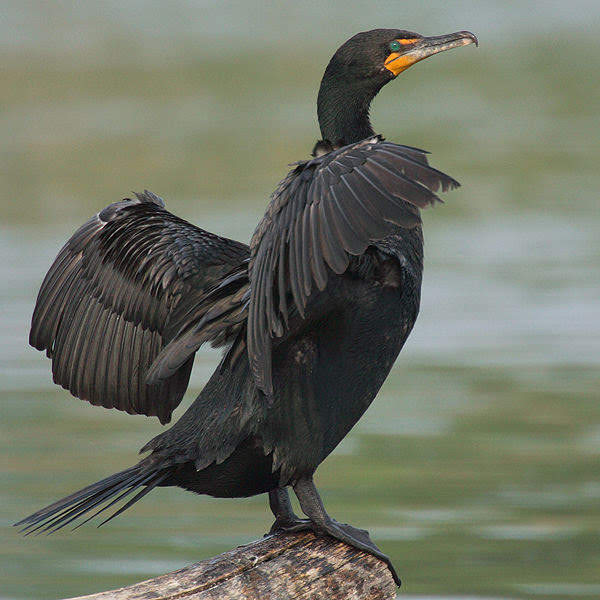
Double Crested Cormorant

Interior’s Fish and Wildlife Service Solicits Public Input on Cormorant Management
Tens of thousands of these fish-eating birds are impacting not only fish farms and hatcheries but also wild fish populations in many areas across the eastern U.S.–here’s a chance to make your voice heard.
from The Fishing Wire

WASHINGTON – As part of ongoing efforts to address conflicts between double-crested cormorants and wild and stocked fisheries, the Department of the Interior’s U.S. Fish and Wildlife Service (Service) is announcing an advance notice of proposed rulemaking (ANPR) and soliciting public input on future management options.

“Balancing the protection of native wildlife with economic and human health needs is fundamental to effective management practices,” said U.S. Secretary of the Interior David Bernhardt. “Today’s action starts the process of improving management and further reduces conflicts with double-crested cormorants throughout the United States.

”Future management actions built on a strong biological foundation ensure cormorant populations are managed responsibly and in compliance with federal laws and regulations, while balancing economic development, human health and safety, endangered species management and other priorities.

“We are building long-term solutions for managing conflicts with double-crested cormorants under the Migratory Bird Treaty Act while maintaining healthy populations of this species,” said Aurelia Skipwith, Director of the U.S. Fish and Wildlife Service. “This effort, in collaboration with our partners, will ensure continued good stewardship of our natural resources.

”In 2017, the Service completed an Environmental Assessment (EA) under the National Environmental Policy Act (NEPA) evaluating options for issuing individual depredation permits to provide relief for aquaculture facilities experiencing direct economic losses from cormorants across 37 central and eastern states and the District of Columbia.

The EA analyzed options for the issuance of depredation permits for cormorants where there is either significant economic damage to aquaculture facilities, significant damage to native vegetation, significant impact on a threatened or endangered species, or significant human safety risks. Upon completion of the EA on November 15, 2017, the Service began issuing permits to aquaculture facility managers and property owners across 37 central and eastern states and the District of Columbia.

This review did not include potential damage to recreational and commercial fishing by cormorants. Since the publication of the EA, the Service engaged stakeholders to assess the biological, social and economic significance of wild fish-cormorant interactions, and to identify a suite of management alternatives.

The Service is also currently working with tribes, state fish and wildlife agencies and other federal partners to assess comprehensive management options for cormorants across the United States.

“With nearly 30,000 water surface acres across Arkansas used for aquaculture production, our fish farmers contributed $71.1 million to our state’s economy in 2017. However, the United States Department of Agriculture estimates double-crested cormorants cause more than $25 million in damage annually within the aquaculture industry. These birds have become the foremost antagonists of fish farmers. We need commonsense solutions that allow aquaculture producers to safeguard their fish from these predators,” said U.S. Sen. John Boozman (AR).

“I applaud the U.S. Fish and Wildlife Service for responding to the need of aquaculture producers by increasing the amount of maximum allowable take of double-crested cormorants, and I look forward to working with the Department of Interior and USFWS to ensure we can find commonsense solutions to ease the burden for hard working Arkansan aquaculture producers.”“Arkansans are experiencing the harmful impact of double-crested cormorants across the state. As one of the top aquaculture producers in the nation, Arkansas and its fish farmers are suffering millions of dollars in losses as these avian predators consume critical inventory,” said U.S. Sen. Tom Cotton (AR).

“I am glad the Department of Interior is taking this problem seriously and hope that further progress will come swiftly.”“Bird predation costs producers millions of dollars every year. I applaud the Department of the Interior for taking this important step to help aquacultures producers address those losses,” said U.S. Sen. Cindy Hyde-Smith (MS).

“The double-crested cormorant has been detrimental to Mississippi’s catfish farmers,” said U.S. Sen. Roger Wicker (MS).

“I am pleased that the U.S. Fish and Wildlife Service is taking this issue seriously and is considering options to allow aquaculture producers to manage the populations of these predatory birds that are destroying fish populations.”“I am pleased to see the Department is moving forward in the rulemaking process for the depredation of double-crested cormorants. This is a desperately needed next step for Michigan’s First District, where over-population is threatening the health of our free swimming and recreational fisheries,” said U.S. Rep. Jack Bergman (MI-01).

“I am grateful the Administration has committed to this process to ensure a long-term and effective management plan for Northern Michigan and the Upper Peninsula.”“I am pleased with the efforts and action by U.S. Fish and Wildlife Service (FWS) to increase the allowable take of double-crested cormorants. This is a necessary step to mitigate more than $25 million in annual damages to the catfish and aquaculture industry,” said U.S. Rep. Michael Guest (MS-03).

“I’m supportive of this proposed rule, which will have a positive impact on Mississippi’s catfish industry, and I will continue to work with FWS to promote Mississippi’s aquaculture needs.”“Science has consistently proven that managing cormorants is necessary to protect not just aquaculture but fishing as well. I applaud the administration for listening to input, increasing the take and promoting sound scientific practices,” said U.S. Rep. Bruce Westerman (AR-04).

“Double-crested cormorants can pose a significant threat to American aquaculture. The American Farm Bureau Federation is pleased to learn that the Department of the Interior is moving forward to help provide farmers the necessary management tools to prevent double-crested cormorants from preying on farm livestock,” said President of the American Farm Bureau Federation Zippy Duvall.

“The strong return of double crested cormorants is a significant conservation success. But in the absence of natural predators, cormorants are inflicting substantial depredation on both private and public aquatic resources. This effort by the Fish and Wildlife Service is necessary and appropriate to maintain a healthy ecosystem,” said Former Director, U.S. Fish and Wildlife Service Dale Hall.

Public scoping for the rulemaking process will begin with the publication of the ANPR in the Federal Register on January 22, 2020, and will continue for 45 days until March 9, 2020. To promulgate a proposed rule and prepare a draft environmental review pursuant to NEPA, the Service will take into consideration all comments and any additional information received on or before that date. You may submit written comments by one of the following methods. Please do not submit comments by both. We do not accept email or faxes.

Electronically: Go to the Federal eRulemaking Portal: http://www.regulations.gov. Follow the instructions for submitting comments to Docket No. FWS-HQ-MB-2019-0103.

By hard copy: Submit by U.S. mail or hand-delivery to Public Comments Processing, Attn: FWS–HQ–MB–2019–0103; U.S. Fish and Wildlife Service Headquarters, MS: JAO/1N, 5275 Leesburg Pike, Falls Church, VA 22041–3803.

The Service seeks comments or suggestions from the public, governmental agencies, tribes, the scientific community, industry or any other interested parties. Areas for consideration include but are not limited to: potential reporting and monitoring strategies of cormorants by states and participating tribes; impacts on floodplains, wetlands, wild and scenic rivers or ecologically sensitive areas; impacts to other species of wildlife, including endangered or threatened species; and impacts on prime agricultural lands. Please see the Federal Register notice for more details.

The Fish and Wildlife service will post all comments on http://www.regulations.gov, including any personal information you provide. The Service will hold public scoping meetings in the form of multiple webinars in February 2020.More information about the rulemaking process, cormorants and meetings, including how to register, will be posted online at https://www.fws.gov/birds/management/managed-species/double-crested-cormorants.php.

Track of Striped Bass

Track of Striped bass
Born to Run: Hudson River to Canyon Striper
Check out the exciting reveal of the track taken by the second tagged striper in the ongoing Northeast Striped Bass Tag Study.

By Jim Hutchinson, Jr.
from The Fishing Wire

Mention Asbury Park to just about anyone and Bruce Springsteen is typically the response. However, for local surfcasters – perhaps even the late Clarence Clemons, who as legend has it, could often be found livelining eels along the Monmouth County rockpiles in the wee hours after a Stone Pony gig – this rock and roll Jersey Shore town may best be known for the celebrated runs of herring at Deal Lake on the northern border with Allenhurst, and the trophy bass it would attract.

The lake was open naturally to the sea until the early 1890s when a man-made channel (flume) was built to allow the ocean to continue its connection. Significant work has been done by state and federal agencies to keep the flume operational over the years; but for Peter Dello of nearby Ocean, NJ, keeping the flume clear of debris is more of a labor of love.

“I’ve got my own little Maxwell House coffee can, with a long stick so I don’t have to bend down to pick up the trash,” Dello told me by phone during a Thanksgiving stay in the hospital following emergency bypass surgery. Dello has been a fixture on the local beaches where he has surfed for the past 40 years, and just recently began surfcasting.

Last October 22 while doing his regular cleanup, Dello became the second northeast beachcomber to stumble upon a veritable needle in the haystack when he found the Wildlife Computers’ MiniPSAT device from the Northeast Striped Bass Study.

“I was cleaning the beach and picked up this thing. I knew it looked weird,” Dello told me while lying in his hospital bed where local surfers and surfcasters alike have been sending well wishes following his holiday scare and noticeably absent from those beaches where he’d rather be.

“I grew up there, we used to play around in the flume,” he said.The $5,000 satellite tag that washed up along that legendary striper hotspot at the Jersey Shore began its transmission on October 19 after popping free of the striper named Freedom; three days later, it was clanging around inside Dello’s coffee can. In early November, that tag was in the hands of researchers who’ve been diligently working to analyze millions of data points stored inside, telling the tale of a 42-inch striped bass caught and released from a Fin Chasers charter on May 21 in the lower Hudson River. Where she traveled in those 152 days, and how far she went, may surprise every striper fisherman and scientist along the entire Striper Coast, north, south, and east of Asbury Park.Suffice to say, this striper was born to run.

GREETINGS FROM THE HUDSON

The Northeast Striped Bass Study kicked off on May 21, 2019 when a team comprised of staff from The FishermanNavionics and Gray FishTag Research set upon New York Harbor to deploy a pair of satellite tags in post-spawn striped bass for a five-month study. The first large striper to get fixed with a satellite tag, aptly named Liberty, was caught aboard Rocket Charters out of New York City on the East River with Capt. Paul Risi. It was considered finding a “needle in a haystack” when the first tag washed up along the beach in Massachusetts back in the summer and was picked up by a woman walking the beach; check out the amazing results of that tag right here!

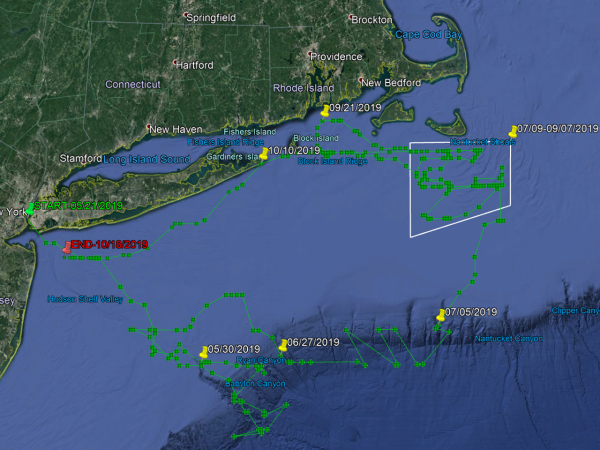
The second tagged fish, Freedom, was caught a little west of the first fish on May 21, not far from the Statue of Liberty aboard the charter boat Fin Chasers with captains Frank Wagenhoffer and Dave Rooney. The timing and location of the catch, tag and release project was planned around the end of the Hudson River spawning in hopes of capturing a pair of post-spawn bass; at 42 inches in length, Freedom was precisely the fish we were looking for!On December 5 at a conference at Gray FishTag Research in Florida, we learned the surprising truth behind Freedom. After being tagged in the lower Hudson River on May 21, data show Freedom heading in a southeast direction above the Hudson Shelf Valley, making it to the westernmost tip of the Hudson Canyon just inside the Babylon Valley – a distance of roughly 100 miles – for the Memorial Day weekend.

The information collected inside that Wildlife Computers MiniPAT tag reveals that Freedom spent the next month moving out and about within 20 or so nautical miles of that point, eventually zigzagging her way through Block Canyon out towards Veatch Canyon before heading north towards Nantucket Shoals in early July.

The beauty of these high-tech tags is that they incorporate light-based geolocation for tracking, time-at-depth histograms for measuring diving behavior, and a profile of depth and temperature. Some had questioned whether a larger predator like a white shark consumed the fish before making a beeline offshore; the data stored inside however show that both tagged fish were alive and swimming the entire time at sea.

NEW ENGLAND BOUND

Freedom spent the better part of July and all of August covering ground on the shoals outside of Massachusetts state waters, before heading northwest into Rhode Island Sound in what appears from the data points to be a somewhat circular pattern before cruising past Block Island to pay a visit to Montauk in early October.

For inshore fishermen and surfcasters in particular, Freedom didn’t make herself too available for capture for very long, ultimately sticking to the Exclusive Economic Zone (EEZ) for travel purposes, finally intersecting with her original May track out of the Hudson River in early October, before the tag disengaged pretty much on schedule east of Sandy Hook, NJ on Friday, October 18, just as the crew from The Fisherman was compiling our fishing reports for the November edition.

According to the tag data, a striped bass named “Freedom” spent much of her summer in the deep waters off Southern New England.

“Our predictions of a big bass attack this past week were right on the money,” reported North Jersey field editor JB Kasper that weekend. Sifting through our weekly reports at the time, it shows we had a pretty good nor’easter around that time, with a mid-week storm pushing wind and waves along the coast until that weekend. “When boats got back on the water on Saturday the 19th the stripers were still there and a flotilla of boats found mixed results,” Kasper noted in his New Jersey edition reports for the weekend, adding “Some of the best fishing was just inside the three mile line on Saturday.

”There’s no telling if Freedom made it past the “flotilla” of New York and New Jersey anglers on the grounds that week, but she did also have one of Gray’s green spaghetti tags affixed around her dorsal – as did Liberty – so there’s still a chance to learn more about both of these fish again in the future. One could roughly assume that Freedom enjoyed a bit of heavy feeding on bunker schools in the region before turning south along the three mile line with the rest of those big fish that anglers were finding off the Virginia coast as of early December. But as we’ve learned from the first two tags, our historic presumptions on striped bass migration might be off by as much as a few hundred miles.

According to the MiniPSAT data, Freedom spent much of the summer at depths of 50 to 75 feet, occasionally traveling to depths of between 150 and 200 feet.

“The science doesn’t always bear out the assumptions,” noted Dave Bulthuis, president of Pure Fishing’s North America division while sitting at the December 5 conference held by Gray FishTag in Lighthouse Point, FL. As one of the Advisory Board Members at Gray, Bulthuis and others spoke at length during the session about the need to provide better, more improved data for researchers managing coastal fisheries.

Dobbelaer stressed the ongoing goal “to get the data we desperately need,” while outlining for the group of advisors the urgency for better, more technologically advanced information. “This striped bass study reflects the movement of two fish caught and released in the Hudson River mouth and draws no conclusion of all striped bass behavior,” Dobbelaer said, adding “however, this groundbreaking movement lets us know that further work is a necessity from the team at Gray FishTag Research. There is so much more research that needs to be done to study the current patters and movements of striped bass.”In other words, if one is an anomaly, and two is a coincidence, it could take three or more high-tech satellite tags to help determine actual patterns.

CRITICAL BUY-IN

Another exciting bit of news learned at the Gray FishTag Research Advisory Board meeting in Florida on December 6 was that NOAA Fisheries is already actively engaged in the satellite tagging efforts. Eric Orbesen, Research Fishery Biologist with the fisheries agency and a specialist in highly migratory species and spatial movement is has worked with Gray FishTag Research professionals in ongoing swordfish research. Orbesen works out of NOAA’s Southeast Fisheries Science Center in Miami, but his ongoing participation in Gray tagging programs could be a good intro to other NOAA efforts with striped bass out of the Northeast Fisheries Science Center, which manages marine resources from the Gulf of Maine to Cape Hatteras.“Our goal is to continue to satellite tag many more striped bass in the Hudson River mouth during the same time of year in an effort to control the data collected on these great fish,” Dobbelaer told the folks assembled at the Florida conference. In fact, based on the early success of this groundbreaking work with striped bass, a new “spaghetti tag” project has also been launched with bull redfish in Northeast Florida where proceeds from the Full of Bull Tournament out of Jacksonville have been used to purchase 100 tag sticks and 1,000 streamer tags along with promotional materials as part of an education program there.

Closer to home for striper fishermen, funding efforts for new Wildlife Computers MiniPSAT devices for the ongoing Northeast Striped Bass Study have kicked into high gear. The 2019 study was funded by the charting professionals at Navionics, which has already signed on again for 2020. The Recreational Fishing Alliance (RFA) through its Fisheries Conservation Trust is also sponsoring a tag in 2020 utilizing monies raised through the annual Manhattan Cup catch and release striped bass tournament. Also kicking off during the holiday season was a new fundraising effort here at The Fisherman Magazine that seeks to find a core group of 1,000 individual investors to participate in the program.

For every $10 donation online, each “investor” will receive an exclusive Release, Reduce & Rebuild sticker to boast their participation in the tagging effort with their names added to an online list at TheFisherman.com. In just the first week of the fundraising, the effort raised $1,200 towards the purchase of additional Wildlife Computers MiniPSAT tags, which are valued at roughly $5,000 apiece. The initial promotional boost has also led to new pledges from within the recreational fishing community; looking ahead to the next round of tag deployments sometime this spring, it’s entirely possible that we have six or seven post-spawn stripers swimming around with pricey MiniPSAT devices next summer.

Keeping Florida Fish Alive


Keeping Florida Fish Alive as Temperatures Drop
With temperatures dropping, can you handle the fish?

While many anglers sing the praises of Florida’s warmer fishing months, seasoned anglers know that winter can offer great fishing opportunities for some of the state’s most sought-after fish species. As the temperatures drop, you’ll spot many anglers, including veteran kayak angler Stephen Stubbs, following spotted seatrout to fresher water, where the fish congregate in large schools.

While this can make spotted seatrout an easy target, this species is also especially vulnerable to fatigue and exposure, so as the winter bite turns on, it’s important to use proper gear and fish handling techniques. This ensures the best chance of survival for released fish. Read on for some tips to help you handle the fishing as the weather cools down and the action heats up.

Prepping for the Day A successful day of fishing begins with preparation. Be aware of the area you will be fishing and local fish you might catch. Know the regulations for your target species and make sure you have all the proper gear. Determining ahead of time which fish you are going to keep versus which fish you will release is an easy step to take and something that Stubbs practices regularly.“My friends and I tend to harvest only slot trout under 19 inches to keep the more productive egg-layers (20 inches and over) in the water to continue the sustainability of this wonderful species,” Stubbs said.

Knowing which fish he plans to release helps to get those fish back in the water quickly, increasing survival and benefitting the fish population.

Some great gear to have in your stash is:

Barbless circle hooks – Are 90% more likely to hook a fish in the mouth. Hooking a fish in the mouth reduces internal harm and decreases dehooking time, getting the fish back in the water faster and increasing its chance of survival.

Dehooking tool – Allows anglers to quickly release their catch while minimizing injuries and handling time.

Correct weight tackle – Using tackle heavy enough to land a fish quickly is important so fish are less exhausted and more able to avoid predators upon release.

Knotless, rubber-coated net – These support the weight of the fish while removing a minimal amount of slime, which protects the fish from infection.

Fish On!Make sure to reel the fish in as quickly as possible. According to Stubbs, the key to landing a nice trout, especially a big one, is to manage the drag tension. Horsing a trout into the boat can usually result in additional tearing of the area they are hooked, especially around the mouth. It can also cause you to lose the fish. Work them in as they tire and keep tension on the line to prevent a hook release. Playing the fish too much can result in an exhausted fish that cannot avoid predators once released.

Landing the FishStubbs reminds anglers to always use a net for landing medium-to-large trout and dip/wet any measuring board with water before laying the fish on the board. That helps reduce the loss of slime and scales. Once you’ve got your catch to the boat, use these additional tips to ensure that fish are landed quickly and safely for the best outcome for both the angler and the fish.

Avoid removing large fish from water. If you must remove them, support their weight horizontally to prevent damage to their internal organs.

Take pictures of your catch while it is in the water. This puts less stress on the fish and the fish will look bigger.If a net is needed to land or control a fish, always use a knotless, rubber-coated landing net. Fish Handling Using the correct methods to handle your fish once you’ve landed them is important to ensure that released fish are in prime condition when returned to the water.

Return the fish to the water as quickly as possible. One of the major factors in the survival of a released fish is how much time it spends out of the water. The more fish that survive upon release today, the more fish there will be available to catch tomorrow.Wet your hands before handling a fish to prevent damaging its protective slime coating.

Don’t use gloves or towels, as this will remove the protective slime.
Never hold a fish by the gill cover or eyes.

Hold fish horizontally to support their internal organs.

Gripping devices can be effective for controlling and handling fish, especially ones with sharp teeth. Grip behind the lower lip and support the weight of the fish in a horizontal position.

Removing the Hook Removing a hook can be tricky. Use these tips to get the hook out and protect your trout (and other catches).If possible, keep the fish in the water while removing the hook.If the fish has swallowed the hook, cut the line as close to the hook as possible. Attempting to remove the hook can do more harm than good. Use non-stainless-steel hooks since they eventually dissolve or pass naturally.

Using a dehooking tool will allow you to remove hooks safely and quickly without touching the fish, giving it a better chance to survive. 

Releasing and RevivingTaking steps to return fish to the water properly can be a significant factor in their survival. With a little extra effort, you can give your fish a fighting chance at survival to reproduce and fight another day.

Place the fish in the water and allow it to swim away on its own; do not toss the fish back.

Revive fish that do not swim away immediately or appear lethargic.Place fish in the water head first – it is easiest to hold one hand on the bottom lip or tail and one hand under the belly of the fish.Move the fish forward in the water – this allows the water to be flow through the mouth and over the gills. The fish must face the direction of water flow.Use a figure-8 motion to move the fish forward constantly, ensuring water continues to flow over the gills. Never jerk fish back and forth, since this action prevents water from properly flowing through the gills.For fish caught in deep water with signs of barotrauma, use a descending device to return fish to depth or vent the fish by inserting a sharpened, hollow tube at a 45-degree angle, one inch behind the base of the pectoral fin.

Practice C-P-R: Catch-Photo-Release. Quickly land your fish, have a friend snap a quick photo during the action and return fish to the water expediently. Then submit your photos on com to earn prizes for your fishing achievements!

Ensure Fish Survive to Help Populations Thrive!The steps you take on the water today can help positively impact the future of your Florida fish populations! Dropping temperatures don’t have to mean a drop in the survival of the fish you release. To learn more about proper catch-and-release techniques, visit MyFWC.com/FishHandling.

The quarterly Gone Coastal column is one of many ways that the Florida Fish and Wildlife Conservation Commission (FWC) Division of Marine Fisheries Management is helping recreational anglers understand complex saltwater regulations and learn more about saltwater fishing opportunities and issues in Florida. We are also available to answer questions by phone or email anytime, and we would love the opportunity to share information through in-person presentations with recreational or commercial fishing organizations.

To contact the FWC’s Regulatory Outreach subsection, call 850-487-0554 or email Saltwater@MyFWC.com.

Tarpon Tagging Program Yields Results

Tracking

Bonefish and Tarpon Trust Tarpon Tagging Program Yields Results
It’s hoped the 5-year acoustic tagging program will help answer many questions about tarpon movements around Florida’s coasts.

The Tarpon Acoustic Tagging Project is a collaborative, five-year program designed to broaden our understanding of tarpon movement and habitat uses. The results will help shape future conservation measures, including the protection of critical habitats and improvements to fishing regulations.  The project is generously sponsored by Maverick Boat Group.

Tarpon Acoustic Tagging is addressing the following questions:

Is the tarpon population large and robust or small and vulnerable? If anglers in a particular location are fishing for the same fish every year, then the tarpon population is probably smaller than we think, and issues like shark predation will become a bigger concern. If fish move among regions every year, and anglers are fishing for different fish each year, the tarpon population is probably relatively large.

Do tarpon gather in the same areas for spawning each year or move among areas? On average, ocean currents will carry the larvae from a spawning site to juvenile habitats in a specific geographic region. If it’s the same adults at the spawning site every year, then local adult losses will cause local declines in juveniles. If tarpon move among spawning sites, then the population will be more resilient.

How do changes in freshwater flows into coastal waters influence tarpon movements? Do the problems with Lake Okeechobee and Everglades restoration impact tarpon? Are the water issues in Apalachicola causing changes in tarpon movements?

What are the movement patterns and habitat use of mid-size tarpon (20-50 pounds)? How will these tarpon be impacted by coastal water quality issues? This size class, which is the future of the fishery, is very vulnerable to changes in coastal habitats and water quality.Until the Tarpon Acoustic Tagging Project began, there was little information available to answer these questions. Satellite tagging provided spatial and temporal data that was limited to tarpon weighing 80 pounds and larger. After a few months, most satellite tags detached from the fish, making it difficult to study their movements over the important multi-year time frame. Acoustic telemetry has helped to combat these limitations.Why Acoustic Tagging?Acoustic tags provide the ability to track tarpon for five years. They are also small enough that they are being used on tarpon as small as 5 and as large as 200 pounds!

Acoustic telemetry has helped to broaden the scope of tarpon research. When deployed, a tag is surgically implanted in the fish’s abdomen before safe release. The tagged fish swims within range of an underwater receiver, which detects and stores the tag’s unique code. BTT and collaborators have approximately 100 receivers deployed, but we are also able to take advantage of the network of receivers being used by collaborators studying everything from redfish to sawfish. This vast network exceeds 4,000 receivers deployed from Chesapeake Bay to the Gulf of Mexico. As scientists detect tagged fish on their receiver networks they share data with other scientists, effectively expanding the study area.

All years are concurrently playing with the date displayed in the upper left corner. The movements shown here are represented “as the crow flies”, thus the movement tracks may cross land.

How You Can Help

Sponsor a Tarpon: Sponsor an acoustic tag for $3,000. You can name your tarpon and will receive a certificate with its name and initial capture info (general location and measurements).  Sponsors will receive access to a password protected site where they can see periodic updates of their tarpon’s movements.

Sponsor a Receiver: Sponsor and name an acoustic receiver (listening station) for $3,000.  Sponsors will receive periodic reports summarizing the tarpon detections it has recorded.

Help us tag tarpon: Prior to every tagging trip, our team of scientists will notify sponsors  about when and where they will be working, along with contact information. If you are fishing in that area on tagging dates, all you need to do is call us when you catch a tarpon. We’ll come to your boat, transfer the tarpon to our sling, and take implant a transmitter. Remember to always keep the tarpon in the water!

Contact Us Today! For more information and to sponsor a tag or receiver, please contact Mark Rehbein, Director of Development at 703-350-9195 or mark@bonefishtarpontrust.org

Lionfish

Lionfish

Impacts of Invasive Lionfish
Lionfish are native to coral reefs in the tropical waters of the South Pacific and Indian Oceans. But you don’t have to travel halfway around the world to see them. This is an invasive species that threatens the well-being of coral reefs and other marine ecosystems, including the commercially and recreationally important fishes that depend on them.

NOAA and its partners are working hard to develop ways to prevent further spread and control existing populations.

Lionfish have become the poster child for invasive species issues in the western north Atlantic region. On par with zebra mussels, snakeheads, and even Asian carp in notoriety as invaders, lionfish populations continue to expand, threatening the well-being of coral reefs and other marine ecosystems, including the commercially and recreationally important fishes that depend on them. NOAA and its partners are working hard to develop ways to prevent further spread and control existing populations.

History The common name “lionfish” refers to two closely related and nearly indistinguishable species that are invasive in U.S. waters. Lionfish, which are native to the Indo-Pacific, were first detected along Florida coasts in the mid-1980s, but their populations have swelled dramatically in the past 15 years. Lionfish are popular with aquarists, so it is plausible that repeated escapes into the wild via aquarium releases are the cause for the invasion. Lionfish now inhabit reefs, wrecks, and other habitat types in the warm marine waters of the greater Atlantic.

Lionfish continue to expand at astonishing speeds and are harming native coral reef ecosystems in the Atlantic, Gulf of Mexico, and Caribbean. Biologists suspect that lionfish populations have not yet peaked in the Gulf of Mexico, which means that their demand for native prey will continue to increase. Recent research has also revealed that lionfish can tolerate brackish coastal zones, so mangrove and estuarine habitats may also be at risk of invasion.

Impacts to Native Fish and Coral reefs Adult lionfish are primarily fish-eaters and have very few predators outside of their home range. Researchers have discovered that a single lionfish residing on a coral reef can reduce recruitment of native reef fishes by 79 percent. Because lionfish feed on prey normally consumed by snappers, groupers, and other commercially important native species, their presence could negatively affect the well-being of valuable commercial and recreational fisheries.

As lionfish populations grow, they put additional stress on coral reefs already struggling from the effects of climate change, pollution, disease, overfishing, sedimentation, and other stressors that have led to the listing of seven coral species in the lionfish-infested area. For example, lionfish eat herbivores and herbivores eat algae from coral reefs. Without herbivores, algal growth goes unchecked, which can be detrimental to the health of coral reefs.

What’s Next? NOAA has created an Invasive Lionfish Web Portal—a clearinghouse for all things related to lionfish outreach and education, research, monitoring, and management. Interested parties will no longer need to browse through multiple web pages to find accurate information; it will be available in a centralized location.NOAA researcher and lionfish expert Dr. James Morris recently hosted the 7th annual lionfish symposium at the 2014 meeting of the Gulf and Caribbean Fisheries Institute in Barbados. More than 35 presentations were given on lionfish research around the region.

This meeting built upon the results of a 2013 GCFI lionfish workshop focused on harvesting invasive lionfish: An invasive lionfish food fish market is practical, feasible, and should be promoted.Alternative invasive lionfish end-uses, such as the curio and aquarium trade, are also viable markets.

Regarding consumption and the risk for ciguatera poisoning, invasive lionfish should not be treated differently than other tropical fish species and a general caution statement should be displayed within all establishments that serve fish and on all fish products.Local control is effective at minimizing invasive lionfish impacts at local scales and should be encouraged where possible.

Though no confirmed cases of ciguatera poisoning from eating lionfish have occurred, fears persist. A Caribbean-wide assessment of lionfish ciguatera levels is nearly complete and a report will be publicly available in the coming months. If lionfish are proven to be safe, and if cost-effective harvest and distribution mechanisms are developed, small-scale fishermen may be able to capitalize while simultaneously helping to control the invasion.

Cooperation and communication among local, state, federal, and international partners is crucial for proper management of lionfish and other widespread invasive species. Accordingly, a National Invasive Lionfish Prevention and Management Plan was developed by members of the Aquatic Nuisance Species Task Force—an intergovernmental organization co-chaired by NOAA. The plan will be publicly available in spring 2015 pending final review and approval. NOAA’s National Marine Sanctuaries Program is working to finalize their own lionfish plan that will guide the management of this invasive species in the affected sanctuaries in the Gulf and southeastern United States.

Together, these plans will guide the management of invasive lionfish and ensure that all are working toward common objectives.More information on NOAA’s lionfish research programs can be found online.An animated map of lionfish spread is available on the U.S. Geological Survey’s Nonindigenous Aquatic Species web page.

What Is the Oldest Fish Alive?

112-Year-Old Fish has Broken a Longevity Record
By Sean Landsman
from The Fishing Wire

Scientists just added a large, sucker-mouthed fish to the growing list of centenarian animals that will likely outlive you and me.

new study using bomb radiocarbon dating describes a bigmouth buffalo that lived to a whopping 112 years, crushing the previous known maximum age for the species—26—by more than fourfold.

That makes the bigmouth buffalo, which is native to North America and capable of reaching nearly 80 pounds, the oldest age-validated freshwater bony fish—a group that comprises roughly 12,000 species.

“A fish that lives over 100 years? That’s a big deal,” said Solomon David, assistant professor at Nicholls State University in Louisiana, who was not involved in the study.

In recent years, thanks to more advanced aging techniques, scientists have discovered many species of fish live longer than originally thought—the Greenland shark, for instance, can live past 270 years. Despite the age of fish being a basic aspect of their biology, we often know very little about a fish’s expected lifespan.

Carbon dating

Before the study authors even aged a single fish, they had a hunch that these fish, which live mostly in the northern U.S. and southern Canada, lived longer than thought.

The team removed thin slices of otolith—small calcified structures that help fish balance while they swim—from 386 wild-caught bigmouth buffalo, most of which were harvested by bowfishers. The researchers then used a microscope to count the growth rings on each slice of otolith. Their first counts yielded estimates of fish that live more than 80 and 90 years old. (Related: “Meet the animal that lives for 11,000 years.”)

When study leader Alec Lackmann first saw those numbers, he says his reaction was: “There’s no way!”To validate these extraordinary age estimates, Lackmann, a graduate student at North Dakota State University, and colleagues turned to bomb radiocarbon dating, a well-established method that compares the amount of the isotope carbon-14 in animal tissue to concentrations of carbon-14 released in the mid-1900s during atomic bomb testing. The method has been used to age everything from human remains to sharks.

They then cross-checked their otolith results with bomb radiocarbon dating and found a match—validating the estimates of a lifespan between 80 and 90 years, according to the study, recently published in the journalCommunications Biology.

In total, five bigmouth buffalo surpassed 100 years of age, but a 22-pound female caught near Pelican Rapids, Minnesota, became the 112-year-old record-setter. “She was actually on the smaller end of the mature individuals,” Lackmann notes.

Aging population

The first 16 fish Lackmann aged were all over 80 years old, highlighting another surprising finding: Many of the fish were born prior to 1939, suggesting a reproductive failure spanning decades. The likely cause of this failure is dam construction, which impedes—or outright blocks—upstream movement to spawning grounds.
(See “Rare whales can live to nearly 200, eye tissue reveals.”)

Indeed, bigmouth buffalo are often called “trash fish,” because they’re not usually eaten and are erroneously lumped in with invasive U.S. species like common carp. But Lackmann argues “we should move away from that term, because it maligns far too many native species.

”David agrees, saying that it “automatically detracts value from the organism itself,” which, in the case of the bigmouth buffalo, has an important role in maintaining the health of its native rivers—displacing invasive carp.
(See the overlooked world of freshwater animals.)

Though historically unpopular as a sport fish, the bigmouth buffalo is increasingly a target of bowfishers, which shoot fish with bow-and-arrow, often at night with spotlights.

Almost all U.S. states where bigmouth buffalo are found have no limits on sport or commercial harvests. The fish is not considered threatened in the U. S. but is of special conservation concern in Canada. Lackmann and David hope the discovery of the bigmouth buffalo’s amazing longevity will help boost its profile.“I hope that knowing this cool fact about them will have people look at this species more closely,” David says.

Mako Shark Tracking


Mako Shark Tracking Reveals “Impressive” Memory and Navigation
from The Fishing Wire

These top predators travel far across the Pacific, returning to the same areas in the Southern California Bight each year. The largest effort ever to tag and track shortfin mako sharks off the West Coast has found that they can travel nearly 12,000 miles in a year. The sharks range far offshore, but regularly return to productive waters off Southern California, an important feeding and nursery area for the species.

The findings demonstrate “an impressive show of memory and navigation.” The sharks maneuver through thousands of miles of the Pacific but return to where they have found food in years past, said Heidi Dewar, a research fisheries biologist at NOAA Fisheries’ Southwest Fisheries Science Center in La Jolla, California.Researchers tagged 105 mako sharks over 12 years—from 2002 to 2014. The tags record the sharks’ movements, as well as the environments the sharks pass through.

Researchers have long recognized that ocean waters from Santa Barbara south to San Diego, known as the Southern California Bight, are an important habitat for mako sharks. Prior to this study, however, they knew little about what the sharks do and where they went beyond those waters.The researchers are from NOAA Fisheries, Stanford University, Tagging of Pacific Predators, and the Center for Scientific Research and Higher Education in Baja California. They reported their results in the journal Animal Biotelemetry.

“We did not know what their overall range was. Were there patterns that they followed?” asked Nicole Nasby-Lucas, a NOAA Fisheries research scientist at the Southwest Fisheries Science Center and lead author of the new research. “It turns out they have their own unique movement patterns.

” Sharks tracked over multiple years returned to the same offshore neighborhoods year after year.

Long-Range Travelers The tagging data overall revealed that the sharks travel widely along the West Coast. They venture as far north as Washington, as far south as Baja California, and westward across the Pacific as far as Hawaii. The sharks tagged off California remained on the eastern side of the Pacific east of Hawaii. This indicates that they do not mix much with mako sharks in other parts of the Pacific.

A roughly seven-foot female mako shark followed similar courses into the Pacific and back to the California Coast over three consecutive years.

Although there are examples of mako sharks crossing the ocean, it is probably the exception rather than the rule, said Dewar, a coauthor of the new research.The finding provides insight into population dynamics of mako sharks across the Pacific. It also allows scientists to identify which fisheries the tagged mako sharks might encounter. Muscular mako sharks are a popular sport fishing target. They are also caught in U.S. longline and drift gillnet fisheries and are common in the international trade in shark fins.

Mako sharks are overfished in the Atlantic Ocean, but not in the Pacific.The researchers used two types of tags to track the sharks. One type, called pop-up tags, collect data and eventually pop off the animal and float to the surface, where they transmit their data via satellite. The second type transmits data to satellites each time the shark surfaces, determining the animal’s location by measuring tiny shifts in the frequency of the radio transmission.

Remembering Southern California Mako sharks are among the fastest swimmers in the ocean, hitting top speeds of more than 40 miles per hour. The larger tagged sharks traveled an average of about 20 miles a day and a maximum of about 90 miles per day. They travel long distances in part because they must swim to move water through their gills so they can breathe, Dewar said.

Large numbers of juvenile sharks caught in the Southern California Bight indicate that it is a nursery area for the species. Tagged mako sharks returned there annually, most typically in summer when the waters are most productive. The tracks of the tagged sharks may look at first like random zig-zags across the ocean, Dewar said. They actually illustrate the sharks searching for food and mates based on what they remember from previous years.

“If you have some memory of where food should be, it makes sense to go back there,” Dewar said. “The more we look at the data, the more we find that there is a pattern behind their movements.”The tagging results also provide a wealth of data that scientists can continue to plumb for details of the sharks’ biology and behavior. About 90 percent of the time the sharks remained in the top 160 feet of ocean, for example, occasionally diving as deep as 2,300 feet. Although the sharks traveled widely, they mainly stayed in areas with sea surface temperatures between about 60 and 70 degrees Fahrenheit.

“We can continue to ask new questions of the data to understand these unique movement patterns,” Nasby-Lucas said. “There’s a lot more to learn.”
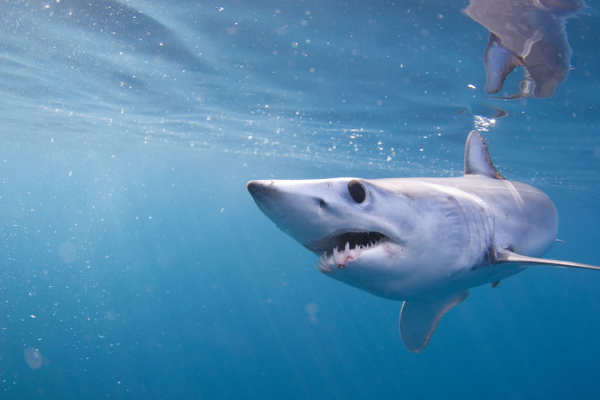
Juvenile shortfin mako shark swimming in the waters off California. Photo credit: Walter Heim.

West Coast Rockfish Boom


West Coast Rockfish Boom with Warm Water “Blob”
Young groundfish, including great numbers of rockfish as well as other marine creatures thrived under unprecedented ocean conditions, according to new research.

The high temperatures that came with the marine heatwave known as the Blob led to unprecedented mixing of local and subtropical species. There were, often with new and unpredictable outcomes. Out of that mix came one unexpected winner: West Coast rockfish. These bottom-dwelling species, which that had previously collapsed in the face of overfishing during the 2000s, thrived under the new conditions.

Scientists from Oregon State University and NOAA Fisheries’ Northwest Fisheries Science Center recount the boom in young rockfish in a new research paper in the journal Fisheries. It examines the effects of the Blob as documented by NOAA Fisheries offshore surveys. Scientists have been conducting the surveys for more than 20 years. The Blob years brought some of the most dramatic changes in marine life off the West Coast they’ve ever seen. Unexpected interactions may have also altered the abundance of some species, from plankton that support the food web to fish that depend on them, the researchers wrote.

In the waning months of the Blob in 2016, juvenile rockfish increased over a large area from California to Alaska. Since juvenile rockfish are very difficult to distinguish from one another, scientists could not tell which species benefited. They could not tell what specifically drove the boom in their numbers and or whether they will support fisheries in future years.

They suggested that the surge in rockfish may have been part of an unusual cascade of effects resulting in large part from a shift in the dominant jellyfish off the West Coast. The typically abundant sea nettle declined in number while the less common water jellyfish multiplied to become the most abundant jellyfish in their catches. That may have reduced predation by sea nettles on juvenile rockfish, as well as competition between the species.A catch of mostly water jellies and only a few fish from a 2015 research survey off the West Coast.

“When organisms from different regions suddenly come together, they can interact in unexpected ways,” said Brian Beckman, a research fish biologist at the Northwest Fisheries Science Center and co-author of the new study. “The question is whether this is a lasting change, or one that will shift back toward something we’ve seen before.

”The scientists also described the sudden and extremely high abundance of gelatinous pyrosomes. They, which had never been previously observed in the Northern California Current off the West Coast. Pyrosomes have such voracious appetites that their increase may explain low concentrations of chlorophyll documented off the West Coast in 2017, the scientists suggested.

Pyrosomes found off the Oregon Coast range in size from a few inches to more than two feet long. (Photo by Hilarie Sorensen/University of Oregon)“If this organism remains abundant in subsequent years, it could produce lasting effects upon the ecosystem by outcompeting other filter feeders, which in turn might reduce the food supply to organisms higher in the food web,” they wrote.

The effects of the Blob may be evident in the species mix off the West Coast for many years to come, they added. The scientists emphasized that continued ocean surveys should track those changes over time. This will to help us understand the interaction among species and inform ecosystem-based fisheries management.Read more like this at NOAA Fisheries
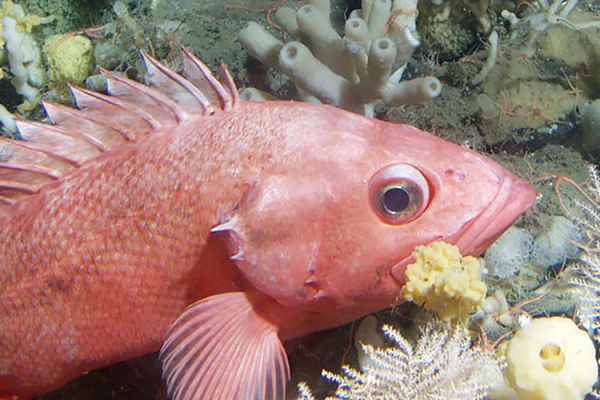
Shortraker rockfish.

Winter Feeding Area for Great White Sharks


OCEARCH Defines Winter Feeding Area for Great White Sharks
Tracking data from white sharks equipped with OCEARCH satellite tags reveals that the Atlantic continental shelf waters off North Carolina, South Carolina, Georgia, and the east coast of Florida are a winter hot spot for large white sharks. As seen on the OCEARCH Tracker, the heavy concentration of our adult and near-adult white sharks in this region suggests it’s an important winter habitat, which OCEARCH and collaborating scientists are now referring to as the Northwest Atlantic Shared Foraging Area (NASFA).

This is in concordance with fisheries data that showed this area to be a wintering ground for white sharks, as previously published by OCEARCH collaborator Dr. Tobey Curtis and his colleagues.The OCEARCH Tracker shows at least eight white sharks have been detected in the NASFA in the past week, including adult white sharks Hilton and Katharine. The eight sharks are a good indication there are plenty more white sharks in the area with them.

The waters off Charleston, South Carolina and Cape Canaveral, Florida have seen the highest concentration of detections. The sharks were tagged as part of an ongoing study started in 2012 by OCEARCH to uncover the mysteries of white sharks’ life history in the Northwest Atlantic.

Since the beginning of the study, OCEARCH has consistently observed that nearly all tagged, large white sharks in the Northwest Atlantic visit the NASFA at some point during their migrations, with most visiting in the winter. OCEARCH has tagged white sharks as far south as Florida and as far north as Nova Scotia, Canada, and all of the larger tagged sharks have spent some time in the NASFA.

“The body of colder water trapped between the Gulf Stream and the coast is a key feature of this region,” says Assistant Professor of Marine Science at Jacksonville University and OCEARCH collaborating scientist Dr. Bryan Franks. “This ‘wedge’ of cold water extends from the Outer Banks in North Carolina down to Cape Canaveral in Florida. This feature results in a range of water temperatures in a relatively short horizontal distance from the coast out to the Gulf Stream. In addition, there is the potential for abundant prey in the migrating populations along the coastlines and in the dynamic mixing zone on the Stream edge.

”The tendency for white sharks to migrate to the NASFA bears some similarities to white shark behavior observed in the Pacific Ocean off the west coast of the United States. In the Northeast Pacific, different shark populations migrate from the Farallon Islands and Guadalupe Island to a Shared Foraging Area (SOFA), also popularly referred to as the White Shark Cafe, between the Baja Peninsula and Hawaii.

OCEARCH tracked this white shark behavior in 2007-2009 and conducted a 30-day expedition to the SOFA in 2009. Studies by other scientists since then have tracked similar shark behavior.

OCEARCH tracking data in the Atlantic suggest there could be more than one population, or subpopulation, of white sharks inhabiting the Northwest Atlantic. These populations are differentiated by where the sharks aggregate in the late summer and fall, which is suspected to be mating season for the species, although that remains to be confirmed. Cape Cod, Massachusetts is one such summer/fall aggregation site and OCEARCH data indicates there is at least one more summer/fall aggregation site in Canada. Regardless of which summer/fall aggregation site a shark uses, however, it appears nearly all of the adult and near-adult sharks visit the NASFA during the colder winter months.

OCEARCH is planning an expedition to the NASFA in February and has two other expeditions planned to try and tag more sharks off Massachusetts and Nova Scotia later in 2019. These expeditions aim to increase the sample size of tagged white sharks to get a clearer picture of white shark movements in the Northwest Atlantic and test scientific hypotheses about white shark movement and migration.

“This is the beauty of OCEARCH’s North Atlantic White Shark Study,” said Dr. Bob Hueter, OCEARCH Chief Science Advisor. “The sharks lead us from one step to the next, so that we can steer our ship to where we’re needed to fill in the gaps in our knowledge of this incredible predator. Each expedition builds on the previous ones to reveal the life of the white shark from birth to death in the North Atlantic. This is the best kind of science, and it’s exciting to be sharing these discoveries with our peers and the public.

”Follow the sharks through their migration cycles by accessing the near-real-time OCEARCH Tracker; https://www.ocearch.org/white-sharks-gather-in-northwest-atlantic-shared-foraging-area-off-southeast-coast-of-the-us/

Non-Navigable Waters Rule


New Mexico Fish and Game Acts on Non-Navigable Waters Rule
The New Mexico Fish and Game Commission (NMFGC) has voted to amend or repeal an agency rule allowing landowners to certify non-navigable waters as private property, subjecting anglers wading these waterways to a trespass statute.

Days before the vote, the state Attorney General’s office (AG) issued its opinion that the commission can’t legally block the public from waterways that cross private property, as long as people don’t trespass across that property to reach the waterways. In 2015 (by a one vote margin) state legislators amended a trespass law, essentially barring the public from wading in streams that run through private property without written permission from the landowner. 

Three months later the NMFGC called an “emergency meeting” to allow a hearing on the rule, which limited public comment to 10 days, rather than the 30 days set by the Legislature. In 2017 the Commission began allowing landowners to certify streambeds as “non-navigable,” and to fence, and declare the streambed as private property.

Five certification applications have been issued by the Commission since adoption of the rule. One certification was issued to the Texas owner of the Rio Dulce Ranch in San Miguel County, privatizing a segment of the upper Pecos River. Another certification was issued to Chama Troutstalkers, owned by Dan Perry, and ended public access to a segment of that northern New Mexico river. Perry owns a ranch and outfitting business that offers fishing trips there for about $500 a day. 

An organization he founded, the Habitat Conservation Initiative, spearheaded the effort to pass the 2015 change to state law.Zane Kiehne is also seeking certification for his Texas-based Z&T Cattle Company on the Mimbres River in the southwestern part of the state. Kiehne also gained certifications for waterways running through separate properties on the Alamosa and Penasco rivers. The bill’s supporters contend allowing public access to streams on private property could disturb riparian habitat improvements that landowners had invested in. Opponents say the law, and commission rule, are vague and unconstitutional, and that courts should decide whether streambeds are public.

The New Mexico Wildlife Federation, Backcountry Hunters and Anglers, New Mexico Avid Anglers, Dona Ana County Associated Sportsmen, Southwest Consolidated Sportsmen, Wild Turkey Sportsmen’s Association, River Reach Foundation, Adobe Whitewater Club, American Canoe Association, American Whitewater and the New Mexico River Outfitters Association are all seeking to overturn the law and game agency rule.

The “non-navigable” clause maintains that as long as a river or creek is considered navigable under New Mexico state law the public can float and access it, but the NMFGC’s rule has effectively removed that right on non-navigable waters.

Three Attorneys General have concurred that a 1945 New Mexico Supreme Court decision in “State Game Commission vs. Red River Cattle Co.” allows the public to utilize streams and streambeds where they run through private property, providing they don’t trespass onto private land from the stream.

Jesse Deubel, executive director of the New Mexico Wildlife Federation, said, “New Mexico anglers and sportsmen who rely on our public lands need a fair shake from the game department.” Attorney Marco Gonzales, who represents the landowners who had certified stretches of waterways, told the commission to let the issue be resolved by the Legislature and the courts.

Last July, when the Commission issued a 90-day moratorium on the certifications, Perry told “The Santa Fe New Mexican” trespassers had damaged the area he had posted and killed many fish.“It’s really hard on the environment,” Perry said. “And it’s our private property, too.”

“New Mexican families and landowners deserve access to our waterways,” said AG Hector Balderas. “I will be directing the commission to strengthen the process to protect private property rights and minimize trespass, while respecting access rights and outdoor activities of sports enthusiasts.” Gonzales said at a public heating recently, “This is an important constitutional issue about ownership of private property. New Mexico’s waters are public waters — you are able to float and fish, you just can’t wade, because of the streambed.” NMFGC Chairwoman Joanna Prukop said, “We were told by the state attorney that the rule was invalid, and our offices are subject to liability for enforcing it. We directed the department yesterday to enforce criminal trespass as they would on any other water in the state until we have resolved this rule.

”While the Commission did not set a timeline to produce a new plan, it could act on the directive at its January meeting in Las Cruces.—Etta Pettijohn