Category Archives: Bass Fishing

Bass Fishing Information

Big Bass Create Memories

Over the past 60 years, I have caught a good many bass. All were fun, but a few really stand out in my memory, usually the bigger ones.

The first bass I caught was not big. It was probably about ten inches long, but when my cork disappeared in the pool of water below the Usury’s Pond Dam, I expected another small bream or catfish. But this fish did not pull down and make little circles, it ran sideways and jumped out of the water.

Although that was about 60 years ago, I will never forget it, and it hooked me for life.

Bigger bass stand out, too. My first big bass was a 7.5 pounder that hit a Devil’s Horse when I was 12 years old. Harold, Hal, Billy and I were trying to fish from an old wooden run-about at Clarks Hill. We had pulled a jon boat to a cove in Hart Creek where our fathers took it back in the end to throw Hula Poppers. They told us boys to stay well away from them so we would not spook the bass they wanted to catch.

We paddled that old boat best we could, keeping it a long cast off the bank. I fired my Devil’s Horse toward a button bush on the point but the cast with my Mitchell 300 reel and Garcia rod went way wide .

Reeling the plug back as fast as I could turn the reel handle, the plug churned and skittered across the surface. Suddenly the water exploded in a vicious strike. Somehow, we managed to land that big bass.

We thought the bass was crazy. Everyone knew bass hit only slow-moving baits. If I had been smarter, maybe I could have invented the buzzbait in 1962!

Another bass, not quite as big, hit a floating Rebel minnow by a button bush at Clarks Hill in Germany Creek. My family was camping at “The Cliffs” and daddy had agreed to paddle me around in that same old wooden boat while I cast. He did not care much for fishing but took the time with me.

I cast the floating minnow near a button bush and, as soon as I twitched it a little, a bass hit it, but did not get hooked. I let the lure sit then twitched it a little and a 5.5 pound largemouth churned the water as it hit again.

The fish was a good one, but what stands out in my mind is daddy bragging how I did not get too excited and jerk the bait away. He told everyone how I just let it sit then twitched it. That made me proud.

The first eight-pound bass I caught hit a chrome Wiggle Wart during a 1978 January Sportsman Club tournament at Jackson. Bob Pierce and I were fishing from his boat and had not had a bite all day. With just a couple of hours left to fish, we were fishing near Kersey’s where we would weigh in.

I cast the plug to a sandbar and as I cranked it along, it just stopped. Suddenly a huge bass jumped. After a scary fight, Bob netted it. We were both trembling with excitement. After I put the fish in the livewell, I stood on the lid the rest of the day. I was afraid it would jump out.

That bass won me first place and was big fish.

I caught my second eight pounder in a 1978 January Flint River club tournament at Jackson. Cecil Davis and I had fished most of the cold, windy day without a bite. Around noon we were on a big, flat point at the dam.

For some reason, I decided to tie on a heavy spinnerbait and let the wind blow the boat across the point. The spinnerbait bumped along the bottom as we moved. Then it took off toward deeper water, bending my rod double. After a few seconds fight, I told Cecil it had to be a striper.

When I got the fish near the boat, I worried the striper would take off and break my line since I had the drag tightened down as far as it would go. When I tried to loosen it just a little, I moved the star drag too much. The fish made a run and I got a huge bird’s nest in my reel and could not turn the handle. Then the fish came near the surface and we saw it was a big bass.

In my panic, I grabbed the line and pulled it in hand over hand. Cecil netted it and we both yelled and jumped in excitement. That bass was just meant to be caught.

That eight-pound, four ounce bass was the third biggest that day. Frank Crowder weighed in an eight-pound, seven once bass and an eight-pound, twelve ounce bass!

I was really proud of my first nine pounder. It hit a Texas rigged worm by a brush pile I had put on a little rock ledge in eight feet of water in Germany Creek at Clarks Hill. That June afternoon I was by myself but managed to land it.

Just having to show it off, and see how big it was, I put it in the livewell and ran to Raysville Marina. On their scales it weighed exactly nine pounds.

My biggest bass ever, a nine-pound seven ounce largemouth, hit a Suddeth Boss Hog crankbait in a 1991 February Flint River tournament at Jackson. Larry Stubbs and I were fishing near the dam when it hit.

I got the fish near the boat and Larry netted it after a few tries. I was scared it would pull off, I could see the crankbait barely hooked in the corner of its mouth. I just knew it would pull free.

There have been other bass over the years, but these really stand out in my memory
High Hopes for a Bassing Career

High Hopes for a Bassing Career

By Frank Sargeant, Editor
The Fishing Wire

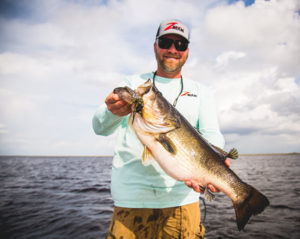
Cole Drummond has high hopes for a bassing career.

He looks at Van Dam, at Wheeler, at Martin, at the Brothers Lee. And he sees himself a few years down the road.

It’s not an easy or a straight road.

Drummond, a South Carolina kid who started fishing with his dad Steve when he was just big enough to click the button on a Zebco spincaster, is 19 now–still a kid to some, but he’s starting to chink away at building a reputation in pro bass fishing.

He’s not only done very well in the booming high-school bass tournament scene, making the championship fishoff at Kentucky Lake as a junior, he’s also had some success in fishing open tournaments against guys two or three times his age–he’s banked $14 grand in a couple years.

But he’s come up against a hard truth that soon faces most with pro fishing dreams.

It costs a WHOLE lot of money to fish any of the circuits. Tens of thousands in travel costs, to say nothing of the entry fees and supporting a tournament grade bass boat and a truck to tow it.

“I’d like to see him get where he bankrolls himself,” says dad Steve, who’s a successful taxidermist. “Quick.”

They’re here at the FLW ICAST Cup, the kickoff for ICAST 2019, at Big Toho Marina on Lake Tohopekaliga, and I am their designated media type. Some 60 boats run by an assortment of seasoned and well-known pro anglers from FLW as well as some who hope soon to be known, like Cole, have volunteered to get us out on the lake for a taste of fishing before the doors of the big show open.

Cole is a clean-cut, tattoo-free, polite kid who just loves to fish. He’ll never be Mike Iaconelli–but you could see him being Jordan Lee someday.

One possible speed bump in the road ahead: collegiate fishing. Much as college football is a sort of farm system for the NFL, college fishing circuits, growing even faster than the high-school competitions, have become sort of the de facto road to the pro’s for many younger anglers who might otherwise have to wait years for sponsor support, all the while pouring money into the game.

Cole is not going to college. He’s not much for studying in the classroom. It interferes with his fishing time.

The question is, will a degree become an expected prerequisite for sponsors–who pay many of the bills for the more successful pro’s? Cole and his dad are hoping not.

“I know it’s about helping them sell product and getting their name out there,” says Cole. He’s no stranger to it. He helps his dad film a local outdoors television show, and sometime appears on camera.

He’s a good angler, no doubt about it. He puts four bass in the boat while his dad and I manage only a couple between us. He’s working up his social media profile, reaching out to pro’s already on the circuits for advice. But . . . .

Pro fishing has been the wreck of a whole lot of dreams, for sure. But Cole Drummond is hopeful–he’s been able to set up a couple meetings with some of the major companies in the industry during the visit to Orlando . . . maybe, just maybe . . . .

Fishing Tournaments and Lake Weiss

Growing up, I never played sports and did not like many games. I was not competitive in anything, being too much of a loner. I wanted to be out on the water or in he woods all the time and was perfectly happy being alone.

In April, 1974 Jim Berry took me to my first bass club tournament and I fell in love with the competition. For some reason, it was different. Although still somewhat on my own, with just two of us in the boat, it was very much to my liking.

Fishing big lakes in tournaments is different. If I wanted to go fishing just to catch fish, there are many bodies of water where I could catch more and bigger bass. And if numbers were my goal, I could choose to fish for something other than bass.

But the challenge of figuring out how to catch bass on big lakes with lots of fishing pressure is a thrill for me. If you watch the pros on TV, they often make it look easy. Of course, the cameras focus on the guys catching fish. If you look at the total results, in every tournament many of the top pros struggle.

My goal in club tournaments at the start each morning is to catch one bass. That first one is important. I try to not think of catch a limit until I have five in the boat, and catching a limit is often hard to do.

Two trips last week emphasized the difference in tournament bass fishing on a big lake and fishing on other waters. Tuesday, I fished Lake Weiss with Hayden Marbut and his father Brian, getting information for my Georgia and Alabama Outdoor News August Map of the Month articles.

Hayden is a 16-year-old high school tournament fisherman and his father grew up fishing Weiss. He won a high school tournament at Weiss recently. But we knew it would be tough fishing, with bright sun and no wind.

We started fishing before sunrise and three hours later had not caught a single bass. But a big part of tournament fishing is sticking with it and trying hard. The fifth place we tried, Hayden caught a two-pound keeper pitching a jig and pig to a dock. Then he caught a second keeper there, but this one weighed 5.92 pounds, a great kicker in a tournament.

We fished until 4:00 PM and Hayden landed four more keepers. His best five weighed about 13 pounds, a good catch in most tournaments. His dad got frustrated, fishing hard but never catching a single bass. I sat in the boat, taking notes and pictures and never made a cast.

In tournaments you often work hard for five or six bites like that.

Last Sunday was similar.

How I Won at Bartletts Ferry

In the June Spalding County Sportsman Club tournament, nine members fished from 5:45 AM until 2:00 PM at Bartlett’s Ferry to land 25 12-inch keeper bass weighing about 29 pounds. There were three five-bass limits, and everyone had at last one keeper.

I won with five weighing a whopping 6.61 pounds, Wayne Teal placed second with five at 5.16 pounds and Raymond English came in third with four weighing 4.32 pounds. Kwong Yu was fourth with five at 4.16 pounds and his partner, Glenn Anderson had big fish and placed fifth with one bass weighing 3.26 pounds.

It was a very slow day fishing, but I was happy to see 14 of our keepers were largemouth. Like some of our other lakes, spotted bass have ruined the largemouth fishing on Bartletts Ferry. Where we used to catch several two to five pound largemouth, we now catch a bunch of 11-inch spotted bass. Hydrilla in the lake has helped the largemouth population recover somewhat.

I started on a seawall where I can usually catch a keeper before sunrise if the lake if full, but never got a bite. I then fished a point with topwater and caught a short bass, an 11-inch spot. In a nearby brush pile 20 feet deep I caught a keeper largemouth on a Texas rigged worm at 6:30. At least I had that first one.

For the next hour I fished topwater on a rocky bank where Mayflies were hatching and bream were feeding on them. That is usually a good pattern, and I caught several more short spots, and lost what looked like a keeper when it jumped and threw my popper.

At 7:30 I switched to a shaky head worm and caught my second keeper, a 13-inch spot, and several more short fish. For the next hour I kept trying to catch a keeper off that bank and saw a new brush pile in 10 feet of water on my depthfinder. I marked it with a GPS waypoint and I am glad I did.

At 8:30 I went back to the deep brush pile and caught my third keeper, another spot, on a shaky head worm. That made me try deep brush for a couple of hours without a bite. Then at 11:00, I went to docks since the sun was bright.

After skipping a worm under a dock I felt a bite but when I set the hook somehow I got my line wrapped around the end of the rod. I could not keep my line tight and two-pound largemouth jumped and threw my bait.

That made me go to shallow water and at 11:30 I caught my fourth fish, a keeper largemouth, from some brush under a tree. I knew I did not have much weight but a fifth keeper would help.

With an hour left to fish I went back to the deep brush, but a boat was fishing it. I remembered the new brush pile I had marked and went to it. My first cast to it with a shaky head worm gave me my limit and biggest bass, a 2.57 pound largemouth.

With a limit, I decided to go in early and get out of the sun. I fished hard for five keepers and it paid off.

Bladed Jig

Unmasking the Unnamed Bladed Jig
from The Fishing Wire

Bladed jigs catch big bass for Luke Clausen


In bass circles, it’s become a something of running wise-crack. You might think of it along the lines of that secret spot your buddies call Lake X—so hot for big fish you simply can’t let the cat out of the bag. Except, this one’s a lure, not a lake.

Conspicuous by the absence of an actual brand name, something called an unnamed bladed jig has recently racked up mega bucks on the FLW, BASS and Major League Fishing tours. In a pastime rife with pseudo-hype and over-exaggerations, this one stands apart as the real deal—a lure that’s lived up to the propaganda, even exceeded it.

Consider the following intel from recent tournament coverage:

Referring to the bait cast by the 2019 Bassmaster Classic champion, tournament coverage included the following excerpt: “A key lure on Championship Sunday was a 3/8-ounce unnamed bladed jig, chartreuse white, with an unnamed pearl white, fluke-style trailer.”

In the days following the Classic, press and fan commentary had all arrived at the same conclusion: the unnamed bladed jig was a Z-Man ChatterBait JackHammer. One article focused specifically on the “mystery lure” and the far-from-uncommon phenomenon of anglers glossing over certain successful, non-sponsor lures, while on stage.

In tournament circles, the Z-Man ChatterBait JackHammer has become known as the “unnamed bladed jig.”

At the 2018 Classic, a rare candid moment unfolded when Gerald Swindle announced: “I caught every bass this week on a half-ounce ChatterBait, the JackHammer. I’m not sponsored by ‘em; I paid fifteen-ninety-nine a piece for ‘em, just like y’all do. I got about eleven-hundred dollar’s worth of them; I won’t lie to you.” Swindle wasn’t alone, as numerous other Classic contenders wielded what had become the hottest unidentified bait in bass fishing circles.

And in February 2019, Stage One winner of the MLF Bass Pro Tour at Lake Kissimmee, FL used an unnamed “bladed jig.” Once again, fans and fishing pundits speculated the lure to be a ChatterBait JackHammer.

“A Different Way to Make a Lure Wiggle”

It all started when Ron Davis, a creative lure designer from Rock Hill, South Carolina, added high-level action and vibration to a larger-profile, weighted jig. Davis drew his inspiration from the Walker Special, a vibrating lure resembling the pull-top on an old aluminum can, circa 1960. His original, admirable intent was to create “a different way to make a lure wiggle.”

Finally, in 1998, Davis engineered a unique way to attach a hex-shaped blade directly to a jig. Things began to click. Davis and his son Ron Davis Jr. sold 5,000 of their new “ChatterBaits” under the Rad Lures brand. After winning tournaments in 2005 and 2006, Bryan Thrift divulged his secret, chosen baits for the first time. ChatterBait sales skyrocketed to 25,000 lures, and when orders eclipsed six figures and projections exceeded 2 million, the Davises decided to sell its designs to Z-Man Fishing in 2008.

Perhaps it was inevitable that ChatterBait reproductions arrived, slowly at first, then en masse, as numerous tackle companies attempted to cash in on the success of a truly original and stunningly effective design.

Major League Fishing pro Luke Clausen details subtle differences between bladed bass jigs.

The Critical Connection

Recognizing the lure’s exceptional engineering early on, Davis successfully attained patent protection for his ChatterBait—a patent that has been preserved by Z-Man Fishing to this day. The key to the lure’s action, vibration, sound and ultimately, its efficacy, points directly to the blade-to-jig connection. According to the Davises, the lure’s driving force remains a thin, hex-shaped, bent blade, attached to a weighted hook in such a way as to restrict the blade’s oscillation.

“I’ve been throwing ChatterBaits since 2004,” says Thrift, a talented touring pro with ten FLW tournament wins and over $2.5-million in career earnings. “When I won at Okeechobee in 2006, the fish had never seen (the ChatterBait) before; it was just unimaginable the big fish I caught with the bait down there.”

Thrift and others believe the key to the ChatterBait’s big bass allure points directly to Davis’ design. “The direct connection between the blade and the jig restricts the blade’s movement and provides a side-to-side stopping point,” notes Thrift.

“I think most anglers know, by now, that if you put a split ring between the blade and the hook, it’s going to change the action dramatically, and drastically reduce the bait’s vibration,” believes Daniel Nussbaum, president of Z-Man Fishing. “In essence, a lure with a split ring isn’t a ChatterBait.

“A ChatterBait simply generates a totally different sound and vibration that you feel up and down the rod,” says Thrift. “Bass respond to it like no other vibrating bait you’ll fish.

“The other key thing that happens is the sound the lure makes as the blade repeatedly collides with the head. After a while, you get a unique paint wear pattern and the sound changes to a lower frequency, duller thud. Each ChatterBait version, from the original to the Project Z to the JackHammer all give off slightly different action and frequency vibration.”

The JackHammer, for example, is built with a flat-bottom, low-center-of-gravity head with a specialized channel groove for blade protection. “The JackHammer and the Project Z ChatterBait are both super-tuned lures that start vibrating and pulsing with the very first turn of the reel handle,” says Thrift.

The direct blade-to-jig connection is key to the success of the ChatterBait bladed jig.
Project Z

Interestingly, while the JackHammer continues to garner “unnamed” headlines and tournament wins, both Thrift and Major League Fishing Tour angler Luke Clausen rely on an alternative Z-Man bait, the Project Z.

“People see the price tags of the two lures and think the JackHammer must be better, which isn’t necessarily the case,” believes Thrift.

“The Project Z is maybe the first perfect ChatterBait ever made,” he asserts. “It’s got a high-level Mustad UltraPoint hook, and an awesome skirt and keeper. Also allows me to quickly and easily change the skirt if I need to. I can even mix and match blade colors so I can fish white/chartreuse with a gold blade in dirty water or green pumpkin with a gold blade in other conditions.

“What separates the lure from other ChatterBaits is that I can slow roll it past cover and then burn it back. It moves with a darting, hunting action, back-and-forth. I also use it a lot on offshore structure or ledges. Let it go to bottom and then rip it with the rod and let it flutter back. I’ve caught lots of bass on the Project Z bait down to 25 feet of water.”

Meanwhile, Clausen prefers the larger profile of the Project Z ChatterBait, and the fact he can fish it faster, burning it across shallow cover. “In clear or cold water, I’ll sometimes remove the skirt and replace it with a Jerk ShadZ for a realistic baitfish profile.

“The blade swings wide and wobbles a little more slowly, producing a nice deep, low frequency vibration. The blade doesn’t contact the jighead, but doesn’t have to, because the lure thumps so much. The Project Z bait is sort of a hidden gem among Z-Man’s ChatterBait line. It’s my favorite ChatterBait, hands-down— versatile enough to mimic a bluegill, shad or a crayfish.”

Big bass magic. Money winner. Unnamed bladed jig. Whatever you choose to call it, there can be but one original ChatterBait.

Bladed jig master Bryan Thrift believes the Project Z ChatterBait is the most underrated lure in the category.

Potato Creek Bassmasters June Oconee Tournament Details

Last Saturday 21 members of the Potato Creek Bassmasters fished our June tournament at Oconee. Fishing from 5:45 AM to 2:00 PM, we landed 21 bass weighing about 43 pounds. There were two five-fish limits and nine people didn’t have a 14-inch bass to weigh.

Doug Acree won with five bass weighing 9.72 pounds. Niles Murray was second with the other limit and it weighed 9.12 pounds. Lee Hancock placed third with three weighing 6.82 pounds and fourth was Kwong Yu with three at 5.17 pounds.

I hoped for a good day after having 9.46 pounds in the Flint River tournament the Sunday before, but within five minutes that changed. I hooked a good bass on a spinnerbait cast to a seawall. The second time it jumped in the dark it came off. That told me it would be one of those kinds of days.

Over the next 5 hours I landed several short bass but had no keepers at 11:30. I finally landed a 2.27 pound largemouth from a brush pile in front of a dock. I was fishing a point and remembered the dock with brush on the other side of the cove.

Before I could idle over to it, another boat stopped just past it and started fishing. It did not look like they fished the dock, so when they left I went to it and caught my only keeper that day. It hit a shaky head. I was very thankful the other fishermen didn’t fish the dock and catch it.

Although I fished hard the next three hours, including some more deep brush, I never caught another bass. It was a very frustrating day.

One of the most frustrating things was how rough the lake was. Oconee is crowded with big boats and wake boats are the worst. They are made to go slow and produce a big wake, and they can knock me out of my boat if I am unbalanced.

For some reason wake boarders seem to like to circle right where I am fishing. I swear I heard a guy in one yell “there is one” as they passed me on the other side of the creek. Of course, they stopped, a boarder jumped in and they started circling.

That is just one of the hazards of summer bass fishing.

Z-Man DieZel MinnowZ

Modern Swimbait Miracle: the Z-Man DieZel MinnowZ
from The Fishing Fire

Modern Swimbait Miracle: the Z-Man DieZel MinnowZ


It’s one of the great mysteries of our time . . . or, at least, a bit of an angling enigma: How exactly can a single swimbait be so supernaturally soft, full of energy and fish-appeal, yet so tough and long-lasting at the same time?

Thankfully, you don’t have to solve the secret of Z-Man’s extraordinary ElaZtech material— or a bait like the new-classic DieZel MinnowZ— to catch fish with it. The easy-to-activate swimbait does that pretty much by itself. And it’s been so good to so many anglers that recently, Z-Man cut new molds for two larger sizes, in order to meet demand.

Originally crafted around a multipurpose 4-inch framework, the DieZel MinnowZ now comes in larger 5- and 7-inch body sculpts. “The DieZel MinnowZ is our most versatile swimbait, a bonafide fish catcher, and certainly a top seller,” notes Daniel Nussbaum, President of Z-Man Fishing. “The upsized profiles and increased thump of the new 5- and 7-inch sizes make them super-appealing to virtually all large predators, from striped bass in the Northeast, all the way to barramundi in Australia.”

“I’ve been really stoked to put these bigger DieZel MinnowZ in the water,” says Major League Fishing Tour angler, Luke Clausen. “Upsizing this proven profile means all the bait’s action and other great attributes get amped up another notch.”

Among a host of talents and fine-tuned traits, Clausen points out one key to the bait’s winning ways. “Z-Man spent a lot of time shaping and tweaking this bait so the tail would self-activate at any retrieve speed. The DieZel MinnowZ has a slightly flattened, narrow profile that transitions to an oversized paddletail; this, in part, makes the bait swim with high energy. Getting the tail to kick and vibrate requires very little forward momentum, or speed. The harder you pull it, the more aggressively it thumps.”

Clausen’s quick to pin down his favorite application. “Rig a 5-inch DieZel on the back of a swimjig or ChatterBait® for a bigger profile and bolder action that attracts 8-pounders,” he says. Clausen also calls out the bait’s performance on a 6/0 HeadlockZ HD™ jighead or ChinlockZ SWS™ weighted swimbait hook, or even an umbrella rig.

“One swimbait can easily hold up all day long, crush a dozen or more fish, and keep on ticking.”

Though the DieZel MinnowZ has emerged as an archetypal swimbait for bass, its original fans throw it in the shallow salt. “Put a DieZel MinnowZ on the back of aHeadlockZ HD jighead and everything chews on it.” says Captain C.A. Richardson, Z-Man fan and exceptional inshore guide. “The 5-inch size is money for big redfish. Its slender profile moves cleanly through vegetation, such as turtle- or eelgrass on skinny water flats.

“You’d never believe how fish can get so tuned in to the mere 1-inch increase in bait size,” asserts Richardson, host of Flats Class TV. “It’s about matching prevailing baitfish size, for sure. But the 5-inch DieZel will be a big player for me, too, because it throws more water and gives off a larger silhouette. It’s also a key presentation in heavy current, rigged with a heavier Redfish Eye™ Jighead. The Redfish Eye jig has a longer hook-shank that produces exceptional hook-ups.”

For tarpon, cobia and big snook in “the passes,” Richardson confidently wields the big 7-inch DieZel Minnow. “Rigged on an 8/0 HeadlockZ HD jig or ChinlockZ SWSweighted hook, the bait really announces its presence with authority. Big angry predators don’t like it in their neighborhood,”

Sharing the same meticulous traits as its original 4-inch counterpart, 5- and 7-inch DieZel MinnowZ employ a hook-guiding belly slot that greatly eases weedless rigging. A split dorsal fin aligns the hook where it exits and partially hides the hookpoint. The bait’s true-to-life preyfish profile and molded scale patterning intimate a wide spectrum of forage species. A slightly flattened body enhances the illusion and makes the swimbait move with an accentuated rolling action—all driven by its oversized paddle tail.

Composed of Z-Man’s soft, durable 10X Tough ElaZtech, the new 5- and 7-inch DieZel MinnowZ swims at all retrieve speeds and withstands the abuse of the toughest fresh- and saltwater predators—an exceptional alternative to traditional plastisol swimbaits that fail or fall apart after just a fish or two. Made in the USA, the DieZel MinnowZ feature over 30 expert colors and three sizes. Four-packs of the new 5-inch size are priced at $4.99 MSRP; 3-packs of the 7-inch DieZel MinnowZrun $6.99 MSRP – both new sizes arrive in stores in mid July.

For more information, visit www.zmanfishing.com.

June Oconee Tournament Details

Last Sunday eight members and guests of the Flint River Bass Club fished our June tournament at Oconee. In nine hours, from 6:00 AM to 3:00 PM, we landed 17 keeper bass 14 inches long or longer. There were two five-fish limits and three zeros.

Chuck Croft won with five at 9.76 pounds and my five weighing 9.46 pounds was second. Alex Gober had three weighing 5.45 pounds for third and had big fish with a 3.29 pound largemouth. Brent Drake placed fourth with two at 3.70 pounds and fifth was Don Gober with two weighing 3.10 pounds.

I started on a main lake riprap point and quickly caught two good fish. A two-pound blue cat hit a buzzbait then an eight pounder ate my shaky head worm. I have caught cats on topwater baits but never on a fast moving one like a buzzbait. I found a good catfish hole; I could see a lot of fish on it on my depthfinder. I guess they were all cats.

I finally caught a keeper bass on a buzzbait at 7:00 on the second place I stopped, then a keeper bass on a shaky head worm there. The rest of the day was a struggle. I landed three more keepers, spaced out about two hours apart, on the shaky head.

It rained a bit on us. I think my bilge pump ran more than it was off.

Niles Murray skipped the club tournament to fish the ABA Classic he qualified for on that trail.
they fished Sinclair Saturday and he had about 12.5 pounds, putting him in eighth place out of about 37 fishermen.

On Sunday they fished Oconee, like we did, and Niles followed up with another 12.5 pounds, moving him up to seventh overall for the two days. That is a great finish fishing against some of the best bass fishermen in the area on those lakes.

St Croix Avid Casting Rod Review

What is the best all-around casting rod for bass fishing?

Some of my St. Croix rods

In my opinion, the best all-around casting rod for bass is the St. Croix Avid Series seven foot medium fast action rod. I fish spinnerbaits, topwater, jerkbaits, swim baits and crankbaits on that one series and action rod. The Avid Series is reasonably priced for a quality product. If I could have only one rod, that would be it.

I like a little heavier rod for shaky heads and small jigs, so I use the same rod, but in medium /heavy fast action. My hook-up rate with baits that require a strong hook set is better with this rod than with the medium action rod.

The seven foot rod gives plenty of length for long casts and for fighting fish. It is light weight enough to fish all day without tiring me too much.

If all my rods were destroyed in a fire or some other catastrophe, I would start out with two medium heavy rods and three medium rods. I could rig a shaky head and a jig on the heavy rods and a spinnerbait, crankbait and topwater on the medium rods to cover almost all situations i am likely to face on Georgia and Alabama lakes.

St Croix offers a good warranty, with repair or replacement of any rod with a defect. Even if you damage and break your rod, they will replace it for a low price. I have never had a problem with defective rods but I have broken them. It is easy to hit the side of the boat when working a topwater or jerkbait, and they can crack them. The damage may not show up until later when you load the rod up landing a fish but that is the most likely way to break one other than something stupid that shows up immediately like slamming the rod in a car door. Even that is covered.

A St. Croix rod will last you a life time with no problems.

Fishing Wisconsin

For the past few years (in 2004) I spent the first couple of weeks of September fishing in Wisconsin and got home last Thursday from this years trip. The fishing in Wisconsin is quite different than what we have here and the trip is very enjoyable.

In Wisconsin bass are not fished for like they are here. There, walleye are the quarry for food and muskie and northern pike are sought for their fight. In fact, muskie fishermen say all other fish, including bass, are just bait. Since bass don’t get a lot of pressure, the fishing for them is much better in many lakes.

Weather there is very different, too. The host of our group said he had seen everything from 90 degrees to snow on the ground on September 1st, and we had a little of everything while I was there. Most mornings the temperature was in the low 40s and a jacket felt good. It warmed up to 80 a couple of days, but the humidity was low, so even that felt cool.

Water temperatures were in the mid sixties, a good range for bass to be active. Local fisherman told me that was about the normal range all during the summer. The week before I left to go up there the water temperature here at High Falls and Jackson was 87 degrees – 20 degrees warmer. Bass here were deep and not feeding very good.

Most days up there I was able to catch a good many bass by fishing shallow water. My best day I had 8 smallmouth bass up to three pounds and three big pike that all hit while fishing water just a couple of feet deep. My partner caught a 4 pound largemouth that day as well as several smallmouth, and had a 40 inch muskie follow his bait right to the boat. We both got a good look at it.

The reason I go to Wisconsin is for a small tournament set up by a group of fishermen on an internet newsgroup. We talk about fishing all year, posting messages and pictures. Then we get together in the spring in Tennessee and in the fall in Wisconsin. It is a lot of fun meeting folks and fishing with them after talking on the net all year.

We fish Boom Lake in the city of Rhinelander, a 1800 acre group of lakes on the Wisconsin river. This lake does get a good bit of fishing pressure, and bass are harder to catch. The minimum size is 14 inches and it is easy to catch a lot of 12 and 13 inch largemouth and smallmouth, but you can’t keep them.

In the tournament I weighed in 5 keepers at 8.5 pounds and placed second out of 20 people. That made me feel good since two of the fishermen are local guides and two more live in the area. I pulled my boat 1138 miles one way to fish waters I am not familiar with and still placed pretty good.

Smallmouth fight much harder than largemouth and a 13 or 14 inch smallmouth will really give you a good pull. And the waters there are not like what I am used to fishing. Shallows are filled with Lilly pads and other types of water weeds, and stumps fill them, too. A lot of the bass we caught hit topwater baits like the Zoom Horny Toad and pike would give you a thrill when they exploded on it.

Most of my fish hit a Yamamoto Senko cast to shallow cover and allowed to settle to the bottom. I had three smallmouth and two largemouth during the tournament, and three of them came on the Senko. The other two hit a 4 inch Zoom worm. I caught a lot of bass too short to bring to the scales on those baits during the tournament, too.

I am already looking forward to the trip next year.