Why I Ordered a Garmin Panoptix

Two trips to similar lakes in the past week produced different results. I fished Lake Lanier in Georgia and Smith Lake in Alabama doing “research” for my monthly Map of the Month articles.

    Both lakes are deep and clear, with a lot of underwater standing timber. Both are full of spotted bass and blueback herring baitfish.  But the herring at Lanier seem to be expanding and making the spots grow big and fast, while at Smith the herring have declined, and the spotted bass are mostly feeding on threadfin shad.

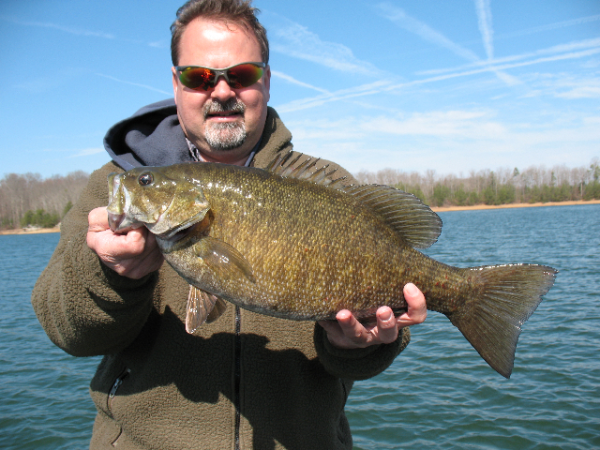
    The spots we caught at Lanier looked like footballs the were so fat. And many were over the 14-inch size limit.  At Smith, we caught more fish, but most were 12 to 14 inches long and not nearly as fat.

    Guide Brent Crow took me out on Smith. He has fished the lake for many years and said the spots were feeding on herring up to two years ago, following a predictable pattern just like Lanier. But now he is seeing few herring and the bass are acting different.

    We had to go to tiny baits to catch the fish. We saw several half-inch long shad the fish we hooked spit up. But at Lanier we used big herring size baits, swimbaits five or six inches long and big topwater baits.

    Lakes change with time. Brent had no idea what caused the change at Smith. Hopefully Lanier will continue to produce big, fat spots but herring are not native to either lake and any time non native species are introduced, the results are unpredictable.

    The trip to Smith will be a costly one for me.  I have a lot of electronics on my boat that were top of the line in 2016, but the technology is outdated now. I love my Humminbird 360 scan that shows a radar like picture of things under the water, but the new one coming out this month is far superior to mine, giving a clearer picture of brush, rocks and fish.

    I have been looking at the Garmin Panoptix unit. This unit, called “Live Scan,” shows a picture of what it is pointed at, much like looking under water with a spotlight.  And it shows fish as they move, the depth they are holding and exactly how far from the boat they are, and the direction from the boat.

    We caught about 25 bass at Smith and probably would not have caught them without the Garmin unit.  Brent would stop on a point and scan around it looking for suspended fish.  We would then cast directly to them rather than blindly fan casting a point. Brent said he never made a cast unless he saw the fish.

    It was amazing watching the bait moved through the water and the fish react to it. Many followed it but turned away, but we could see the ones that grabbed it and watch as they fought back to the boat.

    I learned more about bass behavior in a few hours than I have in many years. But it was frustrating, watching a bass follow the bait but not hit it.

    I seldom fish for suspended fish, usually working a jig or shaky head along the bottom on rocks and brush. And the Garmin showed brush and rocks, but the picture was very different than what I am used to seeing.  It would take a lot of study to learn exactly what I was looking at with the Garmin.

    The good thing was we could see the fish as they moved in the brush and around the rocks.  We never got any of them to hit on that kind of structure though. 

    I am almost convinced to replace my old 360 scan with the Garmin. Maybe I can figure out how to keep both!

Kayak Fishing


Kayak Fishing: Back to the Start
By YAKGEAR Pro Tim Hotchkin
from The Fishing Wire

I am like most kayak fishing folks reading this. I started kayak fishing to get out on the water more often and to access water that was difficult to fish from a big boat. In 2011 I had a truck that got horrible gas mileage and a big bass boat that was not much better. Whenever I went to the lake, I always knew I would spend at least $100 between the truck and the boat due to gas prices.

This caused me to not fish as much as I wanted to. I started thinking about options to get on some of the smaller lakes closer to my house — ways I could easily throw and go.

After looking at several options, I settled on a kayak. My first kayak was nothing special — a 12-foot Perception Pescador 12 purchased at a discount at Academy due to some shipping damage.The boat was a great start, and by the next year I was ready to upgrade. (Over time I’ve learned that this would become a trend, but that’s another story altogether–including lots of YakGear equipment to get each new ‘yak just the way I liked it.)

I got involved with my local kayak scene and found a tournament trail. When I started hanging around with some of those guys and checking out the events (I am a competitive person by nature) I felt it was a good way to still have a competitive sport in my life and matched what I enjoyed doing in my free time. That club eventually dissolved and a group of us started a new trail, which quickly grew. We went from a good turnout being 15 to 20 people to where, if we had fewer than 60, the anglers were disappointed with the turnout.

After years of involvement, my fishing revolved around tournaments. I no longer went to those cool places I liked to explore, as I was always focused on pre-fishing and trying to pattern the fish.Last year I knew a change was coming. My wife and I already had a 3-year-old little girl, and now had twins due in November. I tried hard to finish well in Angler of the Year standings and felt good with my finish just outside of the top 10 — out of well over 100 anglers.

The main issue was that I was pretty burned out. I had already decided to step away from the tournament board to focus on the family and twins, but when the new season came around, I had no desire to compete. Lack of sleep from the boys may have contributed to some of that. I attempted to pre-fish for the first tournament of the year, but the excitement just wasn’t there. I could also tell me being gone all day put a lot of extra stress on my family. So, I decided I wasn’t going to fish tournaments either.

This year I got back to where kayak fishing began for me, back to what made me fall in love with this sport. My fishing has been focused on short trips, just enjoying the chance to get on the water like I did in 2011. The times where I could fish for longer periods of time or have an entire day, I went to places I loved, but which I hadn’t fished in years. I have fished more rivers than I have in the last three years combined. Just a couple weeks ago I got to take my daughter out and let her catch her first smallmouth in a small scenic river.

That was an amazing thing to experience. I got to have more trips with my friends and just go out and enjoy the peace that being on the water brings. It has been an amazing reset.I can tell as the season has progressed that my desire to get back out and compete is growing again. I think that, like everything in life, it is about balance. I look forward to seeing what next year holds and getting back out on the water with friends I have made with the Natural State Kayak Anglers group. And I look forward to grabbing my YakGear Fish Stik measurement board and setting out to fish some of the tournaments again.

If you are starting to feel burned out, I recommend stepping back and thinking about what got you into the sport. Take a break and go do those things, whether that means fishing with friends or fishing a body of water you haven’t had the time for.

About the Author YakGear Brand Ambassador Tim Hotchkin is an Arkansas resident who has been fishing his entire life, thanks to his grandfather and uncle. He started out wading creeks and fishing ponds to catch bass, and later found that kayaking gave him the ability to easily travel from one favorite spot to another. He enjoys kayak fishing because it allows him to really get close to nature. You will often find him fishing in tournaments through Natural State Kayak Anglers.

How and Where to Catch May Bass at Lake Seminole with GPS Coordinates

May Bass at Seminole with Jim Merritt and Brian Key

     May is a magical month at Lake Seminole. The grass beds are thick enough that you can see them and fish the edges easily. The weather has stabilized so you can fish the big water.  And the big bass have moved into their summer pattern, stacking up in places where you can find and catch them.

     Brian Key and Jim Merritt live in Bainbridge and fish team tournaments together. They have had great success on Seminole and May starts their favorite time to fish there. Their patterns and places pay off year after year in tournaments and will work for you.

     Jim moved to Bainbridge in 1979 and started fishing Seminole. He guided there for several years and learned the lake’s secrets.  Brian lived near him and they got to know each other. Fishing with the Bainbridge Bass Club, they paired up for a 24 hour tournament and found out they compliment each other well in tournaments, so they started fishing team tournaments together.

     Brian and Keith fish the R & R Team Trail as well as the Wingate Open and other team tournaments in the area like the Wingate Summer trail.  In 1999 they had a string of 3 wins in a row in R & R and other tournaments like the Wingate Open and the Memorial Day tournament, and did it again in 2001. After winning three in a row two years ago they had a poor tournament, then won a fourth that year at Seminole.

     Not only are the patterns Jim and Brian fish consistent, they produce big bass.  Jim has been in on three catches of 10 bass weighing over 50 pounds in tournaments. In 1990 he brought in 10 weighing 55 lbs. 13ozs. and he and Brian had ten fish weighing 57-3 in 1999 and 55 pounds even in a two day tournament in 2001.  Their best one day catch of 5 bass in a tournament weighed 37 pounds and they have won the big fish pot in Wingate’s tournaments three times. 

     Starting in May there are two basic patterns Jim and Brian fish to win tournaments.    Their primary target is grass beds on the river ledges, and they fish them a couple of different ways.  They will also fish the standing timber in Spring Creek if the ledges just don’t produce, something that seldom happens.

     The best grass beds are the ones that come to a point or have cuts in them and grow right on the ledge, dropping into 20 plus feet of water.  Current running across the grass and ledge helps. Jim says  you can be sitting on a ledge near the dam and hear the siren go off, warning of water release, and within a few minutes the bass will start biting.

     Before sunrise Brian and Jim hit grass points with spinnerbaits and top water. Jim tells a story of how he discovered his favorite spinnerbait. About 15 years ago some guide clients brought some spinnerbaits with big #7 willowleaf blades and he thought they were “tourist” spinnerbaits. When the sun came over the trees the clients had 7 bass to his 2.  The next day he was loaded up with spinnerbaits with #7 blades.

     Brian and Jim like to get near the grass ledges and keep the boat out in 20 feet of water. They cast the spinnerbaits up over the grass and bring it back to the edge. Bass usually hold right on the edge of the grass. A 1/2 ounce white spinnerbait with a big #7 silver blade and a smaller Colorado blade in either silver or copper is their choice.

     While one is working a spinnerbait the other might throw a Baby Torpedo top water plug. If the bass are not real active, they might try a Texas rigged worm with a 3/16 ounce sinker, worked down the edge of the grass. But Jim and Brian and looking for active fish and expect to “get rich” as Brian says, on a ledge with feeding bass.

     After the sun gets up they switch to their bread and butter tactic of catching bass.  Both will throw a Carolina rigged Hummer Hawg trick style worm in green pumpkin or a lizard in the same color. Hummer Hawg makes lizards and trick style worms using suggestions Brian and Jim have made so they really like their worms.

     The Carolina rig has a long leader, five or six feet, but the key is the lead.  Brian and Jim make a special 1 1/4 ounce lead that is long and has a pointed end. This lead comes through the grass better and they can pop it free, a technique that seems to turn on the big bass. They fish this rig from 6 inches of water to as deep as it gets.

     Jim and Brian use a long 7 foot rod and would like one 8 feet long for more leverage.  They found the perfect Carolina rig rod when Davy Hite showed them a Pflueger Trion 7 foot rod while they were fishing together. The rod has plenty of backbone but a light enough tip for the action they want. And best of all, I was able to order one from Berry’s Sporting Goods in Griffin for $44.95 retail.  You should be able to get one at a similar price.

     They like to team it up with a Pflueger Solar reel and Brian favors the PFLSOLARALP.  It has served him well in many tournaments and is affordable.  That combination works well for him.

     With the Carolina rig Jim and Brian throw the bait up into the grass and drag it to the edge, then pop it free and let it fall. They make long cast and work the bait to edge of the grass, then reel it in for another cast when they don’t fee the grass anymore.

     Both Brian and Jim warn to be careful when pulling through the grass. Fish, especially big bass, will grab the bait and hold on without moving. All too often you will pull your lead away from the grass only to realize you pulled your worm away from a fish. Be careful when you feel weight and make sure it is grass, not a bass, before pulling it free.

     The fall-back pattern is to go to standing timber and fish it with a Texas rigged worm.  They both like a 3/16s ounce sinker and use smoking blue, green pumpkin or grape with red fleck worms.  They drop a worm beside every piece of wood and let it fall until a fish hits.  The key to fishing the timber is to keep your boat in 20 feet of water and fish the deeper timber.

     Hydrilla used to grow in the timber in Spring Creek and you could follow the edge of it. Now, you just fish all the timber since bass might be anywhere.  There are no spots marked on the map for fishing timber, if you get into Spring Creek you can’t help but find it, it is everywhere.  And all of it can hold bass,  you just have to fish a lot of it.

     The following 8 holes are all good, and the lake is full of more just like them. Jim and Brian say they found these spots by getting out there and fishing. You can find more by getting on a ledge and following it, fishing all the grass you find until you find hotspots of your own.

     Note – the following number channel markers are numbered on the Atlantic Mapping Lake Seminole Map, but not all channel markers have numbers on them on the lake.

     1.  N 30 47.118 W 84 44.142 – One of Brian and Jim’s “get rich quick” spots is the bend of the river above Wingates near the island on the left side going upstream.  Head up the Flint to the island just downstream of the entrance to Ten Mile Still landing.  Just off black channel marker 10.2  you will see the end of a log sticking out of the water. Jim and Brian call this “leaning log hole” from that log.

     Look for the grassbed in this spot where it comes out to the river ledge and ends.  You will be sitting in 20 feet of water in the channel and throwing up on top of the grass. If you are here before sunrise start with topwater and spinnerbaits. Run the spinnerbait out to the edge of the grass and let it fall if they won’t hit it on a steady retrieve. Cast the topwater bait to the edge and work it slowly right on the edge of the grass as long as possible.

     2. N 30 46.397 W 84 45.351 – This is the spot where the old ferry used to dock and there is riprap on the edge of the old river channel. Grass grows right to the edge so you have rocks, a drop and grass all together. It is an excellent place to find fish. Look for red channel marker 11.2 and line it up with the little cut on the bank. That cut is the entrance to the slough upstream of Wingates. If you work from the channel marker toward the  mouth of the slough you will go right over the old riprap. 

     Sit in the river channel and work your spinnerbait and topwater along the grass. Follow up with a Carolina rig, but if the current is strong you will get hung in the rocks a lot.  You can work a lighter Texas rig along the rocks in the current by casting downstream and working it upstream along them.

     3. N 30 45.893 W 84 46.636 – Head down the Flint past Wingates to the green channel marker across from red channel marker 8.8.  The green buoy does not have a number on it. If you are heading downstream there is a grass point on the right of that channel marker a little upstream of it where there is an old wash out in the river ledge. You can see it on a map. The edge of that washout has a grass point on it that holds bass.

     If the sun is up, use your Carolina rig. If there is current running down the Flint bass will stack up here on the upstream side of the grass point, holding on the edge of it waiting on the current to bring baitfish to them.

     Keep your boat out in the channel and cast up into the grass. Let the heavy sinker go to the bottom, falling through the grass fast.  It will pull the worm down and then the worm will fall slower after the lead hits bottom.  Move the lead along, popping it through the grass when it hangs up. When the lead breaks free of the grass stop and let the worm follow it down right on the grass edge.  That is where you are mostly likely to get bit.

     4. N 30 45.954 W 84 49.496  – Going downstream, cut behind the line of standing timber near channel marker 7.3 and stay toward the bank to your right.  As you pass the islands and can see through to Spring Creek, stop and look for the grass line on your right.  You will see a big snag on your left with a osprey nest on it about six feet above the water when you are in the right area.

     This is really a triple shot hole. There are three excellent grass points on this grass bed within 1/4 mile.  The osprey nest is about even with the middle one. The first is back toward the big island upstream and the last one is downstream near the small island.

     Fish each of these grass points with spinnerbait and topwater early, then switch to your Carolina rig. The long leader is important in the grass since you will be throwing up into fairly shallow water.  The long leader lets the worm work better further away from the lead. The heavy lead will also stir up mud on the bottom and move grass, attracting the fish.

     5. N 30 44.250 W 84 53.133 – Run down to the main lake and go across to the Florida side to the entrance to Sneads Landing.   Near the green channel marker just upstream of the first two sets of poles going into Sneads, there is a good grass point on the river ledge on the Georgia side of the channel.

     You will be about 150 yards from the poles toward the island on the Georgia side. You can see the shallow river ledge on the map, and grass grows on it to the drop.  Fish it early with fast moving baits but slow down after the sun comes up and use the Carolina rig.

     6  N 30 44.024 W 84 53.121 – About 100 yards below the poles near the first green marker going downstream, look for a blowout on the river ledge on the Florida side of the channel. If you look upstream, you can make a triangle with the red and green markers and your boat – you want to be sitting at the peak of the triangle downstream of the two markers. The grass will form two points, one on each side of the drop where the current cut away the old ledges.  Both points hold bass.

     Fish both points on the grass bed, sitting in the channel and casting up onto the ledge. Current here running down the Chattahoochee River will make the bass feed, so listen for the siren at the dam and sick around if you hear it.

     7. N 30 43.504 W 84 51.694 – Run down to near the dam on the Georgia side, just downstream of the Chattahoochee Park swimming area. There is a long sand ridge running parallel to the river and bank, about 150 yards off the bank. There are two cuts through this ridge where the bass stack up.

     The first one is out from the second dock on the bank.  If you get straight out from this dock and ease along, you will see a dip in the sand ridge where a little channel cuts through it.  There are grass points on both sides of the cut, and bass hold on both of them.  Fish them just like the other grass beds.

     8.  N 30 43.079 W 84 51.591 – Ease down the ridge toward the Coast Guard station. Watch the radio tower behind the station and line it up with the first building if you are going toward the dam.  On this line is a hole that is a borrow pit made when they were building the dam. It is right on the sand ridge and grass grows on both sides of it, too.

     You will see the bottom drop from 12 feet on top of the ridge to 22 feet in the pit. Fish the grass on both ends of the ridge where it drops off. Here as in other places look for something a little different in the grass that the bass key on. A small point, a cut or a sudden drop in the grass will hold the fish and you should concentrate your casts to that spot.

     On the outside of the pit toward the channel there is an old road used in construction leading out of the pit. It forms a ridge on the channel side, and will have grass on it, too. Fish it as well as the points of grass on the bank side.

     These 8 holes are just a few of the spots on the river and creek ledges that hold bass in May at Seminole. And if you get tired of running the ridges, go to the timber in Spring creek for a different kind  of fishing. All of the timber and ridges may harbor a 10 bass, 50 plus pound catch for you like it does for Jim and Brian. Use their methods on spots you find for a fantastic catch of May bass at Seminole.

     Jim and Brian sell their Carolina rig 1 1/4 ounce sinkers for 25 cents each plus shipping. Call them at 229-246-6046 or 229-254-3884 to order some.

Tagging Bonefish


Bonefish Tagging in the Florida Keys with Bonefish & Tarpon Trust
By Nick Roberts, BTT
from The Fishing Wire

A subtle, V-shaped wake appeared on a sun-drenched flat near Big Pine Key. As it approached the skiff, poled by Dr. Ross Boucek, Bonefish & Tarpon Trust’s Florida Keys Initiative Manager, its source was revealed: a pair of bonefish foraging on crustaceans hiding in the sand and seagrass. When the ghostly silhouettes came within range, I cast a couple feet ahead of them.

One of the fish tracked the spawning shrimp fly and suddenly pounced. I set the hook and the gray blur tore across the flat, peeling line from my reel as it headed for deeper water. Within seconds, I was down to my backing. The pressure to land the bonefish was much greater than usual; a pulled hook would mean losing not only a prized catch, but the opportunity for Dr. Boucek to tag the fish and collect important tracking data.Anglers from around the world have pursued bonefish in the Florida Keys, the birthplace of saltwater fly-fishing, since the 1940s and ‘50s, when legends like Joe Brooks and Ted Williams pioneered the sport in the now hallowed waters of Islamorada and Florida Bay.

In the sport’s early years and through its glory days of the 1960s to the mid-1980s, the Keys’ bonefish population seemed as boundless as the pristine flats and mangrove shorelines the fish inhabited. But in the late ‘80s, the population began to decline, prompting a group of concerned anglers to found Bonefish & Tarpon Trust (BTT), a science-based nonprofit organization, in 1998. Not only did BTT seek to determine the causes of the decline, it endeavored to fill in critical knowledge gaps; at that time, only a handful of research studies on bonefish existed, leaving many basic questions to be answered.

Since its founding, BTT has directed research on the life cycle of bonefish, their habitat use, movement patterns, and spawning behavior, and worked with the state of Florida to protect the species under catch-and-release regulations. BTT has also uncovered a number of causes of the decline, including: reduced water quality throughout the Everglades, Florida Bay, and the Florida Keys; habitat destruction (the number of Keys flats classified as “severely degraded” due to propeller scarring has increased 90% in the last 20 years); poor fish handling practices; and diminished numbers of bonefish larvae coming from spawning at “upstream” locations, such as Belize, Mexico, and southwest Cuba. Reduced spawning and reproduction within the severely reduced Keys’ bonefish population has also played a major role in the decline, and the record cold snap in January 2010 likely killed a substantial number of fish.

Dr. Boucek and Nick in search of bonefish in the Lower Keys.Yet there is good reason to be hopeful. Over the past few years, the population has begun to rebound, with guides and anglers reporting increasing numbers of sightings and catches.”There are a lot of bonefish around in three different sizes, all born a year apart from one another,” said Dr. Boucek. “Starting in 2014, a new wave of babies came in, followed by two more new generations in 2015 and 2016. The size classes are approximately 15 to 18 inches (2016 fish), 18 to 20 inches (2015 fish), and 22 to 25 inches (2014 fish).

”Although these new fish are encouraging, we don’t know where they came from, why they are doing so well after years of decline, or if more new fish will continue to enter the Keys population. So it is still critically important that we understand and address the causes of the historic decline, to ensure that a similar downturn does not occur in the future.“The Keys went about 20 years without a good new generation of bonefish coming into the population,” said Dr. Boucek. “That’s a sign of stress on the habitats and the fishery. When habitat gets degraded, fish reproduction is impacted, juvenile fish struggle to survive, and adults don’t grow as fast. And new generations of fish become fewer and farther between.

”Dr. Ross Boucek poles a flat.Among the most important habitats to protect are bonefish spawning sites. If bonefish cannot reproduce successfully, there will be no fishery. From its work in the Bahamas, BTT knows how bonefish reproduce. During full and new moon cycles from fall through early spring, fish from as far away as 70 miles instinctively gather at nearshore sites, where they prepare to spawn by porpoising at the surface and gulping air to fill their swim bladders. At night, they go offshore and dive hundreds of feet before surging back up to the surface. The sudden change in pressure makes their swim bladders expand, causing them to release their eggs and sperm. After fertilization takes places, the hatched larvae drift in the ocean’s currents for over a month before settling in shallow sand- or mud-bottom bays, where they develop into juvenile bonefish.With the help of guides and partners, BTT has identified spawning sites in the Bahamas and along the Belize-Mexico border, yet the locations of the spawning sites in the Florida Keys remain a mystery, one that must be solved if we are to ensure the future health of the Keys’ bonefish fishery and help it reclaim its former glory.“There are a couple possible reasons that might explain the lack of known spawning sites in the Keys,” said Dr. Boucek.

“First, nobody knew what bonefish spawning sites looked like until we discovered one in the Bahamas in 2011. Maybe by then the size of the spawning school in the Keys had shrunk to the point that it wasn’t noticeable to us. Or maybe the size of the Keys population became so small that the fish completely stopped spawning for a period of time. Fish won’t spawn if there aren’t a critical number of spawning fish.”Over the past couple years, several Keys guides have reported seeing schools of bonefish in nearshore waters. Now, Dr. Boucek is counting on the fish he tags to lead him to their spawning sites.As soon as I land the bonefish, Dr. Boucek places it in a submerged inflatable pen. While I hold the fish upside down in the water to keep it calm, he makes an incision in its abdomen. Right away, he notices that the fish is female—ovaries are evident and filled with developing eggs. He inserts a small acoustic transmitter into the abdominal cavity and skillfully stiches the incision closed. The transmitter emits an ultrasonic ping with a unique ID code every couple of minutes. Whenever this tagged bonefish swims past one of the several thousand acoustic receivers, belonging to BTT and other research groups, moored to the ocean floor throughout the Keys, the receiver records the date and time of the transmitter’s ping.

The tracking data will allow Dr. Boucek to chart the fish’s habitat use and, hopefully, locate its spawning site this winter.With the Nick’s assistance, Dr. Boucek (right) tags a bonefish with an acoustic transmitter.An acoustic transmitter.I release the bonefish and we watch as it glides away across the flat and vanishes into the glare.Dr. Boucek (left) and Nick celebrate the successful tagging of a Florida Keys bonefish.  

Nick Roberts is the Director of Marketing & Communications at Bonefish & Tarpon Trust (www.BTT.org) and the editor of the Bonefish & Tarpon Journal.

All photos by: Ian Wilson
Learn more about the work of Bonefish & Tarpon Trust at www.bonefishtarpontrust.org.
Tagging a bonefish

Climate Change True Believers – You First

According to the Climate.gov web site and National Oceanic and Atmospheric Administration, climate “models” show earth’s average temperature may be 2 to 9.7 degrees warmer in 100 years than it is now due to more carbon in the air. 

    According to climate alarmists, this means we must give up our way of life, including cars, warm houses, meat and many other staples of modern life to avoid this disaster that will wipe out life as we know it.

    A week ago last Thursday the temperature at my house was 75 degrees at 2:00 PM, 45 degrees at 7:00 PM and 35 degrees at 2:00 AM Friday. By 2:00 PM Friday it was 55 degrees.   

    The temperature dropped 30 degrees in five hours and 40 degrees in 12 hours, then warmed 20 degrees in the next 12 hours.  Yet noting died, all the trees, grass and wildlife survived.  Even my temperature sensitive tomatoes and peppers are fine.

    My house was warm and comfortable due to gas heat and a fire in my wood burning stove, two things climate true believers demand I give up.

    In his October 10 Griffin Daily News editorial, Walter Williams documents six times since 1969 that the climate change fanatics claimed life would end as we know it in 20 years or so if we didn’t give up our lifestyles.  Not a single one of those wild claims, nor the dozens other similar ones, ever happened.

    Just like gun control, climate change laws have nothing to do with guns or climate but are all about controlling us.  While normal folks have to give up comfort, happiness and personal protection, the ones that demand it continue to fly private jets to meetings where they come up with new schemes and go on trips on their private yachts, while being protected by armed security.

    When those flakes lead by example, giving up the things they demand I do without, I may pay a tiny bit of attention to then.

Repair Broken Fishing Rod

Darn the Luck of a broken fishing rod!
Gary Giudice
from The Fishing Wire

Oops! Darn the bad luck. So you broke your favorite fishing rod. Now what?

Depending on what’s broken, you have options to fix it. Some options are good, some not so much. A simple broken tip is one thing but slamming a rod in a car door is entirely another.

If a tip is broken with very little of the rod involved you are in luck. Most tackle shops and even box stores sell top guides and rod tip repair kits. It is possible you might be able to use the original guide that’s dangling on the line.

To remove the original guide, take a cigarette lighter, slowly heat it up and slip it off the damaged tip. You might have to use a pair of pliers to avoid burning your fingers.

To replace it first inspect the end of the rod and make sure it is a clean break without splinters running down the shaft of the rod. Make sure the repair kit guide is the right size then glue it on using the included glue. Typically it is melted with a lighter. If you are using the original guide and opt not to buy a repair kit, a high temp glue stick will work.

If too much of the tip is broken off or by chance you break it mid-way it’s a much bigger problem. It is important to note that even a small repair can significantly change the action. To fix a mid break you can take a section of an old scrap rod and make an internal slice, cut a section that fits inside both sides of the break on the rod you are repairing; slip both sides over the break and glue in place, but this rarely works well even when professionally done.

Sometimes it’s best to just scrap the broken rod for parts and be done with it, which is extremely painful for our favorite or premium rods.

The best way to avoid fixing a rod is to prevent breaking it in the first place. Most all rods are broken going to and from your favorite fishing area and not while fishing. The best solution to prevent damage is to transport it properly.

Even if you break a rod on a monster fish chances are it was damaged before the first cast. The old adage “That fish was so big it broke my rod!” doesn’t hold up under scrutiny.Rod protection during travel is easy when using a Rod Vault ST (https://denveroutfitters.com/rod-vault-st/). Designed to fit on most vehicles’ roof racks; rods are stored, locked up and protected from banging around and slamming car doors. They will be also be ready and rigged upon arrival at the water and back home again. Many anglers just leave rods in the Rod Vault ST all the time rigged and ready to fish at a moments notice.

Don’t be that guy that is always breaking rods and blaming it on someone or something else. With proper care fishing rods should last a lifetime.

St. Croix Mojo Bass Glass Crankbait Rod Review

You can cast a crankbait on any rod.  But you will be much more efficient, make longer casts, the bait will have better action and you will land more of the fish that hit if you use the right one for the job.

    My St. Croix Avid medium action rods do a good job with smaller crankbaits, but do not work well with the huge ones that are so popular now. A few years ago, I bought a St. Croix Mojo Bass Glass Crankbait rod at a Georgia Outdoor Writers Association auction, and got it for a fraction of the list price.

    It is a fantastic crankbait rod, casting quarter ounce crankbaits easily but handling the biggest one-ounce ones I own.  Both will fly further on it than any other rod I have, even with the same reel and line. 
Its action makes this possible. 
    The action of the rod also makes it easier to land bass on a crankbait.  Bass are notorious for throwing a crankbait, often because the hooks tear holes in their mouth and allow the hook to pull out. A rod that is too heavy adds to this problem, tearing holes when you set the hook. 

    The St. Croix had a medium power moderate action, meaning the rod bends over its whole length, and allows a cushion when setting the hook. Most rods now are graphite, but those fibers are stiffer than fiberglass.  That is the reason St. Croix uses it in their crankbait rods.

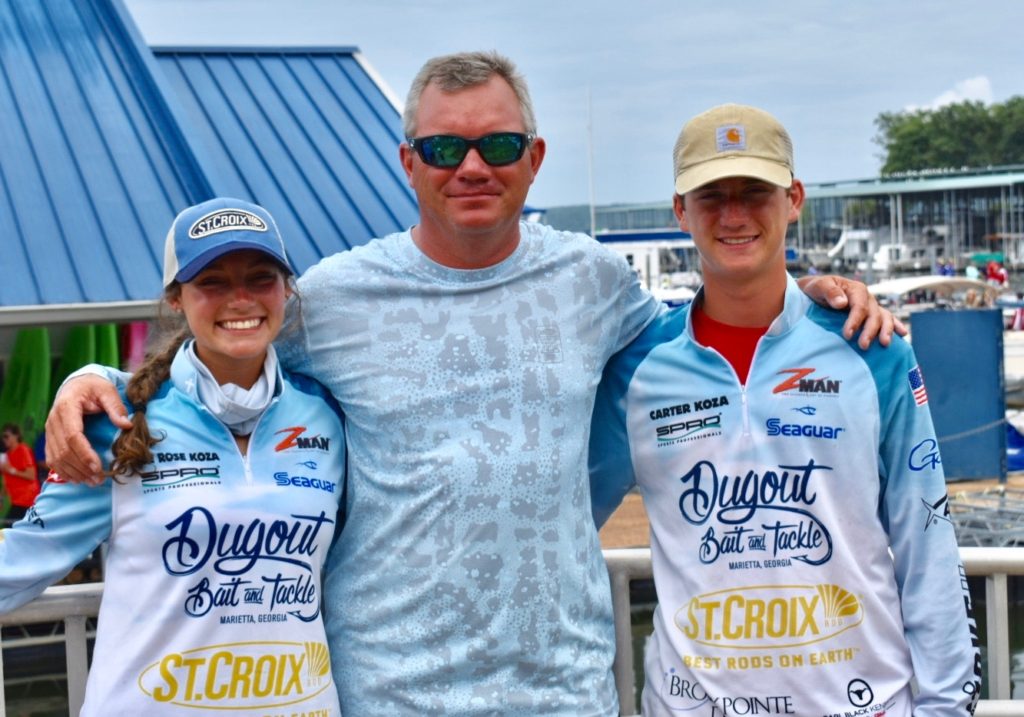
    Jamie Koza, owner of The Dugout bait and tackle store in Atlanta and a tournament fisherman, says the
St Croix Mojo is the best crankbait rod he has ever used.  And both is kids, Carter and Rose Lee, tournament winning high school and college fishermen, both love them.

    The St. Croix Mojo Bass Glass crankbait rods sell for about $150 and come in a variety of lengths and actions to suit your needs.

Where To Catch Spotted Bass in Kentucky


Great Spots for Spotted Bass
By Lee McClellan
from The Fishing Wire

They were not even recognized as a distinctive fish species until 1927. People for many years believed these fish only existed in Kentucky.

In 1956, the Kentucky legislature designated this species the “Kentucky bass” and made them the official state fish. Many anglers, especially in the south-central portion of the United States, still call the spotted bass a Kentucky bass.

They pale in reputation to their black bass cousins, the largemouth and smallmouth bass, but the spunk shown once hooked and their abundance should raise the profile of the overlooked spotted bass. They are also aggressive and readily strike lures.

It isn’t hard to tell when a spotted bass strikes. They shake their heads violently and dive bomb toward the bottom. The larger ones — 15 inches and up — usually grow a pronounced belly as they mature. Spotted bass use that girth along with a powerful tail that pulls against an angler, producing as good a fight as any comparable largemouth bass.

Medium-light spinning rods with reels spooled with 6-pound fluorocarbon line is all you need for catching spotted bass.

Once the fall winds blow, spotted bass begin to school up. They locate along rock bluffs or suspend over points, submerged humps or channel drops.

“At this time of year, if you catch one spotted bass, keep fishing that same spot,” said Chad Miles, host of the Kentucky Afield television show and dedicated spotted bass angler. “There might be 40 or 50 of them there. Spotted bass really school up in fall.

”In early to mid-fall, these schools of spots often trap a cloud of shad against the surface and rip into them. Large, chrome topwater lures tossed into this melee draw vicious strikes. These same lures fished over points, humps and channel drops can draw spotted bass from a good distance below the lure, especially on our clear water lakes such as Lake Cumberland or Laurel River.

Lake.Lake Cumberland holds a bountiful population of spotted bass with many fish in the 14- to 16-inch range. Spotted bass make up roughly half of the black bass found in the lake.

The main lake points from Harmon Creek down to Wolf Creek Dam hold spotted bass from fall through late spring. A 4-inch black finesse worm rigged on a 3/16-ounce Shakey head and slowly fished down those points is a deadly choice.

A hammered silver jigging spoon fished along the old Cumberland River bluffs in this section of the lake also produces spotted bass. Again, if you catch one spotted bass in fall, keep fishing the same area with the same technique. You might catch a dozen or more.

Large crappie minnows fished on size 1 circle hooks with two split shot lightly clamped on the line about 18 inches above the hook make a powerful choice for the large spotted bass in Laurel River Lake. The water of Laurel River Lake is as clear as the air and live bait works best.The upper end of the Craigs Creek arm is a spotted bass hotspot on Laurel, as are the main lake points near the dam and in the lower section of Spruce Creek.

The mid-depth reservoirs in southern Kentucky hold excellent populations of larger spotted bass. Barren River Lake and Green River Lake hold some of the largest spotted bass in Kentucky.

The channel drops along the submerged Barren River adjacent to Barren River Lake State Park and the Narrows Access Area make excellent fall spots to try for spotted bass.In Green River Lake, rock slides and points in the lower sections of the Robinson Creek arm and Green River arm are the best fall places. Green River Lake holds an impressive number of spotted bass longer than 15 inches.

Anglers fishing for largemouth bass in Kentucky Lake often stumble across a football-sized spotted bass. The secondary points in the major bays and creek arms in the middle section of the lake hold some impressive spotted bass in fall.

Smaller profile ¼-ounce football jigs in hues of green, brown and chartreuse attract these fish on Kentucky Lake.Spotted bass make excellent table fare, by far the best tasting of the black bass species, similar to crappie in taste and texture. There is no minimum size limit on spotted bass statewide, but they still count toward the six fish aggregate black bass daily creel limit.

Hit the water and land some hard fighting and abundant spotted bass this fall. Keeping a few medium-sized spots for the table makes a delicious and nutritious meal.

Author Lee McClellan is a nationally award-winning associate editor for Kentucky Afield magazine, the official publication of the Kentucky Department of Fish and Wildlife Resources. He is a life-long hunter and angler, with a passion for smallmouth bass fishing.

Cost of Owning A Boat

 A boat is a hole in the water where you dump your money.  The word “boat” stands for “Break out another thousand.” There are many jokes about the cost of owning a boat, and are all too true.

    I have owned nine bass boats over the past 45 years, and all had their good and bad qualities, but all had one thing in common. They cost a lot, from purchasing them to keeping them working and running.

    Boats have improved a lot over those years.  My first boat, a brand new 16-foot Arrowglass with a 70 horsepower two stroke Evinrude motor, cost only $3500 in 1974.  That seems cheap now, many depthfinders and trolling motors cost more than that individually and just the sale tax on a new bass boat can be much higher. 

    That boat was top of the line back then, with one of the biggest outboard available that would push it about 35 mph on a good day, a 12-volt trolling motor, flasher depthfinder, two batteries and a single axle trailer with two narrow 14 inch tires.  It served me well for seven years although I had to have the motor rebuilt twice and made some improvements, adding a paper graph depthfinder to the dash and moving the flasher to the front.

    My current boat is a 20-foot Skeeter with a 250 horsepower Yamaha four stroke motor. I bought it used from Chad Pipkins, an Elite series pro, and it cost just over $50,000.  The list price for it new was in the upper $70,000 range. It came with a 36-volt trolling motor, four batteries, two power poles, four Hummingbird depthfinder, LED lighting around the inside of the gunnel and a dual axle trailer with four 14-inch car size tires.

    This boat will run in the upper 70 mph range if I ever get in a hurry, but I seldom do. It cruises great at 45 to 50 mph.   

    Four stroke motors crank instantly even in cold weather, something always a problem with two stoke motors, and there is no need to add oil to the gas.  I thought that would save me money over time, not having to buy oil, until I had the oil changed in its annual service.

    Last week I towed my Skeeter to Perry’s High-Performance Marine near Gainesville, fighting horrendous traffic both ways.  Perry is the only mechanic I trust to work on my motor, or even service it. He is definitely the best Yamaha mechanic in Georgia, if not the entire Southeast.

    During service them motor is tested on a computer, giving all kinds of information about it.  A couple of things surprised me.  The boat had about 250 hours on the motor, put on it in one year by Chad. I put about 100 hours a year on it and it now has 500 hours on it. I calculate I spend about 7 hours on the trolling motor for every hour on the gas motor.

    In those 500 hours, the computer shows it was run 5,000 to 6,000 rpm only 28 hours, and many of those running 60 plus mph, were put on it by Chad.  Most of the time, 336 hours total, were at less than 1000 rpm, idle speed.  Chad spent most of his time idling around, watching depthfinders, as do it.  At the speed I run, about 40 to 50 mph at 3000 to 4000 rpm, totaled 64 hours.

    In three years, the only problem with the Skeeter is one of the live well pumps burned out.  Perry and the Yamaha folks say if the motor is serviced as scheduled, it should last for several thousand hours, more than I will be able to put on it the rest of my life!

    If you buy a bass boat, expect sticker shock. But be aware that is just the beginning of your expenses!

St Croix Ice Rods

Press Release

AVID ICE ANGLERS: GET YOUR MOJO WORKING AND MAKE YOUR SEASON LEGENDARY

Mojo Ice, Avid® Ice, and Legend® Black Ice Series deliver St. Croix performance, versatility, and value in any ice fishing situation

Park Falls, WI (October 29, 2019) – The feeling’s in the air and on the wind. Recent weather patterns have hardwater fanatics and casual ice anglers alike thinking about the rapidly approaching ice fishing season. Now is the time to start getting organized for the upcoming rush to frozen waters; augers need tuned and sharpened, tackle must be organized, and last season’s fishing line requires replacement. Part and parcel of these gear maintenance and preparation activities, this is also the perfect time to start thinking about new ice rods.

St. Croix Rod designs and builds fishing rods that dutifully and beautifully serve every angling pursuit, including dozens of ice fishing models across four distinct series. Covering panfish to lake trout, St. Croix offers ice rod models with varying lengths, powers and blank materials that deliver pride and performance to any ice angler. Mojo Ice

Get Your Mojo Working Featuring St. Croix’s proprietary custom reel seat and split-grip handle, the Mojo Ice series consists of 13 models suited for any fishing style or technique. These precision-tapered, solid carbon blanks are equipped with stainless-steel guides in sizes designed to prevent freeze up so you can keep working your mojo in any conditions. Mojo Ice models retail between $50 and $60.ST. CROIX MOJO ICE 

:FEATURES:
Precision-taper solid carbon (SC material) blank provides superior performance
Premium split-grip cork/EVA handle Custom reel seat ideal for all techniques
Sea Guide lightweight stainless-steel guides1-year warranty backed by St. Croix Superstar Service

Designed in Park Falls and handcrafted in Fresnillo, Mexico

A biologist by day, Kenora, Ontario-based ice fishing pro Josh Peacock is an enthusiastic fan of the Mojo Ice series, choosing the rods for his frequent lake trout and whitefish forays in Ontario’s storied Sunset Country. “My favorite is actually the MIRC34H,” says Peacock, referring to the 34” heavy power casting model – the heavyweight of the Mojo Ice lineup – which he employs for the hefty lake trout his area is known for. “It has the perfect amount of backbone for ripping four- and five-inch white tubes.

I also like the 34” medium-heavy model (MIRC34MH), which I use when our big whitefish go on the smelt feed,” Peacock continues. “We get them on lake trout jigs and ripping three- and four-inch spoons. The whitefish actually have soft mouths, so the medium-heavy has the right amount of power for that. It’s pretty cool when you find four-to-six-pound whitefish eating smelt. They hit like lake trout!”

Peacock also regularly reaches for the 28” medium-light Mojo Ice rod (MIR28ML) when targeting crappies around the islands on Lake of the Woods and other waters. “It’s a really popular rod up here for crappies, but it’s a great choice for walleyes and even stocked lake trout, too” he notes. “It fishes a 1/8-oz. spoon really well and is a very versatile rod. Anglers love the blank-through reel seat as well.”

Avid Ice Rods for Avid Anglers The popular Avid Ice series consists of six Avid Ice Jigging rods designed for walleye and four Avid Ice Glass rods for panfish applications. Rods retail for between $60 and $70.Created specifically for jigging walleye, Avid Ice Jigging rods features Kigan stripper guides and lightweight, low-profile running guides. Constructed with precision-taper solid carbon (SC material) blanks and super-sensitive carbon handles, 27”-36” Avid Ice Jigging Rods deliver absolute control and sensitivity. 

Avid Ice JiggingAvid Ice Glass models are designed specifically for panfish. Constructed with an Xtreme-Flex solid glass (SG material) blank, high-visibility tip and super-sensitive carbon handle for superior performance, these 18”-34” rods excel in any panfish application.ST. CROIX AVID ICE JIGGING & AVID ICE GLASS 

FEATURES:
Jigging rods for walleye feature precision-taper solid carbon (SC material) blanks
Glass rods for panfish feature Xtreme-Flex solid glass (SG material) blanks with high-vis tipsSuper-sensitive carbon handleKigan stripper guide with lightweight low-profile running guides1-year warranty backed by St. Croix Superstar Service
Designed and handcrafted in Park Falls, U.S.A. (with foreign and domestic materials)

Michigan-based St. Croix ice pro Chuck Mason has competed in ice fishing tournaments from New York to Montana. He carries a multitude of St. Croix ice rods on the tournament trail, but says the Avid Ice Jigging models are his favorites.

“Basically, I have my ice rods sized by the shanty I’m using. So, if I’m using my one-man Clam shanty I’m fishing with the 27-inch. And if I’m using the small two-man shack I’m fishing the 30-inch. I use the longer 36-inch Avid Ice jigging rods when I can get my big shack out onto the bay here on Lake Erie, and I’ll also use the 36” models if I’m fishing outside,” says Mason, who prefers the medium power rods paired with 8- to 10-pound test on Daiwa reels for walleye.

“Their action is great, and they’re designed to handle some pretty big fish,” Mason continues. “The Avid Ice Jigging rods have what I would consider more of an extra-fast tip. It’s a stiffer rod compared to the Mojo Ice. They’re ideal in the situations I regularly find myself in while tournament fishing walleyes in open water. As soon as I start lifting ,I immediately feel anything that’s there. There’s no play or slop in these rods. Their sensitivity and power are perfectly matched for walleyes. I just love ‘em.”

Make the Season Legendary St. Croix Legend® Black Ice rods feature the patented, built-in strike indicator system developed by Greg “The Prowler” Wilczynski. A medalist in world ice fishing competitions, Greg spent years refining his invention.

The result is a super-finesse coil spring bobber system that’s much more sensitive than any other type of indicator, helping anglers see even the most subtle bump or strike well before it can be felt. St. Croix’s strike indicator system is adjustable to accommodate different lure sizes. To make the bobber more sensitive, push the spring forward so it extends farther out through the grommet. To make it less sensitive for heavier lures, simply push it back in.

Featuring precision-taper solid carbon blanks and unique Sea Guide NPS integral reel seat handles, seven different 24” and 30” Legend Black Ice models are available, retailing between $75 and $80. 

ST. CROIX LEGEND BLACK ICE FEATURES:
Super-finesse high-tension stainless-steel strike indicatorFully adjustable and interchangeable spring indicator system
Precision-taper solid carbon (SC material) blank provides superior performance
Sea Guide NPS reel seatPac Bay Minima guides 1-year warranty backed by St. Croix Superstar Service
Designed in Park Falls, U.S.A. (with foreign and domestic materials) 

“I’ve had two seasons using Legend Black Ice rods and the performance has been phenomenal,” offers Peacock. “They’re definitely my favorite crappie sticks. I prefer the light and medium-light power models (LBI24L, LBI30L, LBI24ML and LBI30ML).

Of those, I’m usually using the 30-inchers. I use them with a small tungsten jigs and 4-pound test,” he says. “On the Lake of the Woods and a lot of these back lakes you hook into random pike and walleyes, so you really get to see what the rods are made of. Legend Black Ice rods definitely do the job. Often times we’re fishing 35 to 40 feet deep and it’s cold weather, so there’s a lot of stretch to your line. That’s one reason why the strike indicator system is so awesome; they’re just so sensitive. A lot of time the crappies will swim up with the jig and you can see that on the spring bobber well before you could ever feel anything.

”While you can exchange strike indicators on the rods for varying levels of tension from light to heavy, Peacock has been using the stock indicators that come on the various rods and has been thrilled with their performance. For him, that means the orange-tipped spring bobber with light tension, perfect for his frequent crappie forays.

Parting Words Don’t get caught fishing the same old, outdated gear this winter. Whether you’re chasing predators or looking forward to dialing in epic panfish bites, consider St. Croix’s proven Mojo Ice, Avid Ice, and Legend Black Ice series. You’ll find rods suited to exactly how you fish, no matter the whens, wheres or hows. And after all, that’s precisely St. Croix’s mission—to provide every angler the upper hand.

#CROIXGEAR Like the rods? You’ll love our lifestyle apparel. Shop now!
Ice fishing with St.Croix rods