Carter and Lee Rose Koza with St. Croix Rods

Press Release – Marietta Bassmasters high school anglers, Carter Koza and Paul Marks, recently bested a field of 95 teams to win the 2019 Bass Pro Shops FLW High School Fishing Lake Hartwell Open. The no-entry fee tournament was held November 2nd and was hosted by the Hart County Chamber of Commerce. The win qualified the duo of for the 2020 High School National Championship being held next summer on the Mississippi River in La Crosse, Wisconsin. Qualifying for the event is a significant accomplishment, as only the top ten percent of anglers at state qualifiers make the big show.
Lee Rose and Carter Koza with dad
Photo courtesy FLW
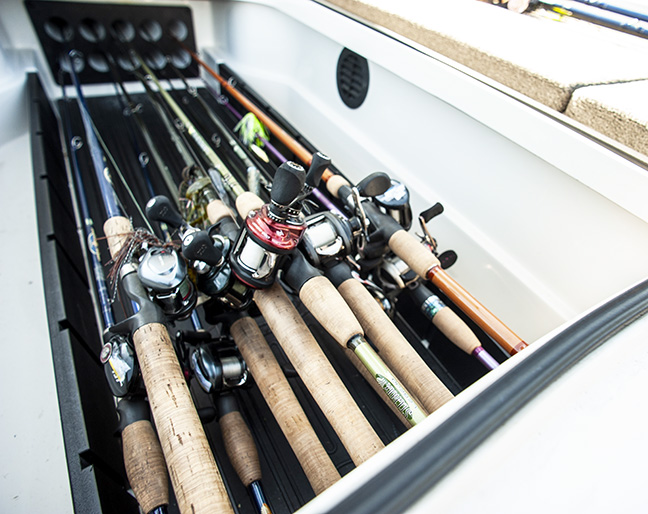
“We only got to practice one day, but we fish Lanier a lot, which is a herring lake a lot like Hartwell, so we stuck with what we knew,” says Koza, who found success with his partner fishing Chattahoochee jigs in deep brush piles with 7’, heavy power, fast action St. Croix Legend Tournament rods. “We caught a lot of fish; they were mostly 13 inchers, but we were patient and managed enough bigger bites to win with 13-10.

”Meanwhile – the same day on the same lake – Carter Koza’s sister and previous high school fishing partner, Lee Rose Koza, placed second in the Yeti FLW College Fishing Tournament at Lake Hartwell Presented by Costa with her partner Maddex Walters. The finish qualified the Carson-Newman University fishing pair for the 2020 FLW College Fishing National Championship, scheduled for Feb. 26-28 on the Harris Chain of Lakes in Leesburg, Florida. 
Lee Rose and Walters didn’t get to pre-fish Hartwell at all. “Maddex is from Georgia and he had been there (Hartwell) in high school, so we just had to go with what we knew from the past,” says Koza, who admits they received a bit of help from their draw. “We drew Boat #2, so we got out early and were able to get to the spots we wanted,” she says.

Generally, those spots were the deep ends of main lake humps, where the duo fished Z-Man Shaky HeadZ  jigs with Z-man Giant TRD and FattyZ Elaztech plastics on St. Croix Legend Tournament medium power fast and extra-fast action rods. “We had a limit by 8:45, so we started throwing bigger worms and got some upgrades,” she says. “Green pumpkin was the key color.”
The Future of Bass Fishing Both outdoor enthusiasts, Carter and Lee Rose come from a fishing family. Their father, Jamie Koza, is a former Chattahoochee River fishing guide, an avid tournament angler and tackle shop owner who passed on the joys of fishing to both kids when they were young. He also taught them a reliable set of techniques.
“Dad has always thrown a lot of crankbaits and it has always been one of our favorite ways to fish,” Carter says, “so, it’s not surprising that St. Croix’s Legend Glass and the new Mojo Bass Glass rods are the rods we prefer to use.”

The Koza’s insist that the St. Croix Legend Glass casting series offers the lightest crankbait rods in the industry; a testament to the linear S-Glass blank each is built around. The new 7’2” heavy power medium action Rip-N-Chatter model in St. Croix’s Legend Glass and Mojo Bass Glass lineups is one of Lee Rose’s favorites. “I’ve yet to find a better rod for cranking chatterbaits or rattlebaits,” she says. “I’m steadily converting my team members to glass! They can’t believe how light and sensitive these rods are, while possessing that sweet, moderate action you need to keep bass buttoned up.

”Carter, currently a high school junior, fished competitively with Lee Rose last season, which was her senior year at Mt. Paran Christian School in Kennesaw, Georgia. They locked in a National invite by placing sixth at the Georgia State Finals on West Point Lake last February and went on to compete together in the High School Fishing National Championship.

“I’m still new to fishing and to the industry,” says Lee Rose, now a freshman at Carson-Newman University. “I grew up watching my dad and brother fish and decided as a junior in high school to join my school’s fishing team. I fished with a different partner that first year and fished with Carter my senior year. It was a blast. Everything flowed, because we had the same kind of style. Dad was our boat captain. It was a cool family deal,” Lee Rose recalls.

“I hope we can fish as a team again in the future.”Carter would like that, too. He has a great deal of respect for Carson-Newman’s coach, Hunter Sales, but says he is keeping his options open.“My sister and I will always be close,” says Carter, who talks to Lee Rose almost every day. “It’d be great to fish with her again in the future, because I know we could go far, but there’s a lot of great teams out there and I’m not sure where I’ll end up. In addition to their great coach, Carson-Newman’s team and program are fully funded by the school, which is a major benefit and makes a big difference for student competitors.”
What’s Next? Carter and his partner, Paul Marks head to Lake Chatuge in Georgia the weekend of Thanksgiving for the next stop on the Georgia Bass Nation tour. “It’s a points tournament and a qualifier for the Kentucky Lake National Bass Championship,” says Carter, who plans to stay in a camper and commute to and from school during the event. “If it stays cold, it will be a good deep brush pile bite,” he predicts. “It’ll Probably take 15 or 16 pounds of spots to win there.

”As for the 2020 High School National Championship next summer on the Mississippi River in La Crosse? “We have never been on the Mississippi,” says Carter, “so it will be a learning experience. But we’ll definitely spend some time up there and figure it out.

”As for Lee Rose’s goals, she wants her Carson-Newman team to finish this season in the top five in the Bass Pro Shops School of the Year. “We ought to easily meet that. We’ve climbed from 66th place and are currently sitting in 11th,” says Koza, who has lofty personal aspirations, too. “My ultimate goal is to be successful working in the fishing industry. In addition to fishing and going to school full time, I work as an intern for the fishing PR firm, Traditions Media, and also help manage St. Croix Rod’s social media presence. I want to work on the media side of the industry after I graduate, so I’m very grateful to have the opportunity to be working with these great companies.”

Committed to the Cause There’s been a buzz behind high school and college fishing since its inception in the mid-1990s. But recent backing from the nation’s largest professional tournament trails has transformed the sport, and sponsors have taken note of the youth movement. Today, many college bass programs have travel budgets for their players, allowances for rods, reels and tackle, and some even provide the use of modern bass boats. Nearly all of these products are donated or deeply discounted by manufacturers in the fishing market.St Croix Rod is on the leading edge of providing support to high school and college bass angling. It sponsors both the Bassmaster and FLW college fishing programs. 
“St. Croix representatives are on-hand at collegiate events to specifically determine the needs of college anglers and build long-term relationships that provide the foundation for future sponsorships,” says Lee Rose. “We are grateful to St. Croix and to all the other companies who have stepped up to support high school and college angling. It’s exciting to be a part of, and the opportunities are only going to expand.”

Winterizing Your Boat


BoatUS Guide to Winterizing Your Boat
Boaters across much of the country are getting ready to put their boats to bed for a long winter’s nap, but not every boat owner knows all the secrets of winterizing a recreational boat. Boat Owners Association of The United States (BoatUS) shares some quick tips to ensure safe storage until next season.

1. Despite mild winters, California, Florida and Texas have the most engine winterizing claims. Boaters in northern climates know to winterize but all it takes is one deep freeze in a normally balmy state to cause major damage to your boat. Unless you’re in an area that never freezes (like Key West or Hawaii) you probably need to winterize.

2. Water expands almost 10% by volume. That expansion means that any water left in your engine, potable water system, or refrigeration system can do some major damage over the winter. Even an engine block can crack open during cold weather. The key is making sure all water gets drained out or replaced by antifreeze.

3. Batteries are happier at home. If you live where you never boat in winter, remove your batteries, bring them to the garage or basement and use a trickle charger to keep them topped off to protect them and extend their life.4. It’s easier to prevent mold than to stop it. Without some air circulation, your boat’s interior can build up condensation, which can lead to a moldy mess next spring. Solar-powered vents and boat covers that lets air circulate can help keep mold at bay.

5. Waxing the hull now makes spring clean-up much easier. The grunge of sitting all winter at a boatyard comes off a lot quicker if you apply a coat of wax before you put your boat to bed.

6. There are two types of antifreeze. Ethylene glycol – the kind in your boat’s cooling system works fine for engines, but it’s very toxic. Propylene glycol is safe for potable water systems and is also fine to use for the raw side of engine cooling systems – check the label. Make sure antifreeze is rated to protect down to the lowest possible expected temperatures.

7. Add fuel stabilizer before you fill your tank. That helps mix the stabilizer so it protects all of the gas. Running your engine for a few minutes after mixing it up will get some stabilized gas in the engine’s fuel system, protecting it over the winter.8. If enough water enters your fuel tank, gas with ethanol can phase separate over the long winter storage period. For boats with portable gas tanks, try to use up fuel now. Any remainder can be used (if unmixed with two-stroke oil) in your vehicle. If your boat has a built-in gas tank, fill the tank almost to the top, leaving a little room for expansion. This will minimize condensation on tank walls, stopping phase separation in its tracks. Never plug a fuel tank vent.

9. Write down what you did or had your shop do. That way, next spring you won’t wonder if the lower unit lube was changed or the spark plugs replaced.

10. Take home any removable electronics, small outboards and even alcohol. The dark days of winter are when boats are most frequently broken in to. Not every thief is a professional – some may just want to raid your boat’s liquor cabinet.

11. Remove all food. Not only might it spoil, but it can attract rodents and other pests, leaving you with a nasty spring surprise.

12. Using a heater as alternative to winterizing is a really bad idea. Not only can the power go out during a big winter storm leaving the boat unprotected, the heater, extension cord or connections can (and do) overheat and cause a fire.

13. In addition to snowstorms knocking-out power to heated indoor boat storage facilities, do-it-yourselfers sometimes make mistakes when winterizing. Either way, for boaters who live in northern states, protecting yourself with ice and freeze coverage insurance may be a smart option. It’s often very affordable, but there’s a deadline to purchase, typically by the end of October.

For more information on how to properly store a boat over the winter, including how to cover a boat, winterize plumbing, store ashore or in the water, and to get a free downloadable BoatUS Boater’s Guide to Winterizing checklist, go to BoatUS.com/seaworthy/winter

Garmin Panoptix Livescope Review

A week ago last Thursday, after two frustrating days of running wires, hooking them up and screwing brackets on my boat, I got my Garmin Panoptix Livescope unit hooked up.  Part of the frustration was with the installation instructions with the unit. I kept having to stop and watch videos to try to figure out what to do.

    I thought maybe the confusion was just me, but several of the folks showing how to do it in the videos said they agreed, the instructions were terrible.

    Even though that Friday was rainy and cold, I just had to go to Jackson and see if I had it hooked up right and how it worked.  Although I had watched the system in action on Brent Crow’s boat, he has been using the Panoptix for three years and knows what he is doing. I was afraid the unit set-up would be as confusing as the installation, but it was very user friendly and simple.

    After launching the boat I idled to a point, turned on the unit and dropped the trolling motor with the transducer on it in the water.  Instantly I watch a school of fish slowly move across the bottom under a school of baitfish. It was amazing.

    I eased around with the trolling motor for about three hours, looking at brush piles, rocky points and fish.  It took some time to get used to the very different view on the Panoptix than what I usually see on my other units.  But it quickly became apparent what I was seeing.

    I made a few casts and watched my bait in the water.  A crankbait left a line as it wiggled back to the boat.  I could tell exactly how deep it was running. A jig arched to the bottom then left lines as I jerked it up and let it fall back.

    A couple of times I could see my jig going through groups of fish that I assumed were bass, based on their position.  But they would not hit it.  In and around brush I could see groups of fish suspended and guessed they were crappie, based on their size and position.

    Last Saturday in the Potato Creek Tournament I got to use the system for eight intense hours of hard fishing. The system preformed as advertised and expected. I learned a lot. 

    The main thing I liked was that I could see fish and know my casts were in the right place.  When fishing without the unit, I often wonder if I am casting to empty water or to places with fish but ones that won’t bite.  Now I know.

    It was very frustrating to see fish, know my bait was in front of them but still not get a bite.  It did make me change baits often, trying to offer the bass something they would bite. It also worried me that many fish, as the boat approached within about 30 feet, would sink down into cover and become inactive. That told me the importance or long casts.

    I did not do well in the tournament, catching only three small bass and placing ninth out of 17 fishermen.  But I am not sure I would have caught those three without the Garmin.

    The first two hit in some deep brush that I have fished for years.  But normally I would fish there with a couple of different baits then move on if I didn’t get a bite. Seeing fish there made me try different things and stay longer. 

    I caught one on a jigging spoon and one on a swimbait.  Normally I would fish the spoon but not the swimbait since it gets hung in brush so much. But with the Garmin I could cast and watch the bait, keeping it just above the brush, and not get hung.

    The first cast I made I saw a fish hit the swimbait  as it fell and got excited when I felt a fish on it, but it turned out to be a 1.5 pound crappie, a nice fish but no help in the tournament.  A couple of casts later I caught my second keeper on the swimbait.

    After trying several places and not seeing fish, I worked down a bank.  As I passed a dock I saw a brushpile in front of it that I did not know was there, and it looked like fish were in it.  That made me cast to it repeatedly rather than just making one or two cast as I usually do to brush.  Several casts to it produced my third keeper at about 10:00 AM.

    The rest of the day I watched fish ignore my baits, no matter what I tried.  That was very frustrating but based on the tournament results and what folks said, everybody had trouble getting bites. 

    Maybe if I had just left the Garmin turned off and fished the way I usually fish I would have done better. Or maybe I would not have caught a single fish.  Tournament fishing is like that.

    I am amazed at the Panoptix and how it works.  I think it is the electronics of the future for bass fishing and expect to see more and more of them on bass boats.

Kentucky Reservoir Smallmouth Fishing


Reservoir Smallmouth Bass Season Around the Corner
By Lee McClellan, Kentucky DFW
from The Fishing Wire

Reservoir smallmouth anglers are a weird lot. They dangle tiny little hair jigs under bobbers in air so cold ice forms in the guides of their rods. They think the best late fall fishing days feature leaden, low skies, light rain and highs in the 40s–miserable for them, great for smallmouths.The record heat wave of early October is now a memory. The bracing morning air and cooler, longer nights signal to many bass anglers the fishing season is about done for the year. For reservoir smallmouth anglers, however, the season is just beginning on lakes such as Lake Cumberland, Laurel River Lake and the home of the world record smallmouth bass, Dale Hollow Lake.

Mid-October through late spring is the best time of year to catch large smallmouth bass in these reservoirs. The fish are in great body condition at this time of year and the smallmouth populations in these lakes are robust and stable. The smallmouth bass in Lake Cumberland, in particular, are in spectacular condition right now. They look like footballs, with nearly bursting bellies stuffed with threadfin shad and alewives.Water temperatures at these lakes are in the low 70s and soon will fall into the high 60s, the beginning of perfect temperatures for smallmouth bass.

“You can catch smallmouths right now, no matter what time of day,” said Chad Miles, host of the Kentucky Afield television show. “You have a good chance to catch them on topwaters, as well as jigs. We are still a little ahead of the peak for smallmouths, but it is on the way.”Miles is an expert smallmouth angler who fishes Dale Hollow Lake regularly from late fall through spring.On some early fall days, smallmouths herd baitfish against the surface of the lake and rip through them, a process called the “jumps” by anglers. The churn created by these feeding fish looks like the top of an old school coffee percolator.

A silver casting spoon is one of the best lures for jump fishing because you can cast it into the next county. Blade baits such as the Silver Buddy also work well in this situation. Cast these lures into the jump and let them flutter down. The smallmouths usually hit the lure immediately.

The Ned rig is one of the relatively new lure styles catching many reservoir smallmouth bass on these lakes. It consists of using a 5-inch Senko-style soft plastic stick bait cut in half or one of the 2.75-inch Finesse TRD baits designed specifically for the Ned rig.

Thread the fat end of these soft plastic lures toward the head of the mushroom-shaped lead heads designed for this technique with the hook exposed. Cast these on points or in the middle of small cuts along the main lake or major creek arm on these lakes. Allow the lure to settle to the bottom and let it sit there for a few seconds, a technique called “deadsticking.” Slowly crawl the lure on the bottom for a few feet and let it deadstick again.

This presentation drives reservoir smallmouth bass crazy and people with limited fishing experience can catch fat smallmouths on the Ned rig. Anglers on Lake Cumberland using the Ned rig have already been catching nice smallmouth and spotted bass for several weeks.

Curly-tailed grubs rigged on plain ball-shaped leadheads still work remarkably well for reservoir smallmouth bass. White, pumpkinseed, green pumpkin and black grubs all produce at this time of year.Jigs with smaller heads and shorter, less dense silicone skirts or 1/4-ounce hair jigs in combinations of green, brown and orange work well for smallmouth bass in these reservoirs. A smallmouth angler would rarely make a mistake by choosing a black jig.

Fish these lures across or along channel drops and down the sides of points in a rhythmic retrieve. Swimming jigs or curly-tailed grubs over submerged humps also fool reservoir smallmouth in fall.Jigs and grubs are good lure choices to fish these areas, but faster moving baits also score.

“I fish a tailspinner often in late October and early November on points,” Miles explained. A tailspinner is an old-school lure with a leadhead trailed by a single spinner blade and a dressed treble hook.Cast the lure beside the point and allow it to flutter down to the smallmouths staging on the point. They usually hit this lure on the fall, so watch the line intently for any unusual movement. If you see a jump in the line or it goes slack, set the hook.

Fluorocarbon lines in 6- to 8-pound test work really well for fall reservoir fishing when fished on medium-power spinning gear. These lakes possess some of the clearest water in Kentucky and the stealth offered by fluorocarbon line produces results. Fluorocarbon lines also stretch less, allowing for better hook sets, and their density increases sensitivity.

“When the water gets colder, I use heavy football jigs fished really slowly,” Miles said. He will use up to a ¾-ounce jig for this style of fishing and employs baitcasting equipment and 12-pound fluorocarbon line.Serenity, especially on weekdays, is an added benefit of fall and winter smallmouth fishing. You rarely see other boats on the water, making the experience all the better.

Author Lee McClellan is a nationally award-winning associate editor for Kentucky Afield magazine, the official publication of the Kentucky Department of Fish and Wildlife (This is the fourth installment of a series of articles titled “Fall Fishing Festival,” profiling the productive fishing on Kentucky’s lakes, rivers and streams in fall. Archived articles in this series are on the department’s website at www.fw.ky.gov.)
Catch big Kentucky Smallmouth right now

Watch Out For That Deer During the Rut

  The cartoon “George of the Jungle” had a theme song that contained the phrase “Look out for that tree.”  Drivers had better heed the idea “look out for that deer” right now.

    Bucks are in full rut, chasing does with abandon, paying no attention to their safety, or yours.  They will run out in front of cars, as will the does they are chasing, without a warning.  A friend on Facebook posted about seeing 16 dead deer in 30 miles on a highway not far from here.

    Bucks also do no pay as much attention to hunters as normal. A usually wily buck that feeds only at night and hides in thick cover during the day will be out roaming looking for and chasing does all day.  The rut is the best time to kill a big buck.

     I was out at Jack Ridgeway’s house, getting a tire replaced on my boat trailer last week, when Keith Duncan drove up. He had a massive eight-point rack in his truck from a buck he had killed.  The pages and website of Georgia Outdoor Magazine are full of pictures of trophy bucks killed in the past couple of weeks.

    So many deer have been killed in the past couple of weeks that every deer cooler in this area was full last weekend. None of them could take any more deer to process until they worked through some of what they had, preparing delicious venison for hunters’ freezers.  

    The good news for drivers, and bad news for hunters, is the main rut is about over.  Activity will decrease rapidly in the next few days and both drivers and deer will be safer. So, if you want a big buck you better get in the woods fast.

Fall Walleye


Night-Bite Walleyes
By Bob Jensen
from The Fishing Wire

If you want to catch a big walleye, fall is the time to do so. There are lots of bodies of water across walleye territory that are home to true trophies. If the walleye-of-a-lifetime is your goal, center your efforts on the bodies of water that have a history of producing big walleyes.

Often the best trophy walleye producers will be large, deep lakes that are home to baitfish that make the walleyes fat. Some types of forage fish make walleyes grow big, so we want to concentrate on lakes that have those types of baitfish: Cisco, tullibee, and the like. One reason that the night bite can be good for walleyes is that these baitfish live in clear water lakes, and walleyes can often be easier to catch at night in clear water lakes.

But there’s another reason why the walleyes go on a night-bite in the fall.

Those baitfish that make the walleyes grow big are fall spawners. They’re in the shallows laying their eggs at a time of year when the walleyes are interested in adding some fat to their bodies to get them through the winter months. Those baitfish are very susceptible to hungry walleyes when they’re in those shallow areas.

To take advantage of this night-time opportunity, you need to do a couple of things. First, you need to identify a potential hot-spot. The fall-spawning baitfish will usually spawn in shallow water that is close to deep water. Shorelines or off-shore shallow sand or rock areas will be good starting points.In lakes that don’t have fall spawning baitfish, a night-bite can still occur. Look for areas with current. Go out during the day to current areas and see if baitfish are present. If they are, walleyes will visit at night.

If you’ll be fishing from a boat, take along only essential equipment and have it in a specific place so you know where it is.If you’ll be wading, check out the area for rocks or logs under the water that you could trip on.Get to your spot before the sun goes down and get set up. Keep quiet. When fish are shallow, they’re oftentimes spooky.

Jigs and plastic will catch walleyes at night, but night in and night out, many of the best night-time walleye catchers are throwing hard minnow-imitating baits. For deeper water go with a Lucky Shad: They run down 6 or 8 feet and that’s usually deep enough. If you want to get deeper, tie on a KVD 300 Deep Jerkbait. It runs to about 11 feet. Experiment with color. Try baits that look like the local baitfish, and try baits that look like nothing the walleyes have ever seen.

When fishing shallow we’ll usually be casting. Go with a KVD 300 Jerkbait. Try a straight retrieve, but also work it with sweeps of the rod. I like a Lew’s Custom Speed Stick in the Walleye Special action because it casts these lighter baits well. I also like 15 pound test XTCB Braid 8 line. This line is super-sensitive and super-strong for its diameter.

I have many fond memories of catching walleyes at night from mid-fall until it was too cold to enjoy being out there. I prefer full moon nights, and I also like some wind. The best nights seem to be when the wind is blowing into the area that you’re fishing. Find out for yourself in the next few weeks how productive night-fishing for walleyes can be.Outstanding night-time walleye baits include the shorter Lucky Shad and the longer, thinner KVD Jerkbaits.

To see new and old episodes of Fishing the Midwest television, fishing articles and fishing video tips, go to fishingthemidwest.com

Flint River Tournament at Lanier

Last Sunday seven members of the Flint River Bass Club fished our November tournament at Lake Lanier.  We landed 18 14-inch keepers weighing about 34 pounds total. There was one five-fish limit and no one zeroed.  There was only one largemouth weighed in.

    I won with five at 8.42 pounds, Chuck Croft placed second with four weighing 7.73 pounds and Don Gober was third with three weighing 6.77 pounds, including a chunky 3.09 pounds for big fish.  Niles Murray placed fourth with three weighing 5.37 pounds.

    Niles fished with me and our day started wrong. After driving 70 miles per hour on I-75, I-675, I-285, I-85 and I-985 with no problems just getting to the ramp, I started backing down the ramp.  A guy walking in the parking lot yelled that I was losing a tire on my trailer.

    When I got out and looked one of my trailer tires was leaning at an angle.  I told Niles to continue backing up and before the trailer got to the water the tire fell off. The bearings were completely gone, even though there was no warning and I check them often.

    I threw the tire in the truck and we go the boat launched.  Thank goodness for dual axle trailers!  But I knew I could not get home with all the weight on that side on one tire.  I tried to forget it and fish.

    The first place we stopped after taking off, a rocky point, Niles quickly caught a keeper spot on a cramkbait.  A few minutes later I landed one on a jig and pig then Niles caught his second fish.  We worked that area hard, thinking there should be more feeding fish, but didn’t get another bite.

    At the next place we tried, an old roadbed that runs out on a point, I caught my second keeper ona  crankbait. We had four in the boat the first hour of the tournament, so I felt pretty good, but then it got slow.

    We tried another rocky point and I got my third keeper on the jig and pig.  By now the sun was up and it was bright, so we tried some deep brush and some more deep rock points. I caught three short bass on a shaky head worm but no keepers.

    At about 11:00 we decided to try a different pattern and ran up Flat Creek to more shallow water. As we worked a series of rocky points, I caught my fourth keeper on the jig and pig, then got my fifth one on a shaky head on another point.

    Niles had a good keeper pull off his worm hook near the boat down about six feet deep. We could see it fighting in the clear water and I had the net ready, but it just came unhooked.  He then got his third keeper on another nearby point.

    We came in and weighed the fish, then I called the toll-free number for BoatsUS.  Membership costs $36 a year and that level includes free towing up to 100 miles.  I called them at 3:30 and they started looking for a tow service that could handle my boat.

    About 15 minutes later the dispatcher called me back and said no one wanted to tow my boat on Sunday afternoon but one local service would pick it up, store it in their secure lot overnight and bring it to Griffin Monday morning. I told them that was fine.

    At 4:00 the flatbed wrecker arrived. By 4:15 my boat was loaded and I headed home, glad I didn’t have to fight the ridiculous traffic with boat in tow, much less one missing a tire.

    Monday morning a little before noon they delivered my boat to Jack and, luckily, he still had an old spindle from the last axle I broke.  By 2:00 my boat was home in my garage, ready for my next trip. All my worries were pointless.

    BoatsUS is well worth the price of membership just for the towing service. They also offer on-the-water freshwater towing for $85 a year. I have used the road towing twice and on water towing once.  Since I did not have the higher membership, water towing cost me $300!  But it was well worth it at the time.

    Overall, a bad start ended up not too terrible.

Hobie Kayak Foot Propulsion


Kayak Foot Propulsion: A Legacy of Innovation
Hobie Celebrates More Than Two Decades of Pedal-Driven Fishing and On-the-Water Fun
from The Fishing Wire

The popularity of kayak fishing – and recreational kayaking in general – is at an all-time high. These versatile, economical and portable watercraft unlock access to beautiful places and experiences. Overall advances in design, technology and manufacturing have combined to fuel this expanding popularity, but the most revolutionary advancement – the birth and continued evolution of leg propulsion – has probably done more to expand kayaking’s reach than any other innovation.

While various kayak manufacturers now offer some version of leg-propulsion technology to consumers, the very first pedal-drive system originated more than 20 years ago, when engineers at iconic watercraft brand, Hobie, introduced a leg-powered technological solution. In 1997, Hobie permanently revolutionized kayaking with the invention of the original MirageDrive, which replaced the paddle with the sheer efficiency of this patented, pedal-driven system. With the largest human muscle group now in play – the legs – kayaking became less tiring, easier, and more fun than ever. And because it also freed the hands to fish, it’s easy to point to the Hobie MirageDrive as the single, most significant advancement that has driven kayak-fishing’s exponential growth over the past two decades.

The birth of the MirageDrive is a fascinating story that stems from the seminal research and design work of Hobie engineers Greg Ketterman and Jim Czarnowski, along with an extensive team of contributing technical staff. From 1997 through 2019 there have been many milestones worth noting – changes to the original MirageDrive that have resulted in greater mobility and increased ease-of-use for kayak anglers across the globe.

Greg Ketterman, an engineer with an extensive background in working on innovative sailboats, was the primary designer of the first MirageDrive. With this strong background in sailing technologies – much of which was derived from his experience with the world’s pinnacle sailboat racing series, The America’s Cup – Ketterman’s approach to the MirageDrive was as a device with underwater “sails” versus a propeller.

“Imagine the sails on a sailboat working underwater. That’s how he saw the fins of the MirageDrive,” says Hobie Vice President of Engineering, Jim Czarnowski. “In essence, the MirageDrive had a mast and sail, but rather than the sail moving in the air and the air moving past the sail, the sail would be driven through the water and produce lift just like a sail would work above the water.”

Roughly the same time that the original MirageDrive was invented and patented, a young Jim Czarnowski was researching a similar submersible watercraft propulsion technology while studying engineering at M.I.T. in Boston.“I was at M.I.T. working on something similar called the ‘Penguin Boat’ that had a MirageDrive-type propulsion system on the back – a boat that was propelled by flippers,” says Czarnowski.

“The work I did received a lot of publicity, and Hobie cited the work in their MirageDrive patent process. The Boston Globe ran a story on my Penguin Boat and one of the owners who lives in Boston sent that article to the Hobie headquarters in Oceanside, California. That was my first introduction to a partnership with Hobie. I’ve been with them since 2002, working on various craft and continuous advancements to the MirageDrive.” 

The MirageDrive existed in its original form for nine years, from 1997 to 2006. During those years the first fishing-specific Hobie watercraft with MirageDrive was introduced, the Mirage Outback, in 2001. The Mirage Outback featured a much wider platform and more stability than other previous MirageDrive watercraft, boats that were designed, built and marketed specifically for pure kayaking, not fishing. Response to the Mirage Outback was tremendous, and kayak anglers quickly took note of the advantages afforded by leg propulsion – for starters, more time casting and less time maneuvering with the paddle.

Four years later, in 2006, the MirageDrive’s fins went through a major redesign in terms of shape, the result being the Turbo Fin. One of the Turbo Fin’s major new features was a square tip that produced more thrust with less effort. This increase in thrust was due to the way it twisted when it interacted with the water, creating more productive lift surfaces out near the tips of the fins.

Around the same time, there were major innovations happening in the designs of new watercraft that could be efficiently propelled by the MirageDrive, like trimaran sailboats. The first of these, the Hobie Adventure Island, was introduced in 2006. “There’s something that happens when you mix sailing and the MirageDrive; you’re able to essentially motor-sail in a light wind so you can pedal and achieve more speed, which is more wind for the sail. It’s a positive feedback scenario where you’re getting more power to the boat so you can push the boat much faster with the MirageDrive. It’s different than, say, using a propeller on a sailboat. When you stop pedaling the drive doesn’t really have any resistance, because the fins become straight again and actually provide some lateral resistance. It makes for an amazing sailing boat,” says Czarnowski.

Two versions of this sailboat have become tremendously popular over the years, and they’re Czarnowski’s personal favorites amongst the entire MirageDrive fleet. The Hobie Adventure Island trimaran was introduced in 2006 and the Tandem Island trimaran in 2009.“In addition to the changes to the drive that were occurring, we were also working with lots of new and different craft to put the drive on. Originally, the MirageDrive was used in the basic kayak, but we found we could ignore many of the rules of what a kayak really needs to look like. Traditionally, it had to be narrow enough to paddle, but the MirageDrive allowed us to start making much wider and more stable kayaks designed specifically for anglers. Again, our first fishing kayak with a MirageDrive was the Mirage Outback in 2001.

The next major step was the Pro Angler 14 in 2009. Those were different versions of what a pedal fishing kayak could be thanks to MirageDrive propulsion. And we also introduced the first pedal-driven inflatable kayak in 2007,” says Czarnowski.Fast-forward to 2014 and Hobie made another significant design modification to the MirageDrive. By putting bearings on all movable surfaces of the drive, Hobie was able to increase efficiency by another 10%. The end result was called Glide Technology.Yet another milestone in MirageDrive development occurred in 2016, when Hobie introduced the first stand-up paddleboard with MirageDrive called the Hobie Eclipse. “This was a new version of the drive. The pedals were oriented horizontally so the user could be standing on the board and pressing down on the pedals. We had to develop new fins that would provide a lot more resistance to accommodate and balance the weight of the user. That resulted in essentially a new drive using the same technology as the previous drive, but with a new way for the fins to move back and forth from an upright pedaling position. That product became the Hobie Mirage Eclipse in the spring of 2016,” comments Czarnowski.

The summer of 2016 marked a significant milestone in the history of the MirageDrive, as engineers unveiled the patented MirageDrive 180, which was similar to the previous MirageDrive but allowed users to pull a lever on the drive that would flip the fins around 180 degrees to produce instant thrust in reverse. Prior to this, users had to employ a paddle if they wanted to back up the kayak, or remove the drive and rotate it manually 180 degrees. MirageDrive 180 offered a quick, efficient and extremely valuable solution to both forward and reverse mobility. Driven by consumer demand, MirageDrive 180 quickly became standard equipment on a host of Hobie products, including fishing kayaks, and the response was outstanding. MirageDrive 180 became a must-have feature with kayak-fishing anglers across the globe.

Earlier this year, Hobie engineers designed and brought to market an even more amazing drive, aptly dubbed MirageDrive 360. Now, with Hobie MirageDrive 360, the boat can not only be moved in forward or reverse, but also sideways, diagonally, and even spun on its own axis. Available on the next generation of Hobie Pro Angler 12 and 14 models, MirageDrive 360 features an extra steering handle on the boat that quickly aims the drive in any direction. “If you turn that handle, it turns the bottom unit of the MirageDrive 360. The pedals stay in the same place, but the part producing the thrust underneath can be pointed in any direction providing true 360-degree maneuverability,” says Czarnowski.

The International Convention of Allied Sportfishing Trades’ (ICAST) New Product Showcase Awards recognize the best new fishing products in multiple categories each year. Voted on by attending product buyers and members of the sportfishing media, these “Best of Category” awards represent the pinnacle of achievement in the sport fishing industry and are intensely competitive. The Hobie Mirage Pro Angler 14 with 360 Drive Technology was awarded “Best in Show: Boats and Watercraft” – no small feat considering the wealth of competition within this crowded segment.Upping the ante with all-new Kick-Up Fins, which automatically retract upon impact, the new MirageDrive 360 delivers precision boat control and close-quarter maneuverability that’s unrivaled by any other human-powered watercraft.

“One of the limitations of all previous pedal-powered drives was potentially damaging the drive by running into a submerged object. With Hobie’s Kick-Up Fins, if the fins encounter any kind of obstruction they’ll retract and re-deploy once the obstacle has passed,” says Czarnowski. “They’re now a standard feature in the MirageDrive 360, MirageDrive 180, and standard MirageDrive craft, and allow kayakers to go where there want and fish how they want with total control and complete confidence.”From the inception of the first pedal-driven kayak through this year’s release of MirageDrive 360 and Kick-Up Fins, Hobie’s ongoing innovation in engineering and design have consistently resulted in more enjoyment, more capability and less worry for all kayakers.

Today’s Hobie 360 Pro Angler 12 and 14 represent the pinnacle of Hobie innovation and performance. Both are currently shipping to dealers, and Kick-Up fins will be standard equipment on all new 2020 Hobie Mirage kayaks with exception of Passport models.

Learn more at: www.hobie.com.About HobieSince 1950, Hobie has been in the business of shaping a unique lifestyle based around fun, water and quality products. From their headquarters in Oceanside, California, Hobie Cat Company manufactures, distributes and markets an impressive collection of watercraft worldwide. These include an ever-expanding line of recreation and racing sailboats, pedal-driven and paddle sit-on-top recreation and fishing kayaks, inflatable kayaks and fishing boats, plus a complementary array of parts and accessories.  

What Is the Lanier Ditch Bite and How Do I Catch Spots On It?

Lanier Winter Ditch Bite
with Jim Farmer, Jimmy “LJ” Harmon and Jim “Jimbo” Mathley

You have heard about the good winter ditch bite at Lake Lanier for spotted bass. But exactly what is it, how do you find good ditches and how do you catch fish out of them?


Three local expert fishermen on Lanier, Jim Farmer, Jimmy “Lanier Jim” Harmon and Jim “Jimbo” Mathley share their tips and methods for the ditch bite. All three “Jims” guide on Lanier, know the lake well and keep up with the patterns the fish are following. And they are friendly competitors, sharing information and helping each other, and all of us, with their skills in catching Lanier bass.


Jim Farmer lives on the lake, paints custom baits and making planner boards that are very popular, at www.castawaybaits.com/. He fishes Lanier year-round and follows the bass as they move in annual patterns. In December 2016 he won the UGA Fishing Team fund raiser North Georgia Fall Classic on Lanier with 19.6 pounds and had big fish with a five-pound, twelve-ounce spot from ditches.


“A good winter pattern that usually starts in November, hits its peak in late December early January and last through February is the ditch bite” Jim said. He defines a ditch as a submerged valley between two hills. A defined gulley does not have to be present, but any small drop created by a point running out from the sides, creating some contour change, makes it better.


To find the bass, Jim starts at the mouth of the valley in 50 to 60 feet of water and slowly idles up the middle toward the shallows in the back, watching his electronics for baitfish. Baitfish are the key. Bass are following them and are unlikely to be present if no bait is visible.


Bass will show up under or near the bait, either shad or blueback herring, at some point in the ditch. Side and down scan helps you find them since they cover a wider area of the ditch.


First thing in the morning bass will often be in the back of the ditch feeding on bait that has moved to the shallow end during the night. Start in the back if you see bait idling in. Jim catches them on a jerkbait, keeping his boat in water deep enough that he is covering water 10 to 15 feet deep with his Lucky Craft Pointer 100.


Jim always keeps a jigging spoon and underspin ready while throwing his jerkbait. If he spots bait or bass under the boat as he cast a jerkbait, he will quickly drop the spoon straight down to them and bounce it along in small hops through them.


When the bass are showing up at a certain depth, he will cast a one quarter to three-eights ounce underspin, let it sink to the depth the fish are feeding, and slowly move it along the bottom at that contour. He cautions that it takes a while for the lighter bait to fall to the bottom, but the fish seem to hit it better.


“Fish the underspin as slowly as you can, then slow it down even more,” Jim said. Crawl your underspin, being careful to keep it right on the bottom. And he will even “deadstick” it, letting it lie on the bottom in one place for several seconds to get a bite. The deeper the water the harder it is to do this, but slow is the key to catching fish on an underspin.


As the sun gets above the trees the bait and bass move even deeper, often out to 50 to 60 feet of water. At that depth the spoon is Jim’s goto bait since it can get to the bottom quickly and catch the fish. They may hold on a slick bottom or around brush or standing timber. Hop your spoon at the depth they are holding.


Jimmy “LJ” Harmon lives on the lake, guides, installs electronics and fine tunes them for you on the lake and sells his “Fruity Worms” and other baits at www.lanierbaits.com.


LJ says the ditch bite last most of the winter, depending on how fast it gets cold in the fall and how fast it warms in the early spring. This year it started early in November and, if we have a cold winter, will last into March when the fish start moving shallow in the pre-spawn. Not all will move at one time so check out the ditches for concentrations of fish rather than scattered pre-spawners. And the spots will follow ditches to the spawning flats, so it is a good pattern to start.


“A good ditch can be very short, just a hundred feet long,” LJ says. And it can be wide or narrow. The key is that it drops into water 50 feet deep or deeper. Standing timber out in it helps hold bass as do brush piles in the ditch. But bait must be present, or the bass will not be there. Bass will be on many different ditches on the lower end of the lake, you just have to search until you find the ones holding bait and bass that day.


“Look for loons in the mouths of ditches,” LJ says. Loons push bait into the ditches where bass wait to ambush them. The birds and bass work together to herd the bait up and feed, so finding loons is always a good indication it is a place to stop and look.


LJ agrees that bait and bass will often be in the backs of the ditches early in the morning, so he starts there if he sees bait in a ditch, but throws a crankbait to start. Work around the back of the cove but don’t spend much time in one place unless you see the bait, both bait and bass move a lot this time of year.


When you find the bait and bass you can follow them as they move up and down the ditch feeding. A good school of fish may produce four or five bites and stop hitting, but you can often come back to them later catch more.


“You have to find the baitfish to find the bass,” LJ says. Good electronics are critical, and they need to be fine-tuned to see the bait from 20 to 60 feet deep. A good GPS map will let you focus on the depth they are holding. As the sun rises higher, he expects the fish to move out to 40 to 50 feet deep. He sets his Lakemaster Map Chip to highlight 15 to 40 feet in green then follows that path with his Humminbird Side and Down Imaging scan to locate them.


Bass like to hold on drops and even a quick one-foot change in depth on a clean bottom will hold them. They will suspend around brush piles and at the base of it, and in standing timber from the bottom to the top. To catch them you have to get your bait right in front of them.


A Georgia Blade Spoon will catch them, and he likes the way they fall when jigging them. He tries different sizes, from half to one ounce, to see what the fish want that day but also depending on water depth. Spoons can be fished on wood cover since they shake off when hung up fairly easily if you don’t set the hook too hard.


LJ’s favorite bait is a drop shot worm. He can control it at the depth the fish are holding and fish it right in front of them. And he says most days he catches bigger fish on them.


You can watch your bait fall on your sonar and stop it right in front of the fish. That is easy when you see them right on the bottom or see bait so thick on the bottom they hide the bass. Drop your weight to the bottom and keep your line tight, keeping your worm six to ten inches off the bottom.


If the fish are on brush or timber, watch your bait fall until it is right in front of them and stop it there. LJ loves to watch as the bass comes over to hit his bait. Sometimes they will come up and meet it when they are aggressive.


In timber, the fish may be suspended anywhere. He says he may be fishing in timber where the bottom is 50 to 60 feet deep, but the bass are only 20 feet below the surface in the timber, way off the bottom. That is an ideal time to drop a Fruity Worm to them since you can keep it at any depth you need and keep it there.


Jim “Jimbo” Mathley lives in Cumming and has been guiding on Lanier full time for about eight years at Jimbo’s Lake Lanier Spotted Bass Guide Service www.jimboonlanier.com . He, like the other two Jims, are great at helping fishermen learn to catch spots on his trips and seminars.


“Ditches are the highways spots follow in Lanier,” Jimbo said. They seem to make a morning commute to the shallows for breakfast then follow the baitfish buffet back to deeper water where they hold and spend the day eating them. You can catch them all day long if you find and follow the schools as they move.


Jimbo agrees the ditch bite last from November to the spawn in March each winter. During this time both bait and bass move a lot and you have to find them to catch them. He sticks to the lower lake, mostly below Browns Bridge, since that’s where the bigger spots live and the ditch pattern is more consistent.


“The ditch bite is gold for a guide,” Jimbo says. It is consistent for several months, easy to pattern and follow day to day. But you must be flexible since the schools of bait and bass move so much.


A good ditch today may not hold fish tomorrow, but in three or four days it may be good again. Don’t get stuck fishing places where you caught fish in the past, look for them every day with electronics to catch fish consistently.


A ditch to Jimbo is a creek arm or some kind of channel going from deep water to shallow. Standing timber in the ditch makes it better. Any drop or irregularity in the ditch is a key spot for them to feed, so he concentrates on tight contour changes in the ditch if it holds bait.


He also likes to start in the back of the ditches throwing a Spro McStick jerkbait and goes straight to the back first thing in the morning. If he does not catch fish quickly, he moves to another ditch since this bite does not last long.


As the day proceeds and the bait and bass move deeper, he follows them out, looking for timber, brush and even docks in 40 to 50 feet of water where the bass hold. If he sees bait in an area, he will cast a Super Spin underspin with a Keitech three-inch swimbait on it, let it sink to the contour line or wood cover and fish it very slowly along the bottom.


When the bait and bass are set up later in the morning on timber or brush 40 to 50 feet deep, he gets on top of them and fishes straight down with a spoon or drop shot. A chrome or white spoon works well for this and he rigs his drop shot on a one quarter sinker about 18 inches below a shad or dark color Fruity Worm.


The bass are eating both threadfin shad and blueback herring on the ditch bite, so sometimes a small bait is better than a bigger one. Flexibility is the key both in finding fish and catching them, so be willing to change places as well as baits often.


When you find fish on deep timber or brush, drop your spoon or drop shot to them, watching your sonar to keep it in front of them. The bass may be anywhere from 20 to 50 feet deep under bait and can be around wood cover or contour lines. But they will be under bait.


All three Jims agree on the ways to find and catch ditch fish right now. Be flexible, check a lot of places, find the bait and catch bass on jerkbait, crankbait, drop shot or spoon. You must be willing to move around a lot to find the fish each day but when you do you will catch good spotted bass from the ditches.


The ditch bite is wide open right now. Use these tips and tactics to learn how to catch big spots for the next two months.


Ji

What Are Some Good Travel Rods?


Rods for the Traveling Angler
By Frank Sargeant, Editor
from The Fishing Wire

Flying with fishing rods is universally recognized as a painful experience. If you put your beloved one-piece in a tube and hand it over to the airlines, the results are iffy at best. It may get lost or stolen—the former more common than the latter but still inconvenient. And it may get broken—luggage compartments and conveyers are made to hold big, heavy, rectangular suitcases, not long, skinny rod tubes. If that tube is not made out of heavy-gauge nobreakinium, they may find a way to return that stick back to you in splinters, and if you’re going where buying another rod on-site is difficult or impossible, you risk ruining your trip.

A better solution is what is generally known as a “travel rod”, a multi-piece rod that breaks down into sections small enough to fit your carry on. If it never leaves your sight, it won’t get broken. Not only that, but once you get to your destination, it’s very easy to tuck into the rental car, the jeep or the float plane—and then into a backpack if you’re going to a really remote location.

Travel rods used to be awful little things, including some that telescope into the handle—suitable for catching bluegills and perch or chasing a possum off the back porch, maybe, but not much more. That’s no longer the case—you can now find some really nice travel rods sized from ultra-light, the sort you’d slip in a backpack and follow a brook trout stream up past the 10,000 foot mark, to medium-heavy actions suitable for hauling a snook out of the Florida mangroves. Fly, spin and baitcaster versions are available.

They also stay together a whole lot better than early versions of these rods used to—the ferrule fit is critical on a rod that may have four to six sections, tight enough that it doesn’t come loose during casting or fighting a fish but loose enough so that you can get it to come apart when the fishing is over and you’re on the road again. Ferrules are THE critical part of a travel rod, of course, because they create hard spots in the blank and affect the bending, which can take away the smooth feel in casting. An imperfect ferrule can also lead to breakage under the stress of fighting a fish.

The quality of graphite is a factor in the action as well, and a few companies like St. Croix build their travel rods to the same standards as their premium-grade one-piece models. The best are noticeably lighter than the competition, longer-casting and with more consistent actions.Good guides are also a plus, even though your travel rod won’t get the day-after-day wear of a duty rod you use for your regular trips at home. Graduated in the right sizes, the guides or “hardware” is the most expensive part of a good rod, and one that some builders try to scrimp on. The best don’t, and that’s why they’re more expensive. Smooth wraps and quality guides with durable inserts are the mark of a quality rod, whether it comes in one piece or six.

The guide inserts have to be tough, especially in this age of braided line, which can cut like a sharp knife under pressure. Highly-polished silicon carbide (SiC) inserts are the favorite of most top-shelf makers, in part because it can be polished glass-smooth, but also because this material is extremely durable. SiC is a man-made ceramic that’s so durable it’s often used as the plating in bullet-proof vests. Fuji, among others, uses this material extensively in their guides.

A quality cork handle is also a plus—the tendency for a few years was to use black synthetic grips, which are cheap and durable, but just don’t have the same feel as a smooth premium cork grip. They don’t look as good, either, for those who enjoy the aesthetic of a nice rod.Pretty rod wraps are not necessary to fish well, but again they’re something many anglers appreciate. More important is that they’re covered in multiple coats of epoxy to keep the thread from wear after a few seasons. A deep gloss with no thread pattern showing through on the outside is the mark of a better quality wrap. (Not so much on the blank itself, though—too much can actually affect the action.)

Airlines have varying rules on what you can hand-carry aboard, but all will allow a rod tube up to 22” long as a “personal item”, and some will allow longer. Be safe and stick to the 22” rule and you’ll never run into problems.A 6’ four-piece rod breaks down into sections 19 to 20 inches long (more than the expected 72 inches because the ferrules overlap), which are just right to fit into most carry on suitcases—check the fit, though, because some carry-on’s have a bit less length inside than others even though they are nominally the same. A 7-foot four-piece model is going to be in sections at least 22” long, which is close to as long as you can actually fit inside your carry-on bag, though you can likely carry it in a tube on most airlines. Longer rods, including most fly rods, will be in more sections to keep them manageable, typically five or six, some up to 8. In general, fewer ferrules mean a better casting rod and also fewer problems with the rod coming apart in use.

Most travel rods come in a cloth sleeve that keeps them together but provides little protection. A tube to protect the rod will go a long way toward keeping it whole. One source is painting supply shops—the PVC tubes used to hold rolled up canvas work really well for this. They’re light in weight, have removable end caps, and can be cut to length with a hacksaw to fit into your carry-on. A 26-incher is about $10 plus shipping from Blick and other sources: https://www.dickblick.com/cart/

Multiple ferrules have to fit smoothly but tightly in a travel rod to assure it stays together when casting and fighting fish, but comes apart easily for packing. (Photo Credit St. Croix Rods)One travel rod I’ve had personal experience with is the St. Croix Triumph, available in both spinning and baitcasting models from ultra-light to medium-heavy. I’ve caught everything from brookies, rainbows and browns to largemouths, bluegills and sea trout, along with one accidental whopper catfish, on the 6’ spinning model, and found it functions pretty much indistinguishably from my best one-piece sticks.

The St. Croix Triumph series rods in spinning and baitcasting models cover the spectrum from ultra-light suitable for chasing brook trout to heavy-action models suitable for catching big bass, redfish and snook. (Photo Credit St. Croix Rods)The 6-footer weighs a scant 3.5 ounces and comes in what St. Croix designates as “light” action, suitable for casting 1/16 to 3/16 ounce lures. That’s pretty much the sweet spot for cold water trout, and also allows me to throw a wide variety of quarter-ounce jigs and jerkbaits for sea trout and largemouths.

I use a 1000-size Shimano Stradic reel on this rod, loaded with 6-pound-test mono for high country trout, or 8-pound-test braid for bass and inshore saltwater fish. A heavier, longer model would allow larger lures and longer casts, but would not be able to handle the cold water trout lures I like including the 5/32- ounce Rebel TracDown Minnow or the smallest Rapala’s. See details at https://stcroixrods.com/products/triumph-travel-spinning.

Shimano’s S.T.C. spinning series provides fast action rods ready to take on heavyweights in fresh and salt water.

Shimano also makes a good series of heavier-action travel rods, mostly marketed in Europe but now available on the Internet—see them here:Neither St. Croix nor Shimano make fly rods—L.L. Bean, Orvis and Cabela’s, among others, carry good multi-piece models for fly-fishers.

Colorado offers lots of beautiful trout streams, but getting there with a rod intact can sometimes be a challenge. (Photo Credit Trout Unlimited)