| By Alex McCrickard Virginia DWR Aquatic Education Coordinator from The Fishing Wire  Virginia anglers are truly blessed with an abundance of trout streams in the Commonwealth. The diversity of these streams provides opportunities for every trout angler whether you prefer fishing for wild trout or stocked trout, spin fishing or fly fishing, or fishing with bait versus artificial flies and lures. No matter what you enjoy, Virginia has you covered. Virginia anglers are truly blessed with an abundance of trout streams in the Commonwealth. The diversity of these streams provides opportunities for every trout angler whether you prefer fishing for wild trout or stocked trout, spin fishing or fly fishing, or fishing with bait versus artificial flies and lures. No matter what you enjoy, Virginia has you covered.However, with 3,500 miles of trout streams across the state it can be hard to know where to start. One could truly spend a lifetime exploring all the trout opportunities that Virginia has to offer. If you are wondering where to get started, consider these eight destinations listed below in alphabetical order. 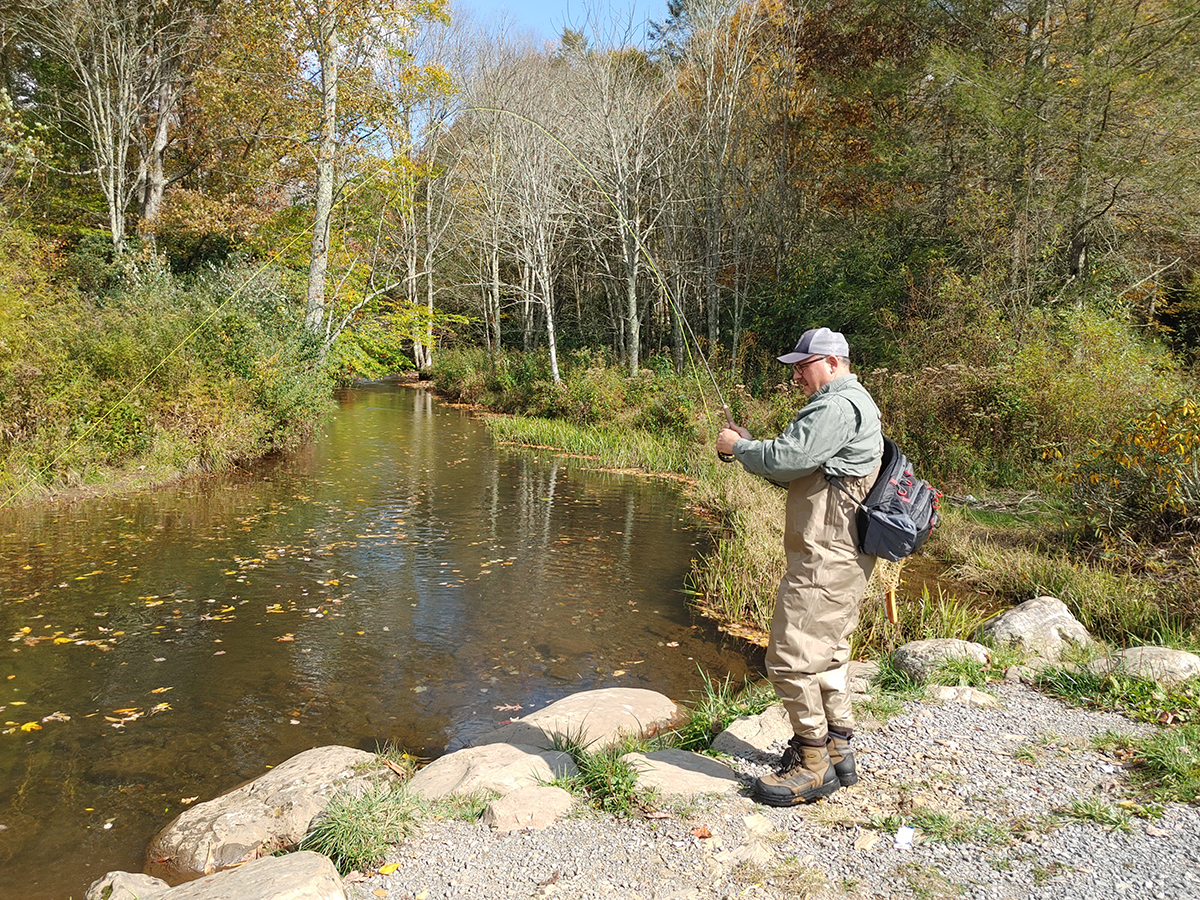 DWR Fisheries Biologist, Steve Owens, hooked up at the Clinch Mountain Fee Fishing area. DWR Fisheries Biologist, Steve Owens, hooked up at the Clinch Mountain Fee Fishing area.Fee Fishing Areas (Clinch Mountain, Crooked Creek, Douthat State Park) The Department’s three Fee Fishing Areas provide excellent “put and take” trout fishing opportunities. These fee fishing areas also have the added bonus of being stocked numerous times a week throughout the season. Both fly anglers and spin anglers will enjoy the fee fishing areas. During the fee fishing season, which opens the first Saturday in April, the daily permit is $8. The Clinch Mountain fee fishing area is an excellent opportunity for anglers in the southwestern portion of the state as you can try your luck on Big Tumbling Creek, Briar Cove Creek, and Laurel Bed Creek. The Crooked Creek fee fishing area is in Carroll County, not far from Galax. Here anglers can try their luck fishing for stocked trout. Finally, the Douthat State Park fee fishing area provides opportunities to target stocked trout on the 60-acre lake and in Wilson Creek. These fee fishing areas are great places to take family members and beginners when teaching them how to trout fish. 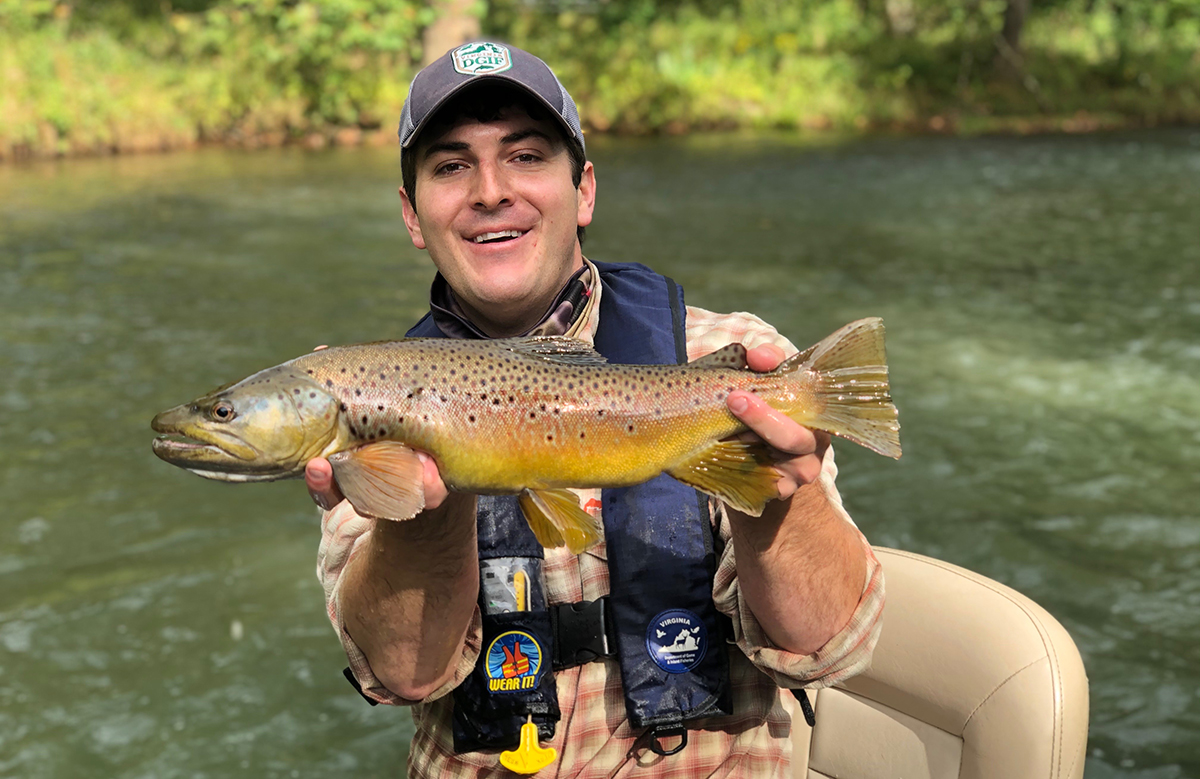 The author with a 21″ brown trout caught on a large streamer while floating the Jackson River tailwater. The author with a 21″ brown trout caught on a large streamer while floating the Jackson River tailwater.Jackson River Tailwater Anglers looking to fish a larger river for wild trout should look no further than the Jackson River tailwater. Wild brown trout and wild rainbow trout thrive in the tailwater from Gathright Dam 18 miles downstream to Covington. This larger river provides anglers the opportunity to fish from a raft or drift boat for wild trout, with many in the 12- to 16-inch range. There are six public access points, giving anglers a variety of float options. Please note that some riverfront landowners have brought successful trespassing claims to anglers fishing in a couple of distinct sections of the river. Reference the map on the DWR website for additional information on access points. Both fly and spin anglers will enjoy the wild trout opportunities on the Jackson. High spring flows can be the best time of year to hunt for larger brown trout with streamers and sinking line. Spin fisherman will also find luck pursuing some of the river’s larger specimens with trout magnets, live bait, or spinners like the Joe’s Fly during this time of year. A variety of caddis and mayfly hatches keep the trout happy throughout the spring, summer, and fall and can provide for technical fly fishing situations. Since the Jackson River is a tailwater, make sure to check the river flows and release schedule before planning your trip. 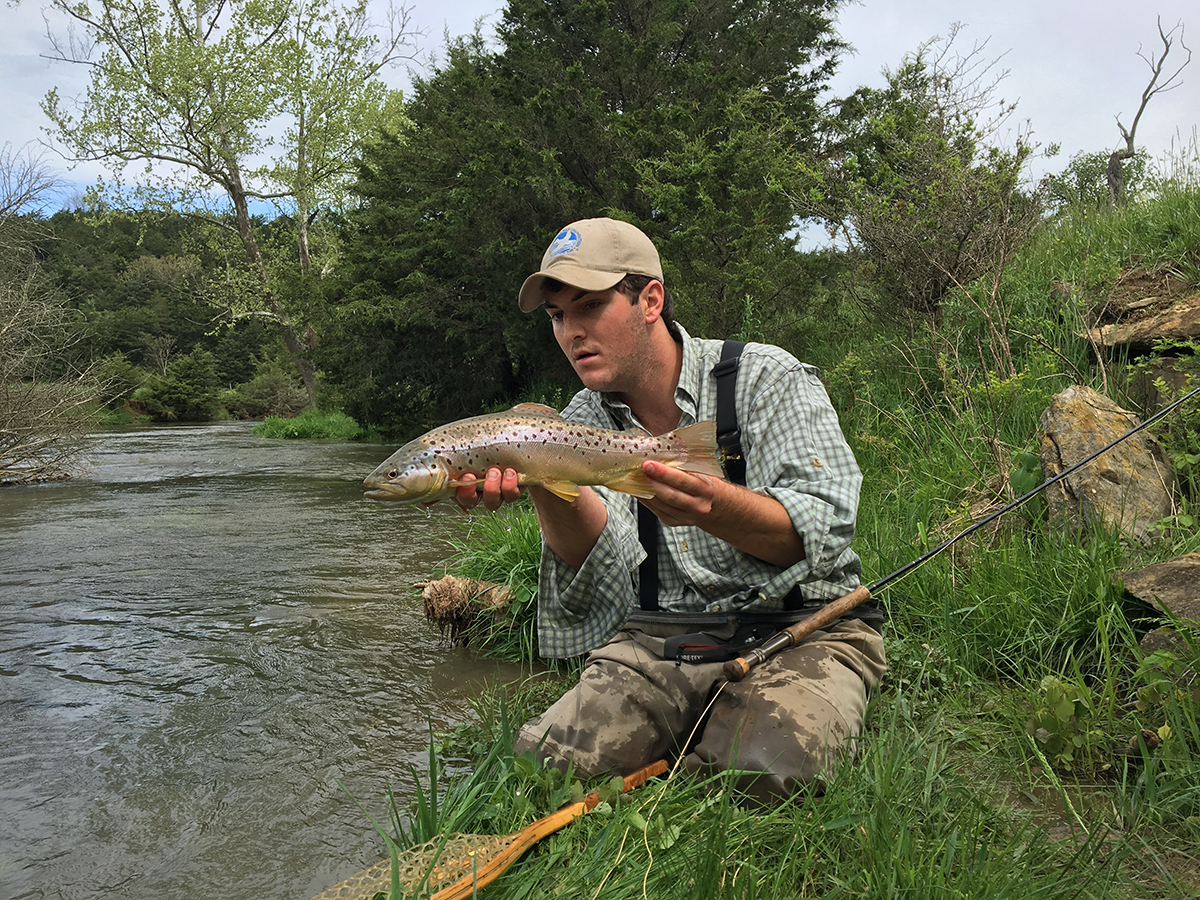 The author with a nice brown trout from the upper section of the public stretch on Mossy Creek. The author with a nice brown trout from the upper section of the public stretch on Mossy Creek.Read the rest of the story here: The post Virginia’s Prime Trout Streams for 2021 appeared first on The Fishing Wire. Read more |
Fishing A Lake Sinclair January Tournament
Last Saturday catching bass at Sinclair was very “hit and miss” for the 21 members of the Potato Creek Bassmasters in our January tournament. In 7.5 hours we landed 35 12-inch keeper bass weighing about 58 pounds. There were two limits and seven people did not land a keeper.
Shay Smith won with five weighing 14.50 pounds and Mitch Cardell came in second with five at 12.68 pounds. Tom Tanner had three weighing 7.65 pounds for third and Frank Anderson had one fish for fourth, but it was the right one and was also big fish at 5.65 pounds.
There were three largemouth weighing more than five pounds each, and two more between 4.5 and five pounds weighed in.
I thought I started my day right with a good 1.75-pound keeper on my second cast with a crankbait, but my next bite came seven hours later, on the same crankbait in a similar place as the first one. I tried just about everything I could think to do except make a long run to clear water. The wind was howling, and I just did not want to beat myself to pieces in the waves. And it waw cold!
We put in up Little River at Dennis Station and the water was extremely muddy. Downstream, if you went up the Oconee River it got a little clearer and a decent color to fish, if you could get out of the wind. After the tournament I heard the creeks at the dam were the clearest water on the lake, as is usual this time of year, and where I should have gone, I think.
Even with just two fish I felt pretty good as the first five people weighed in. Nobody had more than three, and I hoped I might place. When Mitchell put a 5.05 pounder on the scales, then added a 4.9 pounder, my hopes sank. Then Shay showed up at the scales.
I did place – eighth with two at 3.62 pounds!
We are fishing Sinclair this Sunday in the Spalding County club. I hope the wind isn’t bad and I can go to clear water!
NC Study Indicates Some Fish are Caught Repeatedly–Possibly Skewing Population Estimates
| By North Carolina State University from The Fishing Wire A new study reports that, for several species of oceanic sport fish, individual fish that are caught, released and recaught are more likely to be caught again than scientists anticipated. A new study reports that, for several species of oceanic sport fish, individual fish that are caught, released and recaught are more likely to be caught again than scientists anticipated. The findings raise some interesting questions for policy makers tasked with preserving sustainable fisheries.The study makes use of data from tagging programs, in which researchers tag fish and release them into the wild. When those fish are caught, and the tag information is returned to the researchers, it can give scientists information that informs fishery policies. “Fisheries researchers who work in tagging programs have long noticed that certain fish seem to get caught repeatedly, and we set out to determine the implications of this phenomenon,” says Jeff Buckel, co-author of the study and a professor of applied ecology at North Carolina State University. To that end, researchers examined decades’ worth of Atlantic coast tagging datasets on four fish species: black sea bass (Centropristis striata), gray triggerfish (Balistes capriscus), red grouper (Epinephelus morio), and Warsaw grouper (Hyporthodus nigritus). Using a computational model, the researchers determined that—for the black sea bass and both types of grouper—survival was significantly higher after the second, third, and fourth release as compared to the first release. “Think of it this way,” says Brendan Runde, first author of the study and a Ph.D. student at NC State. “Let’s say you tagged 1,000 fish and recaptured 100 of them for a first time. After re-releasing those 100 fish, you would only expect to recapture 10 of them a second time. But that’s not what we’re seeing. We’re seeing much higher numbers of fish getting recaptured after the second time. “Our hypothesis is that this increase in catch rate stems from selection for robust individuals,” Runde says. In other words, because some fish don’t survive the first release, and you can’t catch a dead fish, the fish that were robust enough to survive their first encounter were more likely to survive following catch-and-release events. The finding could have a significant impact on stock assessments, which inform fishery policies. “One might assume that every catch and release in a recreational fishery is a unique fish,” Buckel says. “So that if 5 million black sea bass were caught and released in a given year, that would mean there were at least 5 million black sea bass in a fishery. For these three species of fish and likely many others, that’s just not true. At least some of those 5 million catches were the same fish getting caught over and over again.” “Reliable estimates of how many unique fish are released are critical to accurately assessing the health of the population,” says Kyle Shertzer, a co-author of the study and stock assessment scientist at NOAA Fisheries. “On the positive side, the study also suggests that for many species fish mortality from being released appears lower than we thought,” Buckel says. “For those species, if a fish survives its first release, it has an even better chance of surviving subsequent releases.” “We think that the issues raised by our findings are likely relevant for many marine fish stock assessments that rely on catch-and-release data—though this will vary based on the species and the details of how each stock assessment is performed,” Runde says. The paper, “Repetitive capture of marine fishes: implications for estimating number and mortality of releases,” is published in the ICES Journal of Marine Science. |
Sandboxes and Eating White Dirt
Do any kids still play in sandboxes? I see plastic sand boxes advertised online, and they even come with bags of sand. My sandbox was different.
Daddy nailed four six-foot long 2x6s into a square, put a lip on top with 1x4s and filled it with sand. To get the sand we drove to a sand road a few miles south of the house and filled the bed of the pickup with sand from the ditch.
I spent hours making sandcastles. Many times they were made for toad frogs. Tunnels were dug big enough for a toad and sometimes I would put a quart jar at the end so they had “windows.” We caught toads and put them in the castles and tunnels and watched them move around.
The most amazing sand structures I have ever seen were on the Baja Peninsular on a trip to the Sea of Cortez. We stayed overnight in Loreto Mexico on the sea. There was a big festival and part of it was a contest making sand statues on the beach. Everything from forms of people that were very lifelike to airplanes, cars and buildings had amazing detail.
A pier there was closed off and people were grilling different kinds of food to sell. Across the entrance to the pier was yellow police tape with the words “Caution, Men Grilling!”
I lived on Iron Hill Road, so named for the red clay and rocks everywhere. Our farm was near the fall line where Georgia’s topography changes from rolling hills with lots of clay and rocks to flat sand lands.
On the farm we never bought anything we could get for free. “Free” meant no money, much of that free stuff, like sand, required a lot of work. Many times I helped shovel sand into the pickup to take to the farm for everything from making cement for chicken houses to filling in depressions in the yard.
The difference between the farm and the area a few miles south is amazing. Sand Hill road is only a short drive from Iron Hill Road in McDuffie County. We never saw rattlesnakes on the farm but they were common in the sandy areas a few miles from us.
What brought all this to my mind was seeing “white dirt” for sale in a local store. Growing up, some of my friends at school from the sandy area brought chunks of this white dirt to school to eat. It is a form of chalk and many very poor people ate it just to fill their stomachs. And it helped stop diarrhea.
In the early 1960s mining companies came to my area and dug pit mines to get the seams of white dirt. We found out it is kaolin and is used for everything from making medicines and cosmetics to making the slick covering for magazine pages.
Many of those mines were very deep. When they stopped the mining, the pits filled with water. I have never seen water that clear anywhere else. It was a very light blue and seeped in so there was no sediment. You could see the bottom 25 feet deep.
Unfortunately, with the steep sides, they were very dangerous. Every year it seemed someone drowned in them on a swimming trip when they could not get back out of the water.
Its almost scary the memories seeing something as simple as white dirt for sale can bring.
Garmin Striker Cast GPS Review
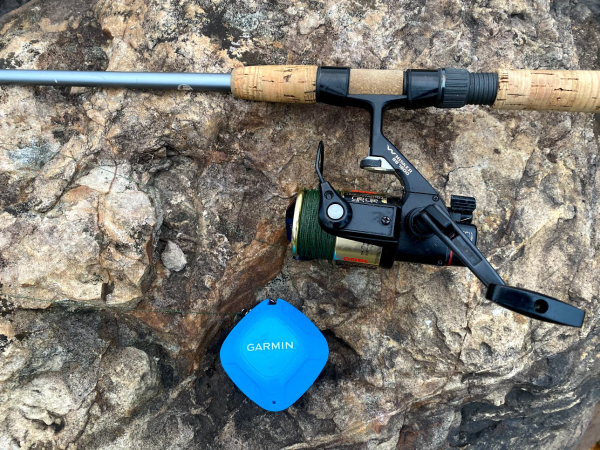 Frank Sargeant, Editor from the Fishing Wire Garmin Striker Cast GPS—Castable Sonar For the many anglers around the country who fish from shore, piers or docks, it’s always a bit of a mystery how deep the water is within casting range, what structures are on the bottom, and where the fish are in relation to that structure. Without a sonar/GPS screen to tip you off, you’re fishing blind. Garmin’s Striker Cast GPS puts fish-finding technology into the hands of these anglers, at a very affordable price. It provides quality sonar and GPS on any smart phone. 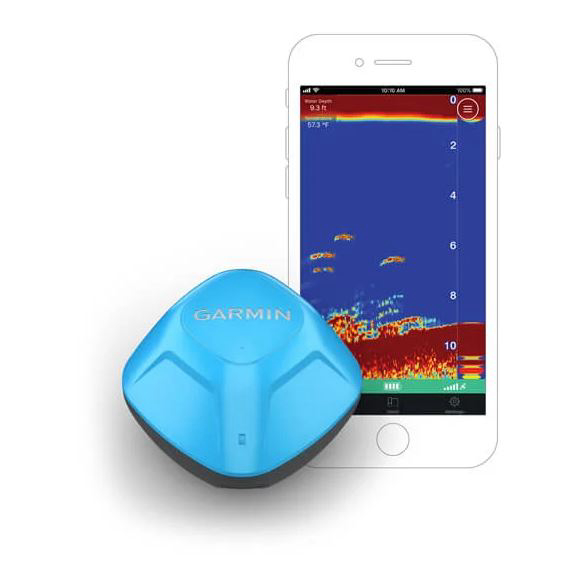 The whole system is encased in a hard plastic housing about the size of a tennis ball. The unit turns on when it’s immersed in water, and links via Bluetooth to your smart-phone once you download the Striker Cast app. You attach the device to your fishing line, cast it out to the water you want to check and presto, a sonar screen appears on the phone. The whole system is encased in a hard plastic housing about the size of a tennis ball. The unit turns on when it’s immersed in water, and links via Bluetooth to your smart-phone once you download the Striker Cast app. You attach the device to your fishing line, cast it out to the water you want to check and presto, a sonar screen appears on the phone.The Striker Cast is about the size of a tennis ball. It can transmit to your phone from up to 200 feet away. The device weighs about 3 ounces, so it’s not something you’re going to throw on your light action spinning rod. And it would be easy to pop your line and lose the Striker if you got a dead-stop backlash on a hard cast. I tied it on with 65 pound test Spider Wire braid on the heavy duty snap swivel, just to be sure—that braid will hoist a couple of concrete blocks, so it’s not going anywhere. 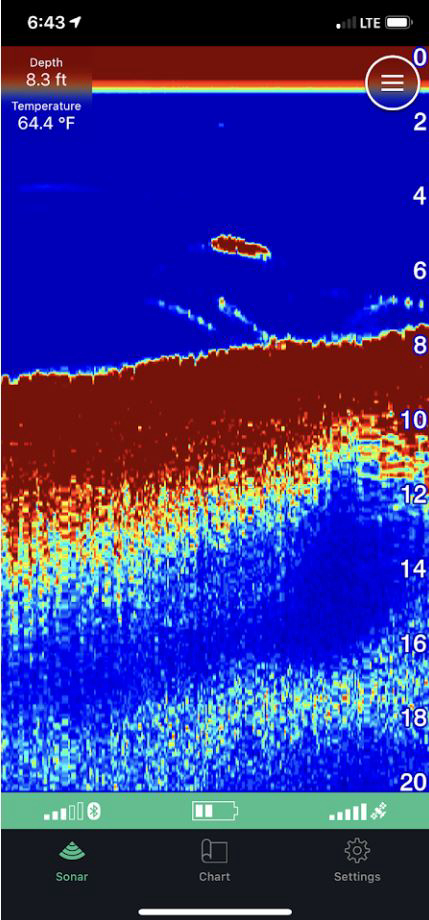 Here, a bass hanging over tree limbs on bottom at 8 feet shows clearly. Note the water temperature and depth digital readout on the upper left. You don’t really cast the Striker—it’s more like lobbing a tennis ball, unless you put it on a 10-foot surf rod. I used a heavy action Shimano Sienna 7-footer and a 4000 size reel that would whip a kingfish, and it was about right. Manipulating the rod, reel handle and your smart phone all at once is a challenge unless you have three hands. The way I worked it out was to hold the rod in my right hand, the phone in my left and also lightly hold the reel handle. I then rotated rod and reel to retrieve line—it sounds more difficult than it is once you’ve made a few casts. As with any sonar, the faster the transducer moves, the more the terrain and fish below are compacted, while the slower things move the more they are stretched out. Thus, a foot-long bass going slow under a fixed transducer can look like a 40-pound pike. However, you quickly learn to adjust. The system automatically sets range and gain, or you can adjust both manually at the tap of a virtual scale. Bottom shows red/yellow, water blue, fish and structure also red if large, yellow if small or scattered. The screen has digital depth and water temperature readouts on the upper left. The unit also has a very accurate GPS system which allows you to map the area you are graphing. Walk all the way around your favorite pond, casting every 50 feet or so as you go, and it draws a chart of all the water you can reach, complete with depth profiles. You can name and save this, and you can also share it publicly. (I suspect that’s a function not many serious anglers will use!) The chart was made by repeated casts with the Striker Cast. The opening at the center was where the author walked around a creek, so there’s no graph of that area. The transducer is not like your boat floating over a fish, which usually flushes anything shallower than 10 feet in most lakes. Fish are not aware of it, and in fact I had a catfish come up and bump it apparently to see how it tasted. So, you can graph an area with a couple casts, spot fish, tie on a lure that gets to their appropriate depth, and hopefully connect. 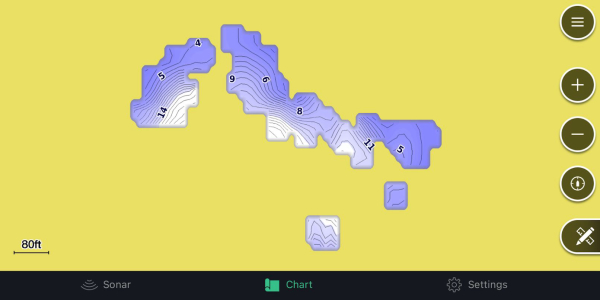 The Striker Cast would also be very useful for ice fishers—it’s compact, easy to carry, and would give you a quick read of what’s happening at each hole you open. The Striker Cast would also be very useful for ice fishers—it’s compact, easy to carry, and would give you a quick read of what’s happening at each hole you open.After saltwater use, you’ll want to rinse the connections thoroughly before hooking it up to the included USB charging wire—corrosion is not your friend. I wished the charging LED was a bit easier to see or had an alternate color when fully charged, but that’s a minor inconvenience. The battery lasts 10 hours with a full charge. Here’s a useful video that teases out the many functions: https://www.youtube.com/watch?v=NEew_HQ90lY. The Garmin Striker Cast GPS goes for about $180, and it’s sized about right for a stocking stuffer. Check it out here: https://buy.garmin.com/en-US/US/p/665274 |
Jackson Lake in January
Last Sunday five members of the Flint River Bass Club braved the 27-degree temperature at blast off to fish Jackson Lake for our January tournament. At least it warmed up to the mid 40 by the time we weighed in.
There were no limits and two people did not catch a 12 inch keeper. We had a total of eight bass weighing 13 pounds. I was happily surprised to see four of the eight were largemouth.
I got lucky and won with four weighing 5.73 pounds. Niles Murray came in second with three at 5.23 pounds and had big fish with a 2.58 pound largemouth. New member David Picket, who has lived on Jackson and fished it all his life, had one weighing 1.99 pounds for third.
I knew it would be tough fishing with water at 47 degrees and heavily stained. I started on a point near the ramp and, with my hood up, did not see another club member stop about 50 feet from me. I fished there a few minutes and left it to him.
I’m glad I left. On another rocky point, I caught my first keeper, a spot, at 8:00 AM on a crankbait. That made me start going to other rocky points but they didn’t pay off until 11:00 AM, when I caught a bare keeper spot on a shaky head.
On the next point I caught another keeper on a different crankbait. So three keepers on three different baits, but all on rocky points.
The next point I fished didn’t produce anything, but when I cast a jig ang pig to a nearby dock I caught my biggest keeper of the day, another spot. There were some rocks around the dock.
When I tried to crank to go to the next point, my motor would not turn over, even with jumper cables. The battery shorted out. My electronics winked out one by one. Rather than try to change batteries on the water, I spent the last three hours fishing back to the ramp. I felt blind without my electronics!
Frabill’s Top 5 Ice Fishing Tips
| Ice Fishing Tips from Frabill The cold temperatures are settling in, and the visions of open water fishing are coming to a close. Ice anglers all over the upper Midwest have already taken to the early ice in pursuit of that first and quite often a very good early ice bite. Here are a few tips from Freshwater Hall of Fame Angler and guide Dale Stroschein, as well as some of the best Ice fishing experts around to help you put more fish on the ice this season. 1. Safety is the number priority for Dale Stroschein. Dale never takes ice conditions for granted, with over 37 years of guiding on the ice under his belt. “Just because you see someone way out on the ice doesn’t mean it’s ok to venture out there yourself,” say’s Dale. The ice conditions will vary from spot to spot, and not everyone has the same sense of security on the ice as others. Dale never steps onto the ice without a good set of ice picks (which are included on every Frabill Ice Suit) around his neck. He also recommends you carry a rope and keep your cell phone in a plastic bag just in case you are unfortunate enough to test out your float suits capabilities. “You can never be over-prepared when venturing onto the ice, especially early ice,” concludes Dale. 2. Mobility is crucial as you need to be able to get up and move at any moment. A flip-over shelter is perfect for the run-and-gun angler as these will allow you to cover ice fast and efficiently. As the weather and the light conditions change throughout the day, anglers need to make adjustments and make them fast, as the bite window in ice fishing may only last an hour on many occasions. Being able to stash your rods away quickly and secure in Frabill’s new XL Ice Combo Casewhile stored in the new Ice Hunter Series Flip-Over Shelteris a sure-fire way to keep you organized and on the move. 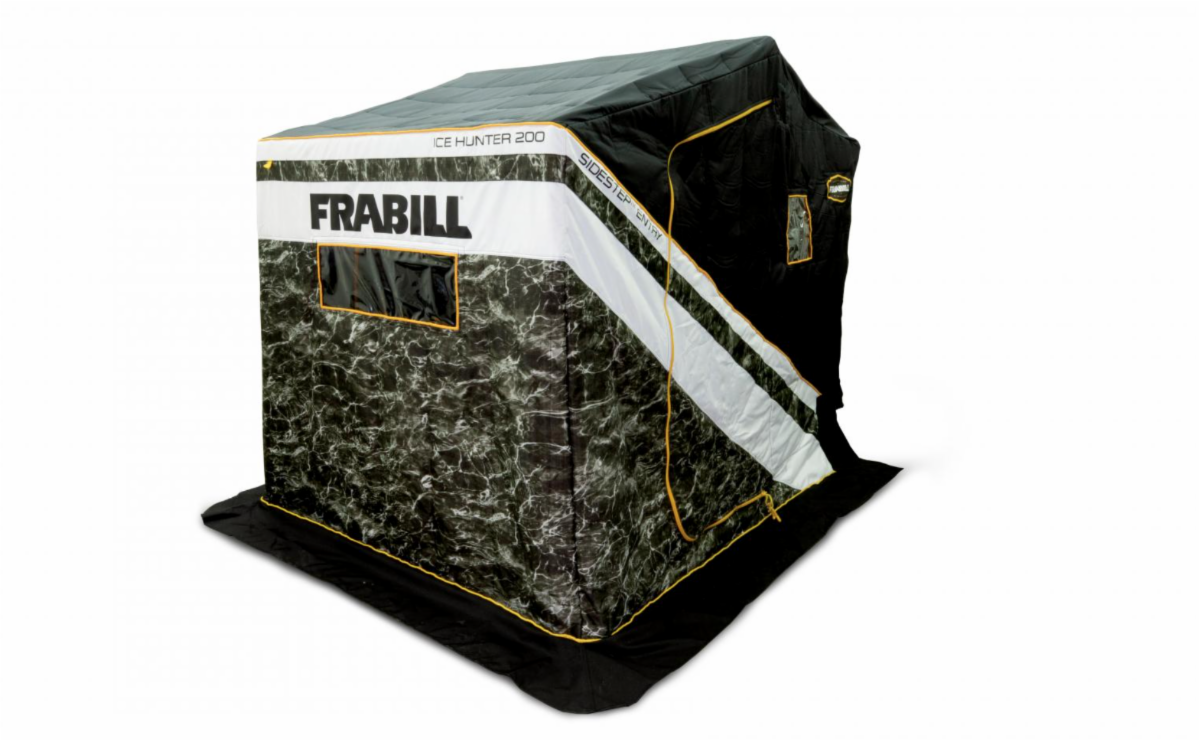 Pictured above: Frabill’s new Ice Hunter Series Flip-Over Shelter Pictured above: Frabill’s new Ice Hunter Series Flip-Over Shelter3. Rod and Line for the right situation make all the difference. Many anglers tend to use too heavy of gear for targeting panfish and too light of gear for targeting tanker walleyes. Matching your rod and line to the technique of fishing and species you are targeting will significantly improve your odds. When fishing for panfish in deep water, using a heavy or even a medium-heavy rod with a monofilament line will greatly reduce the number of bites you may feel. While using a light or ultralight rod such as the Ice Hunter Finesse Spinning combo from Frabill and a small diameter super line with a fluorocarbon leader, you are sure to feel almost every bite no matter how light. “Having the right equipment is key but knowing when to use it is even more important” says Dale. 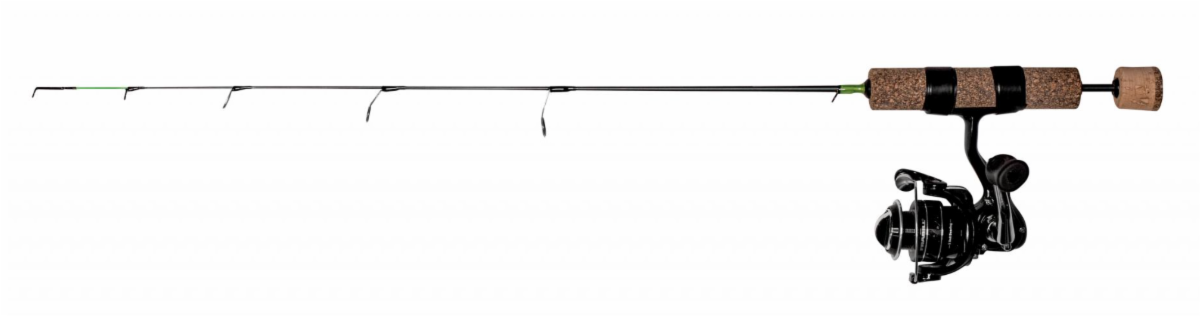 Pictured above: Frabill’s new Ice Hunter Finesse Spinning Combo Pictured above: Frabill’s new Ice Hunter Finesse Spinning Combo4. Details and paying attention to them are what Dale and many others have claimed will help you land the big fish this ice season. With over 37 years of experience chasing big walleyes, Dale has learned a thing or two about increasing his and his client’s odds of a true trophy walleye through the ice. I’m a firm believer that our graphs put out noise as they ping the bottom for obstructions such as fish or structure,” says Dale. This slight noise may be all it takes to keep a big walleye from visiting your location. Technology has given us an entirely new view of what’s under the ice these days, but it’s not always the key to putting more fish on ice. Try fishing without a graph on occasion and see what bites your line; you may be surprised. 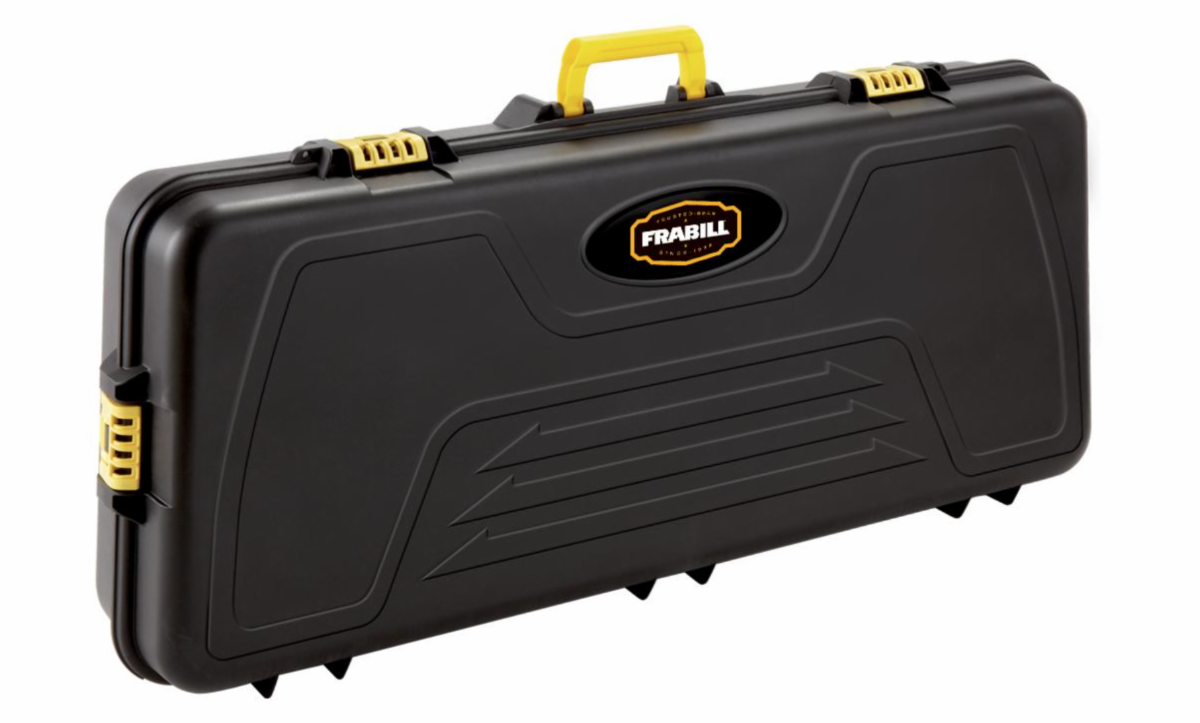 Pictured above: XL Ice Combo Case5. Pictured above: XL Ice Combo Case5. Playing the Odds is a tip all the pros spoke about in one way or another. This also coincides with the mobility tip. Typically anglers will start in shallow water in the morning and move deeper throughout the day. This is a reliable method but can have its disadvantages as well. When every ice angler in the area is drilling holes up shallow where the fish have already staged, the odds of spooking them to deeper water is increased. And vice versa, as the day extends and anglers are chasing the fish to deeper water they may also be moving them back to shallow water where there is less pressure. “A key to this thought is to stay stealthy, don’t move when they move. Stay a step ahead of them and be patient as they will come to you,” say’s Dale. “Be strategic when picking your locations and plan for the entire day of fishing. I may start my day in 10′-15′ foot of water in the morning, but I like to have deeper water (30′) close by. I’m staying mobile, but it will only take me a few minutes to get back to my other spots for when the conditions are right.” stated Dale. Ice fishing is rapidly growing due to the relatively low cost of entry and the ability to involve the entire family for a great day spent outdoors this winter. Frabill has you and your family covered from head to toe with all the gear needed, such as safety, fishing rods and reels, bait management systems, and shelters needed to enjoy an amazing season on the ice. To learn more about ice fishing, check out Frabill’s College of Ice Series on YouTube– College of Ice . |
Learn Saltwater Fishing in Florida with Virtual Clinics
| from The Fishing Wire Want to learn how to saltwater fish in Florida? Join the Florida Fish and Wildlife Conservation Commission (FWC) for a series of free Virtual Saltwater Fishing Clinics for beginner anglers age 16 and older to learn how to saltwater fish and help conserve our marine resources for the future. Discover the importance of fisheries conservation and stewardship through the fun and exciting sport of fishing! You’ll be taught basic fishing skills and knowledge that can be used, shared and built upon for a lifetime of catching Florida memories with those you love. Fishing clinic sessions will prepare you for a day out on the water to enjoy the amazing variety of saltwater fishing opportunities Florida has to offer. Sessions will include topics on conservation, rods and reels, tackle, baits, rigs, knot tying, habitats, fish handling, best practices and additional resources. Registration is required and must be completed two days prior to the session date. Participation is limited to 50 anglers per course; anglers who register after the 50-person limit has been reached will be put on a waiting list. Anglers must use Microsoft Teams to participate. Ready to dive into a course on saltwater fishing? Virtual Saltwater Fishing Clinics are offered as a course that includes seven separate 1-hour sessions held every Tuesday evening from 6:30-7:30 p.m. ET for seven consecutive weeks. Anglers must be able to attend all seven sessions. Each course has the same content, so anglers only need to register for one course. Those who attend a course will receive a free starter tackle box. Register for a Virtual Saltwater Fishing Clinic seven-week course:Jan. 19 (includes seven sessions)March 9 (includes seven sessions)April 27 (includes seven sessions) Don’t have enough time to commit to a seven-week course? Participate in our Mini Virtual Saltwater Fishing Clinics instead and you’ll learn about saltwater fishing and conservation in a bite-size format to fit your busy schedule. These 90-minute virtual events will be held once a month on a Thursday evening from 6-7:30 p.m. ET. Each session has the same content, so anglers only need to register for one single session. Register for a Mini Virtual Saltwater Fishing Clinic session:Jan. 28 (single session)Feb. 25 (single session)March 25 (single session)April 22 (single session)May 13 (single session)June 10 (single session)Can’t carve out time to participate in either format right now? Don’t worry, later this year we’ll post videos of these virtual clinics on our webpage so you can take the course sessions at a time and pace that works best for you. Have questions? Visit MyFWC.com/Marine and click “Virtual Saltwater Fishing Clinics” under Get Involved or contact Marine@MyFWC.com to learn more. Read more |
Where and How To Catch January Lay Lake Bass, with Matt Herren – Includes GPS Coordinates
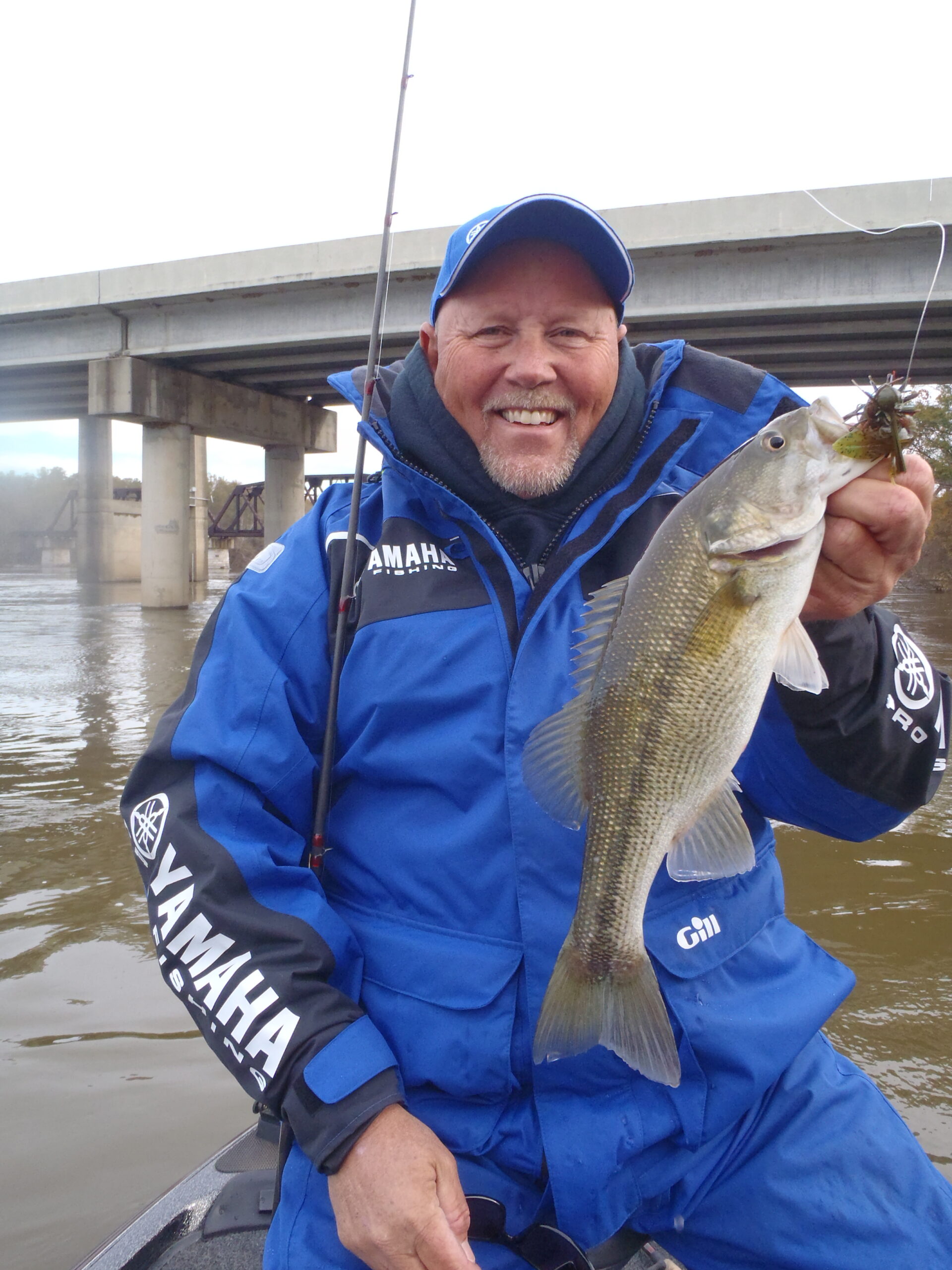
Its cold outside, the rut is making it a good time to go deer hunting and you might not be thinking much about fishing. But the big spotted bass at Lay Lake are on a very predictable pattern and you can catch some of the biggest spots of the year right now.
Lay Lake on the Coosa River east of Birmingham is known for its big spotted bass. The Alabama Power Lake dammed in 1914 produces three and four pounds spots consistently and bigger fish are caught each year. There is also a good population of largemouth but in the winter the spotted bass fishing is more consistent.
Matt Herren grew up fishing Lay Lake and other Coosa River lakes in the area. His father took him fishing in ponds and on Lay Lake as a kid and they watched some tournament weigh-ins and got interested in tournament fishing. They started fishing wildcat tournaments on Lay Lake in 1988.
From his success there he entered the Redman tournaments in 1989 and came in second in the points standings in the BAMA Division that first year. By 2003 he was fishing the FLW Tour and now fishes the BASS Elite trail.
Since turning pro, Matt has qualified for six BASSMaster Classics, including the 2016 tournament, and six FLW Championships. This past year he tied for 10th place in the Angler of the Year point’s standings in BASS. In his career he has won over 1.2 million dollars in tournaments.
“In January the shad are moving up the river an into the creeks and the big spots are following them and feeding,” Matt said. He prefers to go after quality spots up the river if possible rather than fishing further down the lake. He said you can catch fish any day in January further down the lake but for the big ones he wants to fish up the river from the Locust Creek area to the Neely Henry Dam.
The day we went in early December the river was not fishable. We checked the Neely Henry Dam and all floodgates were open and all generators running. The river was three or four feet high and the current extremely strong. When it is like that the fish hunker down and are very hard to catch since you can’t even control your boat very well. So we made lemonade, fishing from the Highway 280 Bridge downstream, and Matt caught some fish under very tough conditions.
No matter which way he goes Matt will have the same baits rigged. His prime bait is a three eights to one half ounce Santone Lures Texas Finesse Jig tipped with a Reaction Innovations Petite Twerk or Smallie Beaver trailer. He goes with browns and greens if the water is clear or darker colors like black and blue if the water is stained.
A Santone three eights to one and one half ounce white or chartreuse and white spinnerbait is good for covering water faster, and he uses heavier baits the deeper he is fishing. A DT 6 or DT 10 crankbait in shad colors is also good for covering water and finding fish.
A Megabass 110 jerkbait and a Santone Piglet Shaky Head round out his arsenal of lures. The shaky head will have a Reactions Innovations Pocket Rocket worm on it. With those lures fished on a Kistler Rod with the action for that lure, teamed with Gamma fluorocarbon line, covers all the types of cover and structure he wants to fish in January.
The following places give you a variety of kinds of spots to fish, no matter what the conditions. If the river is high and fast fish the first six and similar places downstream. If it is normal, with some current but not so fast you can’t fish effectively, fish upstream from the Highway 280 Bridge.
1. N 33 17.626 – W 86 21.462 – We put in at Pop’s Landing in Tallaseehatchee Creek in Childersburg and started fishing at the mouth of it. When the current is strong the fish will often hold in the mouths of sloughs and creeks like this and feed in the eddies there. Start by casting a spinnerbait right to the rocks on the riprap bank on the downstream point since the fish will often be right on the bank.
As you get out into the river work downstream on the same side and fish all the way to the Highway 280 Bridge. If the current is strong point your boat upstream and let it drift downstream holding it as slow as you can with your trolling motor. Cast at an angle upstream, letting your bait work back to the boat with the current. Fish a crankbait and spinnerbait here, then follow up with a jig and pig.
Cast the jig right to the bank and use a heavy enough jig to keep it on the bottom in the current. If the water is high try to get your bait down to the rocks along the edge of the normal full pool channel. Bass will often hunker down behind those rocks and feed on baitfish and crawfish washed to them.
When you get to the bridges work the eddies behind the pilings on both the railroad and highway bridge. Matt got a keeper spot on his jig behind one of these pilings when we fished.
2. N 33 16.711 – W 86 23.289 – Running down the river the houses and docks stop and you will go a good ways down to the mouth of Bailey Creek opening on your left without seeing any docks. There is a picnic pavilion on the point and a dock just inside the upstream point, with riprap around it.
Stop on the upstream side of the slough and work the point as you go downstream. Cast into the slough and work a spinnerbait, crankbait and jig and pig back out to the eddy of the current. Also fish the downstream point of the slough.
If the current is real strong you can position your boat inside the mouth of the slough and cast your bait out, working it into the eddies on both points like a baitfish coming from the river into the slough.
3. N 33 16.353 – W 86 24.664 – Running down the river just before it starts a bend to the right you will see some big rocks on the bank on your left. This marks the start of a bluff outside bend of the river and is an excellent place to catch spots in January.
Start at the first visible rocks and fish downstream, keeping your boat in about 25 feet of water and casting to the edge of the water. Work your bait back out to about 15 feet deep. A jig and pig and a shaky head worm are both good here.
You can fish a long way down this bank since it is a sweeping outside bend and the rocks run all along it. Rocks are the key this time of year, if they have baitfish on them. Watch your depthfinder and if you are not seeing balls of bait don’t spend a lot of time in the area.
It is good to fish your bait with the current no matter how fast the current is moving. Some current is good and will make the fish bite better, even if the water is very cold. If the current is normal work upstream, casting ahead of the boat at an angle as you work into the current.
4. N 33 16.976 – W 86 25.636 – Across the river and downstream Deer Lick Creek enters the river as it starts a big horseshoe bend to the left. This big creek has a house trailer on the downstream point well back from the river. The upstream point of it has a defined underwater point coming off it and bass will feed on it in all current situations.
Stop upstream of the slough and fish the upstream point as you go past it. Then swing around into the slough and fish across it, casting your jig and pig and jig head worm out into the river and bringing it up and across the point. There are some stumps on the point that hold fish so probe for them with your baits.
5. N 33 14.547 – W 86 27.443 – Run on down the lake to the power plant on your right. This coal fired steam plant discharges warm water into the river and that warmer water draws shad and bass to it in January. Stop just upstream of the discharge and fish downstream.
Cast a spinnerbait or crankbait into the discharge and let the current carry it downstream as you fish it back. The river current and the discharge current will make eddies here that the bass hold in to feed so concentrate on them.
Also, fish a jig and pig or jighead in the discharge and downstream of it, too. The warmer water will say near the bank going downstream, making it better this time of year.
6. N 33 13.382 – W 86 27.840 – Further down the river the channel splits into three parts with islands separating them. The main marked channel is to the left side going downstream. Just upstream of the first marker where the channel goes to the left is a bluff bank. There is a house trailer sitting on top of the bluff upstream of the channel marker.
Stop out in front of this trailer and fish downstream, letting the current take your boat downstream backwards. Fish to the shallow gravel point where the bluff runs out and there is a small cove.
Fish the bluff bank and the big rocks on it with a jig and pig and jig head worm. Your boat should be in 25 feet of water a short cast off the bank. The current was almost too strong to fish here the day we went, even this far downstream, but Matt got a good keeper spot and we both missed fish in the current.
When you get to the shallow gravel point near the channel marker fish all over it with your jig and pig and jig head worm, too. Fish will run in on this point to feed.
7. N 33 19.766 – W 86 21.839 – The following places are all upstream of the Highway 280 Bridge and you can fish them for big spots as long as the floodgates are not open. One or two generators running produce enough current to improve the fishing but more than that makes it tough.
Go to the water intake tower on the right going upstream. It is just downstream of the golf course. This big structure breaks the current and bass will stack up on the downstream side of it as well as in front where pipes or indentions create an eddy.
Keep your boat downstream and cast a spinnerbait and crankbait up past the building and let them come back with the current. If you can hold your boat on the downstream side just downstream of the structure cast a spinnerbait to the wall and let if flutter down it. Also fish your jig head worm and jig and pig down the walls in the eddies.
8. N 33 20.157 – W 86 22.112 – Across the river and a little upstream is the mouth of Locust Creek. If the current is very strong you can fish it like the ones downstream but if the current is right start at it and work upstream.
Matt likes to slowly work up the river bank, casting at an angle ahead of the boat, all the way to the powerlines. He will work a crankbait or spinnerbait from the edge of the water back to the boat. If the fish are holding deeper along the bank he will go to a heavier spinnerbait to get down to them. He will also work a heavier jig and pig or jig head worm to keep it on the bottom deeper.
9. N 33 22.176 – W 86 20.567 – Something different that is always good in the winter, no matter what the conditions, is the back end of Flipper Creek where there is a big spring. The spring keeps the water a steady temperature, must warmer than the river water in the winter, which draws shad and bass, and it will be clearer if the river muddies up.
Go in the mouth of Flipper Creek and to the very back of it. You will be right beside the road and railroad that are in the back end of it just up the bank. Fish all the way around the area in the back, working all your baits around the wood cover here. Also cast right down the middle of the area to cover the bottom there.
10. The following spots are between the upstream railroad bridge and the Logan Martin Dam. Most of them are very similar and they are easy to find. The first is the railroad bridge itself. Matt says to fish all the pilings on it with spinnerbait, crankbait and jigs. Work the eddies caused by these pilings, just like at the downstream railroad bridge and the Highway 280 bridge.
Rateliffes Island is a big island that splits the river upstream of the railroad bridge. Just upstream of it is the mouth of Kelly Creek on your left and you can fish the mouth of it like the other creek mouths if the current is strong. If the current will let you, Matt says fish the banks on either side of it for a half mile both ways. Work up the current casting ahead of the boat and fishing all your baits back with the current.
Just across from Kelly Creek and a little upstream the right bank going upstream is an outside bend of the river Matt says fish it for a mile going upstream, as long as the rocks hold up on the outside bend. This is a typical bank that drops off fast and has rocks that you need to fish. Baitfish in the area makes it much better.
A little further upstream there is a small island not far off left the bank. Fish the banks on both sides of it and behind it, too. As in all places, look for current breaks to hold fish.
Matt warns that you should always wear your life jacket when up the river. The current is dangerous and the cold water can make you lose control of your muscles fast. Don’t take chances.
You can catch some quality spots right now on Lay Lake. Follow Matt’s suggestions for baits to use and kinds of places to fish and you will soon forget it is winter.
Matt does not guide but he is setting up an on the water electronics school. He will show you how to set up your Hummingbird electronics like his boat is equipped and show you how to use them to find fish. He can do the same for Lowrance units. You can contact him through his Facebook page at https://www.facebook.com/matt.herren.52
Where and How to Catch March Lake Seminole Bass, with GPS Coordinates
March 2018 Seminole Bass
with Jason Smith
Bass in most of our lakes are moving near spawning areas, but Lake Seminole is so far south that some have already spawned, some are spawning and some are just off bedding areas ready to move in and fan beds. You can catch them on sandy flats, in pockets and on sandbars on the main lake right now.
Seminole is a big, shallow lake in the corner of Georgia, Alabama and Florida. Everywhere you look makes you think you can catch a bass there. Grass and stumps are all over the lake, with lily pads and cattails lining the banks and shallows. But if you don’t know key areas you can do a lot of casting without a bite.
For the past year or so bass fishing has been fantastic on Seminole, with many tournaments won with 30 pound plus stringers. If you fish a local pot tournament against fishermen that know the lake well you better have more than 20 pounds to even hope for a check. Five and six pounders are common, and it usually takes a seven plus to win the big fish pot.
Jason Smith lives in Albany, Georgia and has fished Seminole all his life. His mentor, Jackie Hambrick, was a well known Lake Seminole expert. Fishing with the Albany Bassin Buddies taught him a lot about the keys to catching bass.
Jason loves fishing so much he started Buddha Baits, selling jigs, spinnerbaits, bladed jigs, soft baits, line and rods and reels to fishermen. He keeps in touch with local experts and this helps catch big fish when he goes to the lake.
In a Seminole Winter Trail tournament in mid-January, Jason had 24 pound stringer and did not get a check. That tournament shows the kind of fish being caught this year on Seminole.
“I love Seminole because you can catch so many quality fish,” Jason said. March is the best month to find the sows in the spawning areas many years, and our cold winter has stacked them up even more this year, delaying the early spawners that sometimes go on the bed on Seminole as early as January.
Jason will have as variety of his baits rigged on his rods for March fishing. Since most of the fish will be located around grass or other weed cover, he throws most of them Buddha Braid since you need braid to get big fish out of the weeds.
He will have a rattle bait, a Texas rigged lizard or Senko, Swagger Swim worm, an Enlightened Swim Jig, a Carolina rigged lizard or Trick worm, a bladed Swagger Jig and an Inseine Jig and pig all ready to cast. For thick hyacinth beds he will be ready to flip them with a Baby Mama with a 1.5 ounce sinker.
We fished Seminole the last day of January after a cold front, with bluebird skies and little wind, some of the worst possible weather. Even under those bad weather conditions we had a decent limit with a 5.5 pounder to anchor it. The fish were not really in the bedding areas yet but just off them, ready to move in so you can catch them.
1. N 30 47.304 – W 84 48.447 – Going up Spring Creek the Grassy Flats cut, marked by poles going off the Spring Creek Channel to the left going upstream, is just downstream of the Big Jim’s Cut. Where the Grassy Flats cut hits the creek channel on the left, on your right an island is just off the creek channel. A ditch runs in behind the island and forms a good staging area going into the spawning flat behind the island, the ideal area for this time of year.
Idle in to the point through the standing timber and start by working it with a Carolina rig and jig and pig out near the channel and ditch junction. There are stumps and grass on it. Start out deep and work up the ditch to the shallow spawning flat.
There is a grass edge around the point and on the ditch side. Keep your boat off it and fish a bladed jig through the grass. Work fairly fast until you get a bite then slow down and make multiple casts with your bladed jig and follow up with a Carolina rig.
As bass move back they follow the grass edge and feed, then move into the shallow water behind it to spawn. Keep a watch for beds behind the grass as you fish. There will usually be several grouped together with empty space between them. When you spot a bed fish it with a paddle tail Baby Mama, swimming it up to the bed and letting it fall into the bed.
2. N 30 44.878 – W 84 50.604 – Out on the Flint River, on the south bank before the turn toward the dam, River Junction ramp is on your right going upstream. Bass hold out on the grass line in six to eight feet of water then move to the bank in the shallow bay to spawn.
Start by fishing the outside grass line, especially if the water is still cold. We caught a couple of keepers out here. Then go back in behind the grass and work the bedding area. Keep your boat in about five feet of water and fan cast a swim worm behind a one quarter to five sixteenths ounce sinker.
Also drag a Carolina rigged lizard through the shallows, searching for bedding fish. The water is often too stained on the Flint to see the beds, so probe for them with a lizard. Since beds are usually grouped together, make multiple casts to any area you catch a fish.
3. N 30 45.087 – W 84 50.005 – Going up the Flint upstream of the River Junction Ramp another bay swings back, providing a more protected spawning area. Fish it the same way as hole #2. You will see cattails on the bank and lily pad steams in the water. Watch for them everywhere you fish since they grow on sandy bottoms where bass spawn.
For covering water more quickly until you hit a group of bass a bladed jig works well. Jason rigs his black and blue or green pumpkin Swagger Jig with a matching three or four-inch swimbait and fishes it through the grass. A paddle tail worm also allows you to cover water more quickly to find the key spots.
4. N 30 46.014 – W 84 50.517 – The big flats between Spring Creek and the Flint are huge spawning areas. Straight across from Sealy Point in Spring Creek, a small group islands is just off deeper water that goes in on the flat and is a highway for the bass moving in.
The downstream island in this group is a cluster of cypress trees and is closest to the deeper water. Go in to the downstream side of the island and fan cast the whole area, keeping your boat in four or five feet of water and casting all around. Drag a Carolina rigged lizard or fish a little faster with a bladed jig, working the whole area.
Always watch for beds in areas like this. If you see a lighter spot on the bottom, look at it closely. There are light spots on the bottom that are not beds but the active beds will be brighter, and there will often be several close together. When you see them slow down and fish a paddle tail worm all around them and in them. The water is clearer here from Spring Creek and you can usually see them.
5. N 30 46.181 – W 84 50.056 – Go around the island in Hole #4 and another smaller island is on the Spring Creek side a little upstream. It is more shallow around it and you can see clumps of cat tails, pad stems and grass all around it. Sunny warmer days warm this water quickly and move bass into the area early
Start on the downstream end of the smaller island and fish on the side away from Spring Creek, working upstream behind it. The flats all around it have sandbars for the bass to spawn and there are often a lot of beds in the area. Fish from the bank of the island all the way out to deeper water. Just remember deeper water here is only three feet deep or so.
6. N 30 44.748 – W 84 52.621 – On the Chattahoochee River side of the point between it and the Flint, a group of poles in a circle way off the last island on the point mark the Indian Mounds. On the Chattahoochee River side of the island, across from the Indian Mounds, a shallow bay forms a good spawning area.
There are scattered stumps as well as grass in this bay and bass spawn all over it. Keep your boat in four or five feet of water and fish the water three or four feet deep, fan casting all over the flat. You may not be able to see the beds in the more stained river water, but they will be here, and grouped together like in other places.
Fish from near the downstream point of the island up the Chattahoochee River side. Watch for lily pad stems marking sandy areas. A bladed jig comes through them well and is a good choice for a search bait. A Carolina rig is good for slowing down and working an area.
7. N 30 45.542 – W 84 47.298 – Up the Flint River on the right bank going upstream, a wide bay swings in away from the channel markers. On the upstream end of the bay a wood dock with no top sits out on the downstream side of the point. Downstream of the dock slightly deeper water is closer to the bank.
Start about 200 yards down the bank from the dock and fish toward it, casting to the bank and the scattered grass. Sometimes a red rattle bait will attract bites in areas like this when other baits are ignored. A swim jig like Jason’s Enlightened jig or Inseine Jig will also attract bites from more active fish, especially if they are feeding on bluegill.
Work the rattlebait fast, jerking it from grass when you hit it. With the swim jig keep it near the surface and work it with twitches as you reel it along. Jason likes bluegill or green pumpkin in clearer water and black and blue in stained water and puts a matching swim bait on his jig.
8. 30 45,.759 – W 84 46.104 – a little further up the river the channel makes a hard swing from the right bank to the left. In the flat bay just downstream of the last channel marker before the turn a depression runs back to the bank, offering a good path for bass to follow. It goes in between two groups of two docks. There is one silver roof dock and one green roof dock on each side.
Follow this depression in from deeper water, fan casting to both sides of it and down the middle of it. The water is ten to 12 feet deep not far off the bank where it goes in. This is a good area for rattle baits and bladed jigs. When you get to the bank fish it and down both sides to the docks. A paddle tail swim worm like Jason’s new Swagger Swim Worm in tilapia or black and blue is good, depending on water color. Keep the worm moving near the bottom, making the flapping tail wiggle to get bites. Jason will often dip the tail of his plastics in chartreuse JJs Magic for added attraction.
9. N 30 46.215 – W 84 46.989 – Across the river channel Fort Scott Islands are a Waterfowl Management Area. A small island sits just off the bank where the channel comes across and hits the north bank. Just downstream of this island is a big flat just off a slough that goes back and is a good bedding area, full of lily pad steams and cattails.
Keep your boat off the bank in water about 20 feet deep. This is a good place to cast your jig and pig, Texas rigged worm or Carolina rig up onto the sand bar that runs along the bank and has grass on it. Keep your bait in contact with the bottom as it comes out of the grass and follow the bottom down the drop.
Bass will often stack up just outside the grass and move into it to feed.
10. N 30 46.334 – W 84 48.949 – Going down the bank the “Fire Break” goes in just downstream of the island with the waterfowl management area signs out in the water. Follow the slightly deeper water in behind the island, keeping the signs to your right.
Bass spawn all back in here in the shallow sandy flats. Watch for keys like lily pad stems and cattails and fan cast the whole area. Try a variety of baits and speeds to find fish then slow down and fish that area.
All these places hold bedding bass right now, and others post and pre-spawn. Try them with Jason’s baits to catch quality bass all month long.
Do you find these Map of the Month articles helpful? If so visit https://fishing-about.com/keys-to-catching-georgia-bass-ebook-series/ – you can get an eBook or CD with an article for each month of the year on Clarks Hill and Lanier.