Squirrel Hunting Seasons, Bot Flies and Memories

Saturday, August 14 passed for me without much notice.  That is quite a change from my pre-teen and teen years when opening day of squirrel season was arguably the most important day of the year for me. 

    From the time I killed my first squirrel at eight years old, I loved to hunt the furry tailed tree rats.  That first squirrel was not exactly a hunting situation.  I saw it grab a pecan from the tree in front of our house and run into the woods across Iron Hill Road.

    I was not allowed to go out of the house with a gun unless an adult was with me at that age.  Mama and daddy were not home but Gladys, the woman that worked on the farm, helped with housework and cooking and pretty much raised me as a second mother, was there.

I grabbed my Remington semiautomatic .22 rifle and told Gladys to come with me. She fussed but followed. As I entered the edge of the woods and went behind the hickory tree the squirrel went up with its pecan, I saw a flash as it went to the other side of the tree.

Gladys was still crossing the road, the squirrel saw her and did what squirrels do, went to the other side of the tree, giving me a good shot.  I picked it up and followed Gladys back to the house.

Mama and daddy got home soon after that and fussed at me a little about taking the gun out with Gladys, I think daddy was disappointed he had not been the one, but both seemed proud. And daddy showed me how to skin and gut the squirrel, the first of hundreds I cleaned and ate.  We had fried squirrel that night as a supplement to dinner.

Season started a lot later back then, in October as I remember, so weather was a lot cooler.  And that made it more enjoyable to hunt, fewer mosquitoes, stinging critters with wings, and snakes slithering around.  But I never really worried about anything when in pursuit of a squirrel with my .22 or .410.  I loved that time in the woods.

Since mosquito bites have been bothering me so much I have been thinking about bug bites and other bug problems. One of the most horrifying that I have seen only once is the bot fly egg lay.  I heard about wolves in squirrels but never saw one until season opened earlier and the weather had not cooled.

A bot fly lays its egg on the skin of a mammal.  The egg hatches and the small worm burrows under the skin, where it lives and grows for several months, growing into a fat maggot about 1.5 cm long.  They live between the skin and muscle, but do not hurt the animal host. But that big lump has gotta itch! And they grow under the skin for up to three months!

The squirrel I shot with a maggot, what we called “wolves,” had a small hole oozing puss on its back. When the skin was pulled off the wolf fell out. It was not attached in any way, just living between layers, and the meat under it was not damaged in any way. 

The maggot does not eat the meat or the skin, it feeds on “dead skin cells, and other proteins and debris that fall off of skin when you have an inflammation – dead blood cells, things like that,” medical entomologist C. Roxanne Connelly from the University of Florida stated.

Although I knew the meat was good, I could not eat that squirrel. Just the though of the pus coming out of the hole and that ugly critter living there turned me off too much.

During season I hunted every Saturday and many weekday afternoons. Hunting was not legal back then on Sunday and I am sure my parents would not have let me go even if it was legal. But every other day of the week was open!

I often took one of my guns to Dearing Elementary School and left then in daddy’s office. He was principal but I was not the only one allowed to bring a gun and leave it there until the end of the day. I had a route from the school up a creek and around town back to my house that I could still hunt, moving fairly quickly, and be home by dark.

Saturdays were special.  I usually left the house before daylight so I could be sitting under a big oak or hickory tree as it got light.  After the early morning feeding period, I would still hunt, walking slowly trying to spot a squirrel before it spotted me.

I seldom came home during the day, eating some saltines and Vienna sausage or Ritz crackers and potted meat from my small pack and drinking branch water.  Some days I would build a small fire and roast a squirrel or bird I had shot, but those feasts too up too much hunting time.

I learned a lot about still hunting, woods craft and patience while hunting squirrels that helped me when I started deer hunting. Staying still enough so a squirrel coming to its feeding tree first thing in the morning doesn’t spot you is easier than staying still enough that a deer does not spot you as it walks down a trail, but it is similar. 

Waiting for the right shot on a squirrel helps train to make a better shot on a deer, and tree rats provide much better, more realistic targets than paper nailed to a post.

A deer provides more excitement, mainly because it is rarer to shoot one, but numbers of squirrels makes up for size. After all, you can kill almost as many squirrels each day as you can legally kill deer in a whole season.

Squirrel season is open until the end of February, don’t miss out on the thrill.

Is Winter Fishing on Tampa Bay’s South Shore Any Good

Winter Fishing on Tampa Bay’s South Shore


By Frank Sargeant, Editor

from The Fishing Wire

Though Florida fishing stays a whole lot more comfortable than that found in the rest of the country in the winter months, it’s definitely a different ballgame so far as the fish are concerned. The broad, shallow flats that are loaded with trout, reds and snook along much of the West Coast in the temperate months empty out almost completely after a few cold fronts blow through, and by mid-December in most years, it’s hard to find fish anywhere outside the deep (and warm) coastal rivers and canals.

The South Shore area of Tampa Bay is classic habitat for this type of fishing. The Little Manatee and Manatee rivers, along with vast acreages of small creeks and canals, create ideal winter hideaways for fish and bait seeking to escape the chill of the shallow flats.

Not only are the big three of the flats here, but there are plenty of sheepshead and mangrove snapper for those seeking tasty fillets, along with sometimes countless ladyfish and jack crevalle chasing glass minnows for those who simply want to keep the rod bent–great targets for kids and anglers with less experience.

This is great country for flats boats, of course, but it’s also fine for bass boats, jon boats, canoes and kayaks because the water is protected from wind and waves. There are even some areas where fishing from shore or wading can bring good action.

The fish gather pretty much anywhere there’s a deep hole or rocky ledge. Sharp bends are often good, as are areas where side creeks fall into larger rivers. And, on sunny afternoons between fronts, the fish sometimes prowl into shallow bays with black mud bottom, which create a sort of heat-sink that keeps them comfortable for a few hours.

Plastic shrimp like the DOA are also deadly for this winter fishing, for those with the patience to fish them properly. Basically, you cast them upstream and allow them to drift down, then repeat–move them any faster than the current and they catch little, but do it just right and they’re as effective as live shrimp much of the time.

For those seeking big snook, the rivers are also a good winter target. Some find them by towing big diving plugs in the deep river holes. Drifting large pinfish or jumbo shrimp in the rocky holes and around docks and bridge pilings can also do the job.

Smaller snook (and sometimes keeper trout and reds, too) hang around the creek mouths on outgoing tides, and you can sometimes catch these fish on topwater lures like the Rapala Skitter Vee. A live shrimp under a popping cork is also a good offering at these locations.

For sheepshead and mangrove snapper, a size 1/0 hook and a fresh-cut shrimp tail is hard to beat–add just enough weight to sink it against the current around barnacled bridges, pilings and rock ledges. Reds like this approach, too.

*****

Where to Stay for South Shore Fishing

The village of Ruskin, about 20 minutes south of Tampa, has several resort choices where you can simply step out the door and be in prime angling and boating country.

Little Harbor Resort is the largest and best-equipped of these locations, and also the only one directly on Tampa Bay. In fact, the harbor itself is known as one of the best snook spots in the area, as linesiders often stack up under the docks and feed under the lights at night. Both reds and trout also push into the canal that runs to the on-site marina in winter, providing a potpourri of angling possibilities.

Or turn up the Little Manatee River, just a few hundred yards south of the resort. Good fishing starts right at the mouth around residential docks, and gets even better in some of the deep holes at the bends upriver. Go upstream above the I-75 bridge and you’re in largemouth bass country–though the snook go all the way up there in the colder months, too.

The marina is a full-service location capable of handling boats to 50 feet and more, and also has fuel, bait and repair service.

For anglers who bring their own boats, there are several concrete ramps, and the marina offers dockage and fuel as well as live shrimp and fishing supplies. There’s also a kayak rental, and this is a great spot to make use of one of these shallow-draft vessels.

While you’re enjoying the fishing, Mom and the kids can rent a jet ski or a stand-up-paddleboard, play tennis or enjoy the beach right in front of the resort.

Harborside Suites is set up to function as a sort of home away from home, with larger units offering full size kitchen, living and dining areas as well as separate bedrooms. And all units have a patio or balcony, great to see the local wildlife or to take in a Tampa Bay sundown.

Little Harbor Resort, Harborside Suites and marina–as well as the Sunset Grill, a pleasant open-air Tiki bar and restaurant overlooking the bay–are located at 536 Bahia Beach Blvd. in Ruskin. The website is www.staylittleharbor.com.

Fishing Lake Weiss in August

Lake Weiss again proved a good fisherman can catch fish under terrible conditions for others. In the Potato Creek Bassmsters August tournament at Lake Weiss, 16 members fished for 16 hours to land 45 keepers weighing about 81 pounds. There were two five-bass limits and six fishermen zeroed for both days.

Raymond English had a great catch Saturday, bringing in a limit weighing 13.68 pounds and big fish of 4.52 pounds. He added four more at 6.26 pounds for first place of 9 bass weighing 19.94 pounds and the 4.52 pounder was big fish. 

Sam Smith had a limit on Sunday and weighed in 8 bass weighing 16.24 pounds for second place. He had a 4.49 pounder to anchor his stringer. Third was Kwong Yu with five keepers weighing 11.87 pounds and Lee Hancock came in fourth with six bass weighing 10.84 pounds.  Niles Murray came on strong on Sunday and had five weighing 9.50 pounds for fifth.

I left for Lake Weiss last Tuesday with such anticipation.

Five fishing days and two keeper bass later, I am disappointed, to say the least. I tried everything I could think of for three days of practice. Fished up above causeway Wednesday looking for anything shallow – docks, grass, rocks, not a bite. Rode ledges and found all kinds of cover and fish but could not get them to hit.

Thursday went down below the causeway and did the same thing. Schools of fish in brush on ledges but nothing would hit crankbaits, worms or drop shot.

I went back up Thursday and got a three-pound spot on a buzzbait at 10:00 AM on a shady bank, so I decide to gamble on that pattern and run shady banks in that area all day in the tournament.

Saturday I caught nine short fish, lost two keepers at the boat and landed a 3.10 spot. It hit a whacky rig on a seawall at about 11:00 AM when I got tired of watching the buzzbait not get hit.

Sunday I missed one on a buzz bait early then got one 11 inch spot on a whacky rig. Never hooked a keeper in seven hours of casting!

The one spot got me 9th out of 16 people so it was tough for a lot of us.

Weiss is a beautiful lake with miles of shoreline grassbeds, seawalls and docks to fish.  The Coosa River channel winds through flats and is joined by numerous creeks to form ledges that drop from shallow to deep.  I found dozens with five to ten feet of water on top dropping to 25 to 30 feet deep in the channel.

Many of those drops had brush on them, both natural stuff that washed down the river and hung up or brush piles put out by fishermen. Time after time I watched fish follow my bait around those brush piles but not hit it.

Weiss is known as “The Crappie Capitol of the World” and is full of big ones. They have to be 10 inches long to keep, so that insures a good population of quality fish.  I am sure many of those fish I saw were crappie and you could catch a lot of good eating fish on live minnows fishing them.

Ice Fishing on National Wildlife and Fish Refuges

Ice Fishing: Thanks for the Family Memories

Today’s feature, from the U.S. Fish & Wildlife Service, is a reminder for all in ice-fishing states that fishing “hard water” makes a great family outing, and kids who start early often pursue the sport for a lifetime.

What brings a woman — reared in the Gulf Coast of Mississippi, with the lilt of her regional roots still in her voice — to ice fish in mid-February at Minnesota’s Winona District, part of the Upper Mississippi River National Wildlife and Fish Refuge?

Yes, she’s the project leader of the refuge that touches Wisconsin, Iowa, Illinois and Minnesota. But that’s not the answer.

“It was the first winter that we lived in Wisconsin, my son was four and the refuge was offering a free clinic to introduce kids to the sport,” recalls Sabrina Chandler. “He loved it. Because when the fish aren’t biting, he could build a snowman on the ice.”

More motivating: Ice fishing is very social in a season when people can feel cooped up at home. People bring their fish cookers and it’s “kind of a party,” Chandler says. “More important than catching fish, it’s spending time outdoors.”

Chandler and her family not only go to the annual kids fishing clinic at the refuge’s Winona District, but they also take their rods – and a plain five-gallon bucket – to ice fish on their own several times a year. “We don’t bring the pop-up tents. We don’t have a big ice house,” says Chandler. “We wait for a sunny day, get out the poles and bait, fill a cooler with snacks and a thermos with hot chocolate. And we catch plenty of fish.”

Ice fishing creates family memories. Tom Wickstrom, wildlife biologist for Partners for Fish and Wildlife at Waubay National Wildlife Refuge in South Dakota, has been ice fishing since he was five years old. “I went with my dad, and he sure didn’t have to drag me!” recalls Wickstrom, who grew up in Minnesota and has been on Waubay staff since 1989.

Now he goes ice fishing often, sometimes two or three times each week “if the fish are biting.”  He and his friends have a portable fish house and a heater to stay warm.

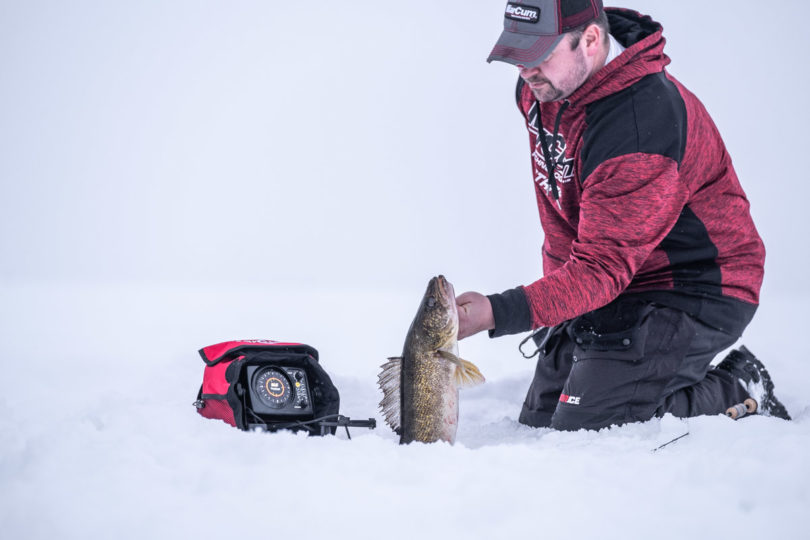
In South Dakota, the ice may be thick enough as early as Thanksgiving. It is certainly thick enough – about 18 inches to two feet – by Christmas. At Waubay Refuge, you can catch walleye, perch, northern pick and white bass. “Ice fishing is easier than other fishing because you can just walk out onto the lake, drill a hole and go fishing.”

Ice anglers coming to Waubay Refuge can park on the south side of the entrance, take fuel for their portable heaters and walk to their fishing spot. Visitors cannot drive onto the water. Visitors to Waubay Wetland Management District can also find ice fishing opportunities.

Here is a sampling of national wildlife refuges and wetland management districts where there can be great ice fishing. Restrictions vary, check with an individual refuge before you go. Year-round quality fishing opportunities are available on more than 270 national wildlife refuges. The National Wildlife Refuge System is managed by the U.S. Fish and Wildlife Service.

ALASKA

Arctic National Wildlife Refuge

Kenai National Wildlife Refuge

Kodiak National Wildlife Refuge

Togiak National Wildlife Refuge

IDAHO

Minidoka National Wildlife Refuge

ILLINOIS

Upper Mississippi River National Wildlife & Fish Refuge

IOWA

DeSoto National Wildlife Refuge

Iowa Wetland Management District

Upper Mississippi River National Wildlife & Fish Refuge

KANSAS

Flint Hills National Wildlife Refuge

Kirwin National Wildlife Refuge

MICHIGAN

Seney National Wildlife Refuge

Shiawassee National Wildlife Refuge

MINNESOTA

Big Stone National Wildlife Refuge

Big Stone Wetland Management District

Detroit Lakes Wetland Management District

Fergus Falls Wetland Management District

Litchfield Wetland Management District

Minnesota Valley National Wildlife Refuge

Minnesota Valley Wetland Management District

Morris Wetland Management District

Rice Lake National Wildlife Refuge

Tamarac National Wildlife Refuge

Upper Mississippi River National Wildlife & Fish Refuge

Windom Wetland Management District

MONTANA

Benton Lake Wetland Management District

Charles M. Russell National Wildlife Refuge

Medicine Lake National Wildlife Refuge

Ninepipe National Wildlife Refuge

Pablo National Wildlife Refuge

War Horse National Wildlife Refuge

NEBRASKA

Crescent Lake National Wildlife Refuge

North Platte National Wildlife Refuge

Valentine National Wildlife Refuge

NEW YORK

Iroquois National Wildlife Refuge

NORTH DAKOTA

Audubon National Wildlife Refuge

J. Clark Salyer National Wildlife Refuge

Lake Alice National Wildlife Refuge

Lake Ilo National Wildlife Refuge

Long Lake National Wildlife Refuge

Tewaukon National Wildlife Refuge

Upper Souris National Wildlife Refuge

SOUTH DAKOTA

Lacreek National Wildlife Refuge

Madison Wetland Management District

Sand Lake National Wildlife Refuge

Waubay National Wildlife Refuge

Waubay Wetland Management District

WISCONSIN

Horicon National Wildlife Refuge

Trempealeau National Wildlife Refuge

Upper Mississippi River National Wildlife & Fish Refuge

The U.S. Fish and Wildlife Service works with others to conserve, protect and enhance fish, wildlife, plants and their habitats for the continuing benefit of the American people. For more information, visit  www.fws.gov, or connect with us through any of these social media channels: FacebookTwitterYouTube and Flickr.

Mosquito Bites Aging Horrors

Sometimes I wonder how I survived all the little critters outdoors.  Until recently, mosquitoes were a nuisance outside but never really bothered me. A red bump would rise where they bit but be gone in a few hours. No longer!

Two weeks ago this past Wednesday I went to my place at Raysville Boat Club. When I arrived at about 4:00 PM I stopped and talked to my new neighbor before unloading.  It was shady in the yard and I did not notice anything flying around.

By the time I got unloaded I had two big red whelps on my right thigh and six or eight more on other parts of my body.  And they itched. I tried to avoid scratching them.  I had some itch cream and it gave me relief for a few hours.

That night I awoke clawing at the bites. I guess I got warm in bed and the heat made them itch. The next morning I had a red bruised looking area about the size of a silver dollar with a black, hard knot in the center of the two on my thigh.

It seemed every time I went outside while at the lake I got another bite, and that made the old ones start itching again.  I had more than 15 red whelps on my body by Monday when I left.

Two weeks later after many itchy nights those thigh bites are still red but haven’t itched in a few days.

I got home from Clarks Hill on Monday and left to camp for six nights at Lake Weiss on Tuesday.  For whatever reason, the campground at Bay Springs did not seem to have any mosquitoes to bite and reenact my old bites. They slowly got better until my last night.

Last Sunday night when I went into the bathroom to shower, a mosquito bit me on my left ankle.  It started itching immediately and made the others itch, too. I scratched most of the night!

When I got home from Clarks Hill I ordered a yard fogger and insecticide for it from Home Depot. It was here when I got home from Weiss and will try it in my yard since I get bit every time I got out to cut grass or pick tomatoes.

A few years ago my garage seemed to be full of the little horrors to the point I could not sit in my boat and tie baits on. I bug bombed it and took them out and so far they have not decided to homestead in there again.

I guess getting older has made me more sensitive to the bites, like it has caused to many other problems.  I think the warranty on this old body expired a long time ago and it was not made to last this long, but I am going to keep patching it up and fishing as long as I can!

WINTER BASS FISHING TIPS FOR THE MID-SOUTH

How to catch bass this winter in mid-south states

Winter Bass Fishing Tips for the Mid-South

Randy Zellers

Arkansas Game and Fish Commission

from The Fishing Wire

As water temperatures in lakes throughout Arkansas and the rest of the South finally start to dip into the 50s, many anglers will hang up their rods and reels after a prolonged warm season that offered many extra days of comfortable fishing. However, for those willing to bundle up and brave a few chilly hours, fishing can still offer some great action if you change your mindset and tactics.

Fish are cold-blooded creatures, meaning they have metabolisms that rise and fall with the temperature of their surroundings. During spring and summer, warm water means higher metabolic rates and more of a need to feed. As the water temperature cools, so does the activity level of bass, crappie and other sport fish, but that doesn’t mean they can go without food entirely. This is the time of year when quality is much more important to fish than quantity. In terms of food, that means getting the most energy for the least amount of energy spent chasing down prey.

Be Patient With Jerks


Cold fronts not only slow the metabolism of larger fish, they outright stun some of the smaller baitfish species, such as threadfin shad and gizzard shad. While some shad will die immediately, most will struggle for a few days before finally succumbing to the temperature if they can’t find some thermal refuge. This means there will be plenty of free and easy food for predator fish to take advantage of just before winter sets in for good. Largemouth bass, spotted bass and smallmouth bass all are gluttons for this shad buffet, but it presents a problem for anglers who try to “match the hatch” so to speak. The day of the cold front, getting a fish to fall for your lure over the real thing can be difficult, but after a day or so a suspending jerkbait can be the ticket. Cast the lure out, crank it down a few turns of the reel handle, then let it pause. Give it a few seconds at rest, then crank a few more reel turns before you pause again. Some people prefer to snap or sweep the rod tip to move the lure and reel up the slack to ensure they give the lure time to rest, while others prefer to crank the handle quickly, saving the wear and tear on their wrists. Either approach can work, but the time you pause can be the key to getting more strikes. Some days, a quick jerk-jerk-pause cadence will elicit a strike, while other days may require a long pause of up to 10 seconds or more to get the fish to finally react.

Lovin’ Spoonful


Another great presentation that fools fish into believing it’s a stunned shad is the jigging spoon, also called a slab spoon. This unassuming chunk of lead with a treble hook tied to the end doesn’t look like much, but when worked properly across the bottom its fluttering fall can offer just the right amount of flash and vibration to trigger a strike from a lethargic bass sitting with its belly on the bottom. Just look for areas without a lot of jagged rocks or woody cover as the open hook of a spoon can lodge into these surfaces and cause more frustration than fun. Cast the lure, let it fall to the bottom, then pop it up with a quick snap of the rod tip. Reel up the slack and stay in touch with the lure as it flutters back to the bottom. The technique looks like a shad that is dying and struggling to get away from predators. Even lethargic fish will find it hard to pass on the easy meal and the sudden snap of the fleeing fish will trigger their predatory instinct to react. Usually the hit will come as the lure is dropping, so keep an eye on your line for it to jump or stop instead of continuing its descent. Don’t be surprised if you catch fish other than bass with this technique, either. Walleye, catfish and even large crappie will take advantage of the easy meal imitated by this lure.

Alabama Bound


Big rewards is what the Alabama rig is all about, both for the fish and the angler. Constructed of wire and jigheads with small swimbaits attached, Alabama rigs mimic a small school of baitfish swimming along over likely cover. In winter, this offers bass a chance at grabbing a few small fish in one swipe. While smaller fish do hit the Alabama rig, it’s known for producing big fish who are looking for a big mouthful. Just be ready for a workout, as casting and retrieving an Alabama rig all day can definitely wear on the shoulders. Use a heavy action rod and lob the lure more than trying to whip it back and cast long distances. Braided line that’s around 80-pound-test breaking strength also can help avoid some tears if your Alabama rig snags up on unseen cover. A slow hard pull can often straighten the hook on the swimbait that’s snagged, allowing you to retrieve the rest of the rig and save a few dollars. Just be sure to loosen the drag on your reel enough to allow a fish to get a good bite on the lure instead of yanking it away when setting the hook. Fish often will set the hook on themselves as this is one of the few winter presentations that will elicit a bone-jarring strike.

Deadly Ned-ly


For decades, many bass anglers believed soft plastics were no good once the water temperature dipped below 60 degrees. Jigs tipped with pork chunks were the only smart option for a slow, bottom-crawling bait. But times and tactics have done a complete turnaround since those days. Small, straight worms like the Zoom finesse worm, Gary Yammamoto’s Senko or the ZMan TRD have proven that it doesn’t take a lot of wavy tentacles to catch a bass’s attention. Sometimes the best action is hardly any action at all. During winter one of the best finesse presentations is the simple Ned rig. Sliding a 2- to 3-inch morsel of a soft-plastic stick bait slowly over the bottom can entice a bite when reaction strikes from the above-mentioned tricks fail to produce. The key to fishing the Ned rig is the size of the jighead. Go as light as possible, and use spinning equipment to keep things small. You don’t want the jighead to crawl around on the bottom but to glide slowly just over it. A 1/16-oz. head with a no. 2 or no. 4 hook is a great option to start learning the technique, and the use of Zman’s special Ned rig soft-plastics will help float the bait. Often you won’t feel a hit, so it’s important to keep a sharp eye on your line for any twitch or odd reaction.

Be sure to check out the Arkansas Game and Fish Commission’s Weekly Fishing Report for up-to-date information on the hot bite across Arkansas. Guides, bait shops and anglers around The Natural State pitch in to make the report as helpful as possible for anglers looking to learn more about fishing year round.

Living with Spiders Snakes and Bugs Outdoors

 I don’t like spiders and snakes, and that ain’t what it takes….  Actually, snakes don’t bother me much, they try to go the other way when I am around. I have had a few close encounters of the slithery kind that I would rather not repeat, but I really don’t worry too much about them.

Spiders and their webs do get me, though. Walking around in the woods in the early fall I always carry a stick and wave it in front of me to intercept the webs. Walking to a deer stand early in the season in the dark is always a challenge to avoid webs.  I hate running into them.

Spiders crawling on me are creepy, but my worst experience with one of the eight legged horrors was one night running bank hooks. As I eased the boat into a willow tree to bait a line, a limb brushed my right ear. I felt something move on the ear lobe then crawl down into my ear.

I could not get back to the camper fast enough. Shinning a light into my ear made it burrow down deeper. We hoped it was a bug that would be attracted to the light, but the spider was repelled by it and tried to go deeper. Every time that critter moved it scrabbled on my ear drum. That is a horrible sound I will never forget.

Mama was at the camper and she had me lay my head on the table. When she poured baby oil in my ear, the spider came crawling out. I barely had time to see it hit the table before I slammed it with my palm. The whole camper shook, I was kinda wound up!

Wasps gave me a thrill while running bank hooks, too.  I eased the front of the boat under a big willow tree and grabbed a limb to stabilize it. I started to reach for the hook line but something did not look right.  When I shined the light on the big limb I was holding, about six inches from my hand was a wasp nest the size of a grapefruit, covered with big red wasps.

Luckily, wasps won’t fly at night and these did not move even with the light shined on them.

Maybe I should stay away from willow trees at night!

I can’t count the times I have been stung by bees, wasps and yellow jackets but some were memorable.  And I have been very lucky several times.

While cutting the property line at my farm a few years ago I had gone down to the end, turned and came back up. As I turned the tractor and rotary mower for a third pass, about halfway down it looked like a cloud of smoke over the strip I had just cut. At first I thought somehow the mower had started a fire.

I got close enough to see yellow jacket boiling out of their burrow and making a yellow cloud over it. If they had been faster, or if I had not seen them and ran into the cloud, I am not sure I would have survived. I am not allergic to them but do swell up some from a single sting. From hundreds of stings, I am not sure what would have happened.

Another time I walked out on my small dock at the farm to fish. I heard my dog Rip yip as he started to the dock and looked back. His black coat was half yellow with yellow jackets.  He was rolling on the ground, right on top of the nest, trying to get them off.

I ran to him, grabbed his collar and threw him in the pond and ran back out on the dock. I got three or four stings on my hands doing that.

Of course, Rip swam to the bank, got out and started out on the dock, bringing out another cloud of yellow jackets. This time Rip ran to me on the dock and I threw him back in, but grabbed his collar to keep him close to the dock and pulled him back out after the bugs left.

Maybe my worst experience with the yellow devils was deer hunting. One morning I had to go to the bathroom so I climbed down from my stand and went to a nearby tree. Unfortunately, there was an unseen yellow jacket nest at the base of it. They waited to make their presence known until my pants were down!

May the rest of your summer be as bug free as possible.

Maximizing The Chilly Weather Bass Bite

Top Tips For Maximizing The Chilly Weather Bass Bite

Bassmaster Pro Ott DeFoe Shares His Autumn Insights

By David A. Brown

from The Fishing Wire

Fall is transition time for largemouth bass; it’s a time when the fish have fully departed their warm season haunts, but they’re not quite ready to drop into their winter retreats. No, the calendar’s tail end is all about stuffing bellies and packing on the weight that’ll sustain the fish through winter’s leanness.

The bass are on the move and it can definitely be a here-today-gone-tomorrow deal; but the bass’ seasonal instincts also heighten the likelihood of banner days. Few times of the year will see gatherings like the fall gorge fest and savvy anglers can enjoy the kind of action that’ll have you pining for your next outing.

“Once you get to November and beyond, the later fall period brings the opportunity of finding big schools of fish,” said Bassmaster Elite Series pro Ott DeFoe. “They’re starting to get grouped up into their wintering places, but they’re still feeding pretty good. You have the potential to catch a lot of fish when you find the right deal.

“The good thing about fall is that the bite could be in really shallow water or it could be in deep water. It’s not like summer where you only find big groups of fish deep; they can be grouped up shallow too.

So, how does the accomplished angler from Knoxville, Tennessee make the most of this opportunity? Truth be told, the exact game plan varies day to day; nevertheless, DeFoe suggests following these four guidelines for maximum seasonal success. Baitfish are generally migrating to the backs of creek and coves, but the schools are constantly moving. Covering water is the key, but DeFoe has a couple of strategies for narrowing the search.

  • Fish the windy side of the lake, as the wind pushes baitfish into predictable areas.
  • Watch for wading birds grouping on the bank, or hovering and diving over open water. Both point to baitfish concentrations.

KNOW THE NEIGHBORHOOD. A big part of the hunt for fall bass and the bait schools they follow comes down to recognizing the productive areas. Bluff walls that typically occur on the deeper side of a creek can be one of the most consistent fall producers, as the vertical structure provides a holding spot where bass can quickly adjust their depth to find the right water temperature by ascending or descending in the water column.

This is the sure bet; the place that typically produces some level of activity throughout the day. DeFoe values the bluffs, but he points out another consideration with day-making potential.

“In a creek arm with a steep side and a flat side, I look at both as having their own set of options,” he said. “The bluff is the safeguard. In the fall, I can go to a bluff and catch some fish and I may find a group of them. I can throw a shallow to medium diving crankbait or a jig and run across places throughout the day and put together a decent (5-fish) limit.

“On the other hand, I may fish flats half the day without catching a fish; but once I find them, I’m liable to catch 15 pounds in 15 minutes. So, it’s a matter of which do you want to focus on: Do you want to focus on the bluffs where you can pick up a fish here and there, or do you want to focus on the big groups of fish that have the bait pushed up there on the flats and are actively feeding?”

WATCH THE WEATHER. Speaking of weather, DeFoe knows that cold fronts bring major impacts that demand consideration. Before and during the front’s passage, fishing can be off the charts, as falling barometric pressure, cloudy skies and blustery winds can whip up one ferocious feeding frenzy. On the flip side, post-frontal conditions can be a real head-scratcher.

Here, the high pressure, cloudless skies, intense sunlight and lack of wind create an eerily still scenario in which bass tuck tight to shady cover and hunker down until conditions stabilize. This is generally considered “lock jaw” time, but bass still have to eat — they simply adjust their methods.

STAY CAST-READY. In closing, DeFoe points out that fall weather can take its toll on an angler’s performance. Certainly, chilly temperatures will tap away at one’s endurance, while the bright sun of post-frontal conditions unleashes solar harshness on one’s skin.

To keep himself in good physical and mental form, DeFoe won’t launch without his BUFF Multifunctional Headwear — possibly a Merino Wool or Polar model, as conditions dictate — and an appropriate pair of BUFF gloves.

“I like not only the sun protection and wind protection I get, but also the warmth around my neck,” DeFoe said. “Also, BUFF’s Merino Wool hats and the different models of gloves complement the Multifunctional Headwear. Having items that make you more comfortable on the water will relate to more casts per day and more fish in the boat.”

Getting A Lucky Feeling In A November Club Tournament at Lanier

On a Sunday in November 12 members and guests fished our November tournament at Lanier.  After eight hours of casting, we weighed in 31 keeper bass longer than the 14-inch size limit there.  There were two five fish limits and one zero.  There was only one largemouth, all the rest were spots.

    I won with five weighing 12.65 and had a 4.01-pound spot for big fish.  Zane Fleck had five at 10.26 pounds for second, third was Billy Roberts with four fish weighing 7.65 pounds and Kwong Yu placed fourth with three at 7.15 pounds.

    I guessed right.  While we were getting boats ready that morning I talked with fellow club member Russell
Prevatt.  He had been out with Lanier guide Jimbo that week and they had caught some good fish in 40 feet of water jigging spoons.  Other guides on Lanier had been posting pictures of all the three and four-pound spots they were catching from 35 to 50 feet deep on spoons.

    From all that I knew most of the big fish were deep. But I told Russell I was going to stick with what I feel most comfortable doing. If I got a limit, which I felt was very unlikely, I would try to catch fish deep. I planned to start with a spinnerbait then a jig and pig on rocky points, the way I won the Flint River tournament two weeks ago there.

    We took off at 7:00 and I ran out of the creek. As I went by the point I started on in the Flint River tournament I considered stopping there. I have caught a lot of spots there up to four pounds. But I had a feeling I should run to another point to start, mostly because I knew the wind would be blowing right on it.

    After making the short run I picked up a spinnerbait and started casting, quickly hooking a good spot. After putting it in my livewell I looked at my watch, it was 7:05!  I put my second keeper in the livewell at 7:10 and my third one that I estimated weighed about 3.5 pounds in it at 7:25.

    I felt pretty good about my catch. By now the sun was bright so I went back around the point to the shady side and fished it with spinnerbait and crankbait without a bite.  Back on the sunny side I picked up a swim bait and caught my fourth keeper at 8:00.

    I started to go look for deeper fish to try to fill my limit but decided to fish around the point more slowly with a jig and pig.  With the brighter light I could see rocks under the water. At 9:00 I cast my jig and pig to the same boulder where I had caught the 3.81-pound spot that was big fish in the Flint River tournament, got a bite on the same jig and pig as I caught it on, and landed the 4.01 pound spot.

    I had six hours left so I started looking for deeper fish, playing with my electronics, fine tuning them and looking for baitfish and bass in 40 to 50 feet of water. I fished several places that looked good but had no bites.

    With one hour left to fish I ran around to the point I almost started on and quickly caught a keeper on the jig and pig, but it was not big enough to cull anything in the live well.  That was it, I got no more bites before having to go in for weigh-in.

    I had a feeling that morning about what to do.  I get that rarely, but I think really good fishermen get it often.  I call it a sixth sense for fishing and I think pros and other really good fishermen have it often. That is what makes them so good. 
    I wish I had it more often!

Beginner’s Guide to Ice Fishing

Colorado Parks and Wildlife offer a beginner’s guide to ice fishing
from The Fishing Wire

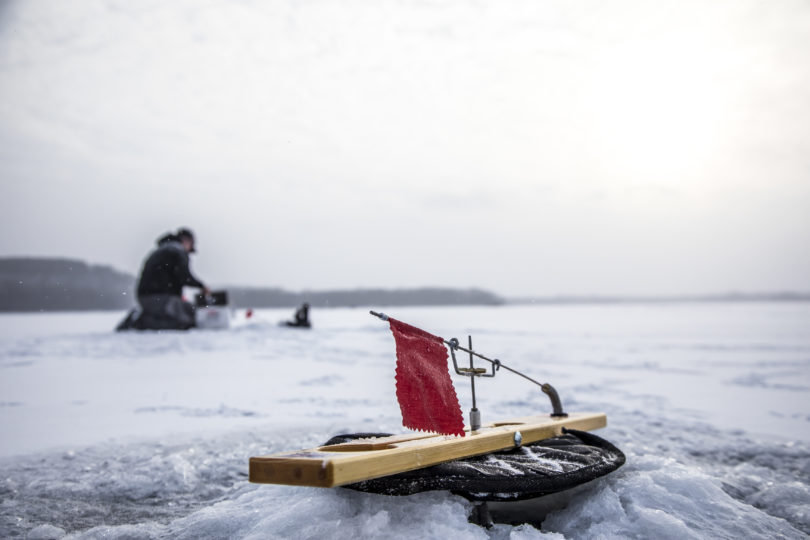
Safety is the most important consideration for anyone venturing onto the ice during the winter. As a general rule, 4 inches of clear-hard “good” ice is necessary, however, 6 inches of clear-hard ice is better as ice thickness can vary. We recommended that you go with a friend, especially during the early and late ice season. A chisel or spud bar is important during the early and late ice season as it allows you to check ice as you carefully and slowly proceed onto the frozen surface. These are great tools for punching a hole through thin ice, reopening a preexisting hole drilled by another angler and can also be used as a walking stick that makes crossing slick surfaces easier. Ice picks are another good piece of equipment, which can be worn around your neck so they are readily accessible if you do go through the ice. Drive the picks into the sides of the ice or on the surface on the ice and kick your legs to pull yourself out the direction you came from. If you don’t have picks you should attempt to pull yourself out by placing your elbows and arms on the ice and using a kicking motion to propel yourself onto the ice. It is important to maintain composure if you fall in and to focus your energy to get out of the water. It is extremely difficult to pull yourself out once falling through because your clothing becomes heavy, the sides of the hole are slick and difficult to grasp, and your body can go into shock as you enter the cold water (cold water shock occurs when you enter water that is 15°F or colder).

Proper Clothing is an essential aspect that all ice anglers must consider to address variable weather in Colorado. Warm boots are important and having boots with some sort of cleat or sole that makes for good traction is ideal. There are many cleat options on the market; one of the most commonly used cleat styles allows you to pull the cleats on over your boots. If your boots are not warm enough and your toes are going numb, try using a layered wool sock system (having a larger boot with more toe room can be helpful for wearing more socks and the extra space allows a warm pocket of air to form). Another alternative or addition to warm wool socks is to use toe warmers. It is important to invest in warm clothing as temperatures can vary greatly in Colorado on an hourly basis so it is always a good idea to wear multiple layers and remove them if it is too warm. Having a pair of sunglasses is important to shield your eyes from the reflected sunlight off the snow surface. Without eye protection, you may sunburn your eyes. This is known as snow blindness and can be very painful and result in temporary loss of vision due to the UV rays. Sunscreen can also be a very important item to keep in your gear bag during all times of the year. Whether it is sunny or not in Colorado, due to the elevation it can be easy to sunburn.

An ice auger is the most important piece of equipment when ice fishing (typically ranging from 6 to 10 inches in diameter). Please note that ice-fishing holes cannot exceed 10 inches in diameter or 10 inches on any side. In addition to the classic hand-auger, there is a wide variety of powered augers that use gas, propane, or rechargeable batteries. These powered augers will save you some effort on the ice but are not needed unless the ice is extremely thick which is more common in high elevation bodies of water. If you don’t have an auger you can use a spud bar to make a hole in thin ice or break through a previously drilled hole on the ice. An ice scoop is important to keep your holes open and clear of snow and ice. If you are not using a GPS or a lake map, you may have to drill more holes than you expected to locate a better structure but once you find structure these spots will usually house the biggest fish in the lake/reservoir. Finally, you will need ice-fishing poles (you can use your regular reels) which are shorter than regular poles and have more sensitivity. Ice fishing poles vary in size and strength depending on the fish species you are targeting. If you are, targeting panfish an ultra-light or lightweight ice-fishing pole may be the best option. However, if you are targeting big fish like lake trout, you will need a medium-heavy or heavyweight rod. 

A contour map of the lake/reservoir (keep in mind that many maps are outdated and depths are subject to change due to sediment movement and water levels) can be extremely helpful on the ice in locating an appropriate structure. A handheld GPS with topographic lake base-map can be a tremendous help in locating good fishing areas. If you cannot get your hands on either of these, you can always use a string that’s knotted every foot with a weight tied to the end to get an idea of the depth you are fishing. These tools are important because, in order to pinpoint where the fish will be congregating, you need to understand the structure of the lake/reservoir bottom. One way to improve your success when ice fishing, is to drill at sticky bottoms. Sticky bottoms refer to shallows and at the edge of drop-offs where the consistency of the bottom is not too hard and not too soft/mucky. You can test this by dropping your line in with some weight and letting it hit the bottom. If you feel moderate resistance when you pull up sharply, you will know you are in the right spot. Sticky bottoms are best during early and late winter because the shallows will have vegetation that provides the fish with cover and the lake shelves will have accumulated sediment that are excellent burrowing spots for insects. Another area to find in the lake structure is to find depressions. Depressions are excellent spots during mid-winter because as it gets to the coldest point in the year, they provide fish with better light levels and warmer water. These depressions are usually 1 to 4 feet in-depth and can be anywhere from the size of a car to the size of an arena. Keep in mind that finding success in these areas can take some persistence.A vertical presentation using jigs, shad raps, and spoons are great lures for ice fishing (try tungsten jigs which can help you get deeper with smaller jig heads). When ice fishing it is easy to get stuck in a rhythm and use one jigging cadence exclusively. Adjust your jigging cadence and try a variety of techniques to see what fish are responding to that day. Try slowly jigging the lure up and down a couple of times and then just hold it still, this change from slowly moving bait to stationary bait will oftentimes trigger a strike. Pay attention to your jigging cadences and change them frequently and this will lead to more fish on the ice! Don’t be afraid to move around on the ice if you’re not having success! Finally, there are some tools that make life on the ice more enjoyable (and warmer!) that anglers should consider if they are going to continue partaking in the winter recreational activity. Pulling fish through the ice is more complicated than netting them from a boat or shore and it is important to keep holes clean and clear of ice chunks and other sharp edges that could cut a fish loose. Bring the fish headfirst through the hole by grabbing it behind the head and pulling it up onto the ice. It is important to avoid touching the gills of trout as your fingers could damage them.

Shelters are another great idea and can keep you warm when it is bitter cold outside and the wind is constantly blowing. There are many different styles of shelters available on the market; flip shelters, hub shelters, insulated and non-insulated. In addition to a shelter, portable heaters for your shelter make life on the ice more enjoyable. Last but not least, a sled is another important tool that will help with carrying all the gear! 

Gear Checklist:

•          Fishing license (required)
•           Extra rod stamp (optional)
•           Winter clothing (beanie, facemask, gloves, sunglasses, sunscreen, etc.)
•          Warm boots (preferably with cleats or a cleat covers)
•          Collapsible chair or 5-gallon bucket (also good for carrying your fish out)
•          Spud bar/Ice chisel/Ice picks
•          Depth finder/Contour map/Graph/Flasher   
•          Auger (gas, propane, electric, or hand powered)
•          Fishing Equipment (baits, lures, poles, weights, pliers, line, etc.)
•          Shelter/Heater
•          Sled
•          Ice Scoop

Check out this link to an article written by Terry Wickstrom about “How to get started in ice fishing”!

also: Frabill’s Top 5 Ice Fishing Tips
Ice Fishing, Beyond the Basics