How Should I Net A Bass?

Net Results – How To Net A Bass and Other Fish

By Mike Gnatkowski
gnatoutdoors.com

The two most critical and exciting junctures when fishing are at the strike and when the fish comes to net. If the fish strikes aggressively and the hooks are sharp, the fish gets hooked solidly and battling the fish is largely a matter of rod pressure and patience. The most tenuous moment is when the fish nears the boat. With less line out, there is less stretch. Mistakes are magnified. Too much pressure can pull hooks out; not enough and the fish can shake free.

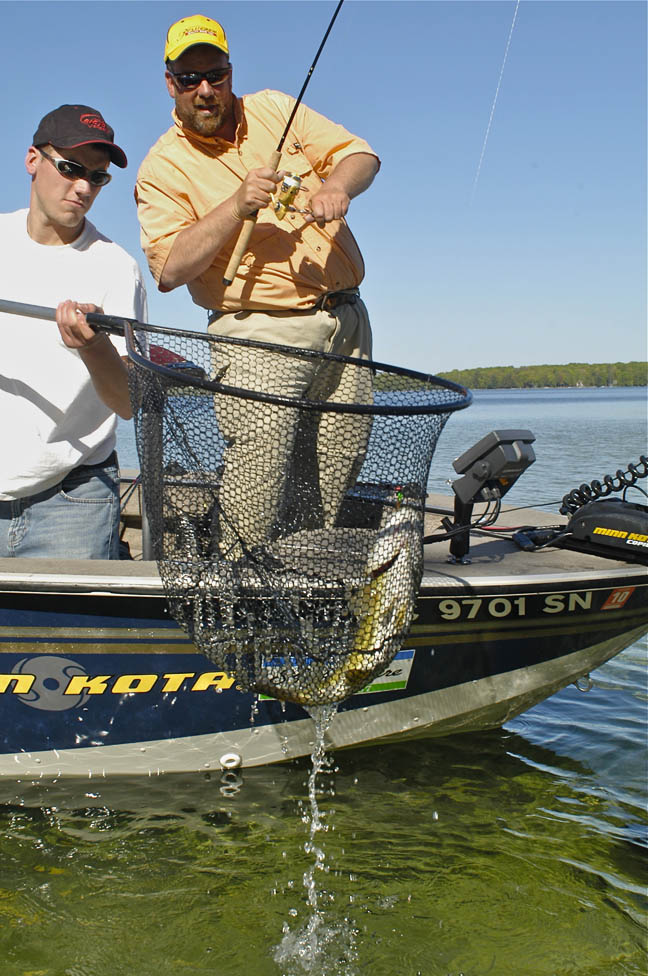
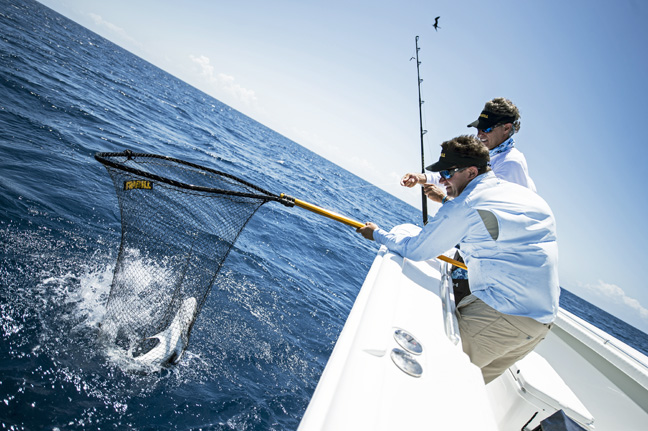
Play and net the bass right

Play and net the bass right

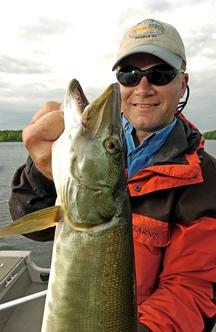
Photo by the Author

Assuming neither happens, netting must be a coordinated effort between the angler and the person wielding the net. Done correctly, the fish is in the net and in the boat before he knows what happened. Approach the netting process in an unsynchronized and haphazard manner and you’ll be lamenting the big one that got away. If you’re just fun fishing, it will be the source of a story that will be retold many times. If it’s during a tournament or on a guide trip, it can have more drastic consequences.

Part of the equation for successfully netting fish is to have the right tool for the job. Anglers should consider the type and size of the fish they expect to encounter to pick the proper net. Elements to consider are hoop diameter and size; handle length and composition and net bag depth, color and composition. A net that’s perfect for one type of fish may be totally inadequate for another.

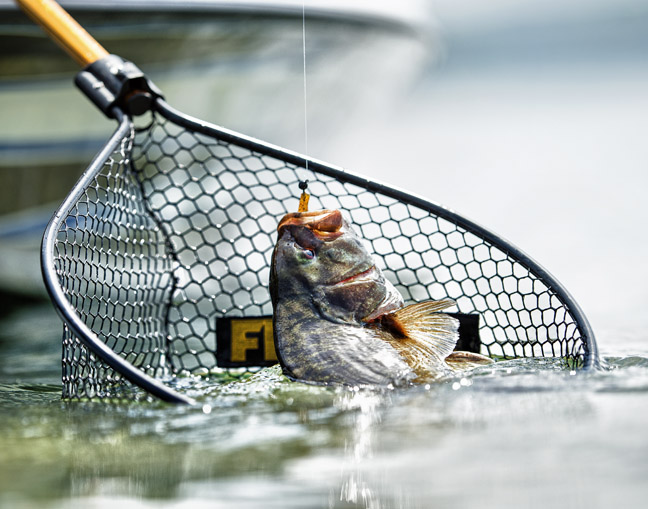
Bass anglers should consider Frabill’s new line of Conservation Series nets. Conservation Series nets are designed with safe catch and release in mind. All nets feature 100% knotless mesh netting, eliminating injuries commonly caused by sharp knots. Knots also tend to scrape away the slime layer on fish, which can leave them vulnerable to infection. Flat, linear bottoms reduce fish rolling and support the weight of the entire fish. Tangle-free coating prevents hooks from entangling in the net and facilitates quick release. Mesh guard hoops resist wear and greatly extend the life of the net. The 20” x 23” and 23” x 26 Conservation Series nets should meet the needs of most bass fanatics.

The right net protects the fish

The right net protects the fish

Photo coutesy of Frabill

While the Conservation Series nets are meant to treat fish with a gentle touch, they are anything but wimpy. The first impression you get when picking one up is of its strength. The heavy-duty aluminum handle is strong enough to be used as a push pole. Been there; done that. I’ve seen lighter yokes on an oxen. The net yoke is made of hard, thick, nearly indestructible material that will endure a lifetime of use and features Frabill’s exclusive patented Pow’R Lok automatic yoke system. The Mesh Guard Hoop means the bag loops are recessed into the hoop instead of looped around it, which leaves one less thing to snag on when getting ready to net a fish. The solid black hoop and sure-grip handle are a nice finishing touch.

Another option for bass anglers is Frabill’s Crankbait Net. It took two years of development, but Frabill finally came up with a net specifically designed to keep crankbaits, stickbaits and other multi-hook lures from becoming entangled in the netting. We’ve all been there. Net a fish hooked on a crankbait and he starts flopping, creating a nightmare snarl. Not anymore. With the Crankbait Net your net-tangling frustrations are over. The Crankbait Net is available in 20” x 23” to 23” x 26” models with various handle lengths.

Frabill offers a couple of options when it comes scaling back the overall size of the net for storage and transport – key premise when it comes to fitting in a well, even overly geared-up bass boat. Frabill’s Folding Net comes in 18” x 16” and 22’ x 20’ sizes that take up little space when collapsed, but are readily available when it comes time to scoop a 10-pound toad. The Power Stow Net comes in 20” x 24” and 14” x 18” models. The hoop in the Power Stow folds in half and the handle retracts for easy storage,

Use a net big enough for what you hope to catch

Use a net big enough for what you hope to catch

Photo courtesy of Frabill

Handle length is largely a matter of personal preference, but is also dictated by the height of your transom and the amount of room you have for storage. Handles can stretch from 2 to 8 feet or more. It’s always better to have a net handle that’s too long than one that’s too short.

Bag and hoop color are considerations, too. Most anglers prefer net bags made from a dark material to prevent spooking fish prior to netting. Wave a flashing net over a fish near the surface and he’s likely to panic. Dark, anodized hoops and handles and dark bags help keep things calm at the moment of truth.

Netting fish is an art form. When done properly, the process is a coordinated effort using a quick, fluid motion that results in a fish flopping on the floor or in the live well. The angler needs to stay at the back or side of the boat to keep track of the fish and the fight until the fish is ready to be netted. Only then should the person with the net step in front of the angler. The angler should be lifting and bringing the fish closer as the netter brings the net up under the fish. The angler needs to be prepared in case the fish makes a sudden run or burst. Done properly, the netter should only have to lift the net as the angler leads the fish over the hoop.

One important point is knowing when a fish is ready to be netted. The fish should be within easy netting distance and show signs of tiring. Usually, the fish will be lying on its side. The idea is to slip the net under the fish headfirst without touching the fish until it is centered in the net. You can then put the net handle straight up in the air, effectively closing the net bag or swing the hoop into the boat. Be careful of nets with long handles. Wielding a long net handle around while paying attention to the fish and not to others in the boat can result in a knock on the noggin or worse.

Most fish are lost at the boat because of indecision or by being too anxious. Have a positive attitude that you can easily scoop the fish. Wait until the fish is well within range and shows signs of tiring. Don’t reach. More fish are lost at this critical juncture because the netter reaches for the fish at the same time the angler gives the fish slack. If you reach too far, the net will flow out in front of the hoop and the fish is likely to get caught in the netting before he’s safely in the net. The hooks get caught in the net and the fish shakes free. To prevent this, don’t reach and hold the bag against the handle until the fish is over the net. Then open your hand to release the bag. Once the fish is in the boat the angler needs to release the tension on the line or give some slack to prevent the hook from flying out and causing injury.

Netting must be a coordinated effort. Done right, it means sweet success and high-fives all around.

Is your  net big enough?

Is your net big enough?

Photo by Bill Lindner

How To Cook Fish Potato and Cheese Casserole

A simple fish, potato and cheese casserole is easy to cook and delicious. Any mild flavored fish like bass or crappie works well but you need filets You don’t want bones in it!

I filet some of the bass I catch – I know some diehard catch and release fanatics will not like my catch and cook attitude, but keeping some fish to cook will not hurt the population. Especially if, like me, you keep spotted bass from lakes where they are not native and damage the largemouth population! I keep spots 14 inches long and less. In Georgia there is no size limit on spots anywhere except Lake Lanier because they are not good for lakes. A six inch spot tastes good!

Ingredients needed for casserole

Ingredients needed for casserole

First I gather everything I need – a bag of bass filets, potatoes, grated cheese, onions salt, pepper and parsley flakes. I spray a baking dish with no stick spray like Pam to make cleanup easier.

Layer the fish, potatoes and onions

Layer the fish, potatoes and onions

Layer the fish and sliced potatoes and sliced onions, starting with a layer of potatoes, then onions, then fish. Sprinkle a little salt and pepper on each layer as you build it. Repeat until all the fish are used.

Cover the layers of fish, potatoes and onions with grated cheese

Cover the layers of fish, potatoes and onions with grated cheese

Then sprinkle grated cheese on top. I use a variety of cheeses, usually whatever I have in the refrigerator. Fairly mild cheese is best.

Top with a little flaked parsley. This does not add much flavor but makes it look prettier, so it can be left out. Cover with foil and put in a oven preheated to 350 degrees.

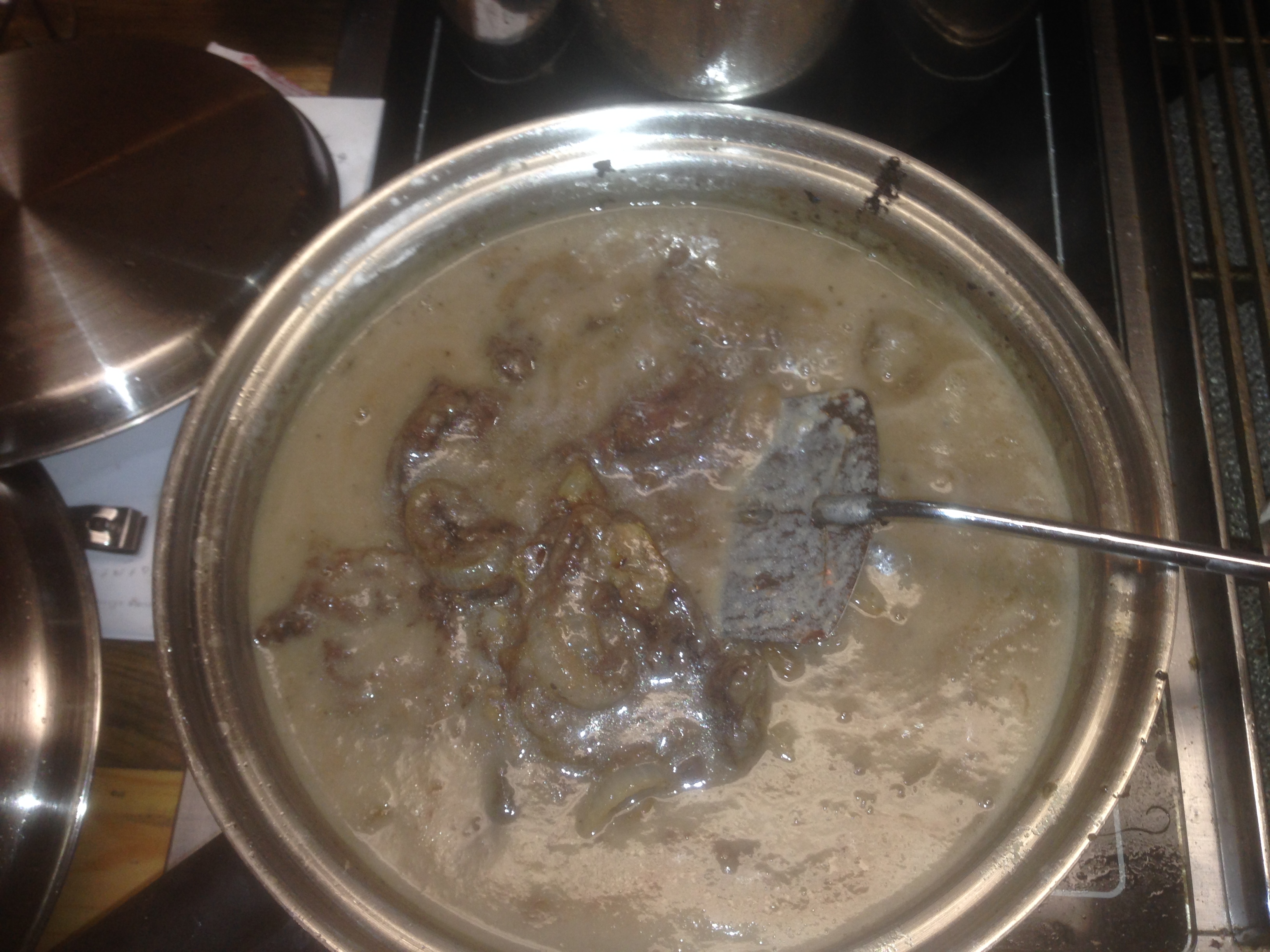
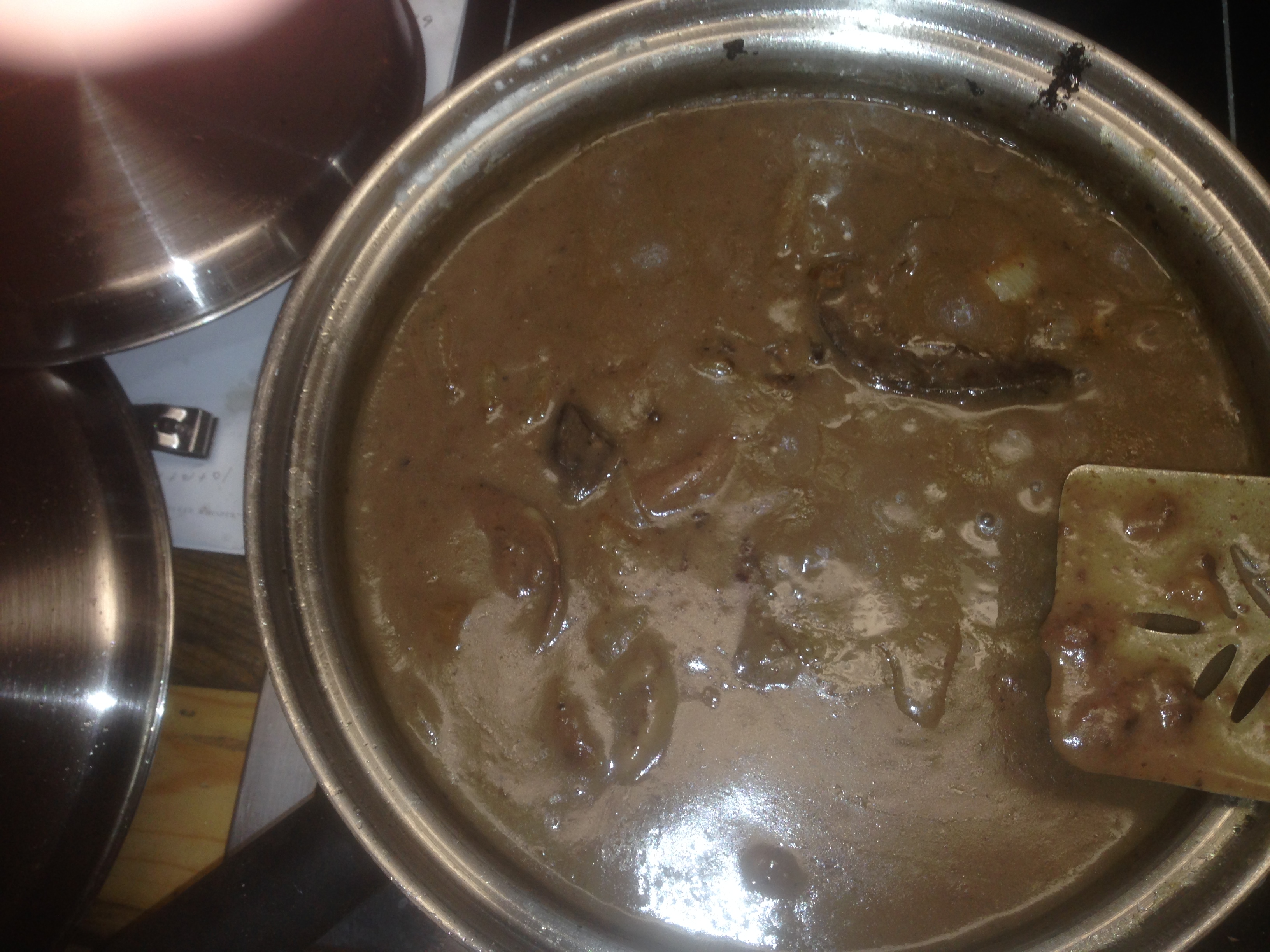
Bake at 350 until the cheese melts and the potatoes are soft. Test with a fork to make sure the potatoes are soft and done. I usually take the foil off for a few minutes after the potatoes are done to brown the cheese a little. If you put the oven on broil to brown the cheese, watch it very carefully. It takes just a few seconds for cheese to go from browned to burned.

Serve with a salad and enjoy.

How Did the Bass Pros Do On Lake Guntersville?

Legendary Bass Pros in North Alabama on Lake Guntersville

By Frank Sargeant
from The Fishing Wire

The  pros get ready

The pros get ready

Most of the best-known names in professional bass fishing probed the favorite local spots at Lake Guntersville, in the northeast corner of Alabama, as the Diet Mountain Dew Bassmaster Elite tour got underway on Thursday, April 9, and continued through Sunday, April 12. Daily takeoffs and weigh-ins were at Guntersville City Harbor, adjacent the 431 bridge on the north edge of town.

With water temperatures still in the low 60s, the lake’s giant female bass haven’t completed their spring spawning, and this should mean fishing fans will see some gigantic fish brought to the scales during the four-day event.

“There was a 12-7 caught in a tournament here just recently,” says Elite Pro Chris Lane. “I would be surprised if there aren’t several fish over 10 pounds caught next week. It’s going to be that kind of tournament.”

Lane might well be one of the anglers finishing near the top–he has lived on Guntersville for the past several years, thrives on shallow water fishing due to his Florida roots, and just won an Elite Tour event at the Sabine River.

Guntersville’s vast beds of milfoil, hydrilla and coontail grass will likely play a role as the Elite pros try to figure out what the successful pattern to win here will be. Lily pads, primrose and other shoreline cover, as well as docks, also attract spawning fish here.

Lane agrees with the popular assessment that it could take a four-day weight of more than 100 pounds to win. So does Casey Ashley, winner of the GEICO Bassmaster Classic held on South Carolina’s Lake Hartwell in February.

Like all B.A.S.S. events held in Alabama, the field will include a host of in-state anglers with extensive knowledge of the venue.

Lane, who lives close enough to the lake that he can have his boat in the water in just minutes, finished 36th in the 2014 Bassmaster Classic and 40th in the 2010 Elite Series event on Guntersville – his two most recent events on the fishery.

Justin Lucas, who relocated to Guntersville from his native northern California, will be fishing a professional event for the first time on his new home lake. He’s a top-rated young angler who can never be counted out. Ditto for Kevin Hawk, who now guides on the lake.

Aaron Martens, another California native who now makes his home in Leeds, Ala., has a rich history on Lake Guntersville that includes a win in the 2009 Elite Series event on the lake. He also finished 13th in the 2014 Bassmaster Classic, 17th in a 2006 Elite Series event and 14th in Bassmaster Tour events in 2004 and 2005 here.

Flamboyant pro Gerald Swindle of Warrior will be in the mix, and has proven himself a consistent producer when bed fishing, and Randy Howell of Springville won the 2014 Classic on this lake, though that was a late winter event where crankbaits were king. Randall Tharp, an Alabama native now living in Florida, can’t be counted out here either–Guntersville is practically his home lake.

Launches are scheduled for 6:15 a.m. CT each day from Guntersville City Harbor with weigh-ins also set for the ramp at 3:15 p.m. daily. Launches and weigh-ins are free and open to the public. The B.A.S.S. Outdoor Expo gets underway at noon Saturday and Sunday, and free demo rides from Mercury, Yamaha, Nitro, Skeeter and, Triton will be available.

Skeet Reese won after Mike Iaconelli led for three days. Iaconelli caught only one bass the final day and dropped to 12th place.

For details and results, visit www.bassmaster.com.

How To Filet Fish

I love to catch fish – I never met one I didn’t want to catch – but I like to eat them, too. I know those fanatical about catch and release will be upset, but I believe in catch and hot grease, too, even for bass. I keep a lot of the spots I catch, especially in area lakes where they are not native and cause problems, and cook them just about every week. I have many good recipes for fish.

When I filet fish getting ready usually takes more time than the fileting. I like to leave fish on ice overnight before fileting them. When I am ready to go to work, I get my filet board – a 2×8 about three feet long, and put it on top of a big trash can so it will be about waist height. I hone my big filet knife with a steel so it is very sharp. Some folks like an electric knife and some are good with it, and I use one if I am fileting a lot of fih. But since I usually filet five or fewer fish, I like my regular knife. It is slower but more precise. And I take a bowl big enough to hold the filets with me and set it nearby.

Start just below the gills and slice through the belly past one side of the anal fin

Start just below the gills and slice through the belly past one side of the anal fin

I lay the fish down with the belly facing me and stick the knife point in the middle just below the gills, and make a slice through the middle of the belly past one side of the anal fin. This makes the first filet cut better.
Slice past the anal fin on one side

Slice past the anal fin on one side

I then turn the fish so its back is toward me and cut straight down from the slice in the belly to the top of the fish. Cut as far forward as possible to get the most meat.

Cut to the backbone

Cut to the backbone

Turn the knife blade parallel to the backbone and cut the filet off, from the head to the tail. If you want a skinless filet, which I do, don’t cut through the skin at the tail. If you want a skin on filet you need to scale the fish before starting to filet it.

Slice along backbone to tail but don't cut through the skin at the tail

Slice along backbone to tail but don’t cut through the skin at the tail

Flip the filet over, place it flat on the board, and slice along the skin between the skin and meat in the opposite direction. You can make this slice if you cut through the skin at the tail but it is easier to hold if it is still attached. Keep the knife blade at a slight downward angle.

Slice from the tail to head between meat and skin

Slice from the tail to head between meat and skin

I cut the ribs out since I want a boneless filet. Unless I am planning on making fish chowder I throw them away since there is very little meat on them.

Cut out the rib cage, keeping your knife at an angle to get as much meat as possible

Cut out the rib cage, keeping your knife at an angle to get as much meat as possible

Flip the fish over and repeat the process

Flip the fish over and repeat the process on the other side

Flip the fish over and repeat the process on the other side

When done right, there is almost no meat left on the backbone. I throw it away unless I am making fish chowder. If I plan to make my Mahatten style chowder I cut the backbone at the head and tail and save it with the rib cages.

 When done right very little meat is left on the bones


When done right very little meat is left on the bones

Wash the filets getting all blood off. Feel along the edges, especially along the top where the dorsal fin was attached, to make sure there are no small bones left.

This may sound complicated, but with a little practice it is quick and efficient. I can filet a bass, from first cut to finish, in less than two minutes, and have a bowl of delicious boneless, skinlessw filets.

End results - a bowl of boneless, skinless filets ready to cook

End results – a bowl of boneless, skinless filets ready to cook

What Is An Overlooked Crankbait for Cold Water Bass?

An Over-Looked Crank For Cold-Weather Bass

By Steve Pennaz
from The Fishing Wire

Bass on a Flicker Shad

Bass on a Flicker Shad

When you fish against a guy like Tony Owens, biologist with the Texas Freshwater Fishery Center in Athens, Texas, you pay attention to the little things or you get left in the dust.

Tony not only lives bass every day at his job, he regularly fishes tournaments in East Texas and knows how to catch fish.

But on this trip, he was struggling almost as badly as me. His spinnerbait pattern produced a couple good fish, as did mine (flippin’ PowerBait Jigger Craws), but the cold front that blew through the day before had shut the fish down. Texas’ world-class bass fisheries were built by stocking Florida-strain largemouths, a fish that doesn’t like it much when water temps plummet quickly. (http://www.berkley-fishing.com/PowerBait-Chigger-Craw/Berkley-ae-powerBait-chigger-craw,default,pg.html)

When I tape an episode of “Lake Commandos” television show, I compete with my guest to see who can catch the most fish. While it’s always my goal to catch the most fish, really what I like about the show’s format is seeing how my guests react to not only what the fish are doing, but to what I am doing. And today, Tony reacted to the slow bite by fishing faster. Traditional wisdom calls for slowing down when dealing with cold-front fish, but I have found that it’s often better to actually speed up to see if I can trigger reaction strikes. http://www.lakecommandos.com/

And one of the best baits for doing that is a crankbait.

The lake we were fishing was loaded with shad, which serve as the primary forage for the bass and other gamefish. So I switched over to a Berkley Flicker Shad, casting it on a medium heavy spinning rod loaded with 10-pound NanoFil to make it easy to cast long distances. http://www.berkley-fishing.com/Berkley%C2%AE-Flicker-Shad%C2%AE/1285348,default,pd.html

Most bass anglers seem to overlook cranks with subtle side-to-side rolls like the Flicker Shad, opting more often for baits that have a more aggressive action. But the shad imitators can be dynamite under certain conditions and I like to toss them after a cold front.

The fact is, I should have started the day with the Flicker Shad as the day before I had been targeting crappies on another east Texas lake, casting small #4 and #5 Flicker Shads, and while we caught a ton of slabs (one pushing 3 pounds!), we also caught a lot of big bass. In fact, we caught so many bass they interfered with our planned fish fry for that evening!

I was guilty of fishing inside the box of what’s comfortable. Like a lot of anglers, I had forgotten just how effective small, tight-wobbling crankbaits can be for early-season or cold-water bass.

Fact is, small, tight-wobbling cranks like the Berkley Flicker Shad can trigger bites when nothing else does.

A thin bait by design, the Flicker Shad has a tight wobble – actually, more of a roll – than a square bill. As such, it sends out an entirely different underwater sound, which is picked up bass both in the auditory sense and via the fish’s lateral line. Could be that thin, narrow baits with roll produce an acoustical signature more akin to the sounds and vibrations that shad emit as they travel through the water.

Another thing that’s great about the Flicker Shad is it’s a great casting bait, which means you can cover great distances without spooking fish in clear or pressured waters. It also makes it a great option when you visually locate schooling bass busting bait on the surface.

When I locate schooling bass in open water I like to cast past the school, working the bait quickly to get to the larger fish in the school, which are typically deeper than the smaller bucks. These larger fish have learned that the lunch falls right on their plate as smaller fish shred and slash shad high in the water column.

On rivers and reservoirs, I’ve found casting Flicker Shads along rip rap or timber and brush a great way to locate active fish. On natural lakes, I’ve gotten past my fear of fishing crankbaits around emergent weeds using smaller, shallower-running baits for ripping bait through small gaps or lanes in the weeds.

I typically choose Flicker Shads according to the depth I’m fishing – a #4, #5, or #6 for waters up to 7 feet — and a #7 or #9 for depths over 8 feet. Consult the following dive curves to pick the best sizes for where you fish.

Four Go-To Colors

The Flicker Shad

The Flicker Shad

For cold, clear early-season waters, I rely on four color patterns that allow me flexibility on different waters. The first is Natural Shad, the match-the-hatch choice for lakes, rivers and reservoirs with threadfin and gizzard shad. Second is Red Tiger, which mimics both crawfish and bluegills – definitely a solid early-season pick. Third, I like Racy Shad, which has hues of green and orange in it, as well as a chartreuse lateral line for dirtier, stained waters. And lastly, sometimes plain Pearl White can be a great performer, which mimics young white bass or shad that have been regurgitated by other fish – the same reason plain white Flukes are so effective.

How to Work ‘Em

I rarely fish Flicker Shads on a steady retrieve for bass. Instead, I use a fast twitch-twitch, twitch-twitch, which mimics shad movement. And the key to this retrieve is using spinning gear.

For me, I prefer a 7′ Abu Garcia Veritas with a little softer tip, like a medium power, fast action model. I like Abu Garcia Revo Sx20 or Sx30 spinning reels for their smooth gearing, powerful drag and how easily line falls off the spool for long, accurate casts. http://www.abugarcia.com/Rods/AbuGarcia-Rods,default,sc.html?prefn1=ZZSUBSER&prefv1=Abu%20Garcia%20Veritas & http://www.abugarcia.com/Abu-Garcia%C2%AE-Revo%C2%AE-SX-Spinning/1290278,default,pd.html

In terms of line choice, NanoFil Dyneema-based superline casts farther than anything on the market. Ten-pound Nano has the diameter of 2- to 4-pound mono and gives me the sensitivity I need ensure the bait is working as it should. It’s amazingly telegraphic. I can tell if one treble has a piece of leaf on it, even with 16 inches of 8- or 10-pound Trilene 100% Fluorocarbon leader. Speaking to the leader, I like it for making bait changes easier and it virtually eliminates the tendency of the line tangling in the trebles during the cast. http://www.berkley-fishing.com/Berkley%C2%AE-NanoFil%C2%AE/1285551,default,pd.html

Consider adding an additional spinning stick and a subtle action crank like the Flicker Shad to your boat deck this season. Not only is this system effective for early-season and open-water bass – especially on shad-filled waters – it’s a solid MVP for anything that swims.

And if you ask me, that’s pretty cool. In my world more bites equals more fun!

Lake Lanier Fishing Did Not Live Up To Hopes, At Least for My Club

Last Sunday 21 members and guests of the Flint River Bass Club fished our April tournament at Lanier. We were all excited – fishing reports said they were biting good and everything seemed right. And when Chuck Croft told us at the meeting Tuesday night he and his partner won a tournament there the weekend before with 22 pounds, we just knew we would catch fish.

Nope. In nine hours of casting, we landed 41 bass weighing about 79 pounds. There were only four five-bass limits and six members didn’t land a keeper. As expected though, there were only eight largemouth landed. The rest were spotted bass. There is a 14 inch length limit on all bass at Lanier, though. Many of us caught a lot of 13 inch bass that would be keepers on most lakes.

We are going to have to stop allowing guests to fish this tournament. Last year William Scott fished as a guest and won the tournament and had a six pounder, the biggest bass caught in any of our tournaments. This year Sam Smith fished as Niles Murray’s guest and won it with five weighing 10.79 pounds. And he had a 3.12 pound spot for big fish.

Brandon Stooksbury should have won but he came in 7 minutes late after being told the wrong weigh-in time on the phone after arriving late for blast off. He did place second with five weighing 8.86 after a 21 percent penalty. And he had a 3.39 pound spot that would have been big fish without the penalty.

William Scott came back as a guest and came in third with five at 8.40 pounds and my five weighing 7.60 was good for fourth place. Jordan McDonald fished with me and had three weighing 5.61 pounds so we had a decent day, but not nearly as good as expected.

I couldn’t wait to get to my first place at the 6:30 blast off. A few years ago I did an article on Lanier in early April with Laura Gober and she took me to a place at daylight where we caught several three pound plus spots on jerkbaits, and she said that was not unusual. Jordan and I hit it and fished it for an hour, and caught several short fish. I did hook a 2.5 pound plus spot we could see down about six feet under the boat in the clear water, but it pulled off the jerkbait.

By 10:00 we were frustrated. Although we had caught several small bass we didn’t have a keeper in the live wells. So we took off up the Chestatee River, headed to the back end of it where the lake looks more like what I am used to fishing. Jordan had taken me up there last March in a Flint River tournament and I came in second in it.

On the way we stopped on a hump and Jordan caught a keeper at about 10:30 so our attitude improved. And soon after getting to the very back end of the river, 22 miles from the blast off ramp, I landed a keeper largemouth on a jig and pig from about two feet of water.

We fished shallow bushes, grass and rocks the rest of the day and I landed four more keepers and Jordan got two more. I had only three with about an hour left to fish when I hooked a three pound plus largemouth on a worm in two feet of water and told Jordan to get the net just as it jumped and threw the hook.

With less than 30 minutes to fish we went to a small island and I caught a keeper largemouth and a keeper spot to fill my limit almost on back to back casts. It took us 22 minutes at 60 miles per hour to get back to the ramp, but it was worth the ride!

Why Are Gill Nets A Bad Idea On TVA Lakes?

Gill nets for TVA Lakes are a bad idea

By Frank Sargeant
from The Fishing Wire

COMMENTARY:

Putting out gill nets

Putting out gill nets

A gillnet, like a handgun, is not inherently evil. The problem arises when it becomes the wrong tool in the wrong place at the wrong time.

The idea of permitting gill nets in North Alabama’s TVA lakes apparently has some appeal to somebody, otherwise it would not have been made into a bill, HB 258, and passed by the Alabama House of Representatives recently.

But thousands of recreational fishermen (and women) as well as homeowners and fishing/boating/resort industry execs in the affected areas are pretty much universally opposed to bringing this highly effective gear to the river lakes, which include Lake Guntersville, frequently cited as one of the top bass fishing lakes in the nation.

Not that the netters or the legislators who backed them propose to net bass commercially–state laws prohibit net harvest of gamefish. The targets would be shad, drum and other “rough fish” that some say are currently going to waste in the fertile waters of the big river.

But one issue that must surely concern anglers is the fact that gill nets do not work well for catch and release in many cases. They’re called “fish chokers” in saltwater, for good reason. They function via squares of mesh that slide over the head of a fish and then jam tight right behind the gill plates–they’re locked in place.

Getting a fish out of the mesh without killing it is not easy, particularly when it’s being done rapidly and/or at night, both of which conditions often apply in net fishing because that’s the nature of the fishery.

While the nets presumably would not be set around the grass beds where the majority of bass hang out for a part of the year, they might well be set around the bars, humps and other offshore structure where shad and drum are most abundant. And in the TVA lakes, this structure is also where huge schools of bass gather, both in the dead of summer and the chill of winter.

Crappies also gather in schools of hundreds around these offshore ledges in winter and again in July, August and September.

Both these species of gamefish would very likely be caught, occasionally in large numbers, as a by-catch of the nets, which can extend for hundreds of feet, forming a sort of “wall of death” around anything on the inside. While the commercial netters could not legally land them, they very likely would be killed in the process of being shucked out of the mesh–they’d wind up as buzzard bait along the shores. The bill as written has no limitations on net length or square footage–whole feeder creeks could be “stop netted” with a damming effect from shore to shore.

Checking gill nets on TVA lakes

Checking gill nets on TVA lakes

Gill nets of a given mesh size catch fish of a given size–it’s one of the reasons netters like them, because they let small fish swim through while trapping the larger ones. But the mesh that would be appropriate for a big gizzard shad would also be about right for a 1 to 2 pound bass or crappie, and the mesh that would catch a 5 pound drum or buffalo would also choke a 5 pound largemouth.

The bill also permits trammel nets, which catch pretty much everything that hits them–a large mesh net is suspended in front of a small mesh net, and the fish “pocket” in the folds when they hit the net. Again, accidentally-caught gamefish would suffer.

At the last meeting of the Conservation Advisory Board in Guntersville recently, a commercial hook-and-line catfish angler complained to the board that Tennessee commercial fishermen are already taking unlimited quantities of catfish out of the river, and requested relief. How much worse will this issue become if gill nets are added to the mix?

Once this fishery gets underway and working fishermen have invested in their nets, it will be no easy matter to shut it down–in Florida, it took a constitutional amendment to get rid of gillnets in coastal use. The people of the state rose up and passed the amendment, and the fisheries have improved steadily ever since. But the state–i.e. the taxpayers–was put on the hook for millions to buy back nets from the netters. Allow this gear again in Alabama? Why?

Bottom line is, this is a bill that has benefit for very few in the state of Alabama, and a potentially enormous downside. It’s hard to imagine how any caring legislator could pass it, and if it manages to get past the Senate, how Governor Bentley, who reportedly enjoys recreational fishing, could sign it. But stranger things have happened in politics.

Anglers and conservationists would do well to keep an eye on this effort, and to bring it to a halt if possible by making their feelings known to their legislators. You’ll find contact info on state senators at http://www.legislature.state.al.us/aliswww/SenatorsPicture.aspx

(A word of advice–like most folks, the legislators take council better from a polite, well-reasoned letter, email or phone call rather than angry bluster.)

Frank Sargeant can be contacted at Frankmako1@outlook.com.

Why Is April A Big Bass Month?

April is a great month to catch a big bass and it will just get better and better the next few weeks. A couple of text pictures reminded me just how good it can be. Peyton James sent me a picture of two bass he caught a few days ago at Lake McIntosh. Both were over five pounds and they hit a pumpkinseed Fluke. Peyton catches some big bass – a few years ago I talked about the big bass he caught at High Falls Lake.

Peyton’s fish hit in shallow water with some grass. Eric Bruce also sent me a picture last week of a five pounder he caught on a Rooster Tail in shallow water. All these five pounders came from smaller lakes which warm faster than the big ones. But the big lakes are getting good, too. The 5.65 pounder I caught at the Top Six was the seventh largest fish caught in that tournament, so there were some good ones. Mine hit in about three feet of water and I caught it on a Carolina rigged green pumpkin lizard with its tail dipped in chartreuse JJ’s Magic.

As soon as the water starts warming and the days start getting longer bass get the spawning urge. They start their annual migration from their deep winter holding areas to shallow spawning flats, usually in the backs of protected coves. Hard bottoms are key. And they feed heavily getting ready for the stress of bedding.

After they spawn the females are hard to catch for a week or so, then they go on a feeding spree. And the males guarding the nests and fry will hit anything that comes near them. While they are bedding you can sight fish for them, dropping something into their bed to irritate them into hitting. But that can be a slow, frustrating process. I have cast to an eight pound bass on the bed for over two hours, only to give up and leave without getting her to bite.

Some say catching bass on the beds is bad for the population, but biologists say it does not hurt them in our waters. Although you may remove a bass and keep it from spawning, she has already spawned many times over the years, so her genes are well established in the body of water. And bass spawn so prolifically, with each female producing thousands of eggs each year, that fishermen can’t really hurt the population.

Some northern states have closed seasons on bass fishing during the spawning times. They may need it since bass do not reproduce as well in colder waters, and have less time to spawn. Here in Georgia bass will spawn from late February through June on most lakes. Some females will be spawning all those months, and some spawn deep enough you can’t see them to sight fish for them.

I have to laugh at a fisherman who says he will not sight fish for bass on the bed, it is unethical, but he will drag a lizard all over the spawning flats and catch bass off the beds he can’t see. Sure, he is not sight fishing, but he is still catching them off the beds just the same.

No matter how you like to fish for bass right now is a good time to go to any of your favorite pond and lakes and catch bass. Sight fish for them if you like. Or try Flukes, Rooster Tails or lizards in the shallows. You might catch the biggest bass of your life.

High Water Creations Tackle Tags Review

If you are like me and most bass fishermen with a bass boat you have many plastic boxes of plugs and worms in your boat. They fit in racks and stand on end. Most of us write on the end what is in them. That works, but the writing is often hard to see. And I never seem to remember what pound test line I put on a reel or when I put it on, too.

A local fisherman has come up with a good solution. His company, High Waters Creations, makes Tackle Tags. The Line Label Series is a set of stick on labels in high contrast colors that come in a wide variety of pound test. And it also includes month labels. Stick one of each on your reel and you will instantly know the information you need.

Their Hard Bait and Soft Bait Series are the same high contrast stick on labels for those kinds of baits. Stick the Crankbait label on the end of the box and you instantly know what it contains. The label even has a picture of the bait to help. Soft Bait Series include worms, craws, swimbaits and other common baits we use.

If these labels sound like something you can use, check them out on their web site at http://www.highwaterscreatons.com or email them at info@highwaterscreations.com.

Why Should I Take A Boat US Safety Course?

When Things Went Wrong, Teen Boater Kept Cool

The Case for Taking a Boating Safety Course
from The Fishing Wire

15-year-old Matt Mainzer kept his cool when his flats boat started to sink. He says taking a boating safety education course gave him the knowledge to ensure everyone’s safety aboard.
TAMPA, FL, When 15-year Matt Mainzer decided to take a couple of friends out boating one Sunday afternoon in late March, little did he know that he would find himself and his friends floating in life jackets hanging on to the overturned hull of the teen’s 17-foot flats boat awaiting rescue. But according to Mainzer, his boating safety education would help him survive the day. A graduate of the no-cost online boating safety course provided by the BoatUS Foundation for Boating Safety and Clean Water, Mainzer said, ‘I wouldn’t have known what I needed to know if I hadn’t taken the boating safety course.”

Of course most folks would recognize Mainzer’s ability to keep his cool and being prepared as the reason for the young trio’s successful rescue. According to Mainzer, as water started to fill the boat through a rapidly widening crack in the hull – eventually causing the three teens to jump overboard – the quick thinking Mainzer had everyone in life jackets.

Using a cell phone in a waterproof case, Mainzer had also already advised a friend of their predicament initiating a rescue response. Once the three teens were floating in the waters of the Tampa Bay, he remembered keep everyone hanging on to the boat’s hull, of which only a small portion of the bow was above water. And his boating guests, two female teens, also remained calm and followed their captain’s instructions. Rescuers were on scene in minutes.

“Matt’s ability to stay calm and take decisive action saved them from harm,” said BoatUS Foundation President Chris Edmonston. “And I’m sure Matt’s parents instilled in him a great sense of respect for boating safety. But we are also very pleased he was able to take away some key knowledge from our online boating safety course, like always having life jackets accessible and ready to go. Once water started entering the boat they were easy to put on. So often boaters keep them hidden in places that essentially render them useless.”

Mainzer, who has been boating since he was a two-year old, added, “The BoatUS Foundation Online Boating Safety Course was easy to take and wasn’t boring. I learned a lot.” As the boating season begins, boaters can find the BoatUS Foundation online courses at BoatUS.org/courses.

###

The BoatUS Foundation for Boating Safety and Clean Water is a national leader promoting safe, clean and responsible boating. Funded primarily by donations from the over half-million members of Boat Owners Association of The United States (BoatUS), the non-profit provides innovative educational outreach directly to boaters and anglers with the aim of reducing accidents and fatalities, increasing stewardship of America’s waterways and keeping boating safe for all. A range of boating safety courses – including 33 free state courses – can be found at BoatUS.org/courses.