Why Is the National Park Service Banning Fishing?

The Dizzying Spin of the National Park Service in Banning Fishing

Editor’s Note: The National Park Service has been increasingly aggressive nationwide at shutting anglers out of traditional fishing areas in the name of conservation, with Biscayne N.P. one of the most recent targets. Here’s a well-worded response, from Mike Leonard, Ocean Resource Policy Director of the American Sportfishing Association.

Mike Leonard, Ocean Resource Policy Director
American Sportfishing Association
from The Fishing Wire

A recent press release from Biscayne National Park that ran in the Friday, July 10 edition of the Fishing Wire highlights the creative spin that the National Park Service is using to support its railroading of the recreational fishing community in implementing a 10,000 acre no-fishing zone in the park.

The National Park Service claims that its final General Management Plan was, “crafted with extensive involvement from the public and local, state, and federal agencies.” In reality, the marine reserve concept was initiated by the previous park superintendent and forced through the plan development process by Park Service staff despite consistent objections from the Park’s own fisheries working group, the Florida Fish and Wildlife Conservation Commission (FWC) and the recreational fishing and boating community.

Backing the Park Service throughout this process has been the National Parks Conservation Association (NPCA), an environmental organization whose seemingly sole purpose is to defend the National Park Service. The Park Service is citing the majority of the 43,000 public comments it received in support of the marine reserve as justification for its decision. Most of these comments were provided by form letters initiated by NPCA and its national database. The Park Service seems to be giving greater weight to these form letters than input from local users of the resource and from the state fisheries agency that shares management responsibility with the Park Service.

Florida has one of the nation’s premier fisheries management agencies in the FWC, as evidenced by the tremendous fishing opportunities it helps to provide throughout the state. The FWC knows how to balance public access with resource sustainability. Overfishing simply doesn’t occur in fisheries managed by the state.

Nevertheless, the Park Service believes it knows best and completely disregarded the objections to the marine reserve by the state. The FWC’s position is that the marine reserve is excessively restrictive, and that other, less restrictive management options could achieve resource management goals while allowing for continued public access.

If the marine reserve was so resoundingly supported by the public and such an obviously positive approach, as the Park Service is now spinning it, one has to wonder why, back in 2012, the Park Service stepped back from it and entered into negotiations with the FWC on other alternatives. These alternatives, which included options like fishing permits or seasonal closures, would have required more active and intensive management, but still would have achieved resource goals while allowing for continued public access. In the end, the Park Service decided take its ball and go home, and instead went with the easier, lazier approach in which it simply gets to tell the public, “you can’t fish here.”

Ultimately, this closure drives home the point that recreational fishing is under attack from organizations and agencies that don’t understand or appreciate the economic, social and conservation benefits that recreational fishing provides to the nation. There were many individuals and organizations who stepped up in a big way to fight back against the Biscayne marine reserve, but clearly it wasn’t enough to overcome the Park Service’s predestined decision. Hopefully Florida’s Congressional delegation will take action to stop this and similar unwarranted closures from being implemented without state approval. But nevertheless, the recreational fishing community needs to be better positioned to engage in these issues going forward.

Through our new Keep Florida Fishing initiative, the American Sportfishing Association is working to unite Florida’s recreational fishing community to ensure that these types of unwarranted closures don’t happen again in the state. There are 5 million saltwater anglers in Florida, and thousands of recreational fishing-dependent businesses. If we can come together and speak loudly with one voice, even the Park Service can’t ignore us.

What Is Fall Bass Fishing With A Jig and Pig?

Fantastic Fall Bass Fishing with a Jig and Pig

I love that morning in September when I walk out the door and feel the first hint of fall in the air. There is not much change, but for the first time in months the air has a quality that makes me feel good. There is just a little change from hot, humid, muggy air to a little cool crispness. And that means great fall fishing is not far off.

That little change is a sign to me that jig and pig fishing is about to take off. Although I keep a jig and pig rigged year round on one of my rods and throw it some, especially at night, I rely on them starting in the fall. I often have three rigged and ready for club tournaments and throw them more than any other bait.

I always keep a 3/8ths ounce jig on a heavy action rod and 20 pound test fluorocarbon line on the reel. It will have a big chunk or twin curly tail trailer on it for more bulk. I throw it around docks, brush and blowdowns, anywhere I need heavy line to pull the fish out.

This is my go-to bait when I need a kicker bass in a tournament since a jig and pig tends to produce bigger fish. Big largemouths seem to love the big bait and will hit it readily all year long. From Thurmond on the east side to West Point on the west, I will fish this bait on every lake I visit.

Starting in late September I also keep a 1/16 ounce jig on a spinning rod and reel spooled with eight pound fluorocarbon line. It is teamed with a Zoom Tiny Chunk and this small bait is fished around rock and clay banks. It is especially good for spotted bass in middle Georgia lakes that have become infested with them like Jackson, West Point, Harding and Russell.

By mid October I usually have a one/quarter ounce jig rigged on a medium action bait casting rod and reel spooled with 12 pound fluorocarbon line. This lighter jig is teamed with a mid size chunk or curly tail and I fish it everywhere, from open clay banks to docks. It will catch more bass than the bigger jig but bigger bass than the little one. It is a good all-around size to throw on all kinds of cover and structure.

In clear water I like a brown jig with a few strands of orange in the skirt. I hook on a brown trailer and usually dip the very tips of the tails in chartreuse JJ’s Magic. The chartreuse tails seem especially attractive to spotted bass and all bass seem to like the garlic scent.

The fluorocarbon line is especially important in very clear water you often find in our lakes in the early fall. It helps to make long casts to stay way back from the fish in clear water, too.

In stained water a black and blue jig with both colors in the skirt teamed with a blue twin curly tail trailer is my favorite. The twin curly tails create more action in the water that the bass can feel. The more stained the water the bigger bait and more action you need.

Even in stained water I like the fluorocarbon line because of the low stretch and I go with heavier line. In real muddy water I will even spool up with braid for the great feel and lack of stretch, but the water has to be extremely muddy for me to use a line I can see.

The bass here in Georgia won’t feel the slight change in air temperature for several weeks after I do. But they definitely feel the shorter days. Less daylight is a signal to them to start feeding actively, especially on crawfish.

Have a jig and pig ready to offer to them.

What Fishing Gear Won ICast Awards This Year?

Sportfishing Industry Presents the ICAST 2015 “Best of Show” Fishing Gear Awards
from The Fishing Wire

eddlyline wins “Best of Show” during the world’s largest sportfishing trade show

Orange County Convention Center, Orlando, FL The world’s largest sportfishing trade show, the International Convention of Allied Sportfishing Trades, better known as ICAST, is being held July 14 – 17, at the Orange County Convention Center Orlando, Fla. Produced by the American Sportfishing Association (ASA), the industry’s trade association, ICAST – in its 58th year as the industry’s trade show – is the annual destination for the global recreational fishing industry. More than 12,000 representatives from the global sportfishing industry are in Orlando to see the latest innovations in tackle, gear, accessories and apparel.

The single most important feature for ICAST exhibitors and attendees alike is the New Product Showcase. The New Product Showcase, sponsored by Fishing Tackle Retailer, embodies the sportfishing industry’s innovative and entrepreneurial spirit and rewards that ingenuity through the “Best of Show” new product awards competition.

This year, 270 companies submitted 889 products in the New Product Showcase, all vying for the “Best of Show” award in 24 categories and for the overall ICAST 2015 “Best of Show” award.

Making up a special section of ICAST’s half a million gross square feet show floor, the New Product Showcase provides special visibility for the industry’s latest innovations in gear, apparel and accessories.

Best of Show Awards
This year, first time exhibitor eddyline kayaks and their C-135 YakAttack Edition, was voted by buyers and media as the best product in both the Boat category and the overall “Best of Show.”

“We are still a family-owned company, after 44 years,” said Tom Remsing, eddyline kayaks Sales manager. “With limited resources and a lot of drive, our staff worked very hard to bring this product to fruition. It’s an honor to win the Best of Show.”

This year’s New Product Showcase winner’s also included first-time ICAST exhibitors Under Armour, Lifeshirt, RinseKit and YOLOtek.

“I congratulate all of the winners and everyone who participated in the New Product Showcase. Every year it’s amazing to see all the creativity and ingenuity our member companies use to add curiosity, excitement and discovery to the adventure of fishing,” said ASA President and CEO Mike Nussman. “I also thank Fishing Tackle Retailer for their sponsorship of this important event.”

The ICAST 2015 “Best of Show” awards were presented on Wednesday, July 15, during the Chairman’s Industry Awards Reception, sponsored by Costa, at the Orange County Convention Center.

2015 ICAST New Product Showcase Award Winners
For product details, images and other information please contact the individual award winners’ contacts listed below.

ICAST 2015 Overall Best of Show – eddyline kayaks
Product: eddyline C-135 YakAttack Edition
Media Contact: Tom Remsing remsing@eddyline.com

Best of Show – Freshwater Rod – G. Loomis, Inc.
Product: E6X Bass
Media Contact: John Mazurkiewicz jpmazurk@ameritech.net

Best of Show – Saltwater Rod – St. Croix Rods
Product: Avid Inshore
Media Contact: Rich Belanger richb@stcroixrods.com

Best of Show – Fly Fishing Rod – St. Croix Rods
Product: Mojo Bass Fly
Media Contact: Rich Belanger richb@stcroixrods.com

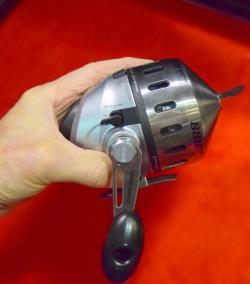
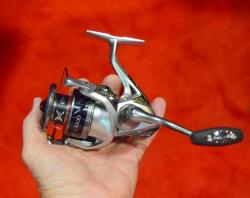
Best of Show – Freshwater Reel – Shimano American Corporation
Product: STRADIC C3000HG-K
Media Contact: John Mazurkiewicz jpmazurk@ameritech.net

Best of Show – Saltwater Reel – Pure Fishing, Inc.
Product: PENN Clash
Media Contact: Ron Giudice ron@blueherron.com

Best of Show – Fly Reel – Pure Fishing, Inc.
Product: New Pflueger Medalist Fly Reel
Media Contact: Ron Giudice ron@blueherron.com

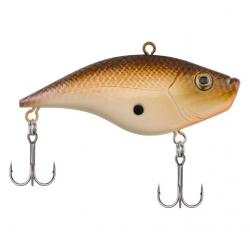
Best of Show – Hard Lure – Savage Gear
Product: Hard Shrimp
Media Contact: Brandon Cotton brandon.cotton@okumafishing.com

Best of Show – Soft Lure – Koppers Fishing
Product: LIVETARGET Hollow Body Sunfish
Media Contact: Tom Chopin tom@kopperfishing.com

Best of Show – Lifestyle Apparel – Under Armour, Inc.
Product: UA Storm Covert Pant
Media Contact: Eddie Stevenson eddie@driftwoodmedia.com

Best of Show – Technical Apparel – Lifeshirt
Product: Aegis Lifeshirt
Media Contact: Jim Emmons jemmons@lifeshirt.com

Best of Show – Boating Accessories – YETI Coolers
Product: YETI Hopper 20
Media Contact: Mike May mikemay@backbonemedia.com

Best of Show – Boats – eddyline kayaks
Product: eddyline C-135 YakAttack Edition
Media Contact: Tom Remsing remsing@eddyline.com

Best of Show – Combo – Lew’s Fishing Tackle
Product: Mach 1 Combo
Media Contact: Gary Dollahon gary@dollahonpr.com

Best of Show – Electronics –Johnson Outdoors
Product: Humminbird HELIX 7 SI
Media Contact: Jim Edlund jim@traditionsmedia.com

Best of Show – Eyewear – Costa
Product: Rooster
Media Contact: Liza Jones liza@fullcirclepr.com

Best of Show – Fishing Accessory – RinseKit
Product: RinseKit
Media Contact: Whitney Coombs whitney@verdepr.com

Best of Show – FishSmart – Release Ruler
Product: Freshwater Release Rulers
Media Contact: Neilson Paty neilson@jettyproductions.com

Best of Show – Fly Fishing Accessory – Simms Fishing Products
Product: G3 Guide Stockingfoot
Media Contact: Rich Hohne rhohne@simmsfishig.com

Best of Show – Footwear – Simms Fishing Products
Product: Current Shoes
Media Contact: Rich Hohne rhohne@simmsfishig.com

Best of Show – Giftware – YOLOtek Product:PowerStick
Media Contact: Christian Corley christian@yolotek.com

Best of Show – Kids’ Tackle – Steinhauser, LLC
Product: Tangle-FREE Combo
Media Contact: Ralph Duda rduda@lilanglers.com

Best of Show – Line – PowerPro
Product: Maxcuatro
Media Contact: John Mazurkiewicz jpmazurk@ameritech.net

Best of Show – Tackle Management – Eposeidon Outdoor Adventures, Inc.
Product: KastKing Rack ’em Up Rod Racks
Media Contact: Tom Gahan tgahan@eposeidon.com

Best of Show – Terminal Tackle – Eagle Claw Fishing Tackle
Product: Lazer Sharp Fillet Knife
Media Contact: Nickie Kiefer nkiefer@eagleclaw.com

ICAST 2016 will be held at the Orange County Convention Center, Orlando, Fla., July 12 – 15, 2016. For complete ICAST information, visit ICASTfishing.org.

###

The American Sportfishing Association (ASA) is the sportfishing industry’s trade association committed to representing the interests of the entire sportfishing community. We give the industry a unified voice, speaking out on behalf of sportfishing and boating industries, state and federal natural resource agencies, conservation organizations, angler advocacy groups and outdoor journalists when emerging laws and policies could significantly affect sportfishing business or sportfishing itself. ASA invests in long-term ventures to ensure the industry will remain strong and prosperous, as well as safeguard and promote the enduring social, economic and conservation values of sportfishing in America. ASA also gives America’s 60 million anglers a voice in policy decisions that affect their ability to sustainably fish on our nation’s waterways through KeepAmericaFishing™, our angler advocacy campaign. America’s anglers generate over $48 billion in retail sales with a $115 billion impact on the nation’s economy creating employment for more than 828,000 people.

Georgia’s World Record Bass

Bragging Rights – Georgia’s World Record Bass

On June 2, 1932 a Georgia boy made the cast heard round the world. That day 19 year-old George W. Perry took a day off from farm work because of fields too wet to plow and went fishing. He caught a 22 pound, 4 ounce largemouth, setting a record that has stood for 76 years. It is the best known fish record and millions of bass fishermen dream of beating it.

Perry was fishing in Montgomery Lake, an oxbow off the Ocmulgee River near Jacksonville, Georgia. After catching the fish he took it into town and was told about the Field and Stream big bass contest. The fish was weighed on official scales and notarized in nearby Helena, Georgia. The fish was 32 1/2 inches long and 28 1/2 inches in girth.

My father grew up just outside Jacksonville and knew the Perry family. He did not remember anything about the big bass since he was only ten years old when it was caught. Dad did tell me tales of fishing the Ocmulgee River and Montgomery Lake as a child. They were fishing for food, as was Perry. The world record bass was eaten after being weighed.

There is some dispute over the lure used to catch the record. Perry said he had only one lure and it was definitely a Creek Chub. The Historic Marker on Georgia Highway 117 four miles east of Jacksonville says the fish was caught on a Creek Chub Perch Scale Wigglefish. Perry states in a 1973 taped interview that he caught the fish on a Creek Chub Fintail Shiner.

A bass fisherman catching a new world record bass could parlay it into millions of dollars if promoted right. Texas has been trying to grow a new world record for years with their “Share A Lunker” program but have not been successful.

California produces some huge bass, too. Bass are not native but they have been stocked and are fed trout in many lakes. A monster bass was caught there two years ago that weighed over 25 pounds but it was foul hooked while bedding. The bass was let go without being officially weighed but pictures show an immense fish.

That bass was the target of three fanatical fishermen who dedicated their lives to catching it. It has a distinctive black spot on it and they called her “Dottie.” She was caught when she weighed 21 pounds, 11 ounces in 2003 and released. Then in 2006 she was foul hooked on the bed and weighed 25 pounds, 1 ounce.

Dottie was found floating dead this spring. She weighed 19 pounds when found, well under the record but she had probably spawned and also lost weight after dying. One of the fishermen who had been chasing her for years identified her and said he thought Perry’s record would probably never be beaten now.

For many years one of the biggest disappointments about Perry’s fish was the lack of a picture. A couple of years ago a relative of Perry’s found a picture and it’s probably the record bass. It shows an unknown man and a young boy holding up a huge bass. In the background of the picture there is enough detail to show it was taken at the Post Office in Helena where the bass was weighed.

Perry also mentioned other pictures of the fish in a 1935 letter to Creek Chub. If they exist they have not been found in the four years since the letter was discovered.

Perry’s record bass grew to its huge size in its natural habitat. Some say bass grown by biologists like in Texas or bass grown where they are not native like in California should not be considered for the record. In either case, someone has to make the cast that lands a bass weighing over 22 pounds, 4 ounces to beat our Georgia world record.

I hoped it would never happens. But a fisherman in Japan tied the record.

Georgis Bass Fishing At Night

Night Time Is The Right Time For Georgia Bass

“Cast over that way,” I told my partner. “If you hear a splash your bait is in the water, if you don’t hear a splash you are in a bush,” I added.

Why would anyone want to fish in the dark when you can’t see what lure you are using, can’t see how to tie a knot and can’t even see where you are casting? There are a bunch of reasons to bass fish at night here in Georgia this time of year. The most important to me is the bass are biting.

If you like temperatures in the 90s and broiling sun on your skin you will love day time fishing in Georgia in the summer. If you prefer to be a little cooler, try going after dark. No only is it more comfortable, most of the pleasure boaters, skiers and jet skis are parked.

For many years while I was teaching school I would go to my place on Clark’s Hill late in the afternoon on Sunday and fish until dark. At about 10:00 PM I would come in, take a shower, eat and go back out. After fishing all night I would try for the early morning topwater bite then hit the shower and bed by 9:00 AM and sleep the hot day away, repeating the process every day for a week.

I did this several times each summer. During that time I experimented a lot and found some patterns and baits that work for me. One of the bass clubs I am in fishes our July and August tournaments at night and I have done well in them, winning three of the past four night tournaments in July at Jackson Lake. Many people don’t like to fish at night but I love it.

You have to remember bass can see much better in the dark that you or I can. A bass’s eye can collect much more light than our eyes. They can find food in the dark with their eyes from star light and they can locate food with their lateral line even in pitch black dark.

If you fish at night key on two things – rocks and brush. I really like rocks because crayfish come out at night and feed on the rocks and bass are looking for them. Riprap and natural rock points and banks are both good.

Bass hold in brush at night and will hit a bait that comes close to them. I look for blowdowns and deep brush piles to fish in the dark. A lighted buoy is a good investment but you can tape a chemical light stick to your buoy to mark deep brush.

Brush around docks is excellent and it is even better if a light on the dock draws in baitfish. You can also see what you are doing. The only drawback, other than angry dock owners, are the bugs that the light attracts. They tend to fly to your face.

When fishing rocks and brush I use a black plastic worm Texas rigged with a light sinker or a jig and pig. Color really doesn’t matter in the dark but a black bait had a better silhouette against any light. Crawl the bait slowly along the rocks and brush, shaking it in place a lot. Rattles in the jig and worm help. You can not fish a bait too slowly at night.

Crankbaits and jigs also catch bass at night. I like a little light from the moon or nearby shore lights when throwing them. Fish both slowly and with a steady retrieve so the bass can home in on them. Keep both baits near the bottom unless fishing under a dock light. Color really does not matter much but I stick with black in both baits.

Give night fishing a try this summer. Put on some bug juice, keep your running lights on and catch some bass.

A Father Son Cross Country Trout Trek

Jeff and Asher Samsel

Jeff and Asher Samsel

Father-and-Son To Embark On Cross-Country Trout Trek
from The Fishing Wire

Adventure takes many roads, and if you’re lucky, one takes you to a trout stream. If you’re really lucky, you’ll get to share it with your children. Fathers often dream of big adventure with their kids, journeys that take them far from home while bringing them closer together. For many of us, though, work and obligations pile on, and before we know it, the child is grown. Outdoor writer and dedicated Southern trout fanatic Jeff Samsel is not letting that happen. July 20, he and his 10-year-old son Asher will embark on a 3-1/2-week expedition sure to provide high adventure and plenty of memories. The Samsels are living the dream of throwing rods in the car and heading west, intent on exploring legendary trout waters together. Father Samsel is doing it right, too, by plotting destinations but leaving the timing loose.

“Our route is far from exact,” the elder Samsel said.

He’s fished the scenic trout streams of the Appalachian Mountains around his Clarkesville, Ga., home for more than two decades, and visited many of the most famous trout waters in the country, but he designed this trip to focus on streams and rivers of the northwest. Their first stop, however, is an Arkansas stream that’s near and dear to his heart. Asher is the second Samsel son to accompany his father on fishing trips. Nathaniel, now 17, tagged along with Dad many times through the years, and often returned home to share with Asher the stories and pictures of the giant trout that swim in Dry Run Creek, a special regulation stream for anglers under the age of 16 and the handicapped.

Many of the Samsels’ Trout Trek stops are special regulation areas. Instead of fly fishing these mostly barbless hook areas, though, the pair will be fishing spinning rigs armed with barbless-hook lures designed for these waters by Rebel Lure Company. With a little ingenuity (and a pair of needle nose pliers), though, they also will be replacing regular treble hooks with the barbless variety for lures that don’t come “regulation ready” straight from the factory.

After Dry Run, the father-and-son head to Cabela’s worldwide headquarters in Sidney, Neb., to gather equipment for the trip, and then they’re off to Deadwood, S.D., to fish the rugged trout waters of the Black Hills. After Deadwood, they point the car west to make a big loop that takes them to the Olympic Peninsula in Washington and ends in Laramie, Wyo. Samsel estimates to travel nearly 8,000 miles from start to finish.

“We’ll be fishing eight different states. Many are places I’ve long dreamed about but have never seen,” Samsel said. “A lot of people have said ‘he’ll always remember that time with his dad.’ That’s true, but I think it’s just as true about me.”

And that’s what adventure is all about. You can follow this adventure through the blogs filed by both the elder and younger Samsel. The elder at www.rebellures.com and the company’s Facebook page, as well as the North American Fisherman website and Jeff’s own Facebook, Twitter and Instagram feeds. Get Asher’s viewpoint through his blog at ashersamselsblog.blogspot.com.

What Is the Georgia Sportsman’s License Incentive?

If you buy a hunting or fishing license, you help pay for Department of Natural Resources, Wildlife Resources Division (WRD) programs that support wildlife and fish improvement programs and enforcement of game and fish laws. If you buy any hunting or fishing supplies, you also support federal programs that do the same thing.

I have never had a problem with buying licenses since I know most of that money goes toward things I use and programs that I like. The cost is a user fee, a good way to have the people that use something pay for it. But even with license fees and federal taxes on equipment, there is not enough money for all the programs needed.

Unfortunately, not all the money brought in by those fees and taxes goes to the programs for wildlife and fish. In 2011, for example, license fees, taxes on hunting and fishing supplies and tax on gas for boats brought in about $135,000,000 to Georgia. But since that money goes into the general fund, our state legislators decide how much of it goes back to programs it should support. Last year the WRD received only $86,000,000 for all its programs, $49,000,000 less than we paid in.

There is a proposal to correct this problem. The “Sportsman’s License Incentive” would do several things to insure our fees and taxes go toward programs we need and support. And it would dedicate funds raised to those programs.

The first part of the proposal may not sound good at first glance. License fees in Georgia have not increased since 1992. At $10 for a hunting license, $9 for a fishing license and $9 for a big game license, they are an incredible bargain. For example, an Alabama resident fishing license is $12.85. Our license fees, even if doubled, would be well worth the cost if we knew the money would go toward WRD programs.

The proposal offsets an increase in license fees. When you buy fishing or hunting equipment you pay a state sales tax of 4% plus any local option sales taxes. If this incentive is passed in its proposed form, any holder of a Georgia hunting or fishing license would be exempt from the state sales tax.

That would probably save you money in the long run. For example, if the license fees double and you pay $56 for hunting, big game and fishing license rather than the current $28 you will spend an additional $28 each year. And that money would go to programs that you support.

If you buy a $5 fishing lure you would save only 20 cents, but how many lures do you buy each year? Buy a $100 rod and reel combo and you save $4. Buy a box of 30-06 cartridges for $25 and you save a dollar in taxes. Buy a $500 rifle and save $20. For me, and probably for you, it wouldn’t take long to more than make up for the difference. I probably buy enough plastic worms each year to come out ahead!

Sales taxes that would be exempt and therefore lost to the state under this proposal are a very tiny fraction of total state sales taxes collected. It would not impact state revenue very much but would have a big impact if the same amount is spent on WRD programs since those programs are funded at such a low level now.

The way it would work is you would show your Georgia fishing or hunting license when buying an exempt item and there would be no state sales taxes on it. That should encourage more people to buy a fishing or hunting license each year. And it would apply to a nonresident of Georgia buying an out of state license here, so it might encourage more folks from other states to wait until they came here to buy their equipment.

It would also put local businesses on a more competitive footing with internet and mail order sales. Companies not in Georgia that sell to Georgians are supposed to collect sales taxes and send them to Georgia, but many do not. That makes their products cost four percent less than the same item would cost locally.

In the proposal, almost all fishing tackle and supplies would be exempt, including rods, reels, line, terminal tackle, nets, life jackets and other things. It would also include boats and motors, both gas and electric, so those big ticket items would save you a lot in taxes if you plan on buying them.

Other fishing related items that would be exempt include pond fertilizer, fish food and fish feeders. You would also get a break on depth finders, GPS units, paddles and just about anything else related to fishing.

Bow hunters would get a break on all bow hunting equipment from bows and arrows to quivers. Gun hunters would not have to pay sales taxes on guns of any kind, bullets, tree stands, reloading equipment and supplies and scopes. Even folks that don’t hunt but would be willing to buy a hunting license would get bird feed and feeders without paying sales tax. And if you plant food plots for hunting or just to enhance wildlife habitat fertilizer and seeds would be exempt.

This proposal will be discussed between now and January, 2016 and hopefully a bill to make these changes will be introduced into the legislature at the beginning of next year.

Does the Federal Shark Management Plan Create Shark Sanctuaries and Cause More Shark Attacks?

Shark Sanctuaries
Rusty Hudson
from The Fishing Wire

Shark

Shark

(Editor’s Note: Here’s an interesting assessment of the flurry of shark attacks along the Atlantic Coast this summer, from a retired waterman with decades of experience not only as a harvester of sharks, but also as a consulting expert on the shark fishery for many federal panels. It’s heavy going, with a lot of acronyms, but those interested in really understanding the shark issue may find it instructive.)

The Unintended Consequence from Underfishing and Overregulation

I am Rusty Hudson, a shark specialist with personal experience in United States Atlantic shark fishing since the 1960’s and with Florida watermen heritage dating back several generations along the southeastern US coast. I provide, below, a historical time line and description of factors associated with shark fishery management policy that corresponds with evidence how U.S. shark attacks have increased.

US Shark Attack Graph: http://www.sharkattackdata.com/country-overview/united_states_of_america

During the late 1970’s, the US federal government began a preliminary shark fishery management plan (FMP) by the US Department of Commerce (DOC), the National Oceanic and Atmospheric Administration (NOAA) through the agency called the National Marine Fisheries Service (NMFS) that promoted and encouraged fishermen to land under-utilized marine species (e.g. sharks) for food.

The US commercial fishing industry followed the US government’s advice during the 1980’s to catch, land sharks and develop seafood marketing, domestically and internationally. The public demand for sharks increased in the US at this stage, but the NMFS failed to monitor the commercial coastal shark landings averaging up to fifteen million pounds dressed weight (dw) in the US exclusive economic zone (EEZ).

In the later part of the 1980’s, China, during Deng Xiaoping’s reformation period, increased demand for shark fin soup, one of eight traditional Chinese culinary treasures, as a result of increases in the newly affluent population. Shark’s fin values, and shark harvests worldwide, began to increase significantly into the 1990’s, due to increasing publicity.

Shark Fin Article: http://www.slate.com/articles/health_and_science/green_room/2011/06/sharkonomics.html

By the end of the 1980’s, the NMFS staff began an effort to develop an Atlantic Shark FMP involving the US EEZ area from Maine to Texas, and a portion of the Caribbean Sea region, including the US Territories of Puerto Rico, St. Croix and the US Virgin Islands. On April 26, 1993, the Atlantic Shark FMP final rule was published and the NMFS Highly Migratory Species (HMS) Management Division closed US Atlantic shark fishing on May 15, 1993.

During the early 1990’s, some scientists lobbied the state of Florida to consider a mercury warning resulting from the consumption of shark meat. Overnight, the sale of shark meat fell dramatically throughout the US (a result similar to the media-driven mercury scare over swordfish consumption during the 1970’s). After much mass media hype, the state of Florida and other states mainly established mercury advisories to pregnant women, yet the damage to US fish markets was significant as shark sales fell by more than half. Subsequently, the Atlantic Shark FMP became effective and resulted in additional reductions with coastal shark landings.

Shark fishing began to be negatively publicized in the news media, on television with quasi-science documentaries, and with anti-shark fishing media campaigns, sponsored by environmental non-governmental organizations seeking membership funding.

The Atlantic Shark FMP, in addition to restrictive coastal states shark fishing rules, has been creating what amount to US shark sanctuaries for decades. This has been a result of reliance upon questionable stock assessment results, long rebuilding plans, reduced quotas, lowering trip limits, prohibited shark species, limited access permits, choke species, minimum sizes and closed access for fishing regions.

Below is a timeline of major events that have significantly increased US Atlantic Large Coastal Sharks (LCS) populations near beaches, leading to more shark attacks in my opinion, and negatively interacting with numerous nearshore and offshore fisheries over the past decade in the US Atlantic and Gulf of Mexico regions:

1. In March, 1992, Florida limits commercial shark fishing in state waters to one large shark landed daily, and banned most shark fishing gear, except for rod and reels out to three-miles on the east coast and nine-miles on the Florida west coast. Subsequently, New Smyrna Beach, Florida became known as the “shark attack capital of the world” because of the shark sanctuary benefit from underfishing and overregulation. This area is just south of Ponce de Leon Inlet, and the attacks are mostly by blacktip sharks.

2. On April 26, 1993, the NMFS published the Atlantic Shark FMP final rule with a LCS quota of about 5.3 million pounds (dressed weight) closing Large Coastal Shark (LCS) fishing for 6 months that year [which has reoccurred almost every year], and the NMFS made shark finning illegal. Over two-thousand open access commercial shark permits were bought by fishermen, as required by the NMFS Atlantic Shark FMP new rules.

3. In January 1994 a commercial LCS trip limit of 4000-pounds (dw) was implemented to slow the harvest down; but the fishing season for large coastal species still only lasted about six months that year, and for many shark fishing seasons afterwards.

4. During April 1997 a 50% LCS commercial quota reduction final rule was published, and the NMFS stated that the reduction would not have a negative socio-economic impact. However, under federal court remand, the NMFS later restated that the quota reduction would have “a significant economic effect” on commercial shark fisheries and the ancillary businesses that depended on the LCS resource, which was reduced to nearly 2.6 million pounds (dw) annually.

5. A prohibited shark species complex was started in 1997, and expanded in 1999, but was not founded upon science-based stock assessments for these 19-shark species. Subsequently only one species, the dusky shark, has had a US stock assessment since, conducted during 2006, again in 2010, and an update assessment is scheduled for 2016.

6. During 1999, a limited access permit system was implemented that significantly reduced the US directed shark fishing fleet from Maine to Texas. The number of these limited permits originally issued has shrunk significantly, as they have required annual renewal over the last 15 years. A vessel owner has to purchase an existing shark limited access permit, either a directed or an incidental permit, to sell a shark for food.

7. Closure of areas to pelagic longline (PLL) fishing began during late 2000 into 2001, regulations that currently remain in place for the US Atlantic and Gulf of Mexico PLL fleets. A significant reduction of vessels with the swordfish/tuna fleet occurred in Florida, and elsewhere. The marketing of incidentally-caught sharks fell, helping to cause the pelagic and coastal shark stock populations to expand faster than expected.

8. For the 2003 shark fishing season, based on a new LCS stock assessment, the NMFS raised the LCS quotas up to almost 3.8 million pounds dw, nearly an additional million pounds.

9. Subsequently, in 2004, the NMFS lowered the LCS quota to about 2.2 million pounds dw, until shark dealers could be species specific with the shark identification when submitting landing reports to the NMFS. Since 2007, shark dealers must attend the NMFS special classes to renew their shark identification certificates every three-years.

10. Effective January 01-July 31, 2005 a habitat area of particular concern (HAPC), for the sandbar shark nursery and pupping area, was implemented offshore of North Carolina offshore to 55-fathoms of depth. This action helped enhance the shark sanctuary effect for juvenile sandbar sharks that are preyed upon by other adult shark species (e.g. bull sharks), which feed near the beaches, based on optimal environmental conditions, such as water temperature, that may attract and aggregate prey item forage fish.

11. The controversial 2006 LCS stock assessment by NMFS led to the lower 2008 sandbar shark quota and trip-limit changes for LCS fishing. Sandbar shark was limited to a small shark research fleet with 100% observer coverage, while a 33 non-sandbar LCS trip limit was implemented for the directed shark fishing fleet. This created a virtual day-boat fishery for LCS where landings became less than half as much by weight per trip when compared to the 4000-pound dw trip limit. The historical landings for sandbar sharks were about 38% of the total LCS catch, normally caught offshore, and other commercially important LCS, such as blacktip, bull, lemon and tiger sharks during many conditions are found in or near state waters, rather than just offshore in the US EEZ waters. Shark fins were required to be naturally attached to the dressed carcass until unloaded at the dock with this new NMFS HMS management regulation.

12. Beginning in 2013, the trip limit increased to 36 LCS to land quotas that total about 1.77 million pounds dw, though total LCS landings were 1.42 million pounds dw. The shark sanctuary regions continued to grow because the NMFS used some shark species (i.e. blacknose shark & large hammerhead sharks) as “choke species” to close down larger shark quotas before they were 100% harvested. This unintended consequence from underfishing has created in the US waters a rapid LCS and small coastal shark (SCS) population expansion.

13. The 2014 quotas was set at nearly 1.79 million pounds dw, though total LCS landings were only 1.33 million pounds dw. The 2015 LCS quotas totaled nearly 1.92 million pounds dw though final LCS landings from Maine to Texas will not be known to the public until 2016.

14. Commercial directed shark fishermen have reported, and US government independent shark surveys have documented for several years now, the extremely high catch per unit of effort (CPUE) that is occurring near shore and offshore. (Editor’s Note: A high CPUE means that those who participate in the fishery catch a lot of fish in a short period of time, which usually indicates an abundance of the target species, at least in the targeted area.)

NOAA Coastal Shark Survey 2012: http://www.nefsc.noaa.gov/press_release/2013/SciSpot/SS1309/2012survey.pdf

The NMFS Southeast Fisheries Science Center (SEFSC) claims they do not have enough funding, or NMFS analysts, to conduct shark stock assessments and have significantly delayed future science stock assessments for many shark species as a result. The tentative SEFSC schedule for reassessing sandbar shark has been delayed until 2020. Meanwhile, landings for sandbar shark, dusky shark and LCS species, in general, are setting new CPUE records that must be utilized in future stock assessments to indicate just how far ahead of schedule the rebuilding plans have come in 22 years of management.

15. Non-sandbar LCS fishing opened for the US east coast on July 01, 2015, though the North Carolina HAPC region out to 55 fathoms (330-feet) of depth will not open for shark fishing until August 1, 2015 as required, demonstrating how commercial fishing was not really part of the recent increase of NC shark attacks.

In my professional opinion, the decades of underfishing sharks has led to the unintended consequence of creating shark sanctuaries.

The American public are hearing about more frequent shark sightings and attacks along numerous US beaches. The expanding shark populations are negatively interacting with many US saltwater fisheries, causing large financial losses. These growing shark populations are the unfortunate evidence of how the US federal shark fishery has been poorly managed. The NMFS SEFSC inability to perform timely shark stock assessments is an unacceptable management decision that is negatively affecting the public and shark fishing interests who support sustainable LCS & SCS fishing removals from properly assessed coastal shark stocks.

Russell Howard Hudson is president of Directed Sustainable Fisheries, a commercial fishing support group in Daytona Beach, Florida. He is a retired recreational/commercial fishing captain, and has been deeply involved in coastal fisheries management as a volunteer consultant on a wide variety of federal research panels, particularly those involving shark management.

Tough June Tournament At West Point Lake

At West Point on Sunday 16 members of the Sportsman Club fished our June tournament from 6:00 AM until 2:00 PM. We landed 29 keeper bass weighing about 47 pounds. There was only one five-fish limit and three fishermen didn’t catch a keeper.

Kwong Yu won with three largemouth weighing 7.80 pounds. My four bass weighing 7.56 pounds was second, third was Raymond English with five at 6.83 pounds, Javin English was fourth with four at 5.89 pounds and Chris Davies won big fish with a 3.93 pound largemouth.

I was surprised at the number of largemouth weighed in. West Point is full of spotted bass and they are usually fairly easy to catch, but not Sunday! There were 12 largemouth brought in and four of them weighed over three pounds each.

Jordan McDonald fished with me and I had a very frustrating start. Nothing hit any of our baits at daylight the first place we stopped, a hump where I can usually catch a lot of spots as it gets light. The second place we tried Jordan got a nice largemouth but that was the only fish we caught on that rocky bank and point, another place where we usually catch a bunch of spots.

At 9:00 we were headed to the fifth place we wanted to fish when I noticed current moving at the bridge we went under. Current usually makes the fish bite, like it did at Bartletts Ferry last month, so I pulled in to a nearby point. Although we could see a big school of baitfish with bigger fish under them down 16 to 18 feet deep on the point they would not hit anything we tried.

After 30 minutes of trying to make them hit crankbaits, worms and topwater I got out my dropshot rig. That rig is a four inch worm on a small hook about 12 inches above a one-eighth ounce sinker tied on eight pound test line. You drop the rig to the bottom straight under the boat, keep the lead on the bottom, raise your rod tip to make the worm suspend and jiggle it slightly. Bass will often hit it when they won’t hit anything else.

I felt a slight weight as I jiggled the worm and set the hook, and yelled for the net. I could tell it was a good fish. I usually catch smaller fish on that rig but this turned out to be a 3.56 pound largemouth. We stayed there and thirty minutes later I got another hit and landed a two pound largemouth.

After another hour on that point without any more bites we tried another point. I missed a bite on a jig head worm then caught a keeper spot. Some fish were hitting on top out over deep water and I thought they were hybrids, but Jordan cast a jerk bait to one of them and landed a keeper spot.

After fishing that place and getting no more keepers we went to another point. As we fished it I saw more baitfish with fish under them, again down about 15 feet, and let my dropshot worm down to them and caught my fourth keeper, another largemouth.

That was it for the day. We tried several more places, including going back to the place I caught the first two, and the fish were still there but still would not hit.

Fishing can be tough right now and it is hot, but I would rather be fishing than anything else I could do!

How Does Florida Manage Barracuda?

Florida Barracuda one step closer to better management

Today’s feature comes to us courtesy the Snook & Gamefish Foundation—read more about this conservation group at www.snookfoundation.org.

Florida barracuda

Florida barracuda

By Mike Hodge
from The Fishing Wire

The barracuda is considered among the fiercest predators on the flats, yet the feisty fish has had little protection when it comes to bag limits in the state of Florida. That may change thanks to the Snook & Gamefish Foundation and other conservation organizations.

The Florida Fish and Wildlife Conservation Commission (FWC) took a big step last week toward establishing regulations to protect barracuda when it announced a proposal restricting recreational and commercial harvests of the fish.

During a public hearing in Sarasota, the FWC staff presented a draft rule to the commissioners, who will formally vote on the measure this fall.

The rule will create:

· a recreational and commercial slot limit of 15 to 36 inches

· a recreational daily bag limit of two fish per person

· a commercial vessel limit of 20 fish

SGF members and staff applauded the recent developments.

“These proposed regulations by the FWC show a deep commitment to protecting and ensuring the sustainability of a species that many people simply overlook, or call a ‘trash fish,’ ” said Mike Readling, chairman of the SGF’s Board of Directors. “As we know, every species is critical to the fine balance of our marine ecosystems, including the toothy ones with poor reputations. These new limits will go a long way toward curbing massive, unnecessary harvests of barracuda, and the Snook and Gamefish Foundation is proud and excited that our iAngler app was singled out by the FWC as one of the avenues to a scientific-based solution for the documentation of this species.”

The FWC, which has not done a formal stock assessment for barracuda, has encouraged fishermen to use the SGF’s Angler Action Program (AAP), an electronic logbook, to help monitor the population.

Photo: dan Decibel”Florida anglers are really lucky to have this commission and science staff,” said SGF Executive Director Brett Fitzgerald, who is particularly satisfied with Florida’s continued willingness to stretch the boundaries of conventional fishery management. “FWC has allowed FWRI to be very progressive, and they are willing to look into new solutions to old fishing problems. In this case, using recreational angler data from the AAP represents a huge shift in the culture of fishery science. Anglers truly are plugged in — directly — to the system. Now every fishing trip that is logged counts towards a brighter fishing future.

“What’s cool is, we didn’t set the system up to help specifically with ‘cudas. But here we are, contributing meaningful info for the protection of that species. And you can bet many more species will follow. The power to improve fishing is truly in our own hands. It’s an opportunity that is unprecedented and well earned by the anglers who have been faithfully logging in the AAP.

“We at SGF can’t say enough good things about the FWRI staff, from top to bottom. Their guidance throughout the AAP development process has been continuous and critical. It’s really an honor to share ideas with them and see the ideas come to fruition.”

Florida barracuda are fun to catch

Florida barracuda are fun to catch

Anglers in South Florida, the Keys in particular, have complained that barracuda numbers have declined in recent years, which prodded the Lower Keys Guides Association (LKGA) to launch the Save the Barracuda Campaign.

It took nearly two years, but the LKGA concerns have been addressed.

“Barracuda are amazing sport fish, and intricate part to the nearshore flats fishery of the lower Keys and Key West,” LKGA President Luke Kelly said. “When winter weather proves tough for other gamefish, barracuda fill the gaps providing great action on the shallows for the many travelers who find themselves south during winter. We at the LKGA are very happy to see the action taken by the FWC on this important issue.”

No one knows for sure why the South Florida barracuda population has appeared to be dwindling, but commercial harvests could be part of the issue. According to the FWC, commercial harvest of Keys barracuda has increased dramatically the past few years, from 10,000 pounds in 2011 to 50,000 in 2013.

Barracuda is considered an unregulated species commercially, meaning commercial fishermen can harvest as much as they want. Recreational anglers are limited two Cuda or 100 pounds, whichever is greater.

New regulations, if approved, should help, but Fitzgerald warned against complacency.

“We aren’t done yet,” he said. “This is a case where there is power in numbers. We anglers need to continue logging, continue recruiting new anglers into the Angler Action Program’s system. If we were to let this privilege slip by because we decided not to log, we’d really be doing ourselves a disservice.”

The final hearing on barracuda regulations will be held at the FWC Commission meeting in Weston (Sept. 2-3).

*photo credit: Image with ‘cuda and fly reel courtesy of Dan Decibel.