Two Lake Eufaula Tournaments

Every year I look forward to the Georgia Bass Chapter Federation Top Six tournament. I have missed only one of these tournaments since 1979 and have done well in some and not caught a fish others but I usually can’t wait to go.

In this tournament each affiliated club in Georgia sends a six man team to compete against other teams. The team members also compete individually. Back in the 1990s and early 2000s we always had between 90 and 100 teams competing. Recently the numbers have dropped to only 42 teams at West Point last year and 30 at Lake Eufaula this year.

I went to Lake Point state park a week ago last Tuesday to practice for two Lake Eufaula tournaments, the Top Six and for the Potato Creek Bassmasters tournament on the Saturday and Sunday on Eufaula before the Top Six on Monday and Tuesday. The folks at Lake Point were excellent and treated all the fishermen great. They seemed to want tournaments there, unlike Wind Creek State Park on Lake Martin where they seem like they would rather we not be there. And I had a good campsite at the park.

My trip started off as a disaster. The first place I stopped Wednesday morning I idled in water too shallow and sucked muck into my motor. I could run about a half mile before the heat warning on my motor went off.

Luckily I had called Russell Prevatt about a place I was fishing and when he called me back I told him about my problem. He gave me Mike Bice’s phone number. Mike had come to Lake Point and put a new lower unit on his boat last year.

Mike lives in Dothan and will come to lakes like Eufaula and Seminole and can do most repairs in the parking lot. I spent most of the morning getting back to the ramp and met Mike. He took my engine apart enough to get the mud and grass out of it. If you need work on your motor on the lakes in south Alabama and Georgia call Mike at 334-491-7546. He charged me $150 after driving three hours round trip and working on my boat for over an hours.

Thursday and Friday I fought the wind but the wind won on the lower lake. I never caught a keeper either day. But in one small creek a guy from Alabama was fishing across from me late Friday afternoon and we started talking. Suddenly he said “There’s a good one.” I looked over in time to see a nice bass jump. When he landed it he asked if I had a scale and we met in the middle of the creek where he weighted it. It was just over five pounds.

Saturday morning I went back to that creek and caught three keepers, two on a spinnerbait and another on a jig head worm, before lunch. Then about lunch time I landed two more, these on a Carolina Rig, to fill my limit that weighed 9.6 pounds. I never left that creek.

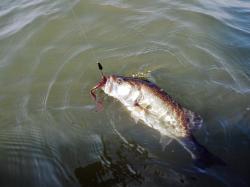
Sunday morning I went back to that creek. On my second cast, with a spinnerbait by a clump of grass about 20 yards from where I saw the five pounder caught Friday, I hooked and landed a five pound bass. I’m almost sure it was the same fish.

After catching another one on a spinnerbait and one on a Carolina rig things got real slow. Kwong Yu was fishing with me and suggested we go to the next cove at about 11:00 AM. I landed two more to fill out my limit before we had to quit, both on a Carolina Rigged lizard.

In the tournament I had 22 pounds for first and big fish was the five pounder. Lee Handcock was second with 22 pounds, Niles Murray was third with 18 pounds and Raymond English was fourth with 17 pounds.

I decided it was not worth running the 25 miles from Lake Point where the Top Six started to the creek where I caught them because of the wind. So the next morning I ran into a small creek near the park and on my tenth cast landed a 5.72 pound bass on a spinnerbait, a great start. My partner also caught a nice keeper.

But at 10:30 we had not caught another fish so we went to a small creek my partner wanted to fish. I caught a nice keeper on a jig and pig off some grass then, in the last hour we had to fish, I landed three more to fill my limit.

Since I was the eighth boat out that morning we had to go in first, and I was the seventh person to weigh-in. My 13.07 pounds for the day and my five pounder actually lead the tournament and I had big fish – for a few minutes.

Tuesday morning I was the eighth from last boat to take off so I did not even try to go back where I got the big one Monday. Instead, I ran to a creek a few miles away and quickly caught a keeper on a spinnerbait, then added two more. In another small creek around noon I caught a keeper out of a tree top on a spinnerbait then another on a jig and pig to get my limit.

The rest of the day I fished a jig and pig and caught two more keepers, one that culled an earlier catch. I ended up with five weighing over ten pounds.

I came in 15th out of 180 fishermen in that tournament with 25.63 pounds. Niles Murray came in 16th with ten weighing 25.05 pounds. The Sportsman Club finished 14th out of 30 teams. Both Niles and I qualified to go to the next level, the federation regional, by finishing in the top ten percent.

I am pleased at the outcome and am already looking forward to the Top Six at Hartwell next spring!

How To Find Fish

Follow the ‘Birds to find fish

Where to Fish (and How To Get There)
from The Fishing Wire

Big redfish

Big redfish

EUFAULA, AL (March 17, 2016) – Most honest anglers would tell you that every great day on the water is offset by countless days of head-scratching and asking questions like: “Where are they?” and “Where should I fish?” And to be completely honest, these questions are often peppered with a few choice expletives, because let’s face it, the process can be frustrating. It’s a dilemma that goes back to the first nets and lines cast into the water.

Decades ago, Ron and Al Lindner came up with the revolutionary F + L + P formula, which helped scores of anglers reach a new level of fishing success. In a nutshell, they taught how a combined understanding of your target species, location and presentation are the prerequisites for success. The system still holds water today.

Of these prerequisites, Location is often the toughest nut to crack. You can have a brain-full of fish biology and know how and when to throw every bait in your box, but if you can’t find fish, it’s all for naught.

Fact is, good fishing is a lot like buying commercial real estate: success hinges on location, location, location.

Old School Fish-Finding

Many of us remember the early days of fish-finding, learning how to repeatedly position our boats over fish-holding structure by triangulating off landmarks like a radio tower, a tall pine tree, or “that big red barn.” Or timing the distance travelled to our outboard’s speed, a water-logged paper map in our hot little hands, and eyes trained for red blips on a primitive flasher.

We also learned to study shoreline terrain and topography for clues of what might be underwater. And, during periods of low water, we took photos of rock and brush piles for future reference during high-water periods. We also kept our heads on a swivel for busting bait and birds, sentinels of the quarry we pursued. It was a ton of work! That all sound familiar?

This is why the advent of GPS is probably the most significant technological advance in fishing since the birth of the first sonar flasher. Now add new GPS-enabled technologies and our fish-finding arsenal becomes even more powerful. At the forefront of this brave new world is Humminbird’s suite of technologies, which allows anglers of all levels to find fish faster and easier than ever before. Here are a few examples from anglers around the country who use it day in, day out.

Catch a big crappie

Catch a big crappie

Mapping the Far North

With decades of guide experience under his belt, Fishing Hall of Famer Tom Neustrom has seen fishing technology come and go. But he’s bullish on user-generated lake mapping via Humminbird LakeMaster AutoChart Live. “It’s probably the single most important fishing tool to emerge since GPS. The fact that it comes standard in Humminbird HELIX 9, 10 and 12 CHIRP units is big news for anglers of all walks,” says Neustrom.

Legendary Minnesota guide Tom Neustrom says Humminbird’s AutoChart Live is “good for business.” He says he’s learning new patterns while simultaneously mapping and pre-fishing waters for client trips.

“When AutoChart Live came out, a lightbulb went off … this is going to crack the code of uncharted Canadian waters. Now I can create my own map in real-time, right on my Helix units. It helps me find, understand and get back to productive spots time after time. Cuts down on exhaustive looking, too.”

Case in point, this past fall Neustrom and wife Renee dialed in giant Rainy Lake crappies with the help of AutoChart Live. At nearly a quarter of a million acres, finding Rainy Lake fish can require more pre-fishing than your average lake. “Sure, it’s big water, but my system puts me on fish pretty quick,” says Neustrom.

“First thing I do is look at the lay of the land with Humminbird’s new Lake of the Woods/Rainy PLUS card, which gives me satellite imagery overlay on depth contours. Before I even leave the dock, I drop waypoints on the map, setting up a milk run of back bays and main lake points with adjacent deep water.”

Next, he idles over waypoints with Side Imaging, looking for massive schools of crappies. Once found, he positions directly over the fish with his HELIX 10 SI GPS set to 2D Sonar and Down Imaging in split screen view.

“In fall, crappies will set up on rock-to-mud transitions to feed on roaming baitfish or clouds of bugs that emerge out of the mud, both of which I can see on my sonar. If the red marks are stair-stepped I know the crappies are actively feeding,” says Neustrom.

Speaking frankly, he says AutoChart Live is good for business. “As a guide, your job is to get customers bit, so time is everything. With AutoChart Live I’ll go out to a new lake and map while I’m pre-fishing. It’s made a huge difference. I’m not only finding fish faster than before, I’m learning new patterns that translate to other waters.”

That’s especially good news for retailers: Once limited to ONIX units, anglers can choose units from the HELIX 9, 10 and 12 CHIRP families that best suit boat size, fishing style and budget, and still benefit from the ability to create maps in real-time with AutoChart Live, no PC, Cloud or server required.

Bulls By Satellite

Maps from Lakemaster

Maps from Lakemaster

1,500 miles south of Neustrom, pro redfish anglers “Cajun” Phil and Kevin Broussard are putting another brand-new Humminbird product through the paces deep in Louisiana’s backcountry.
That new tech is Humminbird’s Louisiana Delta v.1 card, which provides unprecedented high-resolution satellite photography of the Louisiana Delta on one micro card (with SD adapter). Anglers get real-life aerial views of shorelines, waterways, landmarks, obstructions, roads, marinas, canals, and channels. Also includes navigation aids, lake names, points of interest and more, visible right on the chart view of Humminbird units.

“Kevin and I got the new product and right off the bat, we loved it. Super-bright readout on our HELIX units, even in the sun. We’ve used it all across the state of the Louisiana: Houma, Delacroix, Shell Beach, into the Biloxi Marsh and beyond. Incredible detail and accuracy that eliminates a lot of guesswork,” says Cajun Phil.

In practice, the card helps Phil and Kevin bee-line to virtually unexplored big redfish waters nearly impossible to reach with standard paper maps. “The LakeMaster aerials show us which inlets are going to get us in and out to these little ponds; eliminates running down dead-ends and having to back all the way out. And when you’re back in these little ponds, it shows you the true cuts. And man, some of these spots hold redfish that likely hadn’t ever even seen a lure …”

Florida: Inshore and Off-Shore

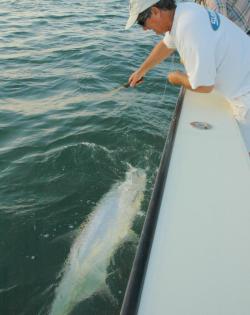
Releasing a fish you dont't want to eat

Releasing a fish you dont’t want to eat

Meanwhile, in Florida’s big redfish country, Sarasota-based pro angler and guide Captain Geoff Page is similarly excited by what Humminbird’s doing.

“I’ve been blown away by the HELIX 10 SI GPS I installed in my Pathfinder. Big, bright display plus the power of AutoChart Live. And having fished in Louisiana with Humminbird’s new aerial imagery card, it’s gonna be a big deal with our light-tackle inshore and off-shore structure fishing,” says Page.

Fishing inshore, Page typically chases snook, redfish and flounder near flowing water or in backcountry bays. “Other than shipping channels and deep intercoastal waterways, we fish a lot of 4-6 feet, even less. It’s about the edges of shallow water. Only a foot difference can be a fish magnet. Over a year many of these areas will change: where water was running may be a sandbar now. If I’m blowing through shallow areas – especially at low tide, I need to know that my data is dialed-in. You can see how this will be an even bigger deal to guys who don’t get out on the same waters every day.”

Florida’s Captain Geoff Page is impressed with the brightness of the Humminbird HELIX 10 screen in full sun, and the power of AutoChart Live gives him to dial in on fish-holding spots and navigate ever-changing inshore waters.

He adds: “From a navigation perspective, Humminbird’s AutoChart Live is data that I know I’ve collected, so I have a high confidence that it’s accurate and it was done right! Technologies like AutoChart Live help me stay on what’s happening.”

Like the Broussard’s search for isolated redfish ponds, Page keys in on difficult-to-reach back bays: “I look for oyster bars and shallow areas with deep waters behind them. But you have to navigate through some shallow water areas to get there. Tides are lower in winter due to predominant north winds, and that only adds to the challenge. That’s the power of Humminbird’s aerial imagery over regular charts.”

But Florida is more than stellar inshore fishing, it’s got some serious off-shore haunts as well. Equally passionate structure anglers run a few miles into Gulf of Mexico, chasing grouper and red snapper in 28-foot center consoles or Contender-type boats up to 40 feet.

“The Gulf can be a desert for miles, then you hit one area of bottom change and fish are everywhere. Now, with AutoChart Live, you can map while you’re running and discover new areas, like sharp ledges or hard-bottom edges, where structure guys jig or troll plugs.”

Thanks to these technologies, Page says Humminbird is rapidly gaining ground with offshore anglers who once associated the brand with freshwater bass fishing. More anglers are discovering Humminbird’s ability to map in real time, giant bright displays, touch screens, MFDs like ION, plus CHIRP in HELIX, ONIX and ION—not to mention intuitive navigation features.

“There’s a real shift going on,” says Page.

Fact is, from the Canadian Shield to the Gulf of Mexico, anglers are still following ‘Birds to find and catch more fish. Some things never change.

For more information visit humminbird.com, contact Humminbird, 678 Humminbird Lane, Eufaula, AL 36027, or call 800-633-1468.

About Johnson Outdoors Marine Electronics, Inc.
Johnson Outdoors Marine Electronics, Inc. is a wholly owned subsidiary of Johnson Outdoors and consists of the Humminbird®, Minn Kota® and Cannon® brands. Humminbird® is a leading global innovator and manufacturer of marine electronics products including fishfinders, multifunction displays, autopilots, ice flashers, and premium cartography products. Minn Kota® is the world’s leading manufacturer of electric trolling motors, as well as offers a complete line of shallow water anchors, battery chargers and marine accessories. Cannon® is the leader in controlled-depth fishing and includes a full line of downrigger products and accessories.

Georgia and Alabama Lakes Fishing Reports

Check out these weekly updated reports for selected lakes in Georgia and Alabama Lakes Fishing Reports:

Lake Guntersville


Clarks Hill/Lake Thurmond

Lake Lanier

West Point

Allatoona

Russell

Hartwell

Seminole

Eufaula/Walter F George

Weiss

Sinclair

Oconee

Jackson

If any guides or fishermen do weekly reports and would like them published on my site please contact me: ronnie@fishing-about.com

How Do I Make Smoked Salmon and Trout

Smoked Salmon and Trout On a Budget

Use your “freezer fish,” and avoid fishmonger sticker shock!

By Andy Lightbody and Kathy Mattoon
Photos by Kathy Mattoon
from The Fishing Wire

Depending on where you live, it seemed like a long and cold winter, where cleaning out the freezer of last season’s salmon and trout fillets just wasn’t in the cards. Now that most of the “arctic blasts” are over, it’s time to start reliving some of last year’s great angling memories and making room for some of the fresh fish from springtime adventures that are just around the corner!

Little Chief

Little Chief

It’s time to clean out the freezer and turn those fillets into great eating and economical smoked trout and salmon. Instead of $26-$60 a pound for questionable quality, the Little Chief smoker let’s you make “great eats” for pennies on the dollar.

The big bonuses for doing some “refrig-rummaging” is that not only are you going to win a few points from your significant-other and cleaning out the freezer, but you’re going to turn out some mouth-watering smoked fish and likely discover new neighbors and friends that you never knew you had before.

Many of us live in areas where smoked salmon and trout are not something you can find at the local grocery store, or even a fresh fish mart. For many, it’s a treat and delicacy that can be only found by ordering on the Internet, and often times with less than delicious results. Do a quick computer net search and it is not uncommon to see smoked salmon selling for $26-$40 a pound, and rainbow trout at $60 a pound. Add in shipping and questionable eating quality, and I have very few friends that I want to spend that kind of $$$$ on!

Instead, of suffering from credit-card-sticker-shock, it is drop dead easy to make it yourself for literally a few pennies on the dollar.

Begin by defrosting your trout or salmon fillets. Ten pounds of fillets are going to smoke, dry and end up producing about 3-4 pounds of smoked fish when finished. If you want to take the fillets and turn them into jerky instead of moist fish bites, all you do is follow this same recipe and just increase the drying time until the fillets have about 90 percent of the moisture reduced. Ten pounds of fish fillets will turn into around 1 pound of jerky.

In order to keep everything as simple as possible and easy to prepare, our top choice for the brining process is the Smokehouse Trout & Salmon Brine Mix (www.smokehouseproducts.com). It’s a prepackaged, premixed combination of salt, sugar and flavorful spices that mix up with 2-quarts of water and can be used for up to about 15-pounds of fillets. If your fillets are more than ¾ of an inch in thickness, use a sharp knife and do some simple cross-cuts laterally on the flesh-side of the fish. This increases the surface area of the fillet and allows it to better absorb the brine and spices.

Smokehouse Trout & Salmon Brine

Smokehouse Trout & Salmon Brine

The Smokehouse Trout & Salmon Brine Mix is prepackaged, premixed with salt, sugar and spices, and ready to use with 2-quarts of water. One box will do up to 15 pounds of fish and marinates your fillets in the refrigerator overnight or up to 24 hours.

Once mixed, fish and brine are put in a glass bowl or small plastic bucket and allowed to marinate for 8-12 hours. Even 24+ hours of brining won’t hurt a thing, and we often throw the bucket in the refrigerator and let it soak overnight. The real chemistry behind brining is actually pretty simple. All fish, poultry and meats already contain salt water. By immersing and soaking them in a liquid with a higher concentration of salt, the brine is absorbed into the meat. Whatever spices and flavors that are in that brine are absorbed as well.

After marinating, gently rinse the fillets and lay them out on your smoker rack to air dry for approximately 1-hour. As always, spraying the racks, even the supposedly “non-stick” types, with a non-stick spray or wiping the surfaces with vegetable oil will keep the fillets from sticking while smoking and drying.

Smokers are as much a personal choice and preference as trying to suggest what make/model of car is your favorite. For home-use, ease and affordability, there is little question as to why the Smokehouse Big Chief or Little Chief electric smokers (www.smokehouseproducts.com) reign supreme. They’ve been around since 1968, are easy to operate, provide constant temperatures and turn out “great eats.” Virtually everyone we know began their smoking-careers with one of these!

Regardless of your smoker choice, the idea behind all smoked fish is to dry/dehydrate and add flavor, without turning it into a high-temp oven. Low, slow and with temperatures of 165 degrees F to no more than 200 degrees F is the key to success.

With the fillets on the racks, you’re ready to add your personal touch and “flavor profiles.” Once brined, some folks like to just use the flavor from the wood smoke. Others want to go with Cajun, Lemon/Pepper, Chili, Mexican, Teriyaki, Dill, Rice Vinegar, and Hoisin or seasoned-salt options. Here is where you are limited only by your imagination!

Into the smoker, and our favorite wood flavor is Alder, because it is a light wood and delicate. For a sweeter touch, try apple chunks or chips. If you want to go bolder, try cherry, mesquite or even hickory. As with all smoking of fish or game, too much and it becomes overpowering and equates to eating a charcoal-briquette offering.

Alder wood chips

Alder wood chips

Alder wood chips or chunks are the favorite for making your own smoked trout and salmon. Three or four three pans of chunks/chips will add a light smoke flavor without overpowering the delicious taste of the fish.

Our best results are from using 3-4 pans of wood chips (one immediately after the other) in total. Each pan of chips will burn/smolder/smoke for approximately 45 minutes, so you are actually smoking the fillets for about 3 hours, and they should start to turn a light golden brown as the smoking process continues.

After the smoke, simply use the heat from your smoker to finish the fish, which can vary greatly, depending upon outside temperature, wind conditions and even air humidity. Based on those outside weather conditions, your smoked fillets will be ready in anywhere from 3 ½-8 hours. At this point, the fillets can be brushed with additional Teriyaki, honey, Hoisin, soy sauce, etc. Just keep checking them periodically and dry them till they are done to your taste and texture.

Once smoked and prepared to taste, remove the fillets from the racks to prevent sticking and let them final cool/ air dry for an hour. This however is the most difficult part of the entire process, for you’ll be guaranteed that the temptation to taste, sample or simply eat will be virtually overwhelming. If there are any left to save for later, zip-lock bags and into the refrigerator will let them last up to a week or more. Put into vacuum sealed bags and placed into the freezer, they will last for many months and simply need to be defrosted when ready to eat.

Our rule of thumb is… if you think you made enough, you probably will soon discover that you should have doubled the recipe. Bon appétit!

March Offers Peak Fishing

March offers peak fishing for many of Florida’s freshwater fishes!

Florida Fish Busters’ Bulletin March 2016

By Bob Wattendorf
from The Fishing Wire

Throughout the southeast, freshwater anglers await early spring fishing, not just because of the glorious weather but also because the majority of sportfish are beginning their spawning patterns. The TrophyCatch (TrophyCatchFlorida.com) program clearly shows that submissions of bass heavier than 8 pounds, which are caught in Florida, documented and released, peaks each March. This is similar to other sunfishes, which are in the same family of fish as bass and include bream and crappie.

Although February to April are prime spawning periods for these sunfishes, anglers and scientists both know the lunar cycle and weather also play key roles.

Credit for the Solunar Theory goes to John Alden Knight, the author of “Moon Up … Moon Down.” In 1926, he considered folk lore that he picked up while fishing in Florida and decided to evaluate 33 factors, which might influence behavior of fresh or saltwater fishes that caused them to be periodically more active. Of those, three were influential: sunrise/sunset, moon phase and tides. From that effort, this avid fly fisherman created the Solunar Theory (Sol = sun, and Lunar = moon), and published the first Solunar Tables in 1936. These tables are still widely published. In fact, numerous programs, apps and even digital watches use them.

To substantiate this theory, Knight considered the timing of 200 record catches, and found that more than 90 percent were made during a new moon (when no moon is visible). During a new moon, both bodies are in near-perfect rhythm, traveling the skies together with their forces combined. So you may want to consider being at your favorite fishing hole mid-morning on the 8th and 9th of March.

However, other factors can affect the predictive ability of solunar tables. For instance, you should consider local weather patterns. Barometric changes, especially a downward trend, can often ruin fishing. Fish and wildlife have an innate ability to predict weather and react accordingly. If the barometer is steady or rising and air temperature is approximately 15 degrees Fahrenheit higher than water temperature, a more active response to a solunar prediction can be anticipated.

Temperature is also associated with spawning times and can be a key factor in the seasonal patterns with which freshwater fish are sought. Black crappie, for instance tend to spawn when water temperatures are between 62 and 65 degrees Fahrenheit, and are the earliest sunfishes to spawn. Redbreast sunfish come in around 60 to 82 degrees, so although they start early, they have a longer spawning season than many. Most bass will bed when the water is between 62 and 75 degrees, and they can spawn multiple times per season. Redear like 70- to 80-degree water, and bluegill follow along between 75 and 85 degrees. Of course, none of these temperatures, moon phases or weather patterns can totally predict either spawning or feeding behaviors, but together they are good indicators that point to spring being a great time to be out fishing on Florida’s fresh waters.

By going to TrophyCatchFlorida.com anglers can register, submit bass over 8 pounds that they catch and release, along with a photo of the entire fish on the scale to earn great rewards, starting with $100 in Bass Pro Shops gift cards. Anglers can also examine trophy catches from around the state. Once registered, people can also submit any of 32 other species of freshwater fishes to the Big Catch program, by just exceeding the qualifying weight or length and earn a certificate.

The FWC encourages you to get outdoors and enjoy freshwater fishing this spring. Remember that if you are between 16 and 65 you most likely need a fishing license (to purchase one visit GoOutdoorsFlorida.com), and even if you aren’t required you can join the many anglers who say “I DO” support fish and wildlife conservation by purchasing a license. All fishing license revenues go to the FWC to conserve the resource and enhance your fishing and boating opportunities. Moreover, every new license purchase helps recover more money from the federal government for Sport Fish Restoration projects in Florida (see FloridaFishingLicenseCampaign.com).

Instant licenses are available at GoOutdoorsFlorida.com or by calling 888-FISH-FLORIDA (347-4356). Report violators by calling 888-404-3922, *FWC or #FWC on your cell phone, or texting to Tip@MyFWC.com. Visit MyFWC.com/ and select “News,” then “Monthly Columns,” or bit.ly/FishBusters for more Fish Busters’ Bulletins. To subscribe to FWC columns or to receive news releases, visit MyFWC.com/Contact.

Restricting our rights does not protect the law-abiding

I had to “Laugh Out Loud” when I saw an editorial from the Atlanta Constitution reprinted in the Griffin Daily News on Friday, March 4 and saw it had to do with guns. The editorial board of that paper has never heard of any kind of gun ban or control law they didn’t support and they have opposed any kind of law that lessened any restriction of our 2nd Amendment rights.

The editorial was about the proposed law doing away with the restrictions of anyone over 21 years old who have passed a fingerprint background check and have a Georgia Firearms License to possess a gun on college campuses. I knew without reading it they opposed that law, and that they would make wild claims that have never come true anywhere the citizens have a right to carry on campus.

That editorial board ignores the fact you can’t get a Georgia Weapons License unless you are 21 years old and have to get a fingerprint background check. They ignore the fact that criminals see “gun free zones” as free fire crime zones where only they have guns. And they ignore the crime sprees caused by this on many Georgia college campuses.

It is not even safe to go to the library on the Georgia State campus because of all the robberies there. And why would the criminals worry – nobody is around to stop them and protect themselves or any other innocent folks.

Although they claim in the editorial to know the 2nd Amendment is a right, they support any effort to restrict it. I wonder if they would have the same attitude toward the 1st Amendment.

Laws do not affect criminals. Restricting our rights does not protect the law-abiding.

High-Water Trout on the White River

River Rigging for High-Water Trout on the White River

White River Trout

White River Trout

Winter is an outstanding time to catch big trout from the White River, and high water normally lends itself to casting lures like the Rebel Tracdown Minnows that we would be using.

by Jeff Samsel

The flooded signs at the Wildcat Shoals access made it immediately clear that this trip to Arkansas’ White River would be unlike any other I had experienced. With all eight turbines at Bull Shoals Dam running around the clock and 10 floodgates open, the river was rocking, to say the least.

Winter is an outstanding time to catch big trout from the White River, and high water normally lends itself to casting lures like the Rebel Tracdown Minnows that we would be using. When you’re talking about floodwaters, though, the fish tend to hold tight to the bottom in any eddy they can find, and they won’t move very far to feed. Even with sinking lures, traditional casting strategies simply don’t get the lures down enough in the strong current.

Guides on this highly dynamic tailwater must continually adjust for conditions, and long-time guide Donald Cranor figured out exactly how to cope with the excessive water. For three days our group drifted over gravel bars and along the edges of grasslines and pulled Tracdown Minnows on “river rigs,” which kept the lures swimming just off the bottom and among the fish.

“That’s where the trout are when the water is like this, so that’s where you want your lure,” Cranor said.

A river rig is essentially a three-way rig, pegged with a 3/8-ounce bell sinker. White River guides routinely use this rig to drift with bait, but Cranor proved that it also works exceptionally well for delivering a minnow-style lure just off the bottom. Guides use an Albright knot to attach a leader to the main line so one end drops about a foot to the weight, and the other end, which is about 3 feet long, leads to the bait or lure. A small three-way swivel and two sections of leader could also be used.

We had excellent success with 2 ½- and 3 ½-inch Tracdown Minnows, including slender-profiled Tracdown Ghost Minnows, mostly in trout color patterns and in blue back/orange belly.

The TD47 Tracdown Ghost Minnow comes with barbless hooks, so it was the main tool we used for fishing a highly productive special regulations area, where only artificial lures with barbless hooks may be used. A good strategy, if an angler wants to spend some time in the special regs area and some time in general waters, is to have two rods set up with river rigs and a barbless Tracdown Ghost Minnow on one and a regular Tracdown Minnow on the other.

Cranor suggests a simple presentation for dragging a minnow lure on a river rig. “You can work it a little with tugs, just to make the lure flash, but often the best thing to do is just hold the rod still let the lure do the work,” he said.

As the White River gradually settles, casting the same Tracdown Minnows to the shore and working them with jerks and pauses will be extremely effective for brown and rainbow trout.

The Bull Shoals tailwater offers approximately 100 miles of trout water and year ’round action, with two distinctive trout fisheries. Rainbows are managed as a put-and-take fishery, with year-round stockings of nearly 1.5 million fish annually.

Brown trout enjoy excellent reproduction, and the population is managed as a trophy fishery. The daily limit is one fish, with a minimum size of 24 inches, and anglers mostly release trophy browns that would be legal to keep. Spawning areas are also protected with special regulations, including a total seasonal closure of the most important spawning area, immediately below Bull Shoals Dam.

Fishing with minnow-style lures produces excellent numbers of brown trout measuring from the mid-teens to low 20s, and any fish that grabs a lure in the White River could turn out to be a brown trout that weighs 10 or 20 pounds (or much larger).

Planning Information:

Guided Fishing, Cranor’s Guide Service – www.whiterivertroutfishing.net
Riverside Lodging, Cedarwood Lodge – www.cedarwoodslodge.com
Rebel Lures, www.rebellures.com

Good Day Fishing West Point Lake

To mangle an old saying “Spring has sprung, the grass has riz, I wonder where the basses is.” My trip to West Point last week with Mike Morris helped me answer that question in the Flint River Bass Club tournament last Sunday.

In that tournament fishing West Point Lake 11 members and guests brought 22 keepers to the scales that weighed about 51 pounds. There were four five-fish limits and three fishermen didn’t have a keeper. We had 11 largemouth over 14 inches long and 11 spots longer than 12 inches.

I got real lucky and landed five bass weighing 16.53 pounds and my 6.69 pound largemouth was big fish. Travis Weatherly was second with five at 9.63 pounds, Niles Murray placed third with five at 9.23 pounds and chuck Croft rounded out the top four with five weighing 6.70 pounds.

Tyler Gruber fished with me in the youth tournament and got first place and big fish in that tournament. All our club tournaments are also youth tournaments and they compete against each other, not the adult club members. There is no entry fee for them.

We didn’t know that the West Georgia Bass Club, a team tournament trail, had a tournament that day with 149 boats in it. We started at 7:00 and they started at what the tournament director thought was safe light, about 6:45. While we were waiting to take off we heard boats start running down the lake and they continued to come by until about 7:15.

I got real disappointed when a boat in that tournament pulled up on the point I had planned on starting on a few minutes before 7:00. I got even more frustrated when I saw them catch two keepers before we even started! But I went to Plan B and it worked out.

I started on a danger marker near where we launched and landed five keepers by 8:00, including a spot weighing almost three pounds and a five pound largemouth. That made me feel pretty good but I kept fishing hard. But by 1:30 I had caught only three small spotted bass, not big enough to cull anything I had.

At 1:30 I pitched a jig to a log in about three feet of water, felt a thump and fought the big one to the boat. Tyler did a good job netting it and I really felt good. They I lost a three pounder a few minutes later to bring me back down a little.

In the past month I have fished three tournaments at West Point. In the first I didn’t catch a keeper, in the second I landed three for eighth place then had the good day Sunday. I will never figure out why I can’t be more consistent. But I would rather have highs and lows rather than be consistent with all lows!

The bass were on the same pattern that Mike Morris showed me, the same one I have been fishing for a month. I did not catch any keepers on the places he showed me for the article but I went to similar places where I have caught bass in past years, and it worked.

A lot of folks were fishing for crappie and they should continue to bite good for the next month or so. And bass will bite better and better as the water warms. It is a great time to go fishing.

Batteries Ready For Spring?

Are Your Lead-Acid Batteries Ready For Spring?

Hibernation isn’t a restful sleep for 12V batteries. As many seasonal boaters unfortunately discover in the spring, it can be a nightmare.

Check your batteries

Check your batteries

If owners haven’t used a battery charger or maintainer with Pulse Technology over the winter storage period, they can anticipate sluggish or dead batteries during the spring equipment thaw out.

All batteries, regardless of their chemistry, will self-discharge when not in use. The rate of self-discharge for lead-acid batteries depends on the storage or operating temperature. For example, a 125 AH battery that is stored for four months (16 weeks) during winter months without being charged or maintained will lose 80 amps of its 125-amp capacity. The battery will also suffer from severe sulfation buildup, inhibiting the plates from accepting and distributing a charge.

As good as lead-acid batteries are they all suffer from the same main failure mode‹80% of all lead-acid batteries fail due to the damaging effects of sulfation build up. If left unmanaged, sulfates found in the electrolyte will crystallize and root onto the battery plates and eventually result in premature battery failure. This is especially true with seasonally used boats and vehicles with short run times and high key off parasitic loads.

All lead acid-batteries consist of two flat plates‹a positive plate covered with lead dioxide and a negative made of sponge lead‹that are immersed in a pool of electrolyte (a combination of sulfuric acid (35%) and water solution (65%). Electrons are produced from the chemical reaction producing voltage. When there is a circuit between the positive and negative terminals, electricity begins to flow, providing connecting sources with power.

A lead-acid cell produces voltage by receiving (forming) a charge of at least 2.1 volts/cell from a charger. Known as Storage Batteries, lead-acid batteries do not generate voltage on their own/ they only store a charge from another source. The size of the battery plates and amount of electrolyte determines the amount of charge lead acid batteries can store.

Storage capacity is described as the amp hour (AH) rating of a battery. In a typical lead-acid battery, the voltage is approximately 2 volts per cell, for a total of 12 volts or a rating of 125 AH, which equates to the battery’s ability to supply 10 amps of current for 12.5 hours or 20 amps of current for a period of 6.25 hours.

Those who didn’t use a battery charger or maintainer over the winter months will typically discover a discharged, heavily sulfated battery when they go to use their boats in the spring.

To bring those batteries back to peak performance condition, PulseTech Products Corp., a national manufacturer of battery maintenance and charging products, recommends the following checklist:

* Give the battery case a quick clean to remove any dirt from the outside case.

* Clean terminal posts and make sure they are free of any corrosion. If significant, clean the terminal posts with a small wire brush to remove sulfate deposits and use dialectic grease or corrosion inhibiting spray to minimize future corrosion.

* Make sure the electrolyte levels are high enough. If levels are below the maximum line add distilled water (not tap water) up to the line. Not all batteries have a maximum fill line. If that’s the case with your battery, simply fill to 1/8² below the ring o plastic that extends into the cell. Never overfill the battery.

* Use a battery tester to ensure the battery has a minimum charge of 12.6 volts. If the charge is below that level you will need to charge the battery in a well-ventilated area. To ensure best performance use a smart charger featuring Pulse Technology for a week or more to dissolve the capacity robbing sulfates so the battery can be fully charged and retail full capacity.

* Not all batteries can be totally recovered. If a battery has a short circuit or physical damage, it is impossible to bring back.

About PulseTech Products Corporation
www.pulsetech.net

Maximizing battery performance while minimizing battery-related expenses for individuals, companies, fleets and military forces since 1994, PulseTech offers a full line of products that will help protect the environment from the hazards of lead waste from discarded lead-acid batteries.

Should I Use A Bait That Makes Noise to Catch Walleyes?

Make Some Noise to catch walleyes

Get loud, catch more walleyes

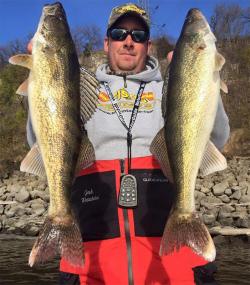
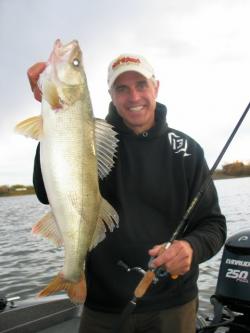
Anglers across the Walleye Belt keep commotion to a minimum to avoid spooking skittish walleyes. But there are times when silence isn’t so golden. In fact, making a little noise can often help you catch more fish, year-round.

“We’ve been taught that stealth is critical to success, but there are many situations where using sound to attract walleyes can increase your catch rates,” says veteran guide and tournament champion Scott Glorvigen.

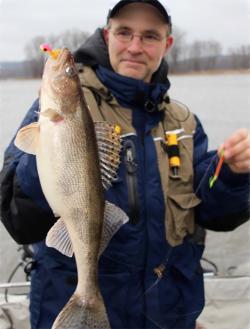
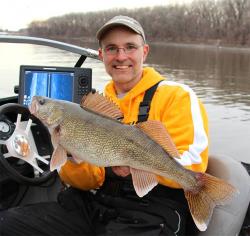
Nice Walleye

Nice Walleye

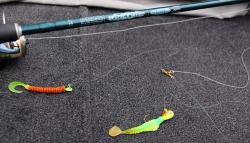
To be clear, he doesn’t advocate creating a clamor of cataclysmic proportions. “Dropping an anchor on the bottom of an aluminum boat isn’t going to make the walleyes come charging in,” he laughs. “But the judicious use of rattles inside spoons, crankbaits and other presentations can call fish from a distance.”

Glorvigen likens the art of using fish-attracting rattles to calling game in other outdoor pursuits. “When I duck hunt, I use a call to bring the birds into my decoys,” he explains. “And a rattle bag or antlers are standard gear for serious whitetail hunters hoping to rattle up a big buck.”

 Rattling Spoons Walleye

Rattling Spoons Walleye

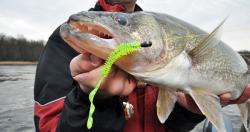
Rattling spoons attract a variety of gamefish including jumbo yellow perch, walleyes, pike and more.

In a similar manner, he says rattling lures pique a wandering walleye’s curiosity and encourage it to move in for a closer look.

Such tactics aren’t new, of course, but they’re still underutilized among the vast majority of walleye anglers. “Especially in the open-water period,” he notes. “But even in winter, people don’t take full advantage of how a rattling spoon or lipless rattlebait can bring in walleyes from the surrounding area.”

Besides luring fish within visual range of your wares, Glorvigen says rattling tends to attract the most aggressive ‘eyes in the neighborhood. “The ones that are most active and likely to strike,” he adds.

“And even if they don’t hit the noisy jigging presentation, incoming walleyes will often slam into a more sedentary bait positioned a few feet away, like a live minnow on a dead rod,” he continues.

Northland Buck-Shot Flutter Spoon

Northland Buck-Shot Flutter Spoon

Northland Buck-Shot Flutter Spoon

Glorvigen has been a firm believer in the power of sound ever since watching Northland Fishing Tackle founder John Peterson use a prototype of the Buck-Shot Rattle Jig during an In-Fisherman Professional Walleye Trail tournament years ago.

“We were up on Lake of the Woods, and John absolutely put on a clinic, catching fish after fish amidst a crowd of other anglers who were struggling to get bit with traditional silent jigs,” he recalls.

Following Peterson’s lead, Glorvigen used sound to win the 2004 PWT Championship on Houghton Lake, Michigan. “Using rattle beads on my nightcrawler rigs was key to catching enough fish in the lake’s turbid water to win the tournament,” he says.

The $100,000-plus payday confirmed the importance of sound under the right conditions. “Whenever visibility is compromised, due to low light levels, stained water, vegetation or other factors, rattling lures can be a huge factor,” he explains. “They can also help you call walleyes from a distance in clear-water conditions.”

For example, when pulling crankbaits in summer, Glorvigen relies on lures with internal rattle chambers like Rapala’s Down Deep Husky Jerk to widen his trolling spread’s sphere of attraction in the underwater world. “Same thing when pitching jigs into weedy cover,” he adds. “A rattle helps walleyes home in on the bait.”

Troll for Walleye

Troll for Walleye

Glorvigen trolls rattling crankbaits like the Deep Walleye Bandit to draw scattered walleyes within striking distance.

When jigging, Glorvigen recommends a slow, shake-rattle-and-roll approach that gives fish time to move in and locate the jig. “In more open water, you can move a little faster,” he notes.

He also encourages anglers to experiment with lure styles pigeonholed to a specific season or situation. “For example, we use lipless rattlebaits like Rippin’ Raps, Cordell Spots and Rat-L-Traps through the ice on big-water fisheries like Lake Winnipeg all winter long,” he begins.

“But come summer, how many fishermen would think of vertically fishing a rattlebait? Not very many. Same thing with a rattling jigging spoon like Northland’s Buck-Shot Rattle Spoon or the Buck-Shot Flutter Spoon. Yet these rattling lures are every bit as deadly during the soft-water season.”

Toward that end, Glorvigen advises anglers transitioning from late-ice to early open-water opportunities to keep their winter weapons handy.

“Next time you go out jigging in a river this spring, don’t keep the rattle spoons on the bottom of your tackle box,” he says. “Tie one on and give it a try. You might be pleasantly surprised at how well they work at the ‘wrong’ time of year.”

CONTACT INFORMATION
Glorvigen & Glorvigen LLC – 29 County Road 63, Grand Rapids, MN 55744
sglorvigen@wired2fish.com – 218-301-9072