Lake Weiss Crappie Fishing

Fishermen have a dilemma this time of year. Its hard to decide whether to go fishing for crappie or bass. Both bite good during March and you can usually catch a good many of either species. Its hard to decide which to try to catch.

Last week I got to go with experts at catching both. They don’t have to decide, each of them concentrates on one species only all year. I met Mark Collins at Weiss for crappie fishing and Mike Morris for at West Point for bass. Each of them will be featured in articles in both Georgia and Alabama Outdoor News April issues.

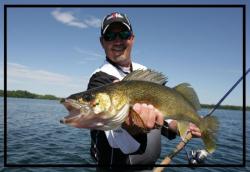
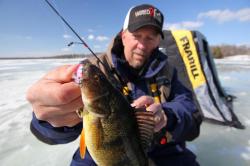
Mark Collins has been guiding full time for Lake Weiss crappie for 23 years. He knows how to catch crappie there year round and spring is one of his best times for catching large numbers of fish as well as big fish. This time of year he is trolling for them from his center console boat that will hold up to four fishermen and he runs three rods per fisherman, including himself, the legal limit on Weiss.

Driving into the area around Lake Weiss you will see signs proclaiming Weiss is the “Crappie Fishing Capital of the World.” It has long been known for producing a lot of very big crappie. The lake has perfect habitat for crappie and local businesses, Alabama Power and the state of Alabama all work to keep it good and make it better.

Statewide in Alabama there is a nine inch size limit on crappie to protect the smaller fish and let them grow. On two lakes, Weiss and Logan Martin, the next lake downstream on the Coosa River, both have ten inch limits to help produce quality fish.

Mark is a board member of the Weiss Lake Improvement Association, an organization that works to improve habitat for crappie and other fish on the lake and promotes fishing there. One of the things they have done is put out brush piles made of cane. The GPS co-ordinates for them can be found on his website: http://www.markcollinsguideservice.com/habitat-sites-locations.html. Not only do those brush piles give fishermen a good place to fish, they offer crappie and other species a place to live, feed and grow.

Mark scared me but impressed me at the same time. I was to meet him at noon Monday and ride along that afternoon with him and a guide client. About the time I go to Carrollton he called and said there was no reason to come, the fish were not biting and he had canceled his guide trips.

His website says “No fish, no pay,” one of the few guides that will do that. But he says he wants happy clients that will come back for repeat business so he will call them if the fish aren’t biting.

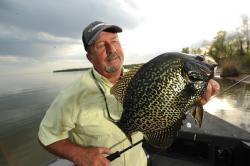
Fortunately for me, he was out fishing trying to figure out what to do to catch fish. I met him at Little River Landing and Resort, the only full service marina on the lake. They even have rooms to rent and a small restaurant. He had caught about eight crappie that morning, a couple of them over two pounds, so we had fish for pictures for the article.

Eight crappie over ten inches long sounds like a decent catch to me but Mark expects to have 30 fish per person limits each day for his clients. If you want to go out with one of the best guides on the lake you can contact him through his website or call him at 256-779-3387.

Idaho Steelhead and Salmon are Heavyweights

Big Idaho Steelhead

Big Idaho Steelhead

Steelhead and Salmon are Idaho’s Heavyweights

Editor’s Note: Today’s feature comes to us courtesy of Idaho Fish and Game. We’d all like to skip “Super Tuesday” and go fishing for super salmon.
from The Fishing Wire

Want to catch big fish? Of course you do, and if you want to consistently catch them, steelhead and salmon are your best bets. Let’s look at the tape, scale and ticker.

The average Idaho rainbow trout is around 10-14 inches and weighs about a pound. A trophy- size rainbow is about 20 inches and weighs in the 4-pound range. A 30-inch rainbow is probably a once-per-lifetime fish that weighs in the 10 to 15-pound range, although several northern Idaho lakes consistently grow trout that large and larger.

Now let’s look at steelhead. Steelhead are rainbow trout that leave Idaho in the spring as juveniles known as “smolts” and migrate to the ocean, then spend about a year or two there before returning as adults much larger than trout.

The average-sized “A” run steelhead is between 23 and 26 inches and weighs 4 to 6 pounds. “A” run steelhead are most common in the Snake and Salmon rivers. Their larger cousins, the “B” run steelhead, are found mostly in the Clearwater River system, although some are also in the Salmon and Snake rivers. The fish have a different life history. “B” run fish spend two or three years in the ocean and return much larger, typically 31 to 34 inches and 10 to 13 pounds, but some are upwards of 20 pounds.

Big fish, big numbers

Over the last five years, an average of about 141,000 steelhead have returned to Idaho annually.

Adult steelhead start returning to Idaho in late summer and “winter over” in rivers before making their push to the upper tributaries to spawn in late winter and early spring. That gives anglers roughly seven months to fish for them, and the most popular times are during October and March.

Chinook salmon are even larger than steelhead. They’re typically in the 12 to 15-pound range, but chinook over 20 pounds are common. Over the last five years, chinook returns to Idaho have averaged about 134,000 fish. The first chinook typically return to Idaho late March and early April and are segregated into three categories: spring, summer and fall runs.

So let’s do some quick math. In recent years, Idaho got about 275,000 steelhead and chinook annually, although run sizes vary from year to year. Steelhead and chinook dwarf your average trout and likely will exceed the largest trout you catch in a given year, and possibly in your lifetime.

Got your attention?

Unlike a once-per-lifetime trout, steelhead and chinook are plentiful, reliable, predictable and not difficult to catch. You need to have the right gear, know a few basic fishing techniques and know when to go.

You also need to know the basic rules. A full set of rules and seasons can be found in the current Idaho Fish and Game fishing rules booklet, or online at http://fishandgame.idaho.gov/. But a critical thing to know is that only hatchery steelhead and chinook can be harvested. You can identify a hatchery fish by the clipped adipose fin on the fish’s back directly in front of its tail. If the full adipose fin is intact, you have to release the fish unharmed. You will also need a permit to fish steelhead and salmon in addition to your fishing license.

Timing is (almost) everything

March is prime time for spring steelhead fishing and one of the best times for novice steelhead anglers to give it a try. The fish migrate into the smaller tributary streams, which means there’s easy river access along highways and lots of fish in the rivers. Some favorite steelhead spots are the South Fork of the Clearwater River upstream from Kooskia, the Little Salmon River along U.S. 95 between New Meadows and Riggins, and the upper Salmon River along Idaho 75 and U.S. 93 between Salmon and Stanley.

While you can be assured there will be ample steelhead in these rivers during March and April, river conditions can vary wildly depending on rain or snow melt. Rivers can go from low and clear to high and muddy within a day or two.

As a rule of thumb, most anglers prefer to fish for steelhead during spring when river temperatures are in the mid-30s to low-40s. Stable weather and consistent river flows tend to produce the best fishing. But even if conditions are imperfect, the fish are still there, and you can catch them. It’s just going to be more challenging.

Chinook start returning from the ocean in the spring and typically reach Idaho during, or shortly after, peak spring runoff. Fishing usually starts lower in the Snake and Clearwater rivers around Lewiston in late April and May. Anglers follow the spring and summer chinook upstream through their migration all the way to the headwaters of the Salmon River near Stanley.

Fall chinook have a different life history. They start arriving in late summer, and unlike spring and summer chinook that spawn in headwaters, fall fish spawn in the lower river systems, mostly in the Snake River.

Gearing up to go

If you’re not used to tackling large fish, you will probably need to invest in some new gear. There’s a variety of steelhead and salmon rods available, and you need a reel with a good drag. Both steelhead and chinook fight hard, and they are often hooked in strong river currents, so you will want line suitable for the battle. Use 10 to 15 lb test for steelhead, and 15 to 20 lb test for chinook. You may want to go heavier if you’re fishing strong current.

Check with your local tackle shop or sporting goods store to find suitable tackle, and employees there can usually show you how to rig for steelhead and salmon. You can also watch several “How To” videos on popular methods used for both steelhead and salmon, at Fish and Game’s website on the pages for steelhead and chinook under the “Fishing” tab.

Etiquette

Steelhead and salmon fishing are popular in Idaho, and when the fish reach those smaller tributary streams, the banks can get crowded with anglers. Good etiquette means respecting other anglers’ space, and also not being a “hole hog” who takes over a popular fishing spot and excludes others. Be assured there will be competition for prime spots, but in most cases, anglers have a good track record of working with each other so everyone gets a fair chance at hooking a fish. An educational video – Angler Etiquette: Fishing with the Crowd – is available on Idaho Fish and Game’s website athttp://fishandgame.idaho.gov/fishing/etiquette. The video covers commonly held practices in the fishing community on fishing around others and how to avoid potential conflicts.

The insider intel

There are several online tools anglers can use to time their fishing trips during the prime times when fish are there and conditions are best:

Columbia Research Station’s “Dart”: http://www.cbr.washington.edu/dart

This website compiles data about steelhead and salmon and also tracks fish as they pass through the Columbia and Snake River dams. You can get daily counts at each dam, and also historic timing when the runs typically go though each dam.

USGS Streamflows: http://waterdata.usgs.gov/id/nwis/current/?type=flow

This website gives you real-time stream flows for most rivers in Idaho and water temperatures at some gauging stations. You can also find annual hydrograph charts that show when rivers typically get peak spring run off.

Pit tag data: http://www.ptagis.org/

This website provides information about fish that are embedded with “pit tags,” which are small transmitters. There are pit-tag detectors in some Idaho streams, and anglers can use them to track the steelhead and salmon as they move upstream.

— Roger Phillips

Phillips is a Public Information Specialist for Idaho Fish and Game

Lake West Point Bass Fishing

On Wednesday I met Mike Morris at Highland Marina to get information for a bass articl on Lake West Point Bass Fishing. Mike is one of the very best club bass tournament fishermen in the state. He has been club fishing since 1974, just like I have, but he is much better. Over the years he has made the state federation team 21 times, more than anyone else in the state. In comparison, in the same number of years, I have made it five times.

Mike and I caught about 20 keepers that day, a day that was a cold front with wind and bluebird skies, some of the worst conditions to me. And he caught about 15 of them. He had a largemouth about four pounds and I had one about three, and we caught a lot of keeper spots, too. And the hybrids hit our crankbaits in many of the places we fished.

It always amazes me when I watch really good fisherman doing exactly the same thing I do, fishing the same way, and catching more fish than I can. We ran a simple patter, fishing rocky secondary points in creeks, and caught fish on several of the ten spots we marked for the map.

Less than two weeks ago in the Sportsman Club tournament that is the pattern I fished, it is a pretty standard way to catch fish this year. But in that tournament I managed to catch exactly three fish in eight hours.

Check out the articles in the magazines and choose what species you want to catch from now through April. Go for crappie or bass, you can’t go wrong with either.

Fishing Boat Buying Tips

Boat buying tips to land the fishing platform of your dreams
from The Fishing Wire

With spring just around the corner, anglers around the country are dreaming of open-water adventures in the months ahead. For many, these dreams include buying a new boat.

If you’re thinking of purchasing a new fishing platform for 2016, follow the advice of veteran guide and boating sage Bernie Keefe to land the boat of your dreams, without getting soaked.

“A boat is a major purchase for most of us, so take the time to do your homework and also a little soul-searching to decide which one will best fit your needs and your budget,” he begins.

The internet is a wonderful tool for checking out available boat models, features and prices. “Online research is critical,” says Keefe. “Don’t just show up at a sport show or dealership and buy the first boat you look at.

Deep, roomy boats like the Crestliner Authority 2250 excel for big-water applications.
“You can also use online tools like the “Build Your Own Boat” feature on Crestliner’s website to plug in boat style, length, cost, primary purposes and more,” he adds.

All are key considerations.

“Choosing boat style, whether hardcore fishing, fish-and-ski or a ski boat comes down to how you plan to use the boat the most,” he says. “I strongly encourage fishermen to talk to their families to collectively determine what’s right for everyone who’ll be using the boat.”

For example, while a serious fishing boat might not be ideal for other watersports or serious leisure cruising, a fish-and-ski could provide a great compromise that keeps everyone happy. “And if the whole family is on board, you’re going to get a lot more use out of the new boat,” he says.

Boat size is likewise important. “If you mainly fish small lakes with primitive access points and only one or two people aboard, you’re not going to want a large big-water rig,” he says. “But if you plan to fish the great lakes, something big and deep like

Carefully choose options including livewell, baitwell and tool holders to fit your style of fishing.

Crestliner’s 22-foot 2250 Authority could be a perfect fit. Besides the ability to handle heavy seas, it has tons of storage space, plenty of elbow room for a large fishing party and is flat-out a troller’s dream.”

It’s worth noting that with shorter boats, a wave-taming deadrise can help the hull cut through the chop. “I’m guiding out of a Fish Hawk 1950 this season, which has a 17-degree deadrise for a smooth ride in rough water,” says Keefe.

Of course, your tow vehicle and available storage space also affect boat size decisions. If you’ll be pulling the boat with a car or light pickup, buying a large, heavy boat is asking for trouble, unless you plan to upgrade the vehicle as well. In a similar vein, pulling home a boat too long for the garage can lead to headaches as well.

Keefe also counsels matching the boat to your style of fishing. “I do a lot of vertical jigging, so a low-profile boat that doesn’t catch the wind makes boat control easier in windy conditions,” he says.

Features such as seating arrangements, storage, livewell and other accessories merit serious consideration. “They can drive up the cost of a boat, but at the same time it’s cheaper to get the features you want now than try to add them on later,” says Keefe. “Figure out what you really need and do your best to fit these features into a package deal.”

Budgeting is also a necessary step. “In this day and age, cost is a factor for most folks,” he says. “Don’t pull the trigger on a budget buster. If it breaks the bank and you can’t afford to take it out and play with it, you’ve defeated the purpose of buying a boat in the first place.”

Don’t overlook the boat’s powerplant, either. “Motors have a huge effect on performance and price, so here, too, choose wisely,” Keefe contends.

After conducting serious online research, you’re ready to kick the tires at a dealership or boat show. “If you attend a show, you have the opportunity to pick the brains of boat company pro staffers, who spend a lot of time on the water and can help talk you through the decision-making process,” he notes.

Follow these steps and Keefe is confident you’ll land your dream boat. “It sounds like a lot of work, but in the end it will pay off with hundreds of hours of on-the-water fun in a boat that makes everyone in the family happy,” he says.

CONTACT INFORMATION
For more information or to book a trip with Keefe, visit: www.fishingwithbernie.com

Bassmasters Classic Final Day Is Sunday

Bassmasters Classic Kickoff

By Frank Sargeant, Editor
from The Fishing Wire

Weigh-in arena for Bassmasters C;lassic

Weigh-in arena for Bassmasters C;lassic

As you read this, 55 high performance bass boats will be taking off on Oklahoma’s Grand Lake of the Cherokees northeast of Tulsa in what is widely recognized as the “Super Bowl” of bass fishing, the Bassmaster Classic. One of the anglers will, over the three day event, bring home a catch that will be life-changing, putting $300,000 in cash into his bank account. While a few of the pro’s competing this year have already made this leap, it would have a huge impact for most, who spend huge amounts of money running the highways all over the U.S. in pursuit of their dream of becoming economically successful doing something that they love. It’s a tough row to hoe.

The stage seems to be set perfectly for the event. Spring has arrived early this year in Oklahoma, with many of the trees already in full bloom and some near balmy days already warming the shallows. It’s likely to be a tournament where anglers chase spawning fish, and this usually results in heavy catches. The weather will surely be easier on the anglers than last time the championship was here, in 2013, when subfreezing temperatures and howling winds made it as much an endurance test as a trial of angling skills.

As I write this on Thursday evening in Tulsa, the town seems more than ready for the event. There are signs welcoming the Classic everywhere, there are thousands of fans in town, there are decorated tow trucks everywhere, and every manufacturer in the bass fishing industry is here, waiting eagerly for the Bassmaster Classic Outdoor Expo, which takes place as part of the event. Any company that wants to introduce a new product to this highly-specialized industry can’t pass up this opportunity, which will see tens of thousands of visitors and at the daily weigh-ins at BOK Center downtown.

Odds are probably good that one of the three Oklahoma anglers in the event will bring home the big win–local anglers have won the last two years at Guntersville and Hartwell. However, the last time the Classic was fished here Mississippi angler Cliff Pace took home the gold–perhaps in part because the miserable conditions made normal patterns difficult to sort out for locals.

In any case, The Fishing Wire is here, and we’ll be reporting what happened in our Monday edition, as well as reviewing all the excitement of the new product introductions at the show. It’s a fun time to be in the business, especially for those of us who do not have a sleepless weekend ahead of us worrying about winning $300K.

Gun Control Propaganda Fails To Come True

Not long ago the gun banners were crowing that gun deaths now outnumbered traffic accident deaths for the first time, proving guns should be banned. They ignored a lot of facts like that gun deaths are mostly suicides and car deaths had recently dropped due to higher cost of gas, and gun deaths were on a long term downward trend. They used this change to push their gun ban agenda.

Their gun control propaganda fails to come true just a few months later.

Some rational folks predicted that car deaths would increase again if gas prices dropped and people drove more. A news article in the Griffin Daily News on page A-7 on Friday, February 19 proved them right. The headline: “2015 Motor vehicle deaths increased by largest percent in 50 years.”

Do you think the gun control folks will admit to this change? I won’t hold my breath.

In Georgia one of the biggest gun controversies this legislative session has been making it legal to for citizens in our state with a “Georgia Firearms License” to carry their gun on college campuses. Campuses are a free fire zone, also known as a gun free zone, right now.

There have been many robberies on college campuses, especially Georgia State. The new law would allow people like me, who have gone through a fingerprint background check and have no criminal history or mental problems and are 21 years old or older, to carry their legal gun on campus.

Those against it come up with all kinds of weird excuse why it would be dangerous. They claim youth should not be able to carry guns, ignoring the fact the law only applies to those over 21. And they say college students are not mature enough to carry a gun, totally missing the fact that many 18 year olds are in the military and carry dreaded “assault” weapons daily.

When I was in college a long time ago I had my Marlin 30-30 lever action assault weapon in my dorm room from the time I started at 18 years old. It never shot anyone. I know times have changed, but gun free college campuses do nothing but keep law-abiding students from protecting themselves.

Anyone thinking the current law keeps thugs from carrying a gun on campus ignore the armed robberies regularly in the news. And they ignore the fact that some states already allow students to carry guns and there has never been a problem caused by them.

What Are Missouri Paddlefish and When Does Season Open?

Missouri Paddlefish Season Opens March 15

Editor’s Note: Here’s an interesting look at a sport many of us have never tried, but it’s apparently one of the few ways to harvest the giant “spoonbills” that populate many of our big Midwestern rivers and lakes.

MDC makes paddlefish snagging possible through annual stockings of fingerlings.

tagging a mature paddlefish

tagging a mature paddlefish

Missouri DOC biologists tag a mature paddlefish. Thousands of fingerlings are stocked in larger state lakes and rivers each year. (Credit MDOC)

Missouri’s annual spring paddlefish snagging season is a popular pastime for thousands of anglers. The state’s major paddlefish snagging waters include Lake of the Ozarks, Truman Lake, and Table Rock Lake with the season running March 15 through April 30. The season for the Mississippi River is March 15 through May 15 with a fall season of Sept. 15 through Dec. 15.

Also known as “spoonbills” because of the shape of their snouts, paddlefish take seven or eight years to grow to legal size. The fish feed on plankton and other microscopic prey. These filter feeders therefore do not take bait from hooks and must be snagged using large hooks that catch in the mouth, gills or other areas of their bodies.

The success of paddlefish snagging is dependent on weather conditions, primarily water temperature and flow.

“The best snagging conditions occur when water temperature reaches 50 to 55 degrees and there is an increase in water flow,” MDC Fisheries Management Biologist Trish Yasger said. “This prompts them to move upstream to spawn. We don’t usually see a lot of big fish being caught on opening day. Harvest early in the season is typically dominated by local fish and small males with the occasional large female. As water temperature and flow increase, you will start seeing more of the larger females.”

Stocking Efforts

The Missouri Department of Conservation (MDC) makes paddlefish snagging possible in the Show-Me State through annual stocking of up to 38,000 fingerlings raised at Blind Pony Hatchery near Sweet Springs. The fingerlings are released into Lake of the Ozarks, Truman Lake and Table Rock Lake, plus the Black River. The annual stocking is necessary because dams and other barriers to spawning areas have eliminated sustainable natural reproduction in the lakes.

“Without annual stocking by MDC staff, this popular pastime and food source would go away,” said Yasger. “And we need help from snaggers to learn more about and to better manage this popular game fish.”

Yasger added that MDC released an especially large number of fingerlings into Lake of the Ozarks, Truman Lake, and Table Rock Lake in 2008. The more than 164,000 fingerlings released are now eight years old and should start providing good numbers of fish for snaggers to harvest.

Snag A Tag – Get A Reward

MDC is beginning its second year in a five-year tagging project to help monitor paddlefish numbers and improve species management. Department staff are placing metal jaw tags on up to 6,000 paddlefish netted in Lake of the Ozarks, Truman Lake, and Table Rock Lake and up to 1,000 netted from the Mississippi River. Yasger encourages all snaggers to help out by reporting tagged paddlefish and to NOT remove tags from undersized paddlefish.

“We will send a special ‘I caught a Missouri paddlefish!’ t-shirt to each snagger who returns or reports their first tag on a legal-sized fish,” Yasger explained. “All returned and reported tags will be placed into an annual drawing for cash prizes with a grand prize of $500.”

Tags or photos of tags from harvested paddlefish must be submitted for rewards. Snaggers must include the following information with each tag:

Date caught
Location of catch including reservoir or river, mile marker, and county
Tag number
Fish length from eye to fork of the tail
Snagger’s name and complete address

Report tags by calling MDC at 573-579-6825 with the information, or mail the information with the flattened tag to: Missouri Department of Conservation, 3815 East Jackson Blvd., Jackson, MO 63755. Learn more about the tagging project from MDC online at http://on.mo.gov/1VA1E6B.

Report Transmitters

MDC biologists are also implanting ultrasonic transmitters in adult paddlefish at Truman Lake, Lake of the Ozarks, Table Rock Lake, and the Mississippi River to track their movements and gain other important information. MDC asks that all snaggers who harvest fish with a transmitter to report it by calling 573-579-6825 or by e-mailing Trish Yasger at Trish.Yasger@mdc.mo.gov. It is important to return transmitters so they can be implanted in other fish.

Help smaller fish survive

Yasger reminds snaggers to help undersized snagged fish survive to grow larger.

“Do not land paddlefish with gaffs. This can fatally injure sublegal fish. Use large landing nets,” she said. “Remove hooks carefully and get sublegal fish back into the water as quickly as possible. Wet your hands before handling fish and avoid excessive handling. Do not pass them around for photos and hold fish firmly to avoid dropping them. Never put fingers in the gills or eyes.”

Regulation Requirements

Paddlefish snagging

Paddlefish snagging

The state’s major paddlefish snagging waters include Lake of the Ozarks, Truman Lake, and Table Rock Lake with the season running March 15 through April 30. The season for the Mississippi River is March 15 through May 15 with a fall season of Sept. 15 through Dec. 15.

Unless exempt, anglers must have a current fishing permit to snag or to operate a boat for snaggers. The daily limit is two paddlefish and snaggers must stop snagging after obtaining the daily limit on Lake of the Ozarks and Truman Lake and their tributaries, and the Osage River below Bagnell Dam. The minimum legal body length for paddlefish at Lake of the Ozarks, Truman Lake, Table Rock Lake, and their tributaries is 34 inches, measured from the eye to the fork of the tail. The minimum legal body length is 24 inches on the Osage River below Bagnell Dam and in other Missouri waters. All paddlefish under the legal minimum length must be returned to the water unharmed immediately after being caught.

The Wildlife Code of Missouri requires the head, tail, and skin to remain attached to all paddlefish while on the water so paddlefish should not be cleaned until off of the water. Also, extracted paddlefish eggs may not be possessed while on waters of the state or adjacent banks and may not be transported. Paddlefish eggs may not be bought, sold or offered for sale. Additionally, paddlefish or their parts, including eggs, may not be used for bait.

Learn more about Missouri’s official aquatic animal, regulations, snagging reports, and more at http://huntfish.mdc.mo.gov/fishing/species/paddlefish.

A Bad Tournament Day Gets Worse

I hate it when a bad fishing day gets worse, like it did for me last Sunday when a bad tournament day gets worse near the end.. In the Spalding County Sportsman Club tournament at West Point 14 members and guests fished for eight hours to land 41 keepers weighing about 75 pounds. There were three five-fish limits and one person didn’t have a keeper. There were 14 largemouth and the rest were spotted bass.

Jay Gerson won with five weighing 8.78 pounds, Sam Smith was second with two at 8.52 pounds and his 5.64 pound largemouth was big fish, third was Raymond English with five weighing 7.54 pounds and Kwong Yu placed fourth with three at 7.32 pounds.

Jordan McDonald fished with me and I caught a keeper spot on one of my first few casts with a DT 6 crankbait, then Jordan caught three keepers on a Shadrap in the first hour. We thought it was going to be a good day but we fished a lot of places and patterns for the next six hours and I got one keeper spot on a Carolina rigged Baby Brush Hog.

With an hour left to fish I pitched a jig and pig to a shallow brush top and felt a thump. When I set the hook there was a big flash in the water as the bass headed to deeper water. I yelled for the net and Jordan grabbed it. Then the bass jumped and threw my jig ten feet into the air.

That broke me down. I hate losing fish, much less a big one like that. Jordan said he thought it was bigger than Sam’s fish and I think it was close. So a tough day got much tougher and disappointing at that point.

We fished for the rest of the time left and I got a keeper largemouth, again on the DT 6, and Jordan caught three more keeper spots on his Shadrap. He culled down to five and had 6.74 pounds for fifth place. My three at 5.57 pounds put me in eighth place.

The water was about 50 degrees and heavily stained. Many people caught fish in shallow water. The cold weather last week will probably slow things down, and the lake rose three feet and got even more stained from the rain last week.

Everywhere we went there were a lot of people trolling for crappie. We counted 12 boats near the second shoal marker in Whitewater Creek. On the depthfinder there were schools of crappie everywhere out over the deeper water in the cannels, and a lot of baitfish there, too.

If you want to fill up your freezer, head to West Point with some Hal Flies and troll them along the channel edges. Most of the crappie were down about ten feet deep. If you have a good depthfinder you can see the fish and know how deep to run your baits. If not troll different depths until the fish show you how deep they are feeding.

What Is Giant Salvinia?

A Weed Over Troubled Water

Editor’s Note: As we wind up National Invasive Species Awareness Week, here’s a look at one of the worst, the giant salvinia that is creating problems across much of the south these days.
from The Fishing Wire
endangers fishing and boating waters and destroys habitat for aquatic plants and animals.

Craig Springer, USFWS

Giant Salvinia chokes waters

Giant Salvinia chokes waters

The plant’s scientific name is your first clue that it is something that you do not want. Botanists know it as Salvinia molesta. It’s commonly known as giant salvinia. Native to South America, the floating fern made its way to the United States via the ornamental plant industry. It’s pretty, but the beauty belies serious economic and ecological harm that usually follow when it is accidentally or purposely released into the wild.

John Naugle would know. He’s a fisheries biological technician at the U.S. Fish and Wildlife Service’s (Service) Arizona Fish and Wildlife Conservation Office, in Parker, Arizona. Naugle is fully immersed in controlling the spread of the nasty plant from a waterway of great importance to the regional economy of Arizona and California. Giant salvinia showed up in the United States in 1995, and four years later it had a hold in the Palo Verde Irrigation District Drain that parallels the Colorado River. The irrigation drain delivers water downstream for agriculture. Since 2004, it has fallen on Naugle and colleagues to put a staunch on the spread.

He’s pretty much “Mr. Salvinia.” As long as the weather is conducive for plant growth, Naugle is out combatting the plant in the waterway. “For seven months of the year, I am on the water up to seven hours a day,” said Naugle. “It’s survey and treat, survey and treat—it’s a near-continuous effort.” That treatment is spraying an herbicide that knocks back the mats of the lime-green floating fern.

“Knock back” is often the best that can be done, according to the Service’s Southwest Region invasive species biologist, Dr. David Britton. Britton says that complete eradication of giant salvinia is nearly impossible given how the plant survives.

“It’s remarkable,” said Britton, “you can break off a tiny piece of plant and it will start a new population.” Britton notes that the plant easily gets carried by boats unintentionally, underscoring the need to be careful and inspect watercraft and trailers. “It grows fast, too, and will quickly cover the water surface, shading out all light.”

Giant Salvinia up close

Giant Salvinia up close

The plant’s dangerous growth habitat is spoken in its scientific name. The floating plant does best in slow-moving canals, backwaters or ponds. It can double the amount of surface area it covers in a week’s time and create a deep carpet—a shroud three feet thick. That’s troublesome for boating, fishing, waterfowl hunting, not to mention the value of private property associated with infested waters.

Then there’s water delivery associated with public works, part of the reason Naugle performs his labor. Downstream of Palo Verde Irrigation District Drain are dams and water intake structures. Giant salvinia has accumulated and clogged structures in the past. But not so much anymore; Naugle has been successful at controlling the plant. He continues to keep a watch out, and herbicidal treatments are fewer and fewer because of his diligence.

“Once giant salvinia gets established,” says Britton, “it will likely never be eradicated entirely. Prevention is the first measure—and it’s cheaper than what it takes to control the plant.” To learn more, visit www.fws.gov/southwest

Missouri’s March 1 Trout Opener

Remedy for Fishing Fever is Missouri’s March 1 Trout Opener

Today’s feature comes to us from the Missouri Department of Conservation.
from The Fishing Wire

Thousands of anglers flock to trout parks around the state for opening day of catch-and-keep trout fishing.

JEFFERSON CITY, Mo. – As the wintery season winds down, anglers throughout the Show-Me State are beginning to show some signs of trout fever. Symptoms include: tying flies, putting new fishing line on reels, checking waders for holes, and practicing casting. Most anglers who get trout fever get rid of it by doing one thing—visiting one of Missouri’s four trout parks to participate in the catch-and-keep trout season.

Tuesday, March 1, marks the opening of catch-and-keep trout fishing at Bennett Spring State Park near Lebanon, Montauk State Park near Licking, Roaring River State Park near Cassville, and Maramec Spring Park near St. James.

“This year’s trout opener should be good and comparable to previous years,” said MDC Fisheries Unit Chief Bruce Drecktrah.

The Missouri Department of Conservation (MDC) operates trout hatcheries at all four parks. To help predict angler turnout on opening day, hatchery staff rely on permit records going back more than 70 years. Montauk, Bennett Spring, and Roaring River hatchery staff expect crowds of about 2,000 anglers at each location and Maramec Spring staff are planning for a crowd of about 1,500. Based on these predictions, hatchery staff will stock three trout per expected angler on opening day for a total of more than 22,500 fish averaging around a foot in length. The hatcheries will also stock a mix of “lunkers” ranging in three to 10 pounds.

Trout Season Outlook

Due to the heavy rain and record-breaking flood that took place this past December, MDC crews have been inspecting flood damage and evaluating the impact these floods may have on hatcheries, fish production and fish numbers.

“We have plenty of fish for this year’s trout season,” said MDC Fisheries Division Chief Brian Canaday. “But due to the heavy rains and flooding our trout stocking will be slightly reduced throughout the season. We will stock approximately two fish per trout tag sold at each trout park instead of our usual 2.25.”

Canaday added that MDC staff will continue to evaluate hatchery fish inventories, stocking plans, and make adjustments throughout the season as appropriate.

Permits

It’s important to know anglers need a daily trout tag to fish in Missouri’s trout parks. Daily trout tags can only be purchased at each of the four trout parks. Missouri residents 16 through 64 need a fishing permit in addition to the daily tag. Nonresidents 16 and older also need a fishing permit.

Economic Outlook

Trout hatcheries are just one way that conservation pays in Missouri. MDC stocks more than 800,000 trout annually at the state’s four trout parks and approximately 1.5 million annually statewide. Trout anglers’ spend more than $100 million each year in the Show-Me-State, which generates more than $180 million in business activity, supports more than 2,300 jobs and creates more than $70 million dollars in wages. About 30 percent of Missouri trout anglers come from other states, so a substantial portion of trout fishing expenditures is “new money” for the state’s economy.

March 1 marks the opening day of catch-and-keep season at Missouri trout parks, including Montauk State Park pictured. MDC expects thousands of anglers for opening day and will stock more than 22,000 trout for it.
For more information on trout fishing in Missouri, visit https://huntfish.mdc.mo.gov/fishing/where-fish/trout-areas.

REMINDER TO TROUT ANGLERS: To prevent the spread of the invasive alga called didymo or “rock snot,” the use of shoes, boots or waders with porous soles of felt, matted or woven fibrous material is prohibited at all trout parks, trout streams, Lake Taneycomo, and buffer areas. Go online for more information to http://on.mo.gov/1V6qc6W.