| By DAVID RAINER Alabama Department of Conservation and Natural Resources 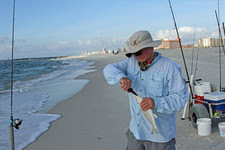 from The Fishing Wire With a nickname like Pier Pounder, David Thornton of Mobile has seen his favorite pastime disappear with 2020’s double whammy of hurricanes. Hurricane Sally took the Gulf State Park Pier out of commission, and Hurricane Zeta destroyed Cedar Point Pier in Mobile County. “I guess you can call me the Pier-less Pounder because the only pier open in the Mobile area is the Fairhope Pier, and it’s closed at night because they don’t have any lights,” Thornton said. However, Thornton has a major backup plan, thanks to Alabama’s beautiful beaches and surf teeming with a variety of fish species. Thornton said he’s been hooked on fishing in the surf since he was 12, and a trip to Gulf State Park Pier with his buddy, Tom Allenbach, sealed his loved for pier fishing. “Tom was fishing a live alewife under a float,” Thornton said of the trip to Gulf State Park Pier. “He told me to hold his rod while he caught more bait. I asked him how I would know when I got a bite. He said, ‘You’ll know.’ About that time, I felt a tug and thought I was hung on somebody else’s line. Then the fish took off, stripping drag. It was about a 10 ½-pound king, and that was when I really got hooked on pier fishing.” But for now, fishing from shore is where Thornton will be until a portion of Gulf State Park Pier is reopened sometime late this winter. Before Thornton decides where to pursue fish in the surf, he gathers information about weather, water, wind and tide conditions. “Know what the weather is going to be like with the marine forecast,” he said. “It’s not that I look for any certain conditions; it’s just that I want to know what to expect and adjust. I look at the tide tables. Then I’ll decide where I’m going and what I’m going to fish for based on the conditions. “Ideal conditions would be 10-15 mph winds either onshore or sideshore with waves 1 to 3 feet. For shore fishing, it’s really better with a little chop on the water. I think it stimulates the fish to bite more readily. Also, you have current flow. If there is a current working over the sandbar, you want to pay special attention to the tide, especially if it’s close to a pass. If it’s too rough or too calm or with very little tidal movement, the fish don’t cooperate as well. If I’m going to fish a neap tide, I’m going to fish close to the pass. ”When Alabama’s tides come off a neap cycle, the tide swings will sometimes reach more than 2 feet from low tide to high tide. That’s when Thornton likes to be fishing the open beaches. “That tide movement stimulates the bite,” he said. “When I go, I’m looking for a longshore sandbar. The longshore sandbar is usually 100 to 150 yards off the beach. But there are places where the longshore sandbar swings in closer to the shore. The best places are where the sandbar is within casting range. That creates a pinch point where the fish are going to be moving from one trough to the next. When the bar is closer, you can use lighter tackle and target a variety of fish. “I’d much rather catch a big fish on light tackle and take a long time than catch a small fish on heavy tackle.” Thornton casts to the inside edge of the sandbar to start the day and adjusts his casts according to the bite. “The fish tend to feed along the edges,” he said. “They use the sandbars for protection from predatory fish. The area from the shore out to the first bar is where most of the fish live. That old adage is that 90 percent of the fish live in 10 percent of the water. It’s the same in the surf. ”Speaking of light tackle, Thornton truly goes as light as possible. Where some folks show up on the beaches with long rods with 20- to 30-pound line, Thornton fishes with line in a range from 4-pound-test to 15-pound-test. He uses his 10- to -12-foot rods with the 15-pound line for the long casts. He takes his 7-foot rods and light line for fishing closer to the shore. However, anything can bite any of his rigs. “I’ve hooked 20-pound black drum within 10 feet of the shore, and I’ve caught whiting and pompano out by the sandbar,” he said. “The mistake I see most people make is they’ll cast out as far as they can, pop the rod in a rod holder, plop down in a chair and wait for a fish to bite. If they don’t catch anything, they say the fish weren’t biting that day. Odds are, they overcast the fish. With light tackle, I feel like I have just as much fun catching 14- to 16-inch whiting and an occasional pompano as somebody heaving this heavy tackle and waiting hours between bites.” Thornton uses No. 4 Kahle hooks and a variety of sinkers from pyramid to no-roll egg-shaped. If he wants the bait to remain stationary, he sticks with the pyramids. If he doesn’t mind the bait moving a little, he’ll use the flattened egg sinkers or coin sinkers. “If I’ve got a side wind that is creating current, I can also use that slow-moving bait to cover more ground,” he said. “That way, I’m not just throwing darts at the fish. If your bait is moving too fast, you may have to go to a pyramid.” Thornton suggests forgoing the ready-made pompano rigs and sticking with lighter line. “If you’re targeting one- to two-pound whiting and one- to three-pound pompano, even 20-pound line is overkill,” he said. “Light line allows the fish to give account of themselves. They’re really feisty for their size. When you match the tackle with the fish, you’re going to have a lot more fun, and I really think you get more bites. It seems like every time I step down in tackle size, the number of bites I get practically doubles. Whiting and pompano can be particularly line-shy at times.” Thornton considers the Florida pompano as his target species, but he is happy as can be with what he calls the “byproduct” of pompano fishing, which is whiting, a silvery species with a black patch at the top of its tail. Known as Gulf kingfish elsewhere, whiting don’t get much larger than two pounds but are delicious table fare. Thornton said Southern kingfish, known locally as ground mullet, are common in the surf at Dauphin Island.“Whiting, by far, is the most prevalent fish in the surf,” he said. “But you never really know what you’re going to catch.” As far as bait, Thornton uses fresh dead shrimp with the heads and tails pinched off when he has run out of ghost shrimp, a crustacean that lives in the surf that is caught using a suction pump commonly called a slurp gun to extract the creatures from the sand. On our outing last week, the fish definitely showed a preference for ghost shrimp. Thornton also uses a product called Fish Bites, a product with different scents infused into the material. Thornton said shore anglers will be able to catch whiting and a few pompano throughout the winter. When the water gets a little colder, sheepshead will show up around all the jetties. The pompano limit in Alabama is three fish with a minimum total length of 12 inches. The limits on sheepshead are 10 per person with a 12-inch fork length minimum. Whiting have no size or creel limit. The best time all year to fish the surf is in the spring, according to Thornton, who keeps readers apprised of coastal fishing conditions with columns in Great Days Outdoors and the Mullet Wrapper.“Late March through April and possibly early May is the time to fish the beach, especially for pompano,” he said. “With the lockdown this past spring, we didn’t get to fish for pompano until May. The Gulf State Park Pier was still open during that time, and the pompano catches were astounding. ”Thornton is definitely going to celebrate when the Gulf State Park Pier reopens a portion of the pier about 40 feet past the middle section with the restrooms. “I’ll be ecstatic,” he said. “The cruelest irony of all was the pier had scheduled a grand reopening the day that Sally smashed it. I was supposed to give a little talk that day, and I was going to reminisce about walking out on the new pier after many people had been waiting five years for the pier to be rebuilt after Ivan. It took my breath away. I remember on the old pier, we would often say, ‘If it was just 100 yards longer.’ Then they built it 200 yards longer. The fishing was just outstanding. “When I walked out on the pier before Sally I couldn’t help but think about all those people who helped me become a better fishermen, people like Harley Rogers and so many others. For most of the people who are regulars on the pier, they have the attitude of ‘pay it forward.’ When you see somebody struggling, you try to help them with their tackle or bait. Then you see their whole attitude change. You don’t see that everywhere. That’s one of the things that makes Gulf State Park Pier special.” |
Category Archives: How To Fish
Tactics and Techniques to Target Smallmouth Through the Changing Seasons
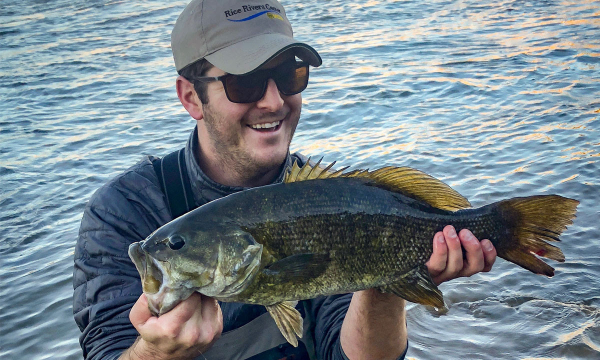 The author with a trophy smallmouth bass from the James River in downtown Richmond. Fall is one of the best times of the year to target big smallmouth bass across the state. The author with a trophy smallmouth bass from the James River in downtown Richmond. Fall is one of the best times of the year to target big smallmouth bass across the state.By Alex McCrickard, Virginia DGIF Aquatic Education Coordinator from The Fishing Wire There might not be a finer season to explore our freshwater fisheries across Virginia than in fall. Maples, tulip poplars, oaks, and sycamores turn red, orange, yellow, and brown as air temperatures cool to a comfortable range in the 60s and 70s. The cool crisp air during this time of the year is a welcome change to anglers who have fished throughout the hot humid Virginia summer. The changing of the seasons creates excellent conditions for anglers targeting smallmouth bass across the state.Smallmouth Bass in Virginia Smallmouth bass, frequently referred to as smallies or bronzebacks, are a freshwater member of the sunfish family: Centrarchidae. Their green and brown sides are often marked with vertical black bars. Some of these fish have war paint like markings extending horizontally and diagonally behind their eyes and across their gill plates. Smallmouth bass are native to the Great Lakes system and the Mississippi River Basin including the Tennessee and Big Sandy River Drainages of Southwest Virginia. However, these game fish have been introduced all across the Piedmont of Virginia and are truly a worthy opponent on rod and reel. Because of the smallmouth’s widespread range in Virginia, they are readily available to anglers fishing west of the coastal plains above the fall lines of our major river systems. This allows anglers who reside in cities and large metropolitan areas to fish local as smallmouth opportunities are plentiful. The James River in Lynchburg and Richmond, Rappahannock River in Fredericksburg, Rivanna River in Charlottesville, Maury River near Lexington, and the New River in Blacksburg are fine examples of local opportunities. The mainstem and larger tributaries of these rivers are full of smallmouth. Anglers in Northern Virginia can focus efforts on the Upper Potomac River as well as the Shenandoah mainstem, North Fork, and South Fork. The North Fork of the Holston River and the Clinch River provide excellent smallmouth opportunities in Southwest Virginia. Floating these larger rivers in a canoe or raft can be a great way to cover water, just remember to wear your life jacket. You can also wade fish these rivers and their tributaries in lower water conditions.Changing River ConditionsRivers and streams across Virginia are typically in low flow conditions on average years as summer moves to early fall. As the days get shorter and air temperatures drop, water temperatures are soon to follow. As water temperatures cool from the upper 80s down to the mid 70s and eventually upper 60s, smallmouth will become very active. While the smallmouth’s metabolism might be highest in warmer water temperatures, these conditions can sometimes make the fish a bit sluggish, especially on bright sunny days in the heat of the summer. Therefore, the cooling trends that occur in early to mid-fall can oftentimes put smallmouth on the feed. Also, as water temperatures drop, dissolved oxygen will increase. During the hottest summer months, smallmouth often congregate at the heads of riffles in broken water where dissolved oxygen levels are highest. It’s the fall cooling of water temperatures that in turn can spread more smallmouth out evenly throughout various habitats from riffles and pocket water to long runs, pools, and flats. Smallmouth can also disperse when large rain events occur throughout fall and river levels rise from typical low late summer and early fall flows. As mid-fall progresses into late fall, water temperatures will drop even further. As water temperatures drop into the mid to low 50s, smallmouth will stage in transitionary water between their summer habitat and deep overwintering holes. In Virginia, this oftentimes happens from late October through the middle of November. Look for smallmouth to be on the edges of drop-offs as well as congregating around river points and bends. During this transitionary time smallmouth can also be found in the middle sections and tailouts of deep riffles holding around structure like log jams and big boulders.Early Fall – Techniques and ApproachTopwater lures and flies will continue to produce good numbers of smallmouth bass throughout the entire month of September and well into the month of October. Anglers should take advantage of this last opportunity to fish on the surface before winter kicks in. Popular topwater lures that anglers enjoy to fish in the summer will also prove to be productive in early to mid-Autumn. Make sure to keep buzzbaits, Whopper Ploppers, Zara Spooks, Heddon Tiny Torpedos, and the Rebel Pop-R in your box of topwater lures. 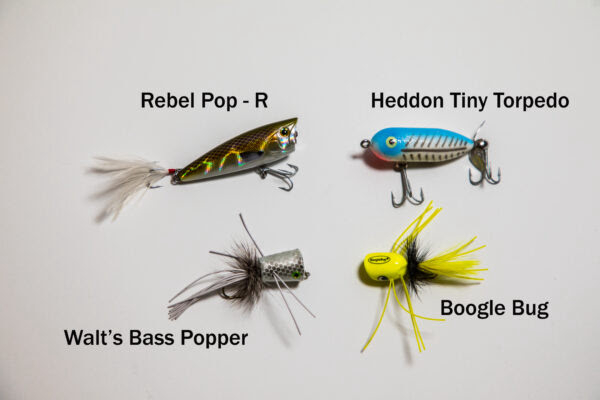 September and October are great months to fish topwater lures and flies for Virginia smallmouth bass. Photo by Meghan Marchetti/DGIF. September and October are great months to fish topwater lures and flies for Virginia smallmouth bass. Photo by Meghan Marchetti/DGIF.For fly fishing, make sure to keep your flybox stocked with your favorite poppers. I always carry Boogle Bugs, Double Barrel poppers, and Walt’s Bass Popper in a variety of sizes and colors in early fall. It’s best to experiment with your retrieve to figure out if the fish are looking for fast or slow action. Your retrieve and approach can also depend on the type of water you are fishing and the action of your fly or lure. Sometimes in choppy riffles a faster retrieve can allow the lure or fly to move more water where as a slower pop and pause retrieve can be very productive in flat water stretches. Late Fall – Techniques and Approach As water temperatures continue to drop in late October through November, a subsurface approach is best. It’s still possible to catch bass on topwater lures and flies but you will find more fish feeding subsurface with water temperatures in the 50s. Smallmouth will actively ambush smaller forage fish during this time of the year as they attempt to put on weight for the upcoming winter season. This makes mid to late fall one of the best times of the year to target large smallmouth in our rivers and streams across Virginia. Use baitfish imitations and target the transitionary water that smallmouth occupy during this time frame. A variety of subsurface crankbaits, soft plastic swimbaits and flukes, spinnerbaits, and jerkbaits will prove productive. The Rebel Crawfish, a crayfish crankbait, should also be in your selection of subsurface lures as smallmouth will prowl pools and flats for crayfish in the fall. When fishing some of these subsurface lures, especially soft plastic swimbaits and flukes, its important to apply action to the lure on occasion by quickly jerking your rod to the side and then pausing briefly during your retrieve. This will give your lure an erratic motion and imitate a stressed and injured baitfish which is exactly what the smallmouth are looking for. When fishing soft plastics with a jig head, you can adjust the size of your jig head based upon the depth and current that you are focusing on. Anglers can also fish a variety of different colored jig and pigs for targeting late fall smallmouth that are holding lower in the water column closer to the bottom of the river. 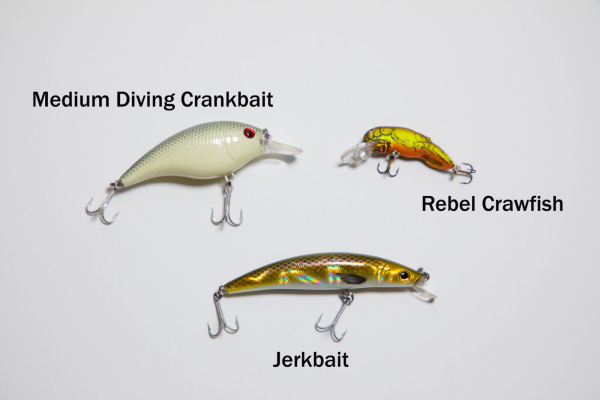 Subsurface lures work well when targeting fall smallmouth. Photo by Meghan Marchetti/DGIF. Subsurface lures work well when targeting fall smallmouth. Photo by Meghan Marchetti/DGIF.Late October through November is an excellent time to fish large streamers for big smallmouth bass. When fly fishing in mid to late fall, consider fishing with a sinktip or a 250 grain full sinking line in the deeper riffles and pools on our larger rivers. Sometimes it pays off huge when you can get your fly down to the fish during this time of the year, especially in the latter part of the season as winter approaches. I have had great success in the fall fishing Bob Clouser’s Clouser Minnow, Lefty Kreh’s Deceiver, as well as the combination of the two patterns: the Half & Half. Large articulated streamers that were originally developed for trout fishing in western states likes Montana, Colorado, and Wyoming will also be productive on fall smallmouth. Kelly Galloup’s articulated streamer patterns from Montana work well and most of these flies have large profiles as some of them are tied with wool or spun deer hair heads. Charlie Craven’s patterns from Colorado are also quite productive on our Virginia smallmouth. The profile of these large articulated streamers attracts fall smallmouth and these patterns swim really well through the water as they are articulated. The multi-sectioned Gamechanger tied by Blane Chocklett also works quite well this time of the year. You should also carry large beadhead or conehead Woolly Buggers. I like fishing this classic pattern in sizes 2-4 in black, dark brown, and olive. Chuck Kraft’s Clawdad and Harry Murray’s Hellgrammite are also productive patterns to fish lower in the water column this time of year. 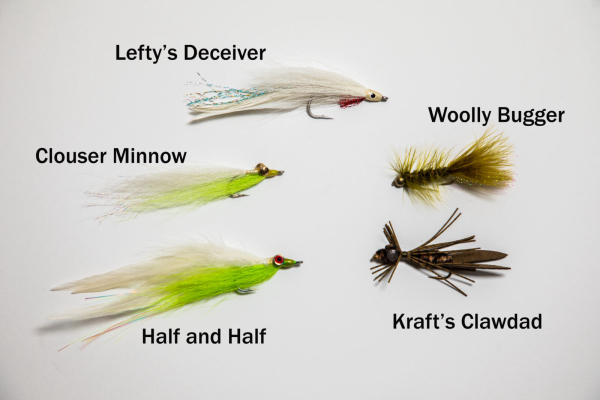 Fishing large streamers is a great technique for targeting big smallmouth bass. Consider fishing a sinktip or full sinking line in mid to late fall on our larger Virginia rivers, especially in higher flows. Photo by Meghan Marchetti/DGIF. Fishing large streamers is a great technique for targeting big smallmouth bass. Consider fishing a sinktip or full sinking line in mid to late fall on our larger Virginia rivers, especially in higher flows. Photo by Meghan Marchetti/DGIF.Autumn can truly be one of the most pleasant times of the year to target smallmouth across the Commonwealth. Anglers will enjoy cooler temperatures and wearing waders when fishing these rivers during this time of the year. As the season progresses from October into November, it’s important to bring a dry bag with a towel and an extra change of clothes for safety precautions due to cooler water and air temperatures. Make time to get out this fall and take advantage of the prime fishing conditions for smallmouth across the state. |
Carp: The Gamefish in Our Backyards
Add an underwater camera to your arsenal and learn where the giants await.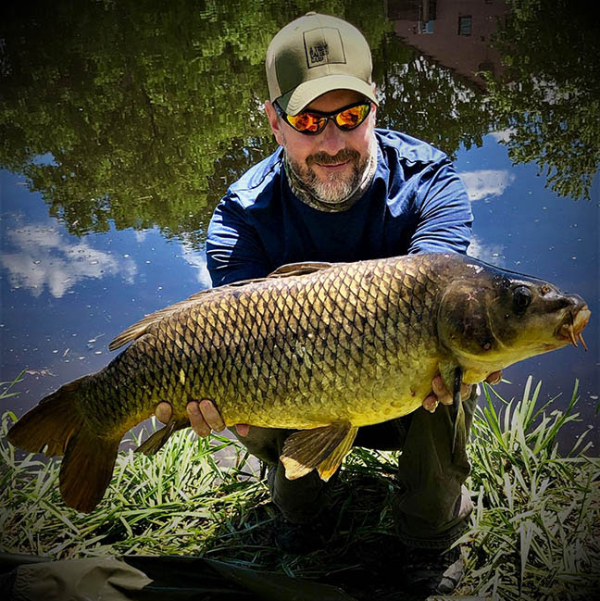 Carp specialist Nathan Cutler calls his Aqua-Vu his most important learning tool. Carp specialist Nathan Cutler calls his Aqua-Vu his most important learning tool.from The Fishing Wire Crosslake, MN – Nathan Cutler remembers the first big carp he ever hooked. Standing on shore that day in 1999, exhausted and beaten, Cutler lamented the battle, the lost fish and the damage it had inflicted upon his gear. Among the casualties: The carp had stripped 150-yards of line from his spool, straightened the hook, melted the gears in his reel, burned the eyelet inserts on his rod and stripped the reel right off its seat. That was the day the lifelong Canadian angler decided to learn all he could about this massively under-appreciated creature, the common carp—and that meant immersing himself in the underwater domain of his favorite fish. “I’ve learned more from my Aqua-Vu HD underwater camera in a year than I probably could have in decades of regular fishing,” says Cutler, who operates ImprovedCarpAngling.com and a corresponding YouTube channel featuring spectacular underwater carp footage. “As a scientist, I love to test out every new tactic, bait and rig and watch how fish react. Not only does the Aqua-Vu camera allow me to record the fish in their natural environment, but more importantly, I can view things as they happen in real time. This lets me adjust rigs and baits on the fly to see what works and what doesn’t. ”At home near the crystalline waters of Lake Huron and the St. Lawrence River, Cutler enjoys immediate access to numerous shore fishing spots, each one hosting concentrations of carp up to 40-pounds or more. “I have no idea why more anglers don’t target them,” wonders Cutler. “Carp are one of the largest, hardest-pulling catch-and-release species that live in abundance close to shore. You can set up pretty much anywhere along the shoreline here and enjoy a very successful day of fishing.” On most of his shore spots, including breakwalls and marina docks, Cutler finds it easy to deploy his Aqua-Vu HD10i camera by dropping it right off the bank, dock or pier. On shallow flats, Cutler simply wades out and places the camera by hand. He then casts his fishing rig and bait to lie within several feet of the camera lens. “One cool thing about carp angling, which makes using the camera very easy, is that you usually bait or chum an area and wait for fish to come to you,” he notes. “I’ve designed a mount for the Aqua-Vu that acts as an anchor, positioning the lens at any angle I want, adjacent to my fishing area. I use the Aqua-Vu XD Pole Mount attached to a base of concrete poured into a 5-gallon bucket.” Instructions for Cutler’s camera stand can be found in a YouTube video explaining the setup. On-Screen Observations In the past year since his first underwater carp forays, Cutler has observed some truly fascinating fish behaviors, as well as the hidden habits of other aquatic animals. “I’ve seen cormorants and otters swooping at baitfish in 25 feet of water,” he says. “I see salmon all the time that seem intrigued by the camera and like to bump and knock it over. Smallmouth bass often stop and look directly into the lens before moving on. When all the fish suddenly clear out, it usually means a big pike is about to swim through the lens. You also can’t help but notice all the round gobies down there. In real time they’re difficult to spot because they move in bursts, stop and disappear into bottom. When I speed up the recorded footage it looks like the whole bottom is moving.” 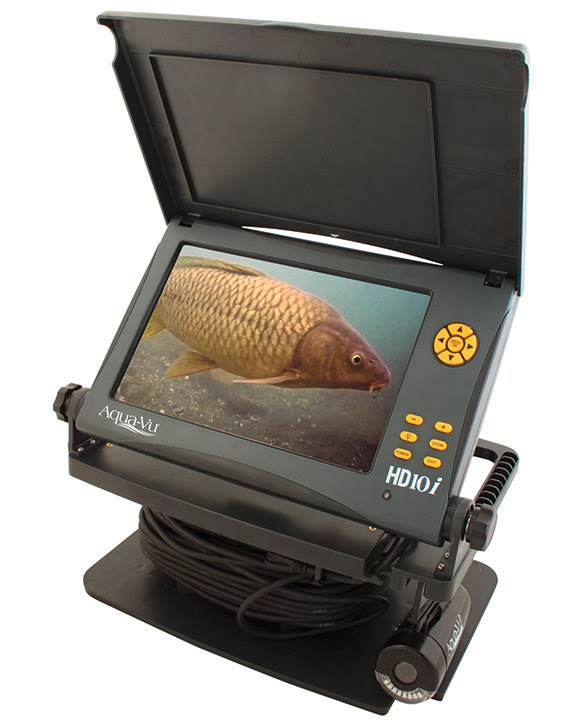 Aqua-Vu HD10i Underwater Viewing System Aqua-Vu HD10i Underwater Viewing SystemCarp, known by their most ardent angling fans as highly intelligent, discerning and wary, exhibit some fascinating underwater preferences. “I’ve been a fan of the simple hair rig for years and thought by presenting my bait a few inches above bottom over my pre-baited areas, fish would notice it quicker and I’d catch more fish. “Actually, the camera showed me that the fish would nudge the rig, appear to feel the hook and avoid it altogether. Only about one of every ten fish I saw on screen took the bait without nudging the rig first. That was a huge revelation. As soon as I pinned the hook to the bottom, with the bait barely floating above, my catch rate nearly doubled.” Cutler’s camera work also revealed that carp often detect and avoid his fishing line. “I’ve watched carp on camera detect my line and bolt off in the opposite direction. To combat this, I now use a ‘back lead,’ or a a second weight attached to your line nearest the rod tip, pinning the line to the bottom so fish are less likely to see it. Line visibility isn’t something many anglers ponder, but with carp, it can be a major factor. ”The camera screen further surprised Cutler with the sheer number of fish haunting his pre-baited areas. “Many days I’ll be sitting without a nudge on my line. I’ll drop the camera to see if my rig and bait are presented properly and I’m always shocked by the number of fish visiting my baited area—up to 15 different carp moving in and out of frame, taking mouthfuls of bait as they feed.” 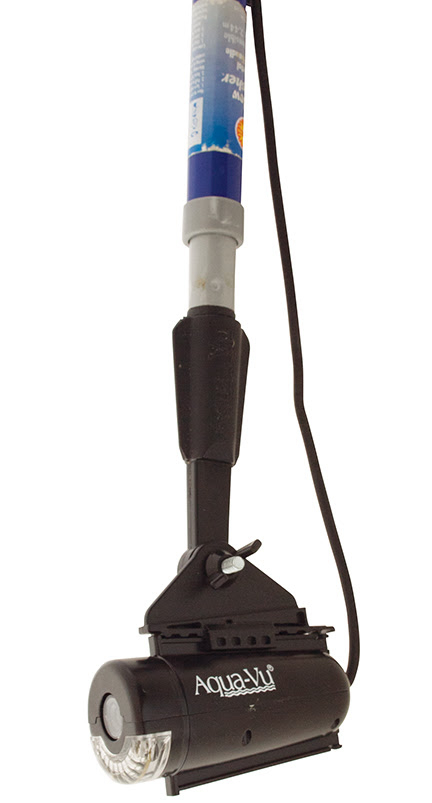 The XD Pole Adaptor allows for a variety of viewing angles and applications The XD Pole Adaptor allows for a variety of viewing angles and applicationsWhat Carp Eat Cutler says the camera has proven to him that carp favor canned sweet corn from the grocery store. “No idea why North American carp love it so much, but I’ve learned if I’m targeting a new area, I always toss in a can of Jolly Green Giant and lower the camera. With other baits, it can take a long time and a lot of chumming before carp stop to investigate or eat it. “If you pre-bait an area for an extended duration, you can have great success catching larger fish with other baits, especially boilies (a hardened, flavored dough bait that fends off smaller nuisance fish.) Another great carp bait is a pack-bait recipe combining sweetcorn and bread, which nearly always produces fish. ”Interestingly, Cutler frequently observes carp eating mouthfuls of invasive mussels. “I see carp eating zebra mussels on the camera all the time. I believe it’s why carp grow so large in the St. Lawrence River and the Great Lakes. Come fall when temperatures drop, carp move in to deeper rocky areas with heavy mussel concentrations. Carp sometimes feed so heavily on zebra mussels that they develop red sores on the roof of their mouth resulting from the sharp shell edges.” Carp crush shells and ingest the soft-bodied mollusks with special pharyngeal teeth in their throat.“After watching carp in the same area, you begin to differentiate certain specific fish by visible characteristics, such as scale patterns, scars, etc.,” he notes. “For me, a fun challenge is to target individual big carp I see on the camera screen. We call it ‘specimen hunting.’ I’ve named one particular carp Popeye, and I’ve been trying to catch him for two years now. I see him on almost every outing, but I’m still waiting for him bite my rig. Hopefully, next time.” |
Fishing with Matt Baty on Lake Seminole
Back in August, 2017. I drove down to Bainbridge and met Matt Baty at Wingate’s Lunker Lodge Saturday morning to get information for my October Map of the Month article in both Georgia and Alabama Outdoor News. Since Seminole is a border lake between the two states the same article will run in both magazines.
Matt grew up in Faceville, right on the lake, and has fished it all his life. He now guides there and on nearby Lake Eufaula and keeps up with the bass and knows where they are and what they are eating.
He and his partner had won an evening tournament on Seminole on Thursday night, landing five bass weighing 14 pounds in the three-hour tournament. It amazed me when he told me the tournament launched in Bainbridge, a 30-minute fast boat ride up the Flint River from where he caught the fish.
And he had to make the run back in the dark. That meant they had less than two hours to actually fish when they got to their honey hole at the mouth of Spring Creek. I have made that run many times in tournaments and you have to follow a twisting, turning channel. Its a good thing he knows the lake well to make it in the dark.
Matt took me to the grassy flat with hydrilla forming a mat on the surface along the edges of the deeper Spring Creek channel. We started with topwater but got no bites, but when he switched to a crankbait he caught five keepers up to two pounds each on five consecutive casts. That is hole #1 in the article.
I landed a three-pound largemouth on a worm there but then it got tough. We fished all morning without another keeper but then, on what is hole #7 in the article, he landed three bass about three pounds each by punching a plastic bait through the hydrilla behind a 1.5-ounce sinker.
I don’t even own a sinker that big and did not try his method. He offered me one but you have to stand up to fish that way and my back will not let me do it more than a few minutes.
Seminole is a beautiful lake and has a lot of three and four-pound bass in it. Fishing there seems much better this time of year than around here and is well worth the four-hour drive!
This Map of the Month article is available to GON subscribers at https://www.gon.com/fishing/seminoles-fall-bass-with-matt-baty
How To Catch November Reds, Trout and Flounder in Mobile
November Mobile Reds, Trout and Flounder
with Captain Dan Kolenich
“November is one of the two best months of the year for catching reds, trout and flounder in Mobile,” Captain Dan Kolenich said. As the water cools and freshwater starts flushing out the bay, shrimp move toward the ocean and you can catch all three species. The shrimp are mature and as big as they get, so they are even more attractive food in November. Only in May, with the shrimp are moving in and the fish are following them, is as good.
Captain Dan moved to the Mobile area in 1979 and fell in love with the fishing, learning how to catch reds, trout and flounder in the bay as well as all the species available in the area. He started guiding 18 years ago, and has also fished some of the professional redfish tournament series like the Inshore Fishing Association (IFA) Redfish Tour and the Oberto Redfish Cup. They do not fish Alabama waters so raveling to different areas like Florida and Louisiana in those tournaments helped him learn to find even more fish in Mobile.
Until a few years ago most of his guide trips were with clients that wanted to catch fish on spinning tackle, with one or two fly fishing trips per year. But now 60 to 70 percent of his trips are fly fishing trips and he is able to help fly fishermen catch trout and reds, with the occasional flounder, in the bay and rivers.
Although he sometimes uses live bait like pogies, bull minnows and shrimp, he prefers artificals. His favorites for spinning tackle are High Tide plastic shrimp and minnows on their B52 jigs and he sometimes makes them into spinnerbaits by adding a Hildebrant blade on a wire. Those baits are soft and flexible but hold up well, allowing you to catch many fish on one bait before you have to change.
He also casts a Mirror Lure 32 M lure as well as their Top Dog Jr. topwater plug. As the shrimp become scarce the fish feed more on baitfish that these plugs, as well as the soft minnow lures, imitate.
“When you start catching freshwater drum where you had been catching trout and reds a few days earlier, its time to move further out,” Captain Dan said. Starting somewhere around Thanksgiving and lasting until Christmas, the water cools and fresh water flushes saltwater out of the bay and fishing becomes difficult for desired species. But until that happens, fishing is excellent, and you can follow the bait and fish as they move further out.
Early this month start fishing about five miles upstream of the causeways and by the end of the month you should be fishing within a mile of the causeways. Start up the Tensaw and Raft Rivers around Gravine Island and work down those rivers as the fish move out. The Blakeley River is another good place to try. Later in the month concentrate on the Spanish and Apalachee Rivers.
The pilings on the causeways that cross the bay are also good, with some fish around them all month, but they get better later as fish in the rivers move down and join resident “piling” fish.
Early in the month you can catch trout around shallow wood cover up the rivers and reds over grass beds on high tide. An east wind will often push an additional foot of water into the bay, making the shallow bite better. For shallow water, plugs work well since you can keep them over the cover. Birds feeding back in bays and sloughs are a good sign the fish have pushed bait into those places and are active in them.
For trout, find logs and trash on the bottom in two to three feet of water and work the Top Dog Jr over them. Their C-Eye Suspending Twitch Bait will suspend 12 to 18 inches deep, allowing you to work it over the cover. Trout seek water in the 70 to 80-degree range, so look for those temperatures for the best fishing.
For reds, work those same baits over the grass beds in shallow water three to five feet deep. Sometimes you can see reds feeding in the shallow water or the mud stirred up by them. They are in these areas feeding on crabs and minnows. Cast far enough ahead of feeding fish that you don’t spook them and start working it when they get close to it.
As the tide moves out it pulls water, bait and fish out to deeper water near the channels. In the rivers the bottom slopes off in a shelf out to one to 10 feet deep then flattens out to about 12 to 14 deep before falling into the channels. Captain Dan says about one-third of the river will be this creek bottom at the 12 to 14 feet deep and that is the depth trout and reds hold and feed.
That is a lot of water to cover but Captain Dan says it is easy to find the fish since lines of boats will be drift fishing around them, and you can join them. Go up current to the head of the line, put out your lines and drift through the fish. When you stop getting bites reel in, crank up and go back to the head of the line to start another drift.
This is the accepted method of fishing in the crowd. Captain Dan warns that you should not anchor when you catch a fish, it lessens your chance of catching more fish and, worse, it messes up everyone else fishing the correct way, drifting through them. The only anchored boats are going to be fishermen that really don’t know how to catch the fish.
Until Thanksgiving a good day trout fishing will produce 30 to 40 keeper size fish. After Thanksgiving you may catch only four or five, but they will all be gator trout, over 20 inches long.
For both trout and reds a High Tide shrimp or minnow behind a jig head work well. Both will hit them when drifted near the bottom. Vary the weight of your jig head depending on your drift speed, starting with a three sixteenths head, to keep your bait near the bottom. A red head High Tide jig head is Captain Dan’s go-to color. You can use live bait, but Captain Dan prefers artificials for ease of fishing as well as reducing costs.
Reds like a bait right on the bottom and this is when Captain Dan likes to put a spinner over his jig. It gives you more depth control as well as attracting fish to the bait. Try to keep it within a foot of the bottom.
Flounder also feed in the rivers this time of year and will hit jigs, but they tend to hold on points where rivers and creeks come together. They sit on the bottom and feed, not really moving around much. You can catch them by drifting and casting to the points along your drift, but a good tactic for flounder is to anchor next to a point and cast up current on it.
Use a jig and let it sink and work it with the current just over the bottom. When a flounder hits there is no doubt, according to Captain Dan. When they take a jig it is a hard hit and they tend to hook themselves.
Bull minnows are also good for flounder and you can catch them “Carolina Rig” style, with the hook on a two-foot leader behind a sinker. Cast or drift this rig on points and drag the sinker along the bottom, adjusting the weight of it with the current so it stays on the bottom.
Don’t “set the hook” hard on a trout, just tighten up and raise your rod tip. A hard hook set can tear the hook out of their mouth. A red will hit hard and run and set the hook itself but you do not want to jerk your rod tip since their rubbery mouth can tear.
For all three species Captain Dan uses a seven-foot medium action Falcon rod with a Okuma spinning reel. The rod’s light tip helps keep from tearing the hook out of the soft mouth of trout but is strong enough to hook the rubbery mouth of a red, and it has enough backbone to fight them efficiently.
The reel has an extremely smooth drag, important when fighting a red on the ten-pound test line he uses. He does tie a 12 to 18-inch 17-pound fluorocarbon leader on his main line, which is either Power Pro braid or monofilament. The leader helps since there are a lot of things to abrade your line.
Although red’s mouths are tougher than trout’s, they are soft and the rod action and light line, as well as a smooth drag, are all very important to keep from losing hooked fish.
Captain Dan an Orvis endorsed fishing guide. He uses nine-foot, eight weigh rod and says you need a fast sinking “depth charge” line to get down to the fish. He drifts with a Clouser minnow fly and it needs to be fished at the 12 to 14-foot depth where the trout and reds are feeding. You can cast the same bait for flounder but it, too, must be near the bottom for them.
The pilings on the bridges are good places to cast a fly or jig for all three species. Contrary to what seems to be intuitive, Captain Dan has found fish hold on the up current side of the pilings rather than in the eddy on the downstream side. There may be some fish on the eddy side, but, much like dolphins riding the bow wave of a ship, fish hold in the upstream ‘dead zone” break better.
Hold your boat on the up current side of the piling and cast your Clouser minnow or jig up to the front of the piling rather than past it, and let your bait sink down in the dead zone there. Try letting the bait sink to different depths to see if the fish prefer a certain depth. Live shrimp or minnows can be fished on the pilings in the same way.
Captain Dan encourages catch and release on all fish but he does not mind if you keep just enough for a fresh meal. Releasing all or most of your catch helps insure the fishing will be good in the future. The size restrictions on reds and trout has really helped the fishing, too.
There is a ten fish, 12-inch minimum size limit on flounder. Trout also have a ten-fish creel limit and must be over 14 inches long. There is a three-fish limit on reds and you can keep fish between 16 and 26 inches long, but only one over the 26-inch length. Reds over 26 inches long are the brood stock and all should be released, and Captain Dan says they are really not very good to eat at that size, anyway.
More than the usual amount of rain in the fall can flush out the saltwater earlier and muddy up the rivers, make fishing more difficult. Strong winds can also create problems. It helps to have an experienced guide to adapt to daily changes in conditions.
When you find the kinds of places these fish feed, don’t get stuck fishing familiar places. Captain Dan says finding new, similar places is one of the thrills of fishing here, and there are a lot of them to explore.
All you need on a guided trip with Captain Dan is what you want to eat and drink to put in his ice chest, hat, sunglasses, sunscreen, camera, and clothing like a long sleeve shirt and rain gear. He asks you to wear soft sole shoes. Although he provides all tackle he says you are welcome to bring your favorite rods, reels and tackle to use. You do not need a saltwater license when fishing with him but if you go into freshwater you do need a freshwater license.
Contact Captain Dan for a guided trip fly fishing or spinning tackle fishing, at 251-422-3474 or email him at info@captaindankolenich.com. His website at captaindankolenich.com has fishing reports as well as more information on his trips.
Where and How To Catch September Lanier Bass with Rob Jordan
September 2013 Lanier Bass
with Rob Jordan
Tired of summer doldrums fishing for bass in deep water and not catching much? There is light at the end of September, when water starts cooling and bass get more shallow and active on our lakes. But why wait several more weeks? You can catch some big spots at Lanier right now.
Lanier is a big lake at 40,000 acres and since it is just northeast of Atlanta it gets heavy pleasure boat traffic, especially on weekends. And it gets a lot of fishing pressure. The lake is known for its big spotted bass that took advantage of the introduction of blueback herring. Five pound spots are caught often and most tournaments are won on spotted bass, with five-fish limits weighing 15 pounds common.
Rob Jordan grew up fishing Lanier and now lives in Swanee. His cousin Jim Murray, Jr. got him started tournament fishing and taught him a lot about catching bass. Rob also worked with Jim painting custom lures and Rob has a business making realistic looking baits. He also guides on Lanier and fishes tournaments. Next year Rob plans on fishing the FLW Everstart and BASS Opens.
This year Rob fished the Savannah River BFL trail and is right on the qualifying point to fish the Regional at Lanier with one tournament to go. He hopes to do well in the Regional on his home lake.
Rob’s best five spots in a tournament on Lanier weighed 21.5 pounds. This summer he has had big fish in two night tournaments. Two years ago he placed third in the Weekend Series on Lanier and was in the top ten in the BFL there that year. He knows the lake and how to catch good spots.
“Lanier is a fantastic lake but you have to understand the waters and when the bass bite to do well,” Rob said. It is a unique lake and you won’t catch the big spots by fishing like you do on other lakes.
“The biggest spots are hard to catch since they roam the lake, living in water 50 to 60 feet deep,” Rob told me. Weather and moon phases are keys to figuring out the bite. And you have to fish in the right places to catch the quality spotted bass.
September is a transition month for spots on Lanier and you can catch some really big fish, especially late in the month. Last year Rob got a six pound, six ounce spot toward the end of September on a guide trip. But you can catch quality fish starting right now.
A wide variety of baits will catch spots on Lanier this month. Rob will have a drop shot worm and a shaky head worm ready for slower fishing. When the bite is good he likes a swim bait or a top water plug. All these baits are fished in deep water, with his boat often sitting in 80 plus feet of water and fishing water that is 30 feet deep.
Rob will try a variety of depths and lures until he finds where the bass are feeding, and that depth will usually be consistent all over the lower lake. The key is a long point or hump that drops off into very deep water. Standing timber in the deep water and brush or rocks on the humps and points make those places much better.
Rob took me to the following ten spots in early August and we caught fish on most of them. They are good right now and will get even better as the month progresses.
1. N 34 10.029 – W 84 02.492 – Green channel marker 3SC in Shoal Creek sits on a rocky hump right by the channel. There is also a danger marker on it and one small bush stuck out of the water when we were there. The hump is right off an island, too. It always holds bass, according to Rob, and it typical of the type place he fishes this month.
There is brush all over and around it as well as the natural rocks to hold feeding fish. Rob says it is important to locate the brush piles and fish them, so ride it with your electronics and mark the brush. Good electronics will even show the fish in the brush and how they are setting up on it.
Start on the upstream end and work the whole area, keeping your boat out in the channel. Wind rippling the surface of the water is critical here and on other spots to make the fish active, and overcast days help, too.
If there is some wind and some clouds try a big swim bait like the Bucca Bull Herring hard swim bait or a Zman Grass KickerZ over the brush. Topwater plugs like a big Spook or Sammy will draw the bass up to the top from the brush.
If the water is slick or it is sunny Rob will fish a Zman StreakZ on a drop shot or a Big Bass Baits jig head with a worm on it in the brush. It is important to get the baits right on the fish so work each brush pile carefully, especially if you see fish in or around it.
2. N 34 11.681 – W 83 03.607 – Run over to Young Deer Creek and right in the mouth of it on the left side going upstream marker 1YD sits on a hump with a danger marker and some bushes on top. Again, it is right on the channel where deep water is very close to shallow water.
Your boat should be in about 100 feet of water and you want to fish brush around 30 feet deep. Rob says 30 foot deep water is usually a good depth in September but they may feed a little shallower later in the month. If you are not catching fish in the deeper brush, or if you see them in more shallow brush, try it.
Rob says bass are caught here every day. There are a lot of brush piles and big rocks on the hump to cover. Try all your baits around them.
A big swim bait is Rob’s go-to bait if he wants quality fish. In a tournament where five bites from big fish is all you want, try the Bull Herring worked slowly over the brush. Rob’s custom painted versions are best since the spots on Lanier see so many swim baits but all will catch bass.
3. N 34 11.766 – W 84 03.499 – Across the mouth of Young Deer Creek channel marker 2YD sits on a deep rocky point that is excellent. Rob fishes the downstream end of the point where it runs out parallel to the channel. You will be sitting in 70 to 100 feet of water when fishing the end of the point.
First try the swimbaits and topwater. Always keep a topwater plug ready to cast immediately to surfacing fish. We caught a couple the day we fished when they came up near us. They may not stay up long so be ready. If the spots are consistently schooling on top but not staying long, Rob will stand in the front of the boat with a topwater bait ready to cast, waiting on them to come up again.
4. N 34 12.494 – W 84 01.432 – An island sits in the mouth of Six Mile Creek and marker 4SM sits just off it. The creek channel is on one side and the river channel on the other. Rob says this is one of the best big spot holes on the lake and he caught a six pounder here.
There are stumps and brush piles on the point on the downstream side of the island where the big spots live. Rob says a big swim bait or topwater is the way to go here for the big ones. Work both baits all around the point, concentrating on brush piles and stump beds you find with your electronics.
Rob fishes both hard and soft swimbaits with a steady retrieve and keeps them near the surface is there is cloud cover or wind on the water. When a fish hits he sets the hook with a sweep of his rod, not a hard set, and does not drop the rod tip.
If there is little wind or if the spots just don’t seem to eat the big bait, Rob will drop down to the smaller size Zman SwimmerZ soft swim bait. He fishes the soft baits on a three sixteenths to three quarter ounce jig head depending on how the fish set up. The lighter head is better for running the bait shallow but the bigger head will allow you to fish it a little faster and deeper.
5. N 34 13.464 – W 84 01.406 – Further up Six Mile Creek it narrows way down right at channel marker 7SM. There are several good humps and points in this area. The left side going upstream, between the last cove on that side to the point where the creek narrows way down, have the better ones.
The danger marker on the left sits between two long points that are excellent. Sit out in 45 feet of water and cast up into 25 to 30 feet of water. There are a couple of road beds, an old house foundation and brush piles on the points. Fish them all.
The pinch point where the creek narrows way down funnels fish into this area as they move up the creek in the fall. Rob says when the water temperature drops into the 70s it is like a switch turns on and the bass get into action chasing bait. Swim baits and topwater are even better when it cools down.
6. N 34 14.772 – W 83 56.843 – Run up the river to the mouth of Flat Creek. A big island sits in the mouth of it and red channel marker 26 is on a point where the river channel swings in toward it. Rob says bass live here year round and it is always good, but in September even more bass get on the point while moving into the creek.
Sit out in 40 feet of water and cast up on the point with all your baits, starting shallow and working deeper. There are rocks and brush piles here that hold the fish. If you can’t find the brush with your electronics, drag a jig head worm along the bottom until you hit rocks or brush and work it.
7. N 34 13.602 – W 83 55.772 – For a change of pace run into Mud Creek all the way to the narrow creek channel in the back. Rob fishes docks back in places like this. Spots and some big largemouth can be found back around docks in creeks as the water cools. Fish all the docks from the ones on the left past the big rocky point where it narrows down all the way around the creek.
Try a one eighth to three sixteenths ounce jig head with a Zman finesse worm on it. Fish all of each dock, from the deepest water in front of it to the back under the walkway. The bass may be feeding anywhere around the docks.
The bass will be on the outside deeper docks early in the month but move further back as the water cools. Since the weather this summer has been fairly cool and the rain and cool weather in the middle of August kept the water temperatures down, they may move further back sooner this year.
8. N 34 13.967 – W 83 56.271 – Going out of Mud Creek Old Federal day use park with a boat ramp is on your left. Past it a long point runs out toward the main lake and there is an island off the bank, with danger markers between it and the main point.
Stop about even with the island in Mud Creek and idle over the ridge that runs out on that side toward the Mud Creek channel. This ridge runs way out and has rock and brush on it, and bass stack up on it all summer long. Even more move to it as they follow shad back into the creek in the fall.
Sit in about 40 feet of water and cast up on top of the ridge to 20 to 30 feet of water. Try all your baits. When using a drop shot in the brush Rob likes to pitch it ahead of the boat a little rather than fishing it straight under the boat. He will let the lead hit bottom, raise his rod tip to keep the bait up off the bottom and twitch it in one place, moving the lead very slowly as he works it around the brush.
9. N 34 13.447 – W 83 57.774 – Out off the end of the point with Old Federal Campground there is a big flat point with a danger marker off a small island with bushes on top. There are brush piles all over it but Rob’s favorite area of this big point is downstream of the island and danger marker.
As in other places, start with topwater and swim baits over the brush piles you locate with your electronics, then try the dropshot and shaky head. Rob likes a light one sidxteenths to one eight head, as light as conditions will allow, since the slow fall will often draw a strike.
Rob lets the shaky head hit bottom then slowly drags it along with an occasional snap of the rod tip to make it wiggle and jump. Many people shake it in one place, as the name implies, but Rob moves it slowly along the bottom without constant shaking.
10. N 34 11.424 – W 83 58.442 – In Flowery Branch across from the Van Pugh ramp a long underwater point runs off the upstream side of the danger marker between the small island and the main point. This point actually runs off Van Pugh park out to the island then on out toward the creek channel.
Stay out on the creek end of the point and work it with all your baits. Resident fish live here and more move in during the fall. If you are fishing a tournament use big baits for a few quality bites. Use smaller topwater baits like the Sammy 100 early in the fall but go bigger later. For numbers the shaky head or drop shot will get more bites.
All these places hold bass right now and will get better as the month progresses and the water gets cooler. Give them a try and you can find many more just like them.
For a guide trip with Rod to see first hand how he fishes Lanier call him at 770-873-7135 and check his web site at http://robjordanfishing.com Also check out his custom painted baits at http://www.xtremelurecreations.com
California Catch of Swordfish Takes Off as Anglers Embrace New Technique
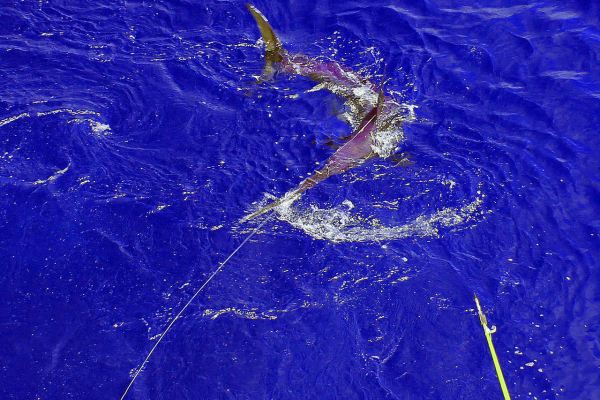
| From NOAA Fisheries from The Fishing Wire Researchers have tagged swordfish off Southern California for studies evaluating new ways of fishing for the species. Credit: Pfleger Institute of Environmental Research (PIER)Recreational fishing for swordfish off southern California has surged over the last year. Fishermen have started borrowing a strategy from East Coast anglers and the commercial fishing world: going deep during the daytime. Tagging and tracking research by NOAA Fisheries and the Pfleger Institute of Environmental Research (PIER)revealed that swordfish spend most of the day at depths greater than 700 feet. Commercial fishermen on the West Coast originally began fishing in deeper waters for swordfish. They used buoy gear in part to avoid protected species such as sea turtles and marine mammals. Now recreational anglers on the West Coast have caught on to the technique and have seen their catches increase dramatically. Chugey Sepulveda, PIER Director and Senior Scientist, said anecdotal numbers suggest that recreational swordfish catches off southern California have jumped. They’ve gone from fewer than 30 in a typical year to hundreds in a matter of a few months. “It’s been a real boost for the recreational fleet because it now offers anglers a new and exciting quarry that was previously considered extremely difficult to target,” he said. Research shows that swordfish spend most daytime hours at depths of 700 to 1,400 feet, coming only occasionally to the surface. Recreational fishermen had once primarily pursued them only when swordfish were spotted basking on the surface. Days of excitedly dragging a bait in front of a sunning swordfish have turned into long days of staring at rod tips. “Swordfish have always been considered the pinnacle of fishing success since the days of Zane Grey,” said Bill DePriest, publisher and editor of Pacific Coast Sportfishing Magazine. “Now it’s something more people are experiencing.” Catch and Release Ethic Emerges As catches have increased, many fishermen are now discussing bag limits and potential catch-and-release measures to prevent exploiting the swordfish stock, Sepulveda said. Swordfish populations in the North Pacific include two stocks: an eastern Pacific Ocean stock and a Western and Central North Pacific Ocean stock. There continues to be discussion as to which stock southern California fish belong. This is one reason why Sepulveda and his team have headed up NOAA Fisheries-sponsored research on stock structure. The 2018 stock assessment for the Western and Central North Pacific Ocean swordfish stock found off the West Coast shows that the stock is not overfished. It is also not experiencing overfishing. The assessment also found that the stock can support more fishing while remaining sustainable. It found that the biomass shows “a relatively stable population, with a slight decline until the mid-1990s followed by a slight increase since 2000.”Figure. Recreational fishermen have employed similar methods on the U.S. East Coast and other areas. Recreational anglers on the West Coast have caught on to the strategies and techniques more recently as the new deep set commercial fishery has taken off. The main season for swordfish off southern California is roughly from late summer into winter, DePriest said.“It’s a healthy hobby. And with swordfish, it’s definitely always exciting,” DePriest said. “It’s great to see so many people interested.” Pacific swordfish are highly migratory and often travel thousands of miles across international boundaries. Since many nations target the species, effective conservation and management requires international cooperation as well as domestic attention. Scientists are now seeking funding for a study to collect more data on the growing recreational fishery. Data is needed to evaluate the survival of swordfish that are caught and then released. While there are best practices for choosing the right gear and handling with care when catch-and-release fishing, survival rates vary by species. Recreational anglers can also contribute to swordfish research by participating in our Southwest Fisheries Science Center’s Cooperative Billfish Tagging Program. The program, started in 1963, provides tagging supplies to anglers. It helps us better understand movement and migration patterns, species distribution, and age and growth. Anglers tag the fish before releasing them. |
Kayak Panfish

| Kayaks, ultralight tackle and panfish make a successful combinationBy Noel VickPhoto courtesy of Hobie from The Fishing Wire “Panfish” is perhaps the biggest catchall category in fishing. Essentially, if it’s round and measures somewhere between the size of an adult hand and the fateful frying pan, it’s a panfish. We’re talking about the zillion species of sunfish, a couple styles of crappies, as well as – in the opinion of many including myself – white bass. Drumroll please… And now you’re being urged to pursue the commonest freshwater fish in North America with the uncommonest of approaches: pedal kayak trolling. Take a breath and a moment to get over the weirdness. It’s an extraordinarily effective technique.For this discourse, it’s best talking lure selection first, as it’ll dovetail into techniques. My panfish trolling portfolio consists of two primary categories: hardbaits and spinners. Hardbait Pedal Trolling Not too many years ago, the marketplace was inundated with downsized bodybaits, including lipped crankbaits, jerkbaits and lipless rattle baits. Manufacturers miniaturized existing models and developed entirely new micro hardbaits. I’ve trolled and tested them all from my Hobie Mirage Pro Angler 14. Panfish of all stripes – especially larger specimens – either make a living off bait and fish fry or will opportunistically eat forage with fins and tails. Hardbaits also ferret-out the most aggressive fish and can be trolled faster than spinners, letting you cover more water in less time. Hardbaits are unquestionably the best search tool. Trolling by pedal kayak simply means casting the bait back, letting out additional line – minimum of 100 feet – and you’re fishing. Whatever species you pursue, the odds of success are improved by getting the lure as far away from the boat as possible, especially in depths of 10-feet and less where fish more easily scatter. Experience has proven, however, that the darker the water the closer you can run baits. As with other forms of pedal trolling, longer rods are recommended. Think about the common practice of spider-rigging for crappies; it’s about spreading the field of coverage. In a kayak, where legal, two long rods can be easily managed. The best all-around panfish trolling rods hail from St. Croix’s Panfish Spinning Series. The blanks are constructed of a dynamic blend of SCVI and SCII graphite providing responsive touch, balance and finesse. I employ either the 8-foot (PFS80LMF2) or 9-foot (PFS90LMF2), light, moderate-fast, 2-piece models. They curve concentrically on the move, and natively sweep-set upon strike. For added machismo with larger baits, or bigger-billed ones with greater resistance, I carry the 7-foot, light, extra-fast-action model (PF70LXF). Rods are paired with 2500 size spinning reels. Smaller 1000 and 2000 sized reels don’t take up line nearly as fast. And personally, I like the feel of a larger reel. And when you opt to stop and cast, they yield greater distance. Daiwa’s affordable Regal LT is a solid and widely available choice. Like all my pedal kayak pursuits, braid is the word. Braid has better sensitivity and buffers the softness of long panfish rods with stoutness to produce ideal, hands-free hooksets. Braid also lets the rod communicate to me that lures are running true. Consider either 6- or 8-pound test of Daiwa’s super narrow diameter J-Braid x8. Leaders are mandatory, too, long ones (24-inch minimum), which combat panfish species’ exceptional vision. Fluorocarbon makes are best. I tie in sections of Daiwa’s J-Fluoro in 4- or 6-pound test, finishing with a tiny snap for speedy lure changes. LIVETARGET’s 2 ¾-inch Rainbow Smelt Jerkbait does it all, never discriminating against species, including bass. Although designed to replicate a rainbow smelt, fish in waters dominated by shad and other shiner species don’t seem to care. I theorize that the Rainbow Smelt Jerkbait’s precision anatomy, pure trolling path, and seductive action make it universally effective.Rapala has a major stake in the panfish market, too, and their baits are always onboard. Fish fawn over the petite, 2 ½-inch Rapala Husky Jerk, a downsized rendition of the popular, slow-sinking series. To that, Rapala also tenders the Ultra Light series, catering specifically to panfish anglers. The 1 ½-inch Ultra Light Crank is not only cute as hell, but has the surprising capacity to run deep on the troll, nearing the 10-foot mark. Daiwa also comes to the plate with a couple diminutive heavy hitters. The 2-inch Dr. Minnow Jerkbait turns fish heads. And when you’re in the midst of larger, meat-eaters, consider Daiwa’s 3.75-inch TD Minnow. Color selection is an exercise in experimentation. For the most part, I stick to natural, baitfish tones – the silvers, whites and blues – but often opt for more color in stained water. And for whatever reason, panfish respond exceptionally well to greens, especially ones with lighter bellies. Spinner Pedal Trolling Let’s first clarify, I’m talking about hairpin spinners, not inline spinners. Years of pedal trolling have proven that bags are basically doubled with hairpins. I believe it’s the flash combined with a juicy, baitfish profiled target – the jig and soft plastic.DIY is the only way to go with hairpin spinners. Certainly, there are hordes of pre-rigged variations available, but none matching my surefire assortment. To this, entirely, my hairpins are founded on Betts Spinners. The series affords Colorado blade sizes 0, 1, and 3, the heartier 3-size providing the best loft, especially with smaller jigs. Both silver and gold options are available, too. I employ silver in most scenarios, but swap to gold in dark water.Z-Man Slim SwimZ and Finesse ShroomZ jighead with hairpin spinner. Next in line is the actual jig. Betts offers several workable styles, too, but I prefer a couple others. Z-Man’s capsule-headed Finesse ShroomZ are the defacto heads for Ned Rigs, and I find them equally amazing with hairpin spinners. Featherweight sizes of 1/15- and 1/10-ounce are the magic bullets. Keep a pool of red, black, green and white heads onboard to color match bodies.Northland Tackle’s RZ Jig is another winner, and easily found above the Mason Dixon Line.For my druthers, there are three failsafe brands of bodies: Z-Man, Bobby Garland and Bass Assassin. The throbbing paddletail of Z-Man’s 2.5-inch Slim SwimZ is a crappie menace. Its narrow girth prompts the hairpin to run single-file. And, constructed of ElaZtech, a single Slim SwimZ can easily burn through a limit of crappies. Nationwide, Bobby Garland Crappie Baits own the most shelf space. This is warranted. The popular bodies – specifically the Original 2” Baby Shad – are to panfish what peanuts are to elephants. Ideally shaped like fish fry, they are squishy in the fingers, causing fish to hang on, and come in a staggering 75 colors. The flamboyant Cajun Cricket is a sunfish favorite. Baitfish-toned Blueback Shad Diamond Mist tempt everything in clear to lightly stained water. Glacier Blue, a white body peppered with blue, is a frequent flyer as well.Grab a few packs of Bass Assassin’s 3-inch Baby Shad to mix things up. They, too, come in a wide pallet of colors. Northland Tackle’s legendary Rigged Mimic Minnow Shad come pre-rigged with physically accurate bodies and fish-fry-shaped heads. The color matching is already done. 1/32- and 1/16-ouncers are the chosen ones. Pedal trolling hairpin spinners is elementary. Locomoting slower than you would with hardbaits, even as slow as 1 MPH, is enough to keep the blades turning while riding high in the water column. Hairpins are at their best lazily humping along above targeted fish. In 10-feet of water, I want the hairpin mobilized 3 or 4 feet down, and no deeper than 5. Sometimes, I’ll run a hairpin rig in both rod holders, crack a cold one and light a cigar, and make sequentially spaced passes over suspect water. Even though many missions are in less than 10-feet of water, my eyes are glued to the electronics, a 9-inch Raymarine Axiom. Even in shallow water you can mark fish. But more importantly, the Raymarine reveals weeds and other fish holding elements, not to mention signaling depth breaks. And if you find panfish pasted to the bottom, it’s time to hit the brakes and go to a vertical presentation; just the jig and plastic or a weensy jigging spoon. The Raymarine will reveal these tiny baits beneath the kayak in real time. Turn on the A-scope feature and experience the same, live drama you enjoy when fishing vertically through the ice. Assuming you’re the results-oriented type of angler who has gotten over the stigma of trolling in general (you likely wouldn’t have read this far if you weren’t), expand the technique into your panfishing – preferably by pedal-driven kayak – and see what happens. A cooler of crappies and sunfish does not lie. |
Summer Catfishing
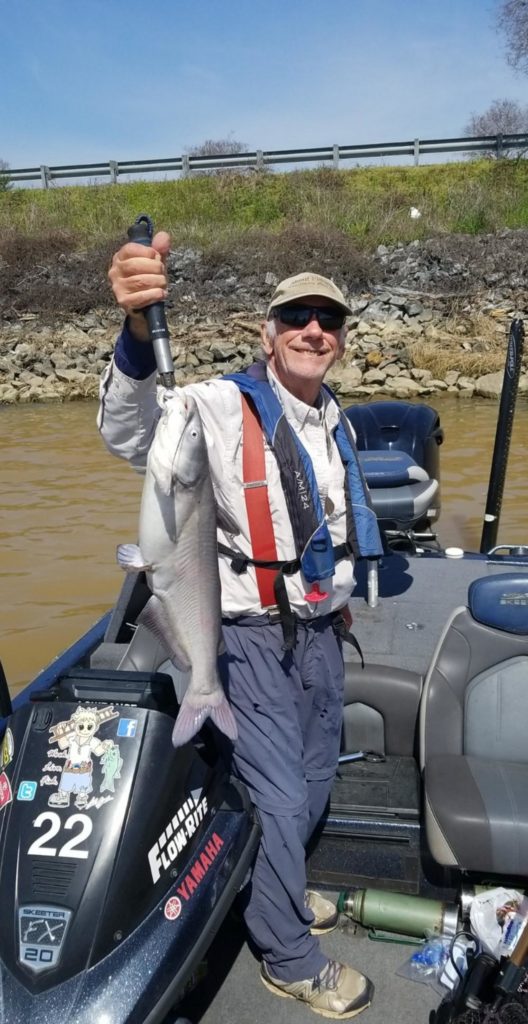
| Tips for Summer Catfishing Randy Zellers, Arkansas Game and Fish Commission Assistant Chief of Communications from The Fishing Wire The catfish may be one of the most misunderstood of all Arkansas’s sportfish. It occurs in practically every body of water in the state, grows to gigantic proportions, and is easy to catch with inexpensive equipment. Top off those features with its fantastic flavor, and it’s amazing that anyone would look down on these hardy fish. The Arkansas Game and Fish Commission stocks thousands of catchable-size channel catfish through its hatchery system each year to small ponds and lakes that cannot keep up with fishing pressure. Mother Nature produces millions more of the fish in Arkansas’s rivers and lakes every year. All it takes to catch them is a little patience and the proper lure to tempt them into biting. The secret ingredient to all good catfish lures is scent. Catfish can “smell” baits much better than many fish species. Highly sensitive membranes inside the fish’s nostrils detect compounds in the water. The more folds these membranes have, the keener the fish’s sense of smell. Trout have 18 or so of these folds, while largemouth bass may have only 10. The channel catfish is blessed with 140 of these specialized folds to sense smell, enabling it to detect compounds as minute as one part per 100 million. So what odors make the best bait for catfish? Here are a few tried and true offerings to keep you hooked up this summer. Smelling Fishy The best smells of all are going to come from the foods catfish are used to eating. Shad, small bream and chunks of less desirable species like carpsuckers and skipjack are top producers for many catfish anglers. Justin Homan, lead biologist in the Arkansas Game and Fish Commission’s catfish team, says many veteran catfish anglers, especially those on the big rivers of east Arkansas, favor cut shad and skipjack. These oily fish will put out a scent big catfish are looking for.“When I’m running jugs with my wife and little girl, we tend to use cut bait as well, especially fish with a tougher skin,” Homan said. “Chunks of carp or buffalo stay on the hook well and will bring in a lot of fish.” Homan says flathead catfish are much fonder of live baitfish than cut bait, so targeting these big fighters may require a little more effort to care for your lures. Many anglers use goldfish purchased from bait dealers, and he’s personally done well on Lake Conway running trotlines at night with live sunfish. “You have to catch the sunfish first, and can’t move them from another body of water, but they work very well,” Homan said. “One trick is to check your bait at about midnight. Channel cats may beat the flatheads to your bait, and the flatheads are most active after about midnight. Rebaiting then can really help bring in some bigger cats.” Any fish or crayfish caught in the wild can’t be transported to another body of water and used as bait there unless it is used as dead bait. The risk of spreading disease or invasive species is too high when moving live, wild-caught baitfish. If you want to use live baitfish but don’t have time to catch them in the body of water where you’ll fish, goldfish, shiners and minnows that can be purchased from bait shops come from baitfish farms that are certified to be free of diseases and other nasties live fish may carry. Creepy Crawlies Catalpa worms, nightcrawlers and other crawling critters from the flowerbed also make great bait, and they can be pulled up from the dirt can be transported without issue. Flipping a few bricks from the flowerbed or scraping aside some leaves and digging at the surface of the dirt should garner enough worms for a quick trip. Some anglers have taken the collection of worms to the next level, using a special technique called “worm grunting” or “worm fiddling” to get gobs of bait in a hurry. Compost bins also are great places to find active red worms nicknamed “red wigglers,” that don’t grow as big as the nightcrawlers you find on the ground after a rain but give plenty of action to entice finicky cats to bite. SPAM-tastic One of those overlooked grocery store baits that definitely works wonders is good old canned meat. As outdoor writer Don Wirth always penned in issues of Bassmaster Magazine’s humorous Harry ‘n’ Charlie columns, SPAM isn’t cured and ready to eat until it has a half-inch of dust collected on the top in the back of the convenience store shelves. Believe it or not, Arkansas’s current state record and once world-record 116-pound, 12-ounce blue catfish was caught on this easy-to-store bait in 2001. It doesn’t hurt to keep a can handy in the tackle box, and if the fish aren’t biting, it’s not half bad with crackers and a little hot sauce. You can’t say the same for nightcrawlers. Vampire-proof Weenies Clint Coleman, assistant coordinator for the AGFC’s Family and Community Fishing Program, has seen his share of stinky lures, as he helps run dozens of fishing derbies each year. His favorite bait is pieces of hot dog soaked in a mix of cherry Kool-Aid and garlic powder. For some reason, that combination sets catfish in fishing derbies on fire.“It’s easy to get at the store, and it’s easy to handle with kids,” Coleman said. “Some kids may not want to mess with worms, livers or stink baits, but everyone will pick up a hot dog. The garlic will put out plenty of scent to get the fish honed in on your lure.” Coleman says don’t worry about adding water to activate the Kool-Aid. The juice from the hot dogs is all it takes. Chicken Liver Trey Reid, host of Arkansas Wildlife Television, has had the opportunity to fish for big catfish on the Mississippi River with some real sticks, and he agrees that cut skipjack is the prime rib of the catfishing world, but for his excursions to smaller waters, he still tends toward the bait he was introduced to catfishing with — chicken livers. “You can pick it up at nearly any grocery store on the way to the lake or keep it in the refrigerator with a little less complaints from family members than other wild concoctions,” Reid said. “Sometimes it’s good to just keep it simple and remember that fishing doesn’t have to be a huge expense or take a ton of time to prepare for. ”Keep it Clean Strange as it may sound, you may not need to get stinky to get on a good channel catfish bite. Jon Stein, district fisheries biologist for the AGFC in Rogers says soap is one of the best baits used for sampling channel catfish in nets. “Biologists used to use a manufactured soybean cheese log for bait, but we caught a lot of turtles, too,” Stein said. “Staff now use Zote Soap to bait nets. It attracts the channel catfish without the turtles so we can focus on getting valuable information on Channel Catfish including lengths, weights, population size (catch per net), age and can evaluate how much of the population is from stocked fish.” Stein says that although he’s personally never baited up with soap, he’s talked to many anglers on the water that swear by it.“It needs to have a high animal fat content in it,” Stein said. “Some anglers say they melt it, pour it into ice cube trays and place a hook in it so the soap hardens around the hook, then they can keep things clean and organized on the water.” Zote is even scientifically proven to catch catfish, so-to-speak. A study conducted by Russell Barabe and Donald Jackson at Mississippi State University and presented to the American Fisheries Society in 2011 found that the catch rates of catfish between Zote soap and cut bait on trotlines was statistically insignificant. The study was in an effort to find alternatives to catfish baiting that would not catch some species of endangered aquatic turtles. The soap caught zero turtles while nabbing 193 blue catfish and 462 channel catfish when fished from 11,000 trotline hooks in six coastal rivers overnight in the Magnolia State. Have a favorite formula for catfish success? Send a comment to randy.zellers@agfc.ar.gov. If we can stomach it, we might just feature it in an upcoming edition of the AGFC’s Weekly Fishing Report. |
Where and How to Catch Neely Henry Bass
July Bass at Neely Henry
with Waine Pittman
Its hot and muggy but that is no reason to stay home in front of the air conditioner. Catching a big spot or largemouth will make you forget the heat, and there are few better places to do that right now than the Coosa River on the upper end of Neely Henry Lake.
Neely Henry is just downstream of Lake Weiss at Gadsden. From the Tillison Brend Park Ramp upstream the river is narrow but there are feeder creeks with grassbeds and other cover. Docks are scattered on the river and in the creeks. Current runs in the river most days from power generation at the Weiss dam and the Neely Henry dam.
Current seems to make the spots and largemouth grow big fat and strong. Hook a three pound spot in the current and you will swear you have one twice that big or a striper. The current also makes them hold in predictable places and you can catch both species without dredging the depths in July.
Waine Pittman lived the dream, as the BASS Federation Nation motto goes. In 2008 he qualified for the Georgia Top Six in his club, the West Georgia Bass Hunters. At the state tournament he placed 4th at Lake Seminole, making the State Team. At the Federation Nation Southern Divisional at Santee Cooper he was the top man on the Georgia team, qualifying him for the Nationals.
In a dream trip that almost turned disastrous due to the weather Waine was the top man on the Southern Division team which made him the Southern Division representative at the BASS Masters Classic, arguably the most important tournament there is each year.
Waine is sponsored by Nitro Boats, Mercury Motors, Minkota Trolling Motors, JJ’s Magic, Cull Buddy, Triple Fish line, Net Bait lures, Cold Steel Lures, TC Cranks, Costa Eyewear and Tillman Eye Center. He uses Revo reels exclusively and says they are the best reels available.
I asked Waine what his favorite lake was and he didn’t hesitate to say “Neely Henry.” His club fishes the lake every year, usually in July, and he also fishes pot and local tournaments on Neely. He loves to fish the river for big spots and largemouth and knows how to catch them.
Waine started tournament fishing while in college and likes tournament fishing. Next year he plans on fishing the Southern Division BASS Opens tournaments all his kids are now out of high school.
Waine has a 5.5 pound spot and a 7 pound largemouth from the river, and his best tournament catch there was a five-fish limit weighing 23 pounds. The river is the perfect place for Waine to skip, pitch and flip a jig and pig, his favorite way of fishing. And it catches fish there.
“By late June bass are set up on their summer pattern,” Waine said. That means they are holding in the river and bigger creeks on ledges and deeper cover and running in to shallow water to feed. Creek mouths are a key area this time of year, giving bass a short route to grass beds in the creeks and to cover that breaks the current on the river banks.
Waine will start at daylight on shallow grassbeds near creek mouths, then move to the river banks after the sun gets up. He fishes the grass fast with spinnerbaits, frogs and buzzbaits on one pass then come back and flip them with a Net Bait Paca Punch. After an hour he moves out to the river channel and flips them with a jig he makes.
Flipping, skipping and pitching a jig and pig with a Paca Chunk SR. behind a five-sixteenths ounce jig works well. That combo has a lot of action and works catches fish in the current on the river. Flipping is his bread and butter method of catching bass.
Waine showed me the following ten spots where he catches bass in the river in early June. We were a little early for the pattern but caught some good spots and largemouth, but not the quality fish Waine hoped we would catch. By now the bigger fish will be more active on these spots.
1. N 34 00.779 – W 85 55.412 – If you put in at Tillison Bend Park Ramp run up to the mouth of Cove Creek, the first creek upstream of the ramp on the same side of the river. Go into the creek to the 4th dock on the right, in front of a brick house, and fish upstream. There is a good grass bed by this ramp and it is a good place to start.
Fish the small patch of grass quickly then work on upstream, fishing the seawall and small point at the next dock. Past it is a big point. Fish it then go around the point. A huge grassbed lining the bank starts there and runs into a cove, out of it on the other side and on up the bank.
Throw your buzzbait to the bank and work it back across the gap. Try a spinnerbait, too. A frog works well over this water willow grass in the thicker parts of it and that is where the biggest bass will hold. Waine likes the Cold Steel frog since it is thin and tough.
Waine usually fishes around the first pocket with those baits then turns and fishes the same grass with the Paca Punch. That bait is a solid body bait that stays up on the hook well and has lots of action. He will drop the bait into holes in the grass and also punch through the thicker mats. A half ounce sinker is heavy enough to get through most of this grass and works well.
We hooked a couple of good largemouth here the day we fished. Both hit spinnerbaits the first few minutes before the sun came up. Sometimes you can punch the thicker grass can catch fish in the bright sun, and if the fish are actively feeding a spinnerbait run through the grass will catch them even in the bright sun.
2. N 34 00.870 – W 85 55.309 – Go back to the mouth of the creek and start on the upstream point, fishing upstream. Pitch a jig and pig to all the cover along this bank. Trees and brush create eddies in the current that the bass use as ambush points
Always fish upstream. That gives you better boat control and also helps work your bait with the current in a natural action. Fish at an angle ahead of the boat, pitching or flipping your bait so it hits on top of the cover and falls in behind it with the current.
Work on up to the first few docks along this bank, hitting them where the posts breaks the current. Current is critical when fishing the river. When it moves, the bass bite, but you need a strong trolling motor to fish it. Waine uses a 36 volt Minkota for this reason.
3. N 34 00.744 – W 85 54.500 – A little further up the river on the opposite side, just where the river starts a gentle bend to the right, a small double mouth creek enters the river. There are grass beds in the mouth that hold good bass. Waine said he pulled up here one day and on back to back casts caught a 4.63 and a 4.75 pound spot. There was a big bass chasing shad here when we got to the spot but we could not get it to hit.
Keep your boat out in the river and cast into the creek, working your fast moving baits over the grass. Fish both sides of the small island splitting the creek at the river edge. Waine says he does not work back into the smaller creeks like this one since the bass will be set up right on the river this time of year.
4. N 33 59.479 – W 85 54.044 – Further up the river Tidmore Bend makes a big horseshoe bend. Going upstream, watch for an old dead snag tree leaning out over the water. Start well downstream of this snag and work up to it. You should stop across the river from the blue roof house on the far bank if you can’t see the snag.
This inside bend is typical of a good type place to fish. There is a little less current here so bass like to feed here when it is running strong, but still enough to make them active.
Waine says he usually catches bass in less than five feet of water, so he concentrates his casts to the base of trees in the water and brush or little cuts on the bank. It is worth fishing on out to the ends of the bigger trees some to see if bass are holding deeper, but unless you get some bites keep your bait in the more shallow feeding zone.
5. N 34 05.552 – W 85 51.845 – Waine usually runs way on up the river from here, going past the Appalachian Highway Bridge. Upstream of the bridge Coats Bend makes a sweeping turn to the left. Go all the way past it to where the next bend starts turning to the right. A small island sits just off the bank and a small creek enters behind it. This is an excellent place to fish.
Start just downstream of the cut behind the island and fish upstream, pitching your bait into the ditch and working it out. Cover both points. The downstream point will have current hitting it and turning into the ditch, creating a good feeding eddy. The upstream point has current swirling around it to make the bass feed. There is grass on both points that you should hit hard, but also fish out in front of it.
Fish upstream a short distance, hitting the cover on the river bank. Fish will feed along it as they move to the mouth of the creek to feed so it is worth checking out.
6. N 34 07.637 – W 85 48.102 – Run all the way to the bend where the Weiss Re-Regulation pool empties into the river and stop on the right bank going upstream. Fish the right bank along the inside bend of the river, starting well downstream of the turn. Fish up to the turn past the dead snags in the water.
Along here the current is very strong out in the river but you will actually find water moving upstream from the eddy behind the point. There are cuts in the bank that create additional eddies and the wood in the water breaks the current, too.
Waine got a good keeper spot here on his home made jig and says it is a very good bank. It is worth hitting every little hole and piece of wood along this bank. Fish it slowly. With the current eddying around you can fish here fairly easily in both directions.
7. N 34 07.217 – W 85 49.057 – Headed back down the river go to the mouth of Ballplay Creek, on your left going downstream. It is on the straight section of the river about half way before you get to the turn back to the right going downstream. There is a lot of wood in the mouth of this creek, especially under the overhanging tree on the downstream point.
Waine says it is nasty under that tree and you will probably get hung up, but it is worth it since it holds good bass. Start fishing just downstream of the creek mouth and work into it, hitting the cove under the tree as you go into the creek. This one is deep enough to fish into the creek about fifty feet then fish back out on the opposite bank.
Time of day is not real important but sun seems to help position the bass a little. We caught more fish while the sun was bright than when it was cloudy. But current is more important than anything else, and Waine will fish this pattern from an hour after first light the rest of the day.
8. N 34 06.632 – W 85 51.505 – Going back down the river on the outside slight bend to the right watch for a small building on the left bank. Just downstream of it is a ditch with wooden retaining walls on it. This is the location of an old cotton mill. You want to fish the right side of the river, across from the ditch.
Idle in slowly here, especially if the water is down some. Old walls and humps come up to a couple of feet deep about 50 feet off the bank and make eddies in the main river current. Waine will fish a Bandit 200 shad colored crankbait here as well as a spinnerbait. You can reel the crankbait down to bump the tops of the cover and run a spinnerbait over it.
This is a good place to pull in and make a couple of dozen casts to see if the bass are on the structure. Waine says he will not stay long if he doesn’t get bit quick. Stay out a long cast from the bank and work your baits at an angle, casting toward the bank then coming back downstream. Also fan cast upstream to hit the cover further out. You can see it on your depthfinder.
9. N 34 04.074 – W 85 49.733 – Go back down past the big bend and the island in hole 5. Just before you get to Coats Bend you will see some houses and docks on the right side. If you are headed upstream they are the first docks on the left above the bridge, but a long way from it.
Stop in front of the dock with a Rebel Flag with the words “In God We Trust” on it. It is in front of a big unusually shaped house. The house is long and thin running at a 90 degree angle to the river then wide at the end away from the river. There is also a high car unloading area with columns supporting the high roof. It looks like the front of a hotel.
The three docks from the flag upstream are good ones to fish. Wood washes in and hangs on them, and small diversion walls just upstream of some of them make good eddies at the docks. Fish the posts of the docks and all the wood around and under them, and also make some casts behind the docks between them and the bank, with your jig and pig.
10. N 34 01.954 – W 85 50.274 – Running down the river there is a small creek on the left on the outside of Coats Bend. The creek forks a little way back. It is upstream of the bigger Dry Creek. This smaller creek has a dock on the upstream point that has steel I Beams supporting the deck and a paving stone or wall stone wall on both sides of the walkway coming down to it.
Fish both points at the mouth of this creek. Then work on back into the creek, fishing the overhanging brush and wood in the water. Waine says the water is deep enough here to work all the way back to where the creek widens out on the left fork going in. He got a keeper spot off the point where the creek splits.
All these places hold good bass and there are many more creek mouths, inside bends and other kinds of cover to fish in the river. Head to it this summer and get in on the incredible fishing when the current is running.