Category Archives: Fishing Tackle

Rods and reels to live bait

How To Take Charge Of Boat Fuel Efficiency

Take Command of Fuel Efficiency
from The Fishing Wire

Yamaha gives you the tools to reduce fuel consumption

Gasoline-it was once so cheap it was a non-factor in everyday life. You stopped at the gas station and filled up that gas guzzling four-wheeled monster without a second thought. The same went for your boat. Gather up the family, fill the tank and away you’d go for an afternoon of fishing, waterskiing or cruising because fuel expense was just no big deal for the average middle class family.

As we all know, those days are gone and things have changed significantly. Gas prices now fluctuate between three and four dollars a gallon, and even more for marine gas purchased on the water. Today’s drivers and boaters are constantly striving to wring more miles from each gallon.

Manufacturers are working harder all the time to offer more fuel-efficient boats and motors, but the challenge is a bit more daunting than it is with road vehicles. Pushing a boat hull through the water requires considerably more power than rolling a car over a smooth roadway. Obviously, the engine dynamics and power requirements for a boat are more complex, but boat and engine manufacturers have been finding ingenious ways to make recreational vessels burn less fuel. That said, as a boat owner you can exercise more control over the amount of fuel you use than you might think. No, we’re not talking about using your boat less, just operating it more efficiently. All you need are a few critical bits of information while running your boat. The tools that provide this information can help you to make smarter operating decisions.

Yamaha’s four-stroke engine technology is on the cutting edge of fuel efficiency. In each horsepower class, Yamaha provides the power you need while burning much less fuel than outboards did just a few years ago. Yamaha engineers also understand the importance of providing critical engine information to you while you are operating your boat. It is this information that makes it possible to run it farther on less gasoline, thus reducing operating expenses and extending your boating enjoyment. The tools they developed for providing this information are the Command Link® and Command Link Plus® engine gauge systems. The same gauges that tell you engine RPM and vessel speed can also provide continuous, highly accurate fuel consumption data as you run the boat. With this information, you can adjust engine RPM to squeeze the most nautical miles out of each gallon of fuel burned.

Let’s take a look at how the system works. Most modern outboards are equipped with an Electronic Control Module (ECM), essentially the engine’s computer brain. It accounts for and orchestrates all operational aspects of the engine, including fuel and air mixture supply, spark timing, and operating temperature. It also includes a host of early warning systems to prevent engine damage.

“The ECM on Yamaha outboards continuously calculates exactly how much fuel is being consumed using an ‘injector-on-time’ system,” said David Meeler, Yamaha Marine Group Product Information Manager. “The ECM, through a vast array of sensors, is responsible for metering just the right amount of fuel for any given throttle setting and engine speed. It accounts for all facets of performance-things like in-gear idle, hard acceleration, cruising in the mid-range, or running on the pins. The ECM then relays the data regarding the amount of fuel that passes through the electronic fuel injectors in real time to our Command Link engine monitoring systems. The process is extremely accurate.”

How accurate? When you first set up a Command Link system you will enter in the size of your boat’s fuel tank in gallons and as you run the boat, the system will calculate how many miles are left in the tank until it is empty. When you fill up, don’t be surprised when it takes almost exactly the amount of fuel the system tells you was burned. That simple test provides the proof of a fuel management system’s accuracy.

Fuel data is transmitted to the Local Area Network (LAN) and displayed to the operator by the Command Link or Command Link Plus gauge system as fuel flow in gallons-per-hour (GPH). With a little mathematical calculation, you can ascertain that all important bit of information that tells you just how efficiently you are running at current speed called miles-per-gallon (MPG). The calculation is simple enough, just divide speed by GPH and there you have it. Calculating long division while driving a boat, however, might not be such a good idea. So to make it easier, the Yamaha system incorporates the vessel’s speed from its electronic speed sensor and feeds that into the LAN where it is used to provide the vessel operator with continuous exact fuel economy readings in MPG at current speed.

So how does this help you save fuel? Most boats are operated at cruising speed a majority of the time, yet most boat owners have no idea what the most economical cruising speed is for their vessel – the “sweet spot” where the boat is achieving the greatest distance per gallon burned. Different hull designs have different operational characteristics, which are complicated by how they are powered. A boat that is underpowered can actually consume more fuel at cruise than a boat that is correctly or evenly overpowered. Every hull and engine combination
varies and additional factors affecting fuel economy include the weight the boat is carrying (fuel on board, number of passengers, gear, etc.) and sea conditions. Without a continuous MPG reading, you have to guess where the sweet spot is and that is a very difficult assumption to get right. Some boat owners are surprised to find that their boats actually operated more efficiently at speeds faster than they estimated. Others realize that if they trimmed a few hundred RPM off their cruising speed, they could reduce fuel consumption by a significant margin. The ultimate telltale for finding the sweet spot for your vessel is that all-important continuous MPG readout displayed by the Yamaha Command Link and Command Link Plus systems at the helm.

Any outboard motor that provides this critical information accurately puts you in the driver’s seat when it comes to fuel economy. Yamaha Command Link and Command Link Plus systems definitely let you take command of how efficiently you run your boat, and ultimately help to mitigate high fuel prices.

Are Snook Florida’s Poster Child Fish?

Florida’s Poster-Child Fish

Florida Snook

Florida Snook

The uncommon Common Snook

By Frank Sargeant, Editor
from The Fishing Wire

Florida’s spring snook season is upon us, and odds are that after the winter closure, Sunshine State anglers are going to find a lot of dumb, happy snook eager to take their baits and lures.

Snook have a special attraction both for resident anglers and for visitors from all over the world. Someone aptly noted they behave like “largemouth bass on angel dust” when hooked–they truly go berserk, and many of them have awesome size to add to their unique speed and jumping ability–fish of 8 to 10 pounds are common, and 20 pounders are always a possibility.

Whether you decide to kill your legal fish-one per day between 28 and 33 inches on the west side of the state, one per day between 28 and 32 inches on the east side-or release it is between you and the conservation gods, but if you choose to release it, FFWCC biologists say there’s a great chance it will survive. In tests where captured snook were held for several days after being hooked, transported in a livewell and then released into a mesh pen, 98 percent survived long term.

Of course, that’s assuming the next angler to come along and hook it does not decide he’d rather have the fillets than a chance at catching a bigger fish later on.

Though tens of thousands of snook died in the 2010 freeze, the Fish & Wildlife Commission noted the species has staged a strong comeback in the intervening years, and determined there are now enough “spare” fish in the keeper slot to allow harvest.

Whether you agree or disagree with this-and some guides and expert anglers would just as soon see snook closed permanently, to become a catch-and-release species-if you want to tangle with snook this spring, a few basics will help you get hooked up.

First, though there are some straggler populations as far north as Crystal River on the West Coast, and up to Daytona Beach on the East Coast, the best fishing is a bit farther south on either side–roughly from Holmes Beach on the west side, and from Fort Pierce on the east.

On either shore, snook feed best when and where currents are strongest. While the strong flows around the new and full moons make good fishing most everywhere in the back country, the intermediate moon periods mean best fishing is limited to the deeper passes, sloughs, cuts, holes and mangrove points on peak tidal periods.

And of course those peak flows change progressively as you move from the beaches to far up in the black-water areas and tidal rivers. Learning to gauge the difference from the published tide tables to your chosen fishing area is key to catching snook.

If you are not an expert lure fisherman, forget artificials and invest in a cast net and a big live well. Live scaled sardines make these very smart fish stupid. Use the sardines both as live chum, pitching a few out to drift down deep shorelines and through cuts until one gets blasted, and as live bait, nose-hooked on short-shank 1/0 livebait hooks.

The season continues until May 1 on the West Coast, June 1 on the East Coast, then is closed until September 1 on both shores to allow the fish to spawn in relative peace. The spawn continues into September most years, and you’re likely to find concentrations of catch-and-release fish behind the first breakwater or the first side bay off major passes from the gulf, as well as from the larger bays. The spawn occurs around the new and full moons.

Most of the snook you catch in Florida these days will not be in the slot-it’s just 5 inches wide on the west side, 4 inches on the east side. So use single hook rigs or lures and have a dehooker at hand, ready to get the barbs out quickly and get the fish back over the side after a quick photo; that way, we can be sure the return of the snook population continues, and hopefully there won’t be another extended closure any time soon.

Bassmasters Classic Won On Livingstone Lures

Classic 2014: Livingston LARGE

by Russ Bassdozer
from The Fishing Wire

Randy Howell and Classic Trophy

Randy Howell and Classic Trophy

Newly-crowned 2014 Bassmaster Classic champ Randy Howell had only 20 pounds on Day One and dropped to 18 pounds on Day Two but this Springville, Alabaman has seen so many huge stringers on Lake Guntersville in his life that he knew it was still possible to come from behind and win on Day Three. Indeed his third day catch of 29 pounds was the largest bag Howell’s ever weighed in his professional fishing career of 21 years. His was also the longest comeback ever in Classic history – from 11th place to 1st.

Most every Classic day, Howell caught a lot of fish on the Rapala DT-6 which is a great cold water bait made of wood. When a medium-runner is called for in cold water, the DT-6 is one lure that almost every bass pro uses (whether they are sponsored by Rapala or not). The DT-6 was in Ike’s Demon – a bright red crankbait color. He also caught a key 6-pounder on a Fizzle brand of bladed swim jig on Day Three.

History however will remember Randy Howell and Livingston Lures as the winners of the 2014 Classic.

On Day Three, Howell livewelled his first 20 lbs for the day on the Rapala DT-6 but as the day progressed, his fish moved deeper than could be reached with that crankbait. As the model number DT-6 implies, it dives to a maximum of 6 feet deep.

Howell had located the bass hanging around the riprap surrounding Guntersville’s Spring Creek bridge. He could see the arches of bass and tons of shad on his Lowrance SideScan about 15 feet deep hanging off and looking up at the 8 foot deep riprap rock line where he had been catching them earlier. He could see the streaks and noodles coming up and down from the deeper water to the rocks and back down.

Classic Winning LIvingstone Lures

Classic Winning LIvingstone Lures

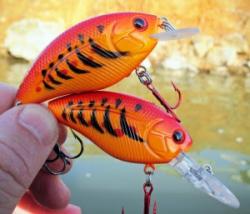
Randy got out a box of Livingston Lures prototypes he had been given only a few days earlier. He was looking for a deeper-runner in a bright crawfish orange/red color that’s perennially popular on Guntersville. The prototypes had been in his boat all week unused. When he tied on the one deep-runner in the box, he flipped it in the water alongside the boat to see what it looked like. It vibrated really hard, wobbled and rattled his rod tip. In that muddy water, Howell knew it was going to catch them. The bass were everywhere on his graph in the last few hours of the tournament. He landed 30 or 40 bass on the Livingston medium-runner which dives about 8-10 feet deep. The bass just choked it, that hard vibration and that bright color with that red and orange combined in that dirty, muddy water was just perfect. Howell culled every bass he had caught earlier on the DT-6 except one, ratcheting up to his 29 pound Classic-winning weight with the Livingston prototype.

At Livingston, the company and pro staff are prototyping a lot of new lures right now. Howell estimates there are maybe six different models although they may be testing up to several different configurations of each in order to determine which is best. Overall, the Livingston Lures pros had received up to 30 prototypes on the day before the Classic, mostly different configurations to test and give feedback to the company.

Howell said he felt like he did what he needed to do for Livingston Lures by pulling that bait out, having never used it before. The 2014 Classic champ believes Livingston is a great company and a great family of people that are trying to love our sport and really promote our sport. To win on their lure like that was the best feeling in the world for Howell because he wanted to put Livingston Lures on the map.

He has such a love for the people at Livingston because of their commitment to our sport and to Randy Howell and his family personally that he wanted to use their prototypes as a part of this Classic and the results exceeded even Howell’s expectations. The prototype diver fit exactly what he needed to come from behind to win the 2014 Classic.

As we said, he started the morning with the Rapala DT-6. At this time of year in February when the water is cold, a subtle wood bait can be good, especially up shallow. Then when they move out deeper, you need a little more vibration and sound – and that’s where the Livingston came into play.

Howell is a strong proponent of sound. He had his boat’s HydroWave electronic sound attraction unit turned up loud all day on 30 second intervals emitting feeding stimulation sounds in that dirty water.

Likewise, Howell feels the sound unit embodied within Livingston Lures is a huge attraction to fish. The croaking sound emitted by a Livingston Lure is the same decibel level recording as a natural baitfish sound that’s given off, said Howell. He’s watched fish in seminar demonstration tanks come to Livingston Lures solely due to the sound they emit, so he knows they hear the recording and are attracted to it, and in muddy water like on Guntersville during the Classic, that electronic sound is especially good said Howell.

As a media observer during the Classic, I had the chance to eyewitness the Livingston Lures prototypes in action catching bass on Guntersville. I saw up close how the medium-runner like Howell used swims. Obviously its action is good; no, make that great enough to win the Bassmaster Classic. There’s no higher accolade than that. However, the action of the Livingston Lures shallow-running squarebill prototype looks even better. Hefting the prototypes in my hand, at first I couldn’t tell and didn’t believe the sound-emitting electronic units were inside because the crankbaits were so lightweight. I had to dip them in the lake (water activates the sound system) in order to prove to myself that the new, lightweight electronic sound-emitting units really were inside these baits. Clearly these new prototypes, once tested and finalized, will prove to be a huge breakthrough for Livingston Lures and for savvy bass anglers worldwide.

A few months before this Classic in a conversation I enjoyed with Basil, one of the two Battah brothers that head up Livingston, Basil said he hoped to have the sport’s top professional anglers begin to recognize Livingston Lures technology-enhanced baits as the wave of the future – that these lures are not just gimmicks. Certainly Randy Howell just accomplished that. The lure company and its techno-marvels are suddenly and emphatically Livingston LARGE for the entire world to see.

Livingston lures really do work and are not a gimmick. They’re the real deal. Randy Howell’s 2014 Classic win will change any preconceived notions of any anglers that don’t yet believe that Livingston Lures represent the cutting edge and future of our sport.

What Is Castable Sonar?

Castable Sonar

By Frank Sargeant, Editor
from The Fishing Wire

Sonar you can cast

Sonar you can cast

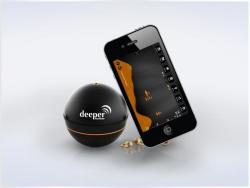
We get an remarkable assortment of information on amazing new goodies to make your fishing better, sometimes dozens in a day, but one that caught our eye recently was the “Deeper” castable sonar-a tennis-ball sized depth-finder you can carry with you anywhere, reading the data on your smartphone or tablet. The rig has some interesting possibilities.

The “Deeper” transducer is encased in a composite ball and weighs 100 grams-3.5 ounces. Where ever the Deeper sonar unit lands or drifts, it reads water depth and temperature, and also marks fish suspended off bottom as well as structure.

Spokesman Rolandas Sereika says the unit includes both narrow and wide beam– the narrow beam returns fish, structure, detail and bottom profile, while the wide beam provides broader search area for fish, baitfish and structure.

It sends this via Bluetooth wireless to your properly-equipped Apple or Android phone or tablet with the free downloadable app which also gives moon phases, air temp, solunar “best times”, Internet sharing of fish photos and other useful tools and info.

It reads to depths of 130 feet and has a Bluetooth range of about 150 feet. It has three line-ties so that you can cast it, troll it or lower it straight down from a dock, bridge or pier.

For kayak and canoe anglers, wade fishermen, shore anglers and bridge and pier anglers, the “Deeper” could be a big help. If you can drift your bait down that break line on every cast, it gives a huge advantage in many areas. You could also use them to avoid brushy snags. Plus, you don’t need a hookup to a 12-volt power source.

You can also probe the depth around a weedbed or dock without actually running your boat close to it and spooking the fish.

And there are some neat new mounts from RAM (www.rammount.com) and other companies for both cell phones and tablets used on kayaks and other small boats.

The Deeper system runs on a rechargeable lithium battery that functions for about 6 hours straight between recharges. The housing is watertight to 1 meter and shock-resistant. The system works with most phones and tablets, but be sure to see their website for compatibility. Price is $229. For details, visit www.buydeeper.com.

Castaway Rod Pros At the Bassmasters Classic

CastAway Rods BASS Elite Series Pro Staffers Faircloth and Lowen Confident Heading into this Year’s Bassmaster Classic

BASS Elite Series anglers Todd Faircloth and Bill Lowen have quite a few things in common. Todd and Bill are two of the best anglers in the world, they both use CastAway Rods exclusively, and they’re both fishing in the upcoming 2014 Bassmaster Classic. That’s where the similarities end, however: Faircloth thinks he’s got a good shot at winning on Guntersville, while Lowen likes his chances of walking away with the coveted trophy.

While the two veteran pros have differing opinions on who is going to take the title, they do agree on what it will take to win. With weather conditions and water temps trending unusually cold, both Faircloth and Lowen are confident that finishing atop the leaderboard will require not only superior angling skills, but also versatility and adaptability.

“Right now, it looks like we’re in for an unusually cold Classic, said Faircloth. “But you never know, things could start to warm up right before the tournament begins. Those anglers that are able to make quick adjustments according to the conditions will have an edge over the rest of the field.”

Lowen shares Faircloth’s assessment. “This event brings together the best bass anglers in the world, so every competitor out there has the ability to win this thing,” noted Lowen. “It’ll come down to reading the conditions and the bass correctly, making the right calls at the right time, and being able to adapt quickly to challenging situations.”

While both Lowen and Faircloth expect the bass to be relating to Guntersville’s abundant grass, they plan on employing different techniques to locate and entice the fish. Lowen plans on doing plenty of flipping, while Faircloth intends on using football jigs, lipless crankbaits and chatterbaits to cover water and find some quality bass.

“It’ll depend upon the conditions come tournament time, of course, but I think I’ll be using my 7’ 6” CastAway Skeleton SKXFP76 flipping rod a good percentage of the time, concentrating on shallower water and targeting fish in the grass, Lowen said. “I consider myself a ‘finesse power fisherman,’ meaning I like to flip with smaller, lighter baits to increase the number of bites I get. While some people think that downsizing lures results in more action but smaller fish, I haven’t found that to be the case. I’ve caught some monster fish flipping ¼-ounce jigs.”

Lowen will be taking full advantage of the combined sensitivity and strength of his Skeleton flipping stick to put bass in the boat. “This rod’s graphite construction allows me to detect subtle bites and flip all day long without fatigue, yet it also provides the backbone I need for positive hook-sets and pulling big fish from heavy cover,” he said.

Faircloth says he’ll be relying on his CastAway Todd Faircloth signature rods to work shallow-running cranks, football jigs and swimbaits in anywhere from 3 to 10 feet of water,” he said. “I expect the fish to be in the grass waiting to ambush prey, so I’ll be using my signature 7’ 2” SKX-TFSC shallow crankbait rod to run everything from a Strike King Red Eye Shad to a Strike King Series 5 through the vegetation. This rod’s soft tip and parabolic action makes it perfect for casting and working these lures, plus it also gives me the backbone I need to rip baits free from the grass and overpower big fish.”

Faircloth also intends on using his versatile signature 7’3” Big T’s Triple Threat Rod on Guntersville to throw jigs, swimbaits and chatterbaits.

Both Lowen and Faircloth credit the quality and performance of their CastAway rods for helping them reach the Classic. “These rods provide the best of all worlds – they’re lightweight and sensitive, but no so light that I have to worry about strength when I slam the hook home or apply heavy pressure on a fish,” explained Faircloth.

Although both seasoned anglers have plenty of talent on their side, neither Lowen or Faircloth has a ton of experience on Guntersville. Lowen, who spent most of his time on the Ohio River, has fished Guntersville only six times, while Faircloth, a Texas native who grew up frequenting Sam Rayburn Lake and Toledo Bend, has fished Guntersville less than 20 times. That doesn’t seem to faze either angler, however. Lowen even believes that the supposed “home water” advantage can actually work against an angler.” If you’ve fished a lake your whole life, sometimes you end up concentrating on old spots where you’ve had success in the past, instead of being ‘in the moment’ and considering the current situation, conditions and opportunities. There’s also a lot more pressure on you to win if you’re a local favorite, and in an event like the Classic where there’s already a ton of pressure, that’s the last thing you need.”

Lowen and Faircloth are definitely capable of winning the upcoming Classic on Guntersville. Both anglers have fished the big show before (this will be Lowen’s sixth Classic and Faircloth’s 12th), they’ve earned the right to compete again in this year, and they have the skills, determination and quality tackle needed to come out on top.

To learn more about CastAway’s pro staffers, including Bill Lowen and Todd Faircloth, or for more information on the complete line of tournament-quality CastAway graphite rods, visit www.castawayrods.com.

What Are Some New Ways To Fish For Bass With Soft Plastic Baits?

Three New Ways To Use Old Soft Plastic Rigs

By Lawrence Taylor
from The Fishing Wire

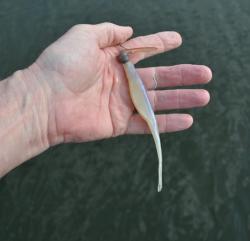
If you call yourself a bass fisherman, you likely know the three basic soft-plastic rigs, the two named after states and the one that’s wacky. What you may be unaware of, however, is that you’re not using them to their full potential. Here are three ways to use those rigs to catch fish and impress your friends.

Sweet and Weedless Carolina Rigs

You think the Carolina Rig is a super-slow technique involving barely noticeable pulls of the rod and pauses long enough to read a chapter of Steven King’s new novel, “Dr. Sleep.” Heck, sometimes your pauses are long enough you actually fall asleep.

There are times when you do need to go slow with this rig, usually during post-front, bluebird days, but bass love a Carolina Rig fished faster than that. B.A.S.S. Elite Pro Terry Scroggins uses a Carolina Rig as a search bait.

“It’s perfect for quickly checking areas,” he said. “I use it a lot during practice.”

Scroggins pulls and pauses, but he uses long pulls and short pauses, until he feels something interesting.

“I’ll let it sit longer when I feel it hit a stump or rock, but usually I’m working it pretty quick.”

Jason Christie, the current No. 1 Angler in the World according to the BassFan World Rankings, used a Carolina Rig during the 2013 season to add to a tournament-winning bag of fish. In that tournament he eliminated the pauses altogether.

“The smallmouth were moving in to spawn and I noticed that every bite I was getting was while I was moving the bait,” he said. “So, I just left out the pauses and used the reel to move the bait. It wasn’t super slow, but somewhere between that and a medium-speed retrieve.”

One problem associated with this rig is that the weight easily slips into cracks and crevices in rocky bottoms. We all know those places, where rocks, wood and all kinds of “junk” on the bottom eat lures for every meal. One fix lure designer Mitch Looper, a big-bass expert with many 10-pound-plus bass to his credit including one of the biggest northern-strain largemouth ever caught, uses to beat this type of “sticky” bottom is to change the weight.

“The reason you get hung in those places is because the weight gets caught,” he said. “I like a banana-shaped weight in those situations, like the Lindy No Snagg. It’s made for walleye fishing, but the bass don’t know that.”

Surprising Texas Rigs

Traditional Texas-rigging normally means bumping a worm or craw off the bottom, or flipping a craw or creature bait into shoreline brush and cover. Like the Carolina Rig, though, the Texas rig doesn’t have to be fished slowly with a lift-and-pause retrieve.

Alabama fishing guide and tournament angler Jimmy Mason uses a Texas Rigged lizard like most people use a hollow-body frog.

“It’s a great alternative when everyone’s throwing frog on the grass mats,” he said. “Rig it with very little weight – just enough to get a good cast – then just pull it along on top of the mats and let it fall a little in any open holes.”

This Texas-Rigged lizard in the grass doesn’t just fit into the Alabama plan, but works everywhere bass get into shoreline weeds, too. One April on a little-fished body of water in Oklahoma, the big females were moving up into the shallow grass to spawn and a weightless Texas rigged lizard worked quickly on top of and through the grass was exactly what they wanted to eat.

While other anglers were slowly pitching tubes or jigs into the weeds, we sped around the area keeping the lizards just at the surface, and landed seven bass in two hours with the smallest weighing more than 5 pounds. With a little practice, you can even get this rig to walk like a Spook on top.

Everyone knows that B.A.S.S. Elite pro Alton Jones is a fan of the YUM Dinger, but he uses it far more extensively than most anglers. Most anglers believe this soft plastic stickbait should only be used weightless in water less than 6 or so feet, but Jones doesn’t hesitate to add a weight as heavy as ¾- or even 1-ounce and fish the Dinger deep, especially when he’s targeting big bass in big-bass waters.

“It’s just as good down deep as it is up toward the surface,” he said. “At Falcon Lake, it’s one of my go-to rigs. It’s a big, fat meal that gets their attention, but it doesn’t move much, so it’s also easy to catch.”

Wacky World

Legendary FLW angler David Dudley fishes a Dinger or Mighty Worm wacky style when bass are in relatively shallow water, but like most fishing geniuses he does it differently than most. The rigging is the same, a hook impaled through the midsection or egg sack area of a straight plastic so that when held by the hook eye, the worm drapes downward on both sides like an upside-down “U.”

Traditional retrieve with a wacky worm is to cast, allow the bait to sink a bit then give it a couple of twitches with the rod tip before letting it sink some more. It’s a tremendously effective retrieve when fishing a vertical structure, such as a dam face, weed edge or against bridge or dock pilings, but the rest of the time, Dudley is fishing it fast to cover water and pick off fish that are relating to sparse shoreline cover. His rod is almost always moving, twitching quickly while he reels in the slack.

“You want the two ends of the worm coming together in almost a clapping motion,” Dudley said. “It’s like it’s saying, ‘You come eat me now or I’m getting away.'”

Another wacky rig modification is to use a finishing nail impaled straight into the tail end. The nail adds a little weight and a different look as it sinks. This works best with a slender, flexible worm like the 6-inch Mighty Worm. The weight pulls that end of the worm down faster than the non-weighted, end, giving fish a totally different look that’s perfect during the post-spawn when bass are guarding fry.

This last modification can make you the hero from the back of the boat. How many times have you spotted a great spot to throw a wacky worm, but you miss it because of the captain’s heavy trolling motor foot? A great solution is to rig a wacky worm Dinger below a small float, either a traditional tear-drop shape or a fly fisherman’s casting bubble.

With this rig, you can cast to the spot and feed out line as the boat moves away, allowing you to slowly and thoroughly fish the spot. Giving the rig a few twitches now and then provides all of the action the rig needs to trigger strikes. Use the longest rod possible and non-stretch braided line to get a good hookset from a distance.

Fishing During Christmas

Christmas was a wondrous time when I was growing up. From the oranges and apples in the stockings hung from the mantle to the bullets and hooks I got every year, I was always thrilled to find what Santa had brought. It was amazing how he knew I loved to fish and hunt and always knew what caliber bullets and gauge shotgun shells I needed.

The best thing about Christmas was the two weeks out of school. That meant I could hunt all day, not just an hour in the morning and a couple of hours in the afternoon. And daddy was also off work since he was the local school principal. Although we still had the 11,000 laying hens to take care of each day since they don’t take holidays, he had more time to go quail hunting.

During quail season we hunted every Saturday, but that was just one day a week. During the holidays we usually managed to go at least three days a week. I loved following the dogs and watching them work the birds. Although I usually shot at the covey with my .410 on the covey rise, it took me a long time to figure out I had to aim at one bird. I am not sure I ever killed one with that little shotgun.

By the time I was a junior in high school daddy had gotten rid of the quail dogs. He said he just did not have the time to spend with them. But by them one of my best friends had a pack of beagles and I had a drivers license so we went rabbit hunting almost every day during the holidays. That was as much fun as bird hunting.

Every Christmas I got a brick of .22 bullets, ten boxes of 50 each in a carton. All those bullets looked like they would last forever. Back then when squirrel hunting it was important to kill a squirrel with every shot. We did not want to waste a single bullet. And my eyes were good enough and my arms steady enough that I made most shots count.

I never realized at the time how much freedom I had, and thinking back I am surprised. Although times were different and I was pretty safe from weird people, there were lots of things that could happen to a young boy out in the woods with a gun. But my mother never fussed, she just let me go. I am somewhat surprised she did not smother me since she had lost her first child. My sister died at 18 months old about a year before I was born.

We never went fishing in the winter back then because we had no idea the fish would bite. I have often wished I could go back to the early 1960s and fish Clark’s Hill in its youth (and mine!) in the winter. By the time I discovered bass fishing during Christmas in the mid-1970s it was still great, but within a few years hybrids were stocked and fishermen started showing up on the lake at Christmas. Until then I pretty much had it to myself.

I taught school and worked in education so for many years I would head to the lake the day school was out and stay until Christmas Day. We had a small travel trailer at a boat club and my dog and I would be the only ones there. I would eat when I was hungry, sleep when sleepy and fish the rest of the time.

On Christmas Day I would meet Linda at my parents’ house for the day. She usually had only one day off and if she had more she would often fly up to visit her folks in Maryland. Either way I would head back to the lake the day after Christmas and fish until time to go back to work after New Years Day.

I hope everyone is making memories with their kids this Christmas. Going hunting or fishing with them even for one or two days during this hectic time will give them memories that will last a lifetime. And it will reinforce the good things in life that are still available if you just look for them.

Give you kids and yourself a change from the busy stores and away from the TV. Get outside and create some memories.

Merry Christmas!

What Is the Best Time and Place To Catch Alabama Largemouth?

One Time, One Place for Alabama Largemouth

By Millard Rooney
from The Fishing Wire

If you could be on the water in Alabama only one week out of the year and wanted the best largemouth fishing for numbers and quality, where would you go and what would you throw?

Jimmy Mason with Alabama largemouth

Jimmy Mason with Alabama largemouth

Captain Jimmy Mason puts the grip on a keeper from North Alabama’s TVA chain.

It’s a tough question, given the ample opportunities for great largemouth bass fishing on the Tennessee River in north Alabama. The state has four impoundments — Guntersville, Wheeler, Wilson and Pickwick — along the 652-mile long river that snakes through Alabama, Tennessee and Kentucky. You can’t overlook famed Lake Eufaula, either, for outstanding largemouth bass fishing.

Guntersville, Pickwick and Eufaula generally are considered among the best for numbers and size. At certain times of the year on any of these three, you can catch a 10-pounder or rack up a memorable day with numbers that leave your thumbs raw and mind racing. In each lake, the buffet of forage, deep and shallow water, aquatic vegetation, structure changes, cover and water current from hydroelectric dams combine for endless opportunities.

More than two decades of fishing and guiding on the Tennessee River give Jimmy Mason a unique perspective. As a guide or tournament competitor he’s plied all of the Tennessee River impoundments during all four seasons. He’s also fished Alabama’s other notable lakes, including Eufaula and the Coosa River chain, which has good largemouth but is known more for its spotted bass.

Mason and Largemouth

Mason and Largemouth

Mason says spring is prime time for numbers, but if you want a trophy, head to Pickwick the first week of February and fish an umbrella rig like the Flash Mob.

“It’s kind of hard to answer, honestly, because there are really good times for big fish and other times for catching a lot of fish,” Mason said. “As much as I’ve fished on all the lakes, though, I’d have to say Pickwick would be my top choice for the chance of catching a truly big bass, a 10-pounder, and also for catching a lot of bass.”

Pickwick Lake is located in the northwest corner of Alabama, a 53-mile long impoundment with more than 43,100 acres of surface area and 490 miles of shoreline. Thanks to the topography of the area, the river is replete with gravel bars, rocky bluffs, hard bottoms, shallow backwaters and numerous tributaries. It’s famous for its smallmouth bass, but in the last decade has seen a solid improvement in the quality of the largemouth bass population.

For landing a 10-pound largemouth, and possibly a 5- or 6-pound smallmouth, Mason says the first week of February is the prime time.

“If you were looking for a longer period I’d say from December through February, but for that one week out of the year when it can be really special, I’d say the first week of February,” he said. “One reason is the bait — the tremendous amount of shad in the lake. The other is the ability to throw the YUMbrella rig and target the big fish with it.

“The winter bite has been phenomenal the last few years for a legitimate chance at a 10-pounder. There probably have been 25 to 50 10-pounders caught that I know of, including several that are bigger than that, and likely a lot more that have been caught I don’t know about. When we get the winter rainfall that keeps the water color good and flowing through the dams to create a lot of good, consistent current, throwing the YUMbrella triggers that big cold-water bite and gives you the best chance to catch a 10-pounder.”

Prespawn Pickwick largemouth (and smallmouth) feast on shad, making the YUMbrella and other rigs that mimic a school of baitfish tremendously effective. Mason mixes up his offerings depending on water clarity.

“I’d fish several versions of rig at that time, including the Flash Mob Jr. and the full size version. For soft plastics I use a 5-inch YUM Money Minnow on the center arm and four 3 ½-inchers on the four surrounding arms. I like the Foxy Shad color for all of them,” Mason said.

It can be chilly in North Alabama in winter, especially at daybreak, but the fish keep right on biting all winter long.

Mason says that if the water is dirty he throws the full size Flash Mob, and is more likely to throw the Jr. size as the water clears. For really clear water, he removes the Money Minnows surrounding the center arm and replaces them with curly-tail grubs.

“I’ll throw these in current eddies or where the current hits the bank directly and causes an eddy, and will be looking for the eddy spots along the bank. It’s all related to current. If you catch one bass, you have a chance to catch several more big fish because they school in these eddies. You also have a chance to catch a 10-pound largemouth and 5- or 6-pound smallmouth in the same area. There are only a few lakes in the country where you can do that.”

For numbers of fish, Mason said the third week of May on Pickwick is the one to circle on the calendar.

“That’s when, generally, the big schools of post-spawn fish move out on the deeper structure — the first big structure off the spawning areas,” he said. “You can sit on a spot and hammer them. Sometimes the schools will look the size of a house on the sonar.

“My favorite bait to throw then is the Fat Free Shad in the Citrus Shad color. Chartreuse with a black back also is good, as is Foxy Shad. That’s also a good time to throw a 3/4-ounce Booyah football jig with a big craw or a 10-inch worm.”

Does Global Warming Or Global Cooling Cause Lake Lanier To Drop To Historic Lows?

On a Tuesday in 2007 about this time of year I went to Lake Lanier and met Todd Goade to get information for a Georgia Sportsman article on crappie fishing. Although the article won’t run until next April I needed to get information and pictures to meet a deadline.

Todd lives in Buford near the lake and told me many of the ramps were closed. We met at Old Federal Park and the parking lot was full, even on a Tuesday afternoon. With so few ramps open the fishermen and boaters are concentrated at the few still usable.

Even at Old Federal three of the four ramps were closed. They stopped short of the water. The one ramp that was open ended in a flat sandy area and we were able to launch and take his boat out but it was shallow. It won’t be useable for long if the lake keeps dropping as predicted.

We ran about 12 miles up the river to Wahoo Creek and had no problems. Contrary to claims you hear, there is a lot of water still in the lake. Although the lake is about 16 feet low there is water near the dam over 100 feet deep. On the run up the river we were in water 40 feet deep or deeper most of the way.

The water supply problem at Lanier is the water intakes, like the ramps, end and the water is going to drop below the intakes. That still leaves a lot of water in the lake.

Most of the docks we saw had been moved out to deeper water and we fished many back in coves with 17 feet of water under them. Unfortunately, the crappie did not cooperate. Maybe it was the weather, maybe it was just my luck. I still had a great time fishing with Todd.

Lanier may reached its record level when it droped four more feet by early December. In 1982 it was four feet lower than it was in November, 2007. We had a drought 25 years ago, too, and many lakes were extremely low. Clark’s Hill was 18 feet low that year and it was only 11 feet low in November, 2007, so it has a way to go to reach that point.

Its kinda funny that some are blaming this drought on Global Warming. Back in the early 80s during the last drought some of the same folks were claiming that one was due to Global Cooling and were still predicting a new ice age. Funny how things change but stay the same.

Getting Your Fishing Equipment Ready For Winter

Is your fishing equipment ready for winter weather?

A sign at my lawnmower shop reads “Man who leaves lawnmower outside all winter will not mow grass in the spring.” That not so subtle hint should be a warning to fishermen, too. If you don’t prepare your equipment for winter storage, you won’t be a happy fisherman when the weather gets right for that first trip next spring.

Make a checklist so you are sure you take care of all the important things you need to do. These will cover most of them but you should add any others that work for you.

Where you store your boat for the winter is important. If you can store it inside you will be far ahead of game. If not there are many more things you must attend to for the coming harsh weather.

Your motor is the most likely problem after sitting up all winter. Gas deteriorates with time and can foul your engine. The newer blends of gas with Ethanol in them are bad for outboard motors, too. If possible, buy gas with no Ethanol added the last two times you fill up each season so no alcohol is left in the system. It is best to store your boat with a full tank of gas, too.

Lower your motor till it is straight up and down and store in that position so water runs out and does not collect in it. Add a gas stabilizer like Sea Foam to your last two tanks of gas so it works through the motor as you run your boat. It will clean your motor and you are ready to store after the last use.

You can also disconnect your gas line and let the motor run until all the gas in the system is burned up, but this also removes the oil. Once the motor is running stabilized gas, or after it stops if you run it dry, spray an engine fogging oil into the air intake until the motor stops running. If it is already stopped keep turning the motor over until you see the fog coming from the exhaust port.

Remove spark plugs and spray more fogging oil into the cylinders. Turn the flywheel to spread the oil inside. Have a new set of spark plugs ready for the spring, but it is best to wait to install them until you can run your motor one time to burn off the fogging oil. New plugs installed now will be fouled by that first trip.

Drain your lower unit oil and refill with new oil. If you see water in the oil or if there are metal filings in it, you will need to have it checked for new seals or repair work. Put in a new water pump. Water pumps in outboard motors wear quickly and it is a good idea to replace them often.

Spray all linkages and connectors in your motor with a good oil spray like WD-40. Disconnect manual steering cables and make sure no water is in them, and force grease into them if they don’t have a grease fitting. Grease all fittings for steering and motor mount bearings. Put a light coating of grease on the starter bendix and shaft.

Park your boat and raise the front. Pull the drain plug and leave it out. This lets all water drain from it and will keep water from collecting in it during the winter. Disconnect your batteries, make sure they are filled with water, clean the terminals and connectors and put a light coating of grease on them, and charge the batteries. Keep a trickle charge on them or check often to keep fully charged all winter long.

Take all equipment out of the boat and disconnect and store all electronics inside after cleaning them. Spray all connectors with an oil spray. Clean and store life jackets where vermin won’t chew on them. Check and store expendable equipment like fire extinguishers and flares, making sure they are still good. Put fishing equipment aside for later work.

Take off your prop and grease the prop shaft. Check for damage to the prop and get it serviced if necessary. Be sure to use the correct kind of cotter pin to hold your prop nut on if it requires one. Replace prop and tighten to specifications for your motor.

Check trolling motor bolts and fittings and tighten. Remove the prop and make sure no line is under it, and the seal is still good. Grease all moving parts of the mounting system and the cable.

Wash and wax your boat and trailer, including the motor cover. This removes dirt and stains that may set over the winter and be almost impossible to remove later, and the wax protects the finish.

If you have power steering on your boat, check the fluid level. Check the fluid level in your power trim. Disconnect the speedometer tube and blow the water out of it. Check all cleats and other fittings and tighten all bolts and screws, especially on seats. Spray all seats and other similar surfaces with a good vinyl spray to protect them.

When the boat is clean and dry, put a cover on it if it stays outside. Make sure the cover keeps rain, snow and ice out of the boat but has some air circulation so moisture won’t build up inside from condensation. Secure and support the cover so it won’t blow off and ice and snow won’t collapse it.

Jack up your trailer and block it so the tires are off the ground, and leave it that way. Pump up tires to recommended inflation, and if you can store tires inside, do so. Repack wheel bearings and check surge brakes for wear. Check tires for uneven wear and get them balanced or aligned as needed. Cover your tires to protect them from the sun if they are outside. Grease your tongue jack and hitch connector, and spray oil spray into both male and female light connectors.

Make sure all lights are working and sealed, with no water inside. If you see water inside, take the cover off, dry them out and spray with a oil spray. Replace bad bulbs and cracked lenses, and secure all wires to the trailer that may have worked loose.

This is a good time to sort all your tackle, making a list of what you need to replace. Sharpen hooks, replace rusty hooks, repair any damaged plugs and replace stiff spinnerbait skirts. Store plastic worms in bags that will not deteriorate. Clean tackle boxes and refill with your favorite baits.

Rods should be wiped down with a oil spray and the reel seat cleaned and oiled. Check all guides for rough spots. Visually inspect them but a cotton Q-Tip or piece of woman’s hose run through them will show tiny cracks that can cut your line.

Reels should be taken apart, cleaned and oiled, reassembled and stored. This is a good time to send a reel off to a good repair shop. Many will clean your reels for a small fee and replace damaged or worn parts for an additional fee.

Remove all monofilament type lines. They don’t hold up well during the winter, so wait until spring to fill your spools with new line. Put a small sticker on your reel to remind you of the type and test line if you need to. Check braided lines for wear and replace as needed.

Some of us are fortunate and can fish all winter, using our boat and tackle often enough to keep it in good working order. But even for those fishing year round, an annual “winter cleaning” will keep everything in top condition. Do it on those days you really don’t want to be on the water even if you can, so you will be ready for the good days when they come.

Two products will make winterizing your boat easier and take care of many problems. An oil spray like WD-40 will clean surfaces, protect against rust and dry moisture when sprayed into couplings, moving parts and sockets. A light coating will protect all winter long and not cause problems in the spring.

Adding a gas stabilizer and engine cleaner like Sea Foam to your fuel on a regular basis will help keep your engine running smooth and keep gas from gumming up your engine over the winter. Most important, it helps control the build up of moisture in your fuel tank and motor, a major problem since most brands of gas now contain Ethanol. Sea Foam is available gallon cans to keep cost down.